

10 Best Email Marketing Tools For Small Business in 2026

Best Email Marketing Software for Small Businesses Shortlist


Email marketing software for small businesses is a valuable asset for new and growing companies. With the right software, teams can improve customer engagement and boost sales. However, finding the right email marketing software for small businesses can be challenging, especially with so many options.
Using my experience with marketing software, I tested and compared several of the top email marketing software for small businesses. From there, I compiled my results into detailed reviews to help you find the best software for your needs.
Table of Contents
- Best Software Shortlist
- Why Trust Us
- Compare Specs
- Reviews
- Other Email Marketing Software for Small Businesses
- Related Software Reviews
- Selection Criteria
- How to Choose
- Trends In Email Marketing Software for Small Businesses
- What Is Email Marketing Software for Small Businesses?
- Features
- Benefits
- Costs & Pricing
- FAQs
Why Trust Our Software Reviews
We’ve been testing and reviewing marketing software since 2022. As marketing experts ourselves, we know how critical and difficult it is to make the right decision when selecting software.
We invest in deep research to help our audience make better software purchasing decisions. We’ve tested more than 2,000 tools for different marketing use cases and written over 1,000 comprehensive software reviews. Learn how we stay transparent & our software review methodology.
Best Email Marketing Software for Small Businesses Summary
This comparison chart summarizes pricing details for my top email marketing software for small businesses to help you find the best one for your budget and business needs.
| Tool | Best For | Trial Info | Price | ||
|---|---|---|---|---|---|
| 1 | Best for AI-powered email design | Free plan available | From $19/month | Website | |
| 2 | Best for straightforward email automation | Free plan available | From $9/month (billed annually) | Website | |
| 3 | Best for real-time data activation | Free demo + free plan available | From $45/month | Website | |
| 4 | Best for branded email templates | Free plan + free trial available | From $19/user/month (billed annually) | Website | |
| 5 | Best for unlimited automation workflows | Free plan + free demo available | From $7/month (billed annually) | Website | |
| 6 | Best for overall affordability | Free plan available | From $12/month | Website | |
| 7 | Best for ecommerce processes | 14-day free trial available | From $33/month (billed annually) | Website | |
| 8 | Best for ecommerce marketers | 14-day free trial + free demo available | From $39/month | Website | |
| 9 | Best for event promotion | 14-day free trial + free demo available | From $12/month | Website | |
| 10 | Best for new email marketers | Free trial available | From $12.50/month (billed annually) | Website |
-

Demandbase
Visit WebsiteThis is an aggregated rating for this tool including ratings from Crozdesk users and ratings from other sites.4.4 -
6sense
Visit WebsiteThis is an aggregated rating for this tool including ratings from Crozdesk users and ratings from other sites.4.3 -
AnswerThePublic
Visit Website


Best Email Marketing Software for Small Businesses Reviews
Below are my detailed summaries of the best email marketing software for small businesses that made it onto my shortlist. My reviews look at each tool’s key features, pros & cons, integrations, and ideal use cases to help you find the best one.

For small businesses seeking a versatile email marketing solution, Elastic Email provides a comprehensive platform that supports a wide range of communication needs. With AI-powered email design built in, it’s especially useful for teams that want to create polished, professional emails without heavy design work. With features such as automated email flows and customizable signup forms, Elastic Email helps streamline your marketing efforts and improve audience engagement.
Why I Picked Elastic Email
I picked Elastic Email for its unique ability to cater to the diverse needs of small businesses through its AI Template Designer and automated email flows. The AI Template Designer simplifies the creation of visually appealing emails, allowing your team to maintain brand consistency without needing extensive design expertise. Automated email flows further enhance your marketing strategy by enabling personalized communication with your audience at scale, addressing the challenge of maintaining engagement across different customer segments.
Elastic Email Key Features
In addition to AI-powered email design, Elastic Email offers:
- Customizable Signup Forms: Capture leads efficiently with forms tailored to your brand's aesthetic and requirements.
- 24/7 Customer Support: Access immediate assistance whenever you need it, ensuring minimal disruption to your marketing operations.
- Developer-Friendly API: Enhance your email sending capabilities and scalability with a flexible API designed for technical teams.
Elastic Email Integrations
Integrations include HubSpot, PayPal, Shopify, Magento, WordPress, Salesforce, WooCommerce, Zapier, and Mailchimp. Elastic Email also offers an API for custom integrations.
Pros and Cons
Pros:
- Flexible API and SMTP integration options
- Built-in email marketing automation features
- Comprehensive analytics for performance tracking
Cons:
- Users note that the reporting tools feel limited
- Interface may lack polish compared to premium tools

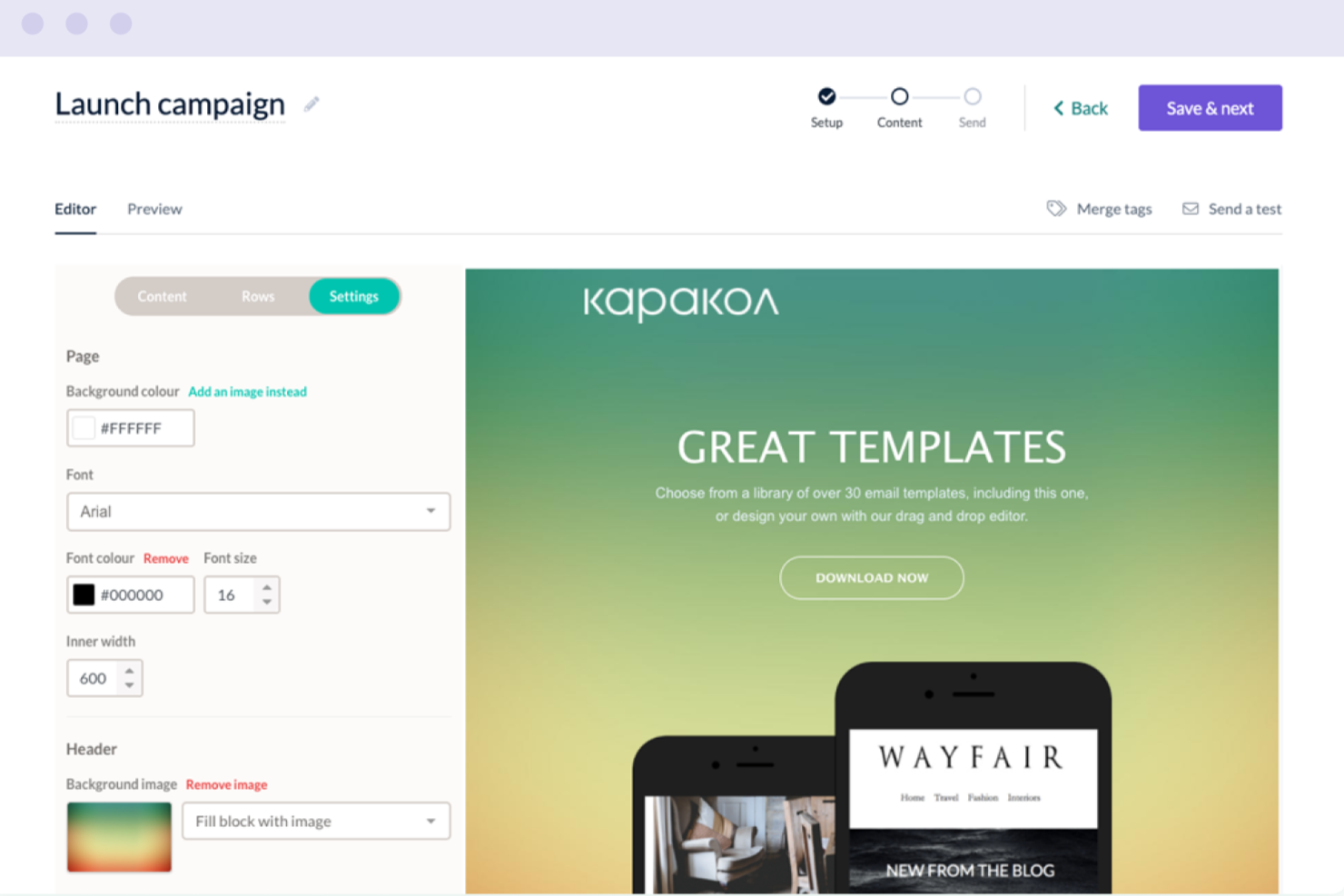
EmailOctopus is an email marketing platform for small businesses that need a simple way to create, send, and track campaigns without extra marketing-suite complexity. It offers a drag-and-drop email builder, list management, segmentation, and automation workflows to help growing teams manage newsletters and subscriber engagement more efficiently.
Who Is EmailOctopus Best For?
EmailOctopus is a good fit for small business owners and early-stage startups who want an affordable, no-fuss email marketing tool without a steep learning curve.
Why I Picked EmailOctopus
I picked EmailOctopus because it gives small businesses a straightforward way to automate email follow-ups without adding unnecessary complexity. You can build automated sequences to welcome new subscribers, nurture leads, or re-engage contacts based on how they interact with your campaigns. I also like that its segmentation tools let you group contacts by custom fields, campaign activity, and signup form data, so your team can send more relevant emails. This makes EmailOctopus a good fit for small teams that want simple email automation, list management, and campaign tracking in one place.
EmailOctopus Key Features
Some other features in EmailOctopus help small businesses create, publish, and monitor email campaigns more easily:
- Drag-and-drop email editor: Build branded emails visually using customizable templates and content blocks.
- Signup forms and landing pages: Create embeddable forms, pop-ups, and hosted landing pages to capture new subscribers.
- Campaign scheduling: Schedule emails to send at a specific date and time.
- Reporting dashboard: Track campaign performance through metrics like opens, clicks, and unsubscribes.
EmailOctopus Integrations
Integrations include Zapier, WordPress, Little Stack, Leadpages, WooCommerce, Google Ads, Shopify, Memberful, Ticket Tailor, and Wix.
Pros and Cons
Pros:
- Built-in reports track campaign and automation email performance
- Segmentation targets subscribers by data, tags, and behavior
- Simple automation supports welcome, nurture, and birthday emails
Cons:
- Advanced automation options are limited for complex campaign workflows
- Template editing can feel restrictive for custom layouts

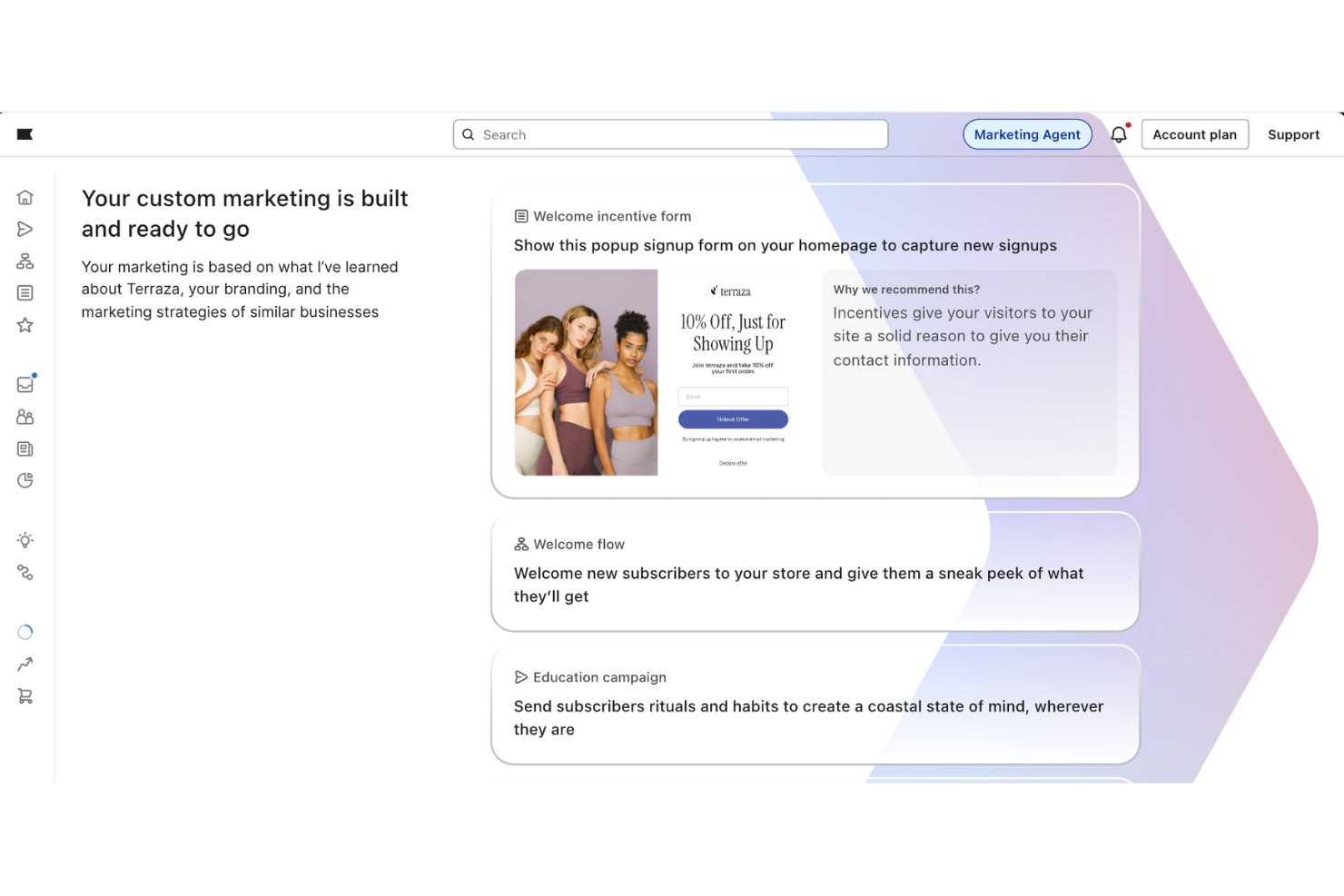
Klaviyo offers a tailored email marketing solution for small businesses, focusing on enhancing customer engagement and driving growth. Designed for small to medium-sized enterprises, it integrates advanced marketing automation, AI-driven insights, and analytics to address the unique challenges of managing customer relationships and optimizing marketing strategies. By providing seamless data connectivity through numerous integrations, Klaviyo empowers businesses to personalize their marketing efforts and achieve measurable results.
Why I Picked Klaviyo
I picked Klaviyo for its unique ability to unify customer data and activate it in real-time, making it a standout choice for small businesses. The platform's marketing automation feature allows you to create personalized workflows that target customers based on their interactions with your brand. Additionally, Klaviyo's AI-driven insights provide actionable recommendations to refine your marketing campaigns. These features together ensure that your business can deliver tailored experiences that resonate with your audience and drive engagement.
Klaviyo Key Features
In addition to real-time data activation, Klaviyo offers:
- Advanced Analytics: Provides in-depth reporting tools to track campaign performance and customer behavior, helping you make data-driven decisions.
- Omnichannel Marketing: Supports communication across platforms such as email, SMS, and social media, ensuring consistent messaging.
- Segmentation: Allows you to categorize your audience based on specific criteria, enabling targeted and personalized marketing campaigns.
- Customizable Templates: Offers a wide range of mobile-optimized templates to create visually appealing emails aligned with your brand.
Klaviyo Integrations
Integrations include Shopify, BigCommerce, WooCommerce, Magento, Salesforce Commerce Cloud, Stripe, Facebook, Instagram, Google Ads, and Zendesk.
Pros and Cons
Pros:
- Real-time data activation enhances customer engagement
- Omnichannel capabilities support varied customer outreach
- Integration with numerous ecommerce platforms
Cons:
- Advanced tagging and organization less robust than some competitors
- Pricing may be high for growing businesses


Flodesk is an email marketing solution built for small businesses that want consistent, on-brand emails without complexity. It stands out for its polished, branded email templates that make professional design accessible to both designers and non-designers. With built-in automation and subscriber segmentation, Flodesk helps small teams manage email campaigns efficiently while maintaining a strong visual identity.
Why I Picked Flodesk
I picked Flodesk for its strength in branded email templates, making it easy for small businesses to maintain a consistent visual identity. Its design-first approach, paired with Canva integration, lets you create polished, on-brand emails without design expertise. Flodesk also supports simple automations that handle subscriber journeys efficiently, helping you save time while keeping engagement high.
Flodesk Key Features
In addition to ibranded email templates, Flodesk offers:
- Custom Fonts: Allows you to use unique fonts that align with your brand's aesthetic, enhancing the personalization of your emails.
- Countdown Timers: Add urgency to your campaigns by embedding countdown timers in your emails, encouraging quicker customer action.
- Embedded Polls: Engage your audience by including interactive polls directly within your emails, gathering valuable customer feedback.
- Detailed Analytics: Provides insights into your email performance, helping you make informed decisions to optimize future campaigns.
Flodesk Integrations
Integrations include HoneyBook, BookFunnel, Canva, Shopify, Squarespace, ThriveCart, Wix, and Manychat.
Pros and Cons
Pros:
- Consistent branding across email campaigns with reusable template blocks
- Clean, distraction-free editor (less clutter, more focus on design)
- Fast setup for small or seasonal campaigns
Cons:
- Limited built-in CRM or contact-management functions
- Less control over code-level email customization

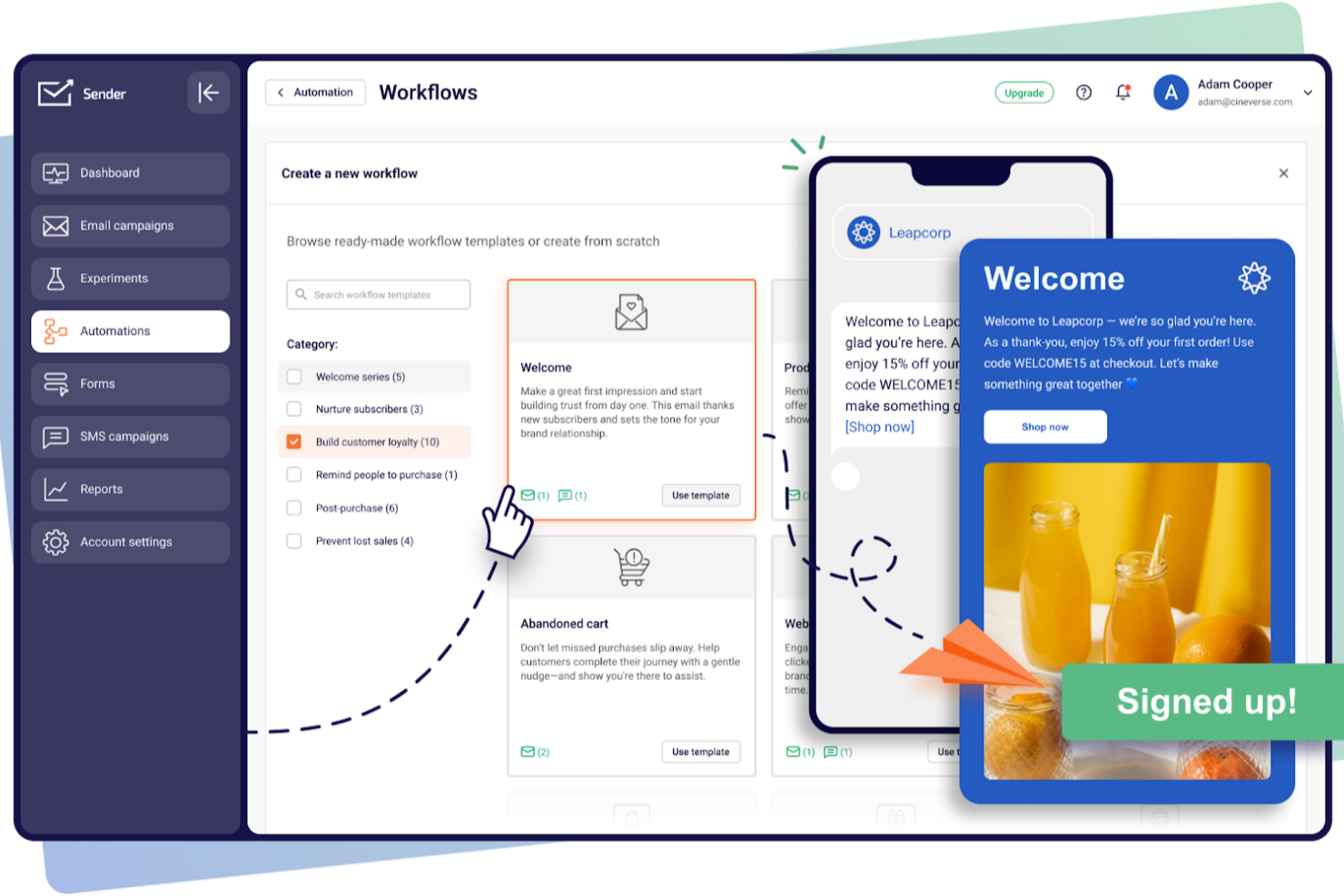
Sender is a versatile email marketing platform tailored for small businesses looking to enhance their marketing efforts without breaking the bank. It offers a user-friendly experience with its drag-and-drop email builder and a library of customizable templates, making it ideal for small business owners across industries like eCommerce, B2B, and nonprofits who need to connect with their audience effectively. By providing features like automation, segmentation, and SMS marketing, Sender addresses the challenge of reaching customers through multiple channels while maintaining high deliverability rates.
Why I Picked Sender
I picked Sender for its exceptional ability to cater to small business needs by offering unlimited automation workflows, which can significantly enhance your marketing efforts without requiring technical expertise. The platform's robust segmentation feature allows you to target specific customer groups with personalized content, ensuring your messages resonate with the right audience. Additionally, Sender's SMS marketing capability provides an extra channel to reach customers, making it a comprehensive tool for businesses looking to expand their reach and engagement.
Sender Key Features
In addition to its standout benefits, Sender offers other valuable features for small businesses:
- Real-Time Analytics: Offers detailed insights into campaign performance, helping you understand what works best for your audience.
- A/B Testing: Enables you to test different email variations to optimize open rates and conversions.
- Brand Auto-Styling: Automatically matches your email designs with your brand's style, ensuring consistency across all communications.
- GDPR Compliance: Ensures that your email marketing efforts adhere to data protection regulations, maintaining customer trust.
Sender Integrations
Integrations include WordPress, WooCommerce, Zapier, PrestaShop, Magento, OpenCart, Shopify, API for custom integrations, and more.
Pros and Cons
Pros:
- User-friendly drag-and-drop builder
- Built-in SMS marketing support
- Unlimited automation workflows included
Cons:
- No built-in landing page builder
- Subscriber limits on lower tiers
New Product Updates from Sender
Sender Adds Custom Events for Automation
Sender has released a Custom Events feature to track user behaviors and automate email workflows. This update helps teams deliver more targeted campaigns based on real-time user actions. For more information, visit Sender’s official site.
 .
.

MailerLite is an email marketing platform designed for small businesses seeking cost-effective solutions for their marketing needs. It's ideal for teams looking to manage email list campaigns without extensive resources.
Why I picked MailerLite: MailerLite is the go-to choice for businesses that prioritize affordability without compromising on essential email marketing features. It offers an intuitive drag-and-drop editor that simplifies email creation. The platform also provides automation tools to streamline digital marketing efforts all at a lower than average cost. Ultimately, the simplicity of MailerLite enables small teams to execute the best email marketing services efficiently while remaining budget conscious.
Standout features & integrations:
Features include an intuitive drag-and-drop editor that allows you to create emails quickly, automation tools to help manage your email sequences, and many templates to make your emails look professional.
Integrations include Shopify, WordPress, WooCommerce, Zapier, Stripe, Mailchimp, Squarespace, Facebook, and Slack.
Pros and Cons
Pros:
- Wide range of templates
- Suitable for small teams
- Simple email editor
Cons:
- Basic reporting tools
- Limited advanced features

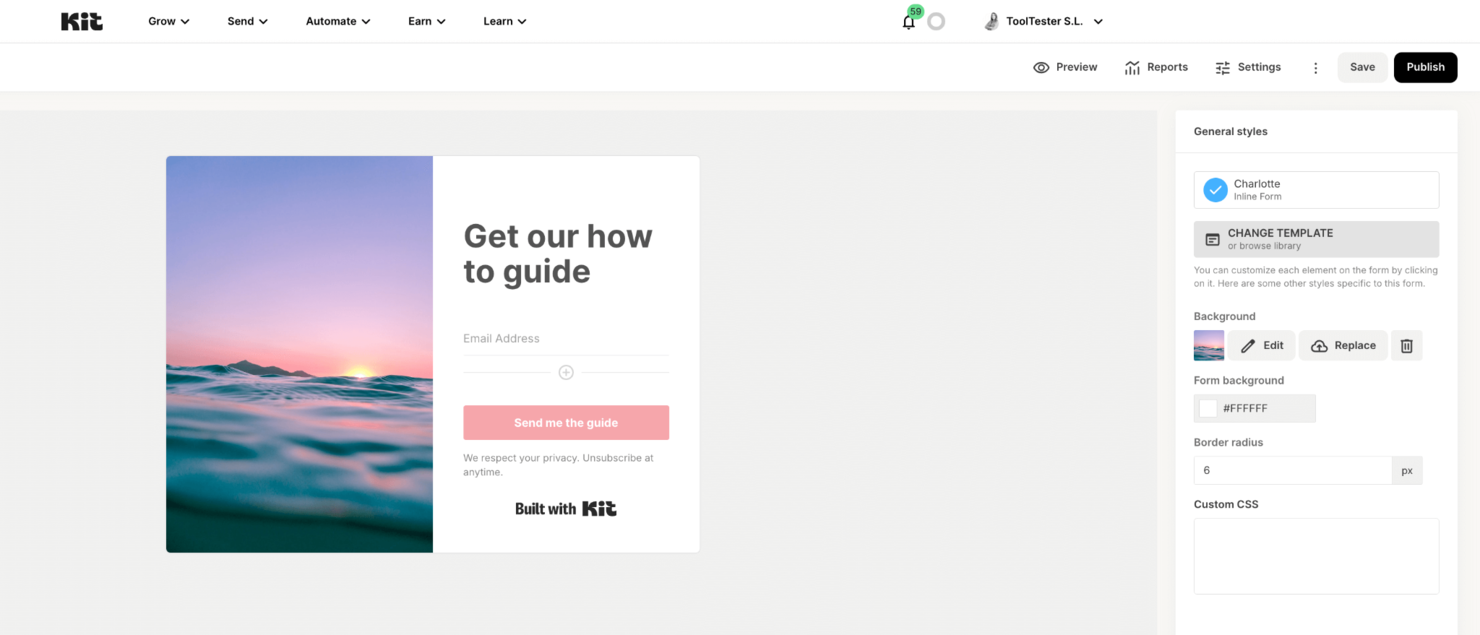
Kit is an email marketing tool designed for small businesses. It offers intuitive solutions for creating and managing email campaigns.
Why I picked Kit: Kit offers simplicity without sacrificing functionality. You can create and send visually appealing emails using pre-built templates that don’t require design skills, making it easy to get started quickly. The software’s automated features, like follow-up reminders, also ensure you stay connected with your audience at the right moments. Plus, it includes built-in performance tracking, giving insights into your emails' performance without complicated analytics.
Standout features & integrations:
Features include easy-to-use email templates that let you quickly build campaigns without design skills, automated follow-ups to keep your audience engaged, and detailed performance tracking that helps you understand how your emails are doing.
Integrations include Shopify, WooCommerce, BigCommerce, Mailchimp, Squarespace, Stripe, Facebook, Instagram, Google Analytics, and Klaviyo.
Pros and Cons
Pros:
- Scalable for growing businesses
- Allows direct HTML email editing
- Built-in content recommendations for growth
Cons:
- Basic A/B testing functionality
- Limited email template customization


Drip is a marketing automation platform for ecommerce businesses to enhance customer engagement and sales strategies. Ecommerce marketers use it to create personalized email campaigns and automate customer interactions.
Why I picked Drip: Drip’s focus on ecommerce makes it ideal for businesses aiming to connect with customers through personalized experiences. It offers advanced segmentation tools that enable you to target specific customer behaviors and preferences. The platform’s automation workflows also allow you to create complex sequences tailored to different purchase stages. Additionally, Drip provides insights into customer journeys, helping you optimize your marketing efforts and email deliverability rates.
Standout features & integrations:
Features include advanced segmentation tools that help you target customers based on their behavior, automation workflows for creating detailed customer journeys, and data insights into customer interactions, enabling you to refine your marketing strategies.
Integrations include Shopify, WooCommerce, Magento, BigCommerce, Facebook, Instagram, Zapier, Privy, Justuno, and Sumo.
Pros and Cons
Pros:
- Personalized customer interactions
- Supports complex workflows
- Detailed customer journey insights
Cons:
- Limited design flexibility
- Complexity for small teams


Constant Contact is a versatile email marketing platform for small businesses, particularly those involved in event planning and promotion. It enables marketing teams to create engaging email campaigns and manage event registrations.
Why I picked Constant Contact: Constant Contact’s focus on event promotion makes it ideal for businesses hosting frequent events. The platform offers event management tools, allowing you to create and send invitations, track RSVPs, and manage ticketing, while email automation helps you stay connected with attendees before and after your events. The software also provides a range of customizable templates to ensure your event communications are professional and on-brand.
Standout features & integrations:
Features include advanced segmentation, real-time analytics, and integrations with popular apps, allowing businesses to reach targeted audiences and optimize campaigns. Additionally, Constant Contact offers social media tools and ecommerce capabilities to enhance engagement across channels.
Integrations include Shopify, WordPress, Zapier, Eventbrite, Salesforce, QuickBooks, WooCommerce, Facebook, Instagram, and Google Analytics.
Pros and Cons
Pros:
- RSVP tracking capabilities
- Professional invitation design
- Wide range of templates
Cons:
- Some features require add-ons
- Limited template customization


AWeber is email marketing software for small businesses and entrepreneurs who want to manage their email campaigns easily. It's particularly beneficial for those new to email marketing, providing tools to create and send newsletters efficiently.
Why I picked AWeber: AWeber’s ideal for beginners thanks to its straightforward setup and intuitive interface. It offers easy-to-use templates and a drag-and-drop editor that simplifies the design process, while the autoresponder feature allows you to automate follow-up emails without hassle. Additionally, AWeber provides educational resources to help your team get the most out of the platform.
Standout features & integrations:
Features include an easy-to-use drag-and-drop email builder that helps you design emails quickly, autoresponders to automate your email sequences, and a range of templates to make your emails look professional with minimal effort.
Integrations include WordPress, Shopify, PayPal, Facebook, Etsy, WooCommerce, Zapier, Salesforce, Leadpages, and OptinMonster.
Pros and Cons
Pros:
- Straightforward email automation
- Helpful educational resources
- Simple setup process
Cons:
- Basic reporting tools
- Limited advanced features
Other Email Marketing Software for Small Businesses
Here are some additional email marketing software for small businesses that didn’t make it onto my shortlist but are still worth checking out:
- Benchmark Email
For global reach
- Campaign Monitor
For design customization
- GetResponse
For webinars
- Mailchimp
For small teams
- ActiveCampaign
For email automation
- Brevo
For transactional emails
- HubSpot Email Marketing
For CRM integration
- Mailchimp
For AI-driven email targeting
- SendGrid
For high-volume sending
- Moosend
For cost-effective automation


How I Evaluate Email Marketing Software for Small Business
I split my evaluation into two layers: the core capabilities a small business owner needs to send, segment, and automate, and the factors that separate a standout tool from a basic one.
Core Functionality (Table Stakes for This List)
These core capabilities serve as the acceptance criteria for inclusion on my list of email marketing software for small business:
- Drag-and-Drop Email Builder: I evaluate whether a non-designer can build a branded, mobile-responsive email from a template in under 15 minutes without touching HTML.
- List Management & Segmentation: Each tool should let you import contacts, create signup forms, and segment by behavior or engagement—like targeting buyers who clicked but didn't purchase.
- Marketing Automation Workflows: I look for visual workflow builders that support triggered sequences like welcome series, abandoned cart reminders, and re-engagement campaigns.
- Campaign Analytics & Reporting: Good reporting means more than open rates—I check for click tracking, bounce monitoring, A/B testing, and clear conversion attribution.
- Deliverability & Compliance Tools: SPF, DKIM, and DMARC setup should be supported alongside built-in GDPR and CAN-SPAM compliance features like automated unsubscribe handling.
- SMB-Friendly Pricing & Integrations: A usable free or low-cost entry tier matters, along with native integrations for platforms like Shopify, WordPress, and popular CRMs.
I rank each vendor on a scale from 0 (does not offer the functionality) to 5 (excels in this area) for each criterion.
Vendors need to achieve a minimum average score to be considered for inclusion on my list. From there, I consider what sets each platform apart.
Differentiating Factors (What Sets Vendors Apart)
Once I've curated my list, here's how I contrast and compare different vendors in the email marketing software for small business space:
Standout Features
AI content tools and pre-built automation recipes catch my attention when I see small business owners balancing many hats—these features save time on campaign creation, from writing engaging subject lines to launching a ready-made re-engagement sequence. I also look for e-commerce revenue tracking and built-in landing pages, since syncing store data and capturing leads directly from email platforms can make a big impact for anyone running an online shop or driving product sales.
Beyond Features
Total cost of ownership matters more than the sticker price—I evaluate how predictably a plan scales as a subscriber list grows from a few hundred to tens of thousands. Onboarding experience is another big factor; a solo marketer shouldn't need a week of training to send their first campaign, so I look for guided setup wizards and accessible support on entry-level plans. Deliverability reputation also plays a role, since even great emails are worthless if they land in spam folders.
How to Choose Email Marketing Software for Small Businesses
It’s easy to get bogged down in long feature lists and complex pricing structures. To help you stay focused as you work through your unique software selection process, here’s a checklist of factors to keep in mind:
| Factor | What to Consider |
| Scalability | Will the software grow with your business? |
| Integrations | Does it connect with your existing tools? |
| Customizability | Can you tailor it to fit your brand’s needs? |
| Ease of Use | Is it straightforward for your team to use? |
| Budget | Does it fit within your financial constraints? |
| Security Safeguards | Does it offer protection for your data and communications? |
| Analytics | Does it provide insights that help you make informed decisions? |
| Customer Support | Is there reliable support available when you need it? |
Trends In Email Marketing Software for Small Businesses
In my research, I sourced countless product updates, press releases, and release logs from different email marketing software for small business vendors. Here are some of the emerging trends I’m keeping an eye on:
- AI-Driven Personalization: AI is being used to create more personalized email experiences. It analyzes user behavior to suggest content and send times, making emails more relevant. Vendors like Mailchimp are using AI to offer customized product recommendations.
- Interactive Email Content: Emails are becoming more interactive with elements like polls, surveys, and carousels. These features keep recipients engaged and provide valuable insights. Moosend, for instance, allows users to embed surveys directly into emails.
- Advanced Analytics and Reporting: Businesses want more profound insights into email performance, and advanced analytics tools provide detailed reports on user engagement. Platforms like GetResponse offer features that track subscriber interactions and predict future behavior.
- Privacy and Data Protection: With increasing data regulations, email marketing tools focus on privacy features. As a result, GDPR compliance and data encryption are becoming standard.
- Voice-Activated Email Interactions: As smart speakers and voice assistants grow, voice-activated email interactions emerge. This trend allows users to manage emails through voice commands, enhancing accessibility. While still in the early stages, vendors are exploring integrations with devices like Amazon Alexa.
What Is Email Marketing Software for Small Businesses?
Email marketing software for small businesses helps growing companies create, send, and track email campaigns efficiently. Marketing professionals and small business owners use these tools to reach their audience and enhance customer engagement.
Features like email templates, automation, and analytics support targeted campaigns and improve engagement insights. These tools provide small businesses with an affordable way to connect with customers and grow their reach.
Features of Email Marketing Software for Small Businesses
When selecting email marketing software for small business, keep an eye out for the following key features:
- Email Templates: Pre-designed layouts that make it easy to create professional-looking emails quickly.
- Automation Tools: Set up drip marketing sequences, newsletter email and follow-ups without manual intervention, saving time and effort.
- Analytics and Reporting: Track and analyze email performance to understand engagement and improve future campaigns.
- Segmentation Options: Target specific groups within your audience to send personalized and relevant content.
- Personalization Capabilities: Customize emails with recipient-specific details to increase engagement.
- Multilingual Support: Reach a global audience by creating emails in multiple languages.
- Geolocation Tracking: Tailor content to specific regions, enhancing relevance and connection with audiences.
- A/B Testing: Experiment with different email elements to determine what resonates best with your audience.
- CRM Integration: Manage customer relationships alongside email campaigns to unify marketing and sales efforts.
Benefits of Email Marketing Software for Small Businesses
Implementing email marketing software for small businesses benefits your team and your business. Here are a few you can look forward to:
- Improved Engagement: Personalization capabilities and segmentation options help deliver relevant content to your audience, increasing interaction.
- Time Savings: Automation tools handle repetitive tasks like follow-ups and sequences, freeing up your team for other priorities.
- Better Insights: Analytics and reporting features offer in-depth information about campaign performance, helping you refine strategies.
- Global Reach: Multilingual support and geolocation tracking allow you to connect with audiences worldwide and tailor content to their language and location.
- Cost-Effective Marketing: Email marketing provides a budget-friendly way to reach a large audience compared to other channels.
- Enhanced targeting: A/B testing lets you refine email elements, ensuring your messages resonate with your audience.
- Integrated Customer Management: CRM integration allows seamless management of customer relationships, aligning marketing efforts with sales goals.
Costs and Pricing of Email Marketing Software for Small Businesses
Selecting email marketing software for small businesses requires understanding the various pricing models and paid plans available. Consider exploring open source alternatives which can significantly reduce costs while providing robust functionality. Costs vary based on features, team size, add-ons, and more. The table below summarizes standard plans, their average prices, and typical features included in email marketing software for small business solutions:
Plan Comparison Table for Email Marketing Software for Small Businesses
| Plan Type | Average Price | Common Features |
| Free Plan | $0 | Basic free email templates, limited automation, and basic reporting. |
| Personal Plan | $10-$25/user/month | Customizable templates, basic automation, and standard analytics. |
| Business Plan | $30-$75/user/month | Advanced automation, A/B testing, and enhanced analytics. |
| Enterprise Plan | $100-$200/user/month | Custom features, dedicated support, and full CRM integration. |
Email Marketing Software for Small Businesses FAQs
Here are some answers to common questions about email marketing software for small businesses:
Does email marketing work for small businesses?
Yes, email services are effective for small businesses. It helps you sell to prospects, boost referrals, and re-engage customers who have not purchased. Creating relevant and targeted email content increases the chances of the reader taking action, making email marketing a cost-effective strategy for growing your business. Tools like video email marketing software can enhance these efforts further, whether you’re sending welcome emails, transactional updates, or abandoned cart reminders, by adding a visual, engaging layer to your messaging.
How effective are email marketing campaigns?
Email marketing campaigns are highly effective, mainly when contact lists are segmented. Segmented emails can drive significantly more opens and click-throughs than unsegmented ones. Regularly sending emails as part of a drip campaign and personalizing content helps keep engagement high. Most marketers report increased engagement over the past year.
How do I set up email marketing for my small business?
Start by choosing an email marketing solution that fits your needs. Set up automated campaigns to save time and effort. Understand your subscribers and segment them for targeted messaging. Use email testing software to verify your contact list. Monitor analytics to track email performance and conduct A/B testing to optimize your subject line and content.
How do I measure the success of my email marketing campaigns?
Track key metrics like open rates, click-through rates, conversion rates, and unsubscribes. Use analytics tools provided by your email marketing company to monitor these metrics. Regularly review and adjust your strategy based on the insights you gather to ensure ongoing success.
What’s Next
If you're in the process of researching email marketing software for small businesses, connect with a SoftwareSelect advisor for free recommendations.
You fill out a form and have a quick chat where they get into the specifics of your needs. Then you'll get a shortlist of software to review. They'll even support you through the entire buying process, including price negotiations.