
23 Best AI Marketing Automation Tools Reviewed in 2026

Best AI Marketing Automation Tools Shortlist
Here's my pick of the 10 best software from the 23 tools reviewed.


Marketing teams manage a mix of channels, tools, and data, which can make maintaining consistency challenging. AI marketing automation tools reduce that complexity by handling repetitive tasks, analyzing customer behavior, and improving the relevance of your messaging.
In this guide, I break down the AI marketing automation platforms that stand out based on real capabilities rather than surface-level features. I’ve reviewed each tool to help you understand how it supports key areas like personalization, journey building, analytics, and overall workflow efficiency. The goal is to give you a clear sense of which options match your team’s needs so you can choose a platform to improve both productivity and customer engagement.
Why Trust Our Software Reviews
Best AI Marketing Automation Tools Summary
This comparison chart summarizes pricing details for my top AI marketing automation tool selections to help you find the best one for your budget and business needs.
| Tool | Best For | Trial Info | Price | ||
|---|---|---|---|---|---|
| 1 | Best for producing tailored ads and emails | Demo upon request | Pricing upon request | Website | |
| 2 | Best for personalized location-based automation | Free demo available | Pricing upon request | Website | |
| 3 | Best for crafting targeted campaigns | Free demo available | Pricing upon request | Website | |
| 4 | Best for AI-led customer journey automation | 30-day free trial + free plan + free demo available | From $10/month | Website | |
| 5 | Best for AI-enhanced strategy generation | Free forever plan available | From $19/month | Website | |
| 6 | Best for real-time data activation | Free plan + free demo available | From $20/month | Website | |
| 7 | Best for multi-channel personalization | Free demo available | Pricing upon request | Website | |
| 8 | Best for predictive email content | 14-day free trial + free demo available | From $15/month (billed annually) | Website | |
| 9 | Best for personalized messaging AI | 14-day free trial available | Pricing upon request | Website | |
| 10 | Best for multichannel campaign AI | 14-day free trial + free demo available | From $169/month (billed annually) | Website |


Best AI Marketing Automation Tool Reviews
Below are my detailed summaries of the best AI marketing automation tools on my shortlist. My reviews offer a thorough look at the key features, pros & cons, integrations, and ideal use cases of each tool, helping you find the best one for you.

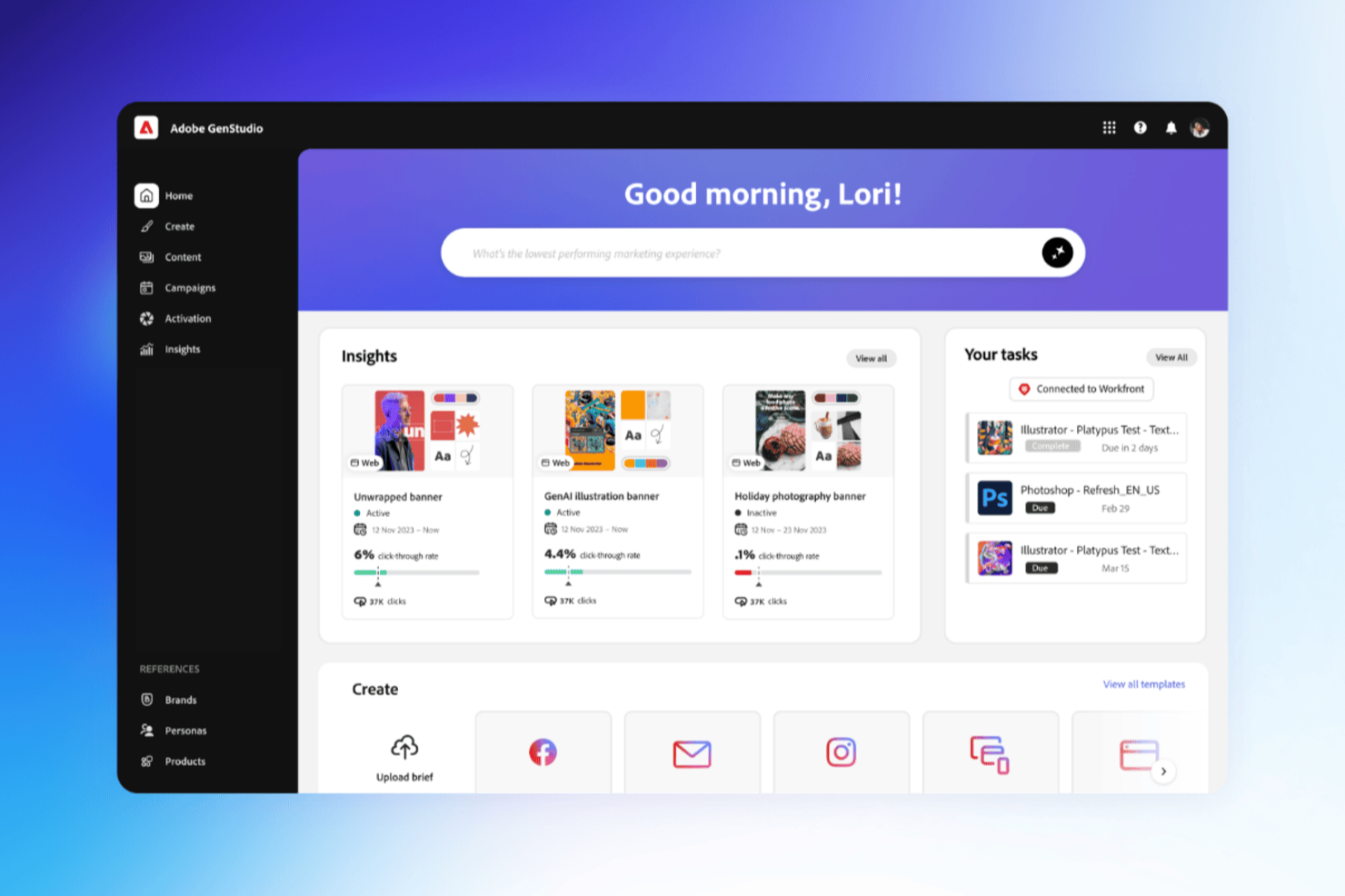
GenStudio for Performance Marketing is crafted for marketing teams in industries like retail and e-commerce, where the need for rapid, on-brand content creation is paramount. By integrating brand intelligence with generative AI, this tool allows you to efficiently produce and optimize content tailored to diverse audiences across multiple channels. Whether it's automating content generation or ensuring brand consistency, GenStudio addresses the challenges of maintaining campaign performance while minimizing manual effort.
Why I Picked GenStudio for Performance Marketing
I picked GenStudio for Performance Marketing due to its standout ability to automate content generation while ensuring brand compliance. Its AI-driven content creation allows your team to quickly produce ads and emails tailored to specific personas and regions, reducing the time spent on manual content crafting. Additionally, its seamless publishing feature activates content across multiple ad platforms, streamlining your workflow and minimizing errors. These features collectively enhance campaign efficiency, making it a compelling choice for those seeking AI marketing automation tools.
GenStudio for Performance Marketing Key Features
In addition to its AI-driven content generation and seamless publishing, I also found several other features that make GenStudio a robust marketing automation tool:
- Performance Insights: Provides real-time analytics on content performance, helping you make data-driven decisions for future campaigns.
- Brand Compliance Checks: Ensures all content adheres to brand guidelines, reducing the risk of off-brand messaging.
- Multi-Channel Support: Centralizes content creation, enabling consistent messaging across various marketing channels like paid social and display ads.
- Cultural Relevance and Language Support: Generates content in multiple languages, adapting messaging to regional preferences.
GenStudio for Performance Marketing Integrations
Native integrations are not currently listed by GenStudio for Performance Marketing.
Pros and Cons
Pros:
- Multi-channel content activation support
- Built-in brand compliance checks
- AI generates on-brand variations
Cons:
- Limited public integration details
- Pricing available upon request

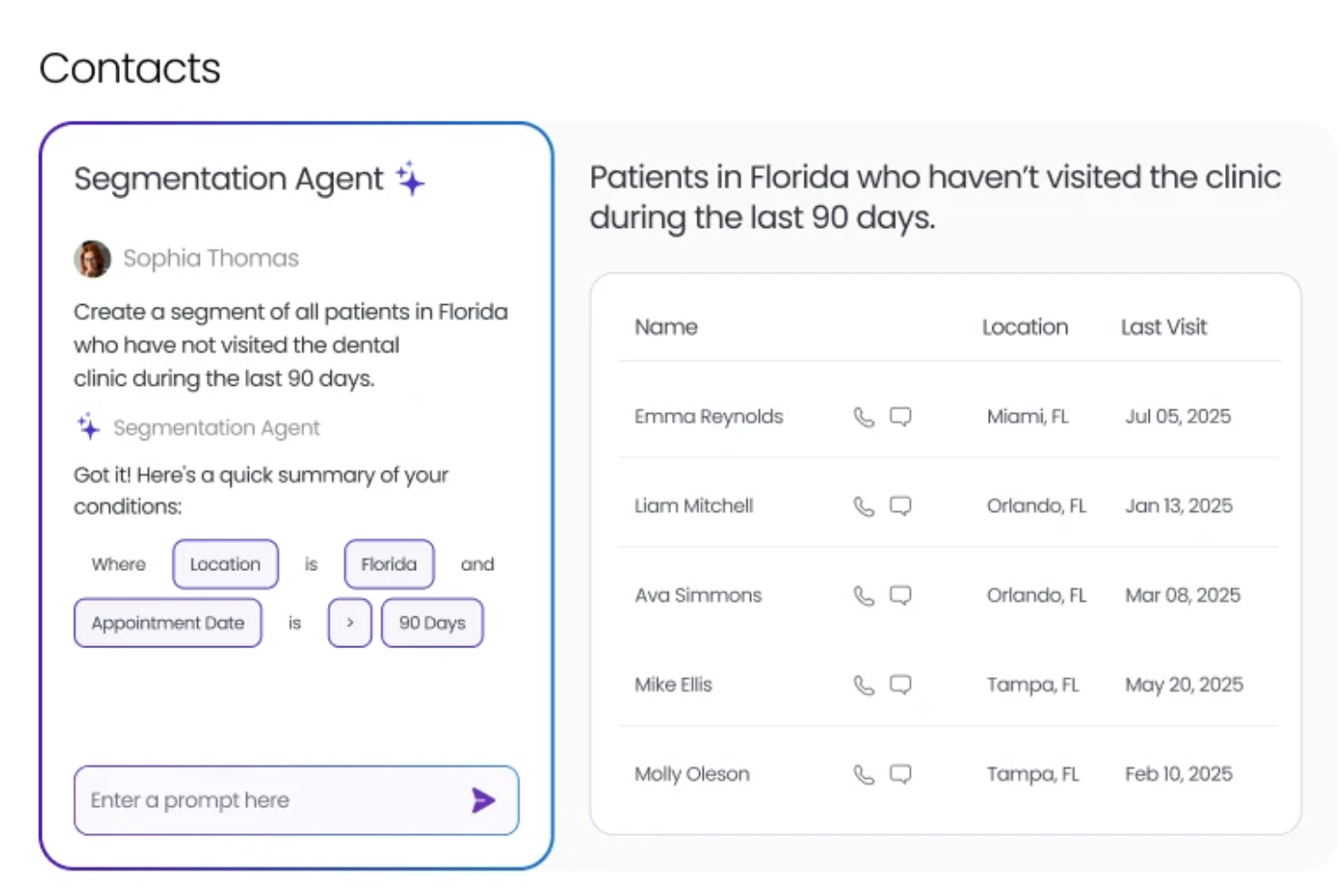
Birdeye brings AI-driven marketing automation into your everyday campaigns by helping you tailor email, SMS, and multichannel outreach using unified customer data and location intelligence, so your messages reach the right people at the right time across every branch of your business. It resonates especially with marketing teams and multi-location brands who want automation that adapts per outlet while tying back to real engagement patterns.
Why I Picked Birdeye
I picked Birdeye because of its location-aware marketing automation that lets your team run campaigns personalized to each customer and each business location rather than using one generic workflow. Its AI agents can build audience segments and draft messages from simple prompts you give, so you don’t have to manually configure every email or SMS segment. Birdeye also leverages unified customer data pulled from your systems and reviews to decide the best channel and timing for outreach, helping your campaigns be more relevant.
Birdeye Key Features
In addition to the marketing automation capabilities above, you get several other tools that support comprehensive outreach and customer engagement:
- Social AI: Automates the creation and scheduling of engaging social media content, ensuring your brand remains active and visible.
- Search AI: Enhances your brand's discoverability on major search platforms like Google, driving more traffic to your business.
- AI-Powered Review Monitoring: Aggregates customer reviews from 200+ sites so you can keep up with sentiment across platforms.
- Listings Management: Helps maintain accurate business listings across the web to improve local visibility and search performance.
Birdeye Integrations
Integrations include Salesforce, QuickBooks, Google My Business, Facebook, Twitter, LinkedIn, Slack, HubSpot, Shopify, and Zendesk.
Pros and Cons
Pros:
- Automates review requests across email and SMS for more responses
- Strong analytics for reputation and campaign performance
- AI helps draft responses and create segments
Cons:
- Integration setup sometimes requires manual work
- Limited flexibility in customizing AI-driven features
New Product Updates from Birdeye
Birdeye Integrates With Covetrus Ascend
Birdeye integrates with Covetrus Ascend. This new integration enables automated review requests and client data syncing for veterinary practices, helping streamline feedback collection and improve online reputation management. For more information, visit Birdeye’s official site.
 .
.
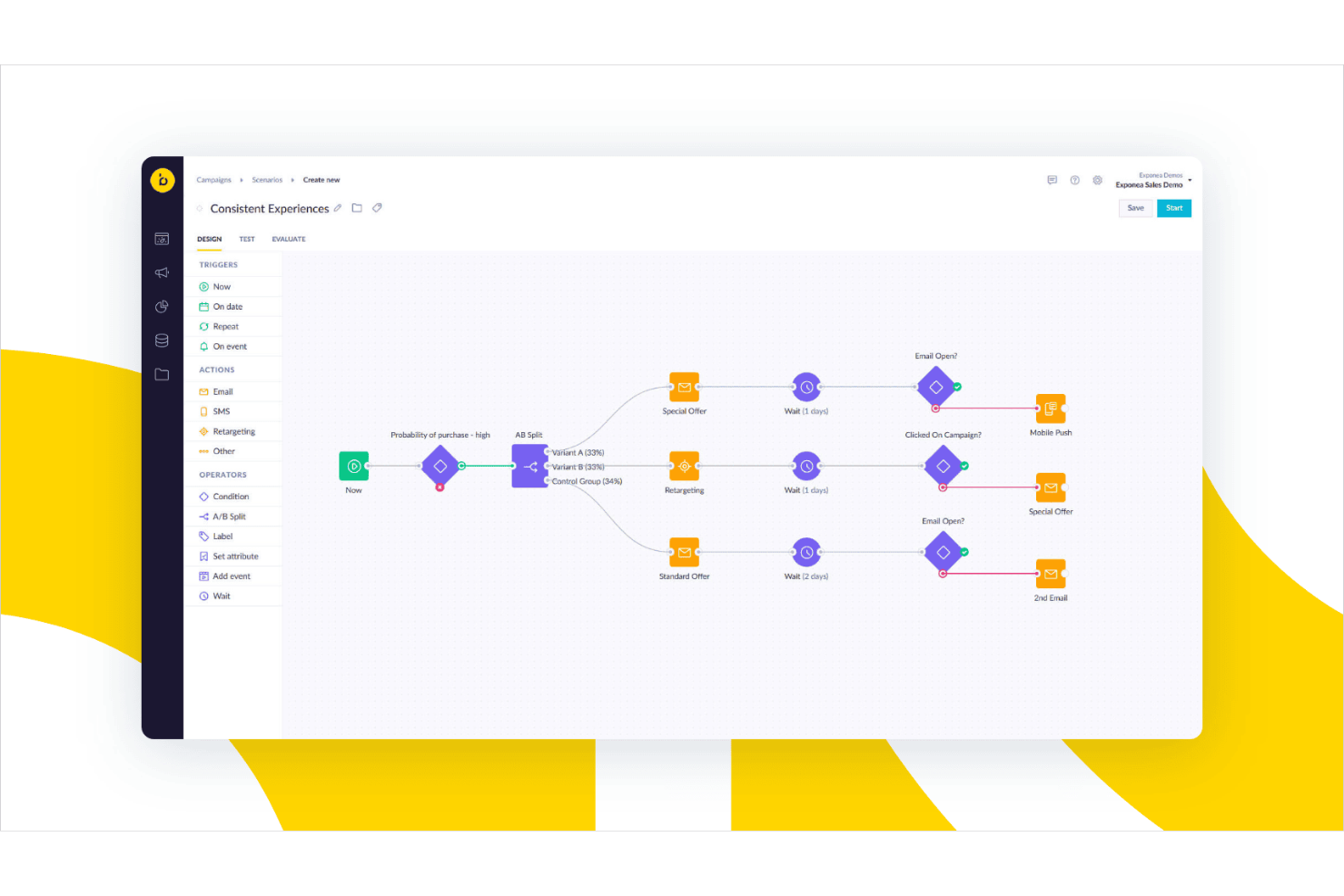
For businesses seeking a dynamic AI marketing automation tool, Bloomreach offers a compelling solution. It is particularly appealing to e-commerce companies and digital marketers who aim to enhance customer engagement through personalized experiences. With its AI-driven approach, Bloomreach addresses the challenge of delivering tailored content across various channels, thereby boosting customer loyalty and maximizing revenue.
Why I Picked Bloomreach
I chose Bloomreach for its unique ability to harness AI for personalized marketing automation. The platform's AI-powered email marketing allows your team to craft targeted campaigns that resonate with your audience. Additionally, the GenAI agent facilitates conversational shopping, offering real-time guidance to customers online, which can significantly increase conversion rates. These features make Bloomreach an ideal choice for businesses looking to leverage AI to enhance their marketing strategies.
Bloomreach Key Features
In addition to its standout capabilities, I also found several other features that make Bloomreach a robust choice for AI marketing automation:
- Autonomous Search: This feature uses AI to optimize search results, ensuring that customers find what they need quickly and easily.
- Connected Orchestration: It offers seamless integration across email, ads, and shopping agents, providing a cohesive marketing experience.
- Loomi AI: Powers real-time personalization and decision-making, adapting to customer intent within milliseconds.
- Conversational Shopping: Engages customers with interactive shopping experiences, enhancing their online journey.
Bloomreach Integrations
Integrations include Shopify, AWS, Salesforce, Google Analytics, Adobe Experience Manager, Magento, BigCommerce, SAP Commerce Cloud, Hybris, and Marketo.
Pros and Cons
Pros:
- Autonomous campaign management agents
- Real time campaign optimization
- AI driven omnichannel personalization
Cons:
- Enterprise focus may limit SMBs
- Implementation can require technical resources

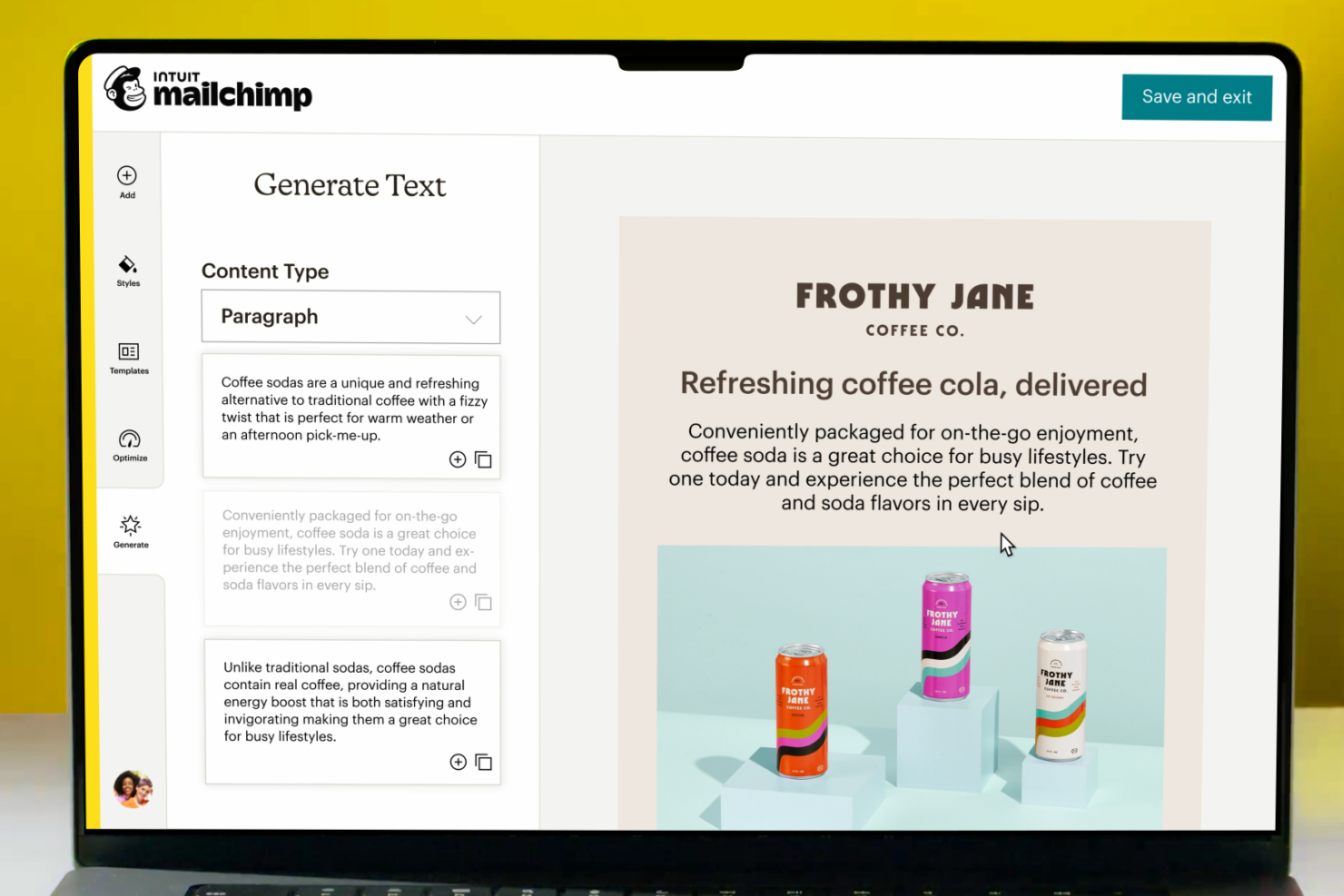
Mailchimp lets you turn audience data into timed emails, targeted segments, and personalized product nudges without building a whole marketing ops stack. If you’re trying to grow sales or retention with smarter triggers and AI-assisted content, it’s built for that kind of day-to-day work.
Why I Picked Mailchimp
I picked Mailchimp because its Customer Journey Builder gives you a practical way to automate multi-step campaigns based on what contacts do, not just when you send. Pair that with predictive segmentation, and you can target groups like people likely to buy or churn, then route them into different journeys without guessing. When you’re moving fast, the AI tools also help you get campaign drafts moving sooner, so your team spends more time tuning messages than staring at a blank page.
Mailchimp Key Features
In addition to journeys and predictive segments, there are a few other features that make Mailchimp feel purpose-built for automation-minded teams:
- A/B Testing: This feature allows you to experiment with different versions of your campaigns to determine which performs best.
- Send Time Optimization: You can enable a setting that chooses a send time meant to better match subscriber engagement patterns.
- Landing Pages: You can publish landing pages to capture signups or drive a specific offer tied to your audience.
- Content Studio: Manage and store your creative assets in one place for easy access and organization.
Mailchimp Integrations
Integrations include Shopify, WooCommerce, Salesforce, Slack, QuickBooks, Canva, Eventbrite, Squarespace, Zapier, and WordPress.
Pros and Cons
Pros:
- Predictive segments help target likely buyers and churn risks.
- Journeys support automated welcomes, follow-ups, and nurture sequences.
- Reporting shows opens and clicks for quick iteration cycles.
Cons:
- Pricing can be high for larger subscriber lists and features.
- Automation logic feels lighter than tools with deeper branching.

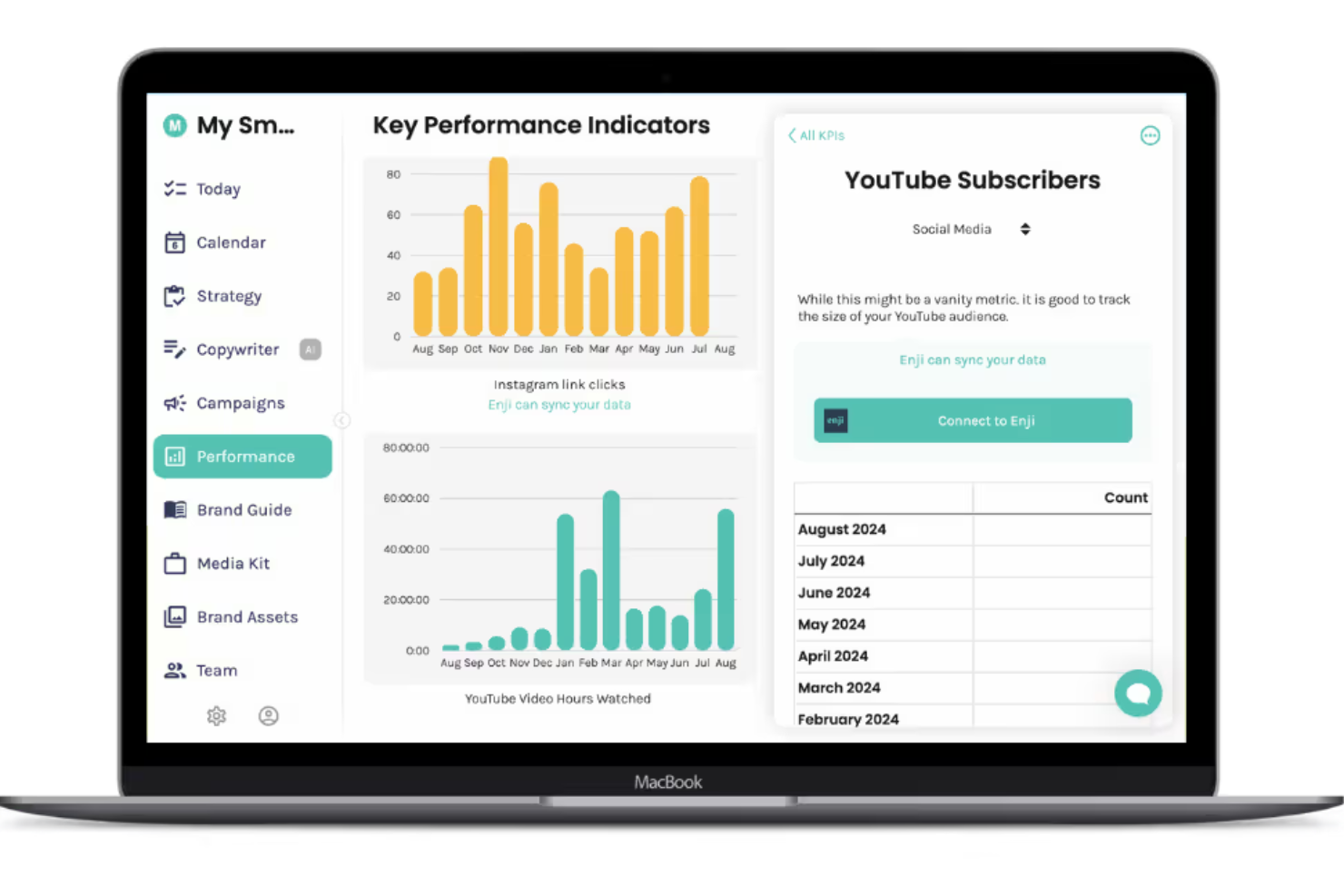
Enji offers an intuitive marketing software solution designed for small business owners seeking to enhance their marketing presence. With its user-friendly interface, Enji appeals particularly to those new to marketing, offering tools that simplify the creation and execution of marketing strategies.
Why I Picked Enji
I picked Enji for its unique ability to cater to small business owners through its AI-enhanced marketing strategy generator. This feature allows you to craft tailored marketing plans with ease, addressing the need for effective strategy development. Additionally, the AI copywriter stands out by assisting in content creation, ensuring your communications are consistent and engaging. These functionalities resonate with the challenges faced by small businesses, providing practical solutions for streamlined marketing efforts.
Enji Key Features
In addition to its standout features, Enji offers other valuable tools for your marketing needs.
- Social Media Scheduler: Helps you plan and schedule posts across various platforms, ensuring a consistent online presence.
- Performance Dashboard: Provides insights into your marketing efforts, enabling you to analyze and optimize strategies effectively.
- Customer Persona Generator: Assists in defining your target audience, which is crucial for personalized marketing.
- AI Idea Generators: Offers creative prompts and suggestions to keep your marketing content fresh and engaging.
Enji Integrations
Enji integrates with Canva, Instagram, Facebook, LinkedIn, Pinterest, Threads, TikTok, YouTube Shorts, Google Analytics 4, and Google Calendar.
Pros and Cons
Pros:
- Enji's user interface is intuitive and easy for beginners.
- Pre-built campaign templates save time in strategy execution.
- Enji's AI copywriter simplifies content creation for users.
Cons:
- Fewer native integration options compared to competitors.
- Limited customization options for advanced users.
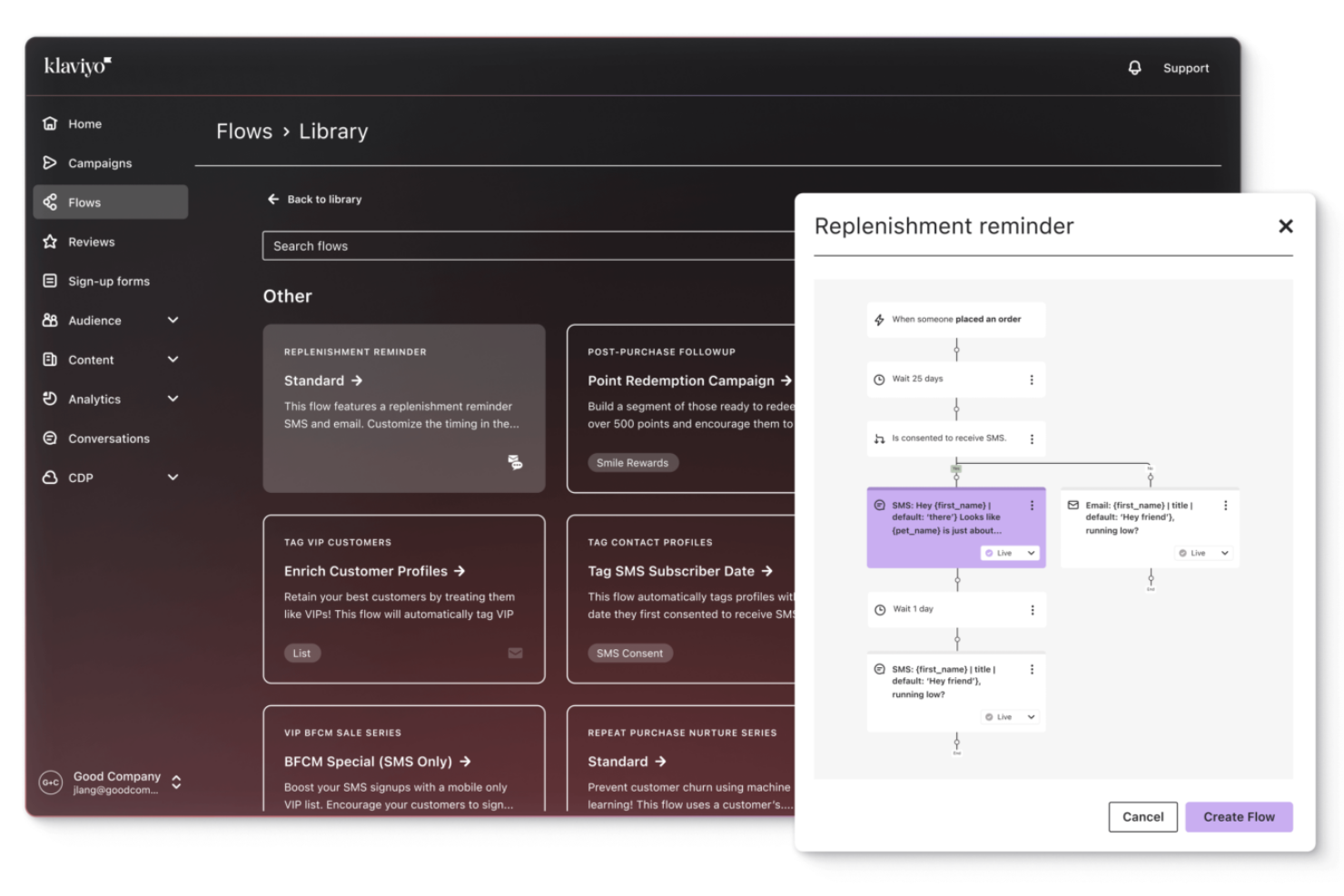
Klaviyo is a customer data platform that integrates AI-driven marketing automation to enhance your business's engagement strategies. If you're a B2C team, Klaviyo offers the tools to refine customer interactions and predict behaviors, addressing challenges like customer retention and personalized communication. By unifying data across various platforms, you can transform your marketing efforts into a dynamic, insights-driven operation that meets your customers' evolving expectations.
Why I Picked Klaviyo
I picked Klaviyo for its ability to integrate AI-powered insights directly into your marketing strategies. By leveraging AI agents, you can predict customer behaviors and tailor personalized campaigns, which is crucial for businesses aiming to enhance customer experiences. The platform's advanced analytics provide real-time data activation, helping you make informed decisions. Additionally, Klaviyo's scalability ensures that whether you're a small business or an enterprise, your marketing automation can grow alongside your needs.
Klaviyo Key Features
In addition to its AI-driven insights, Klaviyo offers a range of features that cater to your marketing automation needs:
- Omnichannel Marketing: This feature allows you to engage with customers across email, SMS, and social media, ensuring a consistent brand experience.
- Comprehensive Customer Profiles: Klaviyo captures detailed customer data to help you understand and segment your audience more effectively.
- Targeted Segmentation: You can create highly specific customer segments based on behavior, demographics, and more, for tailored marketing campaigns.
- Data Warehouse Syncing: This feature allows you to sync your customer data with your existing data warehouses, providing a unified view of your marketing efforts.
Klaviyo Integrations
Integrations include Shopify, Salesforce, Adobe Commerce, WooCommerce, BigCommerce, Magento, Stripe, Zendesk, Facebook Ads, and Google Ads.
Pros and Cons
Pros:
- Supports omnichannel marketing, including email, SMS, and social media.
- Provides AI-driven insights for personalized marketing strategies.
- Offers comprehensive data integration for unified customer profiles.
Cons:
- Pricing can escalate quickly as contact lists grow.
- Some users desire more customization options.
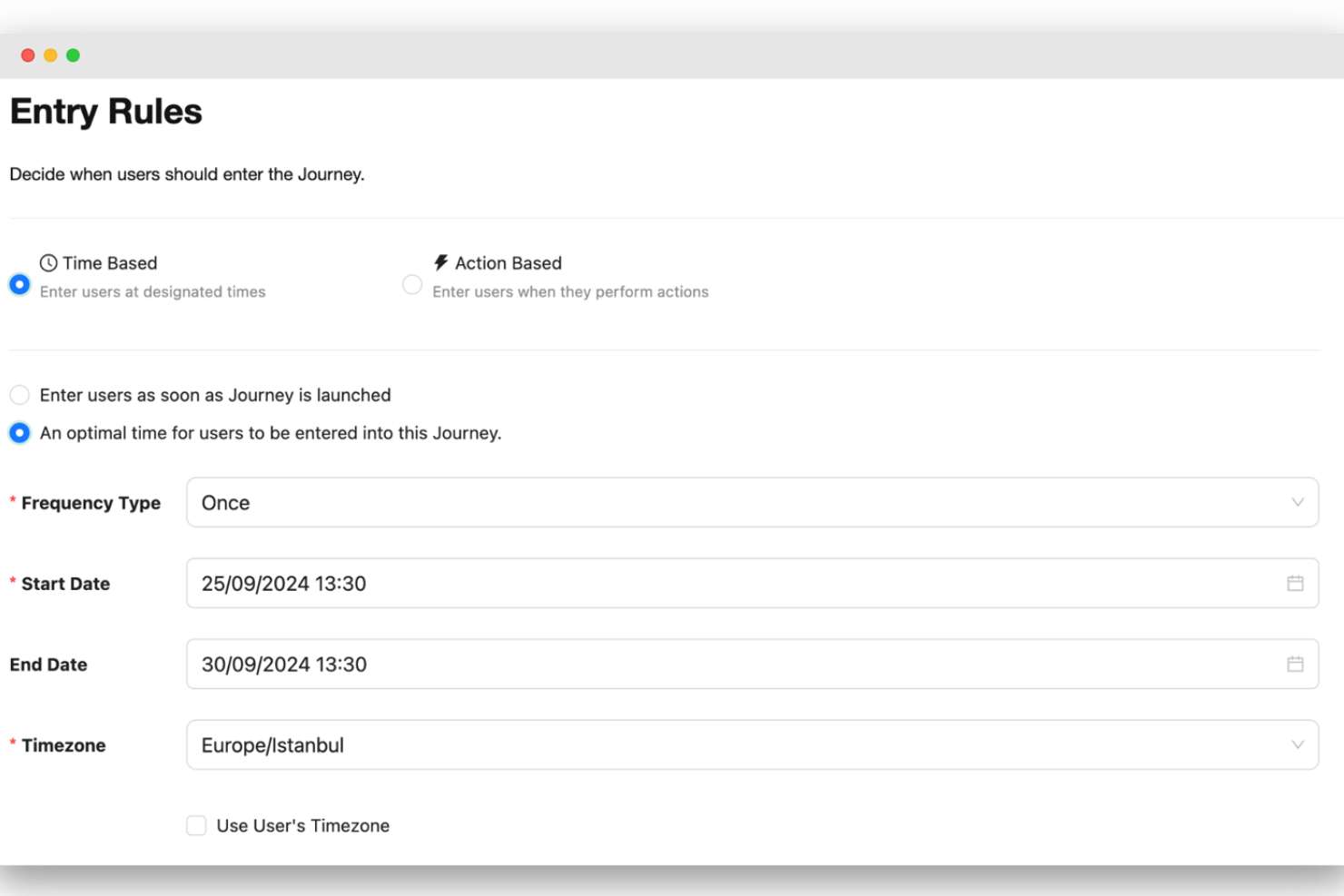
Netmera provides tools that help businesses manage customer communication across different channels. The platform supports messaging through push notifications, SMS, email, and in-app messages, allowing teams to organize campaigns and reach users in multiple ways. It also supports multi-channel personalization, helping businesses tailor messages based on user behavior and preferences.
Why I Picked Netmera
I picked Netmera for its multi-channel personalization, which helps businesses tailor messages across channels such as push notifications, SMS, email, and in-app messaging. The platform uses customer data to adjust communication based on user behavior and preferences. Netmera also includes analytics tools that help teams monitor campaign performance and understand how users interact with messages across different channels.
Netmera Key Features
Aside from multi-channel personalization, I also found Netmera offers:
- Web Personalization: Allows your team to tailor web content to individual users without the need for coding, enhancing user engagement.
- Web Push Notifications: Provides real-time alerts to users, keeping them informed and engaged with your brand.
- Customer Journey Mapping: Enables your team to visualize and optimize the customer journey, ensuring a seamless experience across channels.
- Data Analytics: Offers comprehensive insights into user behavior, helping your team refine marketing strategies and improve ROI.
Netmera Integrations
Integrations include Mixpanel and other analytics platforms, with additional integrations available through API support.
Pros and Cons
Pros:
- Campaign management tools simplify sending messages across multiple channels
- Advanced micro-segmentation for precise targeting
- Visual campaign builder for non-technical users
Cons:
- Reporting customization options are limited
- More limited selection of pre-built, native integrations


ActiveCampaign is a marketing automation platform designed for businesses seeking to enhance customer engagement through AI-driven insights. Its primary users include small to medium-sized businesses looking to optimize email marketing and customer relationship management. With AI capabilities, it helps automate tasks and personalize email content effectively.
Why I picked ActiveCampaign: It delivers more than basic marketing automation. ActiveCampaign’s autonomous marketing engine and expansive integration ecosystem enable teams to trigger the right message, via the right channel, at the right time. With unified email, SMS, and CRM workflows, it supports both mid-market and growing businesses needing a connected, data-driven marketing stack.
Standout features & integrations:
Features include advanced email segmentation that allows you to target specific audience groups. Its automation workflows can save you time by automating repetitive tasks. You can also benefit from predictive sending, which optimizes the timing of your emails for better engagement.
Integrations include Shopify, WordPress, Facebook, Salesforce, Slack, Zapier, Google Analytics, PayPal, WooCommerce, and QuickBooks.
Pros and Cons
Pros:
- Automation workflows simplify tasks
- Advanced segmentation for targeted campaigns
- Predictive sending optimizes email timing
Cons:
- Learning curve for beginners
- Templates offer minimal flexibility


Braze is a customer engagement platform designed for businesses looking to enhance personalized communication with their users. Its main user base includes marketing teams and customer experience professionals who focus on creating personalized messaging across multiple channels using AI-driven insights.
Why I picked Braze: It allows teams to deliver personalized messages across mobile, web, email, and in-app channels using real-time data. Its AI-driven segmentation and dynamic content tools help teams adjust messaging based on behavior and lifecycle stage, making it a strong choice for organizations that rely on personalized, cross-channel engagement.
Standout features & integrations:
Features include a drag-and-drop journey builder that allows you to create complex customer journeys with ease. You can use Braze's in-app messaging to engage users within your app. The platform also offers advanced analytics to track and optimize campaign performance.
Integrations include Salesforce, Segment, Amplitude, Snowflake, Google Analytics, Slack, Looker, Shopify, Mixpanel, and Marketo.
Pros and Cons
Pros:
- Journey builder for user engagement
- Real-time data processing for dynamic content
- Effective AI-driven audience segmentation
Cons:
- Onboarding time varies by use case
- Requires technical expertise for full utilization


Ortto is a marketing automation platform designed for businesses seeking to enhance customer engagement through AI-driven multichannel campaigns. Its main users include marketing teams looking to integrate various communication channels and optimize customer journeys with AI insights.
Why I picked Ortto: It helps marketing teams manage multichannel campaigns from a single workspace, using AI to refine customer journeys and predict engagement. Its journey builder, analytics, and audience tools enable teams to personalize touchpoints across email, SMS, advertising, and in-app channels. This makes Ortto a strong fit for teams focused on coordinated, AI-informed multichannel marketing.
Standout features & integrations:
Features include a visual campaign builder that simplifies the creation of complex marketing workflows. The audience builder helps you segment your contacts for targeted messaging. Additionally, you can use its real-time analytics to track and measure campaign performance.
Integrations include Shopify, Salesforce, Slack, Google Ads, Facebook Ads, Stripe, WooCommerce, Zapier, HubSpot, and Zendesk.
Pros and Cons
Pros:
- Real-time analytics for performance tracking
- Visual campaign builder simplifies workflows
- Effective AI-driven customer journey mapping
Cons:
- May require training for full utilization
- Templates offer minimal flexibility
Other AI Marketing Automation Tools
Here are some additional AI marketing automation tools options that didn’t make it onto my shortlist, but are still worth checking out:
- Zoho
For AI-powered CRM
- Beehiiv
For newsletter growth AI
- Jasper
For AI-driven content creation
- Zapier
For integrating diverse apps
- Brevo
For engagement tools
- Encharge
For behavioral email automation
- Salesforce
For enterprise AI analytics
- Moosend
For AI-driven email segmentation
- GetResponse
For AI-powered webinar tools
- Blaze AI
For AI-based customer feedback analysis
- Salesmate
For AI-enhanced sales automation
- Optimove
For predictive customer analytics
- Smartly.io
For social media ad automation


AI Marketing Automation Tool Selection Criteria
When selecting the best AI marketing automation tools to include in this list, I considered common buyer needs and pain points like personalization of customer interactions and automation of repetitive tasks. I also used the following framework to keep my evaluation structured and fair:
Core Functionality (25% of total score)
To be considered for inclusion in this list, each solution had to fulfill these common use cases:
- Automate email marketing campaigns
- Segment customer lists based on behavior
- Track and analyze customer interactions
- Personalize marketing messages
- Integrate with CRM systems
Additional Standout Features (25% of total score)
To help further narrow down the competition, I also looked for unique features, such as:
- AI-driven predictive analytics
- Multi-channel marketing automation
- Advanced data visualization tools
- Real-time customer journey mapping
- AI-powered content generation
Usability (10% of total score)
To get a sense of the usability of each system, I considered the following:
- Intuitive user interface
- Customizable dashboards
- Easy navigation and layout
- Learning curve for new users
- Speed and responsiveness of the system
Onboarding (10% of total score)
To evaluate the onboarding experience for each platform, I considered the following:
- Availability of training videos
- Interactive product tours
- Access to templates and guides
- Live chat or chatbot support
- Webinars and online workshops
Customer Support (10% of total score)
To assess each software provider’s customer support services, I considered the following:
- 24/7 availability of support
- Knowledgeable and helpful staff
- Response time to inquiries
- Access to a useful help center
- Multi-channel support options
Value For Money (10% of total score)
To evaluate the value for money of each platform, I considered the following:
- Competitive pricing compared to features
- Flexible pricing plans
- Discounts for long-term commitments
- Cost of add-ons or extra features
- Return on investment potential
Customer Reviews (10% of total score)
To get a sense of overall customer satisfaction, I considered the following when reading customer reviews:
- Overall satisfaction ratings
- Commonly mentioned strengths and weaknesses
- Feedback on customer support
- Reports on system reliability
- User recommendations and endorsements
How to Choose AI Marketing Automation Tools
It’s easy to get bogged down in long feature lists and complex pricing structures. To help you stay focused as you work through your unique software selection process, here’s a checklist of factors to keep in mind:
| Factor | What to Consider |
|---|---|
| Scalability | Will the tool grow with your business? Consider if it can handle increased data volume and users as your team expands. Look for flexible pricing plans. |
| Integrations | Does it integrate with your existing systems? Check compatibility with your CRM, email platforms, and other tools to avoid data silos. |
| Customizability | Can you tailor it to fit your workflows? Look for tools that allow you to adjust settings and features to meet your unique business needs. |
| Ease of use | Is the tool user-friendly? Evaluate the learning curve and whether your team can adapt without extensive training. |
| Implementation and onboarding | How smooth is the transition? Consider the support provided during setup and the availability of resources like tutorials and customer service. |
| Cost | Does it fit your budget? Compare pricing structures, including hidden fees for additional features or users, to ensure long-term affordability. |
| Security safeguards | Are your data protected? Look for encryption, user access controls, and compliance with data protection regulations to safeguard sensitive information. |
| Support availability | Is help available when you need it? Consider the support hours, channels, and response times offered by the vendor to ensure assistance. |
What Are AI Marketing Automation Tools?
AI marketing automation tools are software solutions that use artificial intelligence to automate and enhance marketing tasks. These tools are used by marketing professionals, such as managers and digital marketers, to increase efficiency and personalize customer interactions. Features like predictive analytics, customer segmentation, and automated content creation help with targeting the right audience, optimizing campaigns, and reducing manual workload. Overall, these tools provide significant value by saving time and improving the effectiveness of marketing strategies.
Features
When selecting AI marketing automation tools, keep an eye out for the following key features:
- Predictive analytics: Uses AI to forecast trends and customer behaviors, helping you target your marketing efforts more effectively.
- Customer segmentation: Automatically divides your audience into meaningful groups based on behaviors and preferences, allowing for personalized marketing.
- Automated content creation: Generates marketing content using AI, saving time and ensuring consistency across campaigns.
- Behavioral triggers: Initiates marketing actions based on user behavior, ensuring relevant engagement with customers.
- AI-driven lead scoring: Evaluates and ranks leads based on potential value, helping prioritize follow-ups and improve sales efficiency.
- Dynamic content customization: Adjusts content in real-time to match user preferences, enhancing personalization and engagement.
- Multi-channel automation: Manages campaigns across various platforms from a single interface, ensuring consistency and efficiency.
- Real-time analytics: Provides immediate insights into campaign performance, allowing for quick adjustments and optimization.
- AI-powered recommendations: Suggests actions or strategies based on data insights, guiding marketing decisions and strategy adjustments.
Benefits
Implementing AI marketing automation tools provides several benefits for your team and your business. Here are a few you can look forward to:
- Consistent campaign performance: Automated workflows ensure timely, accurate execution across channels, reducing the risk of missed steps or manual errors.
- Stronger customer engagement: AI-guided messaging helps deliver content that aligns with user behavior and intent, driving higher interaction and conversion rates.
- Clear insight into campaign impact: Unified data gives your team a clearer understanding of what is working, helping you refine strategy with confidence.
- Faster marketing cycles: Automated processes shorten production and review times, enabling your team to launch or adjust campaigns.
- Higher ROI across channels: Better audience alignment and reduced manual work contribute to improved return on ad spend and overall marketing efficiency.
- Greater adaptability as your audience grows: Tools can handle increasing data volume, workflows, and segments without adding operational complexity.
- Earlier visibility into performance risks: Trend monitoring and anomaly detection help you address issues before they affect results.
Costs & Pricing
Selecting AI marketing automation tools requires an understanding of the various pricing models and plans available. Costs vary based on features, team size, add-ons, and more. The table below summarizes common plans, their average prices, and typical features included in AI marketing automation tools solutions:
Plan Comparison Table for AI Marketing Automation Tools
| Plan Type | Average Price | Common Features |
|---|---|---|
| Free Plan | $0 | Basic email marketing, limited automation, and basic reporting. |
| SMB Plan | $9-$65/month | Core email automation, basic segmentation, and limited multichannel features. |
| Mid-Market Plan | $59-$299/month | Advanced analytics, higher contact volumes, and additional AI features. |
| Enterprise Plan | Custom pricing | Advanced orchestration, cross-channel personalization, and large data volumes. |
AI Marketing Automation Tools FAQs
Here are some answers to common questions about AI marketing automation tools:
How can AI marketing automation tools integrate with my existing systems?
Yes, most AI marketing automation tools offer integrations with popular platforms such as CRM systems, email marketing services, and e-commerce platforms. To ensure smooth integration, check the tool’s compatibility with your current software stack. Look for tools with powerful APIs or pre-built connectors for platforms like Salesforce, HubSpot, or Shopify if you rely on AI-powered tools or workflows that involve generative AI outputs or AI agents. If you’re using custom software, consider a tool that allows for custom API integrations. Testing integrations in a controlled environment before full deployment can help avoid disruptions.
Are AI marketing automation tools customizable to fit my specific business needs?
Yes, many AI marketing automation tools offer customization options to align with your business processes. You can adjust workflows, set up custom triggers, and tailor templates to match your branding and maintain a consistent brand voice. Before purchasing, assess the tool’s flexibility in terms of workflow customization and reporting. A trial or demo can provide insights into how well the tool adapts to your specific use case, if your marketing team uses AI writing assistants, ChatGPT, OpenAI models, or Adobe tools as part of your creative or copywriting process.
What kind of support and training can I expect after purchasing?
After purchasing an AI marketing automation tool, you can expect various support options, including live chat, email, and phone support. Many vendors offer onboarding sessions, training videos, and webinars to help your team get started. Some tools provide dedicated account managers for personalized assistance. Check whether the vendor offers 24/7 support if you operate in multiple time zones. It’s also beneficial to join user communities or forums for peer support and shared tips when using AI-generated assets or experimenting with algorithms and machine learning–driven automation features.
Will AI marketing automation tools help improve my ROI?
Yes, AI marketing automation tools can improve your ROI by optimizing marketing efforts and increasing efficiency. They help target the right audience, personalize messaging, and automate repetitive tasks, leading to higher engagement rates. This can also support performance improvements in areas like product recommendations, subject lines, and campaign sequencing, powered by powerful AI. To maximize ROI, analyze the tool’s performance metrics and adjust strategies accordingly. Setting clear KPIs before implementation can help measure the tool’s impact on your bottom line when comparing outcomes across the best AI marketing tools.
How secure are AI marketing automation tools in handling customer data?
AI marketing automation tools prioritize security and often comply with data protection regulations like GDPR. Most tools use encryption, access controls, and regular audits to protect customer data. When selecting a tool, review its security certifications and ask about its data handling practices. Ensure you have data processing agreements in place if necessary. Update your security protocols to align with the tool’s updates and industry standards. This is especially important if workflows involve sensitive AI-generated content or integrations with external systems.
What’s Next:
If you're in the process of researching AI marketing automation tools, connect with a SoftwareSelect advisor for free recommendations.
You fill out a form and have a quick chat where they get into the specifics of your needs. Then you'll get a shortlist of software to review. They'll even support you through the entire buying process, including price negotiations.