


ActiveCampaign Review 2026: Pros, Cons, Features, and Pricing


Email campaigns start piling up, follow-ups slip through the cracks, and what used to be management in spreadsheets or basic email tools now feels scattered and hard to control. But the real bottleneck isn’t organization, it’s speed. Marketing teams spend weeks building campaigns manually, juggling disconnected tools, and reacting to problems after they’ve already hurt performance. This is where marketing automation software comes in.
This ActiveCampaign review walks through how the platform’s Active Intelligence transforms marketing from a manual, reactive process into an autonomous, predictive system. I’ll explore what the platform offers, how it performs in real team scenarios, and whether it delivers the speed, control, and business impact you need to move forward with confidence.
ActiveCampaign Evaluation Summary
- From $15/month (billed annually)
- 14-day free trial + free demo available
Why Trust Our Software Reviews
We’ve been testing and reviewing marketing software since 2022. As marketing experts ourselves, we know how critical and difficult it is to make the right decision when selecting software.
We invest in deep research to help our audience make better software purchasing decisions. We’ve tested more than 2,000 tools for different marketing use cases and written over 1,000 comprehensive software reviews. Learn how we stay transparent & our software review methodology.
ActiveCampaign Overview
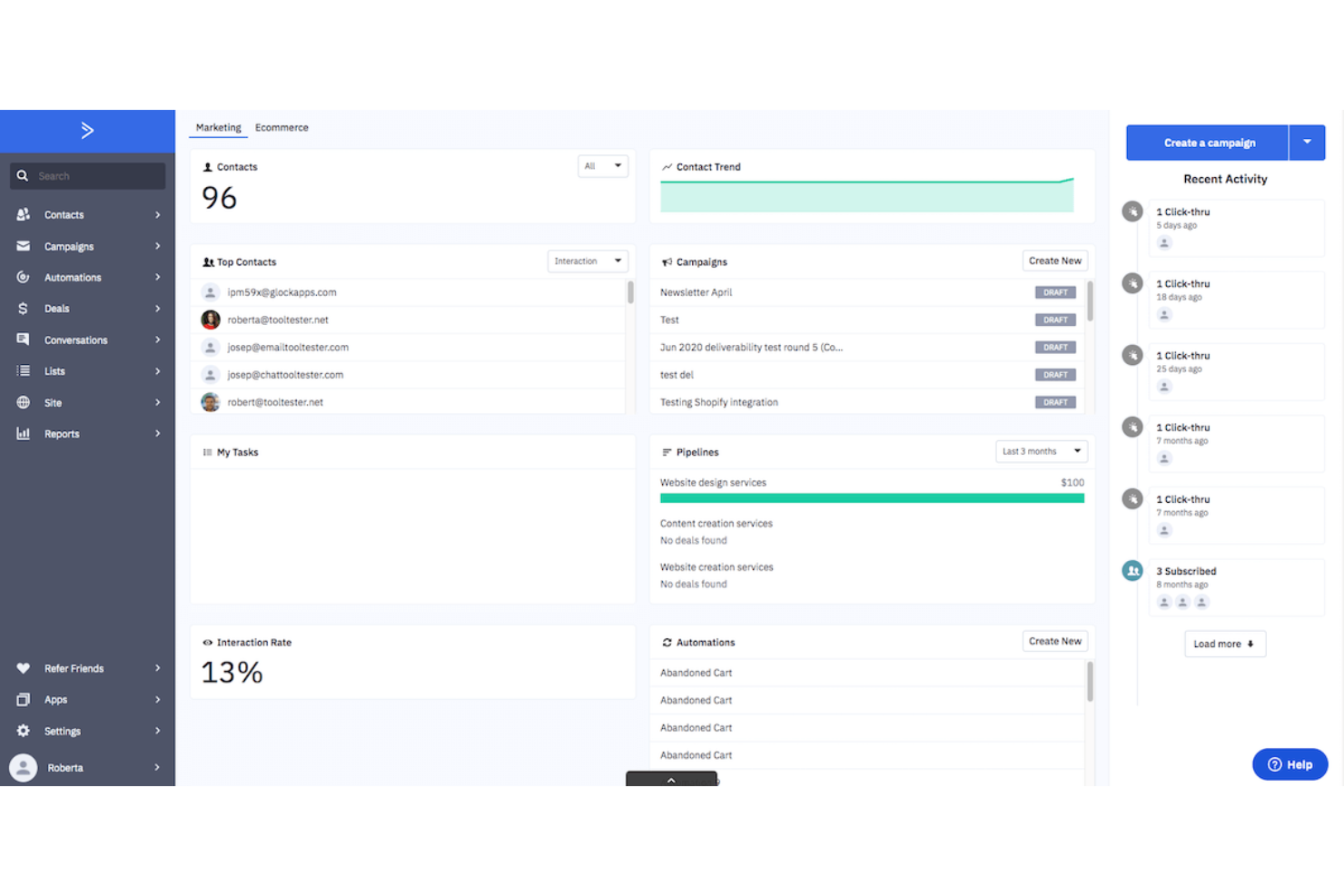
ActiveCampaign is an all-in-one platform that lets you build engaging marketing campaigns, including landing pages, email, SMS, WhatsApp, and automation to support personalized, behavior-driven customer journeys. It combines lead generation, personalization, tracking, and behavior automation in one tool so you can convert more, engage better, and act on insights faster.
Where other tools may make you build campaigns manually, ActiveCampaign builds them for you with Active Intelligence—AI agents that are trained on billions of data points to autonomously execute your goals. With leading deliverability, 1,000+ integrations, and the ability to build automated campaigns in just 5 clicks, ActiveCampaign delivers speed and sophistication without complexity.
pros
-
Offers market-leading email deliverability, free migration services, and 1:1 onboarding on all paid plans.
-
All-in-one platform combines email, SMS, WhatsApp, landing pages, CRM, and behavioral automation with over 1,000 integrations.
-
Active Intelligence builds campaigns for you from plain-language goals using AI trained on billions of data points, delivering campaigns in 5 clicks.
cons
-
The interface might feel a bit clunky compared to some competitors.
-
New users may find some of ActiveCampaign's more advanced features overwhelming, requiring time to learn.
-
Costs can rise as contact lists grow, especially for advanced features
Is ActiveCampaign Right For Your Needs?
Who Would be a Good Fit for ActiveCampaign?
ActiveCampaign is best for teams that need autonomous marketing execution, predictive intelligence, and multi-channel personalization without increasing their marketing ops team or budget. It fits businesses that want campaigns built in minutes instead of days, AI that flags problems before they impact revenue, and personalization across every platform that scales to thousands of contacts.”
-
Travel and Hospitality
Automate booking confirmations and post-stay engagement to improve guest retention and reviews.
-
Online Learning Creators
Deliver onboarding and lesson sequences automatically based on where learners are in your courses.
-
Healthcare Providers
Send appointment confirmations, reminders, and timely follow-ups with consistent communication.
-
Agencies
Manage segmented campaigns and automation workflows for clients without doing every step manually.
-
Ecommerce Stores
Trigger automated emails for abandoned carts and personalized product follow-ups tied to customer behavior.
-
SaaS Companies
Automate lead follow-ups and product onboarding sequences to nurture users through the trial and adoption cycle.
Who Would be a Bad Fit for ActiveCampaign?
ActiveCampaign is not built for every team. If your priorities lean toward extreme simplicity, heavy enterprise customization, or strict regulatory requirements, other tools may be a better match.
-
Large Enterprises
Teams that require deep system-wide customization and complex legacy integrations may outgrow ActiveCampaign’s flexibility.
-
Highly Regulated Organizations
Businesses that need strict compliance controls and industry-specific certifications may require more specialized platforms.
-
Teams Seeking Minimal Setup
If your team wants a plug-and-play email tool with little onboarding, ActiveCampaign’s learning curve may slow you down.
-
Organizations With Legacy Systems
Companies relying on outdated or proprietary systems may face integration limitations.
-
Budget-Constrained Teams at Scale
As contact lists grow, pricing can increase quickly, making it harder to justify long-term costs.
-
Users Needing Only Basic Email Sends
If your use case is limited to simple newsletters, ActiveCampaign’s automation depth may be unnecessary.
How We Test & Score Tools
We’ve spent years building, refining, and improving our software testing and scoring system. The rubric is designed to capture the nuances of software selection and what makes a tool effective, focusing on critical aspects of the decision-making process.
Below, you can see exactly how our testing and scoring works across seven criteria. It allows us to provide an unbiased evaluation of the software based on core functionality, standout features, ease of use, onboarding, customer support, integrations, customer reviews, and value for money.
Core Functionality (25% of final scoring)
The starting point of our evaluation is always the core functionality of the tool. Does it have the basic features and functions that a user would expect to see? Are any of those core features locked to higher-tiered pricing plans? At its core, we expect a tool to stand up against the baseline capabilities of its competitors.
Standout Features (25% of final scoring)
Next, we evaluate uncommon standout features that go above and beyond the core functionality typically found in tools of its kind. A high score reflects specialized or unique features that make the product faster, more efficient, or offer additional value to the user.
We also evaluate how easy it is to integrate with other tools typically found in the tech stack to expand the functionality and utility of the software. Tools offering plentiful native integrations, 3rd party connections, and API access to build custom integrations score best.
Ease of Use (10% of final scoring)
We consider how quick and easy it is to execute the tasks defined in the core functionality using the tool. High scoring software is well designed, intuitive to use, offers mobile apps, provides templates, and makes relatively complex tasks seem simple.
Onboarding (10% of final scoring)
We know how important rapid team adoption is for a new platform, so we evaluate how easy it is to learn and use a tool with minimal training. We evaluate how quickly a team member can get set up and start using the tool with no experience. High scoring solutions indicate little or no support is required.
Customer Support (10% of final scoring)
We review how quick and easy it is to get unstuck and find help by phone, live chat, or knowledge base. Tools and companies that provide real-time support score best, while chatbots score worst.
Customer Reviews (10% of final scoring)
Beyond our own testing and evaluation, we consider the net promoter score from current and past customers. We review their likelihood, given the option, to choose the tool again for the core functionality. A high scoring software reflects a high net promoter score from current or past customers.
Value for Money (10% of final scoring)
Lastly, in consideration of all the other criteria, we review the average price of entry level plans against the core features and consider the value of the other evaluation criteria. Software that delivers more, for less, will score higher.
Core Features
Email Marketing
Create and send targeted email campaigns using a drag-and-drop editor, templates, and personalization tools.
Marketing Automation
Build automated workflows that trigger emails and actions based on contact behavior, events, or lifecycle stages.
Sales CRM
Track contacts, deals, and interactions in a built-in CRM that connects marketing activity with sales follow-ups.
Audience Segmentation
Organize contacts using tags, custom fields, and behavior-based rules to deliver more relevant messaging.
Multi-Channel Messaging
Reach contacts beyond email using SMS, WhatsApp, and transactional messages from one platform.
Analytics and Reporting
Monitor campaign performance, automation outcomes, and engagement data to guide optimization decisions.
Standout Features
Active Intelligence (AI-Powered Automation)
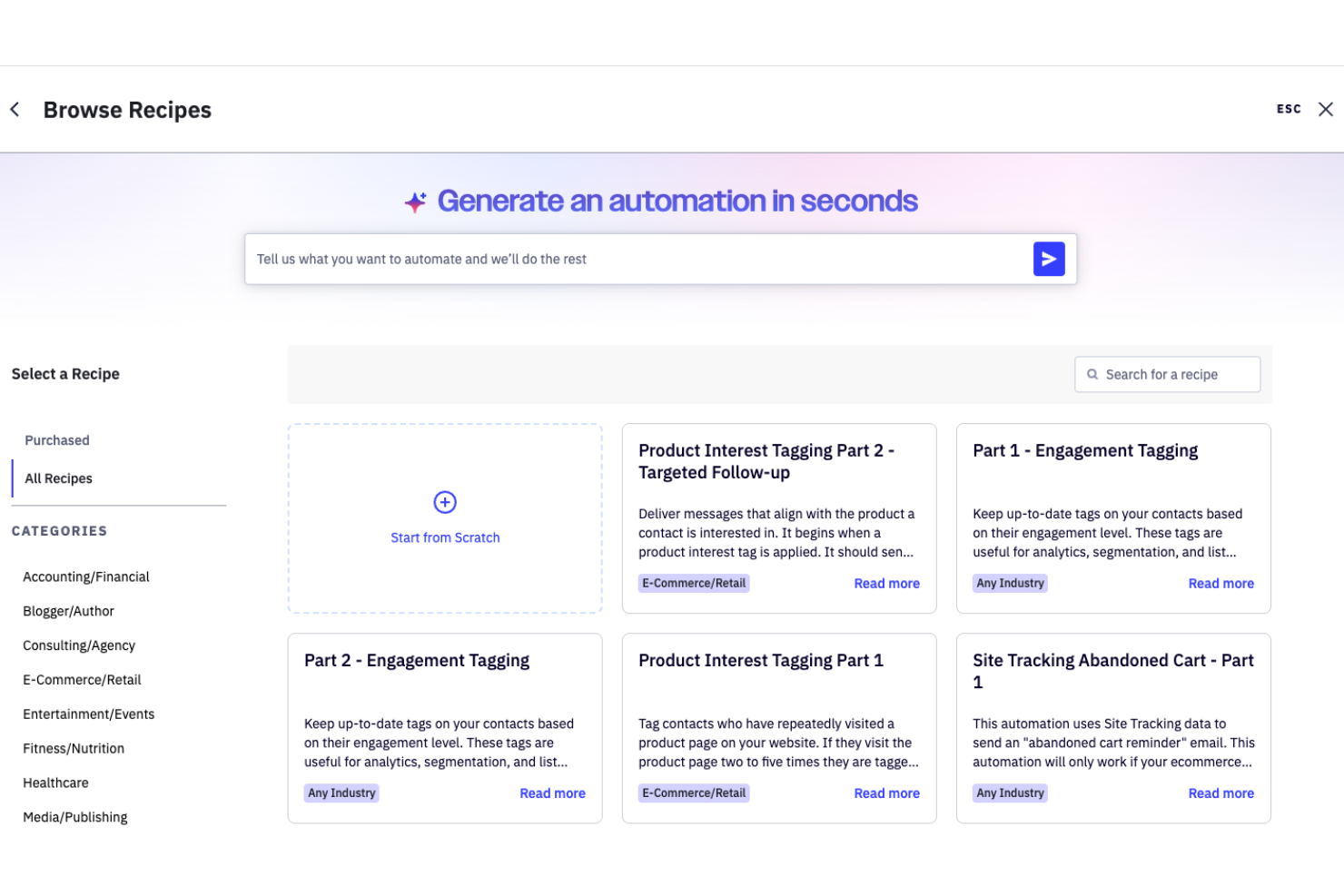
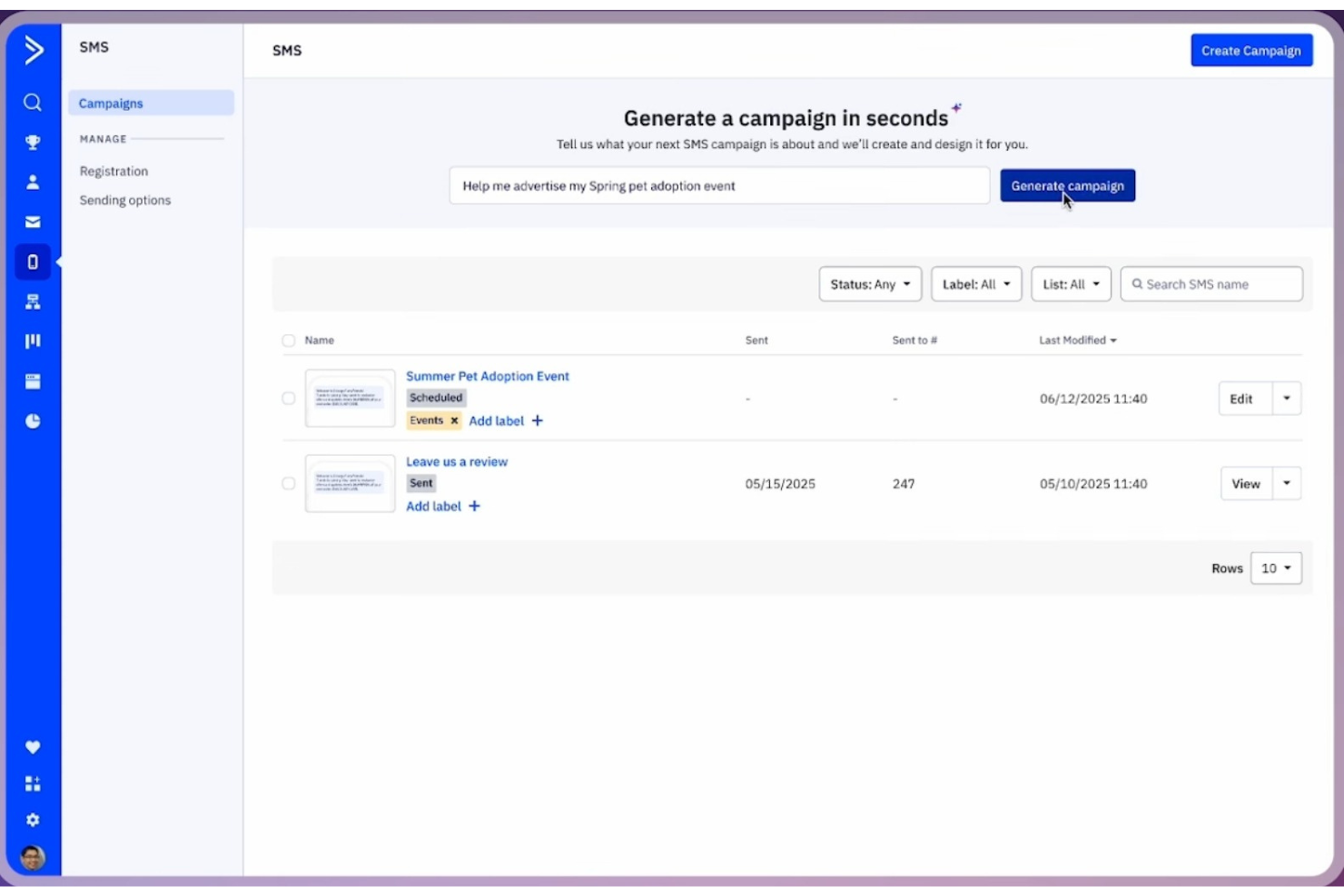
Go beyond AI assistance to fully autonomous execution. Describe goals in plain language, and AI agents trained on billions of customer interactions can build campaigns, optimize send times, create targeted segments, and proactively fix performance issues.
Site Tracking
Track website activity to trigger personalized follow-ups based on pages visited and actions taken.
Ease of Use
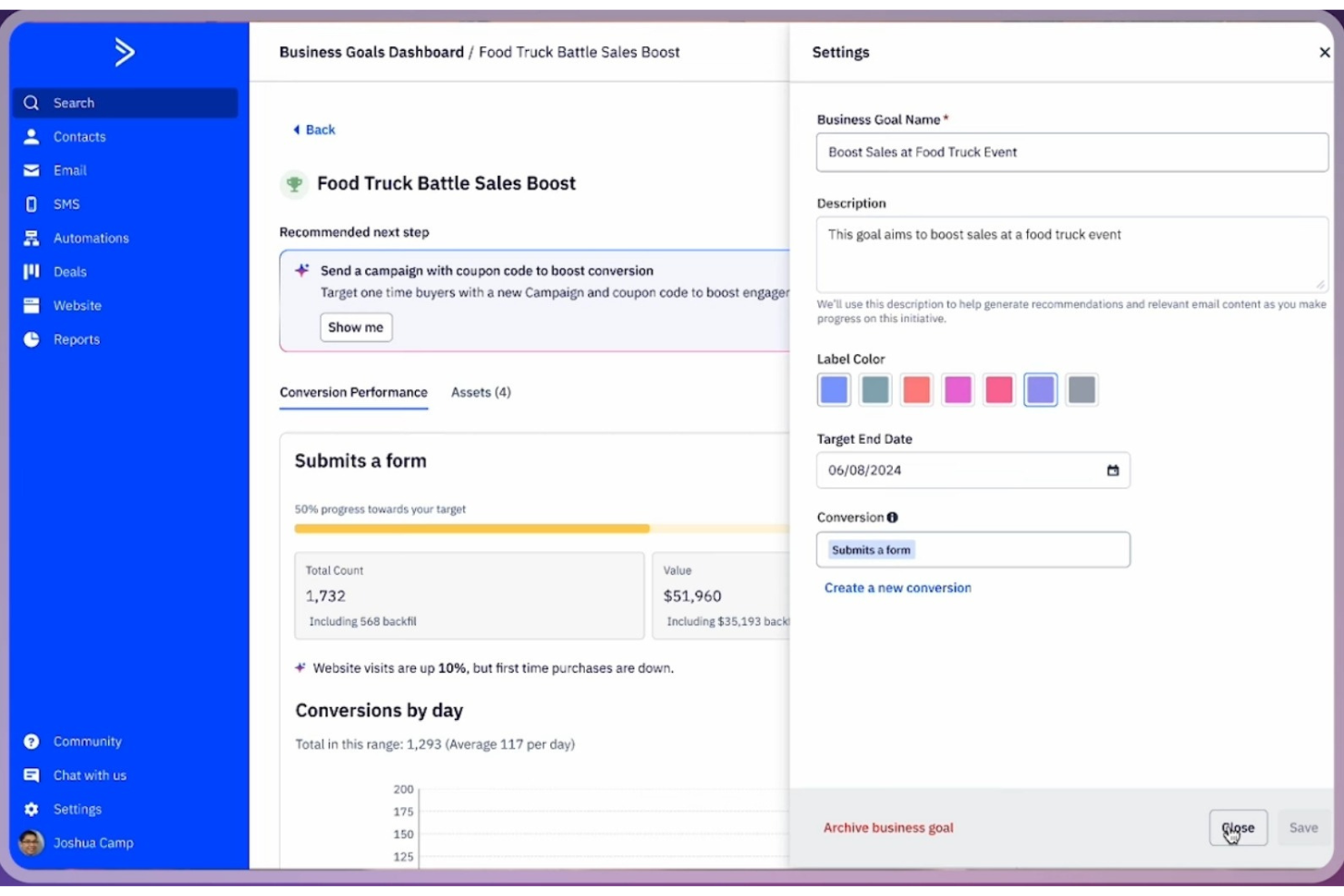
ActiveCampaign has a bit of a learning curve due to the depth of its automation and configuration options. While the interface can feel like a lot to absorb at first, it becomes more intuitive once workflows and features are set up. Then, you’ll be able to set up campaigns quickly. Teams that invest time in onboarding and setup typically find the platform flexible and efficient for managing complex marketing automations.
Onboarding
ActiveCampaign provides free one-on-one onboarding to help teams get started faster. New customers receive guided setup from an ActiveCampaign expert, including help with data migration, templates, and initial automations. This hands-on support reduces setup time and helps teams start running campaigns without unnecessary delays.
Customer Support
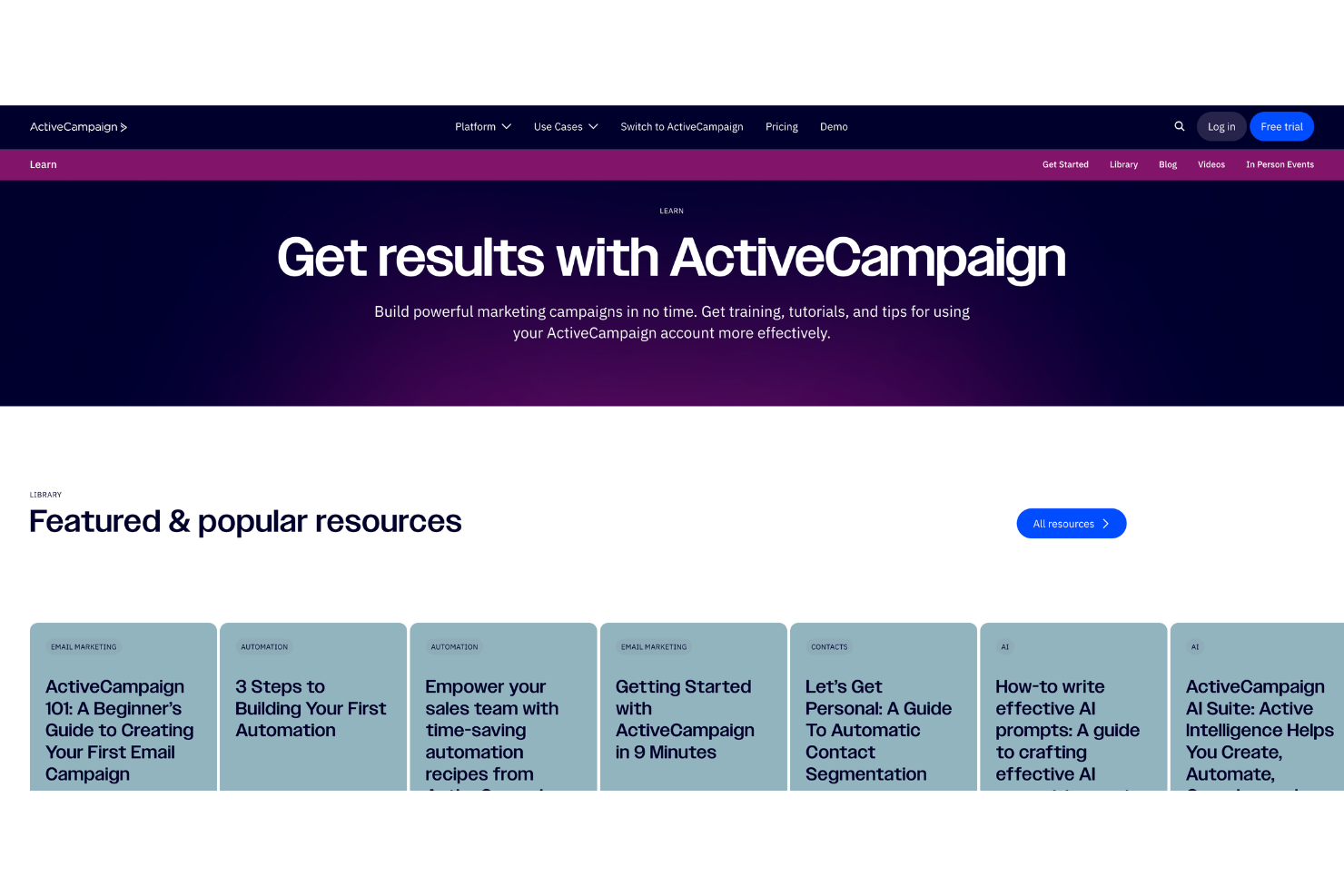
ActiveCampaign provides support through its help center, onboarding resources, and direct access to sales and specialists when needed. Customers can use documentation, training materials, and guided support to resolve issues or get set up faster.
Integrations
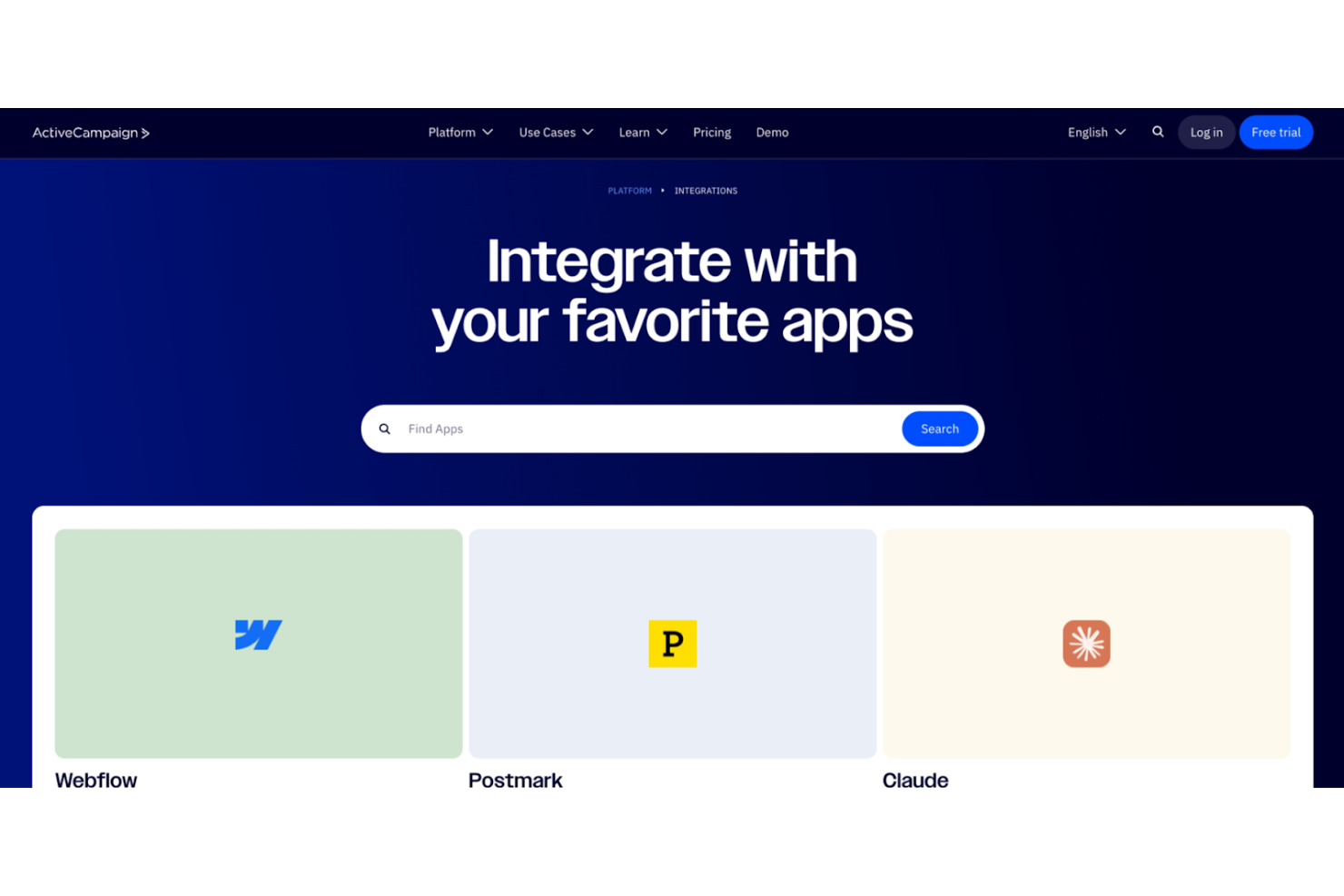
ActiveCampaign offers native integrations with widely used tools like Salesforce, Shopify, and WordPress, making it easier to connect marketing, sales, and customer data in one place.
For tools outside its native integrations, the platform does have API and Zapier support to help you extend workflows without added complexity.
Value for Money
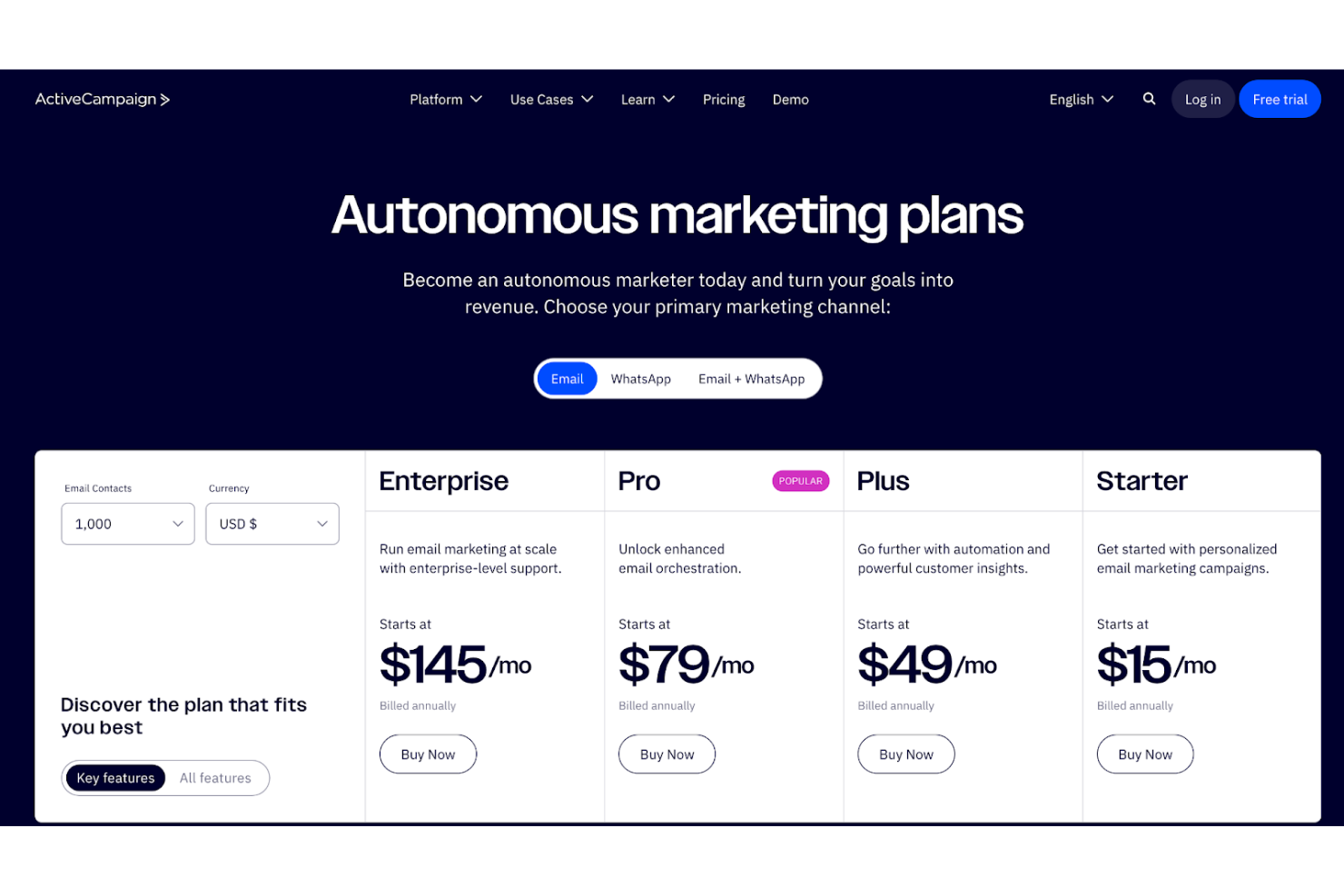
ActiveCampaign uses a tiered pricing model based on features and contact volume, allowing teams to scale as their needs grow. Plans are designed primarily for small to mid-sized businesses that want more advanced marketing automation over time.
- Starter: Includes core email marketing and basic automation tools for getting started.
- Plus: Adds advanced automation features, CRM functionality, and multi-channel messaging.
- Pro: Expands automation with predictive tools, deeper reporting, and optimization features.
- Enterprise: Offers custom solutions, advanced reporting, dedicated support, and higher limits for larger teams.
ActiveCampaign Specs
- A/B Testing
- Analytics
- API
- Audience Targeting
- Automated Conversion
- Batch Permissions & Access
- Behavioral Tracking
- Brand Management
- Campaign Management
- Contact Management
- Contact Sharing
- Conversion Tracking
- CRM Integration
- Customer Management
- Dashboards
- Data Export
- Data Import
- Email Integration
- External Integrations
- Keyword Tracking
- Landing Pages
- Lead Management
- Lead Scoring
- Link Tracking
- Marketing Automation
- Multi-User
- Notifications
- Password & Access Management
- Social-Media Integration
ActiveCampaign FAQs
What kind of customer support is available?
How customizable is ActiveCampaign?
How does ActiveCampaign handle data security and compliance?
Can ActiveCampaign support long-term business growth?
How easy is it to switch from another platform?
Does ActiveCampaign support team collaboration?
What is the learning curve like?
How does ActiveCampaign support email deliverability?
ActiveCampaign Company Overview & History
ActiveCampaign is a private marketing automation and CRM company founded in 2003 by Jason VandeBoom. Headquartered in Chicago, the company provides email marketing, automation, CRM, and customer experience tools to businesses worldwide.
ActiveCampaign serves 180,000+ customers across a wide range of industries and is known for its focus on automation, usability, and customer support.
ActiveCampaign Major Milestones
- 2003: Founded by Jason VandeBoom as a software company focused on helping small businesses grow.
- 2013–2014: Transitioned fully to a cloud-based SaaS model with a growing focus on marketing automation.
- 2021: Achieved unicorn status with a valuation exceeding $1 billion following major investment rounds.
- 2021: Expanded globally, growing its workforce to over 1,000 employees across multiple regions.
- 2022–2023: Continued scaling its automation platform and AI capabilities while remaining privately held.
- 2023–Present: Doubles down on AI-driven marketing solutions and platform integrations, positioning itself as a modern autonomous marketing platform for scaling businesses.