

Cele mai bune software-uri de atribuire de marketing oferă guvernanță a datelor bazată pe inteligență artificială, acceptă mai multe cadre de atribuire și generează rapoarte în timp real care atribuie merite de-a lungul parcursului cumpărătorului. Gândiți-vă la tablouri de bord vizuale, detectarea automată a anomaliilor și modalități sigure de a partaja informații între departamente.
Cu toate acestea, multe instrumente de atribuire contribuie la paralizia decizională, nu la obținerea unor informații utile, copleșind echipele cu prea multe modele și favorizând parcursurile lineare ale clienților în detrimentul traseelor complexe și cu fire multiple, tipice pentru companiile SaaS.
În cei zece ani de activitate ca lider de marketing, am petrecut peste 300 de ore testând și analizând în demonstrații platforme de atribuire, evaluând cât de bine se integrează cu sistemele CRM, cât de bine gestionează haosul UTM și cât de rapid oferă informații valoroase.
Folosind metodologia noastră riguroasă de evaluare, am ajuns la o selecție scurtă a celor mai bune software-uri de atribuire, pentru a vă ajuta să reduceți cheltuielile publicitare irosite, să îmbunătățiți eficiența CAC și să obțineți raportare în timp real, astfel încât să vă puteți concentra asupra creșterii.
Why Trust Our Software Recommendations
6,700+
Reviews
20
Industry experts
16+
Evaluation factors
14
Years
Our team has been testing and reviewing software since 2012. As marketing leaders ourselves, we know how difficult—and important—it is to choose the right software.
For this guide, we evaluated tools using hands-on testing and independent research, scoring tools using our selection criteria.
Our reviews reflect our human editorial judgment, not a sales pitch.
Expert reviewers:
 Gui DrusinaCreative Director
- Shriya GhateSenior Marketing Lead
 Amanda JacquesMarketing Ops Leader

Tabel comparativ: software-uri de atribuire de marketing
Acest tabel comparativ sintetizează detaliile privind prețurile pentru selecțiile mele de top de software-uri de atribuire de marketing.
Sorted by: Default
| Tool | Starting Price | Website | |
|---|---|---|---|
Best for last-touch attribution insights | 4.5 out of 5 | $10.70/month Free plan available | Website |
Best for pay-per-call campaign management | 5.0 out of 5 | Pricing upon request Free demo available | Website |
Best for unified multi-source analytics | 4.6 out of 5 | $25/month Free plan + 30-day free trial + free demo available | Website |
Best for omnichannel engagement | 4.2 out of 5 | $25/month 15-day free trial available | Website |
Best for ecommerce companies | 4.6 out of 5 | Free for up to 10,000 monthly active users Free demo available | Website |
Best for B2B revenue attribution | 4.7 out of 5 | Pricing upon request Free plan + free demo available | Website |
Best for call tracking attribution | 4.6 out of 5 | $55/month 14-day free trial | Website |
Best for businesses with a mobile app-centric focus | 4.4 out of 5 | Pricing upon request 30-day free trial | Website |
Best for CRM-based attribution reporting | 4.4 out of 5 | $20/user/month Free plan available | Website |
Best for ecommerce attribution insights | 4.5 out of 5 | Pricing upon request Free trial available | Website |


Recenzii ale celor mai bune software-uri de atribuire de marketing
Iată alegerile mele pentru cele mai bune software-uri de atribuire de marketing, inclusiv prezentări generale, cele mai potrivite cazuri de utilizare, funcții, avantaje și dezavantaje și informații despre prețuri.
 Best for last-touch attribution insights
- Free plan available
- From $10.70/month (billed annually)
Visit WebsiteCustomer Rating:4.5/5
Mailchimp’s dashboard connects campaign engagement metrics to conversions, helping you attribute revenue to specific emails. Mailchimp offers a unique blend of email and SMS marketing capabilities that cater to the needs of small to medium-sized enterprises and e-commerce platforms. It is designed to help you understand which marketing efforts drive revenue and customer engagement through its marketing attribution features. Whether you're looking to boost your e-commerce sales or enhance customer communication, Mailchimp's integration with popular platforms like Shopify and Salesforce provides a robust ecosystem to meet your marketing needs.
Why I Picked Mailchimp
I picked Mailchimp for its ability to integrate marketing attribution directly into its email and SMS marketing platform, providing you with insights into which channels are driving conversions. The last-touch attribution model in Mailchimp helps you link sales to the last marketing message a customer interacted with, offering clarity in understanding revenue-driving efforts. Furthermore, the platform's customizable attribution windows allow you to tailor the tracking to your specific campaign needs, ensuring that you're capturing the most relevant data for your business.
Mailchimp Key Features
In addition to its marketing attribution capabilities, Mailchimp provides a suite of features to enhance your marketing strategies:
- Email Marketing Automation: Automate your email campaigns with personalized triggers and schedules to engage your audience at the right time.
- SMS Marketing: Send targeted text messages to your customers, integrating seamlessly with your email campaigns for a unified communication strategy.
- AI-Powered Content Tools: Utilize AI-driven tools to generate compelling content and optimize your marketing messages.
- Reporting and Analytics: Access detailed reports and analytics to track campaign performance and make data-driven decisions.
Mailchimp Integrations
Integrations include Shopify, WooCommerce, Salesforce, WordPress, Magento, BigCommerce, Zapier, Slack, Microsoft Dynamics, and HubSpot. Mailchimp also offers an API for custom integrations.
Pros and Cons
Pros:
- Unified email and SMS marketing improve communication strategies.
- AI-driven tools assist in generating compelling marketing content.
- Mailchimp offers last-touch attribution for clear channel insights.
Cons:
- SMS features are not available in all regions or plans.
- Pricing can be high for larger subscriber lists and features.
Learn more about Mailchimp : Best for pay-per-call campaign management
- Free demo available
- Pricing upon request
Visit WebsiteCustomer Rating:5/5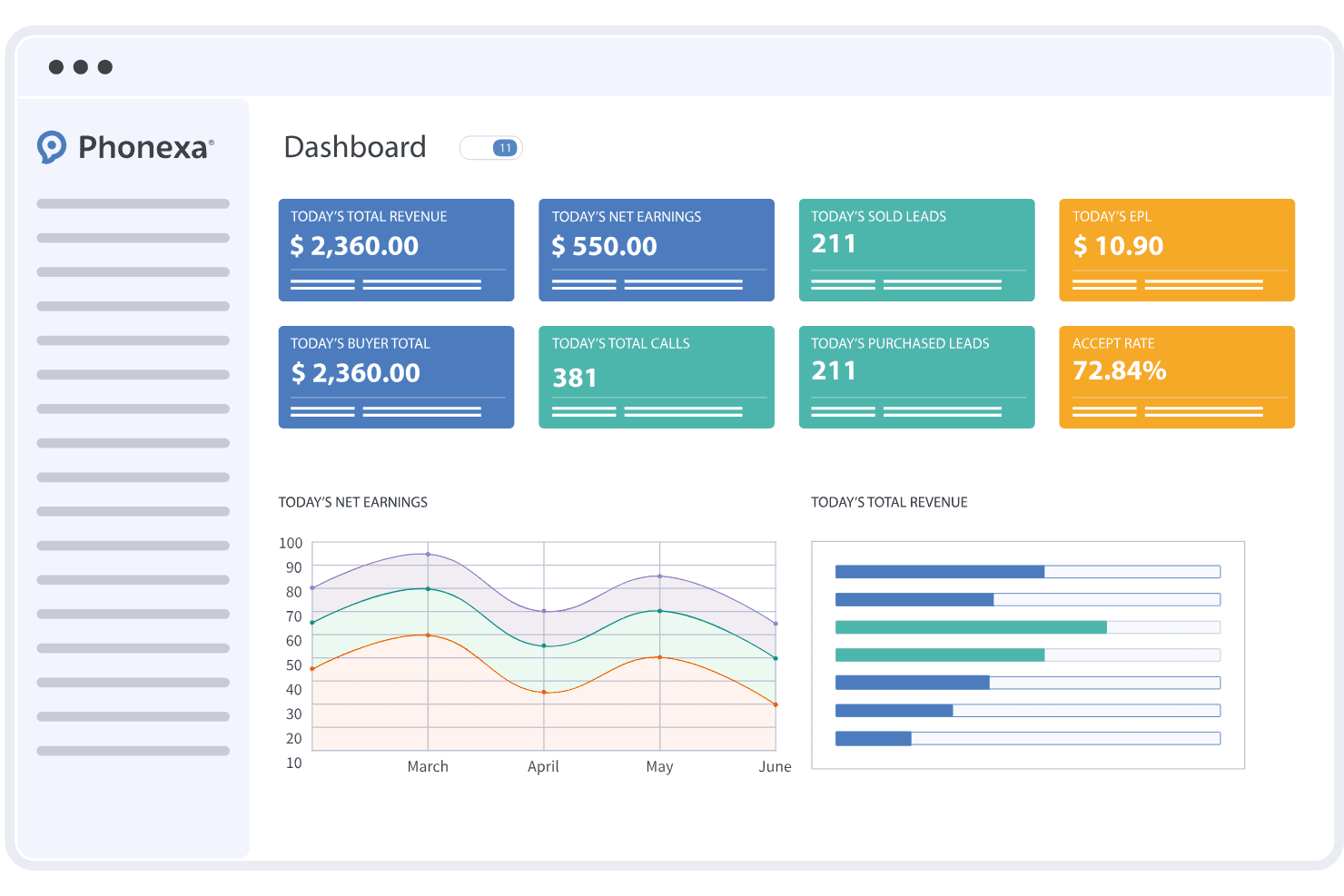
Phonexa is a call tracking platform with routing, fraud monitoring, and attribution tools for high-volume campaigns. Phonexa is a lead and call tracking platform that combines call attribution, lead distribution, and campaign analytics across multiple marketing channels.
Who Is Phonexa Best For?
Phonexa is a good fit for marketing teams at agencies or enterprise-grade businesses that need to track and attribute inbound calls and leads across multiple channels.
Why I Picked Phonexa
I picked Phonexa as one of the best because its pay-per-call campaign management tools let my team track, route, and optimize inbound calls with detailed attribution. I use the platform's call tracking and analytics to see which campaigns drive high-value calls, and the lead distribution engine helps us assign leads and calls, and the lead distribution engine helps us assign leads and calls to the right agents or partners in real time. This setup is especially useful when we're running multiple campaigns across different channels and need granular reporting on call outcomes.
Phonexa Key Features
- Email marketing automation: Build, schedule, and track email campaigns directly within the platform.
- Multi-channel attribution reporting: Attribute conversions across calls, web forms, and digital channels in unified dashboards.
- Lead management system: Capture, score, and distribute leads from multiple sources with customizable rules.
- API access: Connect Phonexa with other tools and platforms using robust API endpoints.
Phonexa Integrations
Phonexa offers 100+ native integrations, including Salesforce and HubSpot, with additional connectivity to other popular CRMs. An API is available for custom integrations.
Pros and Cons
Pros:
- Built-in fraud detection for lead quality control
- Customizable attribution models for multi-channel tracking
- Native integrations with Salesforce and HubSpot
Cons:
- Cross-channel reporting lacks unified data ingestion
- No multi-touch attribution modeling
Learn more about Phonexa: Best for unified multi-source analytics
- Free plan + 30-day free trial + free demo available
- From $25/month
Visit WebsiteCustomer Rating:4.6/5
Klaviyo provides omnichannel attribution features to connect customer touchpoints. Klaviyo helps B2C marketers connect customer behavior with revenue outcomes by tracking how your email, SMS, and other channels contribute to conversions and customer journeys — giving you a clearer picture of which messages and interactions are moving the needle. Its reporting and attribution tools are built with online stores and data-driven marketing teams in mind, so you can dig into performance across campaigns without stitching together fragmented data sources.
Why I Picked Klaviyo
I picked Klaviyo because of its built-in omnichannel attribution model that shows how your email, SMS, and other interactions contribute to conversions across the customer journey, so you can better understand exactly what’s driving revenue. Klaviyo’s configurable attribution windows let you adjust how touchpoints are credited over time, giving you flexibility to align tracking with your business needs. I also appreciate how its multi-channel analytics bring together data from both Klaviyo and non-Klaviyo sources to help you make more informed marketing decisions.
Klaviyo Key Features
In addition to its strong attribution model, I also found Klaviyo offers several other features beneficial for marketers:
- Campaign Performance Dashboards: Provides reports on opens, clicks, conversions, and revenue tied to individual campaigns.
- AI-Driven Tools: Includes features like the Marketing Agent and Customer Agent to enhance customer interactions and predict outcomes.
- Advanced Segmentation: Allows for detailed customer profiling and segmentation to tailor marketing efforts effectively.
- A/B Testing: Enables you to compare different campaign variants to understand what content and timing drive better results.
Klaviyo Integrations
Integrations include Shopify, WooCommerce, BigCommerce, Magento, Salesforce, Facebook, Instagram, Google Ads, Stripe, and Zendesk.
Pros and Cons
Pros:
- Supports omnichannel marketing, including email, SMS, and social media.
- Provides AI-driven insights for personalized marketing strategies.
- Offers comprehensive data integration for unified customer profiles.
Cons:
- Pricing can escalate quickly as contact lists grow.
- Some users desire more customization options.
Learn more about Klaviyo: Best for omnichannel engagement
- 15-day free trial available
- From $25/month (billed annually)
Visit WebsiteCustomer Rating:4.2/5
Zoho Marketing Plus dashboard displaying activity metrics and reporting options across calls, events, and tasks. Zoho Marketing Plus offers a comprehensive suite of marketing tools designed to meet the diverse needs of modern marketing teams. If you're looking to understand the impact of your marketing efforts across various channels, this platform provides the tools to do just that. With its focus on omnichannel engagement and unified analytics, Zoho Marketing Plus helps businesses track, analyze, and optimize their marketing strategies to drive better results.
Why I Picked Zoho Marketing Plus
I picked Zoho Marketing Plus for its robust capabilities in omnichannel engagement and unified marketing analytics, which are crucial for effective marketing attribution. The platform's ability to consolidate data from various marketing activities allows you to gain insights into which channels are driving conversions. Additionally, its marketing automation features enable your team to automate tasks and gather consistent data, making it easier to attribute marketing success accurately.
Zoho Marketing Plus Key Features
In addition to its analytics and automation capabilities, I also found several other features that enhance its value as a marketing attribution tool.
- Campaign Management: Helps you plan, execute, and monitor your marketing campaigns across different channels from a centralized platform.
- Centralized File Storage: Allows your team to store and access marketing assets in one place, ensuring consistency and collaboration.
- Budget Management: Enables you to track and manage your marketing budget, providing insights into cost efficiency and ROI.
- Team Collaboration: Facilitates collaboration among marketing teams, ensuring smooth communication and execution of marketing strategies.
Zoho Marketing Plus Integrations
Integrations include Zoho CRM, Zoho Desk, Google Analytics, Google Ads, Facebook Ads, Twitter, LinkedIn, Mailchimp, HubSpot, and Salesforce.
Pros and Cons
Pros:
- Built in brand asset management
- Strong automation for personalized journeys
- Unified analytics across all channels
Cons:
- Can feel complex for beginners
- Limited advanced customization for reports
Learn more about Zoho Marketing Plus: Best for ecommerce companies
- Free demo available
- Free for up to 10,000 monthly active users
Visit WebsiteCustomer Rating:4.6/5
Branch helps you understand the cause-and-effect relationship between your marketing activities and conversion events. Branch is a mobile attribution platform designed to connect various marketing touchpoints, making it ideal for businesses aiming to refine their strategies and boost app growth. Whether you're in health, finance, retail, or travel, Branch provides tools for precise performance tracking, helping your team make informed decisions across paid, owned, and earned channels. With features like deep linking and cross-channel insights, Branch empowers you to optimize user journeys and improve customer engagement, effectively addressing the challenges in maximizing digital strategies.
Why I Picked Branch
I picked Branch for its exceptional ability to deliver precise marketing attribution, particularly for ecommerce companies looking to maximize their digital marketing strategies. Branch's sophisticated attribution methods allow you to track performance across paid, owned, and earned channels, providing a unified view of customer interactions. With features like advanced data feeds for customized data management and compliance solutions, the platform helps you make informed investment decisions and optimize ROI. Branch also enhances user engagement with branded short links and QR codes, ensuring seamless shopping experiences and facilitating data-driven decision-making.
Branch Key Features
In addition to its sophisticated attribution methods, Branch offers several features that can enhance your marketing attribution efforts:
- Deep Linking: This feature ensures seamless user journeys by directing users to specific content within an app, enhancing user experience and engagement.
- A/B Testing: Provides the ability to test different strategies and campaigns, allowing you to identify what works best for your audience and optimize your marketing efforts.
- Retargeting Capabilities: Enables you to re-engage users who have interacted with your app but haven't converted, increasing the chances of conversion and boosting customer retention.
- Business Intelligence Tools: Offers advanced analytics and reporting, empowering your team to make informed, data-driven decisions for your marketing strategies.
Branch Integrations
Integrations include Amplitude, Braze, MoEngage, Adjust, Adobe Analytics, AppsFlyer, Mixpanel, Segment, Singular, and TikTok Attribution Analytics.
Pros and Cons
Pros:
- Accurate cross-platform attribution, enhancing user journey tracking
- Provides a cost-effective, lightweight approach to user acquisition analysis and improvement
- Versatile integration options with a wide range of platforms, enhancing data consolidation and ease of use
Cons:
- Multi-layer redirection and analytics have room for improvement
- Lacking a free trial option for potential users
Learn more about Branch: Best for B2B revenue attribution
- Free plan + free demo available
- Pricing upon request
Visit WebsiteCustomer Rating:4.7/5
Dreamdata maps B2B customer journeys with multi-touch attribution. Dreamdata is a B2B marketing attribution platform that maps the full customer journey across channels and campaigns, with multi-touch attribution reporting, audience building, and offline conversion syncing to ad platforms.
Who Is Dreamdata Best For?
Dreamdata is a natural fit for B2B SaaS revenue teams that need to attribute pipeline and closed-won deals across long, multi-touch buying cycles.
Why I Picked Dreamdata
I've included Dreamdata in my top picks because it centralizes ecommerce data for actionable insights in a way that most attribution tools skip entirely. Dreamdata pulls data from your CRM, ad platforms, and product analytics into a single customer journey model, so you can see which touchpoints actually influenced revenue. I especially like its revenue attribution reports, which connect campaign spend directly to pipeline and closed deals rather than stopping at clicks or leads.
Dreamdata Key Features
- Multi-touch attribution models: Lets you switch between attribution models (linear, time decay, first touch, last touch) to compare how credit is distributed across touchpoints.
- Customer journey timeline: Visualizes every interaction a buying group has had, from first anonymous visit to closed deal, in a single chronological view.
- Audience sync: Builds audiences based on pipeline stage or intent signals and syncs them directly to ad platforms for retargeting.
- Account-level tracking: Attributes revenue and touchpoints at the account level, not just the individual contact, which reflects how B2B deals actually close.
Dreamdata Integrations
Dreamdata offers a large set of native integrations spanning CRM, ad platforms, intent data, sales tools, and data warehouses, including HubSpot, Salesforce, Google Ads, and more. It also connects with Zapier and provides data warehouse exports for custom analysis in tools like Amazon Redshift and Power BI.
Pros and Cons
Pros:
- Active product roadmap driven by user feedback
- Channel influence reporting supports funnel-level budgeting
- Account journey timelines visualize every buying touchpoint
Cons:
- Dashboard UI confuses less frequent users
- Initial setup requires significant ops resources
Learn more about Dreamdata:

CallRail tracks calls, texts, and leads to measure marketing performance. CallRail is a call tracking and lead attribution platform that attributes phone calls, texts, and form fills to the marketing campaigns, ads, and channels that generated them.
Who Is CallRail Best For?
CallRail is a strong fit for businesses in call-heavy industries like home services, legal, and healthcare, where phone leads are a primary conversion source.
Why I Picked CallRail
I picked CallRail as one of the best because it attributes phone call conversions, an offline touchpoint most attribution tools overlook entirely. Number insertion assigns unique tracking numbers per source, campaign, or keyword, so I know exactly which ad drove a specific call. It combines that call data alongside form fills and texts, giving me insights across all lead types in one place.
CallRail Key Features
- Call recording and transcription: Records inbound calls and generates full transcripts you can search and review by lead.
- Conversation intelligence: Uses AI to automatically tag calls by topic, outcome, or lead quality without manual listening.
- Keyword-level attribution: Maps each inbound call to the exact paid search keyword that triggered it.
- Multi-touch lead timeline: Displays every marketing touchpoint a lead hit across sessions before converting.
CallRail Integrations
CallRail offers over 50 integrations, including native integrations with Google, Meta, and HubSpot, as well as Salesforce, Slack, and Unbounce. It also connects with Zapier, and an API is available for custom integrations.
Pros and Cons
Pros:
- AI transcription reveals call sentiment automatically
- Tracks both online and offline sources
- Keyword-level attribution for paid search calls
Cons:
- Costs rise fast with added numbers and minutes
- Form tracking incompatible with some form types
Learn more about CallRail: Best for businesses with a mobile app-centric focus
- 30-day free trial
- Pricing upon request
Visit WebsiteCustomer Rating:4.4/5
The AppsFlyer dashboard provides a host of crucial metrics, such as conversion rates. AppsFlyer offers a sophisticated platform that caters to businesses seeking to elevate their marketing strategies. If you're striving to unravel the complexities of omnichannel attribution, AppsFlyer's AI-powered tools provide insights into campaign performance and customer engagement, making it ideal for industries like gaming, finance, and retail. By focusing on privacy-centric collaboration and fraud protection, AppsFlyer ensures that your marketing efforts are not only effective but also secure.
Why I Picked AppsFlyer
I picked AppsFlyer because it excels in catering to businesses with a mobile app-centric focus, offering unparalleled insights through its AI-driven analytics. The platform's ability to track user interactions across mobile, web, and CTV ensures that you can optimize campaigns and understand ROI with precision. With features like deep linking and audience segmentation, your team can enhance user engagement and retention, creating personalized experiences that resonate with your audience. Additionally, AppsFlyer's robust fraud protection safeguards your marketing budget, allowing you to focus on growth without the worry of data integrity issues.
AppsFlyer Key Features
In addition to its mobile app-centric capabilities, AppsFlyer offers a suite of features that enhance your marketing attribution efforts.
- Cohort Analysis: This feature enables you to track and analyze user behavior over time, helping you understand the long-term impact of your marketing campaigns on different user segments.
- Real-Time Data Analytics: AppsFlyer provides real-time insights into your marketing performance, allowing your team to make informed decisions quickly and adjust campaigns on the fly.
- Advanced Fraud Prevention: Protect your marketing budget with AppsFlyer's advanced fraud detection mechanisms, which identify and prevent fraudulent activities, ensuring the integrity of your data.
- Predictive Analytics: Utilize AI-driven predictive analytics to anticipate user behavior and optimize your marketing strategies for better engagement and conversion rates.
AppsFlyer Integrations
Integrations include Facebook, Google Ads, Twitter, Snapchat, TikTok, Pinterest, LinkedIn, Salesforce, Adobe Analytics, and MailChimp.
Pros and Cons
Pros:
- Can track user engagement and activity in real time, offering insightful campaign data
- Includes AI-driven predictive analytics for anticipating user actions
Cons:
- Some users experience issues with customer service responsiveness
- Actual revenues can't be viewed, which can be confusing for marketers looking for long-term daily revenues
Learn more about AppsFlyer: Best for CRM-based attribution reporting
- Free plan available
- From $20/user/month
Visit WebsiteCustomer Rating:4.4/5
HubSpot tracks marketing attribution across email, ads, social, and CRM. HubSpot is a CRM-native marketing platform that tracks contact-level attribution across email, ads, landing pages, and social channels within the same system your sales team uses to manage deals and customer data.
Who Is HubSpot Best For?
HubSpot is a natural fit for B2B marketing teams that run campaigns directly tied to a CRM-managed sales pipeline.
Why I Picked HubSpot
HubSpot earns its spot on my shortlist because it centralizes marketing activity and deal data in one CRM, making attribution reporting far more reliable than tools that pull data from separate systems. I use its multi-touch revenue attribution reports to assign credit across models like first touch, last touch, linear, and W-shaped, broken down by campaign, asset, or channel. The contact timeline view shows every touchpoint a lead had before converting, which gives me a precise read on what content actually influenced a closed deal.
HubSpot Key Features
- Traffic analytics dashboard: Tracks website sessions, sources, and visitor behavior across organic, paid, social, email, and direct channels.
- UTM parameter tracking: Automatically captures UTM data from campaign URLs and ties it to contact records for campaign-level reporting.
- Ad attribution reporting: Links ad spend from Google Ads, Meta, and LinkedIn directly to contacts, pipeline, and closed revenue.
- Custom report builder: Lets you build cross-object reports combining marketing, sales, and CRM data in a single view.
HubSpot Integrations
HubSpot offers 2,000+ marketplace integrations, including Google Ads, Meta Ads, LinkedIn Ads, Salesforce, Google Analytics, Shopify, Slack, Snowflake, CallRail, and Zapier. An API is also available for custom integrations.
Pros and Cons
Pros:
- Full-funnel reporting from lead to revenue
- Multiple built-in attribution models available
- Attribution ties directly to CRM deal data
Cons:
- Cross-device tracking has notable blind spots
- Multi-touch attribution locked to Enterprise tier
 Best for ecommerce attribution insights
- Free trial available
- Pricing upon request
Visit WebsiteCustomer Rating:4.5/5
Triple Whale combines attribution, ad spend, and sales analytics for Shopify brands. Triple Whale is an ecommerce-focused attribution and analytics platform that pulls ad spend, sales data, and customer journey data into a single dashboard, built specifically for direct-to-consumer brands running on Shopify.
Who Is Triple Whale Best For?
Triple Whale is a strong fit for direct-to-consumer ecommerce brands, particularly Shopify merchants who need to connect paid media performance directly to revenue.
Why I Picked Triple Whale
I picked Triple Whale as one of the best because it brings together ad channel data, Shopify sales data, and customer journey signals in one place, which is exactly what ecommerce attribution demands. I especially like the Triple Pixel, which captures first-party touchpoint data that standard tracking misses, giving my team a more reliable read on what actually drove a conversion. The Total Impact attribution model takes it further by blending multi-touch data with post-purchase survey responses, so I can account for channels like influencers and podcasts that don't generate a trackable click.
Triple Whale Key Features
- Compass unified measurement: Combines multi-touch attribution, marketing mix modeling, and incrementality testing in a single view for complete channel measurement.
- Moby AI: An AI assistant trained on your ecommerce data that can generate creative briefs, reallocate channel budgets, and build audience segments.
- Sonar Optimize: Sends enriched first-party signal data back to ad platforms like Meta to improve targeting and ad platform optimization.
- Self-serve analytics dashboards: Provides 75+ pre-built dashboards covering marketing, sales, and operations data without requiring custom data builds.
Triple Whale Integrations
Triple Whale offers 60+ native integrations, including Meta, Google Ads, TikTok, Shopify, Klaviyo, Snapchat, Pinterest, Amazon, Microsoft Ads, and Snowflake. An API is also available for custom integrations.
Pros and Cons
Pros:
- Multiple attribution models in one dashboard
- First-party pixel bypasses iOS tracking limits
- Post-purchase surveys capture non-click attribution
Cons:
- Attribution accuracy can be inconsistent at times
- Exclusive to Shopify ecommerce stores
Learn more about Triple Whale:
Alte software-uri de atribuire de marketing
Iată câteva software-uri suplimentare de atribuire de marketing care nu au ajuns pe lista mea scurtă, dar merită în continuare verificate:
- 11HockeyStackBest for AI-driven analytics
- 12ImpactBest for cross-device tracking
- 13Windsor.aiBest for startups needing versatility
- 14AdjustBest for mobile app attribution
- 15ImprovadoBest for custom attribution modeling
- 16LeadsRxBest for agencies and large enterprise marketers
- 17adtributeBest for expert-guided model calibration
- 18Adobe AnalyticsBest for companies seeking advanced web analytics and customer behavior insights
- 19Altitude by ImpactBest for detailed performance tracking
- 20Google Attribution 360Best for businesses that want to unify their data under the Google banner
- 21Ruler Analytics Best for small businesses focusing on online marketing
- 22Attribution AppBest for real-time multi-touch attribution
- 23NeustarBest for real-time performance tracking
- 24C3 MetricsBest for larger organizations needing to maximize efficiency
- 25AnalyticOwlPerfect for businesses heavily invested in broadcast advertising
- 26Hawky.aiBest for leveraging first-party data
- 27AdintonBest for AI-driven product-level insights
- 28OmnisendBest for omnichannel campaign attribution
- 29ActiveCampaignBest for email marketing attribution
- 30
Recenzii asociate
Dacă încă nu ați găsit aici ceea ce căutați, consultați aceste instrumente strâns legate de strategia de marketing digital, pe care le-am testat și evaluat.
- Software de marketing
- Software de gestionare a marketingului
- Software de marketing bazat pe conturi
- Software de gestionare a rețelelor sociale
- Software de marketing prin e-mail
How I Evaluate Marketing Attribution Software
I split my evaluation into two layers: baseline requirements every tool must meet—like multi-touch modeling and CRM revenue mapping—and the differentiators that set the best options apart.
Core Functionality (Table Stakes For This List)
When I'm selecting tools for my list, I rank each one on a scale from 0 (does not offer the functionality) to 5 (excels in this area) for each core functionality listed below. Then, I calculate the tool's total score into a percentage. Each tool needs to achieve a minimum total score of 65% to be considered for inclusion.
- Multi-Touch Attribution Models: I check whether the platform offers a range of models—first-touch, linear, time-decay, and ideally data-driven—so teams can compare how credit shifts across the buyer journey.
- Multi-Channel Data Ingestion: Every channel your team runs should feed into one view. I evaluate whether paid, organic, email, social, and offline sources all flow into the platform cleanly.
- Cross-Device & Cross-Session Tracking: A prospect might click a LinkedIn ad on mobile, then convert on desktop days later. I look for identity stitching that connects those interactions into a single journey.
- Revenue & Conversion Mapping: I evaluate how well the tool ties touchpoints to actual pipeline and closed deals, typically through a CRM sync with platforms like Salesforce or HubSpot.
- Campaign & Channel ROI Reporting: Dashboards should break down ROI, CAC, and ROAS at the campaign, channel, and keyword level so you can make budget decisions with real numbers.
- Attribution Data Integrations: The tool needs native connectors to your ad platforms, CRM, MAP, and analytics tools. I also look for API access and data warehouse support for custom workflows.
Once I have a list of tools that meet this criteria, I consider what sets each platform apart.
Differentiating Factors (What Sets Vendors Apart)
Here's how I compare and contrast different vendors:
Standout Features
Privacy-first tracking is a major differentiator I evaluate, especially as consent regulations and signal loss reshape how platforms collect data. Tools with server-side tracking and first-party data models maintain accuracy where others fall short. For B2B teams, account-based attribution matters because it rolls touchpoints up to the buying committee level instead of individual leads. I also consider whether a platform uses machine learning to weight channels based on actual conversion influence, rather than relying solely on static rule-based models.
Beyond Features
I pay close attention to whether a platform is built for B2B or B2C, because the data models and journey structures are fundamentally different. A B2B tool needs to handle long sales cycles and multi-stakeholder deals, while B2C platforms should process high-volume transactional data. Implementation timelines also matter—some tools require months of CRM field mapping and pixel deployment before you see a first insight. I also evaluate how pricing scales, since vendors bill on tracked events, ad spend, or visitor volume, and the wrong model can get expensive as your programs grow.
Cum să alegeți software-ul de atribuire de marketing
Atunci când doriți să selectați un software de atribuire de marketing, este important să abordați decizia având permanent în vedere obiectivele și contextul afacerii dumneavoastră. Iată o listă de verificare pe care îmi place să o folosesc și care echilibrează principiile generale de selectare a software-ului cu considerațiile specifice pentru software-ul de atribuire de marketing:
- Determinați nevoile și obiectivele afacerii: Ce probleme de atribuire încercați să rezolvați și cum va rezolva software-ul preferat aceste probleme? Cum sprijină rezolvarea acestor probleme obiectivele afacerii dumneavoastră? Răspunsul la aceste întrebări este primul pas către alegerea software-ului potrivit de atribuire de marketing.
- Evaluați funcțiile software-ului și capacitățile de integrare: Care sunt funcțiile indispensabile? Se va integra platforma de atribuire aleasă cu ecosistemul martech actual fără probleme sau va trebui să faceți ajustări pentru ca acest lucru să fie posibil? Vor însemna aceste ajustări că trebuie să vă măriți bugetul? Cum modifică acest lucru calculele ROI?
- Evaluați scalabilitatea și flexibilitatea: Cât de scalabil este software-ul de atribuire de marketing? Poate să se adapteze din mers la orice schimbare a nevoilor sau a contextului afacerii? Puteți integra o gamă variată de surse și formate de date?
- Luați în considerare costul total de proprietate (TCO): Ați luat în calcul toate costurile? Acestea includ costurile de implementare, instruire, asistență și posibilele actualizări hardware și software. Vă puteți permite costurile de asistență și instruire pe termen lung? Asistența și instruirea sunt esențiale datorită complexității majorității software-urilor de atribuire de marketing.
- Examinați securitatea, conformitatea și confidențialitatea: Într-o lume în care o încălcare a securității datelor vă poate aduce probleme serioase, confidențialitatea și conformitatea datelor sunt funcții indispensabile. Software-ul include protocoale stricte de securitate a datelor? Respectă reglementări precum GDPR?
Aceste întrebări reprezintă un punct de pornire. Cu toate acestea, în funcție de contextul dumneavoastră, este posibil să aveți și alte întrebări de adăugat.
Tendințe în software-ul de atribuire de marketing
Iată câteva tendințe pe care le-am observat în ultima perioadă în domeniul software-ului pentru atribuirea marketingului, precum și ce ar putea însemna acestea pentru viitorul industriei de marketing. Îmi place să urmăresc tot felul de actualizări de produse, comunicate de presă și jurnale de lansări pentru a desprinde cele mai importante informații.
Modele integrate de atribuire cu puncte de contact multiple
Se pune un accent semnificativ pe modele mai integrate de atribuire cu puncte de contact multiple (MTA), pornind de la nevoia de a analiza mai precis interacțiunile consumatorilor pe mai multe canale și puncte de contact, oferind o perspectivă holistică asupra parcursului clientului.
Instrumente precum Adobe Analytics și Google Analytics au introdus funcționalități MTA îmbunătățite, concentrându-se pe modele bazate pe inteligență artificială pentru a atribui mai precis contribuția diferitelor puncte de contact. Această tendință abordează provocarea parcursurilor fragmentate ale clienților, permițând specialiștilor în marketing să determine cu o mai mare precizie impactul fiecărui efort de marketing.
Analiză predictivă și inteligență artificială
Analiza predictivă și inteligența artificială devin elemente centrale ale software-ului pentru atribuirea marketingului, permițând modelarea predictivă a comportamentului clienților și a conversiilor în vânzări. HubSpot a investit masiv în funcționalități bazate pe inteligență artificială, integrând analize predictive care anticipează acțiunile viitoare ale consumatorilor pe baza datelor istorice. Aceasta răspunde nevoii de a anticipa comportamentul clienților, permițând o planificare și o direcționare mai strategice ale eforturilor de marketing.
Urmărire axată pe confidențialitate
Pe fondul preocupărilor tot mai mari privind confidențialitatea și protecția datelor, se observă o orientare clară către metode de urmărire axate pe confidențialitate. Platformele adoptă strategii bazate pe date colectate direct și tehnologii de urmărire conforme cu cerințele privind confidențialitatea, așa cum se observă în actualizările recente de la Tealium și Segment. Această tendință reprezintă un răspuns la cererea tot mai mare de protejare a confidențialității datelor, asigurând respectarea unor reglementări precum GDPR și CCPA, continuând în același timp să ofere informații relevante.
Declinul urmăririi dependente de module cookie
Importanța mecanismelor de urmărire dependente de module cookie scade considerabil, pe fondul reglementărilor privind confidențialitatea și al eliminării treptate a modulelor cookie de la terți. Dependența tot mai redusă de modulele cookie este evidentă în dezvoltarea unor tehnologii și metode alternative de urmărire, axate pe date colectate direct și direcționare contextuală. Această schimbare reflectă adaptarea industriei la un mediu de reglementare în schimbare și nevoia unor metode de urmărire mai sustenabile și mai respectuoase față de confidențialitate.
Aceste tendințe subliniază angajamentul industriei de a aborda provocările complexe cu care se confruntă profesioniștii în marketing, asigurându-le instrumentele necesare pentru a naviga eficient în peisajul digital.
Ce este software-ul pentru atribuirea marketingului?
Software-ul pentru atribuirea marketingului este un instrument care urmărește și analizează impactul diferitelor activități de marketing asupra comportamentului clienților și vânzărilor. Scopul este:
- Identificarea canalelor și tacticilor de marketing care duc la conversii
- Înțelegerea și optimizarea parcursului clientului
- Optimizarea cheltuielilor și minimizarea costurilor
- Demonstrarea rentabilității investiției
Funcționalitățile software-ului pentru atribuirea marketingului
Atunci când alegi un software pentru atribuirea marketingului, urmărește următoarele funcționalități esențiale:
- Modele de atribuire cu puncte de contact multiple: Acestea te ajută să urmărești modul în care diferitele puncte de contact din parcursul unui client contribuie la conversii, astfel încât să vezi ce funcționează cu adevărat și ce nu. Obții o imagine clară asupra canalelor care merită apreciate și a celor care au nevoie de puțină atenție suplimentară.
- Urmărirea pe mai multe canale: Aceasta urmărește interacțiunile clienților pe canale precum rețelele sociale, e-mailul, PPC și altele. Astfel, poți vedea povestea completă din spatele fiecărei conversii — nu doar capitole izolate — și poți înțelege mai bine unde dau rezultate eforturile tale.
- Analize în timp real: Analizele în timp real îți permit să monitorizezi performanța atribuirii pe măsură ce aceasta se desfășoară. Nu trebuie să aștepți rapoartele de la sfârșitul lunii; în schimb, îți poți adapta campaniile din mers, luând decizii mai inteligente atunci când contează cel mai mult.
- Reguli de atribuire personalizabile: Acestea îți permit să adaptezi modul în care sunt atribuite conversiile în funcție de obiectivele specifice ale afacerii tale. Poți ajusta regulile astfel încât software-ul să se potrivească planului tău de marketing și să ofere rezultate care chiar au semnificație pentru tine.
- Integrarea datelor: Integrarea datelor aduce informații de pe toate platformele tale de marketing într-un singur loc. Acest lucru te ajută să elimini izolarea datelor și să obții o imagine de ansamblu asupra lucrurilor care funcționează, fără să trebuiască să cauți prin cinci aplicații doar pentru a identifica o tendință.
- Interfață ușor de utilizat: O interfață bine concepută menține lucrurile simple, permițându-ți să analizezi date complexe fără să ai nevoie de o diplomă avansată în foi de calcul. Poți lua decizii rapid, chiar dacă analiza datelor nu este activitatea ta preferată.
- Instrumente de raportare și vizualizare: Acestea transformă cifrele brute în grafice, diagrame și tablouri de bord ușor de înțeles. Poți arăta echipei tale — sau șefului — exact ce se întâmplă, fără să te pierzi în rânduri nesfârșite de date.
- Personalizarea ferestrei de atribuire: Această funcționalitate îți permite să stabilești intervalul de timp pentru urmărirea interacțiunilor clienților care preced o conversie, oferindu-ți o perspectivă realistă asupra ciclului de vânzare.
Funcționalități comune bazate pe inteligență artificială ale software-ului pentru atribuirea marketingului
Pe lângă funcționalitățile standard ale software-ului pentru atribuirea marketingului prezentate mai sus, multe dintre aceste soluții integrează inteligența artificială prin funcționalități precum:
- Detectarea anomaliilor: Inteligența artificială monitorizează datele dvs. de marketing pentru a identifica creșteri sau scăderi neașteptate și vă alertează imediat, astfel încât să puteți rezolva problemele sau profita de oportunități în timp real.
- Analiză predictivă: Inteligența artificială analizează datele istorice de marketing pentru a prezice comportamentele viitoare ale clienților și căile probabile de conversie. Acest lucru vă ajută să știți unde să vă concentrați următoarele eforturi de marketing pentru a obține cele mai bune rezultate.
- Curățarea automată a datelor: Inteligența artificială identifică și corectează automat erorile din datele dvs., precum duplicatele sau înregistrările incomplete. Obțineți statistici mai curate și mai fiabile fără să pierdeți ore întregi căutând greșelile.
- Optimizarea performanței canalelor: Folosind inteligența artificială, software-ul analizează automat performanța pe toate canalele de marketing și recomandă ajustări. Este ca și cum ați avea un antrenor digital care caută permanent modalități de îmbunătățire a rentabilității investiției.
- Cartografierea parcursului clientului: Inteligența artificială creează dinamic hărți detaliate ale parcursurilor individuale ale clienților, identificând tipare și sugerând momentele potrivite pentru interacțiune. Puteți personaliza comunicarea pentru un impact maxim fără să vă pierdeți în segmentarea manuală.
Beneficiile software-ului de atribuire a marketingului
Software-ul de atribuire a marketingului este un instrument esențial pentru cei care doresc să își optimizeze strategiile de marketing și să își îmbunătățească rentabilitatea investiției. Și, de fapt, nu încercăm cu toții să facem asta, mereu? Iată cinci beneficii principale ale utilizării software-ului de atribuire a marketingului pentru utilizatori și organizații:
- Rentabilitate îmbunătățită a investiției în marketing: Identificând cu precizie canalele și campaniile de marketing care generează cele mai mari venituri, utilizatorii își pot aloca bugetele mai eficient, ceea ce duce la o rentabilitate mai mare a investiției. Această precizie a cheltuielilor asigură investirea bugetului de marketing în zonele cu cel mai mare impact.
- Optimizarea îmbunătățită a campaniilor: Software-ul de atribuire a marketingului oferă statistici detaliate despre performanța campaniilor pe toate canalele. Acest lucru le permite specialiștilor în marketing să își ajusteze campaniile în timp real, maximizând eficiența și eficacitatea.
- Statistici mai bune despre clienți: Software-ul oferă o înțelegere aprofundată a parcursului clientului, evidențiind punctele de contact și interacțiunile cu cea mai mare influență asupra conversiilor. Aceste informații permit companiilor să își adapteze strategiile de marketing pentru a răspunde mai bine nevoilor și preferințelor clienților.
- Agilitate sporită în marketing: Cu date și analize în timp real, organizațiile își pot ajusta rapid strategiile de marketing ca răspuns la datele despre performanță sau la schimbările pieței. Această agilitate asigură faptul că eforturile de marketing rămân relevante și eficiente, chiar și în condiții de piață dinamice.
- Luarea deciziilor strategice: Oferind o imagine de ansamblu asupra peisajului de marketing și a eficienței diferitelor campanii și canale, software-ul de atribuire a marketingului sprijină deciziile strategice bazate pe date. Acest lucru duce la inițiative de marketing mai bine direcționate și mai reușite.
Făcând posibilă măsurarea și analizarea cu precizie a eficienței fiecărui punct de contact de marketing, companiile își pot optimiza strategiile, își pot îmbunătăți rentabilitatea investiției și, în cele din urmă, pot obține rezultate mai bune.
Costuri și prețuri pentru software-ul de atribuire a marketingului
Atunci când analizați opțiunile disponibile pentru software-ul de atribuire a marketingului, este foarte util să înțelegeți diferitele planuri și opțiuni de preț disponibile. Planul potrivit pentru organizația dvs. va depinde de mai mulți factori, inclusiv de dimensiunea companiei, complexitatea eforturilor de marketing și funcțiile specifice de care aveți nevoie.
Tabel comparativ al planurilor pentru software-ul de atribuire a marketingului
| Tipul planului | Preț mediu | Funcții comune |
|---|---|---|
| Tipul planuluiInițial | Preț mediu$100 - $500/lună | Funcții comuneModele de atribuire de bază, urmărire pe mai multe canale, rapoarte standard și asistență prin e-mail. |
| Tipul planuluiProfesional | Preț mediu$500 - $1,500/lună | Funcții comuneModele avansate de atribuire, urmărire pe mai multe dispozitive, capacități de integrare, analize în timp real și asistență telefonică. |
| Tipul planuluiPentru companii | Preț mediu$1,500+/lună | Funcții comuneModele de atribuire personalizate, acces API, manager de cont dedicat, integrări personalizate și servicii de consultanță strategică. |
| Tipul planuluiGratuit | Preț mediu$0 | Funcții comuneModele de atribuire limitate, urmărire de bază pe mai multe canale și asistență din partea comunității. |
Alegerea planului potrivit presupune găsirea unui echilibru între profunzimea statisticilor de care aveți nevoie și bugetul disponibil. Țineți întotdeauna cont de cerințele specifice și de potențialul de creștere al organizației dvs. atunci când alegeți un plan, pentru a vă asigura că software-ul se poate adapta odată cu dezvoltarea companiei.
Întrebări frecvente
Iată câteva răspunsuri la întrebările pe care este posibil să le mai aveți despre software-ul de atribuire a rezultatelor de marketing.
Alte recenzii ale software-urilor de inteligență de marketing
Software-ul de marketing există în toate formele și dimensiunile, de la gestionarea platformelor de rețele sociale până la raportarea privind site-urile web și produsele. Probabil veți avea nevoie de mai multe instrumente pentru a acoperi întreaga gamă de nevoi. Iată câteva alte liste de recenzii ale software-urilor pe care vă recomand să le consultați: