

Os melhores softwares de atribuição de marketing disponibilizam governação de dados baseada em IA, suportam múltiplas estruturas de atribuição e geram relatórios em tempo real que atribuem o mérito ao longo da jornada de compra. Imagine painéis visuais, deteção automatizada de anomalias e formas seguras de partilhar informações entre diferentes equipas.
No entanto, muitas ferramentas de atribuição contribuem mais para a paralisia na tomada de decisões do que para obter informações acionáveis, sobrecarregando as equipas com demasiados modelos e favorecendo jornadas lineares do cliente em detrimento dos percursos complexos e com vários intervenientes típicos do SaaS.
Ao longo da minha década como líder de marketing, passei mais de 300 horas a testar e a assistir a demonstrações de plataformas de atribuição, avaliando a qualidade da sua integração com CRMs, a forma como lidam com o caos das UTM e a rapidez com que apresentam informações valiosas.
Utilizando a nossa metodologia de avaliação rigorosa, cheguei a uma seleção dos melhores softwares de atribuição para o ajudar a reduzir o investimento publicitário desperdiçado, melhorar a eficiência do CAC e obter relatórios em tempo real, para que se possa concentrar no crescimento.
Porque pode confiar nas nossas recomendações de software
6,700+
Reviews
20
Industry experts
16+
Evaluation factors
14
Years reviewing software
A nossa equipa testa e analisa software desde 2012. Como líderes de marketing, sabemos o quão difícil — e importante — é escolher o software certo.
Para este guia, avaliámos as ferramentas através de testes práticos e pesquisa independente, pontuando-as de acordo com os nossos critérios de seleção.
As nossas análises refletem o juízo da nossa equipa editorial, e não um discurso de vendas.
Revisores especialistas:
 Gui DrusinaCreative Director
- Shriya GhateSenior Marketing Lead
 Amanda JacquesMarketing Ops Leader

Tabela comparativa: software de atribuição de marketing
Esta tabela comparativa resume os detalhes de preços das minhas principais seleções de software de atribuição de marketing.
Sorted by: Default
| Tool | Starting Price | Website | |
|---|---|---|---|
Best for last-touch attribution insights | 4.5 out of 5 | $13/month Free plan + 14-day free trial + demo available | Website |
Best for pay-per-call campaign management | 5.0 out of 5 | Pricing upon request Free demo available | Website |
Best for unified multi-source analytics | 4.6 out of 5 | $25/month Free plan + 30-day free trial + free demo available | Website |
Best for omnichannel engagement | 4.1 out of 5 | $25/month 15-day free trial available | Website |
Best for ecommerce companies | 4.6 out of 5 | Free for up to 10,000 monthly active users Free demo available | Website |
Best for B2B revenue attribution | 4.7 out of 5 | Pricing upon request Free plan + free demo available | Website |
Best for call tracking attribution | 4.6 out of 5 | $55/month 14-day free trial | Website |
Best for businesses with a mobile app-centric focus | 4.4 out of 5 | Pricing upon request 30-day free trial | Website |
Best for CRM-based attribution reporting | 4.4 out of 5 | $7/user/month Free plan + 14-day free trial + free demo available | Website |
Best for ecommerce attribution insights | 4.5 out of 5 | Pricing upon request Free trial available | Website |


Avaliações dos melhores softwares de atribuição de marketing
Estas são as minhas escolhas dos melhores softwares de atribuição de marketing, incluindo visões gerais, melhores casos de utilização, funcionalidades, vantagens e desvantagens e informações sobre preços.
 Best for last-touch attribution insights
- Free plan + 14-day free trial + demo available
- From $13/month
Customer Rating:4.5/5
Mailchimp’s dashboard connects campaign engagement metrics to conversions, helping you attribute revenue to specific emails. Mailchimp offers a unique blend of email and SMS marketing capabilities that cater to the needs of small to medium-sized enterprises and e-commerce platforms. It is designed to help you understand which marketing efforts drive revenue and customer engagement through its marketing attribution features. Whether you're looking to boost your e-commerce sales or enhance customer communication, Mailchimp's integration with popular platforms like Shopify and Salesforce provides a robust ecosystem to meet your marketing needs.
Why I Picked Mailchimp
I picked Mailchimp for its ability to integrate marketing attribution directly into its email and SMS marketing platform, providing you with insights into which channels are driving conversions. The last-touch attribution model in Mailchimp helps you link sales to the last marketing message a customer interacted with, offering clarity in understanding revenue-driving efforts. Furthermore, the platform's customizable attribution windows allow you to tailor the tracking to your specific campaign needs, ensuring that you're capturing the most relevant data for your business.
Mailchimp Key Features
In addition to its marketing attribution capabilities, Mailchimp provides a suite of features to enhance your marketing strategies:
- Email Marketing Automation: Automate your email campaigns with personalized triggers and schedules to engage your audience at the right time.
- SMS Marketing: Send targeted text messages to your customers, integrating seamlessly with your email campaigns for a unified communication strategy.
- AI-Powered Content Tools: Utilize AI-driven tools to generate compelling content and optimize your marketing messages.
- Reporting and Analytics: Access detailed reports and analytics to track campaign performance and make data-driven decisions.
Mailchimp Integrations
Integrations include Shopify, WooCommerce, Salesforce, WordPress, Magento, BigCommerce, Zapier, Slack, Microsoft Dynamics, and HubSpot. Mailchimp also offers an API for custom integrations.
Pros and Cons
Pros:
- Unified email and SMS marketing improve communication strategies.
- AI-driven tools assist in generating compelling marketing content.
- Mailchimp offers last-touch attribution for clear channel insights.
Cons:
- SMS features are not available in all regions or plans.
- Pricing can be high for larger subscriber lists and features.
Learn more about Mailchimp : Best for pay-per-call campaign management
- Free demo available
- Pricing upon request
Visit WebsiteCustomer Rating:5/5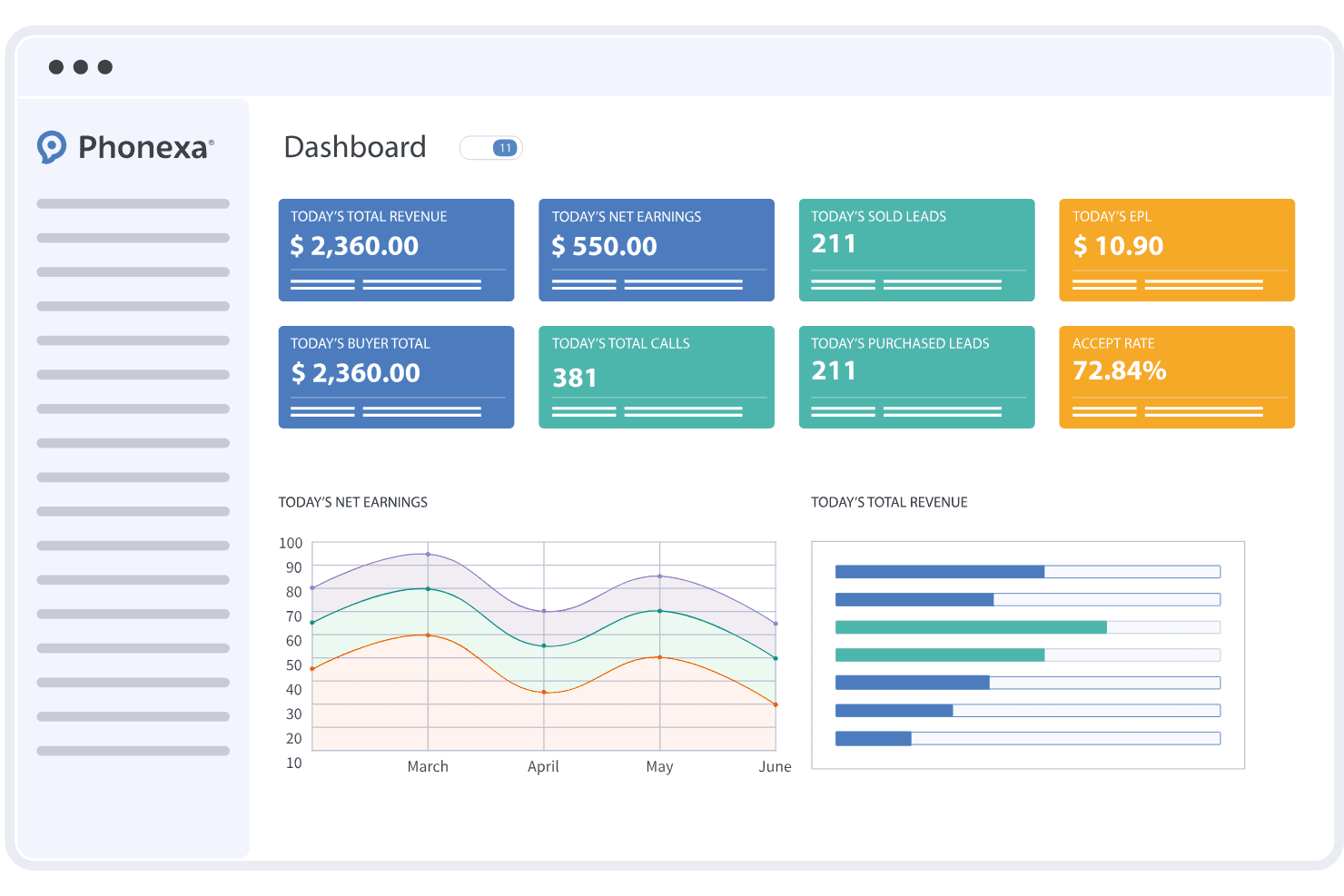
Phonexa is a call tracking platform with routing, fraud monitoring, and attribution tools for high-volume campaigns. Phonexa is a lead and call tracking platform that combines call attribution, lead distribution, and campaign analytics across multiple marketing channels.
Who Is Phonexa Best For?
Phonexa is a good fit for marketing teams at agencies or enterprise-grade businesses that need to track and attribute inbound calls and leads across multiple channels.
Why I Picked Phonexa
I picked Phonexa as one of the best because its pay-per-call campaign management tools let my team track, route, and optimize inbound calls with detailed attribution. I use the platform's call tracking and analytics to see which campaigns drive high-value calls, and the lead distribution engine helps us assign leads and calls, and the lead distribution engine helps us assign leads and calls to the right agents or partners in real time. This setup is especially useful when we're running multiple campaigns across different channels and need granular reporting on call outcomes.
Phonexa Key Features
- Email marketing automation: Build, schedule, and track email campaigns directly within the platform.
- Multi-channel attribution reporting: Attribute conversions across calls, web forms, and digital channels in unified dashboards.
- Lead management system: Capture, score, and distribute leads from multiple sources with customizable rules.
- API access: Connect Phonexa with other tools and platforms using robust API endpoints.
Phonexa Integrations
Phonexa offers 100+ native integrations, including Salesforce and HubSpot, with additional connectivity to other popular CRMs. An API is available for custom integrations.
Pros and Cons
Pros:
- Built-in fraud detection for lead quality control
- Customizable attribution models for multi-channel tracking
- Native integrations with Salesforce and HubSpot
Cons:
- Cross-channel reporting lacks unified data ingestion
- No multi-touch attribution modeling
Learn more about Phonexa: Best for unified multi-source analytics
- Free plan + 30-day free trial + free demo available
- From $25/month
Visit WebsiteCustomer Rating:4.6/5
Klaviyo provides omnichannel attribution features to connect customer touchpoints. Klaviyo helps B2C marketers connect customer behavior with revenue outcomes by tracking how your email, SMS, and other channels contribute to conversions and customer journeys — giving you a clearer picture of which messages and interactions are moving the needle. Its reporting and attribution tools are built with online stores and data-driven marketing teams in mind, so you can dig into performance across campaigns without stitching together fragmented data sources.
Why I Picked Klaviyo
I picked Klaviyo because of its built-in omnichannel attribution model that shows how your email, SMS, and other interactions contribute to conversions across the customer journey, so you can better understand exactly what’s driving revenue. Klaviyo’s configurable attribution windows let you adjust how touchpoints are credited over time, giving you flexibility to align tracking with your business needs. I also appreciate how its multi-channel analytics bring together data from both Klaviyo and non-Klaviyo sources to help you make more informed marketing decisions.
Klaviyo Key Features
In addition to its strong attribution model, I also found Klaviyo offers several other features beneficial for marketers:
- Campaign Performance Dashboards: Provides reports on opens, clicks, conversions, and revenue tied to individual campaigns.
- AI-Driven Tools: Includes features like the Marketing Agent and Customer Agent to enhance customer interactions and predict outcomes.
- Advanced Segmentation: Allows for detailed customer profiling and segmentation to tailor marketing efforts effectively.
- A/B Testing: Enables you to compare different campaign variants to understand what content and timing drive better results.
Klaviyo Integrations
Integrations include Shopify, WooCommerce, BigCommerce, Magento, Salesforce, Facebook, Instagram, Google Ads, Stripe, and Zendesk.
Pros and Cons
Pros:
- Supports omnichannel marketing, including email, SMS, and social media.
- Provides AI-driven insights for personalized marketing strategies.
- Offers comprehensive data integration for unified customer profiles.
Cons:
- Pricing can escalate quickly as contact lists grow.
- Some users desire more customization options.
Learn more about Klaviyo: Best for omnichannel engagement
- 15-day free trial available
- From $25/month (billed annually)
Visit WebsiteCustomer Rating:4.1/5
Zoho Marketing Plus dashboard displaying activity metrics and reporting options across calls, events, and tasks. Zoho Marketing Plus offers a comprehensive suite of marketing tools designed to meet the diverse needs of modern marketing teams. If you're looking to understand the impact of your marketing efforts across various channels, this platform provides the tools to do just that. With its focus on omnichannel engagement and unified analytics, Zoho Marketing Plus helps businesses track, analyze, and optimize their marketing strategies to drive better results.
Why I Picked Zoho Marketing Plus
I picked Zoho Marketing Plus for its robust capabilities in omnichannel engagement and unified marketing analytics, which are crucial for effective marketing attribution. The platform's ability to consolidate data from various marketing activities allows you to gain insights into which channels are driving conversions. Additionally, its marketing automation features enable your team to automate tasks and gather consistent data, making it easier to attribute marketing success accurately.
Zoho Marketing Plus Key Features
In addition to its analytics and automation capabilities, I also found several other features that enhance its value as a marketing attribution tool.
- Campaign Management: Helps you plan, execute, and monitor your marketing campaigns across different channels from a centralized platform.
- Centralized File Storage: Allows your team to store and access marketing assets in one place, ensuring consistency and collaboration.
- Budget Management: Enables you to track and manage your marketing budget, providing insights into cost efficiency and ROI.
- Team Collaboration: Facilitates collaboration among marketing teams, ensuring smooth communication and execution of marketing strategies.
Zoho Marketing Plus Integrations
Integrations include Zoho CRM, Zoho Desk, Google Analytics, Google Ads, Facebook Ads, Twitter, LinkedIn, Mailchimp, HubSpot, and Salesforce.
Pros and Cons
Pros:
- Built in brand asset management
- Strong automation for personalized journeys
- Unified analytics across all channels
Cons:
- Can feel complex for beginners
- Limited advanced customization for reports
Learn more about Zoho Marketing Plus: Best for ecommerce companies
- Free demo available
- Free for up to 10,000 monthly active users
Visit WebsiteCustomer Rating:4.6/5
Branch helps you understand the cause-and-effect relationship between your marketing activities and conversion events. Branch is a mobile attribution platform designed to connect various marketing touchpoints, making it ideal for businesses aiming to refine their strategies and boost app growth. Whether you're in health, finance, retail, or travel, Branch provides tools for precise performance tracking, helping your team make informed decisions across paid, owned, and earned channels. With features like deep linking and cross-channel insights, Branch empowers you to optimize user journeys and improve customer engagement, effectively addressing the challenges in maximizing digital strategies.
Why I Picked Branch
I picked Branch for its exceptional ability to deliver precise marketing attribution, particularly for ecommerce companies looking to maximize their digital marketing strategies. Branch's sophisticated attribution methods allow you to track performance across paid, owned, and earned channels, providing a unified view of customer interactions. With features like advanced data feeds for customized data management and compliance solutions, the platform helps you make informed investment decisions and optimize ROI. Branch also enhances user engagement with branded short links and QR codes, ensuring seamless shopping experiences and facilitating data-driven decision-making.
Branch Key Features
In addition to its sophisticated attribution methods, Branch offers several features that can enhance your marketing attribution efforts:
- Deep Linking: This feature ensures seamless user journeys by directing users to specific content within an app, enhancing user experience and engagement.
- A/B Testing: Provides the ability to test different strategies and campaigns, allowing you to identify what works best for your audience and optimize your marketing efforts.
- Retargeting Capabilities: Enables you to re-engage users who have interacted with your app but haven't converted, increasing the chances of conversion and boosting customer retention.
- Business Intelligence Tools: Offers advanced analytics and reporting, empowering your team to make informed, data-driven decisions for your marketing strategies.
Branch Integrations
Integrations include Amplitude, Braze, MoEngage, Adjust, Adobe Analytics, AppsFlyer, Mixpanel, Segment, Singular, and TikTok Attribution Analytics.
Pros and Cons
Pros:
- Accurate cross-platform attribution, enhancing user journey tracking
- Provides a cost-effective, lightweight approach to user acquisition analysis and improvement
- Versatile integration options with a wide range of platforms, enhancing data consolidation and ease of use
Cons:
- Multi-layer redirection and analytics have room for improvement
- Lacking a free trial option for potential users
Learn more about Branch: Best for B2B revenue attribution
- Free plan + free demo available
- Pricing upon request
Visit WebsiteCustomer Rating:4.7/5
Dreamdata maps B2B customer journeys with multi-touch attribution. Dreamdata is a B2B marketing attribution platform that maps the full customer journey across channels and campaigns, with multi-touch attribution reporting, audience building, and offline conversion syncing to ad platforms.
Who Is Dreamdata Best For?
Dreamdata is a natural fit for B2B SaaS revenue teams that need to attribute pipeline and closed-won deals across long, multi-touch buying cycles.
Why I Picked Dreamdata
I've included Dreamdata in my top picks because it centralizes ecommerce data for actionable insights in a way that most attribution tools skip entirely. Dreamdata pulls data from your CRM, ad platforms, and product analytics into a single customer journey model, so you can see which touchpoints actually influenced revenue. I especially like its revenue attribution reports, which connect campaign spend directly to pipeline and closed deals rather than stopping at clicks or leads.
Dreamdata Key Features
- Multi-touch attribution models: Lets you switch between attribution models (linear, time decay, first touch, last touch) to compare how credit is distributed across touchpoints.
- Customer journey timeline: Visualizes every interaction a buying group has had, from first anonymous visit to closed deal, in a single chronological view.
- Audience sync: Builds audiences based on pipeline stage or intent signals and syncs them directly to ad platforms for retargeting.
- Account-level tracking: Attributes revenue and touchpoints at the account level, not just the individual contact, which reflects how B2B deals actually close.
Dreamdata Integrations
Dreamdata offers a large set of native integrations spanning CRM, ad platforms, intent data, sales tools, and data warehouses, including HubSpot, Salesforce, Google Ads, and more. It also connects with Zapier and provides data warehouse exports for custom analysis in tools like Amazon Redshift and Power BI.
Pros and Cons
Pros:
- Active product roadmap driven by user feedback
- Channel influence reporting supports funnel-level budgeting
- Account journey timelines visualize every buying touchpoint
Cons:
- Dashboard UI confuses less frequent users
- Initial setup requires significant ops resources
Learn more about Dreamdata:

CallRail tracks calls, texts, and leads to measure marketing performance. CallRail is a call tracking and lead attribution platform that attributes phone calls, texts, and form fills to the marketing campaigns, ads, and channels that generated them.
Who Is CallRail Best For?
CallRail is a strong fit for businesses in call-heavy industries like home services, legal, and healthcare, where phone leads are a primary conversion source.
Why I Picked CallRail
I picked CallRail as one of the best because it attributes phone call conversions, an offline touchpoint most attribution tools overlook entirely. Number insertion assigns unique tracking numbers per source, campaign, or keyword, so I know exactly which ad drove a specific call. It combines that call data alongside form fills and texts, giving me insights across all lead types in one place.
CallRail Key Features
- Call recording and transcription: Records inbound calls and generates full transcripts you can search and review by lead.
- Conversation intelligence: Uses AI to automatically tag calls by topic, outcome, or lead quality without manual listening.
- Keyword-level attribution: Maps each inbound call to the exact paid search keyword that triggered it.
- Multi-touch lead timeline: Displays every marketing touchpoint a lead hit across sessions before converting.
CallRail Integrations
CallRail offers over 50 integrations, including native integrations with Google, Meta, and HubSpot, as well as Salesforce, Slack, and Unbounce. It also connects with Zapier, and an API is available for custom integrations.
Pros and Cons
Pros:
- AI transcription reveals call sentiment automatically
- Tracks both online and offline sources
- Keyword-level attribution for paid search calls
Cons:
- Costs rise fast with added numbers and minutes
- Form tracking incompatible with some form types
Learn more about CallRail: Best for businesses with a mobile app-centric focus
- 30-day free trial
- Pricing upon request
Visit WebsiteCustomer Rating:4.4/5
The AppsFlyer dashboard provides a host of crucial metrics, such as conversion rates. AppsFlyer offers a sophisticated platform that caters to businesses seeking to elevate their marketing strategies. If you're striving to unravel the complexities of omnichannel attribution, AppsFlyer's AI-powered tools provide insights into campaign performance and customer engagement, making it ideal for industries like gaming, finance, and retail. By focusing on privacy-centric collaboration and fraud protection, AppsFlyer ensures that your marketing efforts are not only effective but also secure.
Why I Picked AppsFlyer
I picked AppsFlyer because it excels in catering to businesses with a mobile app-centric focus, offering unparalleled insights through its AI-driven analytics. The platform's ability to track user interactions across mobile, web, and CTV ensures that you can optimize campaigns and understand ROI with precision. With features like deep linking and audience segmentation, your team can enhance user engagement and retention, creating personalized experiences that resonate with your audience. Additionally, AppsFlyer's robust fraud protection safeguards your marketing budget, allowing you to focus on growth without the worry of data integrity issues.
AppsFlyer Key Features
In addition to its mobile app-centric capabilities, AppsFlyer offers a suite of features that enhance your marketing attribution efforts.
- Cohort Analysis: This feature enables you to track and analyze user behavior over time, helping you understand the long-term impact of your marketing campaigns on different user segments.
- Real-Time Data Analytics: AppsFlyer provides real-time insights into your marketing performance, allowing your team to make informed decisions quickly and adjust campaigns on the fly.
- Advanced Fraud Prevention: Protect your marketing budget with AppsFlyer's advanced fraud detection mechanisms, which identify and prevent fraudulent activities, ensuring the integrity of your data.
- Predictive Analytics: Utilize AI-driven predictive analytics to anticipate user behavior and optimize your marketing strategies for better engagement and conversion rates.
AppsFlyer Integrations
Integrations include Facebook, Google Ads, Twitter, Snapchat, TikTok, Pinterest, LinkedIn, Salesforce, Adobe Analytics, and MailChimp.
Pros and Cons
Pros:
- Can track user engagement and activity in real time, offering insightful campaign data
- Includes AI-driven predictive analytics for anticipating user actions
Cons:
- Some users experience issues with customer service responsiveness
- Actual revenues can't be viewed, which can be confusing for marketers looking for long-term daily revenues
Learn more about AppsFlyer: Best for CRM-based attribution reporting
- Free plan + 14-day free trial + free demo available
- From $7/user/month (billed annually)
Visit WebsiteCustomer Rating:4.4/5
HubSpot tracks marketing attribution across email, ads, social, and CRM. HubSpot is a CRM-native marketing platform that tracks contact-level attribution across email, ads, landing pages, and social channels within the same system your sales team uses to manage deals and customer data.
Who Is HubSpot Best For?
HubSpot is a natural fit for B2B marketing teams that run campaigns directly tied to a CRM-managed sales pipeline.
Why I Picked HubSpot
HubSpot earns its spot on my shortlist because it centralizes marketing activity and deal data in one CRM, making attribution reporting far more reliable than tools that pull data from separate systems. I use its multi-touch revenue attribution reports to assign credit across models like first touch, last touch, linear, and W-shaped, broken down by campaign, asset, or channel. The contact timeline view shows every touchpoint a lead had before converting, which gives me a precise read on what content actually influenced a closed deal.
HubSpot Key Features
- Traffic analytics dashboard: Tracks website sessions, sources, and visitor behavior across organic, paid, social, email, and direct channels.
- UTM parameter tracking: Automatically captures UTM data from campaign URLs and ties it to contact records for campaign-level reporting.
- Ad attribution reporting: Links ad spend from Google Ads, Meta, and LinkedIn directly to contacts, pipeline, and closed revenue.
- Custom report builder: Lets you build cross-object reports combining marketing, sales, and CRM data in a single view.
HubSpot Integrations
HubSpot offers 2,000+ marketplace integrations, including Google Ads, Meta Ads, LinkedIn Ads, Salesforce, Google Analytics, Shopify, Slack, Snowflake, CallRail, and Zapier. An API is also available for custom integrations.
Pros and Cons
Pros:
- Full-funnel reporting from lead to revenue
- Multiple built-in attribution models available
- Attribution ties directly to CRM deal data
Cons:
- Cross-device tracking has notable blind spots
- Multi-touch attribution locked to Enterprise tier
 Best for ecommerce attribution insights
- Free trial available
- Pricing upon request
Visit WebsiteCustomer Rating:4.5/5
Triple Whale combines attribution, ad spend, and sales analytics for Shopify brands. Triple Whale is an ecommerce-focused attribution and analytics platform that pulls ad spend, sales data, and customer journey data into a single dashboard, built specifically for direct-to-consumer brands running on Shopify.
Who Is Triple Whale Best For?
Triple Whale is a strong fit for direct-to-consumer ecommerce brands, particularly Shopify merchants who need to connect paid media performance directly to revenue.
Why I Picked Triple Whale
I picked Triple Whale as one of the best because it brings together ad channel data, Shopify sales data, and customer journey signals in one place, which is exactly what ecommerce attribution demands. I especially like the Triple Pixel, which captures first-party touchpoint data that standard tracking misses, giving my team a more reliable read on what actually drove a conversion. The Total Impact attribution model takes it further by blending multi-touch data with post-purchase survey responses, so I can account for channels like influencers and podcasts that don't generate a trackable click.
Triple Whale Key Features
- Compass unified measurement: Combines multi-touch attribution, marketing mix modeling, and incrementality testing in a single view for complete channel measurement.
- Moby AI: An AI assistant trained on your ecommerce data that can generate creative briefs, reallocate channel budgets, and build audience segments.
- Sonar Optimize: Sends enriched first-party signal data back to ad platforms like Meta to improve targeting and ad platform optimization.
- Self-serve analytics dashboards: Provides 75+ pre-built dashboards covering marketing, sales, and operations data without requiring custom data builds.
Triple Whale Integrations
Triple Whale offers 60+ native integrations, including Meta, Google Ads, TikTok, Shopify, Klaviyo, Snapchat, Pinterest, Amazon, Microsoft Ads, and Snowflake. An API is also available for custom integrations.
Pros and Cons
Pros:
- Multiple attribution models in one dashboard
- First-party pixel bypasses iOS tracking limits
- Post-purchase surveys capture non-click attribution
Cons:
- Attribution accuracy can be inconsistent at times
- Exclusive to Shopify ecommerce stores
Learn more about Triple Whale:
Outros softwares de atribuição de marketing
Eis alguns softwares adicionais de atribuição de marketing que não entraram na minha seleção, mas que ainda vale a pena conhecer:
- 11HockeyStackBest for AI-driven analytics
- 12ImpactBest for cross-device tracking
- 13Windsor.aiBest for startups needing versatility
- 14AdjustBest for mobile app attribution
- 15ImprovadoBest for custom attribution modeling
- 16LeadsRxBest for agencies and large enterprise marketers
- 17adtributeBest for expert-guided model calibration
- 18Adobe AnalyticsBest for companies seeking advanced web analytics and customer behavior insights
- 19Altitude by ImpactBest for detailed performance tracking
- 20Google Attribution 360Best for businesses that want to unify their data under the Google banner
- 21Ruler Analytics Best for small businesses focusing on online marketing
- 22Attribution AppBest for real-time multi-touch attribution
- 23NeustarBest for real-time performance tracking
- 24C3 MetricsBest for larger organizations needing to maximize efficiency
- 25AnalyticOwlPerfect for businesses heavily invested in broadcast advertising
- 26Hawky.aiBest for leveraging first-party data
- 27AdintonBest for AI-driven product-level insights
- 28OmnisendBest for omnichannel campaign attribution
- 29ActiveCampaignBest for email marketing attribution
- 30
Avaliações relacionadas
Se ainda não encontrou o que procura aqui, consulte estas ferramentas estreitamente relacionadas com a estratégia de marketing digital que testámos e avaliámos.
- Software de marketing
- Software de gestão de marketing
- Software de marketing baseado em contas
- Software de gestão de redes sociais
- Software de marketing por e-mail
How I Evaluate Marketing Attribution Software
I split my evaluation into two layers: baseline requirements every tool must meet—like multi-touch modeling and CRM revenue mapping—and the differentiators that set the best options apart.
Core Functionality (Table Stakes For This List)
When I'm selecting tools for my list, I rank each one on a scale from 0 (does not offer the functionality) to 5 (excels in this area) for each core functionality listed below. Then, I calculate the tool's total score into a percentage. Each tool needs to achieve a minimum total score of 65% to be considered for inclusion.
- Multi-Touch Attribution Models: I check whether the platform offers a range of models—first-touch, linear, time-decay, and ideally data-driven—so teams can compare how credit shifts across the buyer journey.
- Multi-Channel Data Ingestion: Every channel your team runs should feed into one view. I evaluate whether paid, organic, email, social, and offline sources all flow into the platform cleanly.
- Cross-Device & Cross-Session Tracking: A prospect might click a LinkedIn ad on mobile, then convert on desktop days later. I look for identity stitching that connects those interactions into a single journey.
- Revenue & Conversion Mapping: I evaluate how well the tool ties touchpoints to actual pipeline and closed deals, typically through a CRM sync with platforms like Salesforce or HubSpot.
- Campaign & Channel ROI Reporting: Dashboards should break down ROI, CAC, and ROAS at the campaign, channel, and keyword level so you can make budget decisions with real numbers.
- Attribution Data Integrations: The tool needs native connectors to your ad platforms, CRM, MAP, and analytics tools. I also look for API access and data warehouse support for custom workflows.
Once I have a list of tools that meet this criteria, I consider what sets each platform apart.
Differentiating Factors (What Sets Vendors Apart)
Here's how I compare and contrast different vendors:
Standout Features
Privacy-first tracking is a major differentiator I evaluate, especially as consent regulations and signal loss reshape how platforms collect data. Tools with server-side tracking and first-party data models maintain accuracy where others fall short. For B2B teams, account-based attribution matters because it rolls touchpoints up to the buying committee level instead of individual leads. I also consider whether a platform uses machine learning to weight channels based on actual conversion influence, rather than relying solely on static rule-based models.
Beyond Features
I pay close attention to whether a platform is built for B2B or B2C, because the data models and journey structures are fundamentally different. A B2B tool needs to handle long sales cycles and multi-stakeholder deals, while B2C platforms should process high-volume transactional data. Implementation timelines also matter—some tools require months of CRM field mapping and pixel deployment before you see a first insight. I also evaluate how pricing scales, since vendors bill on tracked events, ad spend, or visitor volume, and the wrong model can get expensive as your programs grow.
Como escolher um software de atribuição de marketing
Ao procurar selecionar um software de atribuição de marketing, é importante abordar a decisão tendo sempre em conta os objetivos e o contexto da sua empresa. Eis uma lista de verificação que gosto de utilizar e que equilibra os princípios gerais de seleção de software com considerações específicas para software de atribuição de marketing:
- Determine as necessidades e os objetivos da sua empresa: Que problemas de atribuição pretende resolver e como irá o software escolhido resolver essas questões? De que forma a resolução destes problemas apoia os objetivos da sua empresa? Responder a estas perguntas é o primeiro passo para escolher o software de atribuição de marketing adequado.
- Avalie as funcionalidades do software e as capacidades de integração: Quais são as funcionalidades indispensáveis? A plataforma de atribuição escolhida irá integrar-se sem problemas com a sua atual pilha tecnológica de marketing ou será necessário fazer ajustes para que isso aconteça? Esses ajustes significarão que terá de aumentar o seu orçamento? Como é que isso altera os seus cálculos de ROI?
- Avalie a escalabilidade e a flexibilidade: Qual é o nível de escalabilidade do software de atribuição de marketing? É capaz de se adaptar imediatamente a qualquer alteração nas necessidades ou no contexto empresarial? Permite integrar uma gama diversificada de fontes e formatos de dados?
- Tenha em consideração o custo total de propriedade (TCO): Contabilizou todos os custos? Isto inclui o custo de implementação, formação, suporte e possíveis atualizações de hardware e software. Poderá suportar os custos de suporte e formação no futuro? O suporte e a formação são essenciais devido à complexidade da maioria dos softwares de atribuição de marketing.
- Analise a segurança, a conformidade e a privacidade: Num mundo em que uma violação de dados pode causar problemas graves, a privacidade e a conformidade dos dados são funcionalidades indispensáveis. O software inclui protocolos rigorosos de segurança dos dados? Está em conformidade com regulamentos como o RGPD?
Estas perguntas são um ponto de partida. No entanto, dependendo do seu contexto, poderá ter outras perguntas a acrescentar.
Tendências no software de atribuição de marketing
Eis algumas tendências que tenho observado recentemente no software de atribuição de marketing, bem como o que poderão significar para o futuro do setor do marketing. Gosto de acompanhar todo o tipo de atualizações de produtos, comunicados de imprensa e registos de versões para identificar as informações mais importantes.
Modelos integrados de atribuição multitoque
Existe uma aposta significativa em modelos de atribuição multitoque (MTA) mais integrados, resultante da necessidade de analisar com maior precisão as interações dos consumidores em vários canais e pontos de contacto, proporcionando uma visão holística da jornada do cliente.
Ferramentas como o Adobe Analytics e o Google Analytics introduziram capacidades de MTA melhoradas, com foco em modelos orientados por IA para atribuir o crédito com maior precisão entre os diferentes pontos de contacto. Esta tendência responde ao desafio das jornadas de cliente fragmentadas, permitindo aos profissionais de marketing identificar com maior precisão o impacto de cada ação de marketing.
Análise preditiva e IA
A análise preditiva e a IA estão a tornar-se centrais no software de atribuição de marketing, permitindo a modelação preditiva do comportamento dos clientes e das conversões de vendas. A HubSpot investiu fortemente nas funcionalidades de IA, incorporando análises preditivas que preveem ações futuras dos consumidores com base em dados históricos. Isto responde à necessidade de antecipar o comportamento dos clientes, permitindo um planeamento e uma segmentação mais estratégicos nos esforços de marketing.
Monitorização centrada na privacidade
Com o aumento das preocupações relativas à privacidade e à proteção de dados, verifica-se uma mudança clara para métodos de monitorização centrados na privacidade. As plataformas estão a adotar estratégias baseadas em dados próprios e tecnologias de monitorização conformes com a privacidade, como demonstram as atualizações recentes da Tealium e da Segment. Esta tendência é uma resposta à crescente procura por privacidade dos dados, garantindo a conformidade com regulamentos como o RGPD e a CCPA, ao mesmo tempo que permite recolher informações relevantes.
Declínio da monitorização dependente de cookies
Verifica-se uma diminuição acentuada da importância dos mecanismos de monitorização dependentes de cookies, impulsionada pelos regulamentos de privacidade e pela eliminação progressiva dos cookies de terceiros. A dependência cada vez menor dos cookies é evidente no desenvolvimento de tecnologias e métodos de monitorização alternativos que se centram em dados próprios e na segmentação contextual. Esta mudança reflete a adaptação do setor a um ambiente regulamentar em transformação e a necessidade de métodos de monitorização mais sustentáveis e respeitadores da privacidade.
Estas tendências realçam o compromisso do setor em responder aos desafios complexos enfrentados pelos profissionais de marketing, garantindo que dispõem das ferramentas necessárias para navegar eficazmente no panorama digital.
O que é o software de atribuição de marketing?
O software de atribuição de marketing é uma ferramenta que monitoriza e analisa o impacto de várias atividades de marketing no comportamento dos clientes e nas vendas. O objetivo é:
- Identificar os canais e as táticas de marketing que conduzem às conversões
- Compreender e otimizar a jornada do cliente
- Otimizar o investimento e minimizar os custos
- Demonstrar o ROI
Funcionalidades do software de atribuição de marketing
Ao selecionar um software de atribuição de marketing, esteja atento às seguintes funcionalidades essenciais:
- Modelos de atribuição multitoque: Ajudam-no a acompanhar a forma como diferentes pontos de contacto ao longo da jornada do cliente contribuem para as conversões, para que possa perceber o que funciona realmente e o que não funciona. Obtém uma visão clara dos canais que merecem reconhecimento e dos que precisam de um pouco mais de atenção.
- Acompanhamento entre canais: Acompanha as interações dos clientes em canais como redes sociais, correio eletrónico, PPC e muito mais. Assim, pode ver a história completa por detrás de cada conversão — e não apenas capítulos isolados — obtendo uma melhor perceção de onde os seus esforços estão a dar frutos.
- Análise em tempo real: A análise em tempo real permite-lhe monitorizar o desempenho da atribuição à medida que este acontece. Não tem de esperar pelos relatórios no final do mês; em vez disso, pode adaptar as suas campanhas no momento, tomando decisões mais inteligentes quando isso é mais importante.
- Regras de atribuição personalizáveis: Permitem-lhe adaptar a forma como as conversões são atribuídas com base nos objetivos específicos da sua empresa. Pode ajustar as regras para que o software se adeque ao seu plano de marketing, apresentando resultados que realmente têm significado para si.
- Integração de dados: A integração de dados reúne informações de todas as suas plataformas de marketing num único local. Isto ajuda-o a eliminar silos de dados e a obter uma visão abrangente do que está a funcionar, sem ter de procurar em cinco aplicações diferentes apenas para identificar uma tendência.
- Interface fácil de utilizar: Uma interface bem concebida mantém tudo simples, permitindo-lhe explorar dados complexos sem precisar de um grau avançado em folhas de cálculo. Pode tomar decisões rapidamente, mesmo que a análise de dados não seja o seu passatempo favorito.
- Ferramentas de elaboração de relatórios e visualização: Transformam números em bruto em gráficos, diagramas e painéis que fazem sentido de imediato. Pode mostrar à sua equipa — ou ao seu chefe — exatamente o que está a acontecer, sem se perder em filas intermináveis de dados.
- Personalização da janela de atribuição: Esta funcionalidade permite-lhe definir o período de acompanhamento das interações dos clientes que antecedem uma conversão, proporcionando uma visão realista do seu ciclo de vendas.
Funcionalidades comuns de IA do software de atribuição de marketing
Para além das funcionalidades padrão do software de atribuição de marketing listadas acima, muitas destas soluções estão a incorporar IA com funcionalidades como:
- Deteção de anomalias: A IA monitoriza os seus dados de marketing em busca de aumentos ou diminuições inesperados e alerta-o de imediato, para que possa resolver problemas ou aproveitar oportunidades em tempo real.
- Análise preditiva: A IA analisa os seus dados históricos de marketing para prever comportamentos futuros dos clientes e possíveis percursos de conversão. Isto ajuda-o a saber onde deve concentrar os seus próximos esforços de marketing para obter os melhores resultados.
- Limpeza automatizada de dados: A IA identifica e corrige automaticamente erros nos seus dados, como duplicados ou entradas incompletas. Obtém informações mais limpas e fiáveis sem passar horas a procurar erros.
- Otimização do desempenho dos canais: Utilizando IA, o software analisa automaticamente o desempenho em todos os canais de marketing e recomenda ajustes. É como ter um orientador digital sempre atento a formas de melhorar o seu ROI.
- Mapeamento da jornada do cliente: A IA cria dinamicamente mapas detalhados das jornadas de cada cliente, identificando padrões e sugerindo os momentos certos para interagir. Pode personalizar as suas comunicações para obter o máximo impacto sem ficar sobrecarregado com a segmentação manual.
Benefícios do software de atribuição de marketing
O software de atribuição de marketing é uma ferramenta essencial para quem procura otimizar as suas estratégias de marketing e melhorar o retorno do investimento. E, na verdade, não estamos todos sempre a tentar fazer isso? Eis cinco benefícios principais da utilização de software de atribuição de marketing para utilizadores e organizações:
- Melhoria do ROI de marketing: Ao identificar com precisão quais os canais e campanhas de marketing que estão a gerar mais receitas, os utilizadores podem distribuir os seus orçamentos de forma mais eficaz, conduzindo a um maior retorno do investimento. Esta precisão na despesa garante que o investimento em marketing é aplicado nas áreas com maior impacto.
- Otimização melhorada das campanhas: O software de atribuição de marketing fornece informações detalhadas sobre o desempenho das campanhas em todos os canais. Isto permite aos profissionais de marketing aperfeiçoar as suas campanhas em tempo real, maximizando a eficácia e a eficiência.
- Melhor conhecimento dos clientes: O software proporciona uma compreensão profunda da jornada do cliente, destacando os pontos de contacto e as interações que mais influenciam as conversões. Este conhecimento permite às empresas adaptar as suas estratégias de marketing para responder melhor às necessidades e preferências dos clientes.
- Maior agilidade de marketing: Com dados e análises em tempo real, as organizações podem ajustar rapidamente as suas estratégias de marketing em resposta aos dados de desempenho ou às mudanças do mercado. Esta agilidade garante que os esforços de marketing permanecem relevantes e eficazes, mesmo em condições de mercado dinâmicas.
- Tomada de decisões estratégicas: Ao fornecer uma visão abrangente do panorama de marketing e da eficácia das várias campanhas e canais, o software de atribuição de marketing apoia decisões estratégicas baseadas em dados. Isto conduz a iniciativas de marketing mais direcionadas e bem-sucedidas.
Ao tornar possível medir e analisar com precisão a eficácia de cada ponto de contacto de marketing, as empresas podem otimizar as suas estratégias, melhorar o seu ROI e, em última análise, alcançar resultados mais bem-sucedidos.
Custos e preços do software de atribuição de marketing
Ao explorar as suas opções de software de atribuição de marketing, é realmente útil compreender os vários planos e opções de preços disponíveis. O plano adequado para a sua organização dependerá de vários fatores, incluindo a dimensão da sua empresa, a complexidade dos seus esforços de marketing e as funcionalidades específicas de que necessita.
Tabela de comparação de planos de software de atribuição de marketing
| Tipo de plano | Preço médio | Funcionalidades comuns |
|---|---|---|
| Tipo de planoInicial | Preço médio$100 - $500/mês | Funcionalidades comunsModelos básicos de atribuição, acompanhamento multicanal, relatórios padrão e apoio por e-mail. |
| Tipo de planoProfissional | Preço médio$500 - $1,500/mês | Funcionalidades comunsModelos avançados de atribuição, acompanhamento entre dispositivos, capacidades de integração, análise em tempo real e apoio telefónico. |
| Tipo de planoEmpresarial | Preço médio$1,500+/mês | Funcionalidades comunsModelos de atribuição personalizados, acesso à API, gestor de conta dedicado, integrações personalizadas e serviços de consultoria estratégica. |
| Tipo de planoGratuito | Preço médio$0 | Funcionalidades comunsModelos de atribuição limitados, acompanhamento multicanal básico e apoio da comunidade. |
A seleção do plano adequado implica equilibrar a profundidade dos conhecimentos de que necessita com o orçamento disponível. Considere sempre os requisitos específicos e o potencial de crescimento da sua organização ao escolher um plano, de modo a garantir que o software pode acompanhar o crescimento da sua empresa.
Perguntas frequentes
Eis algumas respostas a perguntas que ainda possa ter sobre software de atribuição de marketing.
Outras análises de software de inteligência de marketing
O software de marketing existe em todos os formatos e dimensões, desde a gestão de plataformas de redes sociais até à criação de relatórios sobre websites e produtos. É provável que precise de várias ferramentas para abranger todo o conjunto de necessidades. Eis algumas outras listas de análises de software que recomendo consultar: