
14 Best Demand-Side Platforms Reviewed in 2026

Best Demand-Side Platform Shortlist
Here’s my shortlist of the best demand-side platforms:


Navigating the digital advertising landscape can be tough. As a marketing manager, you face challenges like targeting the right audience, controlling ad spend, and driving consistent results. Demand-side platforms help you buy digital ads more efficiently and reach the right audience effectively.
I've independently tested and reviewed these platforms to give you an unbiased look at the best options out there. As campaigns grow, managing placements, bids, and performance across channels can get complicated, and the right demand-side platforms make it easier to track and improve results.
In this article, I’ll share my top picks and highlight the features that make each platform effective for your advertising goals.
Why Trust Our Software Reviews
Best Demand-Side Platform Summary
This comparison chart summarizes pricing details for my top demand-side platform selections to help you find the best one for your budget and business needs.
| Tool | Best For | Trial Info | Price | ||
|---|---|---|---|---|---|
| 1 | Best for native advertising | Free demo available | Pricing upon request | Website | |
| 2 | Best for automated media buying | Free consultation available | Pricing upon request | Website | |
| 3 | Best for AI-powered predictive analytics | Free demo available | Pricing upon request | Website | |
| 4 | Best for retail ad integration | Free demo available | $50,000 minimum advertising spend | Website | |
| 5 | Best for cross-device targeting | Free demo available | From 17% of ad spend | Website | |
| 6 | Best for people-based marketing | Free demo available | Pricing upon request | Website | |
| 7 | Best for video ad campaigns | Not available | Pricing upon request | Website | |
| 8 | Best for growing businesses | Free demo available | Pricing upon request | Website | |
| 9 | Best for journey-based buying | Free demo available | Pricing upon request | Website | |
| 10 | Best for local ad targeting | Not available | Pricing upon request | Website |
-

Demandbase
Visit WebsiteThis is an aggregated rating for this tool including ratings from Crozdesk users and ratings from other sites.4.4 -
6sense
Visit WebsiteThis is an aggregated rating for this tool including ratings from Crozdesk users and ratings from other sites.4.3 -
AnswerThePublic
Visit Website


Best Demand-Side Platform Reviews
Below are my detailed summaries of the best demand-side platforms that made it onto my shortlist. My reviews offer a detailed look at the key advertising features, pros and cons, integrations, and ideal use cases of each tool to help you find the best one for you.

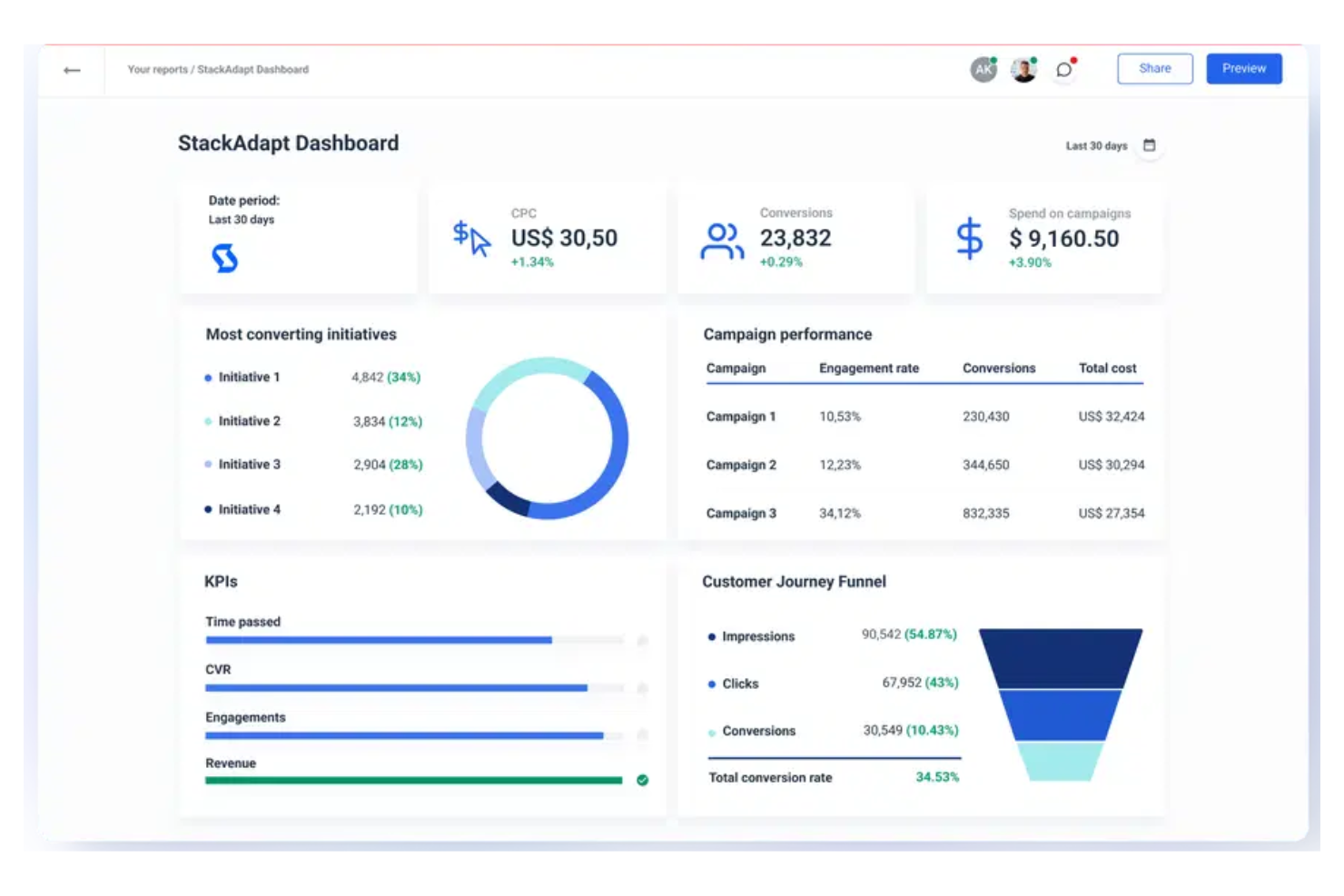
StackAdapt is an advertising platform that offers native advertisements. It's designed for marketers who want to deliver ads that blend with social media content to improve engagement and conversion rates.
Why I picked StackAdapt: It specializes in native advertising, allowing your team to create ads that blend in with online content. You can also utilize its ad creative studio to design engaging ad content. Its real-time analytics help you track performance and make necessary adjustments quickly.
Standout Features and Integrations:
Features include a user-friendly interface that simplifies campaign management. The platform offers native advertisements designed to match the look and feel of the platform they appear on, improving cost-per-click metrics. Its automated bidding algorithm helps your ads be placed efficiently. It also includes predictive AI analytics, so you can forecast ad success to make smarter decisions.
Integrations include Salesforce, HubSpot, Snowflake, and more.
Pros and Cons
Pros:
- Predictive audience feature
- Easy to learn and use
- Specializes in native ads
Cons:
- High CPMs
- Limited custom bidding
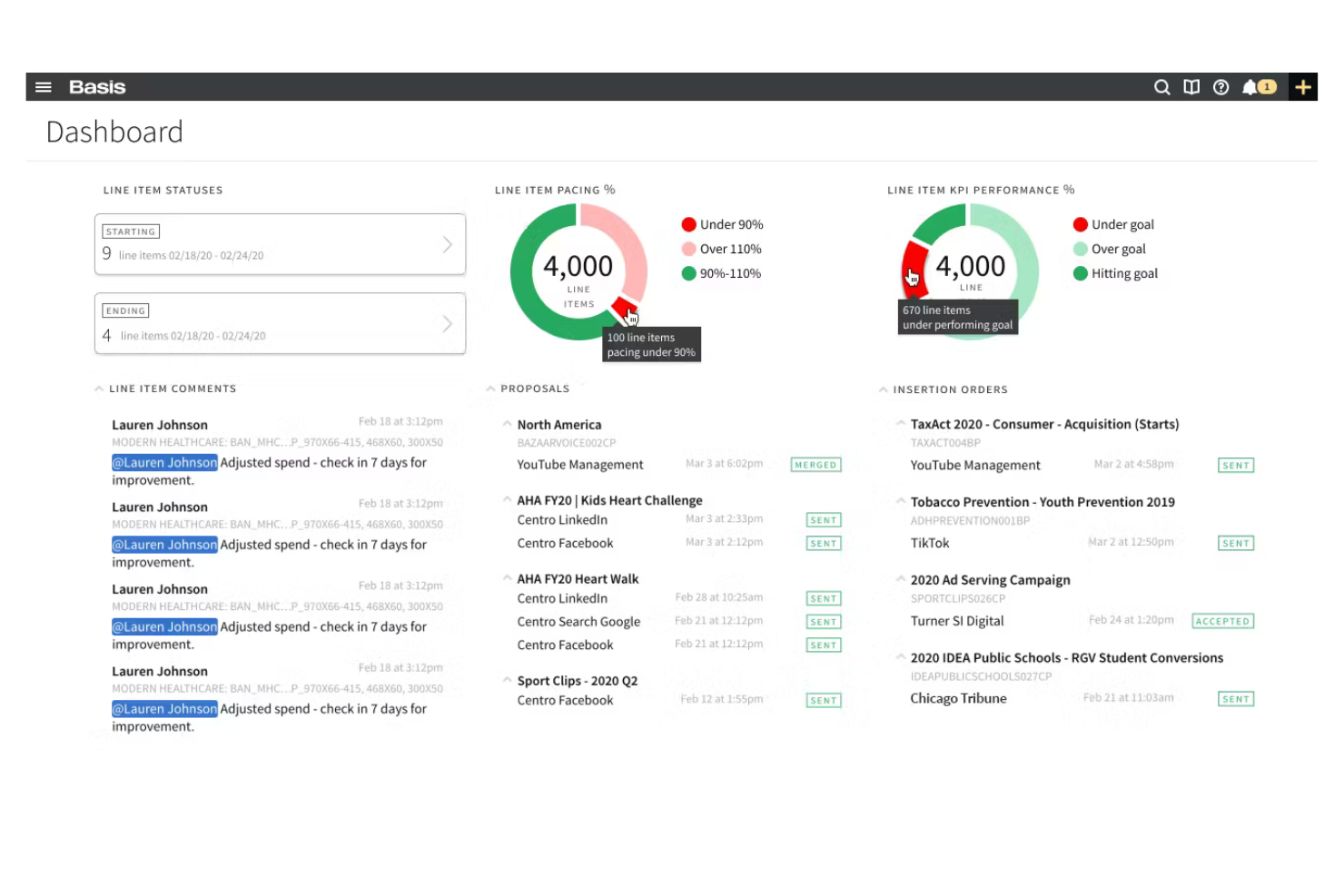
solutions to simplify their advertising efforts. It's designed for businesses that want to simplify buying and optimizing digital ad space.
Why I picked Basis: It focuses on automated media buying, reducing the manual workload for your team. The platform's unified interface combines programmatic, direct, and search advertising in one place. You can use its advanced targeting features to reach specific audiences effectively. Its reporting tools provide insights into campaign performance, allowing you to refine strategies as needed.
Standout Features and Integrations:
Features include a centralized dashboard that simplifies campaign management across different channels. The platform offers real-time bidding to deliver high-quality ad placements. It also offers a large library of private marketplace (PMP) deals where advertisers can negotiate on inventory directly, with over 2,000 pre-negotiated deals.
Integrations include Google Campaign Manager, FreeWheel, and more.
Pros and Cons
Pros:
- Large private marketplace
- Advanced targeting capabilities
- Unified interface for all ads
Cons:
- Lower viewability scores
- B2B limitations

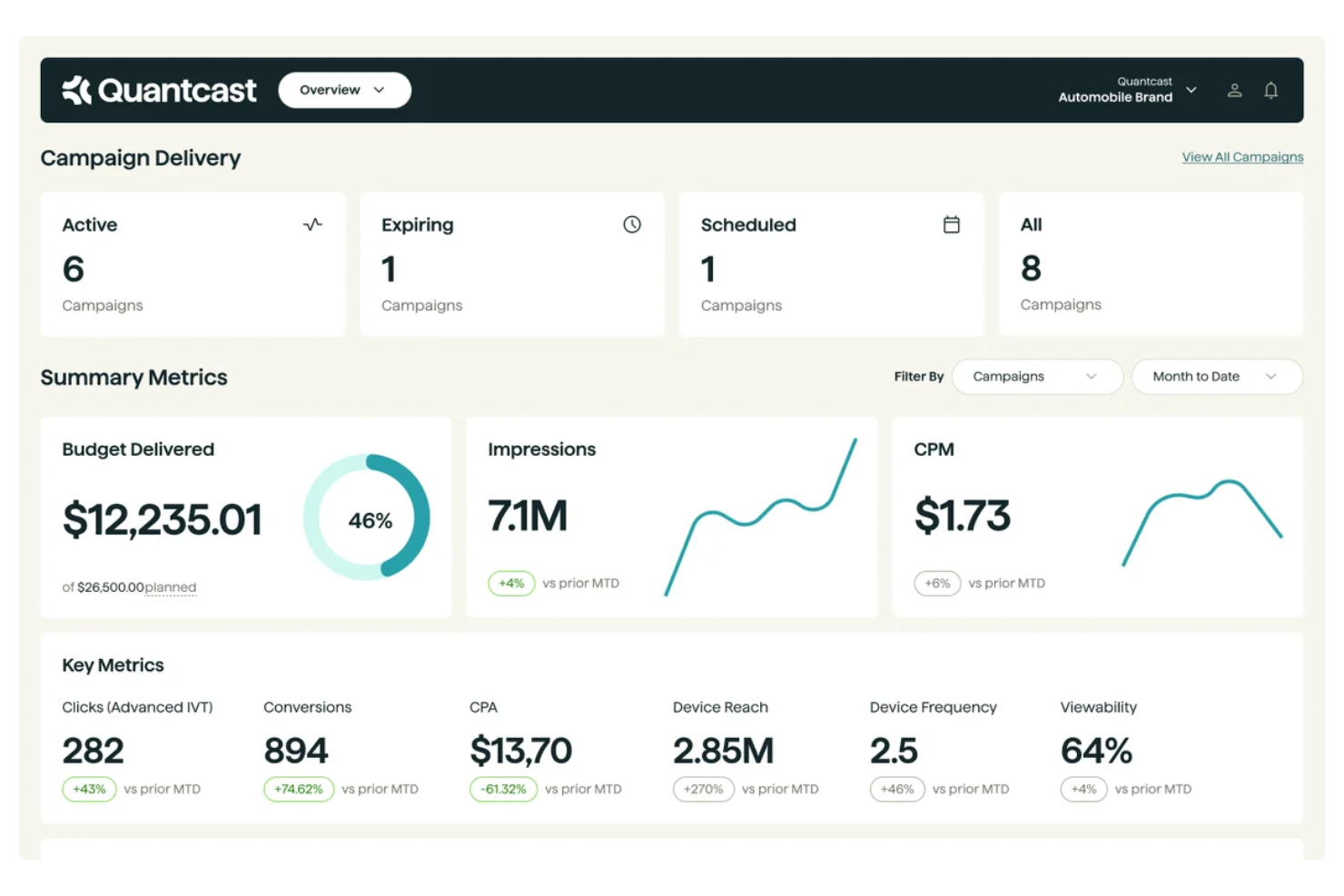
Quantcast is a demand-side platform designed for marketers who need to leverage predictive analytics to improve their digital advertising strategies. It caters to businesses aiming to understand audience behavior.
Why I picked Quantcast: It excels in predictive analytics, allowing you to anticipate user behavior and tailor your campaigns by deepening your understanding of audience patterns. You can use its real-time data to adjust your strategies instantly.
Standout Features and Integrations:
Features include advanced audience segmentation, which helps you target specific user groups. The platform combines audience building, campaign execution, and performance measurement in one place, with real-time reporting tools that offer immediate insights into campaign performance. Its intuitive dashboard makes managing multiple campaigns straightforward.
Integrations include ActionIQ, Treasure Data, LiveRamp, Zeotap, and more.
Pros and Cons
Pros:
- Advanced audience segmentation
- AI-driven insights and targeting
- Strong predictive analytics
Cons:
- Manual reporting
- Duplicating campaigns can be tedious
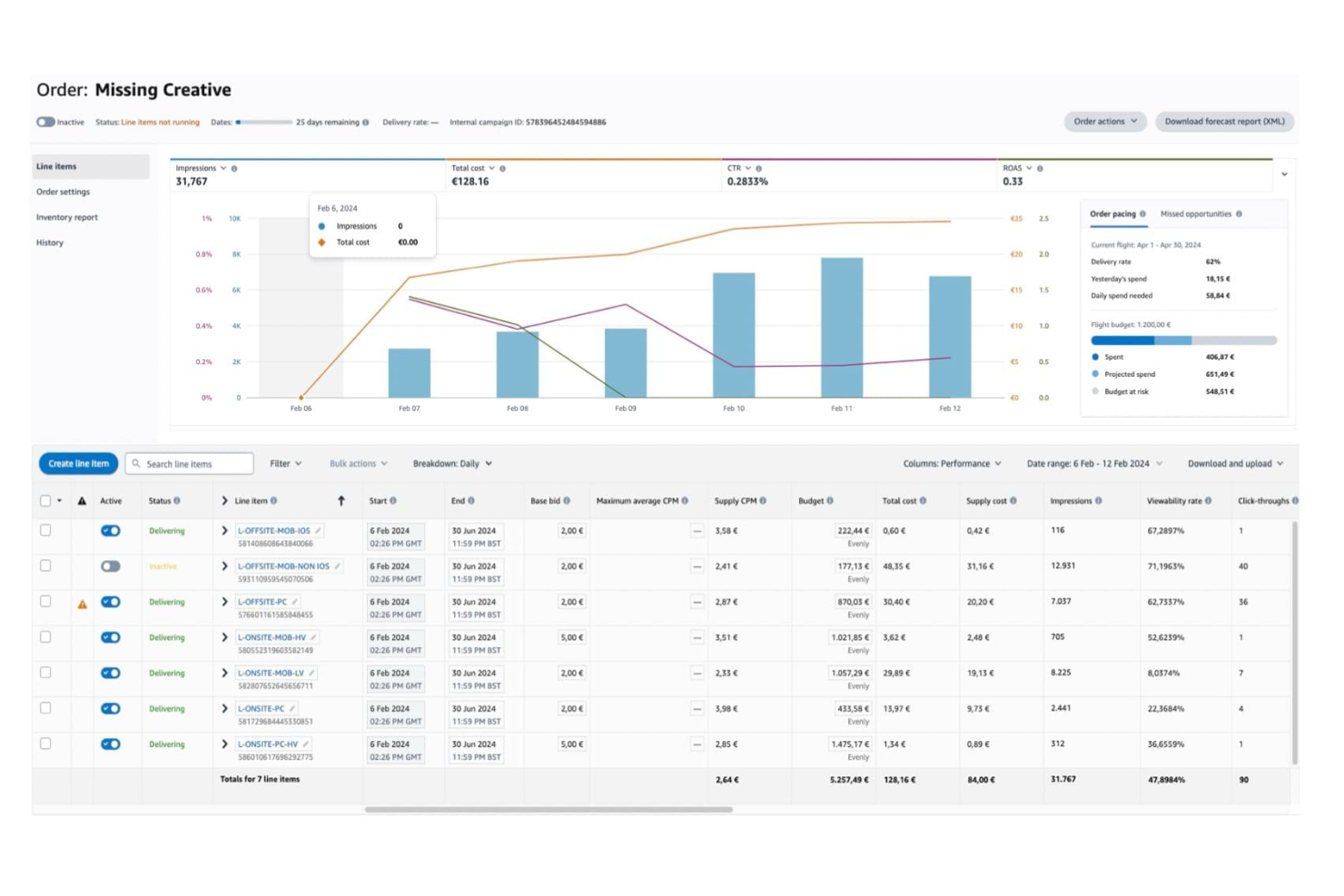
Amazon DSP is a demand-side platform tailored for advertisers looking to buy display, video, and audio ads. It's ideal for brands wanting to leverage Amazon's vast data and reach to improve their advertising efforts.
Why I picked Amazon DSP: It offers programmatic advertising technology and integration, letting you tap into Amazon's extensive shopper data. Its ad tech stack supports retargeting, making it effective for retail-focused campaigns. The platform supports both Amazon-owned and third-party sites, expanding your reach.
Standout Features and Integrations:
Features include insights into Amazon's first-party shopper data, including purchases and product views, to help you understand consumer behavior better. The platform's programmatic buying across Amazon-owned and third-party inventory lets you manage ad spend efficiently and reach audiences in real time. It also offers AI-powered automation capabilities that leverage machine learning, delivering higher ROI for your campaign without constant management.
Integrations include Salesforce, Adobe, Telium, Lytics, and more.
Pros and Cons
Pros:
- Offers strong reporting and retargeting tools
- Access to Amazon shopper data
- Extensive programmatic reach
Cons:
- Limited to certain regions
- Can be more limited outside of Amazon's ecosystem
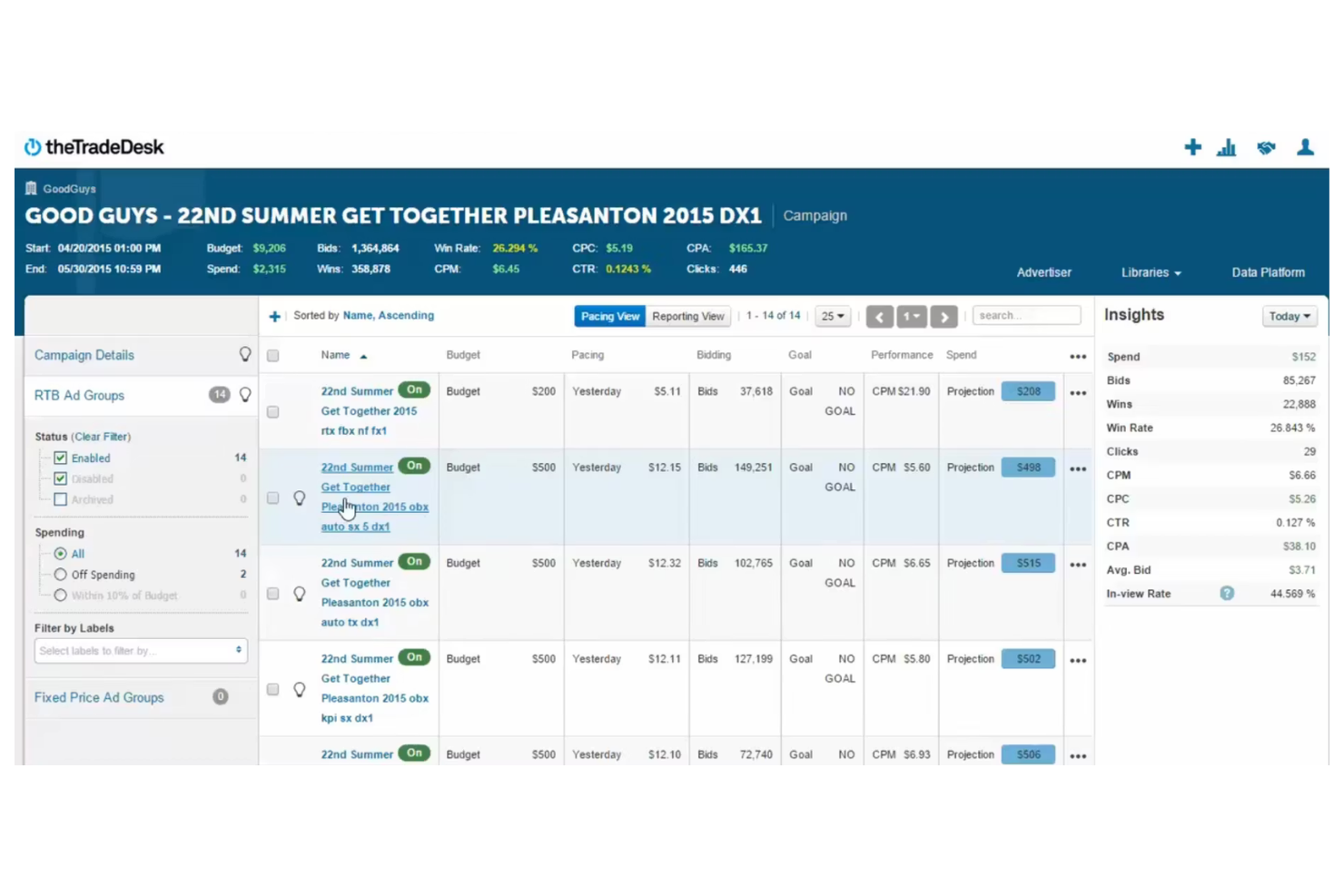
The Trade Desk is a demand-side platform designed for advertisers looking to reach audiences across multiple devices. It helps businesses manage digital advertising campaigns by offering data-driven targeting and access to premium inventory.
Why I picked The Trade Desk: It stands out for its open-web approach and cross-device targeting, allowing you to reach your audience wherever they are. The platform uses artificial intelligence (AI) to analyze millions of ad opportunities per second, giving you real-time optimization. The outcome-based measurement feature focuses on business results rather than just impressions, helping you tie spend to performance goals.
Standout Features and Integrations:
Features include AI-driven decisioning that considers both first-party and third-party data for precise targeting, which optimizes campaigns in real time. Its omnichannel inventory, spanning display, video, CTV, and more, gives you access to premium ad spaces across multiple digital media channels to execute cross-platform strategies all in one place.
Integrations are not publicly listed.
Pros and Cons
Pros:
- AI-driven decision-making
- Access to premium inventory
- Efficient cross-device targeting
Cons:
- High minimum spend
- Inventory overload
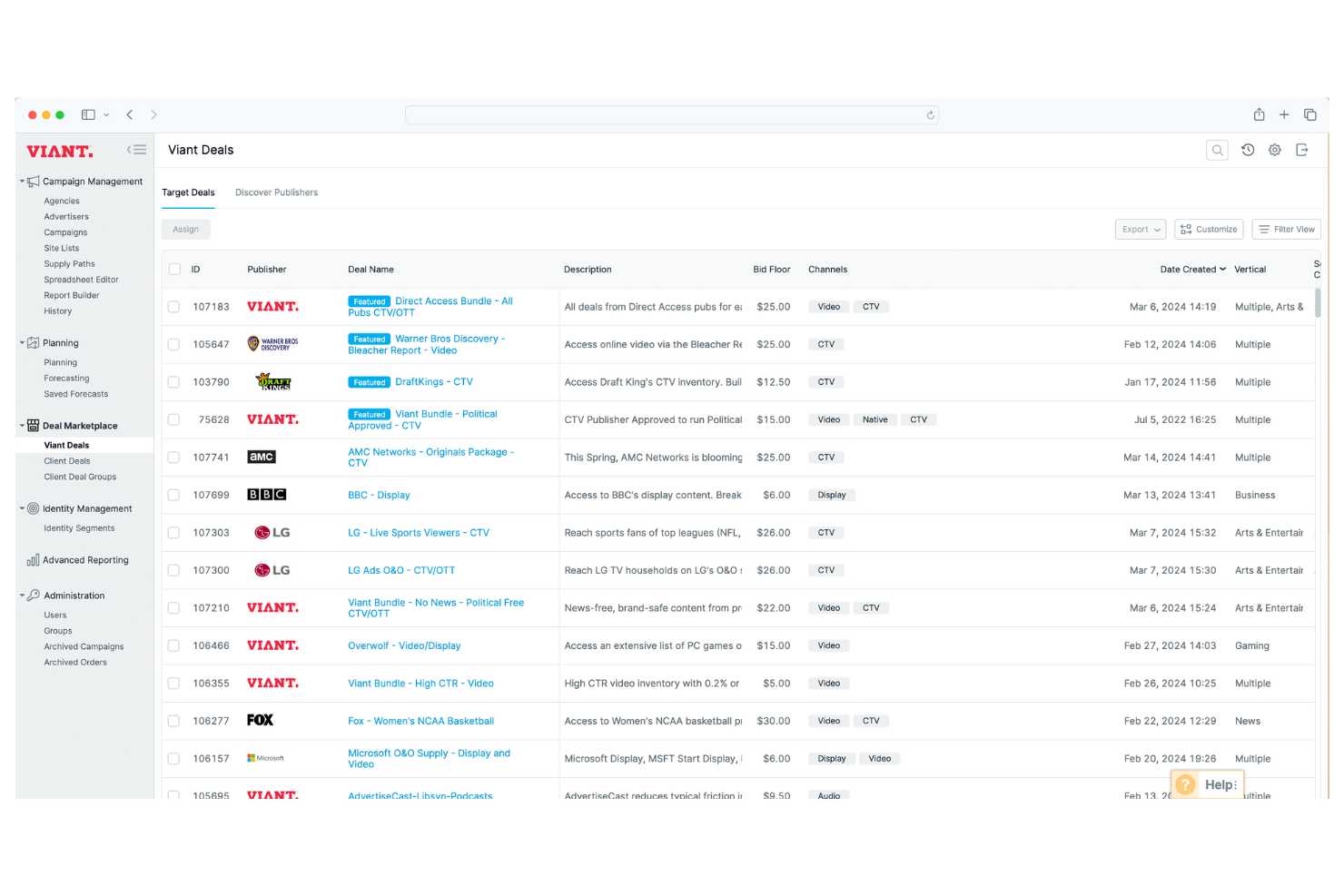
Viant is a demand-side platform catering to advertisers who want to connect with real individuals rather than just devices. It serves businesses looking to personalize their advertising efforts and achieve better audience engagement.
Why I picked Viant: It emphasizes people-based marketing, which allows you to target real users for more personalized campaigns. The platform's identity resolution feature links data across various touchpoints. You can leverage its cross-channel capabilities to reach audiences on multiple platforms, and its measurement tools help assess the effectiveness of your campaign's reach.
Standout Features and Integrations:
Features include detailed audience analytics, providing insights into user behavior and preferences with identity graphs and its Household ID™ feature. The platform enables cross-device and people-based targeting, helping your ads reach users on all their devices, while its detailed reporting tools give you a clear view of campaign performance.
Integrations are not publicly available.
Pros and Cons
Pros:
- Includes cross-channel capabilities
- Offers detailed audience analytics
- Has a people-based marketing focus
Cons:
- Less inventory than larger DSPs
- North America focus

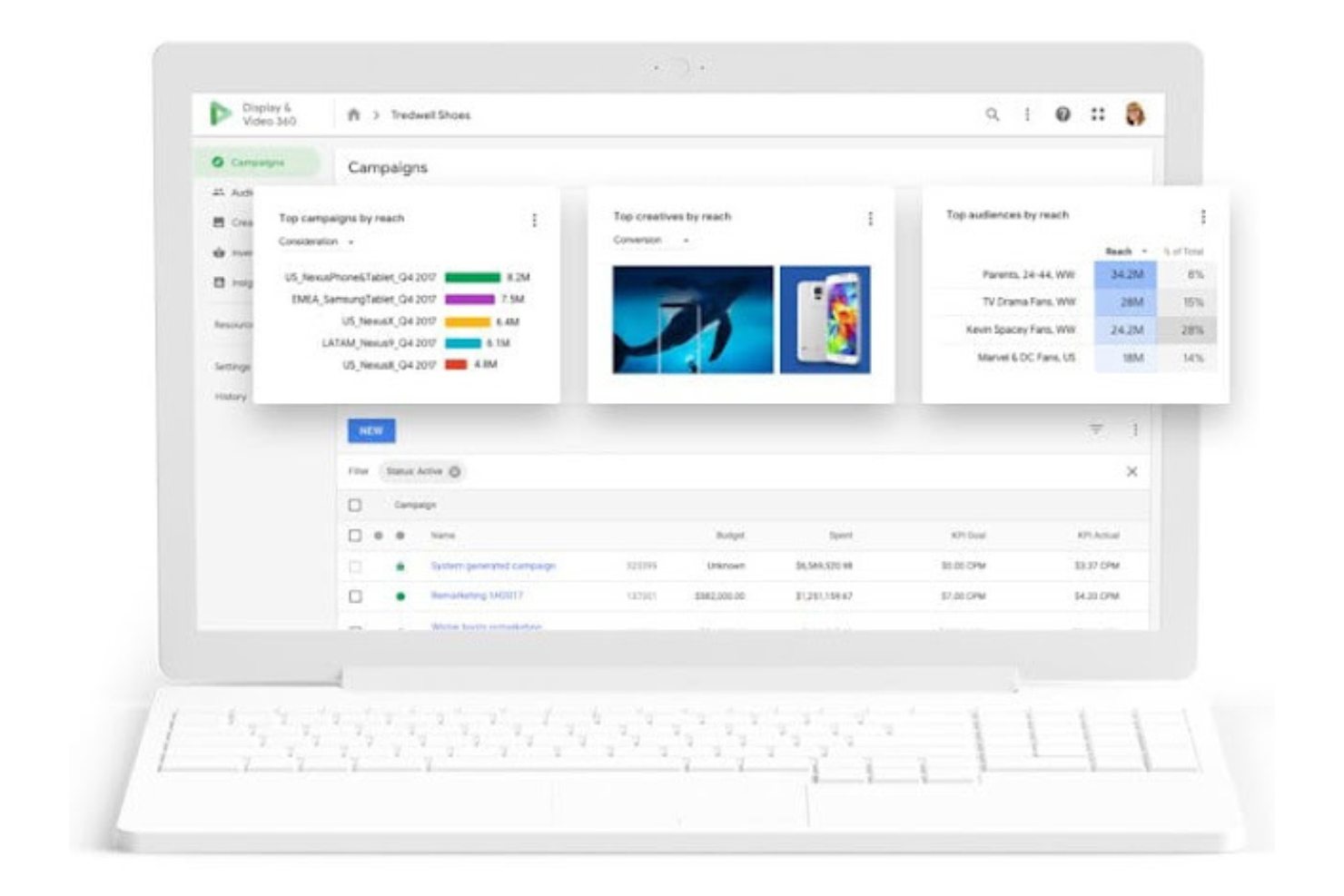
Google Display & Video 360 is a demand-side platform designed for marketers who want to manage digital campaigns across multiple channels, with a strong focus on video advertising. It serves large businesses aiming to optimize their advertising strategies and increase reach.
Why I picked Google Display & Video 360: It excels in video ad campaigns, providing tools to create, manage, and optimize video ads effectively. The platform also includes advanced targeting options, helping your ads reach the right audience. It manages multi-channel campaigns, giving access to premium ad impressions across Google's ad network.
Standout Features and Integrations:
Features include premium video inventory and advanced video formats, tailored for video advertising. The platform also offers a creative workspace where you can build strategies tied directly to your data and media plan and evaluate creative performance across campaigns. It includes tools for collaboration, so media, creative, and analytics teams can work together and share relevant assets and insights.
Integrations include Google Analytics 360, Google Ad Manager, Google Campaign Manager, and more.
Pros and Cons
Pros:
- Access to Google's network
- Built for enterprise-level advertising
- Strong video campaign tools
Cons:
- Google bias
- Strict ad policies
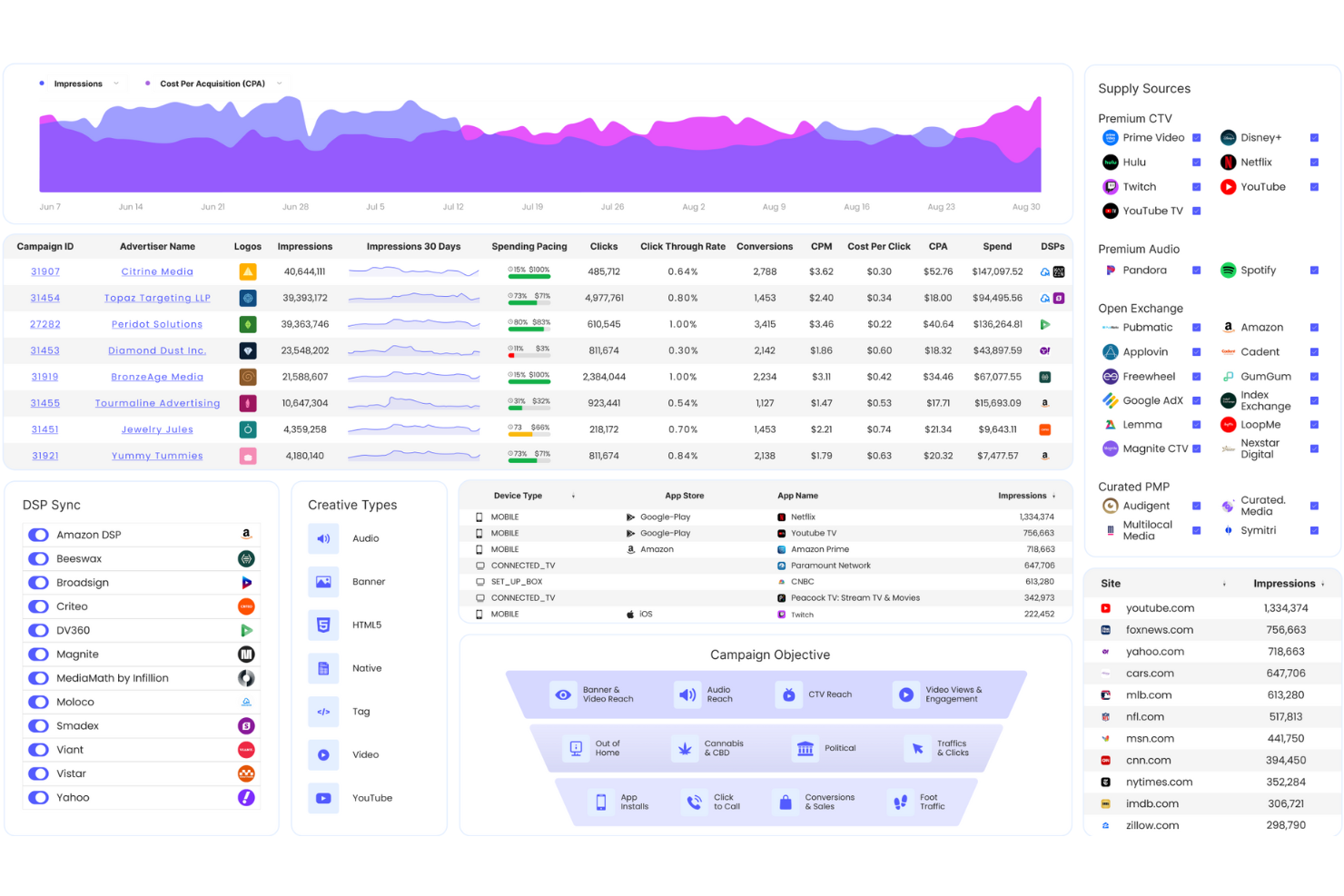
AdLib is a self-serve demand-side platform designed for marketers and agencies seeking to optimize and scale their creative advertising efforts across various channels. It caters to independent marketers and agencies who need a simple yet effective solution for programmatic media buying, including connected TV and mobile ads.
Why I picked AdLib: It allows your team to simplify ad management and improve ad effectiveness across channels, with unified dashboards and an intuitive interface. You can access premium inventory from major providers such as Netflix and YouTube. Its automation features further simplify your workflow, saving you time on campaign management.
Standout Features and Integrations:
Features include automated client billing, which simplifies financial management. The platform offers customizable workflows and white-label support, so agencies can fully brand the interface and offer it as their own platform. It also includes hierarchical budget controls with AI-driven pacing algorithms to shift spend in real time.
Integrations are not publicly listed.
Pros and Cons
Pros:
- Automation for workflow
- Simple and intuitive interface
- Includes white-label support
Cons:
- Limited scale
- Limited support resources

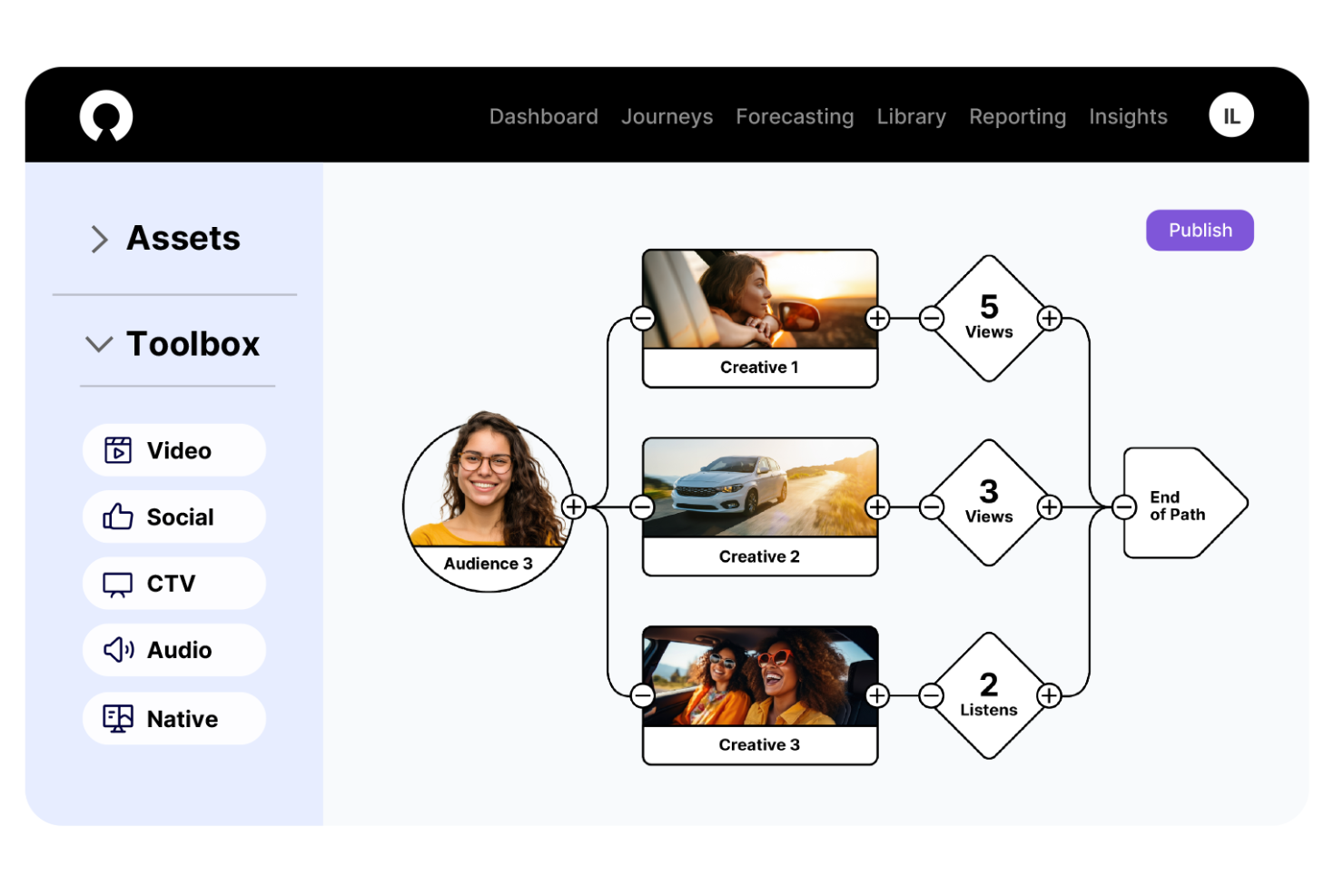
illumin is a demand-side platform designed for marketers who focus on journey-based buying to increase customer engagement. It's ideal for businesses that want to create and manage consumer journeys with precision.
Why I picked illumin: It specializes in journey-based buying, which lets you map out and manage consumer engagement throughout their journey. The platform's visual interface simplifies the creation of complex journey maps, and you can use its detailed analytics to understand each touchpoint's effectiveness.
Standout Features and Integrations:
Features include a visual Journey Canvas that maps campaigns across the entire customer journey for multi-channel planning. It provides real-time insights and first-party data integration, helping you adjust strategies as needed. Its customizable reporting features deliver detailed performance metrics tied to journey stages, giving you a clear view of what drives results.
Integrations are not publicly listed.
Pros and Cons
Pros:
- Simple, user-friendly dashboard
- Provides detailed analytics at each touchpoint
- Includes visual journey mapping
Cons:
- Visual complexity
- Slow creative approval
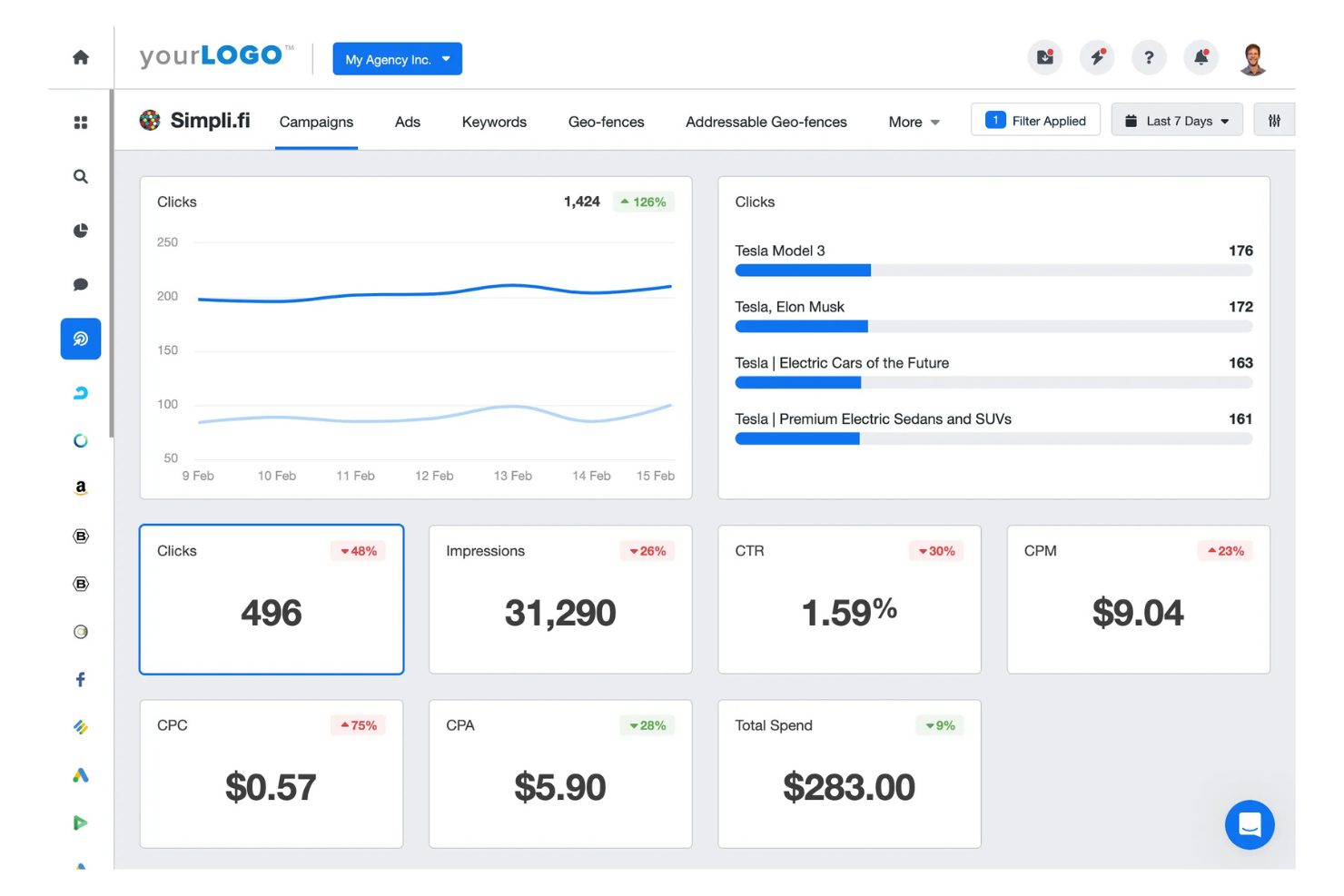
Simpli.fi is a demand-side platform tailored for advertising agencies that focus on local ad targeting to reach specific geographic audiences. It's ideal for smaller businesses that need to connect with local customers through precise targeting and location-based strategies.
Why I picked Simpli.fi: It excels in local ad targeting, providing tools to target specific areas with precision. The platform allows you to define custom perimeters for ad delivery, and you can use its addressable targeting to reach individual households. Its reporting tools offer insights into how well your local campaigns are performing.
Standout Features and Integrations:
Features include programmatic ad buying, which helps your team efficiently purchase ad space. It takes highly-detailed unstructured data elements, including browsing behavior, contextual keywords, and GPS locations, and uses them for geofencing, targeting, bidding, and campaign optimization. Its analytics dashboard provides detailed insights into campaign performance.
Integrations are not publicly listed.
Pros and Cons
Pros:
- Flexible service options
- Multi-channel support
- Strong geofencing capabilities
Cons:
- Data latency
- Manual workflow
Other Demand-Side Platforms
Here are some additional demand-side platform options that didn’t make it onto my shortlist, but are still worth checking out:
- Bidsmind
For small to midsize businesses
- Liftoff
For mobile app growth
- Infillion MediaMath
For API-first programmatic
- Choozle
For small business marketing


Demand-Side Platform Selection Criteria
When selecting the best demand-side platforms to include in this list, I considered common buyer needs and pain points such as targeting accuracy and budget efficiency. I also used the following framework to keep my evaluation structured and fair:
Core Functionality (25% of total score)
To be considered for inclusion in this list, each solution had to fulfill these common use cases:
- Display ad buying
- Video ad buying
- Audience targeting
- Real-time bidding
- Campaign analytics
Additional Standout Features (25% of total score)
To help further narrow down the competition, I also looked for unique features, such as:
- Cross-device targeting
- Predictive analytics
- Customizable dashboards
- Advanced reporting tools
- Dynamic creative optimization
Usability (10% of total score)
To get a sense of the usability of each system, I considered the following:
- Intuitive interface
- Easy navigation
- Minimal learning curve
- Customizable user experience
- Aesthetic design
Onboarding (10% of total score)
To evaluate the onboarding experience for each platform, I considered the following:
- Interactive product tours
- Availability of training videos
- Access to webinars
- Detailed user guides
- Supportive chatbots
Customer Support (10% of total score)
To assess each software provider's customer support services, I considered the following:
- 24/7 availability
- Multichannel support options
- Response time
- Expertise of support staff
- Availability of dedicated account managers
Value for Money (10% of total score)
To evaluate the value for money of each platform, I considered the following:
- Competitive pricing
- Flexible pricing plans
- Features offered for the price
- Scalability of pricing
- Transparency in pricing structure
Customer Reviews (10% of total score)
To get a sense of overall customer satisfaction, I considered the following when reading customer reviews:
- Overall satisfaction rating
- Commonly praised features
- Reported issues or drawbacks
- Frequency of software updates
- Quality of customer service feedback
How To Choose a Demand-Side Platform
It's easy to get bogged down in long feature lists and complex pricing structures. To help you stay focused as you work through your unique software selection process, here's a checklist of factors to keep in mind:
| Factor | What To Consider |
|---|---|
| Scalability | Will the platform grow with your needs? Consider future growth and whether the platform can scale without high additional costs or changes. |
| Integrations | Does it work with your existing tools? Confirm that it integrates with your CRM, analytics, and other essential software. |
| Customizability | Can you tailor it to fit your processes? Look for platforms that allow workflow adaptations without extensive technical know-how. |
| Ease of Use | Is it user-friendly for your team? Consider the learning curve and whether your team needs extensive training to use it effectively. |
| Implementation and Onboarding | How long will it take to get up and running? Evaluate the time and resources needed for a full rollout and training. |
| Cost | Does it fit your budget? Compare pricing against features and potential ROI. Look out for hidden costs and tiered pricing traps. |
| Security Safeguards | Are your data and operations protected? Verify that the platform has strong data protection and complies with industry standards. |
| Support Availability | Will you have help when needed? Check for 24/7 support options and the availability of dedicated account managers. |
What Is a Demand-Side Platform?
A demand-side platform is a software used to buy digital advertising space in an automated way. Marketing professionals, advertisers, and media buyers generally use these tools to optimize ad spending and target audiences effectively.
Real-time bidding, audience targeting, and analytics capabilities help with precise ad placement and performance tracking. Overall, these tools maximize the efficiency and effectiveness of digital advertising campaigns.
Features
When selecting a demand-side platform, keep an eye out for the following key features:
- Real-time bidding: Automate ad buying based on live auctions, allowing for cost-effective placements.
- Audience targeting: Target specific demographics, improving ad relevance and engagement rates.
- Analytics and reporting: Gain insights into campaign performance, helping you refine strategies for better results.
- Cross-device targeting: Ads reach users across multiple devices, increasing visibility and engagement.
- Geofencing capabilities: Target audiences based on their geographic location, ideal for local campaigns.
- Dynamic creative optimization: Automatically adjust ad content to better suit the target audience.
- Predictive analytics: Use data patterns to anticipate user behavior, improving targeting accuracy.
- Customizable dashboards: Get a tailored view of campaign data, making it easier to track performance.
- Integration support: Integrate with other marketing tools, creating a cohesive ad strategy.
- Security safeguards: Protect your data and maintain compliance with industry standards, preserving trust and reliability.
Benefits
Implementing a demand-side platform provides several benefits for your team and your business. Here are a few you can look forward to:
- Cost efficiency: Real-time bidding helps you secure ad placements at competitive prices, reducing overall ad spend.
- Improved targeting: Audience targeting and predictive analytics help your ads reach the right people, increasing engagement.
- Improved insights: Analytics and reporting provide valuable data on campaign performance, guiding decision-making.
- Greater reach: Cross-device targeting allows your ads to connect with users on whichever platforms they use, boosting visibility.
- Localized engagement: Geofencing capabilities enable targeted local campaigns, improving relevance for nearby audiences.
- Creative flexibility: Dynamic creative optimization tailors ads to audience preferences, increasing effectiveness.
- Integrated strategy: Integration support helps your demand-side platform work well with other tools, creating a unified marketing approach.
Costs and Pricing
Selecting a demand-side platform requires an understanding of the various pricing models and plans available. Costs vary based on features, team size, add-ons, and more. The table below summarizes common plans, their average prices, and typical features included in demand-side platform solutions:
Plan Comparison Table for Demand-Side Platforms
| Plan Type | Average Price | Common Features |
|---|---|---|
| Free Plan | $0/user/month | Basic analytics, limited ad inventory, and standard support. |
| Personal Plan | $149–$500/month platform fee + % of ad spend | Basic targeting, standard reports, limited ad inventory, and real-time bidding. |
| Business Plan | $1,000–$5,000/month platform fee + 10–20% of ad spend | Advanced targeting, dynamic creative optimization, cross-device campaigns, and analytics dashboards. |
| Enterprise Plan | $5,000–$20,000+/month platform fee + 10–20% of ad spend (or negotiated flat fee) | Predictive analytics, programmatic optimization, dedicated account management, and custom integrations. |
Demand-Side Platform FAQs
Here are some answers to common questions about demand-side platforms:
What's the difference between a demand-side platform and a supply-side platform?
A demand-side platform, or a DSP, is used by advertisers to buy digital ads, while a supply-side platform (SSP) is used by publishers to sell ad space. DSPs focus on targeting audiences and optimizing ad spend, whereas SSPs aim to maximize revenue from ad inventory. Many DSPs also work alongside ad servers and connect to ad exchanges for access to a wide range of inventory. Understanding both can help your team make informed decisions on ad buying and selling strategies.
Can a demand-side platform integrate with my existing CRM system?
Yes, many demand-side platforms offer integrations with popular CRM systems. This allows you to sync data between your CRM and DSP, increasing audience targeting and campaign effectiveness. Some DSPs also integrate with data management platforms to enrich audience insights. Check with each DSP provider to see which CRM systems they support and maintain smooth data flow between platforms.
How can I confirm my data is secure when using a demand-side platform?
Make sure your DSP complies with industry standards such as GDPR or CCPA to protect your data. Look for platforms with strong encryption and data protection policies. It’s also a good idea to review the platform’s privacy policy and ask about its data handling practices before committing to a provider.
Do I need technical expertise to use a demand-side platform?
No, you don’t necessarily need technical expertise, but understanding digital marketing basics can help. Most DSPs are designed to be user-friendly, with intuitive interfaces and support resources available. However, having someone on your team with technical knowledge can be beneficial for setting up and optimizing campaigns.
What's Next:
If you're in the process of researching demand-side platforms, connect with a SoftwareSelect advisor for free recommendations.
You fill out a form and have a quick chat where they get into the specifics of your needs. Then you'll get a shortlist of software to review. They'll even support you through the entire buying process, including price negotiations.