
14 Best Consent Management Platforms Reviewed in 2026

Best Consent Management Platforms Shortlist
Here's my pick of the 12 best software from the 14 tools reviewed.


Managing user consent is a tough challenge for marketing managers. You need to ensure compliance with data protection laws without disrupting your team's workflow. That's where consent management platforms come in; they simplify the process and help keep you on the right side of the law.
I've spent time testing and reviewing these tools independently. I aim to give you an unbiased look at the best options out there. In this article, I'll break down my top picks, focusing on what really matters for your team.
You'll find insights on features, usability, and who each platform is best suited for. Let's dive in and find the right fit for your consent requirements.
Why Trust Our Software Reviews
We’ve been testing and reviewing marketing software since 2022. As marketing experts ourselves, we know how critical and difficult it is to make the right decision when selecting software.
We invest in deep research to help our audience make better software purchasing decisions. We’ve tested more than 2,000 tools for different marketing use cases and written over 1,000 comprehensive software reviews. Learn how we stay transparent & our software review methodology.
Best Consent Management Platforms Summary
This comparison chart summarizes pricing details for my top consent management platform selections to help you find the best one for your budget and business needs.
| Tool | Best For | Trial Info | Price | ||
|---|---|---|---|---|---|
| 1 | Best for enterprise solutions | Free demo available | Pricing upon request | Website | |
| 2 | Best for a user-friendly interface | Free plan available | From $10/website/month | Website | |
| 3 | Best for privacy management | Free demo available | Pricing upon request | Website | |
| 4 | Best for small businesses | 30-day free trial + free plan + free demo available | From $199/month | Website | |
| 5 | Best for customizable banners | Not available | From £20/month | Website | |
| 6 | Best for analytics integration | Free 30-day trial + free demo available | From EUR 35/month | Website | |
| 7 | Best for media companies | Free demo available | From $500/month | Website | |
| 8 | Best for GDPR compliance | 14-day free trial + free plan + free demo available | From $8/month | Website | |
| 9 | Best for multilingual support | Free plan + free demo available | From EUR 23/month | Website | |
| 10 | Best for mobile apps | Free demo available | Pricing upon request | Website | |
| 11 | Best for cookie compliance | Free plan + free 14-day trial available | From $100/year/domain (billed annually) | Website | |
| 12 | Best for automation features | Free plan available | From $150/month (billed annually) | Website |
-

Demandbase
Visit WebsiteThis is an aggregated rating for this tool including ratings from Crozdesk users and ratings from other sites.4.4 -
6sense
Visit WebsiteThis is an aggregated rating for this tool including ratings from Crozdesk users and ratings from other sites.4.3 -
AnswerThePublic
Visit Website


Best Consent Management Platform Reviews
Below are my detailed summaries of the best consent management platforms that made it onto my shortlist. My reviews offer a detailed look at the key features, pros and cons, integrations, and ideal use cases of each tool to help you find the best one for you.
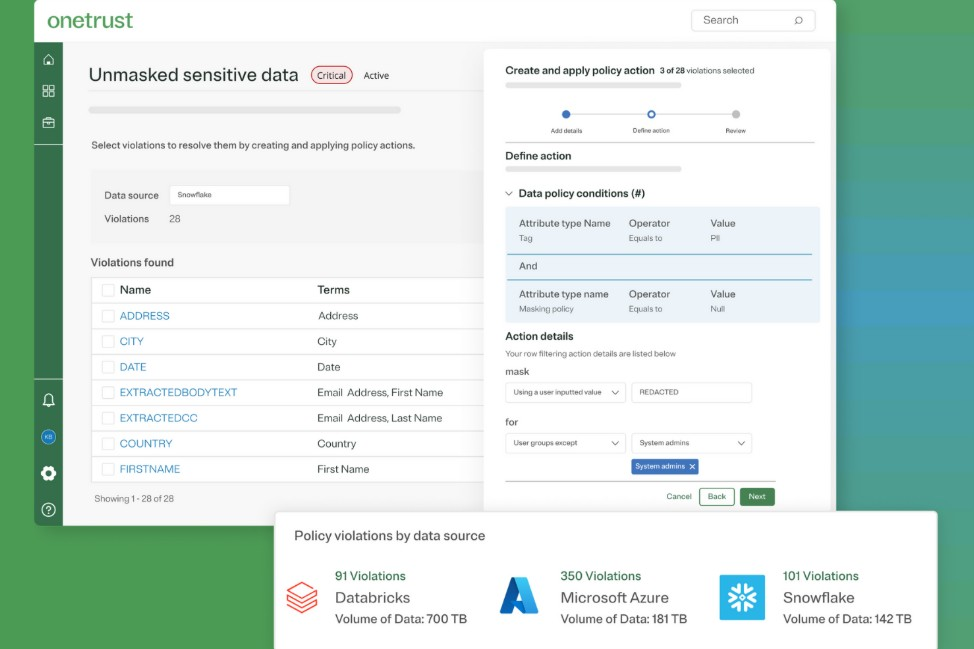
OneTrust is a consent management platform tailored for large enterprises needing multi-layered privacy solutions. It supports businesses in managing privacy, security, and data governance effectively. The platform provides tools for automating privacy compliance and data management.
Why I picked OneTrust: It's designed for enterprise solutions, making it ideal for large organizations. The platform supports Google Consent Mode v2, which is critical for automating compliance with global regulations. OneTrust provides a clear view of data flows and enables you to manage and mitigate data breaches effectively.
Standout features and integrations:
Features include a thorough data mapping tool that visualizes data flow, incident response capabilities to handle breaches effectively, and privacy management tools to automate compliance.
Integrations include Adobe, Salesforce, HubSpot, Snowflake, Google Cloud, Asana, Outlook, Databricks, and more.
Pros and Cons
Pros:
- Effective incident response features
- Advanced privacy management tools
- Extensive data mapping capabilities
Cons:
- Complex setup for small teams
- May require extensive training

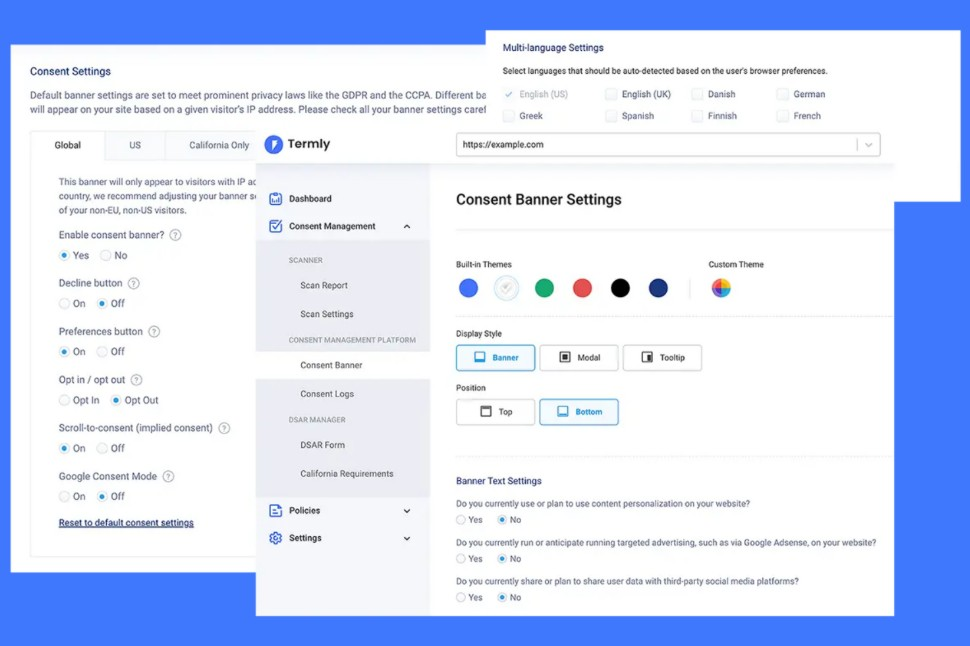
Termly is a consent management platform designed for businesses looking for a straightforward solution to manage user consent and privacy policies. It caters to small to medium-sized businesses, helping with privacy regulation compliance. The platform offers tools for creating privacy policies, managing cookie consent, and ensuring compliance.
Why I picked Termly: Its user-friendly interface makes it accessible for businesses without extensive technical expertise.
Standout features and integrations:
Features include a policy generator that simplifies creating privacy documents, a cookie consent manager to ensure compliance with data privacy laws, and a dashboard that offers a clear view of compliance activities.
Integrations include Google Consent Mode v2, Google Tag Manager, WordPress, Consent API and more.
Pros and Cons
Pros:
- Accessible for small businesses
- Suitable for non-technical users
- Clear compliance monitoring
Cons:
- Limited scalability options
- Not ideal for large enterprises

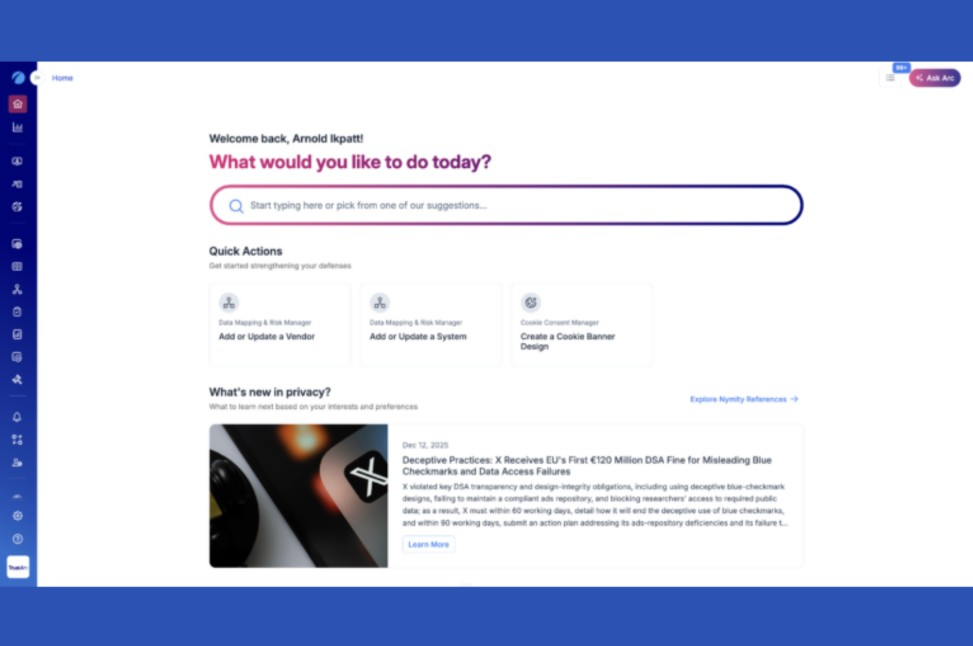
TrustArc is a consent management platform designed for businesses focused on privacy management and compliance. It helps your organization manage its personal data and automate privacy programs effectively. The platform provides tools for privacy assessments, compliance reviews, and risk management.
Why I picked TrustArc: It's tailored for privacy management, making it a top choice if your business prioritizes data protection. TrustArc helps you evaluate compliance risks efficiently, ensures your organization meets various regulatory requirements, and enables you to identify and mitigate potential privacy issues proactively.
Standout features and integrations:
Features include privacy assessments that provide insights into compliance risks, compliance review tools for regulatory adherence, and risk management features to address potential privacy concerns.
Integrations include Salesforce, Microsoft Dynamics 365, Mailchimp, ServiceNow, Stripe, Workday, and more.
Pros and Cons
Pros:
- Preference centers allow granular consent
- Proactive risk management features
- Automated, enterprise-focused privacy assessments
Cons:
- Customer support responsiveness varies
- Documentation lacks clarity

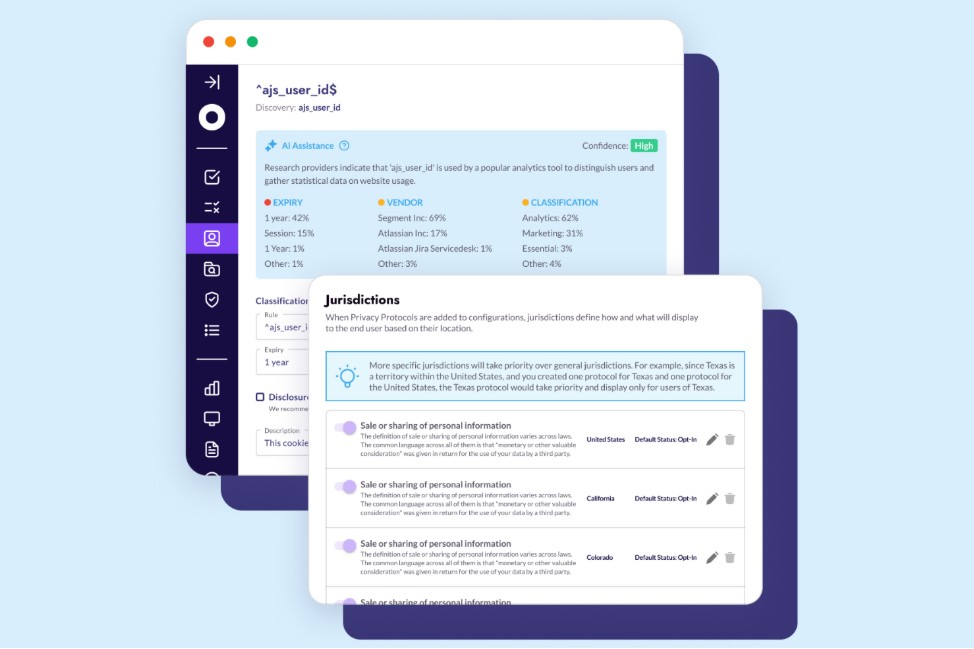
Osano is a consent management platform designed for small businesses seeking to manage user consent and data privacy. It provides tools to help businesses comply with global privacy laws efficiently. The platform simplifies consent management across websites and apps.
Why I picked Osano: Osano is tailored for small businesses, offering an accessible solution to data privacy challenges. Its real-time consent management feature makes meeting legal requirements straightforward.
Standout features and integrations:
Features include a real-time consent management system that maintains compliance, an intuitive dashboard for tracking privacy metrics, and automated alerts for any policy changes.
Integrations include Salesforce, Twilio, HubSpot, SendGrid, Mailchimp, and more.
Pros and Cons
Pros:
- Easy compliance tracking
- Automated policy change alerts
- Real-time consent management
Cons:
- Limited customization options
- Fewer advanced features

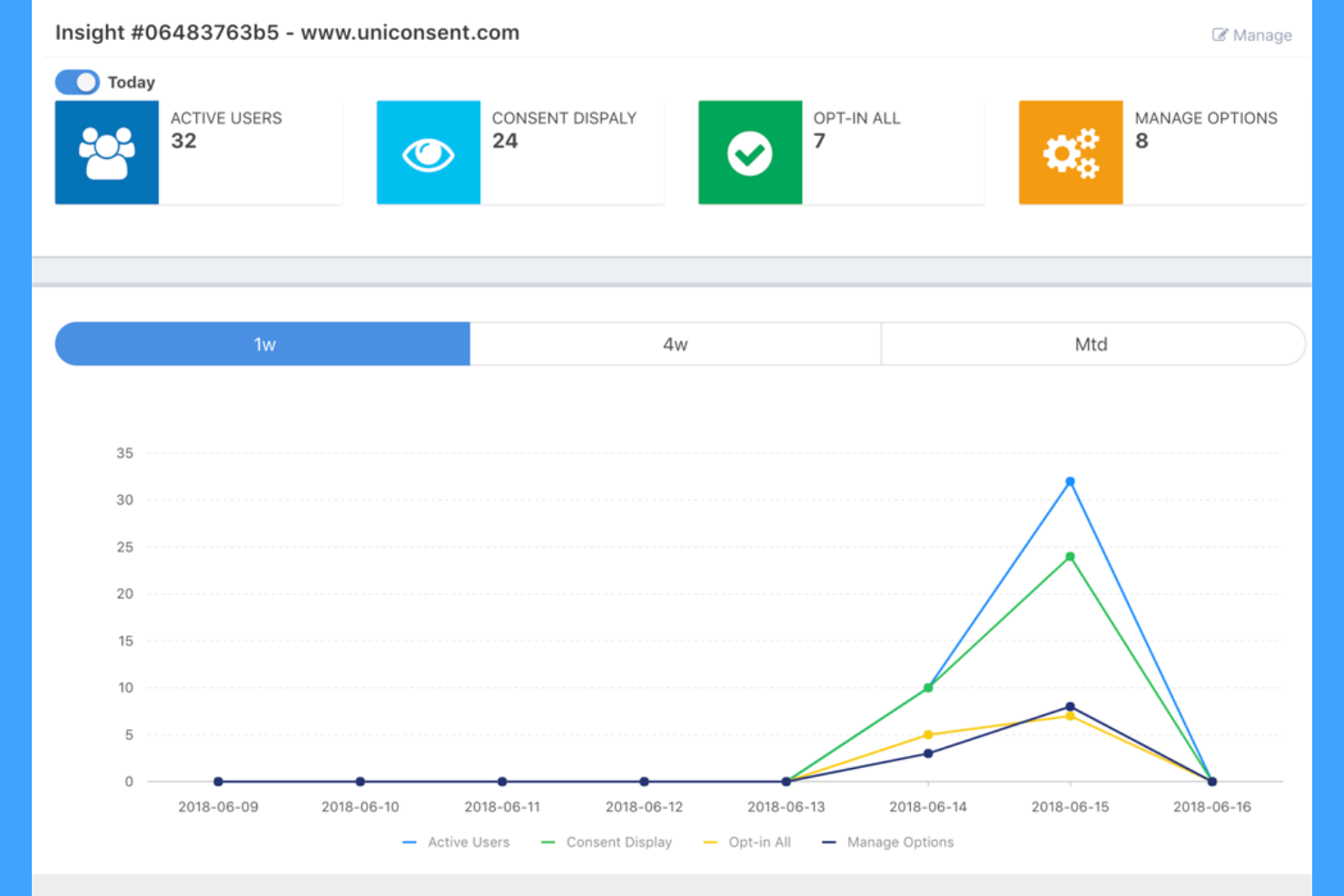
UniConsent is a consent management platform designed for businesses that need customizable consent banners to match the brand. It provides your company with tools to manage user consent and ensure compliance with privacy regulations. The platform can help your business create consent solutions that align with its unique branding needs.
Why I picked UniConsent: It offers highly customizable consent banners, allowing you to tailor them to your brand's look and feel. The platform provides easy-to-use design tools that help you create banners that fit your website's aesthetics. UniConsent's drag-and-drop editor simplifies the process of customization, making it accessible for your team.
Standout features and integrations:
Features include a drag-and-drop editor for easy banner customization, compliance monitoring tools to ensure privacy law adherence, and design options that let you match banners to your brand.
Integrations include WordPress, Google Tag Manager, Shopify, HubSpot, Wix, Squarespace, Drupal, and more.
Pros and Cons
Pros:
- Aligns with brand aesthetics
- Drag-and-drop editor
- Easy-to-use design tools
Cons:
- Basic reporting capabilities
- May require design expertise

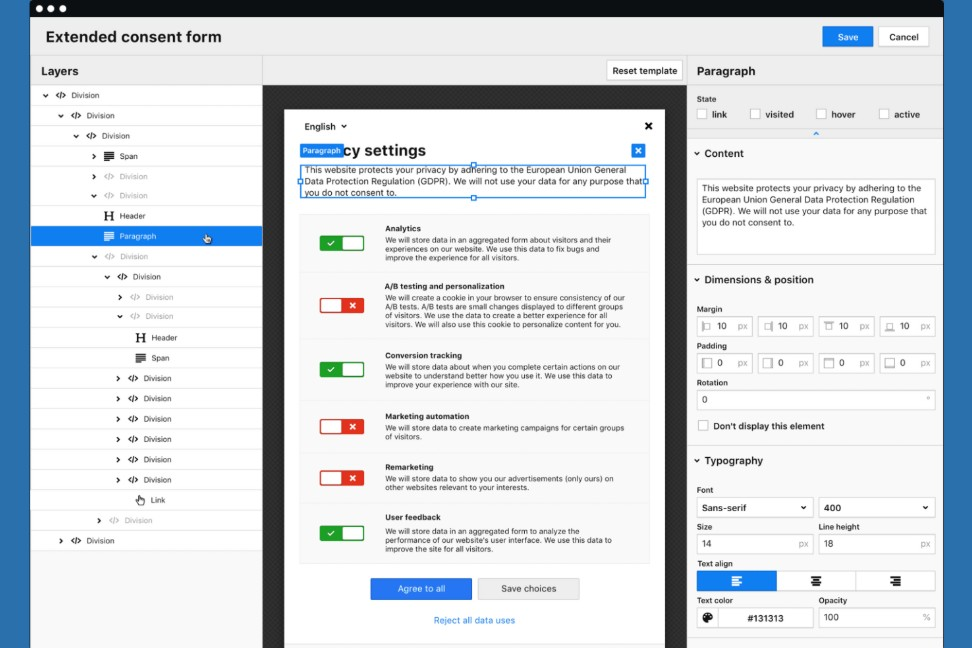
Piwik PRO is a consent management platform that caters to businesses needing to integrate consent management with analytics. It helps you manage user consent while offering privacy-compliant analytics solutions. The platform supports data-driven decision-making while ensuring compliance with privacy regulations.
Why I picked Piwik PRO: It excels in integrating analytics with consent management, making it ideal for data-focused businesses.
Standout features and integrations:
Features include privacy-compliant data tracking that supports analytics, customizable consent forms to fit your data needs, and detailed reporting tools for visualizing consent and analytics data.
Integrations include Google Ads, Google BigQuery, WordPress, Drupal, Shopify, Wix, Squarespace, Zapier, and more.
Pros and Cons
Pros:
- Customizable consent forms
- Privacy-compliant data tracking
- Strong analytics integration
Cons:
- Consent features are secondary to analytics
- Complex for small businesses

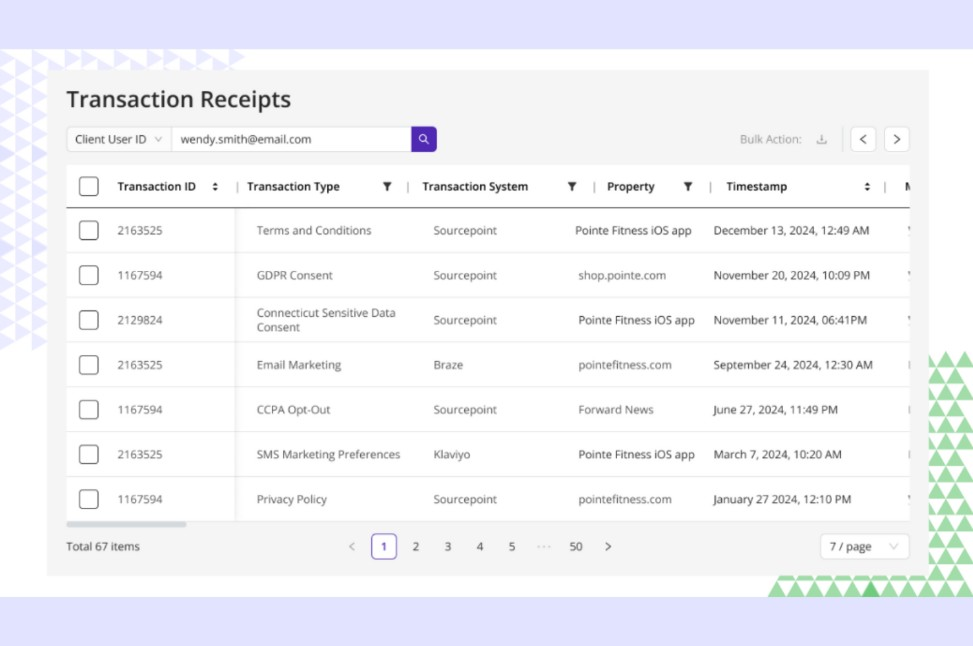
Sourcepoint is a consent management platform tailored for media companies seeking to manage user data and privacy effectively. It offers solutions for compliance, revenue optimization, and engaging end-user interactions. The platform helps media companies navigate regulatory challenges while maintaining the trust of website visitors.
Why I picked Sourcepoint: It's specifically designed for media companies, providing tailored consent management solutions for data privacy and revenue growth. Its user experience features allow for data-driven engagement without compromising privacy.
Standout features and integrations:
Features include compliance tools that help you meet regulatory standards, tools for creating transparent, user-centric experiences, and revenue optimization capabilities that boost monetization.
Integrations include HubSpot, Braze, Mailchimp, and more.
Pros and Cons
Pros:
- Supports revenue growth
- Balances monetization and privacy
- Tailored for media companies
Cons:
- Limited customization options
- May require technical expertise
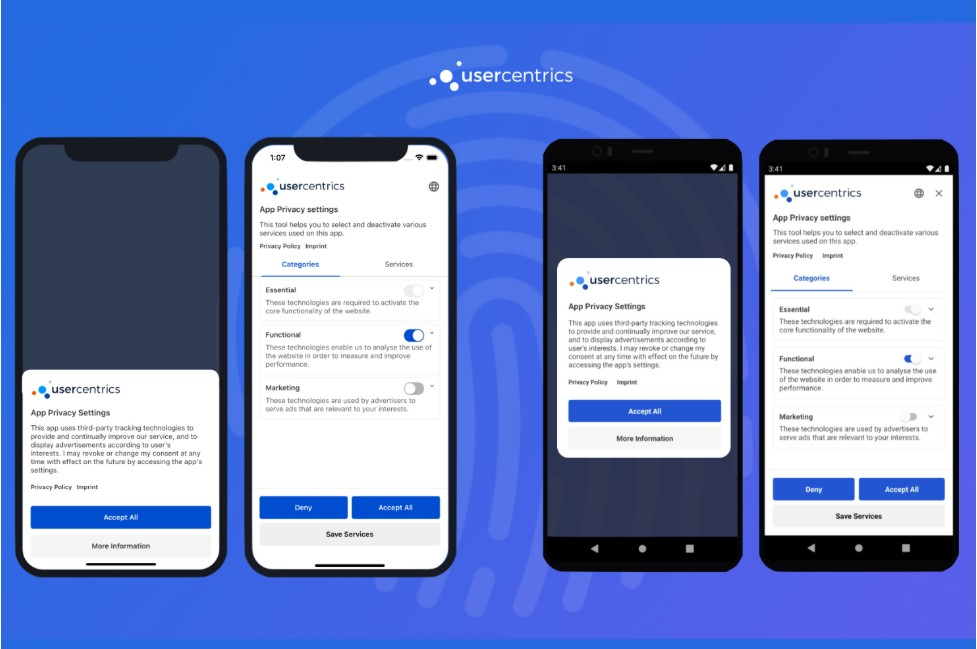
Usercentrics is a consent management platform designed for businesses needing to comply with data privacy regulations. It serves a wide range of industries, helping with the effective management of consent and privacy policies. The platform automates consent collection across web, app, and connected TV, ensuring compliance with laws such as GDPR.
Why I picked Usercentrics: The platform excels in GDPR compliance, which is significant for many businesses. It offers CMP solutions for various digital platforms, providing a universal approach to consent management. The privacy policy generator is a standout feature, allowing you to create compliant policies quickly. Usercentrics also helps you use consent-driven trackers to improve data quality and marketing performance while staying GDPR compliant.
Standout features and integrations:
Features include a preference management tool for user consent choices, server-side tracking technologies to obtain and leverage high-quality data, and compliance scans to ensure adherence with global privacy laws. Usercentrics also allows for fully customizable cookie popups and opt-ins.
Integrations include WordPress, Shopify, Wix, HubSpot, Square, Google Tag Manager, Chartboost, Crashlytics, and more.
Pros and Cons
Pros:
- Server-side tracking capabilities
- Privacy policy generator
- Strong focus on GDPR compliance
Cons:
- Requires ongoing management
- Complex for small businesses
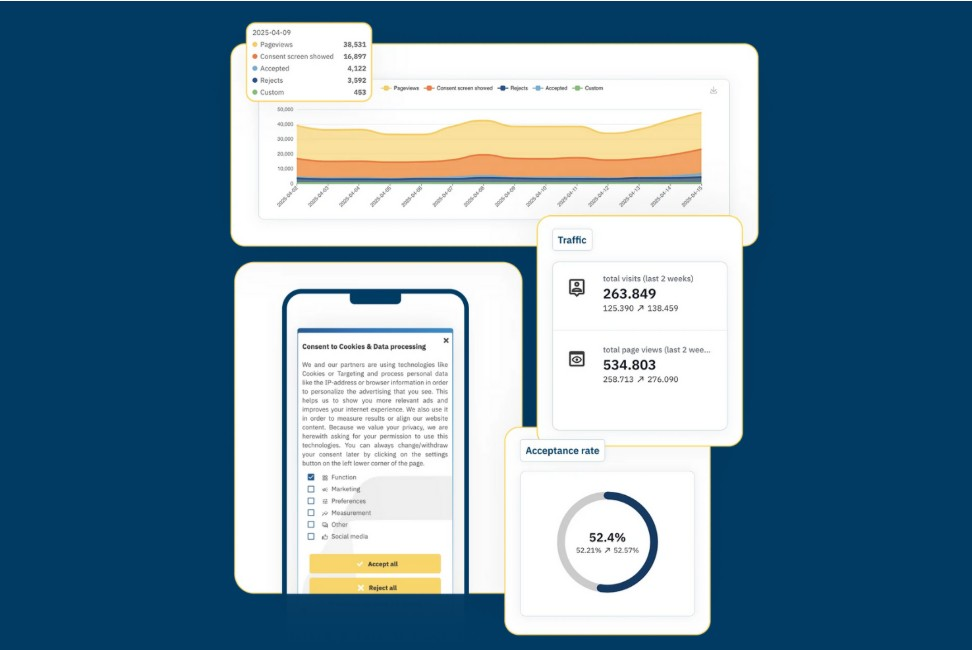
consentmanager is a consent management platform designed for businesses that need to handle user consent in multiple languages. It serves companies by providing tools for managing cookie consent and privacy policies across different regions. The platform helps businesses comply with global data protection regulations efficiently.
Why I picked consentmanager: It's ideal if your business needs multilingual support, ensuring compliance across diverse regions. consentmanager's automatic updates keep your team informed about regulatory changes.
Standout features and integrations:
Features include customizable consent banners that adapt to cater to different languages and legal requirements, automatic updates to keep you compliant, and detailed reporting tools for tracking and analyzing consent data.
Integrations include WordPress, WooCommerce, GoDaddy, Shopify, Google Tag Manager, Lightspeed, and more.
Pros and Cons
Pros:
- Suitable for global compliance
- Automatic regulatory updates
- Strong multilingual support
Cons:
- Not ideal for small businesses
- Basic consent options

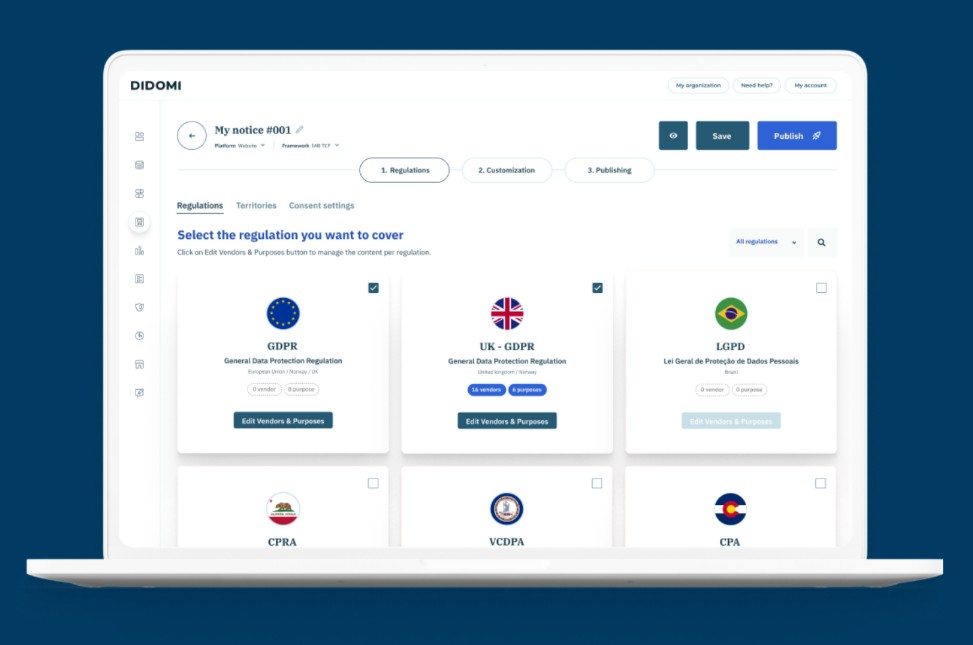
Didomi is a consent management platform tailored for businesses that require effective consent solutions for mobile applications. It serves app developers and publishers by providing tools to manage user consent and privacy preferences efficiently. The platform helps ensure compliance with data privacy regulations across mobile environments.
Why I picked Didomi: It excels in providing consent solutions specifically for mobile apps, which is significant for developers. Didomi's SDK integration allows you to manage consent directly within your app. The platform offers customizable consent notices tailored to mobile interfaces.
Standout features and integrations:
Features include SDK integration for consent management within mobile apps, customizable consent notices for mobile interfaces, and real-time updates to ensure regulatory compliance.
Integrations include Google Consent Mode, HubSpot, Google Tag Manager, AB Tasty, and more.
Pros and Cons
Pros:
- Supports various mobile interfaces
- SDK integration simplifies management
- Effective for mobile app consent
Cons:
- Not ideal for web-only solutions
- Limited flexibility in advanced custom use cases
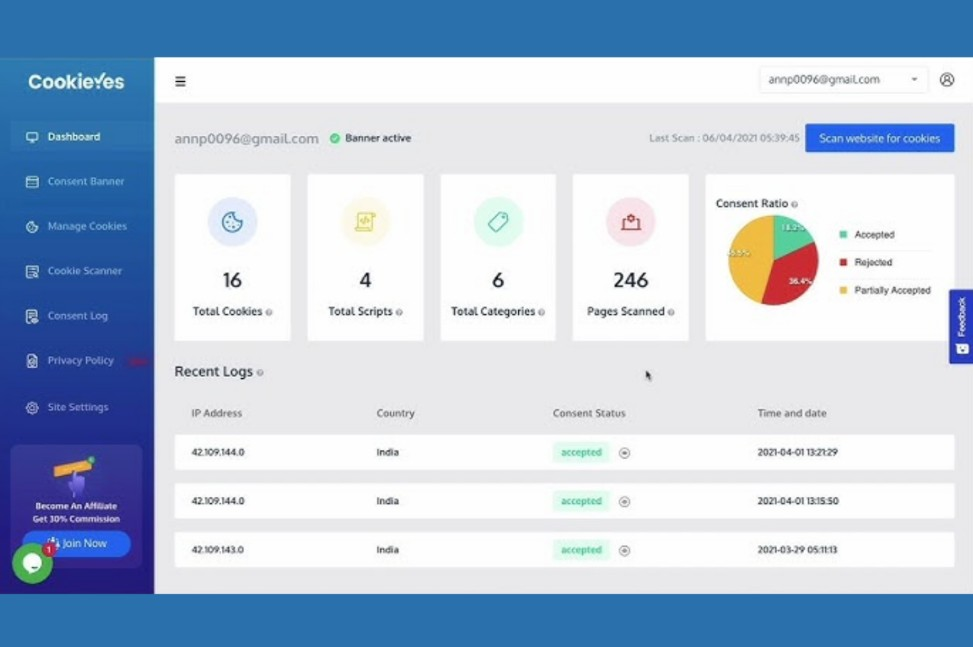
CookieYes is a consent management platform designed primarily for businesses needing to manage cookie consent and compliance. It serves a wide range of industries by providing tools to handle cookie consent notices and data privacy regulations. The platform helps you ensure compliance with GDPR and other major privacy laws.
Why I picked CookieYes: It specializes in cookie compliance, making it ideal if your business focuses on managing cookies effectively.
Standout features and integrations:
Features include customizable cookie consent banners that match your site's design, automatic cookie scanning to ensure compliance, and detailed consent records for tracking user preferences.
Integrations include Google Consent Mode, Google Tag Manager, Wix, IAB TCF v2.2, and more.
Pros and Cons
Pros:
- Suitable for various industries
- Automatic cookie scanning
- Specializes in cookie compliance
Cons:
- Limited reporting capabilities
- Not ideal for large enterprises

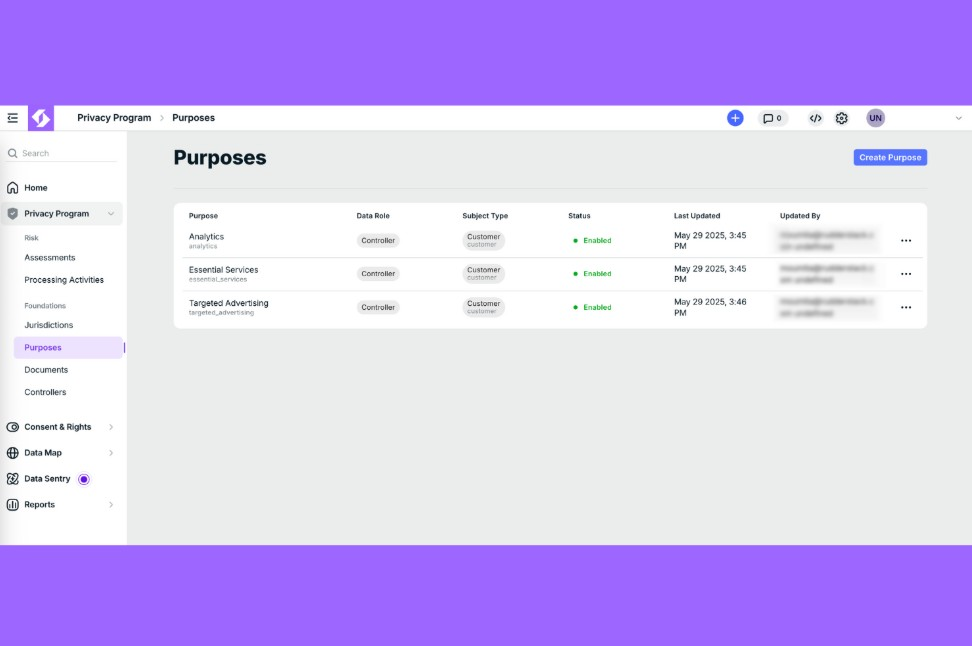
Ketch is a consent management platform tailored for businesses seeking privacy operation automation. It serves companies by streamlining data permissions and compliance processes. The platform offers tools to automate data mapping and privacy requests by making processes more efficient.
Why I picked Ketch: Its focus on automation features is ideal if your business needs simplified privacy operations. The platform automates data mapping, reducing manual effort. and handles privacy requests efficiently.
Standout features and integrations:
Features include an adaptive compliance framework that adjusts to new regulations, automated data mapping to save time, and efficient handling of privacy requests.
Integrations include Salesforce, Microsoft Clarity, Adobe CDP, Google Analytics, Snowflake, Segment, and more.
Pros and Cons
Pros:
- Reduces manual data efforts
- Adaptive compliance framework
- Efficient privacy request handling
Cons:
- UI isn’t immediately intuitive
- May require extensive training
Other Consent Management Platforms
Here are some additional consent management platform options that didn’t make it onto my shortlist but are still worth checking out:
- Secure Privacy
For GDPR and CCPA compliance
- Enzuzo
For startups and small teams


Consent Management Platform Selection Criteria
When selecting the best consent management platforms to include in this list, I considered common buyer needs and pain points such as ensuring regulatory compliance and managing user consent efficiently. I also used the following framework to keep my evaluation structured and fair:
Core Functionality (25% of total score)
To be considered for inclusion in this list, each solution had to fulfill these common use cases:
- Manage user consent preferences
- Ensure GDPR compliance
- Generate consent logs
- Provide customizable consent banners
- Enable consent withdrawal
Additional Standout Features (25% of total score)
To help further narrow down the competition, I also looked for unique features, such as:
- Multilingual support
- Real-time consent updates
- Integration with analytics tools
- Automated policy updates
- Mobile app support
Usability (10% of total score)
To get a sense of the usability of each system, I considered the following:
- Intuitive interface design
- Ease of navigation
- Minimal learning curve
- Customization options
- User feedback mechanisms
Onboarding (10% of total score)
To evaluate the onboarding experience for each platform, I considered the following:
- Availability of training videos
- Interactive product tours
- Access to templates
- Webinars and live sessions
- Chatbot support
Customer Support (10% of total score)
To assess each software provider’s customer support services, I considered the following:
- Availability of 24/7 support
- Response time to inquiries
- Access to a dedicated account manager
- Service-focused help center
- Support through multiple channels
Value For Money (10% of total score)
To evaluate the value for money of each platform, I considered the following:
- Competitive pricing
- Flexible pricing plans
- Free trial or demo availability
- Features included in the base plan
- Discounts for annual subscriptions
Customer Reviews (10% of total score)
To get a sense of overall customer satisfaction, I considered the following when reading customer reviews:
- Feedback on ease of use
- Comments on customer support
- Opinions on feature set
- Experiences with implementation
- Overall satisfaction ratings
How To Choose a Consent Management Platform
It’s easy to become overwhelmed by long feature lists and complex pricing structures. To help you stay focused as you work through your unique software selection process, here’s a checklist of factors to keep in mind:
| Factor | What to Consider |
|---|---|
| Scalability | How will the platform grow with your business? Check if it can handle more users and increased data as your needs expand. |
| Integrations | Does the platform work with your existing tools? Ensure it connects with your CRM, analytics, and other essential systems without interruption. |
| Customizability | Can you tailor the platform to fit your brand and workflow? Look for options to customize consent forms and user interfaces. |
| Ease of use | Is the platform user-friendly for your team? Consider the learning curve and whether your team can easily navigate and use it daily. |
| Implementation and onboarding | How quickly can you get started? Evaluate the setup time and available onboarding support, such as training materials and customer service. |
| Cost | Does the pricing align with your budget? Compare the cost of different plans and check for hidden fees or additional charges. |
| Security safeguards | How does the platform protect your data? Ensure it complies with industry standards and offers encryption and other security measures. |
| Compliance requirements | Does the platform meet your regulatory needs? Verify that it supports GDPR, CPRA, and other relevant privacy laws applicable to your business. |
What Are Consent Management Platforms?
Consent management platforms are tools that help businesses manage user consent and ensure compliance with privacy regulations. Marketing managers, data protection officers, and compliance teams generally use these tools to handle consent preferences and maintain legal standards. Consent tracking, customizable consent forms, and compliance reporting support efficient consent management and regulatory adherence. Overall, these tools help businesses build trust with users by handling data responsibly and transparently.
Features
When selecting consent management platforms, look for the following key features:
- Consent tracking: This feature records and manages user consent preferences, helping businesses comply with privacy laws.
- Customizable consent forms: Allows you to tailor consent forms to match your brand and meet specific requirements.
- Compliance reporting: Provides detailed reports on compliance status, ensuring your business meets regulatory standards.
- Automatic updates: Keep your platform aligned with the latest privacy regulations without manual intervention.
- Multilingual support: Enables you to support multiple languages for a global audience, essential for catering to diverse data subjects.
- Integration capabilities: Ensures the platform works smoothly with your existing systems, such as CRM and analytics tools.
- User-friendly interface: Simplifies navigation and usage for your team, minimizing the learning curve.
- Mobile app support: Offers consent management features optimized for mobile applications, ensuring compliance on all devices.
Benefits
Implementing consent management platforms provides several benefits for your team and your business. Here are a few you can look forward to:
- Regulatory compliance: Ensures your business meets privacy laws, such as GDPR, reducing the risk of fines.
- User trust: Builds trust by transparently handling user data and consent preferences.
- Efficiency: Automates data collection and management, saving time and reducing manual work.
- Data insights: Provides valuable insights into user consent trends through detailed reporting.
- Customization: Allows you to tailor consent forms and banners to fit your brand, enhancing user experience.
- Global reach: Supports multilingual capabilities, making it easier to manage consent across different regions.
- Integration ease: Works with your existing systems, ensuring a smooth workflow without disruptions.
Costs and Pricing
Selecting consent management platforms requires an understanding of the various pricing models and plans available. Costs vary based on features, team size, add-ons, and more. The table below summarizes common plans, their average prices, and typical features included in consent management platform solutions:
Plan Comparison Table for Consent Management Platforms
| Plan Type | Average Price | Common Features |
|---|---|---|
| Free Plan | $0 | Basic consent tracking, limited customization, and essential compliance tools. |
| Personal Plan | $5-$25/month | Enhanced customization, multilingual support, and basic integrations. |
| Business Plan | $30-$60/month | Advanced reporting, deep integration options, and priority support. |
| Enterprise Plan | $75-$150/month | Full customization, dedicated account management, and in-depth analytics. |
Consent Management Platforms FAQs
Here are some answers to common questions about consent management platforms:
What is the primary purpose of a consent management platform?
The primary purpose of a consent management platform is to help businesses collect, manage, and store user consent for data processing in compliance with privacy laws. These platforms ensure you meet regulations such as GDPR by providing tools to track consent, generate reports, and update policies. This helps your team maintain transparency and trust with users while staying legally compliant.
Can consent management platforms integrate with existing systems?
Yes, most consent management platforms offer APIs for deep integration with existing systems, including CRM, analytics, and marketing tools. This integration ensures that consent data flows smoothly across your business processes, enhancing efficiency. Before choosing a platform, check its compatibility with your current tech stack to avoid any integration issues.
How do consent management platforms handle updates to privacy laws?
Consent management platforms typically offer automatic updates to privacy policies and compliance settings in response to changes in privacy laws. This feature helps your team stay current without manually adjusting settings. Look for platforms that provide real-time updates and alerts to ensure you’re always compliant with the latest regulations.
Do I need technical expertise to implement a consent management platform?
No, you don’t necessarily need technical expertise to implement a consent management platform. Many platforms offer user-friendly interfaces and step-by-step guides to simplify setup. However, having some basic technical knowledge can be helpful, especially for integrating the platform with existing systems. Look for platforms with strong customer support to assist you during implementation.
What’s Next:
If you're in the process of researching consent management platforms, connect with a SoftwareSelect advisor for free recommendations.
You fill out a form and have a quick chat where they get into the specifics of your needs. Then you'll get a shortlist of software to review. They'll even support you through the entire buying process, including price negotiations.