
28 Best AI Influencer Marketing Platforms in 2026

AI Influencer Marketing Platforms Shortlist
Here’s my shortlist of the best AI influencer marketing platforms:


AI influencer marketing platforms are specialized tools that use artificial intelligence to help you discover, vet, and manage influencer partnerships at scale. If you’re searching for ways to reach the right audiences, optimize campaign performance, and prove ROI, these platforms can help you cut through the noise and make data-driven decisions. In this list, you’ll find the top AI influencer marketing platforms, each offering unique features for campaign automation, creator discovery, and analytics—so you can choose the right solution for your brand’s goals.
Why Trust Our Software Reviews
We’ve been testing and reviewing marketing software since 2022. As marketing experts ourselves, we know how critical and difficult it is to make the right decision when selecting software.
We invest in deep research to help our audience make better software purchasing decisions. We’ve tested more than 2,000 tools for different marketing use cases and written over 1,000 comprehensive software reviews. Learn how we stay transparent & our software review methodology.
Best AI Influencer Marketing Platforms Summary
This comparison chart summarizes pricing details for my top AI influencer marketing platform selections to help you find the best fit for your budget, campaign goals, and influencer partnership needs.
| Tool | Best For | Trial Info | Price | ||
|---|---|---|---|---|---|
| 1 | Best for managing influencer relationships end-to-end | 30-day free trial available | Pricing upon request | Website | |
| 2 | Best for detecting influencer fraud and quality | Free demo available | Pricing upon request | Website | |
| 3 | Best for influencer discovery in social tools | 30-day free trial +free demo available | From $199/seat/month | Website | |
| 4 | Best for real-time influencer search and insights | Free demo available | Pricing upon request | Website | |
| 5 | Best for global influencer campaign optimization | Not available | Pricing upon request | Website | |
| 6 | Best for enterprise influencer marketing platforms | Free demo available | Pricing upon request | Website | |
| 7 | Best for automated influencer outreach | Free demo available | From $454/month (billed annually) | Website | |
| 8 | Best for creator workflows and campaign management | Free demo available | Pricing upon request | Website | |
| 9 | Best for cross-platform influencer discovery | 14-day free trial + free demo available | From $199/month | Website | |
| 10 | Best for influencer scoring and benchmarking | 7-day free trial + free demo available | From $99/month (billed annually) | Website |
-

Demandbase
Visit WebsiteThis is an aggregated rating for this tool including ratings from Crozdesk users and ratings from other sites.4.4 -
6sense
Visit WebsiteThis is an aggregated rating for this tool including ratings from Crozdesk users and ratings from other sites.4.3 -
AnswerThePublic
Visit Website


AI Influencer Marketing Platforms Reviews
Below are my detailed summaries of the best AI influencer marketing platforms that made it onto my shortlist. My reviews offer a detailed look at the features, capabilities, and integrations of each platform to help you find the best one for you.
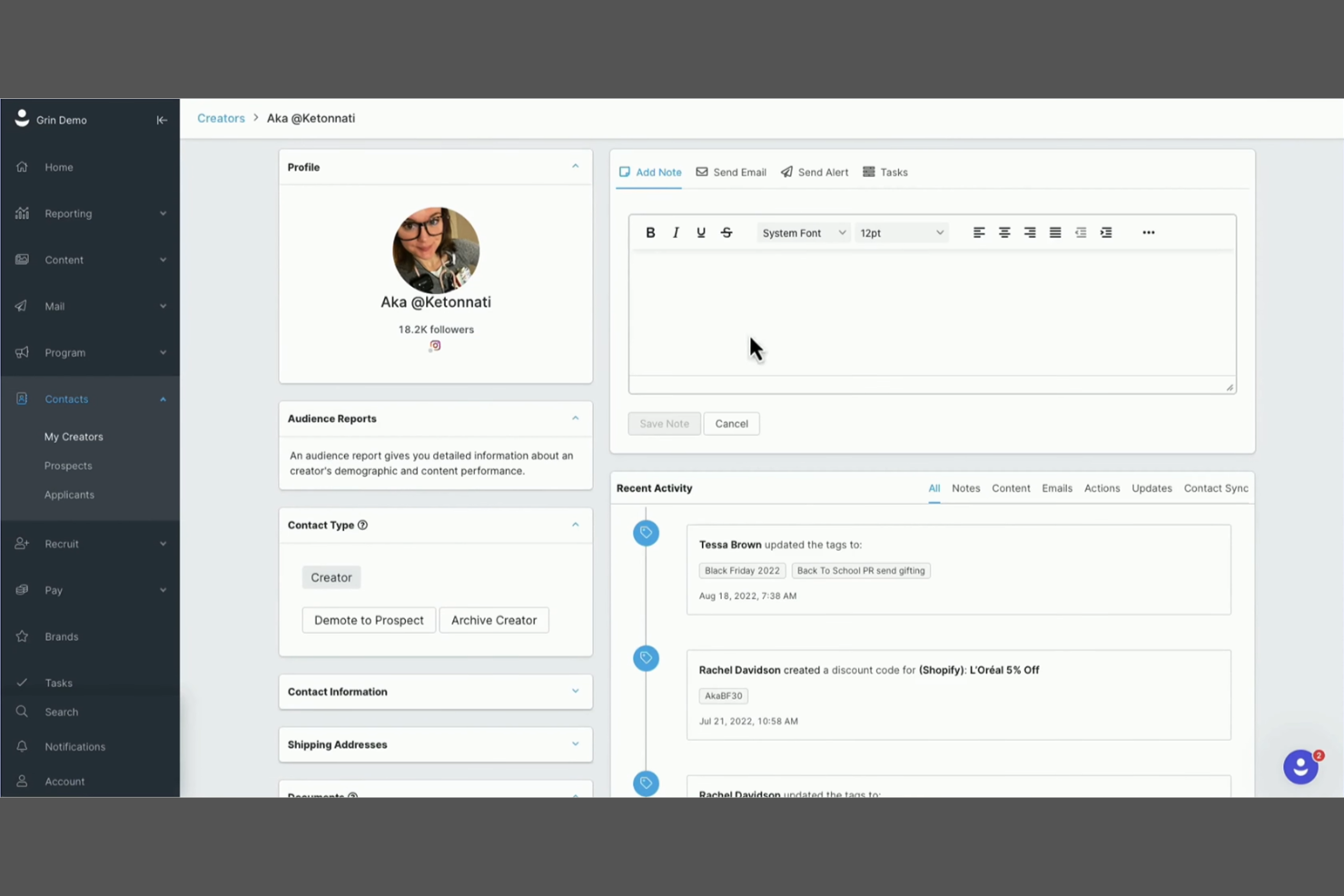
GRIN is designed for brands and agencies looking to manage influencer relationships at scale. The platform stands out for teams that need to centralize outreach, content management, and reporting in one place. If you want to simplify complex influencer campaigns and gain deeper insights into creator performance, GRIN offers a focused solution.
Who Is GRIN Best For?
GRIN is a strong fit for mid-sized to large ecommerce brands and agencies that need to manage high-volume influencer campaigns across multiple channels.
Why I Picked GRIN
I chose GRIN because its end-to-end influencer relationship management and advanced AI-powered discovery set it apart in the AI influencer marketing space. The platform’s AI-driven search helps you identify creators who align with your brand’s goals and audience, while its relationship management tools let you track every stage of the partnership lifecycle. I also appreciate how GRIN centralizes campaign assets and communications, making it easier to manage multiple collaborations at once. These features make GRIN especially valuable for teams running complex, multi-channel influencer campaigns.
GRIN Key Features
Some other features worth noting for teams considering GRIN include:
- Automated product seeding: Send products to creators directly from the platform and track shipments for each campaign.
- Custom reporting dashboards: Build tailored reports to monitor campaign performance and share results with stakeholders.
- Content approval workflows: Set up multi-step approval processes for influencer-generated content before it goes live.
- Payment management tools: Handle influencer payments, track invoices, and manage compensation from within the platform.
GRIN Integrations
Integrations include Shopify, Gmail, Outlook, Klaviyo, Box, Dropbox, Google Drive, DocuSign, PayPal, Slack, and more.
Pros and Cons
Pros:
- Built-in payments support global payouts
- Automated seeding simplifies campaign logistics
- AI influencer discovery finds relevant matches
Cons:
- Lacks built-in affiliate tracking for influencers
- No public influencer marketplace for browsing talent
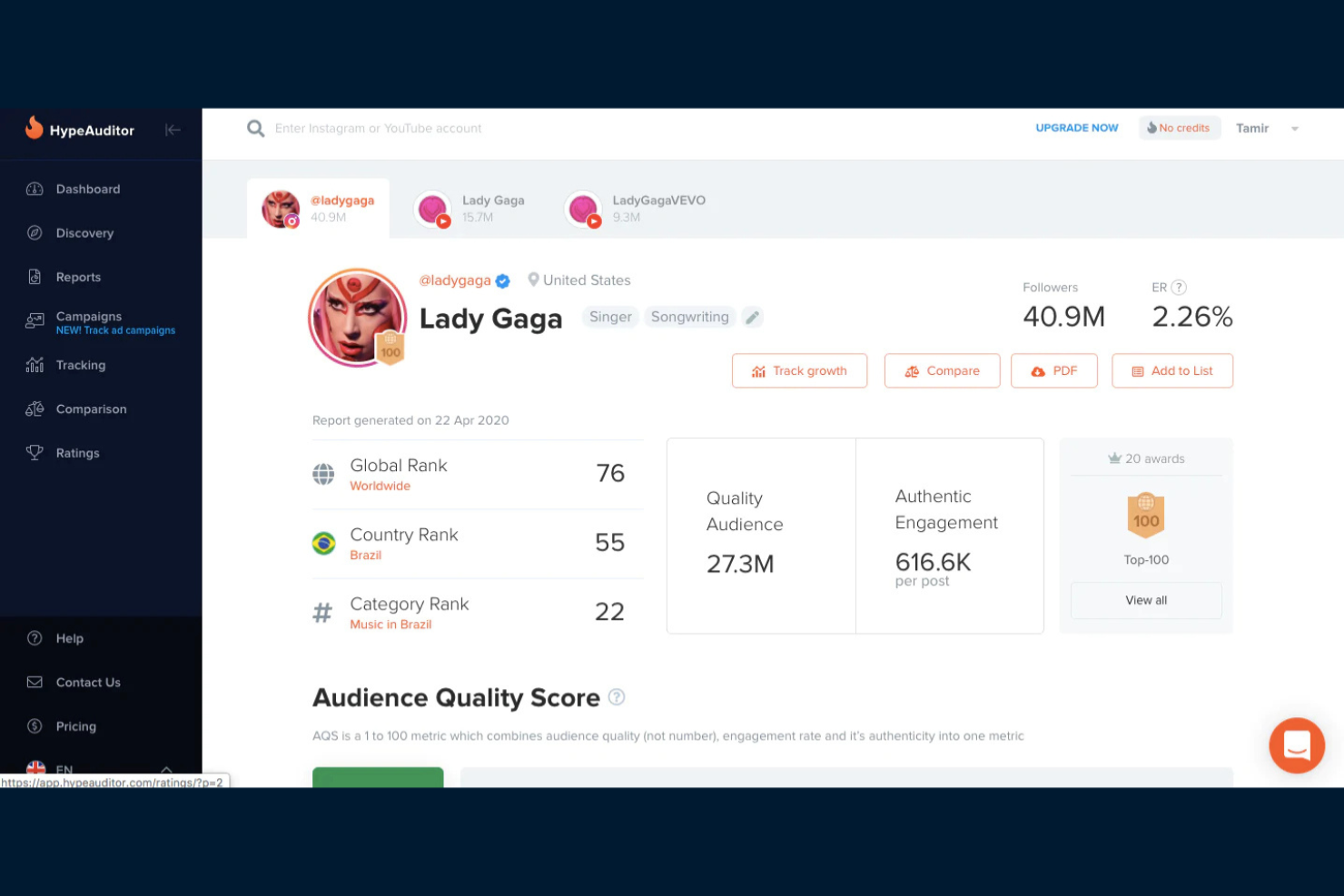
If you need to verify influencer audiences and spot fake engagement, HypeAuditor is built for you. The platform appeals to marketing teams and agencies that want data-driven insights into influencer authenticity and campaign performance. HypeAuditor helps you make informed decisions by surfacing detailed analytics on creators and their followers.
Who Is HypeAuditor Best For?
HypeAuditor fits agencies and brands that need to verify influencer authenticity and audience quality before launching campaigns.
Why I Picked HypeAuditor
What drew me to HypeAuditor is its advanced use of AI for influencer discovery and audience authenticity analysis. The platform’s audience quality scoring and in-depth fake follower detection help you avoid wasted spend on inauthentic creators, which is a major concern in influencer marketing. I also appreciate how HypeAuditor’s analytics break down audience demographics and engagement patterns, so you can match brands with influencers who truly reach your target market. These capabilities make it a strong choice for teams that need reliable, data-backed insights before investing in influencer partnerships.
HypeAuditor Key Features
Some other features that make HypeAuditor useful for influencer marketing teams include:
- Campaign management dashboard: Track influencer outreach, campaign progress, and deliverables in one place.
- Competitor analysis tools: Benchmark your influencer campaigns against competitors and industry standards.
- Influencer discovery filters: Search for creators using detailed filters like location, audience interests, and engagement rates.
- Automated reporting: Generate customizable reports on campaign performance and influencer metrics.
HypeAuditor Integrations
Native integrations are not currently listed.
Pros and Cons
Pros:
- Provides competitor influencer campaign analysis
- Offers detailed audience demographic breakdowns
- Detects fake followers and engagement patterns
Cons:
- Influencer database may miss emerging creators
- No direct influencer outreach tools

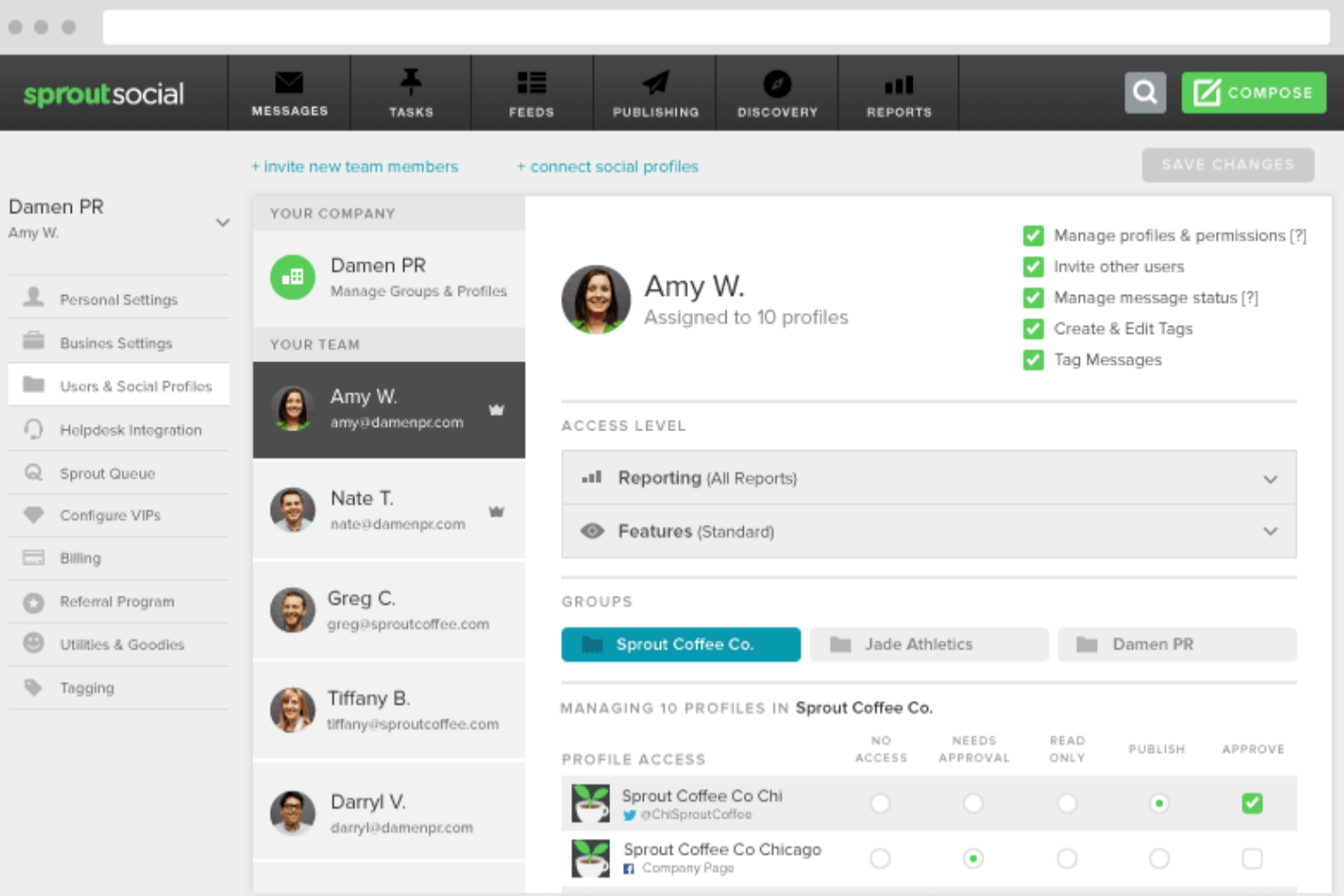
Sprout Social offers social media management with features that support influencer marketing workflows. It’s a good fit for marketing teams and agencies that want to manage influencer relationships alongside their broader social campaigns. If you need unified scheduling, monitoring, and reporting for both brand and influencer content, Sprout Social brings these functions together in one platform.
Who Is Sprout Social Best For?
Sprout Social suits marketing teams and agencies that need unified social media and influencer management across multiple channels.
Why I Picked Sprout Social
What stands out about Sprout Social is how it brings all your social media and influencer activities into one unified dashboard. For influencer marketing, I like that you can monitor influencer posts, track engagement, and manage communication alongside your brand’s own content. The platform’s analytics let you compare influencer performance with your owned channels, making it easier to measure true impact. If you want to keep influencer campaigns tightly integrated with your broader social strategy, Sprout Social’s unified management and analytics approach is a strong fit.
Sprout Social Key Features
Some other features that make Sprout Social useful for influencer marketing teams include:
- Social listening tools: Monitor brand mentions and influencer conversations across multiple social networks.
- Content calendar: Plan, schedule, and organize influencer and brand posts in a shared calendar view.
- Approval workflows: Set up multi-step content approval processes for influencer submissions.
- CRM for social contacts: Store and manage influencer profiles, communication history, and relationship notes within the platform.
Sprout Social Integrations
Integrations include Facebook, Instagram, X (Twitter), LinkedIn, Pinterest, TikTok, YouTube, Salesforce, HubSpot, and more.
Pros and Cons
Pros:
- Multi-network scheduling for influencer posts
- Social listening tracks influencer campaign impact
- Unified dashboard for influencer and brand content
Cons:
- Influencer payments not managed in-platform
- Limited influencer-specific campaign workflow tools

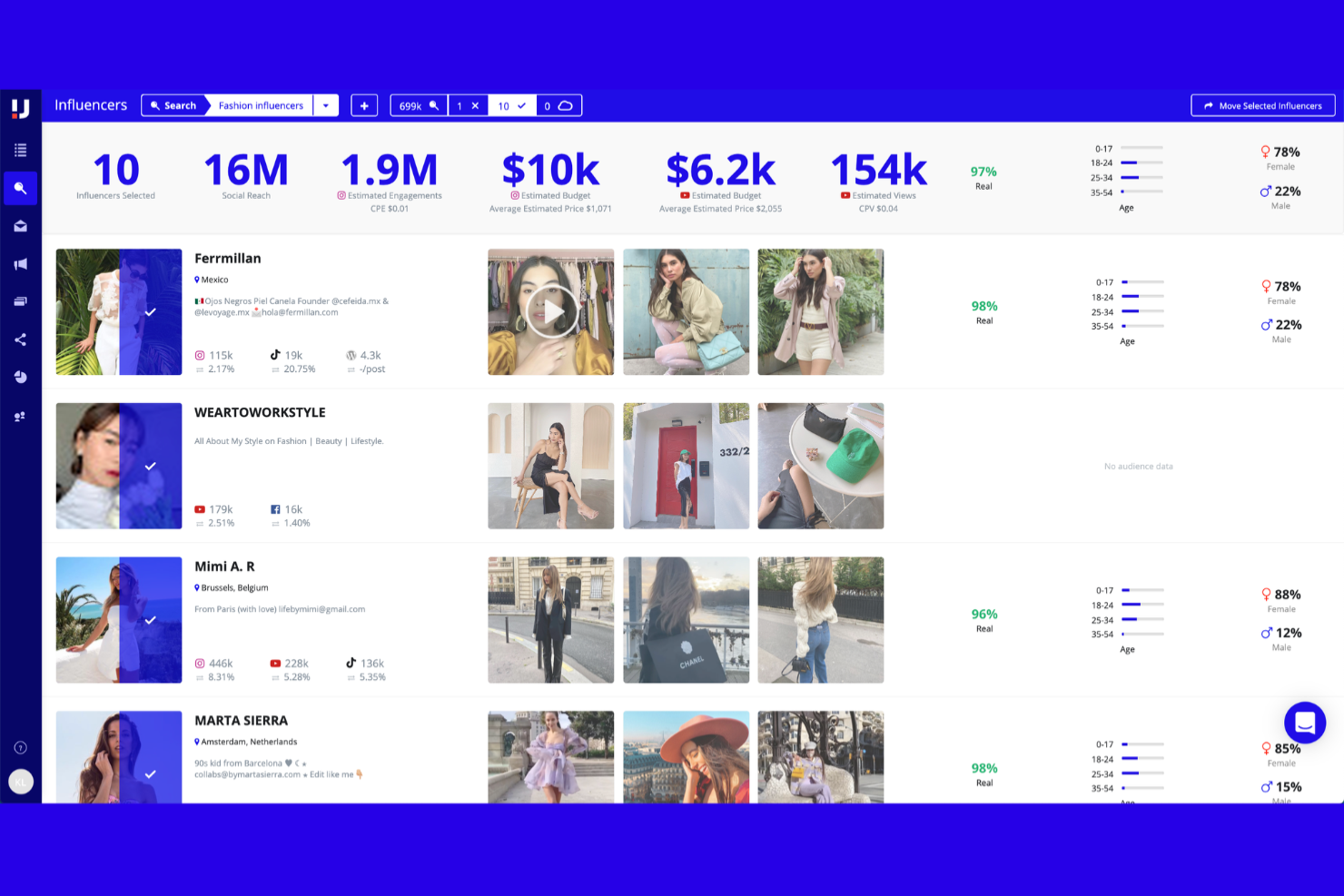
Upfluence offers a data-driven platform for brands and agencies looking to scale influencer marketing with precision. The tool appeals to e-commerce teams and marketers who want to identify, recruit, and manage creators using AI-powered insights. If you need to unify influencer discovery, outreach, and campaign tracking in one place, Upfluence brings these capabilities together for more targeted results.
Who Is Upfluence Best For?
Upfluence is well-suited for e-commerce brands and agencies that need to manage influencer campaigns at scale.
Why I Picked Upfluence
What drew me to Upfluence is its focus on AI-powered influencer search and campaign automation, which directly addresses the needs of ecommerce brands running high-volume campaigns. The platform’s AI-driven search engine lets you filter millions of influencer profiles by audience data, engagement rates, and niche criteria, making it easier to find creators who match your brand. I also appreciate the campaign automation tools that handle outreach, product seeding, and performance tracking in one workflow. These features make Upfluence a strong choice for teams that want to scale influencer programs without sacrificing targeting or efficiency.
Upfluence Key Features
Some other features that make Upfluence valuable for influencer marketing teams include:
- Influencer relationship management: Track communication history, contracts, and campaign status for each creator in a centralized dashboard.
- Affiliate program management: Launch and manage affiliate campaigns with unique tracking links and commission structures for influencers.
- Social listening tools: Monitor brand mentions and influencer content performance across multiple social platforms.
- Automated influencer payments: Schedule, send, and track payments to creators directly from the platform.
Upfluence Integrations
Integrations include Shopify, WooCommerce, BigCommerce, Amazon, Stripe, Klaviyo, Hootsuite, Gmail, Outlook, and more.
Pros and Cons
Pros:
- Centralized content approval for brand compliance
- Automated product seeding for e-commerce campaigns
- AI-driven influencer matching improves targeting accuracy
Cons:
- Campaign setup locks some fields after creation
- Platform complexity needs dedicated training

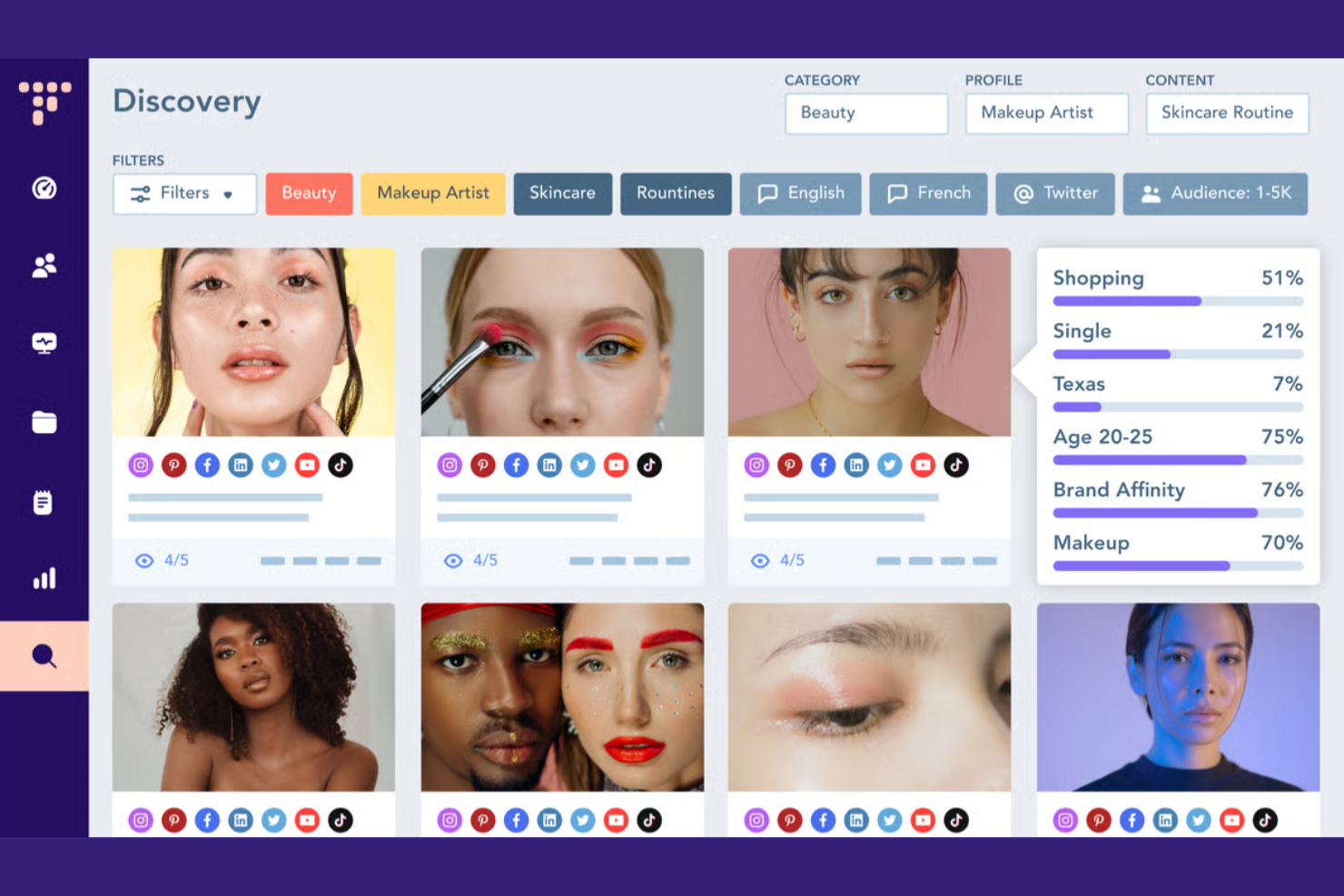
Traackr gives marketing and brand teams a platform to analyze, manage, and optimize influencer programs with a focus on data transparency. If you need to vet influencers, track campaign spend, and measure ROI across multiple markets, Traackr brings these capabilities together in one place. The tool is especially useful for teams that want to make data-driven decisions about influencer partnerships and budget allocation.
Who Is Traackr Best For?
Traackr fits global brands and agencies that need to manage influencer marketing at scale with a strong emphasis on data-driven decision-making.
Why I Picked Traackr
What drew me to Traackr is its focus on data-driven influencer vetting and spend optimization, which is essential for teams managing large-scale influencer programs. Traackr lets you analyze influencer performance using detailed audience demographics, engagement metrics, and historical campaign data before making partnership decisions. I also appreciate how the platform tracks spend across campaigns and regions, helping you allocate budgets more strategically. For anyone who needs to justify influencer investments and optimize ROI, Traackr’s analytics and spend management tools make it a strong fit.
Traackr Key Features
Some other features that make Traackr valuable for influencer marketing teams include:
- Influencer relationship management tools: Track communication history, notes, and relationship status with each influencer in a centralized workspace.
- Global campaign management: Coordinate and monitor influencer campaigns across multiple countries and languages from a single dashboard.
- Content tracking and approval workflows: Review, approve, and archive influencer content submissions before they go live.
- Competitive benchmarking: Compare your influencer program’s performance against industry peers and competitors using built-in analytics.
Traackr Integrations
Native integrations are not currently listed.
Pros and Cons
Pros:
- Centralizes influencer relationships and spend tracking
- Tracks ROI from content to conversions
- Deep benchmarking compares influencer performance
Cons:
- Hard to analyze performance for specific influencers
- Content tracking can lag behind real-time activity
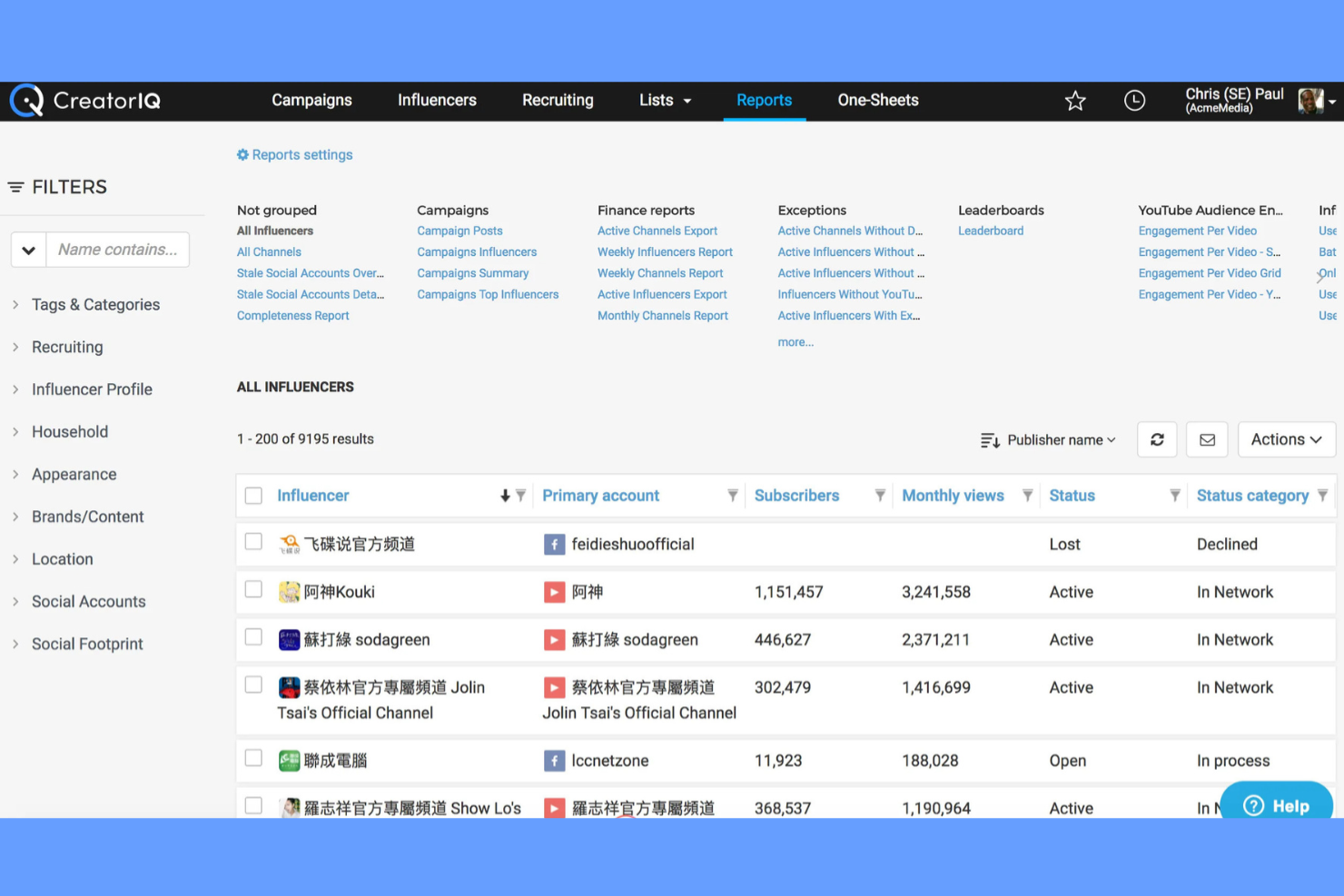
CreatorIQ is a platform built for large brands and agencies that need to manage complex influencer marketing programs. It offers advanced data analysis and workflow tools designed to help teams find, vet, and collaborate with creators at scale. If you’re looking for a solution that brings structure and accountability to influencer partnerships, CreatorIQ is worth considering.
Who Is CreatorIQ Best For?
CreatorIQ suits large brands and agencies that need to manage and measure influencer campaigns across multiple markets or business units.
Why I Picked CreatorIQ
What stands out about CreatorIQ is its focus on enterprise-grade analytics and workflow automation, which are essential for managing influencer programs at scale. The platform’s advanced analytics suite lets you track campaign performance, audience authenticity, and ROI with granular detail, which is especially valuable for large teams and agencies. I also like that CreatorIQ offers customizable workflow automation, so you can standardize creator onboarding, approvals, and reporting across multiple campaigns. These features make it a strong fit for organizations that need both deep data insights and structured processes in their influencer marketing efforts.
CreatorIQ Key Features
Some other features that make CreatorIQ valuable for influencer marketing teams include:
- Influencer discovery engine: Search and filter a global database of creators using audience demographics, engagement rates, and content categories.
- Content library: Store, organize, and repurpose influencer-generated content within a centralized digital asset hub.
- Fraud detection tools: Identify fake followers, suspicious engagement, and inauthentic activity across influencer profiles.
- Collaboration portal: Invite creators to branded portals for campaign briefs, asset sharing, and direct communication.
CreatorIQ Integrations
Integrations include Instagram, TikTok, YouTube, Facebook, Snapchat, Amazon, Shopify, Google Analytics, DocuSign, Tableau, and more.
Pros and Cons
Pros:
- Fraud detection filters fake followers and inflated metrics
- Real-time campaign analytics improve performance tracking
- Built-in influencer CRM centralizes relationships
Cons:
- UI navigation can be clunky for complex tasks
- Campaign workflows still require manual steps

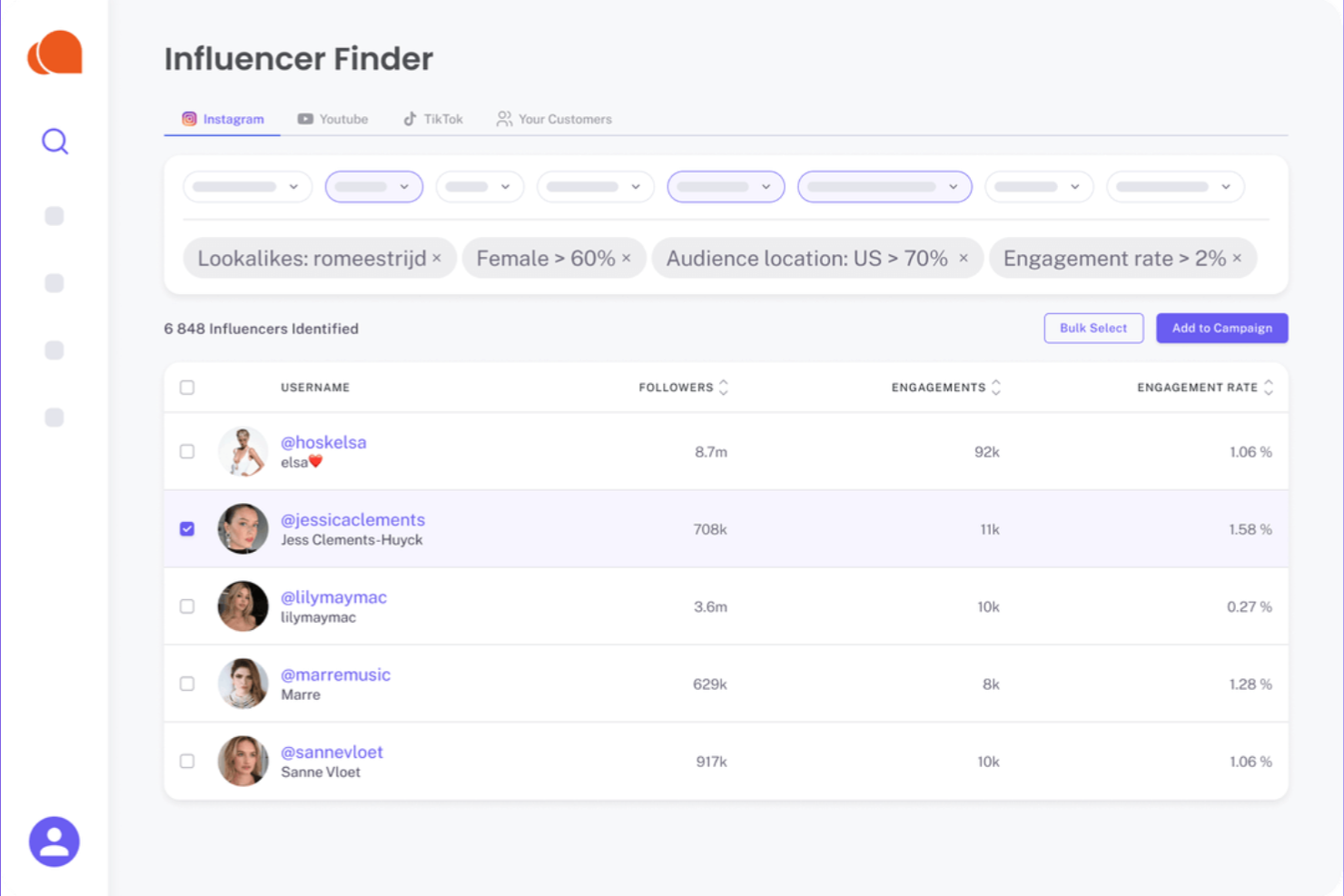
If you need a platform that covers every stage of influencer campaigns, Influencer Hero is worth considering. It’s designed for brands and agencies that want to automate outreach, manage collaborations, and track results in one place. Influencer Hero helps you centralize campaign workflows and reduce manual effort across influencer marketing projects.
Who Is Influencer Hero Best For?
Influencer Hero fits brands and agencies that need end-to-end influencer campaign management, especially those running multiple campaigns at scale.
Why I Picked Influencer Hero
What stands out to me about Influencer Hero is its focus on end-to-end influencer campaign management with automated outreach. The platform lets you discover influencers, send personalized outreach messages at scale, and manage negotiations and contracts all in one place. I also like that you can track campaign deliverables and performance metrics directly within the dashboard, which helps keep everything organized. For teams that want to automate repetitive tasks and centralize campaign oversight, Influencer Hero offers a unified solution that covers the full influencer marketing workflow.
Influencer Hero Key Features
Some other features that make Influencer Hero useful for influencer marketing teams include:
- Influencer CRM: Store, organize, and manage influencer contacts and communication history in a dedicated workspace.
- Content approval workflows: Set up structured review and approval processes for influencer-generated content before it goes live.
- Automated payment processing: Handle influencer payments directly through the platform with built-in tracking and reporting.
- Performance analytics dashboard: Access real-time campaign analytics, including reach, engagement, and ROI metrics, in a visual dashboard.
Influencer Hero Integrations
Integrations include Shopify, WooCommerce, BigCommerce, Prestashop, Klaviyo, Omnisend, Mailchimp, GetResponse, and more.
Pros and Cons
Pros:
- Multi-channel campaign tracking and analytics
- Built-in influencer CRM for relationship management
- Automated influencer outreach and follow-up sequences
Cons:
- Influencer database skews toward established creators
- No influencer discovery by AI recommendations

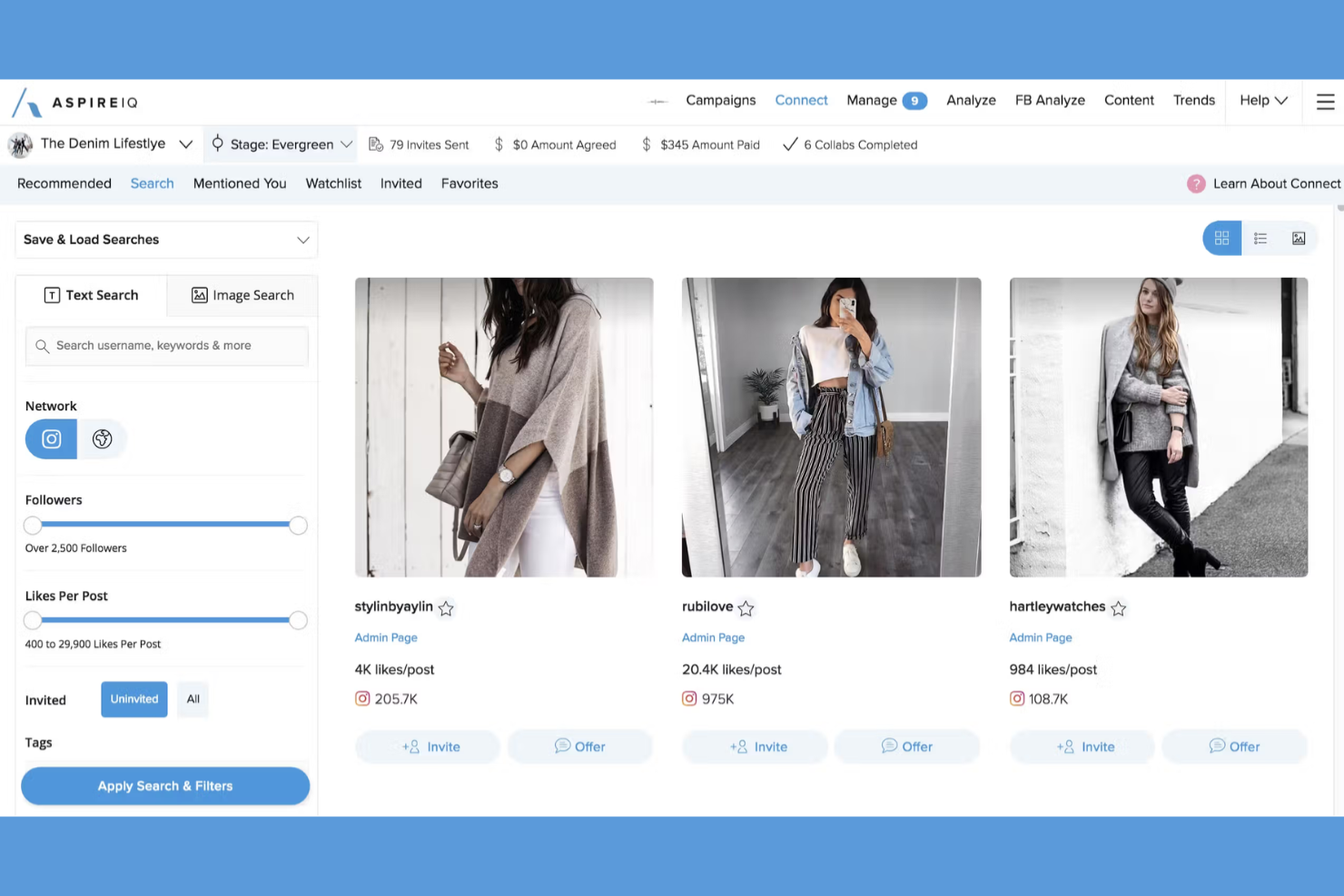
Aspire offers a platform for brands and agencies that want to manage influencer relationships and campaigns at scale. If you need to streamline influencer outreach, content collaboration, and campaign tracking, Aspire brings these functions together in one place. The tool is especially useful for teams looking to automate repetitive tasks and centralize influencer communications.
Who Is Aspire Best For?
Aspire suits mid-sized to large consumer brands and agencies that need to manage high-volume influencer campaigns and relationships.
Why I Picked Aspire
What stands out to me about Aspire is how it brings influencer relationship management and campaign automation together in one platform. I see real value in being able to track influencer communications, contracts, and content approvals all in a single dashboard. Aspire also lets you automate campaign workflows, from outreach to reporting, which is especially helpful for teams running multiple campaigns at once. For anyone looking to reduce manual work and keep influencer programs organized, Aspire’s focus on automation and relationship management makes it a strong choice.
Aspire Key Features
Some other features that make Aspire useful for influencer marketing teams include:
- Influencer discovery engine: Search and filter a large database of influencers by audience demographics, engagement rates, and content style.
- Affiliate tracking tools: Monitor influencer-driven sales and manage affiliate links directly within the platform.
- Content library: Store, organize, and repurpose influencer-generated content for future campaigns or brand channels.
- Custom reporting dashboards: Build and export tailored reports with campaign metrics, influencer performance, and ROI data.
Aspire Integrations
Integrations include Shopify, PayPal, Gmail, Klaviyo, Microsoft Outlook, Pinterest, Facebook, YouTube, Instagram, TikTok, and more.
Pros and Cons
Pros:
- Centralized content library for UGC assets
- Affiliate tracking and commission management built in
- Automated product seeding and gifting workflows
Cons:
- No built-in social listening or sentiment analysis
- Influencer payments require manual processing

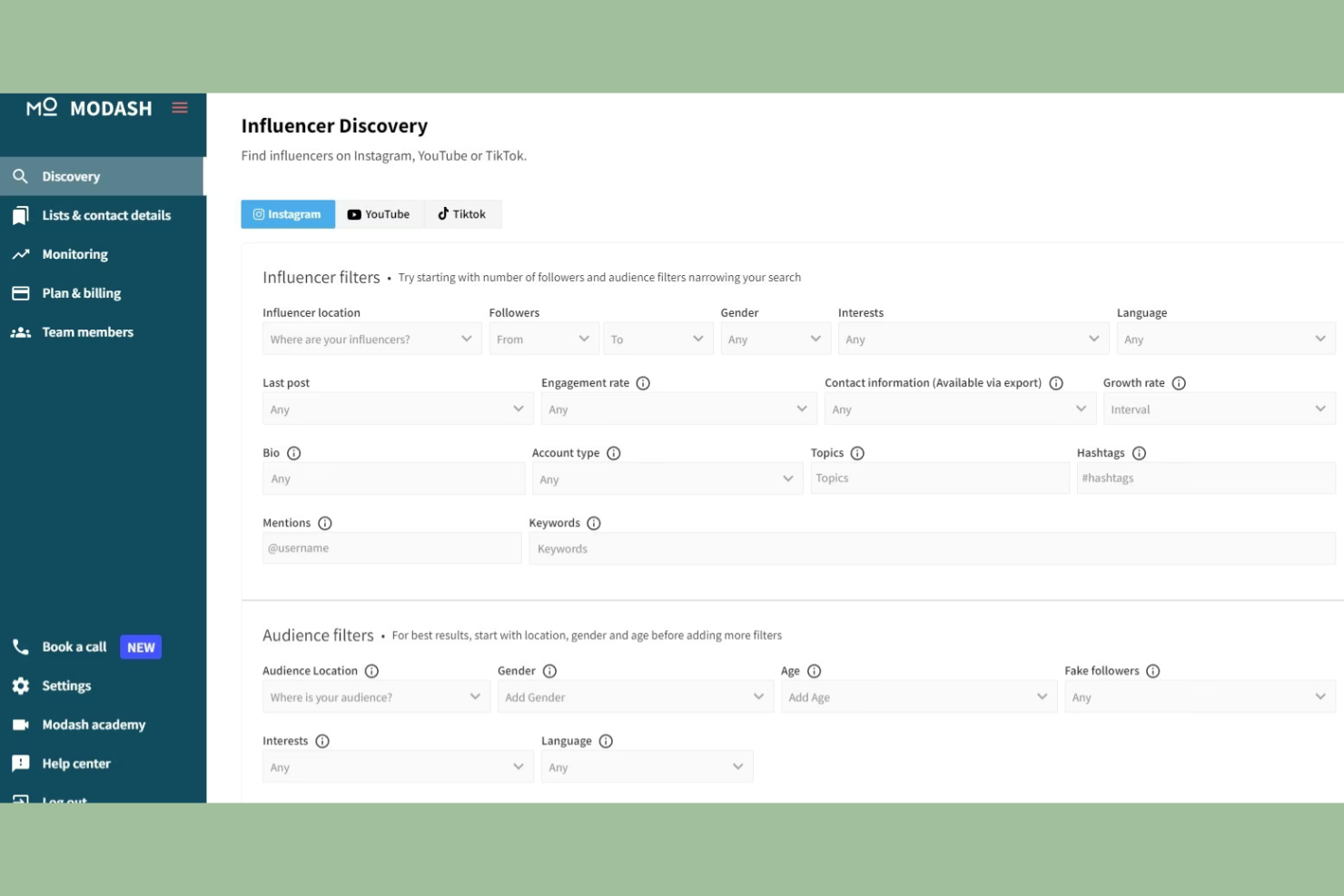
If you need to find and vet influencers across multiple platforms, Modash is built for you. The platform appeals to marketing teams and agencies that want real-time data on influencer audiences and content. Modash helps you quickly identify creators who match your campaign goals and avoid wasted spend on inauthentic partnerships.
Who Is Modash Best For?
Modash suits marketing teams and agencies that need to discover and analyze influencers across global markets.
Why I Picked Modash
What stands out about Modash is its ability to deliver real-time influencer discovery and audience analytics across all major platforms. I picked Modash because it lets you search millions of influencer profiles instantly, with filters for audience demographics, engagement rates, and content topics. The platform’s audience analytics give you a clear view of who an influencer actually reaches, helping you avoid mismatches and wasted spend. For teams that need fast, accurate data to power influencer campaigns, Modash’s focus on up-to-date insights is a strong advantage.
Modash Key Features
Some other features that make Modash useful for influencer marketing teams include:
- Influencer list management: Organize, save, and export influencer lists for different campaigns or clients.
- Fake follower detection: Analyze influencer profiles for suspicious audience patterns and potential fraud.
- Content preview and history: View recent posts and historical content to assess brand fit and quality.
- Collaboration tools: Share influencer lists and campaign notes with team members directly in the platform.
Modash Integrations
Integrations include Shopify, Gmail, Outlook, and a native API for custom integrations.
Pros and Cons
Pros:
- Includes automated campaign performance reporting
- Supports multi-platform influencer tracking
- Provides competitor influencer campaign analysis
Cons:
- Pricing scales with usage limits on profiles/emails
- Inbox and outreach tools are limited


If you want to evaluate influencers with AI-driven scoring, Favikon is worth a look. The platform appeals to marketing teams and agencies that need to quickly assess influencer quality and discover niche creators. Favikon helps you filter out low-impact profiles and focus on partnerships that align with your campaign goals.
Who Is Favikon Best For?
Favikon suits agencies and brands that need to evaluate and discover niche influencers using AI-driven scoring.
Why I Picked Favikon
What drew me to Favikon is its focus on AI-powered influencer scoring and niche discovery. The platform uses proprietary algorithms to rate influencers based on credibility, engagement, and audience authenticity, which helps you quickly identify high-potential partners. I also appreciate how Favikon surfaces niche creators that might be overlooked by broader search tools, making it easier to find unique voices for specialized campaigns. For teams that want data-driven influencer selection and a way to uncover hidden talent, Favikon’s approach stands out in the AI influencer marketing space.
Favikon Key Features
Some other features that make Favikon useful for influencer marketing teams include:
- Influencer database filtering: Search and filter influencers by platform, location, audience size, and engagement metrics.
- Collaboration tools: Share influencer lists and campaign notes with team members directly in the platform.
- Campaign management dashboard: Track influencer outreach, campaign progress, and deliverables in one place.
- Social media analytics: Access detailed analytics on influencer content performance across supported platforms.
Favikon Integrations
Integrations include Gmail, Outlook, Google Analytics, and an API for custom integrations.
Pros and Cons
Pros:
- Campaign tracking links activity to performance outcomes
- Multi-platform discovery across major social channels
- AI scoring ranks influencers by quality and fit
Cons:
- Performance and responsiveness can drop at peak usage
- Limited CRM functionality for managing relationships
Other AI Influencer Marketing Platforms
Here are some additional AI influencer marketing platforms options that didn’t make it onto my shortlist, but are still worth checking out:
- Influential
For AI-driven influencer matching
- Brandwatch Influence
For tracking influencer performance
- Meltwater
For social listening and analytics
- Influencity
For end-to-end influencer management
- Heepsy
For influencer search and audience insights
- Emplifi
For unified social and influencer marketing
- Impact.com
For partnership and influencer tracking
- Jasper
For AI content creation for campaigns
- IMAI
For AI-driven influencer discovery
- Stormy AI
For automated influencer campaigns
- eesel AI
For AI content and influencer insights
- Afluencer
For influencer-brand collaborations
- Uplodio
For automated influencer outreach
- IQFluence
For AI influencer matching
- Collabstr
For influencer marketplaces
- PFR Talent
For influencer talent management
- Influence4You
For influencer campaign reporting
- Creator.co
For automated campaign workflows


AI Influencer Marketing Platforms Selection Criteria
When selecting the best AI influencer marketing platforms to include in this list, I considered common buyer needs and pain points like finding relevant influencers at scale and measuring campaign ROI. I also used the following framework to keep my evaluation structured and fair:
Core Functionality (25% of total score)
To be considered for inclusion in this list, each solution had to fulfill these common use cases:
- Discover influencers based on audience data
- Manage influencer relationships and outreach
- Track campaign performance and analytics
- Automate influencer payments and contracts
- Monitor influencer content and deliverables
Additional Standout Features (25% of total score)
To help further narrow down the competition, I also looked for unique features, such as:
- AI-powered influencer matching and scoring
- Automated product seeding and gifting
- Affiliate tracking and commission management
- Social listening and sentiment analysis
- Competitive benchmarking and industry insights
Usability (10% of total score)
To get a sense of the usability of each system, I considered the following:
- Clean and intuitive user interface
- Logical workflow and navigation
- Customizable dashboards and reports
- Minimal manual data entry required
- Responsive design for mobile and desktop
Onboarding (10% of total score)
To evaluate the onboarding experience for each platform, I considered the following:
- Availability of training videos and tutorials
- Access to onboarding webinars or live demos
- Step-by-step product tours or walkthroughs
- Pre-built templates for campaigns and reports
- In-app chatbots or guided support
Customer Support (10% of total score)
To assess each software provider’s customer support services, I considered the following:
- Live chat or real-time support options
- Email and ticketing system responsiveness
- Access to a searchable help center
- Availability of dedicated account managers
- Community forums or user groups
Value For Money (10% of total score)
To evaluate the value for money of each platform, I considered the following:
- Transparent and flexible pricing plans
- Features included at each pricing tier
- No hidden fees or surprise charges
- Free trial or demo availability
- Discounts for annual or volume contracts
Customer Reviews (10% of total score)
To get a sense of overall customer satisfaction, I considered the following when reading customer reviews:
- Positive feedback on influencer discovery accuracy
- Satisfaction with campaign reporting tools
- Comments on customer support responsiveness
- Ease of onboarding and initial setup
- Value for money compared to alternatives
How to Choose AI Influencer Marketing Platforms
It’s easy to get bogged down in long feature lists and complex pricing structures. To help you stay focused as you work through your unique software selection process, here’s a checklist of factors to keep in mind:
| Factor | What to Consider |
|---|---|
| Scalability | Will the platform support your influencer program as it grows across more campaigns, brands, or regions? Check for user limits, campaign caps, and multi-market support. |
| Integrations | Does the tool connect natively with your CRM, ecommerce, analytics, or social platforms? Confirm compatibility with your existing stack to avoid manual workarounds. |
| Customizability | Can you tailor workflows, reporting, and approval processes to match your team’s needs? Look for configurable dashboards, fields, and campaign templates. |
| Ease of use | How quickly can new users get up to speed? Evaluate the interface for clarity, logical navigation, and minimal training requirements. Ask for a demo or trial. |
| Implementation and onboarding | What resources are needed to get started? Consider migration support, onboarding timelines, and the availability of training or guided setup. |
| Cost | Are pricing tiers transparent and predictable as your usage grows? Watch for hidden fees, minimum contract terms, or extra charges for premium features. |
| Security safeguards | Does the platform meet your data privacy and security standards? Look for SOC 2, GDPR compliance, and clear policies on influencer and audience data handling. |
| Support availability | What support channels are offered, and during what hours? Consider if you need 24/7 help, dedicated account management, or self-serve resources for your team. |
What Are AI Influencer Marketing Platforms?
AI influencer marketing platforms are influencer platforms that use artificial intelligence to help brands discover, evaluate, and manage partnerships across social media platforms. These AI tools automate tasks like influencer discovery, audience analysis, campaign tracking, and reporting, making it easier to run and scale influencer marketing campaigns. They support influencer marketing strategy with features like AI-generated insights, performance attribution, and tracking KPIs to measure campaign results. Many platforms also focus on brand safety, help identify the best influencer or micro-influencers, and replace manual spreadsheets with more efficient workflows. By enabling data-driven decisions, forecasting outcomes, and leveraging case studies, these tools help teams deliver high-quality campaigns and improve overall marketing performance.
Features
When selecting AI influencer marketing platforms, keep an eye out for the following key features:
- Influencer discovery: Use AI-driven search and filtering to identify influencers based on audience demographics, engagement rates, content style, and brand alignment.
- Audience analysis: Analyze influencer followers for authenticity, location, interests, and engagement patterns to ensure your campaigns reach the right people.
- Campaign management: Plan, launch, and monitor influencer campaigns from a centralized dashboard, tracking deliverables, deadlines, and campaign status.
- Performance analytics: Access real-time reporting on reach, engagement, conversions, and ROI to measure campaign effectiveness and optimize future strategies.
- Content tracking: Automatically collect and archive influencer-generated content, making it easy to review, approve, and repurpose assets.
- Automated outreach: Send personalized messages, briefs, and contracts to influencers at scale, reducing manual communication and speeding up collaboration.
- Payment processing: Manage influencer compensation, including automated payments, commission tracking, and financial reporting within the platform.
- Compliance monitoring: Ensure influencer content meets legal, regulatory, and brand guidelines by flagging non-compliant posts or disclosures.
- Integration capabilities: Connect with social platforms, ecommerce systems, and analytics tools to simplify data flow and campaign execution.
- Competitive benchmarking: Compare your influencer program’s performance against industry standards or competitors to identify strengths and areas for improvement.
Benefits
Implementing AI influencer marketing platforms provides several benefits for your team and your business. Here are a few you can look forward to:
- Faster influencer discovery: AI-powered search and filtering help you quickly identify the right influencers for your campaigns based on audience data and brand fit.
- Improved campaign ROI: Automated analytics and performance tracking enable you to measure results accurately and optimize future influencer investments.
- Simplified campaign management: Centralized dashboards and workflow automation reduce manual tasks and keep campaigns organized from outreach to reporting.
- Improved audience targeting: In-depth audience analysis ensures your campaigns reach authentic, relevant followers who are more likely to engage.
- Reduced compliance risk: Built-in compliance monitoring flags non-compliant content and helps your team stay aligned with legal and brand guidelines.
- Simplified payments and contracts: Integrated payment processing and contract management save time and reduce administrative overhead.
- Actionable competitive insights: Benchmarking tools let you compare your influencer program’s performance against industry standards and competitors.
Costs & Pricing
Selecting AI influencer marketing platforms requires an understanding of the various pricing models and plans available. Costs vary based on features, team size, add-ons, and more. The table below summarizes common plans, their average prices, and typical features included in AI influencer marketing platform solutions:
Plan Comparison Table for AI Influencer Marketing Platforms
| Plan Type | Average Price | Common Features |
|---|---|---|
| Free Plan | $0 | Basic influencer search, limited campaign management, restricted analytics, and email support. |
| Personal Plan | $50-$150/month | Advanced influencer discovery, basic audience analysis, campaign tracking, and standard reporting. |
| Business Plan | $300-$800/month | Multi-user access, automated outreach, performance analytics, payment processing, and integrations. |
| Enterprise Plan | $1,500-$5,000/month | Custom workflows, dedicated account manager, advanced compliance tools, API access, and priority support. |
AI Influencer Marketing Platforms FAQs
Here are some answers to common questions about AI influencer marketing platforms:
How does AI improve influencer discovery?
AI analyzes large datasets to match brands with influencers based on audience demographics, engagement rates, and content relevance. This helps your team find better-fit partners faster and reduces the risk of partnering with inauthentic or misaligned creators.
Can these platforms track ROI for influencer campaigns?
Yes, most platforms offer campaign tracking and analytics that measure reach, engagement, conversions, and ROI. This data helps you understand which influencers and content drive the most value for your business.
Are AI influencer marketing platforms suitable for small teams?
Yes, many platforms offer scalable plans and intuitive interfaces that work well for small teams. Look for solutions with simple onboarding, clear pricing, and essential features that match your current needs.
What integrations should I look for?
Prioritize integrations with your CRM, ecommerce, analytics, and social media tools. Smooth data flow between systems reduces manual work and helps you get a complete view of campaign performance.
How do these platforms handle influencer payments?
Most platforms include payment processing features that let you manage contracts, track commissions, and send payments directly to influencers. Some automate the process, while others require manual approval or external payment tools.
Is influencer data secure on these platforms?
Yes, reputable platforms use encryption, access controls, and compliance measures like GDPR to protect influencer and audience data. Always review a vendor’s security documentation and privacy policies before onboarding.