

¿Se te escapan clientes potenciales? ¿Las campañas tardan demasiado en lanzarse? El marketing por correo electrónico B2B puede parecer un caos de flujos de trabajo engorrosos, plantillas dispersas y seguimientos inconsistentes. El software adecuado de marketing por correo electrónico B2B lo agiliza todo para que puedas crear campañas de marketing por correo electrónico más inteligentes, mantener la coherencia del mensaje, aumentar la generación de clientes potenciales y nutrir a tus clientes potenciales actuales a lo largo del embudo de ventas. Después de más de 10 años en este sector, he probado y clasificado las principales herramientas de marketing por correo electrónico B2B para ayudarte a abrirte paso entre el ruido y elegir la que mejor se adapte a ti.
Por qué confiar en nuestras recomendaciones de software
6,700+
Reviews
20
Industry experts
16+
Evaluation factors
14
Years
Nuestro equipo lleva probando y evaluando software desde 2012. Como líderes de marketing, sabemos lo difícil —y lo importante— que es elegir el software adecuado.
Para esta guía, evaluamos las herramientas mediante pruebas prácticas e investigación independiente, puntuando las herramientas según nuestros criterios de selección.
Nuestras reseñas reflejan nuestro criterio editorial humano, no un discurso de ventas.
Revisores expertos:
 Gui DrusinaDirector creativo
- Shriya GhateSenior Marketing Lead
 Amanda JacquesLíder de Marketing Ops

Tabla comparativa: software de marketing por correo electrónico B2B
Esta tabla comparativa resume los detalles de precios de mis principales selecciones de software de marketing por correo electrónico B2B.
| Tool | Best For | Trial Info | Price | ||
|---|---|---|---|---|---|
| 1 | Ideal para CRM integrado y herramientas de audiencia | Prueba gratuita de 30 días + plan gratuito + demo gratuita disponible | Desde $13/mes | Website | |
| 2 | La mejor opción para ABM saliente y correo electrónico activado por la intención | Plan gratuito disponible; prueba gratuita de 14 días | Desde $49/usuario/mes (facturado anualmente) | Website | |
| 3 | Ideal para obtener insights de campañas impulsadas por datos | Demo gratuita + plan gratuito disponible | Desde $45/mes | Website | |
| 4 | Ideal para una personalización flexible de la marca | Plan gratuito + prueba gratuita disponible | Desde $19/usuario/mes (facturación anual) | Website | |
| 5 | Ideal para automatización y entregabilidad | Plan gratuito + demostración gratis disponible | Desde $7/mes (facturado anualmente) | Website | |
| 6 | Ideal para creadores de correos electrónicos con función de arrastrar y soltar | Plan gratuito disponible | Desde $12/mes | Website | |
| 7 | Ideal para flujos de trabajo de automatización impulsados por IA | Prueba gratuita de 14 días + demo gratuita disponible | Desde $9.99/mes (facturado anualmente) | Website | |
| 8 | Ideal para comunicación multicanal impulsada por IA | Demo gratuita disponible | Precios bajo solicitud | Website | |
| 9 | Ideal para la automatización del marketing | Prueba gratuita de 14 días + demo gratuita disponible | Desde $15.58/mes (facturado anualmente) | Website | |
| 10 | La mejor opción para diseño de plantillas impulsado por IA | Plan gratuito disponible | Desde $19/mes | Website |


Análisis del mejor software de marketing por correo electrónico B2B
A continuación encontrarás mis resúmenes detallados del mejor software de marketing por correo electrónico B2B que llegó a mi selección. Mis análisis ofrecen una visión detallada de las funciones clave, las ventajas y desventajas, las integraciones y los casos de uso ideales de cada herramienta para ayudarte a encontrar la mejor opción para ti.
 Ideal para CRM integrado y herramientas de audiencia
- Prueba gratuita de 30 días + plan gratuito + demo gratuita disponible
- Desde $13/mes
Visit WebsiteCustomer Rating:4.5/5
Mailchimp ayuda a los equipos a gestionar campañas de correo y automatizar recorridos Mailchimp es una plataforma de marketing que ayuda a las empresas a crear, enviar y analizar campañas de correo electrónico y recorridos automáticos para clientes. Es utilizada por equipos que buscan construir comunicaciones con su propia marca y gestionar listas de contactos desde un solo lugar.
Por qué elegí Mailchimp: Puedes configurar automatizaciones con código personalizado usando las herramientas y APIs para desarrolladores de Mailchimp, lo que brinda a tu equipo una flexibilidad más allá de las plantillas estándar. Incluye un creador de recorridos en el que puedes agregar lógica de ramificación, retrasos de tiempo y acciones activadas por comportamientos o etiquetas. Hay soporte para correos transaccionales y webhooks, por lo que puedes responder a acciones específicas de los clientes. Si tu equipo incluye un desarrollador, tendrás las herramientas para personalizaciones más avanzadas.
Funciones e integraciones destacadas:
Funciones incluyen optimización del momento de envío, informes de optimización de contenido y comparativas de campañas. Tu equipo también puede usar bloques de contenido dinámico para personalizar los emails. Hay una herramienta para gestionar etiquetas de clientes y segmentación predictiva.
Integraciones incluyen Shopify, WooCommerce, Squarespace, Zapier, Stripe, QuickBooks, Salesforce, Canva, WordPress y Eventbrite.
Pros and Cons
Pros:
- Soporta desencadenadores avanzados y condicionales para emails
- La API para desarrolladores permite gran personalización
- Webhooks permiten automatización de eventos en tiempo real
Cons:
- La interfaz puede resultar torpe al personalizar
- Automatizar requiere tiempo para pruebas completas
Learn more about Mailchimp : La mejor opción para ABM saliente y correo electrónico activado por la intención
- Plan gratuito disponible; prueba gratuita de 14 días
- Desde $49/usuario/mes (facturado anualmente)
Visit WebsiteCustomer Rating:4.5/5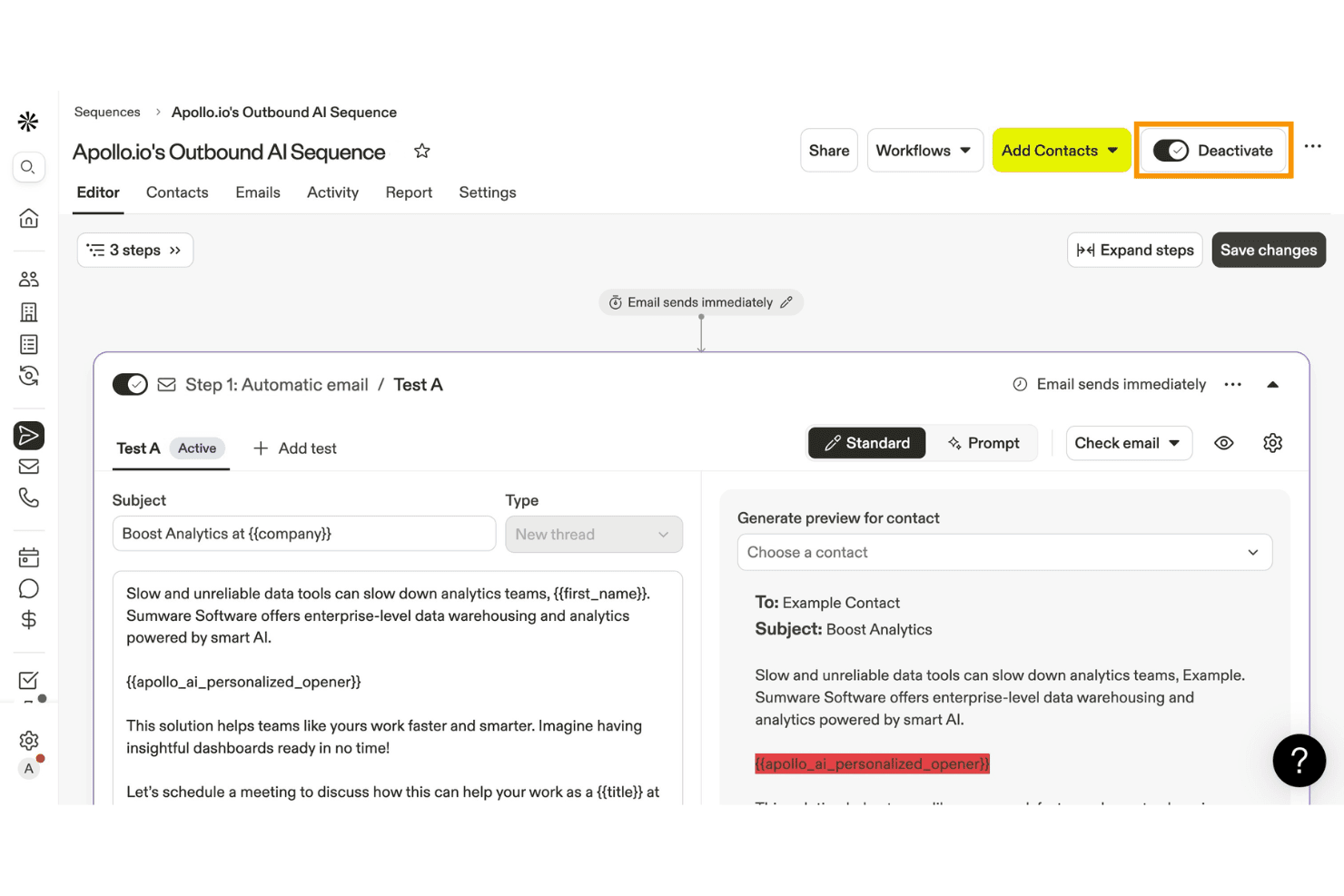
Apollo.io permite a los usuarios crear y activar secuencias de correo electrónico personalizadas mediante IA. Apollo.io es una plataforma de inteligencia de ventas B2B e interacción saliente que combina una base de datos de más de 275 millones de contactos con secuencias de correo electrónico, puntuación de clientes potenciales basada en IA, datos de intención y automatización de campañas multicanal.
¿Para quién es más adecuado Apollo.io?
Apollo.io es una opción muy adecuada para equipos de ventas y marketing B2B que ejecutan estrategias de crecimiento basadas en ventas salientes, especialmente aquellos que se dirigen a cuentas específicas con campañas de correo electrónico activadas por la intención.
Por qué elegí Apollo.io
Apollo.io ocupa un lugar en mi lista corta porque combina una base de datos de más de 275 millones de contactos con datos de intención nativos de Bombora, lo que permite activar secuencias de correo electrónico en el momento en que una cuenta objetivo muestra señales de compra activa en más de 15.000 temas. Lo elegí específicamente para el ABM saliente porque permite dirigirse a comités de compra completos dentro de cuentas específicas, coordinando contactos por correo electrónico, LinkedIn y teléfono a nivel de cuenta en lugar de a nivel de contacto. La función de investigación con IA también genera personalización a nivel de contacto a gran escala, lo que significa que las secuencias no parecen envíos masivos.
Características principales de Apollo.io
- Creador de secuencias de varios pasos: Crea cadencias automatizadas de correo electrónico con lógica de ramificación condicional, activadores basados en el comportamiento y pruebas A/B integradas directamente en el editor de secuencias.
- Enriquecimiento en cascada: Apollo comprueba su propia base de datos y 18 proveedores de datos externos de forma secuencial para maximizar la cobertura de contactos verificados y reducir las tasas de rebote.
- Puntuación de clientes potenciales mediante IA: Prioriza los contactos automáticamente mediante un modelo de puntuación personalizable que tiene en cuenta la adecuación al perfil de cliente ideal, las señales de interacción y los datos de intención de Bombora.
- Cualificación de clientes potenciales entrantes: Identifica a los visitantes del sitio web, enriquece los envíos de formularios y asigna los clientes potenciales entrantes al representante adecuado mediante la programación automatizada de reuniones.
Integraciones de Apollo.io
Apollo.io ofrece integraciones nativas con HubSpot, Salesforce, Marketo, Outreach, SalesLoft, SendGrid y Google Sheets. También es compatible con Zapier, mientras que el acceso a la API para integraciones personalizadas está disponible en los planes personalizados.
Pros and Cons
Pros:
- Activa secuencias de correo electrónico a partir de datos de intención de Bombora
- Segmentación ABM multicanal por comité de compra
- La IA genera textos personalizados a nivel de contacto
Cons:
- No incluye un creador visual nativo de correos electrónicos ni de páginas de destino
- Herramienta de calentamiento de correo electrónico discontinuada, riesgo para la reputación
Learn more about Apollo.io: Ideal para obtener insights de campañas impulsadas por datos
- Demo gratuita + plan gratuito disponible
- Desde $45/mes
Visit WebsiteCustomer Rating:4.6/5
Klaviyo convierte los datos de desempeño en tiempo real en información útil y accionable. Klaviyo apoya a las empresas que buscan fortalecer sus esfuerzos de email marketing B2B. Su plataforma de datos de clientes reúne la información de contacto y los datos de comportamiento en un solo lugar, facilitando la creación de campañas dirigidas basadas en actividad y participación reales. Esto es útil para las empresas que dependen de los datos para guiar su alcance y mantener una comunicación consistente con su audiencia.
Por qué elegí Klaviyo
Elegí Klaviyo por su capacidad para convertir los datos de los clientes en información procesable, un elemento crucial para el email marketing B2B. Su segmentación avanzada te permite crear mensajes personalizados para audiencias específicas, respondiendo a la necesidad de una comunicación dirigida. Las herramientas impulsadas por IA de la plataforma predicen el comportamiento del cliente y optimizan el tiempo de las campañas, asegurando que tus mensajes lleguen a la audiencia en el momento adecuado. Estas funciones son especialmente beneficiosas para las empresas que buscan mejorar la efectividad de su marketing.
Características clave de Klaviyo
Además de sus conocimientos basados en datos y capacidades de segmentación, Klaviyo ofrece:
- Marketing omnicanal: Klaviyo permite el marketing a través de correo electrónico, SMS y redes sociales, brindando una experiencia cohesiva al cliente.
- Integración con más de 350 aplicaciones: Conecta sin problemas tu stack tecnológico existente con las amplias opciones de integración de Klaviyo.
- Analítica en tiempo real: Obtén información sobre las interacciones de los clientes y el rendimiento de la campaña para tomar decisiones de marketing informadas.
- Herramientas para desarrolladores: Accede a recursos para crear aplicaciones e integraciones personalizadas, mejorando la flexibilidad de la plataforma.
Integraciones de Klaviyo
Las integraciones incluyen Shopify, Salesforce Commerce Cloud, BigCommerce, WooCommerce, Magento, Stripe, Facebook, Google Ads y Zapier
Pros and Cons
Pros:
- Segmentación avanzada para estrategias de marketing personalizadas
- Capacidades omnicanal apoyan una comunicación variada con clientes
- Integración con numerosas plataformas de comercio electrónico
Cons:
- El elevado costo a medida que crecen las listas de contactos impacta el presupuesto
- El etiquetado avanzado y la organización son menos robustos que algunos competidores
Learn more about Klaviyo: Ideal para una personalización flexible de la marca
- Plan gratuito + prueba gratuita disponible
- Desde $19/usuario/mes (facturación anual)
Visit WebsiteCustomer Rating:4.7/5
Flodesk crea correos B2B pulidos y alineados con la marca que destacan para los clientes. Flodesk está dirigido a empresas que priorizan la personalización flexible de la marca, lo que lo convierte en una opción atractiva para equipos B2B que dependen de una identidad visual fuerte para comunicarse con los clientes. Si tu equipo prospera en la creatividad y la estética de marca para captar la atención, Flodesk ofrece una plataforma que simplifica el diseño a la vez que mejora la visibilidad del correo electrónico. Su interfaz fácil de usar y su alta tasa de entregabilidad ayudan a que tu empresa destaque en bandejas de entrada saturadas, combinando un diseño pulido con funcionalidad lista para B2B.
Por qué elegí Flodesk
Elegí Flodesk por su fortaleza en la personalización flexible de la marca, que es especialmente valiosa para los equipos B2B que dependen de una comunicación elegante y alineada con la marca. Su creador intuitivo te permite personalizar fuentes, colores y diseños para que cada correo refleje tu identidad de marca de forma coherente. Las automatizaciones de Flodesk, incluidos los seguimientos y flujos de trabajo de interacción, también ayudan a reducir el esfuerzo manual mientras mantienen la comunicación activa con los clientes. Aunque no es la plataforma más centrada en los datos, su enfoque en el diseño puede hacer que los correos B2B sean más memorables y atractivos.
Principales características de Flodesk
Además de la personalización flexible de la marca, Flodesk ofrece:
- Temporizadores de cuenta regresiva: Esta función ayuda a crear urgencia en tus campañas, fomentando respuestas más rápidas de tus destinatarios.
- Encuestas integradas: Involucra a tu audiencia directamente dentro de los correos, recogiendo valiosos comentarios e información sin necesidad de encuestas externas.
- Sistema de análisis integral: Obtén información sobre el rendimiento de tus campañas para tomar decisiones informadas, aunque el enfoque siga siendo más estético que de datos.
Integraciones de Flodesk
Las integraciones incluyen Shopify, Zapier, Instagram, Facebook, Squarespace, WordPress, Google Sheets, Slack, Stripe y Typeform.
Pros and Cons
Pros:
- La alta entregabilidad ayuda a que los mensajes importantes lleguen a los clientes
- El enfoque en el diseño visual mejora el compromiso con los responsables de la toma de decisiones
- Plantillas limpias y profesionales adecuadas para la comunicación con clientes
Cons:
- No es ideal para funnels B2B grandes o con muchos pasos
- Menos integraciones para pilas tecnológicas B2B complejas
Learn more about Flodesk: Ideal para automatización y entregabilidad
- Plan gratuito + demostración gratis disponible
- Desde $7/mes (facturado anualmente)
Visit WebsiteCustomer Rating:4.6/5
El constructor de flujos de trabajo de Sender te permite crear recorridos de correo electrónico automatizados utilizando plantillas prediseñadas. Sender ofrece una solución personalizada para empresas que buscan potenciar sus estrategias de marketing por correo electrónico. Con su plataforma fácil de usar, empresas de diversos sectores pueden diseñar y automatizar fácilmente sus campañas de correo electrónico. Sender aborda desafíos como bajas tasas de participación y altos costos al ofrecer funciones como plantillas personalizables y un plan gratuito para hasta 2.500 suscriptores, convirtiéndose en una opción atractiva para quienes desean mejorar sus esfuerzos de marketing.
Por qué elegí Sender
Elegí Sender por su claro enfoque en la automatización y la entregabilidad, factores cruciales para el marketing por correo electrónico B2B. La plataforma ofrece automatización ilimitada, lo que permite configurar flujos de trabajo complejos que pueden nutrir clientes potenciales y mantener la participación del cliente. Además, el compromiso de Sender con mantener altos índices de entregabilidad asegura que tus mensajes tengan más probabilidades de llegar a las bandejas de entrada previstas, abordando el problema habitual de los correos que terminan en la carpeta de spam. Estas características hacen de Sender una opción confiable para las empresas que buscan optimizar sus campañas de marketing por correo electrónico.
Funciones clave de Sender
Además de sus capacidades de automatización y entregabilidad, encontré varias otras funciones beneficiosas para el marketing por correo electrónico B2B:
- Editor de correos arrastrar y soltar: Esta función te permite crear correos profesionales sin necesidad de conocimientos de programación, haciéndolo accesible para todos los niveles de habilidad.
- Pruebas A/B: Puedes probar diferentes versiones de tus correos para ver cuál funciona mejor, ayudándote a perfeccionar tus estrategias de marketing.
- Analíticas en tiempo real: Esta función te ofrece información sobre el rendimiento de tus campañas, permitiéndote tomar decisiones basadas en datos.
- Automatización de marketing: Más allá del correo electrónico, incluye marketing por SMS, ampliando el alcance para conectar con tu audiencia.
Integraciones de Sender
Las integraciones incluyen WordPress, WooCommerce y Zapier.
Pros and Cons
Pros:
- Flujos de automatización ilimitados soportados
- Amplia biblioteca de plantillas incluida
- Editor de correos arrastrar y soltar
Cons:
- Las analíticas avanzadas son algo limitadas
- Políticas estrictas de cumplimiento anti-spam
Learn more about Sender: Ideal para creadores de correos electrónicos con función de arrastrar y soltar
- Plan gratuito disponible
- Desde $12/mes
Visit WebsiteCustomer Rating:4.7/5
MailerLite permite que equipos pequeños diseñen, envíen y hagan seguimiento a campañas de correo electrónico MailerLite es una plataforma de marketing digital creada para ayudar a los equipos a diseñar y enviar correos electrónicos, gestionar suscriptores y hacer seguimiento al rendimiento de las campañas. Está diseñada para pequeñas empresas, creadores y profesionales del marketing que quieren tener más control sobre el aspecto y funcionamiento de sus correos electrónicos.
Por qué elegí MailerLite: El editor de arrastrar y soltar te da control total sobre el diseño de tus correos sin tener que escribir código. Puedes mover fácilmente elementos como imágenes, bloques de texto y botones para adaptarlos al estilo de tu marca. Hay bloques de contenido para videos, enlaces sociales y características de productos que tu equipo puede insertar con un solo clic. También encontrarás plantillas prediseñadas fáciles de ajustar si necesitas una opción más rápida.
Características destacadas e integraciones:
Las características incluyen un asistente de escritura con IA integrado, flujos de aprobación para campañas de correo y un kit de marca para guardar logotipos y colores. También ofrece un constructor de páginas de destino con seguimiento de mapas de calor. Tu equipo puede usar el reenvío automático para enviar correos de seguimiento a quienes no abrieron el primero.
Las integraciones incluyen Shopify, WooCommerce, WordPress, Stripe, Zapier, Squarespace, Facebook, PayPal, PrestaShop y Magento.
Pros and Cons
Pros:
- Fácil diseño de plantillas con varias columnas
- El kit de marca mantiene el estilo consistente
- La IA ayuda a redactar contenido rápidamente
Cons:
- Las opciones de configuración para pruebas A/B son básicas
- Los formularios de registro pueden resultar rígidos
 Ideal para flujos de trabajo de automatización impulsados por IA
- Prueba gratuita de 14 días + demo gratuita disponible
- Desde $9.99/mes (facturado anualmente)
Visit WebsiteCustomer Rating:4.6/5
SendX ayuda a las PYMES a automatizar correos electrónicos y a aumentar su audiencia SendX es un software de marketing por correo electrónico diseñado para empresas que buscan una automatización de campañas efectiva y el crecimiento de su audiencia. Está dirigido a pequeñas y medianas empresas, ofreciendo herramientas para automatizar secuencias de correos electrónicos y aumentar las listas de suscriptores.
Por qué elegí SendX: Sus flujos de trabajo de automatización impulsados por IA la distinguen, ofreciendo herramientas avanzadas para crear campañas de correo electrónico personalizadas. El motor de entregabilidad propio garantiza que tus correos lleguen a la bandeja de entrada, aumentando las tasas de interacción. Con funciones como ventanas emergentes inteligentes y correos interactivos, SendX se enfoca en el crecimiento de la audiencia y una alta entregabilidad. Estas capacidades la convierten en una opción confiable para empresas que desean mejorar su marketing por correo electrónico.
Funciones destacadas & integraciones:
Funciones incluyen segmentación avanzada que permite dirigir mensajes a grupos de audiencia específicos de manera efectiva. El editor de correo electrónico WYSIWYG de la plataforma hace que crear correos sea sencillo e intuitivo. Además, SendX proporciona analíticas detalladas para ayudarte a monitorear el rendimiento de las campañas y tomar decisiones informadas.
Integraciones incluyen Zapier, Shopify, WordPress, Stripe, WooCommerce, PayPal, Salesforce, HubSpot, Google Analytics y Slack.
Pros and Cons
Pros:
- Flujos de trabajo de automatización impulsados por IA
- Funciones interactivas de correo electrónico
- Atención al cliente receptiva
Cons:
- Sin soporte telefónico
- Curva de aprendizaje para principiantes
Learn more about SendX: Ideal para comunicación multicanal impulsada por IA
- Demo gratuita disponible
- Precios bajo solicitud
Visit WebsiteCustomer Rating:4.4/5
Iterable impulsa mensajes escalables y centrados en el cliente en diferentes industrias Iterable es un software de marketing por correo electrónico diseñado para empresas que requieren mensajes centrados en el cliente y una mayor privacidad. Atiende a varias industrias al brindar soluciones escalables para una comunicación y participación efectivas.
Por qué elegí Iterable: Su comunicación multicanal impulsada por IA es fundamental para las marcas que buscan crear experiencias personalizadas para los clientes. Funciones como la segmentación avanzada de audiencias y la integración de datos flexible garantizan que tus mensajes sean precisos y eficaces. Iterable Insights ofrece informes personalizables, lo que te permite rastrear y optimizar fácilmente el rendimiento de las campañas. Su énfasis en la privacidad y el cumplimiento la hacen adecuada para su implementación a nivel empresarial.
Funciones destacadas e integraciones:
Funciones incluyen un generador de campañas de arrastrar y soltar que simplifica el marketing en todo el ciclo de vida. La segmentación avanzada de audiencias te permite dirigir tus mensajes con precisión. Iterable Insights proporciona herramientas de informes personalizables para visualizar y analizar el rendimiento de tus campañas.
Integraciones incluyen Shopify, Salesforce, Marketo, Segment, Google Analytics, Slack, Twilio, Zendesk, Facebook y Snowflake.
Pros and Cons
Pros:
- Comunicación multicanal potenciada por IA
- Énfasis en privacidad y cumplimiento
- Adecuado para implementación a nivel empresarial
Cons:
- Precio inicial elevado
- Personalización de diseño limitada
Learn more about Iterable : Ideal para la automatización del marketing
- Prueba gratuita de 14 días + demo gratuita disponible
- Desde $15.58/mes (facturado anualmente)
Visit WebsiteCustomer Rating:4.2/5
GetResponse ofrece herramientas de correos, páginas de aterrizaje y automatización para empresas GetResponse es un software de email marketing B2B que ayuda a las empresas a hacer crecer su audiencia y automatizar sus esfuerzos de marketing. Atiende a diversos sectores ofreciendo herramientas para campañas de correo electrónico, creación de páginas de aterrizaje y monetización de contenido.
Por qué elegí GetResponse: Está pensado para equipos que necesitan una automatización de email marketing robusta. Funcionalidades como el marketing por correo, flujos de trabajo automatizados e integraciones con eCommerce están alineadas con su enfoque en la automatización. La capacidad de la plataforma para crear boletines personalizados y flujos de trabajo avanzados contribuye a mejorar el compromiso del cliente. Además, herramientas para monetizar contenido, como cursos online y boletines premium, agregan valor para los usuarios.
Características e integraciones destacadas:
Características incluyen creadores de páginas de aterrizaje que simplifican la creación de páginas atractivas. Las herramientas de email marketing permiten diseñar boletines personalizados para tu audiencia. Los flujos de trabajo de automatización avanzados te ayudan a segmentar y conectar con tus clientes de manera eficaz.
Integraciones incluyen Shopify, WordPress, PayPal, Stripe, WooCommerce, Salesforce, HubSpot, Zapier, Magento y Pipedrive.
Pros and Cons
Pros:
- Permite la monetización de contenido
- Ofrece flujos de trabajo de automatización avanzados
- Incluye creadores de páginas de aterrizaje
Cons:
- Puede ser abrumador para principiantes
- Personalización de diseño limitada
Learn more about GetResponse: La mejor opción para diseño de plantillas impulsado por IA
- Plan gratuito disponible
- Desde $19/mes
Visit WebsiteCustomer Rating:4.2/5
Elastic Email ayuda a los equipos B2B a crear correos rápidamente con plantillas impulsadas por IA. Elastic Email ofrece una solución dinámica para las empresas que buscan mejorar sus estrategias de email marketing B2B. Esta plataforma está diseñada para satisfacer las necesidades de negocios en crecimiento, proporcionando herramientas que agilizan el marketing por correo electrónico, los mensajes transaccionales y la colaboración en equipo. Ya sea que trabajes en tecnología, retail o cualquier industria que requiera una comunicación dirigida, Elastic Email aborda el desafío de crear campañas de correo electrónico atractivas sin la complejidad que a menudo conllevan estas tareas.
Por qué elegí Elastic Email
Elegí Elastic Email por su exclusivo Diseñador de Plantillas con IA y sus capacidades de automatización, que son esenciales para el marketing por correo electrónico B2B. El Diseñador de Plantillas con IA simplifica la creación de correos visualmente atractivos, permitiendo que tu equipo se enfoque en el contenido estratégico en lugar de las complejidades del diseño. Además, las herramientas de automatización de la plataforma permiten crear flujos de trabajo sofisticados para correos electrónicos, garantizando una comunicación oportuna y relevante con tu audiencia. Estas funciones, combinadas con una API robusta, permiten una integración fluida con sistemas existentes, satisfaciendo la necesidad de soluciones de email marketing eficientes y escalables.
Características clave de Elastic Email
Además del diseño de plantillas impulsado por IA, Elastic Email ofrece:
- Mensajería transaccional: Proporciona la entrega confiable de correos electrónicos transaccionales esenciales, como confirmaciones de pedidos y restablecimientos de contraseñas, asegurando que las comunicaciones críticas lleguen a tus clientes.
- Herramientas de colaboración en equipo: Facilita la comunicación interna y la coordinación de proyectos mediante funcionalidades integradas de chat y mesa de ayuda, mejorando la eficiencia del equipo.
- Altas tasas de entregabilidad: Garantiza que tus correos electrónicos lleguen a las bandejas de entrada de tus destinatarios y no a sus carpetas de spam, un aspecto crucial para mantener la confianza y el compromiso en las relaciones B2B.
- Seguridad de datos y cumplimiento: Ofrece sólidas medidas de seguridad y cumplimiento normativo, protegiendo información empresarial sensible y asegurando el cumplimiento de regulaciones del sector.
Integraciones de Elastic Email
Las integraciones incluyen HubSpot, PayPal, Shopify, WooCommerce, Magento, WordPress, PrestaShop, Zapier, Slack y Salesforce. También hay una API disponible para integraciones personalizadas.
Pros and Cons
Pros:
- La integración API integral apoya las necesidades de personalización de los desarrolladores
- Los análisis en tiempo real proporcionan información sobre los indicadores de rendimiento de los correos electrónicos
- La automatización integrada del correo electrónico mejora la eficiencia en la gestión de campañas
Cons:
- Opiniones mixtas sobre la rapidez y efectividad del servicio al cliente
- Algunos usuarios no están satisfechos con las opciones de informes
Learn more about Elastic Email:
Otro software de marketing por correo electrónico B2B
Estas son algunas opciones adicionales de software de marketing por correo electrónico B2B que no llegaron a mi selección, pero que aun así merece la pena considerar:
- 11Constant ContactLa mejor opción para listas de correo de pequeñas empresas
- 12Braze Ideal para la optimización impulsada por IA
- 13GMassIdeal para superar los límites de Gmail
- 14BigMailerIdeal para gestionar múltiples marcas
- 15EmailOctopusMejor para marketing por correo electrónico económico
- 16Customer.ioMejor para automatización orientada a desarrolladores
Cómo Evalúo el Software de Email Marketing B2B
Divido mi evaluación en dos capas: la base que toda herramienta de email B2B debe tener—como la sincronización con CRM y los controles de entregabilidad—y los diferenciadores que hacen destacar a las mejores.
Funcionalidad Principal (Requisitos Indispensables Para Esta Lista)
Cuando selecciono herramientas para mi lista, califico cada una en una escala del 0 (no ofrece la funcionalidad) al 5 (sobresale en este aspecto) para cada funcionalidad principal que se detalla a continuación. Después, calculo la puntuación total de la herramienta en porcentaje. Cada herramienta debe alcanzar una puntuación total mínima del 65% para ser considerada para inclusión.
- Campañas Automáticas por Goteo: Evalúo si la plataforma permite secuencias de varios pasos basadas en disparadores—como flujos de reactivación tras un webinar o nutrir contactos después de una demo con lógica de ramificaciones.
- Integración con CRM: Una herramienta debe sincronizarse bidireccionalmente con los principales CRMs B2B como Salesforce, HubSpot o Microsoft Dynamics, mapeando campos personalizados y manteniendo los datos de los leads actualizados en todos los sistemas.
- Segmentación y Personalización: Busco la capacidad de dividir audiencias por datos firmográficos y de comportamiento—como enfocar contactos a nivel de VP en empresas SaaS que hayan visitado una página de precios.
- Puntuación y Calificación de Leads: El modelo de puntuación de cada herramienta es importante. Verifico si puede ponderar el engagement en los emails junto a la actividad web y activar traspasos automáticos a ventas cuando se alcancen ciertos umbrales.
- Controles de Entregabilidad y Cumplimiento: El soporte para autenticación SPF, DKIM y DMARC es el punto de partida. También busco flujos de gestión de consentimiento que aborden requerimientos de GDPR, CAN-SPAM y CASL.
- Analítica de Campañas y Atribución: Los reportes deben ir más allá de las aperturas y clics. Evalúo si la plataforma relaciona la interacción por email con etapas del pipeline y con ingresos, para que marketing pueda demostrar una verdadera contribución.
Una vez tengo una lista de herramientas que cumplen los criterios, considero qué distingue a cada plataforma.
Factores Diferenciadores (Lo Que Distingue a los Proveedores)
Así es como comparo y contrasto a los distintos proveedores:
Características Destacadas
La integración de datos de intención es un gran diferenciador. Busco plataformas que incorporen señales de proveedores como Bombora o G2 para activar secuencias cuando las cuentas objetivo demuestran intención de compra. La orquestación ABM también es importante, sobre todo la capacidad de coordinar envíos de email a todo el comité de compra y no solo a leads individuales. Además, evalúo qué tan eficientemente una plataforma transfiere los leads puntuados a herramientas de ventas como Outreach o Salesloft, manteniendo el historial de interacción intacto.
Más Allá de las Funcionalidades
El modelo de precios es una de las primeras cosas que reviso. Ya sea que una plataforma cobre por contactos, envíos o usuarios, esto cambia el coste total drásticamente según crezca tu base de datos. También evalúo el ajuste con el cliente objetivo—una herramienta diseñada para programas ABM empresariales no servirá bien a un equipo de generación de demanda de mercado medio, y viceversa. El soporte durante la implementación también es importante, especialmente las rutas de migración desde plataformas como Marketo o Pardot, donde reconstruir flujos de trabajo desde cero puede atrasar la obtención de valor por meses.
Cómo elegir un software de marketing por correo electrónico B2B
Es fácil perderse entre largas listas de funciones y estructuras de precios complejas. Para ayudarte a mantener la atención mientras avanzas en tu proceso único de selección de software, aquí tienes una lista de factores que debes tener en cuenta:
| Factor | Qué debes tener en cuenta |
| Escalabilidad | Asegúrate de que el software crezca junto con tu empresa. Busca plataformas capaces de gestionar un mayor volumen de correos electrónicos y cuentas de usuario sin problemas de rendimiento. |
| Integraciones | Comprueba si se conecta con tu CRM, comercio electrónico y otras herramientas que tu equipo utiliza a diario. Un flujo de datos fluido es fundamental para lograr operaciones eficientes. |
| Personalización | Evalúa el nivel de personalización de las plantillas de correo electrónico y los flujos de trabajo. Adapta las soluciones a las necesidades únicas de tu marca y mejora la interacción. |
| Facilidad de uso | Ten en cuenta la interfaz de usuario y la curva de aprendizaje. Una herramienta fácil de usar y adoptar para tu equipo ahorrará tiempo y aumentará la productividad. |
| Presupuesto | Revisa los planes de precios para asegurarte de que se ajustan a tu presupuesto. Considera tanto los costes iniciales como el valor a largo plazo, incluidas las posibles tarifas ocultas o los descuentos por facturación anual. |
| Medidas de seguridad | Asegúrate de que el software cumple las normativas de protección de datos, como el RGPD. Busca cifrado y almacenamiento seguro de datos para proteger la información de los clientes. |
| Análisis | Busca funciones detalladas de generación de informes que proporcionen información sobre el rendimiento de las campañas. Esto te ayudará a tomar decisiones basadas en datos para tu estrategia de marketing. |
| Atención al cliente | Comprueba la disponibilidad y la calidad del soporte. Un servicio de atención al cliente receptivo puede ser fundamental cuando encuentres problemas o necesites ayuda. |
Tendencias del software de marketing por correo electrónico B2B
En mi investigación, recopilé innumerables actualizaciones de productos, comunicados de prensa y registros de lanzamientos de diferentes proveedores de software de marketing por correo electrónico B2B. Estas son algunas de las tendencias emergentes que estoy siguiendo de cerca:
- Personalización impulsada por IA: La IA se utiliza para adaptar el contenido de los correos electrónicos en función del comportamiento y las preferencias de los usuarios. Esta tendencia ayuda a aumentar las tasas de interacción y conversión al ofrecer contenido relevante. Proveedores como Mailchimp están incorporando IA para mejorar la personalización.
- Correos electrónicos interactivos: Los correos electrónicos con elementos interactivos, como encuestas, sondeos y formularios, permiten a los usuarios interactuar directamente dentro del mensaje. Esta función reduce la necesidad de enlaces externos y mejora la experiencia del usuario.
- Marketing omnicanal: Integrar el correo electrónico con otros canales digitales, como los SMS y las redes sociales, proporciona una experiencia del cliente unificada. Esta tendencia ayuda a las empresas a llegar a las audiencias en múltiples plataformas, mejorando la interacción general.
- Análisis avanzado: Los análisis y la información en tiempo real se están volviendo esenciales para optimizar las campañas. Actualmente, las herramientas ofrecen informes detallados sobre las tasas de apertura, los clics y las conversiones para ayudar a los especialistas en marketing a tomar decisiones fundamentadas.
- Enfoque en la privacidad de los datos: Con el aumento de las normativas, los proveedores están dando prioridad a la seguridad de los datos y al cumplimiento normativo. Funciones como el cumplimiento del RGPD y el cifrado se están convirtiendo en estándares para proteger los datos de los usuarios y generar confianza.
¿Qué es el software de marketing por correo electrónico B2B?
El software de marketing por correo electrónico B2B es una herramienta diseñada para ayudar a las empresas a comunicarse e interactuar con otras empresas mediante campañas de correo electrónico.
Estas herramientas suelen ser utilizadas por profesionales del marketing, equipos de ventas y responsables de desarrollo empresarial para cultivar clientes potenciales y mantener las relaciones con los clientes. Ya sea para ejecutar una campaña de goteo o gestionar flujos de trabajo más complejos, funciones como la automatización, la personalización y el análisis permiten gestionar las campañas de forma eficiente. También ofrecen información valiosa sobre el comportamiento de los clientes. En general, estas herramientas ayudan a las empresas a ampliar su alcance, mejorar la interacción e impulsar las conversiones.
Funciones del software de marketing por correo electrónico B2B
Al seleccionar un software de marketing por correo electrónico B2B, presta atención a las siguientes funciones clave:
- Automatización: Automatiza tareas repetitivas, como el envío de correos electrónicos de seguimiento o correos electrónicos transaccionales, ahorrando tiempo y garantizando una comunicación puntual.
- Personalización: Las herramientas de marketing por correo electrónico con IA personalizan el contenido de los correos electrónicos según los datos del destinatario, aumentando la interacción al hacer que los correos sean más relevantes.
- Análisis: Proporciona información sobre el rendimiento de las campañas mediante métricas como las tasas de apertura y los clics, lo que ayuda a perfeccionar las estrategias.
- Segmentación: Permite dirigirse a grupos específicos dentro de una audiencia, garantizando que los mensajes sean relevantes para cada segmento.
- Pruebas A/B: Prueba distintas versiones de los correos electrónicos para determinar cuál obtiene un mejor rendimiento, optimizando el contenido y la estrategia.
- Editor de arrastrar y soltar: Simplifica el diseño de los correos electrónicos y facilita la creación de boletines por correo electrónico y correos promocionales visualmente atractivos sin conocimientos de programación.
- Cumplimiento de la privacidad de los datos: Garantiza el cumplimiento de normativas como el RGPD, protege los datos de los clientes y genera confianza.
- Informes en tiempo real: Ofrece información inmediata sobre el rendimiento de las campañas, lo que permite realizar ajustes rápidos para mejorar los resultados.
- Integración multicanal: Se conecta con otras plataformas digitales, como las redes sociales, proporcionando una estrategia de marketing cohesionada.
- Contenido dinámico: Ajusta el contenido de los correos electrónicos en tiempo real en función de las interacciones de los usuarios, mejorando la personalización y la interacción.
Ventajas del software de marketing por correo electrónico B2B
Implementar un software de marketing por correo electrónico B2B ofrece varias ventajas para tu equipo y tu empresa. Estas son algunas de las que puedes esperar:
- Mayor interacción: Los correos electrónicos personalizados aumentan la relevancia y captan la atención, lo que se traduce en mayores tasas de interacción.
- Eficiencia de tiempo: La automatización de tareas como los seguimientos y la programación ahorra tiempo, lo que permite a tu equipo centrarse en la estrategia.
- Decisiones basadas en datos: Los análisis proporcionan información sobre el rendimiento de las campañas y te ayudan a tomar decisiones fundamentadas para optimizar los resultados.
- Comunicación dirigida: Las funciones de segmentación garantizan que los mensajes lleguen a la audiencia adecuada, mejorando la eficacia de tus campañas.
- Mayor flexibilidad de diseño: Los creadores de correos electrónicos de arrastrar y soltar permiten crear fácilmente correos electrónicos visualmente atractivos sin necesidad de conocimientos técnicos.
- Cumplimiento normativo: Las funciones de privacidad de datos te ayudan a cumplir la normativa, proteger la información de los clientes y generar confianza.
- Marca coherente: La integración multicanal garantiza que tu marca sea coherente en todas las plataformas, reforzando tu estrategia general de marketing.
Costes y precios del software de marketing por correo electrónico B2B
Para seleccionar un software de marketing por correo electrónico B2B es necesario comprender los distintos modelos de precios y planes disponibles. Los costes varían según las funciones, el tamaño del equipo, los complementos y si optas por un software de marketing por correo electrónico de código abierto que puedas alojar por tu cuenta y personalizar. La siguiente tabla resume los planes habituales, sus precios medios y las funciones que suelen incluir las soluciones de software de marketing por correo electrónico B2B:
Tabla comparativa de planes de software de marketing por correo electrónico B2B
| Tipo de plan | Precio medio | Funciones habituales |
| Plan gratuito | $0 | Envío básico de correos electrónicos, plantillas limitadas y análisis básicos. |
| Plan personal | $5-$25/ usuario/mes | Automatización del correo electrónico, plantillas personalizadas y segmentación básica. |
| Plan empresarial | $30-$75/ usuario/mes | Segmentación avanzada, pruebas A/B y análisis mejorados. |
| Plan para empresas | $100+/ usuario/mes | Integraciones personalizadas, asistencia especializada y funciones avanzadas de personalización. |
Preguntas frecuentes sobre el software de marketing por correo electrónico B2B
Estas son algunas respuestas a preguntas frecuentes sobre el software de marketing por correo electrónico B2B:
¿Cómo funciona el marketing por correo electrónico para B2B?
El marketing por correo electrónico en B2B consiste en conectar directamente con profesionales a través de sus bandejas de entrada. No vendes a cualquiera; en B2B, construyes relaciones, compartes información valiosa y muestras a las personas que trabajan para las empresas a las que vendes cómo tu producto o servicio puede ayudarles a hacer mejor su trabajo.
¿Cuál es la regla 80/20 en el marketing por correo electrónico?
La regla 80/20 sugiere que una gran parte de tus resultados procede de una pequeña parte de tus esfuerzos. En el marketing por correo electrónico, esto puede significar centrarse en el 20 % de las campañas que generan el 80 % de tu interacción. Se trata de dar prioridad a las estrategias que ofrecen los mejores resultados.
¿Con qué frecuencia deberías enviar correos electrónicos de marketing B2B?
La mayoría de los suscriptores de correo electrónico prefieren recibir correos semanales. Sin embargo, es importante tener en cuenta las preferencias de tu audiencia y experimentar para encontrar la frecuencia adecuada. Supervisar las tasas de apertura y la interacción puede ayudarte a ajustar tu estrategia para obtener mejores resultados.
¿Qué longitud debe tener un correo electrónico de marketing B2B?
La longitud ideal de un correo electrónico de marketing B2B SaaS suele estar entre 50 y 125 palabras. Esto mantiene el mensaje conciso y garantiza que la audiencia pueda captar rápidamente los puntos clave sin perder el interés.
¿Cuáles son las mejores prácticas para la segmentación del correo electrónico B2B?
Una segmentación eficaz consiste en agrupar tu lista de correo electrónico según criterios como el sector, el puesto de trabajo o las interacciones anteriores. Esto te ayuda a ofrecer contenido más relevante, aumentando las tasas de interacción y conversión. Utiliza la información de los datos para perfeccionar tus segmentos con el tiempo y enviar correos electrónicos dirigidos.
¿Cómo puedo mejorar la entregabilidad de mis correos electrónicos B2B?
Mejorar la entregabilidad de los correos electrónicos implica mantener una lista de correo limpia, utilizar dominios verificados y crear contenido atractivo que evite los desencadenantes del spam. Supervisa periódicamente las métricas de tus correos electrónicos para identificar y resolver cualquier problema que pueda afectar a la entregabilidad.
Análisis relacionados de software de marketing
Si buscas perfeccionar tus flujos de trabajo, merece la pena explorar herramientas de automatización de marketing diseñadas específicamente para cada canal o función. La plataforma adecuada puede eliminar el trabajo manual, mejorar la eficiencia y ayudar a tu equipo de marketing a avanzar más rápido con menos conjeturas:
Mejor software de automatización de marketing
Mejores herramientas de análisis de marketing por correo electrónico