

Elastic Email Review 2026: Pros, Cons, Features and Pricing
I put Elastic Email’s features, pricing, and trade-offs under the microscope to see whether its value-focused approach beats pricier email marketing platforms.

We review tools independently, and commissions help fund our testing. See our transparency policy, our methodology, or suggest a tool.
Elastic Email is an email marketing software platform for teams that need newsletters, automated campaigns, signup forms, landing pages, and transactional email through SMTP or an API. I’d choose it over Mailchimp when you need usage-based pricing, developer access, and marketing and transactional email in one platform.
Elastic Email Evaluation Summary

4.2/5
- From $19/month
- Free plan available
Why Trust Our Software Recommendations
6,700+
Reviews
20
Industry experts
16+
Evaluation factors
14
Years
Our team has been testing and reviewing software since 2012. As marketing leaders ourselves, we know how difficult—and important—it is to choose the right software.
For this guide, we evaluated tools using hands-on testing and independent research, scoring tools using our selection criteria.
Our reviews reflect our human editorial judgment, not a sales pitch.
Expert reviewers:
 Gui DrusinaCreative Director
- Shriya GhateSenior Marketing Lead
 Amanda JacquesMarketing Ops Leader

Elastic Email Overview
I’d choose Elastic Email when usage-based pricing, SMTP/API access, and marketing plus transactional email matter more than a polished interface. Its campaign tools, automations, signup forms, landing pages, reporting, and developer features cover core workflows, while API and SMTP connections support custom stacks. Onboarding is fairly approachable, though the interface feels less refined and support can be less hands-on than higher-priced platforms. I judge it best for startups, ecommerce teams, agencies, and developers sending variable volumes. Select another platform if you need advanced segmentation, extensive native integrations, or guided implementation.
Pros
- Low pricing supports high-volume marketing and transactional email sending.
- One platform combines campaigns, automations, forms, landing pages, and APIs.
- Users frequently praise deliverability and the well-documented sending API.
Cons
- Template editing offers less design flexibility than leading competitors.
- Reporting aggregates recurring sends instead of separating campaign results.
- Support response times vary during troubleshooting, according to reviewers.
Is Elastic Email Right For Your Needs?
Who Would be a Good Fit for Elastic Email?
Elastic Email suits teams that value usage-based pricing, SMTP or API access, and practical campaign features over a polished interface. It works especially well for high-volume senders, ecommerce brands, lean marketing teams, SaaS developers, agencies, and content creators.
- High Volume SendersElastic Email fits high-volume senders because its $19 API Starter plan includes 50,000 monthly emails through SMTP or API.
- Ecommerce BrandsEcommerce brands can connect Elastic Email with Shopify, WooCommerce, PayPal, and Poptin while using campaigns, signup forms, and automations.
- SaaS Engineering TeamsSaaS engineering teams can use Elastic Email’s REST API and SMTP relay for custom transactional and marketing email workflows.
- Small Marketing TeamsSmall marketing teams get templates, landing pages, signup forms, and visual automations without needing separate tools for basic campaign operations.
- Marketing AgenciesMarketing agencies can use API Pro features such as subaccounts and reseller functionality to manage email services across multiple clients.
- Content CreatorsContent creators can use landing pages, signup forms, templates, and visual automations to build subscriber campaigns without assembling several separate platforms.
Who Would be a Bad Fit for Elastic Email?
Elastic Email is less suitable for teams that need refined design controls, advanced reporting, extensive native integrations, or hands-on support. Enterprise marketing departments, design-led brands, analytics-focused teams, and less technical users should weigh these limitations before choosing it.
- Enterprise Marketing DepartmentsEnterprise marketing departments may find Elastic Email limiting because its interface feels less polished and its editor and reporting features are comparatively limited.
- Design Led BrandsDesign-led brands may prefer another platform because Elastic Email’s template editor restricts design flexibility for campaigns requiring precise visual control.
- Nontechnical BusinessesNontechnical businesses may struggle during setup or troubleshooting because Elastic Email’s technical documentation helps self-directed users, while support response times vary.
- Analytics Focused TeamsAnalytics-focused teams may find Elastic Email unsuitable because reviewers describe its reporting as limited, despite Marketing Pro adding advanced reporting features.
- Integration Heavy TeamsIntegration-heavy teams should verify connector coverage first because Elastic Email’s listed integrations do not guarantee a native connection for every required business system.
- Hands On Support TeamsTeams that need hands-on implementation assistance may prefer another provider because Elastic Email reviewers report inconsistent support during complex troubleshooting.
How We Test & Score Tools
We’ve spent years building, refining, and improving our software testing and scoring system. The rubric is designed to capture the nuances of software selection and what makes a tool effective, focusing on critical aspects of the decision-making process.
Below, you can see exactly how our testing and scoring works across seven criteria. It allows us to provide an unbiased evaluation of the software based on core functionality, standout features, ease of use, onboarding, customer support, integrations, customer reviews, and value for money.
Core Functionality (25% of final scoring)
The starting point of our evaluation is always the core functionality of the tool. Does it have the basic features and functions that a user would expect to see? Are any of those core features locked to higher-tiered pricing plans? At its core, we expect a tool to stand up against the baseline capabilities of its competitors.
Standout Features (25% of final scoring)
Next, we evaluate uncommon standout features that go above and beyond the core functionality typically found in tools of its kind. A high score reflects specialized or unique features that make the product faster, more efficient, or offer additional value to the user.
We also evaluate how easy it is to integrate with other tools typically found in the tech stack to expand the functionality and utility of the software. Tools offering plentiful native integrations, 3rd party connections, and API access to build custom integrations score best.
Ease of Use (10% of final scoring)
We consider how quick and easy it is to execute the tasks defined in the core functionality using the tool. High scoring software is well designed, intuitive to use, offers mobile apps, provides templates, and makes relatively complex tasks seem simple.
Onboarding (10% of final scoring)
We know how important rapid team adoption is for a new platform, so we evaluate how easy it is to learn and use a tool with minimal training. We evaluate how quickly a team member can get set up and start using the tool with no experience. High scoring solutions indicate little or no support is required.
Customer Support (10% of final scoring)
We review how quick and easy it is to get unstuck and find help by phone, live chat, or knowledge base. Tools and companies that provide real-time support score best, while chatbots score worst.
Customer Reviews (10% of final scoring)
Beyond our own testing and evaluation, we consider the net promoter score from current and past customers. We review their likelihood, given the option, to choose the tool again for the core functionality. A high scoring software reflects a high net promoter score from current or past customers.
Value for Money (10% of final scoring)
Lastly, in consideration of all the other criteria, we review the average price of entry level plans against the core features and consider the value of the other evaluation criteria. Software that delivers more, for less, will score higher.
Core Features
Email Campaigns
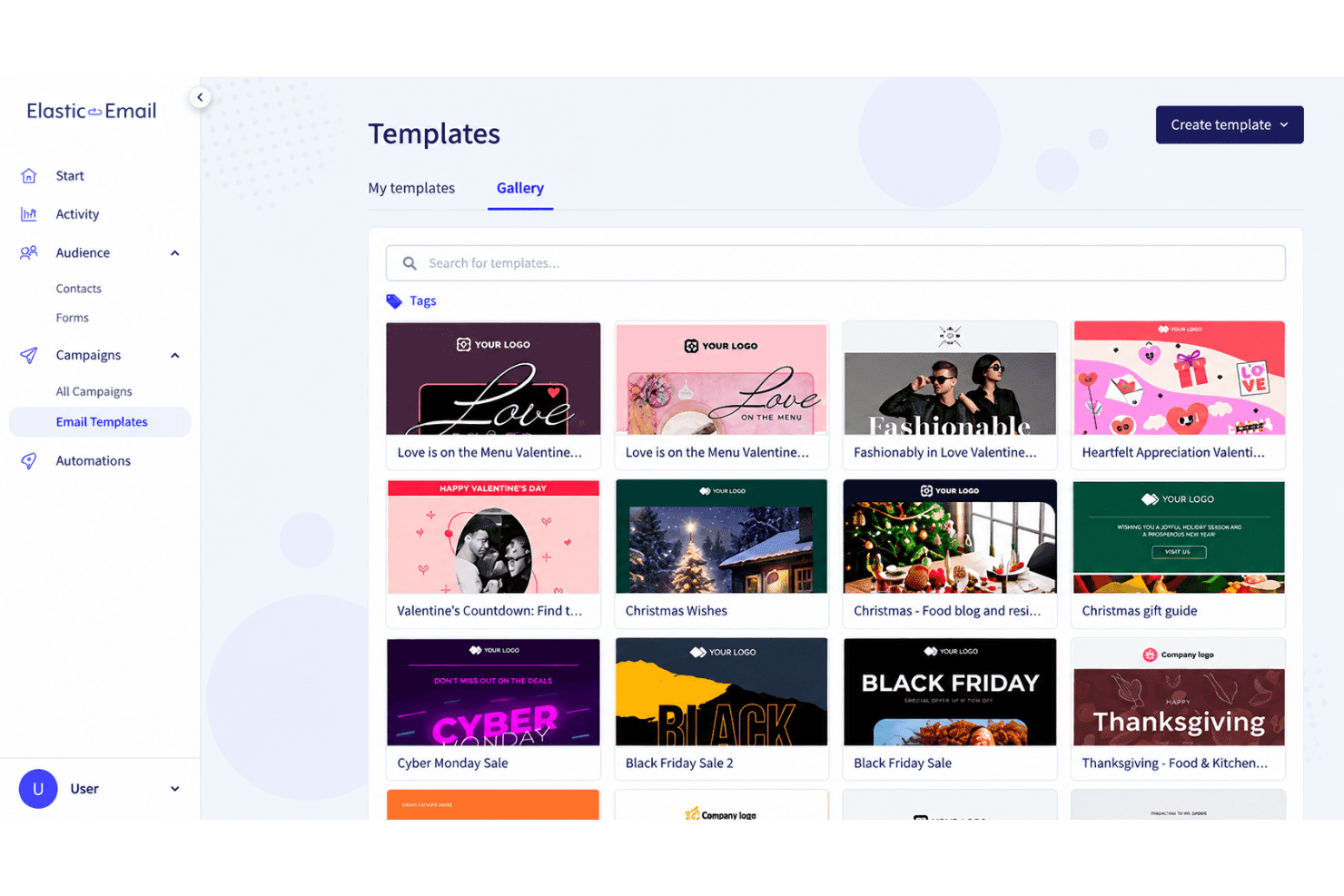
Create and send newsletters or promotional emails to selected contact lists, with campaign controls for recurring or one-time sends. This supports regular audience communication without requiring a separate transactional email platform.
Email Automations
Build automated workflows that send messages based on subscriber actions or defined triggers. For example, you can create welcome or follow-up sequences that run after someone joins a list.
Email Templates And Editor
Use templates and the email editor to create campaign messages without coding each email from scratch. Elastic Email covers common campaign layouts, though its design flexibility is more limited than some leading competitors.
Signup Forms
Create signup forms to collect contacts and add them to your email lists. You can place forms on relevant pages to capture newsletter subscribers directly from your website.
Landing Pages
Build landing pages for campaigns, lead capture, or focused calls to action. Pairing a landing page with a signup form gives you a single workflow for attracting and collecting new subscribers.
Reporting And Analytics
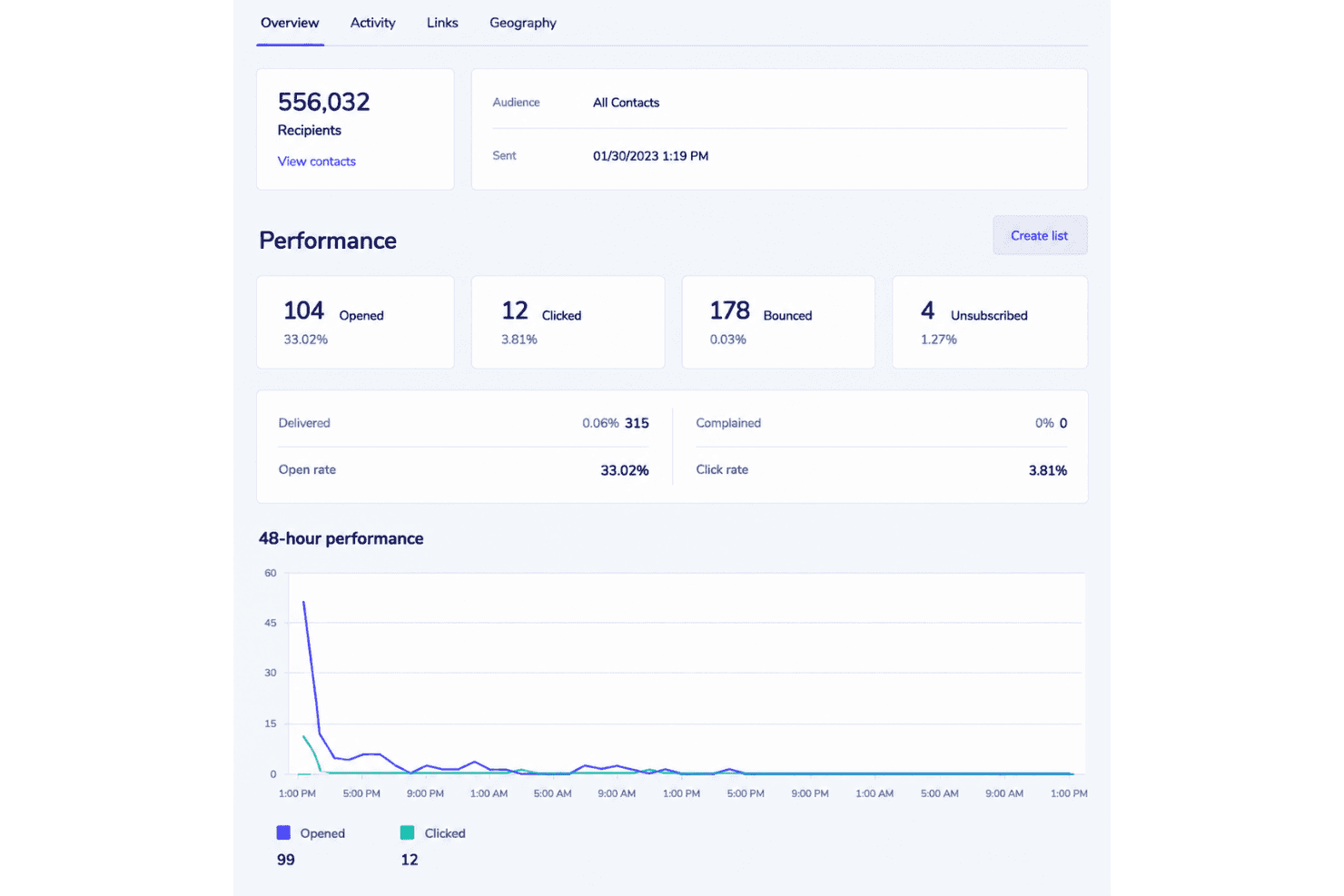
Review campaign metrics that show how recipients interact with your emails. Elastic Email also provides reporting for recurring sends, although aggregated results can make individual campaign comparisons harder.
Ease of Use
Elastic Email is fairly easy to use for core email marketing, with approachable onboarding, campaign templates, signup forms, landing pages, and visual automations. Its SMTP and API documentation also gives technical teams a clear path to custom sending workflows. However, the interface feels less polished than leading platforms, template editing limits design flexibility, and reviewers report inconsistent support during troubleshooting. I’d recommend it when functionality and usage-based pricing matter more than refined usability.
Integrations
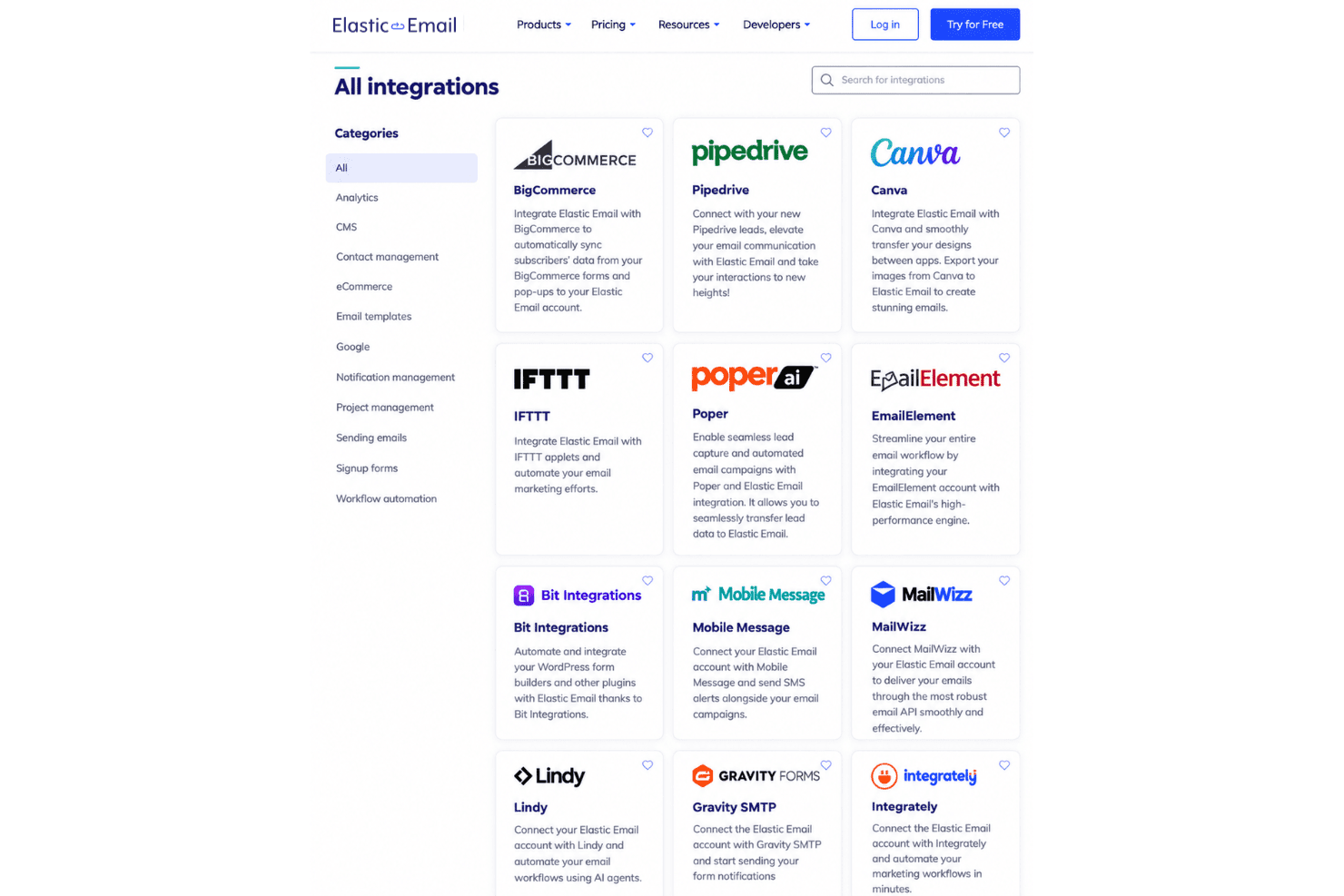
Elastic Email integrates with Cloudways, WordPress, HubSpot, ClickUp, PayPal, WooCommerce, Mautic, Shopify, and Poptin, among others.
It also offers a REST API and SMTP relay for custom integrations and supports third-party connections through Zapier and Pabbly Connect.
Elastic Email Specs
- A/B Testing: Yes
- API: Yes
- Audience Targeting: Yes
- Brand Management: No
- Calendar Management: No
- Campaign Management: Yes
- Compliance Tracking: Yes
- Contact Management: Yes
- Contact Sharing: No
- Conversion Tracking: No
- CRM Integration: Yes
- Customer Management: No
- Dashboard: Yes
- Data Export: Yes
- Data Import: Yes
- Data Visualization: Yes
- Email Integration: Yes
- External Integrations: Yes
- Google Apps Integration: Yes
- Lead Management: No
- Lead Scoring: No
- Link Tracking: Yes
- Marketing Automation: Yes
- Multi-User: Yes
- Notifications: Yes
- Scheduling: Yes
- Social-Media Integration: Yes
- Third-Party Plugins/Add-Ons: Yes


