

WordPress Review: Pros, Cons, Features, and Pricing Explained


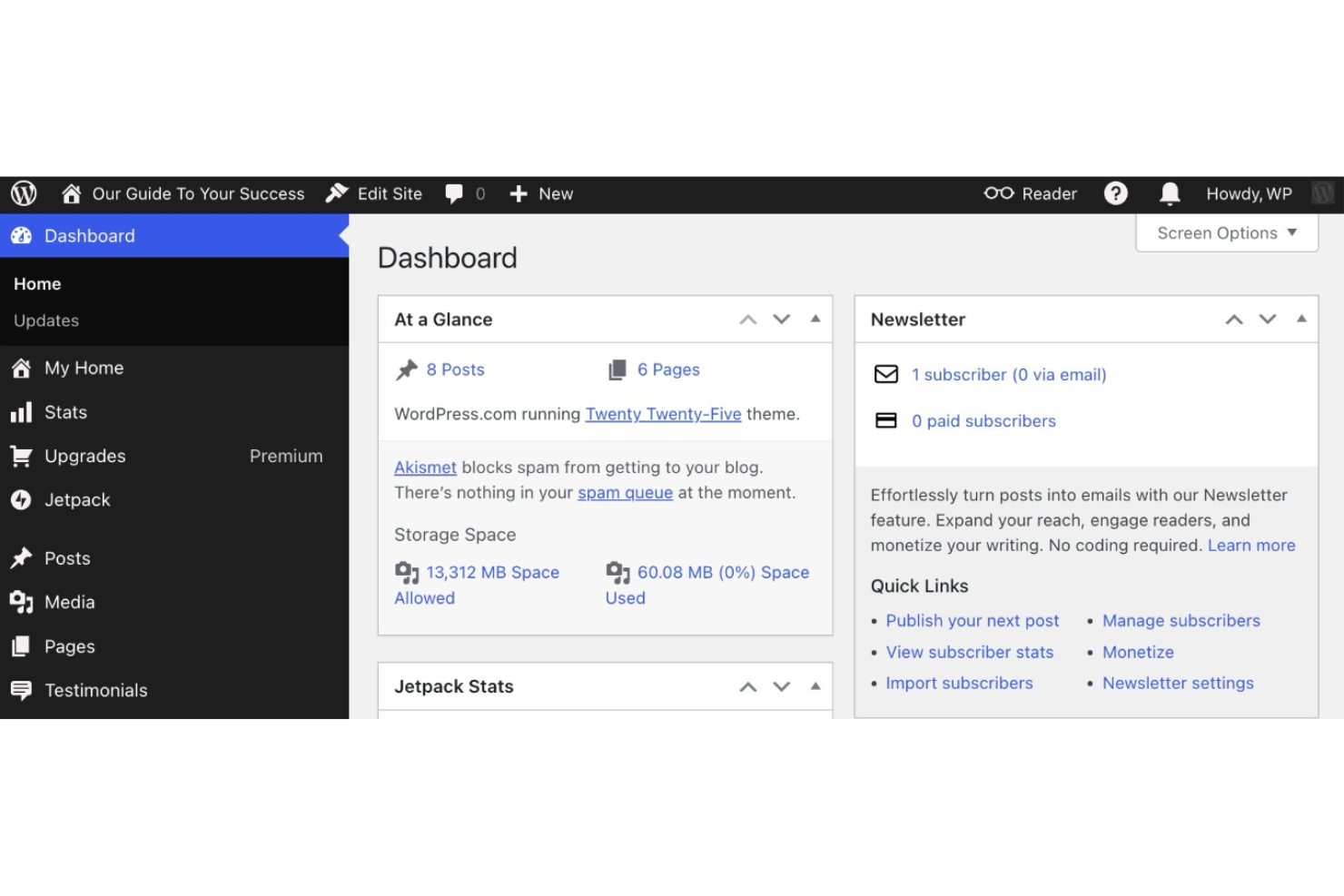
WordPress is a content management software designed to help you build, manage, and scale websites with ease. For marketing managers juggling multiple campaigns, tight deadlines, and evolving brand needs, WordPress offers a flexible platform with extensive customization, a massive plugin library, and strong community support. In this review, you'll find a clear breakdown of WordPress's features, best and worst use cases, pros and cons, and pricing, so you can decide if it's the right fit for your team's content and website goals.
WordPress Evaluation Summary
- From $4/month (billed annually)
- Free plan available
Why Trust Our Software Reviews
WordPress Overview
pros
-
Strong SEO features built into the platform.
-
Wide range of customizable themes and templates.
-
Extensive plugin library for advanced site functionality.
cons
-
Support relies heavily on community forums, not direct help.
-
Performance can suffer on large or complex sites.
-
Security vulnerabilities require frequent updates and monitoring.
-

Demandbase
Visit WebsiteThis is an aggregated rating for this tool including ratings from Crozdesk users and ratings from other sites.4.4 -
6sense
Visit WebsiteThis is an aggregated rating for this tool including ratings from Crozdesk users and ratings from other sites.4.3 -
AnswerThePublic
Visit Website


How We Test & Score Tools
We’ve spent years building, refining, and improving our software testing and scoring system. The rubric is designed to capture the nuances of software selection and what makes a tool effective, focusing on critical aspects of the decision-making process.
Below, you can see exactly how our testing and scoring works across seven criteria. It allows us to provide an unbiased evaluation of the software based on core functionality, standout features, ease of use, onboarding, customer support, integrations, customer reviews, and value for money.
Core Functionality (25% of final scoring)
The starting point of our evaluation is always the core functionality of the tool. Does it have the basic features and functions that a user would expect to see? Are any of those core features locked to higher-tiered pricing plans? At its core, we expect a tool to stand up against the baseline capabilities of its competitors.
Standout Features (25% of final scoring)
Next, we evaluate uncommon standout features that go above and beyond the core functionality typically found in tools of its kind. A high score reflects specialized or unique features that make the product faster, more efficient, or offer additional value to the user.
We also evaluate how easy it is to integrate with other tools typically found in the tech stack to expand the functionality and utility of the software. Tools offering plentiful native integrations, 3rd party connections, and API access to build custom integrations score best.
Ease of Use (10% of final scoring)
We consider how quick and easy it is to execute the tasks defined in the core functionality using the tool. High scoring software is well designed, intuitive to use, offers mobile apps, provides templates, and makes relatively complex tasks seem simple.
Onboarding (10% of final scoring)
We know how important rapid team adoption is for a new platform, so we evaluate how easy it is to learn and use a tool with minimal training. We evaluate how quickly a team member can get set up and start using the tool with no experience. High scoring solutions indicate little or no support is required.
Customer Support (10% of final scoring)
We review how quick and easy it is to get unstuck and find help by phone, live chat, or knowledge base. Tools and companies that provide real-time support score best, while chatbots score worst.
Customer Reviews (10% of final scoring)
Beyond our own testing and evaluation, we consider the net promoter score from current and past customers. We review their likelihood, given the option, to choose the tool again for the core functionality. A high scoring software reflects a high net promoter score from current or past customers.
Value for Money (10% of final scoring)
Lastly, in consideration of all the other criteria, we review the average price of entry level plans against the core features and consider the value of the other evaluation criteria. Software that delivers more, for less, will score higher.
Core Features
Block Editor
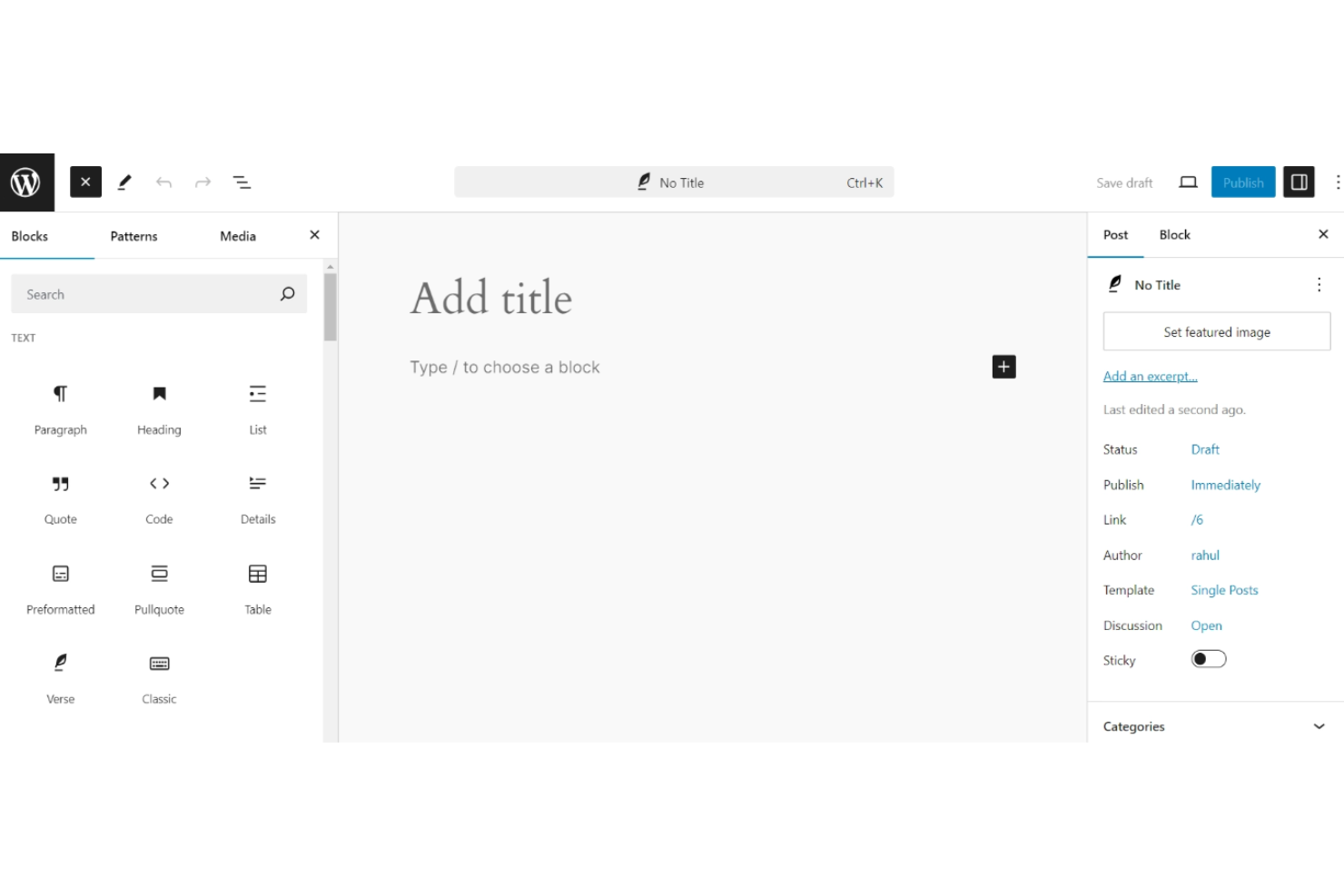
Drag-and-drop editing lets you arrange content and media visually. This editor supports reusable blocks for faster page creation.
Customizable Themes
Choose from hundreds of professionally designed templates. Each theme can be tailored with colors, fonts, and layouts to suit your web design goals.
SEO Tools
Built-in SEO and marketing tools help optimize your site for search engines. Access advanced plugins for deeper control.
User Roles and Permissions
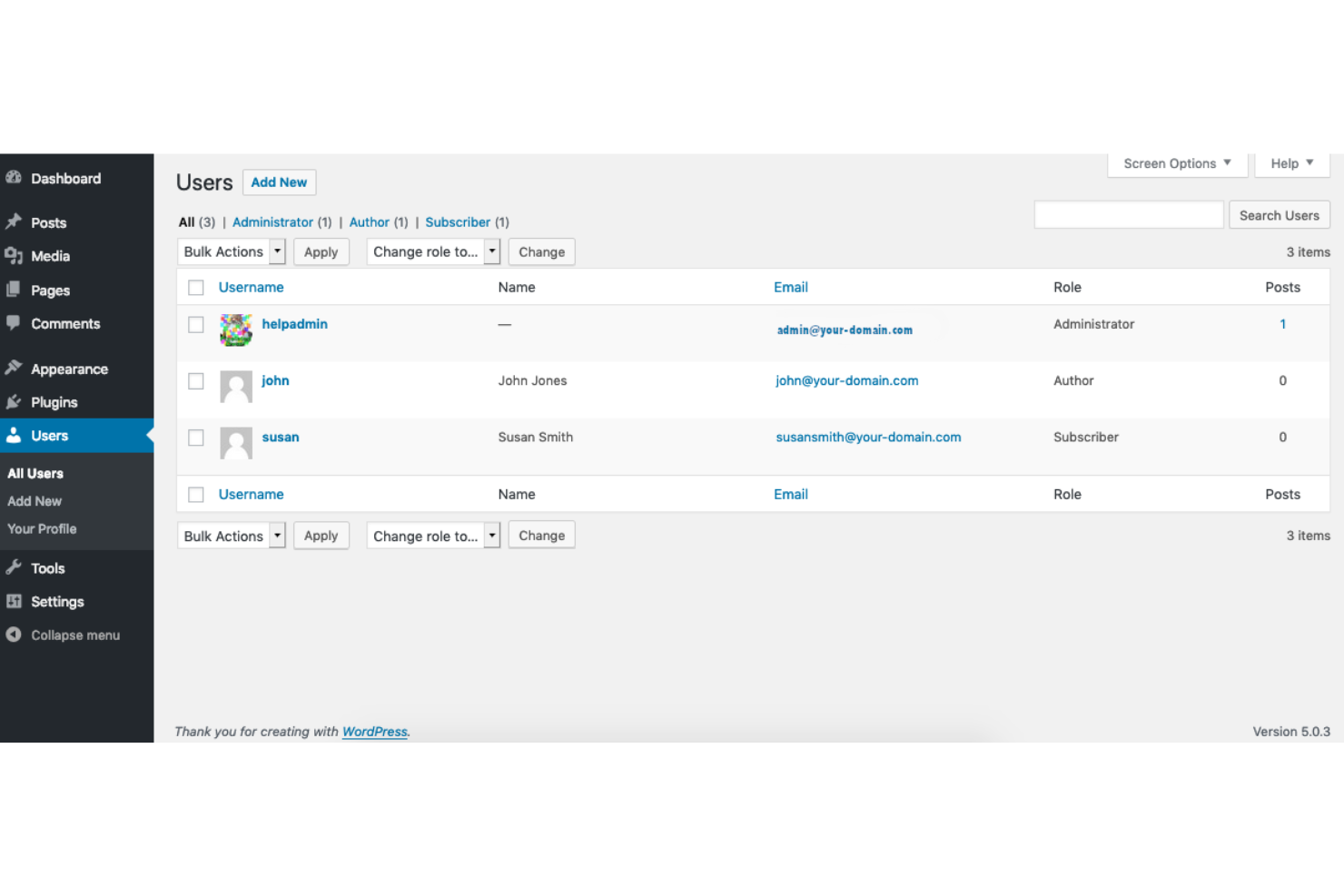
Assign roles like editor, author, or contributor to manage access. This supports collaborative publishing and workflows.
Media Management
Upload, organize, and display images, videos, and documents with built-in galleries. WordPress optimizes images for performance.
Post Scheduling
Schedule posts to publish at specific dates and times. This supports consistent content delivery and campaign planning.
Ease of Use
WordPress offers a user-friendly interface for basic tasks like publishing posts and updating pages, but its depth and customization options can be daunting for new users. Many reviewers note that while setup is straightforward, managing plugins, themes, and security requires ongoing attention. The block editor simplifies content creation, yet advanced site management often demands technical know-how or developer support. Overall, WordPress balances flexibility with usability, but it's best suited for users willing to invest time in learning the platform.
Integrations
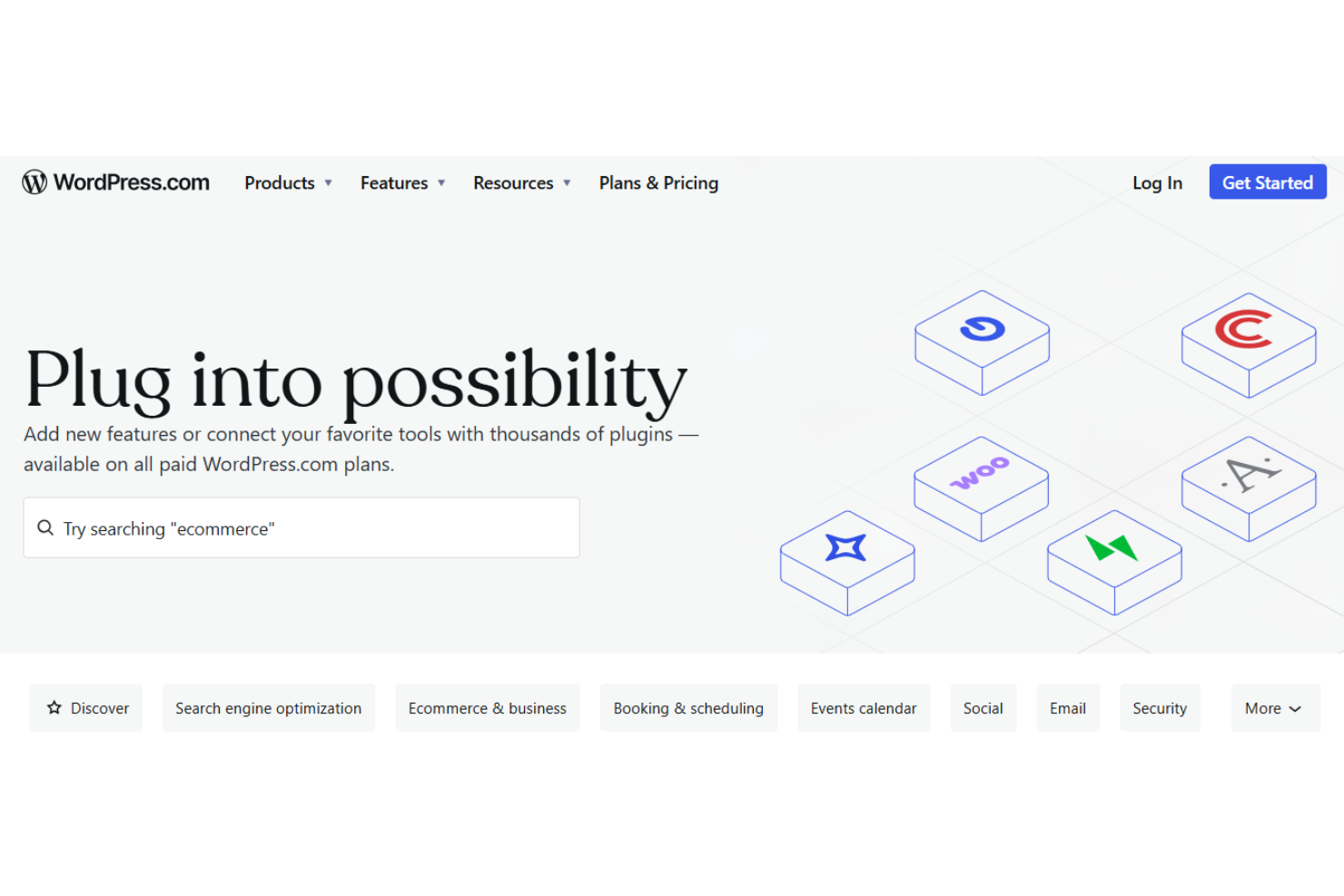
WordPress integrates with Google Analytics, Mailchimp, WooCommerce, Jetpack, Yoast SEO, Akismet, PayPal, HubSpot, Facebook, and Twitter, among others. It also connects with thousands of plugins developed specifically for the WordPress platform.
WordPress also offers a REST API and connects with third-party integration tools for expanded functionality.
WordPress Specs
- A/B Testing
- API
- Data Export
- Data Import
- External Integrations
- Landing Pages
- Multi-User
- Third-Party Plugins/Add-Ons


