

Drip Review: Pros, Cons, Features, and Pricing Explained
Drip stands out for its powerful automation and ecommerce focus, making it ideal for online stores, but maybe less suited for beginners or non-ecommerce businesses.

We review tools independently, and commissions help fund our testing. See our transparency policy, our methodology, or suggest a tool.
Drip is an email marketing software built for ecommerce brands that need behavior-based automation, purchase-triggered workflows, and customer segmentation tied to real revenue data. I'd mainly consider it if you're running an online store and want Klaviyo-level ecommerce depth without the steeper learning curve and pricing that tends to follow you as your contact list grows.
Drip Evaluation Summary
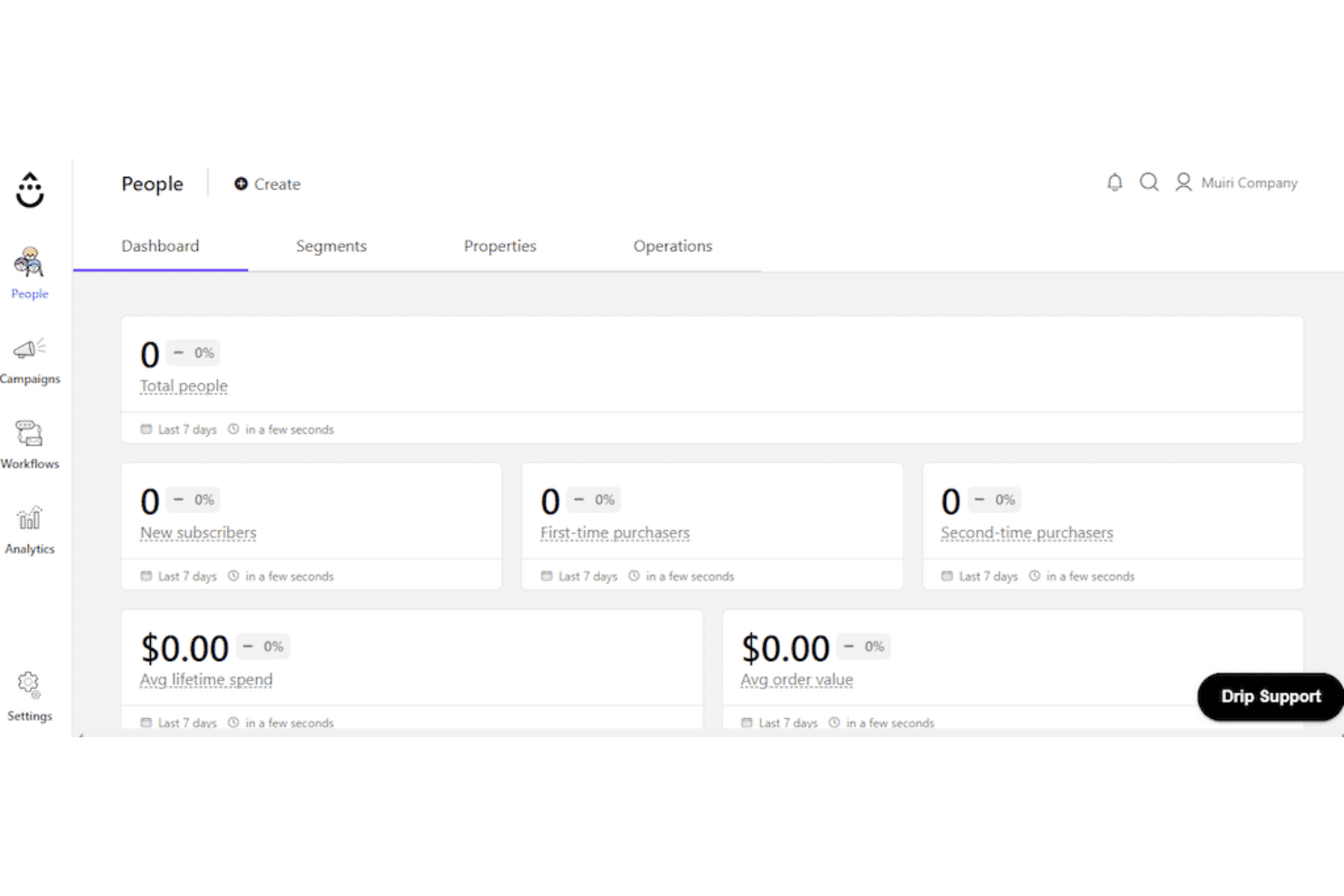
4.4/5
- From $39/month
- 14-day free trial
Why Trust Our Software Recommendations
6,700+
Reviews
20
Industry experts
16+
Evaluation factors
14
Years
Our team has been testing and reviewing software since 2012. As marketing leaders ourselves, we know how difficult—and important—it is to choose the right software.
For this guide, we evaluated tools using hands-on testing and independent research, scoring tools using our selection criteria.
Our reviews reflect our human editorial judgment, not a sales pitch.
Expert reviewers:
 Gui DrusinaCreative Director
- Shriya GhateSenior Marketing Lead
 Amanda JacquesMarketing Ops Leader

Drip Overview
When I was evaluating Drip as an email marketing automation tool, its automation and ecommerce integrations set it apart, especially for brands selling online. The visual workflow builder and deep ecommerce connections make it easy to create targeted campaigns. Its pricing is higher than some alternatives, and the interface can feel complex for new users, but support is responsive, and onboarding resources are strong. If you're selecting a platform for advanced segmentation and ecommerce growth, Drip is a top contender, though teams focused on simple newsletters or B2B may find it less aligned with their needs.
Pros
- Advanced automation builder supports complex ecommerce workflows.
- Visual segmentation enables precise targeting by customer behavior.
- Detailed revenue attribution tracks sales from each campaign.
Cons
- Reporting dashboard lacks customization for advanced analytics.
- SMS marketing features are limited compared to competitors.
- No built-in landing pages A/B testing functionality.
Is Drip Right For Your Needs?
Who Would be a Good Fit for Drip?
Drip is best suited for ecommerce brands, digital retailers, and marketing teams that need advanced email marketing automation and customer journey mapping. Its visual workflow builder, deep ecommerce integrations, and revenue tracking make it a strong choice for businesses focused on online sales and personalized marketing campaigns. Drip's advanced features are especially valuable for teams that want to segment audiences by behavior and track campaign-driven revenue, making it ideal for growth-focused online stores.
- Ecommerce StoresDrip's shopify integration and connections with major e-commerce platforms automate product recommendations and abandoned cart emails.
- Digital Product SellersBehavior-based segmentation helps target customers with relevant offers and upsells.
- DTC BrandsRevenue attribution and customer journey mapping support direct-to-consumer growth strategies.
- Marketing AgenciesMulti-client management and advanced automation streamline campaign execution for ecommerce clients.
- Subscription ServicesAutomated workflows nurture subscribers and reduce churn with personalized messaging.
- Small Business TeamsPrebuilt templates and visual workflows save time on campaign setup.
Who Would be a Bad Fit for Drip?
Drip is less suitable for B2B companies, nonprofits, and teams that need simple newsletter tools or advanced reporting. Its ecommerce focus and pricing structure may not align with organizations that don't require deep automation or sales attribution. Teams looking for built-in landing pages testing or robust SMS features may also find Drip lacking compared to other options.
- B2B EnterprisesDrip's ecommerce-centric features don't support complex B2B sales cycles.
- NonprofitsLack of donor management and event tools limits nonprofit use.
- Large EnterprisesReporting and analytics customization fall short for enterprise-scale needs.
- Content PublishersNo built-in RSS-to-email or advanced newsletter automation.
- Event MarketersMissing event registration and attendee management features.
- Teams Needing SMSSMS marketing capabilities are basic and lack advanced automation.
How We Test & Score Tools
We’ve spent years building, refining, and improving our software testing and scoring system. The rubric is designed to capture the nuances of software selection and what makes a tool effective, focusing on critical aspects of the decision-making process.
Below, you can see exactly how our testing and scoring works across seven criteria. It allows us to provide an unbiased evaluation of the software based on core functionality, standout features, ease of use, onboarding, customer support, integrations, customer reviews, and value for money.
Core Functionality (25% of final scoring)
The starting point of our evaluation is always the core functionality of the tool. Does it have the basic features and functions that a user would expect to see? Are any of those core features locked to higher-tiered pricing plans? At its core, we expect a tool to stand up against the baseline capabilities of its competitors.
Standout Features (25% of final scoring)
Next, we evaluate uncommon standout features that go above and beyond the core functionality typically found in tools of its kind. A high score reflects specialized or unique features that make the product faster, more efficient, or offer additional value to the user.
We also evaluate how easy it is to integrate with other tools typically found in the tech stack to expand the functionality and utility of the software. Tools offering plentiful native integrations, 3rd party connections, and API access to build custom integrations score best.
Ease of Use (10% of final scoring)
We consider how quick and easy it is to execute the tasks defined in the core functionality using the tool. High scoring software is well designed, intuitive to use, offers mobile apps, provides templates, and makes relatively complex tasks seem simple.
Onboarding (10% of final scoring)
We know how important rapid team adoption is for a new platform, so we evaluate how easy it is to learn and use a tool with minimal training. We evaluate how quickly a team member can get set up and start using the tool with no experience. High scoring solutions indicate little or no support is required.
Customer Support (10% of final scoring)
We review how quick and easy it is to get unstuck and find help by phone, live chat, or knowledge base. Tools and companies that provide real-time support score best, while chatbots score worst.
Customer Reviews (10% of final scoring)
Beyond our own testing and evaluation, we consider the net promoter score from current and past customers. We review their likelihood, given the option, to choose the tool again for the core functionality. A high scoring software reflects a high net promoter score from current or past customers.
Value for Money (10% of final scoring)
Lastly, in consideration of all the other criteria, we review the average price of entry level plans against the core features and consider the value of the other evaluation criteria. Software that delivers more, for less, will score higher.
Core Features
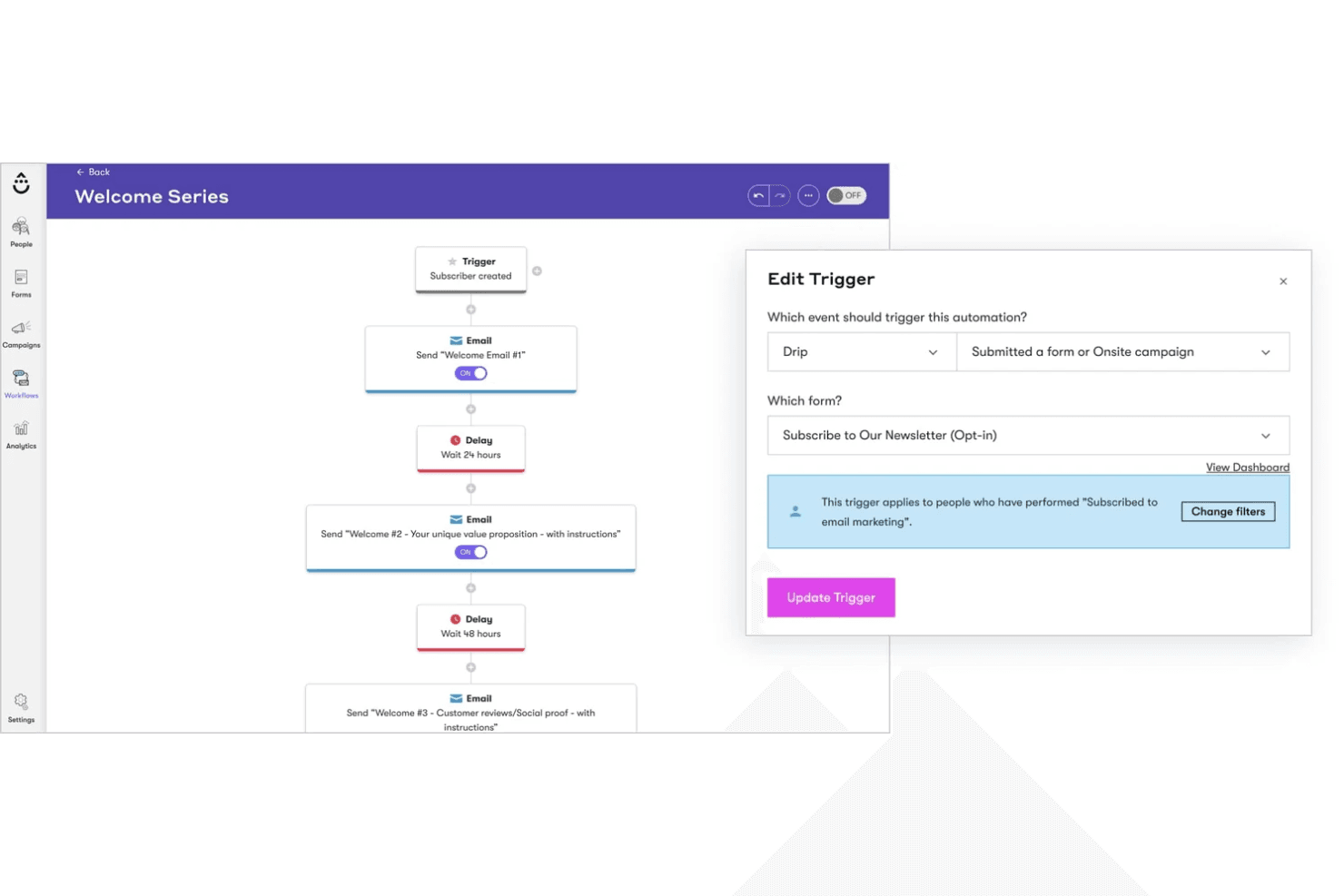
Visual Workflow Builder
Design automated email sequences with a drag-and-drop interface. Map out customer journeys and trigger actions based on real-time behaviors.
Segmentation and Tagging
Group subscribers by purchase history, engagement, or custom tags. Target campaigns to highly specific audience segments for better relevance.
Personalized Email Content
Insert dynamic product recommendations and custom fields into emails. Tailor messages to each recipient's browsing or purchase activity.
Revenue Attribution
Track sales and revenue generated from each email campaign. See which messages drive the most conversions and optimize accordingly.
Prebuilt Email Templates
Choose from a library of ecommerce-focused templates. Launch campaigns quickly without starting from scratch.
A/B Testing
Test subject lines, content, or send times within campaigns. Identify what resonates best with your audience to improve results.
Ease of Use
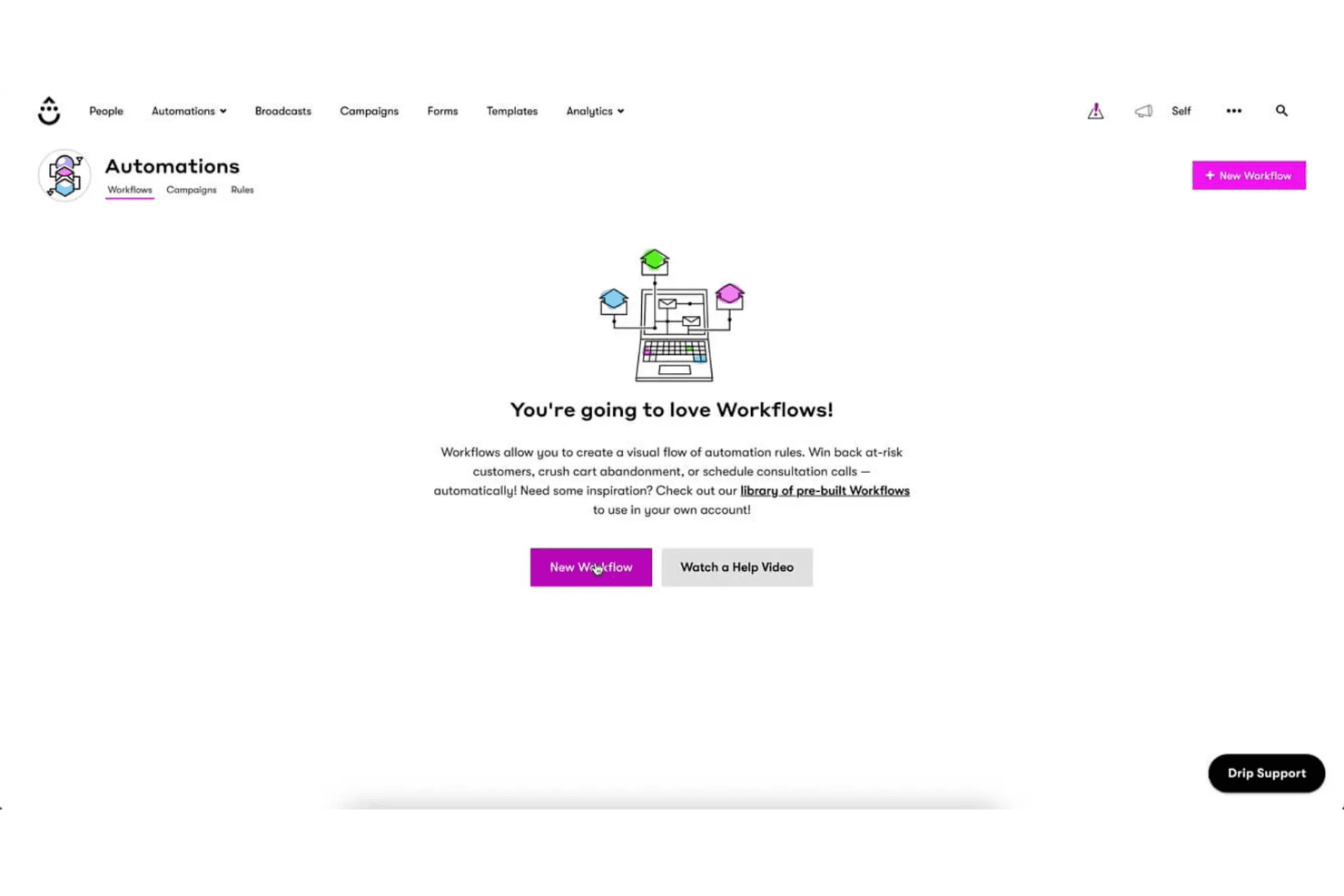
Drip's interface is visually appealing and modern, but the learning curve for the workflow builder and advanced automation options can feel steep at first. The platform offers helpful onboarding guides and a searchable knowledge base, which eases the process considerably. Once familiar, users appreciate the drag-and-drop tools and clear campaign setup. Those seeking a simple, newsletter-focused tool may find Drip's depth and customization more than they need.
Integrations
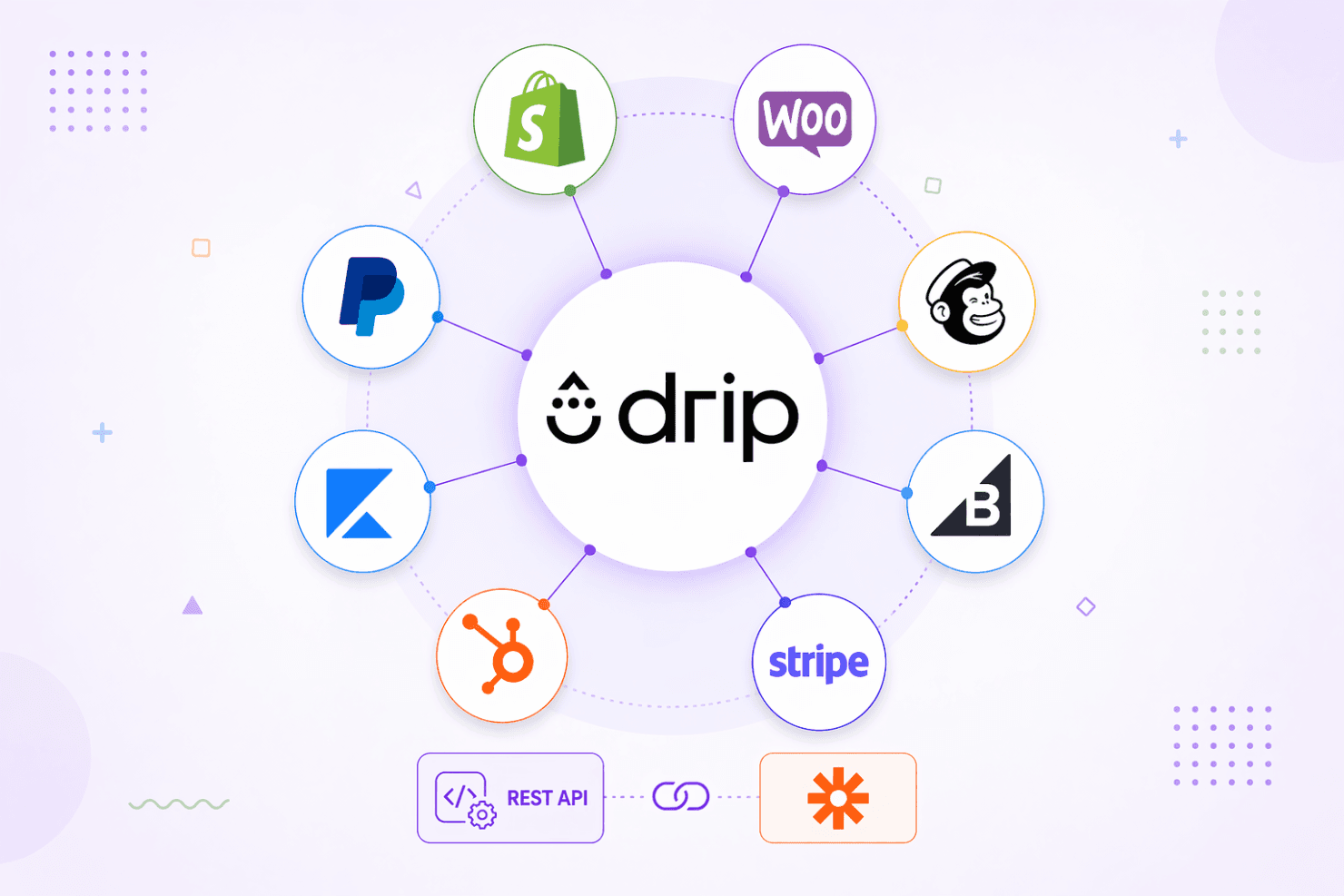
Drip integrates with Shopify, WooCommerce, Mailchimp, BigCommerce, Stripe, Hubspot, Kajabi, and Paypal, among others.
Drip also offers a REST API and connects with third-party integration tools like Zapier for expanded functionality.
Drip Specs
- A/B Testing: No
- API: No
- Audience Targeting: No
- Brand Management: No
- Calendar Management: No
- Campaign Management: No
- Compliance Tracking: No
- Contact Management: No
- Contact Sharing: No
- Conversion Tracking: No
- CRM Integration: No
- Customer Management: No
- Dashboard: No
- Data Export: No
- Data Import: No
- Data Visualization: No
- Email Integration: No
- External Integrations: No
- Google Apps Integration: No
- Lead Management: No
- Lead Scoring: No
- Link Tracking: No
- Marketing Automation: No
- Multi-User: No
- Notifications: No
- Scheduling: No
- Social-Media Integration: No
- Third-Party Plugins/Add-Ons: No


