

10 Best AI SEO Tools Reviewed in 2026

Best AI SEO Tools Shortlist


In today’s digital marketing landscape, staying ahead of competitors can feel daunting. You may be balancing a long list of responsibilities—boosting your site’s search visibility, leading a team, and producing new content. That’s where AI-driven SEO tools can make a real difference.
These tools can simplify your workload by automating keyword research, content optimization, and more. With AI's ability to analyze data quickly, you'll make informed decisions faster.
I've independently tested and reviewed these tools, focusing on their AI capabilities. I aim to provide you with an unbiased, well-researched review of the top AI SEO tools on the market. In this article, you'll discover which tools are best suited for your needs and how they can benefit your marketing strategy.
Why Trust Our Software Reviews
We’ve been testing and reviewing marketing software since 2022. As marketing experts ourselves, we know how critical and difficult it is to make the right decision when selecting software.
We invest in deep research to help our audience make better software purchasing decisions. We’ve tested more than 2,000 tools for different marketing use cases and written over 1,000 comprehensive software reviews. Learn how we stay transparent & our software review methodology.
Best AI SEO Tools Summary
This comparison chart summarizes pricing details for my top AI SEO tools selections to help you find the best one for your budget and business needs.
| Tool | Best For | Trial Info | Price | ||
|---|---|---|---|---|---|
| 1 | Best for content relevance | 14-day free trial | From $129/month | Website | |
| 2 | Best for beginner SEO | Free plan available | From $37.70/month (billed annually) | Website | |
| 3 | Best for AI copywriting | 7-day free trial + free demo available | From $59/month (billed annually) | Website | |
| 4 | Best for keyword research | Free plan + 7-day free trial + free demo | From $117.33/month (billed annually) | Website | |
| 5 | Best for SEO audits | 14-day free trial available | From $29/month | Website | |
| 6 | Best for competitor analysis | Free plan available | From $29/month | Website | |
| 7 | Best for rank prediction | Free plan available | Pricing upon request | Website | |
| 8 | Best for content optimization | Free trial + free demo available | From $49/month (billed annually) | Website | |
| 9 | Best for actionable brand insights | Free trial available | From $29/month | Website | |
| 10 | Best for semantic SEO | 14-day free trial | From $187/month (billed annually) | Website |
-

Eloqua
Visit WebsiteThis is an aggregated rating for this tool including ratings from Crozdesk users and ratings from other sites.4.3 -
Optimizely
Visit WebsiteThis is an aggregated rating for this tool including ratings from Crozdesk users and ratings from other sites.4.2 -
Uberflip
Visit WebsiteThis is an aggregated rating for this tool including ratings from Crozdesk users and ratings from other sites.4.3




Best AI SEO Tool Reviews
Below are my detailed summaries of the best AI SEO tools that made it onto my shortlist. My reviews offer a detailed look at the key features, pros & cons, integrations, and ideal use cases of each tool to help you find the best one for you.

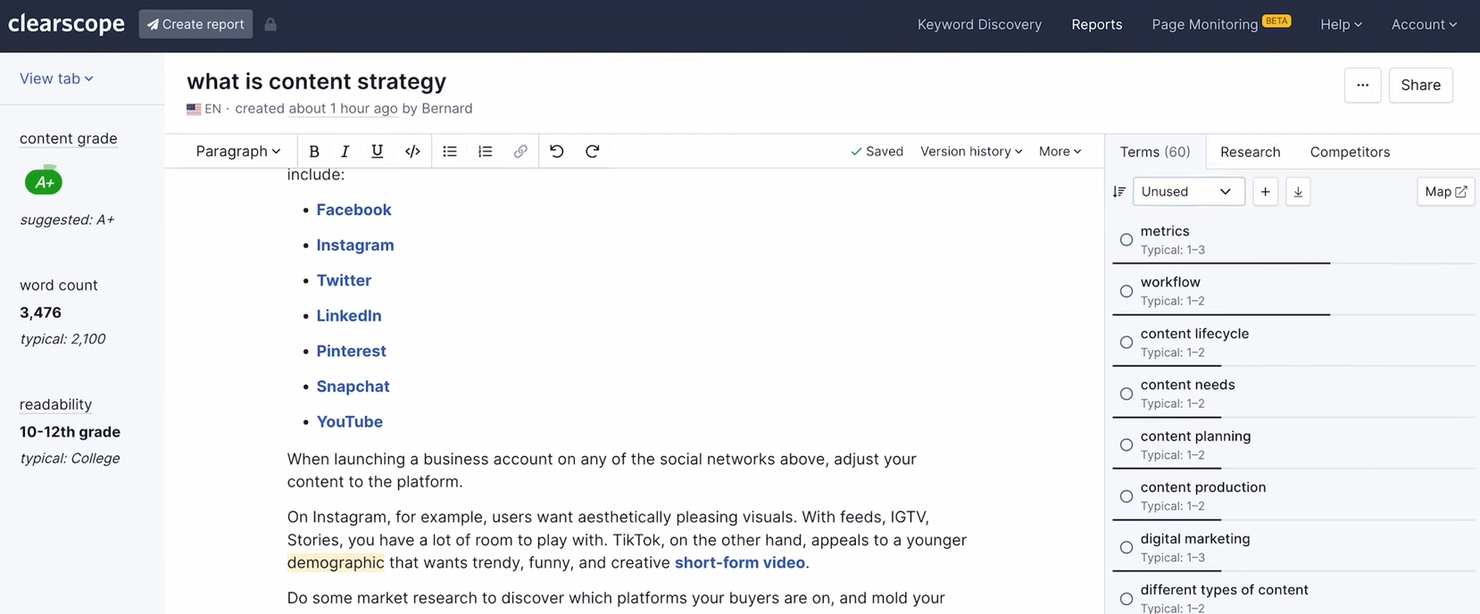
Clearscope is an AI-powered content optimization tool designed for marketers and content creators who aim to increase the relevance and quality of their online content. It provides insights into keyword usage and content structure, helping users align their articles with search intent and improve visibility.
Why I picked Clearscope: It excels in content relevance, utilizing AI to offer keyword suggestions and content grading. The platform's keyword analysis feature helps you identify terms that can boost your content's SEO performance. Clearscope's content grading system evaluates your text against top-ranking pages, providing actionable insights to improve your writing.
Standout features & integrations:
Features include a content grading tool that evaluates how well your content meets search engine criteria, a keyword discovery feature that identifies relevant terms, and a report generator that provides detailed insights into content performance. These tools help you refine your content strategy.
Integrations include Google Docs, WordPress, and Google Search Console.
Pros and Cons
Pros:
- Enhances content alignment with search intent
- Detailed keyword analysis
- Effective content grading system
Cons:
- Narrow scope — lacks backlink, technical SEO, or brief‑building features
- Higher pricing for small teams

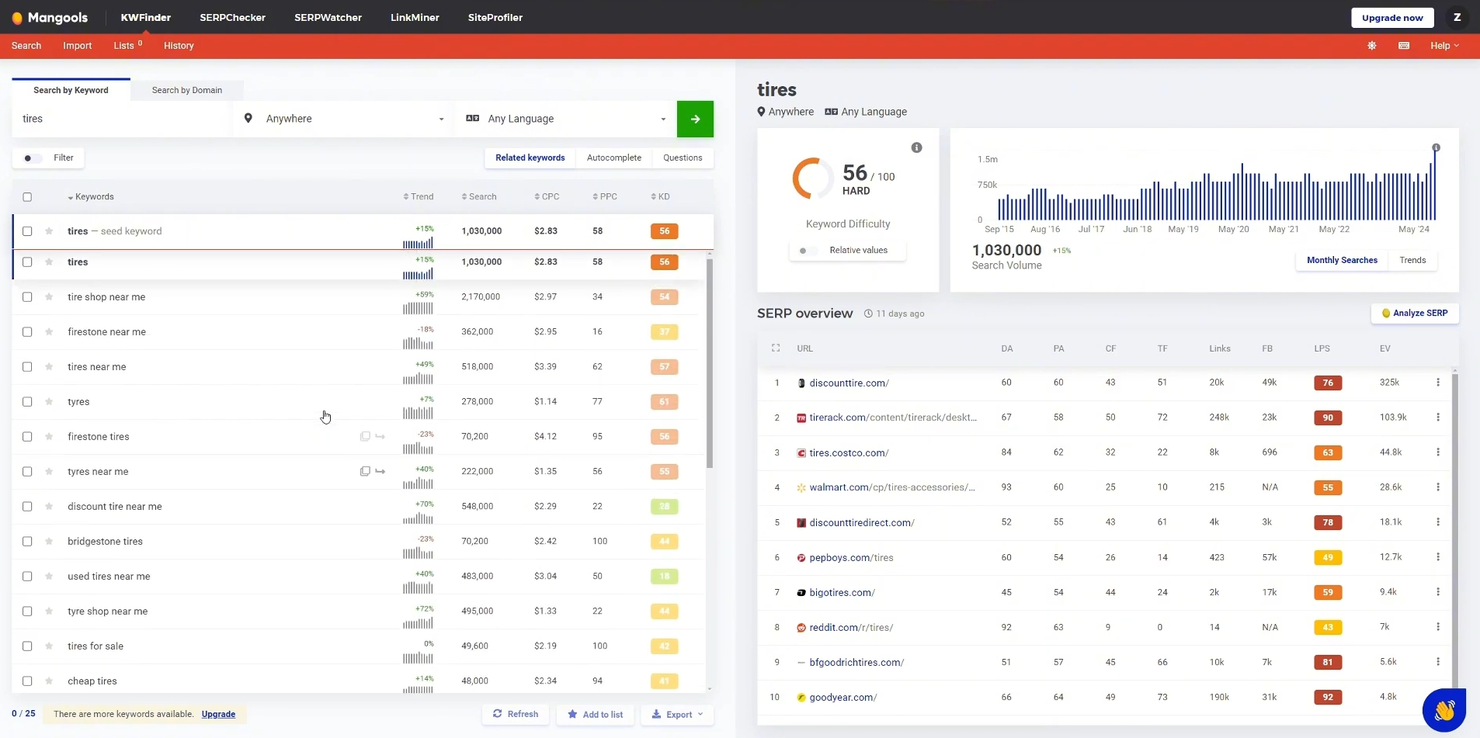
Mangools is an SEO toolset designed for small businesses and individual marketers looking to improve their online presence. It offers tools for keyword research, rank tracking, and backlink analysis, with AI features that simplify SEO processes for beginners.
Why I picked Mangools: It targets beginner SEOs by providing intuitive tools like KWFinder for keyword research and SERPChecker for analyzing search results. The platform's AI capabilities assist in identifying keyword opportunities and tracking ranking changes. Mangools also offers LinkMiner for backlink analysis, helping you understand your link profile. These features make it a great starting point for those new to SEO.
Standout features & integrations:
Features include a site profiler that provides an overview of your site's SEO metrics, a SERPWatcher for monitoring keyword performance, and a content analysis tool that evaluates your site's content quality. These tools help you manage and improve your SEO strategy.
Integrations are available through the private API.
Pros and Cons
Pros:
- Effective backlink analysis feature
- Intuitive keyword research tools
- User-friendly for SEO beginners
Cons:
- May require adaptation for complex needs
- Limited advanced features for experts

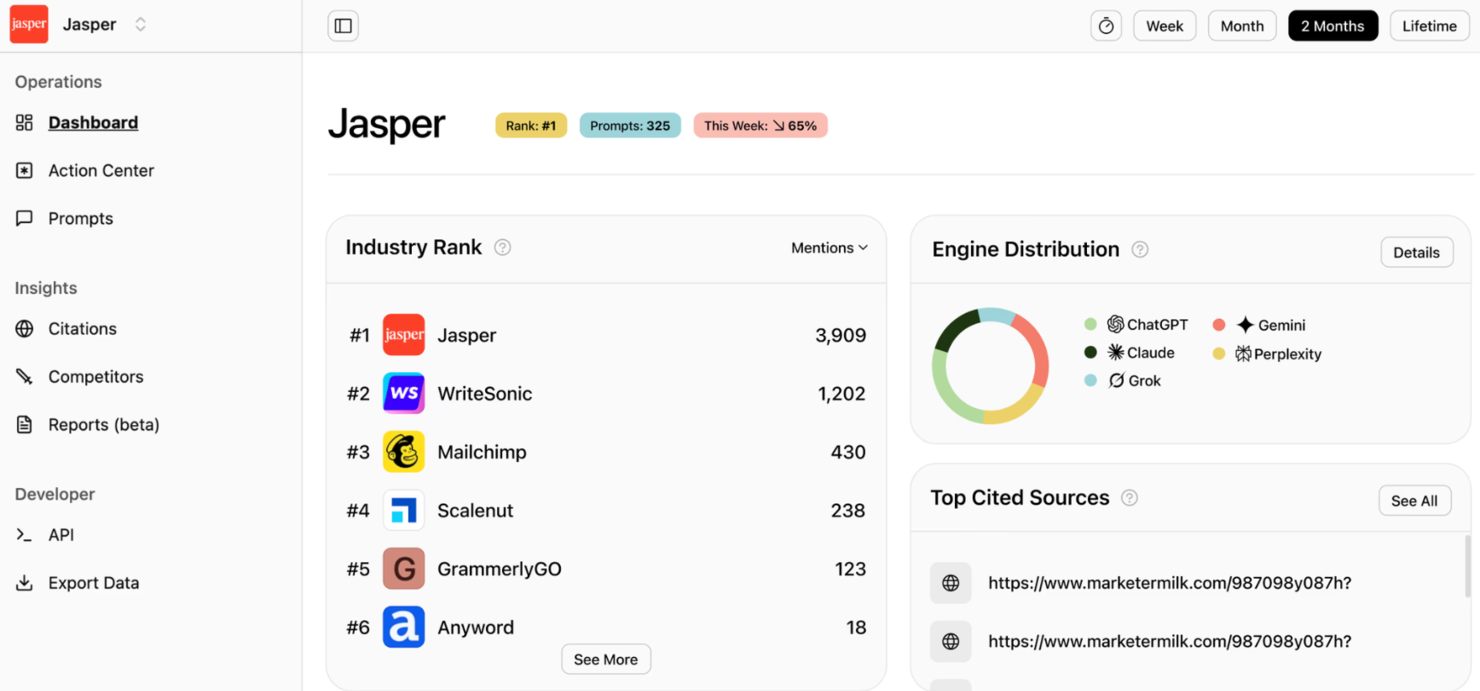
Jasper AI is an AI-powered content creation tool designed for marketers, writers, and SEO professionals who need to generate high-quality copy quickly. It assists in crafting various content types, including blog posts, ad copy, and product descriptions, using AI to boost creativity and relevancy.
Why I picked Jasper AI: It can generate high-quality, engaging content quickly, saving both time and effort. Its advanced AI algorithms help optimize content for search engines while maintaining a natural, human-like tone. With features like keyword suggestions, content templates, and SEO-friendly writing guidance, Jasper ensures your content ranks higher and attracts more traffic.
Standout features & integrations:
Features include a long-form assistant that helps you write detailed articles, a sentence expander for developing concise ideas, and a tone detector that ensures your content matches your brand voice. These tools enhance your writing process.
Integrations include Google BigQuery, WebFlow, and Pabbly Connect.
Pros and Cons
Pros:
- Provides structured writing templates
- Supports multiple content formats
- Enhances content creativity and relevancy
Cons:
- Limited customization in some templates
- May require learning for beginners


SemRush is a digital marketing tool designed for SEO professionals and marketing teams. It offers keyword research, site audits, and traffic analysis to enhance your search engine optimization efforts. Its AI capabilities include predictive insights and automated keyword suggestions, helping you make data-driven decisions efficiently.
Why I picked SemRush: This tool excels in keyword research, providing AI-driven suggestions and insights. Its AI features analyze search trends and competitor strategies, offering precise keyword recommendations. SemRush's AI algorithms help you identify new opportunities, making it a valuable asset for enhancing your SEO strategy. You'll find its detailed analysis beneficial for staying ahead in the competitive digital landscape.
Standout features & integrations:
Features include a site audit tool that identifies SEO issues, a traffic analysis feature that helps you understand your competitors' traffic sources, and a position tracking tool that monitors your search ranking over time.
Integrations include Google Analytics, Google Ads, Google Search Console, Trello, Majestic, Zapier, WordPress, HubSpot, and BigCommerce.
Pros and Cons
Pros:
- Detailed site audit reports
- Deep competitor analysis
- Extensive keyword database
Cons:
- Higher pricing compared to similar tools
- Can be overwhelming for beginners

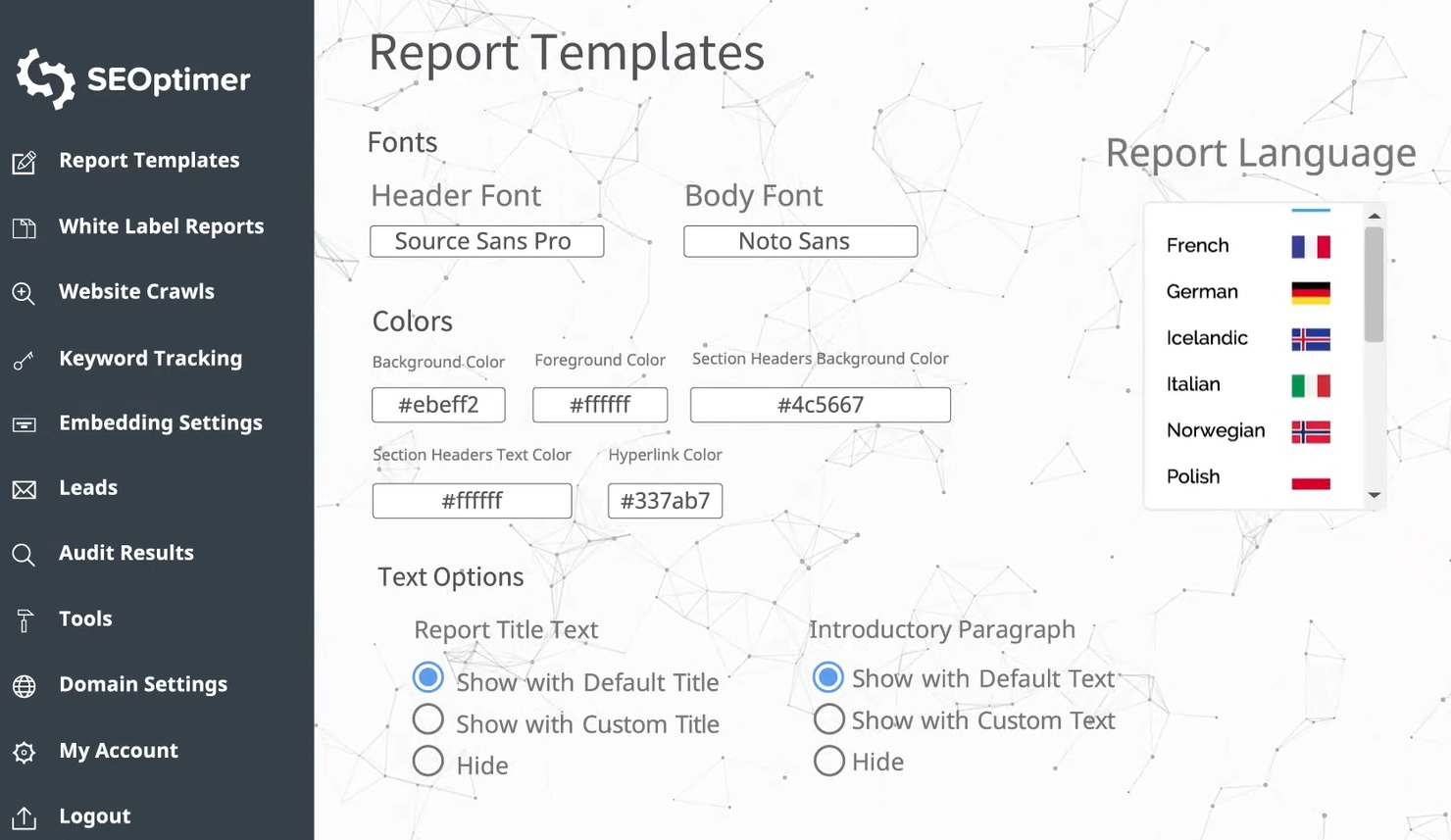
SEOptimer is a website audit and reporting tool designed for small businesses and digital marketers looking to boost their site's SEO performance. It provides detailed insights into on-page SEO, usability, and performance, using AI to identify areas for improvement and optimization.
Why I picked SEOptimer: It specializes in SEO audits, offering AI-driven analysis that helps you pinpoint technical issues and optimization opportunities. The platform's audit reports provide actionable recommendations to improve your site's SEO health. SEOptimer's simplicity and precision make it ideal for those who need straightforward insights.
Standout features & integrations:
Features include a site audit tool that evaluates your site's SEO health, a report generator for creating professional audit reports, and a white-label option for branding the reports. These tools work together to provide a complete SEO analysis solution.
Integrations can be done through Zapier and the APIs.
Pros and Cons
Pros:
- Actionable recommendations for improvements
- Simple and straightforward interface
- Detailed SEO audit reports
Cons:
- Static audit data
- Limited advanced features for experts

AhRefs is a leading SEO toolset designed for digital marketers and SEO professionals who need to improve their online visibility. It offers robust tools for backlink analysis, keyword research, and site audits, with AI capabilities that assist in strategic decision-making and performance tracking.
Why I picked AhRefs: It provides competitor analysis, including insights into your competitors' backlink profiles and search strategies. The platform's AI-driven tools help you identify gaps in your own SEO efforts. AhRefs offers features like site explorer and keyword explorer, which enable you to monitor competitor performance and discover new keyword opportunities.
Standout features & integrations:
Features include a rank tracker that monitors your site's performance in search results, a content explorer that identifies high-performing content in your niche, and an alerts system that notifies you of significant changes in your SEO metrics.
Integrations include Google Sheets, BuzzStream and Agency Analytics.
Pros and Cons
Pros:
- Detailed backlink insights
- Effective keyword research capabilities
- Technical site audit and health monitoring tools
Cons:
- Steep learning curve for beginners
- Occasional data inaccuracy
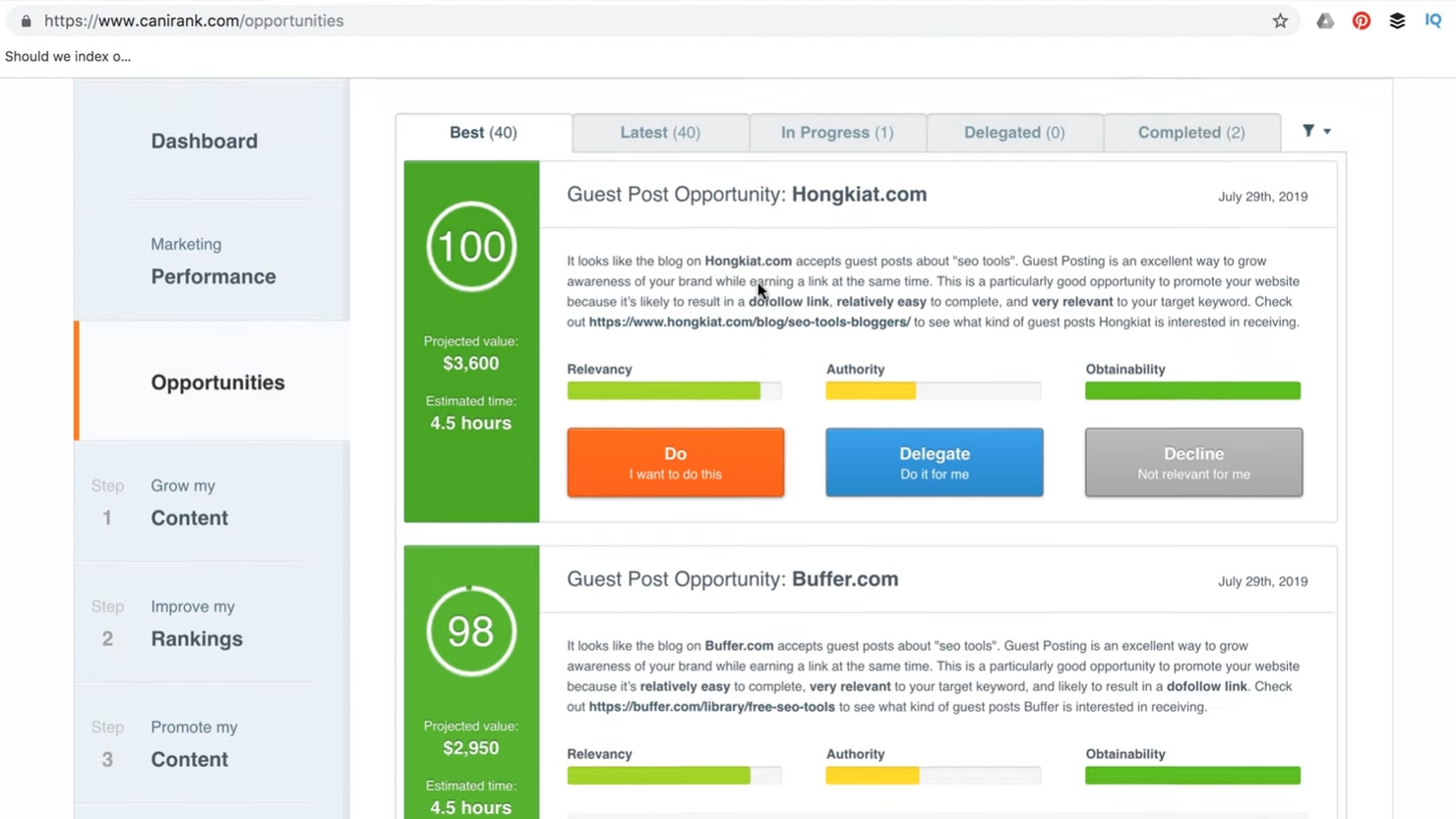
CanIRank is an AI-powered SEO tool designed for digital marketers and SEO professionals who want to improve their search rankings. It offers insights into keyword opportunities and rank prediction, using AI to provide actionable recommendations for optimizing content and strategy.
Why I picked CanIRank: It provides rank prediction, and offers AI-driven insights that help you understand your site's potential in search results. The platform's AI capabilities provide detailed analysis of your SEO strengths and weaknesses. CanIRank offers personalized action plans to enhance your strategy effectively.
Standout features & integrations:
Features include a keyword opportunity tool that identifies high-potential keywords, a competitive analysis feature that evaluates your market position, and an action plan generator that provides customized recommendations. These tools support your SEO decision-making process.
Integrations are not currently listed.
Pros and Cons
Pros:
- Detailed analysis of SEO strengths
- Personalized action plans for improvement
- Accurate rank prediction insights
Cons:
- Limited customization options for advanced users
- May require adaptation for complex strategies
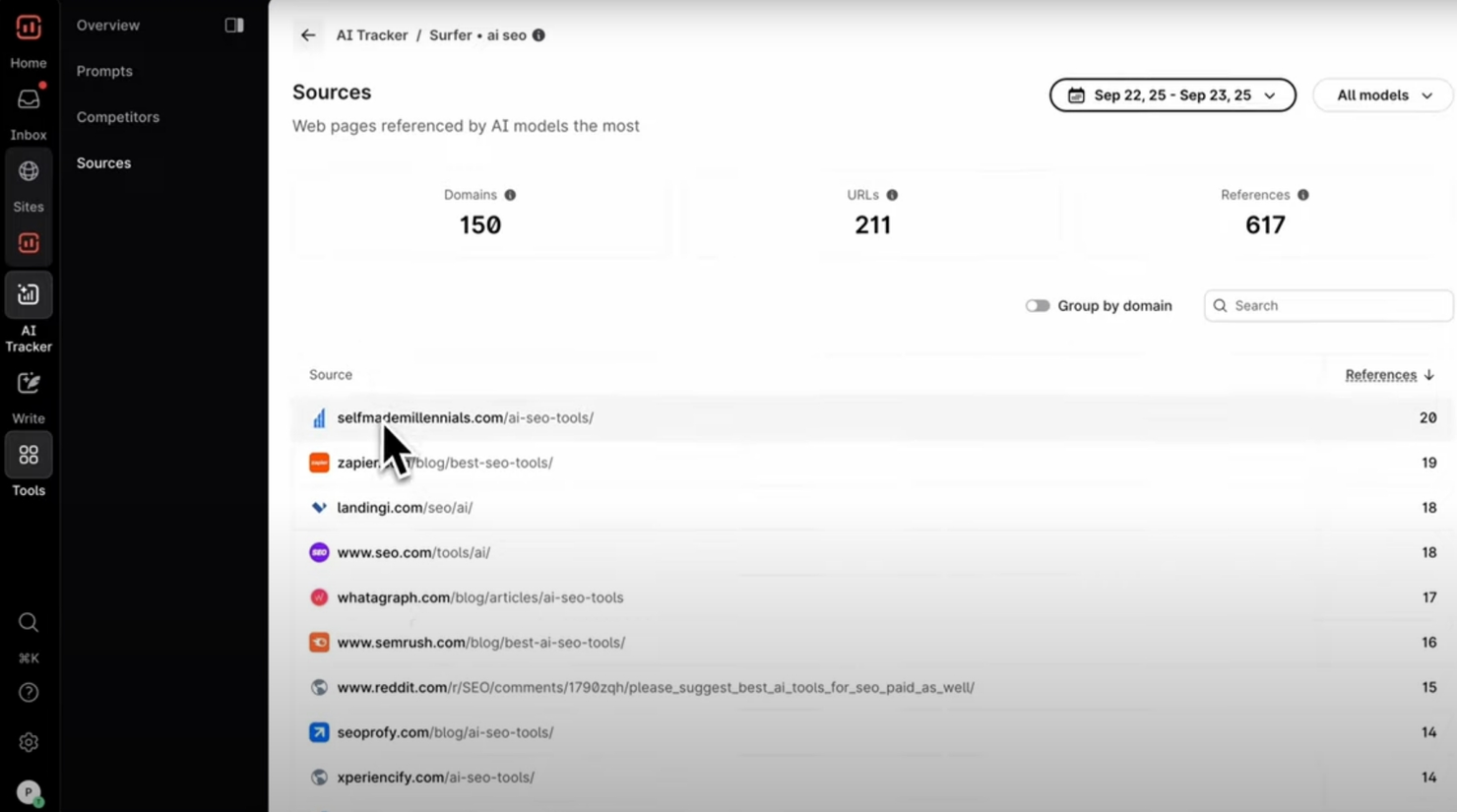
Surfer SEO is a content optimization platform tailored for marketers and SEO specialists. It enhances online visibility by using AI to optimize content and track brand presence. Its AI capabilities offer real-time feedback, helping your team create content that ranks well.
Why I picked Surfer SEO: This tool excels in content optimization, using AI to analyze competitor pages for top ranking content on your given topic and provide precise recommendations. Surfer SEO also offers an AI writing assistant that refines your content in real-time. These features make it a go-to choice for optimizing your content strategy.
Standout features & integrations:
Features include a plagiarism checker that ensures originality, an outline builder for structured content creation, and collaboration features that support teamwork. Its AI features include a content editor that analyzes your text for keyword usage and structure and provides a content score for users to optimize against. The score is based on competitor keywords, with the ability to filter by unused keywords or heading suggestions.
Integrations include Google Docs, WordPress, Semrush, Google Analytics, Contentful, and White Label.
Pros and Cons
Pros:
- Detailed keyword analysis
- Real-time content optimization
- User-friendly interface
Cons:
- Pricing may deter small businesses
- Learning curve for new users

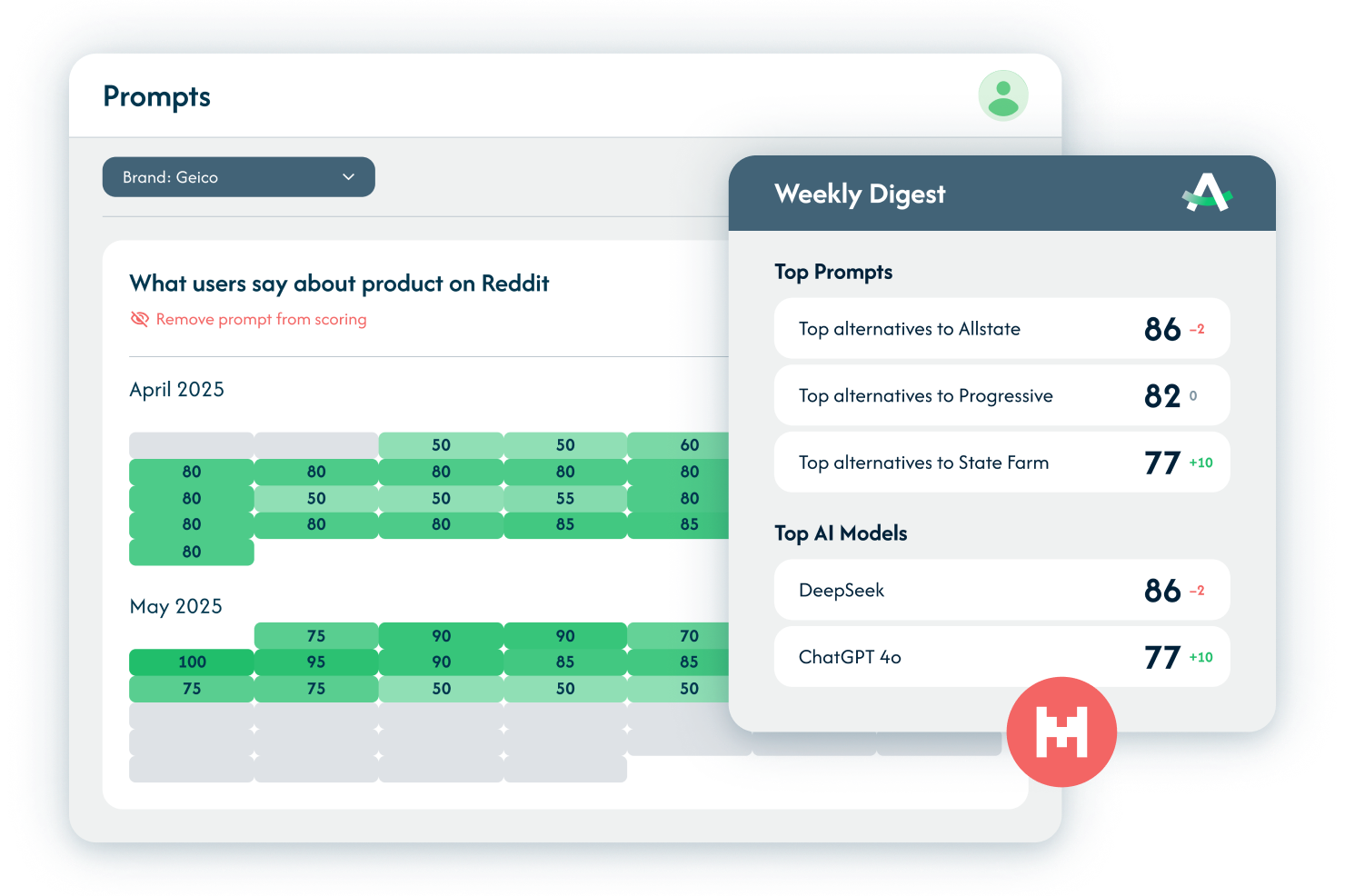
For businesses striving to enhance their digital presence, Aicarma offers an innovative approach to optimizing brand visibility within AI-generated content. Tailored for marketing professionals and business owners, it enables you to track and improve how AI presents your brand across popular platforms. By addressing the challenge of maintaining a positive and competitive image in AI responses, Aicarma supports your efforts to connect with ready-to-buy customers.
Why I Picked Aicarma
I picked Aicarma because it excels in providing actionable insights into how your brand is perceived in AI-generated content, which is crucial for an effective SEO strategy. Its Generative Engine Optimization (GEO) tools are particularly noteworthy, offering daily visibility scores that help you gauge your brand's presence across multiple large language models (LLMs). This feature, combined with comprehensive competitive analysis, allows you to understand and refine your content strategy, ensuring your brand stands out in AI responses.
Aicarma Key Features
In addition to its strong focus on brand visibility, I also found several other features that make Aicarma a compelling choice for AI SEO tools:
- Brand Reputation Management: Understand how your brand is portrayed in AI responses and make necessary adjustments.
- Messaging & Tone Analysis: Track whether key marketing messages are reflected in AI summaries to maintain brand consistency.
- Identify Opportunities/Risks: Discover positive mentions to leverage or negative representations to address for proactive reputation management.
- Weekly AI Visibility Reports: Receive email digests summarizing your brand's weekly performance, helping you stay informed and make data-driven decisions.
Aicarma Integrations
Native integrations are not currently listed by Aicarma.
Pros and Cons
Pros:
- Includes competitive AI response analysis
- Provides daily AI visibility scores
- Tracks brand visibility across LLMs
Cons:
- Custom reporting options not specified
- No native integrations listed


WordLift is an AI-powered SEO tool designed for content creators and digital marketers focused on enhancing their website's semantic search capabilities. It helps users structure their content for better search engine understanding, using AI to improve content visibility and relevance.
Why I picked WordLift: WordLift specializes in semantic SEO, using AI to enrich your content with structured data and linked open data. Its AI-driven capabilities support the creation of a knowledge graph that strengthens your site’s visibility in search results. The platform also includes tools for entity recognition and content enrichment, both essential for improving performance in semantic search. These features make it a valuable tool for improving your site's SEO with a focus on semantic search.
Standout features & integrations:
Features include a knowledge graph builder that enhances content relationships, an entity recognition tool that identifies key topics, and a content enrichment feature that improves search visibility.
Integrations include WordPress, WooCommerce, Google Looker Studio, Microsoft Power Automate, and Zapier.
Pros and Cons
Pros:
- Rich schema markup for search engines
- Improves semantic search visibility
- Automated internal linking
Cons:
- Pricing often too heavy for small blogs or fledgling sites
- Slight learning curve for semantic-SEO
Other AI SEO Tools
Here are some additional AI SEO tools options that didn’t make it onto my shortlist, but are still worth checking out:
- Search Atlas
For backlink analysis
- Frase IO
For AI content briefs
- Rankprompt
For prompt-based SEO
- Peec AI
For AI keyword analysis
- Eldil AI
For predictive analytics
- Outranking
For AI content optimization
- NEURONwriter
For focus on "human-like" content
- INK
For AI-powered editing
- Keyword Insights
For keyword clustering
- Serpstat AI Content Tools
For AI content analysis
- BrandWell
For scaling content
- Advanced Web Ranking
For global ranking
- BrightEdge
For enterprise SEO
- BuzzSumo
For content discovery
- SE Ranking
For rank tracking
- MarketMuse
For content strategy
- Labrika
For site performance
- Writesonic
For AI writing assistance
- Moz
For beginner-friendly SEO analytics
- Koala AI
For AI content generation
- Rankability
For local SEO
- Indexly
For AI-driven indexing
- Alli AI
For automated SEO
- RankIQ
For niche keywords
- Keyworldly
For keyword suggestions
- SEOpital
For site audits
- AirOps
For AI-powered insights
- Goodie
For user-friendly interface
- seoClarity
For data-driven insights


How I Evaluate AI SEO Tools
Every tool on this list has to deliver real AI value—not just wrap a chatbot around a keyword database, but actually change how you build briefs, spot content gaps, or fix technical issues. I split my evaluation into core functionality a tool needs to qualify and differentiating factors that set one option apart from another.
Core Functionality (Table Stakes For This List)
When I'm selecting tools for my list, I rank each one on a scale from 0 (does not offer the functionality) to 5 (excels in this area) for each core functionality listed below. Then, I calculate the tool's total score into a percentage. Each tool needs to achieve a minimum total score of 65% to be considered for inclusion.
- AI-Powered Keyword Research: I evaluate whether the tool can cluster keywords by intent and semantic relevance, not just spit out volume and difficulty numbers.
- AI Content Optimization: Each tool should score content against live SERP data—think NLP entity coverage and heading suggestions, not basic keyword density checks.
- Automated Technical SEO Audits: I look for AI-prioritized issue detection that flags what to fix first based on estimated impact, not just a raw list of crawl errors.
- Generative Content Creation: The tool should produce usable SEO drafts, briefs, or meta tags aligned to target keywords—tools like Surfer and Jasper approach this differently.
- SERP & Competitor Analysis: I check whether the tool surfaces content gaps and intent shifts by analyzing what's ranking, not just who's ranking.
- Generative Search Optimization: Visibility in AI search experiences matters now, so I look for tracking and optimization features tied to AI Overviews, ChatGPT, and Perplexity.
Once I have a list of tools that meet the criteria, I consider what sets each platform apart.
Differentiating Factors (What Sets Vendors Apart)
Here's how I compare and contrast different vendors:
Standout Features
Content refresh detection matters a lot for teams managing large blogs. I look for tools that automatically flag decaying pages and prioritize them by traffic recovery potential. Workflow automation agents are another big differentiator—platforms like Surfer and SE Ranking are building AI agents that handle entire research-to-publish pipelines with minimal human input. I also evaluate internal linking automation, which can save hours of manual work across sites with hundreds of pages.
Beyond Features
Data freshness is a major differentiator I evaluate. AI recommendations are only as good as the SERP and keyword data behind them, so I check how often each tool updates its index. AI model transparency also matters—I want to know whether generated content has hallucination guardrails and human review options before anything goes live. Integration ecosystem is the other factor I weigh heavily. If a tool can't connect to your CMS, Google Search Console, and content workflow tools, it creates friction that slows down the very processes AI is supposed to speed up.
How to Choose AI SEO Tools
It’s easy to get bogged down in long feature lists and complex pricing structures. To help you stay focused as you work through your unique software selection process, here’s a checklist of factors to keep in mind:
| Factor | What to Consider |
|---|---|
| Scalability | Will the tool grow with your team? Consider user limits or data capacity. Ensure the solution can handle increased traffic and content as you expand. |
| Integrations | Does it connect with your existing systems? Check compatibility with platforms like Google Analytics, WordPress, or CRM tools to ensure seamless data flow. |
| Customizability | Can you tailor the tool to your workflow? Look for customizable dashboards or reporting features that align with your specific needs. |
| Ease of use | Is the interface intuitive? A steep learning curve can slow down adoption. Look for tools with user-friendly designs that require minimal training. |
| Implementation and onboarding | How quickly can you get started? Evaluate the setup process, availability of tutorials, and support to ensure a smooth transition for your team. |
| Cost | Does the pricing align with your budget? Compare costs across vendors, considering the features offered at each price point to find the best value. |
| Security safeguards | Are your data and privacy protected? Ensure the tool complies with industry standards and offers encryption and access controls to keep your data safe. |
| Support availability | Will you have help when needed? Look for 24/7 support options, and consider the quality and accessibility of customer service provided by the vendor. |
What Are AI SEO Tools?
AI SEO tools are software solutions that leverage artificial intelligence to optimize websites for search engines. These tools are commonly used by digital marketers, SEO specialists, and content creators to improve search rankings and drive organic traffic. Automated keyword analysis, content optimization, and predictive analytics help users identify opportunities and refine strategies. Overall, these tools enhance efficiency and effectiveness in SEO efforts by providing data-driven insights and actionable recommendations.
Features
When selecting AI SEO tools, keep an eye out for the following key features:
- Keyword analysis: Uses AI to identify high-potential keywords, helping you target relevant search terms efficiently.
- Content optimization: Provides AI-driven recommendations to enhance content quality and align with search engine criteria.
- Predictive analytics: Offers insights into future search trends, allowing you to adjust strategies proactively.
- Automated reporting: Generates detailed reports on SEO performance, saving time and providing clear insights.
- Competitive analysis: Uses AI to evaluate competitors' strategies, helping you identify opportunities for improvement.
- Semantic SEO: Enhances content with structured data to improve search visibility and relevance.
- AI content generation: Automates the creation of content, maintaining quality while increasing output.
- Real-time monitoring: Tracks SEO performance continuously, enabling quick adjustments to strategies.
- Link building automation: Identifies and builds backlinks using AI, improving your site's authority.
- Data visualization: Provides easy-to-understand visual insights into SEO metrics, aiding in informed decision-making.
Benefits
Implementing AI SEO tools provides several benefits for your team and your business. Here are a few you can look forward to:
- Enhanced efficiency: AI automates repetitive tasks like keyword research and reporting, freeing up your team to focus on strategy.
- Improved accuracy: AI-driven insights reduce human error, offering more precise data for decision-making.
- Scalability: Automated content generation allows your team to produce more content without compromising quality.
- Proactive strategy adjustments: Predictive analytics help you anticipate trends and adjust strategies before competitors.
- Competitive edge: AI-powered competitor analysis reveals opportunities to outperform your rivals in search rankings.
- Better content alignment: AI content optimization ensures your articles meet search engine guidelines, boosting visibility.
- Resource savings: Automation reduces the need for manual intervention, saving time and reducing operational costs.
Costs & Pricing
Selecting AI SEO tools requires an understanding of the various pricing models and plans available. Costs vary based on features, team size, add-ons, and more. The table below summarizes common plans, their average prices, and typical features included in AI SEO tools solutions:
Plan Comparison Table for AI SEO Tools
| Plan Type | Average Price | Common Features |
|---|---|---|
| Free Plan | $0 | Basic keyword research, limited content analysis, and minimal reporting. |
| Personal Plan | $5-$25/user/month | Advanced keyword research, content optimization, and basic competitor analysis. |
| Business Plan | $30-$75/user/month | Full SEO audits, real-time data updates, and enhanced reporting capabilities. |
| Enterprise Plan | $80-$150/user/month | Customizable features, premium support, and detailed analytics dashboards. |
AI SEO Tools FAQs
Here are some answers to common questions about AI SEO tools:
How do AI SEO tools improve content strategy?
AI SEO tools improve content strategy by analyzing search trends and user behavior to provide data-driven insights. They suggest relevant keywords and content topics based on current market demands. For example, if your team is targeting a niche market, AI can identify content gaps and opportunities to create targeted articles. These tools also help you optimize existing content for better performance, ensuring your strategy aligns with search engine algorithms. By focusing on data, you can refine your approach and achieve better results.
Can AI SEO tools replace manual SEO tasks?
Yes, AI SEO tools can automate many manual SEO tasks, such as keyword research, content optimization, and performance tracking. This automation frees up your team to focus on strategic planning and creative work. However, while these tools enhance efficiency, they don’t replace the need for human oversight. You’ll still need to interpret the data and make strategic decisions based on insights. AI can handle repetitive tasks, but human expertise is crucial for understanding context and making informed choices.
How accurate are the recommendations from AI SEO tools?
AI SEO tools use machine learning to analyze large datasets and generate recommendations, but accuracy can vary. It’s smart to review the suggested actions before applying them, as no tool fully understands your brand’s context or audience. Combining AI insights with human expertise usually leads to stronger SEO results. Regularly test and monitor outcomes for the best impact.
What’s Next:
If you're in the process of researching AI SEO tools, connect with a SoftwareSelect advisor for free recommendations.
You fill out a form and have a quick chat where they get into the specifics of your needs. Then you'll get a shortlist of software to review. They'll even support you through the entire buying process, including price negotiations.