
Semrush Review: Pros, Cons, Features & Pricing
I spend a lot of time with marketing tools, so I dug into Semrush to see what it really offers—and to help you decide if it’s right for you.

We review tools independently, and commissions help fund our testing. See our transparency policy, our methodology, or suggest a tool.
Semrush is a marketing analytics software built for teams that need to research keywords, track rankings, audit site health, and analyze competitors across organic and paid channels. I'd consider it over Ahrefs if your team needs more than SEO data—Semrush covers paid search research, content planning, and market analysis alongside its organic tools, while Ahrefs stays narrowly focused on backlinks and organic search. That broader scope makes it a stronger fit for marketers working across multiple channels.
Semrush Evaluation Summary
4.5/5
- From $139/month
- 14-day free trial
Why Trust Our Software Recommendations
6,700+
Reviews
20
Industry experts
16+
Evaluation factors
14
Years
Our team has been testing and reviewing software since 2012. As marketing leaders ourselves, we know how difficult—and important—it is to choose the right software.
For this guide, we evaluated tools using hands-on testing and independent research, scoring tools using our selection criteria.
Our reviews reflect our human editorial judgment, not a sales pitch.
Expert reviewers:
 Gui DrusinaCreative Director
- Shriya GhateSenior Marketing Lead
 Amanda JacquesMarketing Ops Leader

Semrush Overview
As a digital marketing software, Semrush makes it easier to tackle critical tasks like keyword research, competitor analysis, and domain insights—core pillars of any strong digital strategy. It gives you the kind of data and visibility you need to make smarter marketing decisions and stay ahead of the competition.
Pros
- You get comprehensive keyword research tools that boost your SEO strategy.
- Competitive analysis features help your team stay ahead in the market.
- The platform provides detailed reports that enhance your decision-making.
Cons
- The interface can feel overwhelming for new users.
- It has a steep learning curve compared to simpler tools.
- Semrush's pricing may be on the higher side for small businesses or startups.
Is Semrush Right For Your Needs?
Who Would be a Good Fit for Semrush?
Semrush is perfect for teams looking for marketing software that supports their digital strategy, whether it's for e-commerce, content creation, or advertising. SEO specialists and content marketers will find the platform's keyword research and competitive analysis tools especially invaluable for optimizing online presence. Whether you’re part of a small agency or a large corporation, Semrush helps you make informed decisions with its detailed reporting capabilities, ensuring your strategies are data-driven and effective.
- E-commerce BusinessesSemrush excels in helping your e-commerce team optimize product listings and drive traffic through effective keyword strategies.
- Content CreatorsYour content team can leverage Semrush’s insights to craft engaging, SEO-friendly articles that resonate with your audience.
- Advertising AgenciesAgencies benefit from Semrush’s competitive analysis tools, enabling you to design campaigns that outperform rivals.
- SEO SpecialistsYou can rely on Semrush for comprehensive keyword research and tracking, crucial for improving search engine rankings.
- Marketing DepartmentsSemrush offers detailed analytics and reports, empowering your team to refine strategies and demonstrate ROI.
- Small AgenciesEven with limited resources, your agency can use Semrush to deliver high-quality SEO and marketing services efficiently.
Who Would be a Bad Fit for Semrush?
Small businesses with limited digital marketing needs might not find Semrush suitable due to its price, complexity, and learning curve. If your team lacks the time or resources to fully utilize its advanced features, you may not see the return on investment. Teams focused solely on basic social media marketing or those requiring only simple analytics might feel overwhelmed by Semrush’s extensive capabilities.
- Local ShopsYour local business with minimal online presence might find Semrush’s comprehensive features unnecessary.
- FreelancersIf you’re a freelancer with limited SEO needs, the platform’s depth could be overkill.
- Non-Digital TeamsTeams focused on traditional marketing methods won’t benefit from Semrush’s digital analytics tools.
- Basic Social MediaIf your primary focus is on simple social media posting, Semrush’s extensive SEO tools might be excessive.
- Small NonprofitsNonprofits with limited budgets could find it hard to justify the cost of Semrush’s advanced features.
- Entry-Level MarketersBeginners in digital marketing may struggle with Semrush’s advanced setup and analytics.
How We Test & Score Tools
We’ve spent years building, refining, and improving our software testing and scoring system. The rubric is designed to capture the nuances of software selection and what makes a tool effective, focusing on critical aspects of the decision-making process.
Below, you can see exactly how our testing and scoring works across seven criteria. It allows us to provide an unbiased evaluation of the software based on core functionality, standout features, ease of use, onboarding, customer support, integrations, customer reviews, and value for money.
Core Functionality (25% of final scoring)
The starting point of our evaluation is always the core functionality of the tool. Does it have the basic features and functions that a user would expect to see? Are any of those core features locked to higher-tiered pricing plans? At its core, we expect a tool to stand up against the baseline capabilities of its competitors.
Standout Features (25% of final scoring)
Next, we evaluate uncommon standout features that go above and beyond the core functionality typically found in tools of its kind. A high score reflects specialized or unique features that make the product faster, more efficient, or offer additional value to the user.
We also evaluate how easy it is to integrate with other tools typically found in the tech stack to expand the functionality and utility of the software. Tools offering plentiful native integrations, 3rd party connections, and API access to build custom integrations score best.
Ease of Use (10% of final scoring)
We consider how quick and easy it is to execute the tasks defined in the core functionality using the tool. High scoring software is well designed, intuitive to use, offers mobile apps, provides templates, and makes relatively complex tasks seem simple.
Onboarding (10% of final scoring)
We know how important rapid team adoption is for a new platform, so we evaluate how easy it is to learn and use a tool with minimal training. We evaluate how quickly a team member can get set up and start using the tool with no experience. High scoring solutions indicate little or no support is required.
Customer Support (10% of final scoring)
We review how quick and easy it is to get unstuck and find help by phone, live chat, or knowledge base. Tools and companies that provide real-time support score best, while chatbots score worst.
Customer Reviews (10% of final scoring)
Beyond our own testing and evaluation, we consider the net promoter score from current and past customers. We review their likelihood, given the option, to choose the tool again for the core functionality. A high scoring software reflects a high net promoter score from current or past customers.
Value for Money (10% of final scoring)
Lastly, in consideration of all the other criteria, we review the average price of entry level plans against the core features and consider the value of the other evaluation criteria. Software that delivers more, for less, will score higher.
Core Features
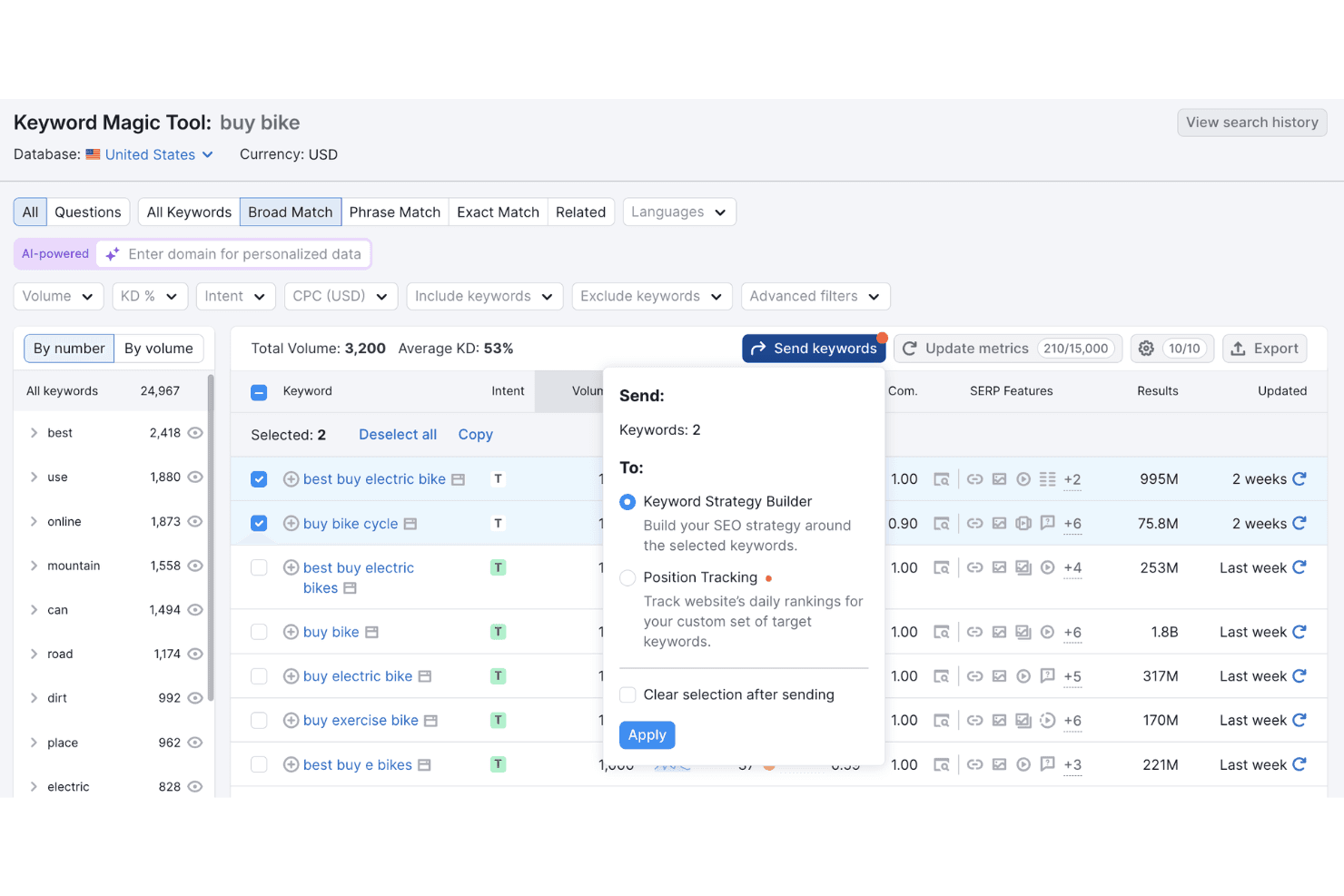
Keyword Research
Dive deep into keyword data to find the best opportunities for your SEO strategy. This feature helps your team identify high-traffic keywords that boost your site's visibility.
Site Audit
Analyze your website's health and uncover issues that might be affecting performance. Use this tool to ensure your site is optimized for search engines and user experience.
Position Tracking
Monitor your keywords' rankings on search engines with precision. This keeps your team informed about how your site performs in search results over time.
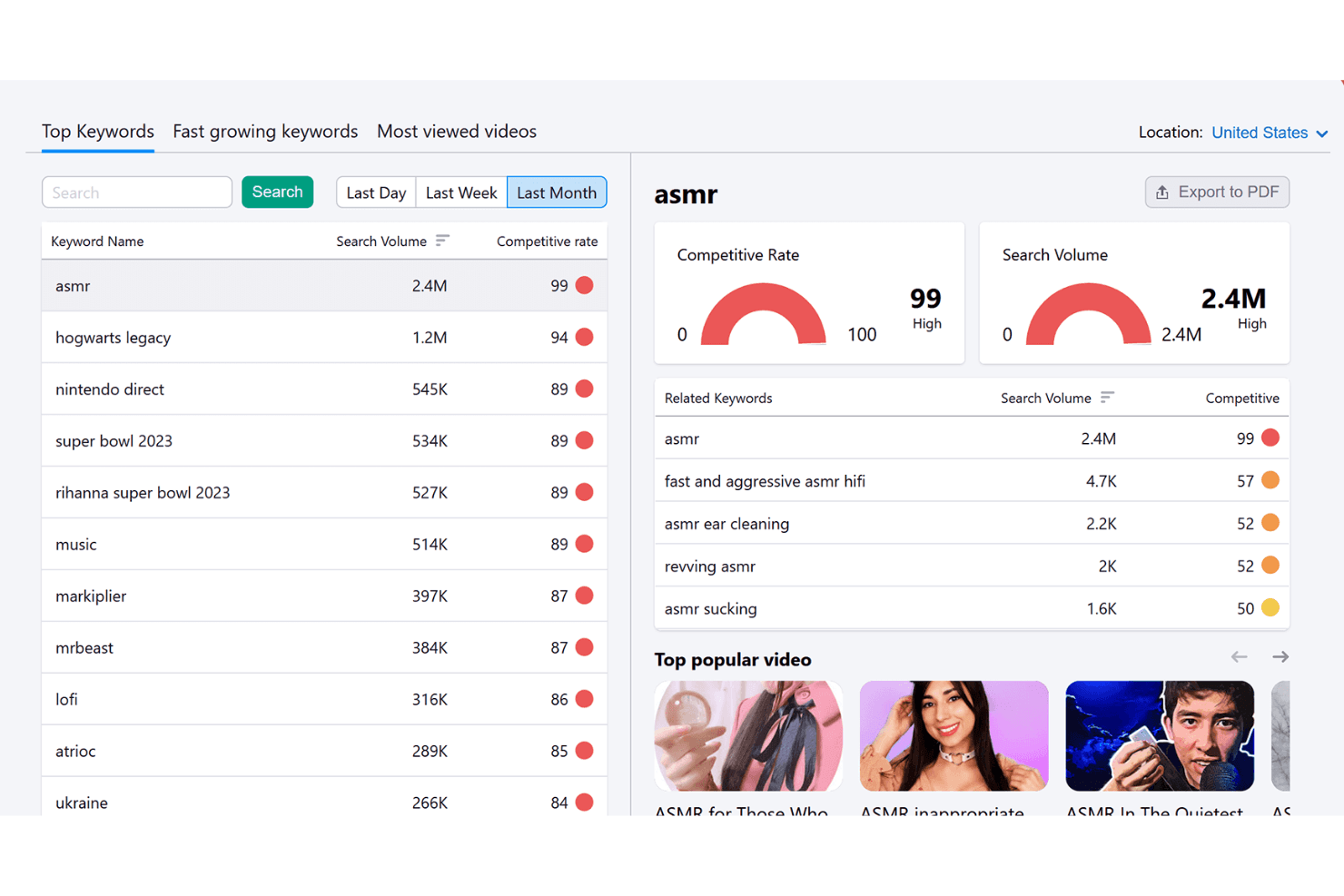
Traffic Analytics
Gain insights into your competitors' traffic sources and user behavior. Semrush's marketing measurement tool lets your team understand market trends and refine your strategies accordingly.
Content Analyzer
Evaluate your content's effectiveness and discover opportunities for improvement. You can use this tool to enhance your content marketing efforts and boost engagement.
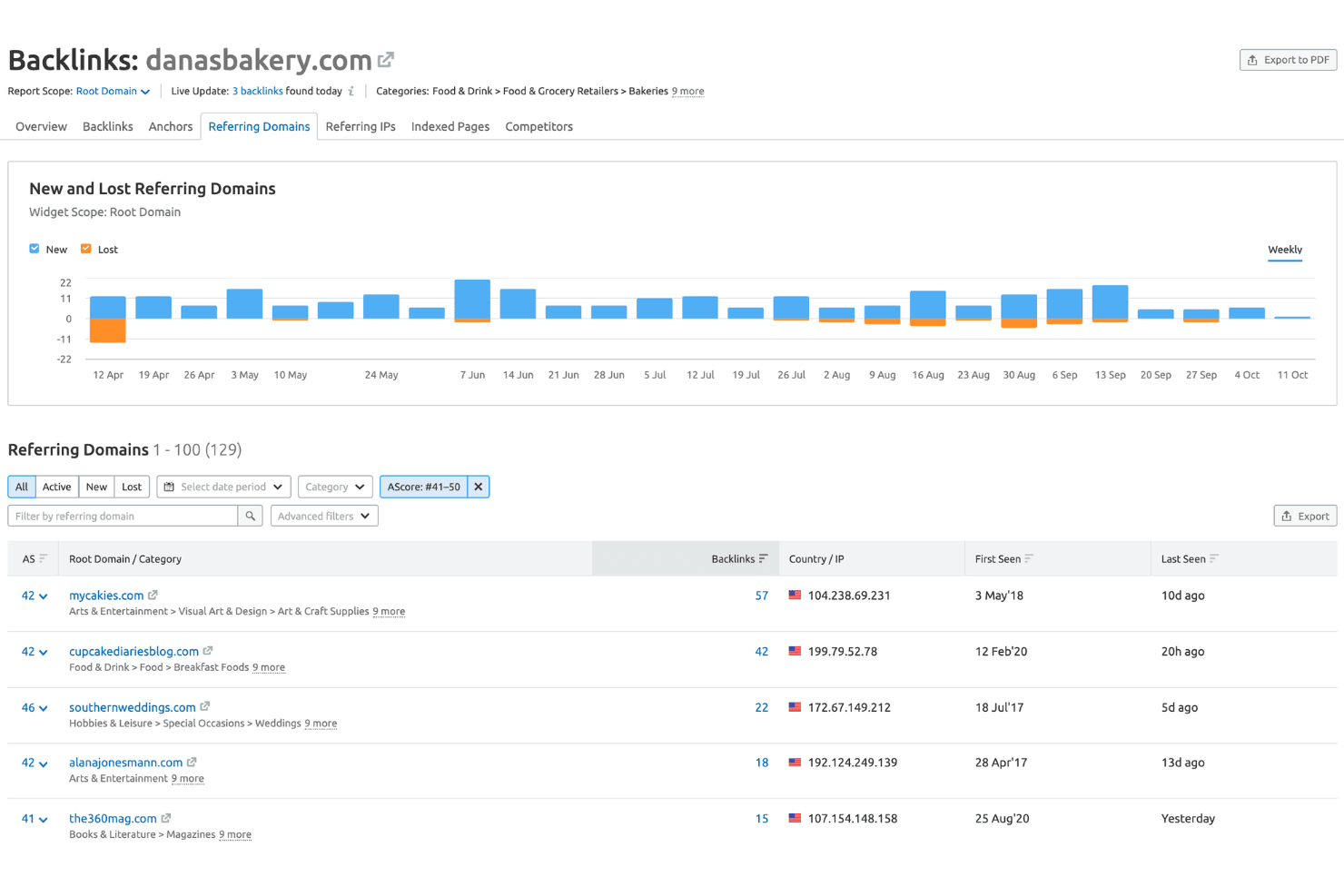
Backlink Analysis
Examine your site's backlink profile and identify potential areas for growth. This helps your team improve domain authority and search rankings.
PPC Advertising
Semrush offers features for managing and optimizing pay-per-click advertising campaigns, improving ad performance and ROI.
Ease of Use
Semrush offers a robust set of tools, but its interface can feel overwhelming, especially for newcomers. Navigating through its extensive features requires some time and patience, which can be a hurdle for your team if you’re seeking quick insights. However, once familiar, you gain access to a wealth of data that drives your marketing efforts. Its organized dashboards and comprehensive analytics make it a powerful tool for those willing to invest the time to learn it.
Integrations
Integrations include Google Analytics, Google Search Console, HubSpot, Ahrefs, Moz, CallRail, Facebook Ads, LinkedIn Ads, Slack, Asana, Jira, and Zapier.
Semrush Specs
- API: Yes
- Audience Targeting: Yes
- Brand Management: Yes
- Conversion Tracking: Yes
- Dashboard: Yes
- Data Export: Yes
- Data Import: Yes
- Data Visualization: Yes
- External Integrations: Yes
- Keyword Tracking: Yes
- Link Tracking: Yes
- Marketing Automation: Yes
- Multi-Account: Yes
- Multi-User: Yes
- Notifications: Yes
- Social-Media Integration: Yes
Alternatives to Semrush


Semrush FAQs
What's Next
Subscribe to the CMO newsletter for more insights on the latest marketing tools, industry thought leadership, and expert advice.