
22 Best AI Competitor Intelligence Platforms in 2026

AI Competitor Intelligence Platforms Shortlist
Here’s my shortlist of the best AI competitor intelligence platforms:


AI competitor intelligence platforms are specialized competitive intelligence tools that use artificial intelligence to gather, analyze, and deliver insights about your competitors’ strategies, activities, and market positioning. If you’re searching for ways to stay ahead in a crowded market, these AI tools support competitor analysis, market research, and tracking market share using large volumes of relevant data points. These platforms help teams with summarization, identify opportunities for optimization and partnerships, and enable faster data-driven decisions that lead to a stronger competitive advantage. Whether you’re part of a large organization or one of many small businesses competing in your space, the right competitive advantage platform can support smarter, more strategic decisions. This list will help you quickly compare the top AI competitor intelligence platforms so you can find the best fit for your team’s needs and goals.
Why Trust Our Software Reviews
Best AI Competitor Intelligence Platform Summary
This comparison chart summarizes pricing details for my top AI competitor intelligence platform selections to help you find the best one for your budget and business needs.
| Tool | Best For | Trial Info | Price | ||
|---|---|---|---|---|---|
| 1 | Best for tracking website changes | Free plan + free demo available | From $50/month (billed annually) | Website | |
| 2 | Best for web traffic and market insights | Free trial available | From $125/month (billed annually) | Website | |
| 3 | Best for customizable competitive intelligence | 7-day free trial + free demo available | Pricing upon request | Website | |
| 4 | Best for real-time competitor tracking | Free demo available | Pricing upon request | Website | |
| 5 | Best for crowdsourced competitor insights | Free plan available | From $39/month (billed annually) | Website | |
| 6 | Best for AI-powered market intelligence | Free demo available | Pricing upon request | Website | |
| 7 | Best for organizing competitive insights | Free demo available | Pricing upon request | Website | |
| 8 | Best for automated competitor monitoring | Not available | Pricing upon request | Website | |
| 9 | Best for social media competitor analysis | Free plan + free demo available | From $99/month | Website | |
| 10 | Best for sales-focused competitive intelligence | Free plan + free demo available | From $250/month | Website |


AI Competitor Intelligence Platform Reviews
Below are my detailed summaries of the best AI competitor intelligence platforms that made it onto my shortlist. My reviews offer a detailed look at the features, capabilities, and integrations of each platform to help you find the best one for you.

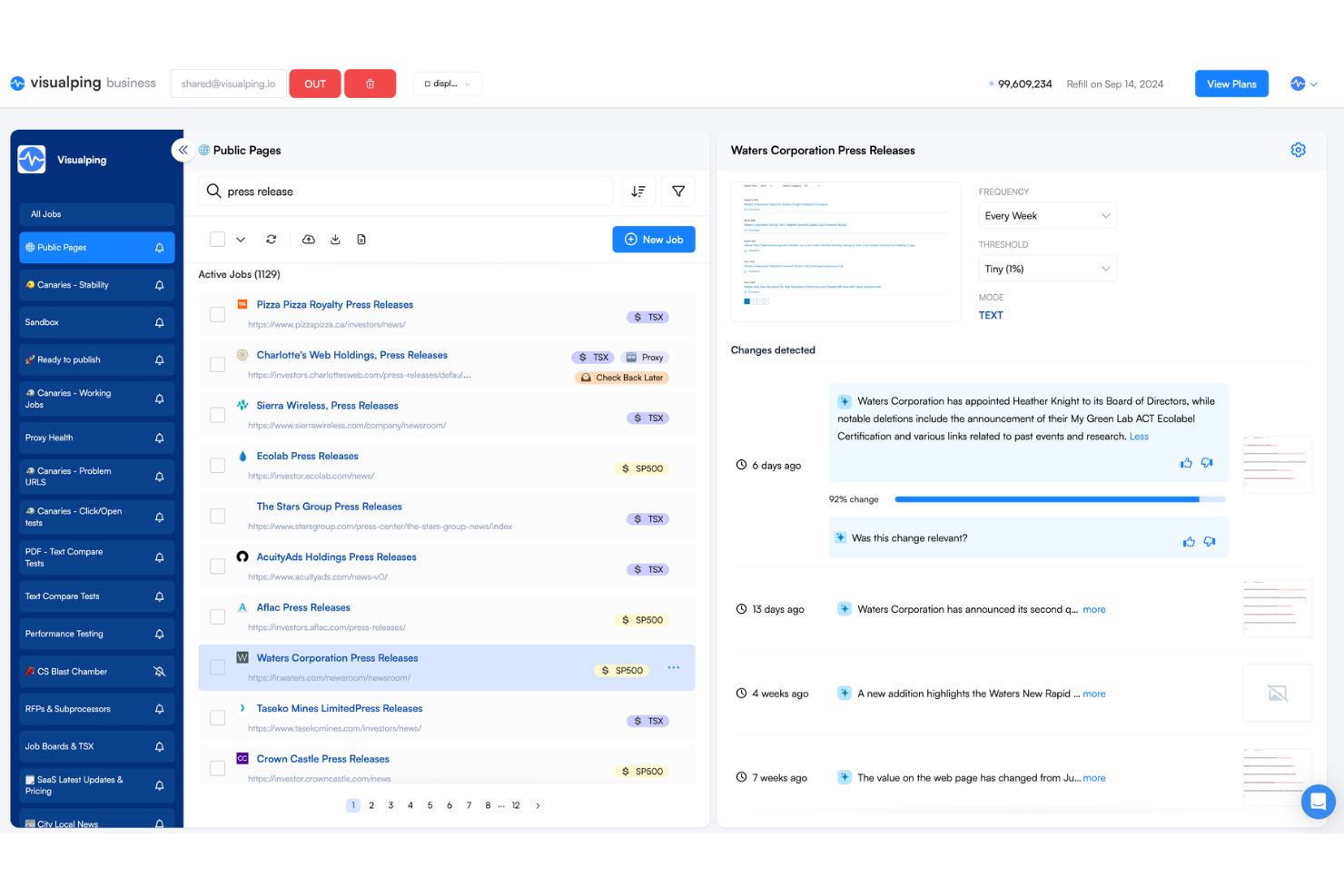
Visualping gives marketing and strategy teams a way to monitor website changes across competitors, partners, or regulatory sites. It’s especially useful for professionals who need to catch updates to pricing, product launches, or policy changes as soon as they happen. If you want to automate the process of tracking web content shifts, Visualping brings these alerts directly to your inbox or dashboard.
Who Is Visualping Best For?
Visualping fits marketing, compliance, and research teams that need automated monitoring of competitor or industry website changes.
Why I Picked Visualping
I chose Visualping because its automated website change detection is especially valuable for competitor intelligence work. The platform lets you set up custom monitors for any public web page, so you can track changes to competitor pricing, product pages, or press releases without manual effort. I like that Visualping sends instant alerts when a change is detected, making it easy to respond quickly to competitor moves. For teams that need to catch subtle or frequent updates across multiple sites, Visualping’s automation stands out as a practical solution.
Visualping Key Features
Some other features that make Visualping useful for competitor intelligence work include:
- Team management controls: Assign roles, manage permissions, and collaborate on monitoring tasks within a shared workspace.
- Change history archive: Access a detailed log of all detected changes for each monitored page, including screenshots and timestamps.
- Scheduled monitoring intervals: Set custom frequencies for checks, ranging from every 5 minutes to once a week, to match your monitoring needs.
- Email and Slack notifications: Receive instant alerts through email or Slack when a tracked page changes, so your team stays informed.
Visualping Integrations
Integrations include Slack, Microsoft Teams, Google Sheets, Webhooks, email, and a Chrome extension, with an API available for custom integrations.
Pros and Cons
Pros:
- Allows flexible monitoring intervals per page
- Sends instant alerts via Slack or email
- Offers detailed change logs with screenshots
Cons:
- Lacks AI-driven change categorization
- No built-in competitor benchmarking dashboard

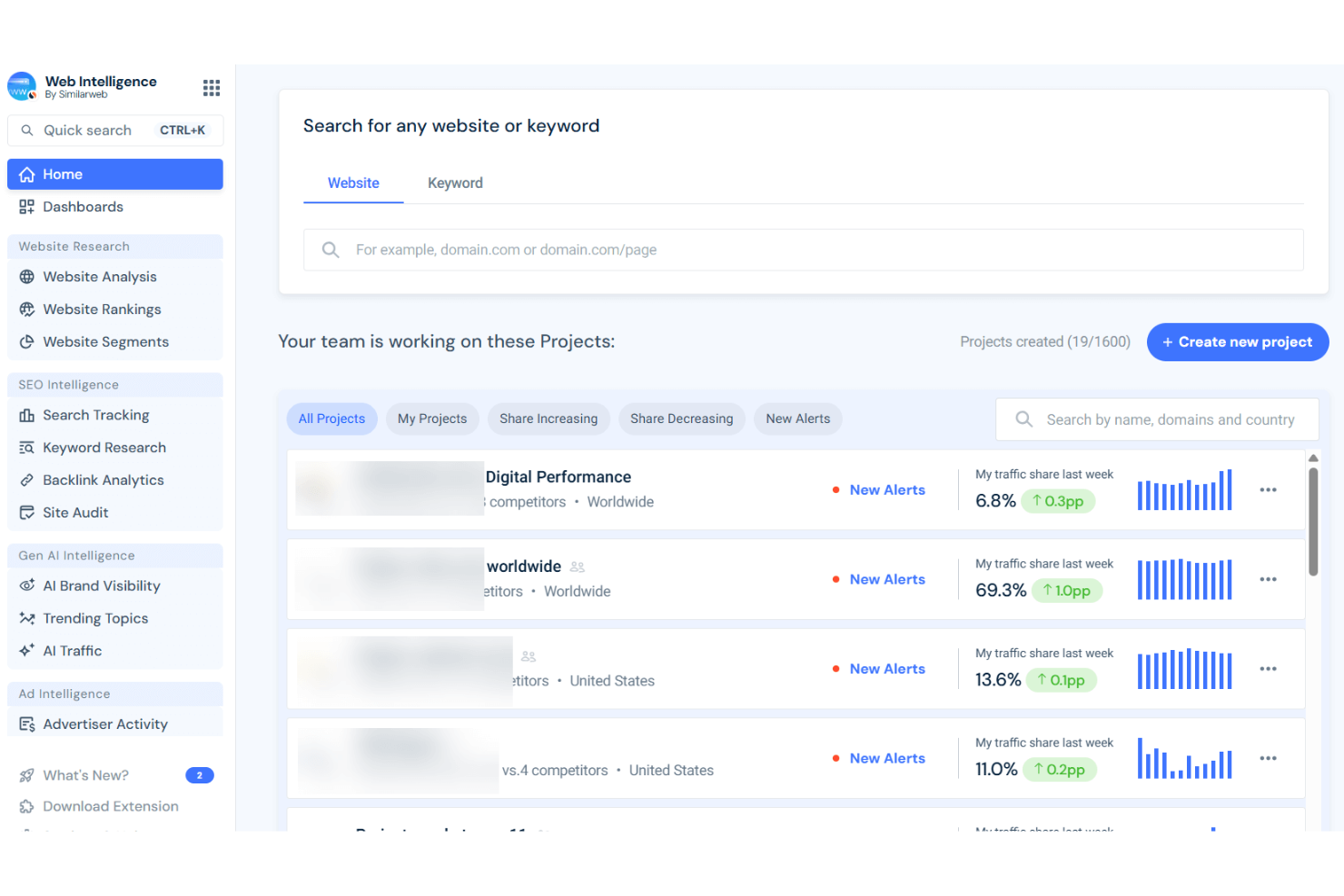
Similarweb gives marketing and growth teams a detailed view of digital traffic and competitor activity across websites and apps. It’s a strong choice for professionals who need granular web analytics, benchmarking, and audience insights to inform digital strategy. If you want to understand where your competitors get their traffic and how audiences behave online, this platform offers the data to support those decisions.
Who Is Similarweb Best For?
Similarweb is a strong fit for digital marketing and analytics teams in mid-sized to large companies that need in-depth competitor and web traffic intelligence.
Why I Picked Similarweb
What drew me to Similarweb is its ability to deliver digital intelligence that goes far beyond basic traffic stats. I picked it because you can analyze competitor websites and apps side by side, drilling into traffic sources, audience demographics, and engagement metrics in one place. The platform’s benchmarking tools let you see how your digital performance stacks up against others in your industry, which is essential for shaping competitive strategy. For anyone who needs a clear, data-driven view of the digital landscape, Similarweb’s depth and granularity set it apart.
Similarweb Key Features
Some other features that make Similarweb valuable for competitor intelligence work include:
- Keyword analysis tools: Track organic and paid keywords driving traffic to competitor sites.
- Referral traffic breakdown: See which external sites are sending visitors to your competitors.
- Industry and category rankings: View how websites and apps rank within specific industries or categories.
- Audience overlap analysis: Identify shared audiences between your site and competitors for targeting opportunities.
Similarweb Integrations
Integrations include Google Looker Studio, AWS, Snowflake, Google Cloud, Tableau, and more.
Pros and Cons
Pros:
- Detailed keyword and referral tracking
- Industry and category benchmarking tools
- Granular web and app traffic analytics
Cons:
- No built-in sentiment analysis for traffic sources
- No real-time data for all metrics

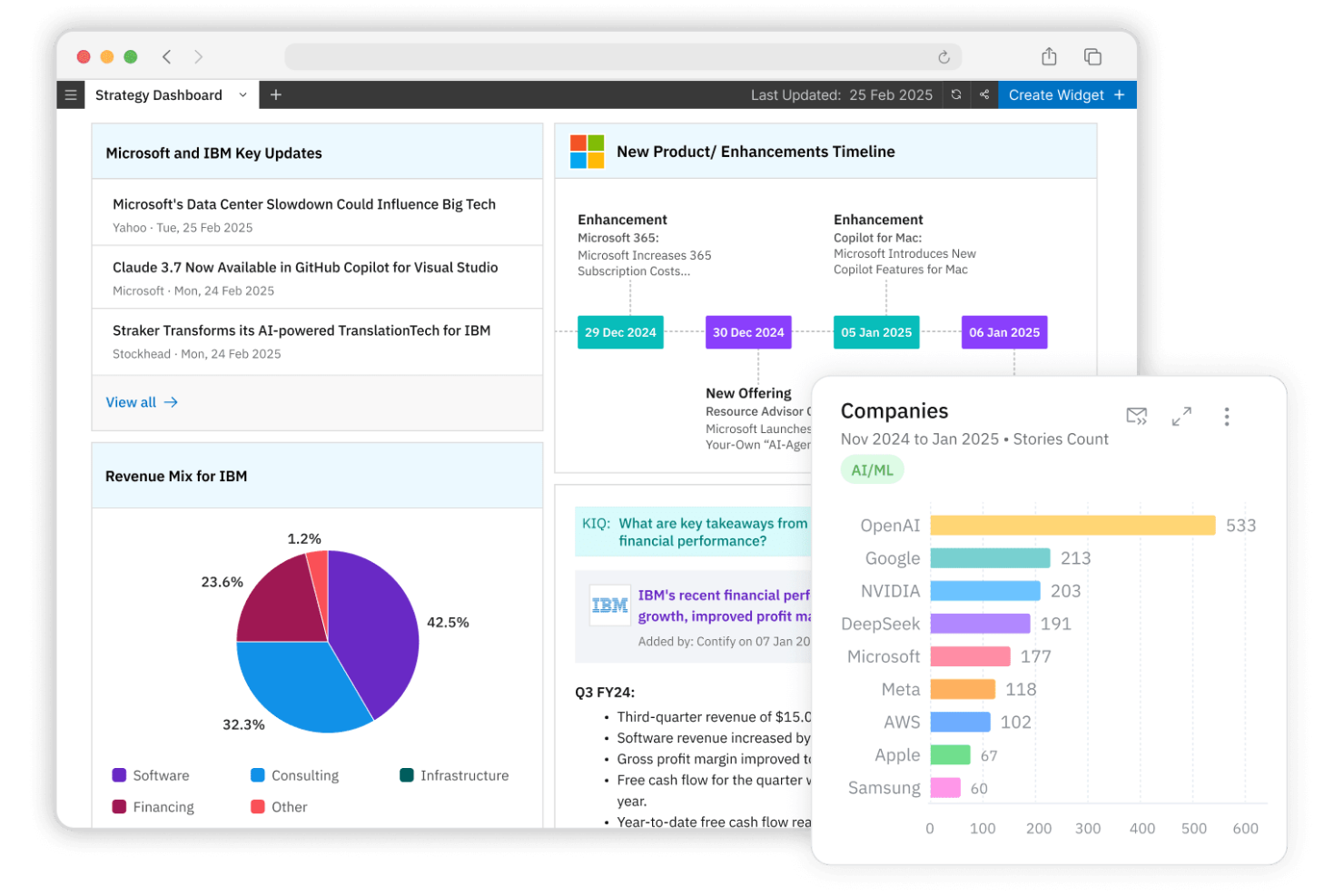
Contify offers an AI-powered platform designed for organizations that need to track competitors, markets, and industry trends in real time. It’s a strong fit for market intelligence teams, product managers, and strategy professionals who want tailored news and insights from thousands of sources. The platform helps users cut through information overload by delivering only the updates that matter to their business.
Who Is Contify Best For?
Contify is well-suited for market intelligence teams and strategy professionals in mid-sized to large enterprises that need tailored, real-time competitor and industry insights.
Why I Picked Contify
What stands out about Contify is its customizable AI-driven approach to market and competitive intelligence. I picked it because you can tailor the platform to track specific competitors, industries, or topics, ensuring you only get the insights that matter most to your business. The platform’s AI automatically filters and categorizes news, press releases, and updates from thousands of sources, so you’re not overwhelmed by irrelevant information. This level of customization is especially valuable for teams that need focused, actionable intelligence rather than generic news feeds.
Contify Key Features
In addition to its customizable AI-driven intelligence, Contify offers several other features that support competitor research and monitoring:
- Personalized dashboards: Build dashboards to organize and visualize competitor and market updates in one place.
- Automated newsletter creation: Generate and distribute curated intelligence newsletters to stakeholders directly from the platform.
- Mobile access: Access real-time intelligence and alerts through Contify’s mobile app for on-the-go monitoring.
- Integration with collaboration tools: Connect Contify with platforms like Slack and Microsoft Teams to share insights across your organization.
Contify Integrations
Integrations include Slack, Microsoft Teams, Salesforce, HubSpot, Highspot, Seismic, Showpad, Power BI, Gong, and more.
Pros and Cons
Pros:
- Supports integration with major sales enablement tools
- Real-time alerts for competitor activities
- Automated newsletters for stakeholder updates
Cons:
- No built-in sentiment analysis for news
- Occasional delays in news aggregation


Crayon is designed for marketing and product teams that need to track competitors’ digital activities in real time. The platform helps you monitor changes across websites, social media, and other online channels, making it easier to spot shifts in competitor strategy. If you want a solution that keeps you updated on market moves without manual research, Crayon is worth considering.
Who Is Crayon Best For?
Crayon suits marketing, product, and competitive intelligence teams at mid-sized to large organizations that need continuous monitoring of competitors’ digital activities.
Why I Picked Crayon
I picked Crayon because its real-time competitive intelligence tracking stands out for teams that need up-to-the-minute insights across digital channels. The platform automatically monitors competitor websites, social media, and online content, alerting you to changes as they happen. I appreciate how Crayon organizes these updates into actionable insights, making it easier to respond quickly to shifts in the market. For anyone prioritizing continuous, automated tracking of competitor activity, Crayon offers a focused and reliable solution.
Crayon Key Features
Some other features that make Crayon a strong choice for competitor intelligence include:
- Battlecard creation: Build and update sales battlecards with the latest competitive insights for your team.
- Competitor comparison dashboards: Visualize side-by-side comparisons of competitors’ digital footprints and messaging.
- Automated reporting: Schedule and deliver regular intelligence reports to stakeholders across your organization.
- Integration with CRM and sales tools: Connect Crayon with platforms like Salesforce to embed competitive insights directly into your sales workflow.
Crayon Integrations
Integrations include Salesforce, HubSpot, FreshSales, Slack, Microsoft Teams, Yammer, ClickUp, Confluence, Highspot, and more.
Pros and Cons
Pros:
- Provides customizable battlecards for sales teams
- Offers automated alerts for competitor updates
- Tracks competitor website and content changes
Cons:
- Limited historical data for certain competitors
- Some users report occasional data inaccuracies

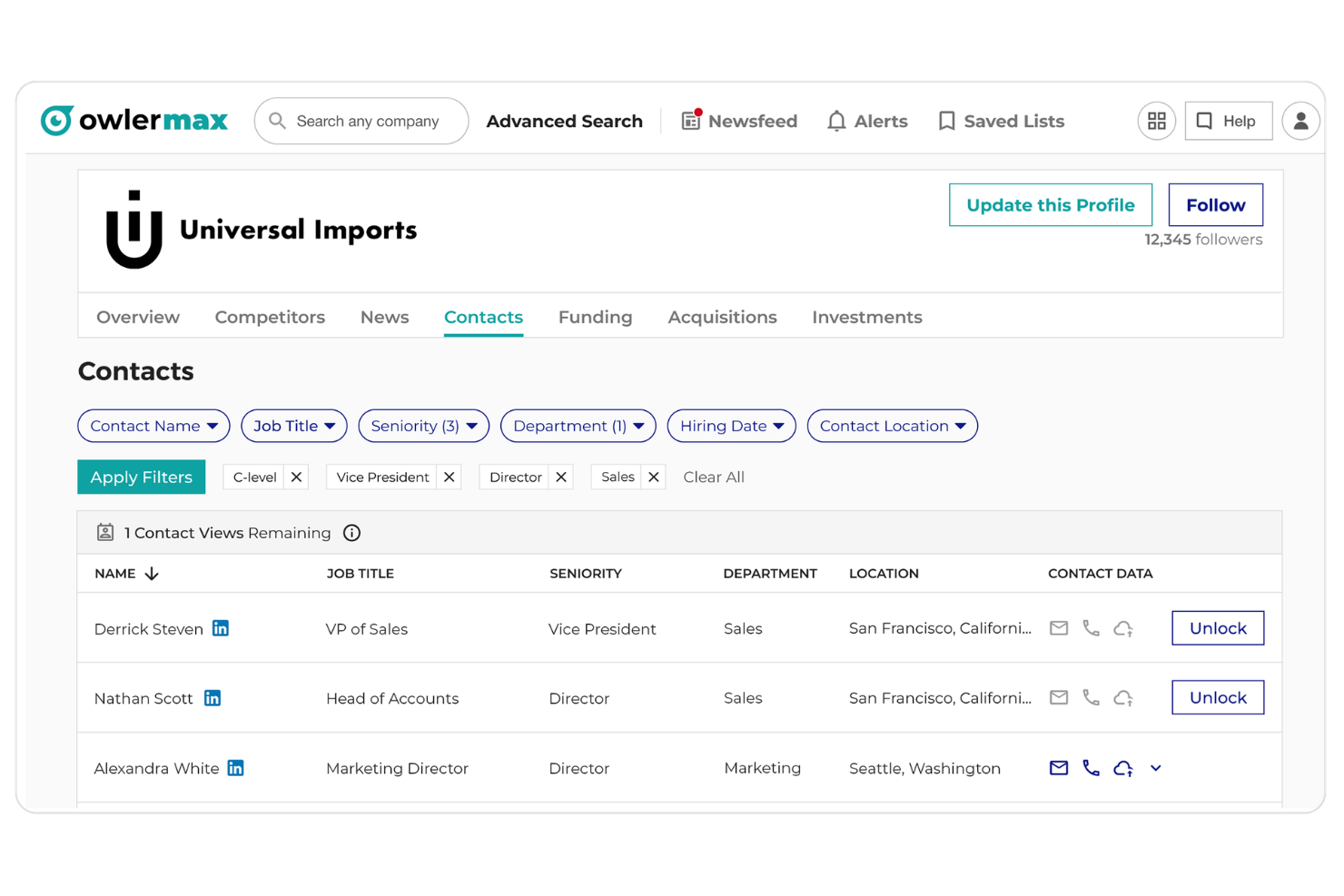
Owler gives business development and strategy teams a way to track real-time updates about competitors and industry players. It’s especially useful for professionals who need timely alerts on company news, leadership changes, and funding events. If you want to stay ahead of market shifts and quickly spot opportunities or threats, Owler brings these insights together in one platform.
Who Is Owler Best For?
Owler suits business development and sales teams at mid-sized companies that need real-time competitor and market intelligence.
Why I Picked Owler
I picked Owler because it delivers real-time competitor news and alerts, which is essential for teams that need to react quickly to market changes. The platform aggregates news, press releases, and leadership updates from thousands of sources, so you can monitor shifts as they happen. I also appreciate how Owler’s customizable alerts let you track specific companies or industries, making it easy to filter out noise and focus on what matters. For anyone who wants to stay on top of competitor moves without manual research, Owler’s real-time intelligence is a strong fit.
Owler Key Features
Some other features that make Owler useful for competitor intelligence work include:
- Company profile database: Access detailed profiles for millions of companies, including financials, employee counts, and industry classifications.
- Peer comparison tool: Compare your business against competitors on metrics like revenue, growth, and employee size.
- Community-driven data updates: Benefit from crowdsourced updates and insights contributed by a global business community.
- Custom watchlists: Build and manage lists of companies to monitor for targeted intelligence and alerts.
Owler Integrations
Integrations include Salesforce, HubSpot, Slack, Microsoft Teams, Google Chrome Extension, and more.
Pros and Cons
Pros:
- Customizable watchlists for targeted monitoring
- Offers crowdsourced company data and updates
- Delivers real-time news alerts on competitors
Cons:
- Lacks advanced visualization or dashboard options
- Limited financial data for private companies

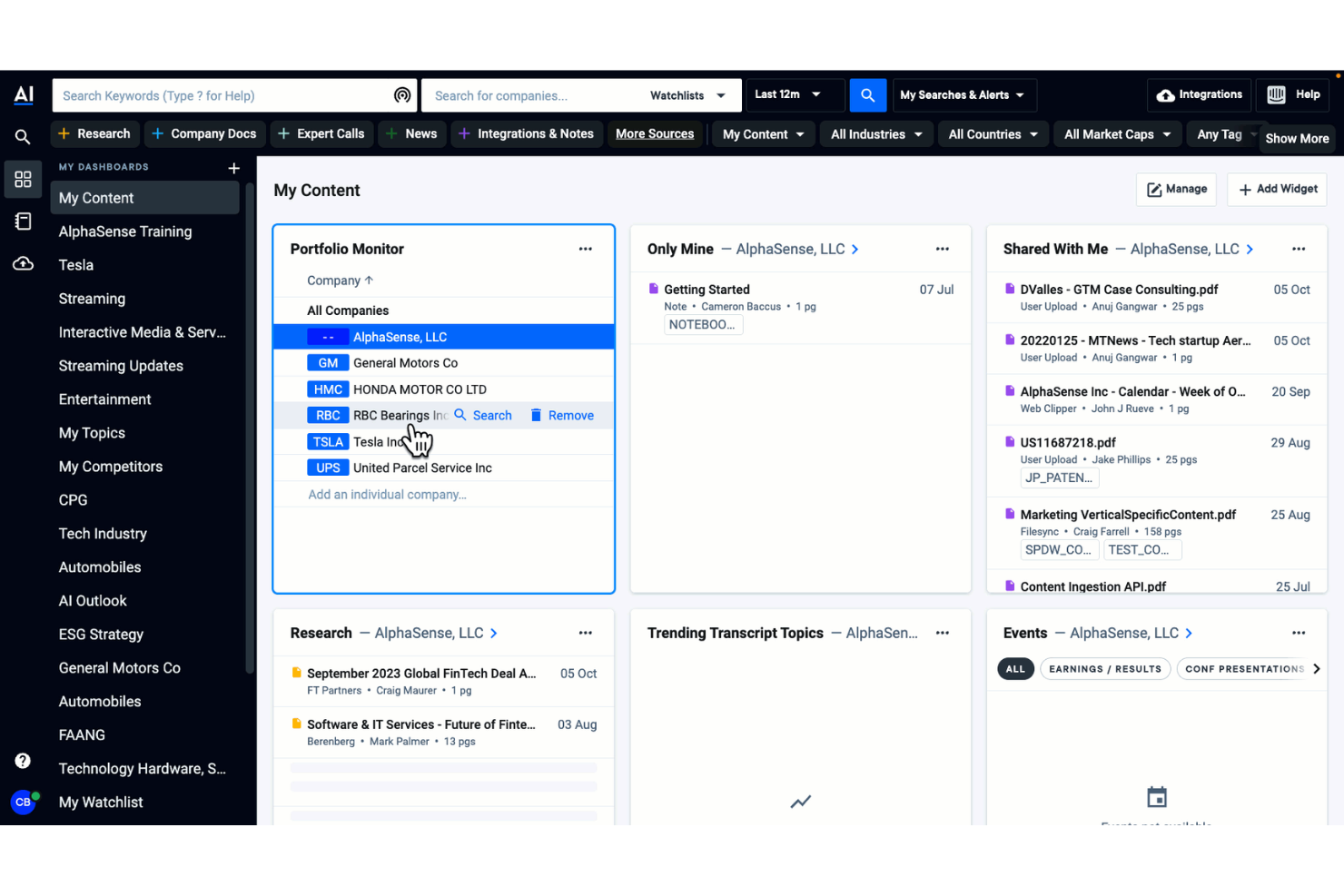
AlphaSense uses AI to help professionals search, analyze, and monitor market intelligence across a vast range of financial and corporate sources. It’s a strong fit for research teams, analysts, and decision-makers in finance or enterprise settings who need to surface insights quickly from unstructured data. The platform addresses challenges like information overload and fragmented research by centralizing and organizing competitive intelligence in one place.
Who Is AlphaSense Best For?
AlphaSense is well-suited for research analysts and corporate strategy teams in financial services, enterprise, and consulting firms who need deep market and competitor intelligence.
Why I Picked AlphaSense
What drew me to AlphaSense is its AI-powered search and market intelligence capabilities, which are especially valuable for teams handling large volumes of financial and corporate data. The platform uses natural language processing to surface relevant insights from earnings calls, filings, news, and research reports, making it easier to track competitor moves and market shifts. I also like that AlphaSense centralizes these diverse sources, so you can quickly compare and analyze information without toggling between multiple platforms. For organizations that need to make fast, informed decisions based on real-time intelligence, AlphaSense’s advanced search and aggregation features are a strong fit.
AlphaSense Key Features
Some other features that make AlphaSense valuable for competitor intelligence work include:
- Smart synonym recognition: The platform automatically recognizes and searches for related terms and synonyms to broaden the scope of your research.
- Document tagging and organization: Users can tag, categorize, and organize documents for easier retrieval and team collaboration.
- Customizable alerts: Set up real-time alerts for specific companies, topics, or keywords to stay updated on relevant developments.
- Collaboration tools: Share annotated documents and insights with colleagues directly within the platform.
AlphaSense Integrations
Native integrations are not currently listed. An API is available for custom integrations.
Pros and Cons
Pros:
- Smart synonym recognition expands research coverage
- Aggregates earnings calls, filings, and news
- AI-driven search surfaces relevant competitor insights
Cons:
- Information overload from large datasets
- Learning curve with complex search refinement
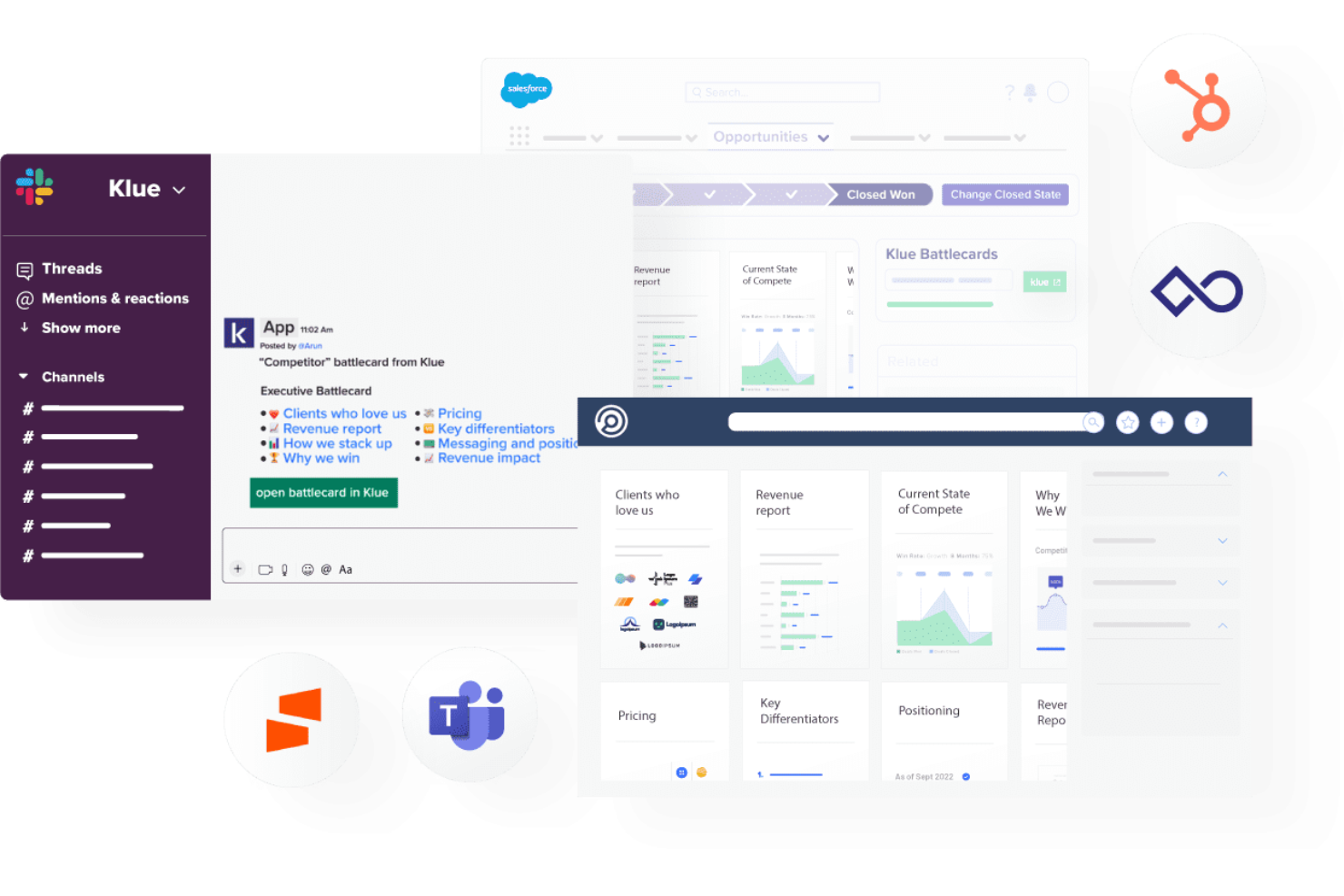
If you need a platform to centralize and organize competitive intelligence for your sales and product teams, Klue is worth a look. The tool helps businesses collect, curate, and share competitor insights across teams, making it easier to keep everyone aligned. Klue is especially useful for organizations that want to turn scattered market data into actionable, accessible intelligence.
Who Is Klue Best For?
Klue fits sales enablement and product marketing teams at mid-sized to large B2B organizations that need to centralize and share competitive intelligence.
Why I Picked Klue
What drew me to Klue is its focus on centralized competitive enablement for sales and product teams. Klue brings together competitor research, win/loss insights, and market updates into a single, organized hub that’s easy for teams to access and update. I like how the platform lets you curate and distribute battlecards, so sales teams always have the latest intelligence at their fingertips. For organizations that need to keep cross-functional teams aligned on competitive moves, Klue’s centralized approach stands out.
Klue Key Features
Some other features that make Klue valuable for competitor intelligence work include:
- Automated competitor tracking: Klue monitors competitor websites, news, and digital channels for updates and changes.
- Content library management: Store, organize, and tag competitive assets and resources for easy team access.
- Collaboration tools: Enable team members to comment, annotate, and contribute insights directly within the platform.
- Analytics and reporting: Generate usage reports and track engagement with competitive content across your organization.
Klue Integrations
Integrations include Salesforce, HubSpot, Microsoft Dynamics, Slack, Microsoft Teams, Gong, Highspot, Seismic, Showpad, SharePoint, and more.
Pros and Cons
Pros:
- Enables detailed competitor comparison dashboards
- Provides customizable battlecards for sales teams
- Offers automated alerts for competitor updates
Cons:
- Advanced features may require additional training
- Can generate information overload for new users

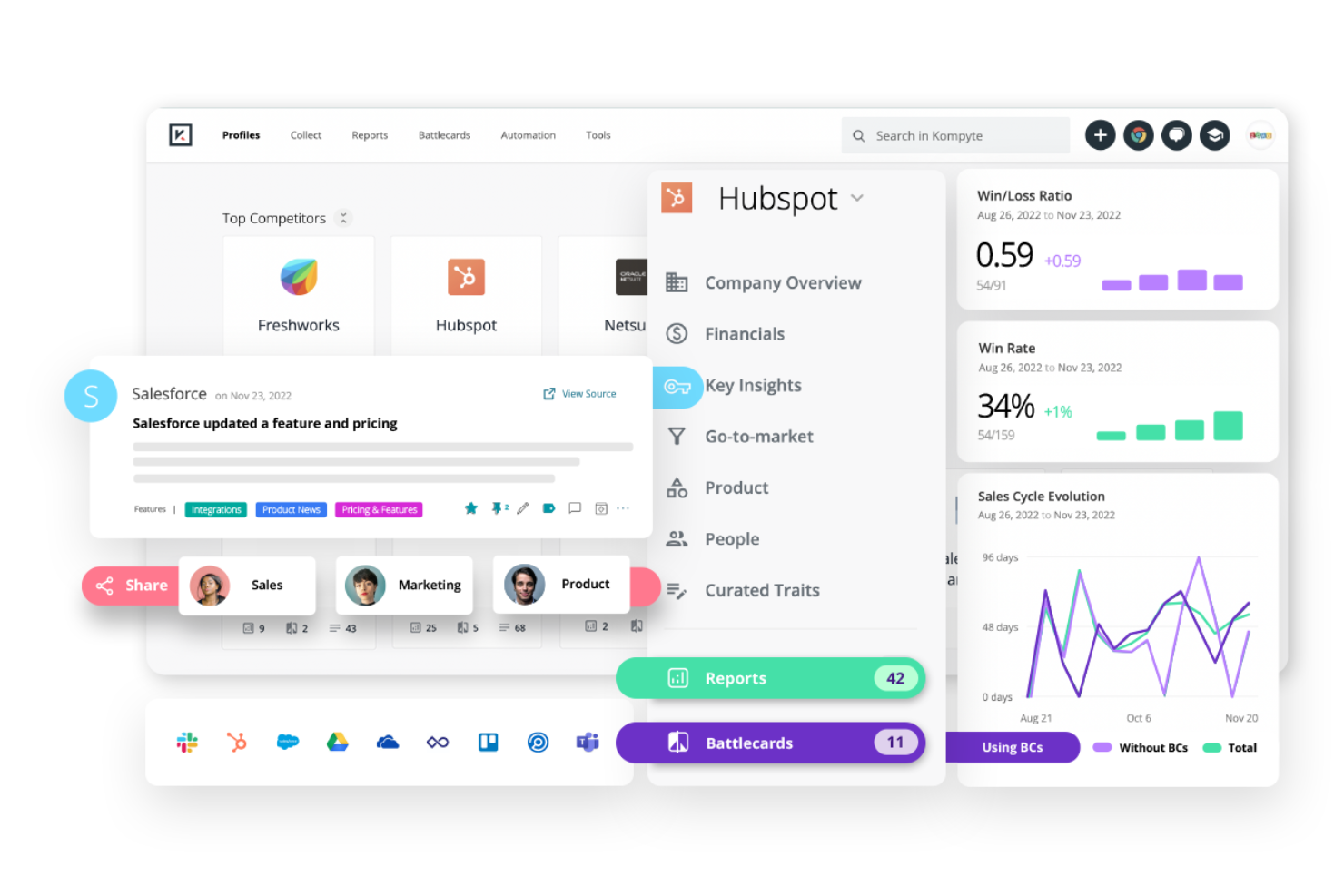
If you need to monitor competitors and automate market intelligence, Kompyte is worth considering. The platform is designed for marketing and sales teams that want to track competitor moves and quickly update internal stakeholders. Kompyte helps businesses stay ahead by surfacing actionable insights and reducing manual research.
Who Is Kompyte Best For?
Kompyte suits marketing and sales enablement teams at mid-sized to large B2B companies that need automated competitor tracking and real-time insights.
Why I Picked Kompyte
What stands out to me about Kompyte is its focus on automated competitor tracking and real-time sales enablement. The platform continuously monitors competitor websites, digital ads, and content updates, then automatically alerts your team to relevant changes. I also appreciate how Kompyte connects these insights directly to sales enablement tools, so sales teams always have up-to-date battlecards and talking points. For organizations that need to react quickly to competitor moves and keep sales aligned, Kompyte’s automation and real-time delivery make it a strong choice.
Kompyte Key Features
Some other features that make Kompyte valuable for competitor intelligence work include:
- Automated report generation: Create scheduled or on-demand reports summarizing competitor activity and market changes.
- Content library management: Store, organize, and tag competitive intelligence assets for easy team access.
- Collaboration tools: Allow team members to comment, annotate, and share insights directly within the platform.
- Analytics dashboard: Visualize trends, competitor movements, and engagement with competitive content across your organization.
Kompyte Integrations
Integrations include Salesforce, HubSpot, Slack, Microsoft Teams, Google Drive, OneDrive, Highspot, and more.
Pros and Cons
Pros:
- Links competitor activity to win/loss outcomes
- Auto-updates battlecards inside CRM workflows
- Filters high-impact competitor changes, reducing noise
Cons:
- Overkill without a dedicated CI workflow
- AI filtering can hide lower-signal insights

If you need to track digital competitors across multiple channels, Panoramata offers a focused solution for digital brands and ecommerce teams. The platform brings together competitor insights from web, social, and ad channels in one place. Panoramata is a good fit for teams that want to monitor digital marketing moves and product changes without juggling multiple tools.
Who Is Panoramata Best For?
Panoramata suits digital marketing and ecommerce teams that need unified competitor tracking across web, social, and ad channels.
Why I Picked Panoramata
I chose Panoramata because it’s one of the few AI competitor intelligence platforms built specifically for digital brands. Its ability to aggregate competitor data from web, social, and ad channels means you can monitor digital marketing strategies and product updates in one place. I like that Panoramata uses AI to surface actionable insights, such as changes in ad creatives or website content, which helps digital teams react quickly. For anyone focused on digital-first competition, Panoramata’s channel coverage and automation set it apart from more generic monitoring tools.
Panoramata Key Features
Some other features that make Panoramata useful for competitor intelligence work include:
- Automated competitor alerts: Get notified when tracked competitors make significant changes across monitored channels.
- Historical data access: Review past competitor activities and trends with an accessible archive of monitored events.
- Customizable competitor lists: Build and manage lists of specific competitors to monitor based on your business priorities.
- Collaboration tools: Share findings and insights with your team directly within the platform for coordinated analysis.
Panoramata Integrations
Native integrations are not currently listed.
Pros and Cons
Pros:
- Offers customizable competitor tracking lists
- Surfaces updates from app stores and social media
- Focuses exclusively on gaming industry competitors
Cons:
- Limited visibility beyond tracked digital assets
- Focused mainly on ecommerce marketing channels


If you work in the gaming industry and need to track competitor moves, Playwise HQ offers a focused solution. The platform is designed for gaming brands and publishers who want to monitor product launches, marketing campaigns, and feature updates across the market. Playwise HQ helps teams stay ahead by surfacing actionable intelligence specific to the fast-moving gaming sector.
Who Is Playwise HQ Best For?
Playwise HQ suits gaming brands and publishers that need dedicated competitor monitoring tailored to the gaming industry.
Why I Picked Playwise HQ
I picked Playwise HQ because it’s one of the only AI-powered competitor monitoring platforms built specifically for gaming brands. Its focus on the gaming industry means you get tailored tracking of competitor game launches, feature updates, and marketing campaigns that generic tools often miss. I appreciate that Playwise HQ uses AI to surface relevant insights from a wide range of sources, including app stores, social channels, and news sites. For teams that need actionable, gaming-specific intelligence, Playwise HQ offers a level of industry context that’s hard to find elsewhere.
Playwise HQ Key Features
Some other features that make Playwise HQ valuable for competitor intelligence work include:
- Automated alerts and notifications: Get real-time updates when tracked competitors make significant changes or announcements.
- Customizable competitor lists: Build and manage lists of specific competitors to monitor based on your business priorities.
- Historical data access: Review past competitor activities and trends with an accessible archive of monitored events.
- Collaboration tools: Share findings and insights with your team directly within the platform for coordinated analysis.
Playwise HQ Integrations
Native integrations are not currently listed.
Pros and Cons
Pros:
- Offers customizable competitor tracking lists
- Surfaces updates from app stores and social media
- Focuses exclusively on gaming industry competitors
Cons:
- No mobile app for on-the-go monitoring
- Limited to public data, not private sources
Other AI Competitor Intelligence Platforms
Here are some additional AI competitor intelligence platforms options that didn’t make it onto my shortlist, but are still worth checking out:
- Semrush
For SEO and digital competitor analysis
- Brand24
For real-time brand monitoring
- ZoomInfo
For B2B company intelligence
- Meltwater
For media and PR intelligence
- PitchBook
For private market data analysis
- Mentionlytics
For social and web monitoring
- Brandwatch
For consumer and competitor insights
- Apollo.io
For sales and competitor insights
- Crunchbase
For startup and company data
- Seamless.AI
For AI-driven prospecting data
- CB Insights
For enterprise market intelligence
- Valona Intelligence
For AI-driven market insights


AI Competitor Intelligence Platforms Selection Criteria
When selecting the best AI competitor intelligence platforms to include in this list, I considered common buyer needs and pain points like tracking competitor activity in real time and analyzing sentiment across multiple channels. I also used the following framework to keep my evaluation structured and fair:
Core Functionality (25% of total score)
To be considered for inclusion in this list, each solution had to fulfill these common use cases:
- Monitor competitor mentions across digital channels
- Analyze the sentiment of competitor-related conversations
- Track keyword and topic trends over time
- Identify influential sources and authors
- Export data and reports for further analysis
Additional Standout Features (25% of total score)
To help further narrow down the competition, I also looked for unique features, such as:
- AI-powered trend prediction and alerts
- Visual competitor benchmarking dashboards
- Integration with business intelligence tools
- Automated competitor campaign detection
- Customizable data visualization options
Usability (10% of total score)
To get a sense of the usability of each system, I considered the following:
- Simple and intuitive dashboard navigation
- Clear labeling of competitor intelligence features
- Fast access to real-time data and alerts
- Customizable views and saved searches
- Responsive design for desktop and mobile
Onboarding (10% of total score)
To evaluate the onboarding experience for each platform, I considered the following:
- Step-by-step product tours or walkthroughs
- Availability of training videos and documentation
- Pre-built templates for competitor monitoring
- Access to onboarding webinars or live sessions
- In-app chatbots or help widgets for quick support
Customer Support (10% of total score)
To assess each software provider’s customer support services, I considered the following:
- Availability of live chat or phone support
- Fast response times to support requests
- Access to a searchable knowledge base
- Dedicated account managers for enterprise plans
- Community forums or user groups for peer help
Value For Money (10% of total score)
To evaluate the value for money of each platform, I considered the following:
- Transparent and flexible pricing tiers
- Features included at each pricing level
- Free trial or demo availability
- No hidden fees or surprise charges
- Discounts for annual or multi-user plans
Customer Reviews (10% of total score)
To get a sense of overall customer satisfaction, I considered the following when reading customer reviews:
- Positive feedback on competitor tracking accuracy
- Reports of reliable real-time alerts
- User satisfaction with reporting and exports
- Comments on integration and automation options
- Feedback on support and onboarding experiences
How to Choose AI Competitor Intelligence Platforms
It’s easy to get bogged down in long feature lists and complex pricing structures. To help you stay focused as you work through your unique software selection process, here’s a checklist of factors to keep in mind:
| Factor | What to Consider |
|---|---|
| Scalability | Will the platform handle increased data volume and more users as your business grows? Check for limits on monitored keywords, projects, or users. |
| Integrations | Does the tool connect natively with your existing marketing, analytics, or collaboration systems? Confirm compatibility with your core stack. |
| Customizability | Can you tailor dashboards, alerts, and reporting to your team’s workflows and terminology? Avoid rigid platforms that force you into fixed views. |
| Ease of use | How quickly can your team learn and adopt the platform? Look for clear navigation, minimal training requirements, and intuitive workflows. |
| Implementation and onboarding | What resources are needed to get up and running? Assess the availability of onboarding support, migration help, and training materials. |
| Cost | Are pricing tiers transparent and predictable as your needs change? Watch for hidden fees, data overages, or costly add-ons. |
| Security safeguards | Does the platform meet your organization’s data privacy and security standards? Ask about encryption, access controls, and compliance certifications. |
| Support availability | What support channels are offered and during which hours? Consider if you need 24/7 help or dedicated account management for urgent issues. |
What Are AI Competitor Intelligence Platforms?
AI competitor intelligence platforms are market intelligence platforms that use artificial intelligence to monitor, analyze, and report on competitor activity across digital channels. These platforms automatically gather data from sources like news, social media, and websites, then apply AI to support competitive analysis, identify trends, sentiment, and emerging threats. Marketing and strategy teams use them to make informed decisions, benchmark performance, and conduct SWOT analysis while responding quickly to changes in the competitive landscape.
Features of AI Competitor Intelligence Platforms
When selecting AI competitor intelligence platforms, keep an eye out for the following key features:
- Real-time monitoring: Continuously tracks competitor mentions and activities across news, social media, blogs, and forums, so you can respond quickly to emerging trends or threats.
- AI-powered sentiment analysis: Uses machine learning to automatically assess the tone of competitor-related conversations, helping you gauge public perception and shifts in reputation.
- Customizable alerts: Lets you set up notifications for specific keywords, brands, or competitor actions, ensuring your team never misses important developments.
- Influencer identification: Pinpoints key individuals and sources driving conversations about your competitors, making it easier to map influence and outreach opportunities.
- Trend and topic analysis: Analyzes large volumes of data to surface emerging topics, patterns, and shifts in competitor strategy over time.
- Data export and reporting: Provides options to download raw data, charts, and summary reports for further analysis or sharing with stakeholders.
- Integration capabilities: Connects natively with other marketing, analytics, or collaboration tools to simplify workflows and centralize intelligence.
- Historical data access: Offers the ability to review and analyze past competitor activity, supporting long-term benchmarking and strategic planning.
- Custom dashboard views: Allows users to tailor dashboards to their specific monitoring needs, making it easier to focus on the most relevant competitor insights.
Benefits of AI Competitor Intelligence Platforms
Implementing AI competitor intelligence platforms provides several benefits for your team and your business. Here are a few you can look forward to:
- Faster response to competitor moves: Real-time monitoring and customizable alerts help your team react quickly to new campaigns, product launches, or reputation shifts.
- Deeper market understanding: AI-powered sentiment and trend analysis reveal how audiences perceive competitors and highlight emerging opportunities or threats.
- More informed decision-making: Access to historical data, benchmarking, and detailed reporting supports strategic planning and campaign adjustments.
- Improved collaboration: Integration capabilities and custom dashboards make it easier to share insights across marketing, sales, and leadership teams.
- Efficient resource allocation: Automated data collection and analysis reduce manual research time, allowing your team to focus on high-impact activities.
- Enhanced influencer engagement: Influencer identification features help you discover and connect with key voices shaping competitor conversations.
- Stronger competitive positioning: Ongoing intelligence gathering enables your business to anticipate market shifts and maintain a proactive strategy.
Costs and Pricing of AI Competitor Intelligence Platforms
Selecting AI competitor intelligence platforms requires an understanding of the various pricing models and plans available. Costs vary based on features, team size, add-ons, and more. The table below summarizes common plans, their average prices, and typical features included in AI competitor intelligence platforms solutions:
Plan Comparison Table for AI Competitor Intelligence Platforms
| Plan Type | Average Price | Common Features |
|---|---|---|
| Free Plan | $0 | Basic monitoring for a limited number of keywords, access to public data sources, and simple alerts. |
| Personal Plan | $30-$70/user/month | Expanded keyword tracking, sentiment analysis, basic reporting, and limited historical data access. |
| Business Plan | $100-$300/user/month | Multi-channel monitoring, customizable dashboards, team collaboration tools, and advanced reporting. |
| Enterprise Plan | $500-$2000+/month | Unlimited projects, API access, dedicated support, advanced integrations, and custom onboarding. |
AI Competitor Intelligence Platforms FAQs
Here are some answers to common questions about AI competitor intelligence platforms:
How do AI competitor intelligence platforms gather data?
These platforms use web crawlers, APIs, and integrations to collect data from news sites, social media, blogs, forums, and public databases. AI then processes and organizes this information for analysis and reporting.
Can AI competitor intelligence platforms track competitors in real time?
Yes, most platforms offer real-time or near-real-time monitoring. This allows your team to receive instant alerts about competitor activity, new campaigns, or reputation changes as they happen.
What types of insights can I expect from these platforms?
You can expect insights on competitor mentions, sentiment trends, campaign launches, influencer activity, and emerging topics. Many platforms also provide benchmarking and historical analysis to support strategic planning.
Are these platforms suitable for small teams or only large enterprises?
Many platforms offer scalable plans, including options for small teams or individual users. You can start with basic monitoring and upgrade as your needs grow.
How secure is the data collected by AI competitor intelligence platforms?
Most reputable platforms use encryption, access controls, and compliance measures to protect your data. Always review a vendor’s security documentation and certifications before purchasing.
Do these platforms integrate with other marketing or analytics tools?
Yes, integration capabilities are common. Many platforms connect with CRM, analytics, and collaboration tools to centralize intelligence and streamline workflows. Always check for compatibility with your existing stack.