
Brand Reputation Management: The Marketer’s Playbook


Brand reputation management isn't just about putting out fires anymore. In today's world where a single tweet can go viral and tank your stock price, you need a systematic approach to building and protecting how your brand is perceived. Investor Warren Buffet once said, "It takes 20 years to build a reputation and five minutes to ruin it." That was before social media made it possible to do both in real-time.
Here's what every marketer needs to know: trust drives business results more than ever before. In fact, 60% of US consumers wouldn't buy from a brand they perceive as untrustworthy, and 63% of a company's market value is tied to its reputation.
In this landscape, a well-defined reputation management strategy is a must. It’s how you prove your trustworthiness, signal quality, and build a brand people feel good about.
What is Brand Reputation Management (And Why it Matters)
Brand reputation management is the practice of monitoring, influencing, and maintaining how your brand is perceived across all touchpoints—digital, offline, and everywhere in between. It's about systematically building trust and customer loyalty through consistent actions and authentic communication. Let me break down the key terms involved in brand reputation management:
- Brand image is public's perception or what people think about your brand right now.
- Brand identity is what you want people to think about your brand, including your brand values and personality.
- Brand reputation is the accumulated trust and emotional connection your brand has built through consistent experiences.
Here's why reputation management has become critical: 77-92% of consumers across different countries say brand reputation is important when making purchase decisions (Statista, 2025). Meanwhile, traditional advertising is losing effectiveness as consumers increasingly rely on reviews, recommendations, and their own research before buying.
The math is compelling: 97% of consumers looking at product reviews before making a purchase. But the flip side is powerful too: consumers will pay premium prices for brands they trust, and loyal customers become your best marketers through word of mouth.
How to Manage Online Brand Reputation
Online reputation management requires covering multiple bases.
Monitor Social Media
Social media is a powerful amplifier for word of mouth. Decades ago, consumers might tell one or two people about a product they love (or hate). Today, a positive or negative social media post can go viral and reach millions.
Because it's hard to keep track of everything happening across social media, you'll want to use social media management software to organize your efforts. Make sure to choose software with a social listening feature, which notifies you of mentions of your and competitors' brands—even when you're not tagged.
Once you're aware of what people are saying, you'll want to do two things:
- Respond to individual mentions
- Gauge overall social sentiment
In analog times, brands never had an opportunity to be a part of conversations between consumers. Today, you do. Make sure you're jumping in whenever your brand is mentioned, and using analytics for social media reputation management.
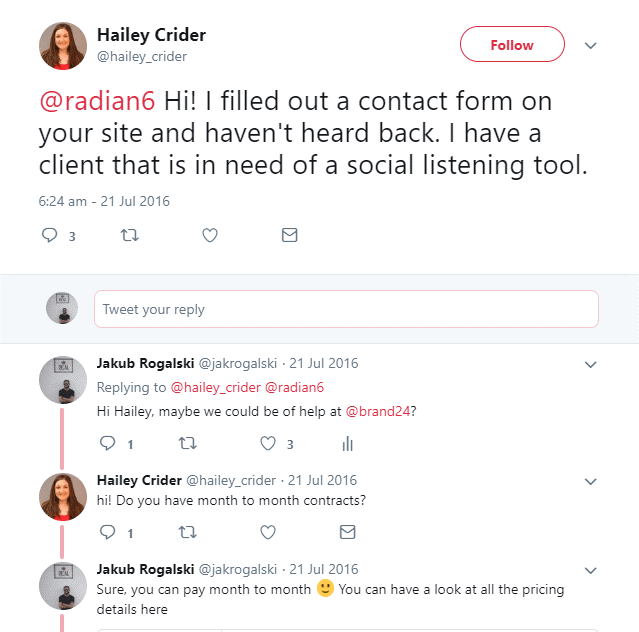
You can also uncover opportunities by inserting yourself into conversations about your competitors—as software company Brand24 demonstrates below.
Track Brand Mentions
When people are talking about your brand on social media, they're not necessarily talking to your brand. 96% of conversations about your brand don't involve your official branded accounts. Monitoring tagged and untagged brand mentions allows, whether manually or with media monitoring software, you to have a complete picture of your brand mentions on social media—not just those you're tagged in.
Whether social conversations are positive or negative, don't let them happen in a vacuum—instead, make yourself part of the conversation. 83% of customers are more loyal to brands that respond to their complaints. That means dealing with complaints not only softens the negative impact on your brand reputation—it also gives you a chance to turn unhappy customers into happy ones.
Speed is another key principle of brand mentions. When customers tag you, respond as fast as possible. Most customers expect a response to a negative complaint on social media within an hour, but 88% of brands don't manage to pull this off.
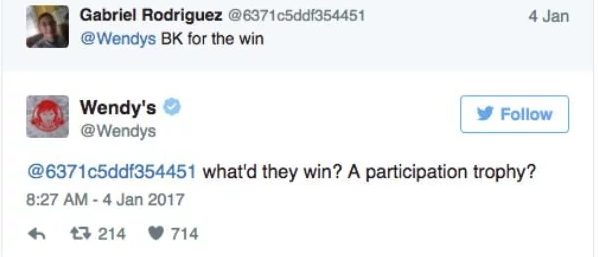
Brand mentions are also an opportunity to show off your brand's "social media personality." Some of the most viral branded activity on social media happens when brands take friendly shots at each other. This isn't right for every brand, but for some, it's a great fit—as Wendy's shows in the Twitter example below.
The good news is, you don't have to monitor social media manually. Use social media monitoring software to do the heavy lifting for you.
Online Reviews and Ratings
94% of online shoppers have avoided visiting a business due to a negative review. What customers say about you is more important than what you say about yourself—and that's never been more true than it is today.
But what's counterintuitive is that negative reviews aren't entirely bad. 82% of people who read online reviews actively seek out negative comments to get a complete picture of the product. And in general, more reviews make you more trustworthy, even if a few are negative. Consumers want to see at least 40 reviews to justify your company's "star rating."
While reviews and testimonials naturally accumulate if you have a quality product or service, you can also take steps to encourage reviews proactively. Ask customers to leave a review, then automate a follow-up sequence to remind them.
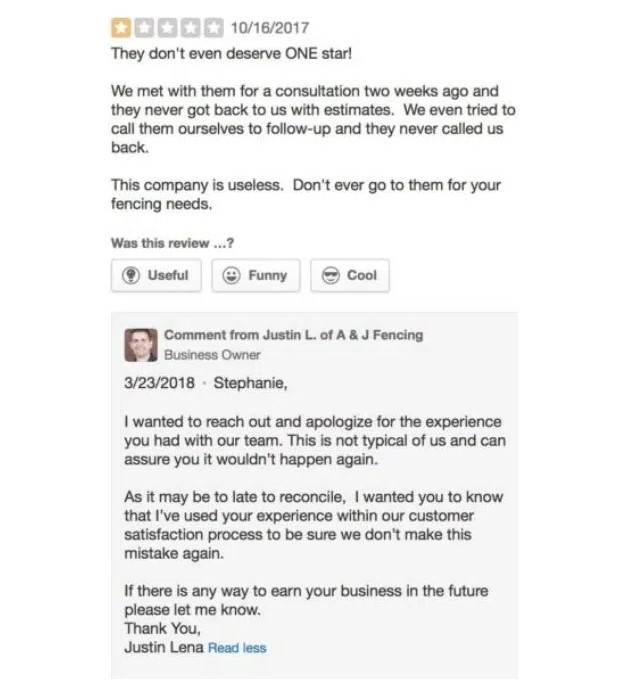
When it comes to negative reviews, the worst thing you can do is not respond. Responding constructively to negative reviews—as A&J Fencing does in the example from TrustPilot below—shows prospects who read that review in the future that you can use criticism to improve.
Content Marketing
The Internet is a noisy place. Content marketing is your chance to keep your brand visible to consumers—even with all the other demands on their attention. With a mature content marketing strategy, you can consistently influence consumers' impressions of your company with on-brand messaging.
The key to influencing your reputation with content marketing is to be omnichannel. Blog posts alone won't cut it anymore. Instead, you'll need to be everywhere customers are:
- Blog
- Social
- Video
- Podcasts
Design your content as zero-click content. Don't just post a link to your blog post or podcast on LinkedIn. Instead, take the time to create a "platform native" version of your content that gives viewers value without making them click away from the platform. This approach may result in fewer clicks but significantly greater reach and influence.
By publishing value-driven content across all channels, consumers will start seeing content everywhere that supports a positive brand reputation.

Search Engine Optimization (SEO)
Being at the top of Google search results is important. Pushing down anything negative about your brand is even more important—because just four negative search results can drive away 70% of your potential business.
In 2009, two employees of Domino's Pizza in North Carolina posted YouTube videos showing them flagrantly breaking health codes while preparing food. Domino's quickly had a crisis on its hands. References to this event soon took over five of the most prominent spots in Google when searching "Dominos."
SEO reputation management is focused on maintaining a positive image in search engine results. When negative events happen—as in the Domino's example—a positive SEO campaign can often push any unfavorable coverage out of sight.
In the long term, you'll want to grow your website's authority by getting authoritative sites to link to you. This helps boost your rankings over competing content. Ironically, a negative public relations incident might provide just this kind of boost—but positive PR is much preferred.
In the short term, you'll need to deal with negative coverage by drowning it in positive coverage. Google's search results show a variety of results, not necessarily in this order:
- Twitter posts
- YouTube videos
- Google Business posts
- News
- Ads
If you have an immediate need to push negative content down, use every tool at your disposal. Consider issuing a press release. Post on Twitter and Google Business. Create YouTube videos. Pay for ads. The Internet is a noisy place—use this to your advantage.
Influencer Relations
In today’s digital marketing ecosystem, influencers are often the front lines of brand perception. Whether it’s a B2B thought leader on LinkedIn or a niche creator on YouTube, their voice can sway potential customers faster than your paid media ever could.
That makes influencer relations both an opportunity and a reputation risk.
A well-chosen partnership can amplify your brand values and credibility, while a poorly vetted influencer can spark backlash, misalignment, or even PR crises. The stakes are high—which is why influencer engagement should be tightly aligned with your social media management and brand reputation strategy.
Here’s the play:
- Vet carefully: Look beyond follower counts. Assess audience alignment, past behavior, and tone.
- Collaborate closely: Treat influencers like partners, not billboards. Give them creative input but set clear guardrails.
- Monitor engagement: Watch how your brand is being discussed. Not just during a campaign, but long after.
Influencers can build trust at scale but without governance, they can just as easily break it.
Offline Brand Reputation Management
Improve Customer Experience
Building a positive customer experience (CX) is your chance to prevent reputation damage before it happens. If your brand provides incredible service, you'll grow naturally due to positive word of mouth. You may even develop a cult following—just look at the devotion inspired by the customer-centric grocery store Trader Joe's.
A poor CX has the opposite effect. As unhappy customer experiences stack up, your online and offline reputation will take hit after hit. Negative chatter will build up on social media, and negative word of mouth will spread.
Your brand reputation management strategy should take CX into account because customer satisfaction is a better way to improve your reputation than damage control. If you think you already have a great customer experience, think again. 80% of companies think their customer experience is "superior"—but only 8% of customers agree.
To improve your CX:
- Start by gathering positive and negative feedback.
- Survey your customers, hold customer interviews, and gather data with social listening tools.
- Figure out the parts of your experience that customers don't like.
- Start fixing them.
Make sure you use CX metrics like Net Promoter Score (NPS) to judge the results of your efforts. As your NPS starts to rise, you'll see your reputation improve along with it.
Build Word of Mouth
92% of people trust word-of-mouth referrals—more than any other type of advertising. Before online virality, there was offline virality through word of mouth (remember Beanie Babies?). Unfortunately, word of mouth is also one of the hardest forms of reputation to influence.
To generate positive word of mouth, you need to create an experience that customers can't stop talking about. A single event can get a positive buzz going—like Blaze Pizza's Pi Day, during which you can get a pizza for $3.14. But for sustainable reputation changes, make sure your customer experience is consistently excellent.
It's also possible to "amplify" word of mouth by allocating space in your budget to go above and beyond for customers. In 2010, the grocery store Trader Joe's delivered free groceries to an older man trapped at home during a snowstorm, creating positive buzz about the brand.

Public Relations
You may remember that in 2017, a man was dragged off a United Airlines flight. Videos of the incident spread on social media, and United lost over $1 billion in market value. For months, their brand name was a punchline.
You never want an incident like this to happen, but to give yourself the best chance of preventing long-term damage to your reputation, you need to be prepared for anything.
Common public relations crises include:
- Angry customers: A single angry customer can go viral and spark a PR crisis. Do damage control as quickly as possible. Try to turn each customer's negative experience into a positive one—especially if they post about it on social media.
- Customer service issues: Some of the most hated brands in the world are utility companies with poor customer service. Don't be like them. Train customer support reps to be fast and friendly when resolving customer concerns.
- Employee issues: Rogue employees affect your brand—but you still have to take responsibility for them. Deal with any personnel problems quickly, and communicate how you'll avoid similar ones in the future.
- Outages: Service outages are the most common complaints at otherwise customer-centric companies like Netflix. If this happens, apologize for the inconvenience and communicate what you're doing to prevent future outages.
- Global events: When difficult global news events happen, watch them carefully to see how they intersect with your brand. If it feels like something your brand needs to address, you'll have to do so carefully. Even if you don't get involved, you'll need to check any preplanned email blasts, social media posts, and scheduled product launches to make sure they don't come off as tone-deaf.
To stay on top of potential PR issues, monitor mentions of your company name and product names on social media and in the news. Reputation management tools and social media software can help you monitor social media. Google Alerts can also notify you of mentions of your brand in the news.
Building a Reputation Management Strategy in 4 Steps
Your brand reputation management strategy should answer three fundamental questions:
- How will we know when our reputation is at risk?
- How will we respond when challenges arise?
- How will we systematically build reputation equity over time?
If you can't answer these questions clearly, you don't have a strategy. You're just hoping nothing bad happens!
Building a brand that customers love takes real work. But if you commit to listening to criticism, addressing potential issues quickly, and consistently improving customer experience, you'll see more people become genuine advocates for your brand. Here's how.
Step 1: Audit and Analyze
Start by understanding where your reputation stands today. Get qualitative insights by reading review sites like Google, Yelp, and Trustpilot. Look for patterns in complaints and compliments.
Then get quantitative data through sentiment analysis tools and customer surveys. Your audit should cover:
- How you're perceived across different channels
- How you compare to competitors
- Whether your reputation is trending up or down
- What specific issues come up most frequently
Step 2: Build Your Framework
Once you've benchmarked your reputation, it's time to put a strategy in place. You can think about your brand reputation management strategy in two ways: reactive and proactive.
Reactive Reputation Management:
Putting out fires comes first. You may find urgent issues to address in the course of your audit. For example, if your assessment found customers were unhappy about poor support, inconsistent product quality, and slow shipping—those are the three things you'll want to focus on first.
For reactive situations, you'll need:
- Guidelines for when to involve legal or PR professionals
- Crisis management playbooks with pre-written response templates
- Clear escalation procedures (who gets notified when?)
- Response time standards for different types of issues
Proactive Reputation Building:
You don't just want to solve complaints—you also want to give customers a positive reason to become brand advocates. That's where customer experience comes in. Once you've put out the most urgent fires, your next task is to create an experience that makes customers excited to tell their friends and family about you.
For proactive reputation management you'll need:
- A content calendar aligned with reputation goals
- Thought leadership opportunities (speaking, podcasting, guest writing)
- Customer advocacy programs (case studies, testimonials, reference programs)
- Regular brand awareness campaigns
Step 3: Loop in Stakeholders
You may need help managing your brand reputation strategy. Take crisis management, for example. The most high-pressure situation in reputation management. To deal with a crisis, you'll need buy-in from everyone, from your social media manager to your CEO. Depending on the severity of the crisis, your CEO might be expected to make a public statement. Meanwhile, your social media manager needs to know what to say and what not to say.
Not every brand reputation issue is an intense PR crisis, but as you create your brand reputation strategy, you'll need to loop in stakeholders throughout your company. Consider holding a reputation management kickoff meeting with stakeholders to discuss the issues you're addressing and the changes each team needs to make.
Step 4: Monitor, Measure, Repeat
Once you've implemented your plan, it's time to see what happens. Pick your metrics in advance. Here are some of the most common brand reputation metrics:
- Sentiment Analysis: Social sentiment analysis helps you understand changing feelings toward your brand on social media platforms over time.
- Online Reviews: I'm a fan of measuring customer reviews as a reputation management metric because it gets straight to the heart of why you're paying attention to your brand reputation. Measure your average review score for the six months before your reputation initiatives and the six months after—then compare.
- Net Promoter Score (NPS): NPS measures whether customers are detractors or advocates. As customers become advocates, NPS serves as a leading indicator for your reputation.
- Share of Voice: Widely used in PR, share of voice tracks how much you're being talked about versus competitors. Share of voice measures the number of conversations about your brand divided by the overall volume of conversations in your industry.
Whatever metrics you pick, watch them carefully to make sure your reputation management strategy is having an impact. And continue to monitor customer feedback and complaints—new issues always need to be addressed to keep customers happy.
Real Brand Reputation Lessons
Let's look at brands that got reputation management right (and wrong):
Nike: Taking a Stand (And Standing Tall)
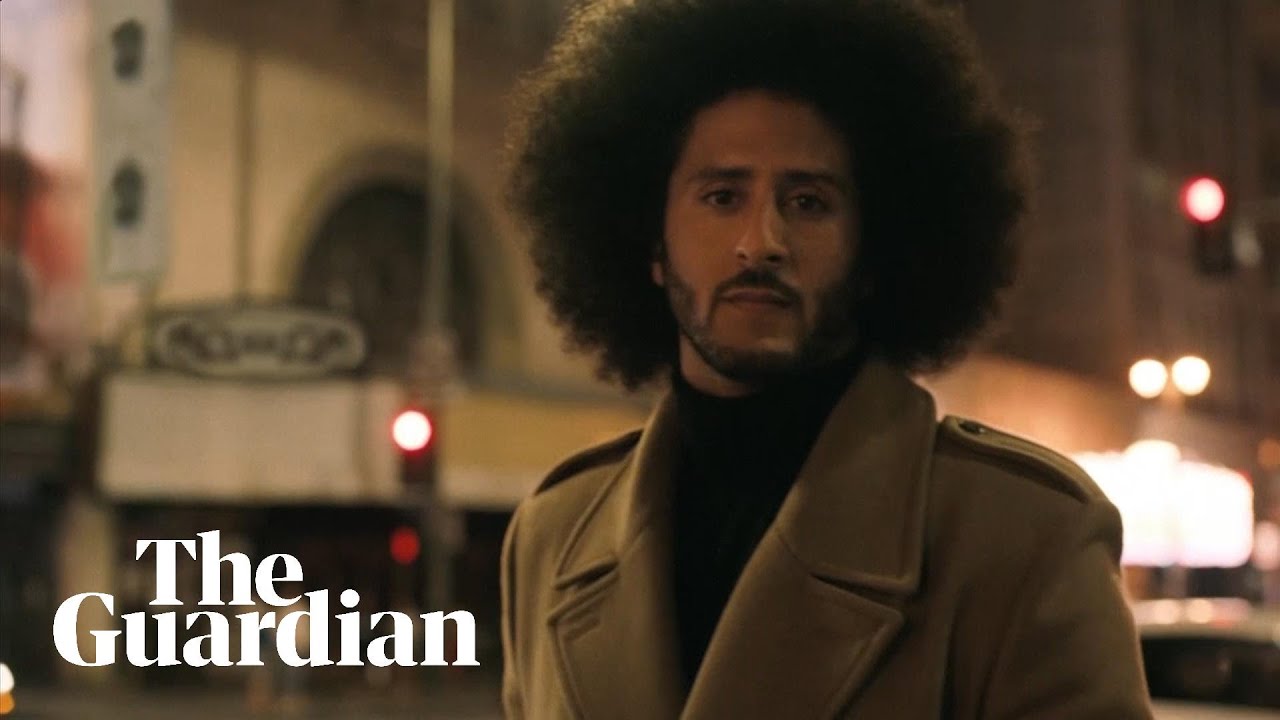
When Nike made Colin Kaepernick the face of their "Just Do It" campaign, they knew it would be controversial. The initial backlash was intense. People burned Nike products, organized boycotts, and the stock price dropped.
But Nike stuck to their brand values. They understood their core audience and were willing to lose customers who didn't align with those values. The result? Long-term brand loyalty increased among their key demographics, and a sales spike of 31% in the quarter following the campaign.
Lesson: Authentic positioning beats trying to please everyone. Know your values and live them, even when it's uncomfortable.
KFC: Crisis Turned Into Creative Gold
When KFC UK ran out of chicken (seriously) in early 2018, they could have issued a boring corporate apology. Instead, they took out a full-page newspaper ad featuring an empty bucket with the letters rearranged to spell "FCK" and the simple headline "We're Sorry."
The response was immediate, honest, and showed personality. Many people on social media responded with humour and respect for the company’s candour. What might have escalated into a reputation disaster was widely praised as a strong example of crisis handling.
Lesson: Own your mistakes quickly, honestly, and with personality. People forgive honest errors but never forgive cover-ups.
Ryanair: Irreverence as Strategy
Ryanair built their entire brand identity around being unapologetically cheap and sassy. Their social media team roasts customers, competitors, and pretty much anyone who engages with them. Most brands would consider this reputation suicide.

But Ryanair's approach is completely intentional. They've positioned themselves as the airline for people who prioritize price over polish. Their irreverent tone reinforces their value proposition: we're cheap, we know it, and we're not apologizing.
Lesson: Consistency matters more than universal likability. If your brand personality serves your business strategy, commit to it fully.
Recommended Reputation Management Tools
The right reputation management tools make the difference between staying on top of issues and scrambling to catch up:


Final Word: Brand Reputation is a Long Game
Everyone wants to build a brand that consumers love—like Apple or Amazon—but most companies don't do the work. And let's be honest, creating a customer-centric brand is in fact a lot of work.
Fortunately, you're already on the right track. Commit to listening to customer critiques, addressing issues fast, and improving your customer experience, and you'll see more and more customers fall in love with your brand.
Look, we've got more of the good stuff if you're looking to learn more about brand reputation management. Check out this hand-picked list of the best reputation management courses available out there.
For more tips on brand building and marketing, don't forget to subscribe to The CMO newsletter so you don't miss out on the latest in marketing strategy, trends, technology, and tools.

