


Writesonic Review: Pros, Cons, Features, and Pricing Explained


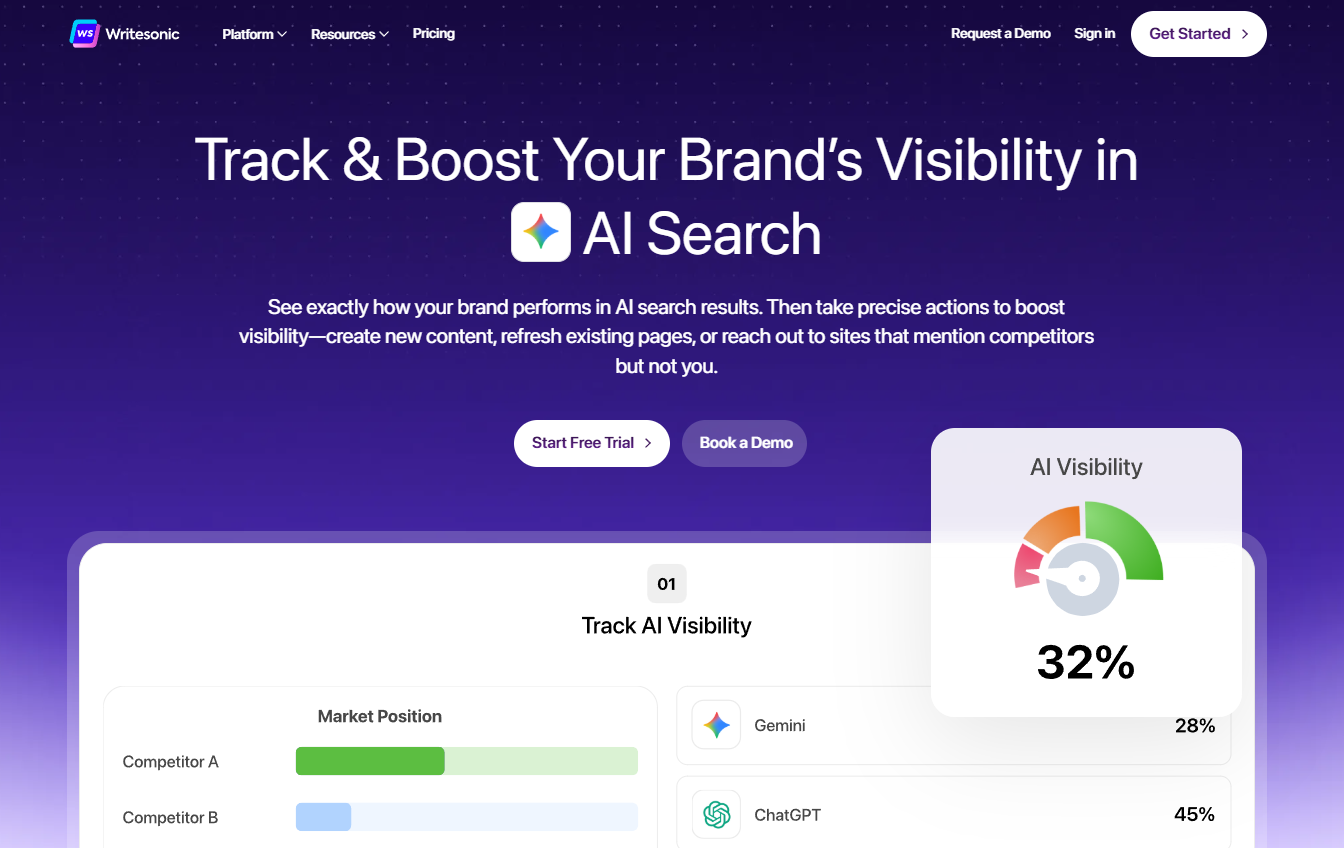
Writesonic is a content marketing software designed to help marketing teams create, edit, and optimize written content at scale. For marketing managers juggling tight deadlines, shifting campaign needs, and the demand for high-quality output, Writesonic offers AI-powered writing tools that speed up content production without sacrificing quality.
In this review, you’ll find a detailed look at Writesonic’s features, use cases, pros and cons, and pricing—so you can decide if this content marketing software fits your team’s workflow and goals.
Writesonic Evaluation Summary
- From $79/month (billed annually)
- Free plan available
Why Trust Our Software Reviews
We’ve been testing and reviewing marketing software since 2022. As marketing experts ourselves, we know how critical and difficult it is to make the right decision when selecting software.
We invest in deep research to help our audience make better software purchasing decisions. We’ve tested more than 2,000 tools for different marketing use cases and written over 1,000 comprehensive software reviews. Learn how we stay transparent & our software review methodology.
Writesonic Overview
When judging Writesonic as a content marketing software, its overall functionality and fast onboarding make it easy for new users to start producing content quickly. The AI writing tools and templates outperform many competitors for blog posts and ad copy, while flexible pricing suits both small teams and growing businesses.
However, customization options and integrations are more limited than some alternatives, which may matter for advanced workflows. If you’re selecting a solution for rapid content creation and straightforward collaboration, Writesonic is a strong choice, especially for teams prioritizing speed and ease over deep technical customization.
pros
-
Generates SEO-optimized articles with built-in fact-checking.
-
Offers real-time AI visibility tracking across multiple platforms.
-
Provides actionable content recommendations based on competitor data.
cons
-
Some outputs require manual editing for accuracy.
-
Limited advanced formatting for long-form content.
-
Fewer workflow automation features than some competitors.
-

Demandbase
Visit WebsiteThis is an aggregated rating for this tool including ratings from Crozdesk users and ratings from other sites.4.4 -
6sense
Visit WebsiteThis is an aggregated rating for this tool including ratings from Crozdesk users and ratings from other sites.4.3 -
AnswerThePublic
Visit Website


How We Test & Score Tools
We’ve spent years building, refining, and improving our software testing and scoring system. The rubric is designed to capture the nuances of software selection and what makes a tool effective, focusing on critical aspects of the decision-making process.
Below, you can see exactly how our testing and scoring works across seven criteria. It allows us to provide an unbiased evaluation of the software based on core functionality, standout features, ease of use, onboarding, customer support, integrations, customer reviews, and value for money.
Core Functionality (25% of final scoring)
The starting point of our evaluation is always the core functionality of the tool. Does it have the basic features and functions that a user would expect to see? Are any of those core features locked to higher-tiered pricing plans? At its core, we expect a tool to stand up against the baseline capabilities of its competitors.
Standout Features (25% of final scoring)
Next, we evaluate uncommon standout features that go above and beyond the core functionality typically found in tools of its kind. A high score reflects specialized or unique features that make the product faster, more efficient, or offer additional value to the user.
We also evaluate how easy it is to integrate with other tools typically found in the tech stack to expand the functionality and utility of the software. Tools offering plentiful native integrations, 3rd party connections, and API access to build custom integrations score best.
Ease of Use (10% of final scoring)
We consider how quick and easy it is to execute the tasks defined in the core functionality using the tool. High scoring software is well designed, intuitive to use, offers mobile apps, provides templates, and makes relatively complex tasks seem simple.
Onboarding (10% of final scoring)
We know how important rapid team adoption is for a new platform, so we evaluate how easy it is to learn and use a tool with minimal training. We evaluate how quickly a team member can get set up and start using the tool with no experience. High scoring solutions indicate little or no support is required.
Customer Support (10% of final scoring)
We review how quick and easy it is to get unstuck and find help by phone, live chat, or knowledge base. Tools and companies that provide real-time support score best, while chatbots score worst.
Customer Reviews (10% of final scoring)
Beyond our own testing and evaluation, we consider the net promoter score from current and past customers. We review their likelihood, given the option, to choose the tool again for the core functionality. A high scoring software reflects a high net promoter score from current or past customers.
Value for Money (10% of final scoring)
Lastly, in consideration of all the other criteria, we review the average price of entry level plans against the core features and consider the value of the other evaluation criteria. Software that delivers more, for less, will score higher.
Core Features
AI Article Writer
Automatically generates long-form blog posts and articles based on user prompts. This helps teams quickly produce SEO-friendly content for websites and blogs.
SEO Optimization Tools
Provides keyword suggestions, in-depth readability analysis, and on-page SEO recommendations as you write. Users can improve search rankings without needing separate SEO software.
Content Rephraser
Instantly rewrites existing text to create unique versions while preserving meaning. This is useful for repurposing blog posts or adapting messaging for different channels.
Fact-Checking Assistant
Checks AI-generated content against live web data to reduce inaccuracies. This feature helps ensure published content is up-to-date and streamlines fact-checking.
Template Library
Offers pre-built templates for ads, product descriptions, landing pages, and emails. Users can select a template, fill in details, and generate ready-to-publish content in minutes.
Competitor Analysis
Analyzes top-performing content from competitors and suggests improvements for your own content ideas. This gives users actionable insights to outperform similar brands in their niche.
Ease of Use
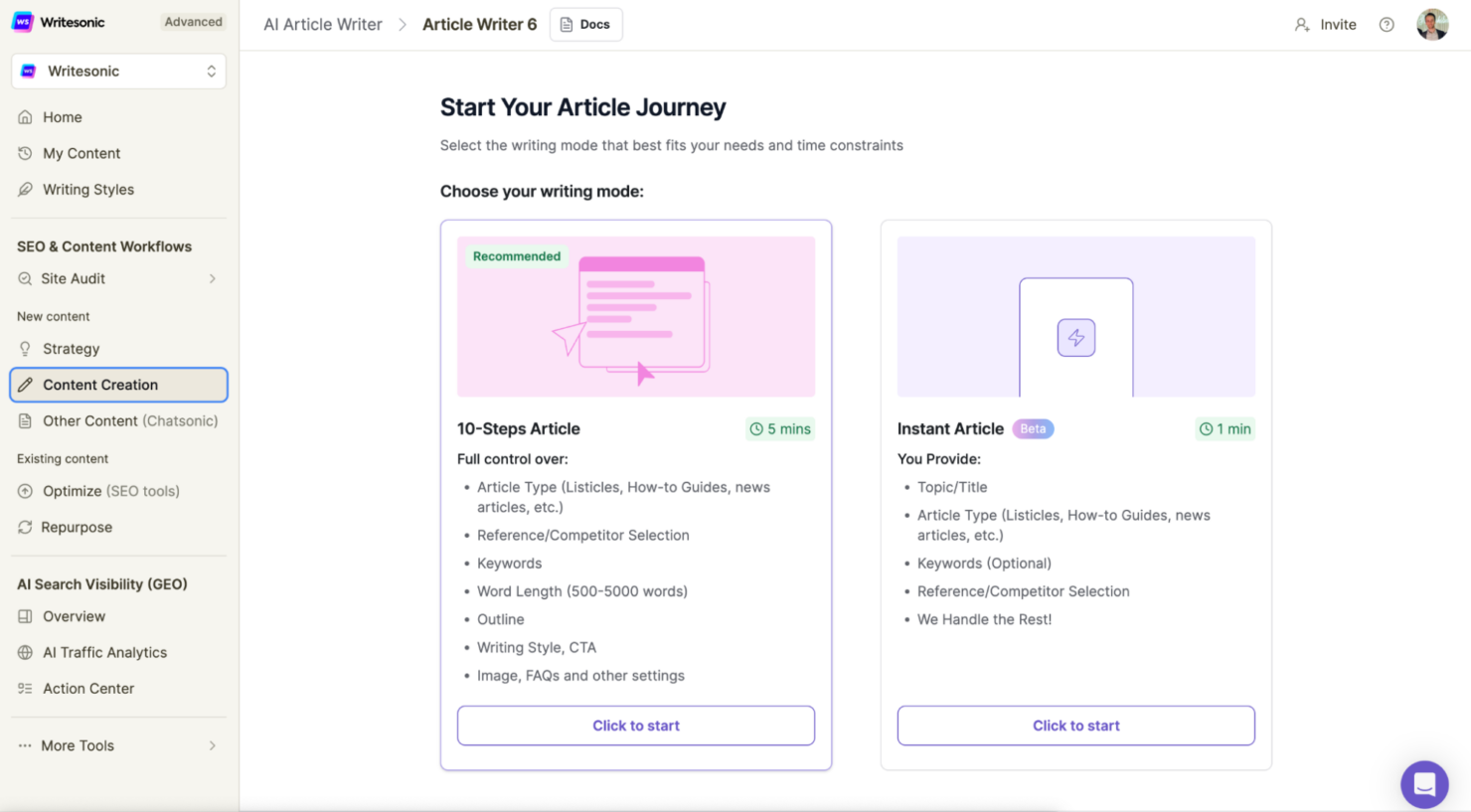
Writesonic is widely recognized for its clean user interface and straightforward navigation, making it easy for new users to start creating content with minimal setup. The platform’s guided workflows, clear prompts, and accessible template library reduce friction for both beginners and experienced marketers. Many users highlight the intuitive dashboard and fast onboarding, noting that even advanced features like brand voice customization are simple to configure without technical expertise.
Integrations
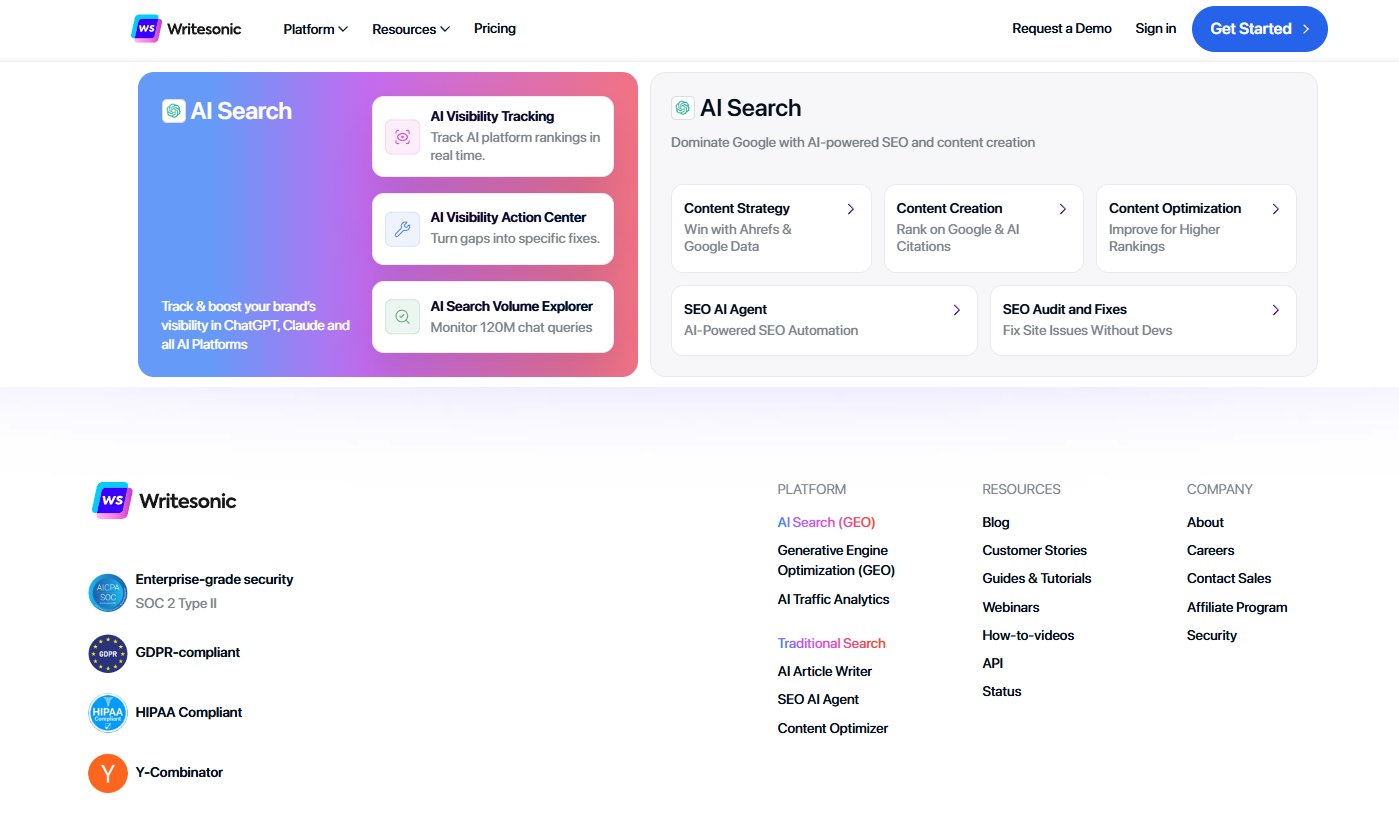
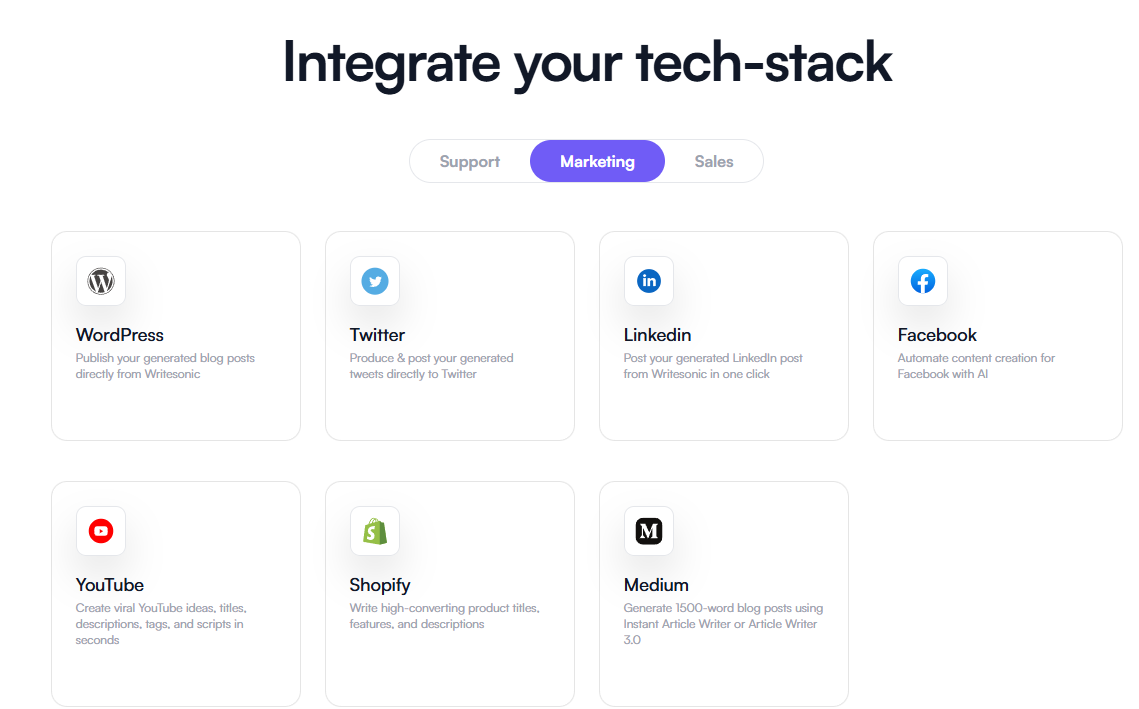
Writesonic integrates with popular LLMs such as ChatGPT, Gemini, and Claude, as well as other platforms like WordPress, Zapier, Google Analytics, and Google Search Console, among others.
Writesonic also offers an API and connects with third-party integration tools for expanded workflow automation.
Writesonic Specs
- A/B Testing
- Energy Production Estimates
- Geo-filtering
- Inventory Tracking
- Materials Library
- Media Streaming
- SCORM
- SEO
- Shading Analysis