

El mejor programa de protección de marca te ayuda a detectar anuncios de productos falsificados, detener intentos de suplantación de identidad, hacer valer los derechos de propiedad intelectual y supervisar las amenazas digitales para que puedas proteger tu reputación y tus ingresos a gran escala. No todas las soluciones están diseñadas para mantenerse al día con las amenazas actuales. La plataforma equivocada puede ralentizarte con falsos positivos, automatización limitada y paneles que ocultan los problemas urgentes entre un exceso de información.
Por eso dediqué más de 300 horas a probar plataformas para encontrar las que ofrecen alertas en tiempo real, flujos de trabajo automatizados para retirar contenido y paneles unificados, de modo que puedas responder antes de que las infracciones se agraven, además de mantenerte al día con la evolución de los estándares de aplicación en las distintas plataformas.
Con más de 10 años de experiencia en marketing y liderazgo de marca, sé de primera mano lo difícil que es proteger una marca en línea. Mediante nuestro riguroso proceso de evaluación, he seleccionado los mejores programas de protección de marca que ofrecen la velocidad, precisión y fiabilidad que necesitan los equipos modernos.
Por qué confiar en nuestras recomendaciones de software
6,700+
Reviews
20
Industry experts
16+
Evaluation factors
14
Years
Nuestro equipo lleva probando y evaluando software desde 2012. Como líderes de marketing, sabemos lo difícil —y lo importante— que es elegir el software adecuado.
Para esta guía, evaluamos las herramientas mediante pruebas prácticas e investigación independiente, puntuando las herramientas según nuestros criterios de selección.
Nuestras reseñas reflejan nuestro criterio editorial humano, no un discurso de ventas.
Revisores expertos:
 Gui DrusinaDirector creativo
- Shriya GhateSenior Marketing Lead
 Amanda JacquesLíder de Marketing Ops

Resumen de los mejores programas de protección de marca
| Tool | Best For | Trial Info | Price | ||
|---|---|---|---|---|---|
| 1 | Ideal para automatizar la retirada de amenazas mediante IA | Demostración gratuita disponible | Precios disponibles bajo solicitud | Website | |
| 2 | Ideal para eliminación de falsificaciones mediante IA | Demo gratuita disponible | Precio bajo solicitud | Website | |
| 3 | Ideal para monitoreo de marca en tiempo real | Prueba gratuita de 14 días disponible | Desde $199/mes (facturación anual) | Website | |
| 4 | Ideal para protección de marcas multinacionales | Demo de pago disponible | Precio disponible a solicitud | Website | |
| 5 | Ideal para funciones de análisis de sentimiento | Prueba gratuita de 7 días disponible | Desde $99/mes | Website | |
| 6 | El mejor para el control de la narrativa de marca | Precios disponibles bajo solicitud | Website | ||
| 7 | Ideal para negocios y marcas locales | Demostración gratuita disponible | Precio a consultar | Website | |
| 8 | Ideal para el seguimiento de precios de la competencia | Prueba gratuita de 14 días | Desde $99/mes | Website | |
| 9 | Mejor conjunto de herramientas para la protección de marca | Demo gratuita disponible | Precio a consultar | Website | |
| 10 | La mejor para el registro de propiedad intelectual | Demo gratuita disponible | Desde $1,000/mes | Website |


Reseñas de los mejores programas de protección de marca
Los siguientes resúmenes detallan mi investigación sobre los mejores programas de protección de marca disponibles. Estas soluciones ayudarán a tu empresa a combatir el uso indebido de la marca, supervisar tu marca comercial y aumentar la interacción con los clientes.
 Ideal para automatizar la retirada de amenazas mediante IA
- Demostración gratuita disponible
- Precios disponibles bajo solicitud
Visit WebsiteCustomer Rating:5/5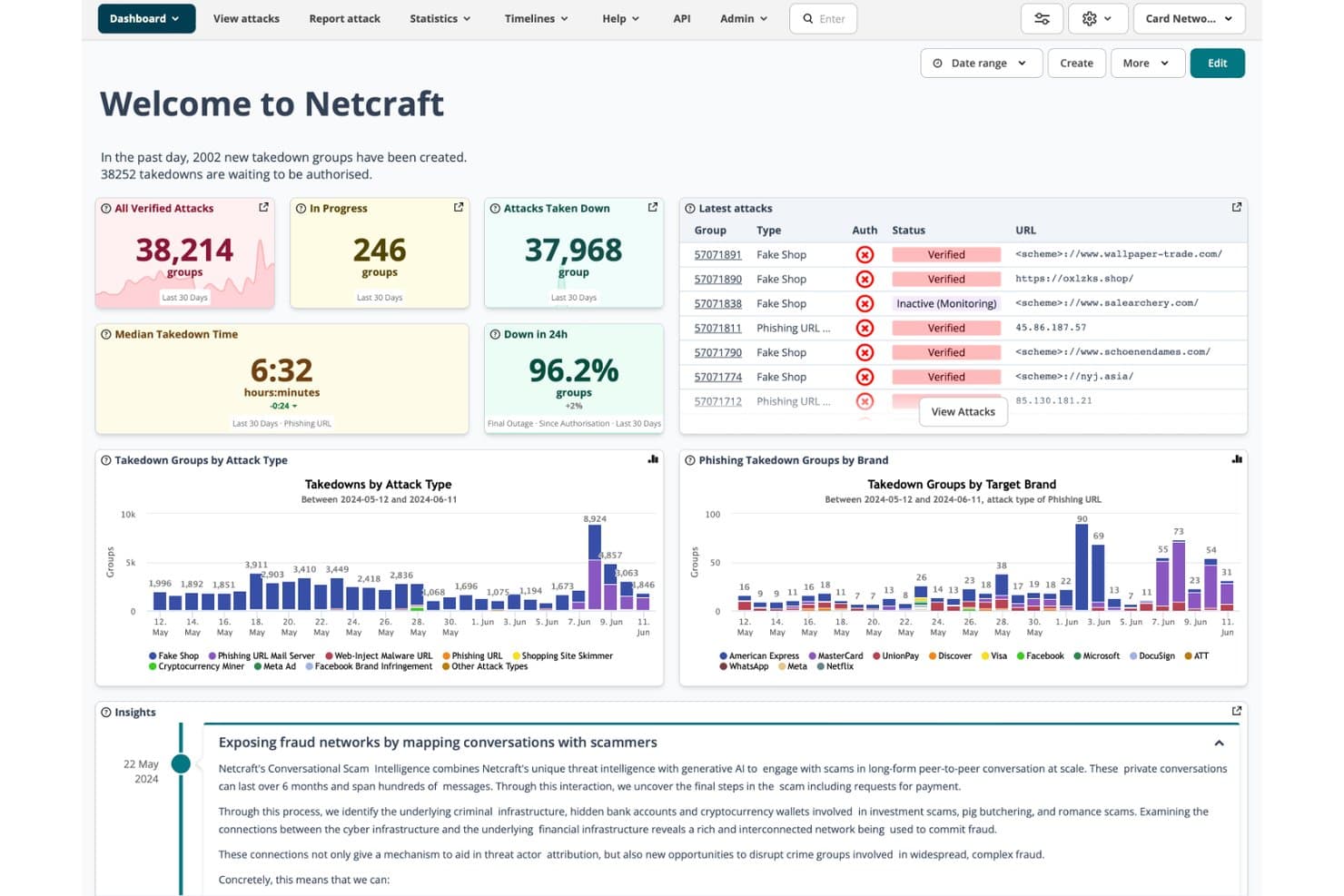
Netcraft ofrece un panel de protección de marcas que muestra el monitoreo de ataques en tiempo real, estadísticas de retiradas y análisis de amenazas de phishing por marca. Netcraft es una plataforma de protección de marcas que detecta y elimina sitios de phishing, dominios similares, perfiles falsos en redes sociales y amenazas de suplantación de marca en canales web, móviles y sociales.
¿Para quién es más adecuado Netcraft?
Netcraft es una excelente opción para los equipos de seguridad empresarial y cumplimiento de marca en sectores de alto riesgo, como los servicios financieros, donde las amenazas de phishing y suplantación de dominios son frecuentes y de gran impacto.
Por qué elegí Netcraft
Netcraft ocupa un lugar entre las mejores opciones de mi lista porque ninguna otra plataforma que haya evaluado puede neutralizar una amenaza en menos de 5 minutos. Fraudcast, el bloqueador automatizado en tiempo real de Netcraft, neutraliza los ataques de phishing antes de que la mayoría de los equipos reciban siquiera una alerta. También confío en los Indicadores de ataque verificados™ para marcar y neutralizar dominios similares antes de que se activen, reduciendo prácticamente a cero el tiempo durante el cual las víctimas pueden verse afectadas.
Características principales de Netcraft
- Herramienta de captura de pantallas: Captura y archiva pantallas de sitios sospechosos de fraude mediante una red global de proxies para recopilar pruebas.
- Monitoreo de cuentas sociales VIP: Supervisa las cuentas de empleados y ejecutivos destacados para detectar riesgos de suplantación en las principales redes sociales.
- Panel de análisis de ataques: Visualiza la actividad de las amenazas, las acciones de retirada y las tendencias en una interfaz de análisis unificada.
- Integraciones de API para SIEM y fuentes de inteligencia sobre amenazas: Conecta los datos de detección y de incidentes de Netcraft con tus plataformas existentes de operaciones de seguridad mediante API flexibles.
Integraciones de Netcraft
Las integraciones nativas incluyen Splunk, Microsoft Sentinel, Slack y otras. Netcraft ofrece una API para integraciones personalizadas.
Pros and Cons
Pros:
- Retirada automatizada de sitios de phishing en menos de 5 minutos
- Detecta dominios similares antes de que se activen
- Fuente de phishing en la que confían los principales navegadores a nivel mundial
Cons:
- Cobertura débil en la detección de productos falsificados en mercados digitales
- Los paneles de informes ofrecen pocas opciones de personalización avanzada
Learn more about Netcraft: Ideal para eliminación de falsificaciones mediante IA
- Demo gratuita disponible
- Precio bajo solicitud
Visit WebsiteCustomer Rating:4.7/5
La plataforma trabaja regularmente para identificar nuevos anuncios y confirmar si existen infracciones de falsificación. Incluyo Red Points en mi lista corta por su enfoque agresivo en la detección y eliminación de falsificaciones impulsada por IA. Suelo recomendarlo a marcas que luchan contra infracciones a gran escala en marketplaces y redes sociales.
Lo que valoro es la precisión de su escaneo automatizado de imágenes y palabras clave—mi equipo detecta falsificaciones mucho antes que con la supervisión manual. Su verdadera fortaleza radica en la aplicación automatizada, que elimina rápidamente las falsificaciones y nos ahorra interminables solicitudes de retirada.
Red Points es ideal para
- Marcas que enfrentan falsificaciones o infracciones de propiedad intelectual a gran escala en marketplaces y redes sociales
- Equipos legales, de protección de marca y ecommerce que priorizan la eliminación rápida y automática de productos falsos
Red Points no es ideal para
- Pequeñas marcas sin un problema significativo de falsificaciones
- Equipos que buscan análisis exhaustivos de amenazas o inteligencia más allá de la automatización en la retirada
Qué distingue a Red Points
Red Points adopta una estrategia fuertemente automatizada para la protección de marca, enfocándose en usar IA para detectar y eliminar falsificaciones a una velocidad que la revisión manual no puede igualar. A diferencia de las soluciones tradicionales que esperan que los equipos legales o de marca revisen alertas y gestionen la eliminación manualmente, Red Points está diseñado para grandes volúmenes: la herramienta espera que confíes en sus sistemas automáticos para hacer el trabajo pesado.
En comparación con proveedores tradicionales que dependen de la revisión manual (como MarkMonitor o firmas de defensa de PI heredadas), Red Points asume que el verdadero desafío es el volumen, no el matiz. En vez de requerir experiencia de cada usuario, la plataforma intenta eliminar al máximo las revisiones manuales de tus tareas.
Compensaciones de Red Points
Red Points se optimiza para la detección automatizada y la eliminación inmediata, lo que significa que a veces da menor prioridad a la investigación profunda o la personalización caso por caso a la que los equipos internos de PI están acostumbrados. Los equipos que desean contexto detallado sobre cada infracción, o que valoran un proceso de investigación manual, pueden sentir que pierden control directo.
Pros and Cons
Pros:
- Fácil de usar
- Plataforma flexible
- Soporte al cliente altamente calificado
Cons:
- La interfaz de usuario podría proporcionar más información
- Algunos problemas no se detectan en ocasiones
Learn more about Red Points: Ideal para monitoreo de marca en tiempo real
- Prueba gratuita de 14 días disponible
- Desde $199/mes (facturación anual)
Visit WebsiteCustomer Rating:4.7/5
Brand24 utiliza información impulsada por IA para brindar datos de protección de marca, como si las menciones negativas están aumentando o disminuyendo. Brand24 aparece en mi lista porque es una de las únicas herramientas de protección de marca que he probado que ofrece alertas en tiempo real sin demoras. Lo recomiendo cuando la percepción pública o la gestión de crisis son una prioridad diaria y no puedes darte el lujo de perder un repunte repentino en menciones sociales o cobertura mediática.
Lo que más valoro es la rapidez con la que puedo identificar amenazas específicas o comentarios de personas influyentes en el panel de control. En la práctica, mi equipo puede actuar sobre posibles problemas justo cuando surgen y no días después, lo que cambia por completo la forma en que gestionamos el riesgo de marca.
Brand24 es ideal para
- Equipos de comunicación y marketing que necesitan alertas instantáneas sobre menciones de marca en línea
- Empresas que gestionan el riesgo reputacional de marca en múltiples canales sociales y fuentes de noticias
Brand24 no es ideal para
- Equipos que solo monitorean unas pocas fuentes o no necesitan información en tiempo real
- Negocios que buscan herramientas integradas para respuesta coordinada a incidentes o análisis profundo de sentimiento
Qué diferencia a Brand24
El enfoque de Brand24 destaca por priorizar la inmediatez: todo gira en torno a recibir actualizaciones y detectar picos de tendencias tan pronto como suceden. A diferencia de las herramientas tradicionales de monitoreo de medios, que agrupan datos en informes diarios o semanales, Brand24 se enfoca en lo que ocurre en el momento y asume que tu equipo necesita ver las amenazas formándose antes de que se descontrolen.
También noto que está diseñado para la velocidad más que para un análisis tremendamente profundo. En lugar de herramientas como Meltwater, que se enfocan en informes extensos e investigación de marca a largo plazo, Brand24 te prepara para saltar directamente a la línea de tiempo y rastrear la historia a medida que se desarrolla en distintas plataformas.
Compromisos de Brand24
Brand24 está optimizado para la detección rápida y el monitoreo de alta velocidad, lo que significa que sus funciones de informes e investigación de incidentes son más ligeras en comparación con herramientas pensadas para auditoría post-incidente. Los equipos que buscan funciones forenses o análisis históricos no encontrarán esa profundidad aquí.
Pros and Cons
Pros:
- Ofrece excelente servicio de atención al cliente
- Buena relación calidad-precio
- Interfaz fácil de usar
Cons:
- Limitaciones en las capacidades de búsqueda
- Puede resultar abrumador para usuarios con muchas menciones
Learn more about Brand24: Ideal para protección de marcas multinacionales
- Demo de pago disponible
- Precio disponible a solicitud

Panel EBRAND ARGOS para el seguimiento de casos de infracción y tendencias de amenazas EBRAND siempre es lo primero en lo que pienso cuando las empresas globales empiezan a preocuparse por la falsificación y las amenazas relacionadas con dominios. Lo que observo en las marcas multinacionales es la necesidad de una supervisión de marca unificada que funcione en diferentes idiomas, jurisdicciones y mercados.
Mi experiencia es que los servicios de vigilancia de dominios, procesos de eliminación y monitoreo de mercados de EBRAND lo hacen mejor que la mayoría de las opciones disponibles. Valoro especialmente cómo su equipo te guía en la aplicación y las opciones legales; esto se vuelve esencial cuando estás rastreando infracciones en decenas de países.
EBRAND es ideal para
- Marcas globales que necesitan protección coordinada de marca, dominios y marketplaces en muchos países
- Equipos legales o de protección de marca que gestionan gran volumen de acciones de enforcement y anticounterfeit
EBRAND no es recomendable para
- Pequeñas empresas que solo buscan monitoreo básico de marcas o derechos de autor
- Empresas con riesgos mínimos fuera de una única geografía o idioma
¿En qué destaca EBRAND?
Creo que EBRAND adopta un enfoque coordinado y diferenciado a la protección de marca, centrándose en gestionar riesgos globales en lugar de solo la detección automatizada. A diferencia de herramientas orientadas a un solo mercado o proveedores más pequeños, EBRAND pone énfasis en una supervisión en capas y la intervención directa tanto en dominios, redes sociales y marketplaces, siempre partiendo de que tu equipo necesita una estrategia de enforcement unificada.
En comparación con plataformas más automatizadas o de autoservicio, el modelo de EBRAND apuesta por una atención personalizada y una experiencia transfronteriza. Esto funciona mejor para empresas donde la defensa de la marca es una batalla compleja y continua, y el trabajo implica eliminaciones activas y quejas en múltiples jurisdicciones, no solo alertas.
Compromisos al usar EBRAND
Al priorizar una protección multinacional personalizada, EBRAND requiere más tiempo para la configuración y, por lo general, más colaboración con su equipo de soporte. Ese enfoque significa que renuncias a la rapidez y funciones de autoservicio que ofrecen soluciones más pequeñas o automatizadas.
Pros and Cons
Pros:
- Monitorea infracciones en diferentes idiomas y regiones
- Reglas personalizadas para diferentes necesidades de protección de marca
- Incluye seguimiento y soporte para eliminaciones
Cons:
- Eliminaciones complejas pueden tardar más
- Plataformas de nicho pueden requerir ingreso manual
Learn more about EBRAND: Ideal para funciones de análisis de sentimiento
- Prueba gratuita de 7 días disponible
- Desde $99/mes
Visit WebsiteCustomer Rating:5/5
Esta captura de pantalla muestra el panel de BrandMentions, resaltando varias métricas y análisis para el monitoreo de marca. Incluyo BrandMentions en mi lista porque es consistentemente preciso al capturar el sentimiento en torno a una marca, y va mucho más allá de la mera escucha social superficial. Si la imagen de marca y los matices de la percepción pública son importantes para tu equipo, aquí es donde recomiendo mirar primero.
Me gusta cómo BrandMentions integra el análisis de sentimiento en las rutinas reales de protección de marca, rastreando cambios de tono entre menciones, sitios de noticias y reseñas. La función para profundizar en el contexto de las conversaciones es especialmente útil cuando necesito identificar si los picos en menciones de marca son realmente positivos o una señal de advertencia.
Lo Mejor de BrandMentions
- Equipos de relaciones públicas, marketing y cumplimiento que monitorizan cambios en el sentimiento de marca en tiempo real
- Organizaciones que necesitan análisis contextuales y profundos de conversaciones y reseñas en línea
BrandMentions No Es Ideal Para
- Equipos enfocados únicamente en la programación o publicación de publicaciones en redes sociales
- Empresas que buscan benchmarks competitivos profundos con paneles visuales
Lo Que Distingue a BrandMentions
BrandMentions se toma en serio el sentimiento; mientras que otras herramientas de monitoreo como Sprout Social muestran conteos de menciones y participación básica, BrandMentions espera que los equipos profundicen para entender por qué la conversación es tendencia. La plataforma está diseñada para revelar la temperatura emocional detrás de cada mención, así siempre trabajas con contexto y no solo con números.
A diferencia de los paneles generalistas que priorizan los indicadores de alcance, BrandMentions centra todo su flujo de trabajo en ayudarte a entender el estado de ánimo e intención en el discurso público. Los equipos no solo reaccionan a los picos; se les alienta a mapear el impacto de eventos, campañas o crisis específicas analizando los cambios de sentimiento a medida que ocurren.
Compensaciones de BrandMentions
Debido a que BrandMentions está optimizado para un contexto de sentimiento profundo, la interfaz tiene más capas analíticas que la mayoría de las herramientas de monitoreo simples. Los equipos suelen encontrar menos vistas de un solo clic y necesitan dedicar tiempo extra a desglosar los datos de sentimiento para obtener ideas accionables.
Pros and Cons
Pros:
- Alertas en tiempo real permiten respuestas instantáneas
- Monitoreo integral en múltiples plataformas
- Las integraciones mejoran la gestión automatizada del flujo de trabajo
Cons:
- Opciones limitadas de soporte directo al cliente
- Personalización limitada en informes y alertas
Learn more about BrandMentions: El mejor para el control de la narrativa de marca
- Precios disponibles bajo solicitud
Visit WebsiteCustomer Rating:5/5
Panel de erase.com mostrando la gestión de reseñas de Google y comentarios de clientes sobre eliminaciones exitosas de reseñas. erase.com destaca para mí como la opción ideal cuando la prioridad es tomar el control de la narrativa online de tu marca rápidamente. Lo elegí para esta lista porque no solo se dedica a monitorear amenazas, sino que también actúa activamente para desplazar contenido negativo y mejorar lo que aparece sobre tu marca en los resultados de búsqueda.
Lo que realmente valoro es cómo erase.com combina la gestión de resultados de búsqueda, la eliminación de contenido y el monitoreo continuo de la salud de la marca, todo en un solo lugar. Los equipos suelen obtener el mayor valor aquí cuando los problemas de reputación están impactando la percepción o el liderazgo no puede arriesgarse a que aparezcan resultados dañinos en Google.
Para quién es mejor erase.com
- Marcas que enfrentan prensa negativa persistente o desafíos de reputación en motores de búsqueda
- Equipos de marketing y relaciones públicas que necesitan control proactivo sobre la narrativa de la marca online
Para quién no es recomendable erase.com
- Pequeñas empresas con una exposición pública mínima o bajo riesgo reputacional
- Equipos interesados solo en un monitoreo puntual, en lugar de gestión continua de la marca
Lo que diferencia a erase.com
Erase.com protege la marca al moldear activamente los resultados en los motores de búsqueda y las narrativas digitales, en lugar de simplemente señalar o monitorear amenazas. A diferencia de herramientas tradicionales de monitoreo de marca como Brandwatch, que se enfocan en el seguimiento de sentimiento y escucha social, erase.com está diseñado para equipos que desean un control directo sobre lo que el mundo encuentra acerca de la marca. No solo informa sobre historias negativas; está diseñado para suprimirlas y promover el contenido más favorable, forzando un enfoque más agresivo e intervencionista en la gestión reputacional.
Compensaciones de erase.com
Erase.com prioriza el control narrativo agresivo, lo que generalmente implica una mayor implicación en la eliminación de contenido y manipulación de búsquedas. La contrapartida es que este enfoque puede requerir más recursos y, a veces, una atención constante para mantener los resultados 'limpios', por lo que es menos ideal para quienes necesitan un monitoreo más ligero y de bajo mantenimiento.
Pros and Cons
Pros:
- Especializado en la eliminación permanente de reseñas y contenido
- Ofrece estrategias ORM personalizadas y adaptadas a agencias
- Brinda soporte al cliente y gestión de cuentas de manera continua
Cons:
- No hay precios claros o fijos; todas las cotizaciones son personalizadas
- Falta de transparencia sobre las expectativas
Learn more about Erase.com: Ideal para negocios y marcas locales
- Demostración gratuita disponible
- Precio a consultar
Visit WebsiteCustomer Rating:4.8/5
Birdeye muestra todas tus reseñas en línea de múltiples fuentes en un solo panel Birdeye entra en la lista porque resuelve un problema que preocupa a las marcas locales todos los días: proteger su reputación donde más importa. Lo recomiendo cuando necesitas monitoreo de reseñas, gestión de listados y herramientas de retroalimentación de clientes que realmente impactan en cómo se muestra tu negocio en línea.
Lo que aprecio de Birdeye es lo bien que conecta la gestión de la reputación local con la protección de la marca. Le da a mi equipo alertas de reseñas en tiempo real y la capacidad de gestionar listados comerciales a gran escala, lo que significa que podemos detectar y reaccionar ante amenazas antes de que se generalicen.
Birdeye es ideal para
- Negocios locales y marcas con múltiples ubicaciones que desean proteger su reputación en línea
- Equipos que necesitan monitoreo unificado de reseñas, comentarios y gestión de listados en una sola plataforma
Birdeye no es ideal para
- Marcas nacionales o globales sin una presencia local significativa
- Organizaciones que buscan análisis avanzado de redes sociales o detección de amenazas más allá de reseñas y listados
Lo que diferencia a Birdeye
El enfoque de Birdeye se centra en centralizar los puntos de contacto de la reputación local, para que realmente veas lo que ven primero los clientes: reseñas, listados y calificaciones, sin distracciones por un monitoreo social más amplio. Mientras que plataformas como Sprinklr profundizan en la escucha multicanal y el análisis, Birdeye se especializa en permitir controlar y responder a comentarios de varias ubicaciones desde un solo panel. Aporta más urgencia a la protección local de la marca, asumiendo que los equipos quieren que cada sucursal o local esté directamente conectado con la presencia digital de la marca.
Compromisos con Birdeye
Lo que veo en la práctica es que Birdeye optimiza para una gestión accionable de reseñas y listados, pero este enfoque implica sacrificar el monitoreo más amplio de redes sociales o medios. Si necesitas una detección integral de amenazas a la marca fuera de las plataformas locales principales, Birdeye puede dejar vacíos.
Pros and Cons
Pros:
- Ayuda con el SEO
- Múltiples integraciones con CRM
- Gestión integral de la reputación en línea
Cons:
- Algunas reseñas no se muestran en Google
- Un poco costoso para pequeñas empresas
Learn more about Birdeye: Ideal para el seguimiento de precios de la competencia
- Prueba gratuita de 14 días
- Desde $99/mes
Visit WebsiteCustomer Rating:4.7/5
Prisync ofrece a los usuarios una ventaja competitiva con un seguimiento actualizado de los precios de la competencia Prisync aparece en mi lista porque toma el seguimiento de precios de la competencia en serio, de una manera que la mayoría de herramientas de monitoreo no lo hacen. He visto que las marcas avanzan con ella cuando se enfrentan a constantes descuentos no autorizados o necesitan hacer cumplir precios MAP estrictos en docenas de minoristas.
Lo que valoro es cómo Prisync te ofrece actualizaciones diarias sobre precios y existencias de tus competidores y canales, para que puedas detectar infracciones rápidamente. Esa alerta en tiempo real y la posibilidad de analizar los cambios históricos de precios permiten que tu equipo responda antes de que ocurra el daño.
Lo Mejor de Prisync
- Marcas que se enfrentan a competidores agresivos y violaciones crónicas de MAP
- Negocios de comercio electrónico y minoristas que monitorean muchos SKUs a través de múltiples canales
Prisync No Es Ideal Para
- Pequeñas empresas con pocos productos o presencia en línea limitada
- Equipos que requieren detección detallada de falsificaciones o monitoreo de mal uso de logotipos/imágenes
Lo Que Distingue a Prisync
Lo que destaca de Prisync es cómo trata el monitoreo de precios como una disciplina automatizada y continua, en vez de una auditoría puntual. A diferencia de plataformas como BrandShield o Red Points, que se centran en falsificaciones o uso indebido de propiedad intelectual, Prisync se enfoca en datos de precios en tiempo real y una amplia cobertura de canales como su flujo principal de trabajo.
La herramienta espera que los equipos traten la vigilancia de precios como un ciclo operativo diario, no como una tarea mensual. Veo que funciona mejor en marcas dispuestas a actuar rápido ante cambios en el mercado en lugar de limitarse a recopilar infracciones de manera pasiva.
Riesgos o Limitaciones de Prisync
Prisync realmente se optimiza para el seguimiento fiable de precios y actualizaciones frecuentes, pero eso significa que no ofrece una cobertura profunda de problemas como el abuso de marca. Así que, si tu riesgo tiene más que ver con vendedores no autorizados que usan tus activos de marca, su enfoque exclusivo en precios puede dejar vacíos en otras áreas.
Pros and Cons
Pros:
- Proporciona datos en tiempo real sobre los precios de la competencia para tomar decisiones informadas.
- Integración fluida con las principales plataformas de comercio electrónico como Shopify.
- El motor de precios dinámico automatiza los ajustes de precios competitivos.
Cons:
- Algunos usuarios reportan problemas con la precisión de los precios.
- Capacidad limitada para exportar URL de competidores de forma independiente.
Learn more about Prisync: Mejor conjunto de herramientas para la protección de marca
- Demo gratuita disponible
- Precio a consultar
Visit WebsiteCustomer Rating:4.4/5
Accede a métricas de informes sobre amenazas de correo electrónico, incluyendo cuántos emails procesó la plataforma. Mimecast destaca para mí como la opción que constantemente lleva la protección de marca más allá del simple bloqueo de suplantaciones básicas. Veo casos de uso sólidos cuando tu equipo se enfrenta a amenazas avanzadas como campañas de phishing que intentan explotar tu dominio y marca de manera dirigida.
Lo que me gusta de Mimecast es lo minucioso que es al abordar la suplantación digital: la detección de explotación de marca, la seguridad de correo electrónico en tiempo real y la inteligencia de amenazas en dominios web trabajan en conjunto aquí. Cuando mi equipo necesita minimizar el riesgo de que atacantes abusen de nuestros activos públicos e identidad, normalmente confío en esta herramienta para detectar y frenar esas campañas rápidamente.
Ideal para
- Equipos de seguridad y TI que afrontan amenazas persistentes de phishing, suplantación o impersonación contra su marca
- Organizaciones que necesitan una detección y eliminación robusta de dominios fraudulentos o uso indebido de la marca
No recomendado para
- Pequeñas empresas con exposición de marca limitada o necesidades sencillas de seguridad de correo
- Equipos que buscan una supervisión ligera y de un solo propósito sobre dominios, sin inteligencia de amenazas avanzada
Qué distingue a Mimecast
Lo que más me llama la atención del diseño de Mimecast es cómo integra de forma profunda la protección de marca en cada capa de su pila de seguridad. En lugar de simplemente bloquear correos sospechosos, como Proofpoint o la mayoría de gateways, Mimecast considera que los equipos deben tratar las amenazas externas a la marca como una función central de TI y riesgos. La herramienta incorpora defensa de dominio, detección de suplantación y visibilidad de amenazas directamente en los flujos de trabajo diarios, priorizando la seguridad online de la marca al mismo nivel que la seguridad del buzón de entrada.
Donde las herramientas tradicionales supervisan los ataques de manera reactiva, Mimecast asume que tu equipo está activamente buscando y desmontando riesgos de suplantación y de marca antes de que lleguen a tu audiencia. Esa mentalidad proactiva y en capas no es solo una característica: es la base de cómo Mimecast espera que trabajes.
Compromisos con Mimecast
Mimecast está optimizado para una monitorización profunda y continua de amenazas a la marca, lo que significa que dedicas más tiempo a gestionar paneles de control, alertas y procesos de bloqueo o desmantelamiento. Ese nivel de control puede añadir ruido y complejidad en equipos que no estén dedicados al riesgo digital o que no cuenten con personal para ajustar regularmente el sistema.
Pros and Cons
Pros:
- Video tutoriales rápidos
- Plataforma intuitiva
- Excelente soporte al cliente
Cons:
- Algunos correos spam logran pasar
- Período limitado de retención de registros y correos
Learn more about Mimecast: La mejor para el registro de propiedad intelectual
- Demo gratuita disponible
- Desde $1,000/mes
Visit WebsiteCustomer Rating:4.9/5
Detecta y elimina falsificaciones de sitios de comercio electrónico, mercados en línea, redes sociales y otras fuentes. Marqvision ayuda a las empresas a registrar, gestionar y monitorizar rápidamente marcas comerciales para asegurar la protección de propiedad intelectual en una solución integral de gestión de propiedad intelectual.
Por qué elegí Marqvision: La plataforma proporciona un área centralizada donde puedes monitorizar y gestionar el progreso de tus solicitudes de propiedad intelectual en tiempo real. Marqvision ofrece a las empresas herramientas para obtener más transparencia respecto al registro de su propiedad intelectual y les ayuda a conseguir sus marcas comerciales más rápido. Para ello, Marqvision utiliza una red de firmas legales de élite a nivel mundial, especializadas en leyes locales de marcas comerciales.
Funciones destacadas de Marqvision
Las funciones destacadas incluyen herramientas de inteligencia artificial que rastrean y eliminan contenido ilegal y combaten la piratería en línea para proteger el valor de tu obra con derechos de autor. Marqvision también ofrece capacidades que detectan y eliminan automáticamente productos falsificados de la mayoría de los mercados en línea.
Pros and Cons
Pros:
- Detección eficiente y oportuna de falsificaciones
- Eliminación rápida de falsificaciones
- Identifica fuentes reales de amenazas
Cons:
- La tarifa no es adecuada para pequeñas empresas
- Canales de detección limitados en el nivel básico
Learn more about MarqVision:
Otros programas de protección de marca
Durante mi investigación para crear este artículo, descubrí que existe un número considerable de opciones disponibles, y que no te beneficiaría que no añadiera una lista completa de alternativas. Por eso quería enumerar más opciones disponibles que, en mi opinión, merecen ser consideradas.
- 11BrandShieldMejor para monitoreo de reputación
- 12BrandVerityIdeal para monitoreo de búsqueda pagada
- 13CorsearchIdeal para detección proactiva de amenazas
- 14ZeroFoxIdeal para supervisar plataformas públicas
- 15GrowByDataIdeal para monitorización MAP
- 16PhishLabsLa mejor herramienta integral de inteligencia de amenazas
- 17BolsterLo mejor para la protección de marca automatizada
- 18ActiveFenceMejor para la protección contra comportamiento malicioso y contenido dañino
- 19AcvissIdeal para tecnología contra la falsificación
- 20SentrycIdeal para eliminar productos falsificados
- 21Constella IntelligenceIdeal para monitoreo automatizado de amenazas
- 22AicarmaIdeal para el seguimiento diario de visibilidad
- 23SemanticForceMejor para la protección frente a riesgos digitales
- 24ContinuxIdeal para la gestión de patentes
- 25Price2SpyIdeal para la monitorización de precios
Reseñas relacionadas de programas de mercadotecnia
Si aún no has encontrado aquí lo que buscas, consulta estas herramientas estrechamente relacionadas con la estrategia de mercadotecnia digital que hemos probado y evaluado.
- Programas de mercadotecnia
- Programas de gestión de mercadotecnia
- Programas de mercadotecnia basada en cuentas
- Programas de gestión de redes sociales
- Programas de mercadotecnia por correo electrónico
- Programas de supervisión de medios
Cómo evalúo el software de protección de marca
Divido mi evaluación en dos capas: capacidades básicas como la detección de falsificaciones y los flujos de trabajo para retiradas, y después los diferenciadores que hacen destacar a las plataformas de aplicación más sólidas.
Funcionalidad central (requisitos fundamentales para esta lista)
Cuando selecciono herramientas para mi lista, califico cada una en una escala del 0 (no ofrece la funcionalidad) al 5 (destaca en esta área) para cada funcionalidad central que se menciona a continuación. Luego, calculo la puntuación total de la herramienta en forma de porcentaje. Cada herramienta necesita alcanzar una puntuación total mínima del 65% para ser considerada para la inclusión.
- Detección de infracciones en línea: Evalúo cuántos canales digitales una herramienta analiza automáticamente, desde sitios de anuncios de productos hasta sitios web fraudulentos que albergan versiones falsificadas de tu marca.
- Monitoreo de dominios y ciberocupación: Los dominios similares son una amenaza constante, así que reviso si una herramienta rastrea nuevos registros, variantes por errores tipográficos y falsificaciones mediante caracteres visualmente similares.
- Flujos de trabajo para retiradas y aplicación: La velocidad y el alcance para enviar solicitudes de retirada son importantes aquí, incluyendo si una plataforma puede presentar solicitudes de eliminación en registradores y mercados.
- Protección contra falsificaciones y en marketplaces: Analizo cuántos marketplaces cubre una herramienta y si permite realizar acciones de aplicación masiva contra vendedores reincidentes de falsificaciones.
- Monitoreo de suplantación en redes sociales: Las cuentas falsas de marca aparecen rápidamente, así que verifico si una herramienta monitoriza las principales redes y detecta perfiles de suplantación para su eliminación.
- Inteligencia de amenazas e informes: Un buen sistema de informes vincula la actividad de aplicación con los resultados, así que evalúo si los paneles muestran tasas de éxito de retiradas, volumen de infracciones y registros de evidencia.
Una vez que tengo una lista de herramientas que cumplen con estos criterios, considero qué distingue a cada plataforma.
Factores diferenciadores (qué distingue a los proveedores)
Así es como comparo y contrasto distintos proveedores:
Características destacadas
La cartografía de vendedores y redes es un gran diferenciador: las herramientas que rastrean anuncios falsificados hasta las cadenas de suministro ofrecen a tu equipo legal opciones de aplicación en origen. También busco reconocimiento de imágenes y logotipos impulsado por IA, que detecta infracciones que la coincidencia por palabras clave pasa por alto, como logotipos alterados en fotos de productos. El monitoreo de la web oscura añade otra capa, revelando operaciones de falsificaciones y activos de marca robados en foros y mercados que tu equipo nunca encontraría manualmente.
Más allá de las funciones
Las tasas de éxito en la aplicación importan mucho aquí. Verifico si un proveedor tiene estatus de reportero de confianza con los principales marketplaces y registradores, ya que eso impacta directamente en la rapidez con la que se procesan las retiradas. Los estándares para la recolección de evidencia son otro factor clave: la documentación debe incluir cadena de custodia que soporte procesos legales. También evalúo qué tan bien se conecta una plataforma con bases de datos de marcas registradas y herramientas de gestión de propiedad intelectual, ya que la protección de marca rara vez funciona en aislamiento del flujo de trabajo del equipo legal.
Cómo elegir un programa de protección de marca
Con tantos programas de protección de marca diferentes disponibles, puede ser difícil decidir cuál se adapta mejor a tus necesidades.
Mientras elaboras tu lista de opciones, pruebas y seleccionas un programa de protección de marca, ten en cuenta lo siguiente:
- Qué problema intenta resolver - Empiece por identificar la carencia en materia de protección de marca que intenta cubrir para aclarar las características y funcionalidades que debe proporcionar la herramienta de protección de marca.
- Quién tendrá que utilizarlo - Para evaluar el coste y los requisitos, considere quién utilizará el software y cuántas licencias necesitará. Tendrá que evaluar si solo lo necesitará el equipo de marketing o si toda la organización requerirá acceso. Cuando esto esté claro, conviene considerar si está priorizando la facilidad de uso para todos o la rapidez para los usuarios avanzados de su software de marketing.
- Con qué otras herramientas debe funcionar - Aclare qué herramientas está sustituyendo, cuáles permanecerán y con qué herramientas necesitará integrarlo, como el software de contabilidad, CRM o recursos humanos. Tendrá que decidir si las herramientas deberán integrarse entre sí o, como alternativa, si puede sustituir varias herramientas por una solución de protección de marca consolidada.
- Qué resultados son importantes - Considere el resultado que debe ofrecer el software para que se considere un éxito. Piense en qué capacidad desea obtener o qué quiere mejorar, y en cómo medirá el éxito. Por ejemplo, un resultado podría ser la capacidad de obtener una mayor visibilidad del rendimiento. Podría comparar las características del software de protección de marca hasta el cansancio, pero si no está pensando en los resultados que desea impulsar, podría estar desperdiciando mucho tiempo valioso.
- Cómo funcionaría dentro de su organización - Considere la selección del software junto con sus flujos de trabajo y su metodología de prestación. Evalúe qué funciona bien y cuáles son las áreas que están causando problemas y deben abordarse. Recuerde que cada empresa es diferente: no dé por hecho que una herramienta funcionará en su organización solo porque es popular.
Tendencias del software de protección de marca
El panorama del software de protección de marca está evolucionando rápidamente, lo que refleja la creciente complejidad de las amenazas contra la identidad de marca y la propiedad intelectual en línea. A continuación se ofrece un resumen conciso de las tendencias, características y funcionalidades actuales que están dando forma al sector, adaptado a los profesionales del marketing.
- Integración de IA y aprendizaje automático: El uso de la inteligencia artificial (IA) y los algoritmos de aprendizaje automático es cada vez más frecuente. Estas tecnologías permiten detectar de forma más eficiente y precisa productos falsificados, infracciones de marcas registradas, sitios web falsos y usos no autorizados de activos digitales en diversas plataformas en línea.
- Supervisión integral de los canales digitales: Se hace especial hincapié en la capacidad de supervisar una amplia variedad de canales digitales, incluidas las redes sociales, las plataformas de comercio electrónico y la web oscura. Esto garantiza que las marcas puedan proteger su identidad y sus activos en un entorno digital más amplio.
- Acciones de cumplimiento automatizadas: El avance hacia la automatización en la detección y mitigación de amenazas es fundamental. Las solicitudes automatizadas de retirada y las acciones de cumplimiento agilizan el proceso de protección de la presencia en línea de una marca.
- Supervisión de la web oscura: Las herramientas y los servicios de protección de marca que buscan activamente en la web oscura credenciales robadas, productos falsificados y otras amenazas están evolucionando rápidamente. Esta función es esencial para identificar y mitigar de forma preventiva los riesgos potenciales antes de que afecten a la marca o a sus clientes.
- Herramientas de selección de marcas registradas: Se están utilizando capacidades avanzadas de IA para la selección de marcas registradas, lo que ofrece la posibilidad de analizar rápidamente bases de datos globales en busca de posibles infracciones. Esta tecnología permite a las marcas proteger su propiedad intelectual con mayor eficiencia y precisión.
Estas tendencias coinciden con los crecientes desafíos a los que se enfrentan las marcas para proteger su presencia en línea frente a la falsificación, la suplantación de identidad y otras formas de fraude digital. A medida que las amenazas digitales se vuelven más sofisticadas, el sector del software de protección de marca continúa innovando y proporciona a las empresas las herramientas que necesitan para proteger eficazmente su identidad de marca y su propiedad intelectual.
¿Qué es el software de protección de marca?
El software de protección de marca es una herramienta que protege los activos de marca, la propiedad intelectual y la reputación de una empresa en línea mediante la búsqueda y actuación frente al uso no autorizado de marcas registradas, nombres de marca y logotipos. Protege contra amenazas como la falsificación, la ocupación indebida de dominios y las infracciones de propiedad intelectual. Algunos programas de protección de marca también realizan un seguimiento de las solicitudes de retirada y hacen cumplir las directrices de marca. El objetivo es garantizar el mantenimiento de la integridad de una marca y ayudar a los clientes a interactuar con productos y servicios auténticos.
Características del software de protección de marca
Al seleccionar un software de protección de marca, preste atención a las siguientes características clave:
- Supervisión en línea: Analiza sitios web, redes sociales, mercados en línea y foros para detectar el uso no autorizado de tu marca, productos falsificados o abuso de marca. Esto te ayuda a identificar los problemas antes de que se salgan de control y actuar con rapidez.
- Defensa de marcas registradas: Automatiza la identificación y denuncia de infracciones de marcas registradas. Puedes proteger tu propiedad intelectual sin buscar manualmente infracciones en cientos de plataformas.
- Detección de falsificaciones: Encuentra copias no autorizadas o versiones falsas de tus productos en internet. Esta función te ayuda a reducir las pérdidas por falsificación y protege a tus clientes de productos potencialmente inferiores.
- Gestión de retiradas: Gestiona y acelera la eliminación de contenido infractor mediante la generación y el seguimiento de solicitudes de retirada. Puedes ver exactamente qué se ha eliminado y qué aún requiere atención, lo que te ahorra una gran cantidad de intercambios manuales.
- Herramientas de investigación: Profundiza en las amenazas persistentes con análisis que revelan patrones, entidades relacionadas o infractores recurrentes. Estos datos te ofrecen una visión más clara de los riesgos actuales para que puedas responder de forma proactiva.
- Informes y análisis: Visualiza los datos con paneles e informes, lo que facilita la comprensión de los riesgos para la marca y el seguimiento del progreso a lo largo del tiempo. Puedes presentar a tu equipo el valor de tus esfuerzos e identificar áreas de mejora.
- Cobertura mundial: Supervisa las amenazas en todo el mundo y haz valer tus derechos en diferentes idiomas y jurisdicciones, para no limitarte a una sola región a la hora de proteger tu marca.
- Capacidades de integración: Conéctate con tus herramientas existentes, como plataformas legales, de comercio electrónico o de atención al cliente, para optimizar tus flujos de trabajo sin tener que alternar entre distintos sistemas.
Funciones habituales de inteligencia artificial del software de protección de marcas
Además de las funciones estándar del software de protección de marcas mencionadas anteriormente, muchas de estas soluciones están incorporando inteligencia artificial con funciones como las siguientes:
- Recomendaciones automatizadas de retirada: Permite que la inteligencia artificial sugiera o incluso inicie acciones de retirada cuando se detecten infracciones, acelerando la defensa y reduciendo el trabajo manual.
- Detección automatizada de amenazas: Utiliza inteligencia artificial para encontrar usos indebidos de la marca, anuncios de productos falsificados o patrones inusuales con mayor rapidez y precisión que las revisiones manuales, para que nada pase desapercibido.
- Reconocimiento de imágenes: Emplea aprendizaje automático para detectar tus logotipos, diseños o imágenes de productos incluso cuando los falsificadores realizan cambios sutiles, ofreciéndote un par adicional de ojos vigilantes.
- Procesamiento del lenguaje natural: Analiza grandes cantidades de texto en sitios web, foros y plataformas sociales para detectar menciones de tu marca en varios idiomas o con términos disfrazados, de modo que puedas reaccionar primero ante las amenazas emergentes.
- Análisis predictivo: Aprovecha modelos de inteligencia artificial que predicen amenazas futuras basándose en patrones y tendencias históricas, lo que te ayuda a prepararte con antelación en lugar de limitarte a reaccionar.
Beneficios del software de protección de marcas
El software de protección de marcas es esencial para las empresas que buscan mantener su reputación, garantizar la confianza de los clientes y proteger su propiedad intelectual en la era digital. Los mejores servicios de supervisión de marcas registradas ofrecen una cobertura integral en múltiples plataformas y canales. A continuación se presentan cinco beneficios principales del uso de software de protección de marcas, destinados a ayudar a los posibles compradores de software a comprender su valor.
- Mayor seguridad en línea: Ofrece una supervisión y protección sólidas contra el fraude y la falsificación en internet. Al aprovechar el software de protección de marcas, las empresas pueden detectar y responder a las amenazas en tiempo real, reduciendo significativamente el riesgo de pérdidas financieras y dilución de la marca.
- Protección de la propiedad intelectual: Automatiza la detección del uso no autorizado de marcas registradas y contenido protegido por derechos de autor. Este beneficio garantiza que los derechos de propiedad intelectual de una empresa se supervisen y protejan continuamente, ayudando a mantener la integridad y el valor de la marca.
- Gestión de la reputación: Ofrece herramientas para identificar y mitigar contenido y actividades potencialmente perjudiciales. Al mantener una imagen de marca positiva en internet, las empresas pueden fomentar una mayor fidelidad de los clientes y evitar publicidad negativa que podría perjudicar sus operaciones comerciales.
- Supervisión de mercados en línea: Permite rastrear y retirar productos falsificados de las plataformas de comercio electrónico. Esta función ayuda a las empresas a proteger a sus clientes de productos falsos y garantiza que solo haya mercancía auténtica disponible para su compra, preservando así las ventas y la satisfacción del cliente.
- Asistencia legal y de cumplimiento: Agiliza el proceso de defensa de los derechos de marca y el cumplimiento de los requisitos normativos. El software de protección de marcas simplifica los aspectos legales de la protección de una marca, desde el envío de avisos de retirada hasta la gestión de las complejas leyes internacionales de marcas registradas, facilitando que las empresas se concentren en el crecimiento y la innovación.
El software de protección de marca no solo ayuda a protegerse contra las pérdidas financieras y el daño a la reputación, sino que también garantiza que los clientes interactúen con productos auténticos y de alta calidad. Con la creciente prevalencia de las amenazas digitales, invertir en una solución integral de protección de marca es más importante que nunca.
Costos y precios del software de protección de marca
A continuación, se ofrece una guía simplificada para ayudarte a comprender las opciones de planes y precios que suelen estar disponibles en el software de protección de marca.
Tabla comparativa de planes para el software de protección de marca
Aquí está la tabla con una columna «Ideal para» añadida:
| Tipo de plan | Precio medio | Funciones comunes incluidas | Ideal para |
|---|---|---|---|
| Tipo de planBásico | Precio medio$100-500/mo | Funciones comunes incluidas- Supervisión en tiempo real - Alertas por correo electrónico - Funciones básicas de generación de informes | Ideal paraPequeñas empresas o empresas emergentes que recién comienzan a centrarse en la protección de marca |
| Tipo de planProfesional | Precio medio$500-2,000/mo | Funciones comunes incluidas- Supervisión integral en línea - Servicios automatizados de retirada - Generación de informes y análisis avanzados - Asistencia especializada | Ideal paraEmpresas medianas o aquellas con una presencia significativa en línea que necesitan una protección más sólida |
| Tipo de planEmpresarial | Precio medioPrecios personalizados | Funciones comunes incluidas- Protección de marca de espectro completo - Servicios personalizables de supervisión y retirada - Consultoría estratégica sobre protección de marca - Acceso a API e integraciones - Asistencia premium las 24 horas, los 7 días de la semana | Ideal paraGrandes corporaciones o empresas con necesidades complejas de protección de marca y múltiples líneas de productos |
| Tipo de planOpción gratuita | Precio medio$0 | Funciones comunes incluidas- Funciones de supervisión limitadas - Solicitudes manuales de retirada - Alertas básicas por correo electrónico | Ideal paraPersonas o empresas muy pequeñas que desean probar herramientas de protección de marca antes de comprometerse con un plan de pago |
Al elegir un plan, ten en cuenta el tamaño de la presencia en línea de tu marca y el nivel de protección que necesitas. Evalúa siempre tus necesidades específicas y los riesgos potenciales antes de tomar una decisión.
Preguntas frecuentes
¿Todavía no sabes por dónde empezar tu proceso de compra de software de protección de marca? Aquí tienes algunas preguntas frecuentes que te ayudarán a comenzar.
¿Cómo mido el ROI del software de protección de marca?
Puedes medir el ROI del software de protección de marca haciendo un seguimiento de las reducciones en el abuso de marca, los incidentes de falsificación y la pérdida de ingresos. Analiza el tiempo ahorrado por tu equipo y el valor de la propiedad intelectual protegida. Revisa los informes mensuales del software para evaluar el ahorro de costes, las tasas de resolución de incidentes y el impacto en la confianza de los clientes. Vincula los resultados con los KPI importantes para tu empresa, como el aumento de las ventas o la mejora de la reputación de la marca.
¿Las herramientas de protección de marca pueden integrarse con mi plataforma de martech existente?
Sí, la mayoría de las herramientas de protección de marca ofrecen integraciones con plataformas de tecnología de marketing, como soluciones de CRM, análisis y automatización de flujos de trabajo. Comprueba si el software cuenta con API o conectores prediseñados para tu plataforma específica, como Salesforce, HubSpot o Slack, por ejemplo. Una integración fluida te permite centralizar las alertas, automatizar los informes y actuar rápidamente sin interrumpir tus procesos existentes.
¿Qué riesgos digitales pasan más desapercibidos para los profesionales del marketing que utilizan herramientas de protección de marca?
Un descuido habitual es ignorar canales de amenazas emergentes, como la suplantación de identidad en redes sociales, las aplicaciones móviles falsas y las colaboraciones sospechosas con influencers. Muchos profesionales del marketing también pasan por alto los anuncios que infringen derechos, la suplantación de dominios o las falsificaciones en los mercados en línea. Revisa la configuración de monitorización y mantente al tanto de las tendencias en fraude digital para estar protegido en todos los puntos de contacto.
¿Cuánto se tarda en ver resultados del software de protección de marca?
A menudo puedes ver los primeros resultados de las herramientas de protección de marca durante los primeros 30 días. Las mejoras rápidas incluyen la detección y eliminación automáticas de infracciones evidentes. El ROI medible suele aparecer en un plazo de 3–6 meses, a medida que la herramienta recopila datos, perfecciona los modelos de detección y tu equipo ajusta los flujos de trabajo para conseguir la máxima eficiencia.
¿Qué es un programa de protección de marca?
Un programa de protección de marca es un enfoque estructurado para detectar, prevenir y responder al uso indebido o abuso de tu marca, tanto en línea como fuera de ella. Combina software especializado, políticas y equipos internos para monitorizar los canales en los que aparecen amenazas. Para los responsables de marketing, un programa normalmente implica trabajar con los equipos jurídico, de TI y de atención al cliente para preservar la reputación y la confianza en la marca.
¿Cuál es la función de un responsable de protección de marca?
Un responsable de protección de marca supervisa la estrategia y las operaciones destinadas a detectar y eliminar las amenazas contra tu marca. Gestiona el uso del software de protección de marca, coordina las acciones con los equipos jurídico y de marketing, y desarrolla protocolos para responder a los incidentes. También revisa los análisis, capacita al personal y garantiza que tu marca permanezca protegida en todos los canales.
Reseñas adicionales de software de protección de marca
Las opciones de software de protección de marca que evalué en este artículo abarcan una amplia variedad de acciones fraudulentas que pueden afectar a tu empresa. Puedes consultar las siguientes reseñas de software si necesitas herramientas que realicen funciones de protección de marca más específicas.
- Software de gestión de marca
- Software de gestión de activos de marca
- Software de inteligencia de marca
- Herramientas de escucha social
- Software contra el fraude de clics
- Software de GDPR
- Herramientas de gestión de la reputación en redes sociales
Conclusión
El software de protección de marca es una herramienta crucial para las empresas en la actual generación conectada a Internet y se está convirtiendo rápidamente en una necesidad. El uso de cualquiera de las plataformas de este artículo protegerá tu marca frente a amenazas en línea, incluidas las estafas en línea y los daños a la reputación. Tomar precauciones tempranas e implementar herramientas de protección de marca para tu empresa es fundamental, y las mejores soluciones se adaptarán a tus necesidades específicas.
Si buscas otro software que ayude a tu departamento de marketing a gestionar funciones empresariales importantes, suscríbete al boletín de The CMO, donde recibirás las últimas reseñas de software y consejos de marketing de los mejores profesionales.