

As an expert marketer, staying ahead of the competition is tough. You face challenges like understanding your audience, tracking your brand's reputation, and responding to market trends. That's where brand intelligence software comes in, helping you make informed decisions.
In my experience, the right tools can be a game-changer for your team, providing insights that drive strategy and growth. I've tested and reviewed various options to bring you an unbiased list of the best brand intelligence software solutions on the market.
Below you'll find detailed reviews of each solution, highlighting their features and benefits to help you make a smart buying decision.
Why Trust Our Software Recommendations
6,700+
Reviews
20
Industry experts
16+
Evaluation factors
14
Years
Our team has been testing and reviewing software since 2012. As marketing leaders ourselves, we know how difficult—and important—it is to choose the right software.
For this guide, we evaluated tools using hands-on testing and independent research, scoring tools using our selection criteria.
Our reviews reflect our human editorial judgment, not a sales pitch.
Expert reviewers:
 Gui DrusinaCreative Director
- Shriya GhateSenior Marketing Lead
 Amanda JacquesMarketing Ops Leader

Best Brand Intelligence Software Summary
This comparison chart summarizes pricing details for my top brand intelligence software selections to help you find the best one for your budget and business needs.
| Tool | Best For | Trial Info | Price | ||
|---|---|---|---|---|---|
| 1 | Best for historical social data at scale | Not available | Pricing upon request | Website | |
| 2 | Best for AI-powered crisis and trend alerts | Free demo available | Pricing upon request | Website | |
| 3 | Best for experience-led brand health research | Free demo available | Pricing upon request | Website | |
| 4 | Best for AI-driven brand and search visibility | Free demo available | Pricing upon request | Website | |
| 5 | Best for enterprise PR and brand intelligence | Not available | Pricing upon request | Website | |
| 6 | Best for unified brand and CXM intelligence | Free demo available | Pricing upon request | Website | |
| 7 | Best for unified social listening and publishing | 14-day free trial + free demo available | From $99/user/month | Website | |
| 8 | Best for social listening | Free demo available | Pricing upon request | Website | |
| 9 | Best for AI-driven global media intelligence | Free demo available | From $10,000/year (billed annually) | Website | |
| 10 | Best for AI-driven brand and consumer intelligence | 14-day free trial | Pricing upon request | Website |


Best Brand Intelligence Software Reviews
Below are my detailed summaries of the best brand intelligence software that made it onto my shortlist. My reviews offer a detailed look at the key features, pros & cons, integrations, and ideal use cases of each tool to help you find the best one for you.
 Best for historical social data at scale
- Not available
- Pricing upon request
Visit WebsiteCustomer Rating:4.3/5This rating combines scores from multiple user review sites to reflect overall customer sentiment about the product.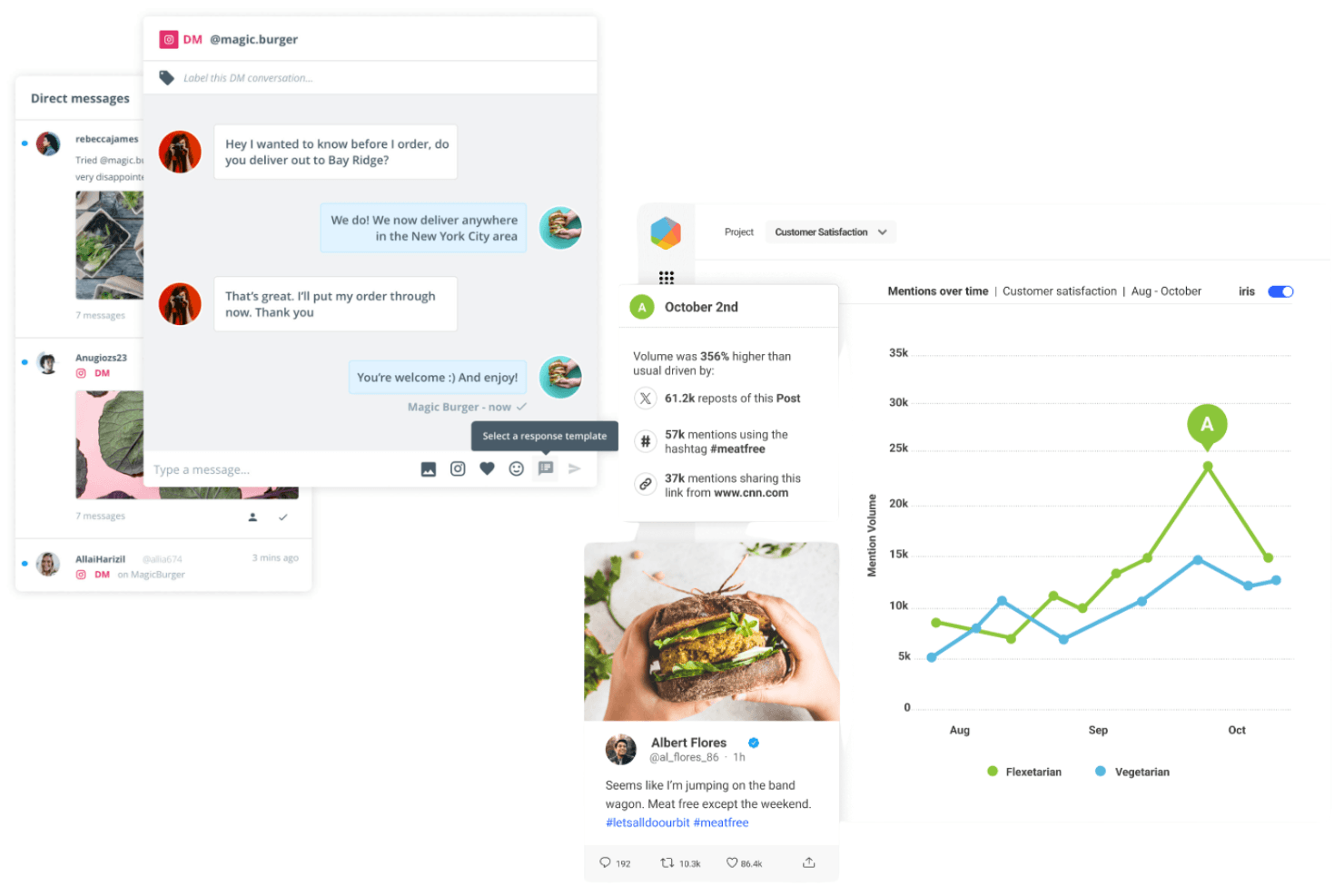
Brandwatch analyzes and manages online conversations across social channels. Brandwatch is a brand intelligence and social listening platform that combines real-time mention monitoring across 100 million+ sources, AI-powered sentiment analysis, competitive benchmarking, and a historical data archive stretching back to 2006.
Who Is Brandwatch Best For?
Brandwatch is a strong fit for enterprise marketing and insights teams that need to track brand perception across massive conversation volumes over long time horizons.
Why I Picked Brandwatch
Brandwatch earns its spot on my list because no other platform comes close to its historical data depth—1.7 trillion conversations archived back to 2006, pulling from 100 million+ sources daily. I love how that archive isn't just a data dump: the Share of Voice tool lets me run longitudinal competitive benchmarking across a decade-plus of conversation data, which is genuinely rare. The React Score™ adds another layer I rely on, flagging high-risk mentions in real time so my team can act before a reputation issue compounds.
Brandwatch Key Features
- Iris AI chat assistant: Ask Iris lets you query your data in plain language and instantly returns AI-generated summaries and charts.
- Image and logo recognition: Detects brand logos, objects, and scenes in user-generated images to track visual brand presence across social media.
- Demographic insights: Identifies age, gender, and behavioral characteristics of the authors discussing your brand online.
- Smart alerts and anomaly detection: Flags spikes in mentions or sentiment shifts and delivers natural-language summaries to keep stakeholders informed.
Brandwatch Integrations
Brandwatch reports 17 partner-tool integrations, including Salesforce, HubSpot, Zendesk, ServiceNow, Shopify, Bynder, and Bitly. Its Analysis, Consumer Research, Data Upload, Measure, Publish, and Engage APIs support custom connections.
Pros and Cons
Pros:
- AI-powered alerting for brand crises
- Best-in-class visual logo recognition capabilities
- Unmatched depth of historical social data
Cons:
- Sarcasm and irony detection is limited
- No free trial or self-serve access
Learn more about Brandwatch: Best for AI-powered crisis and trend alerts
- Free demo available
- Pricing upon request
Visit WebsiteCustomer Rating:4.4/5This rating combines scores from multiple user review sites to reflect overall customer sentiment about the product.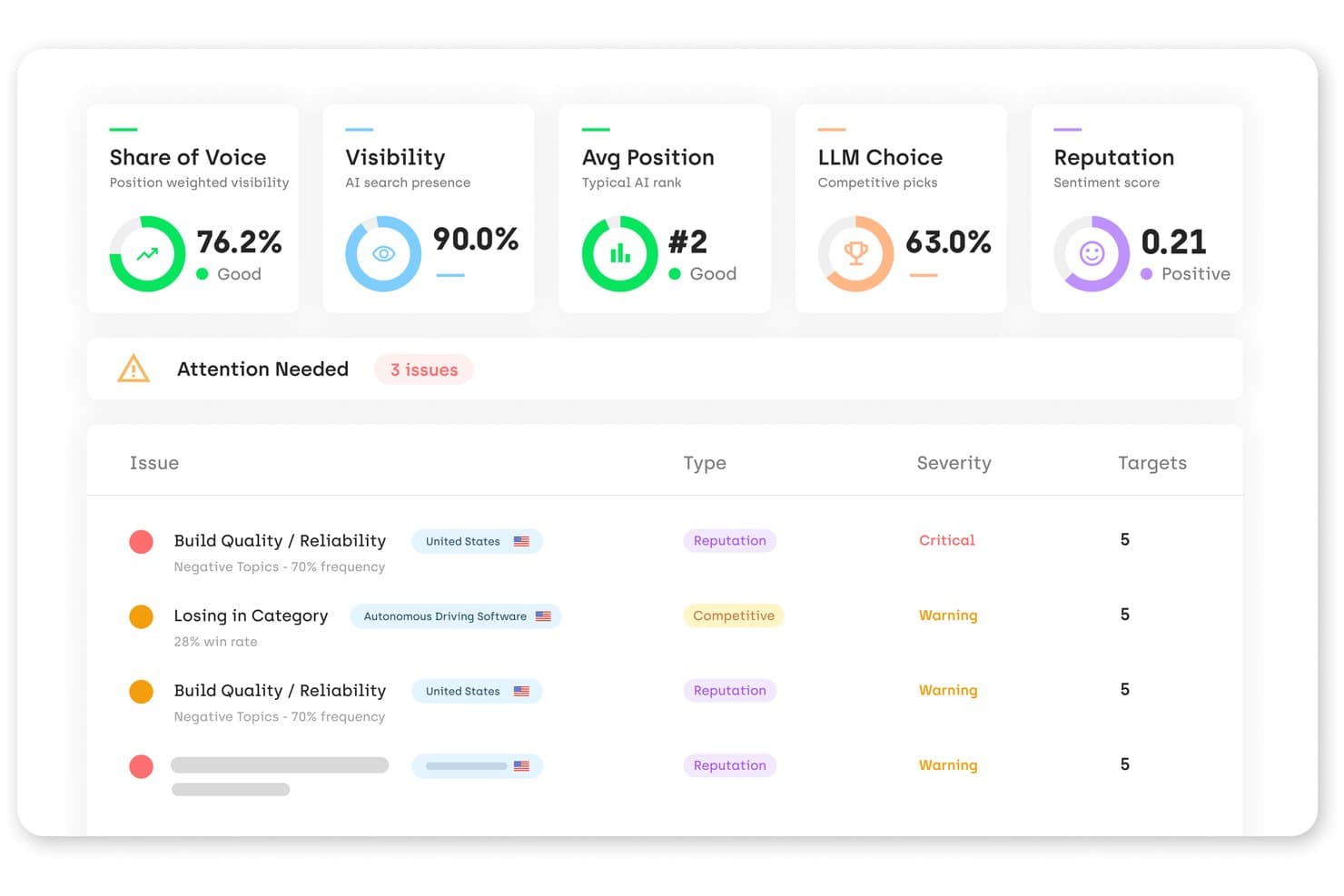
Onclusive tracks brand reputation, visibility, and AI search issues in one dashboard. Onclusive is a brand intelligence platform that combines media monitoring across print, broadcast, and social channels with AI-powered sentiment analysis, crisis alerting, competitive benchmarking, and audience insights.
Who Is Onclusive Best For?
Onclusive is a strong fit for enterprise marketing and PR teams that need real-time crisis detection and trend monitoring across print, broadcast, and social media at scale.
Why I Picked Onclusive
Onclusive earns its spot on my shortlist because of how its AI-powered Sentinel system handles crisis detection in real time. When a negative sentiment spike hits, Sentinel surfaces the alert before it escalates, tracking the signal across print, broadcast, and social simultaneously. I also rate the GEO Analytics feature highly: it monitors how your brand appears in AI-generated search results, which is genuinely rare among brand intelligence platforms right now.
Onclusive Key Features
- Share of Voice analysis: Tracks your brand's media presence against competitors across print, online, broadcast, and social channels in one view.
- Message Pull-Through measurement: Monitors whether your key brand messages are actually appearing in media coverage.
- Audience demographic and psychographic mapping: Surfaces behavioral patterns, values, and audience segments from social listening data.
- Data-as-a-Service API: Delivers enriched media content—including sentiment scores, entity tags, and topic classifications—directly to your existing BI or CRM tools.
Onclusive Integrations
Onclusive integrates with CRM systems and BI tools including Tableau, Power BI, and Looker. Its Data-as-a-Service offering provides REST APIs, XML feeds, RSS, and customizable schemas for custom integrations.
Pros and Cons
Pros:
- Tracks brand visibility in AI-generated searches
- Largest print and broadcast monitoring coverage
- Real-time crisis alerts and sentiment spike detection
Cons:
- Occasional gaps in Instagram and TikTok data
- No free trial or transparent pricing
Learn more about Onclusive: Best for experience-led brand health research
- Free demo available
- Pricing upon request
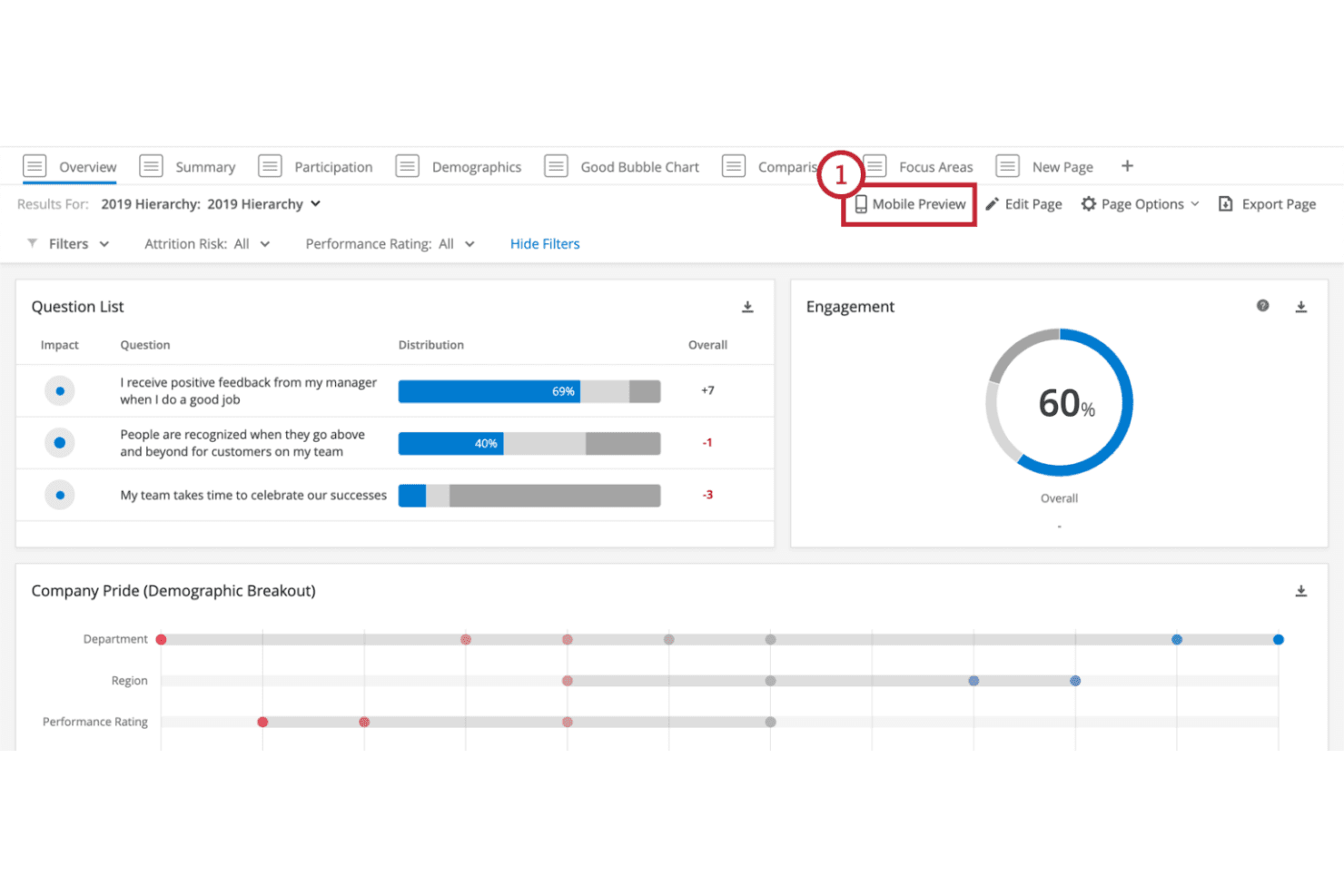
Qualtrics XM provides insights to boost brand engagement and experience. Qualtrics XM is an experience management platform that combines survey-based brand research, AI-powered sentiment analysis, and consumer insights across solicited and unsolicited feedback channels.
Who Is Qualtrics XM Best For?
Qualtrics XM is a strong fit for enterprise market research and consumer insights teams that need rigorous, survey-based brand health tracking backed by AI-powered analytics.
Why I Picked Qualtrics XM
Qualtrics XM earns its spot on my shortlist because its Brand Tracking Research Service is built on Ph.D.-designed methodology, giving brand health research a level of rigor I haven't seen matched in other platforms. I also love how its predictive AI models flag awareness or sentiment dips three to six months before they surface as revenue impact, which turns reactive brand monitoring into a genuinely proactive discipline. Pair that with XM Discover's multi-dimensional sentiment analysis across text, audio, and even emojis, and you get a depth of signal that survey-only tools simply can't replicate.
Qualtrics XM Key Features
- XM Discover connectors: Pulls in feedback from social platforms, review sites, CRM tools, and contact centers into a single analysis environment.
- Edge Audiences synthetic panels: Generates AI-driven consumer behavior data by demographic profile in minutes, cutting research timelines from weeks to hours.
- Research Hub: A centralized archive with AI-powered semantic search that lets you surface and reuse past brand research across your organization.
- iQ Anomaly Events: Automatically detects unexpected spikes or drops in survey response patterns and triggers workflows to alert your team.
Qualtrics XM Integrations
Qualtrics XM offers documented connectors for Salesforce, Facebook, Instagram, X, Trustpilot, TripAdvisor, Yotpo, Zendesk, Genesys Cloud, and Brandwatch. Its public API supports custom integrations and downstream workflows.
Pros and Cons
Pros:
- Global panel access and AI synthetic audiences
- Ph.D.-designed methodology for brand research
- Predictive AI forecasts brand metric shifts
Cons:
- Share of voice dashboards not included
- No native TikTok or YouTube monitoring
Learn more about Qualtrics XM: Best for AI-driven brand and search visibility
- Free demo available
- Pricing upon request
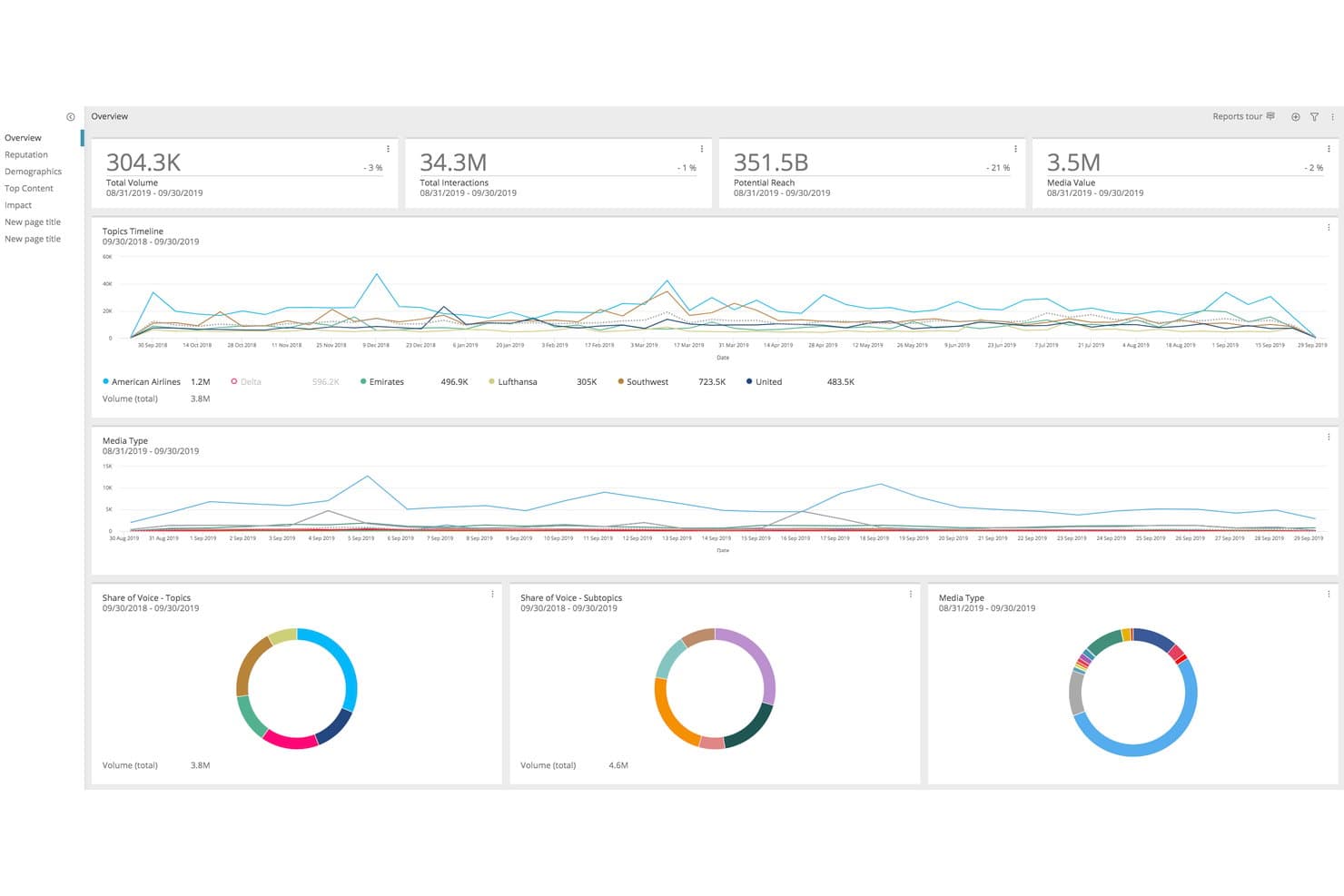
Ipsos Synthesio tracks brand volume, reach, and media type over time. Ipsos Synthesio is a brand intelligence platform that combines social listening, AI-powered consumer insights, sentiment analysis, competitive benchmarking, and AI search visibility monitoring across 800 million+ sources and 81+ languages.
Who Is Ipsos Synthesio Best For?
Ipsos Synthesio is a strong fit for enterprise market research and consumer insights teams that need AI-powered brand intelligence backed by rigorous research methodology.
Why I Picked Ipsos Synthesio
Ipsos Synthesio earns its spot as one of the best on my shortlist because no other tool in this category tracks brand presence across AI-powered search the way it does. Its AI Visibility module monitors how platforms like ChatGPT, Gemini, and DeepSeek describe and cite your brand versus competitors, which is something most social listening tools haven't touched yet. I also like that Signals GenAI turns millions of real-time consumer signals into structured insight narratives in under 60 seconds, using 40+ validated prompts built around specific research questions.
Ipsos Synthesio Key Features
- Audience analysis module: Profiles consumers by demographics, interests, and psychographics using a blend of social, behavioral, and survey data in a single view.
- Topic modeling: Uses ML to automatically scan and categorize millions of conversations into themes, surfacing patterns without requiring manual query setup.
- Crisis and anomaly alerting: Detects sudden spikes in mention volume or negative sentiment in real time, triggering alerts before issues escalate.
- Search intelligence: Pulls consumer intent data from 10+ search platforms—including Google, YouTube, and Amazon—alongside social data for a fuller picture of audience behavior.
Ipsos Synthesio Integrations
Native integrations are not publicly listed. Ipsos Synthesio supports custom integrations through its REST.
Pros and Cons
Pros:
- Combines survey, behavioral, and social data
- Includes generative AI-driven insight narratives
- Tracks brand across AI search and chat
Cons:
- Requires demo request for pricing access
- Sentiment accuracy inconsistent in complex cases
Learn more about Ipsos Synthesio:
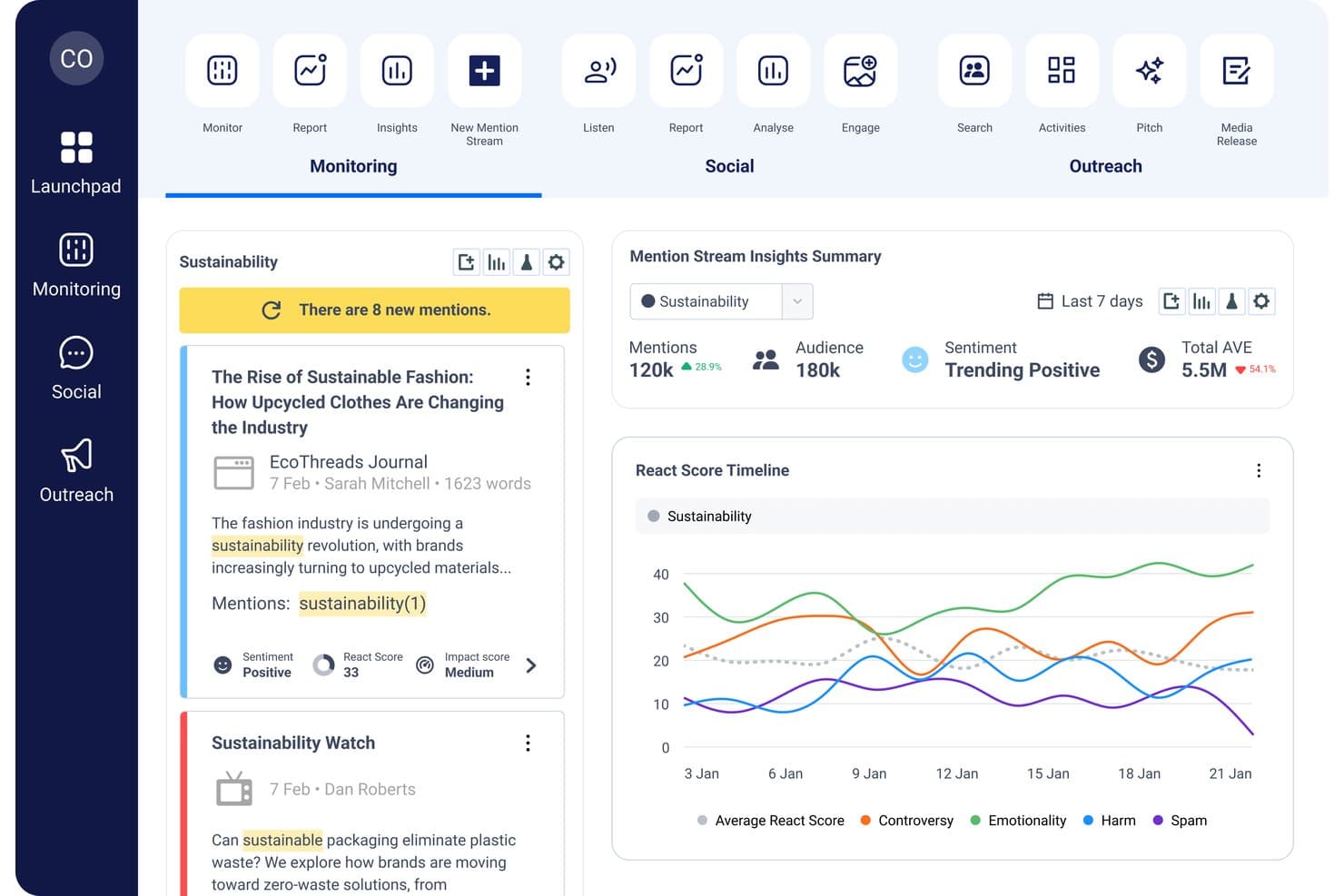
Cision tracks brand mentions, sentiment, and reach in one dashboard. CisionOne is an enterprise media intelligence platform that combines real-time media monitoring across print, broadcast, and social channels with AI-powered sentiment analysis, competitive benchmarking, and brand health reporting.
Who Is Cision Best For?
Cision is a strong fit for enterprise PR and communications teams that need multi-channel media monitoring, AI-powered brand intelligence, and executive-ready reporting at global scale.
Why I Picked Cision
Cision earns its spot on my list because no other platform matches its scale for enterprise PR and brand intelligence. I'm particularly impressed by the React Score, which detects sarcasm, fake news, and hate speech in real time, so your team catches reputational risk before it escalates. The AI Visibility Dashboard also stands out, tracking how your brand appears across ChatGPT, Gemini, and Perplexity compared to competitors—something very few tools offer.
Cision Key Features
- Instant Insights AI summaries: Auto-generates narrative-driven summaries of brand coverage trends, emerging themes, and shifts across earned media channels.
- Brandwatch social listening integration: Monitors conversations across Twitter/X, Facebook, Instagram, YouTube, Reddit, and LinkedIn with emotional classification and topic wheel visualization.
- Custom executive reporting dashboards: Converts dashboard widgets into branded, shareable report slides with a single click, distributable via URL or direct stakeholder link.
- Research-as-a-Service: Cision's expert Insights team delivers daily briefings, custom competitive reports, and reputation analysis as a managed extension of your team.
Cision Integrations
CisionOne integrates with Google Analytics, Adobe Analytics, Tableau, Power BI, Slack, Microsoft Teams, Brandwatch, and Trajaan. Its REST API supports custom connections.
Pros and Cons
Pros:
- AI dashboard tracks brand on AI platforms
- Real-time React Score flags brand risk
- Unmatched global media channel coverage
Cons:
- Interface navigation can feel overwhelming
- Opaque pricing requires direct sales contact
Learn more about Cision: Best for unified brand and CXM intelligence
- Free demo available
- Pricing upon request
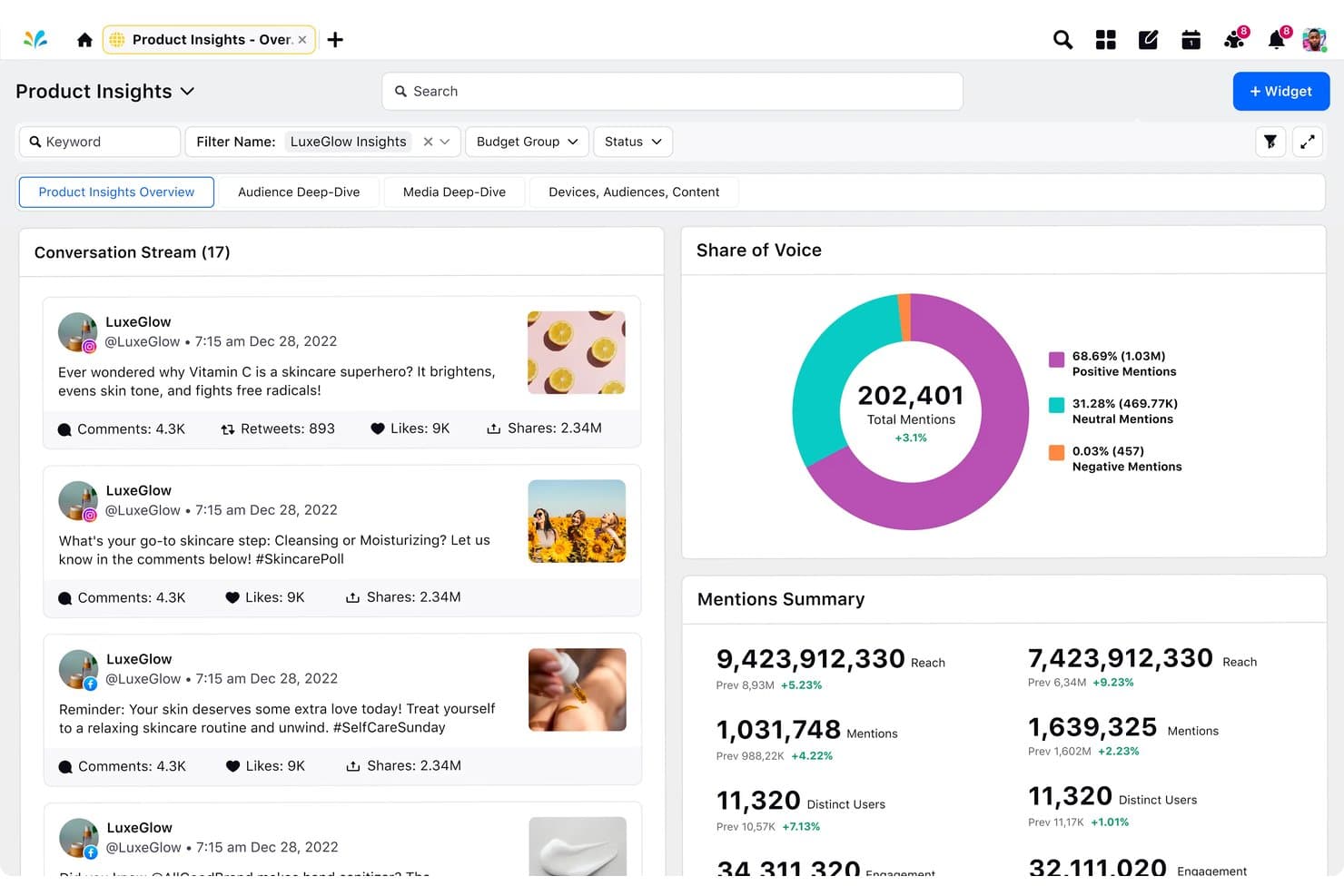
Sprinklr Insights tracks brand mentions and share of voice in real time. Sprinklr Insights is an enterprise brand intelligence platform that unifies social listening, sentiment analysis, competitive benchmarking, visual recognition, and consumer insights across 30+ channels, 400K+ media sources, and 1B+ websites into a single AI-powered suite.
Who Is Sprinklr Insights Best For?
Sprinklr Insights is a strong fit for enterprise marketing and insights teams that need to unify brand monitoring, consumer intelligence, and competitive benchmarking across a single platform.
Why I Picked Sprinklr Insights
Sprinklr Insights earns its spot on my shortlist because no other platform I've evaluated unifies brand monitoring, consumer intelligence, and competitive benchmarking at this scale. I'm particularly impressed by the Visual Insights module, which detects brand logos across images, GIFs, and video, capturing mentions that text-based listening tools miss entirely. The Benchmarking Assistant, an AI chatbot that delivers automated competitive recommendations, is something I haven't seen executed this well elsewhere.
Sprinklr Insights Key Features
- Smart Theme detection: AI automatically groups social conversations into themes, surfacing emerging topics without any manual setup or query building.
- Crisis Management module: Combines generative AI with an early warning alerting framework to detect conversation spikes and send real-time alerts before issues escalate.
- Research Copilot: A conversational AI assistant that lets you query social and brand data in natural language and returns citation-backed, root-cause analysis responses.
- LLM Insights: Monitors how your brand appears in AI-generated search results across tools like ChatGPT and Gemini, tracking AI mention rate, share of voice, and sentiment.
Sprinklr Insights Integrations
Sprinklr Insights offers native integrations with Tableau, Microsoft Power BI, Looker Studio, Snowflake, Salesforce, Microsoft Dynamics CRM, Zendesk, Slack, and Microsoft Teams. Its Developer Portal provides APIs and webhooks for custom integrations.
Pros and Cons
Pros:
- Visual logo recognition misses few brand mentions
- Industry-leading AI for sentiment and trends
- Largest coverage of channels and languages
Cons:
- Customer support response times frequently slow
- Complex and lengthy onboarding process
Learn more about Sprinklr Insights: Best for unified social listening and publishing
- 14-day free trial + free demo available
- From $99/user/month
Visit WebsiteCustomer Rating:4.3/5This rating combines scores from multiple user review sites to reflect overall customer sentiment about the product.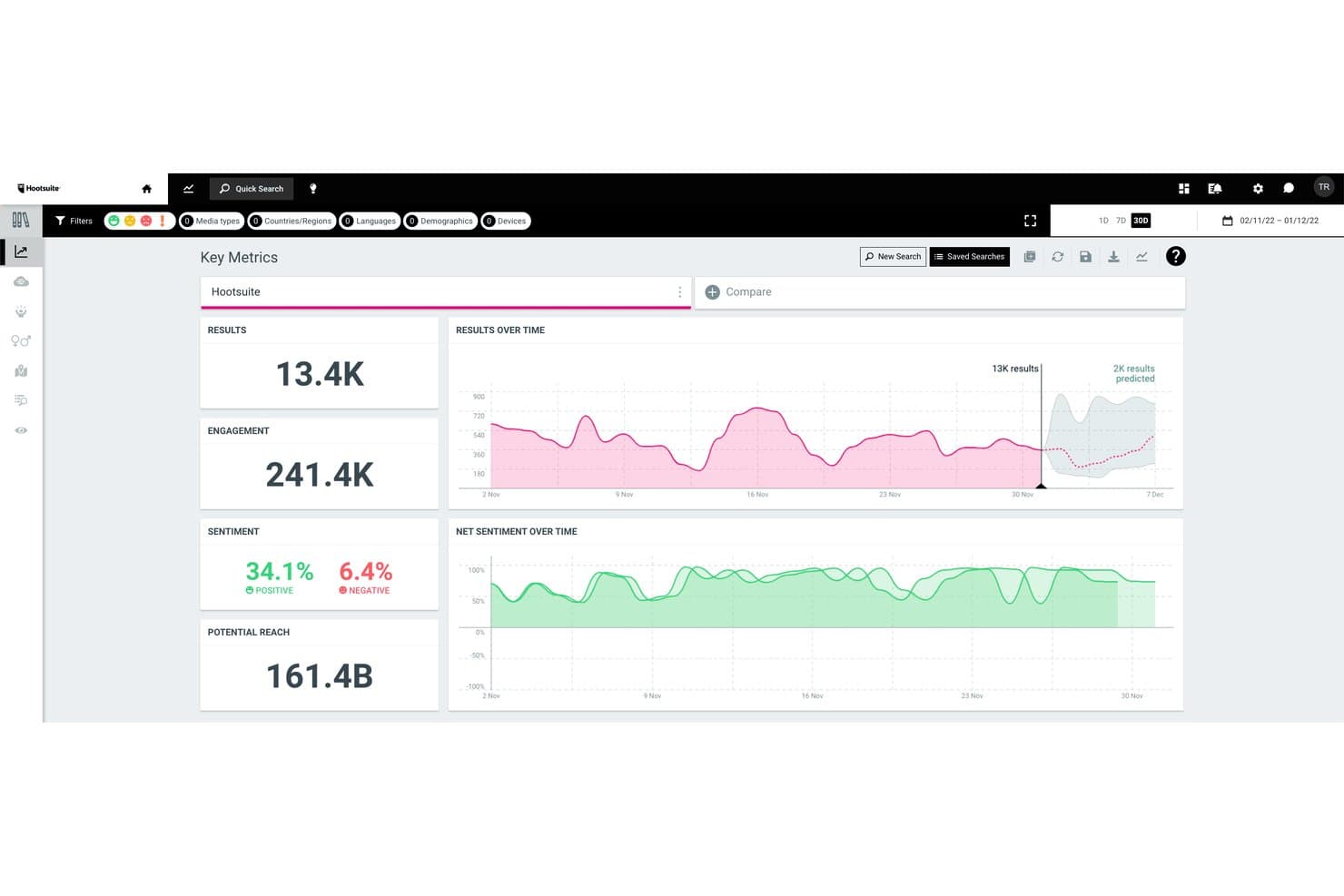
Hootsuite tracks brand sentiment and engagement metrics over time. Hootsuite is a social media management and brand intelligence platform that combines social listening, sentiment analysis, competitive benchmarking, consumer insights, and publishing across 30+ channels and 150 million+ websites.
Who Is Hootsuite Best For?
Hootsuite is a strong fit for brand and marketing teams that want social listening, competitive benchmarking, and content publishing in one platform rather than juggling separate tools.
Why I Picked Hootsuite
Hootsuite earns its spot on my shortlist because it's one of the few tools that genuinely unifies brand intelligence and content publishing without forcing you to stitch together separate platforms. I love that Blue Silk™ AI detects sentiment across text, images, and video, so logo appearances in user-generated content don't slip through the way they do with keyword-only tools. The 90-day trend forecasting is also something I find genuinely useful when planning campaign timing against emerging conversations.
Hootsuite Key Features
- Visual and logo recognition: Blue Silk™ AI scans images and video at scale to detect brand logo appearances in user-generated content across social and media channels.
- LLM share of voice tracking: Monitors how your brand appears in AI tools like ChatGPT, Gemini, and Claude compared to competitors.
- Boolean search with saved queries: Supports advanced keyword and Boolean search operators across 50+ saved searches for precise, repeatable listening workflows.
- Crisis and anomaly alerts: Triggers real-time notifications when sentiment shifts suddenly or mention volume spikes, with sarcasm-aware NLP to reduce false negatives.
Hootsuite Integrations
Native integrations include Google Analytics, Adobe Analytics, Salesforce, Canva, Adobe Express, Bynder, Audiense, Affinio, Upfluence, and Slack. Hootsuite also offers an App Directory and an open API for custom integrations.
Pros and Cons
Pros:
- LLM share of voice tracking included
- AI detects sarcasm and emotional nuance
- Visual and logo recognition for brand mentions
Cons:
- Some users report slow customer support
- Deepest listening features require Enterprise plan
Learn more about Hootsuite: Best for social listening
- Free demo available
- Pricing upon request
Visit WebsiteCustomer Rating:4.3/5This rating combines scores from multiple user review sites to reflect overall customer sentiment about the product.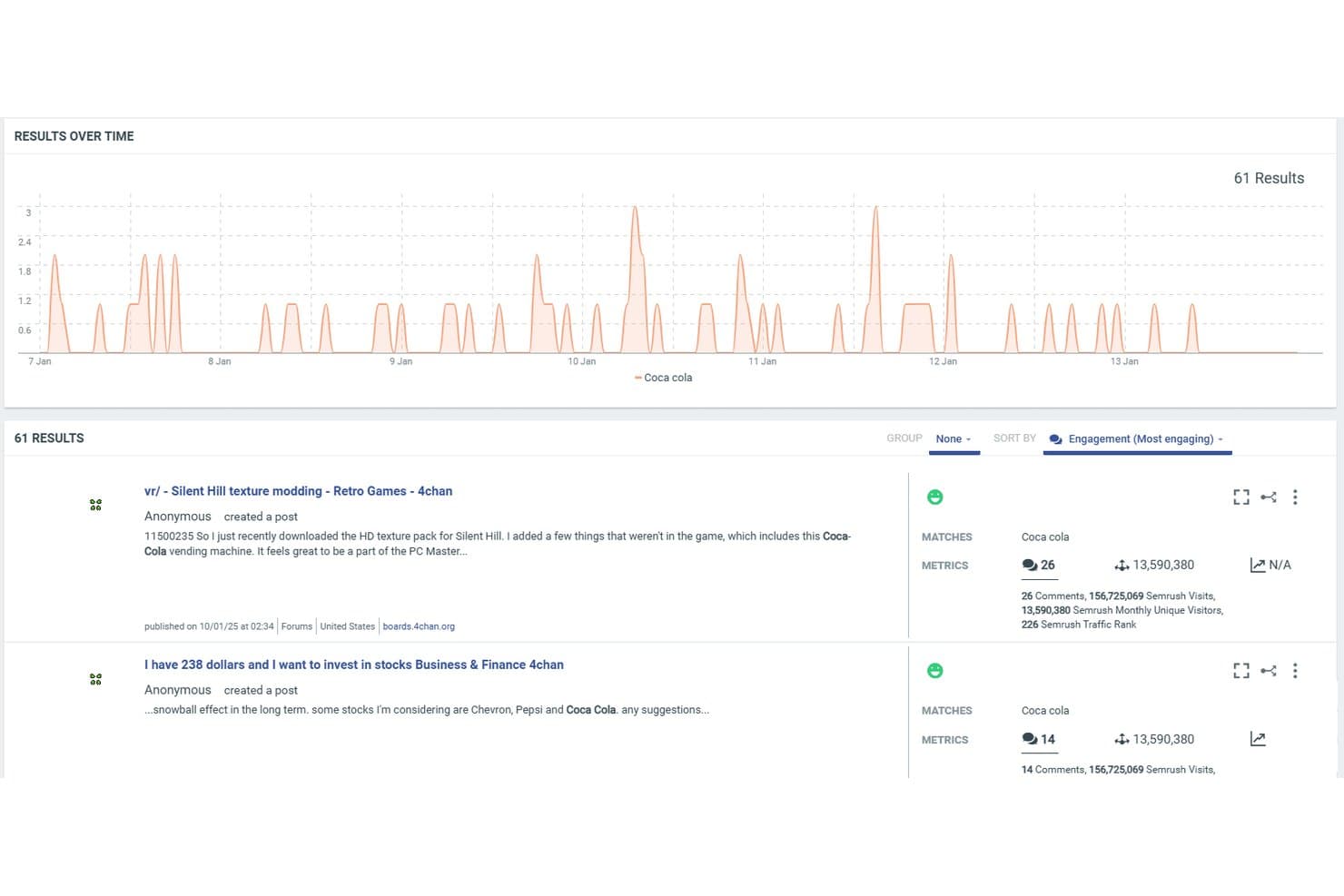
Lumen by Talkwalker tracks brand mentions over time with engagement metrics. Lumen by Talkwalker is a brand intelligence and social listening platform that monitors mentions across 30 social networks, 150M+ websites, and broadcast and print media, with AI-powered sentiment analysis, competitive benchmarking, and audience insights built in.
Who Is Lumen by Talkwalker Best For?
Enterprise marketing and insights teams that need deep, multi-channel social listening across global markets will get the most out of Lumen by Talkwalker.
Why I Picked Lumen by Talkwalker
Lumen by Talkwalker earns its spot on my shortlist because its social listening coverage is genuinely hard to beat: 30 social networks, 150M+ websites, and broadcast and print media, all without data sampling. I'm particularly impressed by Blue Silk™ AI, which goes well beyond basic sentiment to detect sarcasm and irony at 90% accuracy across 192 languages. I also love the LLM Insights feature, which tracks how AI assistants like ChatGPT and Gemini are describing your brand versus competitors.
Lumen by Talkwalker Key Features
- Visual and logo recognition: Detects 40,000+ brand logos, objects, and scenes across 60M+ daily videos, images, GIFs, and memes—even when no text accompanies the visual content.
- Audience Insights product: Surfaces AI-powered demographic, behavioral, and psychographic data about audiences, including preference mapping, persona clustering, and conversion analysis.
- Custom scoring systems: Lets you build weighted brand health scores from your own chosen metrics, such as share of voice, sentiment, and media value combined.
- Developer API access: Offers a full API suite including Search, Export, Webhook, and Image Detection APIs for integrating Talkwalker data into external tools and BI workflows.
Lumen by Talkwalker Integrations
Native integrations include Hootsuite, Tableau, Google Analytics 4, Audiense, Affinio, Upfluence, Khoros, Facelift, Data Virtuality, and RingCentral RingCX. Its APIs support custom connections.
Pros and Cons
Pros:
- Monitors brand mentions in AI assistant responses
- Detects sarcasm and irony in 192 languages
- Covers 30 social networks and 150M+ sites
Cons:
- Facebook and Instagram coverage is restricted
- Sentiment scoring sometimes needs manual correction
Learn more about Lumen by Talkwalker: Best for AI-driven global media intelligence
- Free demo available
- From $10,000/year (billed annually)
Visit WebsiteCustomer Rating:3.9/5This rating combines scores from multiple user review sites to reflect overall customer sentiment about the product.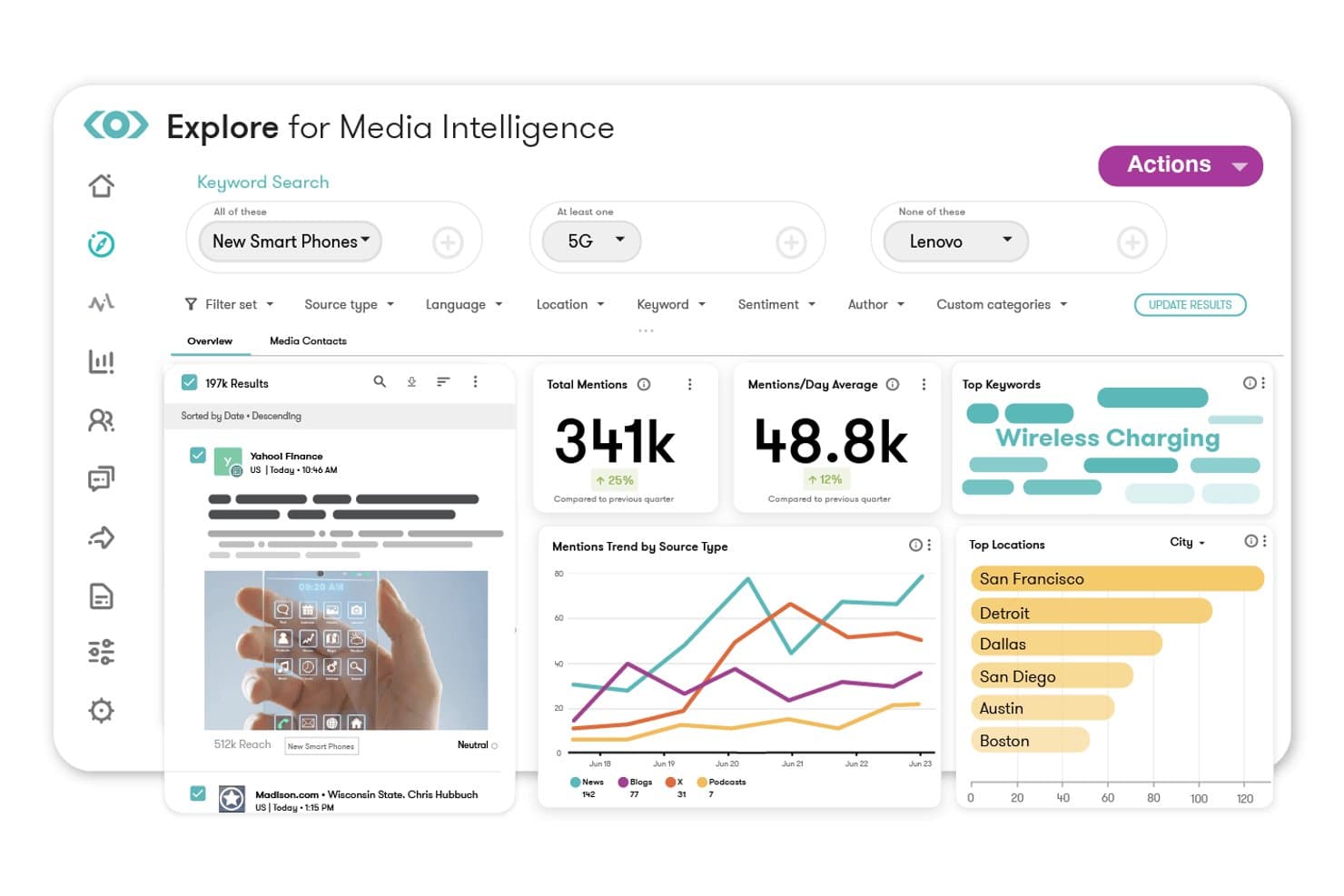
Meltwater tracks brand mentions, trends, and top keywords in one dashboard. Meltwater is a brand intelligence platform that combines media monitoring, social listening, consumer insights, and AI-powered trend detection across traditional media, online publications, social networks, broadcast, podcasts, and AI-generated content.
Who Is Meltwater Best For?
Meltwater is a strong fit for global enterprise marketing and communications teams that need to monitor brand presence across dozens of markets, languages, and channels from a single platform.
Why I Picked Meltwater
Meltwater earns its spot on my shortlist because no other platform I've reviewed monitors brand presence at this scale, across traditional media, social networks, podcasts, broadcast, and now AI-generated content from LLMs like ChatGPT and Gemini. I'm particularly impressed by GenAI Lens, which tracks how your brand appears in AI-generated answers and benchmarks your AI share of voice against competitors. Mira AI adds another layer by surfacing narrative anomalies and generating executive summaries from billions of daily data points automatically.
Meltwater Key Features
- Official Reddit data partnership: Meltwater's full Reddit firehose access captures community conversations across subreddits without the data gaps that come with standard API access.
- 48-hour conversation forecasting: The social listening module predicts conversation volume trends up to 48 hours ahead, giving your team time to prepare responses or campaigns before topics peak.
- Bring Your Own Content (BYOC): Upload surveys, interview transcripts, or internal data directly into the platform to analyze alongside Meltwater's monitored data sources.
- Custom reporting and scheduling: Build tailored dashboards and set automated report delivery so stakeholders receive brand performance updates without manual effort.
Meltwater Integrations
Meltwater offers integrations with Slack, Microsoft Teams, Salesforce, Power BI, Tableau, Domo, and Looker, plus MCP connections for Claude and ChatGPT. Its API and webhooks support custom integrations, and Zapier is also supported.
Pros and Cons
Pros:
- AI-powered crisis alerts and summaries
- Full Reddit firehose access included
- Monitors LLMs like ChatGPT and Gemini
Cons:
- No self-serve free trial available
- Sentiment accuracy is inconsistent for nuance

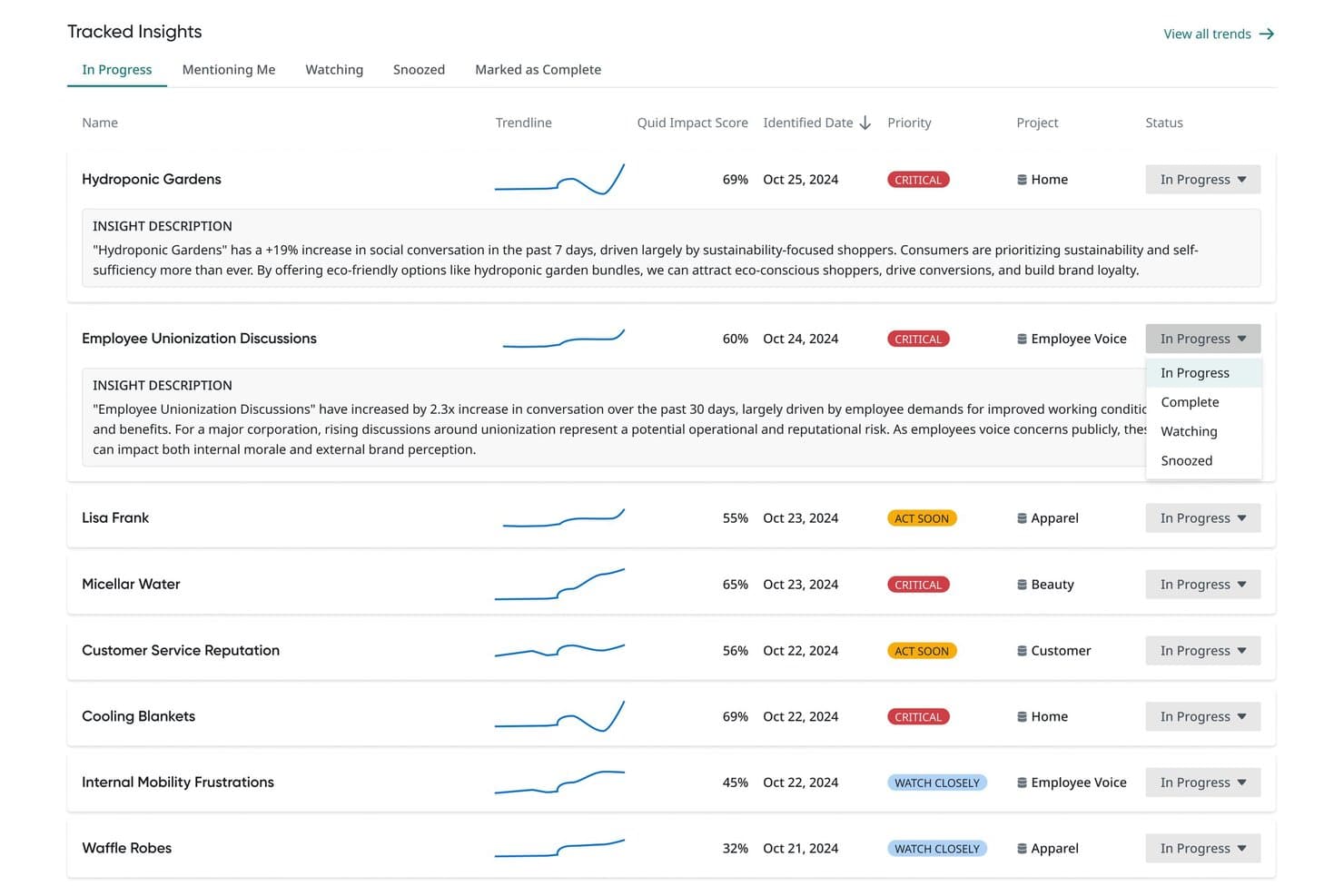
Quid tracks and prioritizes brand insights by urgency and project. Quid is an AI-driven brand and consumer intelligence platform that combines social listening, sentiment analysis, competitive benchmarking, trend detection, and audience insights across social, news, forums, reviews, and broadcast data sources.
Who Is Quid Best For?
Quid is a strong fit for enterprise marketing and insights teams that need to connect brand perception, competitive intelligence, and consumer behavior in one place.
Why I Picked Quid
Quid earns its spot on my shortlist because its AI-driven approach connects brand perception, competitive intelligence, and consumer behavior in one place, rather than treating them as separate workflows. I'm particularly impressed by its Q Agents library, which automates multi-step research and generates executive-ready Insight Briefs in minutes. The 20-year proprietary NLP engine also delivers sentiment analysis that captures nuanced emotion and intent across 160+ languages, which is hard to replicate at that depth.
Quid Key Features
- Competitive share of voice tracking: Benchmarks your brand's share of voice against multiple competitors across social, news, and forums simultaneously.
- Influencer identifier agent: Surfaces influencers by reach and brand alignment from within your target audience's conversations.
- Custom branded dashboards: Drag-and-drop report builder that generates scheduled, stakeholder-specific dashboards with your own branding.
- Patent and market intelligence layer: Tracks 90K+ new patent publications weekly alongside Crunchbase and Seeking Alpha data for competitive market analysis.
Quid Integrations
Quid supports integrations with Salesforce, Tableau, Power BI, Slack, Microsoft Teams, and 200+ enterprise connectors through its Q Platform. Its open API supports custom integrations and combines CRM, NPS, support-ticket, and operational data with external intelligence.
Pros and Cons
Pros:
- Generative AI automates multi-step research
- Nuanced sentiment analysis in 160+ languages
- Unmatched data breadth across global sources
Cons:
- Some social sources have occasional data gaps
- Advanced features require additional purchase
Learn more about Quid:
Other Brand Intelligence Software
Here are some additional brand intelligence software options that didn’t make it onto my shortlist, but are still worth checking out:
- 11YouScanBest for AI-driven visual brand monitoring
- 12Brand24Best for AI-driven mention and trend alerts
- 13MentionBest for cross-channel brand and competitor tracking
- 14MentionlyticsBest for AI-driven multilingual brand monitoring
- 15Fuel CycleBest for consumer insights
- 16AwarioBest for affordable agency brand monitoring
- 17Sprout SocialBest for social and news intelligence in one
- 18BlueOceanBest for always-on competitive benchmarking
- 19OrnicoBest for ad and editorial monitoring in Africa
- 20Qualtrics Brand TrackingBest for survey-led brand health measurement
How I Evaluate Brand Intelligence Software
I split my evaluation into two layers: baseline requirements to make the list, and the differentiators that matter when brand managers need to track perception, share of voice, or a reputation crisis.
Core Functionality (Table Stakes For This List)
When I'm selecting tools for my list, I rank each one on a scale from 0 (does not offer the functionality) to 5 (excels in this area) for each core functionality listed below. Then, I calculate the tool's total score into a percentage. Each tool needs to achieve a minimum total score of 65% to be considered for inclusion.
- Brand Monitoring & Mentions: I check how many channels a tool covers—social, news, blogs, forums, reviews—and whether mentions surface in real time or on a delay.
- Sentiment Analysis: The quality of NLP matters here, so I evaluate whether a platform can accurately distinguish sarcasm, mixed feelings, and context beyond simple positive/negative labels.
- Competitive Benchmarking: I look for share-of-voice comparisons, sentiment side-by-sides, and the ability to track multiple competitors within the same dashboard view.
- Brand Health Metrics: Tracking a single campaign spike is one thing—I evaluate whether a tool can measure awareness, perception, and equity trends over months or quarters.
- Consumer & Audience Insights: Beyond basic follower demographics, useful platforms surface psychographic and behavioral data about who's engaging with your brand and why.
- Trend & Topic Detection: I look at whether a tool proactively flags emerging conversations and category shifts, rather than relying on you to manually set up every keyword to watch.
Once I have a list of tools that meet this criteria, I consider what sets each platform apart.
Differentiating Factors (What Sets Vendors Apart)
Here's how I compare and contrast different vendors:
Standout Features
Crisis alerting is a major differentiator. When a product recall or viral complaint starts gaining traction, I want to know whether a platform flags the spike before my team spots it manually. Visual and logo recognition also separates tools—some platforms detect your brand in images and videos even when no one tags or mentions you by name. I also evaluate AI-powered summaries that turn raw mention data into actionable narratives, saving hours of manual analysis for lean marketing teams.
Beyond Features
Data source coverage matters a lot here. I check whether a platform pulls from licensed social, news, and review data—or just scrapes publicly available content—because gaps in source quality lead to blind spots in your brand picture. Integration with your existing stack is another key factor; brand intelligence loses value if it sits in a silo, so I look for native connections to tools like Salesforce, HubSpot, or Tableau. Pricing flexibility also counts, especially for teams managing multiple brands or regional campaigns that need scalable query volumes.
How to Choose Brand Intelligence Software
It’s easy to get bogged down in long feature lists and complex pricing structures. To help you stay focused as you work through your unique software selection process, here’s a checklist of factors to keep in mind:
| Factor | What to Consider |
| Scalability | Ensure the software can grow with your business. It should handle increased data volume and user numbers as your team expands. |
| Integrations | Check if the software connects with tools you already use, like CRM systems or social media platforms, to streamline data flow and enhance functionality. |
| Customizability | Look for software that lets you tailor reports and dashboards to meet your specific needs, ensuring the insights are relevant to your team. |
| Ease of Use | Choose a tool with an intuitive interface that requires minimal training, allowing your team to quickly adapt and maximize productivity. |
| Budget | Consider the total cost, including setup fees and ongoing expenses. Ensure it fits within your budget without sacrificing essential features. |
| Security Safeguards | Verify that the software offers robust data protection measures, like encryption and regular updates, to keep your sensitive information secure. |
| Support | Ensure the vendor provides reliable customer support, including live chat or phone options, to assist your team when needed. |
| Analytics Depth | Consider the depth of analytics offered, such as sentiment analysis or predictive insights, to ensure the tool meets your strategic needs. |
Trends in Brand Intelligence Software
In my research, I sourced countless product updates, press releases, and release logs from different brand intelligence software vendors. Here are some of the emerging trends I’m keeping an eye on:
- AI-Powered Insights: AI is becoming a core feature, offering deeper analysis and predictive insights. Tools like AlphaSense use AI to provide real-time sentiment analysis, helping businesses stay ahead of market trends.
- Sentiment Analysis: More tools are focusing on sentiment analysis to help brands understand customer emotions. This feature is crucial for tailoring marketing strategies to enhance customer engagement and satisfaction.
- Real-Time Monitoring: Vendors are emphasizing real-time data analysis, allowing businesses to respond instantly to market changes. This trend helps companies maintain a competitive edge by adapting quickly to consumer behavior.
- Data Privacy Enhancements: With increasing data regulations, vendors are prioritizing data privacy features. Enhanced security measures ensure compliance and build customer trust by protecting sensitive information.
- Visualization Tools: Sophisticated data visualization is becoming important, helping users easily interpret complex data. Tools like Zoho Analytics offer customizable dashboards that make insights more accessible and actionable.
What Is Brand Intelligence Software?
Brand intelligence software is a tool that helps businesses monitor and analyze their brand's performance and reputation in the market. Marketing professionals, PR teams, and brand managers typically use these tools to gain insights into customer sentiment and competitive positioning. Real-time monitoring, AI-powered insights, and sentiment analysis features help with understanding market trends and making informed decisions. Overall, these tools provide valuable data that allows businesses to enhance their brand strategy and improve customer engagement.
Features of Brand Intelligence Software
When selecting brand intelligence software, keep an eye out for the following key features:
- Real-time monitoring: Keeps track of brand mentions and market changes instantly, allowing timely responses and strategy adjustments.
- AI-powered insights: Provides deeper analysis and predictive insights to help understand market trends and customer behavior.
- Sentiment analysis: Analyzes customer emotions and opinions, aiding in crafting strategies that enhance engagement and satisfaction.
- Customizable dashboards: Offers tailored views of data, making insights more accessible and actionable for different team needs.
- Predictive analytics: Anticipates future trends and potential market shifts, helping businesses stay ahead of the competition.
- Data privacy safeguards: Ensures compliance with data regulations and protects sensitive information, building trust with customers.
- Influencer identification: Helps identify key influencers to refine messaging strategies and expand brand reach.
- Advanced visualization tools: Simplifies complex data interpretation, making it easier for teams to make informed decisions.
- Competitive benchmarking: Provides insights into competitors' strategies, helping businesses understand their market position and adjust accordingly.
- Integration capabilities: Connects with existing tools and platforms to streamline data flow and enhance overall functionality.
Benefits of Brand Intelligence Software
Implementing brand intelligence software provides several benefits for your team and your business. Here are a few you can look forward to:
- Improved decision-making: Real-time monitoring and AI-powered insights help your team make informed decisions quickly.
- Enhanced customer engagement: Sentiment analysis allows you to understand customer emotions, leading to better engagement strategies.
- Increased market awareness: Predictive analytics and competitive benchmarking keep you informed about market trends and competitor actions.
- Efficient data management: Customizable dashboards and integration capabilities streamline data analysis and reporting tasks.
- Stronger brand reputation: Data privacy safeguards and influencer identification support brand protection and outreach efforts.
- Strategic agility: Advanced visualization tools and real-time alerts enable your team to pivot strategies effectively as market conditions change.
Costs and Pricing of Brand Intelligence Software
Selecting brand intelligence software requires an understanding of the various pricing models and plans available. Costs vary based on features, team size, add-ons, and more. The table below summarizes common plans, their average prices, and typical features included in brand intelligence software solutions:
Plan Comparison Table for Brand Intelligence Software
| Plan Type | Average Price | Common Features |
| Free Plan | $0 | Basic monitoring, limited reports, and restricted data access. |
| Personal Plan | $5-$25/ user/month | Standard monitoring, sentiment analysis, and customizable dashboards. |
| Business Plan | $30-$60/ user/month | Advanced analytics, integration capabilities, and enhanced data privacy. |
| Enterprise Plan | $70-$150/ user/month | Full-featured analytics, real-time alerts, and dedicated customer support. |
Brand Intelligence Software FAQs
Here are some answers to common questions about brand intelligence software:
How does brand intelligence software improve decision-making?
Brand intelligence software provides real-time data and insights, helping your team make informed decisions quickly. By analyzing customer sentiment and market trends, you can adjust strategies to better align with consumer preferences. This leads to more effective marketing campaigns and improved business outcomes.
How do I measure the ROI of brand intelligence software?
To measure ROI, assess the software’s impact on your brand’s performance and customer engagement. Look at metrics such as increased brand awareness, improved customer satisfaction, and enhanced competitive positioning. By analyzing these factors, you can determine the software’s value to your business.
How can sentiment analysis benefit my brand?
Sentiment analysis helps you understand customer emotions and opinions about your brand. By identifying positive and negative sentiments, you can tailor your marketing strategies to address consumer needs and improve brand perception. This leads to stronger customer relationships and increased loyalty.
What role does AI play in brand intelligence software?
AI enhances brand intelligence software by providing predictive insights and advanced analytics. It helps your team anticipate market trends and consumer behavior, enabling proactive decision-making. AI-driven features offer deeper analysis, allowing you to stay ahead in a competitive market.
How can data and insights improve a brand intelligence strategy?
A strong brand intelligence strategy relies on turning customer feedback, consumer research, and demographics into actionable insights. These insights help brands understand who their audience is and how they think, allowing for smarter, data-backed decisions. By identifying valuable insights, companies can tailor their messaging and monitor how their brand is perceived over time, ensuring their efforts resonate with the right people.
What role does technology play in brand intelligence?
Technology is the backbone of modern brand intelligence strategies. Tools powered by artificial intelligence, ai technology, and algorithms help process vast amounts of online content and extract patterns in real time. Intelligence solutions can also leverage natural language processing to interpret sentiment and context from online conversations, giving brands a powerful edge in understanding how they’re being talked about and why it matters.
How do marketing efforts contribute to brand intelligence?
Brand intelligence thrives on the ability to monitor and adjust marketing efforts based on real-world feedback. Elements like brand monitoring, brand identity, and notifications play a crucial role. By keeping a pulse on what’s being said across social media channels, teams can align communication strategies, reinforce branding, and act quickly on reputational risks or opportunities.
Why is understanding your audience vital to brand intelligence?
Knowing your target audience is at the heart of every successful brand intelligence strategy. It ensures you communicate value clearly and consistently. Engaging stakeholders and launching strategic initiatives also supports long-term growth. Gaining a competitive advantage comes from deeply understanding what your audience expects, values, and responds to.
What's Next?
If you're in the process of researching brand intelligence softwares, connect with a SoftwareSelect advisor for free recommendations.
You fill out a form and have a quick chat where they get into the specifics of your needs. Then you'll get a shortlist of software to review. They'll even support you through the entire buying process, including price negotiations.