

Serpstat Review: Pros, Cons, Features, and Pricing Explained for 2026


Serpstat is a competitor analysis tools platform designed to help marketing managers track rivals, uncover keyword opportunities, and benchmark performance in crowded markets. When you need clear, actionable data to outmaneuver competitors and justify your strategy, Serpstat offers a mix of keyword research, site audit, backlink analysis, and rank tracking features. This review covers Serpstat's core features, best and worst use cases, pros and cons, and pricing—so you can decide if it fits your team's needs and budget.
Serpstat Evaluation Summary
- From $55/month (billed annually)
- 7-day free trial available
Why Trust Our Software Reviews
Serpstat Overview
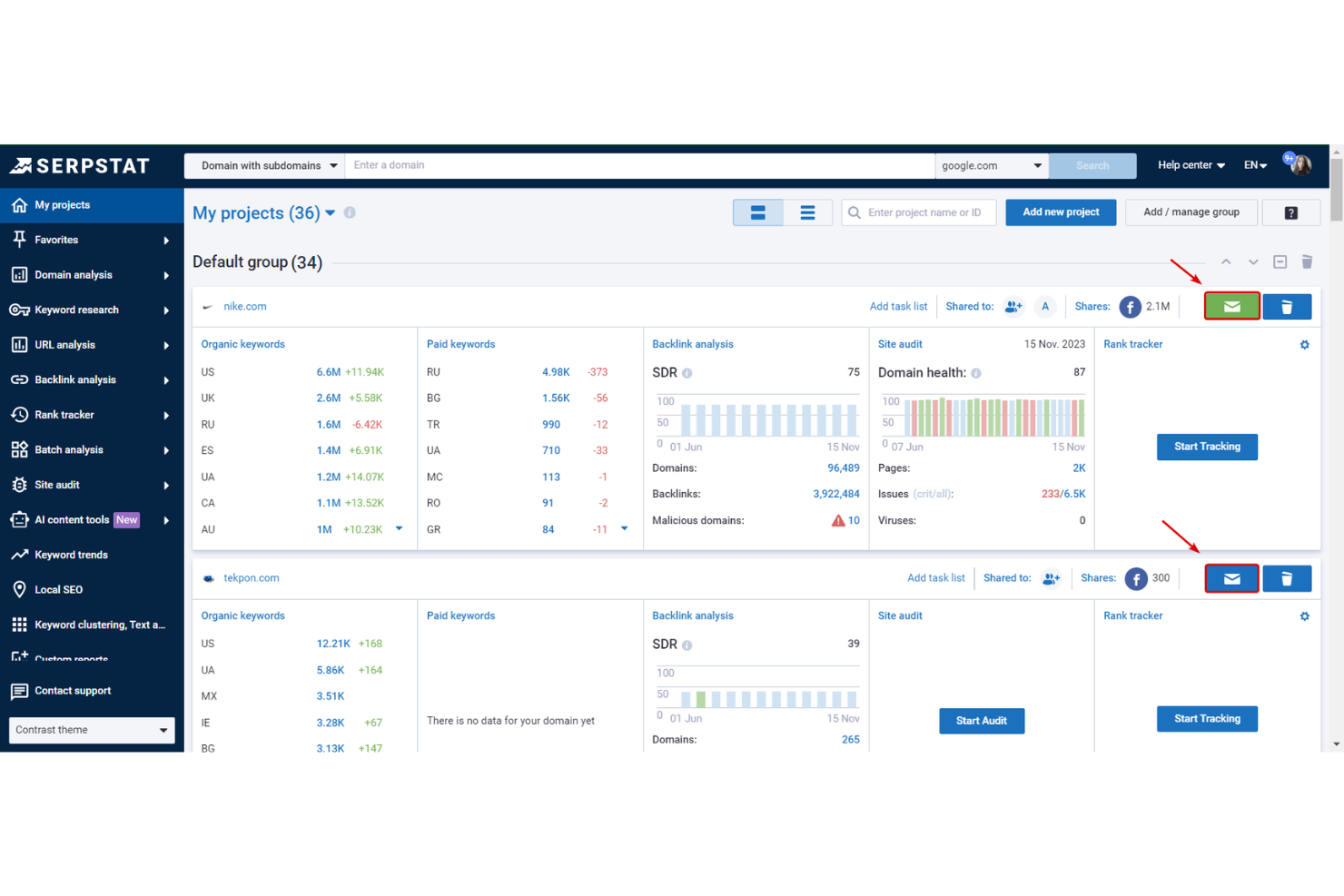
When judging Serpstat as a competitor analysis tool, its affordable pricing and all-in-one dashboard make it appealing for small to midsize teams selecting their first platform. The interface is intuitive, onboarding is quick, and support is responsive. While its keyword and backlink data are strong, some advanced reporting and integrations lag behind pricier options. If you're determining value for budget-conscious environments or need a straightforward tool for tracking competitors, Serpstat is a practical choice. For example, agencies managing multiple client sites will appreciate its project management features, but data depth may limit highly specialized campaigns.
pros
-
Affordable pricing for small and midsize businesses.
-
Includes site audit and rank tracking in one platform.
-
Offers detailed keyword and backlink competitor data.
cons
-
Limited integrations with third-party marketing platforms.
-
Some competitor data updates less frequently than alternatives.
-
Lacks advanced reporting and data visualization options.
-

Demandbase
Visit WebsiteThis is an aggregated rating for this tool including ratings from Crozdesk users and ratings from other sites.4.4 -
6sense
Visit WebsiteThis is an aggregated rating for this tool including ratings from Crozdesk users and ratings from other sites.4.3 -
AnswerThePublic
Visit Website


How We Test & Score Tools
We’ve spent years building, refining, and improving our software testing and scoring system. The rubric is designed to capture the nuances of software selection and what makes a tool effective, focusing on critical aspects of the decision-making process.
Below, you can see exactly how our testing and scoring works across seven criteria. It allows us to provide an unbiased evaluation of the software based on core functionality, standout features, ease of use, onboarding, customer support, integrations, customer reviews, and value for money.
Core Functionality (25% of final scoring)
The starting point of our evaluation is always the core functionality of the tool. Does it have the basic features and functions that a user would expect to see? Are any of those core features locked to higher-tiered pricing plans? At its core, we expect a tool to stand up against the baseline capabilities of its competitors.
Standout Features (25% of final scoring)
Next, we evaluate uncommon standout features that go above and beyond the core functionality typically found in tools of its kind. A high score reflects specialized or unique features that make the product faster, more efficient, or offer additional value to the user.
We also evaluate how easy it is to integrate with other tools typically found in the tech stack to expand the functionality and utility of the software. Tools offering plentiful native integrations, 3rd party connections, and API access to build custom integrations score best.
Ease of Use (10% of final scoring)
We consider how quick and easy it is to execute the tasks defined in the core functionality using the tool. High scoring software is well designed, intuitive to use, offers mobile apps, provides templates, and makes relatively complex tasks seem simple.
Onboarding (10% of final scoring)
We know how important rapid team adoption is for a new platform, so we evaluate how easy it is to learn and use a tool with minimal training. We evaluate how quickly a team member can get set up and start using the tool with no experience. High scoring solutions indicate little or no support is required.
Customer Support (10% of final scoring)
We review how quick and easy it is to get unstuck and find help by phone, live chat, or knowledge base. Tools and companies that provide real-time support score best, while chatbots score worst.
Customer Reviews (10% of final scoring)
Beyond our own testing and evaluation, we consider the net promoter score from current and past customers. We review their likelihood, given the option, to choose the tool again for the core functionality. A high scoring software reflects a high net promoter score from current or past customers.
Value for Money (10% of final scoring)
Lastly, in consideration of all the other criteria, we review the average price of entry level plans against the core features and consider the value of the other evaluation criteria. Software that delivers more, for less, will score higher.
Core Features
Keyword Research
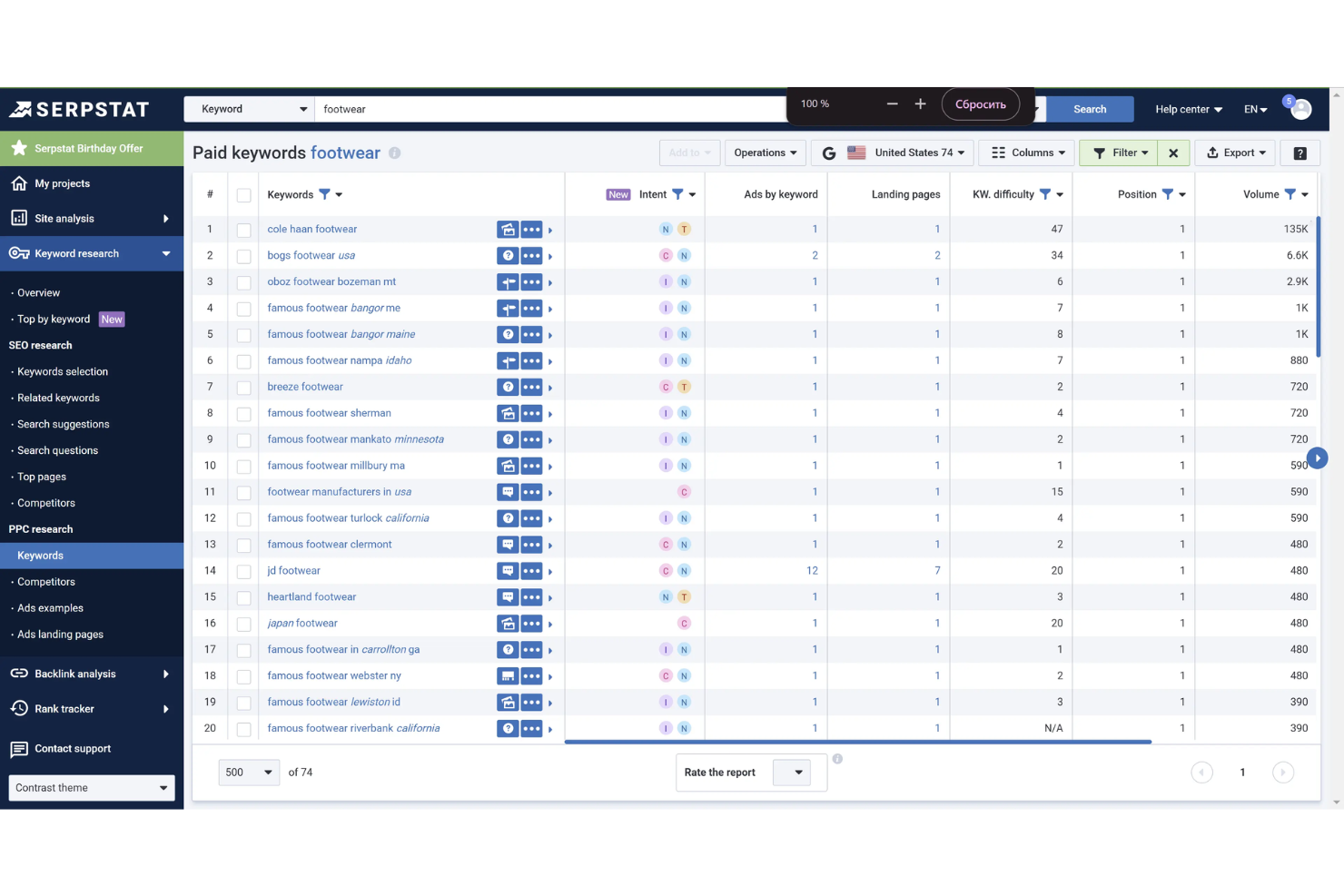
Find high-value keywords your competitors rank for and analyze their search volume and difficulty.
Backlink Analysis
Track competitor backlink profiles to identify link-building opportunities and monitor referring domains.
Site Audit
Scan competitor websites for technical SEO issues and benchmark their site health against your own.
Rank Tracking
Monitor keyword positions for your site and competitors across multiple locations and devices.
Domain vs. Domain Comparison
Directly compare your website's SEO metrics with multiple competitors in a single dashboard.
Content Gap Analysis
Identify keywords and topics your competitors rank for that your site is missing, helping you target new content opportunities.
Ease of Use
Serpstat is widely regarded as user-friendly, with a clean interface and logical navigation that make onboarding fast for new users. Most features are accessible from a single dashboard, and tooltips help clarify complex metrics. The functionality is straightforward—users appreciate the quick project setup and clear reporting, which reduces time spent searching for data. However, some advanced features may require extra exploration, but overall, Serpstat's usability suits both beginners and experienced marketers seeking quick competitor insights when they use Serpstat for their SEO strategy.

Integrations
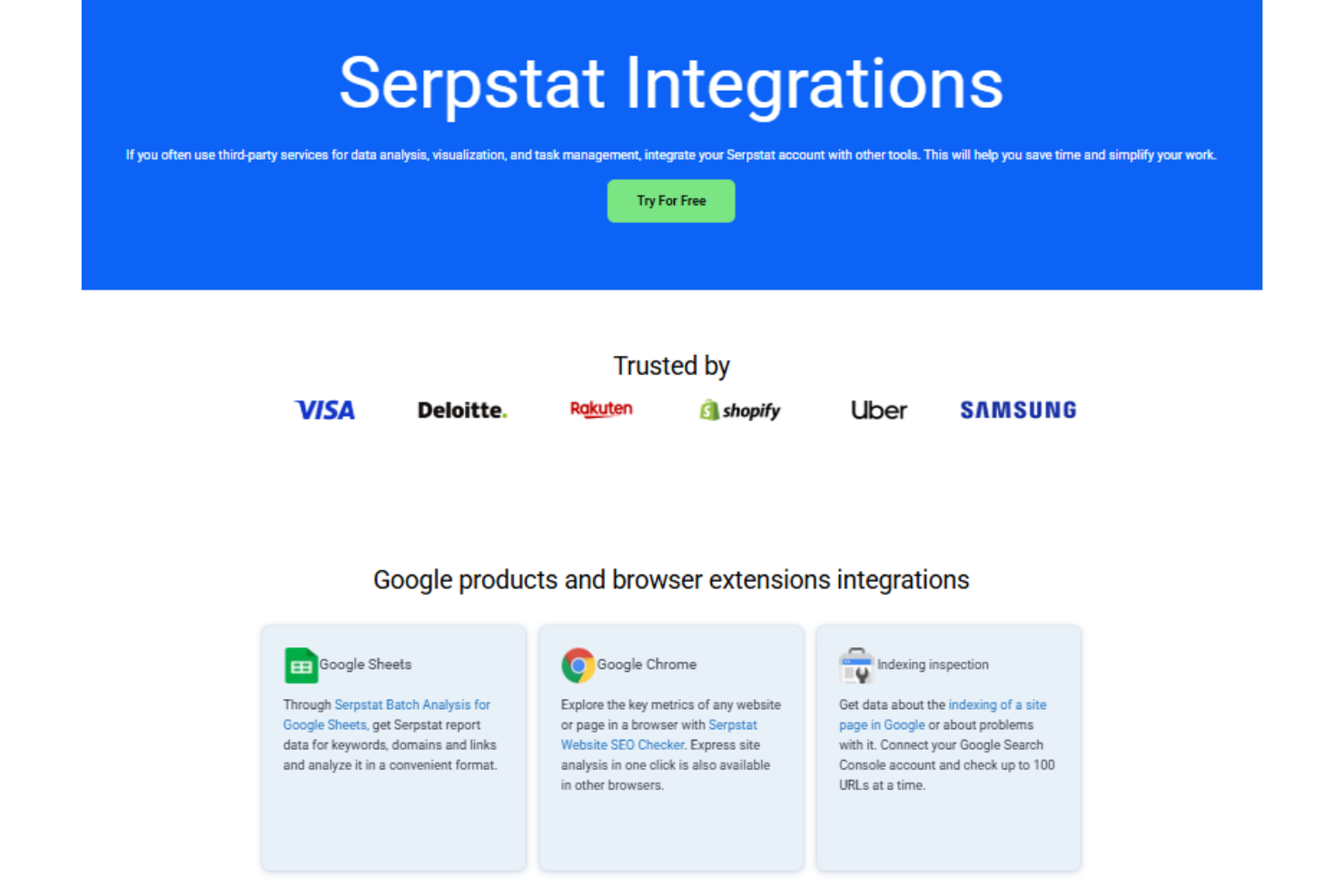
Serpstat integrates with Google Analytics, Google Search Console, Slack, Trello, Data Studio, Google Chrome (via extension), Firefox (via extension), Opera (via extension), Microsoft Edge (via extension), and Zapier.
Serpstat also offers a public API for custom integrations and connects with third-party automation tools.
Serpstat Specs
- API
- Audience Targeting
- Brand Management
- Conversion Tracking
- Dashboard
- Data Export
- Data Import
- Data Visualization
- External Integrations
- Keyword Tracking
- Link Tracking
- Marketing Automation
- Multi-Account
- Multi-User
- Notifications
- Social-Media Integration