

Red Points Review: Pros, Cons, Features & Pricing


A customer messages your team about a product they bought online that looks like yours, but isn’t. Then another listing shows up. Different sellers, same product photos, same brand name. Suddenly, your team is spending hours searching marketplaces, reporting listings, and trying to figure out how far the problem has spread.
This is the point where you might start looking into brand protection companies. And that's where Red Points comes in. Red Points is the AI brand protection company delivering fully managed protection at scale. In this review, I break down how Red Points works, what it does well, and where it may fall short so you can decide if it’s the right solution for protecting your brand online.
Red Points Evaluation Summary
- Pricing upon request
- Free demo available
Why Trust Our Software Reviews
We’ve been testing and reviewing marketing software since 2022. As marketing experts ourselves, we know how critical and difficult it is to make the right decision when selecting software.
We invest in deep research to help our audience make better software purchasing decisions. We’ve tested more than 2,000 tools for different marketing use cases and written over 1,000 comprehensive software reviews. Learn how we stay transparent & our software review methodology.
Red Points Overview
pros
-
Fully managed platform — Red Points' IP-Ops specialists operate detection, validation, enforcement, and continuous optimization on behalf of clients.
-
Unlimited detections and takedowns on a flat-fee model. Enforcement never capped by analyst hours or package limits.
-
Uses AI models trained on 2.7 billion data points to detect and prioritize infringements.
cons
-
It can be more expensive than other brand protection providers.
-
Trademark registration and renewal is handled through industry partners rather than in-house.
-
Standard reporting may not meet every internal team's requirements out of the box.
Is Red Points Right For Your Needs?
Who Would be a Good Fit for Red Points?
Red Points works best for companies that actively sell products or digital content online and need help stopping counterfeits, unauthorized sellers, scams, and brand impersonation. If your team struggles to monitor marketplaces, social media, domains, and websites for misuse of your brand, a platform like Red Points can automate detection and takedowns so you can protect your revenue and reputation.
-
Brands Looking to Scale Enforcement Without Scaling Headcount
Brands that want to expand their protection program without adding internal resources can rely on Red Points' proven AI and fully managed protection program operated by IP-Ops specialists who can implement an enforcement strategy on your behalf.
-
Fast-Growing Brands Needing Cost Predictability
Scale brand protection without scaling costs. Red Points' flat-fee model includes unlimited detections and takedowns, meaning enforcement capacity grows with your brand without triggering variable pricing or hitting package limits during seasonal spikes.
-
Brands Recovering Revenue from Infringers
Go beyond takedowns with Red Points' Revenue Recovery Program, designed for brands that want to pursue counterfeit operations through high-scale litigation and recover tangible revenue lost to infringement activity.
-
Global Enterprise Brands
Protect revenue and reputation across all digital channels with end-to-end managed enforcement.
-
Brands with High Seller Abuse
Identify and dismantle entire networks of unauthorized sellers, not just isolated listings, using cross-channel seller clustering built on 2.7 billion monthly data points.
-
Brands Expanding into China
Continuously monitor and enforce trademark rights in domestic China platforms like Goofish, Pinduoduo, WeChat, and Douyin that are often inaccessible from outside the mainland.
Who Would be a Bad Fit for Red Points?
Red Points is designed for companies dealing with large-scale brand threats online. If your business rarely encounters counterfeit products, impersonation, or intellectual property theft, the platform will likely be unnecessary. Smaller organizations or businesses that don’t sell widely online may find the tool too advanced for their needs.
-
Local Service Businesses Without Digital Assets
Organizations that operate purely offline or locally — without digital products, branded goods, or significant online presence — typically face little risk from online impersonation, piracy, or counterfeit listings.
-
Early-Stage Brands With Low Infringement Risk
Companies that haven’t yet developed significant brand visibility or online distribution may not encounter meaningful infringement activity. Brand protection becomes more valuable as brand awareness, online sales, and digital presence expand.
-
Businesses Without Intellectual Property
Red Points is designed to protect trademarks, branded products, copyrighted content, and digital assets. Organizations without identifiable brand assets or intellectual property to defend are unlikely to benefit from brand protection automation.
-
Companies With Minimal Online Brand Exposure
Organizations that sell exclusively through private contracts or controlled distribution channels — with little public brand presence online — may face limited risk from impersonation, piracy, or counterfeit listings. In these cases, large-scale digital monitoring and enforcement may not be necessary.
-
Businesses Selling Custom Contract Work
Companies that deliver custom services or one-off contract projects (rather than branded products or digital assets) typically have fewer online brand protection risks.
How We Test & Score Tools
We’ve spent years building, refining, and improving our software testing and scoring system. The rubric is designed to capture the nuances of software selection and what makes a tool effective, focusing on critical aspects of the decision-making process.
Below, you can see exactly how our testing and scoring works across seven criteria. It allows us to provide an unbiased evaluation of the software based on core functionality, standout features, ease of use, onboarding, customer support, integrations, customer reviews, and value for money.
Core Functionality (25% of final scoring)
The starting point of our evaluation is always the core functionality of the tool. Does it have the basic features and functions that a user would expect to see? Are any of those core features locked to higher-tiered pricing plans? At its core, we expect a tool to stand up against the baseline capabilities of its competitors.
Standout Features (25% of final scoring)
Next, we evaluate uncommon standout features that go above and beyond the core functionality typically found in tools of its kind. A high score reflects specialized or unique features that make the product faster, more efficient, or offer additional value to the user.
We also evaluate how easy it is to integrate with other tools typically found in the tech stack to expand the functionality and utility of the software. Tools offering plentiful native integrations, 3rd party connections, and API access to build custom integrations score best.
Ease of Use (10% of final scoring)
We consider how quick and easy it is to execute the tasks defined in the core functionality using the tool. High scoring software is well designed, intuitive to use, offers mobile apps, provides templates, and makes relatively complex tasks seem simple.
Onboarding (10% of final scoring)
We know how important rapid team adoption is for a new platform, so we evaluate how easy it is to learn and use a tool with minimal training. We evaluate how quickly a team member can get set up and start using the tool with no experience. High scoring solutions indicate little or no support is required.
Customer Support (10% of final scoring)
We review how quick and easy it is to get unstuck and find help by phone, live chat, or knowledge base. Tools and companies that provide real-time support score best, while chatbots score worst.
Customer Reviews (10% of final scoring)
Beyond our own testing and evaluation, we consider the net promoter score from current and past customers. We review their likelihood, given the option, to choose the tool again for the core functionality. A high scoring software reflects a high net promoter score from current or past customers.
Value for Money (10% of final scoring)
Lastly, in consideration of all the other criteria, we review the average price of entry level plans against the core features and consider the value of the other evaluation criteria. Software that delivers more, for less, will score higher.
Core Features
Brand Protection Monitoring
Red Points continuously scans marketplaces, websites, social media, and ads to detect counterfeit products, scams, and unauthorized uses of your brand.
Marketplace Protection
Coverage across all digital channels, including Domestic China marketplaces and social media (those not accessible from outside Mainland China).
Impersonation Removal
Red Points detects fake websites, social profiles, and phishing campaigns pretending to be your company and helps remove them.
Domain Monitoring and Takedowns
The system tracks suspicious domain registrations that use your brand name and helps shut down harmful sites.
Digital Piracy Protection
Red Points finds and removes illegal copies of software, videos, and other digital content distributed without permission.
Social Media Protection
The platform monitors social platforms for scams, impersonation, and stolen content involving your brand.
AI-Driven Detection
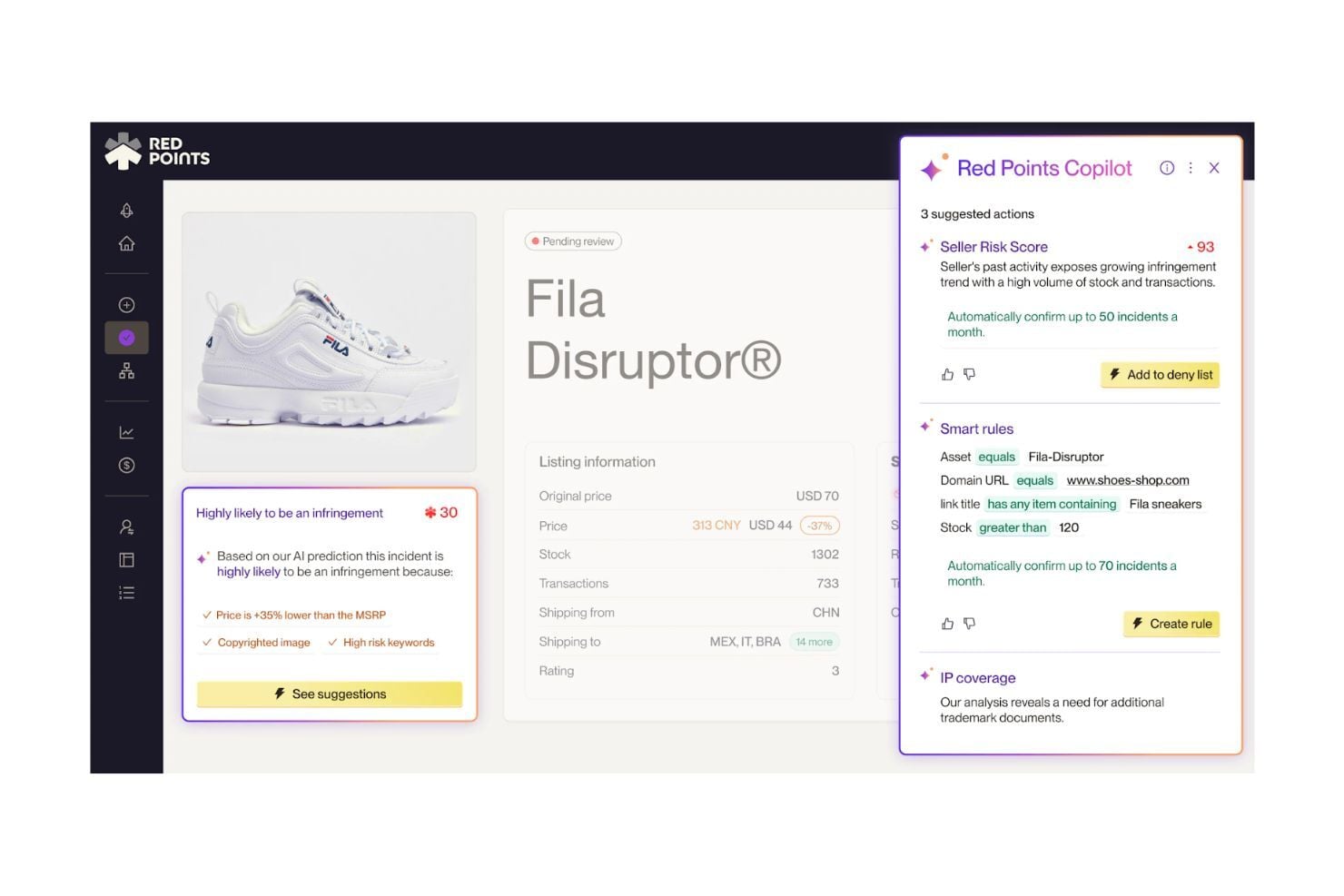
Uses advanced machine learning and AI trained on over 2.7 billion monthly data points to detect and prioritize infringements — operated by IP-Ops specialists who continuously refine detection logic, keyword coverage, and enforcement strategy to keep protection ahead of evolving threats.
Fully-Managed Platform & Expertise
Red Points operates brand protection end-to-end on behalf of its clients. For Professional and Enterprise plans, the IP-Ops team handles incident validation and prioritization, keyword and automation refinement, seller network analysis, enforcement management and follow-ups, and continuous optimization. Brands get an operated protection program — not just a tool — with playbooks refined over a decade.
Standout Features
Gray Market Detection
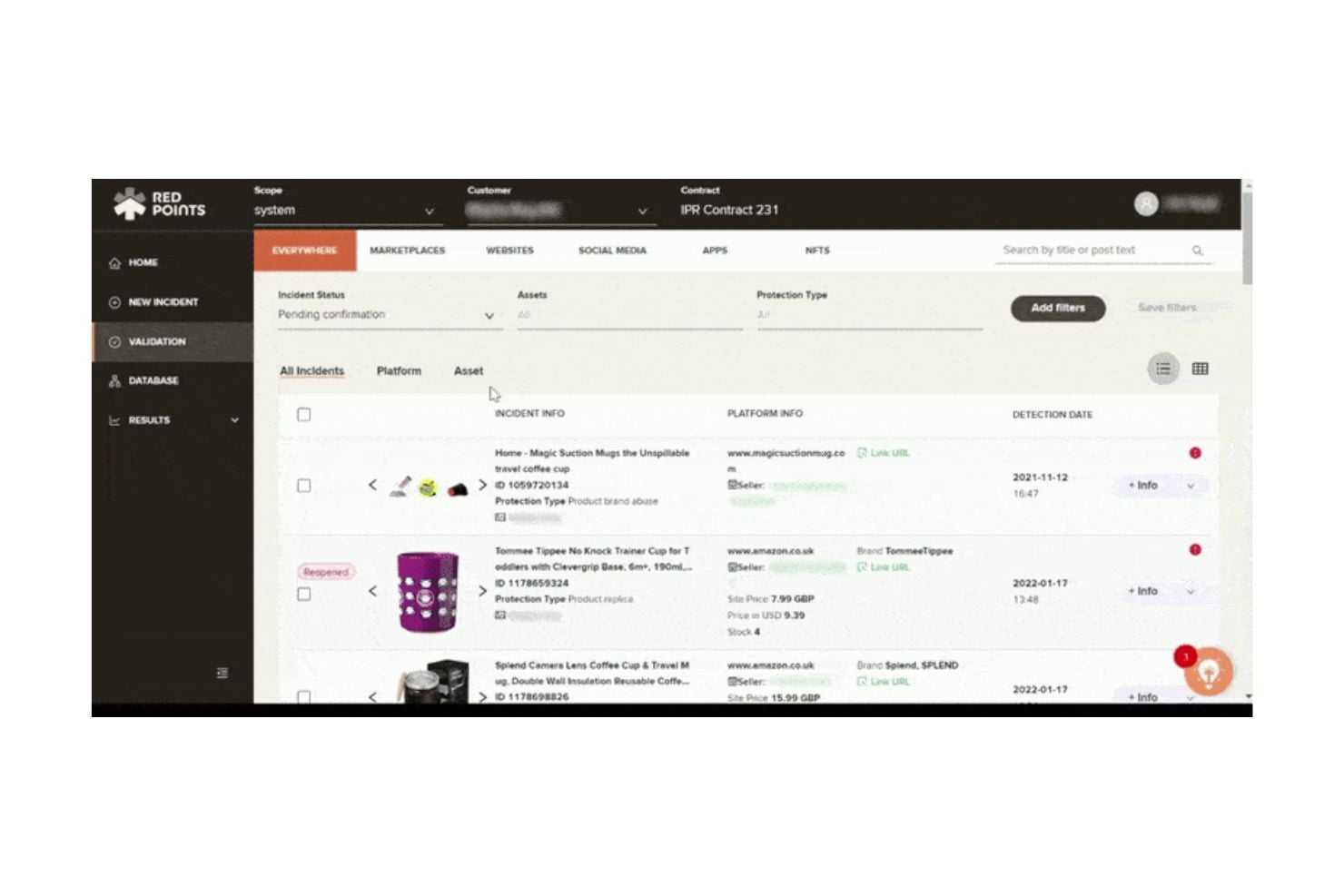
Red Points identifies unauthorized resellers distributing genuine products outside approved sales channels.
Social Video Growth Protection
The platform helps creators and brands detect stolen or reuploaded videos and recover traffic, engagement, and revenue.
Ease of Use
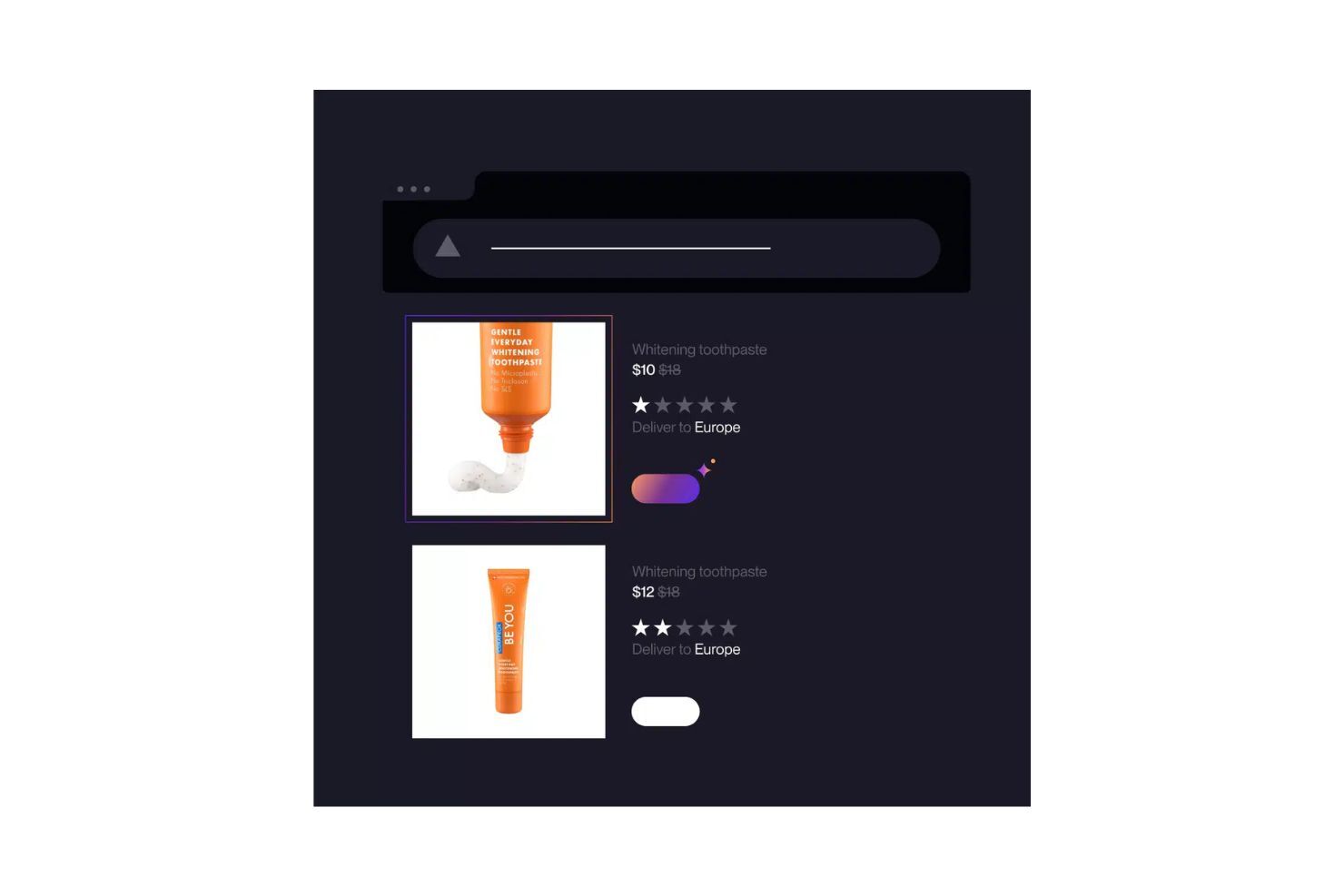
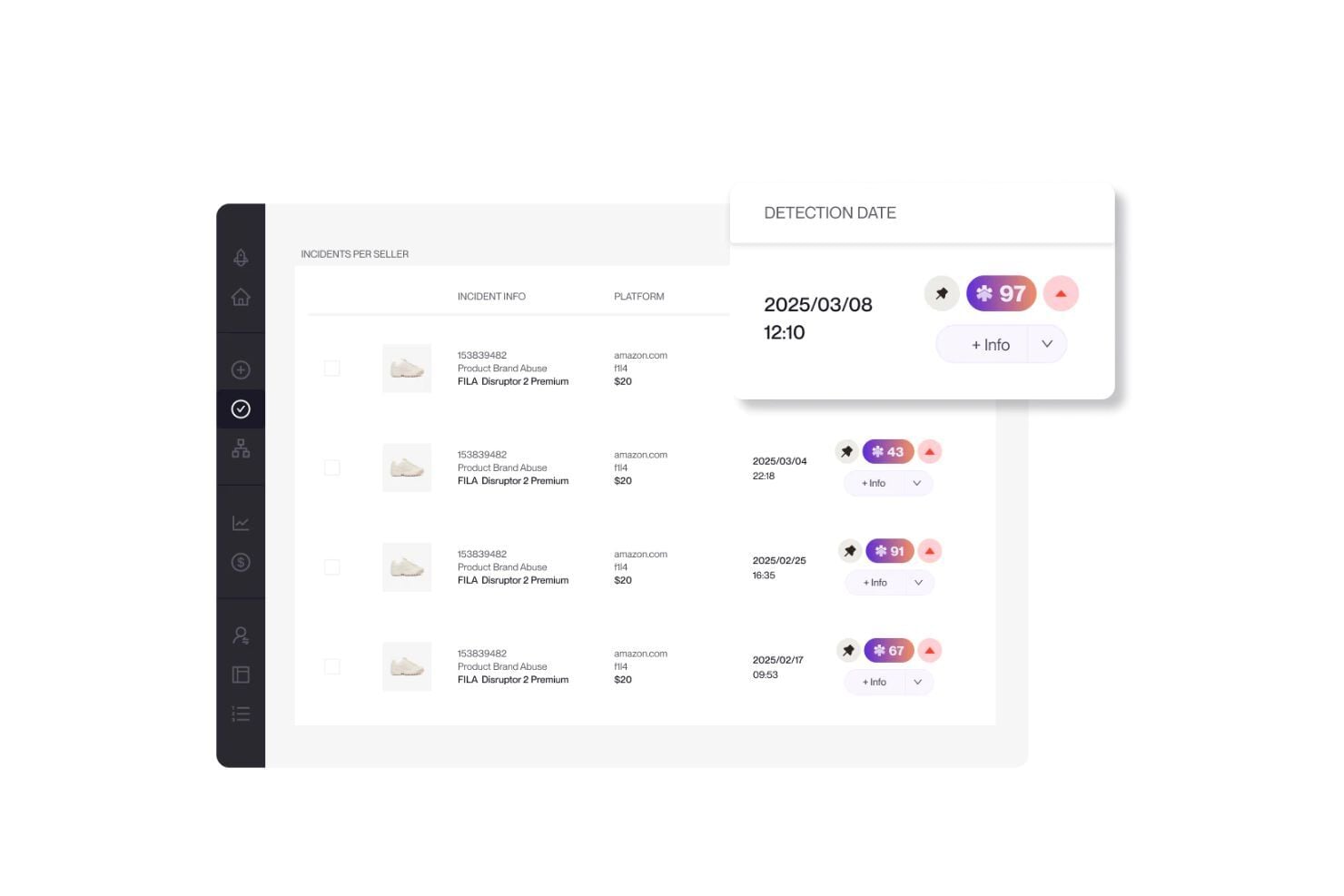
Red Points offers a clean, easy-to-navigate dashboard that gives teams a clear view of counterfeit detections, takedown progress, and overall brand protection activity in one place. Automated workflows handle much of the monitoring and removal process, reducing the need for constant manual work and helping teams act quickly when issues appear. While there can be a short learning period at the start, the setup process is structured and guided, making it easier for teams to get up and running. Once configured, the platform fits naturally into day-to-day operations and helps teams stay on top of brand threats without adding unnecessary complexity.
For brands that prefer a fully managed approach, Red Points' IP-Ops team operates the platform on their behalf, handling ongoing detection tuning, rule-building, and enforcement execution so internal teams can focus on strategy rather than day-to-day operations.
Onboarding
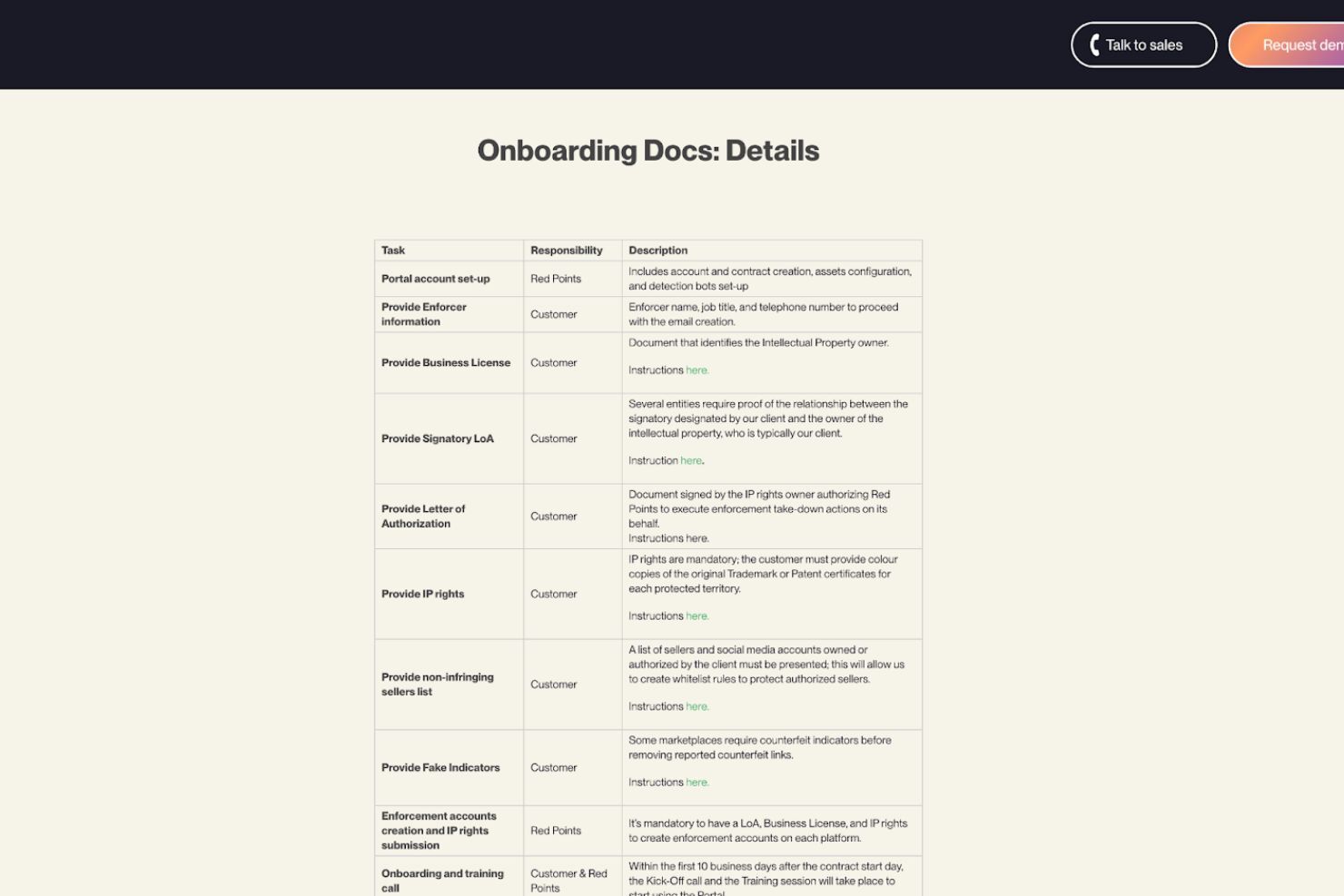
Getting started with Red Points typically begins with setting up your brand assets, trademarks, and key product information so the platform can recognize potential infringements. From there, monitoring rules and enforcement settings are configured to match where your brand is most exposed online, such as marketplaces, websites, and social platforms. Once activated, the system begins detecting violations, and the team provides guidance to help you review incidents and manage takedowns through the platform.
Red Points also provides structured onboarding with Implementation Specialists, a dedicated CSM, and an IP-Ops setup, which reduces time-to-value compared to self-service alternatives.
Customer Support
Red Points offers several ways for users to get help, starting with direct contact through their support and sales team via their contact page or demo request form.
In addition to direct assistance, the platform provides an FAQs section that answers common questions about brand protection, enforcement, and platform capabilities.
Users can also access guides, insights, and educational materials through the Red Points resources hub, which helps teams better understand brand protection strategies and how to get the most out of the platform.

Integrations
Though Red Points does not explicitly state integrations with workplace tools like Slack or Microsoft Teams, the platform does provide coverage for major online marketplaces, websites, and social platforms such as Amazon, eBay, and Alibaba to detect and remove infringements.
It also provides API access for custom integrations with internal systems and workflows.
Value for Money
Red Points operates on a flat-fee model with unlimited detections and takedowns, which contrasts with many competitors that charge per detection, per enforcement action, or per takedown. This flat-fee structure can make costs more predictable for companies managing large volumes of infringements. For exact figures, you'll need to request pricing, which scales based on protection type: counterfeits, gray market, impersonation, or privacy. Red Points organizes its offering into three main plans:
- Starter Plan: Designed as a self-service entry tier, this plan includes unlimited detections and takedowns, protection for one trademark, marketplace monitoring, AI-powered detection tools, dashboards for tracking activity, and standard onboarding support.
- Professional Plan: Everything in Starter, plus expanded coverage such as protection for multiple trademarks or designs, catalog image protection, social media monitoring, priority enforcement, and additional service options. This tier is typically fully managed and includes dedicated customer success support and IP operations oversight.
- Enterprise Plan: Built for organizations facing complex brand abuse issues. It includes broader trademark coverage, standalone website protection, paid search and social ad protection, advanced dashboards, and optional add-ons. Enterprise programs are fully managed and often include senior strategic advisory support and revenue recovery services.

Red Points Specs
- API
- Application Tracking
- Calendar Management
- Cloud Deployment
- Comparative Reporting
- Contact Management
- CRM Integration
- Data Export
- Data Import
- Data Visualization
- Database
- Document Comparison
- External Integrations
- Multi-Source Feedback
- Organization Management
- Patent Management
- Policy Management
- Project Management
- Report & Compliance
- Resource Management
- Software Integration
- Third-Party Plugins/Add-Ons
Red Points FAQs
How does Red Points protect my brand online?
What kind of customer support can I expect?
Can Red Points handle international brand protection?
How does Red Points ensure data security and compliance?
What industries benefit most from Red Points?
How quickly can Red Points take down infringing content?
Is Red Points suitable for small businesses?
How customizable is the Red Points dashboard?
Red Points Company Overview & History
Born in Barcelona and based in New York, Red Points serves over 1,300 brands worldwide with a fully managed, AI-powered approach to brand protection — combining proprietary detection technology with operational expertise across marketplace enforcement, impersonation removal, piracy protection, and gray market management.
Red Points Major Milestones
- 2012: Founded in Barcelona.
- 2019: Raised $38 million to expand market leadership in brand and IP protection.
- 2022: The company raised an additional $20 million to scale its brand protection technology globally.
- 2024: Reached $16 million in revenue, serving 900 customers.