Notion Review: Pros, Cons, Features and Pricing


Notion is a marketing collaboration software that helps teams organize projects and tasks efficiently. It's ideal for startups, creative agencies, and marketing departments seeking a flexible workspace. Notion offers customizable tools that adapt to your team's specific collaboration needs.
Notion solves issues like disorganized workflows and scattered information, making it a flexible project management tool for managers and creative teams alike. In this article, I'll cover Notion's features, pros and cons, use cases, pricing, etc., so you can decide if this software aligns with your collaboration and productivity goals.
Notion Evaluation Summary
- From $10/member/month (billed annually)
- Free plan + free demo available
Why Trust Our Software Reviews
We’ve been testing and reviewing marketing software since 2022. As marketing experts ourselves, we know how critical and difficult it is to make the right decision when selecting software.
We invest in deep research to help our audience make better software purchasing decisions. We’ve tested more than 2,000 tools for different marketing use cases and written over 1,000 comprehensive software reviews. Learn how we stay transparent & our software review methodology.
Notion Overview
In my opinion, Notion is a solid choice for marketing teams seeking a flexible collaboration platform. It excels with its customizable workspace and standout features like templates and integrations, making it a versatile tool for creative and dynamic teams. While the interface is intuitive, onboarding can be a bit challenging for some users. Compared to other software, Notion offers good value for money, though its customer support could be more responsive. It's best suited for teams that value customization and are willing to invest time in setting up their ideal workspace. If you're looking to tailor your collaboration software to fit your unique needs, Notion is worth considering.
pros
-
You can customize your workflows to fit your team's unique needs.
-
The interface is intuitive and user-friendly, making it easy to navigate.
-
Templates save you time and help structure your projects efficiently.
cons
-
Onboarding can be time-consuming and complex for new users.
-
Customer support isn't always as responsive as you might need.
-
It may lack advanced features found in more specialized tools.


How We Test & Score Tools
We’ve spent years building, refining, and improving our software testing and scoring system. The rubric is designed to capture the nuances of software selection and what makes a tool effective, focusing on critical aspects of the decision-making process.
Below, you can see exactly how our testing and scoring works across seven criteria. It allows us to provide an unbiased evaluation of the software based on core functionality, standout features, ease of use, onboarding, customer support, integrations, customer reviews, and value for money.
Core Functionality (25% of final scoring)
The starting point of our evaluation is always the core functionality of the tool. Does it have the basic features and functions that a user would expect to see? Are any of those core features locked to higher-tiered pricing plans? At its core, we expect a tool to stand up against the baseline capabilities of its competitors.
Standout Features (25% of final scoring)
Next, we evaluate uncommon standout features that go above and beyond the core functionality typically found in tools of its kind. A high score reflects specialized or unique features that make the product faster, more efficient, or offer additional value to the user.
We also evaluate how easy it is to integrate with other tools typically found in the tech stack to expand the functionality and utility of the software. Tools offering plentiful native integrations, 3rd party connections, and API access to build custom integrations score best.
Ease of Use (10% of final scoring)
We consider how quick and easy it is to execute the tasks defined in the core functionality using the tool. High scoring software is well designed, intuitive to use, offers mobile apps, provides templates, and makes relatively complex tasks seem simple.
Onboarding (10% of final scoring)
We know how important rapid team adoption is for a new platform, so we evaluate how easy it is to learn and use a tool with minimal training. We evaluate how quickly a team member can get set up and start using the tool with no experience. High scoring solutions indicate little or no support is required.
Customer Support (10% of final scoring)
We review how quick and easy it is to get unstuck and find help by phone, live chat, or knowledge base. Tools and companies that provide real-time support score best, while chatbots score worst.
Customer Reviews (10% of final scoring)
Beyond our own testing and evaluation, we consider the net promoter score from current and past customers. We review their likelihood, given the option, to choose the tool again for the core functionality. A high scoring software reflects a high net promoter score from current or past customers.
Value for Money (10% of final scoring)
Lastly, in consideration of all the other criteria, we review the average price of entry level plans against the core features and consider the value of the other evaluation criteria. Software that delivers more, for less, will score higher.
Core Features
Task Management
Notion lets you create and assign tasks easily, keeping your team organized and on track. You can use boards, to-do lists, or calendars to view tasks, helping your team stay aligned.
Templates
You can use pre-designed templates to quickly set up projects, saving you time and effort. These templates are customizable to fit your team's specific needs.
Note Taking
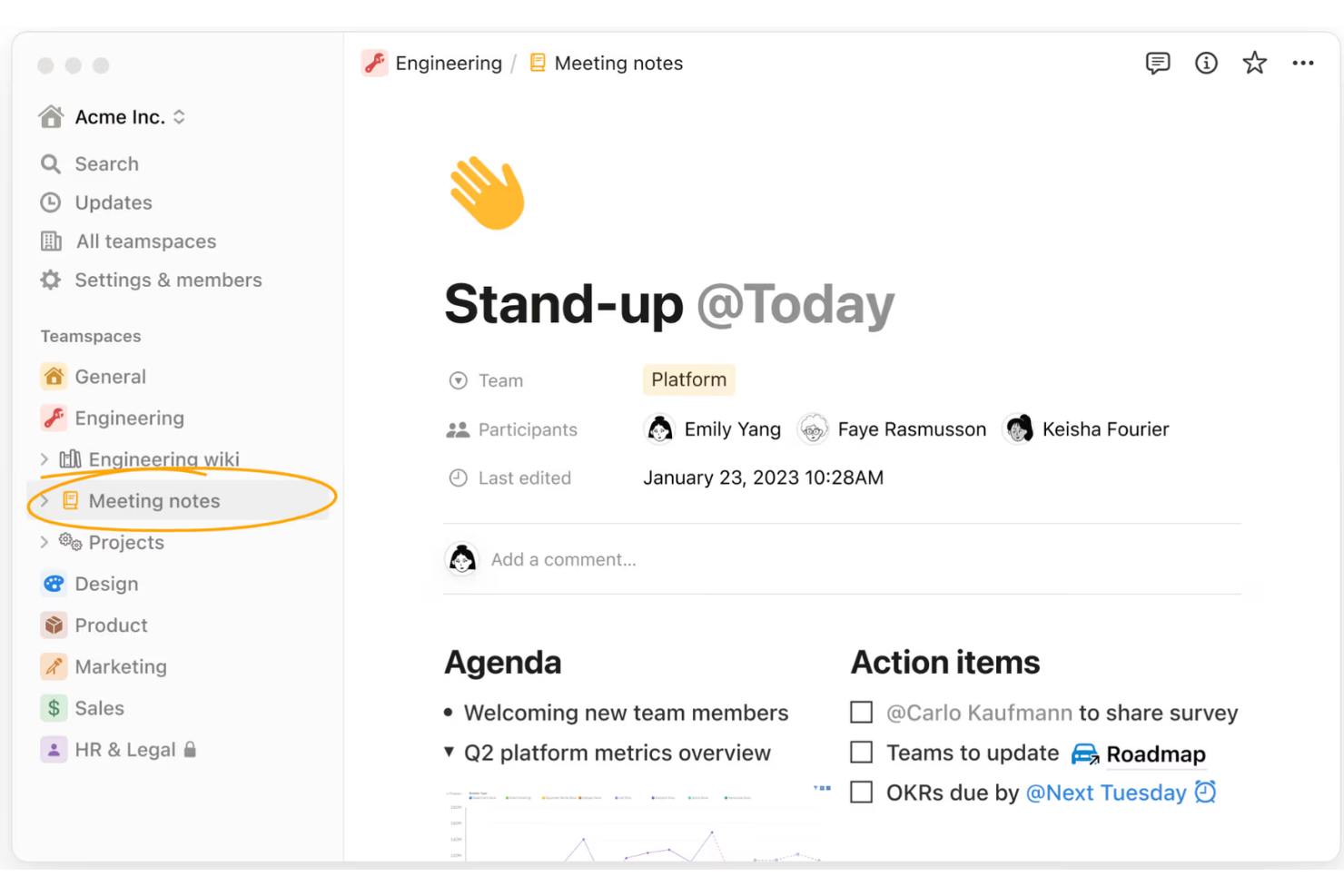
As a flexible collaboration software and note-taking app, Notion allows your team to document ideas, meeting notes, and build an internal knowledge base in one place.
Collaboration
Your team members can collaborate in real-time, sharing updates and feedback instantly. This feature ensures everyone stays informed and aligned on project goals.
Database Management
Notion's databases let you store and categorize information effectively. You can create tables, linked views, and dashboards that offer a comprehensive view of your data.
Kanban Boards
You can visualize your project workflow using Kanban boards, making it easy to track progress. This feature is ideal for managing tasks and deadlines visually.
Ease of Use
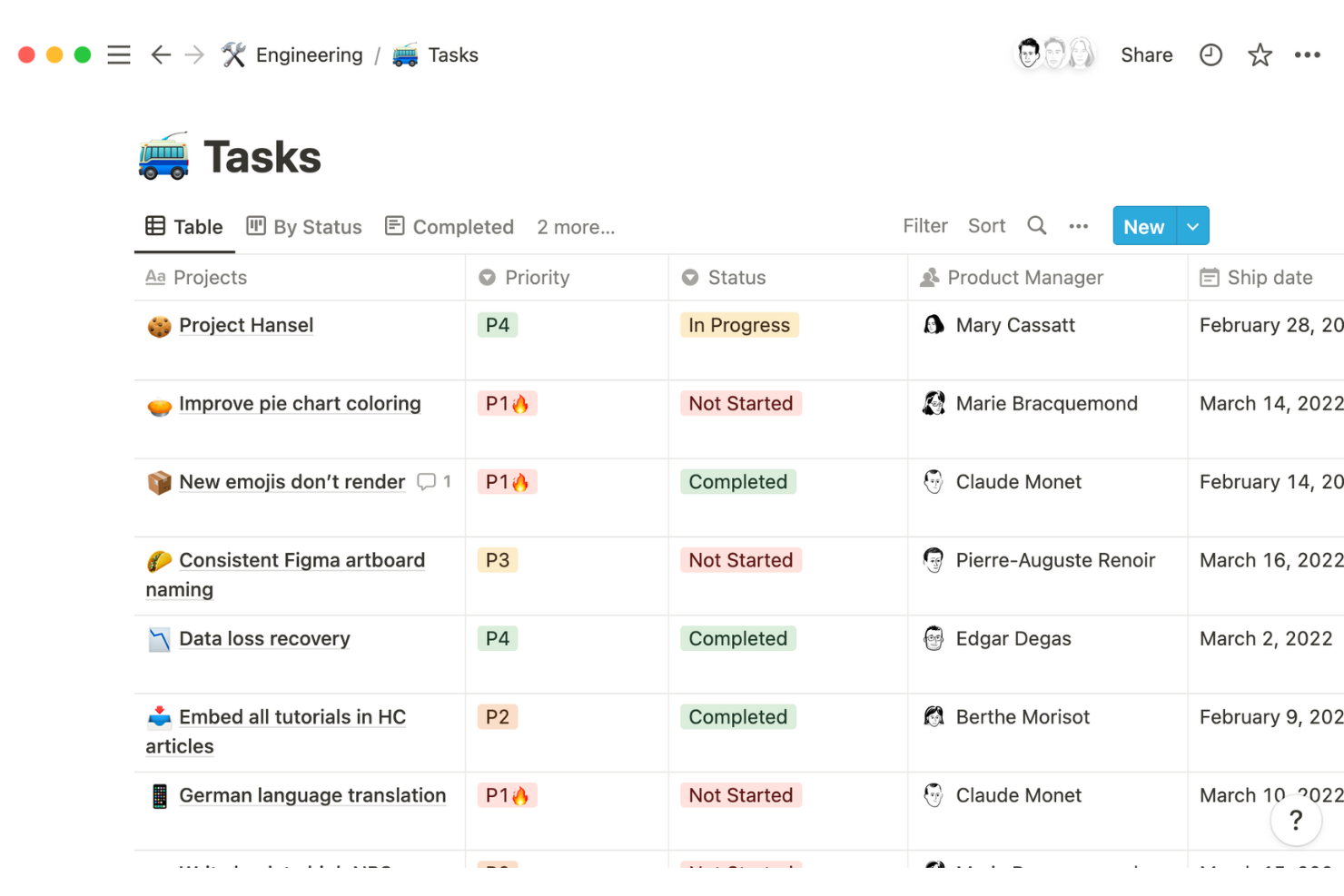
Notion is user-friendly with its intuitive interface, making it easy for your team to navigate and manage tasks. The drag-and-drop functionality simplifies organizing projects, and customizable templates help you set up quickly. However, some users find the initial learning curve steep, especially during onboarding. Once past that, you’ll appreciate how seamlessly it fits into your workflow, offering flexibility that suits your team’s unique needs.
Integrations
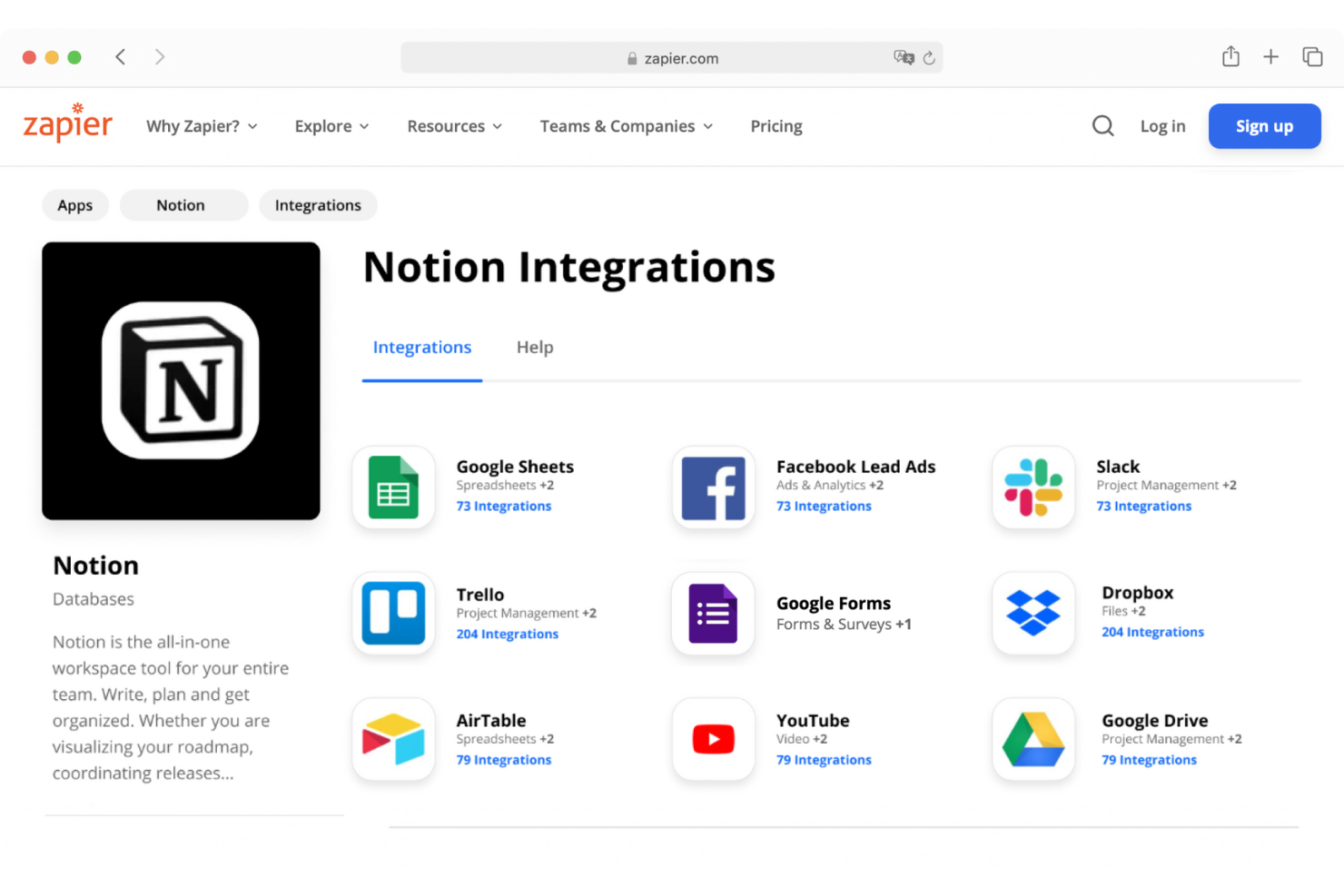
Notion integrates with tools such as Google Drive, Google Docs, Microsoft Entra, Jira, Slack, Trello, GitHub, Asana, ClickUp, and Zapier. Notion also provides a public API for building custom integrations and works with third-party automation platforms like Zapier and Make.
Notion Specs
- API
- Calendar Management
- Data Export
- Data Import
- External Integrations
- Inventory Tracking
- Multi-User
- Notifications
- Project Management
- Scheduling
- Supplier Management
- Task Scheduling/Tracking