

BrandShield Review: Pros, Cons, Features & Pricing


A suspicious website appears using your brand name. Then a fake social media account starts contacting customers, and a questionable marketplace listing surfaces.
Situations like this push teams to start looking for reliable brand protection software that can actually detect and stop these threats.
In this review, I break down BrandShield’s features, strengths, and limitations so you can see how it performs in protecting brands online.
BrandShield Evaluation Summary
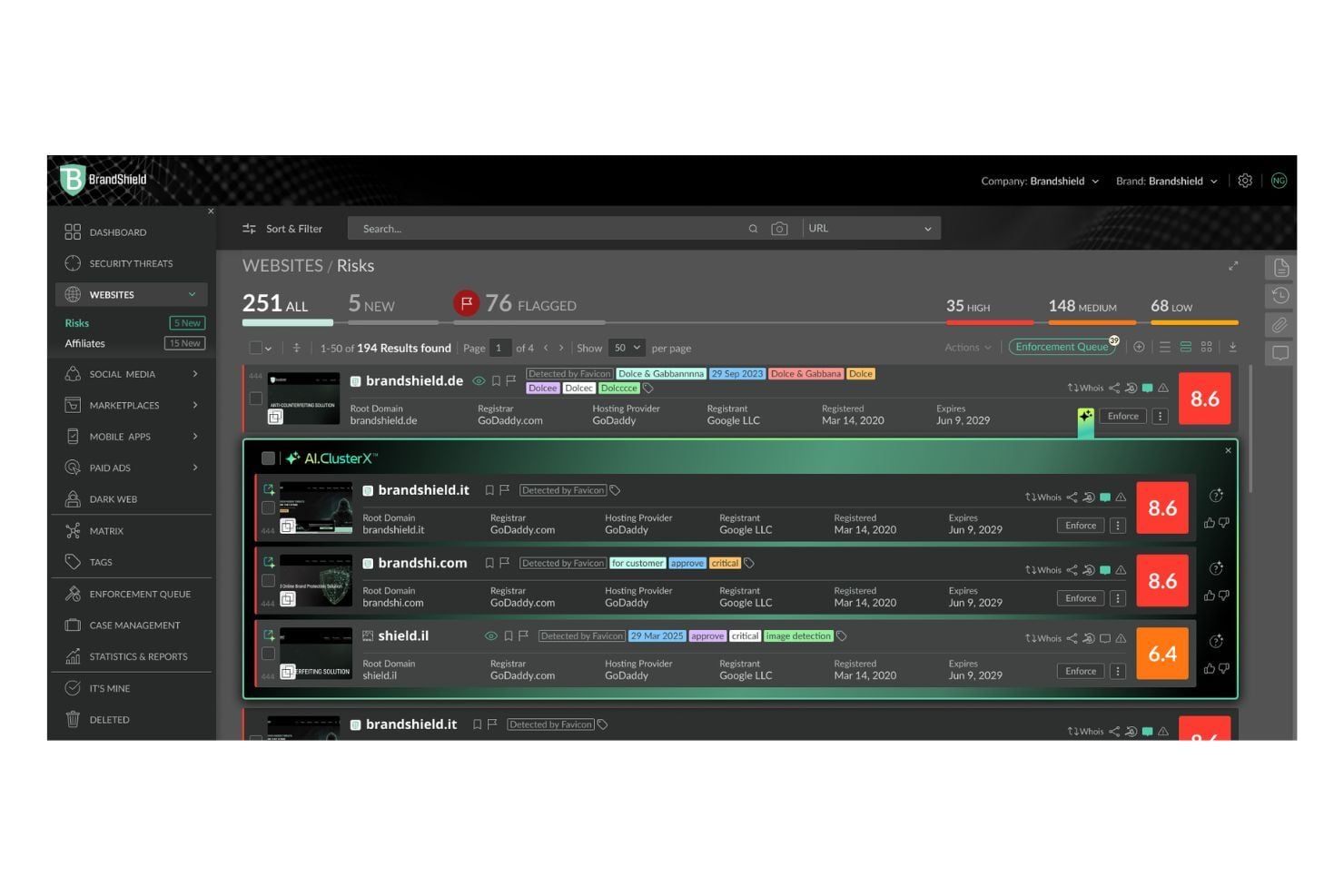
- Pricing upon request
- Free demo available
Why Trust Our Software Reviews
BrandShield Overview
pros
-
The user-friendly interface makes it easy for your team to navigate and use.
-
Automated enforcement tools save your team time by handling trademark takedowns.
-
Offers real-time monitoring to keep your brand protected around the clock.
cons
-
Enforcement is capped by plan, and unlimited takedowns are not available, requiring teams to prioritize which threats to act on.
-
Infringement scan frequency is limited depending on the plan selected, which may slow detection during high-volume periods.
-
Services are sold in packs, offering less flexibility in service and pricing customization compared to some other providers.
-

Eloqua
Visit WebsiteThis is an aggregated rating for this tool including ratings from Crozdesk users and ratings from other sites.4.3 -
Optimizely
Visit WebsiteThis is an aggregated rating for this tool including ratings from Crozdesk users and ratings from other sites.4.2 -
Uberflip
Visit WebsiteThis is an aggregated rating for this tool including ratings from Crozdesk users and ratings from other sites.4.3




How We Test & Score Tools
We’ve spent years building, refining, and improving our software testing and scoring system. The rubric is designed to capture the nuances of software selection and what makes a tool effective, focusing on critical aspects of the decision-making process.
Below, you can see exactly how our testing and scoring works across seven criteria. It allows us to provide an unbiased evaluation of the software based on core functionality, standout features, ease of use, onboarding, customer support, integrations, customer reviews, and value for money.
Core Functionality (25% of final scoring)
The starting point of our evaluation is always the core functionality of the tool. Does it have the basic features and functions that a user would expect to see? Are any of those core features locked to higher-tiered pricing plans? At its core, we expect a tool to stand up against the baseline capabilities of its competitors.
Standout Features (25% of final scoring)
Next, we evaluate uncommon standout features that go above and beyond the core functionality typically found in tools of its kind. A high score reflects specialized or unique features that make the product faster, more efficient, or offer additional value to the user.
We also evaluate how easy it is to integrate with other tools typically found in the tech stack to expand the functionality and utility of the software. Tools offering plentiful native integrations, 3rd party connections, and API access to build custom integrations score best.
Ease of Use (10% of final scoring)
We consider how quick and easy it is to execute the tasks defined in the core functionality using the tool. High scoring software is well designed, intuitive to use, offers mobile apps, provides templates, and makes relatively complex tasks seem simple.
Onboarding (10% of final scoring)
We know how important rapid team adoption is for a new platform, so we evaluate how easy it is to learn and use a tool with minimal training. We evaluate how quickly a team member can get set up and start using the tool with no experience. High scoring solutions indicate little or no support is required.
Customer Support (10% of final scoring)
We review how quick and easy it is to get unstuck and find help by phone, live chat, or knowledge base. Tools and companies that provide real-time support score best, while chatbots score worst.
Customer Reviews (10% of final scoring)
Beyond our own testing and evaluation, we consider the net promoter score from current and past customers. We review their likelihood, given the option, to choose the tool again for the core functionality. A high scoring software reflects a high net promoter score from current or past customers.
Value for Money (10% of final scoring)
Lastly, in consideration of all the other criteria, we review the average price of entry level plans against the core features and consider the value of the other evaluation criteria. Software that delivers more, for less, will score higher.
Core Features
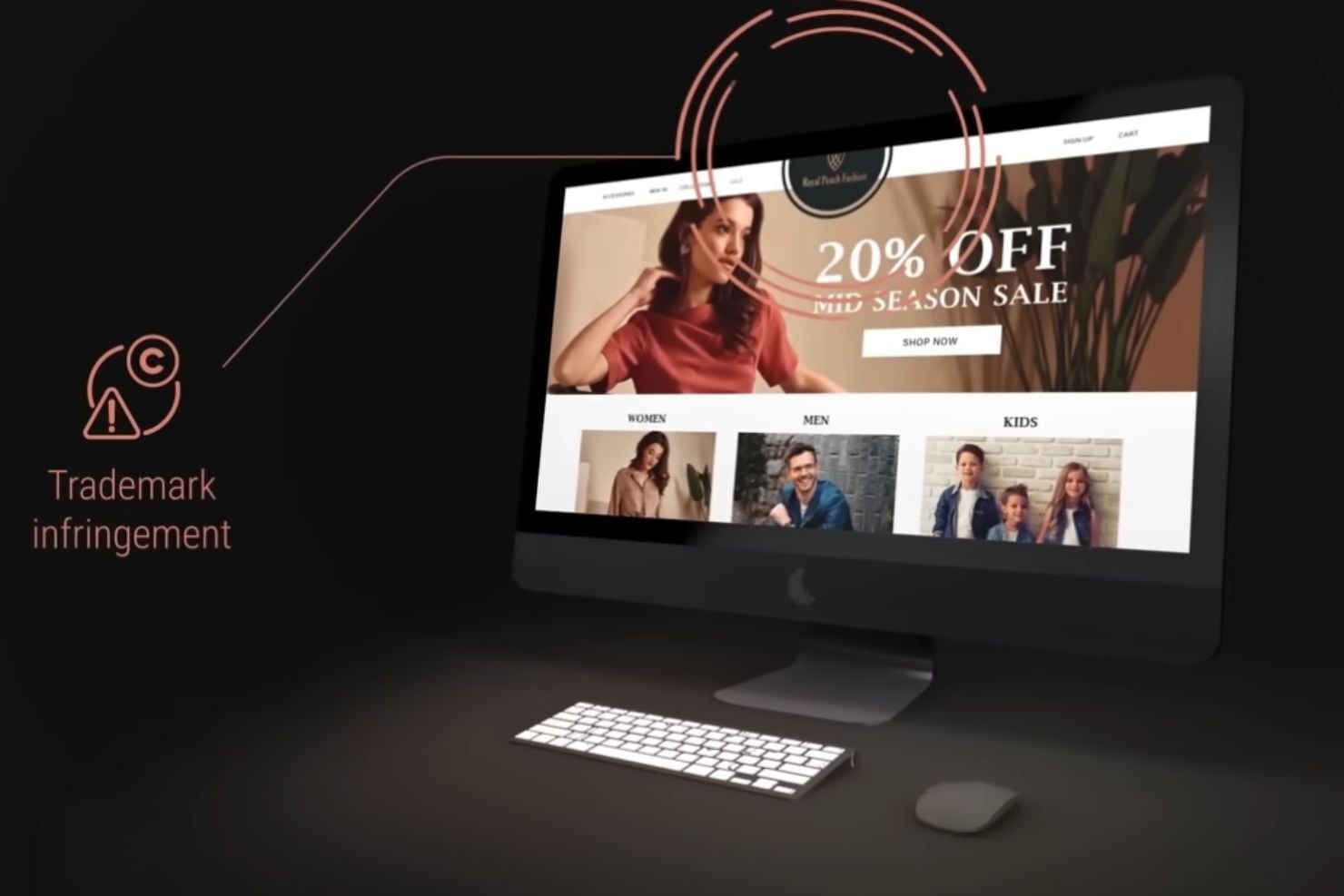
Trademark Infringement Protection
Detects unauthorized use of brand names, logos, and intellectual property across websites, marketplaces, and social platforms, helping companies identify violations and remove them quickly.
Phishing Protection
Continuously monitors for phishing websites, malicious domains, and brand impersonation attempts so organizations can detect and shut down threats before they reach customers.
Social Media Scam Protection
Tracks major social media platforms to find fake accounts, scams, and impersonation targeting a company or its customers, then helps enforce takedowns.
Online Counterfeit Protection
Scans marketplaces and websites to identify counterfeit listings, unauthorized sellers, and product misuse that could damage revenue and brand trust.
Marketplace Brand Protection
Monitors major eCommerce platforms for trademark abuse, counterfeit goods, and grey-market listings, helping brands enforce their rights at scale.
Impersonation Protection
Detects fake profiles, cloned websites, and impersonation attempts involving brands or executives to prevent scams and fraud.
Ease of Use
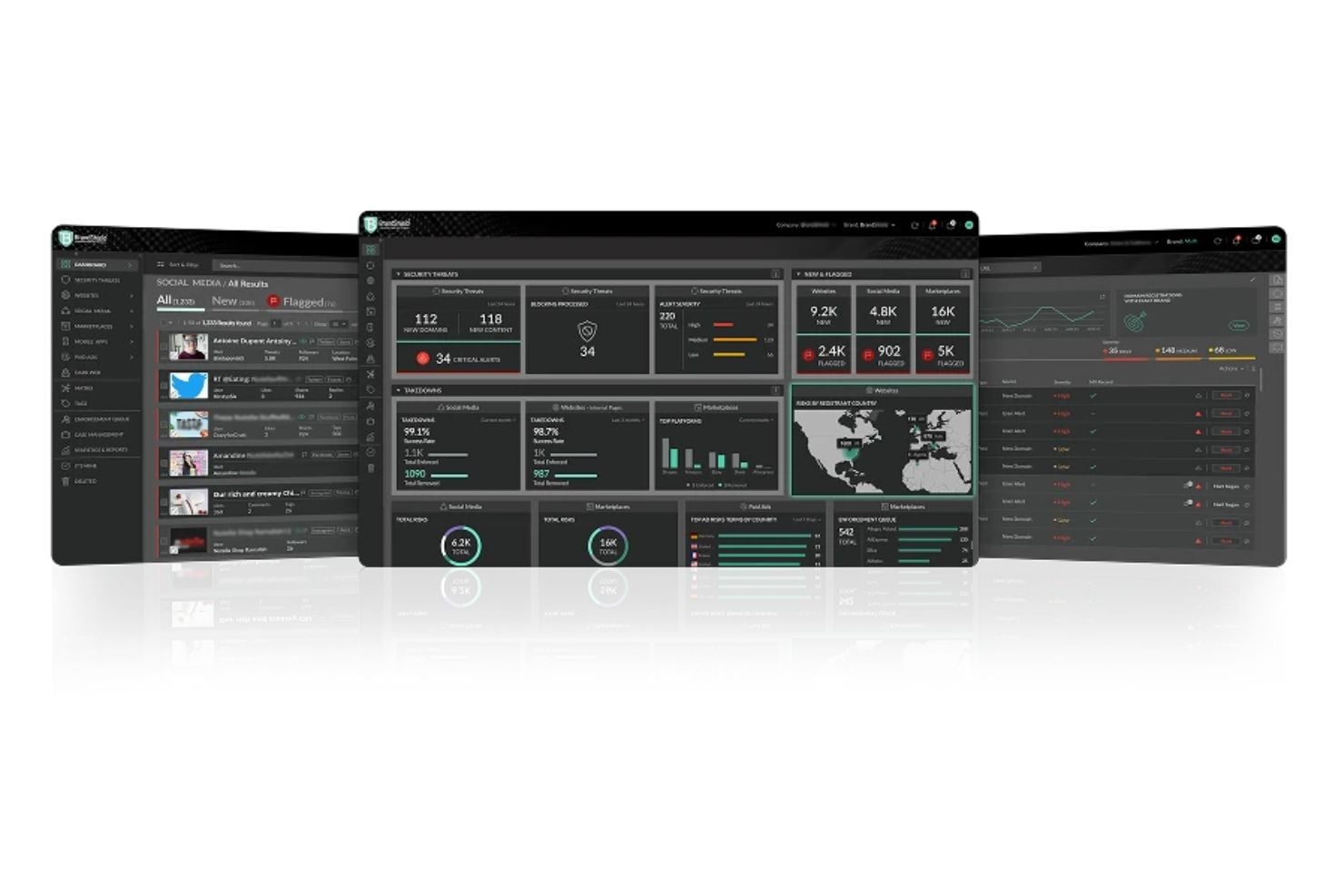
BrandShield is generally considered easy to navigate, even for teams that are new to brand protection platforms. Users highlight the dashboard as clear and straightforward, providing a quick overview of threats, investigations, and takedown activity without requiring deep technical knowledge.
The platform is also described as intuitive during day-to-day use. As teams review alerts and flag what is relevant to their brand, the system improves its ability to identify meaningful risks over time. This helps reduce noise and makes it easier to focus on real threats.
Integrations
BrandShield monitors platforms such as Amazon, eBay, social media networks, marketplaces, and websites to detect brand abuse and counterfeit activity. Rather than direct integrations, the platform scans these channels and supports enforcement and takedowns when threats are identified.
BrandShield Specs
- A/B Testing
- Analytics
- API
- Audience Targeting
- Automated Conversion
- Batch Permissions & Access
- Behavioral Tracking
- Brand Management
- Campaign Management
- Contact Management
- Contact Sharing
- Conversion Tracking
- CRM Integration
- Customer Management
- Dashboards
- Data Export
- Data Import
- Email Integration
- External Integrations
- Keyword Tracking
- Landing Pages
- Lead Management
- Lead Scoring
- Link Tracking
- Marketing Automation
- Multi-User
- Notifications
- Password & Access Management
- Social-Media Integration


