

10 Best Klaviyo Alternative Tools for Email Marketing in 2026

10 Best Klaviyo Alternatives Shortlist


As a marketing manager, you face constant challenges—tight budgets, demanding KPIs, and the need for effective audience engagement. You might already be using Klaviyo but may be wondering if there's a better fit for your team. Marketing automation platforms can help, but not all fit every business's unique needs.
In my experience, the right tool can make all the difference. That's why I've independently tested and reviewed various alternatives to Klaviyo.
In this listicle, I'll share my well-researched top picks, focusing on what makes each tool stand out. You'll discover options offering better scalability, features, or pricing for your needs. Let's find the perfect solution to enhance your marketing efforts.
What Is Klaviyo?
Klaviyo is a marketing automation platform that helps businesses send personalized email and SMS campaigns. It's typically used by ecommerce professionals and marketers looking to enhance customer engagement and drive sales.
Klaviyo's segmentation, analytics, and integration capabilities support targeted communication, insightful reporting, and smooth integration with ecommerce platforms. Overall, Klaviyo provides valuable tools for optimizing your marketing strategy and improving customer relationships.
Why Trust Our Software Recommendations
Our team has been testing and reviewing software since 2012. As marketing leaders ourselves, we know how difficult—and important—it is to choose the right software.
For this guide, we evaluated tools using hands-on testing and independent research, scoring tools using our selection criteria.
Our reviews reflect our human editorial judgment, not a sales pitch.
Expert reviewers:
Klaviyo Alternatives Comparison Table
This comparison table summarizes pricing details for my top Klaviyo alternative selections:
| Tool | Best For | Trial Info | Price | ||
|---|---|---|---|---|---|
| 1 | Best for ecommerce email marketing | Free plan + free demo available | From $11.20/month | Website | |
| 2 | Best for drag-and-drop email builder | Free plan available | From $9/month | Website | |
| 3 | Best for behavior-based messaging | 14-day free trial + free demo available | From $100/month | Website | |
| 4 | Best for customer engagement analytics | Free demo available | Pricing upon request | Website | |
| 5 | Best for cross-channel campaigns | Free demo available | Pricing upon request | Website | |
| 6 | Best for B2C email marketing | 14-day free trial | From $39/month | Website | |
| 7 | Best for small to medium businesses | 14-day free trial + free demo available | From $14/month (billed annually) | Website | |
| 8 | Best for email automation at scale | 14-day free trial + free demo available | From $15/month (billed annually) | Website | |
| 9 | Best for simple email creation | Free plan available | From $37/month | Website | |
| 10 | Best for email API and campaigns | Free plan available | From $19/month | Website |
Best Klaviyo Alternatives Reviews
Below are my detailed summaries of the best Klaviyo alternatives on my shortlist. My reviews offer a look at each tool’s key features, pros & cons, integrations, and ideal use cases to help you find the best one.

Omnisend
Best for ecommerce email marketing

Omnisend is a marketing automation platform tailored for ecommerce businesses, focusing on email and SMS marketing. It offers tools to create personalized campaigns, automate customer interactions, and boost sales.
Why Omnisend is a good Klaviyo alternative: One reason I like Omnisend is its advanced automation capabilities. You can set up workflows that respond to customer behaviors, like cart abandonment or product purchases, ensuring timely and relevant messaging. This automation can lead to increased customer engagement and higher conversion rates. Another notable feature is Omnisend's segmentation options. You can divide your audience based on purchase history, engagement levels, or other criteria, allowing for more targeted and effective campaigns.
Standout features & integrations:
Features include a drag-and-drop email builder that lets you design professional emails without coding, a library of customizable templates to quickly create on-brand messages, and dynamic discount codes that generate unique offers for each subscriber.
Integrations include Shopify, WooCommerce, WordPress, Wix, BigCommerce, Google Ads, Facebook Lead Ads, Typeform, Yotpo, Intercom, Recart, Loox, and AfterShip.
Pros and Cons
Pros:
- Advanced segmentation and personalization
- Includes both email and SMS marketing
- Effective email marketing automation features
Cons:
- May not be suitable for non-ecommerce businesses
- Slight learning curve for new users
New Product Updates from Omnisend

Omnisend Adds Claude Connector and Updates MCP Features
Omnisend adds a Claude Connector, improved on-brand email templates, and granular MCP permissions. These updates make it easier to work with Omnisend data through AI tools while providing more control over data access. For more information, visit Omnisend’s official site.
 .
.
Sender
Best for drag-and-drop email builder
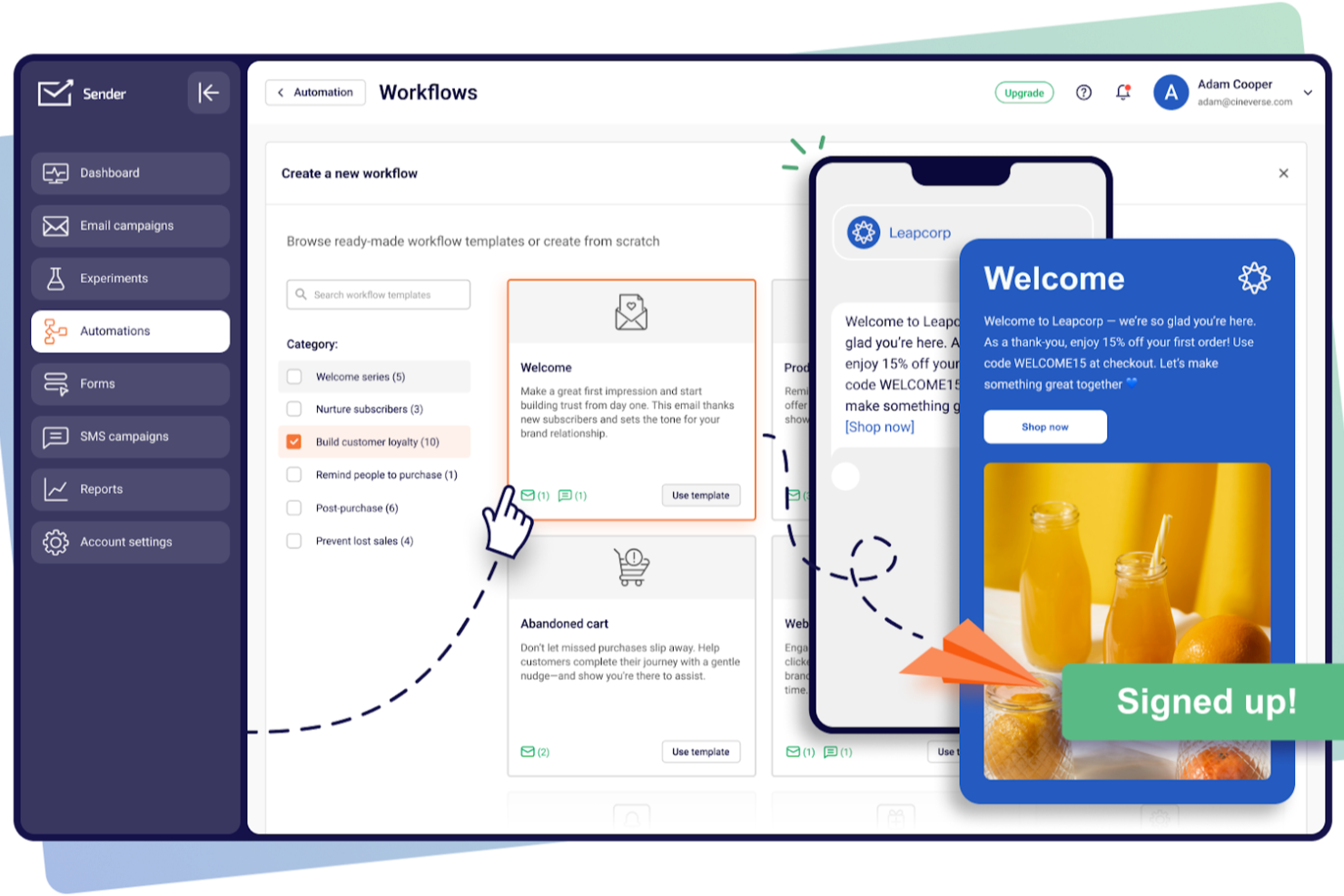
Sender offers a comprehensive email marketing solution tailored for businesses seeking an alternative to Klaviyo. With its user-friendly platform, Sender appeals to small to medium-sized businesses across various industries that prioritize cost-effective marketing strategies. By providing tools to automate and personalize email campaigns, Sender helps businesses enhance their customer engagement and streamline their communication efforts.
Why I Picked Sender
I picked Sender as a Klaviyo alternative because of its robust email automation capabilities and high deliverability rates. Sender's intuitive drag-and-drop email builder allows you to create personalized and engaging emails without requiring extensive technical skills. Additionally, the platform's automation features enable you to set up workflows that nurture leads and maintain customer relationships effortlessly. These functionalities make Sender an appealing choice for businesses looking to optimize their email marketing strategies.
Sender Key Features
In addition to its automation capabilities, Sender offers several features that stand out:
- A/B Testing: Allows you to test different versions of your emails to determine which performs best, improving overall campaign effectiveness.
- Email Templates: Provides access to a library of over 1,600 customizable templates, helping you create visually appealing emails easily.
- Audience Segmentation: Enables you to target specific groups within your subscriber list, ensuring your messages reach the right audience.
- 24/7 Customer Support: Offers round-the-clock assistance to resolve any issues quickly, enhancing user satisfaction and experience.
Sender Integrations
Integrations include WordPress, WooCommerce, PrestaShop, Magento, OpenCart, Shopify, API for custom integrations, and Zapier.
Pros and Cons
Pros:
- Drag-and-drop email builder
- Large template library included
- Unlimited automation workflows supported
Cons:
- Strict anti-spam compliance policies
- Advanced analytics somewhat limited
New Product Updates from Sender

Sender Expands Automation Library to 79 Workflow Templates
Sender expands its automation library from 9 to 79 pre-built workflows with industry collections, new categories, and additional sequence types. This gives teams more ready-made options for launching automated email campaigns faster. For more information, visit Sender’s official site.
 .
.
Best for behavior-based messaging

Customer.io gives marketers and growth teams a flexible platform for building automated, data-driven campaigns across email, SMS, and push. If you want more control over multichannel journeys than most ecommerce automation tools allow, Customer.io stands out.
Who Is Customer.io Best For?
Customer.io is a strong fit for growth marketers and digital teams at SaaS companies who need automated, targeted messaging driven by user actions.
Why Customer.io Is a Good Klaviyo Alternative
I picked Customer.io because it treats user behavior as the core trigger for every message, not just purchase history or list membership. I use event-based triggers to fire emails, SMS, or push notifications the moment a user takes a specific action—like abandoning a workflow step or hitting a usage threshold in-app. In practice, that means my team can build messaging sequences that respond to what users are actually doing, not just what segment they fall into. For SaaS teams in particular, that level of behavioral precision is hard to find in Klaviyo.
Customer.io Key Features
- Visual workflow builder: Design multi-step automation sequences using a drag-and-drop canvas.
- Audience segmentation: Filter users by attributes, events, or activity to build precise audience lists.
- A/B testing: Test message variations within automated workflows to compare performance.
- Transactional messaging: Send one-off triggered messages like receipts or password resets via API call.
Customer.io Integrations
Customer.io offers native integrations with Shopify, Segment, Snowflake, Amplitude, Salesforce, Braze, and SFTP. It also connects with Zapier and provides an API for custom integrations.
Pros and Cons
Pros:
- Highly granular user data segmentation
- Behavioral triggers work across channels
- Flexible workflow builder supports advanced automation
Cons:
- Reporting tools less intuitive than some competitors
- Initial setup can require technical resources
New Product Updates from Customer.io

Customer.io Adds Conversational Analytics for Behavioral Insights
Customer.io’s agent, CLI, and MCP tools can now analyze workspace messaging and behavioral data to generate advanced reports across key performance areas. For more information, visit Customer.io's official site.
 .
.
MoEngage
Best for customer engagement analytics

MoEngage provides an integrated approach to understanding and interacting with customers across multiple channels for digital-first enterprises. It offers engagement analytics to help optimize content and timing for each segment, enhancing customer engagement and retention.
Why MoEngage is a good Klaviyo alternative: MoEngage gives you detailed analytics to understand customer behavior and measure campaign performance. Its AI-powered insights help you predict user actions and optimize engagement timing. With advanced funnel analysis, you can identify where your customers drop off and address those issues. The platform's automation features also simplify reaching customers at the right time.
Standout features & integrations:
Features include real-time analytics that provide instant feedback on campaign performance. MoEngage's journey builder lets you create complex customer journeys with ease. The platform's push notification capabilities ensure timely communication with your audience.
Integrations include Salesforce, Shopify, Segment, Google Analytics, Slack, Mixpanel, Amplitude, CleverTap, Firebase, and AppsFlyer.
Pros and Cons
Pros:
- Advanced predictive analytics
- Real-time personalization tools
- AI-driven customer engagement
Cons:
- Basic reporting dashboard
- Limited marketing AI features

Best for cross-channel campaigns

Iterable combines email, SMS, in-app messaging, push notifications, and social advertising into a single workflow for consistent and personalized communication with audiences at every touchpoint. It streamlines campaign management and improves audience segmentation and targeting.
Why Iterable is a good Klaviyo alternative: Iterable enables your team to create cohesive cross-channel campaigns without multiple tools. It provides visual journey mapping and detailed audience segmentation for more targeted and timely campaigns. The platform's intuitive interface makes designing and executing campaigns easy, while its in-depth analytics provide insights into campaign performance and customer engagement.
Standout features & integrations:
Features include a visual workflow builder that simplifies the creation of automated customer journeys. Iterable's dynamic content capabilities let you personalize messages for each recipient. The platform also offers A/B testing to optimize your campaigns and improve results.
Integrations include Salesforce, Shopify, Marketo, Google Analytics, Segment, Twilio, Facebook, Slack, Snowflake, and Amazon Redshift.
Pros and Cons
Pros:
- Flexible audience segmentation
- Advanced omnichannel marketing tools
- Real-time customer data updates
Cons:
- Basic SMS marketing tools
- Limited reporting customization

Drip
Best for B2C email marketing

Drip is a highly customizable and intuitive email automation platform that allows businesses to create personalized customer journeys and engagement with the right message. It is ideal for ecommerce brands looking to enhance customer retention and drive conversions through tailored email marketing strategies.
Why Drip is a good Klaviyo alternative: Drip offers behavior-based automation for sending targeted messages based on customer actions and preferences. Its visual email builder creates engaging emails without coding skills, and its powerful analytics provide insights into campaign performance. It also includes tools for A/B testing so you can refine your campaigns and maximize their impact.
Standout features & integrations:
Features include visual workflow builders that simplify automation setup, detailed analytics for tracking campaign performance, and pre-built email templates for quick customization. It also offers behavior-based triggers to ensure the right messages reach the right audience at the right time. You can easily monitor and adjust campaigns to meet your goals.
Integrations include Shopify, WooCommerce, Magento, BigCommerce, Stripe, PayPal, Facebook, Zapier, Salesforce, and Slack.
Pros and Cons
Pros:
- Personalized segmentation flexibility
- Strong ecommerce integrations
- Visual and intuitive workflows
Cons:
- No built-in SMS support
- Limited multichannel options

Best for small to medium businesses

Zoho Marketing Automation offers tools to manage email, social media, and SMS campaigns for small to medium businesses. It provides an intuitive interface with lead scoring, customizable customer journeys, affordability, and integration with Zoho’s ecosystem.
Why Zoho Marketing Automation is a good Klaviyo alternative: Zoho Marketing Automation provides an easy-to-use interface and features like lead scoring, behavior-based targeting, and detailed analytics, making it well-suited for SMBs. You can create personalized customer journeys and segment your audience for better engagement. Its marketing planner lets you organize campaigns effectively, saving time and effort. The platform's cost-effective pricing makes it accessible for businesses with tighter budgets.
Standout features & integrations:
Features include lead nurturing, which automates engaging prospects over time. The social media integration allows you to manage and schedule posts directly from the platform. Zoho's drag-and-drop editor simplifies the creation of emails and landing pages.
Integrations include Zoho CRM, Zoho Campaigns, Salesforce, Slack, Google Analytics, WordPress, Shopify, Facebook, Twitter, and LinkedIn.
Pros and Cons
Pros:
- Intuitive drag-and-drop builder
- Flexible automation workflows
- Integrated CRM connectivity
Cons:
- Basic analytics dashboards
- Limited third-party integrations

Best for email automation at scale

ActiveCampaign has extensive email automation capabilities for companies to craft advanced workflows that scale with the business’s growth. It excels at handling complex automation scenarios, making it an ideal choice for scalable email solutions.
Why ActiveCampaign is a good Klaviyo alternative: ActiveCampaign offers advanced email automation that lets your team easily set up complex workflows. You can create personalized, dynamic email content tailored to your audience’s behavior and preferences, while its advanced segmentation capabilities help target specific audience groups. With its scalability, you can manage high-volume email campaigns while maintaining precision and relevance.
Standout features & integrations:
Features include a sales automation tool that streamlines lead management and follow-up processes. The platform offers site tracking to monitor user behavior on your website. ActiveCampaign also includes a lead-scoring feature to prioritize prospects based on engagement.
Integrations include Shopify, WordPress, Salesforce, Zapier, Facebook, WooCommerce, BigCommerce, Magento, Google Analytics, and Microsoft Dynamics.
Pros and Cons
Pros:
- Strong CRM integration
- AI-driven email personalization
- Advanced automation builder
Cons:
- Complex setup process
- Limited social media tools

Best for simple email creation

Benchmark Email offers tools for simple and creative emails. It focuses on simplicity, allowing businesses to craft campaigns without coding, making it a suitable option for businesses needing uncomplicated email creation.
Why Benchmark Email is a good Klaviyo alternative: Benchmark Email’s drag-and-drop editor and customizable template allow your team to build visually appealing emails quickly. It includes real-time email previews, ensuring your designs fit across all devices. The tool also provides tools for adding personalization to your messages and testing and optimizing campaigns.
Standout features & integrations:
Features include detailed email tracking that provides insights into open and click rates. A/B testing lets you compare different email versions to see what works best. Autoresponders help you automate follow-up emails to keep your audience engaged.
Integrations include Shopify, Zapier, WooCommerce, WordPress, Salesforce, PayPal, Google Analytics, Facebook, Twitter, and LinkedIn.
Pros and Cons
Pros:
- Effective A/B testing
- Built-in survey tools
- Mobile-responsive templates
Cons:
- No built-in SMS tools
- Limited advanced segmentation
Best for email API and campaigns
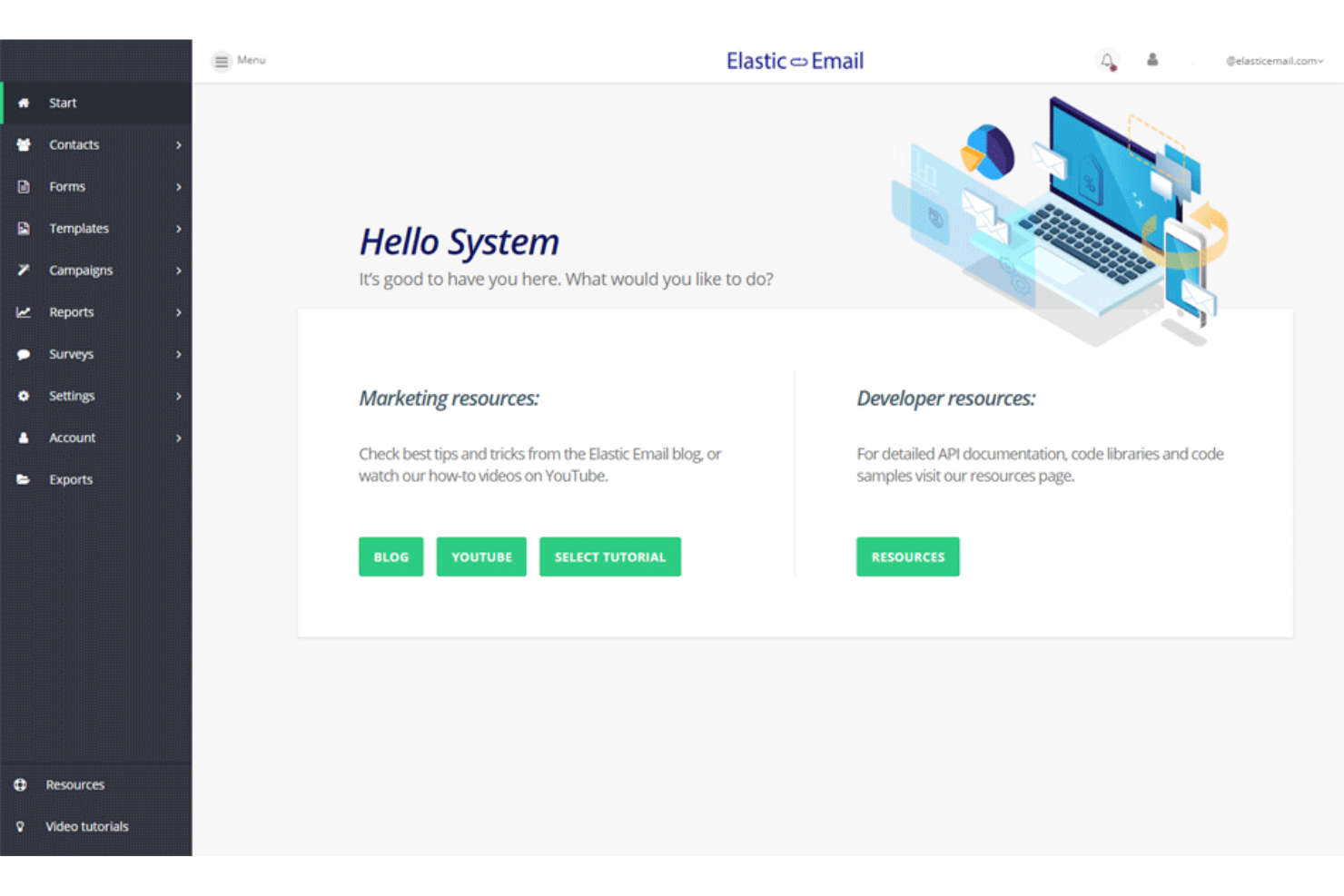
Elastic Email is a good fit for teams that need more control over how they send and manage email campaigns without paying for a heavier ecommerce-focused platform. It combines email marketing tools with SMTP and API-based sending, making it especially useful for marketers and developers who want flexible campaign execution and transactional email support in one place.
Who Is Elastic Email Best For?
Email marketers and small businesses running paid newsletter campaigns.
Why Elastic Email Is a Good klaviyo alternative
I picked Elastic Email because it gives your team one place to manage both email campaigns and API-based sending. You can create marketing emails with its campaign tools, then use SMTP or its email API to support transactional messages from your app or website. I also like that it offers subscriber segmentation, automation, and reporting, so you can manage outreach and track performance without switching between separate tools. If your team needs both marketer-friendly campaign features and developer-focused sending options, Elastic Email is a practical fit.
Elastic Email Key Features
Some other features in Elastic Email support teams that need more control over campaign setup and performance tracking:
- Drag-and-drop email editor: Build custom email layouts with a visual editor and reusable content blocks.
- Contact segmentation: Group subscribers using filters, tags, and list data for more targeted campaigns.
- A/B testing: Compare subject lines or email content to see which version performs better.
- Detailed analytics dashboard: Monitor opens, clicks, and engagement metrics to measure campaign results.
Elastic Email Integrations
Integrations include HubSpot, ClickUp, PayPal, WooCommerce, WordPress Sender, Integromat, Mautic, and Shopify.
Pros and Cons
Pros:
- Campaign tools include segmentation, automation, and A/B testing features
- Affordable pricing supports high-volume email sending without steep monthly costs
- API and SMTP options help developers connect email workflows easily
Cons:
- Support response times can be inconsistent during urgent issues
- Template editor offers less flexibility unless you edit HTML
Other Klaviyo Alternatives
Here are some additional Klaviyo alternatives that didn’t make it onto my shortlist but are still worth checking out.
- Brevo
For all-in-one marketing
- Dotdigital
For personalized CX marketing
- Listrak
For cross-channel engagement
- Acoustic
For AI-driven insights
- MessageGears
For enterprise-level email marketing
- SendGrid
For transactional emails
- Constant Contact
For small business marketing
- Braze
For real-time customer engagement
- Yotpo
For ecommerce reviews
- Adobe Marketo Engage
For lead management


How I Evaluate Klaviyo Alternatives
I split my evaluation into two layers: the baseline features—like Shopify sync and behavior-triggered flows—every tool must have, and the differentiators that set the best options apart.
Core Functionality (Table Stakes For This List)
When I'm selecting tools for my list, I rank each one on a scale from 0 (does not offer the functionality) to 5 (excels in this area) for each core functionality listed below. Then, I calculate the tool's total score into a percentage. Each tool needs to achieve a minimum total score of 65% to be considered for inclusion.
- Email Marketing Automation: I look for a visual flow builder that handles multi-step sequences—like a post-purchase series that branches based on product category or order value.
- Ecommerce Data Integration: Native connectors to platforms like Shopify, BigCommerce, and WooCommerce should sync customer, order, and product catalog data in near real-time.
- Behavioral Segmentation: I evaluate whether I can build dynamic segments using purchase history, browse activity, and engagement—for example, targeting repeat buyers who haven't opened an email in 30 days.
- Multi-Channel Messaging: Beyond email, I check for SMS or push messaging managed from the same interface so you can coordinate a cart abandonment email followed by an SMS reminder.
- Pre-Built Automation Flows: Ready-made templates for welcome series, abandoned cart, win-back, and post-purchase flows save significant setup time, especially for lean marketing teams.
- Analytics & Revenue Attribution: Reporting should tie campaign and flow performance directly to revenue, showing metrics like attributed sales per send and conversion rates by segment.
Once I have a list of tools that meet this criteria, I consider what sets each platform apart.
Differentiating Factors (What Sets Vendors Apart)
Here's how I compare and contrast different vendors:
Standout Features
Predictive AI is a big differentiator. I look for models that forecast churn risk or expected next purchase date, which lets you time win-back campaigns with real precision. Deliverability tools matter too—platforms with inbox placement monitoring and sender reputation tracking help protect your domain as send volume scales. I also evaluate whether a tool offers CDP-level unified profiles that pull data from multiple touchpoints into one view for cross-channel personalization.
Beyond Features
Pricing structure is one of the first things I check. A platform might score well on features, but if costs spike unpredictably once your contact list hits a certain size, it creates real problems for growing brands. Migration support is equally important—I evaluate whether a vendor offers flow and template import tools or hands-on onboarding to reduce the switch from Klaviyo. I also consider ecommerce ecosystem fit, specifically how well a platform connects with tools like Recharge, Gorgias, and loyalty apps your stack already depends on.
Why Look for a Klaviyo Alternative?
While Klaviyo is a good choice of marketing automation platform, there are several reasons why some users seek out alternative solutions. You might be looking for a Klaviyo alternative because…
- It's too complex for your small business
- You're facing high subscription costs
- You need better customer support options
- Your team requires more customization
- Integration with your tools is limited
- You're looking for regional-specific features
If any of these sound like you, you’ve come to the right place. My list contains several marketing automation platform options better suited for teams facing these challenges with Klaviyo and looking for alternative solutions.
Klaviyo Key Features
Here are some of the key features of Klaviyo to help you contrast and compare what alternative solutions offer.
- Centralized customer data: Capture and analyze customer behavior across various channels to personalize experiences.
- Segmentation: Create targeted customer segments using extensive data points for effective marketing campaigns.
- Integration capabilities: Connect with over 350 pre-built integrations to consolidate customer data.
- Automated flows: Customize email and SMS flows triggered by customer actions using pre-built templates and AI.
- Engagement tools: Drive customer interaction through email, SMS, web forms, and mobile notifications.
- Omnichannel campaigns: Tailor campaigns across various channels using AI and intelligent segmentation.
- Data insights: Use AI-driven insights and predictive analytics to guide marketing decisions.
- Reporting: Analyze customer behavior and campaign performance with comprehensive reporting.
- Web forms: Utilize various form options to capture leads and grow your audience.
- Predictive analytics: Forecast customer behavior, including order dates and churn risk.
- Omnisend integration: Connect seamlessly with Omnisend to extend your marketing automation capabilities for ecommerce businesses.
- Advanced features: Utilize powerful tools like A/B testing, dynamic content, and advanced customer segmentation for better targeting.
- Ecommerce focus: Tailored for ecommerce businesses with features like abandoned cart reminders, product recommendations, and post-purchase follow-ups.
- Email marketing campaigns: Create and automate personalized email campaigns via an email marketing platform to boost engagement and conversions.
- WhatsApp support: Engage customers through WhatsApp messaging to expand omnichannel communication strategies.
- Deliverability optimization: Ensure emails land in inboxes with tools to improve deliverability rates and avoid spam filters.
- Digital marketing tools: Equip your online business with a complete suite for email marketing, SMS, and web push notifications.
- Signup forms: Easily create and customize popups and forms to grow your email list and capture leads.
- Customer experience enhancement: Improve customer journeys with personalized messaging and data-driven insights.
- Email list management: Organize, clean, and grow your email list to maximize the effectiveness of marketing campaigns.
- Email marketing automation: Automate recurring tasks like welcome sequences, cart abandonment emails, and customer re-engagement.
- Best alternative consideration: Stands out as one of the best alternatives to competitors like Omnisend and Mailchimp for ecommerce businesses.
- Learning curve: Designed for beginners and advanced users with intuitive tools and comprehensive tutorials.
- Marketing solution for online stores: Offers a one-stop marketing platform to manage all communication channels.
- Web push notifications: Increase engagement with real-time push notifications for promotions, updates, and more.
What’s Next?
Ready to grow? Subscribe to The CMO newsletter to stay on top of trends and get the latest tips, resources, and guides from our community of seasoned marketing leaders straight to your inbox.