
15 Best Content Marketing Software Reviewed For 2026

10 Best Content Marketing Software Shortlist
Here's my pick of the 10 best software from the 15 tools reviewed.


The best content marketing software helps you streamline, publish, and manage content across multiple channels, ensuring your messaging stays consistent and relevant. With so many options available, choosing the right platform can be overwhelming.
As a content strategist with over 10 years of experience, I’ve spent hundreds of hours testing and reviewing dozens of content marketing software tools for brands of all sizes. In this article, I’ll share my top recommendations, backed by hands-on experience, to help you confidently find the best content marketing software for your needs.
Table of Contents
- Best Software Shortlist
- Why Trust Us
- Compare Specs
- Best Content Marketing Software Reviews
- Other Content Marketing Software
- Related Marketing Tool Reviews
- Selection Criteria
- How to Choose Content Marketing Software
- Trends in Content Marketing Software
- What is Content Marketing Software?
- Features
- Benefits
- Cost and Pricing
- Frequently Asked Questions
- Additional Content Software Reviews
Why Trust Our Software Reviews
The Best Content Marketing Software Summary
| Tool | Best For | Trial Info | Price | ||
|---|---|---|---|---|---|
| 1 | Best for enterprise content supply chains | Demo upon request | Pricing upon request | Website | |
| 2 | Best for small business marketing strategies | 14-day free trial | From $29/month | Website | |
| 3 | Best for structured, reusable content | Free forever plan available | From $15/seat/month | Website | |
| 4 | Best for AI-powered content search | Free plan available | From $10/month (billed annually) | Website | |
| 5 | Best content calendar | Free demo available | Custom pricing upon request | Website | |
| 6 | Best for social media content | 7-day free trial | From $159/user/month (billed annually) | Website | |
| 7 | Best for personalized content | Free demo available | Custom pricing upon request | Website | |
| 8 | Best for A.I writing assistance | 7-day free trial + free demo available | From $59/seat/month (billed annually) | Website | |
| 9 | Best social media post optimization | Not available | From $1000/month | Website | |
| 10 | Best for multiple campaign planning | 14-day free trial available | Pricing upon request | Website |

-

Demandbase
Visit WebsiteThis is an aggregated rating for this tool including ratings from Crozdesk users and ratings from other sites.4.4 -
6sense
Visit WebsiteThis is an aggregated rating for this tool including ratings from Crozdesk users and ratings from other sites.4.3 -
AnswerThePublic
Visit Website


Best Content Marketing Software Reviews
Here’s a brief description of each of the 10 best content marketing software, showcasing important features, pricing, pros, cons, and integrations. I’ve also included a snapshot of the interface for each tool.

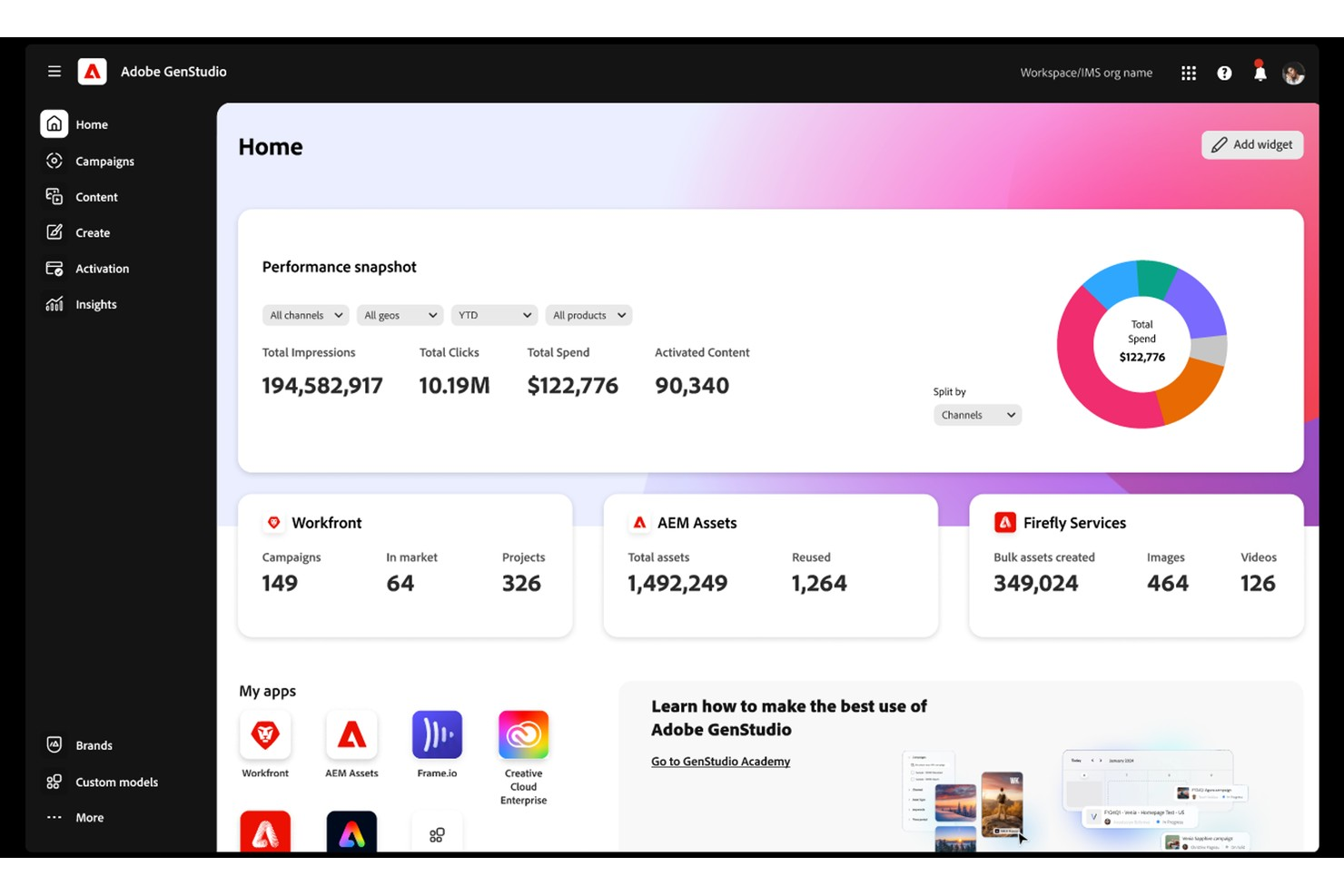
Adobe GenStudio for Performance Marketing is an AI-first content marketing platform designed to help enterprise teams plan, create, manage, and measure high volumes of on-brand content. It serves as a unified hub where marketing operations, creative teams, and demand gen managers collaborate to accelerate the entire content supply chain.
Who Is Adobe GenStudio for Performance Marketing Best For?
Adobe GenStudio for Performance Marketing is a strong choice for enterprise marketing teams and agencies that need to manage complex, multi-channel content operations at scale.
Why I Picked Adobe GenStudio for Performance Marketing
I chose Adobe GenStudio for Performance Marketing because it bridges the gap between creative ideation and marketing activation for large-scale organizations. While many tools focus solely on creation, GenStudio connects your existing digital asset management (DAM) and campaign workflows, allowing you to turn a single approved master asset into hundreds of channel-ready variations. The platform also centralizes brand assets and guidelines, making it easier for distributed teams to stay aligned. This focus on automated compliance helps reduce manual review cycles and protects brand integrity across every campaign.
Adobe GenStudio for Performance Marketing Key Features
Some other features in Adobe GenStudio for Performance Marketing that support content marketing teams include:
- AI-powered content ideation: Generate campaign concepts and creative ideas using built-in generative AI tools.
- Cross-channel publishing: Schedule and distribute content across multiple digital channels from a single interface.
- Collaborative workflow management: Assign tasks, track progress, and manage approvals within customizable workflows.
- Multilingual content localization: Translate and adapt content for different markets with integrated localization tools.
Adobe GenStudio for Performance Marketing Integrations
Integrations include Adobe Workfront, Adobe Experience Manager, Adobe Express, Meta Ads, LinkedIn Ads, TikTok Ads, Amazon Ads, and more.
Pros and Cons
Pros:
- Built-in metadata and keyword automation
- High-volume content generation with AI
- Automated brand validation for every asset
Cons:
- No free trial or free-forever plan available
- Not suited for small or low-volume teams


Enji brings content planning, creation, and analytics together in one platform for marketing teams that want a unified workflow. It’s a strong fit for small businesses and agencies looking to manage campaigns without juggling multiple tools. If you need to keep your content strategy, production, and reporting tightly connected, Enji is designed for you.
Who is Enji Best For?
Enji supports marketing leaders and small business owners who need practical tools for developing and executing content marketing strategies. It fits early-stage to small organizations that focus on building brand presence and engagement within constrained budgets and lean teams.
Why I Picked Enji
I chose Enji because it centralizes content planning, creation, and analytics, which is essential for teams that want to keep everything connected. The platform’s unified dashboard lets you map out campaigns, assign tasks, and track progress without switching between tools. I also like that Enji includes built-in analytics, so you can measure performance and adjust your strategy in real time. This all-in-one approach makes it easier to manage content workflows from start to finish.
Enji Key Features
Some other features in Enji that stand out for content marketing teams include:
- Content Calendar: Visualize and schedule all upcoming content in a drag-and-drop calendar view.
- Brand Asset Library: Store and organize logos, images, and brand guidelines for easy access during content creation.
- Approval Workflows: Set up multi-step approval processes to ensure content meets quality and compliance standards before publishing.
- Collaboration Tools: Comment, tag teammates, and share feedback directly within the platform to keep everyone aligned.
Enji Integrations
Integrations are not publicly listed.
Pros and Cons
Pros:
- Asset library centralizes brand resources
- Approval workflows support multi-step content review
- Built-in content calendar for visual scheduling
Cons:
- Lacks AI-powered content suggestions
- No social media publishing features


Sanity gives you a code-driven, API-first platform for managing content as structured data — which means you and your team can design content workflows that match exactly how you work, from simple blogs to complex multi-channel campaigns. It appeals especially to teams that build websites or apps with modern frameworks (like React, Vue, Next.js) and need content that’s reusable, extensible, and delivered across different channels.
Who is Sanity.io Best For?
Sanity.io supports content and developer teams at small to enterprise organizations that need to manage structured, reusable content across digital channels. It fits companies with development resources that want a flexible headless content platform to power websites, apps, and other experiences.
Why I Picked Sanity.io
I picked Sanity because it lets you treat content as structured, reusable data — not just static pages — which gives you maximum flexibility in how, where, and when you publish. Sanity’s customizable schema system and its content-storage “Content Lake” mean you can define exactly the content types you need (articles, products, localized content, metadata, etc.) and reuse them across websites, apps, and devices. Also, real-time collaboration and live editing support make it easier for teams — developers and content editors alike — to work together on content without stepping on each other’s toes. This makes Sanity a smart fit if you want long-term content architecture that can scale and adapt as your needs evolve.
Sanity.io Key Features
In addition to its standout features, Sanity.io offers several other capabilities that enhance content marketing efforts:
- Content Releases: This feature allows you to schedule and manage content updates in bulk, facilitating coordinated marketing campaigns.
- Presentation Mode: Provides a way to preview content in its intended context, ensuring that all updates are accurately represented before going live.
- Sanity Studio (open-source, customizable editor): A React-based CMS interface you can fully customize — create custom fields, workflows, input components, or tailor the UX to your team’s needs.
- TypeGen: Automatically generates TypeScript definitions from schemas, enhancing developer efficiency with type safety and error prevention.
Sanity.io Integrations
Integrations include React, Next.js, Vue, Angular, Gatsby, Nuxt, Eleventy, Svelte, and Astro. An API is also available for custom integrations.
Pros and Cons
Pros:
- Content versioning with detailed change history
- API-first design enables omnichannel publishing
- Visual editing studio supports live previews
Cons:
- No built-in SEO analysis tools
- Requires developer setup for initial deployment


Air is built for creative and marketing teams that need a visual-first platform to organize, search, and share digital assets. It’s especially useful for brands and agencies managing large volumes of images, videos, and campaign files across multiple projects. If your team struggles with asset versioning or collaboration on creative content, Air offers a workspace designed to keep everything accessible and up to date.
Who is Air Best For?
Air supports creative operations and marketing teams at small to mid-sized organizations that need AI-enhanced tools to organize and search digital content and assets. It fits teams managing visual and media libraries who value centralized, searchable repositories with AI-powered tagging and retrieval to support cross-channel content workflows
Why I Picked Air
When visual asset management is a top priority, Air offers a workspace built specifically for creative teams handling large volumes of digital content. The platform’s visual boards and drag-and-drop organization make it easy to keep campaign assets, brand files, and creative deliverables in order. I appreciate how Air’s version control and commenting features help teams collaborate directly on images and videos without losing track of feedback or file history. For content marketers who need to centralize and manage creative assets, Air provides a focused solution that supports fast-paced, visual workflows.
Air Key Features
Some other features that make Air useful for content marketing teams include:
- Advanced Search Filters: Quickly locate assets using tags, keywords, and custom metadata.
- Shareable Links: Generate secure, customizable links for sharing assets with internal or external collaborators.
- Automated File Tagging: Use AI-powered tagging to categorize and organize new uploads automatically.
- Asset Usage Analytics: Track how and where assets are being used across projects and campaigns.
Air Integrations
Integrations are not publicly listed.
Pros and Cons
Pros:
- Simple collaboration and approval workflows
- Excellent version management tools
- Powerful AI tagging and search
Cons:
- Tagging occasionally inconsistent
- Expensive pricing for small teams
New Product Updates from Air

Air Adds Performance Analytics and Bulk Updates
Air introduces Performance Analytics and Bulk Updates, enabling you to analyze asset performance directly within the platform while updating multiple assets at once to improve efficiency and workflow speed. For more information, visit Air's official site.


Contently is designed for enterprise marketing teams that need to manage complex content operations at scale. The platform connects brands with a vetted network of freelance writers, editors, and designers, making it easier to source high-quality content on demand. If your organization struggles with scaling content production or maintaining brand consistency across multiple channels, Contently offers tools and talent to help you manage both.
Who is Contently Best For?
Contently supports content and editorial leaders at mid-sized to enterprise organizations that need a structured content calendar and workflow management. It fits teams across industries that coordinate multi-channel content planning and production with distributed contributors.
Why I Picked Contently
For organizations that need both a content marketing platform and access to a network of professional freelancers, Contently stands out as a unique solution. The platform’s built-in talent marketplace connects you with vetted writers, editors, and designers, making it easier to scale content production without sacrificing quality. I like that Contently also offers workflow tools for managing assignments, approvals, and editorial calendars, which helps keep large teams and projects organized. If you’re looking for a way to combine content strategy, production, and talent sourcing in one place, Contently is built for that purpose.
Contently Key Features
Some other features that make Contently valuable for content marketing teams include:
- Content Strategy Dashboard: Visualize and plan your content initiatives with a centralized dashboard.
- SEO Recommendations: Receive automated suggestions to optimize content for search engines.
- Rights Management: Track and manage content usage rights and licensing within the platform.
- Performance Analytics: Access detailed analytics on content engagement and ROI.
Contently Integrations
Integrations are not publilcy listed.
Pros and Cons
Pros:
- Provides access to a network of freelance writers and content creators
- Advanced analytics and optimization tools
- High-quality content creation and management features
Cons:
- Complex and may require more training to use effectively
- Expensive compared to other content marketing software


BuzzSumo gives marketing teams a way to discover trending topics and analyze content performance across social channels. It’s especially useful for content strategists and agencies who need to track what’s resonating with audiences and identify key influencers. If you want to base your content planning on real-time data and social engagement insights, BuzzSumo offers tools built for that purpose.
Who is BuzzSumo Best For?
BuzzSumo supports social media and content marketing teams at small to enterprise organizations that need insights into trending topics and content performance. It fits companies across industries that plan and optimize social-focused content strategies for audience engagement.
Why I Picked BuzzSumo
When you need to base your content strategy on real data, BuzzSumo’s content research and discovery tools stand out. The platform lets you search for trending topics, analyze which articles perform best across social networks, and see what’s gaining traction in your industry. I appreciate how BuzzSumo surfaces top-performing content and identifies key influencers, so you can shape your campaigns around what’s actually working. For teams focused on data-driven content planning and social engagement, BuzzSumo offers targeted insights you can act on.
BuzzSumo Key Features
Some other features that make BuzzSumo useful for content marketers include:
- Backlink Analysis: Track which sites are linking to your content or your competitors’ content.
- Content Alerts: Set up real-time notifications for new mentions of keywords, brands, or topics.
- Question Analyzer: Discover the questions people are asking across forums and Q&A sites.
- Facebook Page Analyzer: Analyze engagement metrics for any public Facebook page.
BuzzSumo Integrations
Integrations are not publicly listed.
Pros and Cons
Pros:
- Integrations with a wide range of tools and platforms
- Good for competitor research
- Offers data-driven insights for content creation
Cons:
- No built-in content creation tools
- No direct publishing to social platforms


Uberflip helps B2B marketing teams create personalized content experiences that drive engagement and accelerate buyer journeys. It’s designed for marketers who want to organize, recommend, and deliver content in a way that feels tailored to each account or audience segment. If you need to turn static content assets into dynamic, trackable experiences, Uberflip offers tools built for that purpose.
Who is Uberflip Best For?
Uberflip supports content and demand generation teams at mid-sized to enterprise organizations that need to tailor content experiences for different audience segments. It fits companies with structured content programs that want to deliver personalized resources across digital channels to support lead engagement and conversion.
Why I Picked Uberflip
Personalized content experiences are a major differentiator for B2B marketers, and Uberflip is built specifically for that purpose. The platform lets you organize content into tailored streams for different accounts, industries, or buyer stages, making it easy to deliver relevant assets at the right time. I like how Uberflip’s recommendation engine suggests content based on user behavior, helping you keep prospects engaged throughout their journey. For teams focused on account-based marketing or targeted nurture programs, Uberflip offers the tools to create and manage dynamic, personalized content hubs.
Uberflip Key Features
Some other features that make Uberflip valuable for content marketers include:
- Content Hub Builder: Create branded, organized content destinations without coding.
- Marketing Automation Integration: Connect with platforms like HubSpot, Marketo, and Eloqua for lead capture and nurture.
- Content Performance Analytics: Track engagement metrics and content consumption across all experiences.
- SEO Optimization Tools: Manage metadata and indexing settings to help your content get discovered.
Uberflip Integrations
Integrations include Demandbase, Bombora, 6sense, Eloqua, Marketo, Pardot, Drift, Sales Assist, Calendly, and HubSpot.
Pros and Cons
Pros:
- SEO controls for each content experience
- Drag-and-drop content hub builder
- Personalized content streams for account targeting
Cons:
- Limited design flexibility for advanced branding
- Doesn't offer a built-in CRM system


Jasper brings AI-powered content creation to marketing teams that need to produce high volumes of copy across channels. It’s especially useful for marketers, agencies, and content teams looking to generate blog posts, ad copy, and campaign assets quickly while maintaining brand voice. If you want to scale content production without sacrificing consistency or creativity, Jasper offers tools built for that challenge.
Who is Jasper Best For?
Jasper supports content creators and marketing teams at small to mid-sized organizations that need AI-assisted writing support. It fits teams across industries managing regular content production who want assistance generating and refining written material within existing workflows.
Why I Picked Jasper
AI-powered content creation stands out as a game-changer for marketing teams that need to move fast and stay on brand. Jasper’s platform lets you generate long-form articles, social posts, and ad copy using customizable templates and brand voice controls. I appreciate how you can train Jasper on your own style guides and product messaging, so every output feels consistent with your brand. For teams juggling multiple campaigns and channels, Jasper’s AI-driven workflows help you scale content production without losing quality or cohesion.
Jasper Key Features
Some other features that make Jasper useful for content marketers include:
- Campaign Management Dashboard: Organize, track, and collaborate on multiple content projects in one place.
- Plagiarism Checker: Scan generated content to ensure originality before publishing.
- Multilingual Content Generation: Create content in over 30 languages for global campaigns.
- AI Image Generation: Produce custom images to pair with your written content directly within the platform.
Jasper Integrations
Integrations include Slack, Google BigQuery, Webflow, Microsoft Word, Google Sheets, Google Docs, Google Chrome, Zapier, Make, and Pabbly Connect.
Pros and Cons
Pros:
- Customizable and flexible workflow management features
- Provides data-driven insights for content creation
- Offers an AI-powered content optimization tool
Cons:
- Occasional factual errors in generated content
- No direct publishing to CMS platforms


Salesforce Social Studio connects social media management directly with Salesforce CRM, making it a strong fit for marketing teams that need to tie social engagement to customer data. It’s especially useful for enterprise organizations and B2B marketers who want to monitor, publish, and analyze social content while syncing insights with sales and service teams. If you’re looking to unify social campaigns with broader customer relationship strategies, Social Studio offers tools built for that purpose.
Who is Salesforce Social Studio Best For?
Salesforce Social Studio supports social media and marketing operations leaders at mid-sized to enterprise organizations that need structured tools for optimizing and managing social engagement. It fits companies already invested in Salesforce’s ecosystem that require integrated social listening, publishing, and analytics across global campaigns.
Why I Picked Salesforce Social Studio
Bringing social media management into the Salesforce CRM ecosystem creates a unique advantage for marketing teams focused on customer engagement. Social Studio lets you monitor brand mentions, schedule posts, and analyze social performance—all while connecting those activities to your CRM records. I picked this tool because it helps marketers link social interactions directly to leads, opportunities, and customer journeys. For teams that want to align social content with sales and service data, Social Studio’s integration with Salesforce stands out.
Salesforce Social Studio Key Features
Some other features that make Social Studio valuable for content marketers include:
- Content Calendar: Plan, organize, and visualize upcoming social posts across multiple channels.
- Team Collaboration Tools: Assign roles, manage approvals, and coordinate content creation within your team.
- Sentiment Analysis: Automatically detect and categorize the tone of social conversations about your brand.
- Customizable Dashboards: Build dashboards to track campaign performance and key social metrics in real time.
Salesforce Social Studio Integrations
Integrations are not publicly listed.
Pros and Cons
Pros:
- Social media management and monitoring tools
- Good for customer engagement
- Provides data-driven insights for content optimization
Cons:
- No built-in content approval workflow
- Platform sunset announced, no new updates


Percolate is designed for marketing teams that need to manage complex content operations across multiple channels and regions. It’s especially useful for large enterprises and global brands looking to centralize campaign planning, asset management, and content workflows. If your team struggles with visibility or coordination across distributed teams, Percolate brings structure and oversight to every stage of the content lifecycle.
Who is Percolate Best For?
Percolate supports marketing and campaign planning teams at mid-sized to enterprise organizations that need to coordinate multiple campaigns across channels. It fits companies with structured content and demand programs that require centralized planning and execution workflows for cross-functional teams.
Why I Picked Percolate
What sets Percolate apart is its focus on centralized content planning and campaign management, which is essential for organizations running multi-channel marketing efforts. The platform offers a unified calendar that lets teams coordinate campaigns, schedule content, and visualize timelines across regions and channels. I picked Percolate because it also provides structured workflows for content creation, review, and approval, helping large teams stay aligned. For marketers who need to manage complex campaigns with many moving parts, Percolate’s approach to centralization and oversight is a strong fit.
Percolate Key Features
I also found several other features that support content marketing teams:
- Asset Library: Store, organize, and manage digital assets for easy access and reuse.
- Content Brief Templates: Standardize campaign briefs to guide content creation and maintain consistency.
- Campaign Performance Analytics: Track and report on campaign metrics across channels from a single dashboard.
- Approval Workflows: Set up multi-step approval processes to ensure content quality and compliance.
Percolate Integrations
Integrations are not publicly listed.
Pros and Cons
Pros:
- Custom content brief templates for brand consistency
- Customizable workflow management features
- Good for brand management
Cons:
- Limited automation for social publishing tasks
- Expensive pricing options for smaller businesses
Other Content Marketing Software
Here are a few other top content marketing software that weren’t mentioned in the article.
- Mediafly
For interactive content analytics and insights
- RELAYTO
For visually-engaging content
- Vulse
For employee advocacy on LinkedIn
- Tofu
For repurposing content across platforms
- SearchneedsLOVE
For automated keyword research


Related Marketing Tool Reviews
If you still haven't found what you're looking for here, check out these tools closely related to digital marketing strategy that we've tested and evaluated.
- Marketing Software
- Marketing Management Software
- Account Based Marketing Software
- Email Marketing Software
Selection Criteria for Content Marketing Software
Selecting the right content marketing software involves a careful evaluation of what they have to offer. Through extensive personal trials and research, I've developed criteria to guide software buyers towards making an informed decision.
Core Functionality - 25% of total weighting score:
Content marketing software must excel in the following standard use cases:
- Content creation and editing tools that simplify the process of generating engaging content.
- Content scheduling and publishing capabilities that allow for efficient management of content across various channels.
- Analytics and reporting features that provide insights into content performance and audience engagement.
- SEO tools to optimize content for search engines, enhancing visibility and reach.
- Collaboration features that enable teams to work together seamlessly on content projects.
Additional Standout Features - 25% of total weighting score:
In identifying content marketing software that goes beyond the basics, I look for:
- Advanced content personalization options that tailor content to the audience's interests and behaviors.
- AI-driven content suggestions and optimizations to improve engagement and performance.
- Integration with advanced marketing tools and platforms for a cohesive marketing strategy.
- Tools leveraging innovative technologies for content analysis and trend prediction.
- Examples include software offering unique interactive content capabilities or integrated AR/VR experiences for immersive storytelling.
Usability - 10% of total weighting score:
Evaluating usability involves looking at:
- A balance between powerful functionality and ease of use, ensuring the tool is accessible to all team members.
- An intuitive interface design, such as drag-and-drop editors for content scheduling.
- Clear, logical navigation and user-friendly features that streamline the content marketing process.
Onboarding - 10% of total weighting score:
For onboarding, effective criteria include:
- The availability of comprehensive training materials, such as videos, templates, and interactive tours.
- Efficient setup processes that allow teams to quickly migrate and start realizing value.
- Support systems like chatbots and webinars to assist new users in navigating the tool.
Customer Support - 10% of total weighting score:
In assessing customer support, I look for:
- Responsive and knowledgeable support teams available through multiple channels.
- A commitment to resolving issues promptly and efficiently.
- A community or forum where users can exchange tips and solutions.
Value For Money - 10% of total weighting score:
Value for money is gauged by:
- Comparing pricing structures against the range and quality of features offered.
- Assessing the tool's ability to meet specific business needs without unnecessary expenses.
- Evaluating the potential ROI based on improved content marketing outcomes.
Customer Reviews - 10% of total weighting score:
Customer reviews are evaluated for:
- Consistently positive feedback across a broad user base.
- Specific mentions of how the tool has addressed common pain points and contributed to content marketing success.
- User experiences that highlight the tool's usability, support quality, and overall impact on content marketing efforts.
By applying these criteria, businesses can select content marketing software that not only meets their immediate functional requirements but also offers additional value.
How to Choose Content Marketing Software
When selecting software for your business, especially when considering a specialized tool such as content marketing software, it's essential to approach the decision with a strategic mindset. Here’s a checklist that balances general software selection principles with specific considerations for marketing attribution software:
- Identify Your Business Needs: Outline the specific problems the software needs to solve. Consider how it will scale with your operations and future growth. For content marketing, identify whether you need assistance with content creation, distribution, analytics, or a combination of these.
- Budget Consideration: Assess your financial capacity for both upfront and ongoing costs, including potential hidden fees. In content marketing, consider the return on investment in terms of time saved and potential for increased engagement or sales.
- Integration Capabilities: Ensure the software can integrate seamlessly with other tools your business uses. Content marketing software should work well with your CRM, email marketing platform, and social media channels.
- Scalability: The software should accommodate your business's growth and changing needs without a complete overhaul. For content marketing, this means supporting more users, larger content volumes, and additional channels as your strategy evolves.
- Training and Resources: Check for comprehensive training and resources to maximize the software's value. In content marketing, look for tutorials, templates, and forums to aid in creativity and problem-solving.
- Feedback and Reviews: Research user feedback and reviews to gauge satisfaction and effectiveness. For content marketing, seek out testimonials from businesses with similar needs and outcomes.
This approach streamlines the selection process, making it easier to find software that meets your business and content marketing requirements.
Trends in Content Marketing Software
Here are some trends I’ve noticed for content marketing software technology, plus what they might mean for the future of the marketing industry. I sourced countless product updates, press releases, and release logs to tease out the most important insights.
- Increased Emphasis on AI-driven Content Creation and Optimization: AI technologies are at the forefront, revolutionizing the way content is generated and optimized. Tools incorporating advanced AI algorithms for content creation, such as automated writing assistants and SEO optimization recommendations, are rapidly gaining traction.
- Rise of Personalized Content Experiences: Personalization technology has become more sophisticated, allowing marketers to deliver highly customized content experiences at scale. Software now offers dynamic content personalization based on user behavior, preferences, and predictive analytics, enhancing user engagement and conversion rates.
- Integration with Multichannel Marketing Platforms: The ability to manage and distribute content across multiple channels from a single platform is increasingly important. This includes seamless integration with social media, email marketing, and other digital marketing platforms, facilitating a unified and coherent marketing approach.
- Interactive and Immersive Content Creation: Innovations in creating interactive content, such as quizzes, polls, and AR/VR experiences, offer novel ways to engage audiences deeply and memorably.
As technology continues to advance, marketers are equipped with more powerful tools to craft compelling content, reach wider audiences, and achieve their business objectives with unprecedented efficiency and effectiveness.
What is Content Marketing Software?
Content marketing software is designed to manage every stage of the content lifecycle, from creation and scheduling to distribution and analysis. By streamlining workflows, it helps teams collaborate efficiently and ensures content is published consistently across multiple channels. With built-in analytics, this software provides insights into audience engagement, making it easier to refine strategies. Ultimately, content marketing software aims to drive lead generation and boost revenue by delivering the right message to the right audience at the right time.
Features of Content Marketing Software
These are the key features I evaluate when I am looking at content marketing software.
- Content Creation and Management: Enables users to create, store, and organize content in various formats (e.g., blogs, videos, infographics). This feature addresses the need for a centralized repository that simplifies content access and collaboration.
- Editorial Calendar and Scheduling: Offers tools to plan, schedule, and publish content across different platforms and channels. This feature solves the challenge of maintaining a consistent content schedule and ensures timely publication.
- SEO Optimization Tools: Includes keyword research, content optimization suggestions, and SEO analytics to enhance content visibility and search engine ranking. This caters to the need for content to be discoverable and rank well in search engines.
- Content Distribution Networks: Facilitates the distribution of content to various channels, including social media, email marketing, and other digital platforms, addressing the challenge of reaching a wider audience.
- Analytics and Reporting: Provides insights into content performance, audience engagement, and ROI measurement. This feature helps in understanding what content works best and aligns with the goal of making data-driven decisions.
- Collaboration Tools: Supports team collaboration by allowing multiple users to work on content simultaneously, share feedback, and approve workflows. This solves the pain point of coordinating efforts across teams and departments.
- Personalization and Targeting: Enables the customization of content for different segments of the audience based on their behaviors, preferences, and demographics. This addresses the challenge of creating relevant and engaging content for diverse audience groups.
- Asset Management: Offers tools for storing, tagging, and organizing digital assets like images, videos, and documents for easy retrieval. This feature is crucial for managing the vast amount of digital content and assets produced.
- Social Media Integration: Allows for the direct posting to, monitoring of, and engagement with social media platforms from within the software. This caters to the need for active social media management and engagement.
- Email Marketing Integration: Seamlessly integrates with email marketing platforms to distribute content through email campaigns, addressing the challenge of reaching audiences directly in their inboxes.
- Content Automation: Automates repetitive tasks like content posting and social media updates, solving the challenge of manual content management and distribution.
- User Access Control: Provides the ability to set permissions and roles for different users, addressing the need for secure and controlled access to the software's features.
- Interactive Content Creation: Some advanced tools offer features to create interactive content such as quizzes, polls, and interactive infographics, catering to the demand for engaging and dynamic content formats.
By providing these features, content marketing software plays a crucial role in empowering marketing professionals to effectively plan, execute, and analyze content marketing strategies, driving engagement, building brand awareness, and achieving business objectives.
Benefits of Content Marketing Software
Content marketing software has become an indispensable tool for B2C and B2B businesses aiming to strengthen their digital presence and engage effectively with their audience. Here are five primary benefits of utilizing content marketing software:
1. Enhanced Efficiency and Productivity: Streamlines content creation and distribution processes. By automating repetitive tasks and organizing workflows, content marketing software enables teams to focus on strategy and creativity, significantly boosting productivity.
2. Improved Content Strategy with Data-Driven Insights: Offers valuable analytics and insights. Utilizing content marketing software allows businesses to understand content performance and audience preferences deeply, leading to more informed decisions and a refined content strategy.
3. Consistent Content Delivery Across Channels: Simplifies multi-channel content management. This software ensures that businesses can maintain a consistent brand voice and content strategy across all digital platforms, enhancing brand recognition and audience engagement.
4. Greater Content Reach and Engagement: Facilitates targeted content distribution. By using content marketing software, organizations can ensure that their content reaches the right audience at the right time, increasing engagement and potential conversions.
5. Streamlined Collaboration Among Teams: Enhances team collaboration and workflow. The collaborative features of content marketing software make it easier for teams to work together on content projects, share feedback, and approve content efficiently, regardless of their physical location.
As organizations continue to navigate the complexities of digital marketing, the strategic use of content marketing software will remain a key factor in achieving marketing success and driving business growth.
Cost & Pricing for Content Marketing Software
Choosing the right content marketing software is pivotal for businesses looking to enhance their content strategy, reach their target audience more effectively, and analyze the impact of their content marketing efforts.
Various software options cater to different needs, scales, and budgets, ranging from basic free versions to more advanced, feature-rich packages. Understanding the plan options and pricing structures can help software buyers make informed decisions that align with their business goals and financial constraints.
Plan Comparison Table for Content Marketing Software
| Plan Type | Average Price | Common Features Included |
|---|---|---|
| Basic | $20 - $100/month | Content scheduling, SEO tools, basic analytics |
| Professional | $100 - $300/month | Advanced analytics, team collaboration, more extensive SEO and content optimization tools |
| Enterprise | $300 - $1000+/month | Custom integrations, full feature access, dedicated support, personalized training |
| Free Option | $0 | Limited content scheduling, basic analytics, SEO suggestions |
When evaluating content marketing software plans, it's essential to consider not only the price but also the specific features and limitations of each plan. The choice should align with your business's size, needs, and the level of support required to achieve your content marketing objectives effectively.
Frequently Asked Questions
Here are a few questions people commonly ask, all of which I wanted to cover here for your convenience.
What’s the difference between content marketing software and content management software?
What are specific content performance metrics should I track?
What are effective ways to measure content marketing ROI?
Can content marketing software integrate with my existing tools (like CRM or analytics solutions)?
What are common challenges when implementing content marketing software, and how do I avoid them?
How do leading content marketing platforms support AI content creation or automation?
What security and privacy features should I look for in content marketing software?
Additional Content Software Reviews
Here are a few other reviews that cover other, similar types of software. These tools can not only help you with content marketing, but they can also help you with their particular use case:
- Content Management Software
- SMS Marketing Software
- Social Media Management Software
- Marketing Calendar Software
- Direct Mail Marketing Software
- Content Workflow Software
What’s Next?
If you're in the process of researching content marketing softwares, connect with a SoftwareSelect advisor for free recommendations.
You fill out a form and have a quick chat where they get into the specifics of your needs. Then you'll get a shortlist of software to review. They'll even support you through the entire buying process, including price negotiations.