

AI is forcing marketing leaders to rethink more than product roadmaps. It's testing how well we understand the people we serve. In this conversation, VSCO CEO Eric Wittman shares why the companies navigating AI best aren't chasing the latest feature—they're staying relentlessly close to their communities and using AI to remove friction without sacrificing trust.
From preserving creative authenticity to redesigning products around evolving customer needs, Eric offers a practical leadership perspective on balancing experimentation with empathy. If you're leading AI transformation inside your organization, this conversation is a reminder that the strongest competitive advantage still starts with listening.
What You’ll Learn
- Why 83% of photographers are already using AI—and what that reveals about real-world AI adoption.
- How VSCO approaches AI as a way to protect creativity rather than replace it.
- Why customer intimacy is becoming one of the biggest competitive advantages in AI-driven markets.
- How product leaders can balance experimentation with preserving trust and authenticity.
- The operational lessons behind expanding a product beyond its original use case.
- Why executive leaders should spend time speaking directly with customers instead of relying solely on dashboards.
- How continuous experimentation is reshaping product development and organizational decision-making.
Key Takeaways
- AI adoption is happening faster than perception suggests.
Despite public anxiety around generative AI, Eric explains that most professional photographers are already integrating AI into their daily workflows. The opportunity isn't replacing creative work—it's eliminating repetitive work. - Trust becomes the product.
For creative communities, authenticity matters as much as productivity. VSCO's approach focuses on using AI to support creators while preserving ownership, identity, and the integrity of their work. - Solve the problems surrounding the craft—not just the craft itself.
VSCO is expanding beyond editing tools into portfolio creation, client acquisition, and business management because customer conversations revealed those were the biggest barriers to long-term success. - Customer research shouldn't be delegated.
Eric combines direct conversations on Reddit and Threads with behavioral product data and formal research. Leadership involvement creates stronger strategic conviction than relying on reports alone. - Product evolution comes from following customer journeys.
Many users told VSCO they had "graduated" from the platform. Rather than accepting churn, the team identified what customers needed next and built the missing capabilities to keep supporting them throughout their careers. - AI leadership requires experimentation, not certainty.
The organizations moving fastest aren't waiting for perfect playbooks. They're testing, learning, rebuilding, and accepting that today's best workflow may be obsolete a year from now. - Speed matters—but only when guided by customer insight.
Rapid prototyping with design partners allows VSCO to validate ideas in days instead of months, dramatically improving product-market fit while reducing wasted development effort. - Curiosity is becoming a leadership competency.
Eric encourages leaders to create space for experimentation inside their organizations, recognizing that learning—not perfection—is the defining characteristic of successful AI adoption.
Chapters
- 00:00 — AI & Creative Trust
- 01:14 — Building for Creators
- 02:00 — The Reality of AI Adoption
- 05:20 — Automating the Mundane
- 06:45 — Beyond Social Platforms
- 08:40 — Growing With Your Customers
- 10:40 — Staying Close to Your Audience
- 12:20 — Why CEOs Need Customer Conversations
- 14:15 — Leading Through AI Change
- 16:30 — Experiment Faster
- 18:00 — Building With Your Community
Meet Our Guest
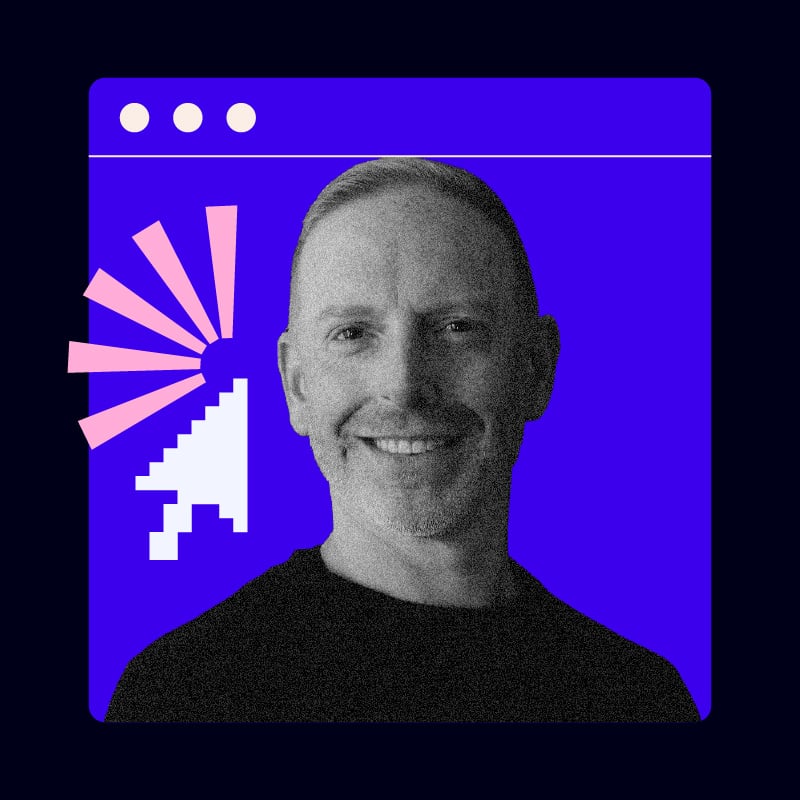
Eric Wittman is the CEO of VSCO, where he leads the company's mission to empower photographers and creators with tools that support both their creative work and their businesses. With more than three decades of leadership experience in technology, Eric has held executive roles at companies including Figma, Atlassian, Adobe, and Songbird, building and scaling innovative products and organizations. Passionate about the future of creativity in the age of AI, he champions technology that enhances human expression while helping creators thrive professionally.
Resources from this episode:
- Join the CMO Club Community
- Subscribe to the newsletter to get our latest articles and podcasts
- Connect with Eric on LinkedIn
- Visit VSCO
Related articles and podcasts:
Breanna Lawlor: 83% of photographers are already using AI in their workflows. And while this number might surprise you, what VSCO discovered is even more fascinating. AI is not necessarily replacing creativity. It’s helping people protect it. For CMOs building platforms or products that serve creative audiences, the AI conversation is no longer theoretical. The question now is how you integrate in a way that deepens trust with your community rather than fracturing it.
Eric Wittman is the CEO of VSCO, the photography platform used by tens of millions of creators worldwide. He spent 30 years building software for creative communities at companies like Adobe, Atlassian, Macromedia, and Figma.
In this conversation, we talk about what VSCO’s AI research revealed about how photographers feel right now, how Eric is leading a platform transformation while keeping the trust of a deeply creative community, and what he thinks other leaders are getting wrong while trying to stay ahead of the AI curve without doing the ground-level work of listening to the people they serve.
I’m Brianna Lawlor, and this is The CMO Club Podcast.
Eric, let’s get into it
Eric Wittman: Hi, I’m Eric Wittman. I’m the CEO of VSCO. I’ve had the ultimate pleasure of being able to build a lot of software over the last 30 years- Right … a lot of different companies. So companies like Macromedia way back in the day, and Adobe, Atlassian, Figma- and now of course, VSCO. And I think what I’ve been really fortunate to have the opportunity to do is, you know, really stay close to the creative community for a long time.
Breanna Lawlor: What a gift.
Eric Wittman: And I’ve seen the evolution of that community. Yeah. And what I’m doing now at VSCO is basically helping build that next generation platform for photographers and creators so that they ultimately can be successful with- whatever they’re trying to do.
Breanna Lawlor: Yes. Incredible space to be in.
Eric Wittman: Yes.
Breanna Lawlor: There’s just one challenge. The one thing that’s threatening to take away creative’s reason for being- … and their work is also the one thing that you’re trying to be, you make native as part of your platform.
Eric Wittman: Yes.
Breanna Lawlor: How do you navigate sort of the reckoning that’s happening with AI as far as what- Yes
how creatives use it to balance what they need to produce, but also maintain that authenticity in what they ship?
Eric Wittman: Yeah, exactly. I mean, I think the AI conversation is obviously an interesting one, and it’s one- Yeah … that we have been spending a lot more time trying to deeply study- Yeah … because, you know, like any sort of big platform changes, we saw this when digital photography first came- Yeah, right
on the scene with film photography, right? Yeah. You had all these film photographers were freaked out that- Yeah … photography was gonna go away, when in fact, it didn’t go away. In fact, photography got bigger, and there were actually more opportunities that got created. Yeah. And yes, there were some types of roles, if you were in the film processing lab- Right
or you were making chemicals for film photography, like- Yeah … okay, those roles went away or got diminished severely. Yeah. But new opportunities got created, and it ended up being a bigger thing. And I think with AI, a lot of the emotion is really around generative AI.
Breanna Lawlor: True.
Eric Wittman: But that’s really only a piece of AI.
AI Also hits other aspects- Of course … where it can affect more of the mundane tasks- yeah … of what people are actually faced with, whether it’s things like, “Hey, I’m just doing some ideation and mood boarding. Maybe I wanna use AI to help with that.”
Breanna Lawlor: Yeah.
Eric Wittman: Not the end work for the client- No … like I’m still shooting, or I’m still editing and creating videos and getting it out there.
Yeah. Or some of the mundane business tasks “Hey, I wanna write a really effective pitch on how to go after a brand I really want to work with.”
Breanna Lawlor: Yeah.
Eric Wittman: So AI can actually help you construct what that pitch might look like. So- Nice … we actually found in some of the research that we’ve done, some independent research outside of the VSCO community, is that, you know, we’ve got over 80-plus percent of photographers today are using some type of AI tooling.
Breanna Lawlor: I read that, yeah.
Eric Wittman: So it- it’s actually fascinating. In reality- Yeah … yes, there’s all this crazy noise about AI- Sure … and how it’s gonna take people’s jobs potentially, but also when you actually talk to people, like photographers- … especially pro photographers-
Breanna Lawlor: Right …
Eric Wittman: they’re using it a ton right now.
And so from VSCO’s perspective we are a company that has always stayed very close to our community. Yes. I mean, for 15 years, since our founding days- Yes … and our founders were photographers, were creative directors- Sure … who are trying to give back to that next generation of them.
Breanna Lawlor: Yes.
Eric Wittman: And this is what we’re still doing today, right?
We stay very close to this community, so we try to really understand, like, where are the fears- Yes … and where is the reality.
Breanna Lawlor: Yeah.
Eric Wittman: And so when we’re building things for them, in some cases leveraging AI technology-
Breanna Lawlor: Right …
Eric Wittman: you know, we’re trying to maintain the creator first and foremost-
Breanna Lawlor: Yes …
Eric Wittman: and then also maintain the authenticity of what they are creating.
In fact- Some of the AI tools that we’ve actually come out with, we actually have patents that are pending- Right … around this notion of preserving authenticity of the media itself. So we’ve figured out a way to sort of blend the two worlds in a way that actually makes sense-
Breanna Lawlor: Right …
Eric Wittman: from a photographer and from a creator perspective.
Yeah. So again, our ethos has always been, you know, human-centered- Yeah … and AI can assist, but in the ways that I think are most painful for a lot of photographers-
…
Eric Wittman: Not replacing them.
Breanna Lawlor: No, because there’s so much that goes into the work of being a photographer, to being a creative. There’s a lot of mundane tasks, as you mentioned, and I heard you in the talk earlier talk about workflows.
Eric Wittman: Yes.
Breanna Lawlor: Right? Because it’s all fine and wonderful to take photos, but then you get into editing them, and you’re spending way too much time on things that aren’t actually giving you a whole lot of ROI. 100%. So, are you balancing that in, in such a way that people still have their stamp of authenticity, and yet they’re s- able to speed up what they’re able to output?
Eric Wittman: Yes.
Breanna Lawlor: And what does that look like? Like, how are you kind of getting feedback from your audience to make that so it still feels like the right tool for them?
Eric Wittman: Yeah. So there’s the creative tooling aspect, and there’s the aspect o- of the business side. And for us let’s take the business side, for example.
So one of the things that is very painful for photographers is being able to get out there and market themselves so they- Yeah … can find and attract clients. And, you know, they’ve been wrestling with the algorithm for a long time, and now I think people are just fed up. They feel like they’re not getting discovered on these platforms anymore, and so-
Breanna Lawlor: That they used to once own.
In theory, you owned- Yes … your following. You don’t, actually, but-
Eric Wittman: Exactly right …
Breanna Lawlor: people feel that way.
Eric Wittman: Right? I mean, this is, you know, one of the things that people talk about, like the difference between a VSCO, and VSCO is a community platform. Yeah. We’re not trying to be social media, to be very clear.
But, you know, it’s nice that people can follow someone on VSCO- Yeah … and you get to see the chronological order- Yeah … of the feed, and I actually get to see the people’s content- Yeah … who I’m following, and it’s not lost in the ether. But when it comes to finding work, you know, I mean, Instagram was one of these places that people found a lot of work from.
Breanna Lawlor: Completely.
Eric Wittman: Wh- which is great, but that has also gotten lost a bit. So you’re seeing more and more people kind of getting out of Instagram and doing things like creating their own portfolio websites again. Right. And these portfolio websites are really valuable ways in which people can get discovered-
Breanna Lawlor: Right
Eric Wittman: and attract and find the right types of clients.
Breanna Lawlor: Yeah.
Eric Wittman: But most of these creators and photographers they’re solopreneurs. Yes. And I know you were doing this in the early days, too. Like-
Breanna Lawlor: Yeah …
Eric Wittman: hey, I’m an independent. I’m a small business. Yeah. I’m really just trying to make it. So how do I make it not only easier- for people to find me, but then once someone comes to my website and says, “Oh yeah-” Yeah. ” … your work is stunning.”
Breanna Lawlor: Yes. ”
Eric Wittman: I wanna be able to work with you.”
Breanna Lawlor: Yeah, then what?
Eric Wittman: You gotta respond right away, ’cause also these prospective clients are very impatient. Oh, yeah. And so how can you automate that, right?
So instead of hoping that you’re gonna respond in a timely way- Yeah … or constantly be checking your phone, like- Yeah … I gotta respond to this person right away. Yeah, of course. It’s automate all that.
Breanna Lawlor: Yeah.
Eric Wittman: So those aspects- Nice … like where we can take some of that, like the mundane, and just also, like time-sensitive- Yeah aspects of the job-
Breanna Lawlor: Totally …
Eric Wittman: and sort of make that a lot easier for people, those are the types of things that we’re also working on. And it’s not traditionally how people think of VSCO. No. Most people, when they think of VSCO, they think of creative tools, or in some cases like alt social media, right?
Yeah. It’s a safe place. I can go be creative. I can express myself- Right … and not get judged or trolled. Still a great place for that- … for creatives, which is why we have such a big creative audience of tens of millions of people- Totally … who are on it every month.
Breanna Lawlor: Yes.
Eric Wittman: But, you know, again, I go back to, like how can we help them find work?
Yes. How can we help them manage their business- Yes … once they find work? This is really an expansion of our remit- … that we’ve just started to do over the last couple years.
Breanna Lawlor: Yeah.
Eric Wittman: And I think it’s what’s resonating strongest right now- Yeah … with our community.
Breanna Lawlor: Well, it makes sense, because a photographer will think, “You hear me.
You see the struggles that I have. Yes, I love this, but then I also have to do these tertiary things that are part of my job that I, as a creative, maybe I’m not that good at, but you can help me.” So then there’s this mutual reciprocity that you’re establishing- Totally … as a result, and I imagine you’re creating these longer-term relationships.
Eric Wittman: Ultimately, so one interesting insight, so when I first came into VSCO five years ago, I was talking to all these different people who had been using VSCO for a long time. Right. But then they stopped for some reason. Or they were just casually using it. And I reached out to them, and I talked to them.
Yeah. And I said, “What happened?” And a lot of them would say, “I graduated from VSCO.” Oh. I’m like, “Well, what does that mean?” Yeah. I don’t even know what that means. Well, a lot of people, I mean, our base is very, it’s a younger base, so 72% of the people on VSCO are between the ages of 18 and 34, and it’s great.
So we’re getting people very early on in their creative journey. Yeah. And they get more and more, they build their skills up on VSCO. They get more and more intentional. But then when they were saying they were graduating- Yeah … they were saying, “Look, there are certain things that VSCO doesn’t offer that I need.”
Maybe it’s things, something as simple as “I need desktop editing tools,” or maybe, “I need a portfolio website now, and I don’t have that from VSCO.” Yeah. Or, “I need tools to help manage my business.”
Breanna Lawlor: Yeah.
Eric Wittman: These are all things that I said, “Wow, what a shame for a business like VSCO-” Yeah … “where we’re not just following them along in their journey-” Yeah
and giving them that next building block.” And so over the last couple years, it’s, we’ve been very intentional about that. So it’s not just about mobile editing anymore. We do have desktop editing tools. It’s not, you know, you can take your work that you’ve already posted on VSCO- Right … and in 30 seconds create a portfolio website that gets indexed by Google that you can attract clients around.
Breanna Lawlor: Right.
Eric Wittman: So these are all the types of things that we’ve really been intentional in building. So no longer are people graduating from VSCO. Yeah. They’re actually continuing their journey on VSCO- Wow … and being successful.
Breanna Lawlor: That’s what you need. Yeah. As a business that is destined to evolve, you want to evolve in this direction.
100%. Yes. And you’ve already got your target audience. You understand them, but you now understand them on a deeper level, and the challenges that they face, and you’re serving them. So how were you successful in finding out what your audience needs? Because this is a common challenge for brands- for organizations. They think they know their customer. They think they know their end user, and maybe they don’t anymore. They’ve graduated, or they’ve evolved. Yes. So what have you found has served you well in sort of surveying your audience and getting these insights on a regular basis so you can continue to improve the product?
Eric Wittman: Yeah. I mean, first and foremost, I hold myself accountable. Sure. As a leader. Yeah. I need to be out there. I need to be talking to people.
Breanna Lawlor: Right.
Eric Wittman: And while it probably bothers our internal teams a fair bit that I’m out on Reddit or out on you know, Threads- Yeah … I’m out there having conversations with people- and inquiring and trying to get that direct feedback- Right … and encouraging that. Yeah. So first and foremost, I need to be out there- Yeah … as well. As someone who’s really setting the vision and strategy for the company, I need to spend time with those customers, you know, those aspiring professionals- Right
or even professionals who maybe had graduated in the past. So-
Breanna Lawlor: Yeah …
Eric Wittman: that’s the first thing. The second thing is, you know, we have a platform that has tens of millions of people on it all the time. There’s a lot of data that we can take a look at. And so one of the things that we had to do is rebuild our entire data platform.
Breanna Lawlor: I bet.
Eric Wittman: And so now we get a lot more insights from different segments of users on the platform. So instead of just looking at one giant blob- Yeah … of people and how they’re using things, it’s okay- Sure … here’s a group of people who are actively editing. They’re actively participating in communities on VSCO.
Breanna Lawlor: Right.
Eric Wittman: Okay, they have more intentionality.
Breanna Lawlor: Yeah.
Eric Wittman: Let’s now go look at them. Let’s go talk to them- … and understand how they’re using the product or maybe where they’re sort of- Yeah … losing out on o- opportunities in the product. And I think the last thing is we do have someone who’s responsible for research.
Breanna Lawlor: Sure.
Eric Wittman: So the same person who Anjali, who drove that recent AI research- The report, yeah … and other, you know, other UXR work that we do.
Breanna Lawlor: Yep.
Eric Wittman: She’s constantly, and we constantly have all these research projects that are spun up- Yeah … or we’re actively interviewing. So it’s- Yeah … starts with leadership.
Breanna Lawlor: Yes.
Eric Wittman: It’s quant data- yeah … and it’s qual data.
Breanna Lawlor: Yeah.
Eric Wittman: All of those are really important right now.
Breanna Lawlor: Do you feel like it’s a luxury to be able to connect with your customer one-to-one? Because you’re in C-suite. You’re CEO of VSCO. Yeah. Why are you having these conversations? And also, why wouldn’t you have these conversations, right?
Eric Wittman: That’s my question. Yeah. Why wouldn’t you? If you’re running a company, any type of company, I mean, we’re more of a product company, right? Sure. We’re a tech company, but any company out there, why wouldn’t you wanna spend time with your customers? Sometimes I think there’s a little bit of fear, if I put myself out there.
Breanna Lawlor: Right.
Eric Wittman: I won’t mention the competitor, but a very large competitor of ours- … one of the execs there said, “I’m jealous of you, Eric.” I said, “Well, what do you mean?” He’s like- Yeah … “I see what you’re doing. You’re out there. You’re talking to people all the time, and you’re doing so in public, and you’re not afraid of saying the wrong thing or-” Sure.
You know, again, like I, part of it’s a little of my personality. Yeah. I have no problems getting out there. I’m clearly not an introvert, but I just think it’s important. It’s so critical- Yeah … in being able to run the business. It’s how I get my energy. Yeah. It’s how our business gets the insights- that we need in order to- Yeah … create a successful platform- Yeah … so that the people that we’re serving-
Breanna Lawlor: Yeah …
Eric Wittman: can win. Yeah. And if they win, then we win.
Breanna Lawlor: Totally. And you get more of them, and you’re reducing these points of friction, too. Yes. Because people don’t wanna go between 16 different tools. Yeah.
They want a handful of them that serve a multitude of things that they need in their day-to-day.
Eric Wittman: Exactly.
Breanna Lawlor: So these convers- It’s a
Eric Wittman: fragmented world-
Breanna Lawlor: It is …
Eric Wittman: right now for them.
Breanna Lawlor: It is. Yeah. So these conversations you’re having, they’re non-negotiable for you- Yeah … because then you know you’ve got your finger on the pulse of what people need and how you can serve them.
Eric Wittman: Totally agree.
Breanna Lawlor: So I do wanna talk about competitors a little bit because you’re obviously staying ahead just by nature of talking to your own client base. But how do you feel with AI embedding itself so firmly in our culture- … would you recommend to other leaders, whether they’re competitors of yours or not, in how they can kind of stay ahead of it, to not get bogged down by all of the noise and instead try to stay at the forefront of what they know to be true, and how they can best serve their audience?
Eric Wittman: Yeah. I think for me, again, it gets back to first of all, getting your hands dirty. Spend the time with these tools yourself and just understand and experimenting. And it- Right … and it’s hard ’cause you’re, these are very new tools. In some cases there aren’t established patterns, so you’re- No … having to break from, you know, your old habits that you might have had.
And so I, that’s one thing that I try to do a fair bit about, which is experiment. Like- Nice … just try. I know I’m gonna fail, and that’s okay. And be comfortable with that-
Breanna Lawlor: Yeah …
Eric Wittman: because right now in this moment, so many other people are also just learning. And this is also where I think it’s something like I, I do talk to a lot of my peers-
Breanna Lawlor: Yes
Eric Wittman: that are out there. And even our executive team we have a lot of conversations about experimenting with these tools. And what were some of the- … the failures, if you will, or what I like to call- Yeah … learnings. Yes. Right? Not failures. These are learnings. They are. It’s that you’re building up that scar tissue because- Yeah in this moment, we’re all going through this together.
Breanna Lawlor: Totally.
Eric Wittman: There are no right answers yet. No. We’re all still learning. No. And so it’s being comfortable in this time that we’re living in, where there’s gonna be a lot of learnings. Yeah. There’s gonna be a lot of scar tissue that’s built up.
Yeah. But that’s okay. Necessary. Go out, learn, talk about it, experiment a lot. And I remember I went to I think it was an Amazon Web Services- Sure … summit a couple years back.
Breanna Lawlor: Yeah.
Eric Wittman: And I was talking to one leader who was very much the bleeding edge of AI. And he said, “Eric, one of the things that you need to do is get comfortable with, on an annual basis, almost tearing everything down-
And then rebuilding it back up, up again.”
Breanna Lawlor: Whoa.
Eric Wittman: Because these tools are evolving so quickly.
Breanna Lawlor: Yeah.
Eric Wittman: And these patterns are evolving very quickly as well. You see this a lot with AI tool adoption in the software development space.
Breanna Lawlor: Yeah.
Eric Wittman: Right? The tooling that people were using even 18 months ago is fundamentally different from what’s happening today.
Breanna Lawlor: Yes.
Eric Wittman: And you’re gonna see this across all these different functions. Marketing, you’re gonna see this. Finance, you’re gonna see this. In HR- It’s true … across every discipline. Yeah. These are these moments of learning- Yeah … trying new things, building up, tearing it down again-
Breanna Lawlor: Yeah …
Eric Wittman: rebuilding it back up. And, you know, there’s a cost to that.
Breanna Lawlor: Yeah.
Eric Wittman: And every leader in every organization needs to sort of understand, where do they fit on that spectrum of adoption?
Breanna Lawlor: Right.
Eric Wittman: Do they wanna be on the bleeding edge? Okay. Great. What do you need to do to make that happen?
Breanna Lawlor: Yeah.
Eric Wittman: Or do you wanna be more on the maybe early majority, late majority of adoption?
Yeah. Okay, just be intentional and be thoughtful about that.
Breanna Lawlor: And it seems that those that know their customer, their end user really well can play that right. Yes. Because there is kind of a balance. You can choose between being experimental, being speedy, or prioritizing preserving quality.
Eric Wittman: Yes.
Breanna Lawlor: And it seems like VSCO’s doing all three, but if you had to pick one theme for the rest of this year, what would it be?
Eric Wittman: Ooh, the paradox of choice. Right. Right. I mean, again, I’m gonna just kinda gravitate back to really being close to our community. And it’s like, where are they at?
Breanna Lawlor: Yes.
Eric Wittman: And what do they need? And also, where do we need to push them-
Breanna Lawlor: Yeah …
Eric Wittman: a little bit as well. So there’s a little bit of this give and take- Totally
in okay, you can tell us what you need, but sometimes it might just be, again, the old adage of the faster horse, right? Yeah. When in fact, actually what you need is really this new thing. And so the beauty of the moment that we’re in when it comes to developing product is- Yes … we can test these ideas out-
Breanna Lawlor: Right.
Eric Wittman: Way faster than ever before. And these aren’t just mock-ups and designs. No. I mean, we’re building some new products right now, and our product team has a Slack channel with these early design partners- Nice … and they are just throwing new builds at them almost every day.
Breanna Lawlor: Yeah.
Eric Wittman: Try this. What do you think about that?
And things are changing in real time, and it’s very exciting for both of us-
Breanna Lawlor: Absolutely …
Eric Wittman: because these photographers- … they get what they need, which is like what feels to them like a custom product.
Breanna Lawlor: Absolutely.
Eric Wittman: Their input is being heard. Yeah. We’re responding. They’re getting that feedback.
We have much stronger signal-to-noise ratio- Yeah … on getting the right product out into the market- Yeah … and not spending all this time and energy and delivering something to the market- Right … that no one wants.
Breanna Lawlor: Yeah. So. Yeah. The timelines are compressed now.
Eric Wittman: Very much so.
Breanna Lawlor: So as long as you have those insights, you’re gonna be okay.
Eric Wittman: Yes.
Breanna Lawlor: So a lot of this is kinda in order to not get bogged down by all the information out there, would you say look within? That’s kind of the sweet spot?
Eric Wittman: I think so. I think this is very… it’s a truism from my standpoint. I think you’re also, you know, gonna take a hard look from within, but at your existing talent.
Breanna Lawlor: Yeah.
Eric Wittman: Right? I think this is where tough choices might need to be made, right? You might have to bring in entirely fresh new thinking in order to rise up to the moment that we’re in right now. In some cases, it’s gonna be, you know, these people that you already have who are very curious, and they wanna try new things.
Okay- … give them the latitude to do that.
Breanna Lawlor: Yeah.
Eric Wittman: And don’t expect perfection.
Breanna Lawlor: Yes.
Eric Wittman: Again, back to learnings and scar tissue.
Breanna Lawlor: Yeah.
Eric Wittman: You’re gonna get some of that. Yeah. So just give people the latitude to figure that stuff out.
Breanna Lawlor: I love that. It’s such a good sentiment because as a leader, you’re not meant to know everything.
You’re just meant to be a guide. And if you can listen and be perceptive and- Yes … and be willing to hear those insights, you’re gonna go further than you would if you just thought you had all the answers.
Eric Wittman: Totally agree. Yeah.
Breanna Lawlor: Totally agree
Eric Wittman: with that.
Breanna Lawlor: Eric, thank you. Yeah. Thank you. Thank you so much for making the time.
Appreciate it.
Eric Wittman: Yeah. No, it was great. This was awesome. Nice to meet you, too.
Breanna Lawlor: So exciting, too- Thanks … to see the development of the brand and the shape shift that’s happening.
Eric Wittman: It’s fun. It’s like the next chapter- Yeah … of VSCO is happening right now, and we’re building it in real time with our community.
Breanna Lawlor: Yeah.
Eric Wittman: And look, I think there’s been no greater time to build just anything.
Breanna Lawlor: Yeah.
Eric Wittman: And with this audience- Yes … and people, I love it. I have a dream job. Yes, you do. I found my IT guy in what I do.
Breanna Lawlor: Yeah. I’m thrilled. You’re perfectly suited for it. Oh, thanks. And it’s been such a pleasure to connect, too.
Eric Wittman: Thank you.
Breanna Lawlor: Yeah. Appreciate that. Awesome.
Eric Wittman: Same.