Most brands treat email and SMS as separate channels managed by separate teams with separate strategies. The email team builds its sequences. The SMS team builds theirs. Occasionally, they step on each other’s toes. A subscriber gets an email and a text about the same promotion within the same hour and opts out of both.
The best brands treat email and SMS as a coordinated conversation: two channels with different strengths, orchestrated together to reach the right person with the right message at the right moment.
If you’re already doing email and you’re thinking about adding SMS, the question isn’t just “how do I run SMS campaigns?” It’s “how do I integrate SMS into what I’m already doing without over-messaging my audience or cannibalizing the engagement I’ve built?”
This guide answers that question with a practical framework, starting with what makes each channel different, then getting into the specific automations where they work best together.
What Makes SMS Different from Email?
The instinct to think of SMS as “email but shorter” leads most brands toward the wrong strategy. They’re not the same tool at different lengths. They’re fundamentally different channels suited to different moments.
SMS is built for urgency, brevity, and visibility. Industry research, originally from Mobilesquared and consistently cited across 2025–2026 SMS benchmark reports, finds that SMS messages have around a 98% open rate, with roughly 90% read within three minutes of receipt. When you send a text, it gets seen. That immediacy makes SMS uniquely powerful for time-sensitive situations, but also means it carries more friction if misused. An irrelevant or badly-timed text is harder to ignore than an irrelevant email.
Email, by contrast, is built for depth, context, and relationship-building. It’s the channel where you can tell a brand story, showcase a full product catalog, include rich visuals, and let the subscriber engage on their own schedule. Email sequences can nurture a prospect over weeks. SMS can’t do that without becoming intrusive.
Neither is better. They serve different functions, and the brands coordinating them outperform the ones treating them as substitutes.
ActiveCampaign manages both channels in one platform, which means the coordination between them is built into the automation logic rather than something you have to engineer manually. That's the difference between two channels that happen to coexist and two channels that actually work together.
The Coordination Problem (And How to Solve It)
Here’s the friction most marketers hit when they try to add SMS to an existing email program: the subscriber who’s already getting your emails now gets a text about the same thing. If the timing is close, it feels like being chased. They got the email. They don’t need a reminder 20 minutes later via text.
Solving this requires thinking about coordination at the automation level, not just the campaign level. Three techniques make a significant difference:
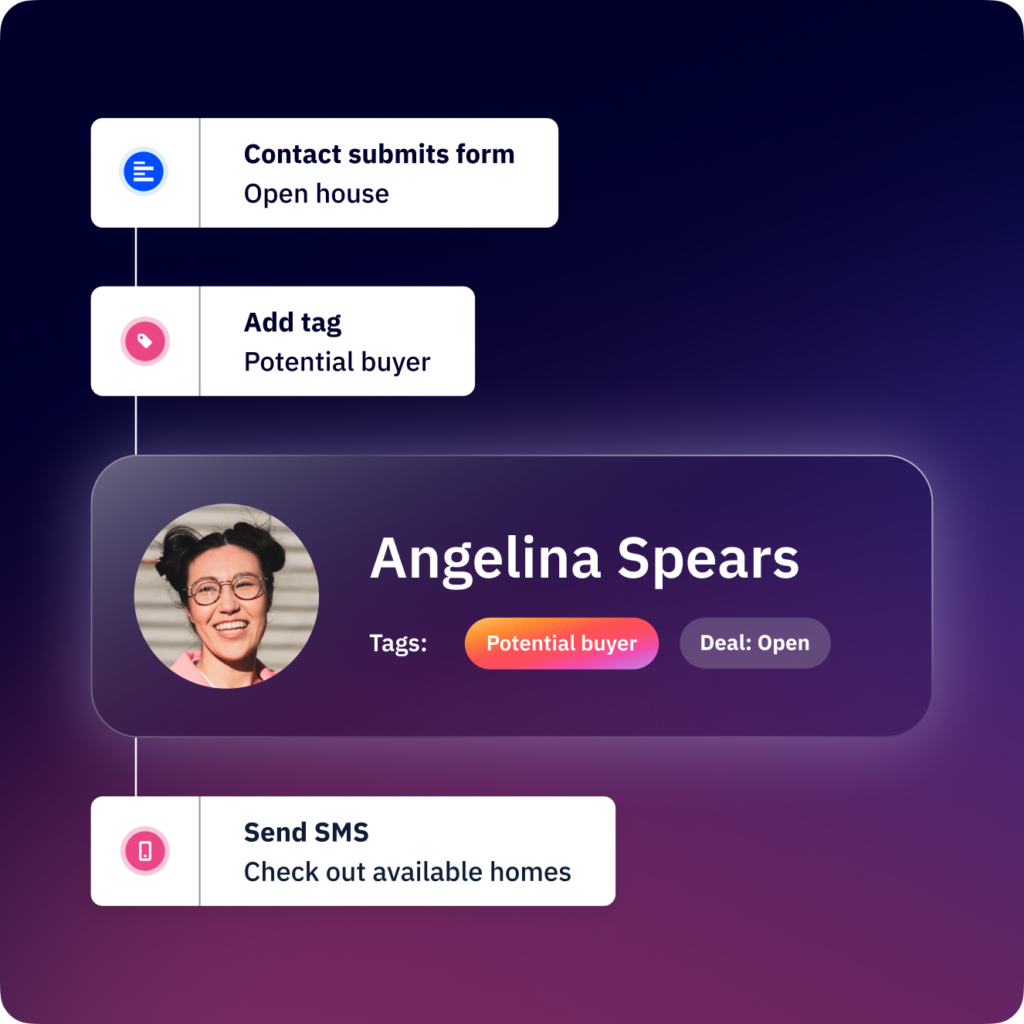
- Sequencing. Use channels in a deliberate order based on which message does what best. Lead with email for content-rich communication; follow with SMS only if the email goes unopened, or to create urgency at a specific moment. ActiveCampaign's automation builder handles this with branch logic that checks email open status before triggering an SMS, no custom development required.
- Suppression logic. Once a subscriber takes the desired action (makes a purchase, clicks the link, books the call), suppress further messages in that sequence across both channels. Don’t let the automation continue running after the goal is achieved. ActiveCampaign applies suppression conditions across channels in the same automation, so a contact who converts on email never receives the SMS follow-up.
- Channel preference tracking. Some subscribers prefer email. Others prefer text. Let behavior, not assumptions, determine which channel gets the next message. In practice this means tagging contacts based on engagement patterns: a subscriber who consistently opens SMS but ignores emails gets automatically flagged as SMS-first, and future sequences route to them accordingly. Over time, your automation learns who prefers which channel and stops wasting the wrong message on the wrong medium. ActiveCampaign tags contacts automatically based on engagement behavior, and those tags can be used to route future sequences to the right channel without any manual sorting.
The underlying concept is “channel hierarchy”: a deliberate decision about which channel leads, which follows, and what triggers the switch between them. Automations built on channel hierarchy feel orchestrated. The ones without it feel like separate teams who don’t talk to each other.
Want to learn more about ActiveCampaign?
5 Automations Where SMS and Email Work Better Together
1. Cart Abandonment
Cart abandonment is the highest-ROI use case for most brands adding SMS for the first time.
The logic: email leads with product detail. If the cart email goes unopened within a set window (typically 2–4 hours), SMS follows with a shorter, urgency-focused message: “You left something behind. Your cart expires tonight.” The SMS isn’t a replacement for the email; it’s a safety net for the subscribers the email didn’t reach.
The key is the suppression condition: if the email is opened (or the cart is recovered), the SMS trigger should be suppressed. You’re solving an attention problem, not messaging everyone twice.
ActiveCampaign's automation builder handles the sequencing and suppression logic for this natively.
2. Flash Sales
Flash sales create a time pressure that SMS is uniquely built for. A text goes out first, brief, direct, and immediate: “24-hour flash sale. 30% off everything. Starts now.” The email follows with the full catalog, featured products, and editorial context.
The channels serve different jobs here. SMS creates awareness and urgency. Email handles conversion for anyone who needs more context before buying. Together, they cover both ends of the decision-making spectrum.
ActiveCampaign lets you trigger both channels from a single automation, with timing and audience controls for each.
3. Welcome Series
Most welcome series are email-only, and that’s usually the right call for the opening messages. There’s brand story to tell, expectations to set, content to deliver. But a well-timed SMS on day two or three can work as a quick, direct incentive delivery: “Here’s your 15% off code. Use it anytime next week.”
The text doesn’t replace the email sequence; it supplements it with a channel that feels more personal and direct. The combination tends to produce higher incentive redemption rates than email alone.
ActiveCampaign's welcome automation templates include SMS steps out of the box, so the coordination is already mapped for you.
4. Back-in-Stock
When a high-demand item comes back in stock, speed is everything. SMS wins this race: the customer who subscribed to a back-in-stock alert wanted speed, not storytelling. A text that says “[Product] is back. Limited inventory.” with a direct link serves that need immediately.
The follow-up email can arrive shortly after with cross-sell recommendations, styling suggestions, or related products, turning a transactional trigger into a broader engagement opportunity.
ActiveCampaign's back-in-stock triggers can fire SMS and email simultaneously or in sequence, depending on your suppression logic.
5. Post-Purchase
Post-purchase is where channel roles are clearest. Email handles order confirmation, receipt details, and the full breakdown of what was purchased, information customers need to reference. SMS handles real-time transactional updates: “Your order shipped. Arrives Thursday.” or “Your delivery was just dropped off.”
These SMS messages consistently generate the highest engagement rates in most brands’ entire communication mix, because they’re purely useful. No selling, no promotions. Just information the customer actually wanted.
ActiveCampaign handles both the email confirmation and SMS shipping update from the same post-purchase automation.
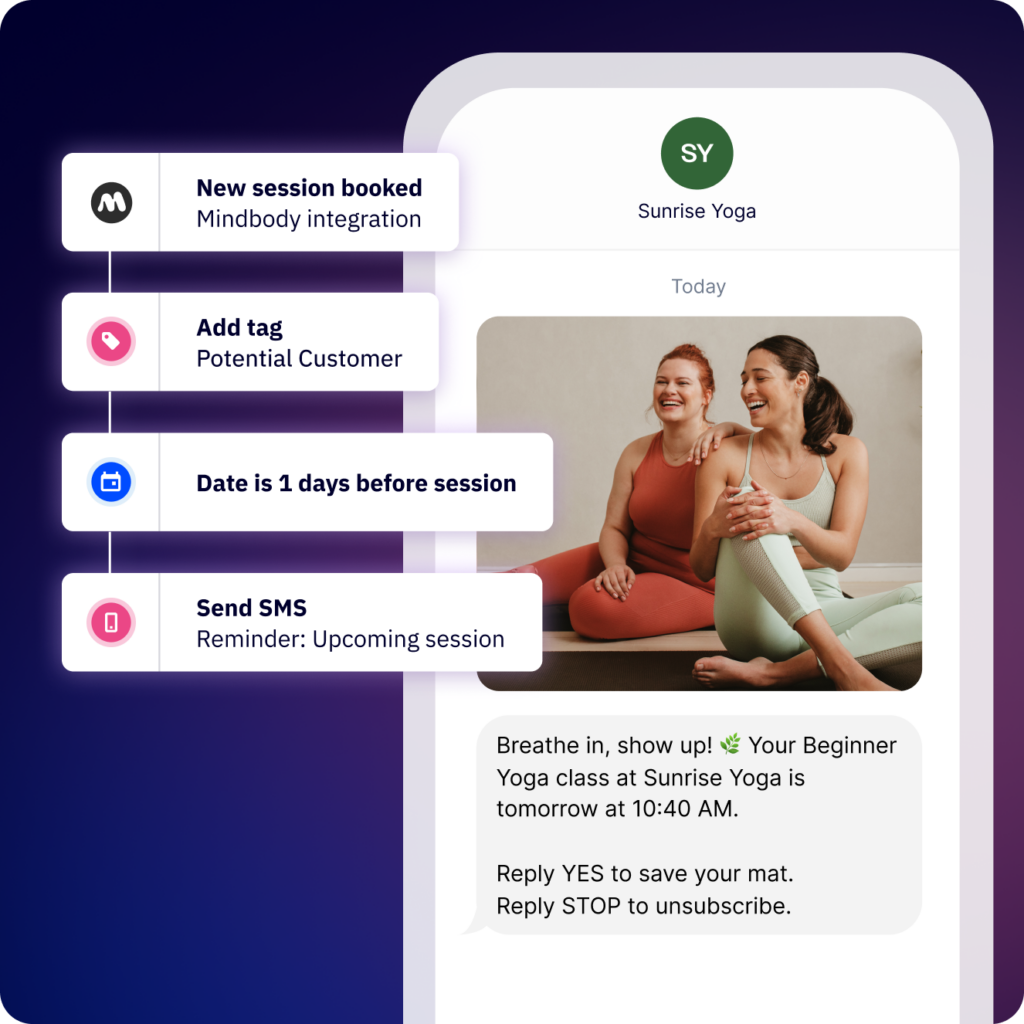
When to Use SMS Alone (and When to Skip It)
SMS performs best in specific situations. Using it outside those situations is how brands burn through subscriber goodwill.
Use SMS for:
- Time-sensitive offers where immediacy matters
- Transactional updates where the customer needs the information right away
- Simple CTAs where the entire message and action fit in two sentences
These are the moments where SMS’s strengths, high visibility and near-instant read rates, directly serve the customer.
Skip SMS for:
- Cold audiences who don’t know your brand well yet
- Complex offers that require context to understand
- Long-form content of any kind. A text message isn’t the place to explain a complicated subscription tier or walk through a product comparison
On frequency: most SMS practitioners recommend no more than 2–4 texts per month as a baseline. Beyond that, opt-out rates tend to climb. The right ceiling depends on your audience and how well you’re segmenting. Treating SMS as a scarce, high-value resource, rather than a bulk channel, is what separates the brands that build healthy SMS lists from the ones that continuously churn through them.
Building a Compliant SMS List
⚠ Key rule: SMS consent is entirely separate from email consent. A subscriber who opted into your emails has not consented to receive texts. Sending SMS to email-only subscribers violates regulations and erodes the trust you’ve built.
With that baseline established, here’s how to build your list the right way.
The most effective moments to ask for SMS opt-in are also the moments of highest engagement: at checkout (where the customer is already in transaction mode), in post-purchase confirmations (where they’re paying close attention), and in pop-ups that offer a clear, specific value exchange: “Text updates get first access to sales.”
Best practice is double opt-in: after a subscriber provides their number, send an SMS asking them to confirm. It reduces your list size slightly but significantly improves list quality, and protects you from typos and unintended sign-ups that lead to spam complaints.
Measuring What Works
The metrics that matter for SMS are different from email, and using email benchmarks to evaluate SMS performance leads to misinterpretation. Focus on:
- CTR (expect 15–30% for well-targeted SMS campaigns)
- Conversion rate (the percentage of messages that lead to the desired action)
- Revenue per message (the most direct measure of channel ROI)
- Opt-out rate (your ongoing signal of whether you’re using the channel well)
The comparison that matters most isn’t SMS open rate versus email open rate. It’s revenue contribution per channel. A channel with lower engagement but higher purchase intent might generate more revenue per subscriber. Track attribution at the order level, not the message level.
ActiveCampaign's reporting gives you cross-channel attribution out of the box, so you can see exactly how SMS and email are performing together, not just in isolation. Revenue per message, conversion rate by channel, and opt-out trends are all visible in one dashboard, giving you the data to optimize coordination rather than guess at it.
One Automation. That’s Where to Start.
If you’re starting out, pick one automation: cart abandonment is the highest-ROI entry point for most brands. Build the coordination logic, measure the results, and expand from there.
SMS isn’t a replacement for email, and it doesn’t need to be. It’s the accelerator, the channel that creates urgency, drives immediate action, and reaches subscribers in the moments when your email is waiting to be opened.
The goal isn’t to send more messages. It’s to send the right message, on the right channel, at the right moment, which is exactly what a well-coordinated SMS and email strategy makes possible.
That coordination doesn’t have to be complex to be effective. It just has to be intentional.
ActiveCampaign handles SMS and email in one platform, with the automation logic to coordinate them intelligently. Explore ActiveCampaign's SMS and email tools to build your first coordinated campaign.