

I migliori software per la protezione del marchio consentono di rilevare gli annunci di prodotti contraffatti, bloccare i tentativi di impersonificazione, far rispettare i diritti di proprietà intellettuale e monitorare le minacce digitali, così da proteggere la reputazione e i ricavi su larga scala. Non tutte le soluzioni sono progettate per stare al passo con le minacce attuali. La piattaforma sbagliata può rallentare il lavoro con falsi positivi, automazione limitata e dashboard che nascondono i problemi urgenti in mezzo al rumore.
Per questo ho dedicato oltre 300 ore a testare le piattaforme, per individuare quelle che offrono avvisi in tempo reale, flussi di lavoro automatizzati per la rimozione dei contenuti e dashboard unificate, così da poter intervenire prima che le violazioni si aggravino e restare al passo con l'evoluzione degli standard di applicazione delle norme sulle diverse piattaforme.
Con oltre 10 anni di esperienza nel marketing e nella gestione dei marchi, so in prima persona quanto sia difficile proteggere un marchio online. Utilizzando il nostro rigoroso processo di valutazione, ho selezionato i migliori software per la protezione del marchio, che offrono la velocità, la precisione e l'affidabilità di cui i team moderni hanno bisogno.
Perché fidarsi dei nostri consigli sui software
6,700+
Reviews
20
Industry experts
16+
Evaluation factors
14
Years
Il nostro team testa e recensisce software dal 2012. In quanto leader del marketing noi stessi, sappiamo quanto sia difficile — e importante — scegliere il software giusto.
Per questa guida, abbiamo valutato gli strumenti attraverso test pratici e ricerche indipendenti, assegnando un punteggio agli strumenti in base ai nostri criteri di selezione.
Le nostre recensioni riflettono il nostro giudizio editoriale umano, non un discorso di vendita.
Revisori esperti:
 Gui DrusinaDirettore creativo
- Shriya GhateSenior Marketing Lead
 Amanda JacquesResponsabile Marketing Ops

Riepilogo dei migliori software per la protezione del marchio
| Tool | Best For | Trial Info | Price | ||
|---|---|---|---|---|---|
| 1 | Ideale per l'automazione della rimozione basata sull'intelligenza artificiale | Demo gratuita disponibile | Prezzo su richiesta | Website | |
| 2 | Ideale per la rimozione di contraffazioni tramite IA | Demo gratuita disponibile | Prezzi su richiesta | Website | |
| 3 | Ideale per il monitoraggio del brand in tempo reale | Prova gratuita di 14 giorni disponibile | A partire da $199/mese (fatturato annualmente) | Website | |
| 4 | Ideale per la protezione del brand a livello multinazionale | Demo a pagamento disponibile | Prezzi su richiesta | Website | |
| 5 | Ideale per funzionalità di analisi del sentiment | Prova gratuita di 7 giorni disponibile | Da $99/mese | Website | |
| 6 | Ideale per il controllo della narrativa del brand | Prezzo su richiesta | Website | ||
| 7 | Ideale per aziende e brand locali | Demo gratuita disponibile | Prezzo su richiesta | Website | |
| 8 | Ideale per il monitoraggio dei prezzi dei concorrenti | Prova gratuita di 14 giorni | Da $99/mese | Website | |
| 9 | Miglior set di strumenti per la protezione del marchio | Demo gratuita disponibile | Prezzo su richiesta | Website | |
| 10 | Ideale per la registrazione di proprietà intellettuale | Demo gratuita disponibile | Da $1,000/mese | Website |


Recensioni dei migliori software per la protezione del marchio
Le panoramiche seguenti illustrano la mia ricerca sui migliori software per la protezione del marchio disponibili. Queste soluzioni aiuteranno la tua azienda a contrastare gli abusi del marchio, monitorare il tuo marchio e aumentare il coinvolgimento dei clienti.
 Ideale per l'automazione della rimozione basata sull'intelligenza artificiale
- Demo gratuita disponibile
- Prezzo su richiesta
Visit WebsiteCustomer Rating:5/5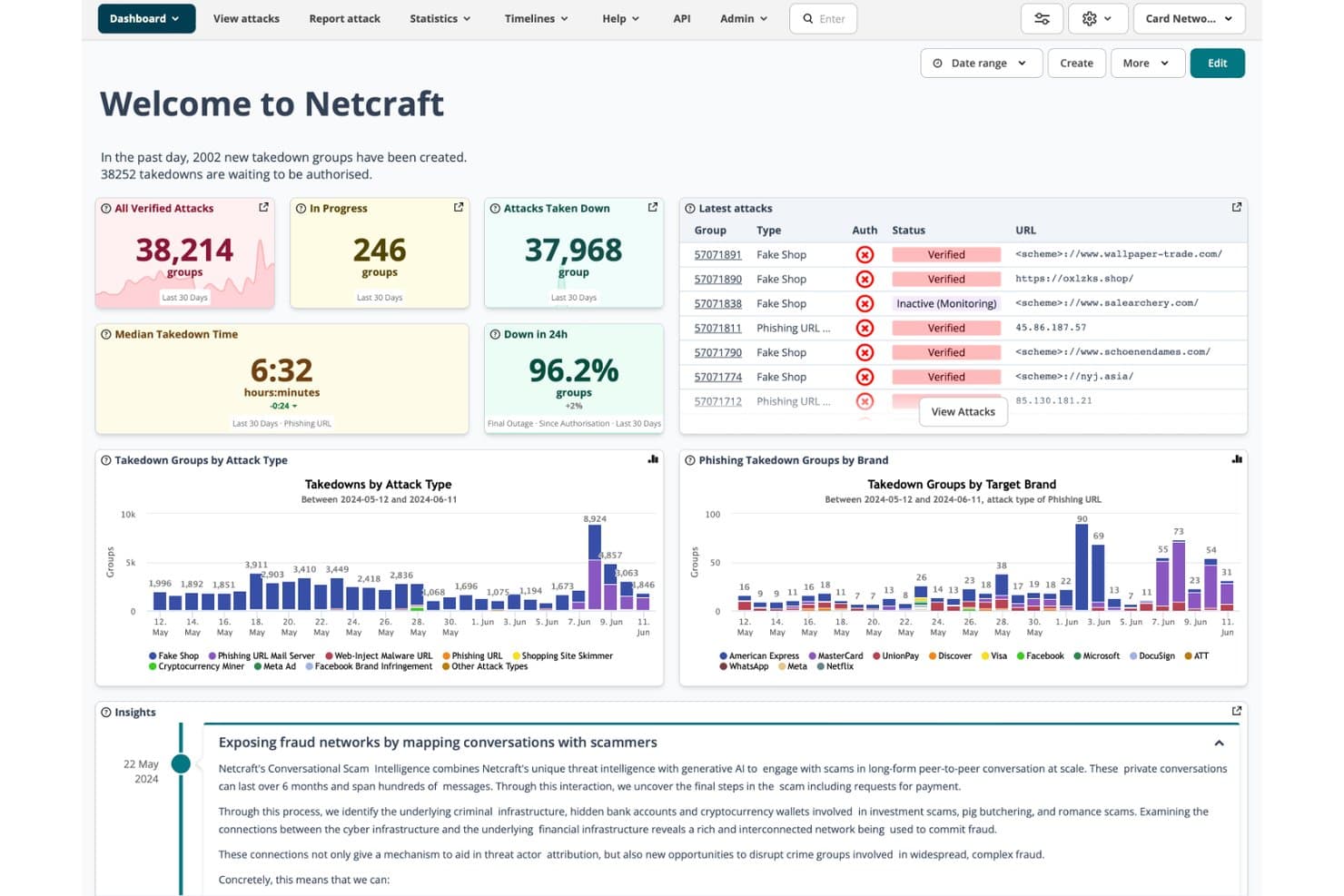
Netcraft offre un pannello di protezione del marchio che mostra il monitoraggio degli attacchi in tempo reale, le statistiche sulle rimozioni e l'analisi delle minacce di phishing per marchio. Netcraft è una piattaforma per la protezione del marchio che rileva e rimuove siti di phishing, domini simili, falsi profili sui social media e minacce di impersonificazione del marchio sul web, sui dispositivi mobili e sui canali social.
Per chi è più adatto Netcraft?
Netcraft è particolarmente adatto ai team aziendali responsabili della sicurezza e della conformità del marchio in settori ad alto rischio come i servizi finanziari, dove le minacce di phishing e impersonificazione dei domini sono frequenti e potenzialmente molto dannose.
Perché ho scelto Netcraft
Netcraft si guadagna un posto tra le migliori soluzioni della mia selezione perché nessun'altra piattaforma che ho valutato è in grado di neutralizzare una minaccia in meno di 5 minuti. Fraudcast, il sistema automatico di blocco in tempo reale di Netcraft, neutralizza gli attacchi di phishing prima ancora che la maggior parte dei team riceva un avviso. Mi affido inoltre ai Verified Attack Indicators™ per segnalare e neutralizzare i domini simili prima che entrino in funzione, riducendo quasi a zero l'intervallo di tempo in cui le vittime possono essere colpite.
Funzionalità principali di Netcraft
- Strumento per acquisire schermate: Acquisisci e archivia schermate di siti sospettati di frode utilizzando una rete globale di proxy per raccogliere prove.
- Monitoraggio degli account social VIP: Monitora gli account di dipendenti e dirigenti di alto profilo per individuare rischi di impersonificazione sui principali social network.
- Pannello di analisi degli attacchi: Visualizza l'attività delle minacce, le azioni di rimozione e le tendenze in un'interfaccia di analisi unificata.
- Integrazioni API per SIEM e flussi di informazioni sulle minacce: Collega i dati di rilevamento e degli incidenti di Netcraft alle piattaforme di sicurezza operative esistenti tramite API flessibili.
Integrazioni di Netcraft
Le integrazioni native includono Splunk, Microsoft Sentinel, Slack e altro ancora. Netcraft offre un'API per le integrazioni personalizzate.
Pros and Cons
Pros:
- Rimozione automatica dei siti di phishing in meno di 5 minuti
- Rileva i domini simili prima che entrino in funzione
- Flusso di informazioni sul phishing considerato affidabile dai principali browser a livello globale
Cons:
- Copertura debole nel rilevamento dei prodotti contraffatti nei mercati online
- I pannelli della reportistica offrono poche possibilità di personalizzazione avanzata
Learn more about Netcraft: Ideale per la rimozione di contraffazioni tramite IA
- Demo gratuita disponibile
- Prezzi su richiesta
Visit WebsiteCustomer Rating:4.7/5
La piattaforma lavora regolarmente per identificare nuove inserzioni e verificare la presenza di eventuali violazioni di contraffazione. Red Points è nella mia lista dei preferiti per la sua forte attenzione al rilevamento e alla rimozione delle contraffazioni guidate dall'IA. Lo consiglio di solito ai marchi che hanno difficoltà a gestire infrazioni su larga scala attraverso marketplace e canali social.
Quello che apprezzo è la precisione della sua scansione automatica di immagini e parole chiave: il mio team individua i falsi molto prima rispetto al monitoraggio manuale. Il vero punto di forza è l'applicazione automatizzata che elimina rapidamente le contraffazioni, risparmiandoci infinite richieste di rimozione.
Ideale per
- Marchi che affrontano problemi di contraffazione o violazione di proprietà intellettuale su larga scala su marketplace e social media
- Team legali, di protezione del marchio ed ecommerce che danno priorità alla rimozione rapida e automatizzata dei falsi
Non ideale per
- Piccoli marchi senza un problema significativo di contraffazione
- Team che desiderano un'analisi dettagliata delle minacce o informazioni oltre l'automazione della rimozione
Cosa distingue Red Points
Red Points adotta un approccio orientato prima di tutto all'automazione per la protezione del marchio, concentrandosi sull'uso dell'IA per individuare e rimuovere le contraffazioni a una velocità che il controllo manuale non può raggiungere. A differenza delle soluzioni tradizionali che richiedono ai team legali o di brand di gestire avvisi e applicare le misure manualmente, Red Points è pensato per operare su larga scala: l'intento dello strumento è che ci si affidi al suo sistema automatico per svolgere il grosso del lavoro.
Rispetto ai fornitori storici che si affidano all'analisi manuale (come MarkMonitor o tradizionali studi legali per la proprietà intellettuale), Red Points considera che la sfida principale sia la quantità, non la sfumatura dei casi. Invece di pretendere competenze approfondite da ogni utente, la piattaforma cerca di ridurre al minimo la revisione manuale richiesta.
Compromessi di Red Points
Red Points ottimizza per il rilevamento automatico e l'applicazione immediata, il che significa che a volte mette in secondo piano l'indagine approfondita o la personalizzazione caso per caso tipiche dei team interni di proprietà intellettuale. I team che cercano dettagli approfonditi su ogni infrazione, o che danno valore a un processo investigativo gestito direttamente, potrebbero sentire di perdere parte del controllo diretto.
Pros and Cons
Pros:
- Facile da usare
- Piattaforma flessibile
- Assistenza clienti altamente qualificata
Cons:
- L'interfaccia utente potrebbe fornire più informazioni
- A volte alcuni problemi non vengono rilevati
Learn more about Red Points: Ideale per il monitoraggio del brand in tempo reale
- Prova gratuita di 14 giorni disponibile
- A partire da $199/mese (fatturato annualmente)
Visit WebsiteCustomer Rating:4.7/5
Brand24 usa insight basati sull’IA per fornire dati sulla protezione del brand, come se le menzioni negative stanno aumentando o diminuendo. Brand24 è incluso nella mia lista perché è uno degli unici strumenti di protezione del brand che ho testato a offrire avvisi in tempo reale senza ritardi. Lo consiglio quando la percezione pubblica o la gestione delle crisi sono una priorità quotidiana e non ci si può permettere di perdere un improvviso aumento delle menzioni sui social o nelle notizie.
Ciò che apprezzo di più è la rapidità con cui posso far emergere minacce specifiche o discussioni di influencer sulla dashboard. In pratica, il mio team riesce ad intervenire sulle potenziali criticità nel momento in cui si manifestano, anziché dopo giorni, cambiando radicalmente il nostro approccio alla gestione del rischio reputazionale.
Brand24 è Ideale Per
- Team di comunicazione e marketing che necessitano di avvisi istantanei per le menzioni online del brand
- Aziende che gestiscono il rischio reputazionale del marchio su più canali social e fonti di notizie
Brand24 Non è Adatto Per
- Team che monitorano solo poche fonti o che non necessitano di insight in tempo reale
- Aziende che cercano strumenti integrati per la risposta coordinata agli incidenti o per analisi approfondite dei sentiment
Cosa Distingue Brand24
L’approccio di Brand24 si distingue perché è ottimizzato per l’immediatezza: tutto ruota intorno a ricevere aggiornamenti e individuare picchi di tendenza nel momento stesso in cui accadono. Diversamente dagli strumenti tradizionali di monitoraggio media che raggruppano i dati in report giornalieri o settimanali, Brand24 si concentra su ciò che avviene nell’immediato e presuppone che il tuo team abbia bisogno di vedere le minacce nascere prima che si trasformino in crisi.
Ho anche notato che il design privilegia la velocità più che l’analisi approfondita. Invece di strumenti come Meltwater, orientati a report dettagliati e ricerche di lungo termine, Brand24 ti permette di andare direttamente nella timeline e seguire la storia mentre si sviluppa sulle varie piattaforme.
Compromessi di Brand24
Brand24 è ottimizzato per la rilevazione rapida e il monitoraggio ad alta velocità, motivo per cui le sue funzionalità di reportistica e analisi degli incidenti sono più leggere rispetto a tool pensati per l’analisi post-incidentale. I team alla ricerca di funzioni forensi o analisi storiche molto approfondite qui non troveranno quella profondità.
Pros and Cons
Pros:
- Fornisce un servizio clienti eccellente
- Ottimo rapporto qualità-prezzo
- Interfaccia intuitiva
Cons:
- Limitazioni nelle capacità di ricerca
- Può risultare impegnativo per gli utenti con molte menzioni
Learn more about Brand24: Ideale per la protezione del brand a livello multinazionale
- Demo a pagamento disponibile
- Prezzi su richiesta

Dashboard EBRAND ARGOS per il monitoraggio dei casi di violazione e delle tendenze delle minacce EBRAND è sempre la prima scelta che mi viene in mente quando le aziende globali iniziano a preoccuparsi di contraffazioni e minacce ai domini. Quello che noto nei marchi multinazionali è l'esigenza di un monitoraggio del brand unificato che funzioni attraverso lingue, giurisdizioni e marketplace.
Per esperienza, i servizi di sorveglianza dei domini, i processi di rimozione e il monitoraggio dei marketplace offerti da EBRAND sono superiori alla maggior parte delle alternative disponibili. Apprezzo particolarmente come il loro team ti accompagna nelle azioni di enforcement e nelle opzioni legali—diventa fondamentale quando si monitorano violazioni in decine di paesi.
EBRAND è Ideale Per
- Marchi globali che necessitano di una protezione coordinata del brand, dei domini e dei marketplace in molti paesi
- Team legali o di protezione del brand che gestiscono enforcement ad alto volume e azioni anticontraffazione
EBRAND Non è Ideale Per
- Piccole imprese interessate solo al monitoraggio base di marchi o copyright
- Aziende con rischi minimi al di fuori di una singola area geografica o lingua
Cosa Distingue EBRAND
Dal mio punto di vista, EBRAND adotta un approccio chiaramente coordinato alla protezione del brand, puntando a gestire i rischi globali invece che limitarsi al rilevamento automatico. A differenza degli strumenti focalizzati su singoli mercati o dei provider più piccoli, EBRAND enfatizza un monitoraggio stratificato e interventi diretti su domini, social e marketplace—ipotizzando che il tuo team necessiti di una strategia di enforcement unificata.
Rispetto alle piattaforme più automatizzate o self-service, il modello EBRAND si basa su un supporto personalizzato e su competenze transfrontaliere. Funziona al meglio per aziende in cui la difesa del brand è una battaglia complessa e continua e che richiedono interventi attivi di rimozione e reclami multi-giurisdizionali, non solo segnalazioni.
Compromessi con EBRAND
Dando priorità a una protezione personalizzata e multinazionale, EBRAND richiede più tempo per essere configurato e solitamente necessita di una maggiore collaborazione con il loro team di supporto. Questa attenzione comporta la rinuncia alla velocità e alle funzionalità self-service offerte da soluzioni più piccole o automatizzate.
Pros and Cons
Pros:
- Monitora violazioni tra lingue e regioni
- Regole personalizzate per diverse esigenze di protezione del brand
- Include supporto per monitoraggio e rimozione
Cons:
- Le rimozioni complesse possono richiedere più tempo
- Piattaforme di nicchia potrebbero richiedere inserimento manuale
Learn more about EBRAND: Ideale per funzionalità di analisi del sentiment
- Prova gratuita di 7 giorni disponibile
- Da $99/mese
Visit WebsiteCustomer Rating:5/5
Questo screenshot mostra la dashboard di BrandMentions, evidenziando varie metriche e analisi per il monitoraggio del brand. BrandMentions è nella mia lista perché è costantemente accurato nel cogliere il sentiment intorno a un marchio—ben oltre il semplice ascolto sociale di superficie. Se l'immagine del brand e le sfumature della percezione pubblica sono importanti per il tuo team, è qui che consiglio di guardare per primi.
Mi piace come BrandMentions integra l’analisi del sentiment nelle routine reali di protezione del marchio, monitorando i cambiamenti di tono tra menzioni, siti di notizie e recensioni. La funzione che permette di approfondire il contesto delle conversazioni è particolarmente utile quando ho bisogno di capire se un picco di menzioni è davvero positivo o rappresenta un campanello d’allarme.
BrandMentions è Ideale Per
- Team di PR, marketing e compliance che monitorano in tempo reale i cambiamenti nel sentiment verso il marchio
- Organizzazioni che necessitano di un’analisi contestuale e approfondita delle conversazioni e recensioni online
BrandMentions Non È Adatto Per
- Team concentrati esclusivamente sulla pianificazione o pubblicazione di post sui social
- Aziende che cercano un benchmarking approfondito dei competitor con dashboard visuali
Cosa Distingue BrandMentions
BrandMentions prende il sentiment molto sul serio—mentre altri strumenti di monitoraggio come Sprout Social mostrano il numero di menzioni e l’engagement di base, BrandMentions si aspetta che i team approfondiscano il motivo per cui una conversazione sta avendo una certa tendenza. La piattaforma è progettata per scoprire la temperatura emotiva dietro ogni menzione, così lavori sempre con il contesto, non solo con i numeri.
A differenza delle dashboard più diffuse che danno priorità alle metriche di copertura, BrandMentions incentra tutto il suo flusso di lavoro sull’aiutarti a capire l’umore e l’intento nel dialogo pubblico. I team non reagiscono solo ai picchi—sono incoraggiati a mappare l’impatto di eventi specifici, campagne o crisi analizzando i cambiamenti di sentiment man mano che si verificano.
Compromessi di BrandMentions
Poiché BrandMentions punta a un contesto di sentiment approfondito, l’interfaccia presenta più livelli di analisi rispetto agli strumenti di monitoraggio più semplici. I team tendono a trovare meno visualizzazioni immediate e devono dedicare tempo extra all’interpretazione dei dati sul sentiment per ottenere indicazioni utili.
Pros and Cons
Pros:
- Avvisi in tempo reale permettono risposte immediate
- Monitoraggio completo su più piattaforme
- Le integrazioni migliorano la gestione automatizzata dei workflow
Cons:
- Opzioni di supporto clienti diretto limitate
- Personalizzazione limitata nei report e negli avvisi
Learn more about BrandMentions: Ideale per il controllo della narrativa del brand
- Prezzo su richiesta
Visit WebsiteCustomer Rating:5/5
La dashboard di Erase.com che mostra la gestione delle recensioni Google e i feedback dei clienti sull'avvenuta rimozione delle recensioni. erase.com si distingue per me come la scelta ideale quando la priorità è prendere rapidamente il controllo della narrativa online del tuo marchio. L'ho scelto per questa lista perché non si limita a monitorare le minacce: agisce attivamente per sopprimere i contenuti negativi e migliorare ciò che appare sul tuo brand nei risultati di ricerca.
Quello che apprezzo davvero è come erase.com unisca la gestione dei risultati di ricerca, la rimozione dei contenuti e il monitoraggio continuo della salute del marchio in un'unica piattaforma. I team riescono a ottenere il massimo valore qui quando problemi di reputazione stanno influenzando la percezione, o quando la leadership non può rischiare che appaiano risultati dannosi su Google.
Per cosa è migliore erase.com
- Marchi che affrontano persistente stampa negativa o sfide alla reputazione nei motori di ricerca
- Team di marketing e PR che necessitano di un controllo proattivo sulla narrazione del brand online
Per cosa erase.com non è ideale
- Piccole aziende con una visibilità pubblica minima o rischi di reputazione limitati
- Team interessati solo a un monitoraggio una tantum invece che a una gestione continua del brand
Cosa distingue erase.com
Erase.com protegge il brand intervenendo attivamente per rimodellare i risultati sui motori di ricerca e la narrativa digitale, invece di limitarsi a segnalare o monitorare le minacce. Diversamente dagli strumenti tradizionali come Brandwatch, focalizzati su monitoraggio del sentiment e ascolto social, erase.com è pensata per team che vogliono un controllo diretto su ciò che il mondo scopre sul brand. Non si limita a segnalare storie negative: è progettato per sopprimerle e mettere in risalto contenuti più favorevoli, scegliendo un approccio più aggressivo e interventista nella gestione della reputazione.
Compromessi con erase.com
Erase.com ottimizza per un controllo narrativo aggressivo, il che solitamente implica un coinvolgimento maggiore nella rimozione dei contenuti e nella manipolazione dei risultati di ricerca. Il compromesso è che questo approccio può richiedere molte risorse e a volte un'attenzione continua per mantenere i risultati 'puliti', rendendolo meno adatto a chi cerca un monitoraggio leggero e a bassa manutenzione.
Pros and Cons
Pros:
- È specializzato nella rimozione permanente di recensioni e contenuti
- Offre strategie ORM personalizzate e specifiche per le agenzie
- Fornisce supporto clienti e gestione account continuativi
Cons:
- Nessun prezzo trasparente o fisso; tutti i preventivi sono personalizzati
- Mancanza di trasparenza sulle aspettative
Learn more about Erase.com: Ideale per aziende e brand locali
- Demo gratuita disponibile
- Prezzo su richiesta
Visit WebsiteCustomer Rating:4.8/5
Birdeye mostra tutte le tue recensioni online da più fonti in un'unica dashboard Birdeye si distingue perché risolve una delle principali preoccupazioni dei brand locali: proteggere la propria reputazione dove conta di più. Lo consiglio quando servono strumenti di monitoraggio delle recensioni, gestione delle schede e feedback dei clienti che hanno un impatto reale su come la vostra azienda appare online.
Quello che apprezzo di Birdeye è il modo in cui collega strettamente la gestione della reputazione locale alla protezione del brand. Offre al mio team avvisi in tempo reale sulle recensioni e la possibilità di gestire le schede aziendali su larga scala, il che significa che possiamo individuare e reagire alle minacce prima che abbiano impatto.
Ideale per Birdeye
- Aziende locali e brand multi-sede focalizzati sulla protezione della reputazione online
- Team che necessitano di monitoraggio delle recensioni, feedback e gestione delle schede in un'unica piattaforma
Non adatto per
- Brand nazionali o globali senza una significativa presenza locale
- Organizzazioni che cercano ascolto social avanzato o rilevamento di minacce oltre recensioni e schede
Cosa distingue Birdeye
L'approccio di Birdeye punta a centralizzare i punti di contatto della reputazione locale, così da mostrare ciò che i clienti vedono per primi—recensioni, schede e valutazioni—senza distrazioni dal monitoraggio social più ampio. Dove piattaforme come Sprinklr si concentrano sull'ascolto multicanale e analisi avanzata, Birdeye permette di controllare e rispondere ai feedback per ogni sede da un'unica dashboard. Porta maggiore reattività nella protezione del brand locale, presupponendo che ogni filiale o sede sia direttamente connessa alla presenza digitale del brand.
Compromessi di Birdeye
Quello che noto nella pratica è che Birdeye ottimizza per la gestione concreta di recensioni e schede; questa focalizzazione comporta però sacrificare una copertura sociale o mediatica più ampia. Se serve un rilevamento completo delle minacce al brand oltre le principali piattaforme locali, Birdeye può lasciare delle lacune.
Pros and Cons
Pros:
- Aiuta la SEO
- Integrazioni CRM multiple
- Gestione completa della reputazione online
Cons:
- Alcune recensioni non vengono visualizzate su Google
- Un po' costoso per le piccole imprese
Learn more about Birdeye: Ideale per il monitoraggio dei prezzi dei concorrenti
- Prova gratuita di 14 giorni
- Da $99/mese
Visit WebsiteCustomer Rating:4.7/5
Prisync offre agli utenti un vantaggio competitivo grazie al monitoraggio costante e aggiornato dei prezzi della concorrenza Prisync merita un posto nella mia lista perché prende il monitoraggio dei prezzi della concorrenza sul serio, in modo molto più rigoroso rispetto alla maggior parte degli strumenti di monitoraggio. Ho notato che i brand fanno progressi concreti quando devono fronteggiare sconti non autorizzati continui o necessità di far rispettare rigorosamente il prezzo minimo garantito (MAP) su dozzine di rivenditori.
Quello che apprezzo è come Prisync ti offre aggiornamenti giornalieri su prezzi e disponibilità tra concorrenti e canali, così puoi individuare velocemente le violazioni. È quell’allerta in tempo reale e la possibilità di approfondire lo storico delle variazioni di prezzo che permette al tuo team di intervenire prima che si verifichino danni.
Per chi è ideale Prisync
- Brand che affrontano concorrenti aggressivi e violazioni croniche del MAP
- Attività di e-commerce e retail che monitorano molti SKU su più canali
Per chi non è ideale Prisync
- Piccole imprese con pochi prodotti o una presenza online limitata
- Team che necessitano di rilevamento approfondito di prodotti contraffatti o monitoraggio di uso improprio di logo/immagini
Cosa distingue Prisync
Quello che distingue Prisync è il modo in cui tratta il monitoraggio prezzi come una disciplina automatizzata e continua invece che come un audit occasionale. Diversamente da piattaforme come BrandShield o Red Points, che si concentrano sulla contraffazione o sull’uso improprio dell’IP, Prisync punta tutto sui dati di prezzo in tempo reale e sulla copertura dei canali come nucleo operativo.
Si aspetta che i team considerino il rispetto dei prezzi come una routine operativa quotidiana, e non un compito mensile. Lo vedo funzionare al meglio per i brand pronti ad agire rapidamente sui cambiamenti del mercato, invece di limitarsi a raccogliere le violazioni passivamente.
Compromessi con Prisync
Prisync ottimizza veramente per il monitoraggio affidabile dei prezzi e aggiornamenti ad alta frequenza, ma questo significa che non offre una copertura approfondita su problematiche come l’abuso di marchio. Quindi, se il tuo rischio riguarda maggiormente venditori non autorizzati che utilizzano gli asset del tuo brand, il suo focus quasi esclusivo sul prezzo può lasciare scoperte altre aree.
Pros and Cons
Pros:
- Fornisce dati sui prezzi dei concorrenti in tempo reale per decisioni informate.
- Integrazione senza soluzione di continuità con le principali piattaforme e-commerce come Shopify.
- Il motore di pricing dinamico automatizza l’adeguamento dei prezzi rispetto alla concorrenza.
Cons:
- Alcuni utenti segnalano problemi di precisione nei prezzi.
- Capacità limitata di esportare i link dei concorrenti in modo indipendente.
Learn more about Prisync: Miglior set di strumenti per la protezione del marchio
- Demo gratuita disponibile
- Prezzo su richiesta
Visit WebsiteCustomer Rating:4.4/5
Accedi alle metriche di reportistica riguardanti le minacce email, incluso il numero di email elaborate dalla piattaforma. Mimecast si distingue secondo me come l'opzione che spinge costantemente la protezione del marchio oltre il semplice blocco dell'impersonificazione di base. Vedo forti casi d'uso quando il tuo team si trova ad affrontare minacce avanzate come campagne di phishing che cercano di sfruttare il tuo dominio e marchio in modo mirato.
Quello che apprezzo di Mimecast è come affronta in modo approfondito l'impersonificazione digitale: il rilevamento degli abusi del marchio, la sicurezza email in tempo reale e l'intelligence sulle minacce ai domini web lavorano qui in sinergia. Quando il mio team deve bloccare il rischio che gli aggressori abusino dei nostri asset e della nostra identità pubblica, questo di solito è lo strumento di cui mi fido per individuare e fermare tempestivamente tali campagne.
Mimecast è ideale per
- Team di sicurezza e IT che affrontano minacce persistenti di phishing, spoofing o impersonificazione ai danni del proprio marchio
- Organizzazioni che necessitano di un rilevamento robusto e di una rapida eliminazione di domini fraudolenti o di un uso dannoso del marchio
Mimecast non è adatto per
- Piccole imprese con una limitata esposizione del marchio o esigenze di sicurezza email semplici
- Team che cercano un monitoraggio dei domini leggero e specifico senza intelligence multilivello sulle minacce
Cosa rende Mimecast unico
Quello che mi colpisce del design di Mimecast è l'integrazione della protezione del marchio in ogni livello della sua architettura di sicurezza. Invece di limitarsi a bloccare le email sospette, come Proofpoint o la maggior parte dei gateway email, Mimecast presuppone che i team trattino le minacce esterne al marchio come una funzione chiave di IT e gestione del rischio. Lo strumento intreccia difesa dei domini, rilevamento di impersonificazione e visibilità delle minacce direttamente nei flussi di lavoro quotidiani, trattando la sicurezza del marchio online con la stessa priorità della sicurezza della casella di posta.
Dove gli strumenti tradizionali monitorano gli attacchi in modo reattivo, Mimecast parte dal presupposto che il tuo team sia attivamente impegnato a individuare e smantellare i rischi di impersonificazione e pericoli per il marchio prima che raggiungano il tuo pubblico. Questa mentalità proattiva e multilivello non è solo una caratteristica, ma il presupposto su cui Mimecast pensa che tu debba lavorare.
Compromessi con Mimecast
Mimecast è ottimizzato per un monitoraggio profondo e costante delle minacce per il marchio, il che significa che passerai più tempo a gestire dashboard, avvisi e processi di rimozione. Questo livello di controllo può aggiungere rumore e complessità per i team che non si dedicano alla gestione del rischio digitale o non hanno persone che regolano regolarmente il sistema.
Pros and Cons
Pros:
- Video tutorial rapidi
- Piattaforma intuitiva
- Eccellente supporto clienti
Cons:
- Alcune email di spam riescono a passare
- Periodo di conservazione di log e email limitato
Learn more about Mimecast: Ideale per la registrazione di proprietà intellettuale
- Demo gratuita disponibile
- Da $1,000/mese
Visit WebsiteCustomer Rating:4.9/5
Rileva ed elimina prodotti contraffatti da siti di ecommerce, marketplace online, social media e altre fonti. Marqvision aiuta le aziende a registrare, gestire e monitorare rapidamente i marchi, garantendo la protezione della proprietà intellettuale in un'unica soluzione di gestione della proprietà intellettuale.
Perché ho scelto Marqvision: La piattaforma offre un'area centralizzata dove è possibile monitorare e gestire in tempo reale l'avanzamento delle domande di proprietà intellettuale. Marqvision fornisce alle aziende strumenti per ottenere maggiore trasparenza sulla registrazione della proprietà intellettuale e aiuta a registrare i marchi più rapidamente. Per fare ciò, Marqvision si avvale di una rete di studi legali di alto livello, specializzati nelle normative locali sui marchi.
Funzionalità distintive di Marqvision
Le funzionalità distintive includono strumenti di intelligenza artificiale che tracciano e rimuovono i contenuti illegali e combattono la pirateria online per proteggere il valore delle opere protette da copyright. Marqvision offre inoltre funzionalità che rilevano e rimuovono automaticamente i prodotti contraffatti dalla maggior parte dei marketplace online.
Pros and Cons
Pros:
- Rilevamento efficiente e tempestivo delle contraffazioni
- Eliminazione rapida delle contraffazioni
- Identificazione delle reali fonti di minaccia
Cons:
- Prezzo non adatto alle piccole imprese
- Canali di rilevamento limitati nei livelli inferiori
Learn more about MarqVision:
Altri software per la protezione del marchio
Durante la mia ricerca per creare questo articolo, ho scoperto che è disponibile un numero significativo di opzioni e che non sarebbe utile per te non includere un elenco completo delle possibilità. Perciò ho voluto elencare altre opzioni disponibili che ritengo meritino di essere prese in considerazione.
- 11BrandShieldIdeale per il monitoraggio della reputazione
- 12BrandVerityIl migliore per il monitoraggio della ricerca a pagamento
- 13CorsearchIdeale per il rilevamento proattivo delle minacce
- 14ZeroFoxIdeale per monitorare le piattaforme pubbliche
- 15GrowByDataIdeale per il monitoraggio MAP
- 16PhishLabsIl migliore strumento completo di threat intelligence
- 17BolsterIdeale per la protezione automatica del marchio
- 18ActiveFenceIdeale per la protezione da comportamenti e contenuti dannosi
- 19AcvissIdeale per tecnologia anti-contraffazione
- 20SentrycIdeale per rimuovere i prodotti contraffatti
- 21Constella IntelligenceIdeale per il monitoraggio automatico delle minacce
- 22AicarmaIdeale per il monitoraggio quotidiano della visibilità
- 23SemanticForceIdeale per la protezione dai rischi digitali
- 24ContinuxIdeale per la gestione dei brevetti
- 25Price2SpyIdeale per il monitoraggio dei prezzi
Recensioni correlate sui software di marketing
Se non hai ancora trovato ciò che cerchi, dai un'occhiata a questi strumenti strettamente correlati alla strategia di marketing digitale che abbiamo testato e valutato.
- Software di marketing
- Software per la gestione del marketing
- Software di marketing basato sugli account
- Software per la gestione dei social media
- Software per l'email marketing
- Software per il monitoraggio dei media
Come Valuto il Software di Protezione del Marchio
Scompongo la mia valutazione in due livelli: le capacità fondamentali come il rilevamento di prodotti contraffatti e i flussi di lavoro per la rimozione, e poi i fattori differenzianti che distinguono le piattaforme di enforcement più solide.
Funzionalità di Base (Requisiti Fondamentali per Questa Lista)
Quando seleziono gli strumenti per la mia lista, valuto ciascuno su una scala da 0 (non offre la funzionalità) a 5 (eccelle in questo ambito) per ogni funzionalità di base elencata di seguito. Successivamente, calcolo il punteggio totale dello strumento in percentuale. Ogni strumento deve raggiungere un punteggio totale minimo del 65% per essere considerato per l'inclusione.
- Rilevamento Violazioni Online: Valuto su quanti canali digitali uno strumento effettua scansioni automatiche, dai siti di listing di prodotti ai siti web canaglia che ospitano versioni contraffatte del tuo marchio.
- Monitoraggio di Domini & Cybersquatting: I domini simili sono una minaccia costante, quindi verifico se uno strumento tiene traccia di nuove registrazioni, varianti basate su errori di battitura e spoofing basati su omografi.
- Flussi di Lavoro per la Rimozione & Enforcement: Qui è importante la rapidità e la copertura dell'invio delle richieste di rimozione, inclusa la possibilità per una piattaforma di inoltrare richieste di rimozione a registrar e marketplace.
- Protezione da Contraffazione & Marketplace: Esamino quanti marketplace copre uno strumento e se supporta azioni di enforcement in massa contro venditori contraffattori recidivi.
- Monitoraggio dell'Impersonificazione sui Social Media: I falsi account di marca appaiono rapidamente, quindi verifico se uno strumento monitora i principali network e segnala i profili di impersonificazione per la rimozione.
- Intelligence sulle Minacce & Reportistica: Una buona reportistica collega le attività di enforcement ai risultati, quindi valuto se le dashboard monitorano i tassi di successo delle rimozioni, il volume delle violazioni e i registri delle prove.
Una volta individuati gli strumenti che soddisfano questo criterio, considero ciò che distingue ciascuna piattaforma.
Fattori Differenzianti (Cosa Distingue i Fornitori)
Ecco come metto a confronto i diversi fornitori:
Caratteristiche Distintive
La mappatura di venditori e reti è un grande elemento di differenziazione—gli strumenti che collegano le inserzioni contraffatte alle catene di fornitura offrono al tuo team legale opzioni di enforcement a monte. Cerco anche il riconoscimento di immagini e loghi basato su intelligenza artificiale, che intercetta infrazioni che il matching testuale non coglie, come loghi alterati sulle foto dei prodotti. Il monitoraggio del dark web aggiunge un ulteriore livello, facendo emergere operazioni di contraffazione e asset di marchio rubati in forum e marketplace che il tuo team non troverebbe mai manualmente.
Oltre le Caratteristiche
I tassi di successo delle azioni di enforcement sono molto importanti. Verifico se un fornitore possiede lo status di trusted-reporter presso i principali marketplace e registrar, poiché questo incide direttamente sulla rapidità con cui vengono processate le richieste di rimozione. Gli standard di raccolta delle prove sono un altro fattore chiave: la raccolta deve includere la documentazione della catena di custodia che regge nei procedimenti legali. Valuto anche il livello di integrazione della piattaforma con database di marchi registrati e strumenti di gestione della proprietà intellettuale, dato che la protezione del marchio raramente vive separata dal flusso di lavoro del team legale.
Come scegliere un software per la protezione del marchio
Con così tanti software diversi per la protezione del marchio disponibili, può essere difficile decidere quale sia più adatto alle proprie esigenze.
Mentre selezioni, provi e scegli un software per la protezione del marchio, considera quanto segue:
- Quale problema stai cercando di risolvere - Inizia identificando la lacuna nelle funzionalità di protezione del brand che stai cercando di colmare, per chiarire le caratteristiche e le funzionalità che lo strumento di protezione del brand deve offrire.
- Chi dovrà utilizzarlo - Per valutare costi e requisiti, considera chi utilizzerà il software e di quante licenze avrai bisogno. Dovrai valutare se l'accesso sarà richiesto solo dal team di marketing o da tutta l'organizzazione. Una volta chiarito questo aspetto, vale la pena considerare se stai dando priorità alla facilità d'uso per tutti oppure alla velocità per gli utenti esperti del software di marketing.
- Con quali altri strumenti dovrà funzionare - Chiarisci quali strumenti stai sostituendo, quali rimarranno in uso e con quali strumenti dovrai integrarlo, ad esempio software di contabilità, CRM o gestione delle risorse umane. Dovrai decidere se gli strumenti dovranno integrarsi tra loro oppure se puoi sostituire più strumenti con un'unica soluzione consolidata per la protezione del brand.
- Quali risultati sono importanti - Considera il risultato che il software deve offrire per essere considerato efficace. Rifletti sulle funzionalità che vuoi ottenere o migliorare e su come misurerai il successo. Ad esempio, un risultato potrebbe essere la possibilità di ottenere una maggiore visibilità sulle prestazioni. Potresti confrontare le funzionalità dei software di protezione del brand fino allo sfinimento, ma se non stai pensando ai risultati che vuoi ottenere, potresti sprecare molto tempo prezioso.
- Come si integrerebbe nella tua organizzazione - Considera la scelta del software insieme ai tuoi flussi di lavoro e alla metodologia di erogazione. Valuta cosa funziona bene e quali sono gli aspetti problematici che devono essere affrontati. Ricorda che ogni azienda è diversa — non dare per scontato che uno strumento funzioni nella tua organizzazione solo perché è popolare.
Tendenze nei software di protezione del brand
Il panorama dei software di protezione del brand è in rapida evoluzione e riflette la crescente complessità delle minacce rivolte all'identità del brand e alla proprietà intellettuale online. Ecco una sintesi concisa delle tendenze, delle caratteristiche e delle funzionalità attuali che stanno plasmando il settore, pensata per i professionisti del marketing.
- Integrazione dell'AI e dell'apprendimento automatico: l'uso dell'intelligenza artificiale (AI) e degli algoritmi di apprendimento automatico è sempre più diffuso. Queste tecnologie consentono di rilevare in modo più efficiente e accurato prodotti contraffatti, violazioni dei marchi, siti web falsi e utilizzi non autorizzati di risorse digitali su diverse piattaforme online.
- Monitoraggio completo dei canali digitali: viene data grande importanza alla possibilità di monitorare un'ampia gamma di canali digitali, inclusi social media, piattaforme di e-commerce e dark web. Ciò garantisce ai brand la possibilità di tutelare la propria identità e le proprie risorse in un panorama digitale più ampio.
- Azioni automatizzate di contrasto: il passaggio all'automazione nel rilevamento e nella mitigazione delle minacce è fondamentale. Le richieste automatizzate di rimozione e le azioni di contrasto semplificano il processo di protezione della presenza online di un brand.
- Monitoraggio del dark web: gli strumenti e i servizi di protezione del brand che cercano attivamente nel dark web credenziali rubate, prodotti contraffatti e altre minacce si stanno evolvendo rapidamente. Questa funzionalità è essenziale per identificare e mitigare preventivamente i rischi potenziali prima che abbiano un impatto sul brand o sui suoi clienti.
- Strumenti di screening dei marchi: le funzionalità avanzate dell'AI vengono utilizzate per lo screening dei marchi, offrendo la possibilità di analizzare rapidamente database globali alla ricerca di potenziali violazioni. Questa tecnologia consente ai brand di proteggere la propria proprietà intellettuale con maggiore efficienza e precisione.
Queste tendenze sono in linea con le crescenti difficoltà che i brand devono affrontare per proteggere la propria presenza online dalla contraffazione, dall'impersonificazione e da altre forme di frode digitale. Con l'aumento della sofisticazione delle minacce digitali, il settore dei software di protezione del brand continua a innovare, fornendo alle aziende gli strumenti necessari per tutelare efficacemente l'identità del brand e la proprietà intellettuale.
Che cos'è un software di protezione del brand?
Il software di protezione del brand è uno strumento che tutela online le risorse del brand, la proprietà intellettuale e la reputazione di un'azienda, effettuando scansioni per individuare e contrastare l'uso non autorizzato di marchi, nomi del brand e loghi. Protegge da minacce come contraffazione, accaparramento di domini e violazioni della proprietà intellettuale. Alcuni software di protezione del brand monitorano anche le richieste di rimozione e fanno rispettare le linee guida del brand. Lo scopo è garantire il mantenimento dell'integrità del brand, aiutando i clienti a interagire con prodotti e servizi autentici.
Funzionalità dei software di protezione del brand
Quando scegli un software di protezione del brand, presta attenzione alle seguenti funzionalità chiave:
- Monitoraggio online: analizza siti web, social media, marketplace e forum per rilevare l'uso non autorizzato del tuo marchio, prodotti contraffatti o abusi del marchio. Questo ti aiuta a individuare i problemi prima che sfuggano di mano e ad agire rapidamente.
- Attuazione dei diritti sui marchi: automatizza l'identificazione e la segnalazione delle violazioni dei marchi. Puoi proteggere la tua proprietà intellettuale senza cercare manualmente le violazioni su centinaia di piattaforme.
- Rilevamento delle contraffazioni: trova online copie non autorizzate o versioni contraffatte dei tuoi prodotti. Questa funzione ti aiuta a ridurre le perdite dovute alla contraffazione e protegge i tuoi clienti da prodotti potenzialmente inferiori.
- Gestione delle rimozioni: gestisci e accelera la rimozione dei contenuti che violano i tuoi diritti generando e monitorando le richieste di rimozione. Puoi vedere esattamente cosa è stato rimosso e cosa richiede ancora attenzione, risparmiando moltissimo lavoro manuale e scambi di comunicazioni.
- Strumenti investigativi: analizza più a fondo le minacce persistenti con dati analitici che rivelano schemi, entità collegate o trasgressori ricorrenti. Queste informazioni ti offrono un quadro più chiaro dei rischi in corso, consentendoti di rispondere in modo proattivo.
- Report e analisi: visualizza i dati con dashboard e report, rendendo più semplice comprendere i rischi per il marchio e monitorare i progressi nel tempo. Puoi presentare al tuo team il valore delle tue attività e individuare le aree di miglioramento.
- Copertura globale: monitora le minacce in tutto il mondo e fai valere i tuoi diritti in diverse lingue e giurisdizioni, così non sei limitato a una sola regione quando si tratta di proteggere il tuo marchio.
- Funzionalità di integrazione: collega gli strumenti che già utilizzi, come piattaforme legali, di e-commerce o di assistenza clienti, così puoi semplificare i flussi di lavoro senza passare da un sistema all'altro.
Funzionalità comuni dell'intelligenza artificiale nei software di protezione del marchio
Oltre alle funzionalità standard dei software di protezione del marchio elencate sopra, molte di queste soluzioni integrano l'intelligenza artificiale con funzioni come:
- Raccomandazioni automatiche per la rimozione: consenti all'intelligenza artificiale di suggerire o persino avviare azioni di rimozione quando vengono rilevate violazioni, accelerando l'attuazione dei diritti e riducendo il lavoro manuale.
- Rilevamento automatico delle minacce: utilizza l'intelligenza artificiale per individuare l'uso improprio del marchio, gli annunci di prodotti contraffatti o gli schemi insoliti più rapidamente e con maggiore precisione rispetto alle revisioni manuali, così nulla sfugge ai controlli.
- Riconoscimento delle immagini: utilizza l'apprendimento automatico per rilevare i tuoi loghi, design o immagini dei prodotti anche quando i contraffattori apportano modifiche sottili, offrendoti un ulteriore paio di occhi sempre vigili.
- Elaborazione del linguaggio naturale: analizza grandi quantità di testo su siti web, forum e piattaforme social per individuare menzioni del tuo marchio in molte lingue o termini camuffati, così puoi reagire per primo alle minacce emergenti.
- Analisi predittiva: sfrutta modelli di intelligenza artificiale che prevedono le minacce future sulla base di schemi e tendenze storici, aiutandoti a prepararti in anticipo invece di limitarti a reagire.
Vantaggi dei software di protezione del marchio
I software di protezione del marchio sono essenziali per le aziende che desiderano mantenere la propria reputazione, garantire la fiducia dei clienti e proteggere la propria proprietà intellettuale nell'era digitale. I migliori servizi di monitoraggio dei marchi offrono una copertura completa su più piattaforme e canali. Di seguito sono riportati cinque vantaggi principali dell'utilizzo di un software di protezione del marchio, pensati per aiutare i potenziali acquirenti di software a comprenderne il valore.
- Maggiore sicurezza online: offre un monitoraggio e una protezione solidi contro le frodi online e la contraffazione. Sfruttando un software di protezione del marchio, le aziende possono rilevare e contrastare le minacce in tempo reale, riducendo significativamente il rischio di perdite finanziarie e di diluizione del marchio.
- Protezione della proprietà intellettuale: automatizza il rilevamento dell'uso non autorizzato di marchi e contenuti protetti da copyright. Questo vantaggio garantisce che i diritti di proprietà intellettuale di un'azienda siano monitorati e protetti continuamente, contribuendo a mantenere l'integrità e il valore del marchio.
- Gestione della reputazione: offre strumenti per identificare e limitare contenuti e attività potenzialmente dannosi. Mantenendo un'immagine positiva del marchio online, le aziende possono favorire una maggiore fedeltà dei clienti e prevenire una pubblicità negativa che potrebbe danneggiare le attività aziendali.
- Monitoraggio dei marketplace: consente di monitorare e rimuovere i prodotti contraffatti dalle piattaforme di e-commerce. Questa funzione aiuta le aziende a proteggere i propri clienti dai prodotti falsi e garantisce che siano disponibili per l'acquisto solo articoli autentici, preservando così le vendite e la soddisfazione dei clienti.
- Supporto legale e per la conformità: semplifica il processo di tutela dei diritti sul marchio e di conformità ai requisiti normativi. Il software di protezione del marchio facilita gli aspetti legali della protezione di un marchio, dall'invio delle notifiche di rimozione alla gestione delle complesse normative internazionali sui marchi, rendendo più semplice per le aziende concentrarsi sulla crescita e sull'innovazione.
Il software per la protezione del marchio non solo aiuta a proteggere dalle perdite finanziarie e dai danni alla reputazione, ma garantisce anche che i clienti acquistino prodotti autentici e di alta qualità. Con la crescente diffusione delle minacce digitali, investire in una soluzione completa per la protezione del marchio è più importante che mai.
Costi e prezzi del software per la protezione del marchio
Di seguito è riportata una guida semplificata per aiutarti a comprendere le opzioni di piani e prezzi generalmente disponibili nei software per la protezione del marchio.
Tabella di confronto dei piani per il software di protezione del marchio
Ecco la tabella con l'aggiunta della colonna "Ideale per":
| Tipo di piano | Prezzo medio | Funzionalità comuni incluse | Ideale per |
|---|---|---|---|
| Tipo di pianoBase | Prezzo medio$100-500/mo | Funzionalità comuni incluse- Monitoraggio in tempo reale - Avvisi via e-mail - Funzionalità di base per la generazione di report | Ideale perPiccole imprese o startup che iniziano a concentrarsi sulla protezione del marchio |
| Tipo di pianoProfessionale | Prezzo medio$500-2,000/mo | Funzionalità comuni incluse- Monitoraggio online completo - Servizi automatizzati di rimozione - Report e analisi avanzati - Supporto dedicato | Ideale perImprese di medie dimensioni o con una presenza online significativa che necessitano di una protezione più solida |
| Tipo di pianoAziendale | Prezzo medioPrezzo personalizzato | Funzionalità comuni incluse- Protezione del marchio a spettro completo - Servizi personalizzabili di monitoraggio e rimozione - Consulenza strategica sulla protezione del marchio - Accesso API e integrazioni - Supporto premium 24/7 | Ideale perGrandi aziende o imprese con esigenze complesse di protezione del marchio e molteplici linee di prodotti |
| Tipo di pianoOpzione gratuita | Prezzo medio$0 | Funzionalità comuni incluse- Funzionalità di monitoraggio limitate - Richieste manuali di rimozione - Avvisi via e-mail di base | Ideale perPrivati o imprese molto piccole che desiderano testare gli strumenti di protezione del marchio prima di sottoscrivere un piano a pagamento |
Quando scegli un piano, considera l'estensione della presenza online del tuo marchio e il livello di protezione di cui hai bisogno. Valuta sempre attentamente le tue esigenze specifiche e i potenziali rischi prima di prendere una decisione.
Domande frequenti
Non sai ancora da dove iniziare nel tuo percorso di acquisto di un software per la protezione del brand? Ecco alcune domande frequenti per aiutarti a cominciare.
Come posso misurare il ROI di un software per la protezione del brand?
Puoi misurare il ROI di un software per la protezione del brand monitorando le riduzioni negli abusi del brand, negli episodi di contraffazione e nelle perdite di ricavi. Considera il tempo risparmiato dal tuo team e il valore della proprietà intellettuale tutelata. Esamina i report mensili del software per valutare i risparmi sui costi, i tassi di risoluzione degli incidenti e l’impatto sulla fiducia dei clienti. Collega i risultati ai KPI più importanti per la tua azienda, come l’aumento delle vendite o il miglioramento della reputazione del brand.
Gli strumenti per la protezione del brand possono integrarsi con il mio stack martech esistente?
Sì, la maggior parte degli strumenti per la protezione del brand offre integrazioni con piattaforme martech come CRM, analisi e soluzioni di automazione dei flussi di lavoro. Verifica se il software dispone di API o connettori preconfigurati per il tuo stack specifico, come Salesforce, HubSpot o Slack, ad esempio. Un’integrazione perfetta ti consente di centralizzare gli avvisi, automatizzare i report e intervenire rapidamente senza interrompere i processi esistenti.
Quali rischi digitali vengono maggiormente trascurati dai professionisti del marketing che utilizzano strumenti per la protezione del brand?
Una disattenzione comune consiste nell’ignorare i canali di minaccia emergenti, come l’impersonificazione sui social media, le app mobili false e le collaborazioni sospette con influencer. Molti professionisti del marketing trascurano anche gli annunci che violano i diritti, lo spoofing dei domini o i prodotti contraffatti sui marketplace. Esamina le impostazioni di monitoraggio e tieni d’occhio le tendenze delle frodi digitali per rimanere protetto su tutti i punti di contatto.
Quanto tempo occorre per vedere i risultati di un software per la protezione del brand?
Spesso puoi vedere i primi risultati degli strumenti per la protezione del brand entro i primi 30 giorni. Tra i vantaggi immediati rientrano il rilevamento automatico e la rimozione delle violazioni evidenti. Un ROI misurabile emerge generalmente entro 3–6 mesi, quando lo strumento raccoglie dati, perfeziona i modelli di rilevamento e il tuo team adatta i flussi di lavoro per ottenere la massima efficienza.
Che cos'è un programma di protezione del brand?
Un programma di protezione del brand è un approccio strutturato per rilevare, prevenire e affrontare l’uso improprio o l’abuso del tuo brand online o offline. Combina software specializzati, policy e team interni per monitorare i canali in cui si manifestano le minacce. Per i responsabili del marketing, un programma prevede generalmente la collaborazione con i team legale, IT e del servizio clienti per salvaguardare la reputazione e la fiducia nel brand.
Qual è il ruolo di un responsabile della protezione del brand?
Un responsabile della protezione del brand supervisiona la strategia e le attività per rilevare e rimuovere le minacce al brand. Gestisce l’uso del software per la protezione del brand, coordina i team legale e marketing e sviluppa protocolli per rispondere agli incidenti. Inoltre, esamina le analisi, forma il personale e garantisce che il brand rimanga protetto su tutti i canali.
Ulteriori recensioni di software per la protezione del brand
Le opzioni di software per la protezione del brand che ho valutato in questo articolo coprono un'ampia gamma di azioni fraudolente che possono colpire la tua azienda. Puoi consultare le seguenti recensioni di software se hai bisogno di strumenti che svolgano funzioni di protezione del brand più specifiche.
- Software per la gestione del brand
- Software per la gestione degli asset del brand
- Software di brand intelligence
- Strumenti di social listening
- Software per la frode sui clic
- Software GDPR
- Strumenti per la gestione della reputazione sui social media
In sintesi
Il software per la protezione del brand è uno strumento fondamentale per le aziende nell'attuale generazione connessa a Internet e sta rapidamente diventando una necessità. L'utilizzo di una qualsiasi delle piattaforme presentate in questo articolo proteggerà il tuo brand dalle minacce online, comprese le truffe online e i danni alla reputazione. Adottare precauzioni tempestive e implementare strumenti di protezione del brand per la tua azienda è fondamentale, e le soluzioni migliori si adatteranno alle tue esigenze specifiche.
Se cerchi altri software per aiutare il tuo reparto marketing a gestire importanti funzioni aziendali, iscriviti alla newsletter di The CMO, dove riceverai le recensioni più recenti sui software e consigli di marketing dai migliori professionisti.