

I potenziali clienti sfuggono tra le maglie? Le campagne richiedono troppo tempo per essere lanciate? L'email marketing B2B può sembrare un insieme caotico di flussi di lavoro macchinosi, modelli sparsi e follow-up incoerenti. Il software di email marketing B2B giusto semplifica tutto, consentendoti di creare campagne di email marketing più efficaci, mantenere coerenza nei messaggi, aumentare la generazione di lead e accompagnare quelli esistenti lungo il funnel di vendita. Dopo oltre 10 anni sul campo, ho testato e classificato i migliori strumenti di email marketing B2B per aiutarti a fare chiarezza e scegliere quello più adatto alle tue esigenze.
Perché fidarsi dei nostri consigli sui software
6,700+
Reviews
20
Industry experts
16+
Evaluation factors
14
Years
Il nostro team testa e recensisce software dal 2012. In quanto leader del marketing noi stessi, sappiamo quanto sia difficile — e importante — scegliere il software giusto.
Per questa guida, abbiamo valutato gli strumenti attraverso test pratici e ricerche indipendenti, assegnando un punteggio agli strumenti in base ai nostri criteri di selezione.
Le nostre recensioni riflettono il nostro giudizio editoriale umano, non un discorso di vendita.
Revisori esperti:
 Gui DrusinaDirettore creativo
- Shriya GhateSenior Marketing Lead
 Amanda JacquesResponsabile Marketing Ops

Tabella comparativa: software di email marketing B2B
Questa tabella comparativa riassume i dettagli dei prezzi delle mie migliori selezioni di software di email marketing B2B.
| Tool | Best For | Trial Info | Price | ||
|---|---|---|---|---|---|
| 1 | Ideale per CRM integrato e strumenti di gestione pubblico | Prova gratuita di 30 giorni + piano gratuito + demo gratuita disponibile | A partire da $13/mese | Website | |
| 2 | Ideale per l'ABM proattivo e le email attivate dagli intenti | Piano gratuito disponibile; prova gratuita di 14 giorni | A partire da 49 $/utente/mese (con fatturazione annuale) | Website | |
| 3 | Ideale per insight sulle campagne guidate dai dati | Demo gratuita + piano gratuito disponibile | Da $45/mese | Website | |
| 4 | Ideale per la personalizzazione flessibile del brand | Piano gratuito + prova gratuita disponibili | Da $19/utente/mese (fatturato annualmente) | Website | |
| 5 | Ideale per automazione e deliverability | Piano gratuito + demo gratuita disponibile | A partire da $7/mese (fatturazione annuale) | Website | |
| 6 | Ideale per editor email drag-and-drop | Piano gratuito disponibile | Da $12/mese | Website | |
| 7 | Ideale per flussi di lavoro di automazione basati sull'IA | Prova gratuita di 14 giorni + demo gratuita disponibile | A partire da $9.99/mese (fatturazione annuale) | Website | |
| 8 | Ideale per comunicazione cross-canale potenziata da intelligenza artificiale | Demo gratuita disponibile | Prezzo su richiesta | Website | |
| 9 | Ideale per l'automazione del marketing | Prova gratuita di 14 giorni + demo gratuita disponibile | Da $15.58/mese (fatturazione annuale) | Website | |
| 10 | Ideale per il design di template basati su AI | Piano gratuito disponibile | A partire da $19/mese | Website |


Recensione dei migliori software di email marketing B2B
Di seguito trovi i miei riepiloghi dettagliati dei migliori software di email marketing B2B inclusi nel mio elenco. Le mie recensioni offrono un’analisi approfondita delle funzionalità principali, dei pro e dei contro, delle integrazioni e dei casi d’uso ideali di ogni strumento, per aiutarti a trovare quello più adatto a te.
 Ideale per CRM integrato e strumenti di gestione pubblico
- Prova gratuita di 30 giorni + piano gratuito + demo gratuita disponibile
- A partire da $13/mese
Visit WebsiteCustomer Rating:4.5/5
Mailchimp aiuta i team a gestire campagne email e automatizzare i percorsi Mailchimp è una piattaforma di marketing che aiuta le aziende a creare, inviare e analizzare campagne email e percorsi automatizzati per i clienti. È utilizzata dai team che vogliono costruire comunicazioni personalizzate e gestire elenchi di contatti da un unico luogo.
Perché ho scelto Mailchimp: Puoi impostare automazioni personalizzate tramite gli strumenti per sviluppatori e le API di Mailchimp, offrendo così al tuo team una flessibilità che va oltre i modelli standard. Include un costruttore di percorsi in cui puoi aggiungere logiche ramificate, ritardi temporali e azioni attivate da comportamenti o tag. C’è supporto per email transazionali e webhook, così puoi rispondere ad azioni specifiche dei clienti. Se nel tuo team è presente uno sviluppatore, avrai a disposizione gli strumenti necessari per una personalizzazione avanzata.
Funzionalità e integrazioni principali:
Le funzionalità includono l’ottimizzazione dell’orario di invio, rapporti sull’ottimizzazione dei contenuti e benchmark delle campagne. Il tuo team può anche utilizzare blocchi di contenuti dinamici per personalizzare le email. C’è uno strumento per gestire tag dei clienti e segmentazione predittiva.
Le integrazioni includono Shopify, WooCommerce, Squarespace, Zapier, Stripe, QuickBooks, Salesforce, Canva, WordPress ed Eventbrite.
Pros and Cons
Pros:
- Supporta trigger condizionali avanzati per email
- L'API per sviluppatori consente una personalizzazione approfondita
- I webhook supportano l'automazione di eventi in tempo reale
Cons:
- L'interfaccia può risultare macchinosa durante la personalizzazione
- È necessario tempo per testare a fondo le automazioni
Learn more about Mailchimp : Ideale per l'ABM proattivo e le email attivate dagli intenti
- Piano gratuito disponibile; prova gratuita di 14 giorni
- A partire da 49 $/utente/mese (con fatturazione annuale)
Visit WebsiteCustomer Rating:4.5/5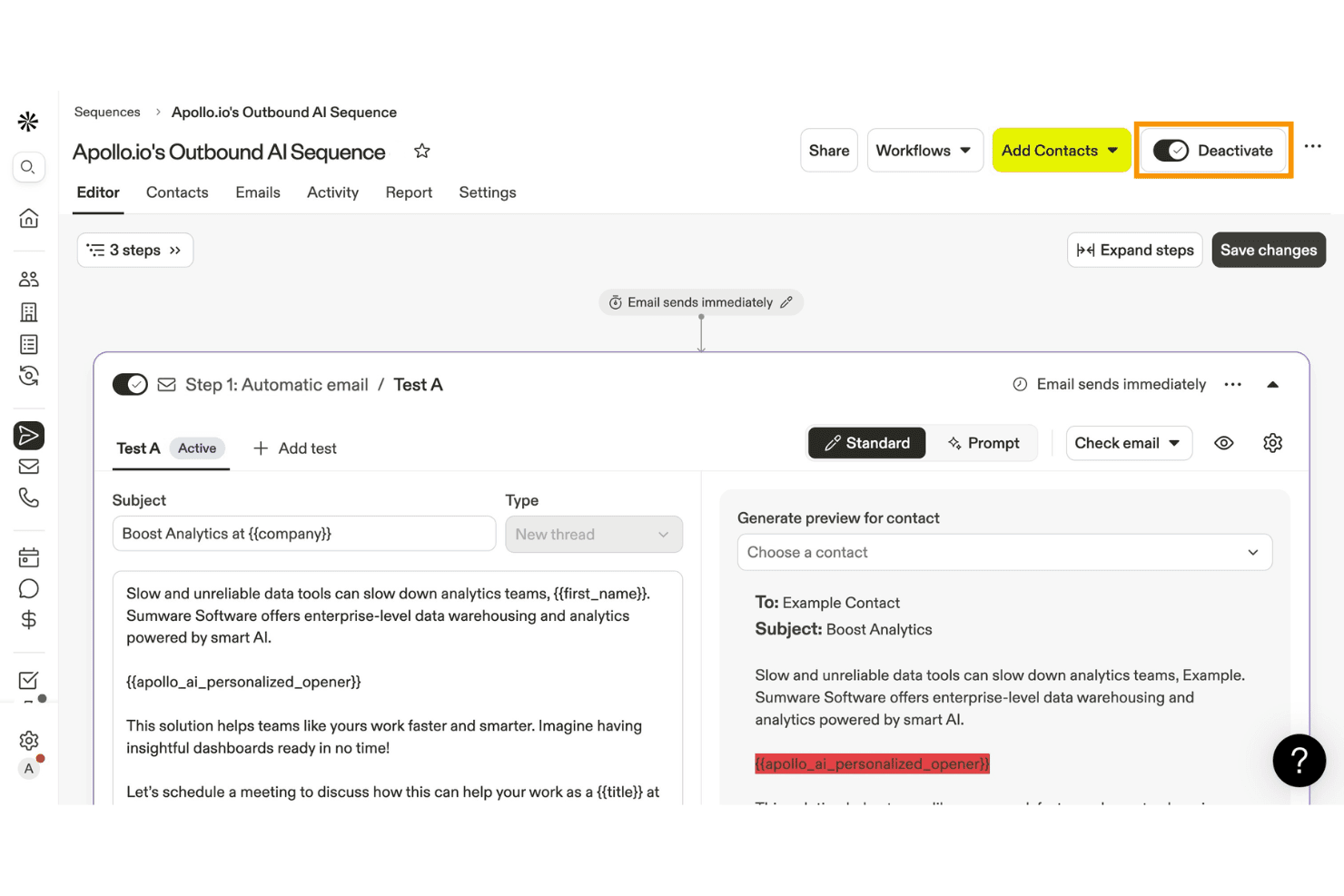
Apollo.io consente agli utenti di creare e attivare sequenze email personalizzate dall'IA. Apollo.io è una piattaforma di intelligence commerciale e coinvolgimento proattivo B2B che combina un database di oltre 275 milioni di contatti con sequenze email, punteggio dei contatti potenziali basato sull'IA, dati sugli intenti e automazione delle campagne multicanale.
Per chi è più adatto Apollo.io?
Apollo.io è particolarmente adatto ai team commerciali e di marketing B2B che gestiscono strategie di crescita basate sulle vendite proattive, soprattutto quando si rivolgono ad aziende specifiche con campagne email attivate dagli intenti.
Perché ho scelto Apollo.io
Apollo.io è entrato nella mia selezione perché combina un database di oltre 275 milioni di contatti con i dati nativi sugli intenti di Bombora, consentendo di attivare sequenze email nel momento stesso in cui un'azienda target mostra segnali di interesse all'acquisto su oltre 15.000 argomenti. L'ho scelto in particolare per l'ABM proattivo perché consente di rivolgersi a interi comitati d'acquisto all'interno di aziende specifiche, coordinando i punti di contatto via email, LinkedIn e telefono a livello aziendale anziché di singolo contatto. La funzionalità Ricerca IA genera inoltre personalizzazioni a livello di contatto su larga scala, evitando che le sequenze sembrino invii di massa.
Funzionalità principali di Apollo.io
- Creazione di sequenze in più passaggi: Crea cadenze email automatizzate con logica di diramazione condizionale, attivatori comportamentali e test A/B integrati direttamente nell'editor delle sequenze.
- Arricchimento a cascata: Apollo controlla il proprio database e 18 fornitori di dati di terze parti in sequenza per massimizzare la copertura dei contatti verificati e ridurre i tassi di rimbalzo.
- Punteggio dei contatti potenziali basato sull'IA: Dai automaticamente la priorità ai contatti utilizzando un modello di valutazione personalizzabile che considera l'idoneità rispetto all'ICP, i segnali di coinvolgimento e i dati sugli intenti di Bombora.
- Qualificazione dei contatti potenziali in entrata: Identifica i visitatori del sito web, arricchisci gli invii dei moduli e assegna i contatti potenziali in entrata al rappresentante giusto tramite la pianificazione automatizzata degli incontri.
Integrazioni di Apollo.io
Apollo.io offre integrazioni native con HubSpot, Salesforce, Marketo, Outreach, SalesLoft, SendGrid e Google Sheets. Supporta inoltre Zapier, mentre l'accesso API per integrazioni personalizzate è disponibile nei piani Personalizzati.
Pros and Cons
Pros:
- Attiva sequenze email dai dati sugli intenti di Bombora
- Targeting ABM multicanale per comitato d'acquisto
- L'IA genera testi personalizzati a livello di contatto
Cons:
- Nessun generatore visivo nativo di email o pagine di destinazione
- Strumento di riscaldamento delle email dismesso, rischio per la reputazione
Learn more about Apollo.io: Ideale per insight sulle campagne guidate dai dati
- Demo gratuita + piano gratuito disponibile
- Da $45/mese
Visit WebsiteCustomer Rating:4.6/5
Klaviyo trasforma i dati sulle prestazioni in tempo reale in insight attuabili. Klaviyo supporta le aziende che desiderano rafforzare le proprie attività di email marketing B2B. La sua piattaforma di dati sui clienti riunisce in un unico luogo i dati dei contatti e quelli comportamentali, facilitando la creazione di campagne mirate basate su attività reali e coinvolgimento. Questo è utile per le aziende che si affidano ai dati per guidare la comunicazione e mantenere un contatto costante con il proprio pubblico.
Perché ho scelto Klaviyo
Ho scelto Klaviyo per la sua capacità di trasformare i dati dei clienti in insight pratici, un elemento cruciale per l’email marketing B2B. La sua segmentazione avanzata consente di creare messaggi personalizzati per audience specifiche, rispondendo all’esigenza di comunicazioni mirate. Gli strumenti basati su intelligenza artificiale della piattaforma prevedono il comportamento dei clienti e ottimizzano i tempi delle campagne, assicurando che i messaggi raggiungano il pubblico giusto nel momento opportuno. Queste funzionalità risultano particolarmente vantaggiose per le aziende che mirano a migliorare l’efficacia delle attività di marketing.
Caratteristiche principali di Klaviyo
Oltre alle capacità di insight basate sui dati e di segmentazione, Klaviyo offre:
- Marketing omnicanale: Klaviyo supporta campagne su email, SMS e social media, offrendo un’esperienza cliente coesa.
- Integrazione con oltre 350 applicazioni: Collega senza soluzione di continuità il tuo stack tecnologico esistente grazie alle numerose opzioni di integrazione di Klaviyo.
- Analisi in tempo reale: Ottieni insight sulle interazioni con i clienti e sulle prestazioni delle campagne per guidare le tue decisioni di marketing.
- Strumenti per sviluppatori: Accedi a risorse per creare app e integrazioni personalizzate, aumentando la flessibilità della piattaforma.
Integrazioni Klaviyo
Le integrazioni includono Shopify, Salesforce Commerce Cloud, BigCommerce, WooCommerce, Magento, Stripe, Facebook, Google Ads e Zapier
Pros and Cons
Pros:
- Segmentazione avanzata per strategie di marketing personalizzate
- Funzionalità omnicanale che supportano diversi modi di raggiungere i clienti
- Integrazione con numerose piattaforme ecommerce
Cons:
- Costo elevato all’aumentare dei contatti, con impatto sul budget
- Tagging avanzato e organizzazione meno robusti rispetto ad alcuni concorrenti
Learn more about Klaviyo: Ideale per la personalizzazione flessibile del brand
- Piano gratuito + prova gratuita disponibili
- Da $19/utente/mese (fatturato annualmente)
Visit WebsiteCustomer Rating:4.7/5
Flodesk crea email B2B curate e in linea con il brand che si distinguono agli occhi dei clienti. Flodesk si rivolge alle aziende che danno priorità a una personalizzazione del brand flessibile, rendendolo una scelta interessante per i team B2B che fanno affidamento su una forte identità visiva per comunicare con i clienti. Se il vostro team prospera sulla creatività e sull'estetica del brand per attirare l'attenzione, Flodesk offre una piattaforma che semplifica il design migliorando al contempo la visibilità delle email. La sua interfaccia intuitiva e l'elevato tasso di deliverability aiutano il vostro business a distinguersi in caselle di posta affollate, unendo design raffinato a funzionalità pensate per il B2B.
Perché ho scelto Flodesk
Ho scelto Flodesk per la sua forza nella personalizzazione flessibile del brand, particolarmente preziosa per i team B2B che si affidano a comunicazioni curate e coerenti con l'identità aziendale. Il suo editor intuitivo consente di personalizzare font, colori e layout affinché ogni email rifletta sempre la vostra brand identity. Le automazioni di Flodesk, tra cui sequenze di follow-up e workflow di engagement, aiutano anche a ridurre le attività manuali mantenendo attiva la comunicazione con i clienti. Anche se non è la piattaforma più orientata ai dati, il suo approccio centrato sul design può rendere le email B2B più memorabili e coinvolgenti.
Funzionalità principali di Flodesk
Oltre alla personalizzazione flessibile del brand, Flodesk offre:
- Timer per il conto alla rovescia: Questa funzione aiuta a creare urgenza nelle tue campagne, incoraggiando risposte più rapide dai destinatari.
- Sondaggi incorporati: Coinvolgi il tuo pubblico direttamente nelle email, raccogliendo feedback e informazioni preziose senza bisogno di sondaggi esterni.
- Sistema di analytics completo: Ottieni informazioni sulle prestazioni delle tue campagne per prendere decisioni informate, pur mantenendo il focus maggiore sull'estetica rispetto ai dati.
Integrazioni Flodesk
Le integrazioni includono Shopify, Zapier, Instagram, Facebook, Squarespace, WordPress, Google Sheets, Slack, Stripe e Typeform.
Pros and Cons
Pros:
- Elevata deliverability assicura che i messaggi importanti raggiungano i clienti
- L'attenzione al design visivo migliora il coinvolgimento dei decisori
- Template puliti e professionali adatti alla comunicazione con i clienti
Cons:
- Non ideale per funnel B2B grandi e multilivello
- Meno integrazioni per stack tecnologici B2B complessi
Learn more about Flodesk: Ideale per automazione e deliverability
- Piano gratuito + demo gratuita disponibile
- A partire da $7/mese (fatturazione annuale)
Visit WebsiteCustomer Rating:4.6/5
Il generatore di workflow di Sender ti permette di creare percorsi email automatizzati utilizzando modelli preimpostati. Sender offre una soluzione su misura per le aziende che desiderano migliorare le proprie strategie di email marketing. Grazie alla sua piattaforma intuitiva, aziende di diversi settori possono facilmente progettare e automatizzare le proprie campagne email. Sender affronta sfide come bassi tassi di coinvolgimento e costi elevati offrendo funzionalità come modelli personalizzabili e un piano gratuito fino a 2.500 iscritti, rendendolo una scelta interessante per chi vuole potenziare le proprie attività di marketing.
Perché ho scelto Sender
Ho scelto Sender per la sua forte attenzione all'automazione e alla deliverability, elementi fondamentali per l'email marketing B2B. La piattaforma offre automazione illimitata, permettendo di impostare flussi di lavoro complessi che possono coltivare i lead e mantenere alto l'engagement dei clienti. Inoltre, l'impegno di Sender per garantire alti tassi di recapitabilità delle email assicura che i tuoi messaggi arrivino più facilmente nelle caselle di posta previste, risolvendo i problemi comuni delle email finite nello spam. Queste funzionalità nel complesso rendono Sender una scelta affidabile per le aziende che vogliono ottimizzare le campagne di email marketing.
Caratteristiche principali di Sender
Oltre alle sue capacità di automazione e deliverability, ho trovato anche altre funzioni vantaggiose per l'email marketing B2B:
- Editor email drag-and-drop: Questa funzione ti consente di creare email professionali senza bisogno di competenze di programmazione, rendendola accessibile a tutti i livelli di esperienza.
- A/B Testing: Puoi testare diverse versioni delle tue email per vedere quale funziona meglio, aiutandoti a perfezionare le strategie di marketing.
- Analisi in tempo reale: Questa funzione offre approfondimenti sulle prestazioni delle tue campagne, consentendo decisioni basate sui dati.
- Automazione del marketing: Oltre alle email, questa include anche il marketing tramite SMS, permettendoti di raggiungere un pubblico più ampio e coinvolgerlo.
Integrazioni di Sender
Le integrazioni includono WordPress, WooCommerce e Zapier.
Pros and Cons
Pros:
- Supporta flussi di automazione illimitati
- Ampia libreria di modelli inclusa
- Editor email drag-and-drop
Cons:
- Analisi avanzate piuttosto limitate
- Normative anti-spam molto rigide
Learn more about Sender: Ideale per editor email drag-and-drop
- Piano gratuito disponibile
- Da $12/mese
Visit WebsiteCustomer Rating:4.7/5
MailerLite consente ai piccoli team di creare, inviare e monitorare campagne email MailerLite è una piattaforma di marketing digitale progettata per aiutare i team a creare e inviare email, gestire gli iscritti e monitorare le prestazioni delle campagne. È pensata per piccole imprese, creatori e marketer che desiderano maggior controllo sull'aspetto e sul comportamento delle loro email.
Perché ho scelto MailerLite: L'editor drag-and-drop offre totale controllo sul layout delle email senza dover scrivere codice. Puoi spostare facilmente elementi come immagini, blocchi di testo e pulsanti per adattarli allo stile del tuo brand. Sono disponibili blocchi di contenuto per video, collegamenti social e funzionalità di prodotti che il tuo team può inserire con un clic. Troverai anche template già pronti e facilmente personalizzabili, ideali se hai bisogno di una soluzione veloce.
Funzionalità e integrazioni di spicco:
Funzionalità includono un assistente di scrittura AI integrato, flussi di approvazione delle campagne email e un kit di branding per salvare loghi e colori. C'è anche un costruttore di landing page con tracciamento tramite heatmap. Il tuo team può utilizzare l'invio automatico per rispedire email di follow-up a chi non ha aperto il primo messaggio.
Integrazioni includono Shopify, WooCommerce, WordPress, Stripe, Zapier, Squarespace, Facebook, PayPal, PrestaShop e Magento.
Pros and Cons
Pros:
- Facile progettare layout multi-colonna
- Il kit di branding mantiene lo stile coerente
- L'IA aiuta a scrivere contenuti rapidamente
Cons:
- Il test A/B offre opzioni di configurazione basilari
- I moduli di iscrizione alle email possono risultare rigidi
 Ideale per flussi di lavoro di automazione basati sull'IA
- Prova gratuita di 14 giorni + demo gratuita disponibile
- A partire da $9.99/mese (fatturazione annuale)
Visit WebsiteCustomer Rating:4.6/5
SendX aiuta le PMI ad automatizzare le email e far crescere la propria audience SendX è un software di email marketing progettato per le aziende che cercano un'automazione efficace delle campagne e la crescita dell'audience. Serve piccole e medie imprese offrendo strumenti per automatizzare le sequenze di email e aumentare le liste di contatti.
Perché ho scelto SendX: I suoi flussi di lavoro di automazione basati sull'IA lo distinguono offrendo strumenti avanzati per creare campagne email personalizzate. Il motore proprietario di deliverability garantisce che le tue email arrivino in posta in arrivo, migliorando i tassi di coinvolgimento. Con funzionalità come pop-up intelligenti ed email interattive, SendX punta su crescita del pubblico e alta recapitabilità. Queste capacità lo rendono una scelta affidabile per le aziende che vogliono migliorare i loro sforzi di email marketing.
Funzionalità principali & integrazioni:
Le funzionalità includono segmentazione avanzata che consente di indirizzare gruppi specifici di destinatari in modo efficace. L'editor WYSIWYG della piattaforma rende la progettazione delle email semplice e intuitiva. Inoltre, SendX fornisce analisi dettagliate per aiutare a monitorare le prestazioni delle campagne e prendere decisioni informate.
Le integrazioni includono Zapier, Shopify, WordPress, Stripe, WooCommerce, PayPal, Salesforce, HubSpot, Google Analytics e Slack.
Pros and Cons
Pros:
- Flussi di automazione guidati dall'IA
- Funzionalità di email interattive
- Assistenza clienti reattiva
Cons:
- Nessun supporto telefonico
- Curva di apprendimento per i principianti
Learn more about SendX: Ideale per comunicazione cross-canale potenziata da intelligenza artificiale
- Demo gratuita disponibile
- Prezzo su richiesta
Visit WebsiteCustomer Rating:4.4/5
Iterable offre messaggistica scalabile e incentrata sul cliente per diversi settori Iterable è un software di email marketing progettato per le aziende che necessitano di messaggistica incentrata sul cliente e attenzione avanzata alla privacy. Si rivolge a diversi settori offrendo soluzioni scalabili per una comunicazione e un coinvolgimento efficaci.
Perché ho scelto Iterable: La sua comunicazione cross-canale basata su intelligenza artificiale è fondamentale per i brand che desiderano creare esperienze personalizzate per i clienti. Funzionalità come la segmentazione avanzata del pubblico e l'integrazione dati flessibile garantiscono che i tuoi messaggi siano su misura e di impatto. Iterable Insights offre report personalizzabili, permettendoti di monitorare e ottimizzare facilmente le prestazioni delle campagne. L'accento posto sulla privacy e sulla conformità lo rende idoneo per implementazioni a livello enterprise.
Funzionalità e integrazioni principali:
Funzionalità includono un editor campagne drag-and-drop che semplifica il marketing nel ciclo di vita del cliente. La segmentazione avanzata del pubblico consente di indirizzare i messaggi con precisione. Iterable Insights mette a disposizione strumenti di reportistica personalizzabile per visualizzare e analizzare le performance delle campagne.
Integrazioni includono Shopify, Salesforce, Marketo, Segment, Google Analytics, Slack, Twilio, Zendesk, Facebook e Snowflake.
Pros and Cons
Pros:
- Comunicazione cross-canale basata su intelligenza artificiale
- Grande attenzione a privacy e conformità
- Ideale per implementazioni a livello enterprise
Cons:
- Prezzo iniziale elevato
- Personalizzazione del design limitata
Learn more about Iterable : Ideale per l'automazione del marketing
- Prova gratuita di 14 giorni + demo gratuita disponibile
- Da $15.58/mese (fatturazione annuale)
Visit WebsiteCustomer Rating:4.2/5
GetResponse offre strumenti per email, landing page e automazione per le aziende GetResponse è un software di email marketing B2B che supporta le aziende nella crescita del proprio pubblico e nell'automatizzazione delle attività di marketing. Serve diversi settori offrendo strumenti per campagne email, creazione di landing page e monetizzazione dei contenuti.
Perché ho scelto GetResponse: È pensato per i team che necessitano di una potente automazione del marketing via email. Funzionalità come l’email marketing, i flussi di lavoro automatizzati e le integrazioni eCommerce si allineano al suo focus sull’automazione. La capacità di creare newsletter personalizzate e workflow avanzati aiuta a migliorare il coinvolgimento dei clienti. Inoltre, strumenti di monetizzazione dei contenuti come corsi online e newsletter premium aggiungono valore per gli utenti.
Funzionalità principali & integrazioni:
Funzionalità includono builder di landing page che semplificano la creazione di pagine coinvolgenti. Gli strumenti di email marketing permettono di progettare newsletter personalizzate per il tuo pubblico. I workflow di automazione avanzati aiutano a mirare ed ingaggiare i clienti in modo efficace.
Le integrazioni includono Shopify, WordPress, PayPal, Stripe, WooCommerce, Salesforce, HubSpot, Zapier, Magento e Pipedrive.
Pros and Cons
Pros:
- Supporta la monetizzazione dei contenuti
- Offre workflow di automazione avanzati
- Include builder di landing page
Cons:
- Può risultare complesso per i principianti
- Personalizzazione del design limitata
Learn more about GetResponse: Ideale per il design di template basati su AI
- Piano gratuito disponibile
- A partire da $19/mese
Visit WebsiteCustomer Rating:4.2/5
Elastic Email aiuta le squadre B2B a creare email rapidamente con template guidati dall'intelligenza artificiale. Elastic Email offre una soluzione dinamica per le aziende che desiderano migliorare le loro strategie di email marketing B2B. Questa piattaforma è progettata per soddisfare le esigenze delle aziende in crescita, fornendo strumenti per ottimizzare l'email marketing, la messaggistica transazionale e la collaborazione tra team. Che tu operi nel settore tecnologico, retail o in qualsiasi altro settore che richieda comunicazioni mirate, Elastic Email affronta la sfida di creare campagne email coinvolgenti senza la complessità che spesso accompagna tali attività.
Perché ho scelto Elastic Email
Ho scelto Elastic Email per il suo esclusivo AI Template Designer e le sue capacità di automazione, elementi fondamentali per l'email marketing B2B. L'AI Template Designer semplifica la creazione di email visivamente accattivanti, permettendo al tuo team di concentrarsi sui contenuti strategici invece che sulle complessità del design. Inoltre, gli strumenti di automazione della piattaforma consentono la creazione di workflow email sofisticati, garantendo comunicazioni tempestive e pertinenti con il tuo pubblico. Queste funzionalità, unite a un'API robusta, permettono un'integrazione senza soluzione di continuità con i sistemi esistenti, rispondendo così alla necessità di soluzioni di email marketing efficienti e scalabili.
Caratteristiche principali di Elastic Email
Oltre al design di template basato su intelligenza artificiale, Elastic Email offre:
- Messaggistica transazionale: Fornisce la consegna affidabile di email transazionali essenziali, come conferme d'ordine e reset della password, assicurando che le comunicazioni critiche raggiungano i tuoi clienti.
- Strumenti di collaborazione per il team: Favorisce la comunicazione interna e la coordinazione dei progetti tramite chat integrate e funzionalità di help desk, migliorando l'efficienza del team.
- Alti tassi di recapito: Garantisce che le tue email arrivino nella casella di posta dei destinatari invece che nelle cartelle spam, un aspetto fondamentale per mantenere fiducia e coinvolgimento nelle relazioni B2B.
- Sicurezza dei dati e conformità: Offre solide misure di sicurezza e rispetto della normativa, proteggendo le informazioni aziendali sensibili e assicurando la conformità alle normative del settore.
Integrazioni di Elastic Email
Le integrazioni includono HubSpot, PayPal, Shopify, WooCommerce, Magento, WordPress, PrestaShop, Zapier, Slack e Salesforce. È disponibile anche un'API per integrazioni personalizzate.
Pros and Cons
Pros:
- API di integrazione completa supporta le esigenze di personalizzazione degli sviluppatori
- L'analisi in tempo reale fornisce informazioni sulle metriche di performance delle email
- L'automazione email integrata aumenta l'efficienza nella gestione delle campagne
Cons:
- Recensioni contrastanti sulla velocità ed efficacia del servizio clienti
- Alcuni utenti non sono soddisfatti delle opzioni di reportistica
Learn more about Elastic Email:
Altri software di email marketing B2B
Ecco alcune altre opzioni di software di email marketing B2B che non sono entrate nel mio elenco, ma che vale comunque la pena valutare:
- 11Constant ContactIdeale per liste email di piccole imprese
- 12Braze Ideale per l’ottimizzazione tramite IA
- 13GMassIdeale per superare i limiti di Gmail
- 14BigMailerIdeale per la gestione di più brand
- 15EmailOctopusIdeale per l’email marketing economico
- 16Customer.ioIdeale per l’automazione adatta agli sviluppatori
Come valuto il software di email marketing B2B
Divido la mia valutazione in due livelli: la base che ogni strumento di email B2B deve avere—come la sincronizzazione con il CRM e i controlli di deliverability—e gli elementi distintivi che separano i migliori dal resto.
Funzionalità di base (requisiti essenziali per questa lista)
Quando seleziono gli strumenti per la mia lista, valuto ciascuno su una scala da 0 (non offre la funzionalità) a 5 (eccelle in quest'area) per ogni funzionalità di base elencata di seguito. Poi, calcolo il punteggio totale dello strumento in percentuale. Ogni strumento deve raggiungere un punteggio minimo totale del 65% per essere preso in considerazione.
- Campagne drip automatizzate: Valuto se la piattaforma supporta sequenze multi-step basate su trigger—come workflow di re-ingaggio dopo un webinar o percorsi di nurturing post-demo con logica ramificata.
- Integrazione CRM: Uno strumento dovrebbe sincronizzarsi bidirezionalmente con i principali CRM B2B come Salesforce, HubSpot o Microsoft Dynamics, mappando campi personalizzati e mantenendo aggiornati i dati dei lead su tutti i sistemi.
- Segmentazione e personalizzazione: Verifico la capacità di suddividere il pubblico in base a dati firmografici e comportamentali—ad esempio, indirizzare i contatti a livello VP nelle aziende SaaS che hanno aperto una pagina prezzi.
- Punteggio lead e qualificazione: Il modello di scoring di ogni strumento è importante. Controllo se può valutare l'engagement email insieme all'attività web e attivare passaggi automatici alle vendite a soglie definite.
- Controlli di deliverability e conformità: Il supporto per l'autenticazione SPF, DKIM e DMARC è il punto di partenza. Cerco anche workflow di gestione del consenso che gestiscono i requisiti GDPR, CAN-SPAM e CASL.
- Analytics della campagna e attribuzione: I report devono andare oltre aperture e clic. Valuto se la piattaforma collega l'engagement email alle fasi del funnel e alle entrate, in modo che il marketing possa dimostrare il valore reale.
Una volta che dispongo di una lista di strumenti che soddisfano i criteri, considero ciò che distingue ciascuna piattaforma.
Fattori di differenziazione (cosa distingue i fornitori)
Ecco come metto a confronto i vari fornitori:
Funzionalità distintive
L'integrazione dei dati di intent è un differenziatore importante. Cerco piattaforme che acquisiscono segnali da fornitori come Bombora o G2 per attivare sequenze quando gli account target mostrano intenzioni di acquisto. Orchestrare l'ABM è rilevante, in particolare la capacità di coordinare i messaggi email su tutto il comitato d'acquisto e non solo sui singoli lead. Valuto anche quanto è fluida la trasmissione dei lead con punteggio agli strumenti di vendita come Outreach o Salesloft, mantenendo la cronologia dell'engagement intatta.
Oltre le funzionalità
Il modello di prezzo è una delle prime cose che verifico. Se una piattaforma addebita per contatti, invii o utenti, il costo totale può variare molto man mano che il database cresce. Valuto anche l'adattamento al cliente target—uno strumento pensato per programmi ABM aziendali non si adatta a un team di demand generation di fascia media, e viceversa. È fondamentale anche il supporto all'implementazione, soprattutto per i percorsi di migrazione da piattaforme come Marketo o Pardot, dove ricostruire i workflow da zero può posticipare il ritorno sull'investimento di mesi.
Come scegliere il software di email marketing B2B
È facile perdersi in lunghi elenchi di funzionalità e strutture tariffarie complesse. Per aiutarti a rimanere concentrato mentre affronti il tuo specifico processo di selezione del software, ecco un elenco di fattori da tenere presenti:
| Fattore | Cosa considerare |
| Scalabilità | Assicurati che il software cresca insieme alla tua attività. Cerca piattaforme in grado di gestire volumi crescenti di email e account utente senza problemi di prestazioni. |
| Integrazioni | Verifica se si connette al tuo CRM, al tuo sistema di commercio elettronico e agli altri strumenti che il tuo team utilizza quotidianamente. Un flusso di dati fluido è fondamentale per operazioni efficienti. |
| Personalizzazione | Valuta il livello di personalizzazione disponibile nei modelli di email e nei flussi di lavoro. Adatta le soluzioni alle esigenze specifiche del tuo marchio e aumenta il coinvolgimento. |
| Facilità d'uso | Considera l'interfaccia utente e la curva di apprendimento. Uno strumento facile da usare e da adottare per il tuo team farà risparmiare tempo e aumenterà la produttività. |
| Budget | Esamina i piani tariffari per assicurarti che rientrino nel tuo budget. Considera sia i costi iniziali sia il valore a lungo termine, comprese eventuali commissioni nascoste o sconti per la fatturazione annuale. |
| Misure di sicurezza | Assicurati che il software sia conforme alle normative sulla protezione dei dati come il GDPR. Cerca funzionalità di crittografia e archiviazione sicura dei dati per proteggere le informazioni dei clienti. |
| Analisi | Cerca funzionalità di reportistica dettagliata che forniscano informazioni sulle prestazioni delle campagne. Questo ti aiuta a prendere decisioni basate sui dati per la tua strategia di marketing. |
| Assistenza clienti | Verifica la disponibilità e la qualità dell'assistenza. Un servizio clienti tempestivo può essere fondamentale quando riscontri problemi o hai bisogno di supporto. |
Tendenze nel software di email marketing B2B
Nella mia ricerca, ho raccolto innumerevoli aggiornamenti sui prodotti, comunicati stampa e registri delle versioni da diversi fornitori di software di marketing via email B2B. Ecco alcune delle tendenze emergenti che sto tenendo d'occhio:
- Personalizzazione basata sull'AI: l'AI viene utilizzata per adattare i contenuti delle email in base al comportamento e alle preferenze degli utenti. Questa tendenza contribuisce ad aumentare i tassi di coinvolgimento e conversione offrendo contenuti pertinenti. Fornitori come Mailchimp stanno integrando l'AI per migliorare la personalizzazione.
- Email interattive: le email con elementi interattivi come sondaggi, votazioni e moduli consentono agli utenti di interagire direttamente all'interno del messaggio. Questa funzionalità riduce la necessità di collegamenti esterni e migliora l'esperienza dell'utente.
- Marketing omnicanale: l'integrazione dell'email con altri canali digitali come SMS e social media offre un'esperienza cliente uniforme. Questa tendenza aiuta le aziende a raggiungere il pubblico su più piattaforme, migliorando il coinvolgimento complessivo.
- Analisi avanzate: le analisi e gli approfondimenti in tempo reale stanno diventando essenziali per ottimizzare le campagne. Oggi gli strumenti offrono report dettagliati sui tassi di apertura, sui clic e sulle conversioni per aiutare i professionisti del marketing a prendere decisioni informate.
- Attenzione alla privacy dei dati: con l'aumento delle normative, i fornitori stanno dando priorità alla sicurezza dei dati e alla conformità. Funzionalità come la conformità al GDPR e la crittografia stanno diventando standard per proteggere i dati degli utenti e creare fiducia.
Che cos'è il software di marketing via email B2B?
Il software di marketing via email B2B è uno strumento progettato per aiutare le aziende a comunicare e interagire con altre aziende attraverso campagne email.
Questi strumenti vengono generalmente utilizzati da professionisti del marketing, team di vendita e responsabili dello sviluppo aziendale per coltivare i contatti e mantenere le relazioni con i clienti. Che si tratti di eseguire una campagna a gocciolamento o di gestire flussi di lavoro più complessi, funzionalità come automazione, personalizzazione e analisi supportano una gestione efficiente delle campagne. Offrono inoltre informazioni preziose sul comportamento dei clienti. Nel complesso, questi strumenti aiutano le aziende ad ampliare la propria portata, migliorare il coinvolgimento e aumentare le conversioni.
Funzionalità del software di marketing via email B2B
Quando selezioni un software di marketing via email B2B, presta attenzione alle seguenti funzionalità chiave:
- Automazione: automatizza attività ripetitive come l'invio di email di follow-up o di email transazionali, facendo risparmiare tempo e garantendo comunicazioni puntuali.
- Personalizzazione: gli strumenti di marketing via email basati sull'AI personalizzano i contenuti delle email in base ai dati dei destinatari, aumentando il coinvolgimento e rendendo le email più pertinenti.
- Analisi: fornisce informazioni sulle prestazioni delle campagne attraverso metriche come tassi di apertura e clic, aiutando a perfezionare le strategie.
- Segmentazione: consente di rivolgersi a gruppi specifici all'interno di un pubblico, garantendo che i messaggi siano pertinenti per ogni segmento.
- Test A/B: verifica diverse versioni delle email per capire quale ottiene risultati migliori, ottimizzando contenuti e strategia.
- Editor con funzionalità di trascinamento: semplifica la progettazione delle email, rendendo facile creare newsletter via email e email promozionali visivamente accattivanti senza competenze di programmazione.
- Conformità alla privacy dei dati: garantisce il rispetto di normative come il GDPR, proteggendo i dati dei clienti e creando fiducia.
- Report in tempo reale: offre informazioni immediate sulle prestazioni delle campagne, consentendo rapidi aggiustamenti per migliorare i risultati.
- Integrazione multicanale: si connette ad altre piattaforme digitali come i social media, offrendo una strategia di marketing coerente.
- Contenuti dinamici: adatta i contenuti delle email in tempo reale in base alle interazioni degli utenti, migliorando personalizzazione e coinvolgimento.
Vantaggi del software di marketing via email B2B
L'implementazione di un software di marketing via email B2B offre diversi vantaggi al tuo team e alla tua azienda. Eccone alcuni che puoi aspettarti:
- Maggiore coinvolgimento: le email personalizzate aumentano la pertinenza e catturano l'attenzione, portando a tassi di coinvolgimento più elevati.
- Efficienza del tempo: l'automazione di attività come i solleciti e la pianificazione fa risparmiare tempo, consentendo al tuo team di concentrarsi sulla strategia.
- Decisioni basate sui dati: le analisi forniscono informazioni sulle prestazioni delle campagne, aiutandoti a prendere decisioni consapevoli per ottimizzare i risultati.
- Comunicazione mirata: le funzionalità di segmentazione assicurano che i messaggi raggiungano il pubblico giusto, migliorando l'efficacia delle tue campagne.
- Maggiore flessibilità nella progettazione: i costruttori di email con funzionalità di trascinamento consentono di creare facilmente email visivamente accattivanti senza bisogno di competenze tecniche.
- Conformità normativa: le funzionalità di tutela della privacy dei dati aiutano a rispettare le normative, proteggendo le informazioni dei clienti e creando fiducia.
- Identità del marchio coerente: l'integrazione multicanale assicura che l'identità del tuo marchio sia coerente su tutte le piattaforme, rafforzando la tua strategia di marketing complessiva.
Costi e prezzi dei software di email marketing B2B
La scelta di un software di email marketing B2B richiede una conoscenza dei vari modelli di prezzo e dei piani disponibili. I costi variano in base alle funzionalità, alle dimensioni del team, agli extra e alla scelta di un software di email marketing a codice aperto che puoi ospitare autonomamente e personalizzare. La tabella seguente riassume i piani più comuni, i relativi prezzi medi e le funzionalità tipicamente incluse nelle soluzioni software di email marketing B2B:
Tabella comparativa dei piani per i software di email marketing B2B
| Tipo di piano | Prezzo medio | Funzionalità comuni |
| Piano gratuito | $0 | Invio di email di base, modelli limitati e analisi di base. |
| Piano personale | $5-$25/ utente/mese | Automazione delle email, modelli personalizzati e segmentazione di base. |
| Piano aziendale | $30-$75/ utente/mese | Segmentazione avanzata, test A/B e analisi avanzate. |
| Piano per grandi imprese | $100+/ utente/mese | Integrazioni personalizzate, assistenza dedicata e funzionalità avanzate di personalizzazione. |
Domande frequenti sui software di email marketing B2B
Ecco alcune risposte alle domande comuni sui software di email marketing B2B:
Come funziona l'email marketing per il B2B?
L’email marketing nel B2B consiste soprattutto nel connettersi direttamente con i professionisti attraverso le loro caselle di posta. Non vendi a chiunque; nel B2B, costruisci relazioni, condividi informazioni preziose e mostri alle persone che lavorano per le aziende a cui vendi in che modo il tuo prodotto o servizio può aiutarle a svolgere meglio il proprio lavoro.
Qual è la regola dell'80/20 nell'email marketing?
La regola dell’80/20 suggerisce che gran parte dei risultati deriva da una piccola parte dei tuoi sforzi. Nell’email marketing, ciò può significare concentrarsi sul 20% delle campagne che genera l’80% del coinvolgimento. Si tratta di dare priorità alle strategie che producono i risultati migliori.
Con quale frequenza dovresti inviare email di marketing B2B?
La maggior parte degli iscritti alle email preferisce ricevere messaggi settimanali. Tuttavia, è importante considerare le preferenze del tuo pubblico e fare delle prove per trovare la frequenza giusta. Monitorare i tassi di apertura e il coinvolgimento può aiutarti ad adeguare la strategia per ottenere risultati migliori.
Quanto dovrebbe essere lunga un'email di marketing B2B?
La lunghezza ideale per un’email di marketing B2B SaaS è in genere compresa tra 50 e 125 parole. In questo modo il messaggio rimane conciso e il pubblico può cogliere rapidamente i punti chiave senza perdere interesse.
Quali sono le migliori pratiche per la segmentazione delle email B2B?
Una segmentazione efficace consiste nel raggruppare la tua lista di email in base a criteri come settore, ruolo lavorativo o interazioni precedenti. Questo ti aiuta a fornire contenuti più pertinenti, aumentando il coinvolgimento e i tassi di conversione. Utilizza le informazioni ricavate dai dati per perfezionare nel tempo i tuoi segmenti e inviare email mirate.
Come posso migliorare la recapitabilità delle mie email B2B?
Migliorare la recapitabilità delle email significa mantenere pulita la lista di indirizzi, utilizzare domini verificati e creare contenuti coinvolgenti che evitino i fattori che attivano i filtri antispam. Monitora regolarmente le metriche delle email per identificare e risolvere eventuali problemi che potrebbero influire sulla recapitabilità.
Recensioni correlate sui software di marketing
Se desideri ottimizzare i tuoi flussi di lavoro, vale la pena esplorare gli strumenti di automazione del marketing sviluppati appositamente per ogni canale o funzione. La piattaforma più adatta può eliminare il lavoro manuale, aumentare l'efficienza e aiutare il tuo team di marketing a lavorare più velocemente con meno congetture:
Miglior software per l'automazione del marketing
Migliori strumenti di analisi dell'email marketing