CMO Urges Marketing Leaders To Think In Systems Instead Of Campaigns
AI has reframed content creation, research, and decision-making, though it still falls short in areas like design and emotional creativity. Edward Luta, CMO of Dua, argues that modern marketing leaders must think like engineers, using AI to build scalable workflows while keeping human control in brand direction and strategy.

Key Takeaways
AI-first marketing requires rebuilding, not layering.: You can’t just add AI tools to existing workflows — true impact comes from redesigning infrastructure, processes, and team roles with AI at the core.
Systems beat campaigns.: Modern marketing success comes from building repeatable systems and frameworks rather than focusing on one-off creative campaigns.
Clean data and structure are the bottlenecks.: AI’s effectiveness depends entirely on how well your data, codebase, and workflows are organized — messy infrastructure limits everything.
AI amplifies execution, but humans own strategy.: AI excels at research, analysis, and technical tasks, but human judgment is still critical for high-level strategy, brand voice, and emotional connection.
Marketers need to think like engineers.: The role is shifting from managing campaigns to building automated, scalable workflows — understanding APIs, data flows, and systems is becoming essential.
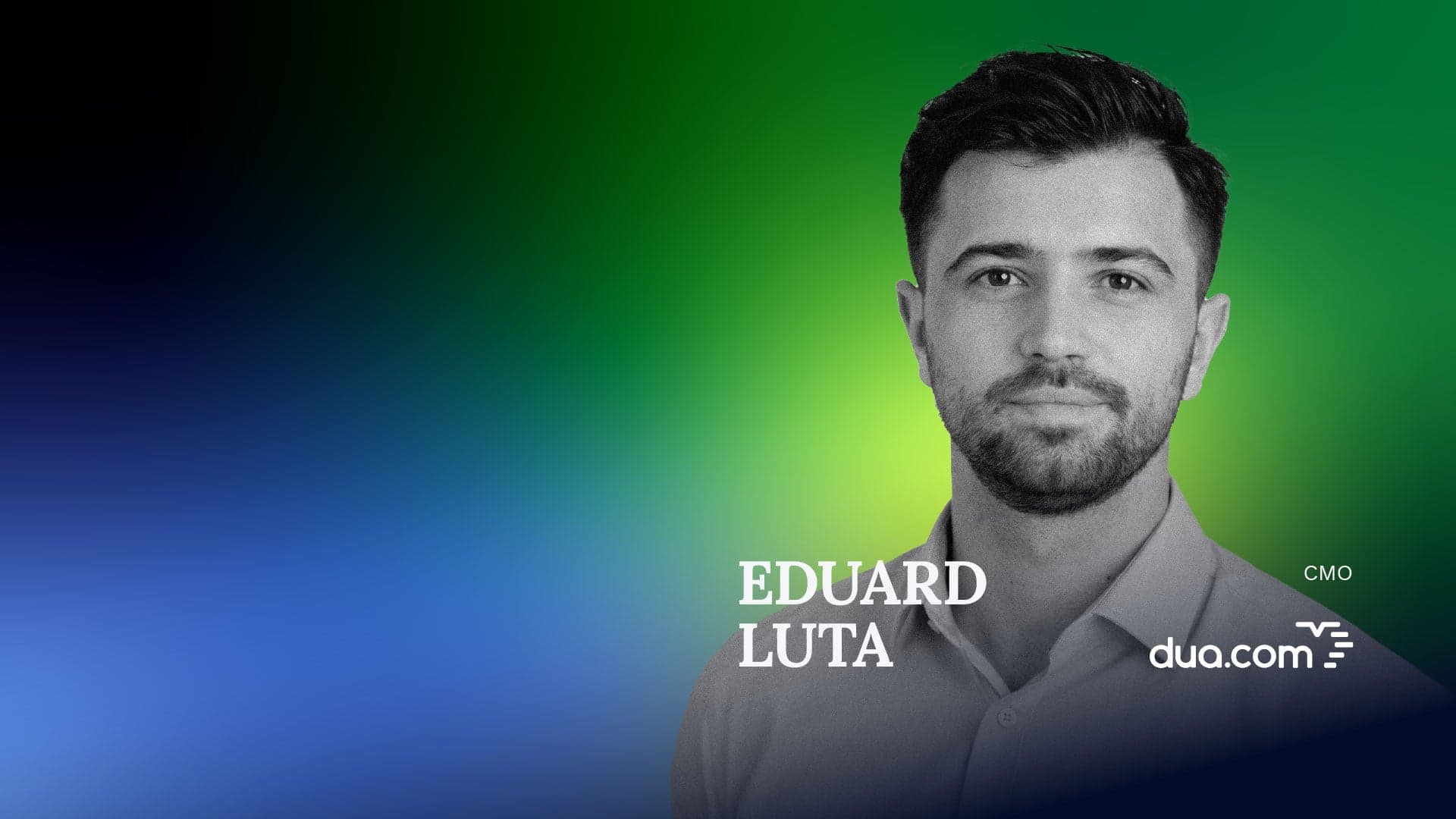
Eduard Luta is the CMO of dua.com. He also built one of Switzerland’s largest SEO and SEA agencies.
After recognizing the early impact of AI, he shifted his attention to rethinking how modern marketing becomes AI native. He argues that integrating AI isn’t about layering tools onto existing workflows, it requires rebuilding infrastructure, redefining roles, and operating with systems instead of campaigns.
We spoke with Eduard to unpack what it actually takes to build an AI-first marketing team — and where the biggest opportunities (and limitations) lie today. Here's what he told us.
A Multi-channel Operation With A Unified Message
I'm Eduard Luta, CMO of dua.com, the dating app for Albanians.
Back in 2014, I built MIK Group with my partners, Valon Asani, Ilir Trstena, and Maxi Maxhuni. Over the years, we transformed it into one of Switzerland's biggest SEO and SEA agencies. Hundreds of clients, big brands. I led the company as CEO from 2019 to 2023.
Then, ChatGPT dropped in November 2022, and everything shifted. I saw what AI was about to do, even in its very early days. So I made the call: I left the agency to go all-in on dua.com, which I'd been part of since its creation in 2019. We then acquired spotted.de, a German dating app, and irly.app, a Gen Z dating app.
We operate both digitally and offline. From out-of-home advertising to social media and the website, including video creation, PPC, digital PR, content, and more. The core principle is simple: One idea, executed across all channels. But making that work natively on every platform creates the real complexity.
Every piece of content must acquire new users and build the brand simultaneously. And it must work across the web, Android, and iOS. Same message, same experience, everywhere. We're a lean team running a multi-channel, multi-platform operation with one unified message.
Why AI Integration Means Changing Processes
Right now, I'm focused on figuring out what SEO and digital marketing look like in the AI era. That means not only expanding our capabilities, but also improving existing processes by integrating AI into our current systems and workflows.
This establishes one main priority, transforming our infrastructure into an AI-first setup. Every marketing leader should be doing this before anything else.
We simplify everything, remove unnecessary elements, and build a foundation where AI is not merely an add-on or a tool. Instead, it's native. AI drives the system's operation. Once this foundation is established, everything else becomes faster, smarter, and more interesting because we natively integrate the intelligence.
So, start with the basics. Your website needs to be clean, fast, and structured so AI can understand it. If everything is tangled together, you fix something on the door and the window shatters. Then, bring all your data together, optimize your workflows, and change your team's responsibilities.
The key is to not add AI on top of what you already have. Redesign the process with AI at the center. Without that foundation, it's just enhanced manual work.
How AI Optimizes Content Creation And Research
The first workflow we optimized with AI was content creation.
Research was right behind content creation. With today's available APIs and data, manual research no longer makes sense.
But the real change isn't about doing more. Our workflows became so much more effective that we can now go into far more detail and create much better content with the same resources. AI also made our content more consistent. Before, keeping everything on brand across all channels meant a lot of micromanagement. Now, we bake the brand voice, style, and guidelines into our AI workflow, so consistency happens naturally. That lets us spend our time on what matters, which is creating great content instead of constantly checking if everything looks and sounds right.
It has actually made the work a lot more fun, too, because we can now execute ideas we had in the past but never had the resources to pull off.
How AI Is Changing Video Content

Video content is a good example of our AI-enabled content creation. In the past, the planning phase relied heavily on internal visualization. You had to describe a setup and hope everyone in the room pictured the same thing. Now with AI, you can visualize your thoughts as an image, and everyone understands. All the details people previously imagined are simply there.
So, AI made storyboard generation, idea creation, and alignment on the direction much easier. You can see how the end product will look while still in the planning phase.
This has a huge impact not only on alignment, but on quality.
A great example is our love stories. Many couples reach out to us because they found the loves of their lives and they want to share their stories.
We document this as much as possible, sometimes creating video interviews with them. Before, this was a very difficult process. Understanding the couple's story, creating the storyboard, visualizing the setup, and onboarding them with our plan. Every time we developed something new, updating the couple on the format was difficult. They always had questions.
Now, it's simple. We sit down with the couple, gather all the information, and then use AI to brainstorm and visualize the storyboard. We use their faces and place them into the setup. If they're sitting in two chairs telling their story, we show them exactly how it will look. When they see it, they understand immediately, with no questions. They know how the setup will look, they know what they'll wear, and they can imagine everything.
It's much easier to create something when everyone is prepared. The more prepared you are, the more confident you are. The more confident the couple is in front of the camera, and the more we know exactly what we're doing, the better the end result.
What used to be a very difficult process is now one of the most interesting and fun things we do, and we look forward to every single one.
How AI Shifts Data-driven Decisions And Exposes Gaps
The biggest win with AI is our ability to talk to our data. Instead of just having dashboards, we can ask a question and get an answer in seconds. Instead of going to a team member and waiting for them to pull a number, we just ask AI. This shift from opinion-based to data-based decision-making in daily work is massive.
The downside is that AI brutally exposes your infrastructure gaps. The moment you try to let AI work with your data, you realize how messy, incomplete, or poorly structured it is. The bottleneck isn't the AI; it's everything around it. This includes the codebase, the pipelines, and how information is stored.
It's a paradox. The moment you see what AI can do, you also see how much work lies ahead. That's humbling, but valuable. You can't fix what you can't see.
Why AI Must Inform Technical Marketing Decisions
So, our processes have changed completely, but the responsibility hasn't. Quality control, fine-tuning, and final sign-off always stay with us.
High-level strategy also stays human, and I believe it will for a long time. No AI has the full context between the brand history, the vision, the positioning, the gut feeling you build from years of being in it. A thread connects all big decisions, and that comes from people, not models.
With that said, when you break strategy down into smaller, more technical pieces, AI becomes the better choice. Aggregating data, comparing sources, deep research, running technical workflows. AI can complete tasks that would take a human team days or weeks. It doesn't just help there; it outperforms.
So, we own the why and the where. Then, with AI's help, we define the desired result and how we execute it.
Why AI Fails To Meet Expectations In Design Tasks
And here's somewhere else that AI underperforms: Design. Without question.
I expected AI to be much further along by now for visual work, and it simply isn't there yet. You can generate interesting images, get creative ideas, and even produce something that looks impressive at first glance. But when you need it for your brand, your product, your visual identity, and your specific context, it falls apart.
AI doesn’t have the full context — the brand history, the vision, the positioning, the gut feeling. That still comes from people.
When it comes to editing images, performing tasks a skilled Photoshop user does in minutes, and integrating brand elements consistently — it's not good enough. The gap between a cool AI-generated visual and something we can use in our marketing is still enormous.
It was the area where I expected the most progress, and it's the one that has disappointed me the most.
AI is also too superficial when it comes to understanding what people like, what's interesting to read, and how to hook someone. It can produce content, but it doesn't understand what makes someone stop and pay attention. Where emotions are present, AI is still far from real creativity.
When you're talking to your community, people you've been building a relationship with for three years, AI doesn't get that. It's always too salesy. It feels off most of the time. Nine times out of ten, the tone is not right. You do get ideas, and sometimes with a small tweak, you achieve the perfect result. But using it directly — no chance.
Why Using Existing AI Solutions Is Crucial For Success

When people first get into AI, especially if they previously faced development bottlenecks, they suddenly see many creation possibilities. This is also the biggest trap. You start customizing everything, building everything from scratch, and get lost in the process.
So remember, you don't have to build everything yourself. Solutions already exist. Specific solutions have already addressed your problem. Use them. Integrate them into your workflows. Get to the end result first.
I wish I had known this when I started with AI. I tried to build the perfect system, which meant I never finished anything.
Don't get stuck in the process. Get to the end result, then iterate from there.
And I'll mention this: Most of the time, all you'll need is Claude or ChatGPT. Those general-purpose tools are your best sparring partners, researchers, and builders.
How AI Helps Marketing Leaders Recognize Patterns
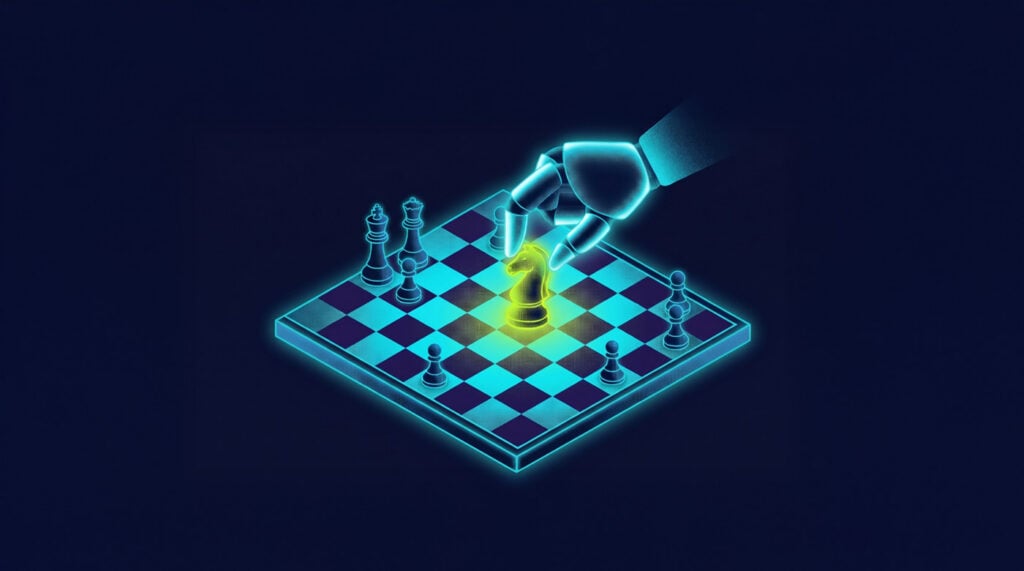
AI helped me to think in systems. My work isn't individual creative campaigns. Many campaigns I put significant effort into are actually repeatable. They have schemas and frameworks. I didn't have the high-level perspective to see it before. But the more I work with AI, the more those patterns become obvious.
The real change isn’t about doing more. Our workflows became so much more effective that we can go deeper and create better content with the same resources.
Digital PR is a good example. In the past, to understand what makes a great PR campaign, I manually researched maybe a hundred campaigns, went through courses, and read case studies. Processing this content was difficult, and I struggled to gain enough knowledge to see the underlying frameworks and patterns.
Since AI emerged, I built a database of thousands of digital PR campaigns. I can interact with that data, reverse-engineer what worked, identify similarities, and extract my own frameworks. Now I'm not thinking about individual campaigns anymore. I'm thinking about systems.
How Orchestration Teams Enhance Marketing Strategies
Our marketing team moved from manual-work teams to orchestration teams.
Before, one person thought about the system, another explained it, and everyone else remembered and worked within it. Now, with agents and direct access to AI and the data, everyone works on the system. Everyone gives input on the workflow. That means you move at a much faster pace and with much more space for development.
It also means that the quality of your team members is more important. You need people eager to learn and be on the edge of what AI can do. If you can build a team with those people, you have a winning team.
That's a challenge. Everyone expects AI to replace people, but it actually means you need to find people who can work with AI. And that talent pool is tiny.
Why Marketing Leaders Must Become Engineers
My advice is to stop managing marketing and start building it. Devise your best idea for a fully automated workflow and build it. That's how you learn what's possible.
You're not the marketing island chief anymore. You are an engineer. It's that simple.
With AI, you have creation power at your fingertips, and you have to start thinking like a developer. Understand what APIs are, how data flows, and what prompts can and can't do. Work in systems, not campaigns.
That's the only way to scale. Before, scaling meant more people, more manual work, more resources. Now it's code. You must shift your thinking from people and emotions to data and automations. That's where the leverage is. I don't think that's easier. It's just different.
Follow Along
You can follow Eduard Luta's work on LinkedIn. And check out dua.
More expert interviews to come on The CMO Club!