

AI inbound marketing tools use artificial intelligence to help you attract, engage, and convert leads more efficiently across digital channels, forming a core part of a modern marketing strategy. If you're searching for ways to cut through data overload, personalize your messaging at scale, and prove every campaign’s impact, these tools can give your team an edge.
In this guide, you'll find solutions that automate tedious processes, uncover new growth opportunities, and connect the dots between your marketing channels. Use this list to discover which AI-powered platforms can drive faster results and clearer insights for your business in 2026.
Why Trust Our Software Recommendations
6,700+
Reviews
20
Industry experts
16+
Evaluation factors
14
Years
Our team has been testing and reviewing software since 2012. As marketing leaders ourselves, we know how difficult—and important—it is to choose the right software.
For this guide, we evaluated tools using hands-on testing and independent research, scoring tools using our selection criteria.
Our reviews reflect our human editorial judgment, not a sales pitch.
Expert reviewers:
 Gui DrusinaCreative Director
- Shriya GhateSenior Marketing Lead
 Amanda JacquesMarketing Ops Leader

AI Inbound Marketing Tools Comparison Table
This comparison table summarizes pricing details for my top AI inbound marketing tool selections:
| Tool | Best For | Trial Info | Price | ||
|---|---|---|---|---|---|
| 1 | Best for improving content topic relevance | 14-day free trial | From $129/month | Website | |
| 2 | Best for multiformat content with AI templates | Free trial + free demo available | From $79/month (billed annually) | Website | |
| 3 | Best for AI-driven content planning and scoring | Free plan available | Pricing upon request | Website | |
| 4 | Best for AI-driven multichannel nurturing journeys | 14-day free trial | From $15/month (billed annually) | Website | |
| 5 | Best for fast, ready-to-use marketing copy | Free trial available | From $29/month | Website | |
| 6 | Best for in-depth SEO research and content gaps | Free plan available | From $29/month | Website | |
| 7 | Best for on-brand AI content generation at scale | 7-day free trial available | From $59/month (billed annually) | Website | |
| 8 | Best for unified campaign automation and analytics | Free plan available | From $7/user/month (billed annually) | Website | |
| 9 | Best for advanced lead management workflows | Free demo available | Pricing upon request | Website | |
| 10 | Best for cross-channel engagement | Free trial available | From $1,250/month (billed annually) | Website |


Best AI Inbound Marketing Tools Reviews
Below are my detailed summaries of the best AI inbound marketing tools and general AI marketing tools that made it onto my shortlist. My reviews offer a detailed look at the features, best use cases, and integrations of each platform to help you find the best one for you.
 Best for improving content topic relevance
- 14-day free trial
- From $129/month
Visit WebsiteCustomer Rating:4.9/5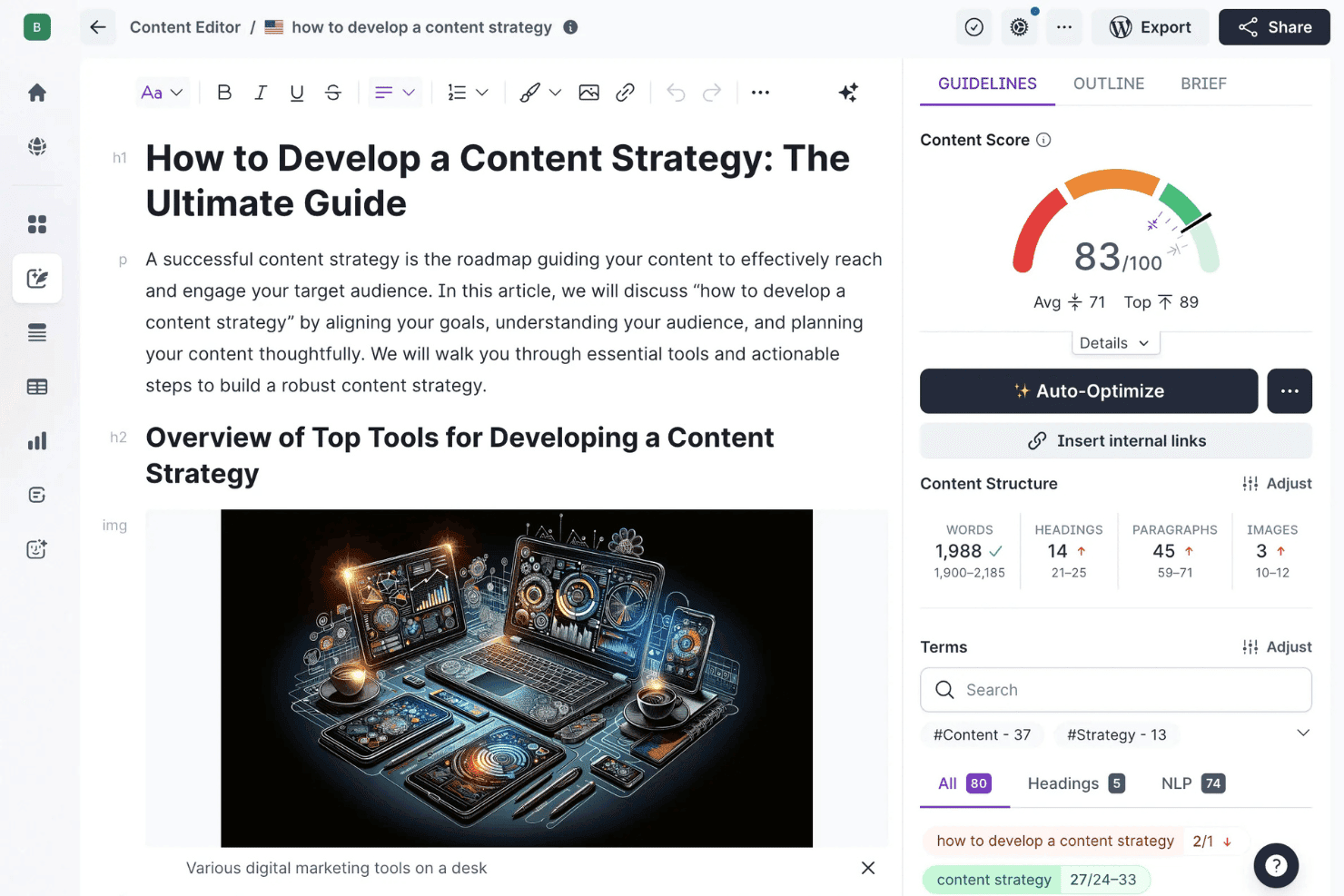
Clearscope's content editor displays a real-time content score, keyword terms, and content structure metrics to help optimize articles for SEO. Clearscope is an AI-powered SEO content optimization platform that combines real-time content grading, topic exploration, keyword research, and AI-search visibility tracking across Google and LLM-based answer engines.
Who Is Clearscope Best For?
Clearscope is a strong fit for mid-market and enterprise content and SEO teams that publish frequently and need to compete in both traditional search and AI-generated answers.
Why I Picked Clearscope
I picked Clearscope as one of the best because its real-time content grading scores your draft from A+ to D based on topic coverage compared to top-ranking pages. The Topic Explorations feature lets me map an entire subject area before writing, surfacing related queries and content gaps rather than optimizing in isolation. I also use Prompt Tracking to see which sources LLMs like ChatGPT and Gemini are drawing from, which directly shapes how I approach topic depth and coverage.
Clearscope Key Features
- Content Inventory: Lets you monitor and organize SEO performance for every page on your site.
- Google Docs and WordPress integration: Allows optimization directly in your preferred writing and publishing tools.
- Search intent analysis: Surfaces the purpose behind keywords to align content with what users are actually seeking.
- Brand visibility tracking: Reveals how your content and brand sources appear in Google and major AI chatbots.
Clearscope Integrations
Clearscope offers native integrations with Google Docs, WordPress, and Google Search Console. API access is available on the Business plan for custom integrations.
Pros and Cons
Pros:
- Content Inventory monitors every page's SEO performance
- Tracks brand visibility across AI search engines
- Real-time content grading against top-ranking pages
Cons:
- Limited to organic content, not full-funnel
- No lead capture or nurturing capabilities
Learn more about Clearscope: Best for multiformat content with AI templates
- Free trial + free demo available
- From $79/month (billed annually)
Visit WebsiteCustomer Rating:4.8/5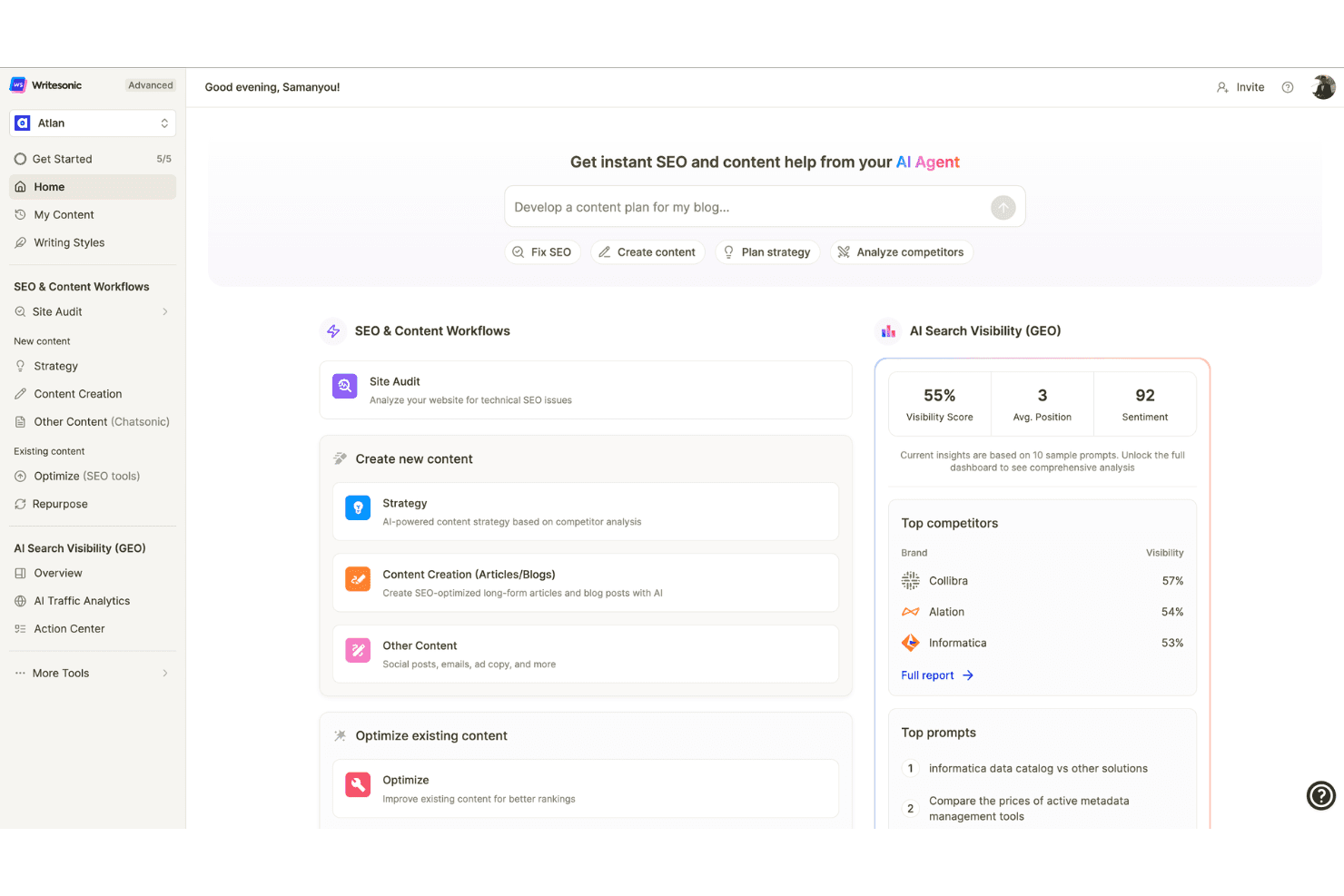
Writesonic offers an AI-powered SEO and content workflow dashboard with GEO visibility scoring and competitor analysis. Writesonic is an AI-powered content and SEO platform that generates blog posts, landing pages, ad copy, and social content, with brand voice controls, on-page SEO optimization, and AI search visibility tracking built in.
Who Is Writesonic Best For?
Writesonic suits content marketing teams and SEO leads at growing businesses that need to publish high volumes of optimized content across multiple formats.
Why I Picked Writesonic
I've included Writesonic in my top picks because the template library spans the full inbound content stack, from blog posts and landing page copy to ad creative and social posts. I use the AI Article Writer with live brand voice controls to keep output consistent across formats without extra editing passes. The built-in Live SEO Checker scores content as I write, so optimization happens inside the same workflow.
Writesonic Key Features
- AI visibility monitoring: Tracks brand and content presence across ChatGPT, Gemini, Claude, Perplexity, and other AI-powered search platforms.
- Site audits for AI bots: Scans robots.txt, schema, and broken pages for better indexing by AI crawlers like GPTBot and PerplexityBot.
- Sentiment and page analysis: Surfaces sentiment trends and monitors how pages are referenced in AI search results.
- Action center for content fixes: Detects content gaps, missing citations, and technical SEO opportunities for prioritized improvements.
Writesonic Integrations
Writesonic offers 20+ native integrations, including WordPress, Google Search Console, Google Analytics (GA4), Ahrefs, Contentful, Sanity, LinkedIn, YouTube, Amazon CloudFront, and Vercel, and provides an API for custom integrations.
Pros and Cons
Pros:
- Tracks brand presence in AI search results
- Built-in SEO scoring during content creation
- 80+ AI templates across content formats
Cons:
- AI output often needs heavy factual editing
- No native lead capture or nurture workflows
Learn more about Writesonic: Best for AI-driven content planning and scoring
- Free plan available
- Pricing upon request
Visit WebsiteCustomer Rating:4.6/5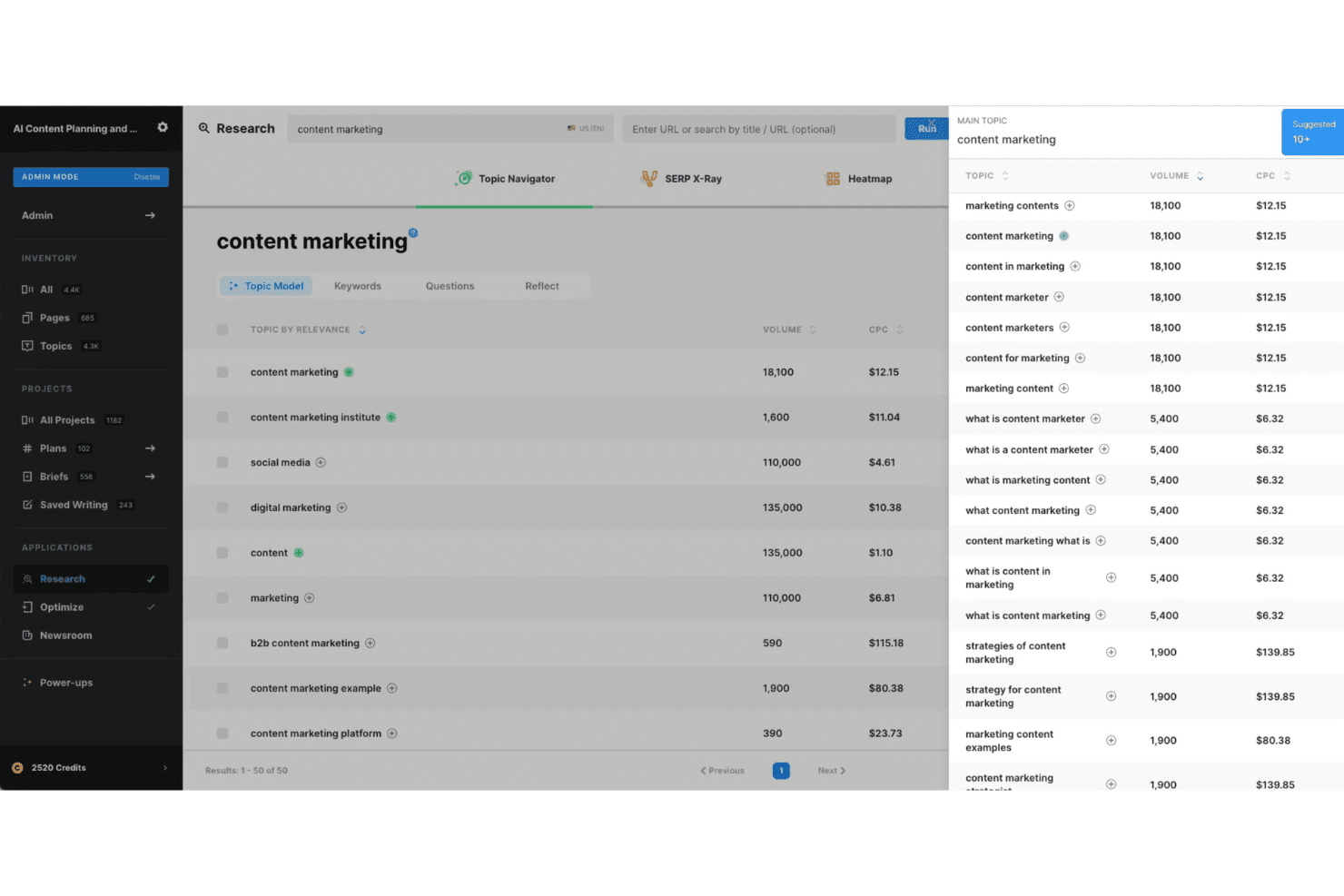
MarketMuse offers a Research tool with Topic Navigator that displays keyword volumes, CPC data, and related topic suggestions for content planning. MarketMuse is an AI content intelligence platform that combines topic modeling, content scoring, competitive gap analysis, and brief generation to support SEO-focused content planning.
Who Is MarketMuse Best For?
It's a strong fit for content teams at mid-size to enterprise brands and agencies that publish at scale and need a structured, data-driven approach to organic content strategy.
Why I Picked MarketMuse
MarketMuse earns its spot on my shortlist because no other tool I've used generates a site-specific difficulty score tied to your exact domain. That Personalized Difficulty metric (scored 1-100) factors in your existing authority, so my team can prioritize topics we can realistically rank for. Pair that with AI-generated briefs across nine content formats and a patented Content Score, and the planning process becomes very precise.
MarketMuse Key Features
- Topic Navigator: Explore related topics, competitive gaps, and subtopics to inform content direction.
- SERP Heatmap: Visualize how well your pages cover key topics compared to competitors in search results.
- Site Inventory: Auto-crawl your entire site to map existing content, coverage, and opportunity areas.
- Content Strategy Documents: Generate actionable documents that outline your site's priority topics and recommended actions.
MarketMuse Integrations
Native integrations are not clearly documented. MarketMuse offers a Connect feature for Google Search Console and analytics data, and an API is available for custom integrations.
Pros and Cons
Pros:
- Topic modeling grounded in patented AI research
- Generates briefs across nine content format types
- Personalized Difficulty score unique to your domain
Cons:
- Limited analytics beyond content quality metrics
- No lead capture or nurturing functionality
Learn more about MarketMuse: Best for AI-driven multichannel nurturing journeys
- 14-day free trial
- From $15/month (billed annually)
Visit WebsiteCustomer Rating:4.4/5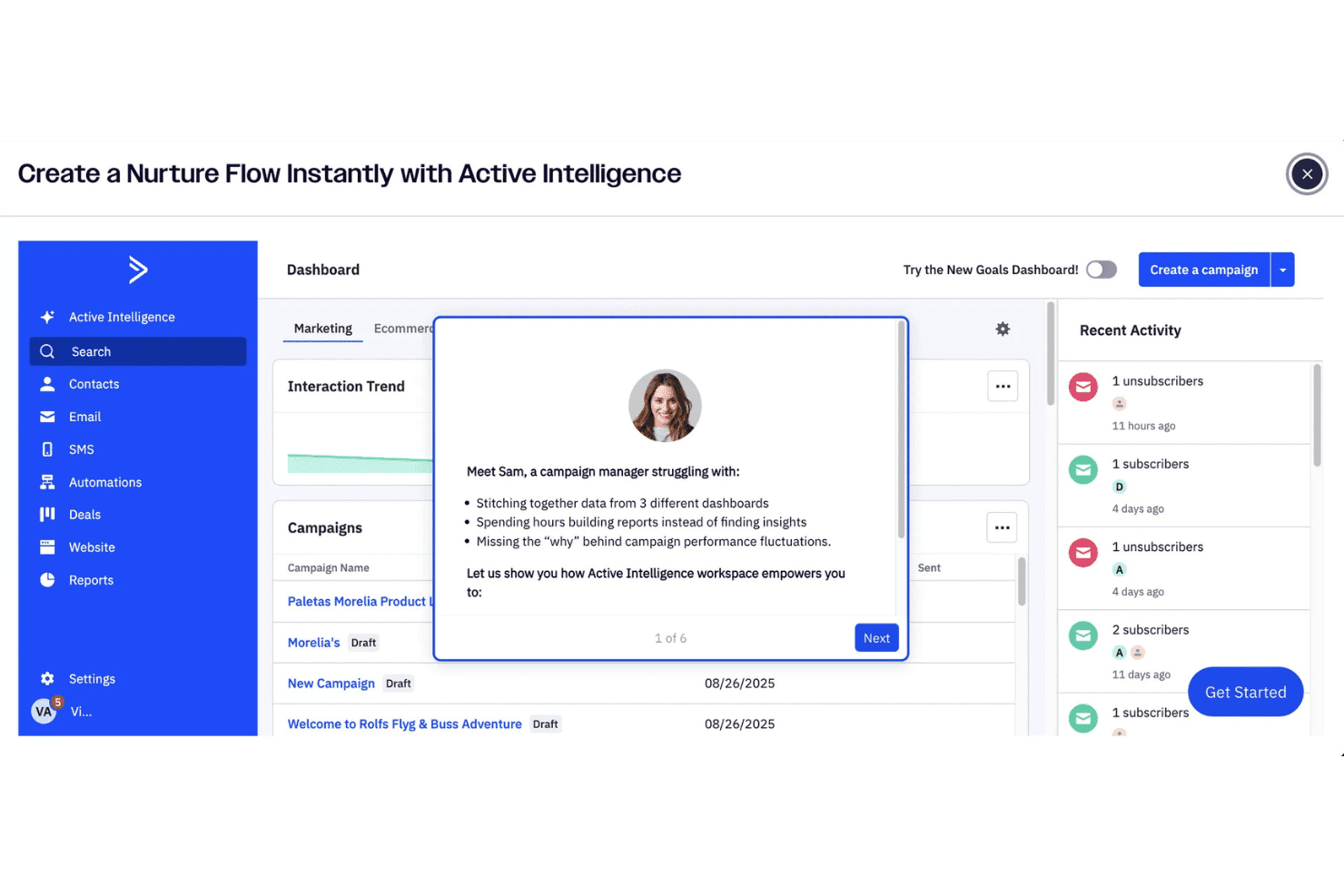
ActiveCampaign offers an Active Intelligence feature that guides users through creating nurture flows with an onboarding walkthrough modal on the dashboard. ActiveCampaign is a marketing automation platform that combines AI-driven email marketing, multichannel campaign execution, lead scoring, behavioral segmentation, and nurture workflow automation.
Who Is ActiveCampaign Best For?
It's a strong fit for small to mid-sized marketing teams that need advanced behavior-driven automation without the cost of enterprise platforms.
Why I Picked ActiveCampaign
ActiveCampaign earns its spot on my shortlist because of how deeply its Active Intelligence layer is woven into the nurturing workflow. I use Brand Kit to lock in voice and visual identity once, and the Campaign Reference feature pulls from top-performing past sends to shape new sequences automatically. On top of that, my team can build nurture flows that span Email, WhatsApp, SMS, and retargeting ads from a single automation builder, all triggered by real behavioral signals.
ActiveCampaign Key Features
- Predictive lead scoring: Uses AI to analyze engagement and firmographic data to automatically qualify leads.
- AI-powered segmentation: Dynamically groups contacts based on real-time behavioral and demographic signals.
- Conditional email content: Delivers tailored messaging within emails based on user attributes and interactions.
- Custom workflow automation: Lets you design multi-step, trigger-based workflows that span email, SMS, ads, and site messages.
ActiveCampaign Integrations
ActiveCampaign offers over 900 native integrations, including Shopify, WooCommerce, WordPress, Salesforce, Stripe, Calendly, Typeform, DocuSign, Zendesk, and Squarespace. It also connects with Zapier and provides an API for custom integrations.
Pros and Cons
Pros:
- Site messages personalize on-page experiences for visitors
- AI segmentation adapts to real-time behavioral data
- Automation builder handles complex multi-step nurture sequences
Cons:
- Reporting dashboards lack predictive forecasting capabilities
- No built-in SEO or content optimization tools
Learn more about ActiveCampaign: Best for fast, ready-to-use marketing copy
- Free trial available
- From $29/month
Visit WebsiteCustomer Rating:4.4/5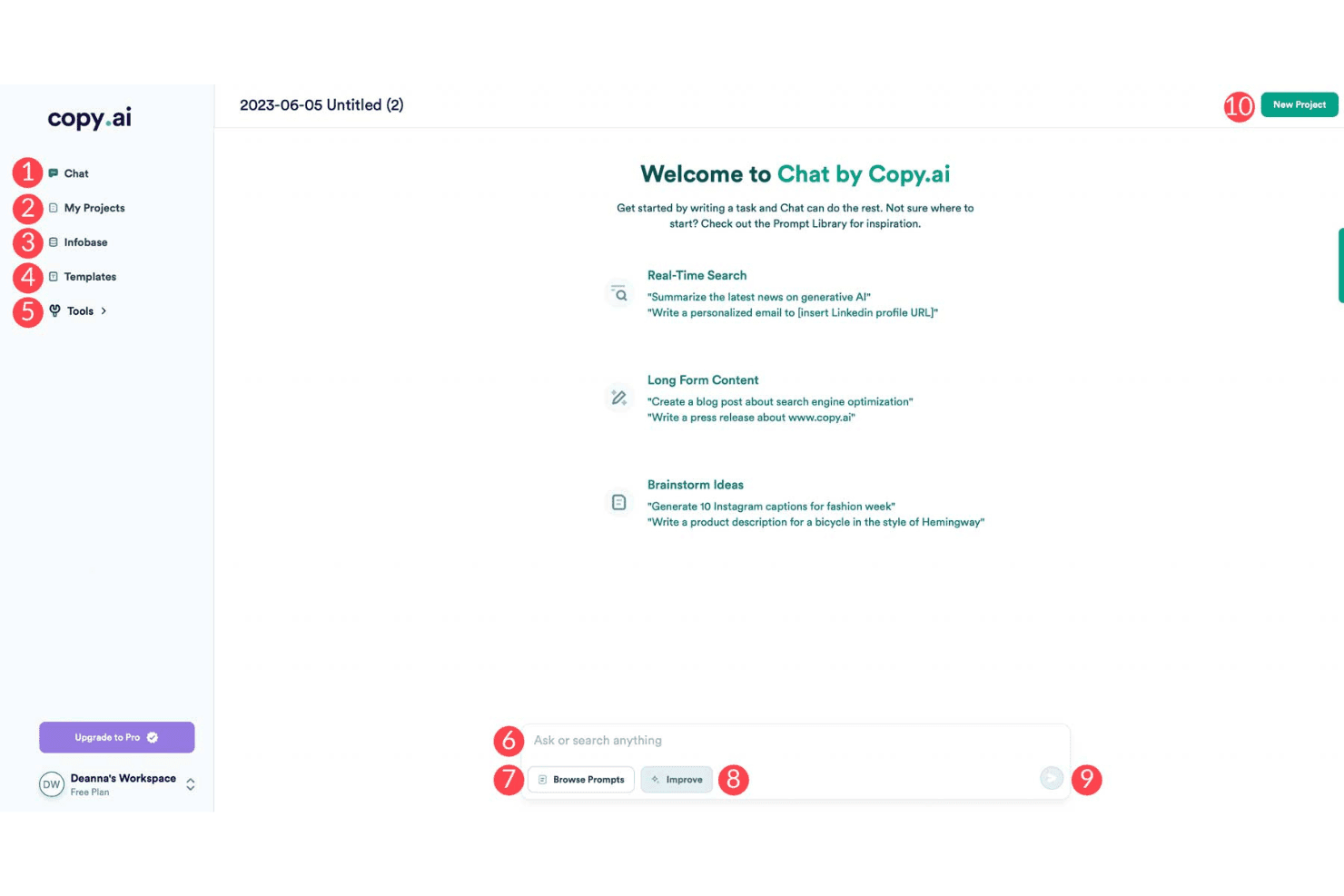
Copy.ai offers a chat-based interface with prompts for real-time search, long-form content, and brainstorming ideas. Copy.ai is an AI-powered GTM platform that uses automated workflows, multi-LLM content generation, and brand voice controls to help marketing teams produce copy across channels at scale.
Who Is Copy.ai Best For?
Copy.ai suits growth-stage and enterprise marketing teams that need to produce high volumes of on-brand content without expanding headcount.
Why I Picked Copy.ai
I've included Copy.ai in my top picks because its Workflows and Brand Voice controls let my team generate on-brand copy in seconds rather than starting from scratch each asset. I like how Infobase stores brand knowledge (tone, product details, messaging pillars) so outputs arrive pre-grounded in context. Running the same workflow across dozens of assets at once means my team can turn around campaign copy fast, without sacrificing consistency.
Copy.ai Key Features
- Multi-model support: Access content generation using OpenAI, Anthropic, and Gemini language models.
- Content agent studio: Set up AI agents to automate cross-channel content production for campaigns.
- Salesforce and HubSpot integrations: Connect with leading CRM platforms for seamless lead data flow and CRM-based workflows.
- Platinum Actions library: Use prebuilt, scalable AI actions like Prospect Finder and Enrich Contact to enrich and qualify inbound data.
Copy.ai Integrations
Copy.ai offers native integrations with Salesforce, HubSpot, Gong, and Outreach, and connects with Zapier. An API is available for custom integrations.
Pros and Cons
Pros:
- Multi-LLM access gives flexible content generation options
- Workflows automate full-funnel content production at scale
- Brand Voice controls keep copy on-brand
Cons:
- Analytics and reporting remain shallow
- No native SEO keyword research or analysis
 Best for in-depth SEO research and content gaps
- Free plan available
- From $29/month
Visit WebsiteCustomer Rating:4.6/5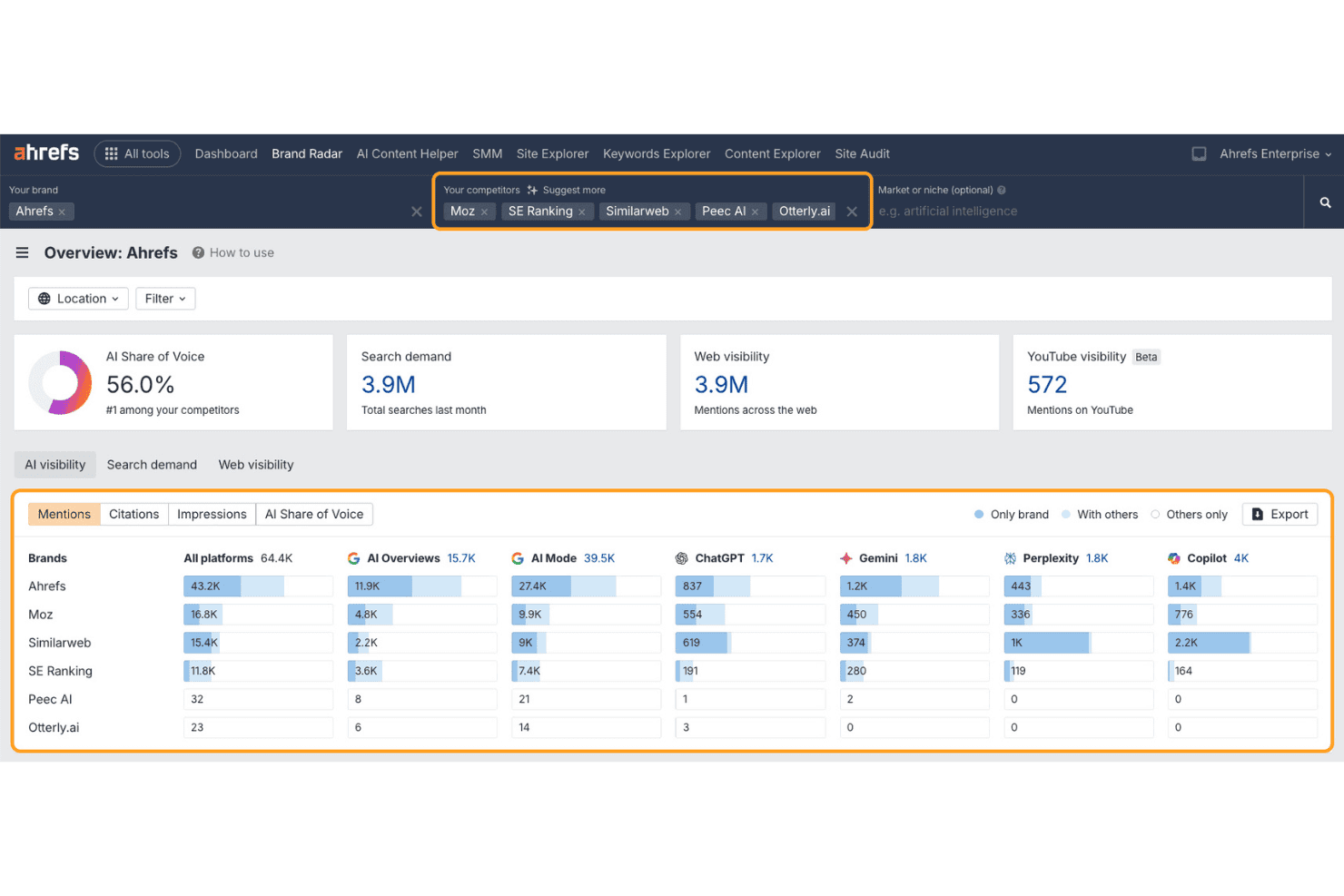
Ahrefs' Brand Radar dashboard displays AI Share of Voice at 56%, along with search demand, web visibility, and AI mentions across platforms like ChatGPT, Gemini, Perplexity, and Copilot compared to competitors. Ahrefs is an AI-augmented SEO and content intelligence platform built around one of the largest backlink indexes in the industry, combining keyword research, competitive analysis, content gap identification, and technical SEO auditing.
Who Is Ahrefs Best For?
Ahrefs is a strong fit for SEO leads and content marketing strategists at agencies and in-house teams who need deep organic search intelligence to guide content strategy.
Why I Picked Ahrefs
I picked Ahrefs as one of the best because its Keywords Explorer covers 29 billion keywords across 10 search engines, giving my team a view of search demand that no other tool in this category matches. The Content Gap tool is where it really earns its place on this list — I use it to surface topics my competitors rank for that I haven't covered yet, which directly shapes my content calendar. Brand Radar adds a forward-thinking layer, letting me track how my brand appears in AI-generated results from LLMs, not just traditional SERPs.
Ahrefs Key Features
- Web analytics module: Lets you track website performance and SEO metrics directly within the platform.
- Site audit with AI tech SEO: Runs comprehensive technical audits and flags issues with automated AI-powered suggestions.
- Google Search Console integration: Imports GSC data with extended historical lookback and enables performance comparisons across multiple sites.
- Custom reporting builder: Allows you to build, customize, and schedule in-depth SEO and content reports using combined data sources.
Ahrefs Integrations
Ahrefs offers native integrations with Google Search Console and Google Looker Studio, and provides an API for custom integrations.
Pros and Cons
Pros:
- Brand Radar tracks LLM and AI search visibility
- Content Gap surfaces untapped competitor keyword opportunities
- Largest keyword index across 10 search engines
Cons:
- Analytics confined to SEO, not full funnel
- No lead capture or nurturing tools
 Best for on-brand AI content generation at scale
- 7-day free trial available
- From $59/month (billed annually)
Visit WebsiteCustomer Rating:4.7/5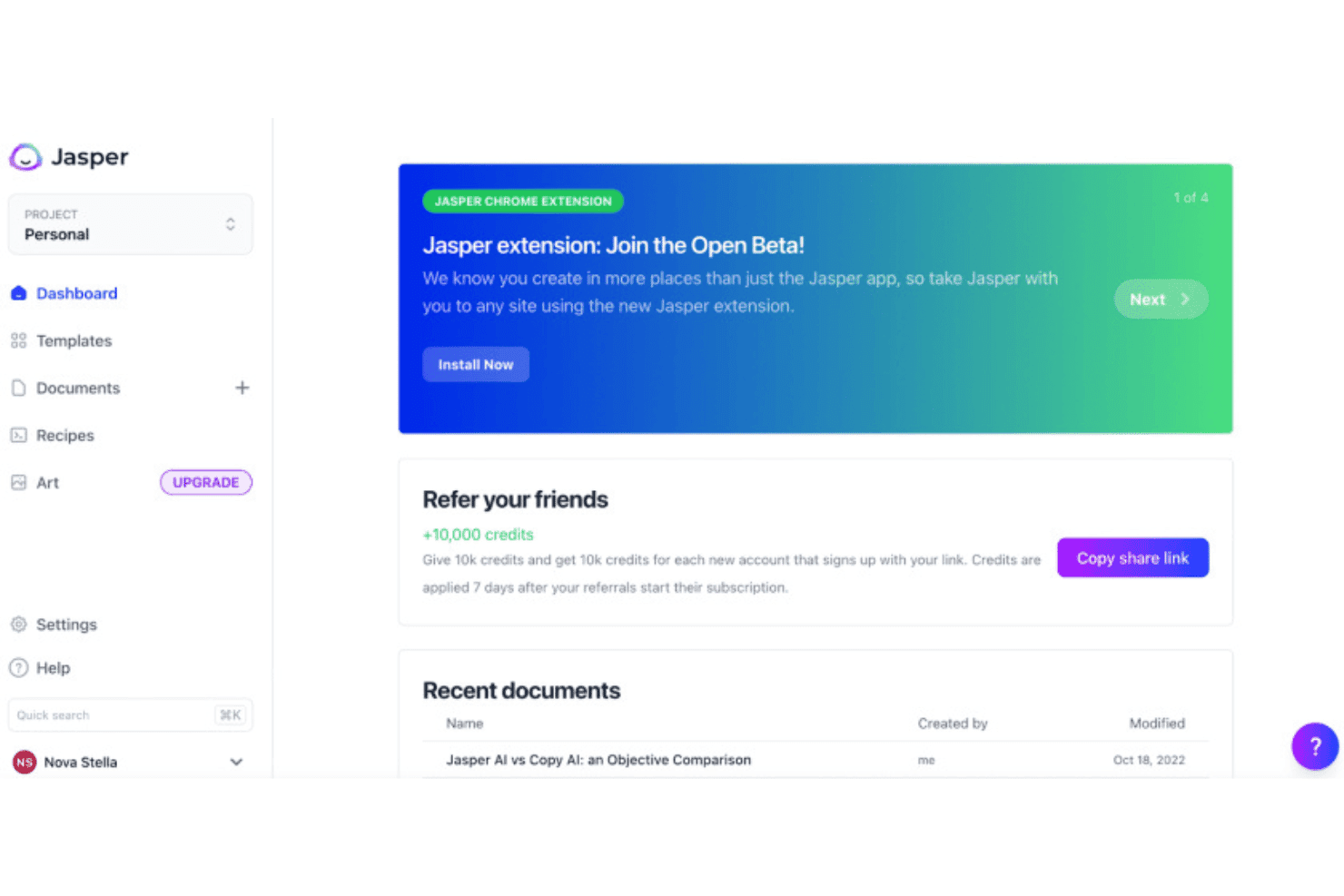
Jasper's dashboard offers a clean interface with templates, documents, recipes, and a referral program offering 10,000 credits per signup. Jasper is an AI content generation platform built for marketing teams, with tools for brand voice management, multi-format content creation, SEO optimization, and campaign execution across blog, email, social media, and ad copy.
Who Is Jasper Best For?
Marketing agencies and enterprise content teams that produce high volumes of brand-specific content across multiple channels or clients will get the most out of Jasper.
Why I Picked Jasper
Jasper earns its spot on my shortlist because of Jasper IQ, the intelligence layer that bakes brand voice, style guides, and audience profiles directly into every piece of content the platform generates. I've found this especially valuable when managing content across multiple sub-brands or regions, where consistency is otherwise hard to enforce at scale. The content pipeline feature also lets my team move from brief to publish-ready output without rebuilding the process each time.
Jasper Key Features
- GEO Agent: Automates generative engine optimization for AI-driven search visibility and content alignment.
- Content pipelines: Lets teams move content from ideation to launch with customizable, repeatable workflows.
- SurferSEO integration: Embeds advanced on-page optimization directly within the content editor for SEO-focused projects.
- Jasper Everywhere extension: Enables AI content generation inside Gmail, Google Docs, HubSpot, and other browser-based apps.
Jasper Integrations
Jasper offers native integrations with Google Drive, Google Docs, Google Sheets, Microsoft SharePoint, Box, Adobe Workfront, Monday.com, Asana, Semrush, Salesforce, Webflow, and Slack. Zapier and Make are also supported, and an API is available for custom integrations.
Pros and Cons
Pros:
- Multi-format content pipelines reduce manual production steps
- SEO and GEO agents for organic search
- Brand voice consistency across all content types
Cons:
- Analytics limited to content team performance only
- No native lead capture or nurturing tools
Learn more about Jasper: Best for unified campaign automation and analytics
- Free plan available
- From $7/user/month (billed annually)
Visit WebsiteCustomer Rating:4.4/5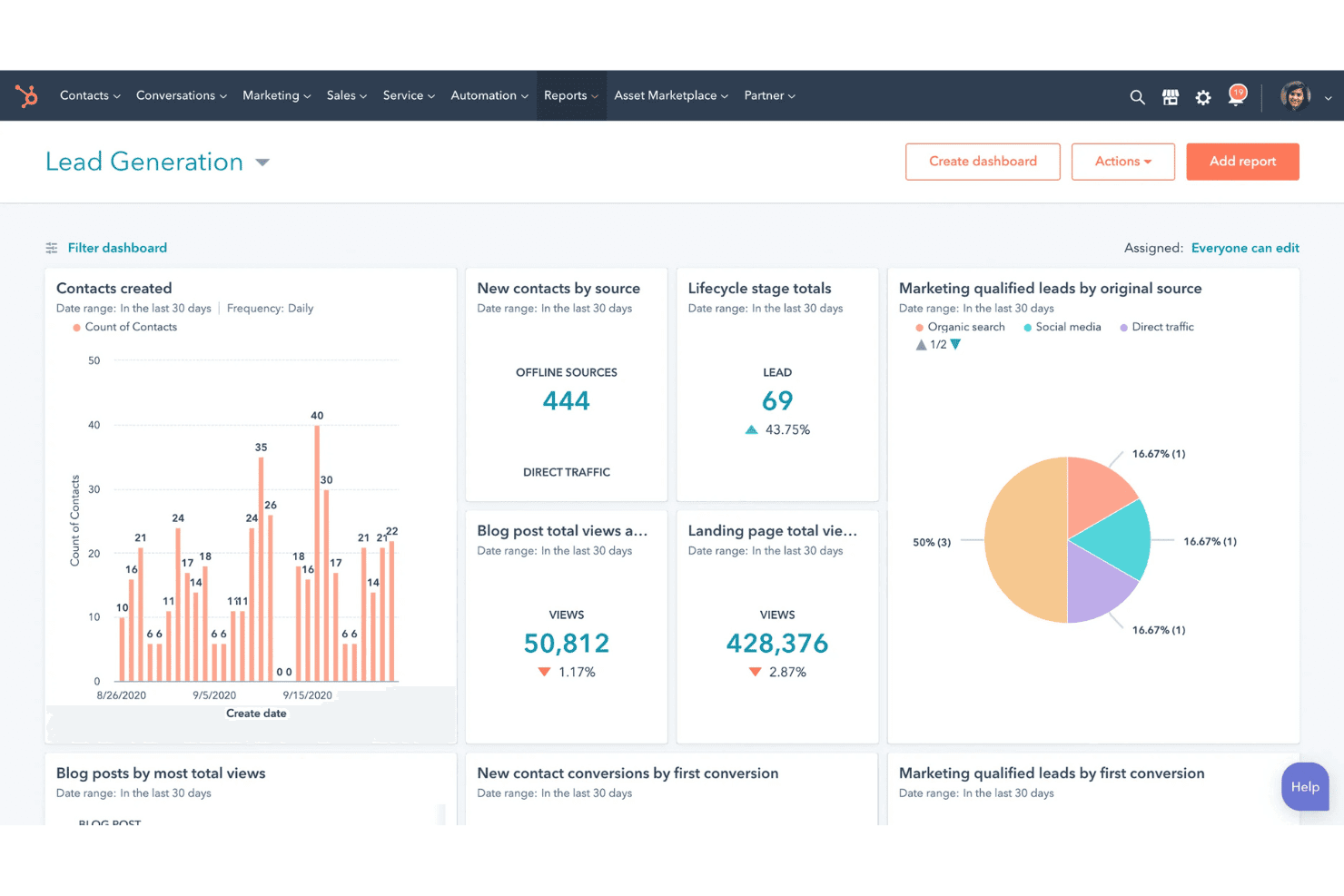
HubSpot Marketing Hub offers a Lead Generation dashboard with metrics on contacts created, new contacts by source, lifecycle stage totals, blog post views, and marketing qualified leads. HubSpot Marketing Hub is an AI-powered inbound marketing platform that combines content generation, lead capture, nurture automation, predictive lead scoring, website personalization, and multi-channel campaign analytics inside a unified CRM-connected workspace.
Who Is HubSpot Marketing Hub Best For?
It's a strong fit for mid-market B2B marketing teams running inbound programs across multiple channels who need content, lead management, and CRM data in one connected system.
Why I Picked HubSpot Marketing Hub
HubSpot Marketing Hub earns its spot on my shortlist because it genuinely connects campaign execution to revenue reporting in one place. I use Marketing Studio to build landing pages, emails, and forms from a single brief using AI, while Customer Journey Analytics maps every touchpoint to pipeline through multi-touch attribution. That means I'm not just automating campaigns, I'm attributing them.
HubSpot Marketing Hub Key Features
- AI-powered AEO (Answer Engine Optimization): Tracks your brand’s mentions in ChatGPT, Perplexity, and Gemini, providing actionable recommendations to improve AI visibility.
- Prospecting Agent: Identifies anonymous website visitors and qualifies them based on intent and company fit using AI.
- Smart CRM integration: Connects marketing activities directly with contacts, deals, and sales outcomes for seamless data enrichment.
- Multi-channel ad management: Runs and manages digital ad campaigns across Meta, Google, LinkedIn, and TikTok from a unified interface.
HubSpot Marketing Hub Integrations
HubSpot Marketing Hub offers 2,000+ native integrations, including Salesforce, Google Ads, Meta Ads, LinkedIn, TikTok, Trustpilot, Mailchimp, Canva, WordPress, Zoom, and Slack. An API is available for custom integrations.
Pros and Cons
Pros:
- Multi-touch attribution connects campaigns to revenue
- Breeze AI generates full-funnel content natively
- Native CRM data powers precise campaign personalization
Cons:
- AI credits deplete quickly at higher volumes
- SEO tools lack deep competitive SERP analysis
Learn more about HubSpot Marketing Hub: Best for advanced lead management workflows
- Free demo available
- Pricing upon request
Visit WebsiteCustomer Rating:4.1/5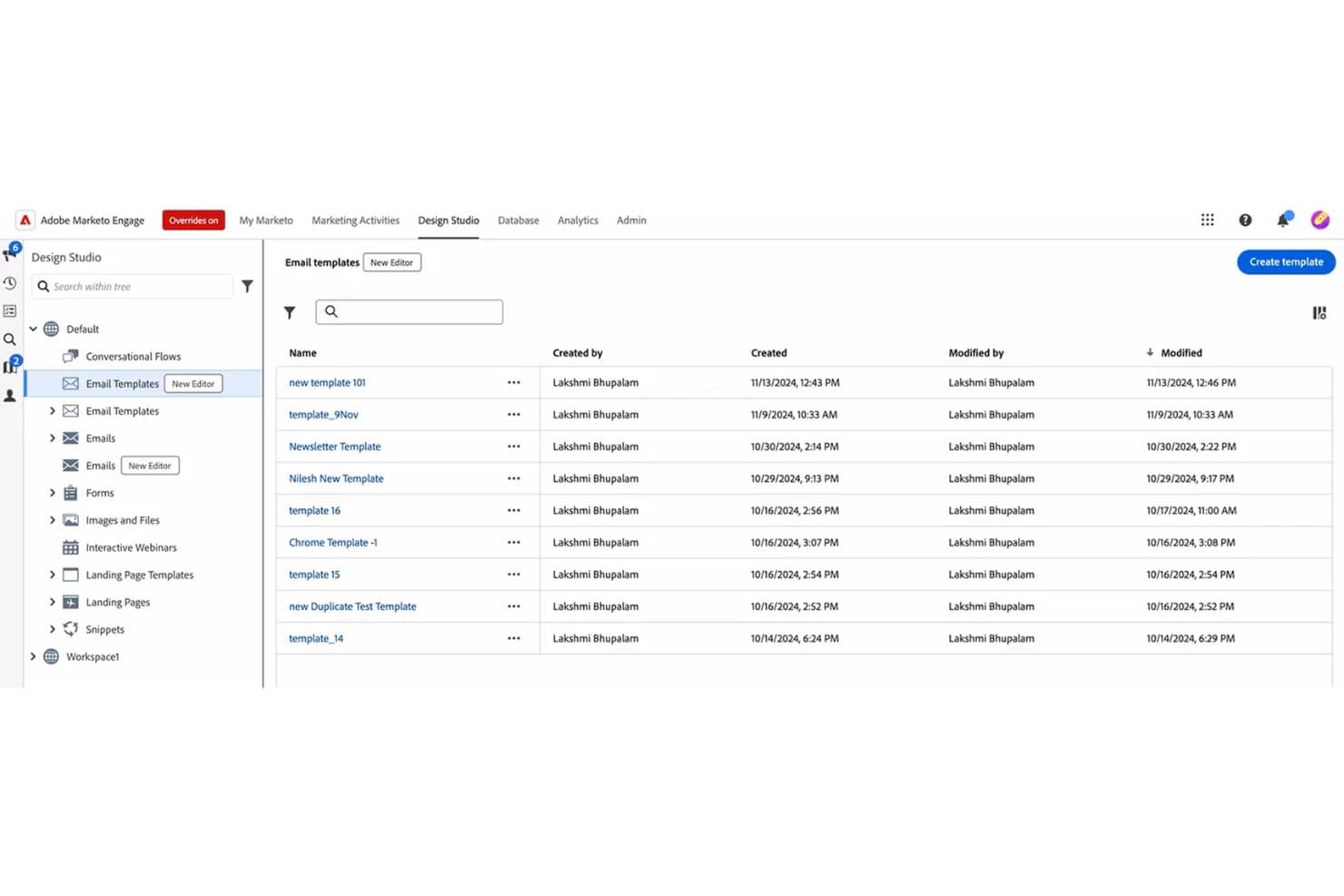
Adobe Marketo Engage offers a Design Studio interface for managing and organizing email templates with creation and modification details. Adobe Marketo Engage is an AI-powered marketing automation platform built for B2B teams, offering lead scoring, predictive nurturing, omnichannel campaign orchestration, and dynamic content personalization across the full inbound funnel.
Who Is Adobe Marketo Engage Best For?
It's a strong fit for mid-market and enterprise B2B organizations with dedicated marketing operations teams managing complex, multi-touch inbound pipelines.
Why I Picked Adobe Marketo Engage
Adobe Marketo Engage earns its spot on my shortlist because of how deeply it handles lead lifecycle management at scale. I particularly like the combination of AI-powered predictive scoring and Smart Campaigns, which let my team automatically route leads based on real behavioral and firmographic signals rather than static rules. The agentic AI skill for investigating leads gives a plain-language explanation of why a specific lead didn't reach a milestone like MQL, which saves real debugging time inside complex, multi-step workflows.
Adobe Marketo Engage Key Features
- Dynamic content personalization: Lets you tailor emails, landing pages, and CTAs dynamically for each prospect and account.
- Omnichannel campaign orchestration: Enables coordinated execution across email, web, mobile, chat, and digital ads from a centralized hub.
- Native CRM integrations: Connects bi-directionally with Salesforce, Microsoft Dynamics, and Veeva to keep marketing and sales data in sync.
- Multi-touch attribution analytics: Provides reporting to track how campaigns and channels contribute to pipeline and revenue.
Adobe Marketo Engage Integrations
Adobe Marketo Engage offers native integrations with Salesforce, Microsoft Dynamics, Veeva, Adobe Analytics, Adobe Target, Adobe Experience Manager Assets, Adobe Workfront, and Real-Time CDP. An API and webhooks are available for custom integrations.
Pros and Cons
Pros:
- Built-in AI generates email and landing copy
- Smart Campaigns automate complex multi-step nurture flows
- Predictive lead scoring is highly sophisticated
Cons:
- Reporting requires significant technical expertise to configure
- Steep initial setup for campaign workflows
Learn more about Adobe Marketo Engage: Best for cross-channel engagement
- Free trial available
- From $1,250/month (billed annually)
Visit WebsiteCustomer Rating:4/5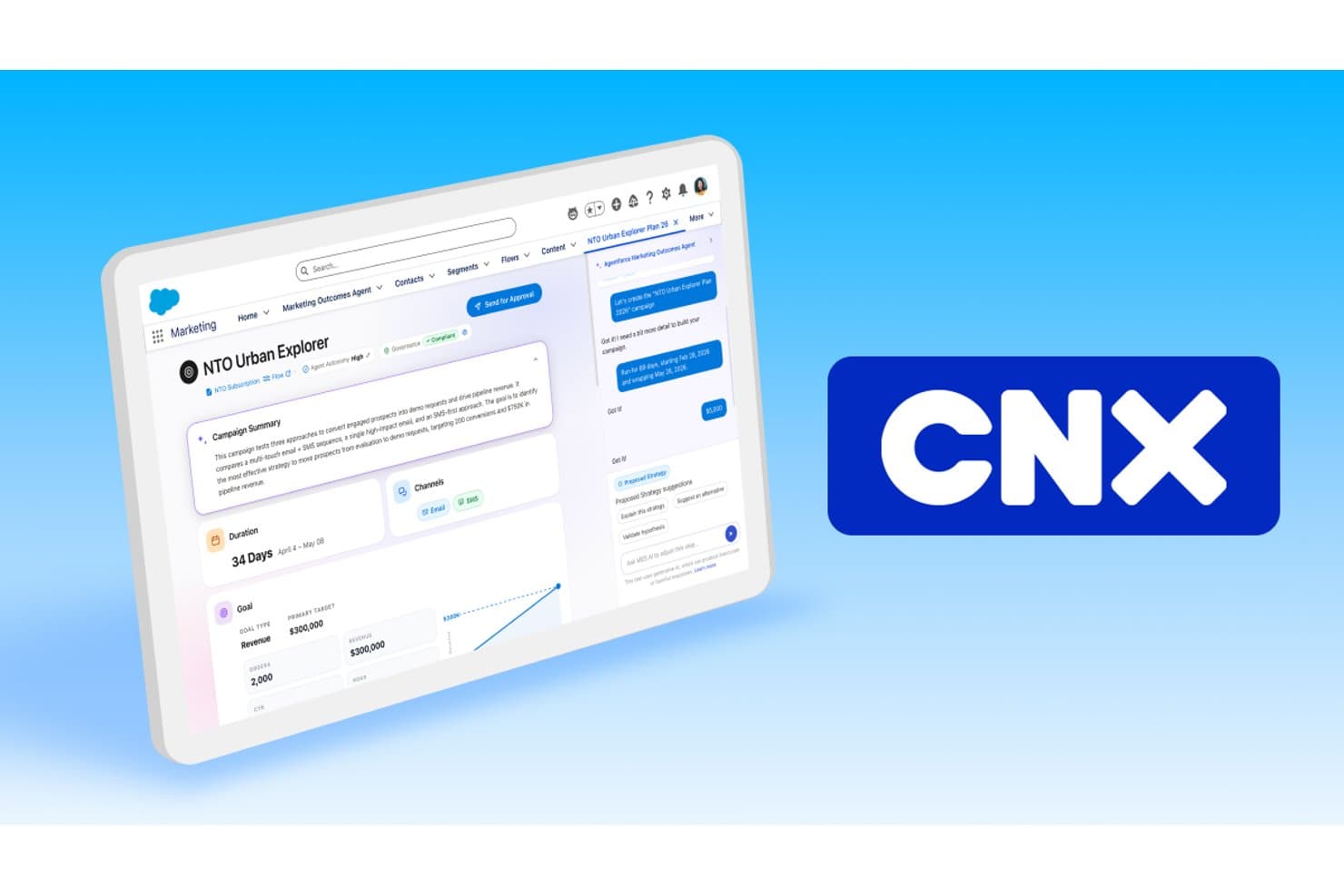
Agentforce Marketing offers an AI-powered campaign builder with automated goal setting, multi-channel sequencing, and a conversational marketing outcomes agent. Agentforce Marketing is Salesforce's AI-powered marketing platform that combines cross-channel campaign orchestration, lead capture, predictive scoring, and personalization into a unified system built on a native CDP.
Who Is Agentforce Marketing Best For?
It's a strong fit for enterprise marketing teams already operating within the Salesforce ecosystem who need AI-driven cross-channel engagement at scale.
Why I Picked Agentforce Marketing
Agentforce Marketing earns its spot on my shortlist because no other platform I've evaluated matches its ability to sustain two-way conversations across email, SMS, and WhatsApp within a single journey. I particularly like the Piper AI SDR agent, which qualifies inbound leads 24/7 without requiring a manual handoff. In practice, my team can run a campaign where a prospect downloads content, receives an SMS follow-up, and then gets a personalized email, all orchestrated by AI agents without a single manual trigger.
Agentforce Marketing Key Features
- Multi-channel journey builder: Design and automate customer journeys across email, SMS, web, and messaging apps from one platform.
- Predictive lead scoring: Use AI to rank and segment leads based on behavioral and firmographic data.
- Dynamic content personalization: Tailor emails, landing pages, and messages for each user in real time using AI-driven insights.
- Marketing analytics dashboards: Access visual reports on campaign performance, attribution, and channel ROI across inbound initiatives.
Agentforce Marketing Integrations
Agentforce Marketing offers native integrations across the Salesforce ecosystem, including Sales Cloud, Service Cloud, Data Cloud, and Commerce Cloud. An API is available for custom integrations.
Pros and Cons
Pros:
- Journey orchestration spans email, SMS, and WhatsApp
- AI agents qualify leads without manual intervention
- Native CDP unifies inbound data across channels
Cons:
- AI content generation lags behind dedicated tools
- Steep onboarding for non-Salesforce marketing teams
Learn more about Agentforce Marketing:
Other AI Inbound Marketing Tools
Here are some additional AI inbound marketing tools options that didn’t make it onto my shortlist, but are still worth checking out:
- 11Surfer SEOBest for SEO-focused content optimization
- 12FraseBest for AI-powered content research and briefing
- 13SemrushBest for unified AI content marketing
- 14Customer.ioBest for AI-powered behavioral messaging
- 15QualifiedBest for AI-driven inbound pipeline generation
- 16MutinyBest for AI-powered website personalization
How I Evaluate AI Inbound Marketing Tools
Every tool here earns its place by proving its AI delivers tangible value, like drafting content you'd actually publish or scoring leads based on real intent signals. I split my evaluation into core functionality a platform must have to qualify and the differentiating factors that set the top picks apart.
Core Functionality (Table Stakes For This List)
When I'm selecting tools for my list, I rank each one on a scale from 0 (does not offer the functionality) to 5 (excels in this area) for each core functionality listed below. Then, I calculate the tool's total score into a percentage. Each tool needs to achieve a minimum total score of 65% to be considered for inclusion.
- AI Content Generation: I evaluate whether the AI can draft usable blog posts, emails, and landing pages—not just suggest headlines or rewrite existing copy.
- AI SEO Optimization: Strong tools go beyond keyword lists to offer topic clustering, SERP analysis, and on-page scoring that guides content decisions.
- Lead Capture & Nurturing: I look for AI-assisted nurture workflows tied to forms and landing pages, not just static capture with manual follow-up.
- Predictive Lead Scoring: The scoring model should factor in behavioral and firmographic signals, similar to how HubSpot and Marketo Engage approach it.
- AI Personalization: I check whether the platform adapts content and CTAs dynamically for visitors based on behavior, segment, or buying stage.
- Performance Analytics: Useful analytics surface AI-driven insights like multi-touch attribution and content ROI, not just traffic dashboards.
Once I have a list of tools that meet the criteria, I consider what sets each platform apart.
Differentiating Factors (What Sets Vendors Apart)
Here's how I compare and contrast different vendors:
Standout Features
Conversational AI chatbots can make a real difference—I look for tools where chat agents qualify visitors and book meetings without human involvement, keeping your pipeline moving around the clock. Intent-based personalization matters too, especially when a platform adapts CTAs and page content based on a visitor's industry or buying stage. I also evaluate multi-touch attribution depth, since knowing which blog post or email drove a closed deal is far more useful than tracking page views alone.
Beyond Features
CRM and martech stack integrations are the first thing I check—bi-directional syncing with your CRM and prebuilt connectors for ad platforms, GA4, or your CMS keeps lead data unified without manual imports. AI transparency also matters, especially whether a tool lets you edit AI outputs, train brand voice settings, and review scoring logic before anything goes live. I evaluate pricing scalability too, since a platform that forces you into enterprise bundles before your contact list justifies it can blow your budget fast.
How to Choose AI Inbound Marketing Tools
It’s easy to get bogged down in long feature lists and complex pricing structures. To help you stay focused as you work through your unique software selection process, here’s a checklist of factors to keep in mind:
| Factor | What to Consider |
|---|---|
| FactorScalability | What to ConsiderWill the tool grow with your pipeline size and team expansion, or will pricing and limits force difficult upgrades as you scale? |
| FactorIntegrations | What to ConsiderDoes it connect bi-directionally with your CRM, analytics, and messaging tools, or will you face manual data care and siloed workflows? |
| FactorCustomizability | What to ConsiderCan you tailor automations, scoring, and messaging to your buyer journeys, or will you need workarounds and frequent support tickets? |
| FactorEase of use | What to ConsiderIs the platform straightforward enough for non-technical users, or will marketing need IT hands-on for every workflow update? |
| FactorImplementation and onboarding | What to ConsiderWhat sort of time, vendor resources, and change management are actually needed before your first campaigns can go live? |
| FactorCost | What to ConsiderAre costs predictable as volume and users grow, or do you face hidden fees or forced feature bundles as you add contacts? |
| FactorSecurity safeguards | What to ConsiderDoes the vendor have rigorous data handling, access controls, and certifications to support sensitive lead and customer information? |
| FactorSupport availability | What to ConsiderWhen issues arise, can you count on responsive support, clear documentation, and peer community forums, or are you largely on your own? |
What Are AI Inbound Marketing Tools?
AI inbound marketing tools are platforms that use artificial intelligence to help marketers attract, engage, and convert leads through organic and owned channels. These tools automate content creation, personalize messaging, assist with SEO, score inbound leads, and deliver analytics—removing manual effort so you can focus on strategy and results.
Features
When selecting ai inbound marketing tools, keep an eye out for the following key features:
- AI content generation: Automatically drafts blog posts, landing pages, and email copy from prompts or briefs, letting teams produce brand-aligned content faster.
- SEO optimization: Analyzes keywords, creates topic clusters, and suggests on-page improvements to drive search visibility and organic traffic.
- Lead capture tools: Provides customizable forms, gated content, and CTAs to efficiently turn site visitors into leads.
- Predictive lead scoring: Uses AI models to rank leads based on behavioral and demographic data, so your team knows which prospects need attention first.
- Personalization: Delivers customized web content, emails, and CTAs to each visitor based on their behavior, segment, or buying stage.
- Conversational AI chatbots: Engages visitors, answers questions, qualifies leads, and books meetings—all without human intervention.
- Campaign automation: Supports building and sequencing of inbound campaigns across email, web, and social channels with conditional logic.
- Performance analytics: Offers dashboards and actionable AI insights on channel performance, funnel progression, and campaign ROI.
- CRM and martech integrations: Syncs lead data and activities bi-directionally with your CRM and other martech essentials, eliminating silos.
- Consent and privacy controls: Manages user data, permissions, and compliance with regulations like GDPR and CCPA within marketing workflows.
Benefits
Implementing ai inbound marketing tools provides several benefits for your team and your business. Here are a few you can look forward to:
- Faster content production: AI-powered generation speeds up the creation of high-quality blogs, emails, and landing pages, freeing marketers from manual drafting.
- Improved lead quality: Predictive scoring and intent detection help your team identify, segment, and prioritize leads with the highest conversion potential.
- Personalized engagement: Dynamic website, email, and CTA personalization makes every visitor feel understood, increasing relevance and the overall customer experience throughout the buyer journey.
- Smarter decision-making: AI-driven analytics and attribution offer deep visibility into which content, channels, and campaigns actually drive revenue.
- Integrated data workflows: Native integrations unify CRM, CMS, and analytics systems, reducing silos and ensuring better data-driven inbound strategies.
- Stronger compliance and security: Built-in privacy controls and consent management help you stay up to date with evolving data laws like GDPR and CCPA.
- 24/7 lead capture: Conversational AI chatbots engage and qualify inbound leads around the clock, so you never miss an opportunity while your team is offline.
Costs & Pricing
Selecting AI inbound marketing tools requires an understanding of the various pricing models and plans available. Costs vary based on features, team size, add-ons, and more. The table below summarizes common plans, their average prices, and typical features included in AI inbound marketing tools solutions:
Plan Comparison Table for AI Inbound Marketing Tools
| Plan Type | Average Price | Common Features |
|---|---|---|
| Plan TypeFree Plan | Average Price$0 | Common FeaturesBasic AI content generation, limited SEO tools, simple lead capture, email support, and basic analytics. |
| Plan TypePersonal Plan | Average Price$15–$50/user/month | Common FeaturesFull blog and email AI generation, keyword research, forms, standard reporting, and basic integrations. |
| Plan TypeBusiness Plan | Average Price$75–$250/user/month | Common FeaturesMulti-channel content, predictive lead scoring, AI personalization, advanced analytics, and CRM integrations. |
| Plan TypeEnterprise Plan | Average Price$400–$2,000+/month | Common FeaturesCustom onboarding, premium support, advanced security, compliance controls, unlimited users, and API access. |
AI Inbound Marketing Tools FAQs
Here are some answers to common questions about ai inbound marketing tools:
How do AI inbound marketing tools differ from traditional marketing platforms?
AI inbound marketing tools use machine learning to automate tasks like content creation, lead scoring, and personalization, while traditional platforms rely heavily on manual workflows and static rules. This automation helps reduce repetitive work and deliver more relevant messaging to prospects.
Can these tools integrate with my existing CRM and analytics stack?
Yes, most AI inbound marketing tools offer native integrations with popular CRMs and analytics platforms. Before buying, check for direct connectors or an open API to ensure your lead and campaign data flows smoothly between systems.
What types of companies benefit most from AI inbound marketing tools?
These tools work well for both B2B and B2C teams managing inbound leads and multi-channel content. They’re especially valuable for businesses with high lead volumes, complex buyer journeys, or smaller teams looking to automate routine marketing tasks.
How secure and compliant are AI inbound marketing platforms?
Most reputable vendors offer features like consent management, GDPR and CCPA compliance, and data encryption. Review each platform’s data privacy policies, SOC 2 certifications, and region-specific controls if you must meet strict data regulations.
Is onboarding and training included with most AI inbound marketing tools?
Yes, many vendors provide onboarding help, training resources, and dedicated support for new customers. Availability may depend on your subscription tier, so clarify what’s included in your chosen plan before moving forward.