

10 Best AI Lead Generation Software Reviewed in 2026

10 Best AI Lead Generation Software Shortlist


If you work in marketing, you know how time-consuming it can be to find qualified leads. Whether you are sorting through messy data, chasing prospects who never convert, or trying to keep up with targets, the process can drain hours you could be spending on higher-value work.
AI lead generation software helps solve this by identifying, scoring, and qualifying leads automatically. These tools analyze patterns in your ideal customers, predict buying intent, and surface prospects who are most likely to convert, giving your team more time to focus on meaningful outreach and closing deals.
In my experience, choosing the right software can make all the difference. I’ve tested and reviewed several options to provide you with an unbiased guide. You’ll discover how these tools' AI capabilities can systematically improve your lead quality and conversion rates.
Why Trust Our Software Recommendations
Our team has been testing and reviewing software since 2012. As marketing leaders ourselves, we know how difficult—and important—it is to choose the right software.
For this guide, we evaluated tools using hands-on testing and independent research, scoring tools using our selection criteria.
Our reviews reflect our human editorial judgment, not a sales pitch.
Expert reviewers:
AI Lead Generation Software Comparison Table
This comparison table summarizes pricing details for my top AI lead generation software selections:
| Tool | Best For | Trial Info | Price | ||
|---|---|---|---|---|---|
| 1 | Best for global B2B contact coverage and accuracy | Free plan + 14-day free trial + free demo available | From $49/user/month (billed annually) | Website | |
| 2 | Best for ideal-fit B2B leads | Free trial available | From $99/month | Website | |
| 3 | Best with multilingual AI agent support | 7-day free trial + free plan + free demo available | From $32/month (billed annually) | Website | |
| 4 | Best for B2B companies needing AI data enrichment | 7-day free trial + free demo available | From $74/month (billed annually) | Website | |
| 5 | Best for GDPR compliance | Free demo available | Pricing upon request | Website | |
| 6 | Best for multi-channel engagement | Free 7-day trial + free demo available | From $39/user/month (billed annually) | Website | |
| 7 | Best for email sequences | Free 14-day trial | From $50/user/month (billed annually) | Website | |
| 8 | Best for AI personalized customer communications | Free demo available | Pricing upon request | Website | |
| 9 | Best for LinkedIn prospecting | Free trial available | From $119.99/user/month | Website | |
| 10 | Best for data enrichment | Free trial available | Pricing upon request | Website |

Best AI Lead Generation Software Review
Below are my detailed summaries of the best AI lead generation software that made it onto my shortlist. My reviews offer a detailed look at the key features, pros & cons, integrations, and ideal use cases of each tool to help you find the best one for you.

Best for global B2B contact coverage and accuracy
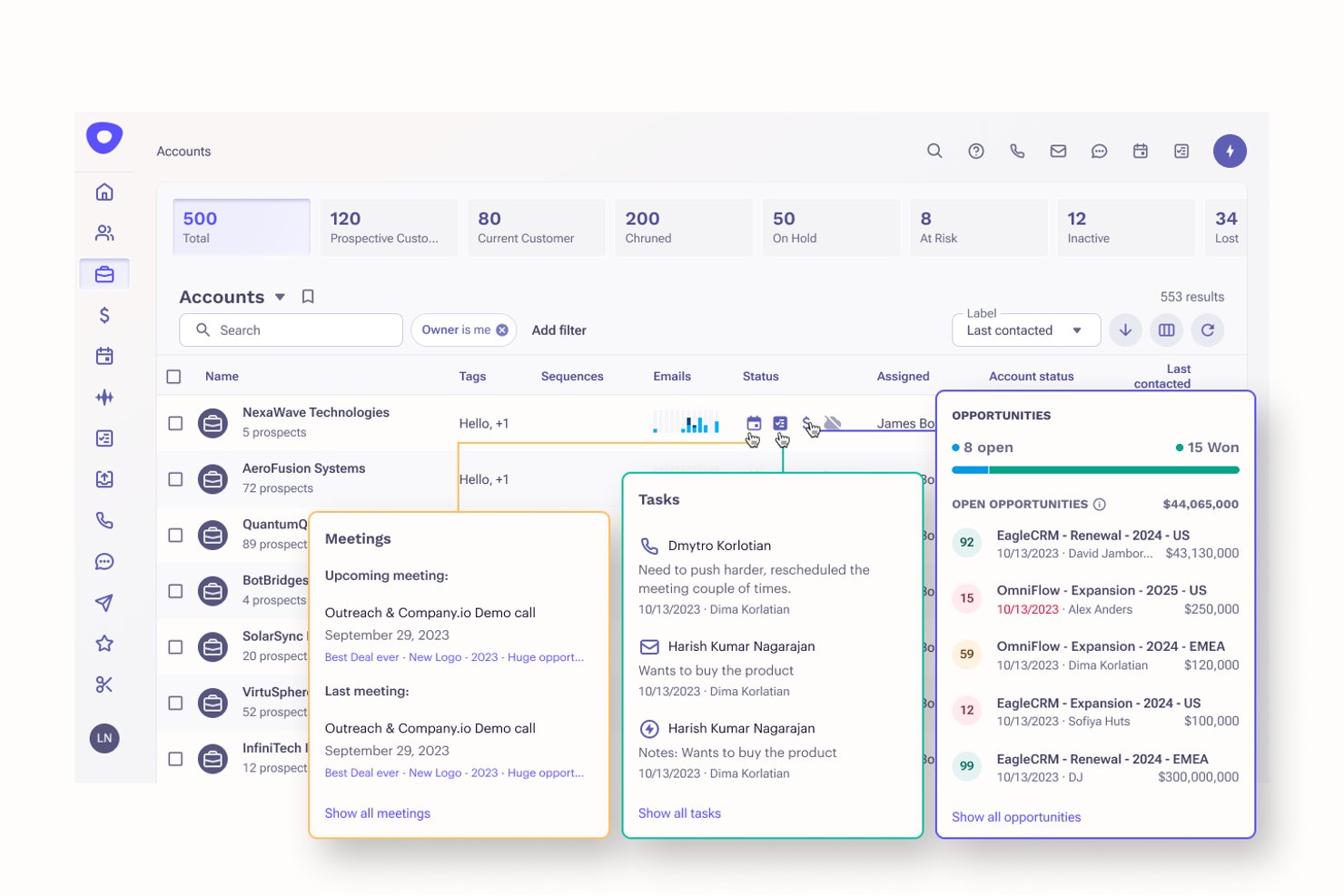
Apollo.io is an AI-powered GTM platform that combines a 230M+ contact B2B database with lead discovery, data enrichment, predictive scoring, AI-driven sequencing, and sales engagement tools.
Who Is Apollo.io Best For?
Apollo.io is a strong fit for B2B sales and demand generation teams that need to prospect globally without managing multiple data and engagement tools separately.
Why I Picked Apollo.io
Apollo.io earns its spot on my shortlist because no other platform at this price point matches its database depth and data accuracy. I'm particularly impressed by the Living Data Network, which continuously validates contact records to maintain 97% email accuracy across 230M+ contacts. When I'm prospecting into new international markets, I can trust that I'm working with current data, not stale records from a static list. The AI Research Agent then layers ICP-matched lead recommendations and pre-call intelligence directly on top of that foundation.
Apollo.io Key Features
- AI sequence builder: Use natural language prompts to instantly generate multi-channel outreach sequences tailored to your ICP.
- Power dialer and parallel dialer: Call multiple prospects efficiently with built-in US and international dialers, including parallel calling modes.
- Chrome extension for LinkedIn prospecting: Discover and enrich contact data directly while browsing LinkedIn and Sales Navigator profiles.
- Waterfall enrichment integrations: Automatically enrich contact and account records by layering data from multiple enrichment partners.
Apollo.io Integrations
Apollo.io offers native integrations with Salesforce, HubSpot, Outreach, Airtable, Amplitude, Asana, and Gmail, and provides an API for custom integrations.
Pros and Cons
Pros:
- Combined prospecting and sequencing in one platform
- AI-powered ICP lead scoring built in
- Massive verified global B2B contact database
Cons:
- Phone number accuracy lags behind email data
- Credit limits restrict high-volume enrichment

Best for ideal-fit B2B leads
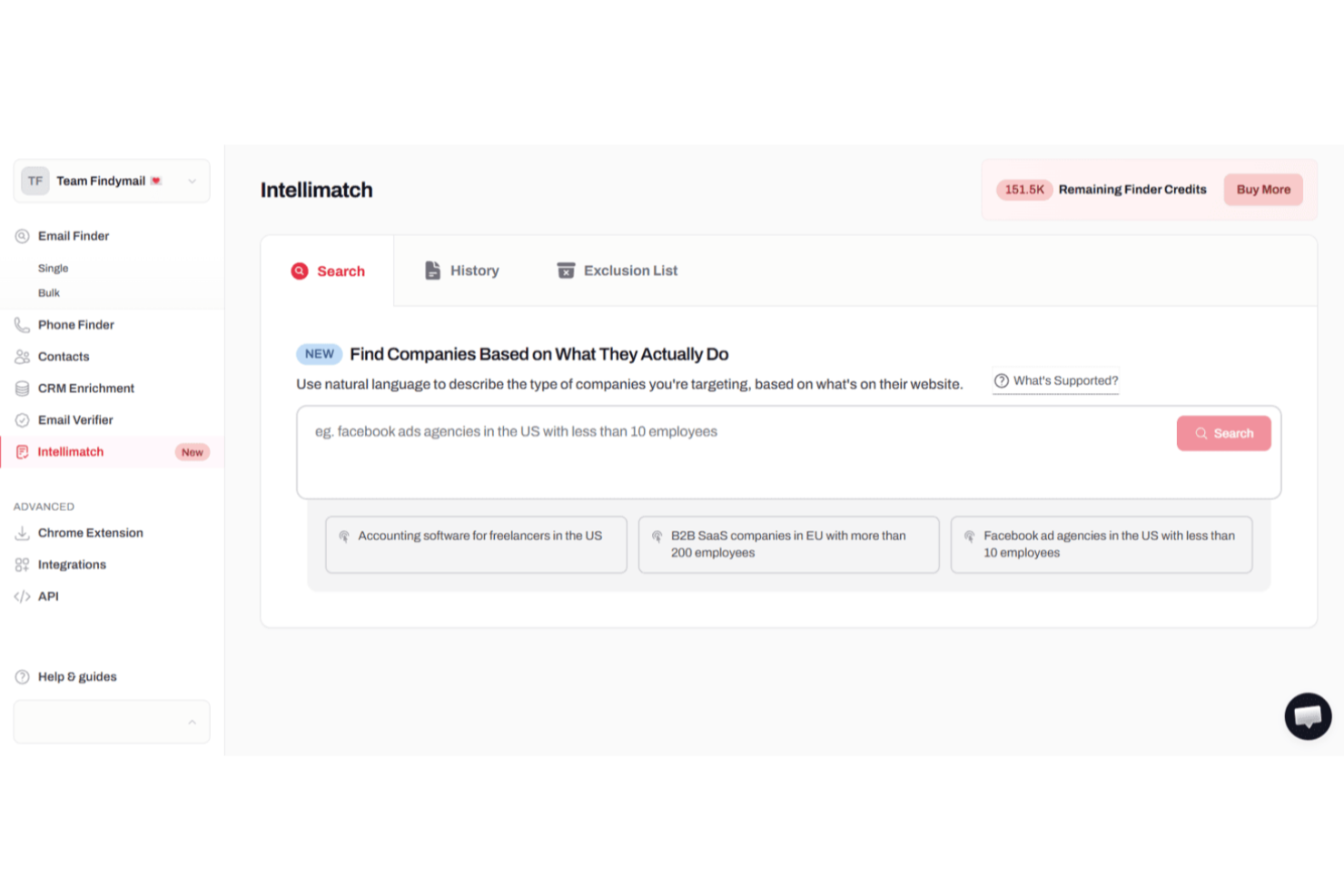
For teams looking to improve their sales prospecting, Findymail provides tools for finding and verifying professional email addresses. Built for sales teams, sales development representatives, marketers, and agencies, it helps locate contact emails from sources such as LinkedIn and other public data. By verifying email addresses before outreach, Findymail helps reduce bounced emails and improve the reliability of contact lists.
Why I Picked Findymail
I picked Findymail for its email verification accuracy, which helps teams confirm whether email addresses are valid before starting outreach. The platform checks email deliverability to reduce bounced messages and improve the quality of contact lists. It also offers a Chrome extension for verifying emails while browsing profiles and provides API access for adding verification to existing sales or prospecting workflows.
Findymail Key Features
In addition to email verification accuracy, Findymail offers:
- Email & Phone Data Finder: Enrich your contact lists with verified B2B emails and phone numbers, ensuring you reach the right prospects.
- CSV File Upload: Easily upload and enrich your existing lists with accurate data, ensuring your contacts are always up-to-date.
- Intellimatch (AI B2B Lead Finder): You can find ideal-fit B2B leads with AI. Say who you're targeting in plain English and instantly get leads that fit.
- Browser Extension: Utilize the Chrome extension to extract data from platforms like LinkedIn Sales Navigator and Apollo, simplifying the lead collection process.
Findymail Integrations
Integrations include HubSpot, Salesforce, Lemlist, Apollo, and automation tools like Zapier and Make. API access is available for custom integrations.
Pros and Cons
Pros:
- Strong B2B data coverage improves prospecting and lead enrichment results
- High email verification accuracy reduces bounce rates during outreach campaigns
- Fast email verification process for validating large prospect lists
Cons:
- Credits sometimes consumed for contacts already sourced elsewhere
- Credit-based pricing can become expensive for high-volume email verification

Chatbase
Best with multilingual AI agent support
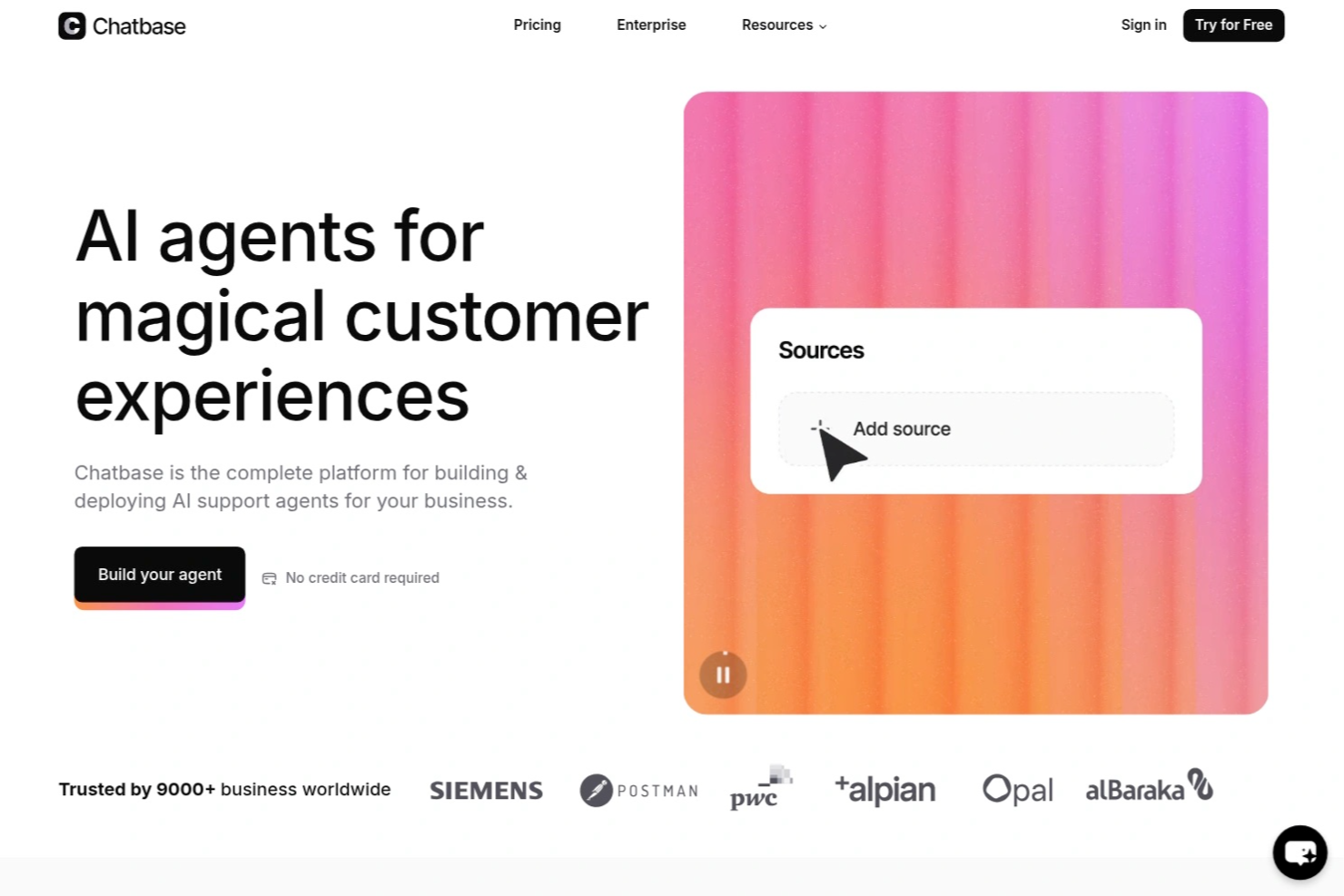
Chatbase is an AI chatbot platform for lead generation that lets you build, train, and deploy custom chatbots to capture and qualify leads directly from your website or digital channels.
Who Is Chatbase Best For?
Chatbase is a good fit for marketing and sales teams at companies that want to automate lead capture and qualification using AI chatbots.
Why I Picked Chatbase
I picked Chatbase as one of the best because I can deploy AI chatbots that handle conversations in multiple languages without extra setup. My team uses its multilingual agent support to engage leads from different regions directly on our site. I like that I can upload documents or knowledge bases in various languages, and the chatbot responds accurately in the language the visitor uses.
Chatbase Key Features
- Custom chatbot builder: Create and train AI chatbots using your own data, documents, or website content.
- Lead capture forms: Collect visitor information directly through chatbot interactions and customizable forms.
- Widget customization: Adjust the look and feel of the chatbot widget to match your brand and website design.
- CRM integration: Connect chatbot conversations and captured leads to your existing CRM systems for follow-up.
Chatbase Integrations
Native integrations are not clearly documented. Chatbase provides an API for custom integrations.
Pros and Cons
Pros:
- Includes a free-forever plan for new users
- Provides real-time analytics on lead interactions
- Allows deep branding customization for chat widgets
Cons:
- Lacks prebuilt industry-specific chatbot templates
- No built-in email or SMS follow-up features

UpLead
Best for B2B companies needing AI data enrichment

UpLead is a B2B lead generation platform designed for sales and marketing professionals. It provides verified contact information and real-time data enrichment to help teams connect with potential clients effectively.
Why I picked UpLead: Its focus on B2B companies allows your team to access high-quality leads with confidence. The platform's AI-driven data enrichment ensures you get accurate and up-to-date contact details. UpLead also allows you to perform targeted searches based on specific criteria, increasing your chances of finding the right prospects. These features make it an ideal choice for B2B companies looking to expand their customer base.
Standout features & integrations:
Features include a real-time email verification tool that reduces bounce rates and increases deliverability. The platform also offers a competitor intelligence feature that provides insights into your market landscape. Additionally, UpLead's contact management system helps you organize and track your leads efficiently.
Integrations include Salesforce, HubSpot, Zoho CRM, Pipedrive, Copper, Outreach, SalesLoft, Slack, LinkedIn, and Gmail.
Pros and Cons
Pros:
- Targeted search capabilities
- Real-time data enrichment
- Access to verified B2B leads
Cons:
- Requires a learning curve for new users
- Limited features for non-B2B sectors

Cognism
Best for GDPR compliance

Cognism is a sales intelligence platform designed for sales and marketing teams, focusing on lead generation and data compliance. It provides GDPR-compliant data solutions, helping teams reach prospects while adhering to privacy regulations.
Why I picked Cognism: Cognism's strong emphasis on GDPR compliance ensures your team can confidently engage with leads in Europe. Its AI-powered data cleaning feature keeps your contact lists accurate and up-to-date. The platform offers intent data, helping you identify prospects ready to buy. These AI capabilities support compliant and effective lead generation, making Cognism a top choice for teams focused on data privacy.
Standout features & integrations:
Features include a strong data cleaning tool that ensures accurate contact information. The platform provides a real-time lead tracker, enabling the monitoring of prospect engagement. Additionally, Cognism offers a centralized data compliance dashboard, ensuring you stay aligned with privacy regulations.
Integrations include Salesforce, HubSpot, Marketo, Pipedrive, Zoho CRM, Copper, Outreach, SalesLoft, LinkedIn, and Slack.
Pros and Cons
Pros:
- Intent data for lead prioritization
- Accurate AI-powered data cleaning
- Strong GDPR compliance features
Cons:
- Complexity in initial setup and onboarding
- Higher cost for smaller teams

Outplay
Best for multi-channel engagement

Outplay is a sales engagement platform designed for sales teams to manage their outreach across multiple channels. It focuses on enhancing lead engagement through AI-driven insights and automation, allowing teams to connect with prospects effectively.
Why I picked Outplay: Outplay's multi-channel engagement capabilities make it ideal for teams looking to diversify their outreach strategies. The platform uses AI to analyze engagement data, helping tailor follow-up strategies across email, phone, and social media. Its automated cadence feature ensures timely communication, adapting to each prospect's behavior. These features help your team maintain consistent and effective engagement across various channels.
Standout features & integrations:
Features include a customizable sequence builder that lets you design personalized outreach campaigns. The platform provides a task management system to track follow-ups and manage deadlines efficiently. Additionally, Outplay offers performance dashboards to give insights into your team's productivity and campaign success.
Integrations include Salesforce, HubSpot, Pipedrive, Zoho CRM, Copper, Outreach, SalesLoft, Slack, LinkedIn, and Gmail.
Pros and Cons
Pros:
- Customizable outreach sequences
- AI-driven engagement insights
- Multi-channel engagement features
Cons:
- Configuration can be complex initially
- Limited customizations for non-email features

Klenty
Best for email sequences

Klenty is a sales engagement platform designed for sales teams to automate and manage outreach campaigns. It focuses on email sequence automation and lead engagement using AI-driven insights.
Why I picked Klenty: Klenty's AI capabilities make it ideal for optimizing email sequences. The platform uses AI to analyze engagement data, helping your team craft effective follow-up strategies. Its automated cadence feature adjusts email timing based on recipient behavior, ensuring timely communication. These AI-driven functionalities enhance lead engagement, making Klenty a top pick for teams focused on email outreach.
Standout features & integrations:
Features include a customizable sequence builder that lets you tailor outreach campaigns to your audience. The platform offers a task management system to track follow-ups and deadlines. Additionally, Klenty's performance dashboards provide insights into campaign success and team productivity.
Integrations include Salesforce, HubSpot, Pipedrive, Zoho CRM, Slack, LinkedIn, Gmail, Microsoft Dynamics, Outreach, and SalesLoft.
Pros and Cons
Pros:
- Customizable outreach cadence
- AI-driven engagement analytics
- Effective email sequence automation
Cons:
- Initial setup may require assistance
- Limited advanced features for large enterprises

Podium
Best for AI personalized customer communications

Podium is a customer interaction platform designed for local businesses. It helps users manage customer messaging, gather reviews, and generate leads using AI-driven insights.
Why I picked Podium: Podium excels in helping local businesses fine-tune their customer interactions and lead generation efforts. Its AI features include automated review requests that boost your online presence and AI-driven messaging that personalizes customer communication. The platform's ability to collect and manage reviews also efficiently helps businesses build their credibility.
Standout features & integrations:
Features include a webchat tool that allows you to engage with website visitors in real-time. You can also manage all your customer interactions from a single inbox, simplifying communication. Additionally, Podium's payment solutions enable you to collect payments through text messages, increasing convenience for your customers.
Integrations include QuickBooks, Square, Google, Facebook, HubSpot, Salesforce, Mindbody, Shopify, Wix, and WordPress.
Pros and Cons
Pros:
- Simplifies review management
- Centralized inbox for managing all customer messages
- Capture and manage leads from local customers
Cons:
- Limited advanced features for large enterprises
- May be costly for small businesses

Best for LinkedIn prospecting

LinkedIn Sales Navigator is a sales management tool designed for sales professionals who want to leverage LinkedIn's network for prospecting. It enhances lead generation by providing advanced search capabilities and AI-driven insights to identify and connect with potential leads.
Why I picked LinkedIn Sales Navigator: It offers unparalleled access to LinkedIn's vast professional network, making it ideal for prospecting. The AI-driven lead recommendations suggest potential connections based on your sales preferences. Its advanced search filters help you pinpoint prospects that fit your ideal customer profile. These features make it a valuable tool for teams looking to maximize LinkedIn's potential for sales engagement.
Standout features & integrations:
Features include real-time sales updates that keep you informed about key developments with your prospects. The platform offers a team link feature, allowing you to connect and collaborate with your colleagues on prospecting activities. Additionally, LinkedIn Sales Navigator provides customizable lead lists to organize and track your prospecting efforts effectively.
Integrations include Salesforce, HubSpot, Microsoft Dynamics, Zoho CRM, Pipedrive, Copper, Outreach, SalesLoft, Slack, and Gmail.
Pros and Cons
Pros:
- Advanced search filters for precise targeting
- AI-driven lead recommendations
- Access to LinkedIn's extensive professional network
Cons:
- Complexity in navigating all features
- Premium cost for network-based prospecting

SalesIntel
Best for data enrichment

SalesIntel IO is a sales intelligence platform designed for sales and marketing teams. It enhances lead generation efforts by providing accurate contact data and real-time data enrichment through its AI capabilities.
Why I picked SalesIntel IO: It excels in data enrichment, offering your team precise and up-to-date contact information. The platform's AI-powered intent data helps identify prospects who are ready to engage. Its research-on-demand feature ensures you get the latest verified data. These functionalities make it ideal for teams that need reliable data to drive their sales strategies.
Standout features & integrations:
Features include human-verified contact data, ensuring high accuracy in your lead lists. The platform provides a buyer intent insights tool that identifies prospects showing purchase intent. Additionally, Sales Intel IO offers an exhaustive company technographic data feature for deeper market analysis.
Integrations include Salesforce, Marketo, Zoho CRM, Pipedrive, Copper, Outreach, SalesLoft, Slack, and LinkedIn.
Pros and Cons
Pros:
- All-encompassing technographic data
- AI-powered intent data insights
- Accurate human-verified contact data
Cons:
- Lacks some popular integrations
- Clunky/unintuitive UI/UX
Other AI Lead Generation Software
Here are some additional AI lead generation software options that didn’t make it onto my shortlist, but are still worth checking out:
- Lyne.ai
For personalized outreach
- Dealfront
For deal management
- Clay
For workflow automation
- Artisan
For AI-automated outbound sales
- Overloop
For team collaboration
- Seamless.AI
For AI contact search and accuracy
- LeadIQ
For AI-led outreach
- Outreach.io
For AI-driven sentiment analysis features
- Instantly.ai
For email outreach
- Lead Zen AI
AI lead generation for real estate agents
- Leadsforge
For AI lead scoring
- Saleshandy
For email tracking
- ZoomInfo
For B2B contact accuracy
- RocketReach
For social media insights
- Zoho CRM
For small business automation
- Salesforce Einstein
For AI-driven predictions
- Persana AI
For AI recommendations


How I Evaluate AI Lead Generation Software
Any tool on this list needs AI that's doing real work—like identifying in-market accounts your team hasn't found yet or auto-personalizing sequences that actually convert. I evaluate each platform across two layers: the core functionality it needs to earn a spot, and the differentiating factors that separate a solid pick from the best fit for your stack.
Core Functionality (Table Stakes For This List)
When I'm selecting tools for my list, I rank each one on a scale from 0 (does not offer the functionality) to 5 (excels in this area) for each core functionality listed below. Then, I calculate the tool's total score into a percentage. Each tool needs to achieve a minimum total score of 65% to be considered for inclusion.
- AI Lead Scoring: I look for ML-driven scoring that goes beyond static rules—like models that recalibrate as new deals close and weight fit signals alongside engagement data.
- Automated Lead Discovery: The tool should surface net-new prospects using AI, whether that's ICP-matched recommendations or autonomous sourcing from intent and web data.
- AI Data Enrichment: I evaluate whether enrichment runs automatically and pulls from multiple sources, filling in firmographic and technographic gaps without manual CSV uploads.
- Intent & Behavioral Signals: Platforms should detect buying signals—like surges in topic research or repeat visits to pricing pages—and use AI to flag who's sales-ready.
- AI-Powered Outreach & Engagement: I check for AI that personalizes messaging per lead, such as generating tailored email sequences or powering chatbot conversations on-site.
- CRM & Marketing Stack Integration: Tools need to sync AI-scored leads into your existing workflows, with native connections to platforms like Salesforce, HubSpot, or Marketo.
Once I have a list of tools that meet this criteria, I consider what sets each platform apart.
Differentiating Factors (What Sets Vendors Apart)
Here's how I compare and contrast different vendors:
Standout Features
Multi-channel AI orchestration is a major differentiator. I evaluate whether tools can autonomously sequence across email, LinkedIn, and ads—selecting the right channel and timing per lead instead of running static cadences. Lookalike audience modeling also matters. The strongest implementations analyze your closed-won data to build prospect lists your team wouldn't surface manually. Predictive funnel analytics round things out by forecasting pipeline impact and mapping lead-to-revenue attribution, giving demand gen teams real proof of what's working.
Beyond Features
Data quality is where I spend the most evaluation time. A tool's AI is only as good as its underlying database—I look at verification frequency and whether coverage extends beyond a single region. Compliance weighs heavily too, especially for teams running AI-powered outreach across jurisdictions with different privacy rules like GDPR and CCPA. I check for SOC 2 certification and clear opt-out handling. Pricing structure also matters here, since credit-based models can get expensive fast when your enrichment and outreach volumes scale beyond initial projections.
How to Choose AI Lead Generation Software
It’s easy to get bogged down in long feature lists and complex pricing structures. To help you stay focused as you work through your unique software selection process, here’s a checklist of factors to keep in mind:
| Factor | What to Consider |
| Scalability | Consider if the tool can grow with your business. Will it handle increased lead volume? Look for flexible pricing plans and the ability to add users without hassle. |
| Integrations | Ensure the software connects with your existing tools like CRM, email, and analytics. Check compatibility and ease of integration to avoid workflow disruptions. |
| Customizability | Assess if you can tailor the tool to fit your processes. Can you customize fields, dashboards, and reports? This flexibility can save time and improve efficiency. |
| Ease of use | Evaluate if your team can quickly learn and use the software. A simple interface reduces training time and increases adoption. Try demos to test usability firsthand. |
| Implementation and onboarding | Determine the time and resources needed to get started. Look for end-to-end onboarding support, including tutorials and live assistance, to ensure a smooth transition. |
| Cost | Compare the total cost with your budget. Watch out for hidden fees or long-term contracts. Consider the value of features versus price to ensure affordability. |
| Security safeguards | Verify the tool protects your data with encryption, regular backups, and compliance with data protection laws. This helps protect customer information and maintain regulatory compliance. |
| Support availability | Check if support is available when you need it. Look for 24/7 support, live chat, and dedicated account managers to resolve issues quickly. |
What Is AI Lead Generation Software?
AI lead generation software is a tool that automates the process of identifying and qualifying potential leads using artificial intelligence. Sales and marketing professionals typically use these tools to increase efficiency and target the right prospects. Features like predictive analytics, automated lead scoring, and personalized outreach help with identifying quality leads and engaging them effectively. Overall, these tools save time and improve the accuracy of lead generation efforts.
Features
When selecting AI lead generation software, keep an eye out for the following key features:
- Predictive analytics: Uses AI to forecast which leads are most likely to convert, helping prioritize efforts effectively.
- Automated lead scoring: Automatically ranks leads based on predefined criteria, ensuring your team focuses on high-potential prospects.
- Personalized outreach: Customizes communication with leads using AI-driven insights, increasing engagement and response rates.
- Data enrichment: Enhances lead information by adding relevant data, providing a more complete view of each prospect.
- Real-time analytics: Offers immediate insights into lead behavior and campaign performance, allowing quick adjustments to strategies.
- Behavioral tracking: Monitors lead interactions and activities to tailor follow-ups and improve conversion chances.
- AI-driven insights: Provides actionable recommendations based on data analysis to optimize lead generation processes.
- Customizable workflows: Allows tailoring of processes to fit specific business needs, improving efficiency and effectiveness.
- Multi-channel engagement: Supports outreach across various platforms, ensuring consistent communication with leads.
- Security safeguards: Ensures data protection through encryption and compliance with privacy regulations, maintaining trust and integrity.
Benefits
Implementing AI lead generation software provides several benefits for your team and your business. Here are a few you can look forward to:
- Increased efficiency: AI automates repetitive tasks like lead scoring and data enrichment, freeing up your team to focus on closing deals.
- Improved targeting: Predictive analytics helps identify high-potential leads, ensuring your team targets the right prospects.
- Enhanced personalization: AI-driven insights allow for tailored communication, increasing engagement and conversion rates.
- Faster decision-making: Real-time analytics provide immediate feedback on lead behavior, enabling quick adjustments to strategies.
- Cost savings: By prioritizing high-quality leads, AI tools reduce wasted resources on unqualified prospects.
- More reliable data: Automated data enrichment ensures your contact information is up-to-date and complete.
- Consistent outreach: Multi-channel engagement features support communication across platforms, maintaining steady contact with leads.
Costs & Pricing
Selecting AI lead generation software requires an understanding of the various pricing models and plans available. Costs vary based on features, team size, add-ons, and more. The table below summarizes common plans, their average prices, and typical features included in AI lead generation software solutions:
Plan Comparison Table for AI Lead Generation Software
| Plan Type | Average Price | Common Features |
| Free Plan | $0 | Basic contact database access, limited lead scoring, and basic analytics. |
| Personal Plan | $5-$25/user/month | Enhanced contact management, email tracking, and basic automation features. |
| Business Plan | $30-$75/user/month | Advanced lead scoring, multi-channel outreach, and real-time analytics. |
| Enterprise Plan | $80-$150/user/month | Customizable workflows, AI-driven insights, advanced security safeguards, and dedicated support. |
AI Lead Generation Software FAQs
Here are some answers to common questions about AI lead generation software:
How does AI lead generation software process and prioritize incoming leads?
This software analyzes data from multiple sources, using pre-set criteria and algorithms to assess a lead’s relevance. It evaluates factors like engagement, demographics, and behavior, then assigns a score based on how closely they match your ideal customer profile. This scoring helps sales teams prioritize follow-up for the most promising leads first.
Can AI-led generation software improve my sales conversion rates?
Yes, AI lead generation software can improve conversion rates by providing insights into lead behavior and preferences. Use these insights to refine your outreach and prioritize high-quality leads. Features like predictive analytics and automated lead scoring help you focus on prospects more likely to convert. By targeting the right leads with personalized messages, you increase the chances of closing deals. Regularly review performance metrics to adjust your strategies for even better results.
How often should I update the data used by my AI lead generation system?
You should update your AI lead generation data regularly to maintain accuracy. Many marketing leaders refresh data monthly or quarterly, but the right interval depends on your industry and lead volume. Outdated records can lead to missed opportunities or ineffective targeting. Set reminders for routine data checks, and adjust your schedule if you notice a drop in lead quality or engagement rates.
What steps should I take to ensure the accuracy of my lead data in AI systems?
To keep your AI lead data accurate, start with routine data cleansing—remove duplicates or outdated records frequently. Establish consistent data entry practices for your team and train everyone involved. Monitor the AI’s lead assessments by sampling records and checking for errors. Lastly, use regular audits to verify that your data sources and criteria stay aligned with your marketing goals.
How can I measure the ROI of AI lead generation software?
To measure ROI, track key metrics like lead conversion rates, time saved on manual tasks, and sales growth. Compare these metrics before and after implementation to see the software’s impact. Use analytics features to monitor performance and identify trends. Calculate cost savings from greater efficiency and reduced labor hours. Regularly review these metrics to ensure the software delivers value and aligns with your business objectives. Adjust strategies based on insights to maximize ROI.