

Recensione di Motion: Pro, Contro, Funzionalità e Prezzi Spiegati
Motion si distingue per la pianificazione e l'automazione delle attività basate sull'intelligenza artificiale, risultando ideale per i team che cercano una pianificazione del marketing semplificata, anche se potrebbe non essere adatto a chi necessita di una personalizzazione approfondita.

Recensiamo gli strumenti in modo indipendente, e le commissioni aiutano a finanziare i nostri test. Consulta la nostra politica sulla trasparenza, la nostra metodologia o suggerisci uno strumento.
Motion is a marketing planning software that uses AI to automatically schedule tasks, campaigns, and meetings based on your team's priorities and deadlines. I'd consider it if your marketing team is constantly juggling shifting timelines and needs a tool that adapts schedules in real time rather than requiring constant manual updates. If you've outgrown task management in Asana but don't need a full enterprise project platform, Motion's AI-driven scheduling gives you more intelligent prioritization without the added complexity.
Motion Evaluation Summary
4.2/5
- From $19/seat/month (billed annually)
- Free trial available
Perché fidarsi dei nostri consigli sui software
6,700+
Reviews
20
Industry experts
16+
Evaluation factors
14
Years
Il nostro team testa e recensisce software dal 2012. In quanto leader del marketing noi stessi, sappiamo quanto sia difficile — e importante — scegliere il software giusto.
Per questa guida, abbiamo valutato gli strumenti attraverso test pratici e ricerche indipendenti, assegnando un punteggio agli strumenti in base ai nostri criteri di selezione.
Le nostre recensioni riflettono il nostro giudizio editoriale umano, non un discorso di vendita.
Revisori esperti:
 Gui DrusinaDirettore creativo
- Shriya GhateSenior Marketing Lead
 Amanda JacquesResponsabile Marketing Ops

Motion Overview
When judging Motion as a marketing planning software, its AI-driven scheduling and intuitive interface set it apart for teams that want to automate task management and reduce manual planning. Pricing is competitive for the automation it delivers, though integration options are more limited than some alternatives. Onboarding is quick, and support is responsive, making it easy for new users to get started. If you're selecting a tool for fast-moving marketing teams that value adaptive scheduling over deep customization, Motion is a strong choice, especially for agencies or in-house teams juggling multiple campaigns and shifting priorities.
Pros
- AI auto-scheduling adapts to shifting campaign priorities.
- Centralizes tasks, meetings, and docs for marketing teams.
- Automated project updates reduce manual status chasing.
Cons
- Limited advanced reporting for campaign analytics.
- Task prioritization can misalign with marketing workflows.
- Fewer native integrations than other marketing planning tools.
Is Motion Right For Your Needs?
Who Would be a Good Fit for Motion?
Motion is best suited for teams and organizations that need to coordinate fast-moving projects, automate scheduling, and keep marketing deliverables on track without heavy manual oversight. Its AI-driven task management and centralized workspace make it a strong choice for environments where priorities shift often and campaign timelines are tight. Teams that value automation over deep customization will find Motion's feature set especially useful. The motion app provides an all-in-one solution for time management and meeting scheduling, letting you use Motion across devices with a mobile app that syncs with your work calendar and personal calendar seamlessly.
- Small AgenciesMotion's automated scheduling and project updates help small teams juggle multiple clients.
- In-House MarketingCentralized task and meeting management keeps internal campaigns organized.
- Remote TeamsAI-driven scheduling adapts to distributed team members' changing availability.
- Creative DepartmentsAutomated reminders and status updates reduce manual follow-ups for creative assets.
- StartupsFast onboarding and minimal setup support lean teams with limited resources.
- Project ManagersReal-time task tracking and auto-prioritization simplify campaign oversight.
Who Would be a Bad Fit for Motion?
Motion may not be the best choice for organizations that require advanced analytics, deep customization, or extensive integration with other marketing tools. Its feature set is designed for speed and automation, which can limit flexibility for teams with complex reporting needs or highly specialized workflows. Larger enterprises or teams with strict process requirements may find Motion's approach too rigid.
- Large EnterprisesMotion lacks advanced reporting and workflow customization for complex organizations.
- Data-Driven TeamsLimited analytics and campaign insights restrict performance measurement.
- Sales DepartmentsSales-specific CRM features and pipeline tracking are not included.
- Regulated IndustriesMotion does not offer compliance tools for strict regulatory environments.
- Event MarketingNo built-in event management or attendee tracking features.
- Agencies With Custom WorkflowsRigid task structures make it hard to support highly tailored processes.
Come Testiamo e Valutiamo gli Strumenti
Abbiamo passato anni a costruire, perfezionare e migliorare il nostro sistema di test e valutazione del software. Il nostro metodo è progettato per cogliere le sfumature nella selezione del software e ciò che rende uno strumento efficace, concentrandoci sugli aspetti critici del processo decisionale. Qui sotto puoi vedere esattamente come funziona il nostro sistema di test e valutazione su sette criteri. Questo ci permette di offrire una valutazione imparziale del software basata su funzionalità principali, funzioni distintive, facilità d’uso, onboarding, supporto clienti, integrazioni, recensioni dei clienti e rapporto qualità-prezzo.
Funzionalità principali (25% del punteggio finale)
Il punto di partenza della nostra valutazione è sempre la funzionalità principale dello strumento. Include le caratteristiche e le funzioni basilari che un utente si aspetterebbe di trovare? Alcune di queste funzionalità sono bloccate nei piani premium? Ci aspettiamo che ogni strumento soddisfi almeno le capacità di base dei suoi concorrenti.
Funzionalità distintive (25% del punteggio finale)
Successivamente, valutiamo le funzionalità uniche che vanno oltre la normale funzionalità principale, quelle poco comuni negli strumenti simili. Un punteggio alto riflette caratteristiche specializzate o uniche che rendono il prodotto più veloce, efficiente o offrono un valore aggiunto all’utente. Valutiamo anche quanto sia semplice integrare il software con altri strumenti abitualmente usati in una tech stack, per espandere le funzionalità e l’utilità del prodotto. Sono valutate positivamente soluzioni con molte integrazioni native, connessioni di terze parti e API per creare integrazioni personalizzate.
Facilità d’uso (10% del punteggio finale)
Consideriamo la rapidità e semplicità con cui si possono eseguire le attività principali tramite lo strumento. I software con punteggio più alto sono ben progettati, intuitivi, dispongono di app mobili, offrono template e semplificano compiti complessi.
Onboarding (10% del punteggio finale)
Sappiamo quanto sia importante l’adozione rapida in azienda, quindi valutiamo la facilità di apprendimento e utilizzo di uno strumento con formazione minima. Analizziamo quanto velocemente un utente senza esperienza può iniziare a usare il software. Le soluzioni migliori richiedono poco o nessun supporto.
Supporto clienti (10% del punteggio finale)
Analizziamo la rapidità e facilità nel trovare aiuto tramite telefono, chat dal vivo o knowledge base. Gli strumenti che offrono supporto in tempo reale ottengono il punteggio migliore: i chatbot invece i peggiori.
Recensioni dei clienti (10% del punteggio finale)
Oltre ai nostri test, consideriamo il net promoter score di attuali ed ex clienti. Valutiamo la probabilità che, potendo scegliere, l’utente decida di utilizzare ancora quello strumento per le funzionalità principali. Un software con un punteggio alto corrisponde ad un alto net promoter score tra clienti attuali o passati.
Rapporto qualità-prezzo (10% del punteggio finale)
Infine, tenendo conto di tutti gli altri criteri, confrontiamo il prezzo medio dei piani base rispetto alle funzionalità principali e agli altri fattori di valutazione. I software che offrono di più, a meno, ottengono i punteggi più alti.
Core Features
AI-Powered Scheduling
Automatically prioritizes and reschedules tasks based on deadlines and team availability using built-in AI tools. This helps marketing teams adapt quickly when priorities shift.
Task Management
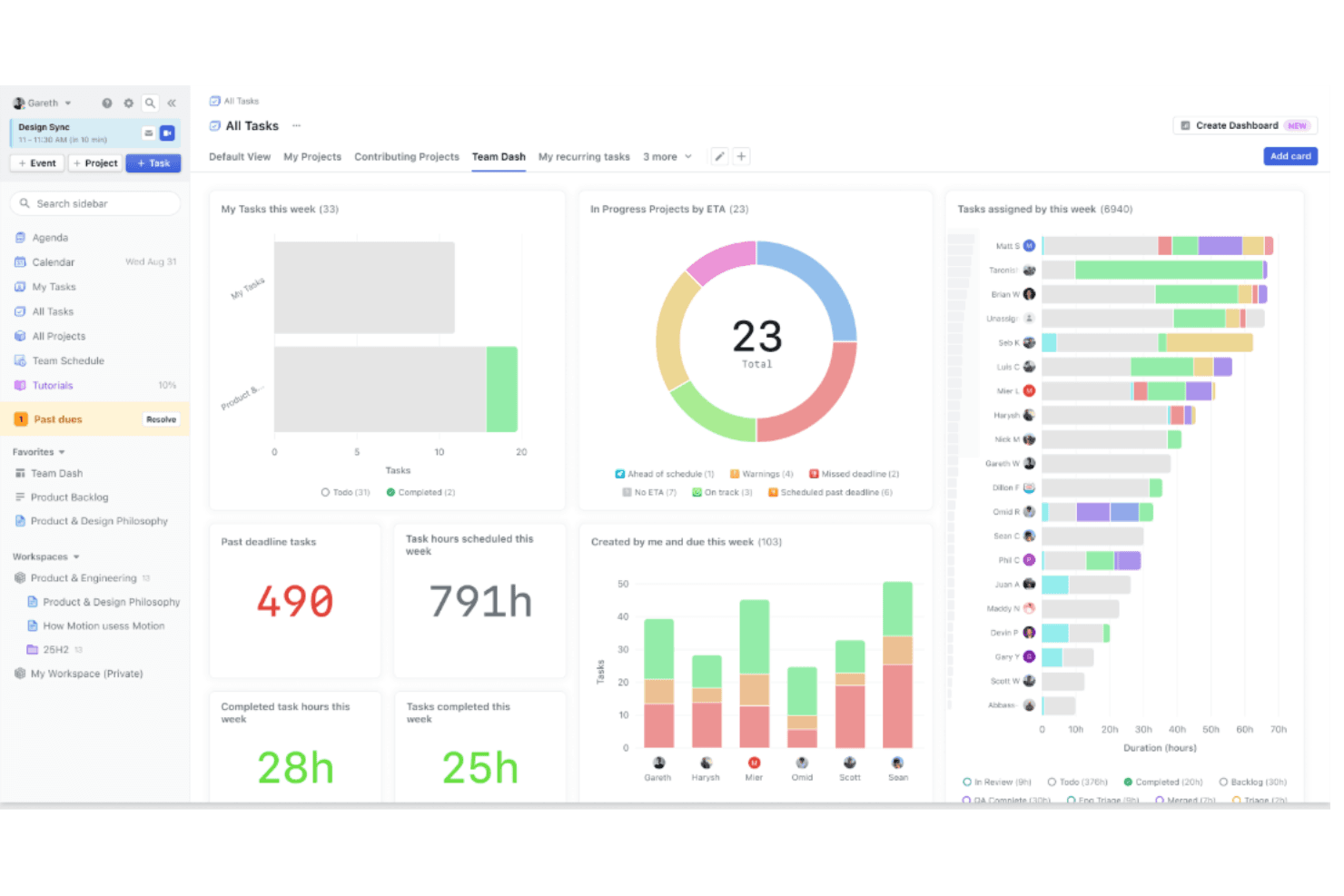
Create, assign, and track tasks in a centralized dashboard. View progress and deadlines at a glance with kanban boards and to-do lists.
Calendar Integration
Syncs with Google and Outlook calendars to display meetings and deadlines in one view. This streamlines calendar management and keeps everyone aligned.
Automated Reminders
Sends notifications for upcoming tasks, meetings, and overdue items. Teams stay on deliverables without manual follow-ups.
Project Workspaces
Organizes campaigns, tasks, and documents by project. Each workspace keeps related assets and conversations together.
Team Collaboration
Enables real-time comments, file sharing, and status updates within tasks. This reduces email back-and-forth.
.png&w=3840&q=75)
Ease of Use
Motion is widely praised for its clean interface and intuitive navigation, making onboarding fast for new users. The AI-driven scheduling and drag-and-drop task management reduce manual setup and keep workflows simple. Users appreciate how quickly they can organize campaigns and adjust priorities without digging through menus. The learning curve is minimal for most teams, though the rescheduling functions occasionally override user preferences, which can frustrate those who want more manual control. Overall, Motion's usability suits teams seeking speed and simplicity, and the motion calendar keeps work hours visible across your schedule.
Integrations
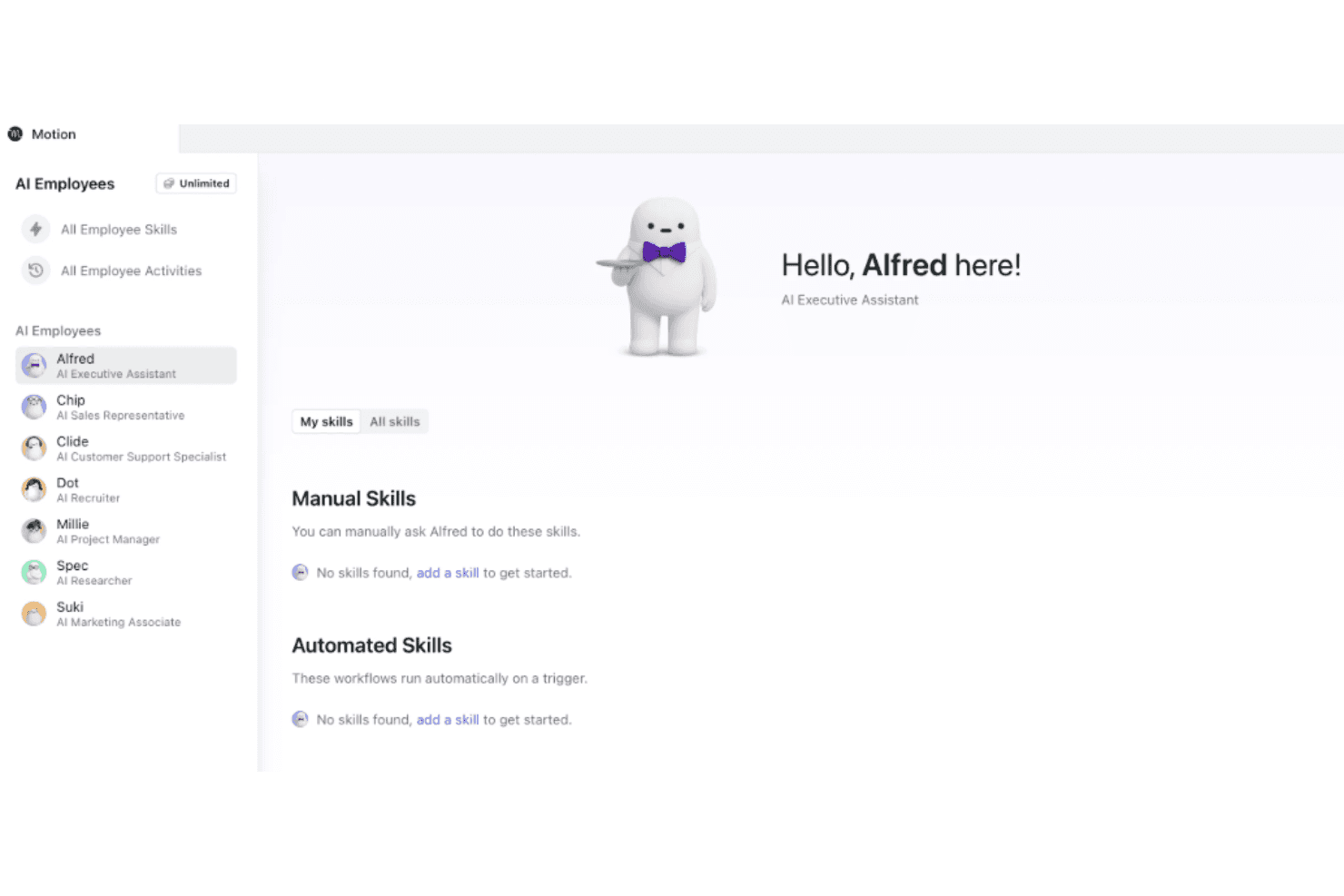
Motion integrates with Google Meet, Microsoft Outlook 365, Gmail, Microsoft Teams, Slack, Zoom, Siri, iClouud Calendar, and Zapier.
Motion also offers an API and connects with third-party integration tools for expanded workflow automation, including booking links and template sharing across platforms.
.png&w=3840&q=75)
Motion Specs
- API: Yes
- Calendar Management: Yes
- Collaboration Support: Yes
- Dashboards: Yes
- Data Export: Yes
- Data Import: Yes
- External Integrations: Yes
- File Sharing: Yes
- Gantt Charts: Yes
- Kanban Boards: Yes
- Mobile App: Yes
- Multi-User: Yes
- Notifications: Yes
- Prioritization: Yes
- Project Management: Yes
- Status Notifications: Yes
- Task Scheduling/Tracking: Yes
- Time Management: Yes


