

Avis sur Constant Contact : avantages, inconvénients, fonctionnalités et tarifs
Constant Contact excelle avec des outils conviviaux et un support fiable, idéal pour les petites entreprises recherchant des solutions d’email marketing simples.

Nous évaluons les outils de manière indépendante, et les commissions aident à financer nos tests. Consultez notre politique de transparence, notre méthodologie ou suggérez un outil.
Constant Contact is a email marketing software built for small businesses, nonprofits, and event-driven organizations that need to run campaigns without a steep learning curve. I'd consider it a strong pick if you want more hands-on customer support and a simpler setup than Mailchimp, particularly if your marketing mix includes event promotion alongside regular email outreach.
Constant Contact Evaluation Summary
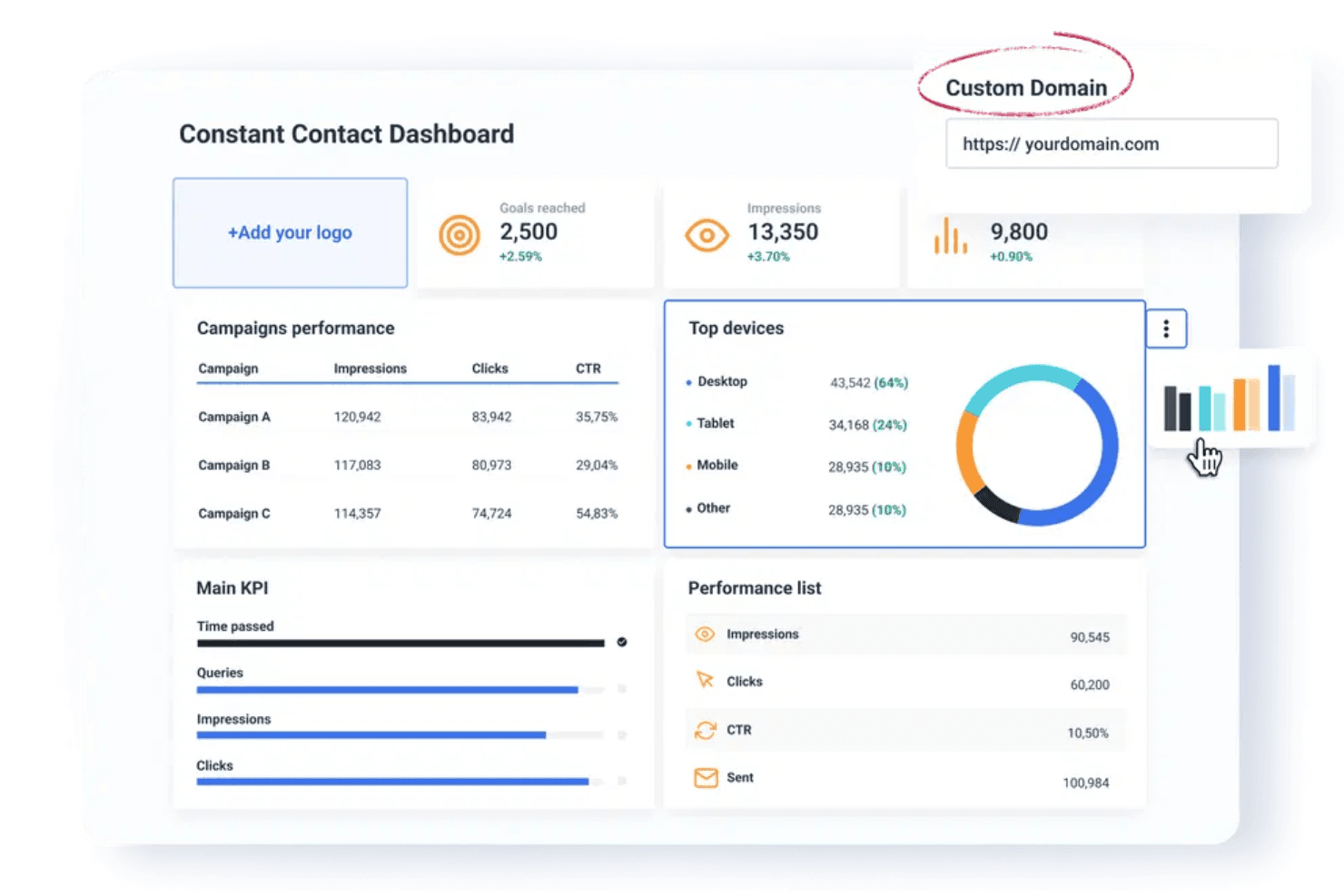
4.2/5
- From $12/month
- 14-day free trial + free demo available
Pourquoi faire confiance à nos recommandations de logiciels
6,700+
Reviews
20
Industry experts
16+
Evaluation factors
14
Years
Notre équipe teste et évalue des logiciels depuis 2012. En tant que leaders marketing nous-mêmes, nous savons à quel point il est difficile — et important — de choisir le bon logiciel.
Pour ce guide, nous avons évalué les outils grâce à des tests pratiques et une recherche indépendante, en notant les outils selon nos critères de sélection.
Nos avis reflètent notre jugement éditorial humain, et non un argumentaire de vente.
Réviseurs experts:
 Gui DrusinaDirecteur de la création
- Shriya GhateSenior Marketing Lead
 Amanda JacquesResponsable Marketing Ops

Constant Contact Overview
In my opinion, Constant Contact is a solid choice for small businesses and nonprofits looking for user-friendly email marketing software. It excels in ease of use and customer support, making it simple for new users to get started. While it might not offer the most advanced features or customization options compared to other platforms, such as ActiveCampaign or GetResponse, its straightforward interface and reliable support make it a strong contender. If you're deciding between tools, consider your team's needs and whether a simple platform with solid customer support will suit your goals and workflows.
Pros
- Its features are user-friendly, even without technical skills.
- It offers helpful and reliable customer support.
- It offers various email marketing features for creating engaging email campaigns.
Cons
- It lacks advanced features that some other platforms offer.
- You might find the customization options and email templates limited.
- No free plan is available.
Is Constant Contact Right For Your Needs?
Who Would be a Good Fit for Constant Contact?
Constant Contact is a good fit for small businesses and nonprofits that need intuitive email marketing tools. Its user-friendly interface can help beginners and teams with limited technical skills maintain regular communication with their audience and create effective email campaigns.
- Small BusinessesThis email marketing platform allows your team to quickly set up and manage email campaigns without the need for technical expertise.
- NonprofitsYour organization can use Constant Contact to maintain strong relationships with benefactors through its email design tools.
- Retail ShopsThe platform offers simple templates that help you send promotions and engage customers effectively. You can also create pop-up signup forms that appear as people view your website to increase the number of contacts your business acquires.
- Event PlannersYou can efficiently handle event management, from invitations to follow-ups, with Constant Contact's straightforward email features.
- Community GroupsThis user-friendly email builder helps you communicate effectively with members and supporters, even if you're not tech-savvy.
Who Would be a Bad Fit for Constant Contact?
Constant Contact might not be the best choice for tech-savvy teams who need advanced customization. Large corporations with sophisticated marketing strategies could also find the platform’s simpler tools somewhat limiting.
- Large EnterprisesYour team may find Constant Contact lacks the advanced features needed for complex, large-scale campaigns.
- Tech CompaniesThe limited customization options might not meet your needs for intricate and highly personalized email communications.
- E-commerce GiantsYou might need more advanced automation than Constant Contact offers for handling extensive customer data.
- Financial InstitutionsConstant Contact's security features may not align with your strict regulatory requirements and data-handling needs.
- Advanced MarketersYour team may find the platform's basic tools insufficient for executing detailed, multifaceted marketing strategies.
Comment nous testons et évaluons les outils
Nous avons passé des années à construire, affiner et améliorer notre système de test et de notation des logiciels. Notre grille d’évaluation est conçue pour prendre en compte toutes les nuances du choix logiciel et ce qui rend un outil efficace, en mettant l’accent sur les aspects critiques du processus de décision. Ci-dessous, vous pouvez découvrir précisément comment nos tests et notations fonctionnent selon sept critères. Cela nous permet d’offrir une évaluation impartiale des logiciels en fonction de la fonctionnalité principale, des fonctionnalités différenciantes, de la facilité d’utilisation, de l’onboarding, du support client, des intégrations, des avis clients et du rapport qualité-prix.
Fonctionnalité principale (25% de la note finale)
Le point de départ de notre évaluation est toujours la fonctionnalité principale de l’outil. Dispose-t-il des fonctions de base attendues ? Certaines de ces fonctionnalités sont-elles bloquées dans des offres tarifaires supérieures ? Nous attendons d’un outil qu’il soit à la hauteur des capacités fondamentales de ses concurrents.
Fonctionnalités différenciantes (25% de la note finale)
Ensuite, nous évaluons les fonctionnalités spéciales qui vont au-delà de ce que l’on trouve habituellement chez ce type d’outils. Un score élevé indique des fonctionnalités uniques ou spécialisées qui rendent le produit plus rapide, plus efficace, ou offrent une valeur ajoutée à l’utilisateur. Nous évaluons également la facilité d’intégration avec d’autres outils couramment utilisés pour élargir les possibilités et l’utilité du logiciel. Les outils offrant de nombreuses intégrations natives, des connexions tierces et un accès API pour bâtir des intégrations personnalisées obtiennent les meilleures notes.
Facilité d’utilisation (10% de la note finale)
Nous considérons la rapidité et la facilité d’exécution des tâches principales via l’outil. Les logiciels les mieux notés sont bien conçus, intuitifs à utiliser, proposent des applications mobiles, des modèles prêts à l’emploi, et simplifient des tâches parfois complexes.
Onboarding (10% de la note finale)
Nous savons combien l’adoption rapide par l’équipe est cruciale pour une nouvelle plateforme. Nous évaluons donc la facilité avec laquelle il est possible d’apprendre et d’utiliser un outil sans formation poussée. On mesure aussi la vitesse à laquelle un membre de l’équipe peut être opérationnel, sans expérience préalable. Les solutions bien notées requièrent peu ou pas d’assistance.
Support client (10% de la note finale)
Nous examinons la rapidité et la facilité avec lesquelles on peut obtenir de l’aide par téléphone, chat en direct ou base de connaissances. Les outils et sociétés offrant un support en temps réel sont favorisés ; les chatbots sont pénalisés.
Avis clients (10% de la note finale)
Au-delà de nos propres tests et évaluations, nous prenons en compte le score de recommandation nette des clients actuels et passés. Nous étudions leur propension, si l’occasion se présente, à réutiliser l’outil pour sa fonctionnalité principale. Un score élevé reflète donc un bon taux de recommandation.
Rapport qualité-prix (10% de la note finale)
Enfin, après avoir pris en compte tous les autres critères, nous confrontons le prix moyen des offres de base aux fonctionnalités principales et prenons en compte la valeur apportée par les autres éléments d’évaluation. Les logiciels qui offrent plus pour moins obtiennent une note supérieure.
Core Features
Email Templates
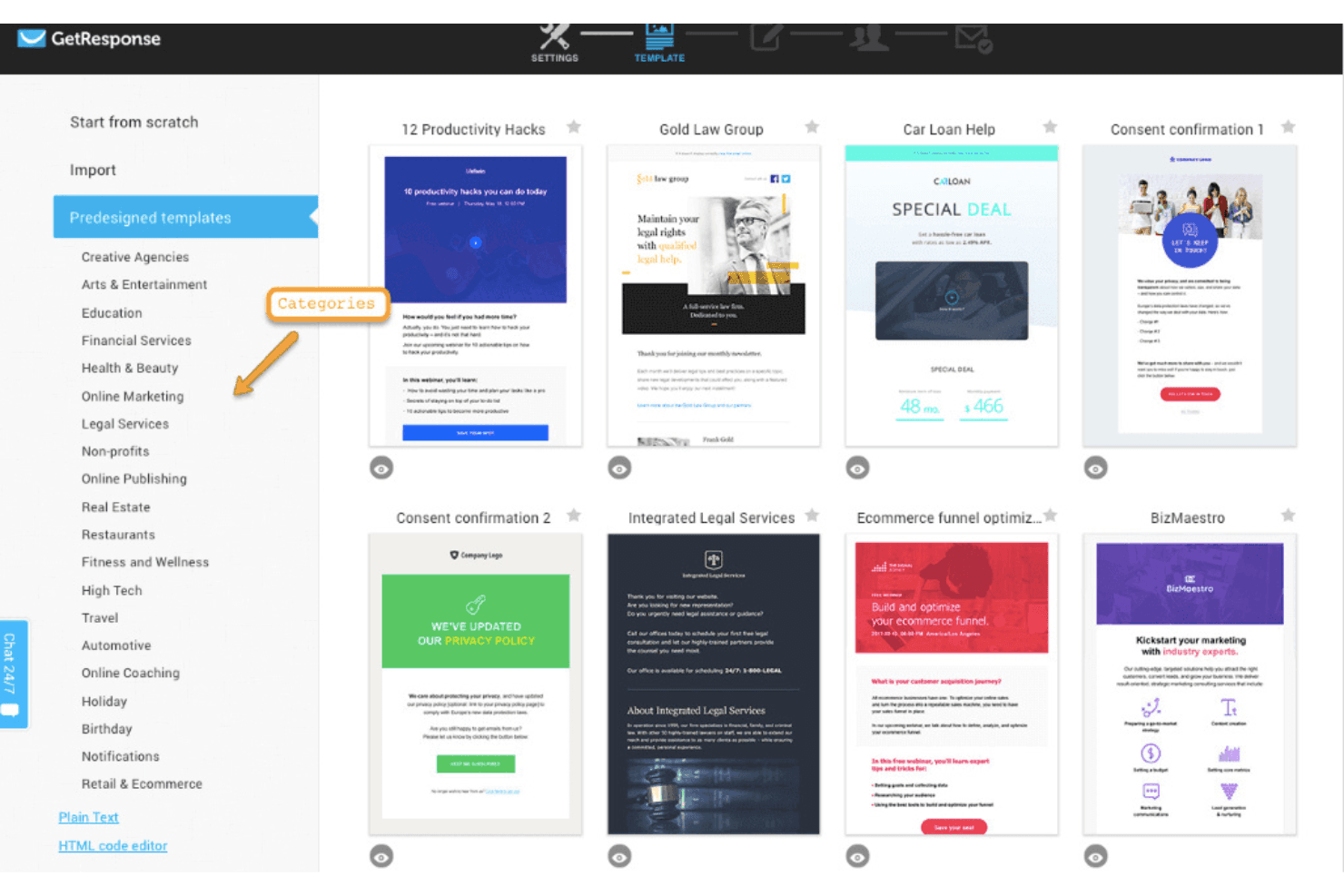
Constant Contact provides a variety of customizable templates that help your team create professional-looking emails quickly. You can adjust colors and fonts and add images to match your brand.
List Management
You can organize and segment your contacts efficiently with Constant Contact's list-building tools. This feature helps you target specific audiences with relevant content.
Email Scheduling
Organize your email campaigns and schedule optimal sending times with the email automation tools. This way, you ensure your message will reach your contacts when they're most likely to engage.
Analytics and Reporting
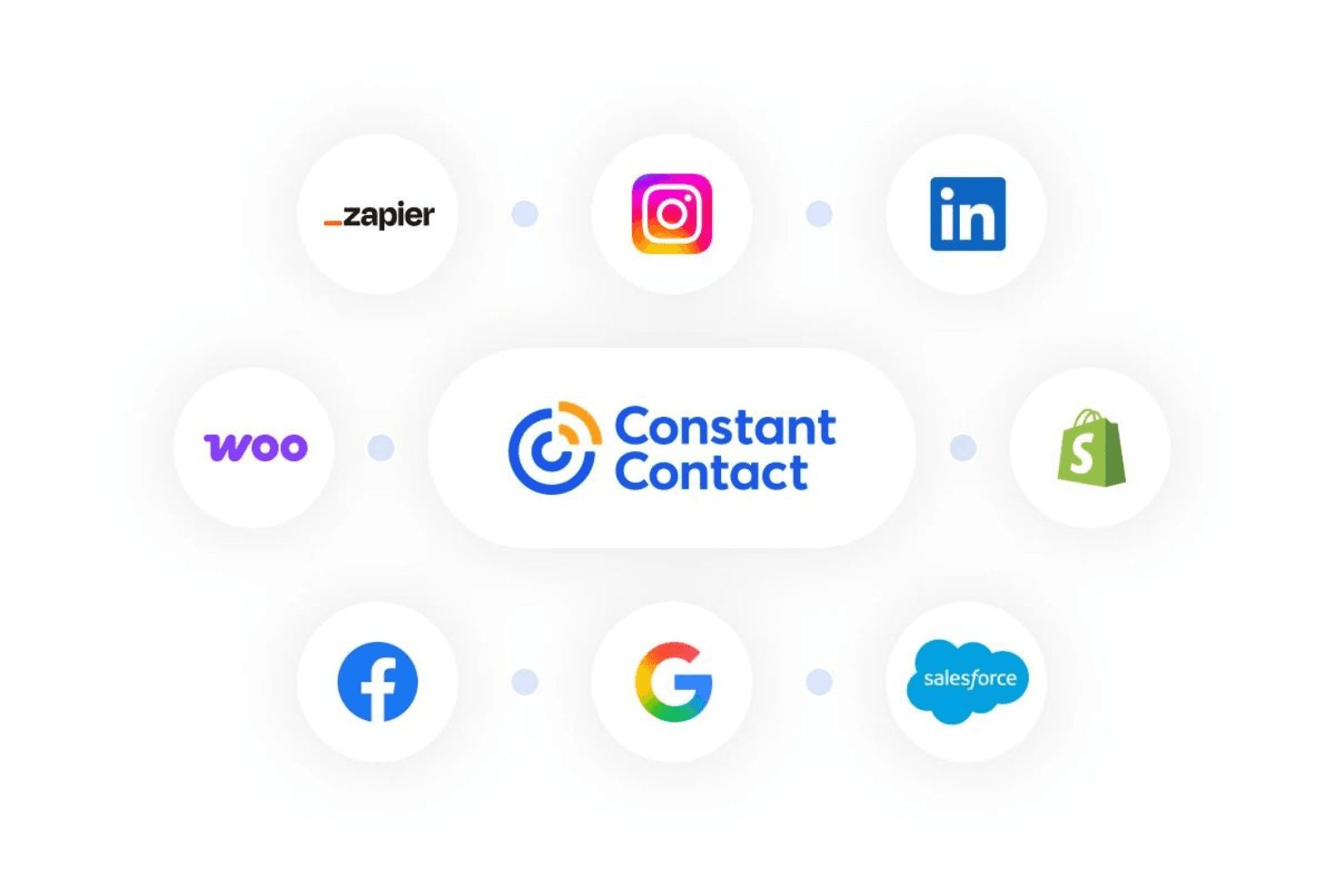
Track your email performance and customer relationship management (CRM) with detailed analytics, campaign comparison, and heat maps, giving your team insights into open rates, click-throughs, email deliverability rates, and more. You can use this data to refine your strategies.
A/B Testing
Test different email versions to see which performs better with your audience. This feature helps you optimize your messaging for better CRM results.
Autoresponders
Use Constant Contact’s automation features to set up automated email sequences to nurture leads and engage your audience without manual intervention. This also keeps your communication consistent and timely.
SMS Marketing
Engage more customers with the platform’s Short Message Service (SMS) tools. Adding texting to your marketing strategy helps you reach more people with just a few simple words.
Ease of Use
Constant Contact excels in user-friendliness, so your team can quickly start creating and managing email campaigns. Its intuitive interface requires little technical knowledge, so you can focus on your messaging without the need for complex tools. The drag-and-drop email editor allows you to customize templates, and straightforward navigation helps your team find what they need quickly. Compared to other platforms, Constant Contact's simplicity and ease of use stand out, especially for teams with limited time and resources.
Integrations
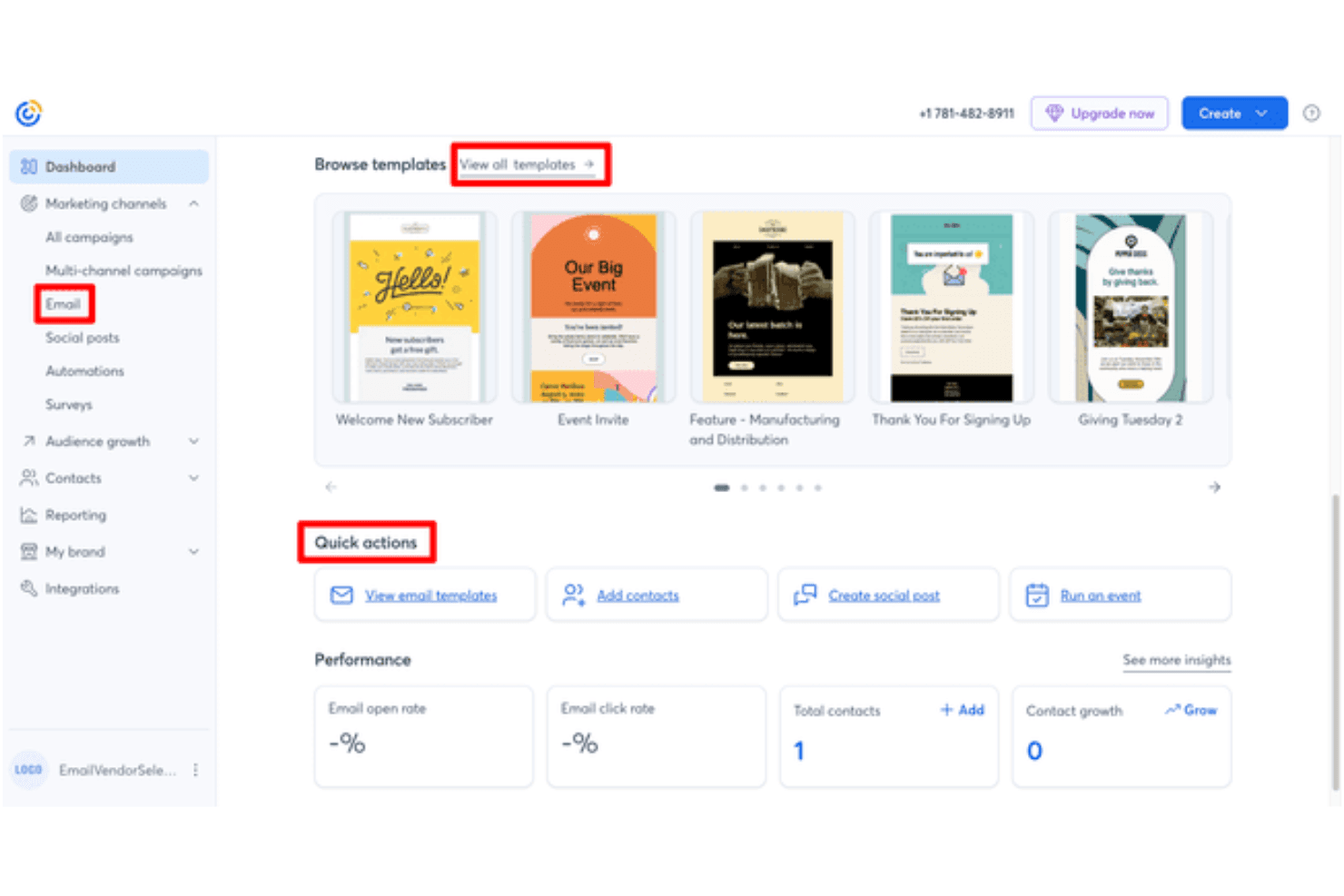
Constant Contact integrates with Salesforce, Shopify, Eventbrite, WordPress, SurveyMonkey, Outlook, Google Ads, Facebook, WooCommerce, Zapier, Canva, and more. Constant Contact also offers an API and facilitates the migration of your contacts from email providers, such as Yahoo and Gmail, and previous email marketing platforms, such as MailChimp.
Constant Contact Specs
- A/B Testing: Yes
- API: Yes
- Audience Targeting: Yes
- Brand Management: Yes
- Calendar Management: No
- Campaign Management: Yes
- Compliance Tracking: No
- Contact Management: Yes
- Contact Sharing: Yes
- Conversion Tracking: No
- CRM Integration: Yes
- Customer Management: Yes
- Dashboard: Yes
- Data Export: Yes
- Data Import: Yes
- Data Visualization: Yes
- Email Integration: Yes
- External Integrations: Yes
- Google Apps Integration: No
- Lead Management: Yes
- Lead Scoring: Yes
- Link Tracking: Yes
- Marketing Automation: Yes
- Multi-User: Yes
- Notifications: Yes
- Scheduling: Yes
- Social-Media Integration: Yes
- Third-Party Plugins/Add-Ons: No


