

Constant Contact Testbericht: Vorteile, Nachteile, Funktionen und Preise
Constant Contact überzeugt mit benutzerfreundlichen Tools und zuverlässigem Support – ideal für kleine Unternehmen, die nach einfachen E-Mail-Marketing-Lösungen suchen.

Wir bewerten Tools unabhängig, und Provisionen helfen, unsere Tests zu finanzieren. Siehe unsere Transparenz-Richtlinie, unsere Methodik oder schlagen Sie ein Tool vor.
Constant Contact is a email marketing software built for small businesses, nonprofits, and event-driven organizations that need to run campaigns without a steep learning curve. I'd consider it a strong pick if you want more hands-on customer support and a simpler setup than Mailchimp, particularly if your marketing mix includes event promotion alongside regular email outreach.
Constant Contact Evaluation Summary
4.2/5
- From $12/month
- 14-day free trial + free demo available
Warum Sie unseren Software-Empfehlungen vertrauen können
6,700+
Reviews
20
Industry experts
16+
Evaluation factors
14
Years
Unser Team testet und bewertet Software seit 2012. Als Marketingführungskräfte wissen wir selbst, wie schwierig – und wichtig – es ist, die richtige Software auszuwählen.
Für diesen Leitfaden haben wir Tools mithilfe von praktischen Tests und unabhängiger Recherche bewertet und dabei unsere Bewertungskriterien angewendet.
Unsere Bewertungen spiegeln unser menschliches redaktionelles Urteilsvermögen wider, keine Verkaufsstrategie.
Expertenprüfer:
 Gui DrusinaKreativdirektor
- Shriya GhateSenior Marketing Lead
 Amanda JacquesMarketing Ops Leiterin

Constant Contact Overview
In my opinion, Constant Contact is a solid choice for small businesses and nonprofits looking for user-friendly email marketing software. It excels in ease of use and customer support, making it simple for new users to get started. While it might not offer the most advanced features or customization options compared to other platforms, such as ActiveCampaign or GetResponse, its straightforward interface and reliable support make it a strong contender. If you're deciding between tools, consider your team's needs and whether a simple platform with solid customer support will suit your goals and workflows.
Pros
- Its features are user-friendly, even without technical skills.
- It offers helpful and reliable customer support.
- It offers various email marketing features for creating engaging email campaigns.
Cons
- It lacks advanced features that some other platforms offer.
- You might find the customization options and email templates limited.
- No free plan is available.
Is Constant Contact Right For Your Needs?
Who Would be a Good Fit for Constant Contact?
Constant Contact is a good fit for small businesses and nonprofits that need intuitive email marketing tools. Its user-friendly interface can help beginners and teams with limited technical skills maintain regular communication with their audience and create effective email campaigns.
- Small BusinessesThis email marketing platform allows your team to quickly set up and manage email campaigns without the need for technical expertise.
- NonprofitsYour organization can use Constant Contact to maintain strong relationships with benefactors through its email design tools.
- Retail ShopsThe platform offers simple templates that help you send promotions and engage customers effectively. You can also create pop-up signup forms that appear as people view your website to increase the number of contacts your business acquires.
- Event PlannersYou can efficiently handle event management, from invitations to follow-ups, with Constant Contact's straightforward email features.
- Community GroupsThis user-friendly email builder helps you communicate effectively with members and supporters, even if you're not tech-savvy.
Who Would be a Bad Fit for Constant Contact?
Constant Contact might not be the best choice for tech-savvy teams who need advanced customization. Large corporations with sophisticated marketing strategies could also find the platform’s simpler tools somewhat limiting.
- Large EnterprisesYour team may find Constant Contact lacks the advanced features needed for complex, large-scale campaigns.
- Tech CompaniesThe limited customization options might not meet your needs for intricate and highly personalized email communications.
- E-commerce GiantsYou might need more advanced automation than Constant Contact offers for handling extensive customer data.
- Financial InstitutionsConstant Contact's security features may not align with your strict regulatory requirements and data-handling needs.
- Advanced MarketersYour team may find the platform's basic tools insufficient for executing detailed, multifaceted marketing strategies.
Wie wir Tools testen und bewerten
Wir haben jahrelang unser Software-Test- und Bewertungssystem aufgebaut, verfeinert und verbessert. Das Bewertungsraster wurde entwickelt, um die Feinheiten der Softwareauswahl zu erfassen und aufzuzeigen, was ein Tool effektiv macht. Dabei konzentrieren wir uns auf kritische Aspekte des Entscheidungsprozesses. Im Folgenden können Sie genau nachvollziehen, wie unsere Tests und Bewertungen über sieben Kriterien hinweg funktionieren. Dies ermöglicht eine unparteiische Bewertung der Software basierend auf Kernfunktionen, besonderen Merkmalen, Benutzerfreundlichkeit, Onboarding, Kundenservice, Integrationen, Kundenrezensionen und Preis-Leistung.
Kernfunktionen (25% der Gesamtbewertung)
Der Ausgangspunkt unserer Bewertung ist stets die Kernfunktionalität des Tools. Verfügt es über die grundlegenden Merkmale und Funktionen, die ein Nutzer erwarten würde? Sind einige dieser Kernfunktionen nur in hochpreisigen Tarifen verfügbar? Im Kern erwarten wir, dass ein Tool den Basisfunktionen der Konkurrenz standhält.
Besondere Merkmale (25% der Gesamtbewertung)
Als nächstes bewerten wir außergewöhnliche, herausragende Funktionen, die über die übliche Kernfunktionalität hinausgehen. Eine hohe Punktzahl spiegelt spezialisierte oder einzigartige Merkmale wider, die das Produkt schneller, effizienter oder wertvoller für den Nutzer machen. Wir bewerten außerdem, wie einfach es ist, das Tool in andere häufig verwendete Anwendungen im Tech-Stack zu integrieren, um die Funktionalität und den Nutzen der Software zu erweitern. Tools, die viele native Integrationen, Drittanbieter-Anbindungen sowie API-Zugriff für eigene Integrationen bieten, schneiden am besten ab.
Benutzerfreundlichkeit (10% der Gesamtbewertung)
Wir berücksichtigen, wie schnell und einfach sich Aufgaben, die zu den Kernfunktionen gehören, mit dem Tool ausführen lassen. Hoch bewertete Software ist gut gestaltet, intuitiv bedienbar, bietet mobile Apps, Vorlagen und lässt auch komplexe Aufgaben einfach erscheinen.
Onboarding (10% der Gesamtbewertung)
Uns ist bewusst, wie wichtig eine schnelle Akzeptanz im Team für eine neue Plattform ist. Daher bewerten wir, wie leicht sich das Tool mit minimaler Einweisung erlernen und anwenden lässt und wie schnell Teammitglieder auch ohne Vorerfahrung loslegen können. Eine hohe Punktzahl deutet darauf hin, dass kaum oder gar keine Unterstützung notwendig ist.
Kundenservice (10% der Gesamtbewertung)
Wir prüfen, wie schnell und einfach es ist, bei Problemen Hilfe per Telefon, Live-Chat oder Wissensdatenbank zu erhalten. Tools und Unternehmen, die Support in Echtzeit anbieten, erhalten die besten Bewertungen; Chatbots schneiden am schlechtesten ab.
Kundenrezensionen (10% der Gesamtbewertung)
Neben unseren eigenen Tests und Bewertungen berücksichtigen wir den Net Promoter Score aktueller und ehemaliger Kunden. Wir prüfen, wie wahrscheinlich sie sich erneut für das Tool bezüglich der Kernfunktionen entscheiden würden. Hoch bewertete Software spiegelt einen hohen Net Promoter Score der Nutzer wider.
Preis-Leistung (10% der Gesamtbewertung)
Abschließend bewerten wir unter Berücksichtigung aller anderen Kriterien den Durchschnittspreis der Einsteiger-Tarife im Verhältnis zu den Kernfunktionen sowie den Wert der anderen bewerteten Aspekte. Software, die mehr für weniger bietet, wird besser bewertet.
Core Features
Email Templates
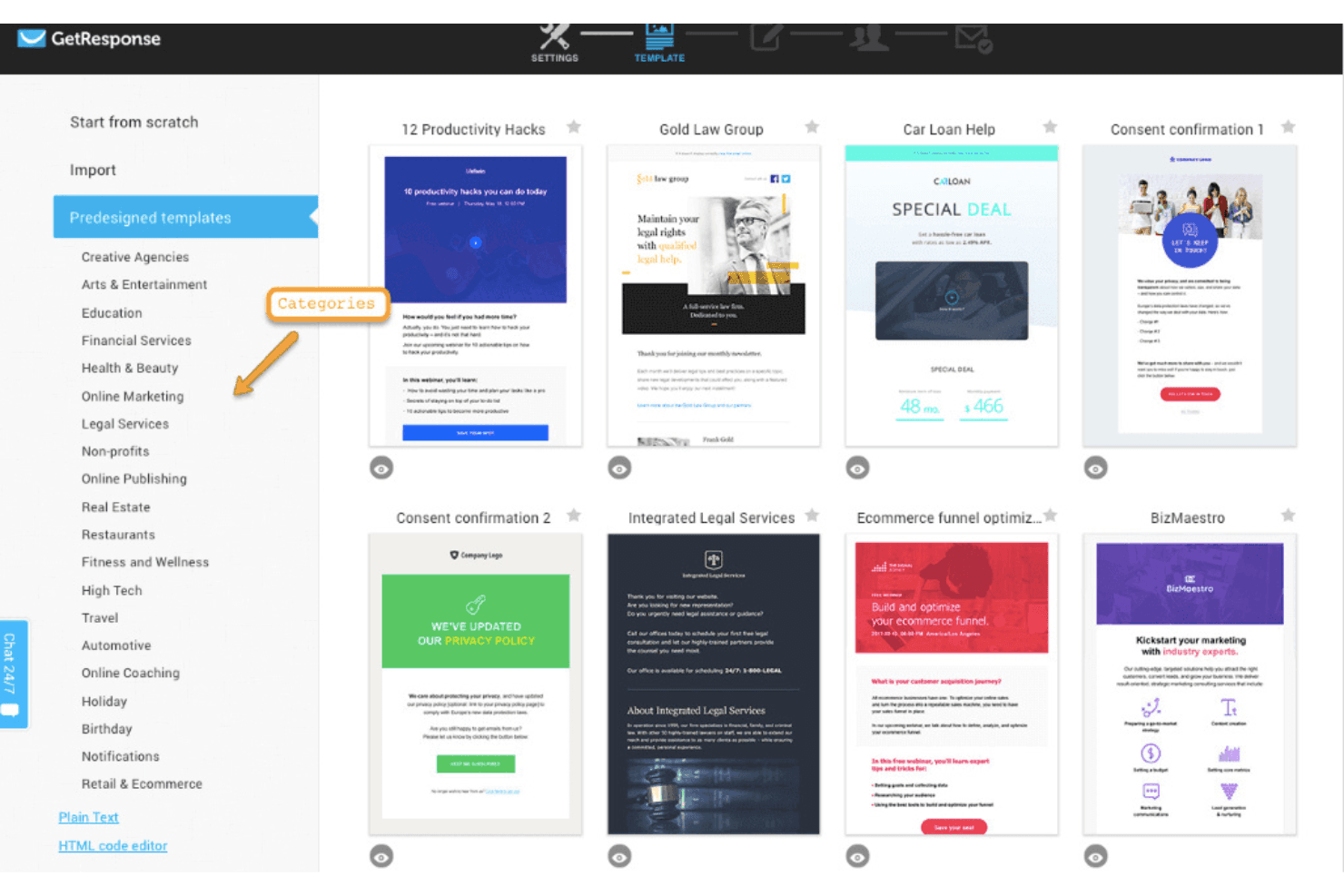
Constant Contact provides a variety of customizable templates that help your team create professional-looking emails quickly. You can adjust colors and fonts and add images to match your brand.
List Management
You can organize and segment your contacts efficiently with Constant Contact's list-building tools. This feature helps you target specific audiences with relevant content.
Email Scheduling
Organize your email campaigns and schedule optimal sending times with the email automation tools. This way, you ensure your message will reach your contacts when they're most likely to engage.
Analytics and Reporting
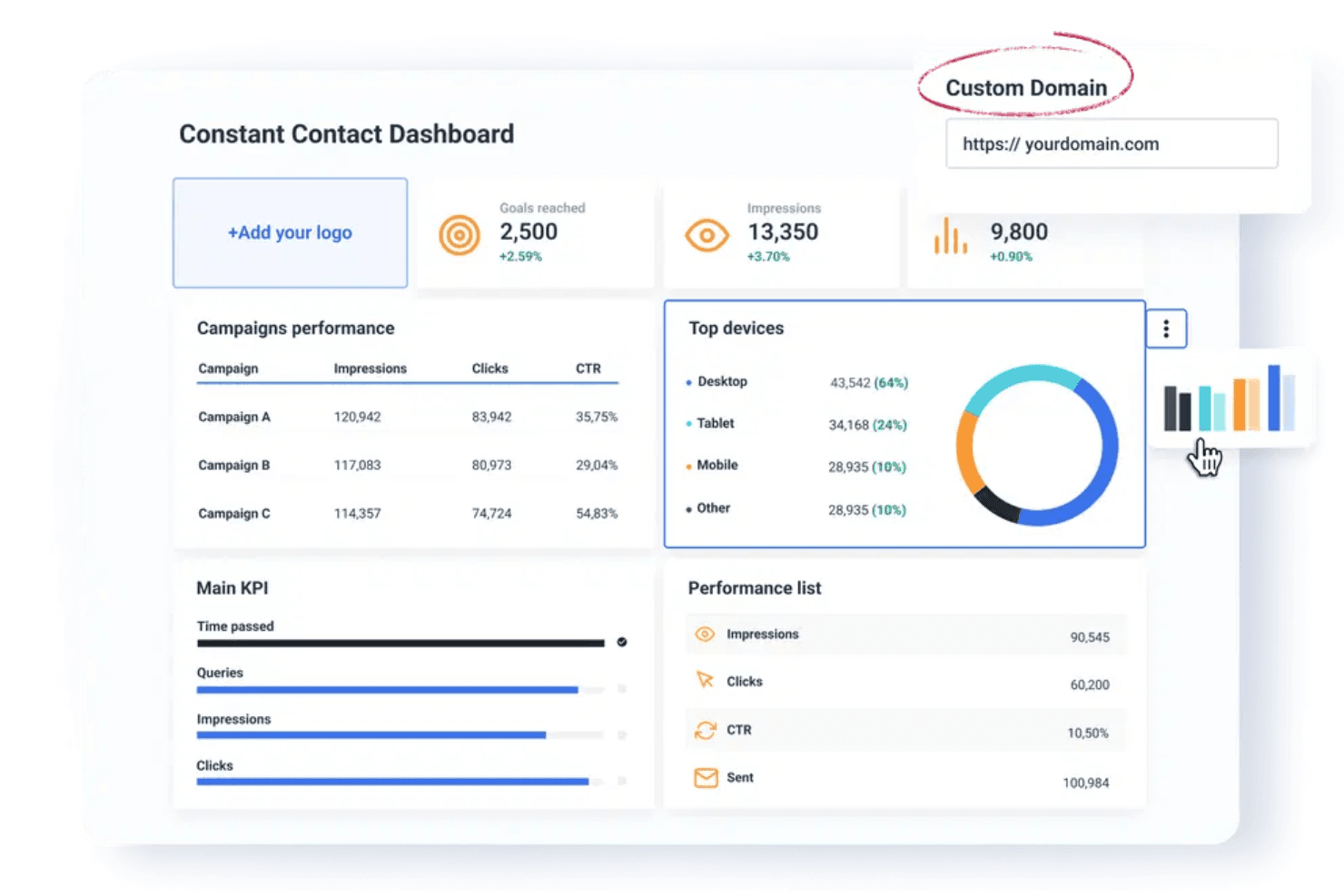
Track your email performance and customer relationship management (CRM) with detailed analytics, campaign comparison, and heat maps, giving your team insights into open rates, click-throughs, email deliverability rates, and more. You can use this data to refine your strategies.
A/B Testing
Test different email versions to see which performs better with your audience. This feature helps you optimize your messaging for better CRM results.
Autoresponders
Use Constant Contact’s automation features to set up automated email sequences to nurture leads and engage your audience without manual intervention. This also keeps your communication consistent and timely.
SMS Marketing
Engage more customers with the platform’s Short Message Service (SMS) tools. Adding texting to your marketing strategy helps you reach more people with just a few simple words.
Ease of Use
Constant Contact excels in user-friendliness, so your team can quickly start creating and managing email campaigns. Its intuitive interface requires little technical knowledge, so you can focus on your messaging without the need for complex tools. The drag-and-drop email editor allows you to customize templates, and straightforward navigation helps your team find what they need quickly. Compared to other platforms, Constant Contact's simplicity and ease of use stand out, especially for teams with limited time and resources.
Integrations
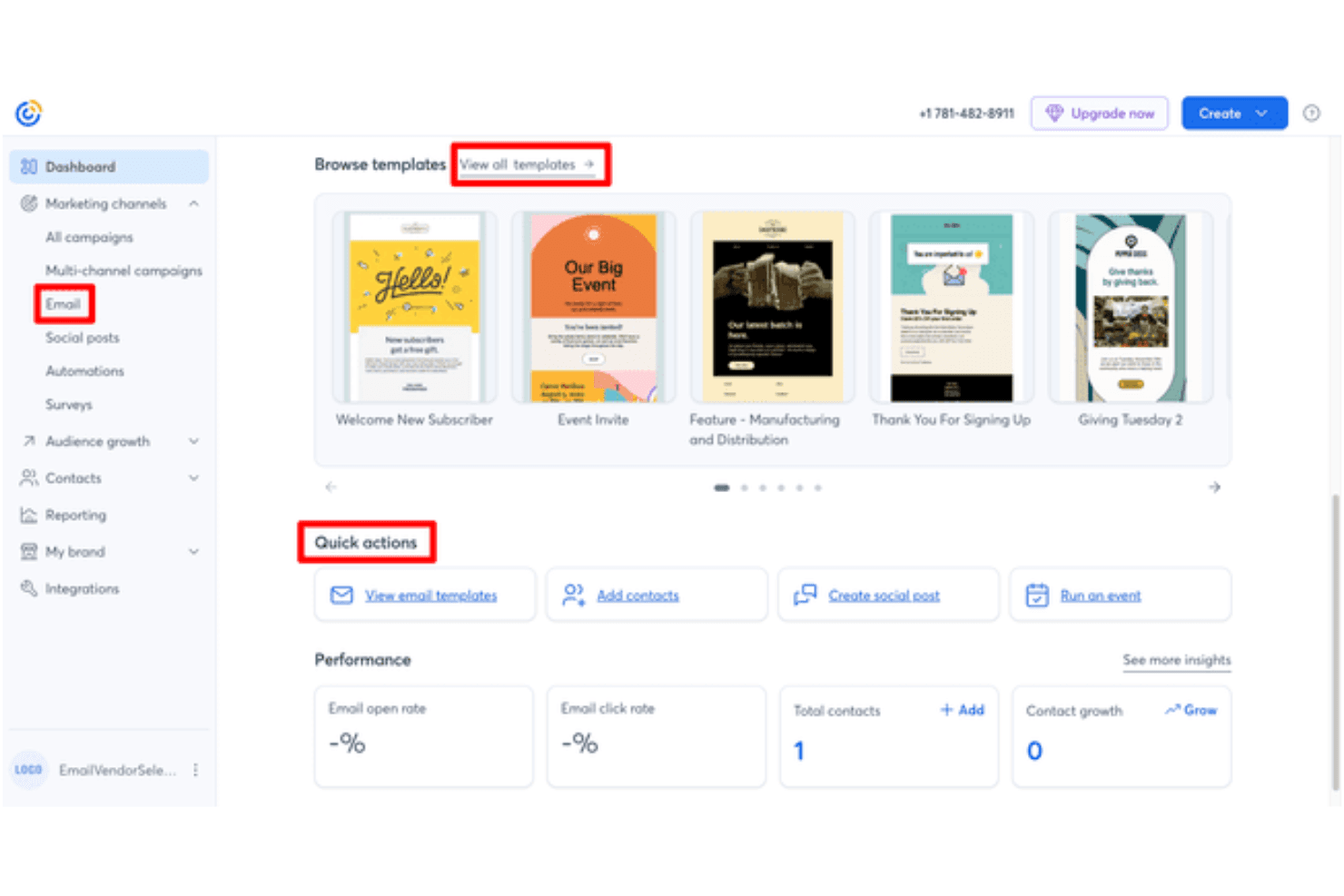
Constant Contact integrates with Salesforce, Shopify, Eventbrite, WordPress, SurveyMonkey, Outlook, Google Ads, Facebook, WooCommerce, Zapier, Canva, and more. Constant Contact also offers an API and facilitates the migration of your contacts from email providers, such as Yahoo and Gmail, and previous email marketing platforms, such as MailChimp.
Constant Contact Specs
- A/B Testing: Yes
- API: Yes
- Audience Targeting: Yes
- Brand Management: Yes
- Calendar Management: No
- Campaign Management: Yes
- Compliance Tracking: No
- Contact Management: Yes
- Contact Sharing: Yes
- Conversion Tracking: No
- CRM Integration: Yes
- Customer Management: Yes
- Dashboard: Yes
- Data Export: Yes
- Data Import: Yes
- Data Visualization: Yes
- Email Integration: Yes
- External Integrations: Yes
- Google Apps Integration: No
- Lead Management: Yes
- Lead Scoring: Yes
- Link Tracking: Yes
- Marketing Automation: Yes
- Multi-User: Yes
- Notifications: Yes
- Scheduling: Yes
- Social-Media Integration: Yes
- Third-Party Plugins/Add-Ons: No


