

No mercado acelerado de hoje, os gestores de marketing como você enfrentam desafios constantes. Gerir várias campanhas, acompanhar as tendências e envolver o seu público pode ser avassalador. É aqui que o software de marketing para pequenas empresas entra em ação para ajudar.
Passei algum tempo a testar e analisar estas ferramentas de forma independente. Compreendo os meandros do setor do marketing e estou aqui para partilhar informações imparciais. Na minha experiência, o software certo pode fazer uma grande diferença para a sua equipa.
Neste artigo, vou apresentar-lhe as minhas principais escolhas de software de marketing para pequenas empresas. Encontrará soluções que respondem às suas necessidades específicas, ajudando-o a enfrentar os desafios de marketing com confiança.
Why Trust Our Software Recommendations
6,700+
Reviews
20
Industry experts
16+
Evaluation factors
14
Years
Our team has been testing and reviewing software since 2012. As marketing leaders ourselves, we know how difficult—and important—it is to choose the right software.
For this guide, we evaluated tools using hands-on testing and independent research, scoring tools using our selection criteria.
Our reviews reflect our human editorial judgment, not a sales pitch.
Expert reviewers:
 Gui DrusinaCreative Director
- Shriya GhateSenior Marketing Lead
 Amanda JacquesMarketing Ops Leader

Tabela comparativa de software de marketing para pequenas empresas
| Tool | Best For | Trial Info | Price | ||
|---|---|---|---|---|---|
| 1 | Best email marketing automation tool | Free plan available | From $10.70/month (billed annually) | Website | |
| 2 | Best with detailed B2B contact data enrichment | Free plan + 14-day free trial + free demo available | From $49/user/month (billed annually) | Website | |
| 3 | Best for fully branded webinar experiences | 14-day free trial + free demo available | From $85/presenter/month (billed annually) | Website | |
| 4 | Best for end-to-end marketing execution | 14-day free trial | From $29/month | Website | |
| 5 | Best for local business review management | Free demo available | Pricing upon request | Website | |
| 6 | Best for high-deliverability email campaigns | Free plan + 14-day trial + demo available | From $9/month | Website | |
| 7 | Best for segmentation and personalization | Free plan + 30-day free trial + free demo available | From $25/month | Website | |
| 8 | Best for cross-channel marketing work | 15-day free trial available | From $25/month (billed annually) | Website | |
| 9 | Best for designing graphics | Free trial + free plan available | From $144/user/year (billed annually) | Website | |
| 10 | Best for website insights | Free plan available | From $50,000/year (billed annually) | Website |


Visão geral dos 10 melhores softwares de marketing para pequenas empresas
Pode utilizar as sínteses simples de cada ferramenta abaixo para perceber como cada uma se destaca de outros softwares de marketing para pequenas empresas.
 Best email marketing automation tool
- Free plan available
- From $10.70/month (billed annually)
Visit WebsiteCustomer Rating:4.5/5
Create new signup forms to start collecting email addresses. Mailchimp helps businesses create automated email campaigns to build brand awareness.
Why I picked Mailchimp: The platform is one of the most popular email marketing tools for small businesses. When using Mailchimp, you can build effective email templates and send messages according to your subscribers’ behavior. You can send automated weekly newsletters, product or service updates, or cart abandonment emails to ensure your brand stays on top of your customers’ minds while you focus on other crucial functions that require your attention.
Mailchimp is a cloud-based system that works for small businesses in any industry. You can use the software to promote your business using multiple methods, such as email, landing pages, social media, postcards, and other effective ways. Mailchimp also provides a CRM that helps you collect customer data and use those insights towards your next campaign.
Mailchimp Standout Features and Integrations
Features include email templates, a drag-and-drop editor, email segmentation, email automations, analytics and artificial intelligence, A/B testing, campaign management, automated customer journeys, and optimization recommendations.
Integrations include Shopify, Stripe, Quickbooks, Zendesk, WordPress, Typeform, SurveyMonkey, Salesforce, Copper CRM, Pipedrive, monday.com, Zoho CRM, Canva, and Zapier.
Pros and Cons
Pros:
- Works well with small email lists
- Effectively manages email campaigns
- Easy to set up
Cons:
- Data needs more details
- Some customization restrictions
Learn more about Mailchimp : Best with detailed B2B contact data enrichment
- Free plan + 14-day free trial + free demo available
- From $49/user/month (billed annually)
Visit WebsiteCustomer Rating:4.5/5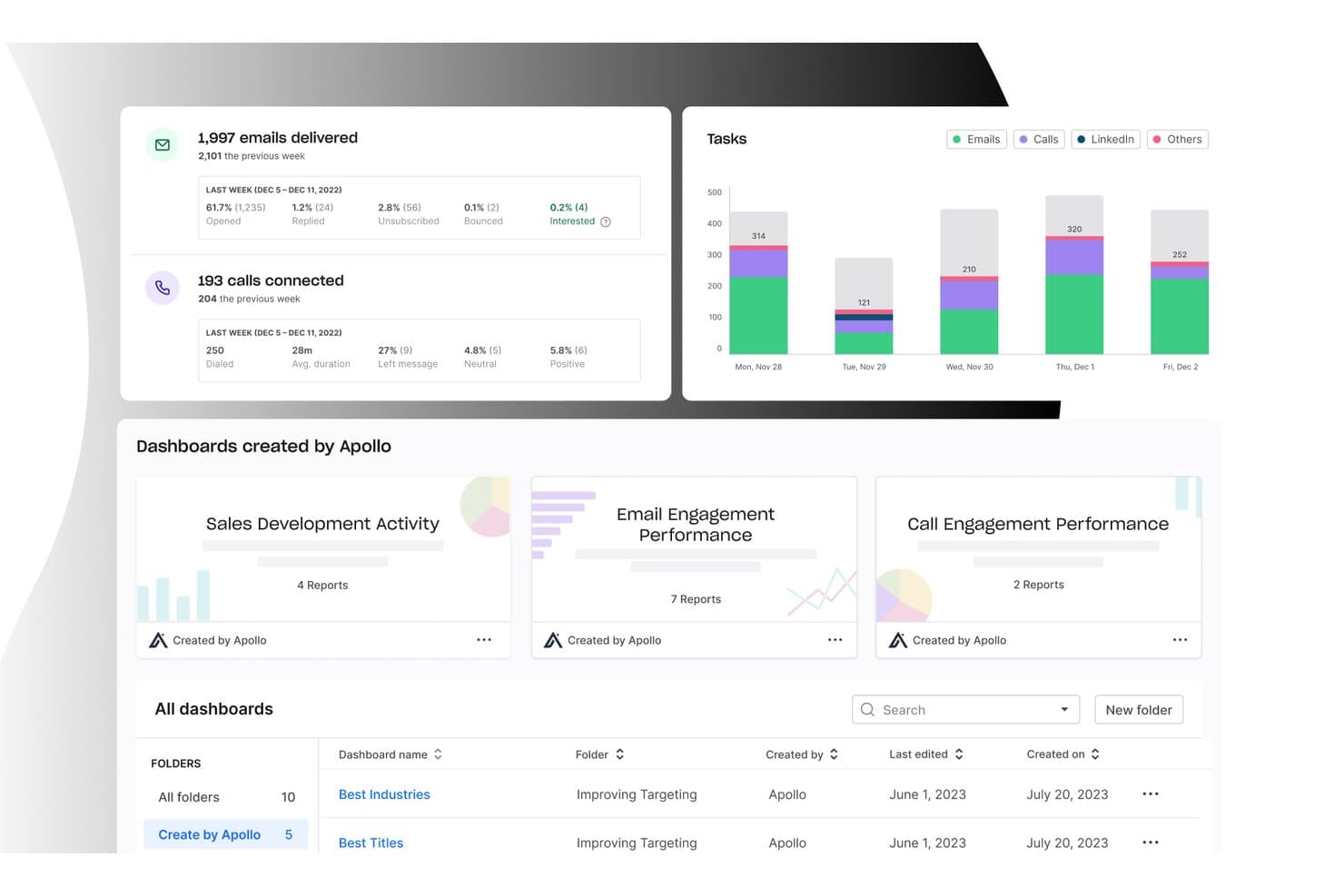
Apollo.io offers a comprehensive analytics dashboard displaying email delivery stats, call connection rates, task breakdowns by channel, and pre-built sales dashboards for tracking engagement performance. Apollo.io is a B2B sales intelligence and outbound engagement platform that combines a 240M+ contact database with email sequencing, multi-channel outreach, and AI-powered prospecting tools.
Who Is Apollo.io Best For?
Apollo.io is a strong fit for sales-led teams and founders who need to find, enrich, and reach B2B contacts without juggling multiple prospecting tools.
Why I Picked Apollo.io
Apollo.io earns its spot on my shortlist because its 240M+ contact database with 65+ filters makes finding the right B2B prospects faster than anything else I've used. I especially like the Apollo Profile feature, which pulls together intent signals, job change alerts, and company news into a single unified view so I can prioritize outreach without digging through multiple tools. The AI Assistant then turns that data into targeted email sequences in a fraction of the time.
Apollo.io Key Features
- Parallel dialer: Call multiple prospects efficiently from one workspace.
- Email deliverability tools: Warm domains, rotate inboxes, and monitor sender reputation.
- Smart form builder: Capture and enrich inbound leads through customizable forms.
- Lead routing: Assign new leads automatically to the right sales representative.
Apollo.io Integrations
Apollo.io offers 200+ integrations through Apollo Anywhere, including native integrations with Salesforce, HubSpot, Outreach, Salesloft, SendGrid, LinkedIn, Gmail, ChatGPT, and Claude. It also provides a REST API and MCP support for custom workflows and AI tool connections.
Pros and Cons
Pros:
- Unifies contact intent signals in one profile
- AI writes targeted outreach sequences automatically
- Massive verified B2B contact database built in
Cons:
- Marketing nurture campaigns not yet available
- No social media publishing or SMS tools
Learn more about Apollo.io: Best for fully branded webinar experiences
- 14-day free trial + free demo available
- From $85/presenter/month (billed annually)
Visit WebsiteCustomer Rating:4.5/5
WebinarGeek interface showing a live webinar session with multiple presenters and participant controls accessible across devices WebinarGeek gives small businesses a way to host interactive webinars without technical barriers or complicated setup. The platform is designed for marketers and business owners who want to engage audiences, collect leads, and analyze attendee behavior. If you need a marketing tool that combines live video, audience interaction, and data-driven insights, WebinarGeek is built for you.
Who Is WebinarGeek Best For?
WebinarGeek is a strong choice for small businesses and marketing teams that need an accessible, browser-based platform to run interactive webinars and capture audience insights.
Why I Picked WebinarGeek
I picked WebinarGeek for its ability to deliver fully branded webinar experiences, which is a priority for small businesses that want to stand out and reinforce their identity. The platform lets you customize every aspect of your webinar environment, from registration pages and emails to the live webinar room itself. I appreciate how you can add your own logo, brand colors, and custom visuals, ensuring a consistent look and feel throughout the attendee journey. This level of branding control helps small businesses create a professional impression and build trust with their audience.
WebinarGeek Key Features
Some other features that make WebinarGeek useful for small business marketing teams include:
- Automated webinars: Schedule and run pre-recorded webinars that simulate live events, allowing you to reach audiences without being present in real time.
- Interactive polls and quizzes: Engage attendees during webinars with live polls and quizzes to gather feedback and keep sessions dynamic.
- Email marketing automation: Set up automated email reminders, confirmations, and follow-ups to nurture leads before and after your webinars.
- Detailed attendee analytics: Access real-time and post-event analytics on attendee behavior, engagement, and viewing duration to inform your marketing strategy.
WebinarGeek Integrations
Integrations include HubSpot, Salesforce, Pipedrive, Mailchimp, ActiveCampaign, ConvertKit, MailBlue, Enormail, Stripe, and Mollie. WebinarGeek also offers a REST API for custom integrations.
Pros and Cons
Pros:
- Native integrations with major CRM and email tools
- Built-in polls, quizzes, and interactive features
- Supports live, automated, and on-demand webinars
Cons:
- No built-in breakout room functionality
- Advanced analytics features require higher-tier plans
Learn more about WebinarGeek: 4Best for end-to-end marketing execution
Enji
- 14-day free trial
- From $29/month
Visit WebsiteCustomer Rating:4.3/5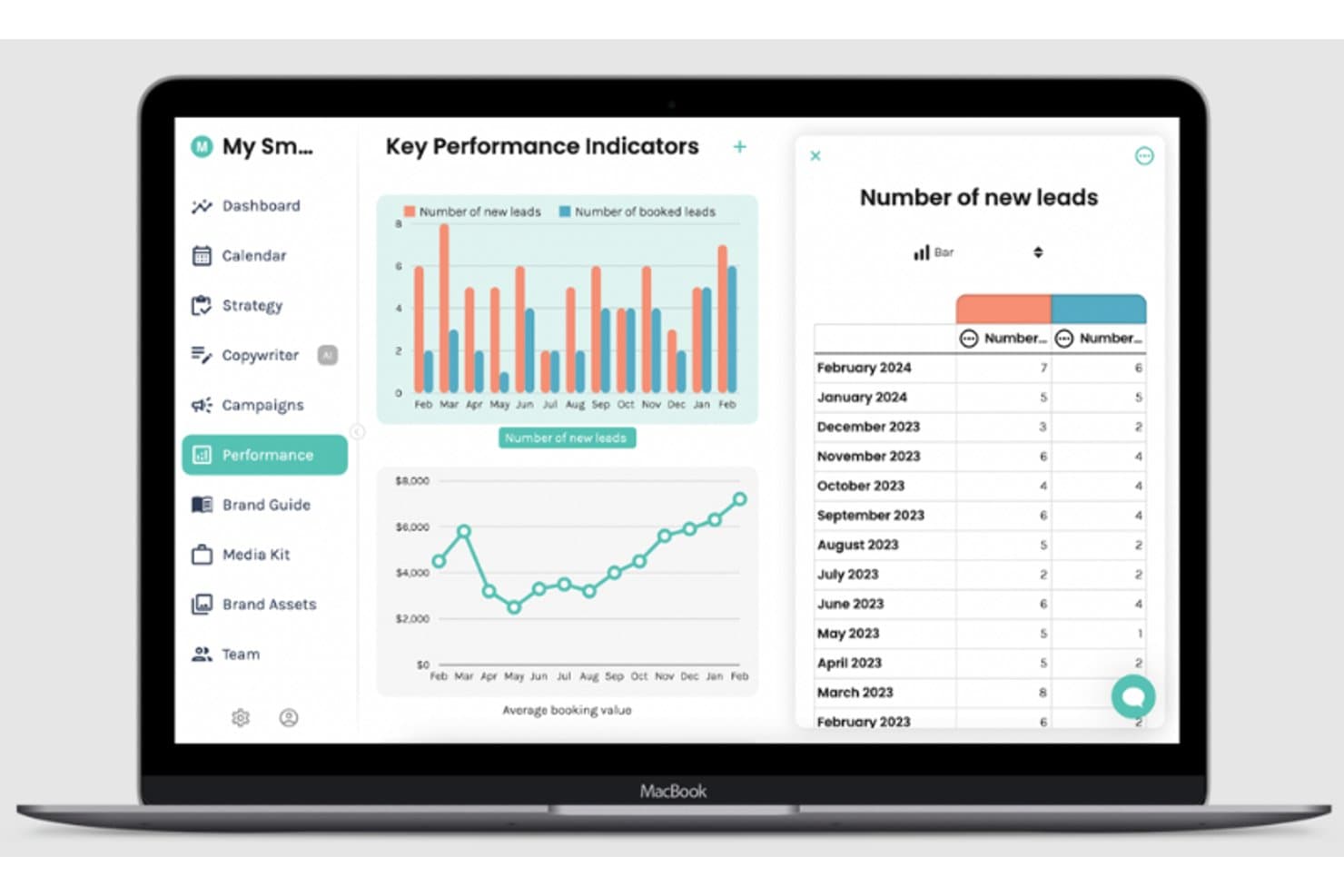
KPI Dashboard Enji is a marketing planning and execution platform for solopreneurs and small businesses that combines AI-driven strategy building, a marketing calendar, social media scheduling, an AI copywriter, and a KPI dashboard in one tool.
Who Is Enji Best For?
Enji is built for solopreneurs and small business owners who handle all their own marketing and want one tool to plan, schedule, and track it.
Why I Picked Enji
I picked Enji as one of the best because it's the only tool I've seen that takes you from a raw strategy to scheduled social content and tracked KPIs without ever leaving the platform. I love that the AI builds your marketing plan from a short questionnaire, then maps tasks directly onto a calendar across channels like email, social, and ads. The built-in AI copywriter drafts captions and blog posts in your brand voice, and the KPI dashboard pulls live data from Google Analytics 4, Meta, LinkedIn, and more automatically.
Enji Key Features
- Brand voice generator: Scans your website to build a saved brand voice profile, which the AI copywriter uses when drafting captions, blog posts, and newsletters.
- Campaign templates: Includes 16+ plug-and-play two-week campaign templates for common goals like promotions, launches, and list building, with tasks and metrics pre-mapped.
- Multi-platform social scheduler: Auto-publishes to Facebook, Instagram, LinkedIn, Pinterest, TikTok, YouTube Shorts, and Threads, with support for hashtag groups, location tags, and a grid preview.
- Group coaching with the founder: Every paid plan includes live group coaching sessions with Enji's founder, a marketing consultant, to help you apply the tool to your business.
Enji Integrations
Enji has 10+ documented native integrations, including Facebook, Instagram, LinkedIn, Pinterest, TikTok, YouTube Shorts, Threads, Google Analytics 4, Canva, and Google Calendar. It also connects with iCal for calendar syncing.
Pros and Cons
Pros:
- Founder coaching supports hands-on execution
- Brand voice guides useful content drafts
- Turns strategy into scheduled tasks
Cons:
- Email campaigns remain planning-only
- No CRM or contact segmentation
Learn more about Enji: Best for local business review management
- Free demo available
- Pricing upon request
Visit WebsiteCustomer Rating:4.8/5
Small businesses can track customer reviews across over 150 review sites and compare customer ratings against local competitors Birdeye is a reputation management platform that’s suitable for businesses of various sizes, industries, and contexts. It’s particularly useful for local businesses seeking to manage their online presence and monitor customer reviews.
Why I Picked Birdeye: I decided to add this platform to my list because of its focus on local business reputation management. Your small business can keep track of online customer reviews on over 150 different review sites, and use this information to fuel your marketing, customer service, and product and service offerings.
You can also collect customer feedback through the platform and benchmark your reviews and ratings against local competitors. Factors like NPS and specific areas of customer satisfaction can be compared. For local businesses that rely on word-of-mouth referrals, these tools are invaluable.
Birdeye Standout Features & Integrations
One feature that stands out about this platform is its topic tracking tool. You can monitor topics that are relevant to your product or service offerings, and spot opportunities to contribute to conversations or respond to customer or lead inquiries. This helps you create an active and engaged brand presence online. I find this super helpful for small businesses that might not have a big marketing team to conduct social listening or engagement activities.
Integrations include QuickBooks, Square, Zoho CRM, Zoho Books, Zoho Invoice, Pipedrive, Thryv, Keap, HubSpot, Lightspeed, and hundreds of other SaaS tools.
Pros and Cons
Pros:
- Automates customer surveys and reviews
- Tons of integrations available
- Customer feedback management tools included
Cons:
- Limited customer support
- No free plan or trial
Learn more about Birdeye: Best for high-deliverability email campaigns
- Free plan + 14-day trial + demo available
- From $9/month
Visit WebsiteCustomer Rating:4.6/5
Sender’s workflow automation and A/B testing support high-deliverability email campaigns. Sender is a small business marketing software designed to support high-deliverability email campaigns. It helps businesses create and manage email outreach with tools for automation, list management, and performance tracking. Built for growing teams, the platform simplifies campaign setup while helping ensure messages reach subscribers’ inboxes consistently.
Why I Picked Sender
I picked Sender for its strength in high-deliverability email campaigns. It is built to help small businesses send emails that consistently reach subscribers’ inboxes. The platform includes automation workflows for welcome emails and abandoned cart reminders, along with audience segmentation based on behavior and demographics. These tools help business owners manage campaigns efficiently while maintaining reliable email performance.
Sender Key Features
In addition to high-deliverability email campaigns, Sender offers:
- Drag-and-Drop Email Builder: This feature lets you create visually appealing emails without coding, making it accessible to all team members.
- SMS Marketing: You can enhance your marketing reach by sending SMS campaigns alongside your email promotions.
- Subscription Forms and Popups: Customize forms and popups to grow your email list and engage users effectively.
- Real-Time Analytics: Track your campaign performance with metrics like open rates and click-throughs, and utilize the newsletter heatmap to visualize engagement.
Sender Integrations
Integrations include WordPress, WooCommerce, Shopify, PrestaShop, Magento, Zapier, and an API for custom integrations.
Pros and Cons
Pros:
- Simple campaign builder suited for small teams
- Reliable automation workflows for ongoing email sequences
- Easy-to-use interface with quick campaign setup
Cons:
- Limited template library compared to larger platforms
- Branding flexibility within templates may require workarounds
Learn more about Sender: Best for segmentation and personalization
- Free plan + 30-day free trial + free demo available
- From $25/month
Visit WebsiteCustomer Rating:4.6/5
Klaviyo lets you tap into customer data to develop segmentation strategies and personalized automations. Klaviyo offers a unique blend of marketing automation tools that cater specifically to small businesses looking to enhance their customer engagement strategies. With its ability to unify data from various sources, it appeals to businesses across industries that need to streamline their marketing efforts. Whether you're in retail, e-commerce, or a service-based industry, Klaviyo helps solve the challenge of creating personalized, data-driven campaigns that resonate with your audience.
Why I Picked Klaviyo
I picked Klaviyo because it excels in providing small businesses with powerful segmentation and personalization. The platform's advanced analytics allow you to leverage customer data for precise targeting, ensuring that your marketing messages hit the mark. Additionally, Klaviyo's integration with multiple channels, including social media, email and SMS, empowers your team to reach customers where they are most active. These features make it an invaluable tool for businesses aiming to nurture customer relationships and drive growth.
Klaviyo Key Features
In addition to its robust segmentation and personalization, I also found the following features particularly beneficial for small business marketing:
- AI-Driven Insights: This feature uses machine learning to provide predictive analytics, helping you anticipate customer behavior and optimize your campaigns.
- Behavior-Triggered Flows: Use actions like product views or purchases to automatically send personalized messages.
- Comprehensive Customer Profiles: Gain a complete view of your customers with detailed profiles that consolidate data from all touchpoints.
- Data Security and Compliance: Rest assured with Klaviyo’s ISO 27001 certification and SOC 2 Type 2 audit, ensuring data protection and privacy compliance.
Klaviyo Integrations
Integrations include Shopify, WooCommerce, BigCommerce, Magento, Salesforce, Stripe, Facebook, Instagram, Google Analytics, and Zendesk.
Pros and Cons
Pros:
- Supports omnichannel marketing, including email, SMS, and social media.
- Provides AI-driven insights for personalized marketing strategies.
- Offers comprehensive data integration for unified customer profiles.
Cons:
- Pricing can escalate quickly as contact lists grow.
- Some users desire more customization options.
Learn more about Klaviyo: Best for cross-channel marketing work
- 15-day free trial available
- From $25/month (billed annually)
Visit WebsiteCustomer Rating:4.2/5
Zoho Marketing Plus enables detailed campaign management to enhance marketing efforts. Zoho Marketing Plus gives small businesses one place to plan and manage campaigns across channels, keeping everything aligned. Designed specifically for marketing teams needing a centralized hub, it provides tools for omnichannel engagement, marketing automation, and brand asset management while ensuring data privacy. This platform is ideal for businesses looking to enhance team collaboration, manage budgets effectively, and track marketing performance.
Why I Picked Zoho Marketing Plus
I picked Zoho Marketing Plus for its unique ability to unify marketing efforts across multiple channels, a crucial aspect for small businesses striving to maintain a consistent brand presence. Its marketing automation feature allows you to tailor content based on customer behavior, reducing manual efforts. Additionally, the brand asset management tool helps keep all your marketing resources organized, making it easier to maintain brand consistency across campaigns. Together, these features give small businesses a simple way to tackle key marketing challenges.
Zoho Marketing Plus Key Features
In addition to cross-channel marketing work, Zoho Marketing Plus offers:
- Unified Marketing Analytics: Gain insights into the performance of your campaigns with analytics that help measure effectiveness and ROI.
- Budget Management Tools: Keep track of your marketing expenses and ensure your campaigns are cost-effective and within budget.
- Team Collaboration: Enhance collaboration within your marketing team by providing seamless access to marketing assets and campaign data.
Zoho Marketing Plus Integrations
Integrations include Zoho CRM, Zoho Campaigns, Zoho Social, Zoho Desk, Google Analytics, Google Ads, Facebook Ads, X, LinkedIn, and SurveyMonkey.
Pros and Cons
Pros:
- Comprehensive features for omnichannel and automated marketing
- Integrated suite works seamlessly with other Zoho products
- Privacy focused, ensuring user data confidentiality
Cons:
- Customization limitations restrict flexibility for some users
- Users report issues connecting with third-party tools
Learn more about Zoho Marketing Plus: Best for designing graphics
- Free trial + free plan available
- From $144/user/year (billed annually)
Visit WebsiteCustomer Rating:4.6/5
Create custom graphic assets, such as presentations, from the Canva dashboard. Canva helps businesses create stunning graphics to get them noticed.
Why I picked Canva: This tool will help you stand out and get noticed with stunning graphics that you can design, even if you’re just a beginner. If you don’t have any graphic editing skills, you can still use the software to quickly create amazing looking design within minutes. Canva offers many graphic design features to help you create the perfect asset for your content, emails, or website.
Canva helps small businesses design anything they need for their content by providing a simple drag-and-drop tool and professional templates. The platform provides over 100 million stock photos, videos, and audio for your unique designs. Canva also provides a logo-maker tool if you’re still in the startup phase and don’t have a logo yet.
Canva Standout Features and Integrations
Features include text animations, design templates, an image editor, content management, visual discovery, filtered views, cloud storage, multiple file formats, edit and change tracking, and user tagging.
Integrations include WordPress, Asana, Microsoft OneDrive, Sendible, HubSpot CMS Hub, Brandfolder, Oktopost, Pexels, PageProof, OptiSigns, and Desktop.com.
Pros and Cons
Pros:
- An enormous template and graphics collection.
- A mobile application is available.
- Easy to get started.
Cons:
- Some performance issues.
- More useful features are in paid plans.
Learn more about Canva: Best for website insights
- Free plan available
- From $50,000/year (billed annually)
Visit WebsiteCustomer Rating:4.6/5
Get an idea of how your visitors are finding your website. Google Analytics provides insights into a business’s website and digital marketing.
Why I picked Google Analytics: You can use the information Google Analytics provides to improve customer experience. The platform provides deep website insights that will help you understand your site, so you can better understand the performance of your products, content, and other aspects. Google Analytics will help you see what’s working for your business and what you need to improve to enhance your campaigns’ performance.
Google Analytics works well for anyone looking to track website visitors and get detailed information. When using Google Analytics, you can access Google’s unique insights and machine learning capabilities to help your business get the most from your data. You can use the platform’s analytics intelligence, detailed reporting, and other extensive analytics tools to get the most from your data and increase efficiency.
Google Analytics Standout Features and Integrations
Features include campaign management, goal tracking, conversion tracking, pageview analytics, visitor interaction monitoring, time on-site tracking, referral source monitoring, and keyword tracking.
Integrations include Freshdesk, SendGrid, Improvado, Odoo, Jotform, HoneyBook, GetResponse, Outgrow, Ecwid, OptiMonk, Desktop.com, LiveAgent, Zendesk, Mailchimp, WordPress, and Salesforce.
Pros and Cons
Pros:
- Can measure specific targets.
- Gives accurate results.
- Provides all visitor action details.
Cons:
- Steep learning curve.
- Overwhelming amounts of data.
Learn more about Google Analytics:
Outros softwares de marketing para pequenas empresas
Eis mais algumas opções que não entraram na lista dos melhores softwares de marketing para pequenas empresas:
- 11SemrushBest for keyword research
- 12BufferBest for scheduling social media content
- 13DripBest for ecommerce marketing automation
- 14ActiveCampaignBest for customer experience automation
- 15Elastic EmailBest with granular team access control
- 16Yoast SEOBest for search engine optimization
- 17BDOW!Best for growing an email marketing lis
- 18monday AI WorkspaceBest for managing marketing campaigns
- 19TidioBest for AI-powered customer support
- 20Sprout SocialSocial media management tool that helps small businesses publish and schedule content, engage with followers, and analyze social media performance.
- 21AhrefsComprehensive SEO tool that helps small businesses track website rankings, analyze backlinks, and research keywords.
- 22Constant ContactEmail marketing software that helps small businesses create and send email newsletters, manage contacts, and more.
- 23ClickFunnelsSales funnel builder that helps small businesses create and optimize their sales funnels for lead generation and conversion
- 24LeadpagesLanding page builder that helps small businesses create high-converting landing pages, pop-ups, and alert bars.
- 25WistiaVideo hosting platform that helps small businesses create, host, and analyze video content on their website and social media channels.
- 26Moz ProSuite of SEO tools that helps small businesses improve their search engine rankings, track website traffic, and analyze their competition.
- 27OptinMonsterLead generation tool that helps small businesses convert website visitors into subscribers, customers, and sales.
- 28Salesforce Marketing CloudMarketing automation software that helps small businesses create and manage personalized customer journeys across email, mobile, social, and web channels.
- 29Google My BusinessFree tool that helps small businesses manage their online presence on Google, including their business information, reviews, and search results.
How I Evaluate Small Business Marketing Software
When a solo marketer needs email, landing pages, and automations without an agency budget, I evaluate baseline requirements first, then the differentiators that set top tools apart.
Core Functionality (Table Stakes For This List)
When I'm selecting tools for my list, I rank each one on a scale from 0 (does not offer the functionality) to 5 (excels in this area) for each core functionality listed below. Then, I calculate the tool's total score into a percentage. Each tool needs to achieve a minimum total score of 65% to be considered for inclusion.
- Multi-Channel Campaign Management: I look for platforms where you can build and send campaigns across email, SMS, social, and web from one workspace instead of juggling separate tools.
- Marketing Automation Workflows: Each tool should offer visual workflow builders where you can set triggers like "abandoned cart" or "downloaded a guide" and build branching follow-up sequences.
- Contact & Audience Management: I evaluate how each platform handles segmentation, tagging, and list hygiene so a small team can target repeat buyers differently from new leads.
- Landing Pages & Forms: I check whether you can build lead capture pages and embed forms without needing a developer or a third-party tool like Unbounce or Instapage.
- Analytics & Campaign Reporting: Dashboards should surface open rates, click-throughs, and conversions per channel so you can quickly see what's driving results and shift budget accordingly.
- SMB-Friendly Pricing & Scalability: I evaluate whether the vendor offers a free plan or affordable entry tier, and whether pricing scales predictably as your contact list grows.
Once I have a list of tools that meet this criteria, I consider what sets each platform apart.
Differentiating Factors (What Sets Vendors Apart)
Here's how I compare and contrast different vendors:
Standout Features
AI content generation is a real differentiator. Tools like Mailchimp and HubSpot offer subject line and body copy suggestions that help solo marketers produce campaigns faster. I also evaluate whether a platform includes a built-in CRM, because small teams benefit when contact records and campaign history live in one place instead of syncing between separate systems. Social media scheduling rounds things out—planning posts and managing replies without a separate tool keeps the daily workflow tight.
Beyond Features
Pricing transparency matters for small businesses. I check whether costs scale predictably as your contact list grows, since some platforms tier by subscriber count while others charge by send volume. Integration depth is another key factor—a tool that connects natively with Shopify, WordPress, and Zapier saves hours of manual data entry each week. I also evaluate email deliverability, including whether the platform supports SPF, DKIM, and DMARC authentication to keep your campaigns landing in inboxes instead of spam folders.
Como escolher software de marketing para pequenas empresas
É fácil perder-se em listas extensas de funcionalidades e estruturas de preços complexas. Para o ajudar a manter-se concentrado enquanto percorre o seu processo específico de seleção de software, eis uma lista de fatores a ter em conta:
| Fator | O que deve considerar |
|---|---|
| FatorEscalabilidade | O que deve considerarO software acompanhará o crescimento da sua empresa? Considere as necessidades futuras e os limites de utilizadores. Procure ferramentas capazes de processar mais dados e utilizadores sem custos adicionais. |
| FatorIntegrações | O que deve considerarEstabelece ligação com as ferramentas que já utiliza? Certifique-se de que é compatível com plataformas essenciais, como CRM, redes sociais e sistemas de email, para evitar interrupções no fluxo de trabalho. |
| FatorPersonalização | O que deve considerarPode adaptá-lo aos seus processos? Procure ferramentas que permitam modificar painéis, relatórios e funções de utilizador de acordo com as necessidades da sua equipa. |
| FatorFacilidade de utilização | O que deve considerarÉ fácil de utilizar pela sua equipa? Uma interface simples reduz o tempo de formação. Considere ferramentas que disponibilizem demonstrações ou períodos de avaliação gratuitos para testar a facilidade de utilização. |
| FatorImplementação e integração inicial | O que deve considerarQuanto tempo demorará a começar? Verifique se existe apoio abrangente, como tutoriais, guias e serviço de apoio ao cliente, para garantir uma transição tranquila. |
| FatorCusto | O que deve considerarEnquadra-se no seu orçamento? Compare os planos de preços, as taxas ocultas e os termos do contrato. Procure períodos de avaliação gratuitos ou preços por níveis para encontrar uma opção económica. |
| FatorMedidas de segurança | O que deve considerarOs seus dados e as informações dos clientes estão protegidos? Certifique-se de que o software cumpre as normas de proteção de dados e disponibiliza funcionalidades como encriptação e autenticação multifator. |
O que é o software de marketing para pequenas empresas?
O software de marketing para pequenas empresas é um conjunto de ferramentas concebidas para ajudar as pequenas empresas a gerir e executar atividades de marketing. Os responsáveis de marketing, os proprietários de pequenas empresas e os profissionais de marketing utilizam geralmente estas ferramentas para melhorar o envolvimento dos clientes e impulsionar as vendas. As funcionalidades de marketing por email, gestão de redes sociais e análise ajudam a organizar campanhas, acompanhar o desempenho e compreender o comportamento dos clientes. No geral, estas ferramentas proporcionam um apoio valioso na gestão eficiente dos esforços de marketing.
Funcionalidades
Ao selecionar software de marketing para pequenas empresas, esteja atento às seguintes funcionalidades principais:
- Marketing por email: Automatiza o envio de campanhas de email direcionadas para envolver os clientes e cultivar potenciais clientes.
- Gestão de redes sociais: Gere e agenda publicações em várias plataformas para manter uma presença de marca consistente.
- Análise e relatórios: Fornece informações sobre o desempenho das campanhas, ajudando-o a tomar decisões baseadas em dados.
- Automação de campanhas: Simplifica tarefas repetitivas, permitindo-lhe concentrar-se na estratégia e no trabalho criativo.
- Integração com CRM: Liga-se a ferramentas de gestão de relações com os clientes para centralizar as interações e os dados dos clientes.
- Modelos personalizáveis: Disponibiliza designs prontos a utilizar que podem ser adaptados à sua marca e às suas mensagens.
- Informações baseadas em IA: Analisa dados para fornecer recomendações práticas que melhoram as estratégias de marketing.
- Marketing multicanal: Suporta a comunicação através de vários canais, garantindo uma abordagem de marketing coesa.
- Acesso através de dispositivos móveis: Permite-lhe gerir atividades de marketing em qualquer lugar através de dispositivos móveis.
- Medidas de segurança: Protege os dados dos clientes com funcionalidades como encriptação e autenticação multifator.
Benefícios
A implementação de software de marketing para pequenas empresas proporciona vários benefícios para a sua equipa e para a sua empresa. Eis alguns dos benefícios que pode esperar:
- Maior eficiência: A automatização de tarefas como campanhas de email e gestão de redes sociais poupa tempo e permite que a sua equipa se concentre na estratégia.
- Melhores informações sobre os clientes: As funcionalidades de análise e relatórios ajudam-no a compreender o comportamento e as preferências dos clientes, permitindo tomar decisões informadas.
- Maior envolvimento: O marketing multicanal garante uma comunicação consistente entre plataformas, mantendo o seu público envolvido e informado.
- Colaboração melhorada: A integração com CRM e os modelos personalizáveis facilitam o trabalho em equipa ao centralizar dados e disponibilizar recursos partilhados.
- Poupança de custos: Ao consolidar várias funções de marketing numa única ferramenta, reduz a necessidade de várias subscrições e serviços.
- Escalabilidade: À medida que a sua empresa cresce, o software pode adaptar-se ao aumento das necessidades de dados e utilizadores sem custos adicionais significativos.
- Segurança dos dados: As medidas de segurança protegem as informações sensíveis dos clientes, ajudando-o a manter a confiança e a cumprir as normas de proteção de dados.
Custos e preços
A seleção de software de marketing para pequenas empresas exige uma compreensão dos vários modelos de preços e planos disponíveis. Os custos variam consoante as funcionalidades, o tamanho da equipa, os complementos, entre outros fatores. A tabela abaixo resume os planos comuns, os respetivos preços médios e as funcionalidades normalmente incluídas nas soluções de software de marketing para pequenas empresas:
Tabela de comparação de planos de software de marketing para pequenas empresas
| Tipo de plano | Preço médio | Funcionalidades comuns |
|---|---|---|
| Tipo de planoPlano gratuito | Preço médio$0 | Funcionalidades comunsMarketing por email básico, gestão limitada de redes sociais e análise básica. |
| Tipo de planoPlano pessoal | Preço médio$5-$25/utilizador/mês | Funcionalidades comunsMarketing por email, agendamento de publicações nas redes sociais, integração básica com CRM e ferramentas de relatórios. |
| Tipo de planoPlano empresarial | Preço médio$30-$75/utilizador/mês | Funcionalidades comunsCampanhas de email avançadas, marketing multicanal, análise detalhada e modelos personalizados. |
| Tipo de planoPlano empresarial de grande escala | Preço médio$100+/utilizador/mês | Funcionalidades comunsIntegração abrangente com CRM, informações baseadas em IA, apoio dedicado e funcionalidades de segurança melhoradas. |
Perguntas frequentes
Aqui encontrará respostas a algumas perguntas populares, para sua conveniência!
O software de marketing para pequenas empresas pode integrar-se com as minhas ferramentas existentes?
Sim, a maioria dos softwares de marketing para pequenas empresas pode integrar-se com ferramentas populares, como sistemas CRM, plataformas de redes sociais e serviços de correio eletrónico. Consulte as capacidades de integração do software no respetivo sítio Web ou contacte o suporte para confirmação. A integração perfeita ajuda a manter a continuidade do fluxo de trabalho e evita silos de dados.
É necessária experiência técnica para utilizar software de marketing?
Não, a maioria dos softwares de marketing para pequenas empresas foi concebida para utilizadores com diferentes níveis de conhecimentos técnicos. Procure ferramentas com interfaces fáceis de utilizar, tutoriais e recursos de suporte. Muitas plataformas oferecem ajuda na integração inicial e apoio ao cliente para o orientar durante a configuração e utilização, tornando-as acessíveis a utilizadores sem conhecimentos técnicos.
Como posso garantir a segurança dos dados com software de marketing?
Escolha software que cumpra as normas de proteção de dados e ofereça funcionalidades de segurança, como encriptação e autenticação multifator. Consulte a política de privacidade e as práticas de tratamento de dados. Atualize regularmente as palavras-passe e informe a sua equipa sobre as melhores práticas de segurança para proteger informações sensíveis.