

Los 10 mejores programas de marketing por correo electrónico de código abierto para 2026

Lista de los mejores programas de marketing por correo electrónico de código abierto


El software de marketing por correo electrónico de código abierto te ofrece la flexibilidad necesaria para ejecutar campañas eficaces sin quedar atado a plataformas costosas y rígidas. Si gestionas presupuestos ajustados, requisitos complejos o simplemente quieres tener más control sobre cómo se crean y entregan tus correos electrónicos, estas herramientas pueden ofrecer un valor considerable.
Con 10 años de experiencia dirigiendo equipos de marketing y utilizando nuestra metodología interna de evaluación, he probado y seleccionado las mejores plataformas de código abierto que equilibran personalización, escalabilidad y facilidad de uso. Esta guía desglosa las mejores opciones para ayudarte a crear campañas más inteligentes y eficientes que se ajusten a tus objetivos.
Por qué confiar en nuestras recomendaciones de software
Nuestro equipo lleva probando y evaluando software desde 2012. Como líderes de marketing, sabemos lo difícil —y lo importante— que es elegir el software adecuado.
Para esta guía, evaluamos las herramientas mediante pruebas prácticas e investigación independiente, puntuando las herramientas según nuestros criterios de selección.
Nuestras reseñas reflejan nuestro criterio editorial humano, no un discurso de ventas.
Tabla comparativa de programas de marketing por correo electrónico de código abierto
Esta tabla comparativa resume los detalles de precios de mis principales selecciones de programas de marketing por correo electrónico de código abierto.
| Tool | Best For | Trial Info | Price | ||
|---|---|---|---|---|---|
| 1 | Ideal para soluciones empresariales integradas | Plan gratuito + prueba gratis disponible | Desde $11.20/usuario/mes (facturado anualmente) | Website | |
| 2 | Ideal para campañas de correo electrónico a gran escala | Plan gratuito disponible | Desde $1/usuario/mes (facturación anual) | Website | |
| 3 | Ideal para mensajería masiva de alto rendimiento | Demo gratuita disponible | Gratis (código abierto) | Website | |
| 4 | Ideal para gestionar grandes listas de suscriptores | Demo gratuita disponible | Precios a consultar | Website | |
| 5 | Mejor integración con WordPress | Plan gratuito disponible | Desde $77/usuario/año (facturado anualmente) | Website | |
| 6 | Ideal para marketing por correo electrónico rentable | Demo gratuita disponible | Desde $1 por cada 10.000 correos electrónicos (autoalojado) | Website | |
| 7 | Ideal para pequeñas empresas y organizaciones sin fines de lucro | Plan gratuito + demostración gratuita disponible | Desde $150 (facturado anualmente) | Website | |
| 8 | Ideal para la gestión multi-cliente | Demo gratuita disponible | Gratis | Website | |
| 9 | La mejor opción para campañas de correo orientadas a la privacidad | Plan gratuito disponible | Desde $8/mes | Website | |
| 10 | Ideal para gestión de correo electrónico de solución única | Plan gratuito disponible | Desde $0.001/email | Website |
Reseñas de los mejores programas de marketing por correo electrónico de código abierto
A continuación encontrarás mis resúmenes detallados de los mejores programas de marketing por correo electrónico de código abierto que llegaron a mi lista. Mis reseñas ofrecen un análisis detallado de las funciones principales, ventajas y desventajas, integraciones y casos de uso ideales de cada herramienta para ayudarte a encontrar la mejor opción para ti.

Ideal para soluciones empresariales integradas
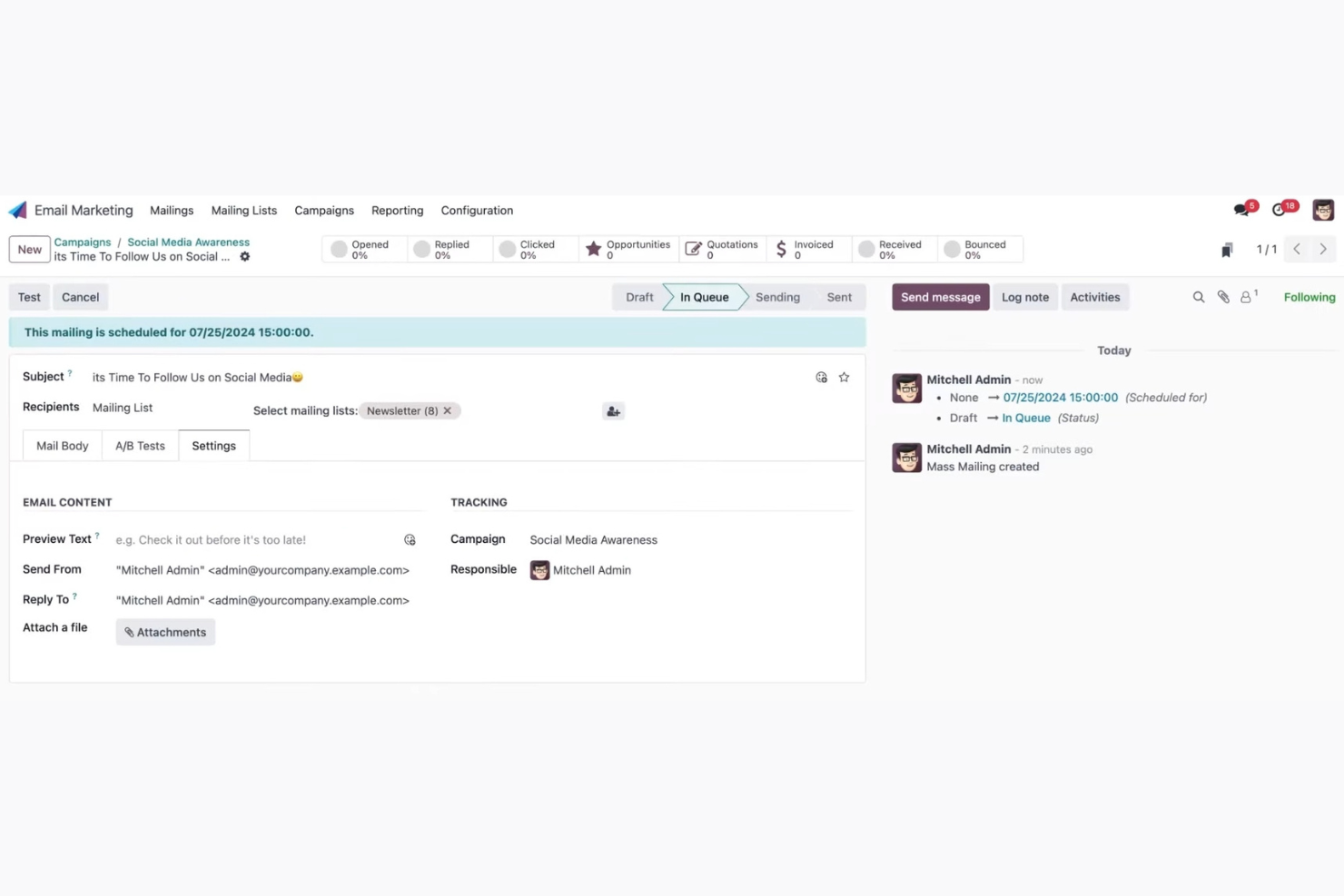
Odoo Email Marketing está en esta lista porque hace algo que la mayoría de las plataformas de código abierto no hacen: conecta las campañas de correo electrónico directamente con toda una suite de aplicaciones empresariales. Sigo recurriendo a Odoo cuando un equipo necesita que el marketing interactúe de cerca con ventas, CRM o incluso inventario, todo en la misma base de datos.
Destaca por la forma en que puedes construir automatizaciones de correo electrónico que extraen datos operativos reales—desde puntos de contacto con clientes hasta actividad de compras—sin exportar ni sincronizar. Realmente aprecio lo fácil que es activar campañas según actividades en otros módulos de Odoo. Esto funciona mejor para empresas que desean que todo, incluido el marketing, forme parte de un sistema estrechamente integrado.
Odoo Email Marketing es ideal para
- Empresas que usan múltiples aplicaciones de Odoo y necesitan flujos de trabajo unificados entre correos electrónicos y operaciones
- Compañías que quieren automatizar campañas activadas por datos en tiempo real de ventas, CRM o inventario
Odoo Email Marketing no es recomendable para
- Equipos que solo necesitan campañas de correo simples sin integraciones con otros sistemas
- Marketeros que buscan análisis avanzados independientes o funciones sofisticadas de diseño en correos
Qué diferencia a Odoo Email Marketing
Odoo Email Marketing destaca por la facilidad con la que integra las campañas de correo electrónico en las operaciones empresariales, en vez de tratar el marketing como algo separado. Cuando lo comparo con herramientas como Constant Contact, se siente menos como un canal de marketing aislado y más como una pieza del motor operativo: las automatizaciones, disparadores y listas están arraigadas en lo que sucede en el resto del negocio.
Odoo espera que los equipos traten el marketing como una integración completa con ventas, inventario, CRM y flujos de trabajo, no solo como un canal para enviar boletines. En la práctica, esto significa que a menudo estarás creando campañas que reaccionan ante eventos transaccionales reales, actualizándose en sintonía con los cambios en el ciclo de vida del cliente que se registran en el resto del sistema.
Compromisos al usar Odoo Email Marketing
Odoo realmente optimiza la integración profunda a nivel de sistema a costa de la profundidad del canal de correo electrónico. Suele pasar que los especialistas en marketing avanzados echan de menos funciones especializadas solo para email o análisis detallados que encontrarían en plataformas independientes, ya que Odoo espera que todo funcione dentro de su propio ecosistema empresarial.
Pros and Cons
Pros:
- La interfaz de arrastrar y soltar simplifica la creación de correos electrónicos profesionales.
- Los análisis en tiempo real proporcionan información detallada sobre el rendimiento de las campañas.
- Las funciones de automatización agilizan la programación y personalización de campañas.
Cons:
- Opciones limitadas de personalización creativa en el editor de correos electrónicos.
- Algunos usuarios reportan demoras en recibir asistencia del soporte al cliente.

phpList
Ideal para campañas de correo electrónico a gran escala
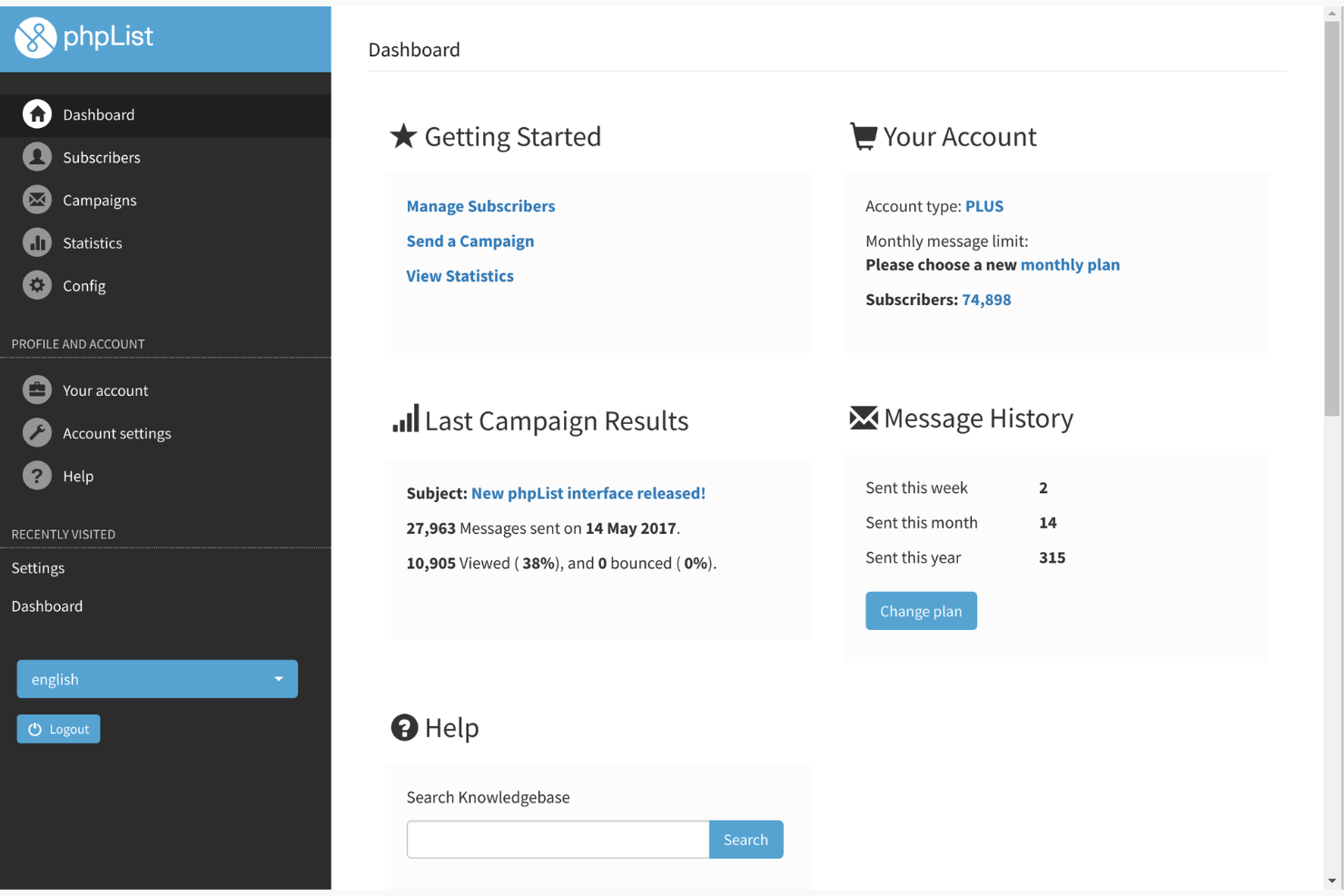
phpList entra en mi lista porque cambia las reglas del juego para quienes gestionan campañas a gran escala con herramientas de código abierto. Lo recomiendo cuando el volumen de campañas y la segmentación avanzada de listas superan las soluciones básicas y necesitas controles de entregabilidad confiables.
Lo que más valoro de phpList es cómo maneja listas de suscriptores masivas, ajustes de velocidad para altos volúmenes de entrega y programación flexible de campañas. He visto a equipos con segmentación de audiencia compleja enviar millones de mensajes sin que la herramienta ceda ante la presión.
phpList es ideal para
- Organizaciones que envían campañas de correo masivo a listas segmentadas y complejas
- Equipos que necesitan controles de entregabilidad y programación avanzada en una plataforma de código abierto
phpList no es recomendable para
- Profesionales de marketing que buscan editores automatizados de tipo arrastrar y soltar o herramientas modernas de diseño
- Pequeños grupos que gestionan campañas básicas o poco frecuentes
Lo que diferencia a phpList
phpList aborda el marketing por correo electrónico con un enfoque en la escala de envío y la profundidad en la gestión de suscriptores, no en el diseño visual o la creación de campañas 'todo en uno'. En lugar de envolver todo en una interfaz WYSIWYG como Mailchimp o Brevo, phpList supone que ya dispones del contenido y segmentos, y solo necesitas control granular sobre la entrega de mensajes, permisos y programación.
A diferencia de otras herramientas modernas de correo con editor visual, phpList espera que trates las campañas como operaciones basadas en datos. El flujo de trabajo está orientado a equipos que necesitan ejecutar campañas masivas basadas en reglas—piensa en organizaciones cívicas, universidades o grupos de defensa que gestionan listas extensas y desean un control preciso sobre el cómo y cuándo llegan los correos.
Compromisos al usar phpList
Como phpList está diseñado para optimizar la entregabilidad a gran escala, la configuración técnica y práctica implica que los equipos gestionen sus propias plantillas y usuarios. Suele suceder que la flexibilidad en el diseño y las analíticas integradas pasan a segundo plano, por lo que quienes dependen del aspecto visual o los equipos creativos pueden sentirse limitados.
Pros and Cons
Pros:
- Maneja grandes volúmenes de correos
- Desarrollo impulsado por la comunidad
- Opción de solución alojada
Cons:
- Recursos básicos de soporte
- Sin funciones CRM integradas


Listmonk se gana su lugar para equipos que no solo incursionan en el correo electrónico, sino que ejecutan campañas de alto volumen donde la velocidad de entrega de mensajes y la escalabilidad son requisitos fundamentales. Yo recurro a él cuando el equipo quiere autohospedarse y priorizar la visibilidad total, especialmente en cuanto a capacidad y control.
Donde realmente destaca Listmonk para mí es en su habilidad para procesar y entregar millones de correos electrónicos con un alto rendimiento, gracias a su backend basado en Go, un sistema de plantillas avanzado y vistas previas de campañas instantáneas. Me gusta cómo te permite gestionar listas de suscriptores utilizando consultas similares a SQL y analizar la entrega en tiempo real, lo cual encaja perfectamente si buscas un flujo de trabajo orientado a datos y alto rendimiento.
Para quién es mejor Listmonk
- Equipos de marketing con conocimientos técnicos que necesitan una entrega masiva de correos autohospedada y de alto volumen
- Empresas que buscan un control granular sobre la gestión de suscriptores con seguimiento y análisis detallados
Para quién no es ideal Listmonk
- Equipos no técnicos que necesitan creadores visuales de campañas o una configuración guiada
- Organizaciones que buscan funciones avanzadas de CRM, automatización o herramientas de diseño de arrastrar y soltar en un solo paquete
Qué diferencia a Listmonk
Listmonk aborda el marketing por correo electrónico con la mentalidad de un equipo de desarrollo u operaciones, diseñando desde cero para lograr un rendimiento puro y control total de los datos. A diferencia de herramientas en la nube como Mailchimp, espera que seas dueño y administres el sistema, utilizando una interfaz similar a SQL para segmentar suscriptores y estadísticas de entrega en tiempo real que rara vez son tan accesibles en otras herramientas.
En lugar de intentar incluir constructores de automatización o funciones centradas en el diseño, Listmonk se enfoca en el rendimiento, la transparencia y permitir que trabajes directamente con tus listas y la lógica de los mensajes. Lo veo funcionar especialmente bien en entornos donde el envío masivo es lo más importante y donde la flexibilidad técnica tiene mayor peso que la comodidad.
Compromisos con Listmonk
Al priorizar el rendimiento y el control profundo, Listmonk sacrifica mucha ayuda en la incorporación y herramientas visuales. Suele ocurrir que los equipos sin conocimientos técnicos tengan dificultades para configurarlo o personalizarlo, así que si no cuentas con alguien familiarizado con la configuración de servidores o consultas tipo SQL, podrías encontrarte con obstáculos desde el principio.
Pros and Cons
Pros:
- Fácil de instalar y desplegar
- Segmentación basada en SQL
- Panel integrado para métricas
Cons:
- Plantillas integradas limitadas
- La interfaz puede parecer básica


Mailtrain entra en mi lista corta porque es raro encontrar una plataforma de email marketing completamente de código abierto que gestione grandes bases de suscriptores sin fallar. Cuando veo equipos gestionando decenas o cientos de miles de contactos, especialmente para newsletters de alto volumen o comunicaciones de asociaciones, esta es la herramienta que mantiene las cosas en movimiento.
Lo que realmente destaca en la práctica es cómo Mailtrain te permite segmentar listas enormes, programar campañas recurrentes y ejecutar formularios de suscripción que tú controlas totalmente. Me gusta mucho no tener que preocuparme por los límites de suscriptores—cuando el problema es la escala, esto es lo que recomiendo.
Mailtrain es ideal para
- Organizaciones que gestionan grandes listas de suscriptores donde el autoalojamiento y el control de datos son importantes
- Especialistas en email marketing que necesitan segmentación avanzada de listas y programación de campañas recurrentes a gran escala
Mailtrain no es ideal para
- Equipos que desean integraciones incorporadas con stacks modernos de marketing SaaS
- Marketeros que buscan editores de emails tipo arrastrar y soltar o herramientas visuales de diseño avanzadas
Lo que diferencia a Mailtrain
Mailtrain aborda el email marketing desde una perspectiva técnica y autoalojada, esperando que los equipos valoren la independencia y el control granular sobre su infraestructura. En lugar de centrarse en interfaces amigables tipo arrastrar y soltar como Sendinblue, Mailtrain asume que tienes ciertos conocimientos técnicos y quieres personalizar la gestión de suscriptores, automatizaciones y acceso a datos por tu cuenta.
Trata el manejo de listas grandes como una necesidad principal, no como una función premium—mientras la mayoría de las grandes plataformas penalizan la escala, Mailtrain te da el poder de administrar todo el proceso sin límites arbitrarios.
Compromisos con Mailtrain
Mailtrain prioriza el control y la escalabilidad sobre la accesibilidad y el acabado visual. Lo que suele ocurrir es que, si no cuentas con recursos técnicos o buscas plantillas pulidas y guías incorporadas, la curva de aprendizaje y la inversión de tiempo pueden hacerse cuesta arriba.
Pros and Cons
Pros:
- Gestiona grandes listas de suscriptores
- Segmentación de listas personalizable
- Admite múltiples proveedores de envío
Cons:
- Integraciones limitadas con terceros
- Interfaz de usuario básica


FluentCRM merece un lugar aquí porque realmente está diseñado para quienes necesitan una integración profunda y nativa con WordPress para el marketing por correo electrónico. Normalmente lo recomiendo cuando un equipo quiere listas, automatizaciones y campañas de correo electrónico funcionando directamente dentro de su sitio WordPress y no en alguna herramienta externa.
Cuando instalé FluentCRM para una comunidad de membresía, me gustó cómo me permitió segmentar los contactos por roles de usuario y ejecutar secuencias en función de la actividad en el sitio. Creo que destaca por aprovechar completamente los datos de usuario y los disparadores de automatización de WordPress—esto es precisamente donde otras herramientas de correo electrónico de código abierto se quedan cortas.
FluentCRM es ideal para
- Propietarios de sitios WordPress que desean marketing por correo y automatización directamente en el panel
- Sitios de membresía o cursos en línea que necesitan segmentación por roles de usuario de WordPress
FluentCRM no es ideal para
- Equipos que ejecutan marketing en varios sitios, plataformas o canales más allá de WordPress
- Organizaciones que necesitan análisis avanzados de entregabilidad o herramientas de campaña multicanal
Lo que distingue a FluentCRM
FluentCRM resulta único porque no intenta reemplazar toda tu infraestructura de marketing—espera que tu trabajo ocurra dentro de WordPress. Todo el sistema no solo está integrado, sino construido alrededor del uso de datos nativos de WordPress, disparadores y acciones de usuarios autenticados como la base para las automatizaciones.
A diferencia de herramientas como Sendy o Mailtrain, que tienden a funcionar fuera del sitio y solo se conectan mediante APIs, considero que el enfoque de FluentCRM hace que las campañas y la segmentación resulten muy sencillas para quienes trabajan dentro del panel de WordPress. Está realmente optimizado para equipos que ven su propio sitio como el centro, y no simplemente como otro canal.
Compromisos con FluentCRM
FluentCRM apuesta totalmente por el flujo de trabajo centrado en WordPress, por lo que su valor disminuye en cuanto sales de ese ecosistema. Si tu marketing se expande a Shopify, CMS headless o e-commerce independiente, te vas a encontrar con verdaderas limitaciones.
Pros and Cons
Pros:
- Analíticas detalladas ofrecen información sobre el rendimiento de la campaña.
- Flujos de trabajo avanzados de automatización que optimizan el marketing.
- Integración perfecta con WordPress que mejora la comodidad del usuario.
Cons:
- La configuración inicial puede ser compleja para usuarios sin conocimientos técnicos.
- Requiere un entorno WordPress para funcionar.


Elegí Sendy para esta lista porque ofrece marketing por correo electrónico rentable de una manera que muy pocas opciones de código abierto logran. Cuando los equipos necesitan control total sobre sus envíos y quieren evitar los costos recurrentes de las plataformas SaaS convencionales, Sendy destaca de inmediato.
Lo que más valoro es cómo Sendy se integra con Amazon SES, de modo que cada campaña que lanzamos resulta realmente asequible a gran escala. La posibilidad de rastrear informes detallados sobre aperturas y clics sin los recargos habituales es una gran ventaja cuando tu lista supera los 10.000 contactos.
Sendy es ideal para
- Equipos que desean alojar por sí mismos y mantener los costos de email marketing bajo control
- Marketers que necesitan informes detallados de campañas e integración con Amazon SES
Sendy no es adecuado para
- Organizaciones que quieren herramientas de diseño de emails incorporadas y editores de arrastrar y soltar
- Equipos que buscan una infraestructura en la nube gestionada y mínima administración de servidores
Lo que distingue a Sendy
Lo que me llama la atención de Sendy es cómo trata el envío de correos electrónicos como infraestructura en lugar de un servicio totalmente gestionado. A diferencia de algo como Constant Contact, que lo maneja todo por ti, Sendy espera que controles desde dónde se envían tus correos y te da verdadera propiedad sobre los datos de tus suscriptores.
En lugar de apostar por abundancia de funciones o plantillas vistosas, su enfoque es fijar tus campañas en Amazon SES, así que siempre sabes lo que sucede en segundo plano. Los equipos suelen tratar el email marketing con más rigor técnico y transparencia al usar Sendy, lo que puede ser un gran cambio respecto al acompañamiento y la abstracción que ves en los grandes proveedores SaaS.
Compromisos de Sendy
Sendy prioriza la transparencia y el control de costos, pero lo que suele perderse es la comodidad: la personalización y la configuración inicial del servidor requieren un esfuerzo real al principio. En la práctica, los equipos son responsables de la entregabilidad y la seguridad, lo que suma tareas continuas que simplemente no existen en las plataformas alojadas convencionales.
Pros and Cons
Pros:
- Admite la gestión de múltiples marcas
- Altas tasas de entregabilidad
- Informes detallados de campañas
Cons:
- Integraciones limitadas con terceros
- Sin funcionalidad CRM incorporada

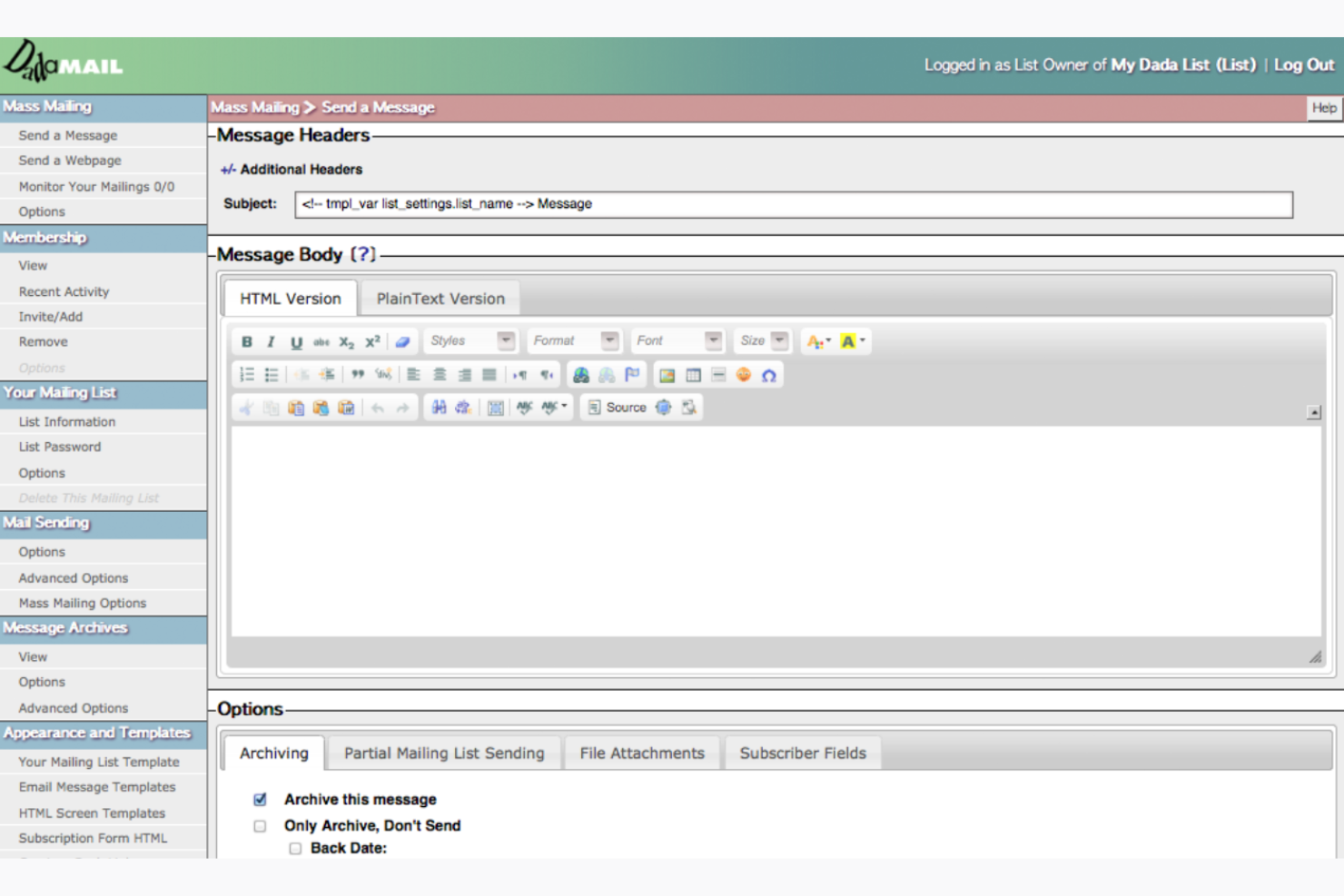
Dada Mail siempre está en mi lista corta de software de marketing por correo electrónico de código abierto porque ofrece a pequeñas empresas y organizaciones sin fines de lucro un control preciso sobre la gestión de suscriptores. Me gusta cómo mantiene todo basado en listas: gestionando suscripciones, rastreando rebotes y automatizando resúmenes de manera clara.
Donde Dada Mail brilla para mí es en sus funciones de archivado y el seguimiento detallado de correos electrónicos. Veo a pequeños equipos usándolo cuando quieren un sistema totalmente autohospedado que sea sencillo pero ofrezca una excelente higiene de listas y transparencia en los resultados de las campañas.
Dada Mail es ideal para
- Pequeñas empresas y organizaciones sin fines de lucro que gestionan listas de suscriptores internamente
- Equipos que desean un sistema de correo electrónico autohospedado con fuerte control sobre las listas
Dada Mail no es ideal para
- Mercadólogos que necesitan automatizaciones complejas o segmentación avanzada
- Organizaciones que requieren integraciones nativas con CRM o plataformas de comercio electrónico
Lo que distingue a Dada Mail
Lo que más me llama la atención de Dada Mail es cómo centra todo en torno a las listas de correo electrónico: la propiedad, la gestión y todas las herramientas están deliberadamente diseñadas para apoyar eso. A diferencia de plataformas SaaS populares como Mailchimp, que colocan las campañas en el centro, Dada Mail espera que trabajes directamente en tu servidor y gestiones los suscriptores bajo tus propios términos.
No encontrarás constructores visuales pesados ni asistentes de campañas; en cambio, tienes herramientas enfocadas para el control de listas, archivado detallado y gestión de resúmenes. Está claramente dirigido a equipos que desean un control práctico y local sin distracciones de la automatización de marketing más amplia.
Compromisos con Dada Mail
Debido a que está optimizado para el control directo y las necesidades de equipos pequeños, se renuncia a la comodidad y la escalabilidad de plataformas comerciales. Considero que los equipos pueden verse sobrecargados personalizando y manteniendo las funciones por sí mismos, ya que hay menos automatización incorporada y menos herramientas modernas para campañas.
Pros and Cons
Pros:
- Interfaz basada en la web
- Gestión de listas sencilla
- Formularios de suscripción personalizables
Cons:
- Funciones avanzadas limitadas
- Analítica básica

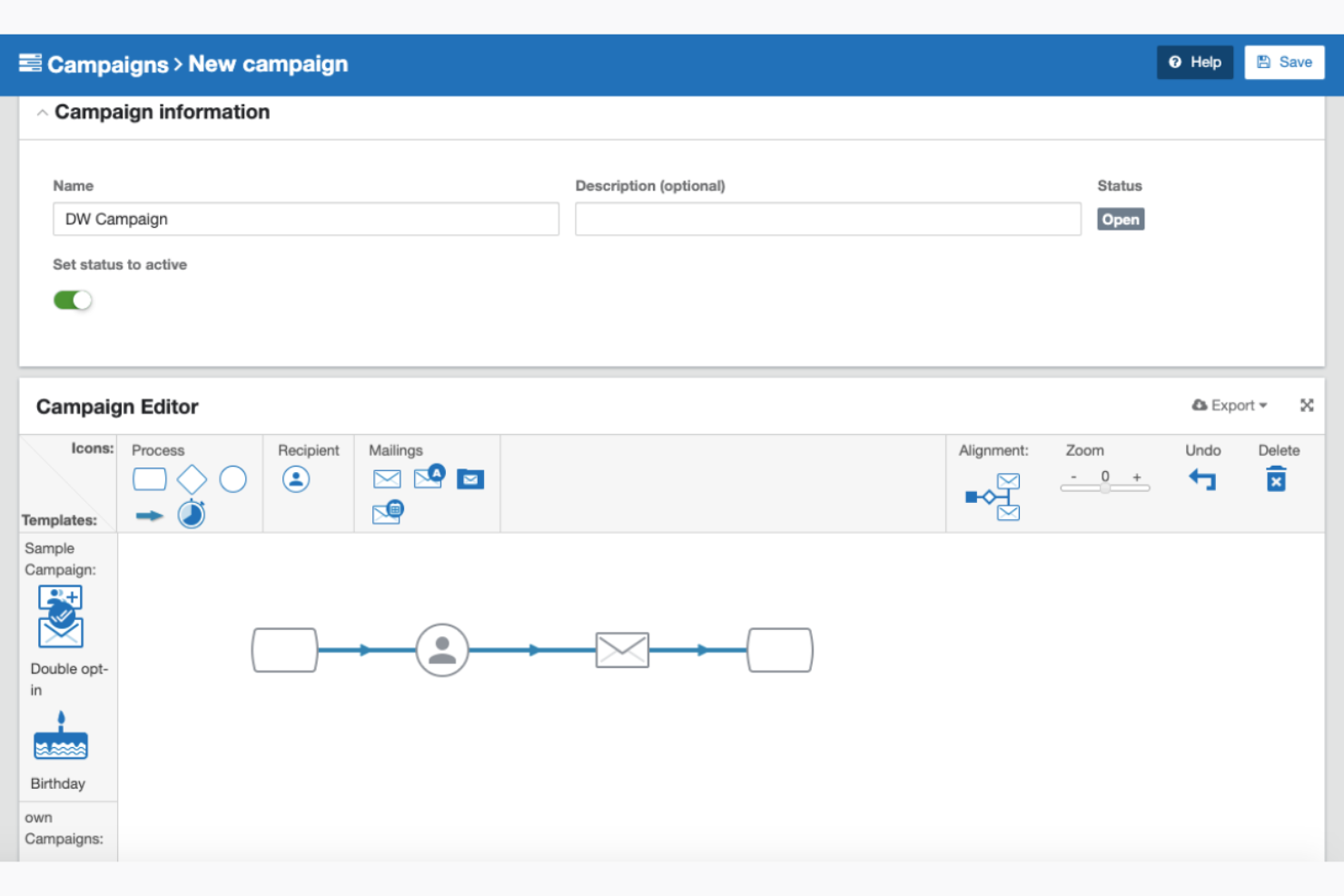
OpenEMM entra en mi lista porque no solo cubre lo básico, sino que está diseñado para organizaciones que gestionan varios clientes, marcas o departamentos. He recurrido a OpenEMM cuando los equipos alcanzan ese siguiente nivel de crecimiento y necesitan gestionar perfiles de remitente, permisos y plantillas independientes, todo desde un solo lugar.
Lo que más destaco es su arquitectura multi-cliente, que permite a los administradores crear entornos diferenciados para cada unidad de negocio. Me gusta la rapidez con la que puedo cambiar entre los espacios de trabajo de los clientes y monitorear el rendimiento de cada campaña de forma separada, sin complicar los flujos de trabajo ni arriesgar la mezcla de datos.
Lo Mejor de OpenEMM Para
- Agencias y equipos de marketing que gestionan cuentas de varios clientes o unidades de negocio
- Organizaciones que necesitan una estricta separación de datos, permisos y supervisión entre distintos remitentes
OpenEMM No Es Ideal Para
- Pequeñas empresas o personas que gestionan campañas simples con una sola lista
- Equipos que buscan funciones CRM integradas o automatización de marketing avanzada
Qué Distingue a OpenEMM
OpenEMM destaca porque es uno de los pocos sistemas de código abierto que parte de la base de que las agencias y los equipos de marketing impulsados por TI requieren, por defecto, una verdadera separación entre clientes, marcas o unidades. Mientras que otras plataformas de correo como phpList o Mailtrain estructuran todo en torno a una cuenta central, OpenEMM integra la jerarquía multi-cliente y los permisos directamente en el producto principal. El flujo de trabajo espera que los administradores definan límites, asignen plantillas y gestionen las identidades de los remitentes como canales claramente separados y sin solapamientos.
Este enfoque es muy diferente al de la mayoría de las herramientas generalistas, que tratan la segmentación y los controles de acceso como algo adicional o como una mejora de nivel superior. En lugar de asumir un solo contexto de negocio por instalación, OpenEMM espera desde el principio que atiendas a varias entidades independientes.
Compromisos con OpenEMM
OpenEMM optimiza la compartimentación y la estructura basada en políticas, lo que significa que la configuración y la administración continua son más complejas que con herramientas de lista única. Lo que suele suceder es que los equipos sacrifican la simplicidad para obtener una confiable separación de datos y un control granular.
Pros and Cons
Pros:
- Gestión multi-cliente
- Cumplimiento con GDPR
- Amplia personalización
Cons:
- Requiere configuración técnica
- Sin funciones CRM integradas

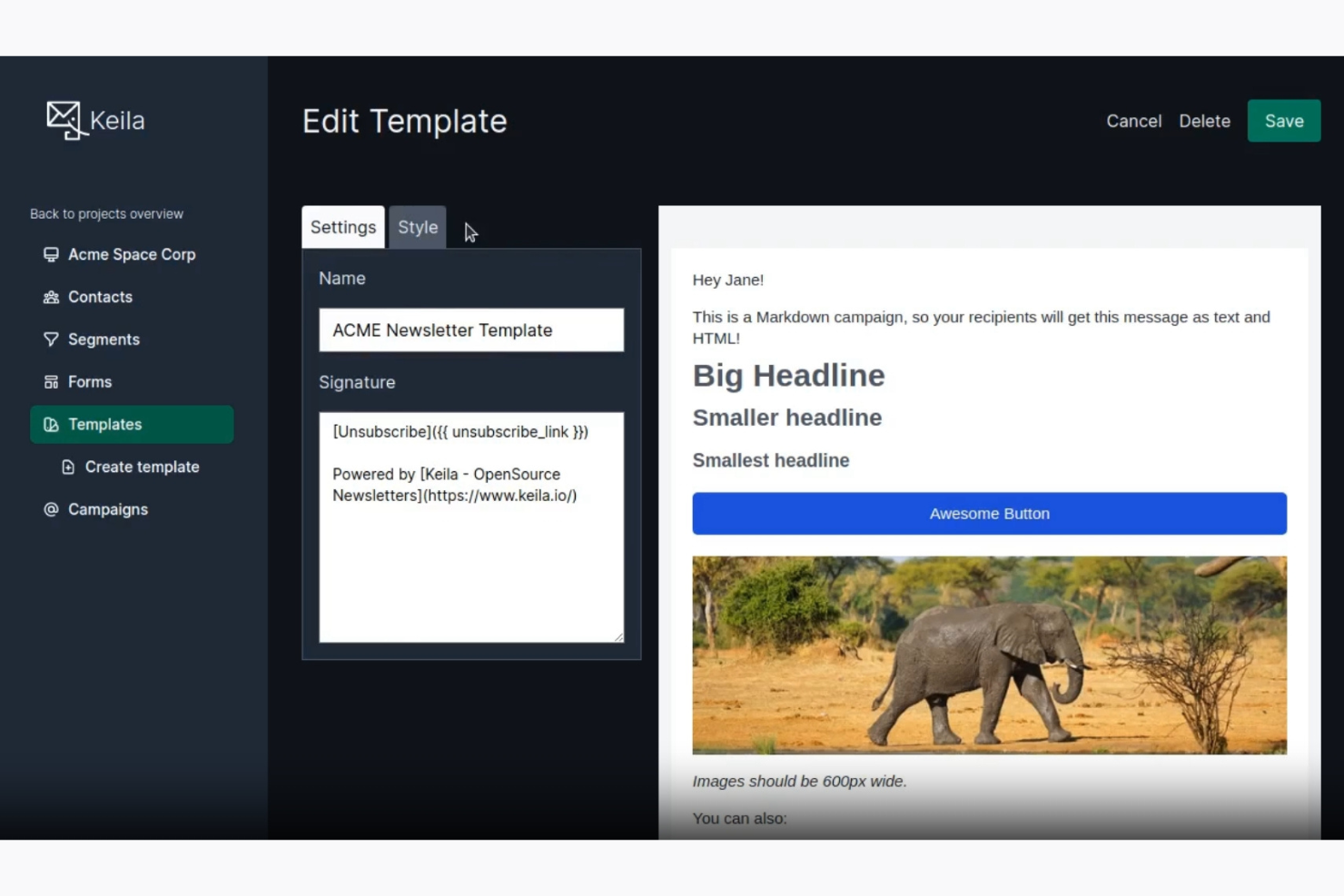
Keila se gana un lugar en mi lista porque es uno de los pocos ESP de código abierto que pone la privacidad y el cumplimiento normativo en primer plano. Lo recomiendo cuando los equipos manejan listas sensibles o trabajan en regiones con estrictas normas de privacidad—las funciones integradas de cumplimiento con el RGPD y los controles de residencia de datos de Keila son factores clave aquí.
Lo que más destaco es que Keila no depende de procesadores externos ni de rastreo, así que enviar campañas se siente realmente privado. Me gusta lo sencillo que es gestionar el consentimiento de los suscriptores, y he tenido éxito usando Keila cuando la privacidad no es solo un requisito más, sino una exigencia central para cada correo enviado.
Ideal para
- Organizaciones que necesitan cumplir con el RGPD y mantener una fuerte privacidad de datos en campañas de correo
- Equipos que manejan datos sensibles de suscriptores y requieren una gestión clara de consentimientos
No es ideal para
- Marketers que buscan automatizaciones avanzadas o personalización dinámica de contenido
- Equipos que dependen de analíticas de rastreo detalladas e integraciones nativas con herramientas externas
Lo que diferencia a Keila
Keila aborda el email marketing priorizando la privacidad y eliminando funciones de rastreo que encuentras en herramientas como Mailchimp o Sendinblue. Su flujo de trabajo parte de la base de que el cumplimiento normativo no es un añadido—gestiona la propiedad de los datos, el consentimiento de los suscriptores y la privacidad analítica desde cero. En vez de crear automatizaciones complejas, Keila espera que te enfoques en una comunicación transparente y respetuosa. Comparado con los ESP tradicionales que integran píxeles de terceros en todos lados, el diseño de Keila confía en que tú priorizarás la privacidad de tus destinatarios sobre todo lo demás.
Compromisos con Keila
Al optimizar para la privacidad y prescindir del rastreo de comportamiento y automatizaciones avanzadas, Keila limita lo que puedes hacer con segmentación y optimización. Esto significa que los equipos que esperan métricas de interacción en tiempo real o una segmentación detallada de la audiencia suelen sentirse limitados por el enfoque simple y orientado a la privacidad de la plataforma.
Pros and Cons
Pros:
- Proporciona segmentación avanzada de datos para campañas de correo dirigidas.
- El soporte depende de los recursos de la comunidad en lugar de un servicio dedicado.
- Ofrece creador de formularios flexible con medidas anti-bots.
Cons:
- No incluye editor de correo de arrastrar y soltar, requiere configuración técnica.
- Integraciones nativas limitadas, depende de API para conexiones.

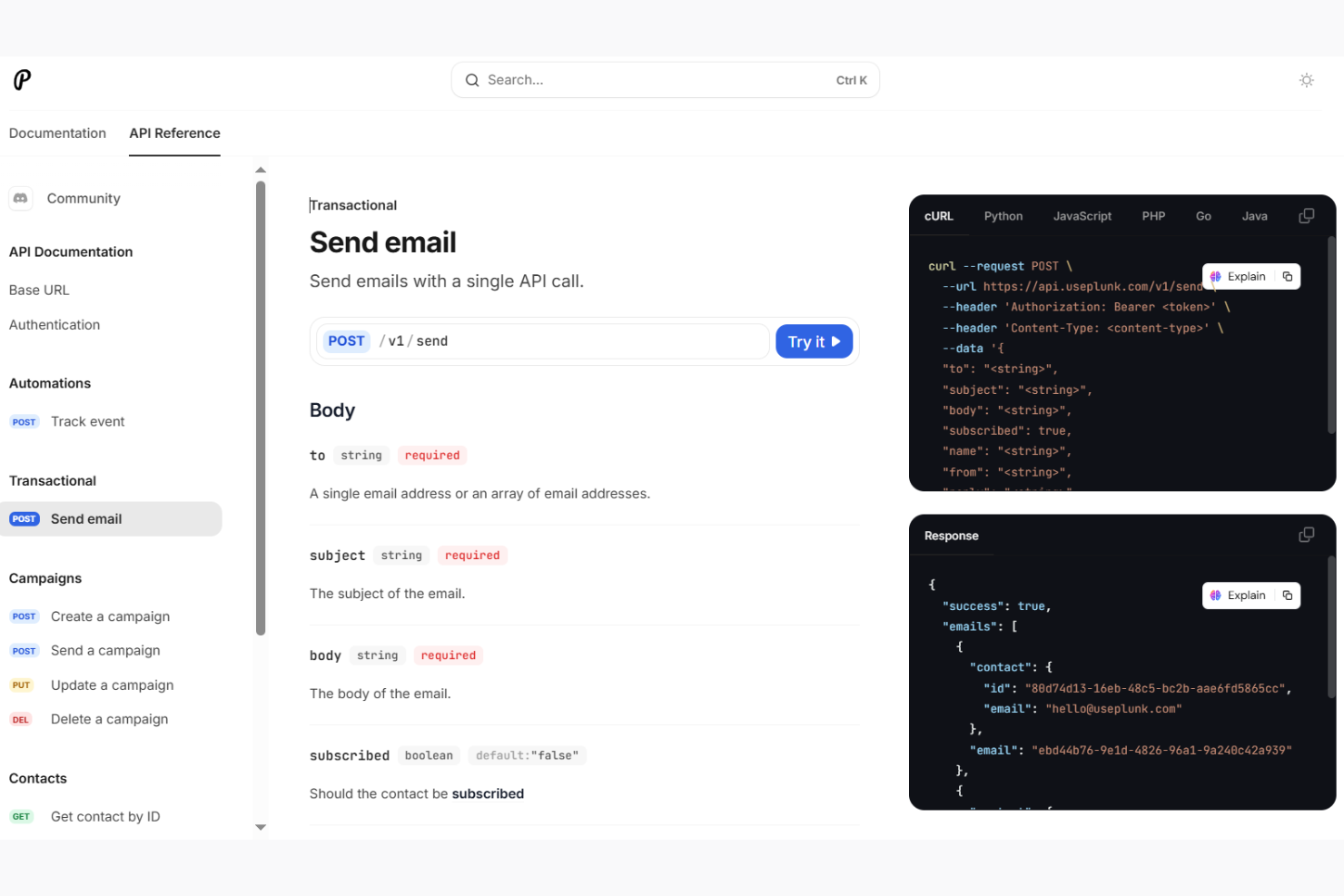
Plunk está en mi lista porque adopta un enfoque de solución única para la gestión del correo electrónico que resuelve un problema real para los equipos cansados de tener que unir varias herramientas. Me inclino por Plunk cuando un equipo quiere todo, desde la recopilación de correos hasta la difusión y analítica, en un solo lugar y listo para usar.
Lo que más me llama la atención es cómo Plunk gestiona el consentimiento y las listas de suscriptores sin añadir complejidad ni sistemas extra. Valoro lo rápido que puedo pasar de configurar una campaña a revisar información detallada sobre su desempeño, especialmente cuando busco minimizar la cantidad de herramientas sin sacrificar funcionalidad.
Plunk es ideal para
- Equipos que desean una sola plataforma para gestión de listas, envíos e informes
- Empresas que buscan minimizar la complejidad en la configuración de campañas de correo y la gestión de audiencias
Plunk no es recomendable para
- Especialistas en marketing que necesitan automatización avanzada, personalización o flujos de trabajo multicanal
- Equipos enfocados en crear recorridos de correo electrónico muy personalizados o segmentados
Qué distingue a Plunk
Lo que noto en Plunk es cómo reduce el marketing por correo electrónico a lo esencial: hay una sensación de minimalismo intencionado en cada decisión. A diferencia de algo como Mailchimp, que intenta abarcar todos los casos y etapas de uso, Plunk espera que te concentres únicamente en construir tu lista, enviar campañas y revisar los resultados en un solo lugar.
Está claro que Plunk fue creado para equipos que prefieren trabajar desde un solo sistema, sin tener que recurrir a complementos, gestión de API ni paneles adicionales. Mientras que otras herramientas más modulares fomentan flujos de trabajo modulares, Plunk apuesta a que la mayoría de los equipos pequeños y medianos necesitan un espacio limpio y unificado para el correo electrónico—y poco más.
Compromisos con Plunk
Plunk prioriza la simplicidad y el enfoque en una sola plataforma, pero eso supone renunciar a secuencias avanzadas, automatización y flexibilidad de integración. Lo que suele pasar es que, en cuanto tus campañas necesitan desencadenantes más sofisticados o recorridos personalizados, superas lo que Plunk está dispuesto a ofrecer.
Pros and Cons
Pros:
- Operaciones transparentes
- Manejo de datos orientado a la privacidad
- Editor de correos responsivo
Cons:
- Integraciones limitadas
- Limitado a alojamiento de datos en la UE
Otros programas de marketing por correo electrónico de código abierto
Estas son algunas opciones adicionales de programas de marketing por correo electrónico de código abierto que no llegaron a mi lista, pero que merece la pena consultar:
- Octeth
Mejor opción para campañas de email de agencias
- SendPortal
Ideal para marketing por correo electrónico orientado al desarrollador
- Mautic
Lo mejor para flexibilidad en automatización de marketing
- SendBlaster
Ideal para campañas de correo electrónico fuera de línea


Cómo evalúo el software de email marketing de código abierto
Divido mi investigación en dos capas: criterios básicos que cubren auto-hospedaje, entrega SMTP y gestión de suscriptores, y diferenciadores que revelan qué herramientas valen la pena configurar.
Funcionalidad esencial (lo mínimo para esta lista)
Cuando selecciono herramientas para mi lista, califico cada una en una escala de 0 (no ofrece la funcionalidad) a 5 (destaca en esta área) para cada funcionalidad esencial que se enumera a continuación. Luego, calculo la puntuación total de la herramienta en porcentaje. Cada herramienta debe alcanzar una puntuación total mínima del 65% para ser considerada para su inclusión.
- Licencia de código abierto: Verifico que cada herramienta tenga una licencia de código abierto reconocida y un repositorio público accesible, similar a cómo Mautic publica bajo GPL o listmonk bajo AGPL.
- Creación y envío de campañas: Cada plataforma debe permitirte construir, programar y enviar campañas masivas con tokens de personalización y segmentación de audiencia integrados en el flujo de trabajo.
- Gestión de suscriptores y listas: Evalúo cómo la herramienta gestiona importaciones, segmentación, campos personalizados y el procesamiento de bajas, especialmente para equipos que gestionan listas en varios productos o regiones.
- Integración SMTP y de entrega: La plataforma debe conectarse con proveedores externos como Amazon SES, Mailgun o un servidor privado de Postfix, dando a tu equipo control sobre la infraestructura de envío y los costos.
- Editor de plantillas de correo: Miro si dispones de un editor visual, acceso a HTML puro, o ambos, y qué tan fácil es crear plantillas responsivas y con marca sin un desarrollador de front-end.
- Analítica y seguimiento: Los reportes deben cubrir aperturas, clics, rebotes y bajas como mínimo, para que puedas medir el rendimiento de la campaña y limpiar tus listas con el tiempo.
Una vez tengo una lista de herramientas que cumplen estos criterios, considero qué diferencia a cada plataforma.
Factores diferenciadores (qué distingue a los proveedores)
Así es como comparo y contrasto diferentes proveedores:
Características destacadas
Los flujos de trabajo de automatización de marketing distinguen a los simples remitentes de boletines de las plataformas con las que puedes crecer. Busco creadores visuales que permitan activar secuencias automáticas según el comportamiento del suscriptor, como enviar una serie de reactivación cuando alguien deja de abrir correos. El soporte de API y webhooks es igual de importante, ya que la mayoría de los equipos necesita sincronizar datos de suscriptores con un CRM o una plataforma de comercio electrónico. También evalúo las herramientas de entregabilidad, incluyendo configuración DKIM/SPF incorporada y gestión de rebotes, porque incluso la mejor campaña no funcionará si termina en la carpeta de spam.
Más allá de las funcionalidades
La salud de la comunidad y del ecosistema te dice mucho sobre la viabilidad a largo plazo de una plataforma. Reviso la actividad en GitHub, la calidad de la documentación y si existe un foro activo o Discord donde puedas resolver problemas sin soporte de pago. Las herramientas de cumplimiento son otro factor clave: evalúo si la plataforma incluye doble opt-in, seguimiento de consentimiento y flujos de trabajo de eliminación de datos que los equipos necesitan para GDPR y regulaciones similares. La flexibilidad de despliegue también importa, especialmente la disponibilidad de Docker y de instaladores de un solo clic, ya que un proceso de configuración complicado puede impedir la adopción antes de que siquiera envíes tu primera campaña.
Cómo elegir un programa de marketing por correo electrónico de código abierto
Es fácil perderse entre largas listas de funciones y estructuras de precios complejas. Para ayudarte a mantener la concentración mientras avanzas en tu proceso único de selección de software, aquí tienes una lista de factores que debes tener en cuenta:
| Factor | Qué debes tener en cuenta |
| Escalabilidad | Considera si el software puede crecer junto con tu empresa. ¿Gestionará más suscriptores y correos electrónicos a medida que aumenten tus necesidades? Busca opciones que no limiten el crecimiento. |
| Integraciones | Comprueba si se conecta con tus sistemas actuales. ¿Funciona con tu CRM, tus herramientas de análisis y otras herramientas? Evita el software que aísle tus datos. |
| Personalización | Piensa hasta qué punto puedes adaptar el software para que se ajuste a tus procesos. ¿Se pueden adaptar las plantillas y los flujos de trabajo? Equilibra la flexibilidad con la facilidad de uso. |
| Facilidad de uso | Evalúa la curva de aprendizaje de tu equipo. ¿Es intuitiva la interfaz? Haz una prueba para asegurarte de que no ralentizará tus operaciones. |
| Implementación e incorporación | Evalúa el tiempo y los recursos necesarios para empezar. ¿Hay guías o asistencia que te ayuden? Un comienzo fluido puede ahorrarte problemas más adelante. |
| Coste | Compara el precio con tu presupuesto. ¿Hay tarifas ocultas o límites de uso? Asegúrate de que el coste se ajuste al valor que ofrece. |
| Medidas de seguridad | Verifica las medidas de seguridad del software. ¿Protege tus datos y cumple con la normativa? Busca cifrado y actualizaciones periódicas. |
| Disponibilidad de asistencia | Determina el nivel de asistencia ofrecido. ¿Hay ayuda disponible cuando la necesitas? Considera la importancia del servicio de atención al cliente en tu decisión. |
¿Qué es un programa de marketing por correo electrónico de código abierto?
El software de marketing por correo electrónico de código abierto es una herramienta que permite a los usuarios gestionar y enviar campañas de correo electrónico con la libertad de modificar el código fuente del software. Los profesionales del marketing, los propietarios de pequeñas empresas y los desarrolladores suelen utilizar estas herramientas para personalizar su estrategia de correo electrónico y ahorrar costes. Funciones como la gestión de listas, la automatización y los análisis detallados respaldan unos esfuerzos de marketing personalizados y eficientes. Estas herramientas ofrecen flexibilidad y control, lo que permite a los usuarios adaptar sus campañas de correo electrónico a necesidades y objetivos específicos.
Funciones del software de marketing por correo electrónico de código abierto
Al seleccionar un software de marketing por correo electrónico de código abierto, presta atención a las siguientes funciones clave:
- Plantillas de correo electrónico personalizables: Diseña rápidamente correos electrónicos de aspecto profesional utilizando plantillas prediseñadas que puedes ajustar para adaptarlas a tu marca o a las necesidades de tu campaña. Ahorrarás tiempo y te asegurarás de que cada mensaje sea exclusivamente tuyo.
- Automatización de campañas: Configura flujos de trabajo automatizados para correos electrónicos de bienvenida, series de mensajes programados o campañas de reactivación. Esto te permite enviar el mensaje adecuado en el momento oportuno, incluso cuando estás ocupado con otras tareas.
- Gestión de suscriptores: Organiza, segmenta y realiza un seguimiento de tus listas de suscriptores fácilmente, para poder enviar contenido específico y mantener a tu audiencia interesada sin complicaciones.
- Análisis e informes detallados: Realiza un seguimiento de las tasas de apertura, los clics, los rebotes y otras métricas clave. Con estos informes, sabrás qué funciona y en qué aspectos puedes mejorar tus campañas.
- Pruebas A/B: Realiza pruebas divididas con líneas de asunto, contenido de correo electrónico o momentos de envío. Saber qué atrae a tu audiencia te ayuda a aumentar las tasas de respuesta de forma medible y sin complicaciones.
- Opciones de integración: Conecta tu plataforma de correo electrónico con otras herramientas que utilices, como CRM o formularios web. Agilizar el flujo de datos te ahorra tiempo y garantiza que nada se pierda.
- Importación y exportación de contactos: Importa listas de otras fuentes o exporta tus contactos para utilizarlos en otro lugar, haciendo que la migración o el análisis de datos sean rápidos y sencillos.
- Segmentación de listas: Divide a los suscriptores según sus datos demográficos, comportamiento o historial de interacción, para poder adaptar las campañas y conectar realmente con cada grupo.
- Gestión de bajas: Gestiona automáticamente las solicitudes de baja y el cumplimiento normativo con facilidad. Dedica más tiempo a conectar con los lectores interesados y menos al mantenimiento manual de las listas.
Funciones habituales de IA del software de marketing por correo electrónico de código abierto
Además de las funciones estándar del software de marketing por correo electrónico de código abierto mencionadas anteriormente, muchas de estas soluciones están incorporando IA con funciones como:
- Limpieza automatizada de listas: La IA identifica a los suscriptores inactivos, las trampas de spam o los posibles rebotes antes de que pulses el botón de envío, protegiendo tu reputación como remitente y manteniendo tu lista actualizada.
- Optimización predictiva del momento de envío: La IA analiza el comportamiento de los suscriptores para sugerir los mejores momentos para enviar correos electrónicos, ayudándote a llegar a las bandejas de entrada cuando es más probable que tus lectores interactúen.
- Personalización del contenido: La IA adapta el contenido del correo electrónico —como las recomendaciones de productos o los mensajes— a cada suscriptor, aumentando las probabilidades de que encuentre algo valioso (y no se limite a pulsar el botón de eliminar).
- Puntuación de la interacción: La IA realiza un seguimiento de cómo interactúan los suscriptores con tus correos electrónicos y asigna una puntuación clara a cada uno, para que sepas quién muestra más interés y quién necesita un poco más de atención.
- Sugerencias inteligentes para las líneas de asunto: La IA sugiere líneas de asunto basadas en el contenido de tu correo electrónico y en el rendimiento de campañas anteriores, ayudándote a crear encabezados que aumenten las tasas de apertura.
Ventajas del software de marketing por correo electrónico de código abierto
La implementación de un software de marketing por correo electrónico de código abierto ofrece varias ventajas para tu equipo y tu empresa. Estas son algunas de las que puedes esperar:
- Ahorro de costes: Ahorra dinero al evitar las cuotas de suscripción y gastar únicamente en las funciones que necesitas.
- Flexibilidad: Adapta el software a las necesidades específicas de tu empresa gracias a sus funciones personalizables y al acceso abierto al código fuente.
- Control: Mantén un control total sobre tus datos y sobre la forma en que se gestionan, garantizando la privacidad y la seguridad.
- Escalabilidad: Amplía fácilmente tus esfuerzos de marketing por correo electrónico a medida que crece tu empresa, sin necesidad de cambiar de plataforma.
- Integración: Conecta con otras herramientas empresariales para crear una estrategia de marketing unificada y mejorar la eficiencia.
- Asistencia de la comunidad: Benefíciate de una comunidad de desarrolladores y usuarios que contribuyen con mejoras y proporcionan asistencia.
- Transparencia: Obtén información sobre el funcionamiento del software, lo que permite solucionar problemas y optimizarlo mejor.
Costes y precios del software de marketing por correo electrónico de código abierto
Seleccionar un software de marketing por correo electrónico de código abierto requiere comprender los diversos modelos de precios y planes disponibles. Los costes varían según las funciones, el tamaño del equipo, los complementos y otros factores. La tabla siguiente resume los planes habituales, sus precios medios y las funciones que suelen incluir las soluciones de software de marketing por correo electrónico de código abierto:
Tabla comparativa de planes para software de marketing por correo electrónico de código abierto
| Tipo de plan | Precio medio | Funciones habituales |
| Plan gratuito | $0 | Gestión básica de listas, plantillas de correo electrónico y asistencia de la comunidad. |
| Plan personal | $5-$25/ usuario/mes | Segmentación avanzada de listas, análisis básicos y automatización limitada. |
| Plan empresarial | $30-$75/ usuario/mes | Informes detallados, automatización mejorada y acceso multiusuario. |
| Plan para empresas | $80-$150/ usuario/mes | Flujos de trabajo personalizables, asistencia premium e integración con otras herramientas empresariales. |
Preguntas frecuentes sobre el software de marketing por correo electrónico de código abierto
Estas son algunas respuestas a preguntas frecuentes sobre el software de marketing por correo electrónico de código abierto:
¿Puedo personalizar el software de marketing por correo electrónico de código abierto para adaptarlo a mis necesidades?
Sí, puedes personalizar el software de marketing por correo electrónico de código abierto para adaptarlo a tus necesidades específicas. Su naturaleza de código abierto te permite modificar la base de código y añadir funciones adecuadas para tu empresa. Tú o tu equipo de desarrollo podéis adaptar el software para integrarlo con vuestros sistemas actuales, garantizando una integración fluida.
¿Qué nivel de seguridad ofrece el software de marketing por correo electrónico de código abierto?
El software de marketing por correo electrónico de código abierto puede ser seguro si se gestiona adecuadamente. Debes asegurarte de aplicar actualizaciones y parches con regularidad para protegerte frente a vulnerabilidades. También es importante configurar correctamente los ajustes de seguridad y utilizar entornos de alojamiento seguros para proteger tus datos.
¿Qué tipo de asistencia hay disponible para el software de marketing por correo electrónico de código abierto?
La asistencia para el software de marketing por correo electrónico de código abierto suele proceder de foros de la comunidad y grupos de usuarios. Algunos proveedores ofrecen planes de asistencia de pago para obtener ayuda adicional. Es recomendable comprobar si existe una comunidad activa o si el proveedor ofrece documentación y recursos que ayuden a resolver problemas.
¿Puede el software de marketing por correo electrónico de código abierto gestionar listas de suscriptores grandes?
Sí, muchas herramientas de marketing por correo electrónico de código abierto pueden gestionar listas de suscriptores grandes. Debes verificar la escalabilidad y las capacidades de rendimiento del software antes de implementarlo. Considera la posibilidad de probarlo con una lista de muestra para asegurarte de que cumple tus requisitos en cuanto al tamaño de la lista y el volumen de correos electrónicos.
¿Existen costes asociados al uso de software de marketing por correo electrónico de código abierto?
Aunque el software en sí suele ser gratuito, puede haber costes asociados al alojamiento, la asistencia y las funciones adicionales. Es posible que tengas que invertir en conocimientos técnicos para la personalización y el mantenimiento. Es aconsejable presupuestar estos posibles gastos al planificar la implementación.
¿Cómo elijo el software de marketing por correo electrónico de código abierto adecuado para mi empresa?
Para elegir el software de marketing por correo electrónico de código abierto adecuado, debes evaluar las necesidades de tu empresa y los recursos técnicos disponibles. Considera factores como la escalabilidad, la capacidad de personalización y las posibilidades de integración. Puede ser útil probar demostraciones o versiones de prueba para evaluar la facilidad de uso y su adecuación a tus procesos actuales.