

Ein KI-Marketing-Agent nutzt künstliche Intelligenz, um Marketingaktivitäten mit geringem manuellem Aufwand zu planen, durchzuführen und zu optimieren. Diese Tools können das Kampagnenmanagement, die Erstellung von Inhalten, die Zielgruppenansprache und die Leistungsanalyse unterstützen.
Ihre Fähigkeiten unterscheiden sich jedoch erheblich. Einige konzentrieren sich auf die Inhaltserstellung, während andere Budgets anpassen, Zielgruppen aufbauen oder Kampagnen über mehrere Kanäle hinweg starten können. Ich habe die führenden Optionen bewertet, damit Sie den besten KI-Marketing-Agenten für Ihre Ziele, Ihren Technologie-Stack und Ihr Budget finden.
Warum Sie unseren Software-Empfehlungen vertrauen können
6,700+
Reviews
20
Industry experts
16+
Evaluation factors
14
Years
Unser Team testet und bewertet Software seit 2012. Als Marketingführungskräfte wissen wir selbst, wie schwierig – und wichtig – es ist, die richtige Software auszuwählen.
Für diesen Leitfaden haben wir Tools mithilfe von praktischen Tests und unabhängiger Recherche bewertet und dabei unsere Bewertungskriterien angewendet.
Unsere Bewertungen spiegeln unser menschliches redaktionelles Urteilsvermögen wider, keine Verkaufsstrategie.
Expertenprüfer:
 Gui DrusinaKreativdirektor
- Shriya GhateSenior Marketing Lead
 Amanda JacquesMarketing Ops Leiterin

Vergleichstabelle für KI-Marketing-Agenten
Diese Vergleichstabelle fasst die Preisinformationen meiner besten Auswahl an KI-Marketing-Agenten zusammen:
| Tool | Best For | Trial Info | Price | ||
|---|---|---|---|---|---|
| 1 | Am besten geeignet zur Kodifizierung wiederverwendbarer GTM-Prozesse | Kostenlose Demo verfügbar | Ab $29/Monat | Website | |
| 2 | Am besten für No-Code-Marketingteams mit Multi-Agenten | Kostenloser Plan verfügbar | Preise auf Anfrage | Website | |
| 3 | Am besten zur autonomen Optimierung bezahlter Medienkampagnen geeignet | Nicht verfügbar | Preise auf Anfrage | Website | |
| 4 | Am besten für die Account-basierte Kampagnenaktivierung | Kostenlose Demo verfügbar | Preise auf Anfrage | Website | |
| 5 | Am besten für prädiktive Zielgruppenerkennung | Kostenlose Demo verfügbar | Ab $1.250/Monat (jährliche Abrechnung) | Website | |
| 6 | Am besten geeignet für markenkonforme Inhaltsproduktion | 7-tägige kostenlose Testphase verfügbar | Ab $59/Monat (jährliche Abrechnung) | Website | |
| 7 | Am besten geeignet für adaptive kanalübergreifende Nachrichtenübermittlung | Kostenlose Demo verfügbar | Preise auf Anfrage | Website | |
| 8 | Am besten geeignet für kampagnenbezogene Intelligenz auf CRM-Basis | Kostenlose Demo verfügbar | Ab $1.500/Monat (jährlich abgerechnet) | Website | |
| 9 | Am besten für HubSpot-native Kampagnenausführung | Kostenlose Version verfügbar | Preise auf Anfrage | Website | |
| 10 | Am besten für die Personalisierung von E-Commerce-Kampagnen geeignet | Kostenloser Tarif verfügbar | Ab $14/Monat | Website |


Bewertungen der besten KI-Marketing-Agenten
Nachfolgend finden Sie meine ausführlichen Zusammenfassungen der besten KI-Marketing-Agenten, die es in meine Auswahlliste geschafft haben. Meine Bewertungen bieten einen detaillierten Einblick in die Funktionen, die besten Anwendungsfälle und die Integrationen jeder Plattform, damit Sie die beste Lösung für sich finden.
 Am besten geeignet zur Kodifizierung wiederverwendbarer GTM-Prozesse
- Kostenlose Demo verfügbar
- Ab $29/Monat
Visit WebsiteCustomer Rating:4.4/5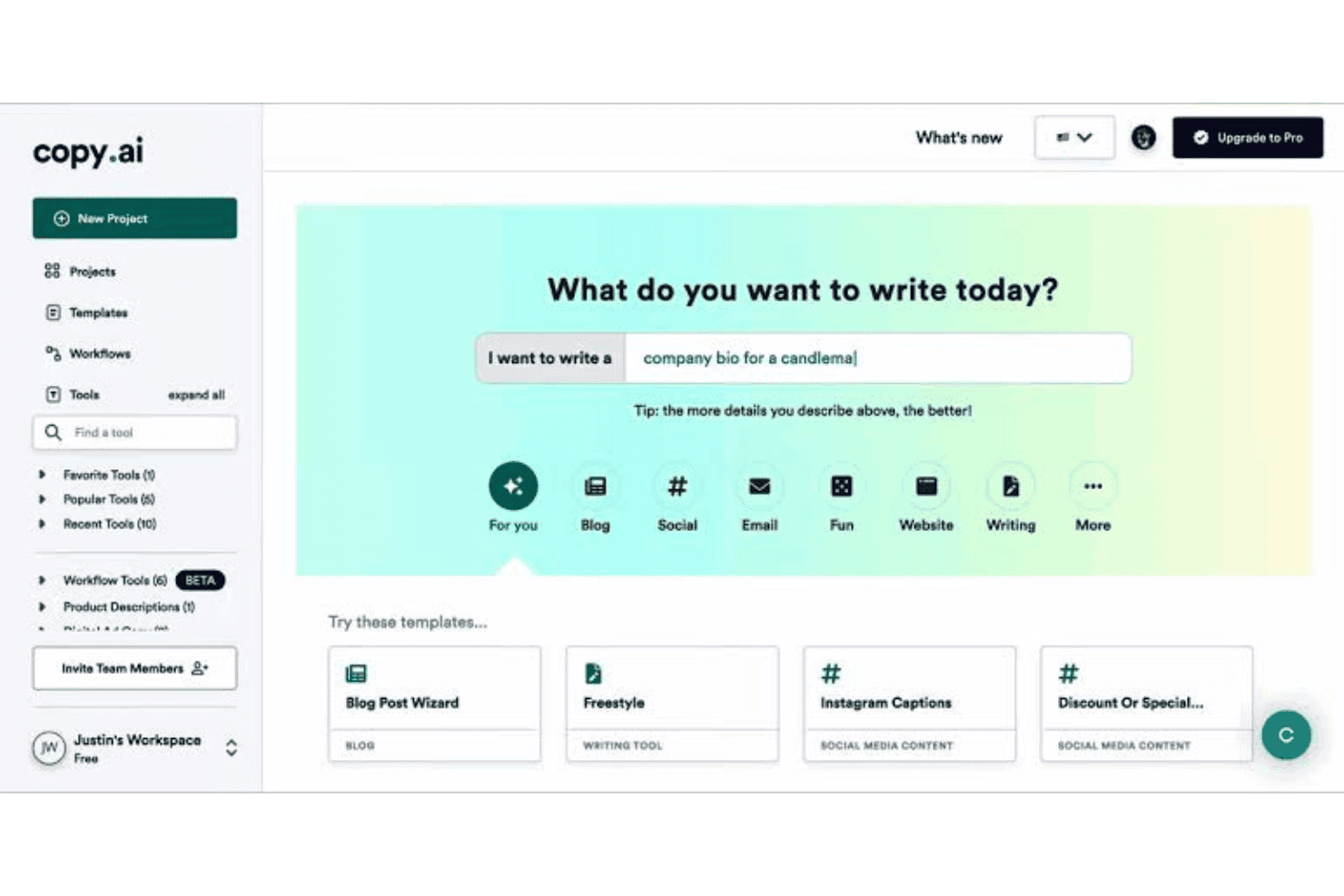
Copy.ai bietet eine promptbasierte Schreiboberfläche mit kategorisierten Tools wie Blog, Social, E-Mail und Website, um Nutzern bei der schnellen Inhaltserstellung zu helfen. Copy.ai ist eine KI-native GTM-Plattform, die Workflow-Automatisierung, KI-Agenten, Content-Erstellung und CRM-Integrationen kombiniert, um Go-to-Market-Prozesse in Vertriebs- und Marketingfunktionen auszuführen.
Für wen ist Copy.ai am besten geeignet?
Copy.ai eignet sich besonders für mittelständische und große B2B-Teams, in denen Marketing-Operationen und Vertrieb eng auf die gemeinsame GTM-Ausführung abgestimmt sind.
Warum habe ich Copy.ai ausgewählt?
Ich habe Copy.ai in meine Top-Auswahl aufgenommen, weil keine andere Plattform, die ich bisher genutzt habe, es so einfach macht, wiederholbare GTM-Abläufe in strukturierte, wiederverwendbare Workflows zu überführen. Ich kann eine komplette ABM-Sequenz, eine Akquisitions-Strategie oder einen Lokalisierungsprozess einmal definieren und im gesamten Team ausrollen, ohne alles neu aufbauen zu müssen. Die Funktionen Infobase und Brand Voice sorgen dafür, dass jeder Workflow-Ausgabe auf denselben Wahrheitsquellen basiert, sodass ich die Konsistenz nicht manuell überwachen muss.
Copy.ai Hauptfunktionen
- Content Agent Studio: Erstellung individueller KI-Agenten zur Produktion markenkonformer Marketingmaterialien anhand von Beispielinputs.
- Tables-Datenbasis: Strukturierung und Abfrage von Marketingdaten aus mehreren Quellen für Workflows und Automatisierung.
- Brand Voice-Steuerung: Sicherstellen, dass generierte Botschaften dem eigenen Markenstil und freigegebener Terminologie entsprechen.
- Chat-Eingabeschnittstelle: Interaktion mit der Plattform über eine KI-Chatfunktion für Ad-hoc-Aufgaben und schnelle Content-Anfragen.
Copy.ai Integrationen
Copy.ai bietet native Integrationen mit HubSpot, Salesforce, Gong, Outreach und Salesloft und ist mit Zapier verbunden. Eine API für individuelle Integrationen ist verfügbar.
Pros and Cons
Pros:
- Wiederverwendbare GTM-Workflows werden bereitgestellt, ohne sie jedes Mal neu aufzubauen
- Prospecting Cockpit recherchiert Accounts vor der Kontaktaufnahme
- SOC 2-konform für Teams, die sensible Kundendaten verarbeiten
Cons:
- Die Preisstufen für Workflow-Automatisierung steigen stark an
- Plattformtiefe erfordert umfangreiche Einrichtung, bevor sie Mehrwert liefert
 Am besten für No-Code-Marketingteams mit Multi-Agenten
- Kostenloser Plan verfügbar
- Preise auf Anfrage
Visit WebsiteCustomer Rating:4.3/5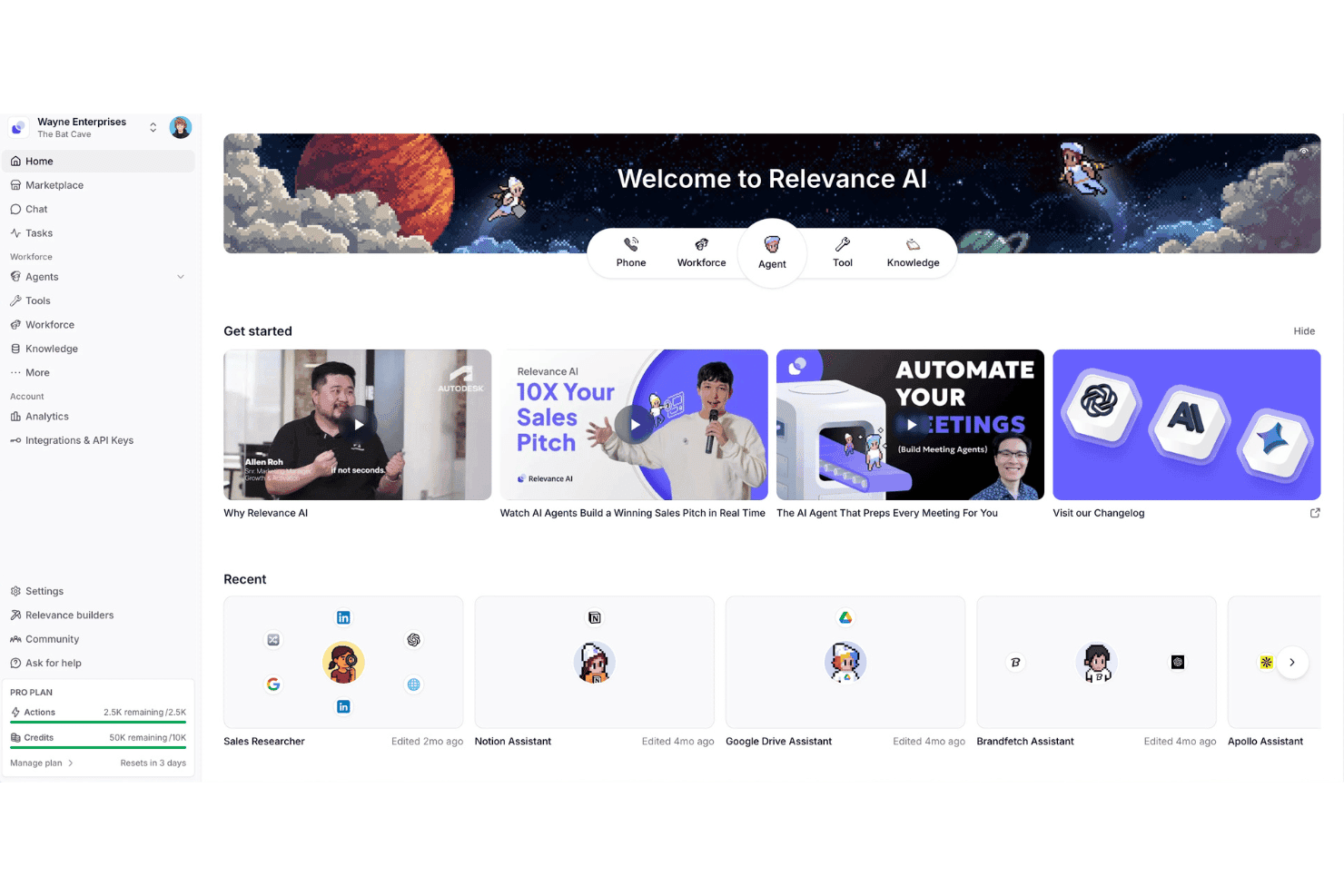
Relevance AI bietet ein zentrales Dashboard mit KI-Agenten, Tools und Workforce-Funktionen zur Automatisierung von Vertriebs- und Terminaufgaben. Relevance AI ist eine No-Code-Agentenplattform für KI, mit der Marketingteams Multi-Agenten-Teams für Lead-Qualifizierung, Lifecycle-Nurturing, Content-Umnutzung und Kampagnen-Reporting erstellen, bereitstellen und betreiben können.
Für wen ist Relevance AI am besten geeignet?
Es ist besonders geeignet für Marketing- und GTM-Teams im Mittelstand und in Großunternehmen, die individuelle Agenten-Workflows aufbauen möchten, ohne auf technische Ressourcen angewiesen zu sein.
Warum ich mich für Relevance AI entschieden habe
Relevance AI landet auf meiner Liste, weil es die Orchestrierung mehrerer Agenten speziell für Marketingteams besonders gut löst. Das 'Workforce'-Modell gefällt mir sehr, da man spezialisierte Agenten (wie einen MQL-Qualifier und einen Lifecycle-Marketer) aufbauen kann, die parallel statt isoliert arbeiten. Besonders beeindruckt bin ich von der 'Invent'-Funktion: Man beschreibt einfach den gewünschten Agenten in Alltagssprache, und das System erstellt automatisch Prompt, Tools und Evaluationslogik – und macht so den Zugang für Nicht-Techniker wirklich simpel.
Relevance AI – Hauptfunktionen
- Vorgefertigte Marketing-Agenten: Zugriff auf Vorlagen für MQL-Qualifizierung, Lifecycle-Nurturing, Content-Umnutzung und Kampagnenanalysen.
- Native Multi-Channel-Integrationen: Direkte Anbindung an E-Mail, CRM, Social-Plattformen und Tabellen für eine End-to-End-Ausführung.
- Bewertung der Agentenleistung: Mit integrierten Bewertungen, A/B-Tests und Analysen die Agenten-Ausgaben überprüfen und Workflows optimieren.
- Enterprise-Grade-Governance: SOC 2 Typ II-Konformität, Prüfungsprotokolle, PII-Maskierung, menschliche Freigabekontrolle und detailliertes Monitoring.
Relevance AI Integrationen
Relevance AI bietet native Integrationen zu HubSpot, Salesforce, Google Sheets, Slack, LinkedIn, ZoomInfo und Gmail. Die Plattform ist außerdem mit Zapier verbunden und stellt eine API für individuelle Integrationen bereit.
Pros and Cons
Pros:
- No-Code-Agentenerstellung für nicht-technische Marketer
- Multi-Agenten-Workforce erledigt Aufgaben parallel
- Eingebaute menschliche Freigabekontrolle (Human-in-the-Loop)
Cons:
- Logik der Agenten kann bei komplexen Workflows fehleranfällig sein
- Aufwändigeres Setup als bei Single-Agenten-Plattformen
Learn more about Relevance AI: Am besten zur autonomen Optimierung bezahlter Medienkampagnen geeignet
- Nicht verfügbar
- Preise auf Anfrage
Visit WebsiteCustomer Rating:4/5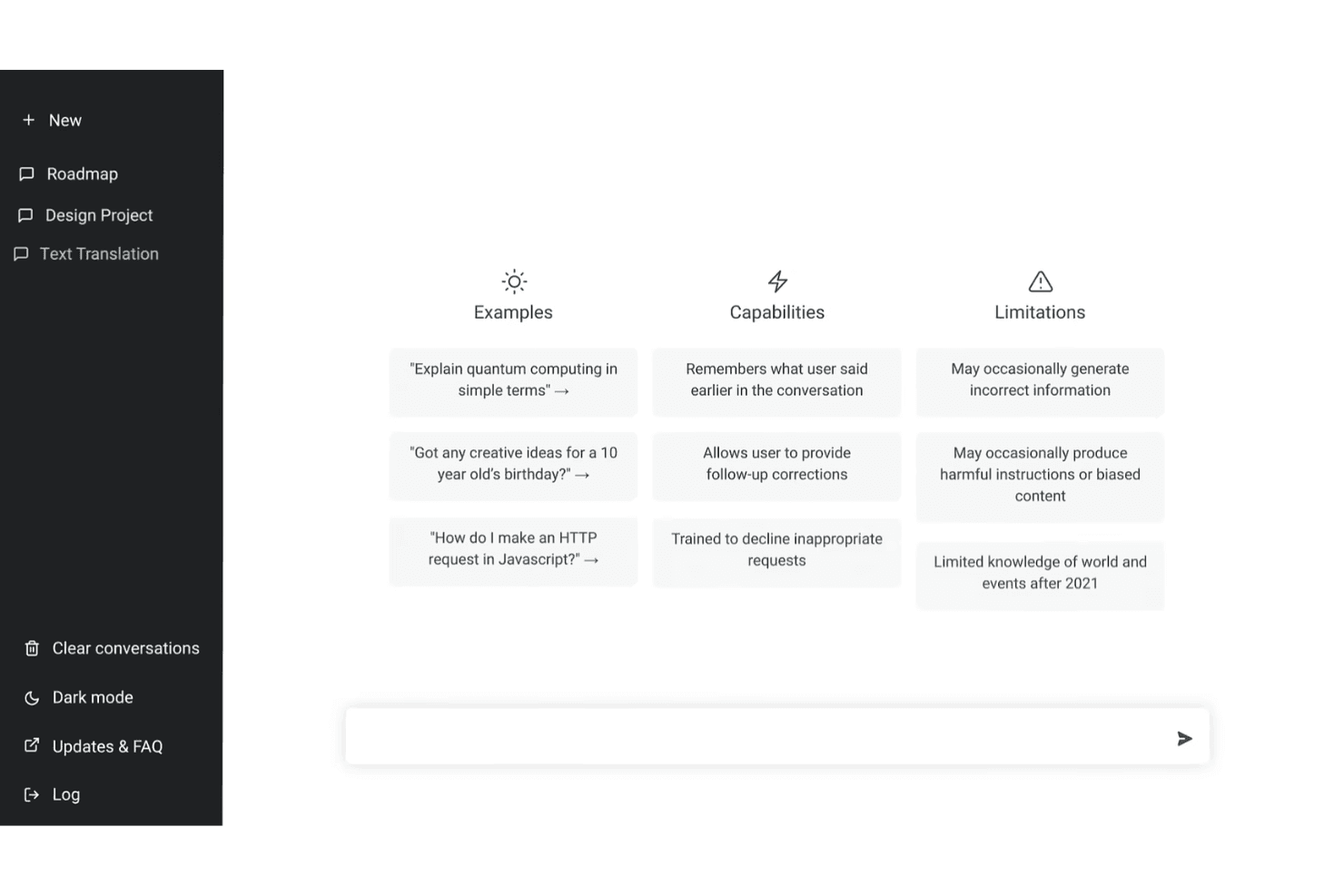
Albert.ai zeigt eine ChatGPT-ähnliche Oberfläche mit den Bereichen Beispiele, Fähigkeiten und Einschränkungen sowie einer Gesprächsseitenleiste. Albert.ai ist ein autonomer KI-Marketing-Agent, der bezahlte Medienkampagnen über Suchmaschinen, soziale Netzwerke und programmatische Kanäle hinweg unabhängig verwaltet und optimiert, indem er in Echtzeit Gebote, Budgetzuweisung, Zielgruppenansprache und Kreativtests übernimmt.
Für wen ist Albert.ai am besten geeignet?
Albert.ai eignet sich für B2C-Unternehmen und Agenturen auf Unternehmensebene, die große Budgets für bezahlte Medien einsetzen und die taktische Kampagnenausführung einer künstlichen Intelligenz überlassen möchten.
Warum ich Albert.ai ausgewählt habe
Albert.ai hat es auf meine Bestenliste geschafft, weil es eine der wenigen Plattformen ist, die bezahlte Mediaprozesse wirklich autonom ausführt, anstatt nur Chancen zu markieren, auf die ein Mensch reagieren müsste. Mir gefällt besonders, wie Albert.ai in Echtzeit Gebote für Google Ads, Meta und programmatische Kanäle gleichzeitig anpasst und das Budget automatisch auf die erfolgreichsten Zielgruppen umverteilt – ganz ohne wöchentliche Überprüfung. Die multivariate Kreativtest-Engine rotiert bestehende Werbemittel und erkennt gewinnende Kombinationen in einem Tempo, das kein menschliches Team erreichen könnte.
Albert.ai Hauptfunktionen
- Kanalübergreifende Zielgruppenfindung: Identifiziert und adressiert wertvolle Zielgruppen über verschiedene bezahlte Mediennetzwerke hinweg anhand von Echtzeit-Signalen.
- Zielorientiertes Kampagnen-Management: Ermöglicht die Eingabe spezifischer KPIs, sodass die Plattform Strategien und Ausgaben automatisch auf die Ziele ausrichten kann.
- Laufendes Performance-Reporting: Stellt Datendashboards mit Echtzeit-Kampagnen- und Zielgruppenkennzahlen über alle angebundenen Kanäle bereit.
- KI-gestütztes Lookalike-Modelling: Erstellt und aktualisiert ähnliche Zielgruppen basierend auf aktuellen Engagement- und Konversionsdaten, um die Reichweite zu erhöhen.
Albert.ai Integrationen
Albert.ai bietet native Integrationen mit Google Ads, Bing, Facebook, Instagram, YouTube und der Google Marketing Platform. Für individuelle Integrationen steht eine API zur Verfügung.
Pros and Cons
Pros:
- Setzt Gebots- und Budgetänderungen vollständig ohne menschlichen Eingriff um
- Führt multivariate Kreativtests kanalübergreifend simultan durch
- Skaliert das Kampagnenvolumen ohne zusätzlichen Personalbedarf
Cons:
- Benötigt eine große Bibliothek bestehender Kreativmaterialien für optimale Ergebnisse
- Keine Anbindung an LinkedIn- und Amazon-Werbekanäle
Learn more about Albert.ai: 4Am besten für die Account-basierte Kampagnenaktivierung
Tofu
- Kostenlose Demo verfügbar
- Preise auf Anfrage
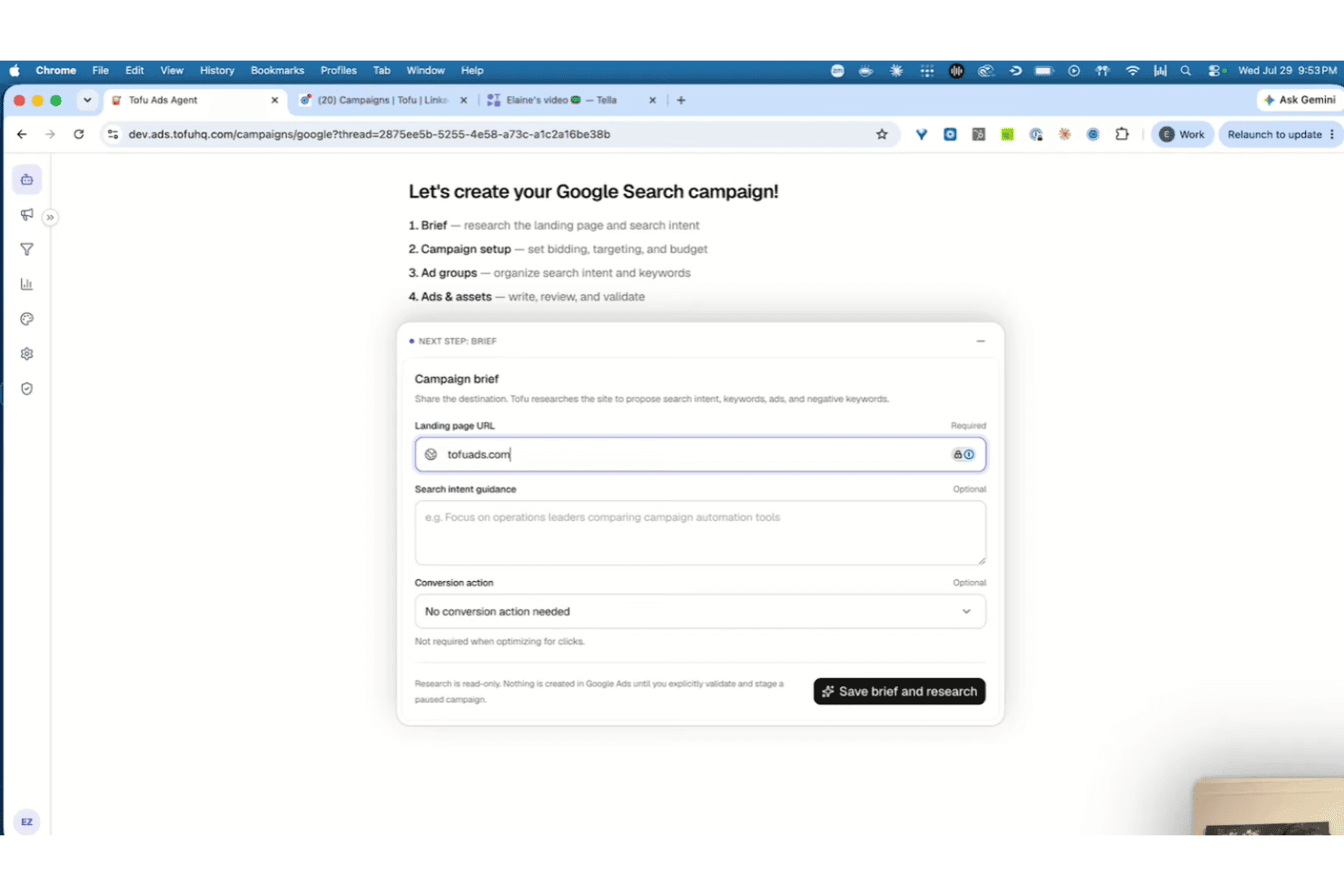
Der Ads Agent von Tofu führt Benutzer durch die Erstellung einer Google-Suchkampagne, indem sie eine Landingpage-URL und eine Suchintention eingeben. Tofu ist eine KI-native B2B-Demand-Gen-Plattform, die drei vernetzte KI-Agenten einsetzt, um Accounts zu recherchieren, personalisierte Kampagneninhalte zu erstellen und diese über E-Mail, Landingpages und Anzeigen innerhalb Ihrer bestehenden CRM- und Marketing-Tools auszurollen.
Für wen ist Tofu am besten geeignet?
Tofu eignet sich besonders für mittelständische und große B2B-Marketing-Teams, die strukturierte ABM-Programme über mehrere Branchen oder Zielsegmente hinweg durchführen.
Warum ich Tofu ausgewählt habe
Ich habe Tofu als eine der besten Lösungen ausgewählt, da der Research Agent auf mehr als 75 Datenquellen zurückgreift, darunter Deal-Stufen-Notizen, Gründe für verlorene Deals und Technografien, um Account-Kontext zu schaffen, bevor ein Asset erstellt wird. Diese Account-Intelligenz fließt direkt in den Create Agent ein, der personalisierte Landingpages und E-Mail-Sequenzen erzeugt, die auf die jeweilige Kaufphase des Accounts zugeschnitten sind. In der Praxis bedeutet das: Ich kann eine vollständige ABM-Kampagne von der Recherche bis zum Launch aktivieren, ohne jedes Asset manuell briefen zu müssen.
Tofu Hauptfunktionen
- Automatisierte Aufnahme von Markenassets: Tofu importiert und aktualisiert automatisch Ihre Markenrichtlinien, Messaging- und Personadaten für konsistente Kampagneninhalte.
- Multichannel-Kampagnenausspielung: Versenden Sie Kampagnen über E-Mail, Landingpages, Anzeigen und LinkedIn von einer zentralen Plattform.
- Freigabe- und Kollaborations-Workflows: Integrierte Tools ermöglichen es Teammitgliedern, Kampagnen-Assets vor dem Start zu prüfen, zu bearbeiten und freizugeben.
- Kundenspezifische Salesforce- und HubSpot-Integration: Synchronisiert sich direkt mit Ihrem CRM, um aktuelle Opportunity-Notizen anzuzeigen und Kampagnenaktionen mit Account-Daten zu verknüpfen.
Tofu Integrationen
Tofu bietet native Integrationen mit Salesforce, HubSpot, Marketo und Outreach. Eine API steht für individuelle Integrationen zur Verfügung.
Pros and Cons
Pros:
- Tiefgehende Account-Personalisierung über alle Kampagnen-Assets
- Research Agent greift auf mehr als 75 Datenquellen zu
- Vollständige ABM-Kampagnenaktivierung über eine Plattform
Cons:
- Beschränkt auf B2B-Anwendungsfälle
- Einrichtung erfordert hohe Datenqualität im CRM
Learn more about Tofu: Am besten für prädiktive Zielgruppenerkennung
- Kostenlose Demo verfügbar
- Ab $1.250/Monat (jährliche Abrechnung)
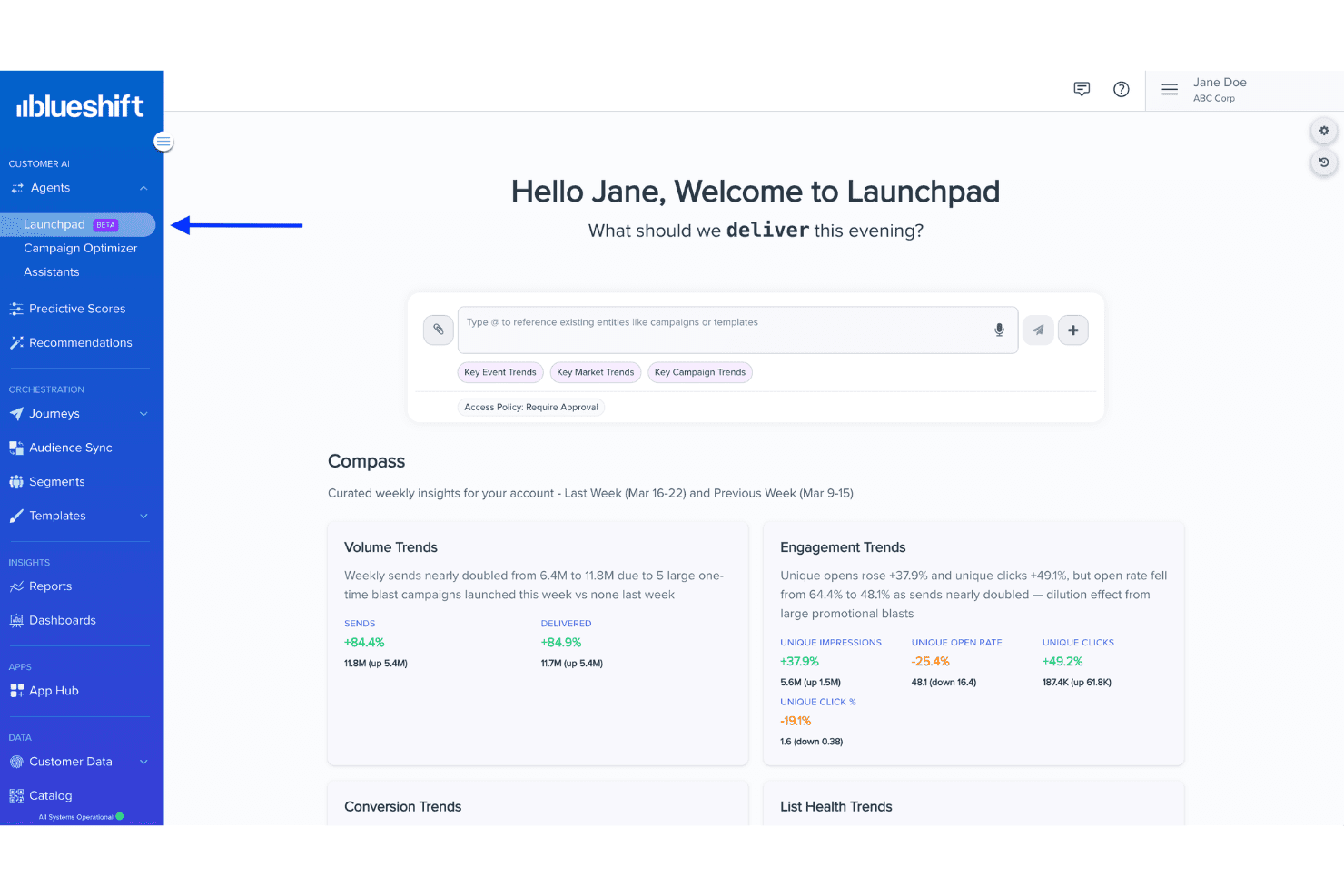
Blueshift bietet ein KI-gestütztes Launchpad-Dashboard mit wöchentlichen Compass-Insights zu Volumen, Engagement und Kampagnentrends. Blueshift ist eine KI-basierte Plattform für Kundeninteraktion, die ein natives CDP mit agentenbasierter KI kombiniert, um prädiktive Segmentierung, kanalübergreifende Kampagnenorchestrierung und 1:1-Personalisierung über E-Mail, SMS, Push, In-App und Web hinweg bereitzustellen.
Für wen eignet sich Blueshift am besten?
Blueshift eignet sich besonders für mittelständische und große B2C-Marken mit komplexen Kundenanforderungen an Daten und dedizierten Marketing-Teams.
Warum habe ich Blueshift ausgewählt?
Ich habe Blueshift in meine Top-Auswahl aufgenommen, weil der Compass Superagent kontinuierlich einheitliche Kundenprofile analysiert, um Zielgruppenpotenziale aufzudecken, bevor Sie selbst daran denken. Jeder von Compass identifizierten Idee wird ein vorhergesagtes Ergebnis zugeordnet, sodass Sie die Wirkung nicht schätzen müssen. In Kombination mit patentiertem Intent-Modelling, das Kanal und Zeitpunkt für jeden Einzelnen vorhersagt, ist die Zielgruppenerkennung tatsächlich prädiktiv statt rückblickend.
Blueshift Hauptfunktionen
- Omnichannel-Kampagnen-Builder: Starten und automatisieren Sie Workflows über E-Mail, SMS, Push, In-App und Web aus einer zentralen Oberfläche.
- Drag-and-drop Journey Designer: Visualisieren und bearbeiten Sie mehrstufige Kundeninteraktionssequenzen ganz ohne Code.
- Native Shopify- und E-Commerce-Integrationen: Binden Sie Ihre Shopdaten direkt ein, um Echtzeit-Auslöser und personalisierte Nachrichten zu versenden.
- Erweiterte Segmentierungs-Engine: Erstellen Sie dynamische, verhaltensbasierte Zielgruppen mithilfe einheitlicher Kundenprofile und Echtzeitereignissen.
Blueshift Integrationen
Blueshift bietet über 100 native Integrationen, darunter Salesforce, HubSpot, Shopify, Magento, BigCommerce, Marketo, Braze, Segment, Snowflake und S3. Eine API ist für individuelle Integrationen verfügbar.
Pros and Cons
Pros:
- Patentierte KI prognostiziert das optimale Engagement-Timing auf individueller Ebene
- Integriertes CDP macht eine separate Plattform überflüssig
- Compass Superagent entdeckt neue Segmente autonom
Cons:
- Ersteinrichtung erfordert erhebliche Data-Engineering-Ressourcen
- Reporting-Dashboards bieten eingeschränkte Anpassungsoptionen
Learn more about Blueshift: Am besten geeignet für markenkonforme Inhaltsproduktion
- 7-tägige kostenlose Testphase verfügbar
- Ab $59/Monat (jährliche Abrechnung)
Visit WebsiteCustomer Rating:4.7/5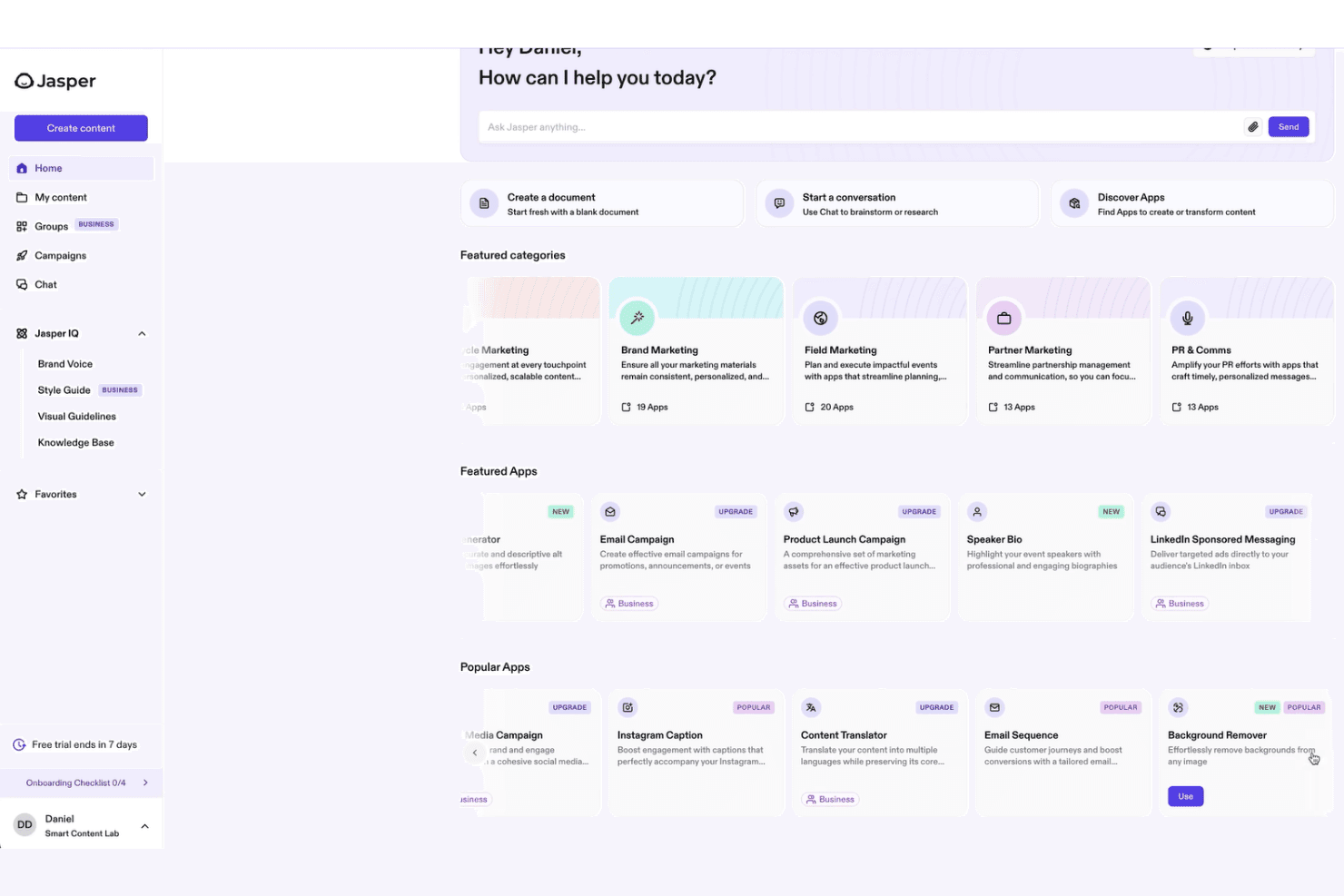
Jasper bietet ein zentrales Dashboard mit App-Kategorien, KI-gestützten Content-Tools und einer Konversationsoberfläche für Marketingteams. Jasper ist eine KI-Marketingplattform, die auf autonomen Agenten, Inhalts-Pipelines und Tools zur Markenkontrolle basiert und mehrstufige Inhalts-Workflows kanalübergreifend ausführt – von der Kampagnenerstellung und SEO-Optimierung bis hin zur Zielgruppenpersonalisierung und Übersetzung.
Für wen ist Jasper am besten geeignet?
Jasper eignet sich für mittelgroße bis große Marketingteams, die große Inhaltsmengen für mehrere Marken oder Kampagnen produzieren und Kontrollmechanismen benötigen, um einen konsistent markenkonformen Output sicherzustellen.
Warum habe ich Jasper ausgewählt?
Jasper verdient seinen Platz auf meiner Auswahlliste, weil das Thema Markenkontrolle bei großem Umfang sehr ernst genommen wird. Die Jasper IQ-Ebene, die Brand Voice, Style Guide und visuelle Richtlinien umfasst, fungiert als geteiltes intelligentes System, sodass jeder Inhalt markenkonform bleibt, unabhängig davon, wer im Team ihn erstellt hat. Außerdem verlasse ich mich auf die Content Pipelines, um Kampagnen als wiederholbaren, strukturierten Workflow durch Erstellung, Anpassung und Aktivierung zu führen, statt jedes Mal einen Einmalprozess zu nutzen.
Wichtige Jasper-Funktionen
- Canvas-Kollaborationseditor: Erstellen, bearbeiten und optimieren Sie Inhalte in mehreren Formaten gemeinsam mit Ihrem Team in Echtzeit in einem gemeinsamen Arbeitsbereich.
- Grid-Masseninhaltsgenerierung: Erstellen Sie große Mengen an Marketing-Assets, wie Produktbeschreibungen oder Landingpage-Texte, in einer tabellenähnlichen Umgebung.
- Agentengesteuerte Optimierung: Setzen Sie KI-Agenten ein, um SEO, Übersetzungen und Inhalts-Personalisierung automatisch innerhalb definierter Workflows zu verbessern.
- API- und Browser-Erweiterungs-Support: Greifen Sie programmatisch oder innerhalb von Drittanbieter-Apps mit einer Browser-Erweiterung flexibel auf Jasper-Funktionen zu.
Jasper-Integrationen
Jasper bietet nativen Integrationsmöglichkeiten mit Salesforce, HubSpot, Google Workspace, Microsoft Teams, WordPress, Sitecore, Slack, Webflow, Salesforce Marketing Cloud und SEMrush. Für kundenspezifische Integrationen steht eine API zur Verfügung.
Pros and Cons
Pros:
- Brand Voice sorgt für durchgehend markenkonformen Output
- Content Pipelines automatisieren mehrstufige Kampagnen-Workflows
- Jasper IQ bewahrt den Markenkontext über alle Assets hinweg
Cons:
- Begrenzte autonome Ausführung über die Inhaltserstellung hinaus
- Schwache native Verwaltungsmöglichkeiten für Werbekanäle
Learn more about Jasper: Am besten geeignet für adaptive kanalübergreifende Nachrichtenübermittlung
- Kostenlose Demo verfügbar
- Preise auf Anfrage
Visit WebsiteCustomer Rating:4.4/5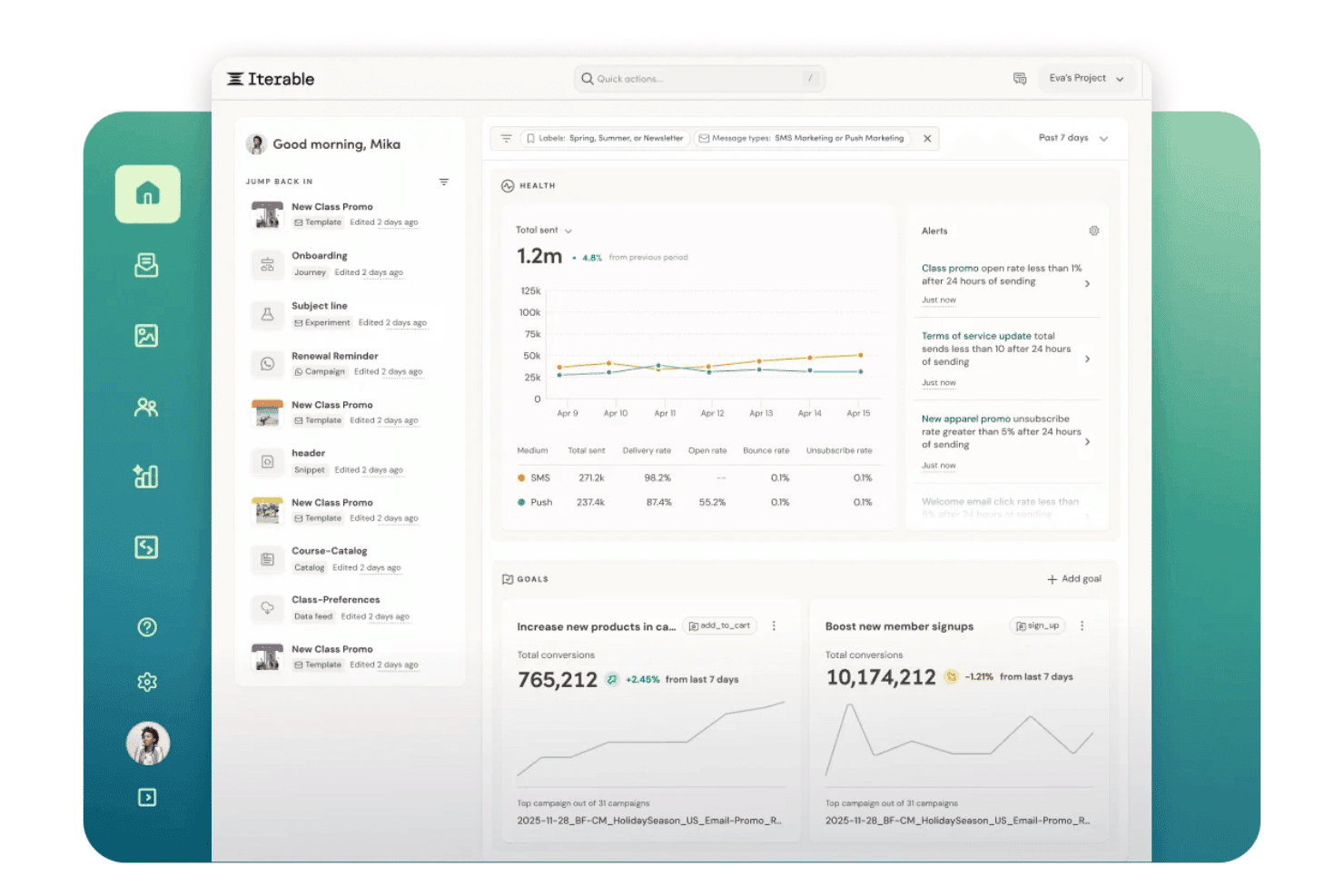
Iterable Nova Agent zeigt ein Marketing-Dashboard mit Gesundheitsmetriken, Warnhinweisen und Conversion-Zielen für SMS- und Push-Kampagnen. Iterable Nova Agent ist ein KI-Marketing-Agent, der in die Cross-Channel-Engagement-Plattform von Iterable integriert ist. Er erstellt eigenständig Customer Journeys, generiert Kampagnentexte, führt Experimente durch und personalisiert Nachrichten über E-Mail, SMS, Push, In-App und mehr.
Für wen ist der Iterable Nova Agent am besten geeignet?
Iterable Nova Agent eignet sich besonders gut für B2C-Marketingteams im Mid-Market- und Enterprise-Bereich, die Lifecycle-Programme mit hohem Volumen über mehrere eigene Kanäle steuern.
Warum habe ich den Iterable Nova Agent ausgewählt?
Ich habe den Iterable Nova Agent als eine der besten Lösungen ausgewählt, weil seine Channel-Decisioning-Funktion in Echtzeit automatisch den richtigen Kanal und die optimale Versandfrequenz für jede einzelne Person auswählt. Das macht ihn wirklich adaptiv für E-Mail, SMS, Push, In-App und WhatsApp. Besonders schätze ich zudem die Decision Memory-Funktion, die erklärtes Marketing-Intent in ein wiederverwendbares Lernsystem verwandelt, das sich mit jedem Kampagnenzyklus verbessert.
Wichtigste Funktionen des Iterable Nova Agent
- Prädiktive Zielgruppen: Erkennt Abwanderungsrisiken und wertvolle Chancen mithilfe von Machine-Learning-Modellen, die auf dem Nutzerverhalten basieren.
- Glassbox-Erklärbarkeit: Macht jede KI-gesteuerte Entscheidung transparent und nachvollziehbar für Marketing- und Compliance-Aufsicht.
- Aktivierung unbekannter Nutzer: Erkennt und engagiert anonyme Website-Besucher vor der Konversion und steigert so das Wachstum der First-Party-Zielgruppe.
- Segmentierungs-Unterstützung: Nutzt KI, um natürliche Sprachvorgaben in gezielte Zielgruppen für Kampagnen umzuwandeln.
Integrationen des Iterable Nova Agent
Iterable Nova Agent bietet native Integrationen zu Salesforce, HubSpot, Microsoft Dynamics 365, Segment, Snowflake, Google Ads, Facebook Ads, Braze, Amplitude und Power BI. Für individuelle Integrationen steht eine API zur Verfügung.
Pros and Cons
Pros:
- Channel-Decisioning passt Nachrichten pro individuellem Nutzer an
- Decision Memory verbessert Kampagnen im Zeitverlauf
- Glassbox-Erklärbarkeit macht KI-Entscheidungen transparent
Cons:
- Einrichtung ist für nicht-technische Marketingteams komplex
- Begrenzte autonome Handlungsmöglichkeiten außerhalb des Iterable-Ökosystems
Learn more about Iterable Nova Agent: Am besten geeignet für kampagnenbezogene Intelligenz auf CRM-Basis
- Kostenlose Demo verfügbar
- Ab $1.500/Monat (jährlich abgerechnet)
Visit WebsiteCustomer Rating:4/5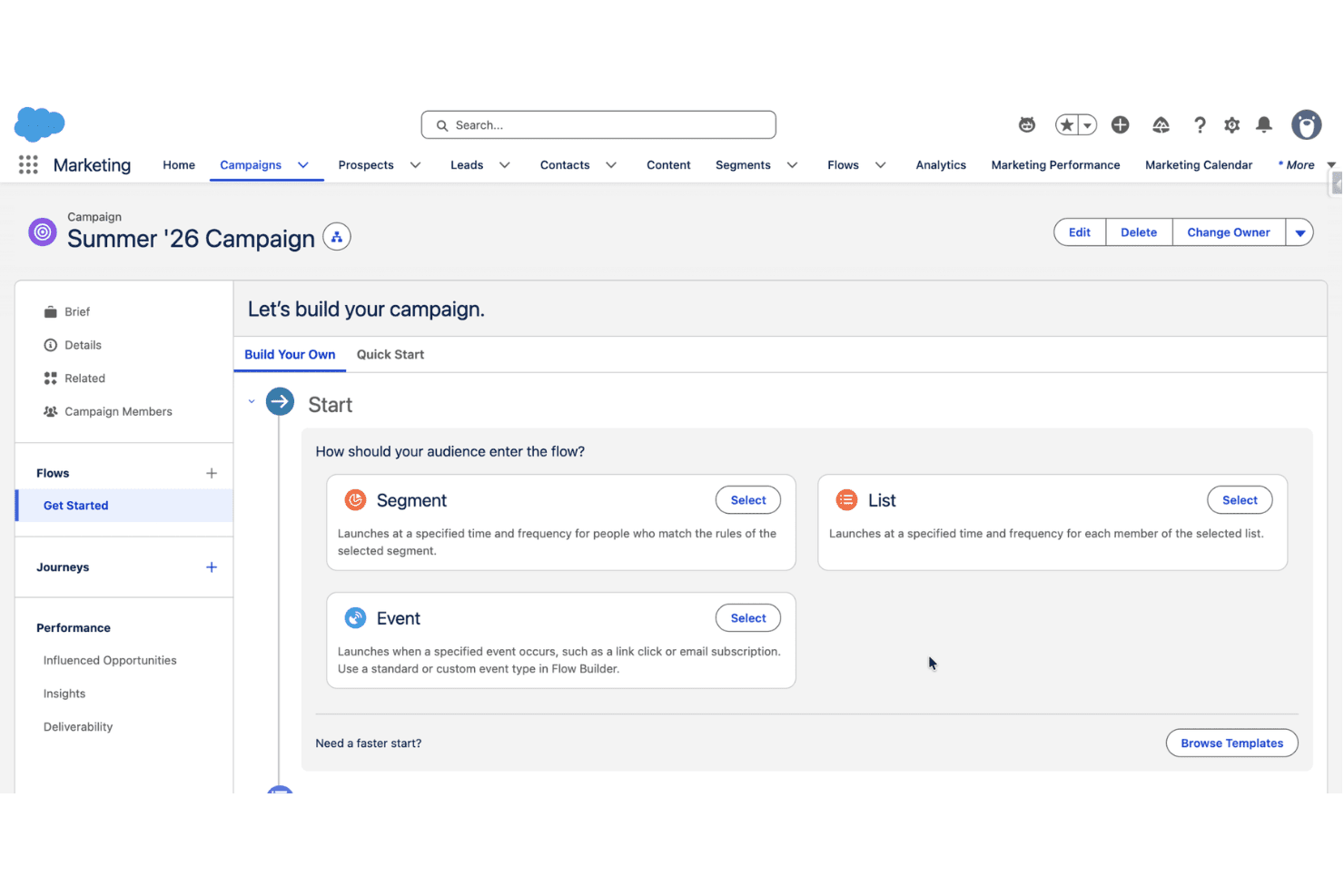
Mit Agentforce Marketing können Nutzer Kampagnen erstellen, indem sie auswählen, wie ihr Publikum per Segment-, Listen- oder Ereignis-Trigger in einen Flow eintritt. Agentforce Marketing ist die agentische Marketing-Plattform von Salesforce, die autonome KI-Agenten einsetzt, um Kampagnen über E-Mail, SMS, bezahlte Medien und Web zu planen, zu erstellen, zu starten und zu optimieren – und das alles auf der Grundlage vereinter CRM- und Kundendaten.
Für wen eignet sich Agentforce Marketing am besten?
Die Plattform ist ideal für mittelständische und große Marketingteams, die bereits Salesforce nutzen und ihre CRM-Daten für die autonome Durchführung von Kampagnen einsetzen möchten.
Warum ich Agentforce Marketing ausgewählt habe
Agentforce Marketing steht auf meiner Shortlist, weil kein anderer KI-Marketing-Agent auf einer so tiefen Basis von CRM- und Kundendaten aufbaut. Wenn ich ein Kampagnenziel angebe, greifen die Agenten auf Data 360 (Salesforces CDP) zurück, um Zielgruppen zu segmentieren, Inhalte zu generieren und kanalübergreifend Kampagnen zu starten, ohne dass ich jeden Schritt vorgeben muss. Die Marketing Intelligence-Schicht schließt dann den Kreis, indem sie Paid-Media-Attributionen und KI-Kampagnenzusammenfassungen in die gleiche Umgebung zurückführt, in der der Agent bereits läuft.
Agentforce Marketing – Schlüsselfunktionen
- Command Center Dashboard: Ermöglicht es, Agentenstatus, Workflow-Fortschritte und Marketing-KPIs aller Kampagnen in Echtzeit zu überwachen.
- AgentExchange-Marktplatz: Verbindet Marketing-Agenten mit einem Ökosystem aus vorgefertigten Workflows, Partner-Erweiterungen und spezialisierten Agenten-Plugins.
- Journey Builder Automatisierung: Orchestriert kanalübergreifende, mehrstufige Customer Journeys, die durch Echtzeitdaten und Verhaltenssignale ausgelöst werden.
- Zweiwege-Konversationsnachrichten: Ermöglicht es KI-Agenten, direkt innerhalb der Kampagnen über SMS, WhatsApp und E-Mail auf Kunden und Interessenten zu reagieren.
Agentforce Marketing Integrationen
Agentforce Marketing bietet native Integrationen mit Salesforce Sales Cloud, Service Cloud, Slack, MuleSoft, Google Ads, Meta (Facebook), WhatsApp und Data Cloud und stellt eine API für individuelle Integrationen bereit.
Pros and Cons
Pros:
- Tiefgehende CRM-Daten ermöglichen hochgradig personalisierte Kampagnen
- Agenten führen Multi-Channel-Kampagnen-Workflows autonom aus
- Geschlossene Attributionsschleife verbindet Umsatz mit Kampagnen
Cons:
- Funktioniert nur mit bestehender Salesforce-Infrastruktur
- Hohe Einstiegskosten schränken den Zugang für kleinere Teams ein
Learn more about Agentforce Marketing: Am besten für HubSpot-native Kampagnenausführung
- Kostenlose Version verfügbar
- Preise auf Anfrage
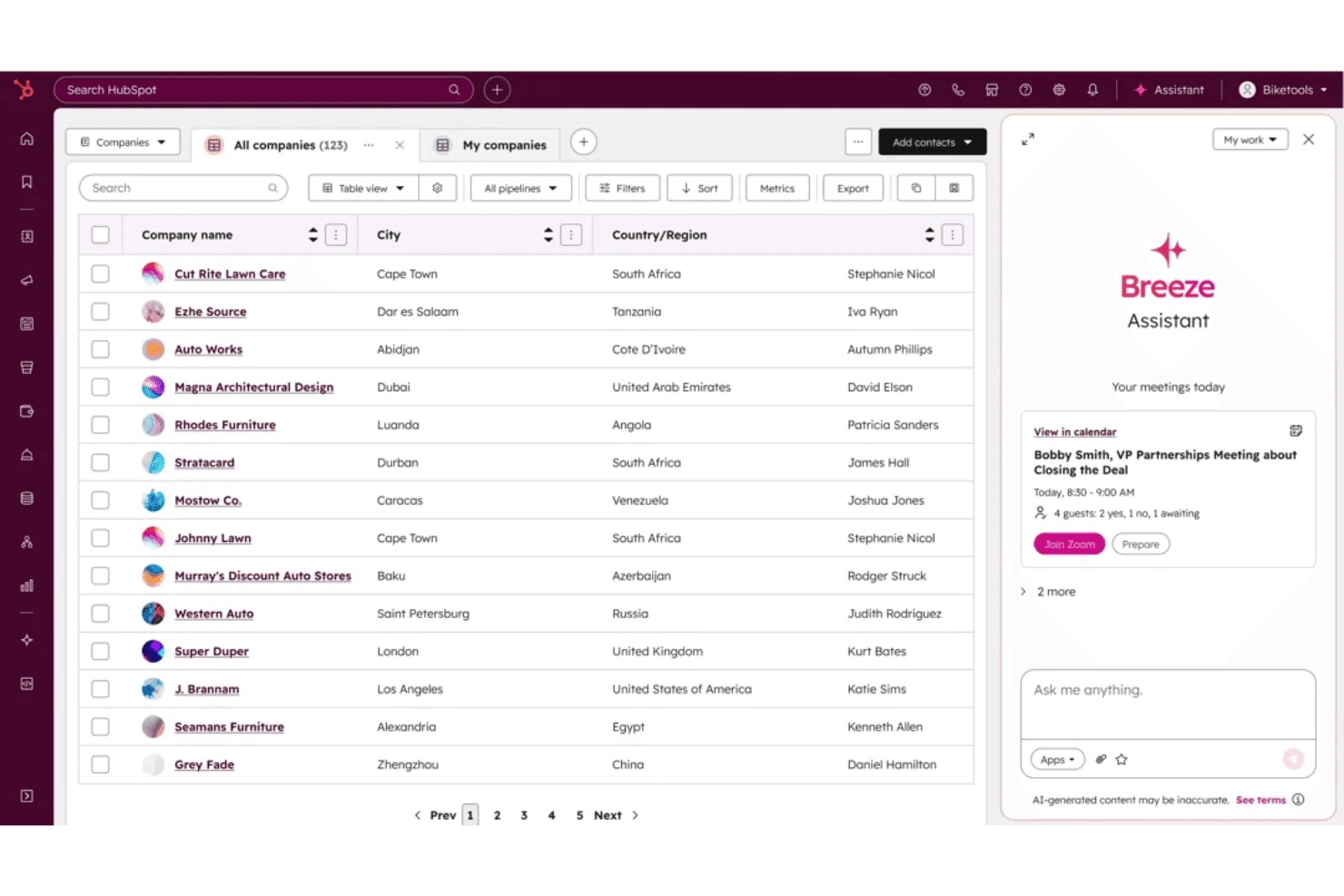
HubSpot Breeze bietet ein KI-Assistenten-Panel, das die heutigen Meetings anzeigt und es den Nutzern ermöglicht, direkt innerhalb der Companies CRM-Ansicht Fragen zu stellen. HubSpot Breeze ist eine KI-Ebene, die in die HubSpot Customer Platform integriert ist und einen Konversationsassistenten, spezialisierte Marketing- und Vertriebsagenten sowie CRM-native Datenanreicherung kombiniert, um die Erstellung von Inhalten, die Ansprache und Kampagnen-Workflows zu automatisieren.
Für wen ist HubSpot Breeze am besten geeignet?
Es ist besonders für mittelständische und große Marketing-Teams geeignet, die ihre Go-to-Market-Aktivitäten bereits auf der HubSpot CRM-Plattform durchführen.
Warum ich HubSpot Breeze ausgewählt habe
HubSpot Breeze verdient seinen Platz auf meiner Shortlist, weil der Content Agent und der Social Media Agent Blogs, Landing Pages und Social Posts direkt innerhalb des Marketing Hub generieren – und dabei die aktuellen CRM-Daten nutzen, um Markenstimme und Zielgruppenansprache zu steuern. Mit Content Remix kann ich ein einzelnes Asset in einem Schritt in E-Mails, Anzeigen und Social-Media-Text umwandeln. Breeze Intelligence reichert dann Kontaktinformationen mit über 200 Mio. Unternehmensprofilen an, sodass Personalisierung direkt im gleichen Kampagnen-Workflow integriert ist.
HubSpot Breeze Hauptfunktionen
- Breeze Assistant Chat-Sidebar: Chat-basierter KI-Assistent, der in HubSpot integriert ist und schnelle Anfragen zu Kampagnen, Ideengenerierung und Zusammenfassungen von CRM-Datensätzen ermöglicht.
- Agent Hub mit individuellem Agenten-Builder: Ermöglicht das Erstellen und Konfigurieren von Marketing-, Vertriebs- und Kundendienst-Agenten für spezifische Workflows.
- Breeze Intelligence für Datenanreicherung: Bereichert Kontakte automatisch mit Echtzeit-Unternehmens- und Käuferdaten aus mehr als 200 Mio. Profilen.
- KI-gestützte Segmentierung und Personalisierung: Erstellt dynamische Zielsegmente und liefert personalisierte Inhalte mithilfe von CRM-Attributen und Verhaltensauslösern.
HubSpot Breeze Integrationen
HubSpot Breeze bietet native Integrationen im gesamten HubSpot-Ökosystem, einschließlich Marketing Hub, CRM, CMS Hub, Sales Hub und Service Hub. Es stehen über 1.700 zusätzliche Marktplatz-Integrationen zur Verfügung, und eine API ermöglicht individuelle Workflows.
Pros and Cons
Pros:
- CRM-native KI vermeidet Datenwechsel zwischen verschiedenen Tools
- Content Agent erzeugt schnell Assets in mehreren Formaten
- Breeze Intelligence reichert Kontakte automatisch an
Cons:
- Agenten funktionieren nur innerhalb der HubSpot-Plattform
- Die Qualität der Inhaltserstellung variiert je nach Assettyp
Learn more about HubSpot Breeze: Am besten für die Personalisierung von E-Commerce-Kampagnen geeignet
- Kostenloser Tarif verfügbar
- Ab $14/Monat
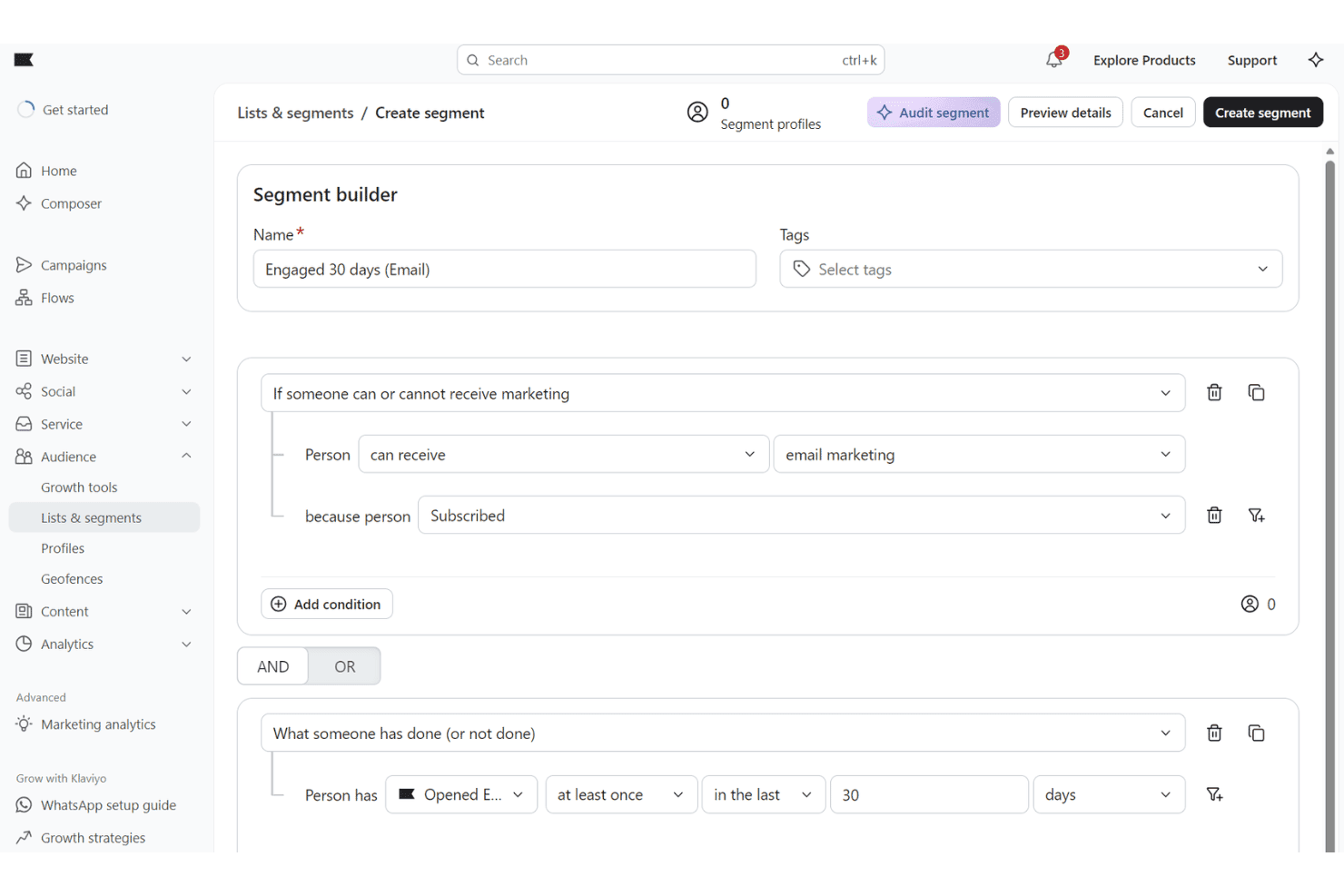
Der Segment-Builder von Composer von Klaviyo ermöglicht es Nutzern, gezielte E-Mail-Segmente auf Basis des Abonnementstatus und der Interaktionsaktivität zu erstellen. Composer von Klaviyo ist ein KI-Marketing-Agent, der Ihre Kundendaten analysiert, Kampagnenchancen aufzeigt, Zielgruppen erstellt und Inhalte für kanalübergreifende E-Mail- und SMS-Kampagnen direkt in Ihrem Klaviyo-Konto generiert.
Für wen ist Composer von Klaviyo am besten geeignet?
Composer eignet sich besonders für Marketingteams im Onlinehandel und im DTC-Bereich, die bereits mit Klaviyo arbeiten und schneller von der Kampagnenidee zur Umsetzung gelangen möchten.
Warum ich Composer von Klaviyo ausgewählt habe
Composer von Klaviyo hat sich seinen Platz auf meiner Auswahlliste verdient, weil kein anderer KI-Marketing-Agent Kampagnen auf einer umfangreicheren E-Commerce-Datenbasis personalisiert. Ich gebe eine Kampagnenbeschreibung in Alltagssprache ein, etwa zur Reaktivierung von Kunden, die seit 90 Tagen keinen Kauf getätigt haben, und Composer erstellt die Zielgruppe anhand aktueller Kundenprofile, verfasst E-Mail- und SMS-Texte im Stil meiner Marke und bereitet alles zur Überprüfung vor. Außerdem gefällt mir, dass Signale aus Gesprächen mit dem Kunden-Agenten direkt in die Segmentierung der nächsten Kampagne einfließen.
Die wichtigsten Funktionen von Composer von Klaviyo
- Kanalübergreifende Kampagnenerstellung: Erstellen Sie Kampagnen für E-Mail und SMS gleichzeitig anhand einer einzigen Eingabe.
- Genehmigung durch Menschen: Alle Kampagnen werden zur Überprüfung bereitgestellt, bevor etwas an Ihre Zielgruppe gesendet wird.
- Dynamische Zielgruppenerstellung: Erstellen Sie automatisch gezielte Zielgruppensegmente anhand Ihrer Kundenprofile und Kaufdaten.
- Benachrichtigungen zur Verhaltensleistung: Erhalten Sie Benachrichtigungen, wenn Sie sich den Nutzungslimits für Composer-Credits nähern, um unerwartete Unterbrechungen zu vermeiden.
Integrationen von Composer von Klaviyo
Composer von Klaviyo lässt sich nativ in Shopify, BigCommerce, WooCommerce und Magento integrieren und über das umfassendere Klaviyo-Ökosystem mit weiteren Tools verbinden. Für individuelle Integrationen ist eine API verfügbar.
Pros and Cons
Pros:
- Umfangreiche Personalisierung mithilfe eigener E-Commerce-Daten
- Erstellt Zielgruppen und Texte anhand einer einzigen Eingabe
- Signale des Kunden-Agenten fließen in die Kampagnenausrichtung ein
Cons:
- Nur innerhalb der Klaviyo-Plattform nutzbar
- Composer-Credits begrenzen Ihr monatliches Kampagnenvolumen
Learn more about Composer by Klaviyo:
Weitere KI-Marketing-Agenten
Hier finden Sie einige zusätzliche Optionen für KI-Marketing-Agenten, die es nicht in meine Auswahlliste geschafft haben, aber dennoch einen Blick wert sind:
- 11Adobe Experience Platform Agent OrchestratorAm besten geeignet für unternehmensweite, plattformübergreifende Orchestrierung
- 12Optimizely Agent PlatformAm besten für autonome Experimentoptimierung geeignet
- 13OptimoveAm besten geeignet für KI-gesteuerte Kundenentscheidungen
- 14GumloopAm besten für die Automatisierung visueller Marketing-Workflows
- 15CrewAIAm besten für die codebasierte Entwicklung von Multi-Agenten-Systemen
- 16LyzrAm besten geeignet für die kontrollierte Bereitstellung privater Agenten
Wie ich KI-Marketing-Agenten bewerte
Tools, die lediglich einen Chatbot um ein Kampagnen-Briefing wickeln, haben es nicht auf meine Liste geschafft. Stattdessen habe ich nach Plattformen gesucht, die Workflows eigenständig steuern können. Beispiele sind das Starten von A/B-Tests oder das Neuzusammenstellen von Zielgruppensegmenten während laufender Kampagnen. Ich unterteile meine Bewertung in zwei Bereiche: Zunächst beurteile ich die Kernfunktionalitäten, die zur Qualifikation erforderlich sind. Danach prüfe ich die Faktoren, die jede Plattform voneinander unterscheiden.
Kernfunktionalitäten (Grundvoraussetzungen für diese Liste)
Wenn ich Tools für meine Liste auswähle, bewerte ich jedes einzelne auf einer Skala von 0 (Funktionalität nicht vorhanden) bis 5 (hervorragend in diesem Bereich) für jede unten aufgeführte Kernfunktion. Anschließend rechne ich die Gesamtpunktzahl des Tools in einen Prozentsatz um. Jedes Tool muss eine Mindestpunktzahl von 65 % erreichen, um berücksichtigt zu werden.
- Autonome Aufgabenausführung: Ich bewerte, ob der Agent eigenständig mehrstufige Workflows miteinander verknüpfen kann, z. B. eine E-Mail-Sequenz entwerfen, Versandtermine planen und leistungsschwache Kampagnenteile pausieren, ohne dass bei jedem Schritt manuelle Eingaben erforderlich sind.
- Integration von Marketingkanälen: Das Tool sollte sich nativ mit zentralen Kanälen wie E-Mail, Werbung, Social Media, CRM und CMS verbinden, damit der Agent direkt Maßnahmen ergreifen kann – und nicht nur Daten exportiert, damit Sie diese andernorts verwenden.
- Inhaltserstellung: Ich achte auf die Fähigkeit, marketingfertige Texte für verschiedene Asset-Typen zu erzeugen – Anzeigentitel, E-Mail-Betreffzeilen, Landingpage-Blöcke – und nicht nur generische Textergänzungen.
- Zielorientiertes Denken: Wenn Sie beispielsweise als KPI eine Steigerung der Demo-Anfragen um 20 % festlegen, sollte der Agent dieses Ziel in konkrete Maßnahmen umsetzen und sofort mit deren Ausführung beginnen, statt lediglich eine Checkliste vorzuschlagen.
- Performance-Analyse & Optimierung: Ich prüfe, ob die Plattform Live-Kampagnendaten verarbeitet und Variablen wie Gebotsbeträge, Versandzeiten oder kreative Varianten iterativ auf Basis der tatsächlichen Ergebnisse anpasst.
- Zielgruppen-Targeting & Personalisierung: Starke Tools gehen über statische, regelbasierte Segmente hinaus – ich achte auf KI-gesteuerte Segmentierung, bei der sich Zielgruppen dynamisch an das veränderte Nutzerverhalten und die neuen Absichtssignale anpassen, noch während die Kampagne läuft.
Sobald ich eine Liste von Tools habe, die diese Kriterien erfüllen, untersuche ich, was jede Plattform einzigartig macht.
Unterscheidungsmerkmale (Was Anbieter voneinander abhebt)
So vergleiche und kontrastiere ich verschiedene Anbieter:
Herausragende Funktionen
Das Erlernen des Marken-Tons ist ein großer Unterschied – ich achte auf Agenten, die Ihre Styleguides und bisherige Assets aufnehmen und ihren Output mit der Zeit immer weiter schärfen, statt bei jedem Briefing von Null zu starten. Auch geschlossene Analytik-Kreisläufe sind entscheidend, weil die stärksten Plattformen Umsätze bestimmten Kampagnen zuordnen und Budgets dorthin verschieben, wo es wirklich konvertiert. Ich bewerte zudem menschliche Kontrollmöglichkeiten wie Freigabeschleifen und Prüfprotokolle, mit denen Ihr Team Entscheidungen der Agenten vor der Veröffentlichung einsehen kann.
Mehr als nur Funktionen
Die Passung in den bestehenden Martech-Stack prüfe ich als Erstes. Native Anbindungen an Ihr CRM, Werbeplattformen und Analyse-Tools bestimmen, wie schnell der Agent Mehrwert liefert. Ich bewerte außerdem den Datenschutz und die Governance-Kontrollen, da ein autonomer Agent mit Kundendaten klare Leitplanken braucht, wie diese Daten seine Modelle trainieren. Schließlich erhebe ich die Preisstruktur. Ich vergleiche Sitzplatz-basierte mit nutzungsbasierten Modellen, um zu sehen, wie sich die Kosten bei steigendem Kampagnenvolumen entwickeln.
So wählen Sie den besten KI-Marketing-Agenten aus
Es ist leicht, sich in langen Funktionslisten und komplexen Preisstrukturen zu verlieren. Damit Sie bei der Bearbeitung Ihres individuellen Auswahlprozesses für Software den Überblick behalten, finden Sie hier eine Checkliste mit Faktoren, die Sie berücksichtigen sollten:
| Faktor | Was zu beachten ist |
|---|---|
| FaktorSkalierbarkeit | Was zu beachten istPasst das Tool noch, wenn das Volumen Ihrer Kampagnen, die Anzahl der Kanäle oder die Größe Ihres Teams zunimmt? Prüfen Sie, ob die Preisgestaltung oder Workflows bei höherer Nutzung Einschränkungen unterliegen. |
| FaktorIntegrationen | Was zu beachten istVerbindet es sich nativ mit Ihrem zentralen CRM, Ihren Anzeigen-, Analyse- und CMS-Tools? Bewerten Sie die Leistungsfähigkeit der API und ob Sie manuelle Umgehungslösungen oder zusätzliche Konnektoren benötigen würden. |
| FaktorAnpassbarkeit | Was zu beachten istKönnen Sie Workflows, Markenrichtlinien oder Genehmigungsprozesse an Ihr Unternehmen anpassen? Vermeiden Sie Plattformen, die eine starre Automatisierung nach dem Einheitsprinzip erzwingen. |
| FaktorBenutzerfreundlichkeit | Was zu beachten istBenötigt Ihr Team eine umfangreiche Schulung, oder können Marketingmitarbeiter sofort loslegen? Achten Sie auf übersichtliche Benutzeroberflächen und Kontrollen mit menschlicher Beteiligung, um die Einarbeitungszeit zu verkürzen. |
| FaktorImplementierung und Onboarding | Was zu beachten istWas ist für die Einrichtung erforderlich – gibt es Optionen zur eigenständigen Einrichtung, oder benötigen Sie einen Anbieterpartner, der Datenflüsse, Kanäle oder Berechtigungen für Sie konfiguriert? |
| FaktorKosten | Was zu beachten istPasst die Preisgestaltung zu Ihren Kampagnenmustern – nach Nutzer, Nutzung oder Ausgabe? Berücksichtigen Sie versteckte Kosten für Integrationen, Zusatzfunktionen und Skalierungsanforderungen. |
| FaktorSicherheitsvorkehrungen | Was zu beachten istBietet das Tool klare Kontrollen für Datenzugriff, Prüfprotokolle und Inhaltsüberprüfung, um die Datenschutz- und Governance-Anforderungen Ihres Teams zu erfüllen? |
| FaktorInterner Ressourcenbedarf | Was zu beachten istWer ist für das Workflow-Design, die Überwachung der Agenten und die laufende Optimierung von Kampagnen zuständig? Stellen Sie fest, ob Sie ein eigenes Teammitglied benötigen, um aus der Plattform einen Nutzen zu ziehen. |
Was ist ein KI-Marketing-Agent?
KI-Marketing-Agenten sind autonome Tools, die künstliche Intelligenz nutzen, um Marketingkampagnen kanalübergreifend mit minimalem menschlichem Zutun zu planen, durchzuführen und zu optimieren. Diese Agenten übernehmen Aufgaben wie die Inhaltserstellung, das Targeting, die Kampagnensteuerung und die Leistungsanalyse. Sie sollen Marketingteams dabei helfen, wiederkehrende Aufgaben zu automatisieren, die Kundenansprache im großen Maßstab zu personalisieren und Strategien in Echtzeit auf Grundlage von Daten und Zielen anzupassen.
Wichtige Funktionen von KI-Marketing-Agenten
Achten Sie bei der Auswahl eines KI-Marketing-Agenten auf die folgenden wichtigen Funktionen:
- Autonome Workflow-Ausführung: Ermöglicht es dem Agenten, komplexe Marketingaufgaben wie Kampagnenstarts selbstständig zu planen, zu strukturieren und durchzuführen, ohne Schritt-für-Schritt-Anweisungen.
- Integration mehrerer Kanäle: Verbindet sich nativ mit E-Mail-, Social-Media-, Anzeigen-, CRM- und CMS-Tools, sodass Aktionen und Daten direkt zwischen Ihren Systemen fließen.
- KI-gestützte Inhaltserstellung: Nutzt generative KI, um maßgeschneiderte Marketingtexte, E-Mails, Social-Media-Beiträge und Anzeigen zu erstellen, die zu Ihrer Markenstimme und Ihren Kampagnenzielen passen.
- Zielorientierte Kampagnenoptimierung: Übernimmt festgelegte Ziele oder KPIs und passt anschließend Marketingaktivitäten automatisch an, um die gewünschten Ergebnisse durch eine Neuzuweisung des Budgets oder eine Verfeinerung der Botschaften zu erreichen.
- Leistungsanalysen in Echtzeit: Überwacht Kampagnenergebnisse sofort, zeigt Erkenntnisse auf und nimmt während der laufenden Kampagne datengestützte Anpassungen vor.
- Prädiktives Zielgruppen-Targeting: Segmentiert Ihre Zielgruppe anhand von Verhaltens- und Absichtsdaten und personalisiert anschließend die Ansprache auf Grundlage von Veränderungen der Nutzeraktivität in Echtzeit.
- Genehmigungs-Workflows und Sicherheitsvorkehrungen: Ermöglicht Teams, Prüfungen mit menschlicher Beteiligung einzurichten, sodass wichtige Aktionen vor der Veröffentlichung überprüft und freigegeben werden müssen.
- Kontrollen für Datenschutz und Compliance: Bietet umfassende Optionen zur Kontrolle der Datennutzung, der Einwilligung und der Berichterstattung, damit Sie globale Datenschutzstandards einhalten können.
- Vorlagen- und Leitfadenbibliothek: Bietet sofort einsatzbereite Kampagnenstrukturen und Eingabeaufforderungen, mit denen Teams bewährte Workflows schnell starten können.
- Prüfprotokollierung und Transparenz: Erfasst jede wichtige Entscheidung und Aktion des Agenten, sodass Sie diese überprüfen, darüber berichten und Verantwortlichkeitsstandards erfüllen können.
Vorteile der Nutzung eines KI-Marketing-Agenten
Die Implementierung eines KI-Marketing-Agenten bietet Ihrem Team und Ihrem Unternehmen mehrere Vorteile. Hier sind einige, auf die Sie sich freuen können:
- Automatisierte Kampagnendurchführung: Befreien Sie Ihr Team von wiederkehrenden Aufgaben, indem der Agent Kampagnen mit minimaler Überwachung plant, startet und verwaltet.
- Datengestützte Entscheidungen: Echtzeitanalysen und adaptive Optimierungen sorgen dafür, dass sich Kampagnen auf Grundlage der tatsächlichen Leistung kontinuierlich verbessern und nicht auf bloßen Vermutungen beruhen.
- Skalierbare Personalisierung: Stellen Sie problemlos personalisierte Botschaften im großen Maßstab bereit, da intelligente Segmentierung und Inhaltserstellung die Ansprache für jeden Kunden anpassen.
- Konsistente Markenstimme: KI-Modelle lernen Ihre Stilrichtlinien und bisherigen Inhalte kennen und erstellen markenkonforme Inhalte für jeden Kanal und Inhaltstyp.
- Schnellere Markteinführung: Vorgefertigte Workflows, Vorlagen und Playbooks ermöglichen es Ihnen, neue Kampagnen schneller zu starten, ohne auf eine zeitaufwendige manuelle Einrichtung warten zu müssen.
- Mehr Compliance und Kontrolle: Genehmigungsschritte mit menschlicher Beteiligung und Prüfpfade gewährleisten die Governance und ermöglichen es Ihnen, automatisierte Aktionen zu überprüfen, zu genehmigen und darüber zu berichten.
- Nahtlose Integration in bestehende Tools: Native Verbindungen zu zentralen Plattformen halten Ihren Marketing-Stack einheitlich, während Daten und Aktionen reibungslos zwischen den Systemen fließen.
Kosten und Preise von KI-Marketingagenten
Die Auswahl eines KI-Marketingagenten erfordert ein Verständnis der verschiedenen verfügbaren Preismodelle und Tarife. Die Kosten variieren je nach Funktionen, Teamgröße, Zusatzoptionen und weiteren Faktoren. Die folgende Tabelle fasst gängige Tarife, deren Durchschnittspreise und typische Funktionen zusammen, die in Lösungen für KI-Marketingagenten enthalten sind:
Vergleichstabelle der Tarife für KI-Marketingagenten
| Tariftyp | Durchschnittlicher Preis | Häufige Funktionen |
|---|---|---|
| TariftypKostenloser Tarif | Durchschnittlicher Preis$0 | Häufige FunktionenGrundlegende Workflow-Automatisierung, eingeschränkte Integrationen, begrenztes Kampagnenvolumen und minimale Analysen. |
| TariftypPersönlicher Tarif | Durchschnittlicher Preis$15-$40/Benutzer/Monat | Häufige FunktionenVerbindungen zu mehreren Kanälen, grundlegende KI-Inhaltserstellung, einfache Zielgruppenansprache und Standard-Support. |
| TariftypGeschäftstarif | Durchschnittlicher Preis$50-$120/Benutzer/Monat | Häufige FunktionenErweiterte Automatisierung, dynamische Segmentierung, Lernen der Markenstimme, Analyse-Dashboards und bevorzugter Support. |
| TariftypUnternehmenstarif | Durchschnittlicher Preis$120-$300+/Benutzer/Monat | Häufige FunktionenIndividuelle Integrationen, dediziertes Onboarding, umfassende Compliance-Kontrollen, unbegrenzte Kampagnen und Prüfprotokollierung. |
FAQs zu KI-Marketingagenten
Hier finden Sie Antworten auf häufig gestellte Fragen zu KI-Marketingagenten:
Wie verbessert ein KI-Marketingagent die Kampagnenleistung?
Ein KI-Marketingagent analysiert kontinuierlich Kampagnendaten und -ergebnisse und nimmt in Echtzeit Anpassungen vor, etwa durch Verschieben des Budgets, Verfeinern der Botschaft oder Ansprechen neuer Segmente, um Ergebnisse zu maximieren und Ihre Ziele zu erreichen.
Kann ich kontrollieren oder überprüfen, was der KI-Agent tut, bevor Kampagnen live gehen?
Ja, die meisten KI-Marketingagenten bieten Steuerungsmöglichkeiten mit menschlicher Beteiligung, bei denen Sie Genehmigungsabläufe festlegen, generierte Inhalte überprüfen und eine Freigabe verlangen können, bevor Kampagnen gestartet oder Änderungen vorgenommen werden.
Sind KI-Marketingagenten für kleine Teams oder Start-ups geeignet?
Ja, diese Tools können kleineren Teams helfen, Aufgaben zu automatisieren und Kampagnen zu skalieren, ohne die Mitarbeiterzahl zu erhöhen, sodass professionelles Marketing auch bei begrenzten Ressourcen oder wenig Zeit zugänglich wird.
Nach welchen Arten von Integrationen sollte ich suchen?
Sie sollten nach direkten Verbindungen zu Ihrem CRM, Werbeplattformen, Analysetools und CMS suchen. Dadurch wird sichergestellt, dass die Kampagnenautomatisierung durchgängig funktioniert und die Daten in Ihrem gesamten System konsistent bleiben.
Wie gehen KI-Marketingagenten mit Datenschutz und Sicherheit um?
Die meisten Anbieter verfügen über Datenschutzkontrollen, Prüfprotokolle und klare Einwilligungsrichtlinien. So können Sie Standards wie DSGVO oder CCPA einhalten und gleichzeitig die Kontrolle darüber behalten, wie Kundendaten verwendet und gespeichert werden.