

Conversational marketing platforms are essential tools for marketing teams aiming to improve customer engagement. These platforms enable real-time interactions, helping teams enhance customer satisfaction and build solid connections. However, choosing the right platform can be challenging with so many options.
Using my expertise in marketing software, I’ve tested and reviewed several top conversational marketing platforms. Based on my findings, I’ve created detailed reviews to help you discover the best platform to meet your team's needs.
Why Trust Our Software Recommendations
6,700+
Reviews
20
Industry experts
16+
Evaluation factors
14
Years
Our team has been testing and reviewing software since 2012. As marketing leaders ourselves, we know how difficult—and important—it is to choose the right software.
For this guide, we evaluated tools using hands-on testing and independent research, scoring tools using our selection criteria.
Our reviews reflect our human editorial judgment, not a sales pitch.
Expert reviewers:
 Gui DrusinaCreative Director
- Shriya GhateSenior Marketing Lead
 Amanda JacquesMarketing Ops Leader

Conversational Marketing Platform Comparison Table
This comparison table summarizes pricing details for my top conversational marketing platform selections.
| Tool | Best For | Trial Info | Price | ||
|---|---|---|---|---|---|
| 1 | Best for omnichannel AI chat in regulated industries | Free demo available | From $15/user/month (billed annually) | Website | |
| 2 | Best for small businesses | Free plan available; 7-day free trial | From $24.17/month (billed annually) | Website | |
| 3 | Best for CRM-native chat and lead routing | Free plan available | From $20/user/month | Website | |
| 4 | Best for customer analytics | Free demo available | Pricing upon request | Website | |
| 5 | Best for AI-driven sales assistants | Not available | Pricing upon request | Website | |
| 6 | Best for AI-driven chatbots | Free trial + Free demo available | From $19/user/month (billed annually) | Website | |
| 7 | Best for customer messaging | 14-day free trial and free demo available | From $19/user/month (billed annually) | Website | |
| 8 | Best for no-code AI chat with flat-rate pricing | 14-day free trial | From $29/user/month | Website | |
| 9 | Best for a personalized digital experience | Free demo available | Pricing upon request | Website | |
| 10 | Best for Salesforce-native pipeline chat | Free demo available | Pricing upon request | Website |





Best Conversational Marketing Platform Reviews
Here are my in-depth summaries of the top conversational marketing platforms I shortlisted. My reviews cover key features, pros and cons, integrations, and use cases to help you choose the best tool.
 Best for omnichannel AI chat in regulated industries
- Free demo available
- From $15/user/month (billed annually)
Visit WebsiteCustomer Rating:4.5/5This rating combines scores from multiple user review sites to reflect overall customer sentiment about the product.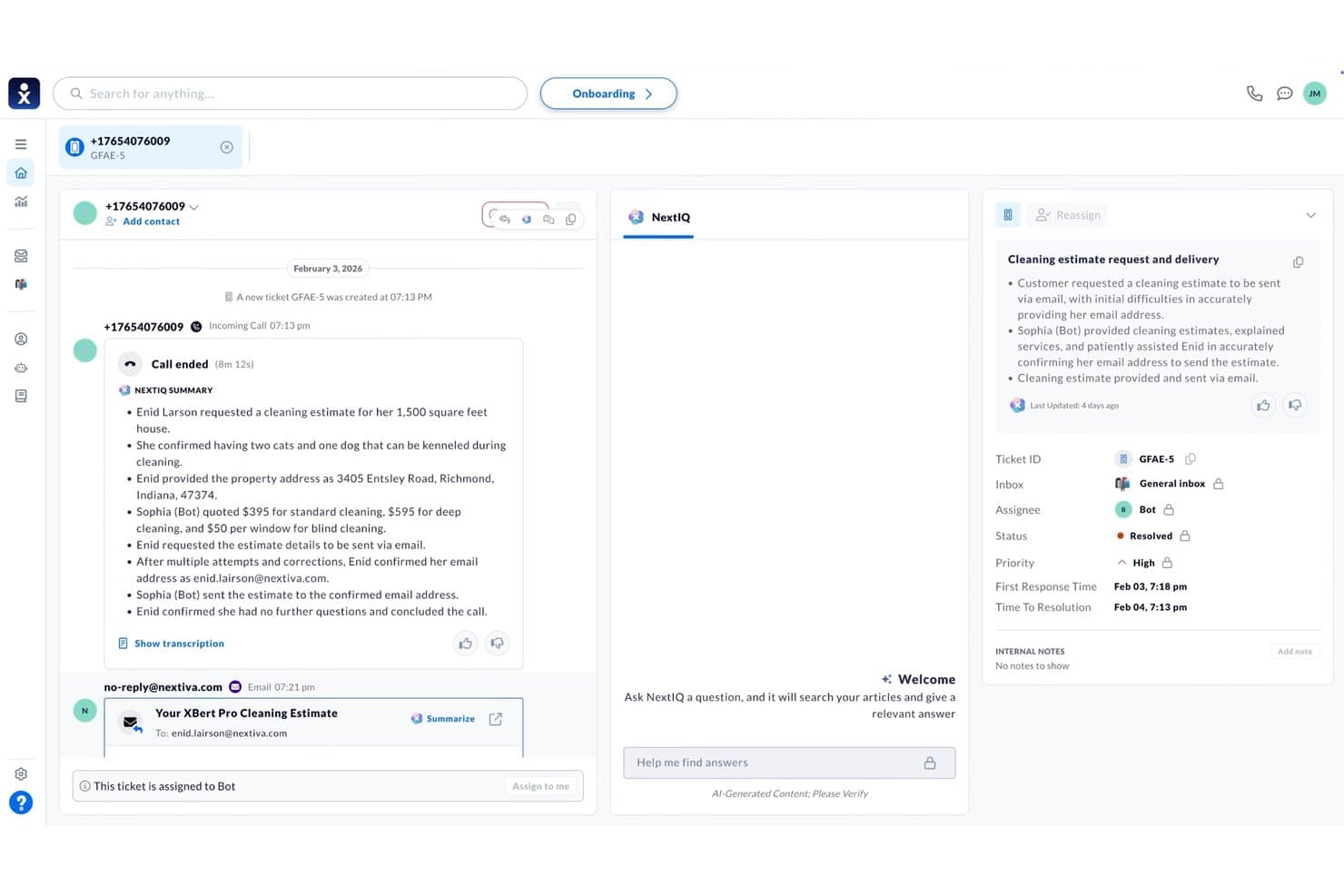
Nextiva displays AI-generated call summaries and ticket details in one view. Nextiva XBert is an AI-powered conversational platform that handles real-time web chat, voice, and SMS engagement, with automated bot building, lead qualification, omnichannel routing, and compliance-ready infrastructure for regulated industries.
Who Is Nextiva Best For?
Nextiva XBert is a strong fit for teams in regulated industries—healthcare, financial services, and similar sectors—that need compliant, 24/7 omnichannel customer engagement across voice, chat, and SMS.
Why I Picked Nextiva
I picked Nextiva XBert as one of the best because it's purpose-built for regulated industries that can't afford compliance gaps in their customer conversations. HIPAA eligibility, SOC 2 Type II, and PCI DSS certification mean a healthcare or financial services team can run 24/7 AI chat without legal exposure. I also like how XBert's "James AI" routes incoming conversations by detected intent in under a second, and how "Dana AI" handles live lead qualification across voice, SMS, and web chat from a single platform.
Nextiva Key Features
- Drag-and-drop bot builder: Build AI chat bots by connecting a knowledge base rather than writing scripts, with reusable functions for tasks like lookups and confirmations.
- Multi-channel inbox: Manage voice, SMS, web chat, email, WhatsApp, Facebook Messenger, Instagram DMs, and more from a single unified inbox.
- CSAT and NPS surveys: Collect post-conversation satisfaction scores automatically after each chat session to track customer experience over time.
- Conversation dashboard: Monitor real-time and historical metrics including chat volume, escalation rates, agent performance, and lead-generation data across channels.
Nextiva Integrations
Nextiva integrates with HubSpot, Salesforce, Zoho, Pipedrive, Microsoft Dynamics, Calendly, and more. XBert-specific connections include Google Calendar, Salesforce, HubSpot, Pipedrive, and Zoho.
Pros and Cons
Pros:
- Intent-based routing speeds qualified handoffs
- 24/7 voice, chat, and SMS coverage
- Compliance-ready omnichannel customer engagement
Cons:
- Built for service, not demand generation
- No lead scoring or revenue attribution
Learn more about Nextiva: Best for small businesses
- Free plan available; 7-day free trial
- From $24.17/month (billed annually)
Visit WebsiteCustomer Rating:4.7/5This rating combines scores from multiple user review sites to reflect overall customer sentiment about the product.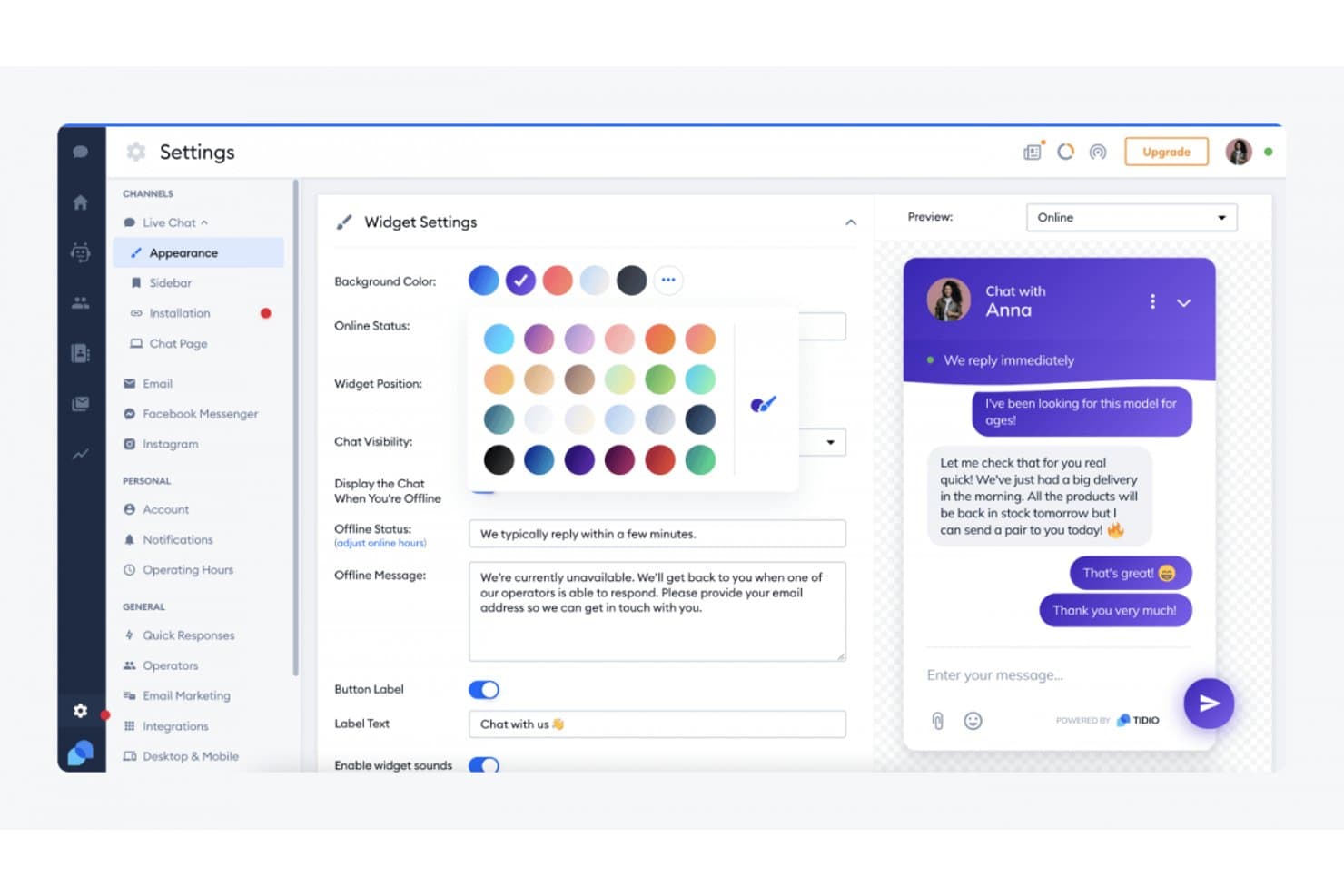
Tidio lets users customize chat widget appearance and branding. Tidio is a conversational marketing and customer support platform that combines live chat, no-code chatbot automation (Flows), and a generative AI agent (Lyro) with a unified multi-channel inbox spanning web chat, email, WhatsApp, and social messaging.
Who Is Tidio Best For?
Tidio is a strong fit for small ecommerce businesses that want live chat, AI automation, and a help desk in one affordable package without a complex setup.
Why I Picked Tidio
I picked Tidio as one of the best because it bundles live chat, no-code Flows automation, and a generative AI agent (Lyro) into one affordable package that small businesses can actually run without a dedicated ops team. Lyro trains on your FAQs, help center, and live Shopify or WooCommerce product data, then resolves up to 67% of conversations end to end. I also like that Flows can trigger off exit intent or cart behavior, turning passive visitors into engaged prospects before they leave.
Tidio Key Features
- Multi-channel inbox: A single inbox consolidates live chat, email, WhatsApp, Instagram, and Facebook Messenger conversations in one place.
- Live visitor list: See who's browsing your site in real time, including which pages they've viewed, so agents can reach out proactively.
- Exit intent and cart-based triggers: Flows can fire automatically when a visitor shows signs of leaving or abandoning a cart.
- Revenue attribution reporting: Tidio tracks and reports revenue tied directly to chat conversations and AI interactions.
Tidio Integrations
Tidio offers documented integrations with Shopify, WooCommerce, Adobe Commerce, WordPress, Zendesk, ActiveCampaign, AWeber, Act-On, and AdRoll. Plus plans include the Tidio OpenAPI, and Zapier is also supported.
Pros and Cons
Pros:
- Ecommerce revenue attribution connects chats to sales
- Lyro resolves routine conversations automatically
- Live chat supports proactive visitor engagement
Cons:
- Routing favors support over sales handoffs
- No native lead scoring or account qualification
Learn more about Tidio: Best for CRM-native chat and lead routing
- Free plan available
- From $20/user/month
Visit WebsiteCustomer Rating:4.4/5This rating combines scores from multiple user review sites to reflect overall customer sentiment about the product.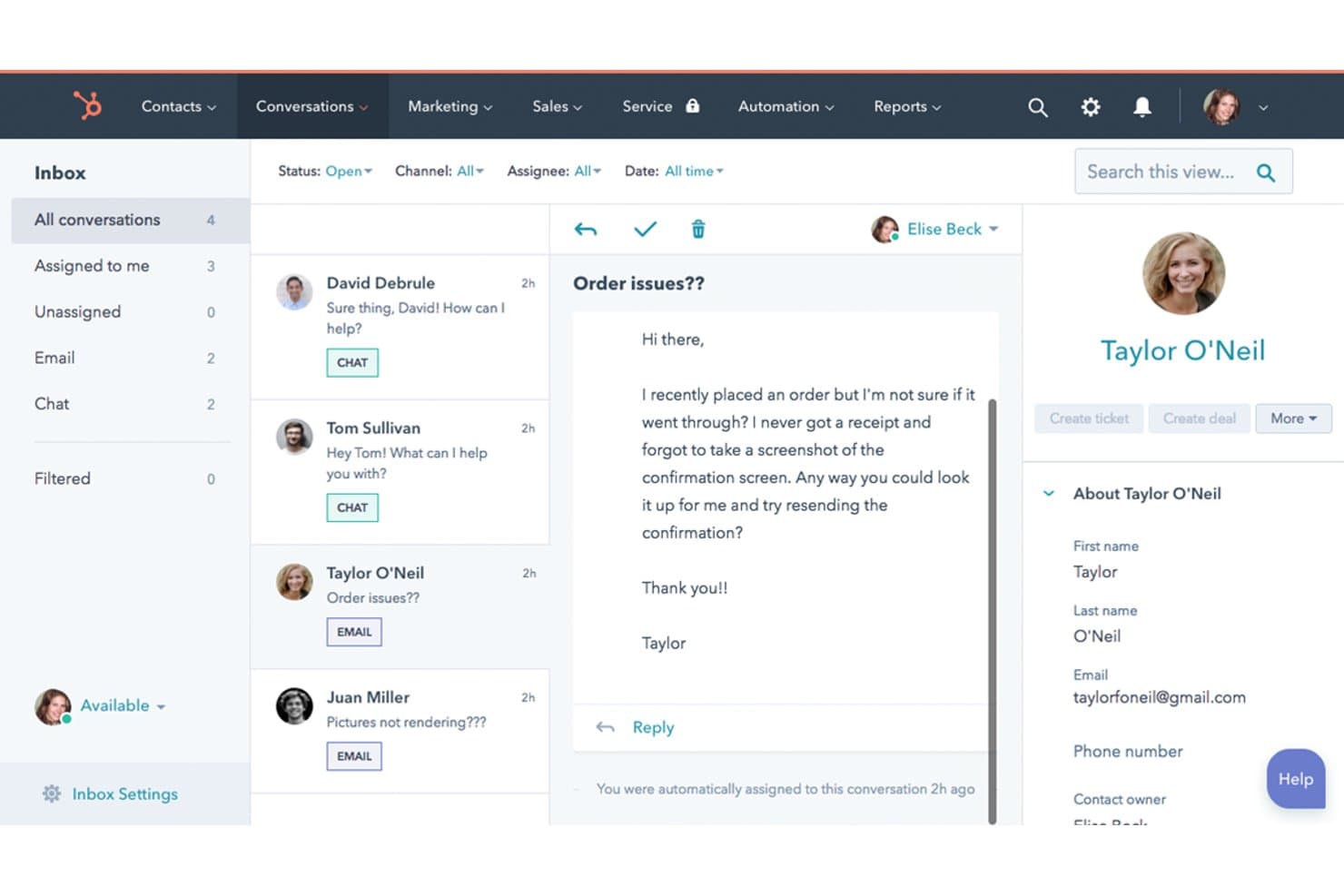
HubSpot centralizes email and chat conversations in a unified inbox. HubSpot is a CRM-native conversational marketing platform that combines live chat, no-code chatbot builder, AI-powered agents, and multi-channel inbox into a single suite alongside its broader marketing, sales, and service tools.
Who Is HubSpot Best For?
HubSpot is a natural fit for marketing and sales teams that already live in a CRM and want chat, bots, and lead routing without stitching together separate tools.
Why I Picked HubSpot
HubSpot earns its spot on my shortlist because chat, bots, and CRM all live in the same system, so there's no syncing data between tools. I particularly like how chatflows can qualify leads and route them to the right rep automatically, with full CRM context already attached to the conversation. The no-code bot builder lets you book meetings directly from a chat, which means a cold website visitor can land on your calendar without a rep ever typing a word.
HubSpot Key Features
- AI-powered prospecting agent: Monitors buying signals and automatically reaches out to accounts when they show purchase intent.
- Multi-channel shared inbox: Consolidates live chat, email, Facebook Messenger, and ticketing into one workspace with full CRM contact history.
- No-code chatflow templates: Pre-built bot templates let you launch lead qualification or support flows without writing any code.
- Meeting booking via chat: Bots connect directly to HubSpot's meeting scheduler so visitors can book time with a rep mid-conversation.
HubSpot Integrations
HubSpot has native integrations across its CRM, Marketing, Sales, Service, and Content Hubs, plus Facebook Messenger and Slack. Its Marketplace provides third-party integrations, while chatflows can connect to external APIs.
Pros and Cons
Pros:
- Routing sends conversations directly to sales representatives
- No-code bots qualify leads and book meetings
- CRM context follows every conversation
Cons:
- Complex support automation trails dedicated platforms
- Chat-specific reporting remains limited
 Best for customer analytics
- Free demo available
- Pricing upon request
Visit WebsiteCustomer Rating:4.5/5This rating combines scores from multiple user review sites to reflect overall customer sentiment about the product.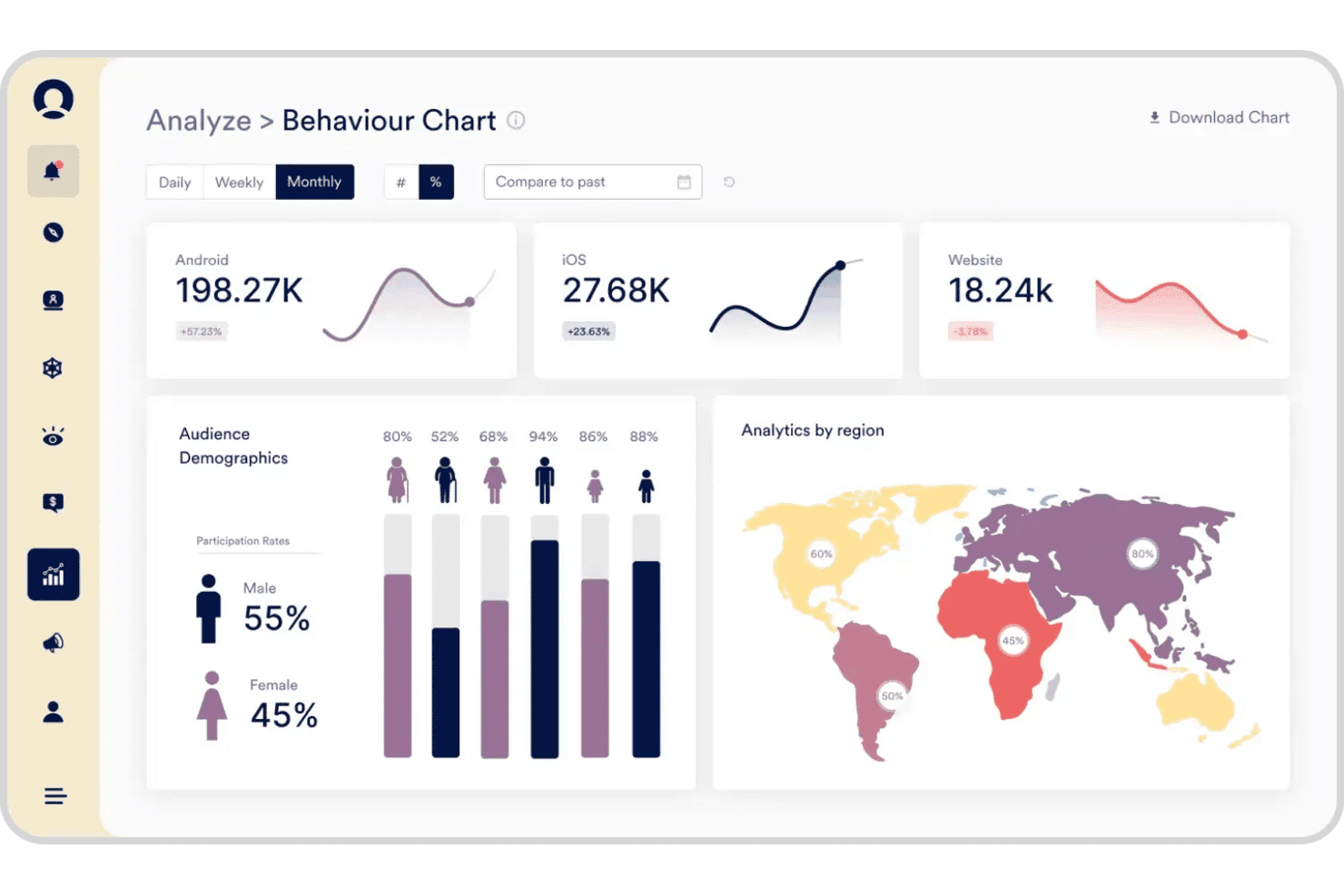
MoEngage provides tools to analyze data, personalize interactions, and boost retention. MoEngage is a customer engagement platform that helps you and your team understand customer behavior and personalize interactions. It provides tools for analyzing data and creating strategies to improve engagement and retention.
Why I picked MoEngage: MoEngage lets you understand your users with detailed analytics so you can shape your marketing strategies. Its segmentation tools allow you to target specific audiences effectively. You can connect with users at the right time with push notifications and in-app messaging. The journey builder enables you to automate customer interactions using real-time data.
Standout features & integrations:
Features include a journey builder that automates interactions based on customer actions. Advanced segmentation tools help you target specific groups with precision. Push notifications and in-app messaging keep your users engaged and informed.
Integrations include Salesforce, Shopify, HubSpot, Segment, Mixpanel, Google Analytics, Slack, Zendesk, Mailchimp, and Marketo.
Pros and Cons
Pros:
- Powerful journey builder
- Effective segmentation capabilities
- Strong customer analytics focus
Cons:
- May face occasional analytics delays
- Requires constant data updates
Learn more about MoEngage:
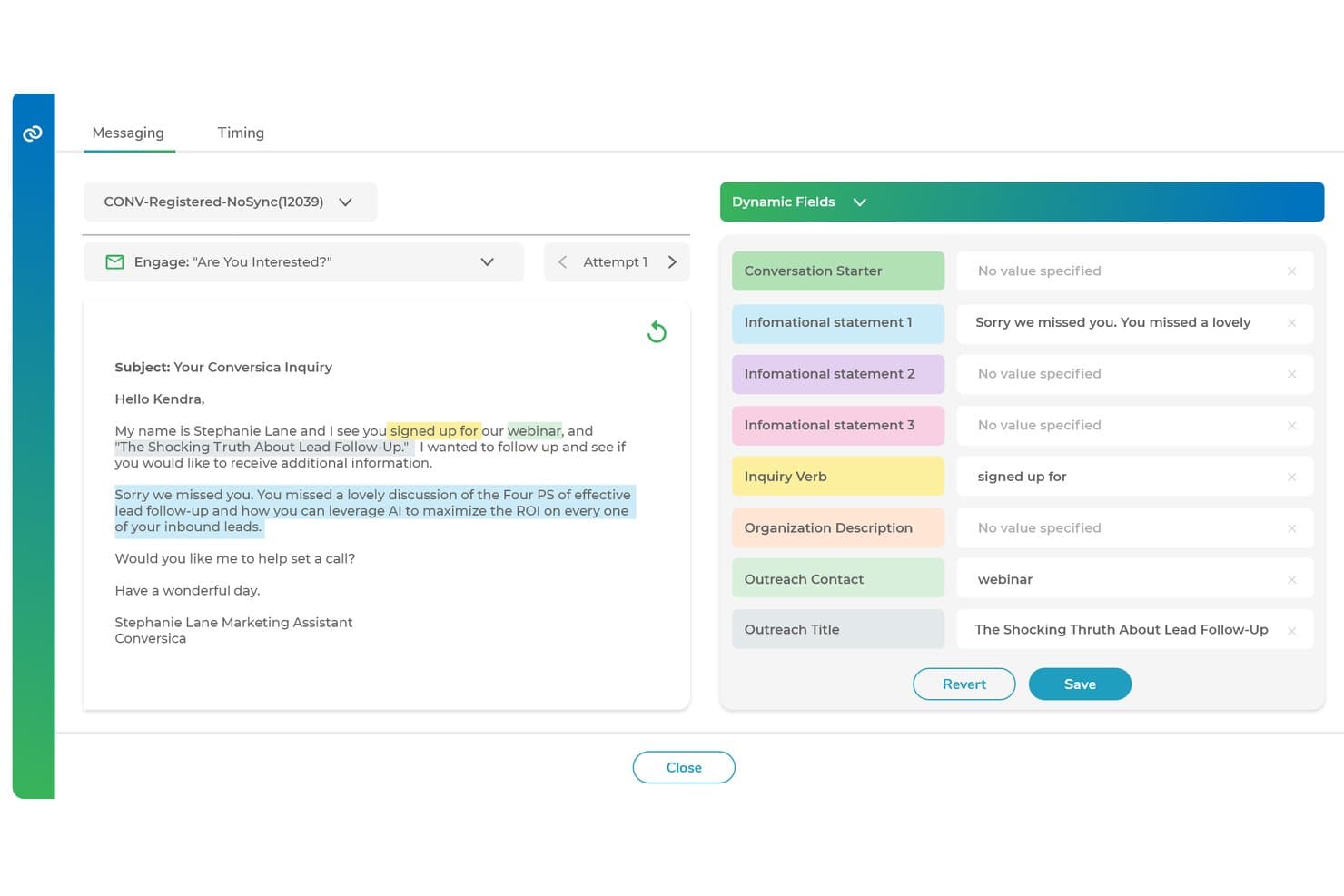
Conversica lets users customize dynamic fields in AI email messaging. Conversica is an AI-driven conversational marketing platform that automates multi-channel lead engagement through email, SMS, chat, and messaging apps, with built-in lead qualification, routing, and ABM outreach capabilities.
Who Is Conversica Best For?
Conversica fits enterprise marketing and demand generation teams that need automated, multi-channel lead follow-up without relying on sales reps to manage every touchpoint.
Why I Picked Conversica
I picked Conversica as one of the best because its AI sales assistant concept goes well beyond a basic chatbot. Its "smart persistence" model runs multi-day, multi-channel follow-up sequences across email, SMS, and messaging apps without a rep ever touching the conversation. I love that it handles account-based outreach by matching enterprise versus SMB inquiries to separate sales motions automatically, routing each lead with full context already captured.
Conversica Key Features
- Multi-channel follow-up sequences: AI agents run persistent outreach across email, SMS, chat, and messaging apps over multiple days without rep involvement.
- ABM account-specific routing: You can define handoff criteria by account, such as budget range or project timeline, so leads go to the right owner with full conversation context.
- Multilingual, 24/7 agent availability: Conversica's AI agents operate around the clock in multiple languages, supporting globally distributed audiences without manual scheduling.
- Customer service conversation handling: Agents manage FAQs, billing inquiries, and subscription changes inside the conversation and can escalate to a human without dropping the thread.
Conversica Integrations
Conversica offers documented native integrations with HubSpot, Marketo, and Eloqua. It supports lead intake through forms, chat, and webhooks, while its API Terms point to API-based custom integrations.
Pros and Cons
Pros:
- Supports account-specific outreach criteria
- Qualifies leads before sales handoff
- Persistent follow-up across multiple channels
Cons:
- AI can misinterpret nuanced replies
- Website chat lacks live collaboration
Learn more about Conversica: Best for AI-driven chatbots
- Free trial + Free demo available
- From $19/user/month (billed annually)
Visit WebsiteCustomer Rating:4.6/5This rating combines scores from multiple user review sites to reflect overall customer sentiment about the product.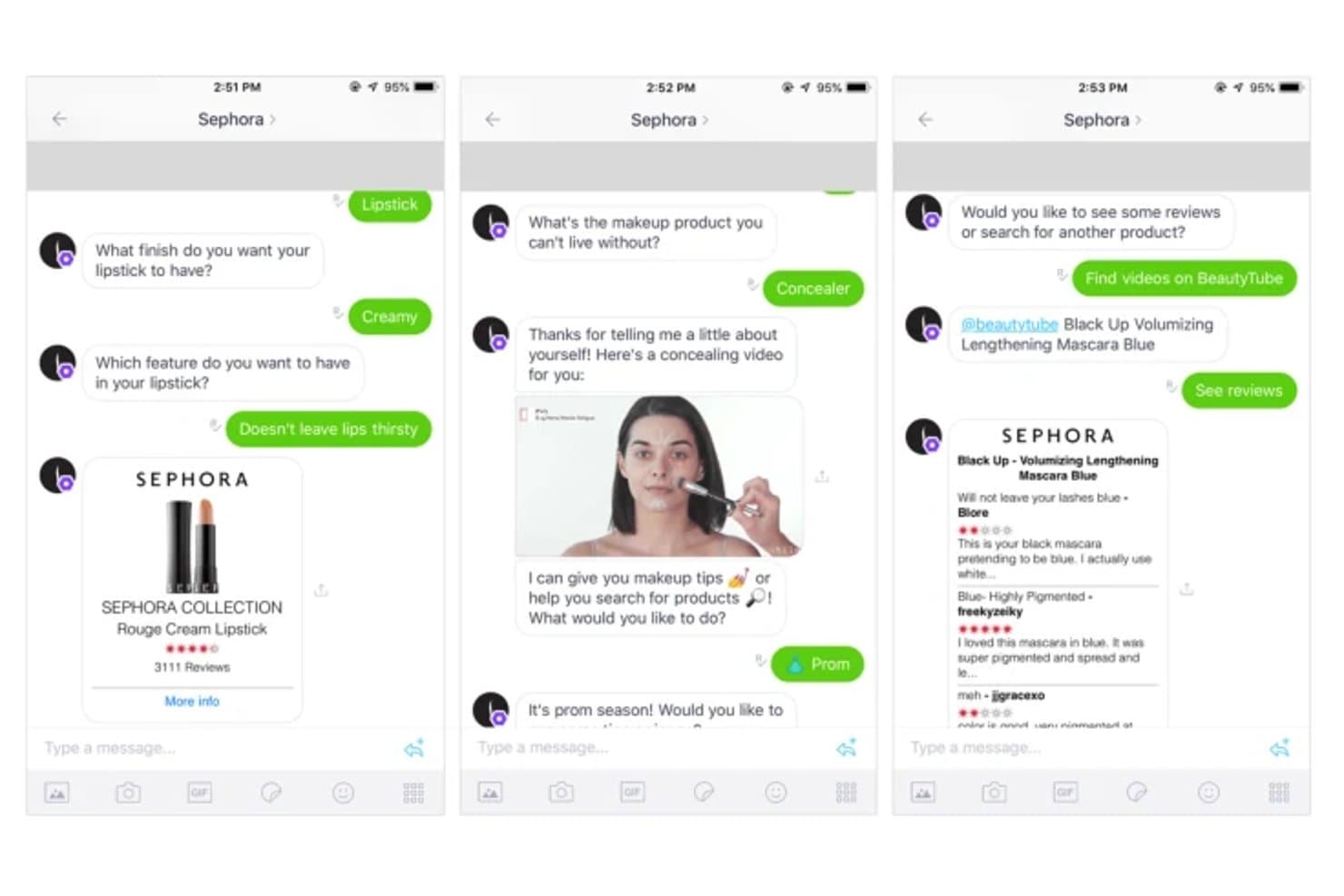
ChatBot offers AI tools to automate interactions, handle inquiries, and provide 24/7 support. ChatBot is an AI-powered platform that helps businesses automate customer interactions. It lets your team handle inquiries efficiently and provides 24/7 support without human involvement.
Why I picked ChatBot: ChatBot focuses on AI-driven chatbots to help you automate customer service. Its drag-and-drop interface makes it easy to create bots without coding so that you can design conversation flows quickly. You can use the platform’s analytics to track your bots' performance and make improvements. Pre-built templates let you launch bots fast, helping your team handle routine questions more efficiently.
Standout features & integrations:
Features include a drag-and-drop interface, making bot creation simple for non-coders. Analytics provide insights into bot performance, helping you optimize interactions. Pre-built templates can get you started quickly, saving your team time and effort.
Integrations include Slack, LiveChat, Facebook Messenger, WordPress, Shopify, Zapier, Mailchimp, HubSpot, Google Calendar, and WooCommerce.
Pros and Cons
Pros:
- Comprehensive analytics available
- Easy drag-and-drop interface
- AI-driven automation for customer service
Cons:
- Occasional AI response inaccuracies
- Limited customization for advanced users
Learn more about ChatBot: Best for customer messaging
- 14-day free trial and free demo available
- From $19/user/month (billed annually)
Visit WebsiteCustomer Rating:4.4/5This rating combines scores from multiple user review sites to reflect overall customer sentiment about the product.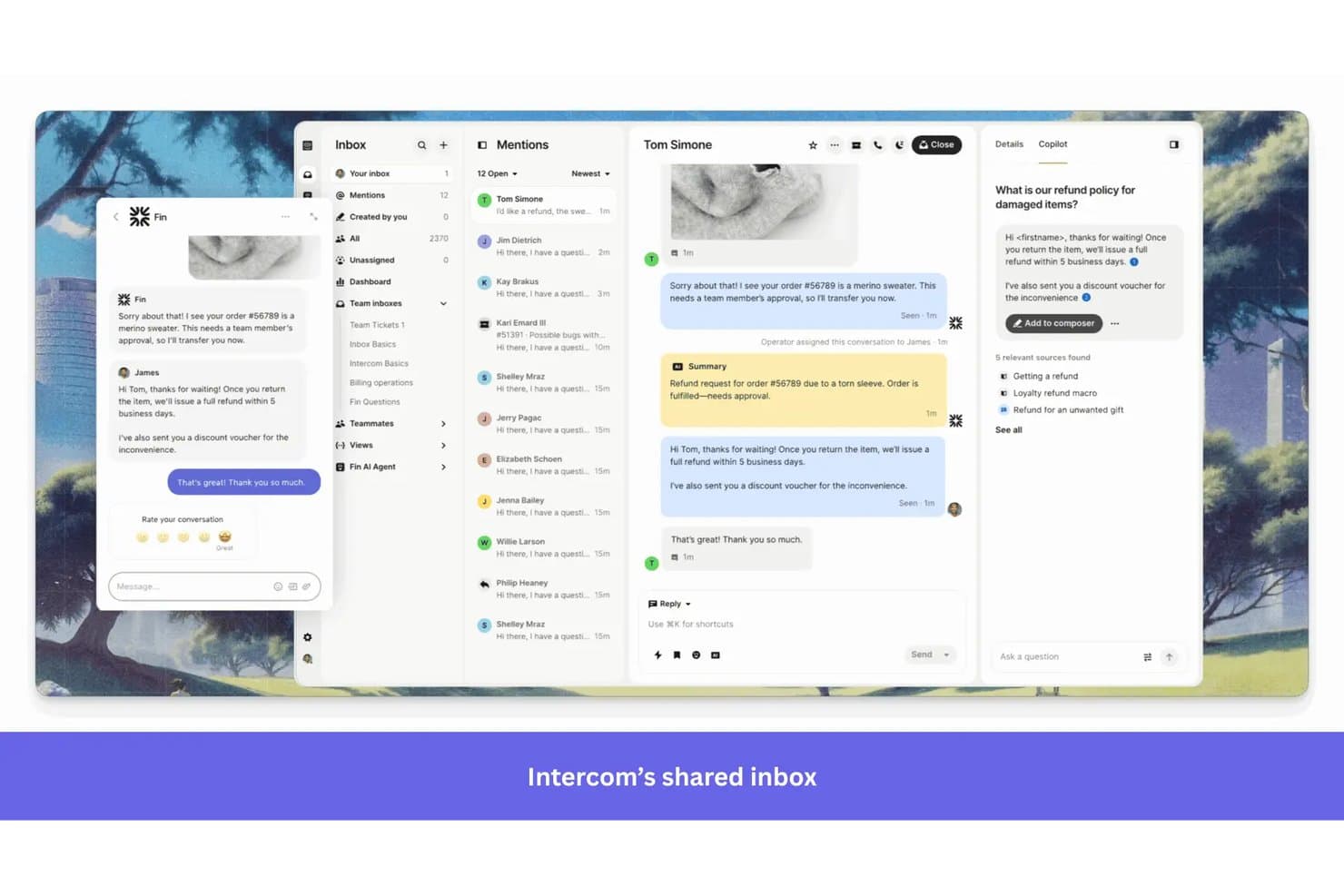
Intercom centralizes customer conversations with AI-assisted responses in a shared inbox. Intercom is a customer messaging platform that combines live chat, AI-powered automation via its Fin AI agent, multi-channel engagement, and support workflows across chat, email, WhatsApp, SMS, and phone.
Who Is Intercom Best For?
Intercom works best for customer experience and support teams that want a mature AI-powered chat layer across multiple channels.
Why I Picked Intercom
I picked Intercom as one of the best because its Fin AI agent sets a genuinely high bar for automated customer messaging. Fin lets you configure tone, brand voice, competitor handling, and escalation rules separately for different user segments, so a free-trial visitor gets a different conversation than an existing paying customer. I also like that this works across chat, email, WhatsApp, SMS, and phone from a single setup.
Intercom Key Features
- Fin Guidance controls: Set specific tone, brand voice, competitor handling, and escalation rules for different user segments directly within Fin's configuration.
- Multi-inbox routing: Advanced and Expert plans support multiple team inboxes with round-robin assignment to distribute conversations across reps.
- Proactive Support Plus add-on: Enables outbound engagement through Posts, Checklists, Product Tours, Surveys, and the Series campaign builder.
- HubSpot lead sync: The native HubSpot app pushes new leads and qualification data collected by Intercom directly into HubSpot.
Intercom Integrations
Intercom offers a native HubSpot integration for syncing leads, conversations, and qualification data, plus marketplace integrations through the Intercom App Store.
Pros and Cons
Pros:
- Multi-channel messaging extends conversational reach
- Unlimited live chat supports visitor engagement
- Fin guidance supports tailored audience conversations
Cons:
- Multi-step guidance struggles with qualification flows
- No native revenue attribution
Learn more about Intercom: Best for no-code AI chat with flat-rate pricing
- 14-day free trial
- From $29/user/month
Visit WebsiteCustomer Rating:4.4/5This rating combines scores from multiple user review sites to reflect overall customer sentiment about the product.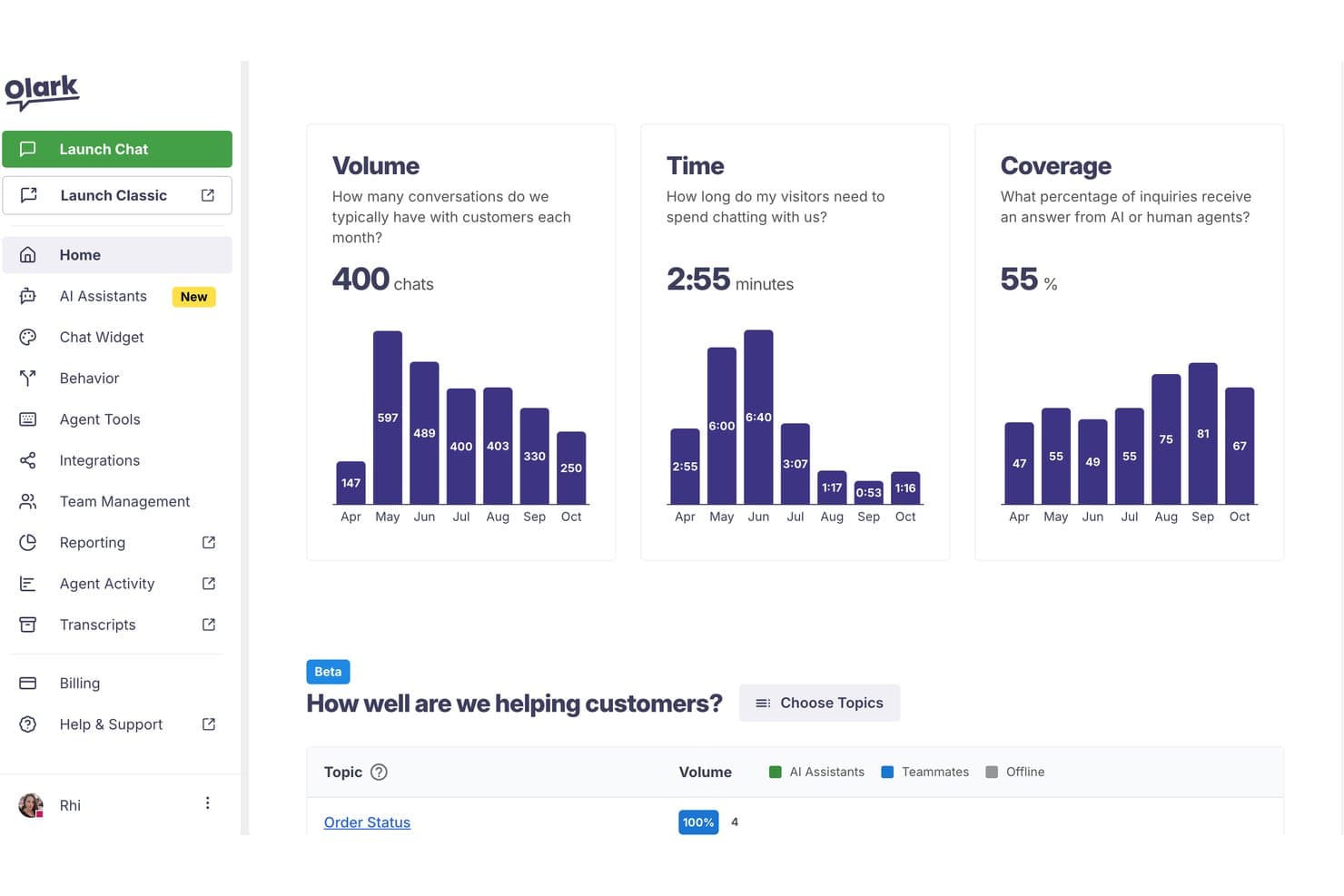
Olark tracks chat volume, response time, and coverage in one dashboard. Olark is a conversational marketing platform that combines AI-powered chat automation, real-time live chat, lead qualification and routing, and proactive visitor engagement triggers.
Who Is Olark Best For?
Olark is a strong fit for small to mid-sized marketing and sales teams that want to launch AI-powered chat quickly, without technical overhead or unpredictable usage costs.
Why I Picked Olark
Olark earns its spot on my shortlist because its AI Website Agent trains on your live site content in about a minute, with zero code required, and charges a flat monthly rate with no token fees or usage limits. I love that qualification criteria are written in plain English, so the agent weighs signals like budget and company size across the full conversation rather than at a single gate. When a lead is ready, it routes directly to a live rep, a calendar booking, or your CRM, with the full transcript attached.
Olark Key Features
- Proactive engagement triggers: Automatically start chats based on page viewed, time on site, scroll depth, return visits, or UTM parameters.
- Draft-test-publish workflow: Build, test, and version AI agent changes before publishing, with A/B testing across different agent configurations.
- Live qualification trace: Replay each visitor's full conversation journey to see exactly how qualification criteria were evaluated.
- Zapier and API access: Connect Olark to 2,000+ apps via Zapier, or build custom workflows using webhooks and a native API.
Olark Integrations
Olark offers native integrations with Salesforce, HubSpot, Zendesk, Calendly, Shopify, WordPress, and Webflow. It also supports webhooks, an API, an MCP server, and Zapier.
Pros and Cons
Pros:
- Human handoff preserves full chat context
- Plain-English qualification weighs entire conversations
- No-code AI trains on site content
Cons:
- No predictive scoring or ABM intelligence
- Multi-channel orchestration remains limited
Learn more about Olark: Best for a personalized digital experience
- Free demo available
- Pricing upon request
Visit WebsiteCustomer Rating:3.9/5This rating combines scores from multiple user review sites to reflect overall customer sentiment about the product.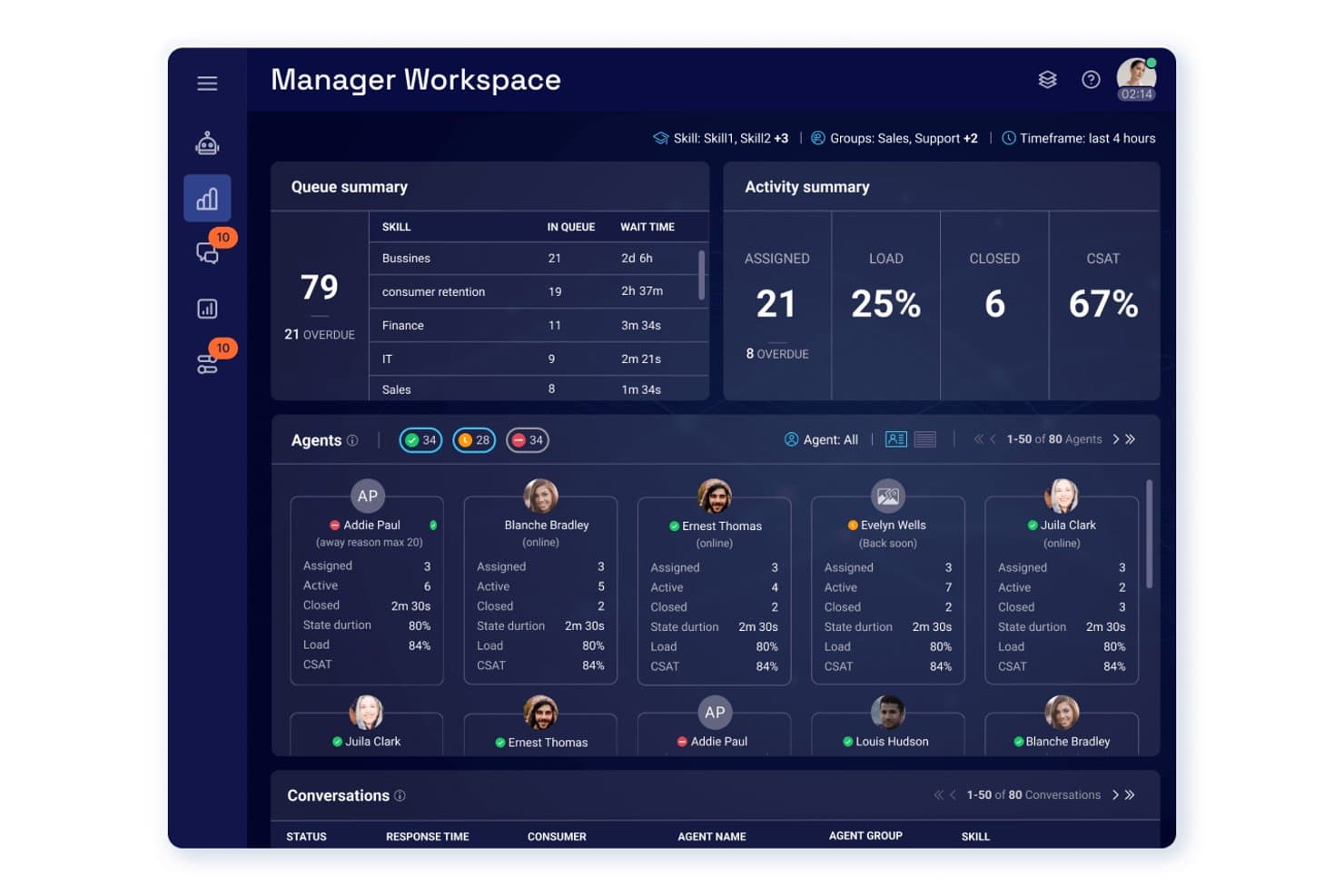
LivePerson lets managers monitor agent activity and queue metrics in real time. LivePerson is a conversational AI platform that combines real-time web and in-app messaging, no-code bot building, intent detection, and 14+ channel support—including WhatsApp, SMS, and Apple Messages for Business—into a single agent workspace.
Who Is LivePerson Best For?
LivePerson is a strong fit for enterprise customer experience teams that need AI-driven, omnichannel messaging at scale across 14+ channels.
Why I Picked LivePerson
LivePerson earns its spot as one of the best on my shortlist because its Conversation Builder lets you create sophisticated, no-code bot flows across 14+ channels, from WhatsApp to Apple Messages for Business, without writing a single line of code. I love that its Syntrix simulation tool stress-tests AI agents against thousands of real conversation scenarios before going live, which cuts launch risk significantly. Its Hallucination Detection then keeps generative AI responses grounded in your actual knowledge base during live interactions.
LivePerson Key Features
- Conversation Builder: A no-code bot builder that lets you create and deploy automated conversation flows across all 14+ supported messaging channels.
- KnowledgeAI: A centralized knowledge source that bots and human agents both draw from, with the option to connect an external CMS.
- Campaign Builder: A targeting tool that lets you configure proactive web and in-app engagement triggers based on visitor behavior and context.
- Connect to Messaging: A deflection feature that moves inbound phone callers from your IVR system into a messaging conversation with an agent or bot.
LivePerson Integrations
LivePerson offers a Salesforce connector, Medallia connectivity, and an Integration Hub powered by Workato. It also supports IBM Watson, Google Dialogflow, Amazon Lex, Microsoft bots, and custom integrations through 50+ APIs.
Pros and Cons
Pros:
- Personalizes proactive visitor conversations
- Tests AI agents before launch
- Supports 14+ engagement channels
Cons:
- No native lead scoring or pipeline attribution
- Built more for service than demand generation
Learn more about LivePerson: Best for Salesforce-native pipeline chat
- Free demo available
- Pricing upon request
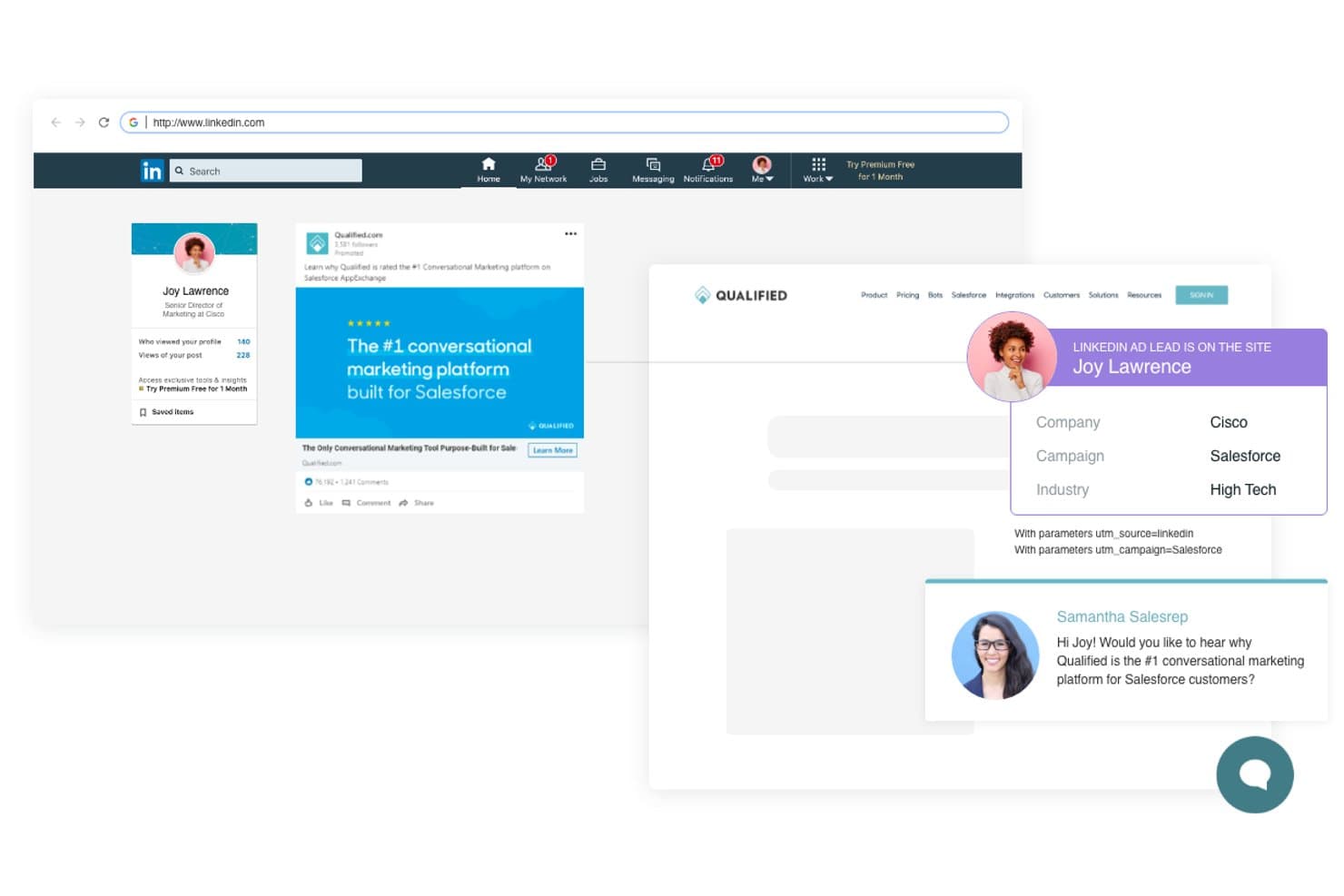
Qualified identifies LinkedIn ad leads and engages them instantly on-site. Qualified is an agentic marketing platform built around an AI SDR agent that handles real-time website chat, email engagement, lead qualification, meeting booking, and routing—all natively on the Salesforce platform.
Who Is Qualified Best For?
Qualified is a strong fit for demand generation and sales teams at mid-market to enterprise companies already running on Salesforce.
Why I Picked Qualified
Qualified earns its spot on my shortlist because it's the only conversational marketing platform I've seen that runs natively on the Salesforce platform, meaning your chat, qualification, and routing logic all pull directly from your existing Salesforce data. I love how Piper, the AI SDR agent, uses Visitor 360 to surface real-time account context mid-conversation, so it's not guessing who a visitor is. Agent Spotlight shows exactly how Piper reasons through each interaction, which gives me confidence in how it's qualifying and routing leads.
Qualified Key Features
- Piper Offers: Surfaces personalized marketing content to each website visitor based on their account data and behavior.
- Agentic Nurture: Automatically engages top-of-funnel leads over time to move them closer to a sales conversation.
- Multi-modal conversations: Lets Piper engage website visitors via text, voice, or video within the same conversation.
- Waterfall enrichment: Pulls contact and account data from multiple sources in sequence to fill gaps in your Salesforce records.
Qualified Integrations
Qualified runs natively on Salesforce and connects with Slack, Gong, and Salesforce Marketing Cloud Account Engagement (MCAE), among 20+ GTM systems. Enterprise and above plans include MCP and API access for custom integrations.
Pros and Cons
Pros:
- Multi-modal conversations support text, voice, video
- Agent Spotlight exposes decision reasoning
- AI SDR handles qualification and meetings
Cons:
- Reporting sometimes requires external exports
- Limited coverage beyond web and email
Learn more about Qualified:
Other Conversational Marketing Platforms
Here are some additional conversational marketing platform options that didn’t make it onto my shortlist but are still worth checking out.
- 11BirdeyeBest for reputation management
- 12LiveChatBest for multi-channel live chat and visitor tracking
- 13Zoho SalesIQBest for Zoho ecosystem chat and lead scoring
- 14FreshchatBest for team collaboration
- 15PodiumBest for local business SMS-driven chat
- 16ActiveCampaignBest for marketing automation
- 17Zoho Marketing PlusBest for integrated marketing tools
- 18LandBotBest for no-code WhatsApp and web chat automation
- 19AdaBest for AI-driven enterprise support at scale
How I Evaluate Conversational Marketing Platforms
I evaluate these platforms across two layers: the baseline capabilities a tool must offer—real-time chat, bot-driven lead qualification, and meeting booking—and the differentiators that separate strong contenders.
Core Functionality (Table Stakes For This List)
When I'm selecting tools for my list, I rank each one on a scale from 0 (does not offer the functionality) to 5 (excels in this area) for each core functionality listed below. Then, I calculate the tool's total score into a percentage. Each tool needs to achieve a minimum total score of 65% to be considered for inclusion.
- Live Chat & Chatbots: I evaluate whether the platform supports both automated bot flows and live human handoff, such as a bot greeting a returning visitor and escalating to a rep mid-conversation.
- Lead Qualification Logic: Each tool should let you build branching conversation flows that qualify visitors using criteria like company size, role, or budget before passing them to sales.
- Meeting Scheduling: I check for native calendar booking within the chat experience, including round-robin assignment across reps so qualified buyers can book time without leaving the page.
- Visitor Identification & Targeting: The platform should recognize who's on your site and serve targeted playbooks, like triggering an ABM-specific greeting when a contact from a target account lands on pricing.
- CRM & MarTech Integrations: I look at how deeply the tool syncs with platforms like Salesforce, HubSpot, and Marketo, especially bidirectional data flow that keeps conversation context attached to contact records.
- Conversation Analytics & Routing: Reporting should tie conversations to pipeline outcomes, and routing logic should assign chats based on territory, deal stage, or rep availability rather than simple round-robin alone.
Once I have a list of tools that meet this criteria, I consider what sets each platform apart.
Differentiating Factors (What Sets Vendors Apart)
Here's how I compare and contrast different vendors:
Standout Features
Generative AI agents are a big differentiator. I look for bots that pull from a knowledge base to answer nuanced product questions rather than just following scripted paths. Multi-channel reach matters too, especially when buyers start conversations on your site but continue over WhatsApp or SMS. I also evaluate whether a platform offers A/B testing on playbooks and bot copy, since small changes to a greeting or qualification question can shift conversion rates significantly.
Beyond Features
Revenue attribution is where I spend real evaluation time. If a platform can't show you which conversations sourced or influenced pipeline, it's hard to justify the investment to leadership. Integration depth with your revenue stack also weighs heavily—I check whether conversation data flows into CRM opportunity records and attribution tools so marketing gets credit for influenced deals. Finally, I consider compliance posture, especially cookie consent controls and data residency options, since chat widgets collect visitor data the moment they load.
How To Choose A Conversational Marketing Platform
It’s easy to get bogged down in long feature lists and complex pricing structures. Here's a checklist of factors to remember to help you stay focused as you work through your unique software selection process.
| Factor | What to Consider |
| Scalability | Ensure the platform grows with your business. Check for user limits and data handling. |
| Integrations | Look for compatibility with tools you already use, like CRMs or email marketing software. |
| Customizability | Determine if you can tailor the platform to your brand's voice and workflow needs. |
| Ease of Use | Choose a user-friendly interface to get your team up and running quickly. |
| Budget | Assess the cost against your budget and consider long-term value and potential ROI. |
| Security Safeguards | Verify data encryption and compliance with regulations to protect customer information. |
| Support Options | Consider available customer support, such as live chat or dedicated account managers. |
| Analytics | Look for solid reporting features to track engagement and performance metrics. |
Trends In Conversational Marketing Platforms
In my research, I sourced countless product updates, press releases, and release logs from different conversational marketing platform vendors. Here are some of the emerging trends I’m keeping an eye on.
- Voice interaction capabilities: More platforms are integrating voice recognition to allow users to interact with voice commands. This trend is growing as businesses seek to offer hands-free customer support experiences. Some vendors are exploring integration with smart speakers and voice assistants.
- Emotion detection: Platforms analyze customer sentiment during interactions to provide more empathetic responses. This feature helps businesses tailor their communication strategies to match customer emotions, enhancing engagement.
- Hyper-personalization: Vendors focus on delivering personalized experiences by using data analytics to understand user preferences. This trend enables businesses to offer content and product recommendations tailored to individual customers, increasing satisfaction and loyalty.
- Conversational commerce: There's a growing focus on facilitating purchases directly through chat platforms. This trend allows customers to complete transactions within the chat interface, providing a seamless buying experience and reducing the need for multiple touchpoints.
- Data privacy enhancements: With increasing concerns over data security, platforms are enhancing privacy features to comply with regulations. Businesses prioritize secure data handling tools and transparent privacy policies to build customer trust.
What Is A Conversational Marketing Platform?
A conversational marketing platform is a software tool that enables real-time communication between businesses and customers, usually through chatbots or live chat interfaces. These tools help marketing and customer service teams engage with customers and improve their experience.
Features like automated messaging, personalization, and sentiment analysis make connecting with customers and understanding their needs more leisurely. Ultimately, these platforms help businesses communicate more efficiently and build solid relationships with their audience.
Features Of Conversational Marketing Platforms
When selecting a conversational marketing platform, look for the following key features.
- Live chat: Provides real-time communication with customers, enhancing engagement and support.
- Chatbot automation: Automates responses to common inquiries, saving time and improving efficiency.
- Multichannel support: Enables interaction across various platforms like the web, social media, and messaging apps.
- Personalization: Offers tailored communication based on user preferences, increasing relevance and connection.
- Sentiment analysis: Detects customer emotions during interactions, allowing for more empathetic responses.
- Analytics and reporting: Provides user behavior and chat performance insights to optimize strategies.
- Voice interaction: Allows users to use voice commands, catering to hands-free customer support.
- Data privacy features: Ensures secure data handling and compliance with regulations, building customer trust.
- Integration capabilities: Connects with existing tools and systems to create a unified workflow.
- Conversational commerce: Facilitates transactions within the chat interface, simplifying the buying process.
- Conversational AI: Employs natural language understanding and AI-powered chatbots to enable human-like interactions and drive customer engagement.
- Drift integration: Offers compatibility with Drift, a leading conversational marketing tool, to enhance customer interactions and drive conversions.
- Follow-up automation: Ensures timely and personalized follow-ups, helping to nurture potential customers and increase lead conversion.
- Qualified leads identification: Identifies and prioritizes high-quality leads, streamlining marketing efforts and optimizing the sales funnel.
- Sales team support: Enhances collaboration between sales reps and marketing teams to improve customer interactions and support the sales process.
- Customer journey tracking: Maps and tracks customer journeys to provide a better understanding of customer behavior and engagement touchpoints.
- Landing pages integration: Connects conversational tools with landing pages, improving conversion rates and capturing potential customers.
- Marketing efforts optimization: Uses conversation insights to refine marketing campaigns and drive more targeted outreach.
- Potential customers engagement: Increases engagement with potential customers, helping convert them into qualified leads.
- Real-time conversations: Facilitates instant communication with customers, offering immediate support and personalized experiences.
- Sales process alignment: Ensures a smooth transition from marketing to sales, supporting sales reps and driving faster conversions.
- AI-powered chatbots: AI-driven chatbots automate responses, reducing the need for human intervention while supporting potential customers.
Benefits Of Conversational Marketing Platform
Implementing a conversational marketing platform provides several benefits for your team and your business. Here are a few you can look forward to.
- Enhanced customer engagement: Real-time chat and personalized interactions help keep customers interested and connected.
- Improved efficiency: Chatbot automation handles routine queries, allowing your team to focus on more complex tasks.
- Increased sales opportunities: Conversational commerce features let customers complete purchases directly in chat, boosting sales.
- Valuable insights: Analytics and reporting offer a better understanding of customer behavior, guiding your marketing strategies.
- Better customer satisfaction: Sentiment analysis ensures your team can respond empathetically, leading to happier customers.
- Wider reach: Multichannel support allows you to engage customers on their preferred platforms, expanding your audience.
- Stronger customer trust: Data privacy features ensure secure interactions, building confidence in your brand.
Costs & Pricing Of Conversational Marketing Platforms
Selecting a conversational marketing platform requires understanding the various pricing models and plans. Costs vary based on features, team size, add-ons, and more. The table below summarizes standard plans, their average prices, and typical features included in conversational marketing platform solutions:
Plan Comparison Table for Conversational Marketing Platform
| Plan Type | Average Price | Common Features |
| Free Plan | $0 | Basic chat capabilities, limited user support, and basic analytics |
| Personal Plan | $10-$30/user/month | Enchanted chat features, personalization options, and basic integrations |
| Business Plan | $50-$100/user/month | Advanced automation, multichannel support, and detailed analytics |
| Enterprise Plan | $150-$300/user/month | Custom solutions, dedicated support, advanced security features, and full API access |
A breakdown of plan types, costs, and features for conversational marketing platforms.
Conversational Marketing Platform FAQs
Here are some answers to common questions about conversational marketing platforms.
What tool will allow you to engage in conversational marketing platforms with customers?
Tools like chatbots are essential to engage in conversational marketing. They provide instant responses and updates, enhancing customer interaction. These tools help brands offer personalized content and event information, making the experience more engaging for users. Implementing chatbots can improve customer satisfaction and streamline communication.
Why would a company use conversational marketing platforms?
Companies use conversational marketing to boost customer engagement and improve inbound efforts. By offering one-on-one interactions, businesses can gather timely data on customer preferences. This approach enhances the user experience by addressing customer needs more effectively, increasing satisfaction and loyalty.
Do conversational marketing platforms represent the next big digital marketing opportunity?
Yes, conversational platforms are seen as a significant opportunity in digital marketing. Over the next few years, these platforms will likely expand beyond customer service. They will facilitate informed decision-making and create immersive brand experiences, providing businesses new ways to engage customers.
What is the main objective of conversational marketing platforms?
The main objective of conversational marketing is to build deeper customer connections. It aims to create opportunities for engagement and conversion by providing instant, helpful answers. Whether assisting with product inquiries or checking out, this approach enhances customer satisfaction and loyalty.
How do conversational marketing platforms improve customer decision-making?
Conversational marketing platforms offer instant access to information, helping customers make informed decisions. They provide personalized recommendations and support, guiding users through their buying journey. By enhancing the decision-making process, these platforms can improve the overall customer experience and increase sales.
How do businesses measure the success of conversational marketing platform strategies?
Businesses measure success through metrics like customer engagement rates and conversion rates. Analyzing customer feedback and satisfaction scores also helps assess the effectiveness of conversational marketing strategies. These insights enable businesses to refine their approaches and better meet customer needs.