

As melhores ferramentas de IA para marketing B2B automatizam a classificação de potenciais clientes, a otimização de campanhas e os relatórios, ajudando-o a dar prioridade às contas com elevada intenção de compra e a eliminar as horas gastas a limpar manualmente dados do CRM ou a reconciliar análises contraditórias. Se está frustrado com uma atribuição pouco fiável, previsões inconsistentes do funil de vendas ou o enorme volume de tarefas repetitivas de campanhas, estas plataformas oferecem uma solução prática.
Com mais de 10 anos a liderar equipas de marketing e mais de 500 horas de experiência prática com estas plataformas, sei exatamente onde a maioria das ferramentas fica aquém e quais proporcionam realmente resultados. Este guia aborda soluções comprovadas para simplificar os seus fluxos de trabalho, melhorar o acompanhamento do retorno do investimento e libertar a sua equipa para o trabalho estratégico.
Why Trust Our Software Recommendations
6,700+
Reviews
20
Industry experts
16+
Evaluation factors
14
Years
Our team has been testing and reviewing software since 2012. As marketing leaders ourselves, we know how difficult—and important—it is to choose the right software.
For this guide, we evaluated tools using hands-on testing and independent research, scoring tools using our selection criteria.
Our reviews reflect our human editorial judgment, not a sales pitch.
Expert reviewers:
 Gui DrusinaCreative Director
- Shriya GhateSenior Marketing Lead
 Amanda JacquesMarketing Ops Leader

Tabela comparativa: ferramentas de IA para marketing B2B
Esta tabela comparativa resume os detalhes de preços da minha seleção das melhores ferramentas de IA para marketing B2B:
| Tool | Best For | Trial Info | Price | ||
|---|---|---|---|---|---|
| 1 | Best for detailed B2B data enrichment | Free plan + 14-day free trial + free demo available | From $49/user/month (billed annually) | Website | |
| 2 | Best for customer engagement strategies | 14-day free trial | Pricing upon request | Website | |
| 3 | Best for sales team analytics | Free demo available | Pricing upon request | Website | |
| 4 | Best for AI-generated copywriting | 7-day free trial available | From $59/month (billed annually) | Website | |
| 5 | Best for automating personalized content | Free demo available | Pricing upon request | Website | |
| 6 | Best for enterprise-level marketing | Free demo available | Pricing upon request | Website | |
| 7 | Best for real-time data insights | Free demo available | Pricing upon request | Website | |
| 8 | Best for personalized learning experiences | Free demo available | Pricing upon request | Website | |
| 9 | Best for go-to-market strategies | 14-day free trial + free plan + free demo available | From $20/user/month | Website | |
| 10 | Best for AI-driven content creation | Free demo available | Pricing upon request | Website |


Avaliações das melhores ferramentas de IA para marketing B2B
Apresento abaixo os meus resumos detalhados das melhores ferramentas de IA para marketing B2B que entraram na minha seleção. As minhas avaliações oferecem uma análise detalhada das principais funcionalidades, vantagens e desvantagens, integrações e casos de utilização ideais de cada ferramenta, para o ajudar a encontrar a melhor opção para si.
 Best for detailed B2B data enrichment
- Free plan + 14-day free trial + free demo available
- From $49/user/month (billed annually)
Visit WebsiteCustomer Rating:4.5/5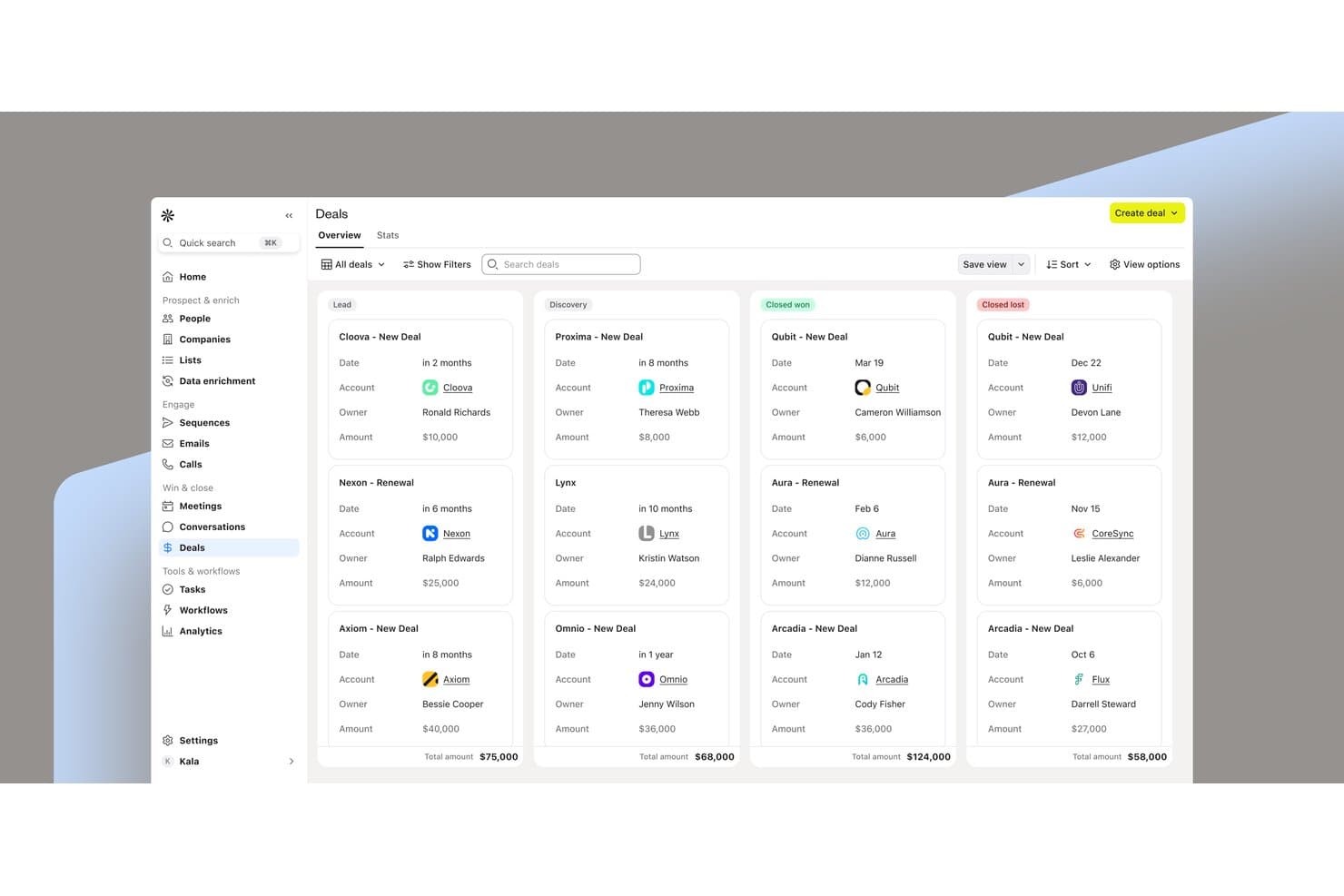
Apollo.io organizes B2B deals across pipeline stages with amounts and owners. Apollo.io is a B2B GTM platform that combines a 240M+ contact database with AI-driven lead scoring, waterfall enrichment across 20+ data vendors, intent signal detection, and automated outbound sequencing.
Who Is Apollo.io Best For?
Apollo.io suits demand generation and marketing operations teams that need a centralized data layer for prospecting, lead scoring, and outbound sequencing.
Why I Picked Apollo.io
Apollo.io earns its spot on my shortlist because its waterfall enrichment engine is genuinely unlike anything else I've tested. It sequences through Apollo's own 240M+ contact database first, then pulls from 20+ third-party vendors to fill gaps, and validates emails and phone numbers before syncing to your CRM. I also rely on its AI auto-scoring models, which pull from CRM history to surface high-fit leads in real time, right inside search results.
Apollo.io Key Features
- Intent signals: Tracks job changes, funding, company news, and Bombora intent.
- AI email personalization: Creates tailored outreach using prospect-level insights.
- CRM integrations: Syncs with Salesforce, HubSpot, Pipedrive, and Marketo.
- Parallel Dialer: Supports multi-line calling within outbound workflows.
Apollo.io Integrations
Apollo.io supports 200+ integrations, including Salesforce, HubSpot, Pipedrive, Outreach, SalesLoft, Marketo, LinkedIn, Chili Piper, Clay, and ChatGPT. It also provides a REST API and Model Context Protocol (MCP) access for custom connections and AI tool integrations.
Pros and Cons
Pros:
- Bombora intent signals surface in-market accounts
- AI lead scoring updates in real time
- Waterfall enrichment pulls from 20+ data vendors
Cons:
- Email-only outreach limits true multi-channel ABM
- Data accuracy drops outside North America
Learn more about Apollo.io: Best for customer engagement strategies
- 14-day free trial
- Pricing upon request
Visit WebsiteCustomer Rating:4.6/5
Braze enables multichannel customer engagement with personalized messaging Braze is a customer engagement platform designed for businesses aiming to enhance their interaction with customers across multiple channels. It serves marketers and customer experience teams, helping them deliver personalized messaging and improve retention.
Why I picked Braze: Braze offers tools that excel in crafting effective customer engagement strategies. Its cross-channel messaging capabilities allow you to reach customers through email, push notifications, and SMS. The personalization features help tailor messages based on customer behavior and preferences. With Braze, you can track engagement metrics and refine your campaigns for better results.
Standout Features & Integrations:
Features include real-time data streaming, which provides instant insights into customer interactions. The platform supports A/B testing to optimize message effectiveness. Additionally, Braze offers a drag-and-drop interface for creating and managing campaigns with ease.
Integrations include Salesforce, Segment, Amplitude, Marketo, Shopify, Slack, Zendesk, Twilio, Google Ads, and Facebook.
Pros and Cons
Pros:
- Easy-to-use campaign interface
- Includes A/B testing capabilities
- Offers cross-channel messaging
Cons:
- Limited public pricing information
- Can be complex to implement
Learn more about Braze: 3Best for sales team analytics
Gong
- Free demo available
- Pricing upon request
Visit WebsiteCustomer Rating:4.7/5
Gong analyzes customer interactions to optimize sales team performance Gong is a revenue intelligence platform designed for sales teams to improve performance and decision-making. It helps sales professionals analyze customer interactions and optimize sales strategies.
Why I picked Gong: Gong offers unparalleled sales team analytics, providing insights into customer conversations and sales processes. Its conversation analytics feature allows you to dissect calls and meetings to identify areas for improvement. The platform tracks sales pipeline health, helping your team focus on deals that matter. Gong's deal intelligence highlights potential risks, ensuring your team stays proactive.
Standout Features & Integrations:
Features include a comprehensive dashboard that visualizes key sales metrics and trends. The platform supports call recording and transcription, enabling detailed analysis of sales interactions. Additionally, Gong provides coaching insights to help sales managers guide their teams effectively.
Integrations include Salesforce, HubSpot, Slack, Microsoft Teams, Zoom, Google Calendar, Outreach, SalesLoft, LinkedIn, and Zendesk.
Pros and Cons
Pros:
- Highlights deal risks proactively
- Offers coaching insights for managers
- Provides detailed conversation analytics
Cons:
- Not ideal for very small teams
- Limited customization options
Learn more about Gong: Best for AI-generated copywriting
- 7-day free trial available
- From $59/month (billed annually)
Visit WebsiteCustomer Rating:4.7/5
Jasper automates content creation for articles, social posts, and marketing copy Jasper is a content generation tool aimed at marketers, writers, and businesses looking to streamline their content creation process. It automates the writing of articles, social media posts, and marketing copy to save time and enhance productivity.
Why I picked Jasper: Jasper excels in AI-generated copywriting, making it a valuable asset for teams needing consistent and high-quality content. The tool offers templates for various content types, ensuring your team can quickly generate the necessary material. Its tone customization feature allows you to match the voice of your brand. Jasper also provides language support, enabling you to reach a wider audience.
Standout Features & Integrations:
Features include an extensive library of content templates that cater to different writing needs. The tool's tone customization ensures your content aligns with your brand's voice. Additionally, Jasper supports multiple languages, allowing you to create content in various languages.
Integrations include Surfer SEO, Grammarly, Copyscape, Google Docs, WordPress, HubSpot, Shopify, Facebook, LinkedIn, and Twitter.
Pros and Cons
Pros:
- Ideal for large content teams
- Facilitates quick content generation
- Supports multiple languages
Cons:
- Can be overwhelming for new users
- Not suitable for complex writing tasks
Learn more about Jasper: Best for automating personalized content
- Free demo available
- Pricing upon request
Visit WebsiteCustomer Rating:4.3/5
Adobe GenStudio for Performance Marketing dashboard showing AI generated content insights and campaign performance metrics. Adobe GenStudio for Performance Marketing is built to change how your team handles B2B marketing. It uses AI to create, manage, and optimize campaigns at scale. The platform is especially useful for businesses in industries like retail and telecommunications, where teams need to produce large volumes of on-brand, personalized content quickly. By automating content creation and enforcing brand compliance, GenStudio helps you stay consistent while improving engagement across multiple channels.
Why I Picked GenStudio for Performance Marketing
I chose GenStudio for Performance Marketing because it automates and personalizes B2B marketing content using AI-driven insights and content generation tools. Its AI models create tailored marketing assets designed to match specific personas and regions, which helps campaigns feel more relevant. The platform also streamlines publishing by allowing direct uploads to major ad platforms, cutting down on manual work and reducing errors. Together, these features make it a strong option for marketers who want to refine their content strategy and improve campaign performance.
GenStudio for Performance Marketing Key Features
In addition to its core functionalities, I also found several other features that make GenStudio a standout choice for B2B marketing.
- Multilingual Content Generation: Create culturally relevant marketing materials in multiple languages to engage diverse audiences.
- Experimentation and A/B Testing: Quickly generate content variations to test different elements and optimize campaigns based on real-time data.
- Brand Compliance: Built-in checks ensure that all content meets brand guidelines and regulatory standards, streamlining the approval process.
- Performance Insights: AI-driven analytics provide actionable insights into content performance, guiding future marketing strategies.
GenStudio for Performance Marketing Integrations
Integrations include Adobe Real-Time CDP, Adobe Workfront, Adobe Experience Manager, Adobe Express, Facebook, LinkedIn, TikTok, Amazon, and Google.
Pros and Cons
Pros:
- Direct ad platform publishing
- Built in A/B testing workflows
- On-brand content generation
Cons:
- Limited publicly listed integrations
- May require Adobe ecosystem
Learn more about GenStudio: Best for enterprise-level marketing
- Free demo available
- Pricing upon request

Adobe Experience Cloud delivers content, analytics, and journey optimization tools Adobe Experience Cloud is a suite of digital marketing tools tailored for enterprise-level companies. It provides solutions for content management, data analytics, and customer journey optimization.
Why I picked Adobe Experience Cloud: Adobe Experience Cloud offers comprehensive solutions for large enterprises looking to optimize customer experiences. Its content management system allows you to create and manage digital content efficiently. The platform's analytics tools provide deep insights into customer behavior, enhancing your marketing strategies. With Adobe's customer journey management, you can deliver personalized experiences to your audience at scale.
Standout Features & Integrations:
Features include advanced targeting and segmentation, which help you reach specific audience groups. The cloud also offers automated marketing workflows to streamline operations. Additionally, its AI-driven insights guide your decision-making process by analyzing massive datasets.
Integrations include Microsoft Dynamics 365, Salesforce, Marketo, SAP, Magento, Oracle, Workfront, Slack, Google Analytics, and LinkedIn.
Pros and Cons
Pros:
- Ideal for large-scale enterprises
- Supports personalized customer journeys
- Provides deep customer insights
Cons:
- May need significant customization
- Requires technical expertise
Learn more about Adobe Experience Cloud:

Rithum manages listings, inventory, and marketing to drive commerce operations Rithum is a commerce operations platform designed for brands and retailers, focusing on marketplace listings, inventory management, and marketing strategies. It serves both startups and global enterprises, aiming to enhance sales and streamline operations.
Why I picked Rithum: Rithum offers real-time data insights that help brands and retailers optimize their operations. It provides tools for managing marketplace listings and inventory, allowing you to keep track of stock levels and sales channels. The platform's marketing tools help refine your strategies and increase profitability. With Rithum, you can improve your fulfillment processes and enhance your overall business performance.
Standout Features & Integrations:
Features include comprehensive inventory and order management, which helps you maintain control over your stock levels. The platform supports retail media advertising, allowing you to reach a wider audience. Additionally, its paid search management feature enhances your marketing efforts.
Integrations include various sales channels to improve operational efficiency.
Pros and Cons
Pros:
- Suitable for startups and enterprises
- Supports multiple sales channels
- Offers extensive data insights
Cons:
- Can be complex for beginners
- Limited public pricing information
Learn more about Rithium: Best for personalized learning experiences
- Free demo available
- Pricing upon request

Sana Agents powers personalized learning with AI for education and training Sana Agents is an AI-powered platform designed for enterprise training, helping organizations deliver more personalized and scalable learning programs. It gives marketing and sales teams tools to automate onboarding, adapt training content for different roles, and monitor team progress with actionable analytics.
Why I picked Sana Agents: Sana Agents offers personalized learning experiences by using AI to tailor educational content to individual needs. The tool offers AI-driven content creation that helps organizations design courses that adapt to different learning styles. Sana Agents also supports skill development through interactive and engaging learning modules.
Standout Features & Integrations:
Features include enterprise search capabilities, allowing users to find relevant content quickly. The platform also offers an iOS app for learning on the go. Its AI-driven approach helps reduce repetitive training tasks and provides visibility into knowledge gaps, making it easier to keep fast-growing teams aligned and up to speed.
Integrations include various educational tools and platforms to enhance learning experiences.
Pros and Cons
Pros:
- Includes an iOS app for mobile learning
- Supports AI-driven content creation
- Offers personalized learning experiences
Cons:
- Can be complex for new users
- Limited public pricing information
Learn more about Sana Agents: Best for go-to-market strategies
- 14-day free trial + free plan + free demo available
- From $20/user/month

Unify aligns sales and marketing strategies to improve go-to-market execution Unify is a go-to-market platform designed for businesses looking to streamline their sales and marketing efforts. It primarily serves sales teams and marketing managers, providing tools to align strategies and improve execution.
Why I picked Unify: Unify excels in bringing sales and marketing teams together to develop effective go-to-market strategies. Its collaboration tools enable seamless communication between departments, ensuring everyone is on the same page. The platform's analytics offer valuable insights into campaign performance, enabling you to make informed decisions. Unify's customizable dashboards allow you to track metrics that matter most to your business.
Standout Features & Integrations:
Features include a customizable dashboard that lets you focus on key metrics. The platform also offers collaboration tools to enhance team communication. Additionally, Unify provides in-depth analytics to track and measure campaign success.
Integrations include popular tools like Salesforce, HubSpot, Marketo, Slack, Microsoft Teams, Google Analytics, LinkedIn, Zoom, Trello, and Asana.
Pros and Cons
Pros:
- Supports go-to-market strategies
- Offers customizable dashboards
- Enhances team collaboration
Cons:
- Not ideal for very small teams
- Can be complex for new users
Learn more about Unify:

Valona delivers real-time market insights and trend analysis for B2B marketers Valona is a competitive intelligence platform designed for B2B marketers, providing real-time market insights and trend analysis. It serves businesses looking to capture sales leads and enhance their market positioning.
Why I picked Valona: Valona stands out with its AI-driven content creation capabilities, which help businesses stay ahead in competitive markets. The platform offers competitor analysis tools that provide insights into market trends and opportunities. Its AI market research capabilities ensure you have the latest data at your fingertips. With Valona, your team can make informed strategic decisions and identify potential growth areas.
Standout Features & Integrations:
Features include a competitor analysis tool that helps you understand market dynamics. The AI research assistant keeps you updated on industry trends, and the platform's focus on user privacy ensures data is collected responsibly. Valona also offers resources like newsletters and benchmarking playbooks to support your marketing efforts.
Integrations include Cloudflare, Google Analytics, HubSpot, Google Ads, LinkedIn, and Facebook.
Pros and Cons
Pros:
- Emphasizes user privacy
- Supports competitive market analysis
- Offers real-time market insights
Cons:
- Focuses primarily on B2B markets
- May require initial learning curve
Learn more about Valona:
Outras ferramentas de IA para marketing B2B
Eis algumas opções adicionais de ferramentas de IA para marketing B2B que não entraram na minha seleção, mas que vale a pena conhecer:
- 11BirdeyeBest for customer feedback management
- 12Brand24Best for social media monitoring
- 13Blaze AIBest for industry-specific AI solutions
- 14SOCiBest for on-page SEO optimization
- 15Salesforce Marketing Cloud IntelligenceBest for enterprise-level customer journeys
- 16Surfer SEOBest for on-page SEO optimization
- 17neuroflashBest for AI-driven marketing insights
How I Evaluate AI Tools for B2B Marketing
Every tool on this list needs to deliver AI value you can actually feel—think scoring that surfaces real buyers, not just flashy dashboards with "AI" slapped on. I split my evaluation into core functionality every tool must have to qualify and differentiating factors that separate the best fit from the rest.
Core Functionality (Table Stakes For This List)
When I'm selecting tools for my list, I rank each one on a scale from 0 (does not offer the functionality) to 5 (excels in this area) for each core functionality listed below. Then, I calculate the tool's total score into a percentage. Each tool needs to achieve a minimum total score of 65% to be considered for inclusion.
- AI Lead Scoring & Prioritization: I look for ML-driven scoring that ranks accounts by fit and engagement, not just static rules—like flagging a prospect who hit the pricing page three times this week.
- Predictive Intent & Signal Detection: The tool should surface in-market accounts using behavioral and third-party intent data, similar to how 6sense and Demandbase track research activity across the web.
- Generative Content & Copy Creation: I evaluate whether the AI can draft multi-format assets—outbound sequences, ad copy, landing pages—tuned for specific B2B personas and buying stages.
- AI-Powered Personalization at Scale: Each tool should personalize messaging at the account or contact level across channels, going well beyond basic merge tags into dynamic, AI-selected content.
- B2B Data Enrichment & Segmentation: I check whether the platform auto-enriches records with firmographic and technographic data, then segments audiences into actionable lists based on ICP criteria.
- Campaign Analytics & Optimization: The platform should deliver AI-driven insights that recommend where to shift budget or adjust targeting, not just report what already happened.
Once I have a list of tools that meet the criteria, I consider what sets each platform apart.
Differentiating Factors (What Sets Vendors Apart)
Here's how I compare and contrast different vendors:
Standout Features
Custom model training is a major differentiator—tools that let you train AI on your own closed-won data produce far sharper ICP predictions than generic models. I also evaluate multi-channel journey orchestration, where AI coordinates email, LinkedIn, ads, and web touches into one account journey rather than siloed campaigns. Conversational AI assistants matter here too, letting marketers pull pipeline insights or draft sequences through a chat prompt instead of digging through dashboards.
Beyond Features
Native tech stack integrations matter a lot here—I check for bidirectional CRM syncs with Salesforce or HubSpot, plus connectors to marketing automation and ad platforms like LinkedIn. Data privacy and compliance posture is another factor I weigh, especially GDPR and SOC 2 readiness, since these tools handle large volumes of contact data. Pricing transparency also plays a role. I look at whether AI usage costs (generative credits, enrichment calls) are predictable as your account lists and campaign volume scale.
Como escolher ferramentas de IA para marketing B2B
É fácil perder-se em listas extensas de funcionalidades e estruturas de preços complexas. Para o ajudar a manter o foco enquanto avança no seu processo específico de seleção de software, eis uma lista de verificação dos fatores a ter em conta:
| Fator | O que deve considerar |
|---|---|
| FatorEscalabilidade | O que deve considerarA ferramenta consegue acompanhar o crescimento da sua empresa? Verifique se suporta um aumento do número de utilizadores ou do volume de dados sem problemas. Procure ferramentas que ofereçam planos flexíveis à medida que as suas necessidades mudam. |
| FatorIntegrações | O que deve considerarA ferramenta liga-se aos seus sistemas existentes? Confirme se funciona com o seu CRM, correio eletrónico e outras plataformas para evitar interrupções nos fluxos de trabalho. |
| FatorPersonalização | O que deve considerarPode adaptar a ferramenta aos seus processos? Certifique-se de que permite ajustes para corresponder aos seus fluxos de trabalho e preferências específicos. |
| FatorFacilidade de utilização | O que deve considerarA ferramenta é intuitiva para a sua equipa? Procure interfaces fáceis de utilizar e uma navegação simples para minimizar o tempo de formação. |
| FatorImplementação e integração inicial | O que deve considerarCom que rapidez pode a sua equipa começar a utilizar a ferramenta? Avalie o tempo de configuração e os recursos disponíveis, como tutoriais ou apoio, para garantir uma transição tranquila. |
| FatorCusto | O que deve considerarO preço enquadra-se no seu orçamento? Compare o custo total, incluindo taxas ocultas, e pondere-o face ao valor proporcionado pela ferramenta. |
| FatorMedidas de segurança | O que deve considerarOs seus dados e a sua privacidade estão protegidos? Verifique as medidas de segurança da ferramenta, como a encriptação e a conformidade com os regulamentos relativos aos dados. |
| FatorDisponibilidade do apoio | O que deve considerarQue ajuda está disponível quando dela precisa? Considere os canais de apoio disponibilizados, como conversação em linha ou telefone, e a respetiva disponibilidade para ajudar prontamente a sua equipa. |
O que são ferramentas de IA para marketing B2B?
As ferramentas de IA para marketing B2B são soluções de software que utilizam inteligência artificial para melhorar as estratégias e operações de marketing das empresas que se dirigem a outras empresas. Os gestores de marketing, as equipas de vendas e os estrategas digitais utilizam normalmente estas ferramentas para automatizar tarefas, obter informações e melhorar o envolvimento dos clientes.
As funcionalidades de análise preditiva, criação automatizada de conteúdos e segmentação de clientes ajudam na tomada de decisões baseada em dados e nas estratégias de marketing personalizadas. De um modo geral, estas ferramentas permitem às empresas alcançar e envolver eficazmente o seu público-alvo, impulsionando o crescimento e o sucesso.
Funcionalidades das ferramentas de IA para marketing B2B
Ao selecionar ferramentas de IA para marketing B2B, tenha em atenção as seguintes funcionalidades principais:
- Análise preditiva: Analisa dados para prever tendências e o comportamento dos clientes, ajudando-o a tomar decisões informadas.
- Criação automatizada de conteúdos: Gera conteúdos de marketing, como e-mails e publicações nas redes sociais, poupando tempo e mantendo a consistência.
- Segmentação de clientes: Agrupa os clientes com base no comportamento e nas preferências, permitindo estratégias de marketing direcionadas.
- Mensagens em vários canais: Permite a comunicação através de várias plataformas, garantindo uma presença consistente da marca.
- Informações de dados em tempo real: Fornece feedback imediato sobre os esforços de marketing, permitindo ajustes e melhorias rápidos.
- Painéis de controlo personalizáveis: Permitem personalizar a sua vista para se concentrar nas métricas mais relevantes para a sua empresa.
- Capacidades de integração: Ligam-se a sistemas existentes, como plataformas de CRM e de e-mail, para simplificar os fluxos de trabalho.
- Medidas de segurança: Protegem os dados e cumprem os regulamentos, garantindo a confiança e a privacidade dos clientes.
- Ferramentas de colaboração: Facilitam a comunicação da equipa e o alinhamento relativamente às estratégias e aos objetivos de marketing.
- Testes A/B: Testam diferentes abordagens de marketing para determinar quais têm maior impacto no seu público.
Benefícios das ferramentas de IA para marketing B2B
A implementação de ferramentas de IA para marketing B2B proporciona vários benefícios à sua equipa e à sua empresa. Eis alguns dos benefícios que pode esperar:
- Maior eficiência: Automatiza tarefas repetitivas, como a criação de conteúdos e a análise de dados, libertando tempo para o planeamento estratégico.
- Segmentação melhorada: Utiliza a segmentação de clientes para adaptar os esforços de marketing, melhorando as taxas de envolvimento e conversão.
- Decisões baseadas em dados: Disponibiliza análises preditivas que orientam as estratégias de marketing com base em informações e tendências em tempo real.
- Mensagens consistentes: Suporta a comunicação em vários canais, garantindo que a mensagem da sua marca é uniforme em todas as plataformas.
- Colaboração melhorada: Disponibiliza ferramentas que facilitam o trabalho em equipa e a comunicação, alinhando as estratégias de vendas e marketing.
- Poupança de custos: Reduz a necessidade de processos manuais e minimiza os erros, diminuindo os custos operacionais.
- Melhores informações sobre os clientes: Fornece análises detalhadas sobre o comportamento dos clientes, ajudando-o a compreender e satisfazer as respetivas necessidades de forma mais eficaz.
Custos e preços das ferramentas de IA para marketing B2B
A seleção de ferramentas de IA para marketing B2B requer uma compreensão dos vários modelos de preços e planos disponíveis. Os custos variam consoante as funcionalidades, o tamanho da equipa, os complementos e outros fatores. A tabela abaixo resume os planos comuns, os respetivos preços médios e as funcionalidades normalmente incluídas nas soluções de ferramentas de IA para marketing B2B:
Tabela de comparação de planos para ferramentas de IA para marketing B2B
| Tipo de plano | Preço médio | Funcionalidades comuns |
|---|---|---|
| Tipo de planoPlano gratuito | Preço médio$0 | Funcionalidades comunsAnálises básicas, integrações limitadas e apoio da comunidade. |
| Tipo de planoPlano pessoal | Preço médio$5-$25/utilizador/mês | Funcionalidades comunsAnálises melhoradas, apoio por e-mail, opções de personalização e automatização básica. |
| Tipo de planoEmpresarial | Preço médio$50-$100/utilizador/mês | Funcionalidades comunsAnálises avançadas, apoio prioritário, integrações completas, ferramentas de colaboração e automatização avançada. |
| Tipo de planoPlano empresarial | Preço médio$150-$300/utilizador/mês | Funcionalidades comunsAnálises abrangentes, gestão de conta dedicada, integrações personalizadas, funcionalidades de segurança e formação e integração personalizadas. |
Perguntas frequentes sobre ferramentas de IA para marketing B2B
Eis algumas respostas a perguntas comuns sobre ferramentas de IA para marketing B2B:
Como escolher a ferramenta de IA certa para a minha empresa?
Para escolher a ferramenta de IA certa, tenha em conta as suas necessidades específicas de marketing e o seu orçamento. Verifique até que ponto a ferramenta se integra com os seus sistemas existentes e se disponibiliza as funcionalidades de que necessita. Avalie a escalabilidade da solução e consulte as avaliações dos clientes para obter informações sobre a facilidade de utilização e o suporte.
Quais são os desafios de implementação das ferramentas de IA?
A implementação de ferramentas de IA pode ser desafiante devido à necessidade de integração de dados e compatibilidade entre sistemas. Poderá enfrentar uma curva de aprendizagem acentuada e precisar de formação para a sua equipa. É importante planear possíveis interrupções durante a fase de configuração e garantir que dispõe do suporte técnico necessário.
Como podem as ferramentas de IA melhorar a geração de leads?
As ferramentas de IA melhoram a geração de leads ao analisarem os dados dos clientes para identificarem leads de elevada qualidade. Automatizam os processos de contacto, permitindo que a sua equipa se concentre no desenvolvimento das relações. Ao utilizarem análises preditivas, estas ferramentas ajudam-no a direcionar-se para o público certo no momento certo, aumentando as taxas de conversão.
Existem preocupações relacionadas com a privacidade ao utilizar ferramentas de IA?
Sim, existem preocupações relacionadas com a privacidade no uso de ferramentas de IA, especialmente no que diz respeito à recolha e utilização de dados. Certifique-se de que a ferramenta cumpre os regulamentos de proteção de dados, como o RGPD. É fundamental compreender como os seus dados serão armazenados e tratados e escolher fornecedores que deem prioridade à segurança e à transparência.
Como se integram as ferramentas de IA com as plataformas de marketing existentes?
As ferramentas de IA incluem frequentemente capacidades de integração com plataformas de marketing populares, como sistemas de CRM e ferramentas de email marketing. Ao avaliar as opções, verifique se a ferramenta suporta ligações através de API ou integrações nativas. Isto garante um fluxo de trabalho fluido e maximiza a eficácia da ferramenta na sua configuração atual.
Que tipo de suporte está normalmente disponível para ferramentas de IA?
O suporte para ferramentas de IA varia consoante o fornecedor, mas inclui frequentemente chat em direto, suporte por email e centros de ajuda. Alguns fornecedores disponibilizam gestores de conta dedicados ou fóruns da comunidade para assistência adicional. É importante avaliar o nível de suporte disponível, especialmente durante a fase de integração, para garantir que a sua equipa consegue utilizar a ferramenta de forma eficaz.