

I migliori strumenti di IA per il marketing B2B automatizzano la valutazione dei lead, l'ottimizzazione delle campagne e la reportistica, aiutandoti a dare priorità agli account con un'elevata intenzione di acquisto e a eliminare le ore trascorse a pulire manualmente i dati del CRM o a riconciliare analisi in conflitto. Se sei frustrato da un'attribuzione inaffidabile, da previsioni incoerenti della pipeline o dall'enorme quantità di attività ripetitive delle campagne, queste piattaforme offrono una soluzione pratica.
Con oltre 10 anni di esperienza nella guida di team di marketing e più di 500 ore di lavoro pratico su queste piattaforme, so esattamente dove la maggior parte degli strumenti non è all'altezza e quali offrono davvero risultati. Questa guida illustra soluzioni comprovate per semplificare i flussi di lavoro, migliorare il monitoraggio del ROI e liberare il tuo team per attività strategiche.
Perché fidarsi dei nostri consigli sui software
6,700+
Reviews
20
Industry experts
16+
Evaluation factors
14
Years
Il nostro team testa e recensisce software dal 2012. In quanto leader del marketing noi stessi, sappiamo quanto sia difficile — e importante — scegliere il software giusto.
Per questa guida, abbiamo valutato gli strumenti attraverso test pratici e ricerche indipendenti, assegnando un punteggio agli strumenti in base ai nostri criteri di selezione.
Le nostre recensioni riflettono il nostro giudizio editoriale umano, non un discorso di vendita.
Revisori esperti:
 Gui DrusinaDirettore creativo
- Shriya GhateSenior Marketing Lead
 Amanda JacquesResponsabile Marketing Ops

Tabella comparativa: strumenti di IA per il marketing B2B
Questa tabella comparativa riassume i dettagli sui prezzi della mia selezione dei migliori strumenti di IA per il marketing B2B:
| Tool | Best For | Trial Info | Price | ||
|---|---|---|---|---|---|
| 1 | Ideale per un arricchimento dettagliato dei dati B2B | Piano gratuito + prova gratuita di 14 giorni + demo gratuita disponibile | A partire da $49/utente/mese (fatturato annualmente) | Website | |
| 2 | Ideale per strategie di engagement con i clienti | Demo gratuita disponibile | Prezzo su richiesta | Website | |
| 3 | Ideale per l'analisi dei team di vendita | Demo gratuita disponibile | Prezzi su richiesta | Website | |
| 4 | Ideale per il copywriting generato dall’IA | Prova gratuita di 7 giorni + demo gratuita disponibile | Da $59/sede/mese (fatturato annualmente) | Website | |
| 5 | Ideale per il marketing a livello enterprise | Demo gratuita disponibile | Prezzo su richiesta | Website | |
| 6 | Ideale per l'automazione dei contenuti personalizzati | Demo gratuita disponibile | Prezzo su richiesta | Website | |
| 7 | Ideale per approfondite informazioni sui dati in tempo reale | Demo gratuita disponibile | Prezzo su richiesta | Website | |
| 8 | Ideale per esperienze di apprendimento personalizzate | Demo gratuita disponibile | Prezzo su richiesta | Website | |
| 9 | Ideale per strategie go-to-market | Consulenza gratuita disponibile. | Da $1,460/mese (fatturazione annuale) | Website | |
| 10 | Ideale per la creazione di contenuti guidata dall'IA | Demo gratuita disponibile | Prezzo su richiesta | Website |


Recensioni dei migliori strumenti di IA per il marketing B2B
Di seguito trovi i miei riepiloghi dettagliati dei migliori strumenti di IA per il marketing B2B inclusi nella mia selezione. Le mie recensioni offrono una panoramica dettagliata delle funzionalità principali, dei vantaggi e svantaggi, delle integrazioni e dei casi d’uso ideali di ogni strumento, per aiutarti a trovare quello più adatto a te.
 Ideale per un arricchimento dettagliato dei dati B2B
- Piano gratuito + prova gratuita di 14 giorni + demo gratuita disponibile
- A partire da $49/utente/mese (fatturato annualmente)
Visit WebsiteCustomer Rating:4.5/5This rating combines scores from multiple user review sites to reflect overall customer sentiment about the product.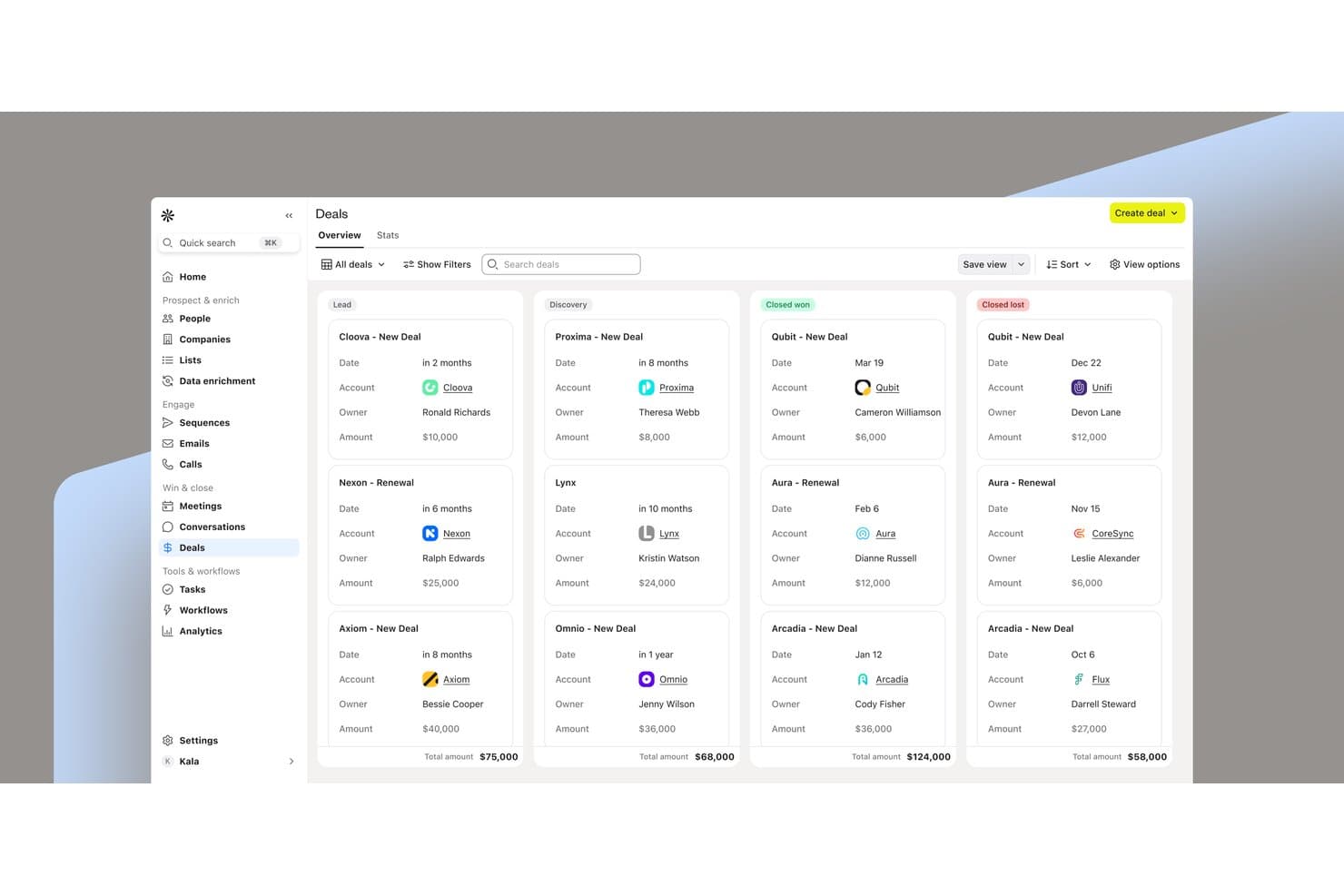
Apollo.io organizza le trattative B2B tra le varie fasi del flusso di vendita, mostrando importi e responsabili. Apollo.io è una piattaforma GTM B2B che combina un database di oltre 240 milioni di contatti con la valutazione dei lead basata sull'IA, l'arricchimento a cascata tramite oltre 20 fornitori di dati, il rilevamento dei segnali di intenzione e sequenze automatizzate per le attività in uscita.
Per chi è più adatto Apollo.io?
Apollo.io è adatto ai team di generazione della domanda e alle operazioni di marketing che necessitano di un livello dati centralizzato per la ricerca di potenziali clienti, la valutazione dei lead e le sequenze per le attività in uscita.
Perché ho scelto Apollo.io
Apollo.io è entrato nella mia lista ristretta perché il suo motore di arricchimento a cascata è davvero diverso da qualsiasi altro strumento che abbia testato. Inizia consultando in sequenza il database proprietario di Apollo con oltre 240 milioni di contatti, quindi attinge a più di 20 fornitori di terze parti per colmare le lacune e convalida email e numeri di telefono prima della sincronizzazione con il CRM. Mi affido anche ai suoi modelli di valutazione automatica basati sull'IA, che attingono allo storico del CRM per mettere in evidenza in tempo reale i lead più adatti, direttamente nei risultati di ricerca.
Funzionalità principali di Apollo.io
- Segnali di intenzione: Monitora cambiamenti di ruolo, finanziamenti, notizie aziendali e l'intenzione rilevata da Bombora.
- Personalizzazione delle email con l'IA: Crea comunicazioni mirate utilizzando informazioni a livello di potenziale cliente.
- Integrazioni CRM: Sincronizza i dati con Salesforce, HubSpot, Pipedrive e Marketo.
- Composizione parallela: Supporta le chiamate su più linee all'interno dei flussi di lavoro per le attività in uscita.
Integrazioni di Apollo.io
Apollo.io supporta oltre 200 integrazioni, tra cui Salesforce, HubSpot, Pipedrive, Outreach, SalesLoft, Marketo, LinkedIn, Chili Piper, Clay e ChatGPT. Offre inoltre un'API REST e l'accesso al Model Context Protocol (MCP) per connessioni personalizzate e integrazioni con strumenti di IA.
Pros and Cons
Pros:
- L'arricchimento a cascata attinge a oltre 20 fornitori di dati
- La valutazione dei lead tramite IA si aggiorna in tempo reale
- I segnali di intenzione di Bombora fanno emergere gli account interessati all'acquisto
Cons:
- La precisione dei dati diminuisce al di fuori del Nord America
- La comunicazione esclusivamente via email limita un'attività ABM realmente multicanale
Learn more about Apollo.io: Ideale per strategie di engagement con i clienti
- Demo gratuita disponibile
- Prezzo su richiesta
Visit WebsiteCustomer Rating:4.6/5This rating combines scores from multiple user review sites to reflect overall customer sentiment about the product.
Braze consente il coinvolgimento dei clienti su più canali con messaggi personalizzati Braze è una piattaforma di engagement per clienti progettata per le aziende che desiderano migliorare l'interazione con i clienti su più canali. Si rivolge ai team di marketing e customer experience, aiutandoli a offrire messaggi personalizzati e a migliorare la fidelizzazione.
Perché ho scelto Braze: Braze offre strumenti eccellenti per sviluppare strategie di engagement con i clienti. Le sue funzionalità di messaggistica cross-channel consentono di raggiungere i clienti tramite email, notifiche push e SMS. Le opzioni di personalizzazione permettono di adattare i messaggi in base al comportamento e alle preferenze dei clienti. Con Braze, puoi monitorare i parametri di engagement e perfezionare le tue campagne per ottenere risultati migliori.
Funzionalità e integrazioni principali:
Funzionalità includono streaming dati in tempo reale, che offre insight immediati sulle interazioni dei clienti. La piattaforma supporta l'A/B testing per ottimizzare l'efficacia dei messaggi. Inoltre, Braze propone un'interfaccia drag-and-drop per creare e gestire facilmente le campagne.
Le integrazioni includono Salesforce, Segment, Amplitude, Marketo, Shopify, Slack, Zendesk, Twilio, Google Ads e Facebook.
Pros and Cons
Pros:
- Offre messaggistica cross-channel
- Include funzionalità di A/B testing
- Interfaccia per campagne facile da usare
Cons:
- Può essere complesso da implementare
- Informazioni pubbliche sui prezzi limitate
Learn more about Braze: 3Ideale per l'analisi dei team di vendita
Gong
- Demo gratuita disponibile
- Prezzi su richiesta
Visit WebsiteCustomer Rating:4.7/5This rating combines scores from multiple user review sites to reflect overall customer sentiment about the product.
Gong analizza le interazioni con i clienti per ottimizzare le prestazioni del team di vendita Gong è una piattaforma di revenue intelligence progettata per i team di vendita al fine di migliorare le performance e il processo decisionale. Aiuta i professionisti delle vendite ad analizzare le interazioni con i clienti e ottimizzare le strategie di vendita.
Perché ho scelto Gong: Gong offre analisi dei dati di vendita senza pari, fornendo approfondimenti sulle conversazioni con i clienti e sui processi di vendita. La funzionalità di analisi delle conversazioni consente di esaminare chiamate e riunioni per individuare aree di miglioramento. La piattaforma monitora la salute della pipeline di vendita, aiutando il tuo team a concentrarsi sulle trattative più importanti. L'intelligenza sulle trattative di Gong mette in evidenza potenziali rischi, garantendo che il tuo team agisca in modo proattivo.
Caratteristiche principali e integrazioni:
Caratteristiche includono un cruscotto completo che visualizza le principali metriche e tendenze di vendita. La piattaforma supporta la registrazione e la trascrizione delle chiamate, consentendo un’analisi dettagliata delle interazioni di vendita. Inoltre, Gong fornisce approfondimenti per il coaching al fine di aiutare i responsabili delle vendite a guidare efficacemente i loro team.
Le integrazioni includono Salesforce, HubSpot, Slack, Microsoft Teams, Zoom, Google Calendar, Outreach, SalesLoft, LinkedIn e Zendesk.
Pros and Cons
Pros:
- Fornisce analisi dettagliate delle conversazioni
- Offre approfondimenti per il coaching dei manager
- Evidenzia in modo proattivo i rischi nelle trattative
Cons:
- Opzioni di personalizzazione limitate
- Non ideale per team molto piccoli
Learn more about Gong: Ideale per il copywriting generato dall’IA
- Prova gratuita di 7 giorni + demo gratuita disponibile
- Da $59/sede/mese (fatturato annualmente)
Visit WebsiteCustomer Rating:4.7/5This rating combines scores from multiple user review sites to reflect overall customer sentiment about the product.
Jasper automatizza la creazione di contenuti per articoli, post sui social e testi di marketing Jasper è uno strumento di generazione di contenuti rivolto a marketer, scrittori e aziende che desiderano ottimizzare il processo di creazione dei contenuti. Automatizza la scrittura di articoli, post sui social media e testi di marketing per risparmiare tempo e aumentare la produttività.
Perché ho scelto Jasper: Jasper eccelle nel copywriting generato dall’IA, rendendolo una risorsa preziosa per i team che necessitano di contenuti coerenti e di alta qualità. Lo strumento offre modelli per diversi tipi di contenuti, garantendo che il tuo team possa generare velocemente il materiale necessario. La funzione di personalizzazione del tono ti consente di adattare la voce al tuo brand. Inoltre, Jasper offre il supporto multilingue, permettendoti di raggiungere un pubblico più vasto.
Funzionalità principali e integrazioni:
Funzionalità comprendono un’ampia libreria di modelli di contenuti adatti a diverse esigenze di scrittura. La personalizzazione del tono garantisce che i tuoi contenuti siano in linea con la voce del brand. Inoltre, Jasper supporta più lingue, consentendo di creare contenuti in diverse lingue.
Integrazioni includono Surfer SEO, Grammarly, Copyscape, Google Docs, WordPress, HubSpot, Shopify, Facebook, LinkedIn e Twitter.
Pros and Cons
Pros:
- Supporta più lingue
- Permette una generazione rapida dei contenuti
- Ideale per grandi team di content marketing
Cons:
- Non adatto a compiti di scrittura complessi
- Può risultare complesso per i nuovi utenti
Learn more about Jasper: Ideale per il marketing a livello enterprise
- Demo gratuita disponibile
- Prezzo su richiesta

Adobe Experience Cloud offre strumenti per contenuti, analisi e ottimizzazione dei percorsi Adobe Experience Cloud è una suite di strumenti di marketing digitale pensata per aziende di livello enterprise. Offre soluzioni per la gestione dei contenuti, l'analisi dei dati e l'ottimizzazione del percorso del cliente.
Perché ho scelto Adobe Experience Cloud: Adobe Experience Cloud offre soluzioni complete per le grandi aziende che desiderano ottimizzare le esperienze dei clienti. Il suo sistema di gestione dei contenuti consente di creare e gestire contenuti digitali in modo efficiente. Gli strumenti di analisi della piattaforma forniscono approfondimenti dettagliati sul comportamento dei clienti, migliorando le tue strategie di marketing. Con la gestione del percorso cliente di Adobe, puoi offrire esperienze personalizzate al tuo pubblico su larga scala.
Funzionalità principali e integrazioni:
Funzionalità includono targeting e segmentazione avanzati, che ti aiutano a raggiungere specifici gruppi di pubblico. Il cloud offre anche flussi di lavoro di marketing automatizzati per ottimizzare le operazioni. Inoltre, i suoi approfondimenti basati sull'intelligenza artificiale guidano i processi decisionali analizzando grandi volumi di dati.
Integrazioni includono Microsoft Dynamics 365, Salesforce, Marketo, SAP, Magento, Oracle, Workfront, Slack, Google Analytics e LinkedIn.
Pros and Cons
Pros:
- Fornisce approfondimenti dettagliati sui clienti
- Supporta percorsi cliente personalizzati
- Ideale per imprese di grandi dimensioni
Cons:
- Richiede competenze tecniche
- Potrebbe richiedere una personalizzazione significativa
Learn more about Adobe Experience Cloud: Ideale per l'automazione dei contenuti personalizzati
- Demo gratuita disponibile
- Prezzo su richiesta

Dashboard di Adobe GenStudio for Performance Marketing che mostra insight sui contenuti generati dall'IA e metriche sulle prestazioni delle campagne. Adobe GenStudio for Performance Marketing è progettato per rivoluzionare il modo in cui il tuo team gestisce il marketing B2B. Utilizza l’IA per creare, gestire e ottimizzare campagne su larga scala. La piattaforma è particolarmente utile per aziende in settori come il retail e le telecomunicazioni, dove i team devono produrre grandi volumi di contenuti personalizzati e coerenti con il brand in tempi rapidi. Automatizzando la creazione dei contenuti e garantendo la conformità al brand, GenStudio ti aiuta a mantenere la coerenza e a migliorare il coinvolgimento su più canali.
Perché ho scelto GenStudio for Performance Marketing
Ho scelto GenStudio for Performance Marketing perché automatizza e personalizza i contenuti di marketing B2B utilizzando insight e strumenti di generazione dei contenuti basati sull’IA. I suoi modelli di IA creano asset di marketing su misura pensati per specifiche personas e regioni, rendendo le campagne più rilevanti. La piattaforma semplifica anche la pubblicazione consentendo caricamenti diretti sulle principali piattaforme pubblicitarie, riducendo il lavoro manuale e gli errori. Insieme, queste funzionalità la rendono un’ottima scelta per i marketer che vogliono perfezionare la strategia dei contenuti e migliorare le prestazioni delle campagne.
Caratteristiche principali di GenStudio for Performance Marketing
Oltre alle sue funzionalità principali, ho individuato anche altre caratteristiche che rendono GenStudio una soluzione di spicco per il marketing B2B.
- Generazione di contenuti multilingue: crea materiali di marketing rilevanti dal punto di vista culturale in più lingue per coinvolgere pubblici diversi.
- Sperimentazione e test A/B: genera rapidamente varianti di contenuti per testare diversi elementi e ottimizzare le campagne in base a dati in tempo reale.
- Conformità al brand: controlli integrati assicurano che tutti i contenuti rispettino le linee guida del brand e gli standard normativi, semplificando il processo di approvazione.
- Insight sulle prestazioni: analisi guidate dall’IA forniscono dati utili sulle prestazioni dei contenuti, orientando le strategie di marketing future.
Integrazioni di GenStudio for Performance Marketing
Le integrazioni includono Adobe Real-Time CDP, Adobe Workfront, Adobe Experience Manager, Adobe Express, Facebook, LinkedIn, TikTok, Amazon e Google.
Pros and Cons
Pros:
- Generazione di contenuti coerenti con il brand
- Workflow di test A/B integrati
- Pubblicazione diretta sulle piattaforme pubblicitarie
Cons:
- Può richiedere l'ecosistema Adobe
- Integrazioni pubbliche limitate
Learn more about GenStudio: Ideale per approfondite informazioni sui dati in tempo reale
- Demo gratuita disponibile
- Prezzo su richiesta

Rithum gestisce annunci, inventario e marketing per ottimizzare le operazioni commerciali Rithum è una piattaforma per la gestione delle operazioni commerciali progettata per marchi e rivenditori, che si concentra su annunci nei marketplace, gestione dell'inventario e strategie di marketing. Serve sia startup che aziende globali, con l'obiettivo di aumentare le vendite e semplificare le operazioni.
Perché ho scelto Rithum: Rithum offre informazioni sui dati in tempo reale che aiutano marchi e rivenditori a ottimizzare le proprie operazioni. Mette a disposizione strumenti per la gestione degli annunci nei marketplace e dell'inventario, permettendoti di monitorare i livelli di magazzino e i canali di vendita. Gli strumenti di marketing della piattaforma aiutano a perfezionare le strategie e aumentare la redditività. Con Rithum puoi migliorare i processi di evasione ordini e potenziare le prestazioni della tua attività.
Funzionalità e integrazioni di rilievo:
Funzionalità comprendono una gestione completa di inventario e ordini, che consente di mantenere il controllo sui livelli di magazzino. La piattaforma supporta la pubblicità attraverso i media retail, permettendoti di raggiungere un pubblico più ampio. Inoltre, la funzione di gestione delle campagne a pagamento rafforza le attività di marketing.
Integrazioni includono diversi canali di vendita per migliorare l'efficienza operativa.
Pros and Cons
Pros:
- Offre approfondite informazioni sui dati
- Supporta molteplici canali di vendita
- Adatto sia a startup che a grandi aziende
Cons:
- Informazioni pubbliche sui prezzi limitate
- Può risultare complesso per i principianti
Learn more about Rithium: Ideale per esperienze di apprendimento personalizzate
- Demo gratuita disponibile
- Prezzo su richiesta

Sana Agents offre apprendimento personalizzato con IA per istruzione e formazione Sana Agents è una piattaforma potenziata dall'IA progettata per la formazione aziendale, che aiuta le organizzazioni a offrire programmi di apprendimento più personalizzati e scalabili. Fornisce ai team di marketing e vendita strumenti per automatizzare l'onboarding, adattare i contenuti formativi a ruoli differenti e monitorare i progressi del team con analisi operative.
Perché ho scelto Sana Agents: Sana Agents offre esperienze di apprendimento personalizzate utilizzando l'IA per adattare i contenuti educativi alle esigenze individuali. Lo strumento propone la creazione di contenuti guidata dall'IA, che aiuta le organizzazioni a progettare corsi che si adattano a diversi stili di apprendimento. Sana Agents supporta inoltre lo sviluppo delle competenze tramite moduli didattici interattivi e coinvolgenti.
Funzionalità principali e integrazioni:
Funzionalità includono funzionalità di ricerca aziendale, che permettono agli utenti di trovare rapidamente i contenuti rilevanti. La piattaforma offre anche un'app iOS per l'apprendimento in mobilità. Il suo approccio basato sull'IA contribuisce a ridurre le attività formative ripetitive e fornisce visibilità sulle lacune formative, facilitando il mantenimento dell'allineamento e dell'aggiornamento dei team in rapida crescita.
Integrazioni includono vari strumenti e piattaforme educative per migliorare le esperienze di apprendimento.
Pros and Cons
Pros:
- Offre esperienze di apprendimento personalizzate
- Supporta la creazione di contenuti guidata dall'IA
- Include un'app iOS per l'apprendimento mobile
Cons:
- Informazioni sui prezzi pubbliche limitate
- Può risultare complesso per i nuovi utenti
Learn more about Sana Agents: Ideale per strategie go-to-market
- Consulenza gratuita disponibile.
- Da $1,460/mese (fatturazione annuale)

Unify allinea le strategie di vendita e marketing per migliorare l'esecuzione delle attività go-to-market Unify è una piattaforma go-to-market pensata per le aziende che desiderano ottimizzare le proprie attività di vendita e marketing. Serve principalmente i team commerciali e i responsabili marketing, fornendo strumenti per allineare le strategie e migliorare l'esecuzione.
Perché ho scelto Unify: Unify si distingue per la capacità di unire team commerciali e di marketing nello sviluppo di strategie go-to-market efficaci. I suoi strumenti di collaborazione consentono una comunicazione fluida tra i reparti, garantendo che tutti siano allineati. Le analisi fornite dalla piattaforma offrono preziose informazioni sulle performance delle campagne, permettendoti di prendere decisioni informate. Le dashboard personalizzabili di Unify ti consentono di monitorare le metriche più rilevanti per il tuo business.
Funzionalità principali & integrazioni:
Funzionalità includono una dashboard personalizzabile che ti permette di concentrarti sulle metriche chiave. La piattaforma offre anche strumenti di collaborazione per migliorare la comunicazione del team. Inoltre, Unify mette a disposizione analisi dettagliate per monitorare e misurare il successo delle campagne.
Integrazioni includono strumenti popolari come Salesforce, HubSpot, Marketo, Slack, Microsoft Teams, Google Analytics, LinkedIn, Zoom, Trello e Asana.
Pros and Cons
Pros:
- Favorisce la collaborazione del team
- Offre dashboard personalizzabili
- Supporta le strategie go-to-market
Cons:
- Può risultare complesso per i nuovi utenti
- Non ideale per team molto piccoli
Learn more about Unify: 10Ideale per la creazione di contenuti guidata dall'IA
Valona
- Demo gratuita disponibile
- Prezzo su richiesta

Valona offre approfondimenti di mercato e analisi delle tendenze in tempo reale per i marketer B2B Valona è una piattaforma di intelligence competitiva progettata per i marketer B2B, che fornisce approfondimenti di mercato in tempo reale e analisi delle tendenze. Serve le aziende che desiderano acquisire nuovi contatti commerciali e rafforzare il proprio posizionamento sul mercato.
Perché ho scelto Valona: Valona si distingue per le sue capacità di creazione di contenuti guidate dall'intelligenza artificiale, che aiutano le aziende a mantenersi all'avanguardia nei mercati competitivi. La piattaforma offre strumenti di analisi dei concorrenti che forniscono approfondimenti sulle tendenze di mercato e sulle opportunità. Le sue funzionalità di ricerca di mercato basate sull'IA assicurano di avere sempre dati aggiornati a portata di mano. Con Valona, il tuo team può prendere decisioni strategiche informate e identificare potenziali aree di crescita.
Caratteristiche distintive & integrazioni:
Funzionalità includono uno strumento di analisi della concorrenza che aiuta a comprendere le dinamiche di mercato. L'assistente di ricerca AI ti mantiene aggiornato sulle tendenze del settore, e l'attenzione della piattaforma alla privacy degli utenti garantisce una raccolta dati responsabile. Valona offre anche risorse come newsletter e playbook di benchmarking per supportare le tue attività di marketing.
Integrazioni includono Cloudflare, Google Analytics, HubSpot, Google Ads, LinkedIn e Facebook.
Pros and Cons
Pros:
- Offre approfondimenti di mercato in tempo reale
- Supporta l'analisi dei mercati competitivi
- Pone l'accento sulla privacy degli utenti
Cons:
- Potrebbe richiedere un periodo iniziale di apprendimento
- Si concentra principalmente sui mercati B2B
Learn more about Valona:
Altri strumenti di IA per il marketing B2B
Ecco alcune ulteriori opzioni di strumenti di IA per il marketing B2B che non sono entrate nella mia selezione, ma che vale comunque la pena considerare:
- 11BirdeyeIdeale per la gestione del feedback dei clienti
- 12Brand24Ideale per il monitoraggio dei social media
- 13SOCiIdeale per l'ottimizzazione SEO on-page
- 14neuroflashIdeale per approfondimenti di marketing basati sull'IA
Come Valuto gli Strumenti di AI per il Marketing B2B
Ogni strumento in questo elenco deve fornire un valore reale di intelligenza artificiale che puoi effettivamente percepire—pensa a una qualificazione che individua veri acquirenti, non solo dashboard vistose con la scritta "AI" sopra. Suddivido la mia valutazione in funzionalità di base che ogni strumento deve avere per essere incluso e fattori distintivi che separano il miglior candidato dagli altri.
Funzionalità di Base (Requisiti Minimi per Questo Elenco)
Quando seleziono gli strumenti per il mio elenco, valuto ciascuno su una scala da 0 (non offre la funzionalità) a 5 (eccelle in quest'area) per ogni funzionalità di base elencata di seguito. Poi, calcolo il punteggio totale dello strumento in percentuale. Ogni strumento deve raggiungere un punteggio totale minimo del 65% per essere considerato per l'inclusione.
- Classificazione & Prioritizzazione Lead con AI: Cerco un sistema di qualificazione guidato dall'apprendimento automatico che classifica gli account per pertinenza e coinvolgimento, non solo regole statiche—come segnalare un potenziale cliente che ha visitato la pagina dei prezzi tre volte questa settimana.
- Intento Predittivo & Rilevamento dei Segnali: Lo strumento dovrebbe individuare account in fase di acquisto utilizzando dati comportamentali e di intento di terze parti, simile a come 6sense e Demandbase monitorano le attività di ricerca sul web.
- Generazione di Contenuti & Creazione di Testi: Valuto se l'AI può redigere materiali in diversi formati—sequenze di outbound, testi pubblicitari, landing page—adattati a specifiche persone B2B e fasi del percorso d'acquisto.
- Personalizzazione su Larga Scala con AI: Ogni strumento dovrebbe personalizzare i messaggi a livello di account o contatto su diversi canali, andando ben oltre i semplici segnaposto dinamici inserendo contenuti selezionati dall'AI.
- Arricchimento Dati B2B & Segmentazione: Controllo se la piattaforma arricchisce automaticamente i record con dati firmografici e tecnologici, per poi segmentare i destinatari in liste operative sulla base dei criteri ICP.
- Analisi & Ottimizzazione delle Campagne: La piattaforma dovrebbe fornire spunti guidati dall'AI che consigliano dove spostare il budget o modificare il targeting, non solo segnalare ciò che è già successo.
Una volta che ho un elenco di strumenti che soddisfano i criteri, valuto cosa distingue ciascuna piattaforma.
Fattori Distintivi (Cosa Distingue i Fornitori)
Ecco come confronto e metto a paragone i diversi fornitori:
Funzionalità Distintive
L'addestramento personalizzato dei modelli è un differenziatore importante—gli strumenti che ti permettono di addestrare l'AI sui tuoi dati di chiusura delle vendite forniscono previsioni ICP molto più accurate rispetto ai modelli generici. Valuto anche l'orchestrazione multi-canale del percorso, dove l'AI coordina email, LinkedIn, annunci e interazioni web in un unico percorso account invece che in campagne isolate. Gli assistenti conversazionali AI sono importanti anche qui, permettendo ai marketer di ottenere informazioni sulla pipeline o redigere sequenze tramite una chat, senza dover navigare tra dashboard.
Oltre le Funzionalità
Le integrazioni native con lo stack tecnologico sono fondamentali qui—verifico la presenza di sincronizzazioni bidirezionali con CRM come Salesforce o HubSpot, oltre ai connettori per sistemi di marketing automation e piattaforme pubblicitarie come LinkedIn. Prendo in considerazione anche la tutela della privacy dei dati e la conformità normativa, soprattutto la prontezza rispetto a GDPR e SOC 2, dato che questi strumenti gestiscono grandi volumi di dati di contatto. Anche la trasparenza dei prezzi gioca un ruolo. Valuto se i costi d'utilizzo dell'AI (crediti generativi, chiamate di arricchimento) siano prevedibili man mano che aumentano le liste account e il volume delle campagne.
Come scegliere gli strumenti di IA per il marketing B2B
È facile perdersi in lunghi elenchi di funzionalità e strutture tariffarie complesse. Per aiutarti a rimanere concentrato mentre affronti il tuo processo unico di selezione del software, ecco una lista di fattori da tenere presenti:
| Fattore | Cosa considerare |
|---|---|
| FattoreScalabilità | Cosa considerareLo strumento può crescere insieme alla tua azienda? Verifica se supporta l'aumento del numero di utenti o del volume di dati senza problemi. Cerca strumenti che offrano piani flessibili al variare delle tue esigenze. |
| FattoreIntegrazioni | Cosa considerareLo strumento si collega ai sistemi che già utilizzi? Verifica che funzioni con il tuo CRM, la posta elettronica e le altre piattaforme, così da evitare interruzioni del flusso di lavoro. |
| FattorePersonalizzazione | Cosa considerarePuoi adattare lo strumento ai tuoi processi? Assicurati che consenta modifiche per adeguarsi ai tuoi flussi di lavoro e alle tue preferenze specifiche. |
| FattoreSemplicità d'uso | Cosa considerareLo strumento è intuitivo per il tuo team? Cerca interfacce facili da usare e una navigazione semplice, per ridurre al minimo i tempi di formazione. |
| FattoreImplementazione e avviamento | Cosa considerareQuanto velocemente può iniziare a lavorare il tuo team? Valuta i tempi di configurazione e le risorse disponibili, come tutorial o assistenza, per garantire una transizione senza problemi. |
| FattoreCosto | Cosa considerareIl prezzo rientra nel tuo budget? Confronta il costo totale, comprese le commissioni nascoste, e valutalo rispetto al valore offerto dallo strumento. |
| FattoreMisure di sicurezza | Cosa considerareI tuoi dati e la tua privacy sono protetti? Verifica le misure di sicurezza dello strumento, come la crittografia e la conformità alle normative sui dati. |
| FattoreDisponibilità dell'assistenza | Cosa considerareQuale aiuto è disponibile quando ne hai bisogno? Considera i canali di assistenza offerti, come chat o telefono, e la loro disponibilità per supportare tempestivamente il tuo team. |
Cosa sono gli strumenti di IA per il marketing B2B?
Gli strumenti di intelligenza artificiale per il marketing B2B sono soluzioni software che utilizzano l'intelligenza artificiale per migliorare le strategie e le attività di marketing delle aziende che si rivolgono ad altre aziende. I responsabili del marketing, i team di vendita e gli strateghi digitali utilizzano generalmente questi strumenti per automatizzare le attività, ottenere informazioni utili e migliorare il coinvolgimento dei clienti.
Le funzionalità di analisi predittiva, creazione automatizzata di contenuti e segmentazione dei clienti aiutano a prendere decisioni basate sui dati e a sviluppare strategie di marketing personalizzate. Nel complesso, questi strumenti consentono alle aziende di raggiungere e coinvolgere in modo efficiente il proprio pubblico di riferimento, favorendo la crescita e il successo.
Funzionalità degli strumenti di intelligenza artificiale per il marketing B2B
Quando selezioni strumenti di intelligenza artificiale per il marketing B2B, presta attenzione alle seguenti funzionalità chiave:
- Analisi predittiva: Analizza i dati per prevedere tendenze e comportamenti dei clienti, aiutandoti a prendere decisioni informate.
- Creazione automatizzata di contenuti: Genera contenuti di marketing come email e post per i social media, facendo risparmiare tempo e mantenendo la coerenza.
- Segmentazione dei clienti: Raggruppa i clienti in base al comportamento e alle preferenze, consentendo di sviluppare strategie di marketing mirate.
- Messaggistica multicanale: Consente la comunicazione attraverso più piattaforme, garantendo una presenza coerente del marchio.
- Informazioni sui dati in tempo reale: Fornisce un riscontro immediato sulle attività di marketing, consentendo di apportare rapidamente modifiche e miglioramenti.
- Pannelli di controllo personalizzabili: Ti consentono di personalizzare la visualizzazione per concentrarti sulle metriche più importanti per la tua azienda.
- Funzionalità di integrazione: Si collegano ai sistemi esistenti, come le piattaforme CRM e di posta elettronica, per semplificare i flussi di lavoro.
- Misure di sicurezza: Proteggono i dati e garantiscono la conformità alle normative, assicurando la fiducia e la privacy dei clienti.
- Strumenti di collaborazione: Facilitano la comunicazione del team e l'allineamento sulle strategie e sugli obiettivi di marketing.
- Test A/B: Testano diversi approcci di marketing per determinare quello che riscuote il maggior successo presso il pubblico.
Vantaggi degli strumenti di intelligenza artificiale per il marketing B2B
L'implementazione di strumenti di intelligenza artificiale per il marketing B2B offre diversi vantaggi al tuo team e alla tua azienda. Eccone alcuni:
- Maggiore efficienza: Automatizza le attività ripetitive come la creazione di contenuti e l'analisi dei dati, liberando tempo per la pianificazione strategica.
- Individuazione più efficace del pubblico: Utilizza la segmentazione dei clienti per personalizzare le attività di marketing, migliorando il coinvolgimento e i tassi di conversione.
- Decisioni basate sui dati: Offre analisi predittive che guidano le strategie di marketing sulla base di informazioni e tendenze in tempo reale.
- Messaggi coerenti: Supporta la comunicazione multicanale, garantendo che il messaggio del tuo marchio sia uniforme su tutte le piattaforme.
- Collaborazione migliorata: Fornisce strumenti che facilitano il lavoro di squadra e la comunicazione, allineando le strategie di vendita e marketing.
- Risparmio sui costi: Riduce la necessità di processi manuali e minimizza gli errori, abbassando i costi operativi.
- Informazioni più approfondite sui clienti: Fornisce analisi dettagliate sul comportamento dei clienti, aiutandoti a comprendere e soddisfare le loro esigenze in modo più efficace.
Costi e prezzi degli strumenti di intelligenza artificiale per il marketing B2B
La selezione di strumenti di intelligenza artificiale per il marketing B2B richiede una comprensione dei vari modelli e piani tariffari disponibili. I costi variano in base alle funzionalità, alle dimensioni del team, ai componenti aggiuntivi e ad altri fattori. La tabella seguente riassume i piani più comuni, i relativi prezzi medi e le funzionalità tipicamente incluse nelle soluzioni di strumenti di intelligenza artificiale per il marketing B2B:
Tabella di confronto dei piani per gli strumenti di intelligenza artificiale per il marketing B2B
| Tipo di piano | Prezzo medio | Funzionalità comuni |
|---|---|---|
| Tipo di pianoPiano gratuito | Prezzo medio$0 | Funzionalità comuniAnalisi di base, integrazioni limitate e supporto della comunità. |
| Tipo di pianoPiano personale | Prezzo medio$5-$25/utente/mese | Funzionalità comuniAnalisi avanzate, supporto via email, opzioni di personalizzazione e automazione di base. |
| Tipo di pianoAziendale | Prezzo medio$50-$100/utente/mese | Funzionalità comuniAnalisi avanzate, supporto prioritario, integrazioni complete, strumenti di collaborazione e automazione avanzata. |
| Tipo di pianoPiano aziendale | Prezzo medio$150-$300/utente/mese | Funzionalità comuniAnalisi complete, gestione dedicata dell'account, integrazioni personalizzate, funzionalità di sicurezza e formazione e inserimento personalizzati. |
Domande frequenti sugli strumenti di IA per il marketing B2B
Ecco alcune risposte alle domande comuni sugli strumenti di IA per il marketing B2B:
Come scelgo lo strumento di IA più adatto alla mia azienda?
Per scegliere lo strumento di IA più adatto, considera le tue esigenze specifiche di marketing e il tuo budget. Valuta quanto bene lo strumento si integri con i sistemi esistenti e se offra le funzionalità di cui hai bisogno. Valuta la scalabilità della soluzione e consulta le recensioni dei clienti per ottenere informazioni sulla facilità d’uso e sull’assistenza.
Quali sono le difficoltà di implementazione degli strumenti di IA?
L’implementazione degli strumenti di IA può essere complessa a causa della necessità di integrare i dati e garantire la compatibilità dei sistemi. Potresti dover affrontare una curva di apprendimento ripida e fornire formazione al tuo team. È importante pianificare le possibili interruzioni durante la fase di configurazione e assicurarsi di disporre del supporto tecnico necessario.
In che modo gli strumenti di IA possono migliorare la generazione di lead?
Gli strumenti di IA migliorano la generazione di lead analizzando i dati dei clienti per identificare quelli di alta qualità. Automatizzano i processi di contatto, consentendo al tuo team di concentrarsi sulla coltivazione delle relazioni. Utilizzando l’analisi predittiva, questi strumenti ti aiutano a raggiungere il pubblico giusto al momento giusto, aumentando i tassi di conversione.
L'utilizzo degli strumenti di IA comporta problemi di privacy?
Sì, gli strumenti di IA comportano problemi di privacy, soprattutto per quanto riguarda la raccolta e l’utilizzo dei dati. Assicurati che lo strumento sia conforme alle normative sulla protezione dei dati, come il GDPR. È fondamentale comprendere come verranno archiviati ed elaborati i tuoi dati e scegliere fornitori che diano priorità alla sicurezza e alla trasparenza.
Come si integrano gli strumenti di IA con le piattaforme di marketing esistenti?
Gli strumenti di IA spesso offrono funzionalità di integrazione con piattaforme di marketing diffuse, come i sistemi CRM e gli strumenti di email marketing. Quando valuti le diverse opzioni, verifica se lo strumento supporta connessioni API o integrazioni native. Questo garantisce un flusso di lavoro uniforme e massimizza l’efficacia dello strumento nella configurazione attuale.
Quale tipo di assistenza è generalmente disponibile per gli strumenti di IA?
L’assistenza per gli strumenti di IA varia a seconda del fornitore, ma spesso include chat dal vivo, supporto via email e centri assistenza. Alcuni fornitori offrono account manager dedicati o forum della community per ulteriore assistenza. È importante valutare il livello di supporto disponibile, soprattutto durante la fase di onboarding, per garantire che il tuo team possa utilizzare lo strumento in modo efficace.