

Scegliere il software di intelligence sugli account di marketing più adatto può essere complicato. Con così tanti strumenti disponibili, è difficile capire quale soddisfi davvero le esigenze del tuo team. Hai bisogno di una soluzione che aiuti a identificare gli account giusti, aumentare le conversioni e semplificare il flusso di lavoro, non complicarlo.
In base alla mia esperienza, il software giusto può fare davvero la differenza nell'efficacia del lavoro del tuo team. Ho testato e recensito diverse piattaforme leader per aiutarti a trovare quelle che offrono risultati concreti. In questo articolo condividerò una panoramica imparziale delle mie migliori scelte, illustrando i punti di forza di ogni strumento e spiegando come può rafforzare la tua strategia di marketing.
Perché fidarsi dei nostri consigli sui software
6,700+
Reviews
20
Industry experts
16+
Evaluation factors
14
Years
Il nostro team testa e recensisce software dal 2012. In quanto leader del marketing noi stessi, sappiamo quanto sia difficile — e importante — scegliere il software giusto.
Per questa guida, abbiamo valutato gli strumenti attraverso test pratici e ricerche indipendenti, assegnando un punteggio agli strumenti in base ai nostri criteri di selezione.
Le nostre recensioni riflettono il nostro giudizio editoriale umano, non un discorso di vendita.
Revisori esperti:
 Gui DrusinaDirettore creativo
- Shriya GhateSenior Marketing Lead
 Amanda JacquesResponsabile Marketing Ops

Tabella comparativa dei software di intelligence sugli account di marketing
| Tool | Best For | Trial Info | Price | ||
|---|---|---|---|---|---|
| 1 | Ideale per un targeting preciso degli account grazie ai filtri | Prova gratuita di 14 giorni + piano gratuito + demo gratuita disponibile | A partire da 49/postazione/mese (fatturato annualmente) | Website | |
| 2 | Ideale per dati verificati | Prova gratuita disponibile | Prezzi su richiesta | Website | |
| 3 | Ideale per garantire azioni su ogni lead | Demo gratuita disponibile | A partire da $39/utente/mese | Website | |
| 4 | Ideale per la creazione di segmenti di pubblico | Demo gratuita disponibile | Prezzo su richiesta | Website | |
| 5 | Ideale per la priorità agli account target | Demo gratuita disponibile | Prezzi su richiesta | Website | |
| 6 | Ideale per personalizzare le attività di contatto | Demo gratuita disponibile | Prezzi su richiesta | Website | |
| 7 | Ideale per dati di terze parti | Piano gratuito disponibile | Da $29/utente/mese | Website | |
| 8 | Ideale per connettersi con gli account più coinvolti | Demo gratuita disponibile | Prezzo su richiesta | Website | |
| 9 | Ideale per identificare il prossimo miglior cliente | Demo gratuita disponibile | Prezzo su richiesta | Website | |
| 10 | Ideale per algoritmi di apprendimento automatico | Demo gratuita disponibile | Prezzi su richiesta | Website |


Recensioni dei migliori software di intelligence sugli account di marketing
Le seguenti panoramiche illustreranno perché queste soluzioni sono rilevanti per questo elenco, fornendo maggiori dettagli su ogni strumento, comprese le relative funzionalità, integrazioni, vantaggi e svantaggi, oltre a una schermata che mostra l’aspetto di ciascun sistema durante l’utilizzo.
 Ideale per un targeting preciso degli account grazie ai filtri
- Prova gratuita di 14 giorni + piano gratuito + demo gratuita disponibile
- A partire da 49/postazione/mese (fatturato annualmente)
Visit WebsiteCustomer Rating:4.5/5This rating combines scores from multiple user review sites to reflect overall customer sentiment about the product.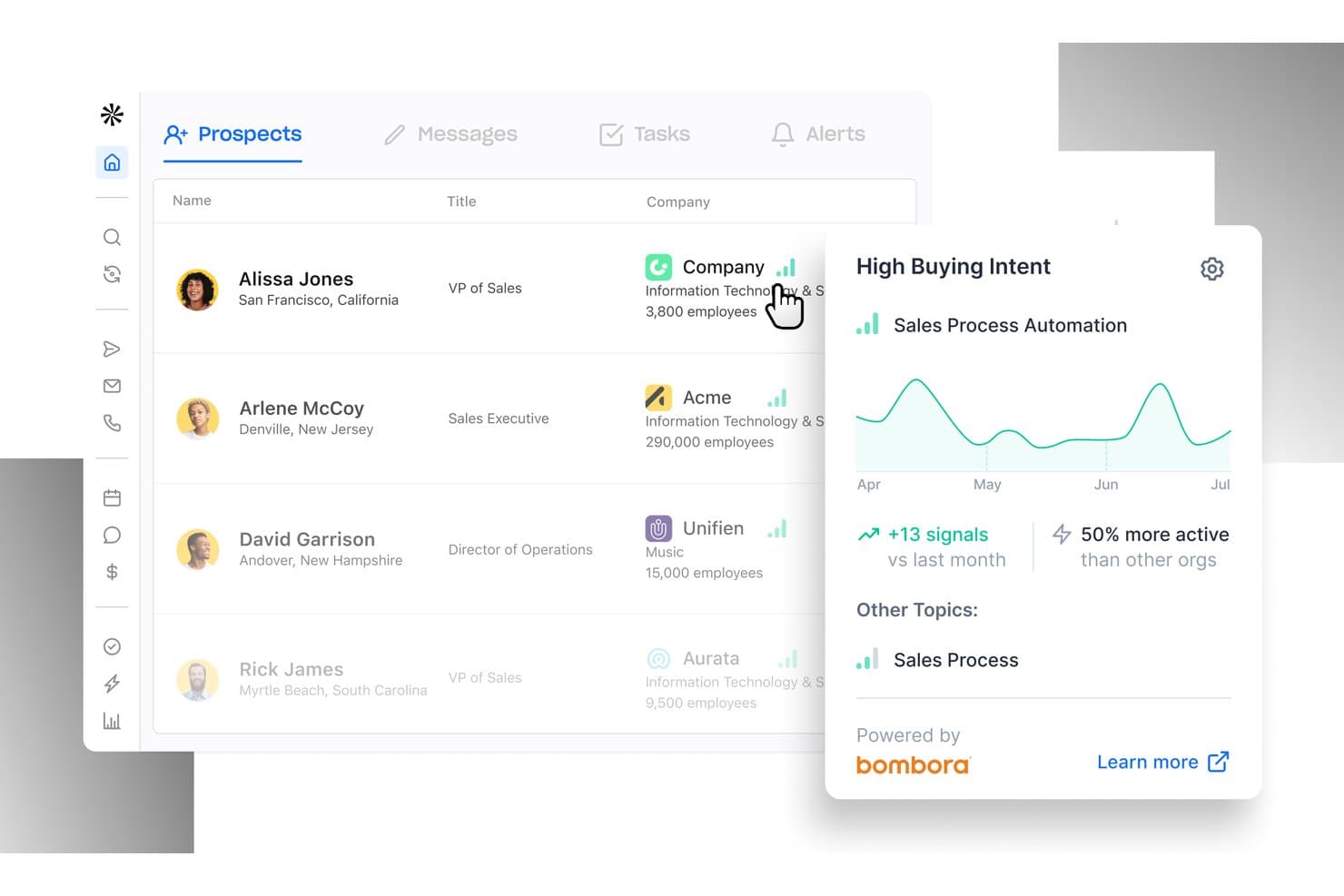
Apollo.io offre una dashboard dei potenziali clienti con segnali di intenzione d'acquisto, mostrando le tendenze dell'attività dei lead e il coinvolgimento negli argomenti per il targeting delle vendite. Apollo.io è una piattaforma di intelligence B2B e di go-to-market basata sull'IA che combina la ricerca in database di contatti e account, i dati sull'intenzione d'acquisto, l'arricchimento dei dati e le sequenze in un unico strumento.
Per chi è più adatto Apollo.io?
Apollo.io è adatto ai team B2B di piccole e medie imprese e del mercato medio che necessitano di una piattaforma conveniente e completa per il targeting degli account e le attività outbound, senza investire in numerosi strumenti separati.
Perché ho scelto Apollo.io
Apollo.io merita un posto nella mia rosa di preferiti perché i suoi oltre 65 filtri di ricerca mi permettono di creare elenchi di account che riflettono realmente il mio ICP, anziché semplici approssimazioni. Posso combinare dati firmografici, tecnografici, livello di seniority e segnali di intenzione d'acquisto provenienti da Bombora e LeadSift in un'unica ricerca, per individuare gli account che stanno effettivamente analizzando argomenti pertinenti. Le personas salvate mi permettono di ricreare quel targeting preciso con un solo clic per ogni nuova campagna.
Funzionalità principali di Apollo.io
- Identificazione dei visitatori del sito web: rivela istantaneamente quali aziende visitano il tuo sito web e le associa ai relativi contatti.
- Arricchimento a livello di contatto: aggiorna i record degli account e dei contatti con dati firmografici, tecnografici e gerarchici in tempo reale.
- Sincronizzazione automatizzata con il CRM: l'integrazione bidirezionale mantiene allineati i record di Salesforce e HubSpot con le nuove informazioni sugli account.
- Integrazione dei dati sull'intenzione d'acquisto: mostra direttamente nella piattaforma gli account dei potenziali clienti che presentano segnali di ricerca provenienti da Bombora e LeadSift.
Integrazioni di Apollo.io
Apollo.io offre integrazioni native con Salesforce, HubSpot, Outreach, Airtable, Amplitude, Asana e Gmail, oltre a fornire un'API per le integrazioni personalizzate.
Pros and Cons
Pros:
- Oltre 65 filtri per la creazione dettagliata di elenchi di account
- Enorme database di contatti B2B con oltre 275 milioni di record
- Dati sull'intenzione di acquisto di Bombora integrati nella piattaforma
Cons:
- Problemi di accuratezza dei dati segnalati nelle recensioni degli utenti
- Monitoraggio del coinvolgimento più debole rispetto agli strumenti ABM dedicati
Learn more about Apollo.io: Ideale per dati verificati
- Prova gratuita disponibile
- Prezzi su richiesta
Visit WebsiteCustomer Rating:4.6/5This rating combines scores from multiple user review sites to reflect overall customer sentiment about the product.
Utilizza la ricerca avanzata per trovare liste mirate in modo preciso. DiscoverOrg fornisce ai team di marketing dati estesi verificati manualmente per garantire informazioni aggiornate e autentiche.
Perché ho scelto DiscoverOrg: Quando si lavora con l'intelligence di qualsiasi tipo, utilizzare dati accurati è fondamentale. DiscoverOrg utilizza un team interno per verificare tutti i dati ogni 90 giorni, mentre i ricercatori comunicano quotidianamente con le aziende presenti nel suo database. Ciò significa che elimina dati incompleti, gonfiati o obsoleti e garantisce informazioni corrette.
Caratteristiche e integrazioni principali di DiscoverOrg
Le caratteristiche includono un'elevata accuratezza dei dati grazie al team di DiscoverOrg che aggiorna costantemente i dati; inoltre, verifica le informazioni di contatto attraverso procedure rigorose di test e validazione. Nel contesto B2B, DiscoverOrg offre organigrammi che mostrano le reali strutture di riporto, per assicurarsi che tu parli solo con i decisori.
Le integrazioni includono collegamenti nativi con vari strumenti, come applicazioni di gestione delle relazioni con i clienti, per automatizzare e arricchire i record dei lead. Questo comprende connessioni con piattaforme come Bullhorn, Eloqua, HubSpot, Marketo, Microsoft Dynamics, NetSuite, Outreach, Salesforce, Salesloft, Zoho e altre soluzioni software.
Pros and Cons
Pros:
- Integrazione semplice con Salesforce
- Informazioni sempre aggiornate
- Link ai social media per una rapida ricerca dei potenziali clienti
Cons:
- Alcune limitazioni sugli account
- Gli aggiornamenti possono rallentare il sistema
Learn more about DiscoverOrg: Ideale per garantire azioni su ogni lead
- Demo gratuita disponibile
- A partire da $39/utente/mese
Visit WebsiteCustomer Rating:4.6/5This rating combines scores from multiple user review sites to reflect overall customer sentiment about the product.
Instrada gli account verso i referenti corretti dopo che il target ha interagito con le campagne di marketing. LeanData può aiutare i team di marketing a sviluppare pipeline robuste più rapidamente, assicurando che ogni potenziale account riceva l'azione più adatta.
Perché ho scelto LeanData: La piattaforma può aiutare il tuo team marketing a trasformare i segnali di intento in azioni concrete per ogni lead. Con LeanData, puoi far avanzare più velocemente i potenziali account lungo il percorso cliente e aumentare le conversioni. Puoi anche utilizzare questa intelligenza per correggere processi interrotti che impediscono di fornire account qualificati alla tua pipeline.
Caratteristiche distintive e integrazioni di LeanData
Le funzionalità includono strumenti per aiutare il tuo team a riconoscere e rispondere ai segnali di intento lungo tutto il percorso di acquisto e interagire con acquirenti ad alta propensione. LeanData aiuta anche i team di marketing e vendita a collaborare per gestire la complessità delle vendite e accelerare i cicli commerciali.
Le integrazioni includono connessioni native con strumenti per aiutarti a eliminare processi rigidi. Queste comprendono collegamenti con sistemi come 6sense, Clearbit, Cloudingo, Cognism, Crossbeam, Kronologic, Microsoft Teams, Outreach, Salesforce, Slack e altre soluzioni software.
Pros and Cons
Pros:
- Eccellente supporto clienti
- Interfaccia visiva efficace
- Corso di certificazione di alto livello
Cons:
- Curva di apprendimento ripida
- La piattaforma non salva automaticamente il lavoro
Learn more about LeanData: Ideale per la creazione di segmenti di pubblico
- Demo gratuita disponibile
- Prezzo su richiesta
Visit WebsiteCustomer Rating:4.4/5This rating combines scores from multiple user review sites to reflect overall customer sentiment about the product.
Crea dinamicamente segmenti di pubblico per campagne di account-based marketing con filtri avanzati per generare segmenti dettagliati. Demandbase consente ai team di marketing di creare e gestire profili cliente ideali e liste di account target basate su diversi parametri per creare nuovi segmenti di pubblico.
Perché ho scelto Demandbase: Quando si creano strategie di account-based marketing, è utile sviluppare profili cliente ideali per aiutarti a individuare i pubblici pertinenti da raggiungere. Ho voluto includere Demandbase in questo articolo perché offre funzionalità di intelligence sugli account che puoi utilizzare per trovare nuovi account quando stanno cercando prodotti o servizi come i tuoi. Il tuo team di vendita può anche sfruttare queste informazioni per migliorare e personalizzare le interazioni con questi target.
Caratteristiche e integrazioni distintive di Demandbase
Le funzionalità includono la misurazione del coinvolgimento degli account lungo il percorso d'acquisto per assicurarsi che le iniziative go-to-market forniscano lead quando necessario. Demandbase ti aiuta a scoprire più rapidamente nuove opportunità di upselling e cross-selling e ad anticipare le attività dei concorrenti.
Le integrazioni includono applicazioni come Adobe Analytics, DataGrail, Drift, Google Analytics, HubSpot, Marketo, Optimizely, PathFactory, Salesforce, Slack e altre soluzioni software. Demandbase offre anche un'API che consente di creare integrazioni personalizzate con gli strumenti attualmente in uso.
Pros and Cons
Pros:
- Evidenzia tutte le intenzioni dei clienti
- Allinea i reparti vendita e marketing
- Eccellente supporto clienti
Cons:
- L'interfaccia utente necessita di miglioramenti
- Nessun avviso istantaneo
Learn more about Demandbase: Ideale per la priorità agli account target
- Demo gratuita disponibile
- Prezzi su richiesta
Visit WebsiteCustomer Rating:4.4/5This rating combines scores from multiple user review sites to reflect overall customer sentiment about the product.
Esegui rapidamente strategie di account-based marketing integrando dati approfonditi per raggiungere account target su più canali. Bombora è una piattaforma di intent data che consente ai team di marketing di identificare e coinvolgere potenziali clienti.
Perché ho scelto Bombora: Ho aggiunto Bombora a questa lista perché può aiutare il tuo team di marketing a concentrarsi sui migliori account target dopo aver analizzato i comportamenti. Puoi utilizzare le informazioni di Bombora per ottenere approfondimenti su quali account stanno attivamente ricercando argomenti specifici. Inoltre, Bombora utilizza l’elaborazione del linguaggio naturale per organizzare i dati di intent, rendendo più facile individuare gli account rilevanti su cui concentrarsi.
Funzionalità e integrazioni di spicco di Bombora
Le caratteristiche includono strumenti che ti aiutano a sapere quali messaggi connetteranno con i tuoi account target specificando i loro contenuti di ricerca, permettendoti di personalizzare i tuoi contenuti in base ai loro interessi. Bombora offre anche funzionalità per aiutarti a ridurre l’abbandono dei clienti rilevando quando gli account ricercano altre soluzioni e avvisandoti prima che se ne vadano.
Le integrazioni includono collegamenti con gli strumenti che probabilmente già usi, per renderli migliori e più efficaci. Strumenti come 6sense, Cognism, Demandbase, HubSpot, Marketo, Outreach, RollWorks, Salesforce, SalesIntel, Terminus e altre opzioni software si integrano bene con Bombora.
Pros and Cons
Pros:
- Fornisce punteggi agli account target
- Facile da usare
- Interfaccia intuitiva
Cons:
- Non supporta l'importazione delle informazioni di contatto
- I report possono risultare complessi
Learn more about Bombora: Ideale per personalizzare le attività di contatto
- Demo gratuita disponibile
- Prezzi su richiesta
Visit WebsiteCustomer Rating:4.3/5This rating combines scores from multiple user review sites to reflect overall customer sentiment about the product.
Ottieni piena visibilità su una varietà di segmenti informativi per comprendere le prestazioni di marketing. 6sense può aiutare i team di marketing a raccogliere informazioni utili sul comportamento degli acquirenti per personalizzare le attività di contatto.
Perché ho scelto 6sense: La piattaforma offre dati approfonditi basati sull’intento e solide informazioni per sviluppare campagne di contatto personalizzate. 6sense mette a disposizione strumenti per evidenziare le ricerche degli acquirenti, consentendo di comprendere cosa desiderano i potenziali clienti e di coinvolgerli in modo più efficace. Con 6sense, puoi offrire esperienze di marketing coerenti che si adattano e si evolvono man mano che i potenziali clienti avanzano nei funnel di vendita.
Caratteristiche e integrazioni principali di 6sense
Le funzionalità includono strumenti per orchestrare intere campagne di account-based marketing, come l’identificazione degli account, l’arricchimento dei dati e la creazione del pubblico. 6sense permette anche di utilizzare strumenti di analisi predittiva per prevedere in quale fase del percorso si trovano gli acquirenti, così il tuo team può concentrarsi su quelli più propensi all’acquisto.
Le integrazioni includono connessioni native con le tecnologie che probabilmente già utilizzi per gestire la tua attività. Tra queste: Bombora, Bound, Clari, Eloqua, Folloze, Hubspot CRM, LeanData, Marketo, Salesforce, Salesloft e altri software.
Pros and Cons
Pros:
- Grande quantità di dati
- Processo di onboarding efficiente
- Eccellente team di supporto
Cons:
- Curva di apprendimento ripida
- Maggiori opzioni di personalizzazione necessarie
Learn more about 6sense: Ideale per dati di terze parti
- Piano gratuito disponibile
- Da $29/utente/mese
Visit WebsiteCustomer Rating:4.2/5This rating combines scores from multiple user review sites to reflect overall customer sentiment about the product.
Filtra il database dei contatti della piattaforma per trovare lead potenzialmente rilevanti e utilizza l’elenco per targetizzare altri account simili. Lusha aiuta i marketer B2B a stabilire connessioni autentiche con lead, contatti e candidati grazie a dati di terze parti per arricchire e verificare i profili aziendali.
Perché ho scelto Lusha: I dati di terze parti sono un fattore importante nell’intelligence degli account di marketing; consistono nell’utilizzare dati provenienti da un’altra fonte per aiutarti a trovare informazioni specifiche su account e lead potenzialmente rilevanti. Per questo motivo, ho scelto di aggiungere Lusha a questo elenco perché la piattaforma è uno strumento di data enrichment che ti aiuterà a trovare informazioni di contatto accurate per i tuoi obiettivi commerciali. Il database di Lusha include informazioni come indirizzi email, dettagli aziendali e numeri di telefono che puoi utilizzare per costruire i profili ideali dei clienti.
Caratteristiche principali e integrazioni di Lusha
Funzionalità includono strumenti che ti aiutano a scoprire quali aziende stanno cercando le soluzioni che offri e ti permettono di entrare in contatto con i migliori decisori. Lusha offre anche strumenti di prospecting B2B che mettono a disposizione una libreria dei più importanti decisori.
Integrazioni comprendono la possibilità di collegare Lusha con la tua attuale suite di strumenti per evitare che i team debbano cambiare sistema e lavorare in un’area centralizzata, come Bullhorn, Gmail, HubSpot, Microsoft Dynamics, Outlook, Outreach, Pipedrive, Salesforce, Salesloft e Zoho. Puoi anche utilizzare l’API di Lusha o un account Zapier a pagamento per creare integrazioni personalizzate con i tuoi strumenti attuali.
Pros and Cons
Pros:
- Interfaccia utente intuitiva
- Informazioni di contatto precise e aggiornate
- Comoda estensione per Google Chrome
Cons:
- Non offre molti crediti ogni mese
- I costi possono aumentare in base all’uso
Learn more about Lusha: Ideale per connettersi con gli account più coinvolti
- Demo gratuita disponibile
- Prezzo su richiesta

Classifica i potenziali clienti in base alla loro intenzione di acquisto e al livello di coinvolgimento. TechTarget Priority Engine aiuta i marketer a classificare i clienti in base all'intenzione di acquisto, al coinvolgimento e all'allineamento con le loro soluzioni per migliorare le prestazioni del marketing basato sugli account.
Perché ho scelto TechTarget Priority Engine: La piattaforma aiuta il tuo team di marketing a migliorare le prestazioni consentendoti di entrare in contatto con gli account più coinvolti. TechTarget Priority Engine fornisce preziose informazioni sui tuoi account più attivi e offre dati di contatto ufficiali, oltre allo stato di opt-in o opt-out. Il software ti aiuta anche a comprendere gli argomenti che i tuoi account chiave cercano online, i loro modelli di coinvolgimento e il consumo di contenuti.
Funzionalità e integrazioni di spicco di TechTarget Priority Engine
Le funzionalità includono la possibilità di misurare il successo delle campagne di marketing basato sugli account e di comunicarle alle parti interessate principali. TechTarget Priority Engine semplifica anche il processo di individuazione dei migliori contatti per gli account B2B mettendoti in contatto con i membri già noti del team d'acquisto.
Le integrazioni includono connessioni con i CRM più diffusi e strumenti di marketing per migliorare le prestazioni di tutto il reparto marketing. Tra queste figurano connessioni native con strumenti come Eloqua, HubSpot CRM, HubSpot Marketing Hub, Marketo, Pardot e Salesforce.
Pros and Cons
Pros:
- Evidenzia rapidamente il coinvolgimento degli account
- Fornisce visibilità sulle ricerche dei potenziali clienti attuali
- Interfaccia utente semplice
Cons:
- Servono più dati sulle intenzioni
- Esportare i dati è complesso
Learn more about TechTarget Priority Engine: Ideale per identificare il prossimo miglior cliente
- Demo gratuita disponibile
- Prezzo su richiesta

Collega i dati di CRM e automazione marketing per sviluppare report di attribuzione e a livello di campagna. Terminus utilizza funzionalità innovative per aiutare i team di marketing a trovare e coinvolgere il prossimo miglior cliente.
Perché ho scelto Terminus: Un motivo significativo per utilizzare l'intelligenza sugli account di marketing è trovare il prossimo miglior cliente, quindi ho iniziato questa lista con Terminus per aiutarti a raggiungere questo obiettivo. Terminus offre capacità complete per aiutarti a identificare, mirare e coinvolgere i tuoi prossimi migliori account. Ti permette di sfruttare la funzionalità di personalizzazione web dello strumento per creare esperienze web basate sui dati degli account e sui segnali di intento.
Funzionalità e integrazioni di spicco di Terminus
Le funzionalità includono la capacità di mostrare i segnali d’acquisto attivi dei clienti che puoi utilizzare per gestire conversazioni e tappe fondamentali tramite la mappatura delle campagne. Terminus ti aiuta anche a costruire la notorietà del marchio per far conoscere il tuo brand ai potenziali account.
Le integrazioni includono connessioni con componenti essenziali della tua struttura tecnologica per sfruttare i dati provenienti da questi sistemi. Queste connessioni includono strumenti come Crossbeam, Eloqua, HubSpot, Marketo, Microsoft Dynamics 365, Outreach, PathFactory, Salesforce, Salesloft, Slack e altre opzioni software.
Pros and Cons
Pros:
- Segmenta tutti i dati necessari
- Traccia le azioni dei visitatori
- Individua rapidamente veri target di business
Cons:
- I report sono complessi
- Curva di apprendimento ripida
Learn more about Terminus: Ideale per algoritmi di apprendimento automatico
- Demo gratuita disponibile
- Prezzi su richiesta

Utilizza i dati degli account di trading per comprendere quali account mostrano intento e coinvolgimento. RollWorks utilizza algoritmi di apprendimento automatico per fornire analisi predittive che aiutano i team di marketing a valutare le liste di account target in base alla probabilità di chiusura.
Perché ho scelto RollWorks: Ciò che secondo me rende RollWorks un'aggiunta rilevante a questa lista è la sua fonte di dati proprietaria e gli algoritmi di apprendimento automatico che ti aiuteranno a identificare i target account più rilevanti. La piattaforma utilizza la valutazione degli account per aiutarti rapidamente a scoprire gli account di maggior valore basandosi su segnali di intento e compatibilità. RollWorks utilizza anche le capacità di apprendimento automatico per aiutarti a individuare nuovi account che corrispondono al tuo profilo cliente ideale.
Caratteristiche e integrazioni distintive di RollWorks
Caratteristiche includono funzionalità che ti permettono di coinvolgere account ben profilati tramite campagne di marketing account-based su più canali. RollWorks offre inoltre strumenti che ti aiutano a misurare le performance delle tue campagne di marketing account-based, permettendoti di vedere cosa funziona davvero.
Integrazioni includono collegamenti con strumenti standard usati da molti team di marketing, come Bombora, Crossbeam, HubSpot Marketing Hub, Marketo, Opensense, Salesforce e Wufoo. Con un account a pagamento Zapier, puoi creare integrazioni personalizzate tra RollWorks e i tuoi sistemi attuali.
Pros and Cons
Pros:
- Individua gli account di maggior valore
- Facile da usare
- Misurazione e reportistica robuste
Cons:
- Complesso per le piccole imprese
- Poche opzioni di integrazione
Learn more about RollWorks:
Altri software di intelligence sugli account di marketing
Ecco altri strumenti di intelligence sugli account di marketing che non sono stati inclusi nell’elenco principale, ma che meritano comunque di essere presi in considerazione.
- 11TriblioIdeale per segnali di intento
- 12Full Circle InsightsIdeale per monitorare i dati sulle tendenze
- 13KwanzooIdeale per il coinvolgimento degli account
- 14TofuIdeale per strategie ABM scalabili
Come Valuto il Software di Account Intelligence per il Marketing
Scompongo la mia valutazione in criteri di base—come la copertura dei dati di intent e la modellazione ICP—e elementi differenzianti che separano le piattaforme pensate per un vero ABM da quelle solo collaterali.
Funzionalità Principali (Requisiti Indispensabili per Questa Lista)
Quando seleziono gli strumenti per la mia lista, valuto ciascuno su una scala da 0 (non offre la funzionalità) a 5 (eccelle in questa area) per ogni funzionalità principale elencata di seguito. Quindi, calcolo il punteggio totale dello strumento come percentuale. Ogni strumento deve ottenere un punteggio totale minimo del 65% per essere preso in considerazione per l'inclusione.
- Identificazione e Punteggio degli Account Target: Valuto come ogni piattaforma costruisce e attribuisce un punteggio alle liste di account—se supporta la modellazione ICP dinamica o solo caricamenti CSV statici con filtri di base.
- Dati di Intent & Segnali di Acquisto: La reale copertura dell'intent è importante, quindi verifico se uno strumento aggrega segnali di prima e terza parte e se permette di personalizzare gli argomenti monitorati.
- Arricchimento dei Dati a Livello di Account: Esamino se una piattaforma aggiunge ai profili aziendali dati firmografici, tecnologici e di contatto e con quale frequenza questi dati vengono aggiornati.
- Monitoraggio del Coinvolgimento Cross-Canale: Ogni strumento dovrebbe collegare le visite al sito web, click sugli annunci e le interazioni di campagna a specifici account in una visualizzazione unificata della timeline.
- Profondità di Integrazione con CRM & MAP: Verifico la presenza di sincronizzazioni bidirezionali con piattaforme come Salesforce, HubSpot e Marketo—non solo semplici esportazioni unidirezionali.
- Analisi & Reportistica sugli Account: Le dashboard dovrebbero andare oltre le metriche di vanità e mostrare le fasi del percorso dell'account, le tendenze di coinvolgimento e l'influenza sulla pipeline.
Una volta che ho una lista di strumenti che soddisfano questi criteri, considero cosa distingue ogni piattaforma.
Fattori Differenzianti (Cosa Distingue i Fornitori)
Ecco come confronto i diversi fornitori:
Funzionalità Distintive
L'intelligenza sui gruppi d'acquisto è un grande elemento distintivo—cerco piattaforme che mappino i comitati completi all'interno di un account, non solo i singoli contatti, così da vedere quali decisori sono coinvolti e dove ci sono ancora lacune. Le raccomandazioni basate sull'IA sono importanti, soprattutto per gli strumenti che suggeriscono i prossimi account da seguire o propongono azioni in base ai pattern di intent. Le notifiche di attivazione per le vendite completano il quadro; verifico se le notifiche di picco vengono inviate direttamente su Slack o nel CRM in modo che i commerciali possano agire mentre l'intent è recente.
Oltre le Funzionalità
La qualità dei dati è la prima cosa che valuto—la valutazione ICP e i segnali di intent di una piattaforma sono utili solo quanto il database sottostante, quindi controllo con quale frequenza vengono aggiornati i record e quanto è profonda la copertura nei diversi settori e dimensioni aziendali. Anche la trasparenza dei prezzi conta molto; alcuni fornitori includono crediti dati e spesa pubblicitaria in contratti poco chiari che rendono difficile prevedere i costi man mano che il tuo programma ABM cresce. Considero anche il time-to-value, ovvero quanto rapidamente un team può passare dalla firma di un contratto all'attivazione della prima lista di account target con dati arricchiti.
Come scegliere il software di intelligence sugli account di marketing
È facile perdersi tra lunghi elenchi di funzionalità e strutture tariffarie complesse. Per aiutarti a rimanere concentrato mentre affronti il tuo specifico processo di selezione del software, ecco un elenco di fattori da tenere a mente:
| Fattore | Cosa considerare |
|---|---|
| FattoreScalabilità | Cosa considerareIl software può crescere insieme alla tua azienda? Considera le esigenze future e valuta se lo strumento è in grado di gestire un aumento del volume di dati o del carico di utenti senza problemi di prestazioni. |
| FattoreIntegrazioni | Cosa considerareSi collega ai sistemi esistenti, come il CRM o gli strumenti di analisi? Verifica che il flusso di dati sia continuo e che le attività di inserimento manuale siano ridotte. |
| FattorePersonalizzazione | Cosa considerarePuoi adattare il software ai tuoi flussi di lavoro specifici? Cerca opzioni flessibili per modificare dashboard, report e notifiche. |
| FattoreFacilità d'uso | Cosa considerareIl software è intuitivo per il tuo team? Cerca un'interfaccia facile da usare che riduca al minimo i tempi di formazione e massimizzi la produttività. |
| FattoreImplementazione e inserimento | Cosa considerareQuanto tempo occorre per essere operativi? Valuta il supporto del fornitore durante la configurazione e la disponibilità di risorse formative, come tutorial e guide. |
| FattoreCosto | Cosa considerareIl prezzo rientra nel tuo budget? Valuta se le funzionalità giustificano il costo e considera eventuali commissioni nascoste o contratti a lungo termine. |
| FattoreMisure di sicurezza | Cosa considerareIl software protegge i tuoi dati? Assicurati che sia conforme agli standard del settore e che offra crittografia, controlli degli accessi e aggiornamenti regolari della sicurezza. |
Che cos'è il software di intelligence sugli account di marketing?
Il software di intelligence sugli account per il marketing è uno strumento che aiuta le aziende a identificare e analizzare gli account principali per migliorare il targeting e il coinvolgimento. I professionisti del marketing, i team di vendita e i responsabili degli account utilizzano generalmente questi strumenti per migliorare la precisione del targeting e aumentare i tassi di conversione.
Funzionalità come l'arricchimento dei dati, il punteggio dei lead e l'analisi supportano un processo decisionale migliore e l'efficacia delle campagne. Nel complesso, questi strumenti forniscono informazioni preziose che favoriscono strategie di marketing di successo.
Funzionalità
Quando selezioni un software di intelligence sugli account per il marketing, presta attenzione alle seguenti funzionalità principali:
- Targeting degli account: identifica e assegna la priorità agli account di alto valore per concentrare efficacemente le attività di marketing.
- Arricchimento dei dati: migliora i dati esistenti con informazioni aggiuntive per fornire un profilo cliente più completo.
- Punteggio dei lead: valuta e classifica i lead in base al loro potenziale di conversione, contribuendo a dare priorità alle attività di vendita.
- Analisi e report: fornisce informazioni sulle prestazioni delle campagne e sul coinvolgimento degli account per guidare il processo decisionale.
- Informazioni basate sull'intelligenza artificiale: utilizza l'intelligenza artificiale per individuare modelli e tendenze e sviluppare strategie di marketing più consapevoli.
- Avvisi in tempo reale: notifica agli utenti attività o cambiamenti importanti degli account per consentire risposte tempestive.
- Dashboard personalizzabili: consente agli utenti di adattare visualizzazioni e report in base a esigenze e preferenze specifiche.
- Integrazione con i sistemi CRM: garantisce un flusso di dati e una comunicazione senza interruzioni tra i team di marketing e di vendita.
- Analisi predittiva: anticipa i comportamenti futuri degli account per contribuire a definire piani di marketing proattivi.
- Misure di sicurezza: protegge i dati sensibili dei clienti mediante crittografia e controlli degli accessi, mantenendo la fiducia.
Vantaggi
L'implementazione di un software di intelligence sugli account per il marketing offre diversi vantaggi al tuo team e alla tua azienda. Ecco alcuni dei risultati che puoi aspettarti:
- Targeting migliorato: aiuta il tuo team a concentrarsi sugli account più promettenti, aumentando l'efficienza del marketing.
- Processo decisionale potenziato: offre informazioni attraverso l'analisi e i dati basati sull'intelligenza artificiale, guidando strategie più efficaci.
- Maggiore tasso di conversione: utilizza il punteggio dei lead per dare priorità alle attività rivolte ai lead con il potenziale più elevato, generando più vendite.
- Coinvolgimento proattivo: fornisce avvisi in tempo reale per mantenere il tuo team informato e pronto a rispondere ai cambiamenti degli account.
- Marketing personalizzato: consente l'arricchimento dei dati, creando profili cliente dettagliati per campagne su misura.
- Collaborazione senza interruzioni: si integra con i sistemi CRM, garantendo un flusso fluido di informazioni tra i team.
- Sicurezza dei dati: offre misure di sicurezza che proteggono le informazioni dei clienti e mantengono la fiducia nei rapporti con loro.
Costi e prezzi
La scelta di un software di intelligence sugli account per il marketing richiede la comprensione dei vari modelli e piani tariffari disponibili. I costi variano in base alle funzionalità, alle dimensioni del team, ai componenti aggiuntivi e ad altri fattori. La tabella seguente riassume i piani più comuni, i relativi prezzi medi e le funzionalità generalmente incluse nelle soluzioni software di intelligence sugli account per il marketing:
Tabella comparativa dei piani per il software di intelligence sugli account per il marketing
| Tipo di piano | Prezzo medio | Funzionalità comuni |
|---|---|---|
| Tipo di pianoPiano gratuito | Prezzo medio$0 | Funzionalità comuniTargeting di base degli account, arricchimento dei dati limitato e analisi di base. |
| Tipo di pianoPiano personale | Prezzo medio$10-$30/utente/mese | Funzionalità comuniPunteggio dei lead avanzato, analisi standard e integrazione CRM. |
| Tipo di pianoPiano aziendale | Prezzo medio$50-$100/utente/mese | Funzionalità comuniReport avanzati, avvisi in tempo reale e dashboard personalizzabili. |
| Tipo di pianoPiano per grandi aziende | Prezzo medio$150-$300/utente/mese | Funzionalità comuniInformazioni complete basate sull'intelligenza artificiale, opzioni di personalizzazione complete e assistenza prioritaria. |
Domande frequenti sul software di intelligence degli account di marketing
Ecco alcune risposte alle domande comuni sul software di intelligence degli account di marketing:
Quali tipi di ruoli utente o autorizzazioni sono generalmente supportati?
L’accesso viene generalmente gestito tramite ruoli utente associati ad autorizzazioni definite dal sistema. Gli amministratori possono visualizzare e modificare tutti i dati, mentre gli altri utenti possono avere accesso limitato. I ruoli variano in base all’architettura del sistema e alla struttura del team.
Su quali tipi di fonti di dati si basano generalmente questi strumenti?
La maggior parte delle piattaforme attinge da una combinazione di dati CRM di prima parte, dati firmografici di terze parti, segnali di intenzione e monitoraggio del comportamento digitale. Le partnership per i dati e le integrazioni specifiche variano a seconda dei fornitori. Alcuni strumenti offrono l’accesso alle API per personalizzare ed espandere gli input di dati.
Questi strumenti possono integrarsi direttamente con i CRM e le MAP?
Sì, la maggior parte è progettata per integrarsi con i CRM come Salesforce e le piattaforme di automazione del marketing (MAP) come Marketo o HubSpot. Alcuni forniscono connettori nativi, mentre altri possono richiedere la configurazione tramite API. Il livello di integrazione influisce sulla fluidità della sincronizzazione dei dati tra i sistemi.
Queste piattaforme supportano i dati degli account internazionali?
Il supporto per i dati globali dipende fortemente dalle partnership per i dati e dalle pratiche di conformità dello strumento. Alcune piattaforme sono incentrate sugli Stati Uniti, mentre altre includono la copertura di EMEA, APAC o LATAM. Le funzionalità internazionali dovrebbero essere verificate durante la configurazione iniziale o i periodi di prova.
In che modo queste piattaforme gestiscono i record duplicati degli account?
Spesso includono una logica di deduplicazione basata su regole di corrispondenza e campi dati. Alcune risolvono automaticamente i conflitti, mentre altre consentono una revisione manuale. L’approccio dipende dalla configurazione interna di gestione dei dati della piattaforma.