

adtribute vs. Triple Whale: Comparison & Review in 2026
Struggling to figure out which marketing channels actually drive results? I compare adtribute and Triple Whale to help you find the right fit for your attribution and optimization needs.
We review tools independently, and commissions help fund our testing. See our transparency policy, our methodology, or suggest a tool.
Every marketing platform seems to have its own version of the truth. Meta claims one conversion, Google claims another, and suddenly, figuring out which campaigns actually deserve your budget becomes a guessing game.
Choosing between adtribute and Triple Whale adds another layer to the decision, especially when both promise to make sense of fragmented marketing data. You need a marketing attribution software that goes beyond reporting numbers to help you understand customer journeys, measure campaign profitability, and make smarter spending decisions.
In this article, I'll compare adtribute and Triple Whale's features, pricing, strengths, and limitations to help you find the right fit for your marketing team.
adtribute


4.8/5
- Free demo available
- From €449/month
Triple Whale
4.5/5
- Free trial available
- Pricing upon request
Why Trust Our Software Recommendations
6,700+
Reviews
20
Industry experts
16+
Evaluation factors
14
Years
Our team has been testing and reviewing software since 2012. As marketing leaders ourselves, we know how difficult—and important—it is to choose the right software.
For this guide, we evaluated tools using hands-on testing and independent research, scoring tools using our selection criteria.
Our reviews reflect our human editorial judgment, not a sales pitch.
Expert reviewers:

Gui DrusinaCreative Director- Shriya GhateSenior Marketing Lead
Amanda JacquesMarketing Ops Leader
| adtribute | Triple Whale | |
|---|---|---|
| Free Trial | Free demo available | Free trial available |
| Pricing | From €449/month | Pricing upon request |
adtribute vs. Triple Whale Pricing & Hidden Costs
adtribute bases its pricing on net revenue, with Dashboards and Infrastructure options that include unlimited users and guided onboarding. However, custom event tracking, conversion postbacks, automated exports, and advanced data-team services cost extra. Meanwhile, Triple Whale offers a free plan and GMV-based paid subscriptions with 12-month commitments, while certain add-ons and additional Moby AI usage can increase costs.
When comparing costs, look beyond the starting price and consider which attribution models, integrations, and reporting features your team actually needs. I'd also check how pricing changes as revenue grows, whether essential capabilities require upgrades, and what level of support is included. This way, you can weigh each platform's overall value against your marketing budget and long-term needs.
| adtribute | Triple Whale | |
|---|---|---|
| API | Yes | Yes |
| Conversion Tracking | Yes | Yes |
| Data Export | Yes | Yes |
| Data Import | Yes | Yes |
| External Integrations | Yes | Yes |
| Keyword Tracking | Yes | Yes |
| Link Tracking | Yes | Yes |
| Multi-User | Yes | Yes |
| Notifications | Yes | Yes |
| Integration | adtribute | Triple Whale |
|---|---|---|
| IntegrationShopify | adtribute✅ | Triple Whale✅ |
| IntegrationMeta Ads | adtribute✅ | Triple Whale✅ |
| IntegrationGoogle Ads | adtribute✅ | Triple Whale✅ |
| IntegrationKlaviyo | adtribute✅ | Triple Whale✅ |
| IntegrationHubSpot | adtribute✅ | Triple Whale❌ |
| IntegrationCalendly | adtribute✅ | Triple Whale❌ |
| IntegrationCanva | adtribute✅ | Triple Whale❌ |
| IntegrationFigma | adtribute✅ | Triple Whale❌ |
| IntegrationAPI | adtribute✅ | Triple Whale✅ |
| IntegrationZapier | adtribute✅ | Triple Whale❌ |
Both adtribute and Triple Whale integrate with major ecommerce platforms, advertising channels, and marketing tools to bring campaign and sales data together. However, adtribute also supports lead-generation and CRM integrations, making it suitable for teams tracking conversions beyond online purchases. Triple Whale focuses on ecommerce and retail data connections, while both offer APIs for custom integrations and reporting workflows.
| Factor | adtribute | Triple Whale |
|---|---|---|
| FactorData Location | adtributeCustomer attribution data is processed and stored on EU infrastructure by default, without transfers to third countries under its standard processing arrangement. | Triple WhalePersonal data may be processed in the US, Europe, Israel, and other locations, with Standard Contractual Clauses and other applicable transfer safeguards. |
| FactorData Privacy & Processing | adtributeActs as a data processor under customer instructions, without selling customer personal data or using it for its own purposes. Customers control processing purposes, consent, and retention. | Triple WhaleActs as a processor under its DPA, with customers responsible for lawful data collection and processing instructions. |
| FactorCompliance & Assurance | adtributeStates GDPR compliance, includes an Article 28 DPA in its standard contract, and appoints DataCo GmbH as its external data protection officer. | Triple WhaleProvides a SOC 2 Type II attestation and a DPA outlining data protection responsibilities and technical security measures. |
| FactorAccess & Security Controls | adtributeProvides granular access management and scoped access for AI-powered data analysis through adtribute MCP. | Triple WhaleDocuments technical and organizational safeguards, with additional enterprise access controls, including SSO and audit logs, planned. |
| FactorOperational Reliability | adtributeOffers dedicated technical support for tracking issues and data guidance, with optional data-quality checkups through its advanced Data Team service. | Triple WhaleMaintains a public service-status page and documented incident-response procedures, including breach notification and remediation obligations. |
Overall, adtribute emphasizes GDPR compliance, EU-based data hosting, granular access controls, and dedicated support for maintaining tracking quality. Triple Whale, meanwhile, provides SOC 2 Type II security assurance, documented incident-response procedures, and safeguards for international data transfers. Both address data security and compliance, with adtribute focusing on EU data residency and hands-on data management, while Triple Whale emphasizes independently audited security practices.
| Factor | adtribute | Triple Whale |
|---|---|---|
| FactorSetup | adtributeProvides guided onboarding, with a dedicated data team configuring tracking, integrations, attribution models, and dashboards. | Triple WhaleOffers self-serve setup where teams connect their store and ad accounts, install Triple Pixel, and verify tracking. |
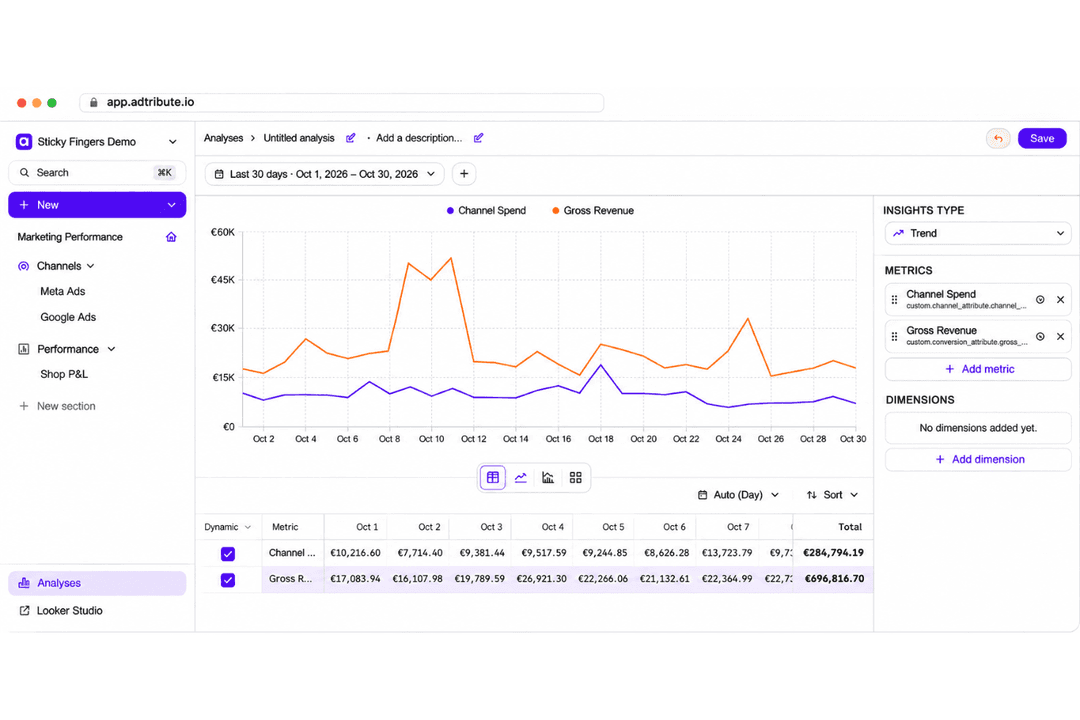
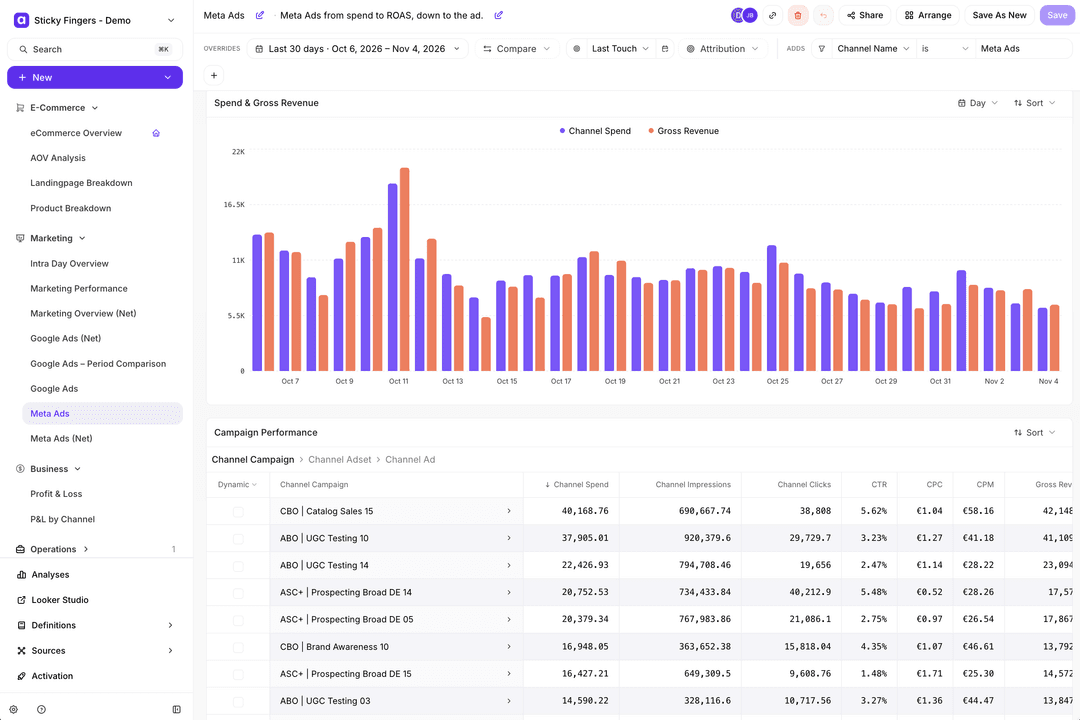
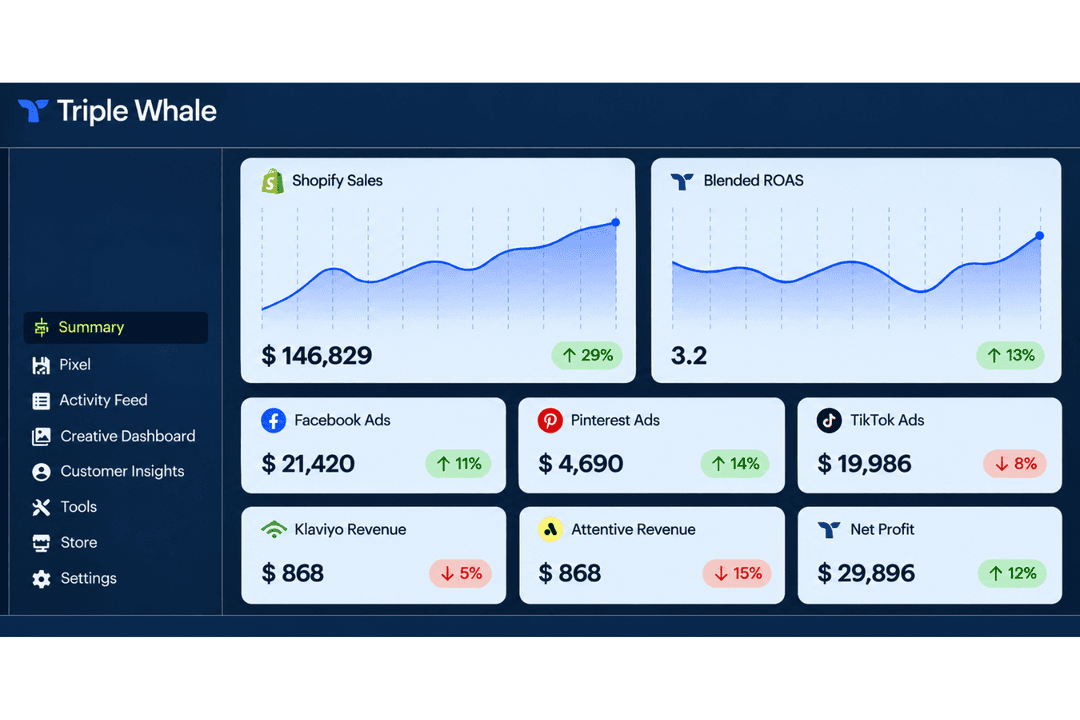
| FactorDashboards | adtributeOffers pre-built and tailored dashboards for attribution, campaign performance, and BI reporting, with assistance from data analysts. | Triple WhaleProvides centralized dashboards for marketing, product, and customer analytics, with customizable views and templates. |
| FactorCustomization | adtributeSupports custom attribution models, channel rules, lookback windows, and business-specific metrics, though advanced configurations take some learning. | Triple WhaleSupports configurable attribution windows, custom metrics, no-code dashboards, and SQL-based analysis. |
| FactorSupport | adtributeAssigns a dedicated customer success manager backed by data analysts, with assistance through Slack or email. | Triple WhaleProvides onboarding documentation and in-app support, with dedicated success coverage available for enterprise customers. |
adtribute takes a hands-on approach to ease of use, with guided onboarding and dedicated data specialists who tailor tracking, attribution models, and reporting to each business. While its customization comes with a learning curve, teams benefit from ongoing expert support. Triple Whale, meanwhile, offers a self-serve experience with centralized dashboards and customizable reporting. Ultimately, adtribute suits teams that value personalized guidance and tailored analytics, while Triple Whale appeals to those who prefer managing their own workflows.
adtribute
- First-party tracking connects customer journeys across devices, browsers, and presale pages for accurate attribution.
- Custom attribution models support flexible lookback windows and channel-specific rules to reflect complex customer journeys.
- Dedicated data analysts build tailored reports, configure dashboards, and provide ongoing support without requiring developers.
- No self-serve onboarding; every customer must complete a guided setup process.
- Extensive customization options have a learning curve, often requiring assistance from the dedicated data team.
- No Google Ads Manager Chrome extension to view attribution data directly within the ad platform.
Triple Whale
- Multiple attribution models and windows support different budget questions.
- First-party click data plus verified views supports cross-channel journey analysis.
- Users praise centralized campaign insights and clearer attribution data.
- Platform-reported view-through conversions can duplicate and inflate revenue totals.
- Some users report attribution inaccuracies and opaque pixel results.
- Revenue-scaled pricing and annual commitments can strain smaller brands.
adtribute


- Shopify StoresShopify merchants can connect store purchases with marketing touchpoints to understand which campaigns drive sales and customer acquisition.
- Multi-Platform Ecommerce BusinessesRetailers using WooCommerce, Shopware, or plentymarkets can connect store data with advertising performance for cross-channel attribution.
- Lead-Generation BusinessesLead-generation companies can track incoming leads across marketing channels and attribute conversions to campaigns.
- Multichannel Paid Media TeamsTeams advertising across Meta, Google, TikTok, and other platforms can compare channel contributions and make informed budget decisions.
- Online Coaching BusinessesCoaching providers can track leads from paid campaigns through landing pages and sales funnels to identify which channels generate conversions.
- Custom Analytics TeamsMarketing teams with specific reporting requirements can build tailored attribution models, BI dashboards, and business metrics with assistance from adtribute's data team.
Triple Whale

- Shopify BrandsTriple Whale connects with Shopify and combines store and channel data, giving Shopify brands a central place to review attribution.
- Multichannel RetailersRetailers advertising on Meta, Google Ads, TikTok, or Snapchat can connect those channels and compare their reported performance.
- Growth TeamsGrowth marketers can compare eight attribution models and multiple lookback windows before deciding whether to shift campaign budgets.
- Lean TeamsTeams that want initial reporting quickly can use the guided setup, which takes about 15 minutes for a standard configuration.
- Ecommerce AnalystsAnalysts can use custom dashboards, metrics, customer segments, and multi-touch attribution on the Foundation plan.
- Data-Driven BrandsBrands that want to combine attribution with reporting and workflows can consider Automate, which adds AI models, scheduled reports, and marketing actions.
Who Should Use adtribute, and Who Should Use Triple Whale?
If your marketing team needs accurate first-party tracking, customizable attribution models, and reporting tailored to your business, adtribute is worth considering. It's particularly well-suited to ecommerce and lead-generation businesses that manage complex customer journeys and want dedicated data specialists to handle tracking, configuration, and ongoing analysis. Its EU-based data hosting and flexible BI capabilities also appeal to teams with specific reporting and compliance requirements.
Triple Whale, on the other hand, is a good fit for ecommerce brands that want centralized performance dashboards, multi-touch attribution, and AI-powered marketing workflows. Shopify merchants, multichannel retailers, and growth teams can use its attribution models and Moby AI to analyze campaigns and automate recurring tasks. Its free tier also makes it an option for teams looking to explore ecommerce analytics before committing to a paid plan.
| adtribute | Triple Whale | |
|---|---|---|
| AI Capabilities | adtribute Uses adtribute MCP and its semantic layer to provide business-specific analysis through ChatGPT, Claude, Gemini, and other AI assistants. | Triple Whale Also supports MCP, but centers its AI workflows on Moby for analysis, creative generation, and automated marketing tasks. |
| Advanced Analytics | adtribute Provides tailored BI dashboards and a semantic layer for custom metrics, margin calculations, and consistent business reporting. | Triple Whale Offers marketing mix modeling, incrementality testing, and unified measurement through its Enterprise offering. |
| Attribution Customization | adtribute Supports custom attribution models, channel-specific rules, influencer codes, and lookback windows from one day to unlimited. | Triple Whale Offers multiple attribution models, including Total Impact, which combines tracked clicks with post-purchase survey responses. |
| Implementation & Support | adtribute Includes guided onboarding and a dedicated data team for tracking configuration, custom reporting, and ongoing assistance. | Triple Whale Supports self-service setup, with dedicated success coverage available for enterprise customers. |
| Pricing Structure | adtribute Bases pricing on net revenue and required features, with optional add-ons for custom tracking, data exports, and advanced services. | Triple Whale Offers a free tier and paid plans based on annual GMV, with additional capabilities available through plan upgrades. |
| Conversion Data Activation | Both support sending first-party conversion data back to advertising platforms, helping teams provide campaign optimization systems with additional conversion signals. |
|---|---|
| Cross-Channel Reporting | Both provide dashboards for analyzing attributed revenue, campaign performance, and advertising metrics such as ROAS and customer acquisition costs. |
| Customer Journey Analysis | Both help marketers examine conversion paths and customer touchpoints to understand how different interactions contribute to purchases. |
| First-Party Tracking | Both use first-party tracking technology to capture customer interactions and connect activity across devices and marketing channels. |
| Marketing Integrations | Both connect with major ecommerce and advertising platforms, including Shopify, Meta Ads, Google Ads, and Klaviyo, to consolidate marketing and sales data. |