

Reseña de Airtable: Ventajas, Desventajas, Características y Precios
Airtable destaca por su interfaz intuitiva y personalización flexible, lo que la convierte en una opción sobresaliente para equipos que buscan una gestión de datos versátil.

Revisamos herramientas de manera independiente, y las comisiones ayudan a financiar nuestras pruebas. Consulta nuestra política de transparencia, nuestra metodología o sugiere una herramienta.
Airtable is an account data management software built for teams that need a flexible, structured way to organize and act on account data across campaigns, pipelines, and go-to-market workflows. I'd mainly consider it if you want more relational database structure than Notion provides, but without the rigidity and overhead of configuring a full CRM. It's a strong fit for marketing teams that need to build custom views, link records across tables, and keep account data in sync with the rest of their tech stack.
Airtable Evaluation Summary
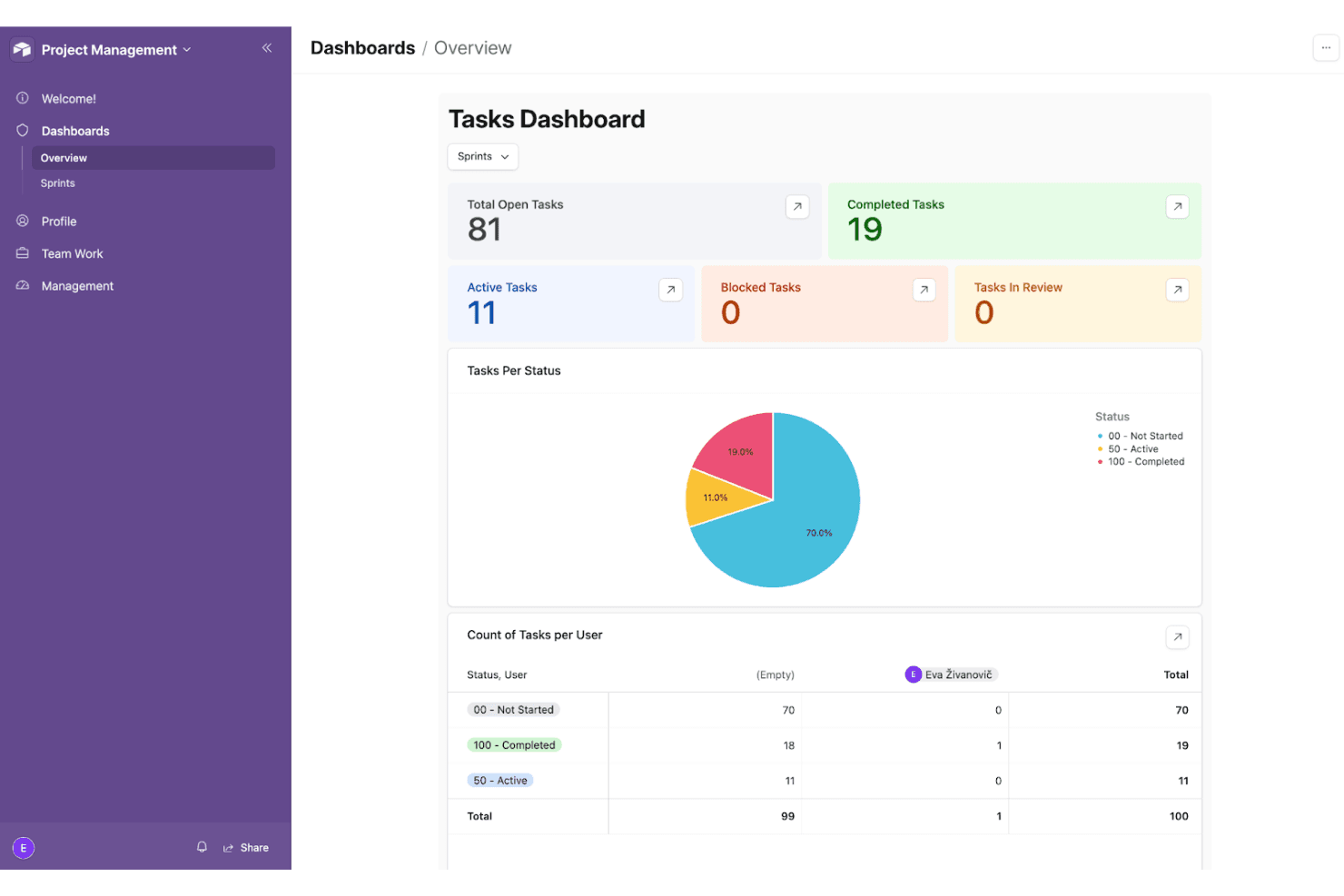
4.6/5
- From $20/user/month
- Free plan + free demo + 14-day trial available
Por qué confiar en nuestras recomendaciones de software
6,700+
Reviews
20
Industry experts
16+
Evaluation factors
14
Years
Nuestro equipo lleva probando y evaluando software desde 2012. Como líderes de marketing, sabemos lo difícil —y lo importante— que es elegir el software adecuado.
Para esta guía, evaluamos las herramientas mediante pruebas prácticas e investigación independiente, puntuando las herramientas según nuestros criterios de selección.
Nuestras reseñas reflejan nuestro criterio editorial humano, no un discurso de ventas.
Revisores expertos:
 Gui DrusinaDirector creativo
- Shriya GhateSenior Marketing Lead
 Amanda JacquesLíder de Marketing Ops

Airtable Overview
In my opinion, Airtable is a solid choice for teams that value customization and ease of use. Its flexible interface and integration capabilities make it a good fit for creative teams and project managers who need adaptable workflows. However, it can be pricey, and the onboarding process might be a bit challenging for new users. Compared to other tools, Airtable's standout features are its real-time collaboration and custom views, though its support options might leave some users wanting more. If you're looking for a customizable and user-friendly platform, Airtable is worth considering.
Pros
- You can customize workflows to fit your team's specific needs.
- The user interface is intuitive and customizable, making it easy for everyone to use.
- Real-time collaboration keeps your team on the same page.
Cons
- It can be a bit overwhelming for new users to learn.
- Customer support options might not meet all your expectations.
- Advanced features might require a learning curve for your team.
Is Airtable Right For Your Needs?
Who Would be a Good Fit for Airtable?
Airtable is great for creative teams and project managers who need flexible, customizable workflows. If your team relies on real-time updates and collaborative environments, Airtable's user-friendly interface and customization options can help you manage projects efficiently. Marketing departments can use it for campaign tracking, while startups might find its adaptability perfect for evolving business needs.
- Creative AgenciesAirtable helps you track projects and resources with customizable views and real-time collaboration.
- Marketing TeamsYou can organize campaigns and analyze data with Airtable's flexible structure and easy-to-use interface.
- StartupsAirtable lets your team adapt quickly with customizable workflows as your business grows.
- Project ManagersYou can track milestones, dependencies, and deadlines using Airtable’s timeline and Gantt chart–style views, making it easier to plan and adjust complex projects.
- Event PlannersAirtable helps manage logistics and schedules with ease, thanks to its real-time updates and collaboration tools.
- NonprofitsYour organization can track donors and manage events using Airtable's adaptable and user-friendly platform.
Who Would be a Bad Fit for Airtable?
Airtable might not suit large enterprises needing advanced features and extensive data analytics. If your team requires complex reporting or handles massive datasets, Airtable's capabilities might fall short. Financial departments or industries with strict compliance standards may find its features lacking in depth and security. The onboarding process can also be daunting for users unfamiliar with flexible and customizable tools.
- Large EnterprisesYour enterprise might require more advanced data analytics and reporting features than Airtable offers.
- Financial DepartmentsAirtable's features might not meet the stringent compliance and security standards your department needs.
- Data-Heavy IndustriesIf your industry handles massive datasets, Airtable might not provide the depth of data analysis you require.
- IT DepartmentsYour team might need more robust security and integration features than Airtable can deliver.
- Healthcare ProvidersAirtable might not meet the high compliance and security standards necessary for handling sensitive patient data.
- Legal FirmsYour firm may need more specialized document management and compliance features than Airtable offers.
Cómo Probamos y Puntuamos las Herramientas
Hemos dedicado años a construir, refinar y mejorar nuestro sistema de prueba y puntuación de software. El marco está diseñado para captar los matices de la selección de software y lo que hace a una herramienta eficaz, enfocándose en los aspectos críticos del proceso de decisión. A continuación, puedes ver exactamente cómo funcionan nuestras pruebas y puntuaciones en siete criterios. Esto nos permite brindar una evaluación imparcial de los programas basada en la funcionalidad principal, características destacadas, facilidad de uso, integración, soporte al cliente, reseñas de clientes y relación calidad-precio.
Funcionalidad Principal (25% de la puntuación final)
El punto de partida de nuestra evaluación siempre es la funcionalidad principal de la herramienta. ¿Cuenta con las funciones básicas que un usuario esperaría? ¿Alguna de esas funciones está reservada solo para planes de pago avanzados? Esperamos que, en esencia, una herramienta se mantenga al nivel de las capacidades mínimas de sus competidores.
Características Destacadas (25% de la puntuación final)
Después, evaluamos las características poco comunes y destacadas que van más allá de la funcionalidad típica de herramientas similares. Una puntuación alta refleja funciones especializadas o únicas que hacen el producto más rápido, eficiente o aportan un valor adicional al usuario. También evaluamos qué tan fácil es integrarse con otras herramientas habituales en el entorno tecnológico para expandir la funcionalidad del software. Las herramientas que ofrecen muchas integraciones nativas, conexiones de terceros y acceso a API para crear integraciones personalizadas tienen la mejor puntuación.
Facilidad de Uso (10% de la puntuación final)
Consideramos cuán rápido y fácil es ejecutar las tareas definidas en la funcionalidad central utilizando la herramienta. El software mejor puntuado está bien diseñado, es intuitivo, ofrece aplicaciones móviles, proporciona plantillas y hace que tareas relativamente complejas parezcan sencillas.
Incorporación (10% de la puntuación final)
Sabemos lo importante que es que un equipo adopte rápidamente una nueva plataforma, por eso evaluamos lo fácil que es aprender y usar una herramienta con la menor formación posible. Analizamos lo rápido que un integrante puede comenzar a usar la herramienta sin experiencia previa. Las soluciones mejor puntuadas requieren poco o ningún soporte.
Soporte al Cliente (10% de la puntuación final)
Vemos cuán rápido y sencillo es obtener ayuda por teléfono, chat en vivo o base de conocimientos. Las empresas y herramientas que ofrecen soporte en tiempo real logran la mejor puntuación, mientras que los chatbots obtienen la peor.
Reseñas de Clientes (10% de la puntuación final)
Más allá de nuestras propias pruebas y evaluaciones, consideramos el puntaje de recomendación de clientes actuales y anteriores. Revisamos la probabilidad de que, de poder elegir de nuevo, seleccionarían la herramienta por su funcionalidad principal. Un software con alta puntuación refleja una elevada recomendación de sus usuarios.
Relación Calidad-Precio (10% de la puntuación final)
Finalmente, considerando todos los demás criterios, revisamos el precio promedio de los planes básicos frente a las funciones y el valor de los demás factores de evaluación. El software que ofrece más por menos obtiene mejor puntuación.
Core Features
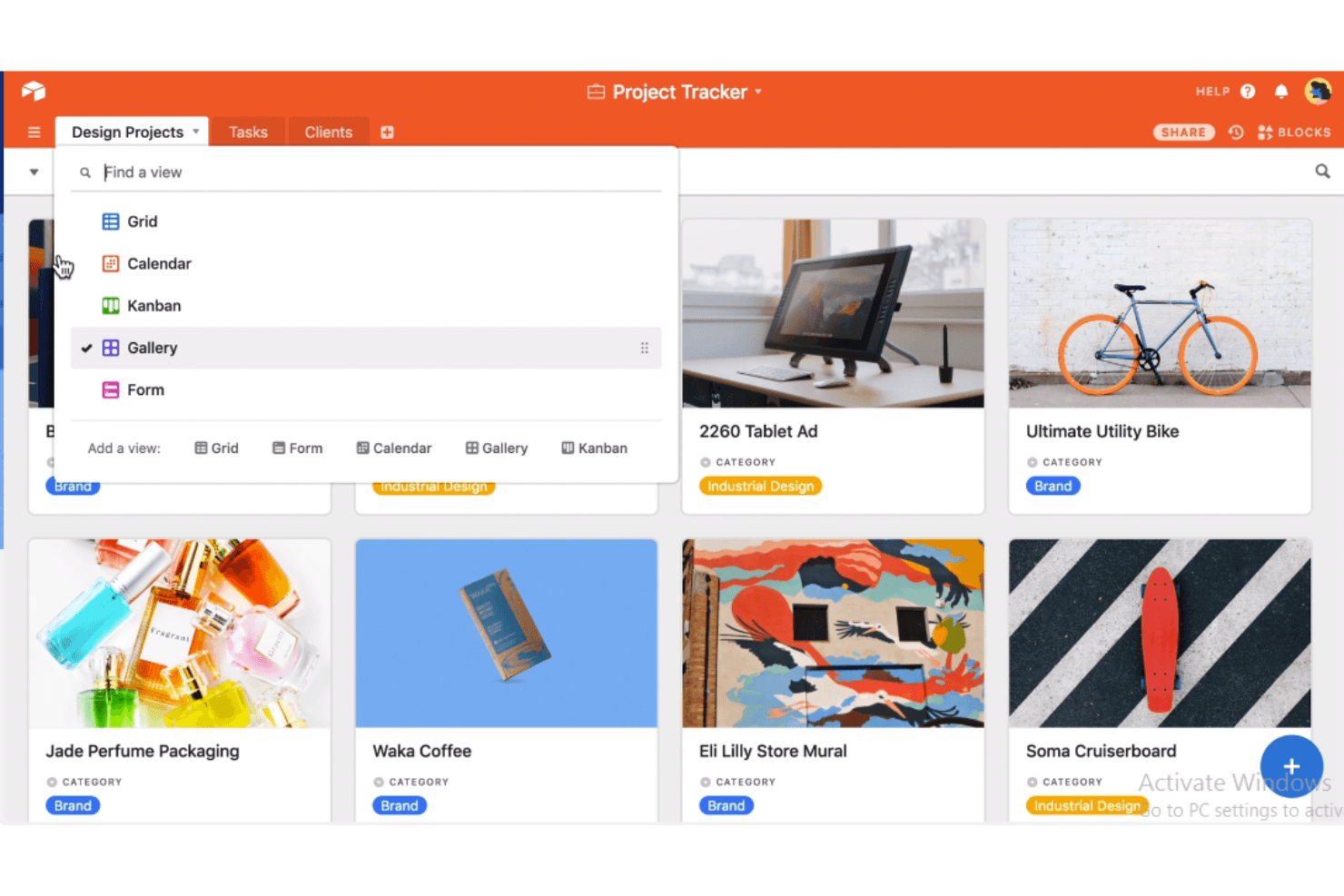
Customizable Views: You can create grid, calendar, kanban, or gallery views to suit your team's workflow. This flexibility lets you visualize data in the way that best supports your projects.
Real-Time Collaboration: Your team can work together seamlessly with instant updates and changes. This feature ensures everyone stays on the same page, reducing miscommunication.
Data Linking: Connect related data across tables to create a more cohesive information system. This feature helps you track relationships and dependencies within your projects.
File Attachments: You can attach files directly to records, keeping all your relevant documents in one place. This is handy for teams needing quick access to documents and media.
Role-Based Permissions: Control who sees and edits what by setting permissions for different team members. This keeps your data secure and ensures that only the right people have access.
Ease of Use
Airtable's user-friendly interface makes it a strong contender for teams looking to manage data without hassle. The intuitive design allows you to set up projects quickly using drag and drop interactions, while customizable views make data management straightforward. Real-time collaboration ensures your team stays connected, but new users might find the variety of features a bit overwhelming at first. Overall, Airtable offers a balance of simplicity and functionality that can suit many teams' needs.
Integrations
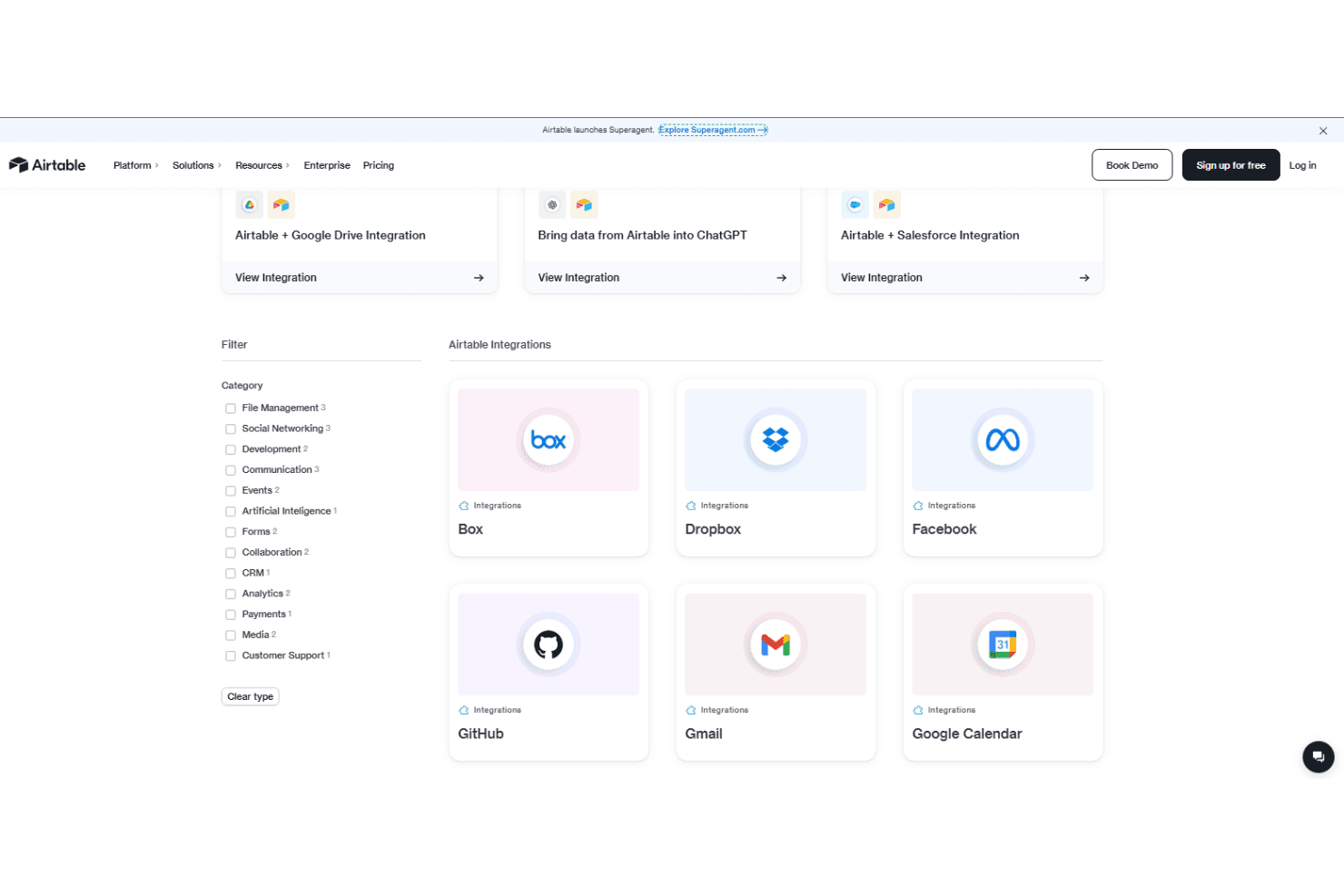
Airtable integrates with tools such as Google Drive, Google Sheets, Salesforce, Slack, Jira, Box, Dropbox, Gmail, Outlook, and Twilio through its native apps and automation features. These integrations help teams connect data, automate workflows, and manage files across platforms.
Airtable also offers a powerful API and supports third-party integration tools like Zapier, enabling custom connections and extended functionality.
Airtable Specs
- 2-Factor Authentication: Yes
- API: Yes
- Batch Permissions & Access: Yes
- Budgeting: Yes
- Calendar Management: Yes
- Contact Management: Yes
- Contact Sharing: Yes
- Customer Management: Yes
- Dashboard: Yes
- Data Export: Yes
- Data Import: Yes
- Data Visualization: Yes
- Email Integration: Yes
- Expense Tracking: Yes
- External Integrations: Yes
- Gantt Charts: Yes
- Google Apps Integration: Yes
- Multi-User: Yes
- Notifications: Yes
- Project Management: Yes
- Resource Management: Yes
- Scheduling: Yes
- Task Scheduling/Tracking: Yes
- Third-Party Plugins/Add-Ons: Yes
- Travel Management: Yes


