

Elegir el software de inteligencia de cuentas de marketing adecuado puede ser complicado. Con tantas herramientas disponibles, es difícil saber cuál satisface realmente las necesidades de tu equipo. Necesitas algo que te ayude a identificar las cuentas adecuadas, aumentar las conversiones y simplificar tu flujo de trabajo, no a complicarlo.
Según mi experiencia, el software adecuado puede marcar una gran diferencia en la eficacia con la que trabaja tu equipo. He probado y analizado varias plataformas líderes para ayudarte a encontrar las que realmente ofrecen resultados. En este artículo, compartiré una visión imparcial de mis principales opciones, explicando qué hace mejor cada herramienta y cómo puede reforzar tu estrategia de marketing.
Por qué confiar en nuestras recomendaciones de software
6,700+
Reviews
20
Industry experts
16+
Evaluation factors
14
Years
Nuestro equipo lleva probando y evaluando software desde 2012. Como líderes de marketing, sabemos lo difícil —y lo importante— que es elegir el software adecuado.
Para esta guía, evaluamos las herramientas mediante pruebas prácticas e investigación independiente, puntuando las herramientas según nuestros criterios de selección.
Nuestras reseñas reflejan nuestro criterio editorial humano, no un discurso de ventas.
Revisores expertos:
 Gui DrusinaDirector creativo
- Shriya GhateSenior Marketing Lead
 Amanda JacquesLíder de Marketing Ops

Tabla comparativa de softwares de inteligencia de cuentas de marketing
| Tool | Best For | Trial Info | Price | ||
|---|---|---|---|---|---|
| 1 | El mejor con filtros para una segmentación precisa de cuentas | Prueba gratuita de 14 días + plan gratuito + demostración gratuita disponible | Desde 49/puesto/mes (facturación anual) | Website | |
| 2 | Mejor para datos verificados | Prueba gratuita disponible | Precio a consultar | Website | |
| 3 | La mejor opción para garantizar la acción sobre cada prospecto | Demostración gratuita disponible | Desde $39/usuario/mes | Website | |
| 4 | Ideal para la creación de audiencias | Demo gratuita disponible | Precio bajo consulta | Website | |
| 5 | Ideal para priorizar cuentas objetivo | Demostración gratuita disponible | Precios bajo solicitud | Website | |
| 6 | Ideal para personalizar el acercamiento | Demostración gratuita disponible | Precio a consultar | Website | |
| 7 | Ideal para datos de terceros | Plan gratuito disponible | Desde $29/usuario/mes | Website | |
| 8 | Ideal para conectar con las cuentas más comprometidas | Demostración gratuita disponible | Precio bajo solicitud | Website | |
| 9 | Mejor para identificar al próximo mejor cliente | Demostración gratuita disponible | Precio a consultar | Website | |
| 10 | Mejor para algoritmos de aprendizaje automático | Demostración gratuita disponible | Precio a consultar | Website |


Análisis de los mejores softwares de inteligencia de cuentas de marketing
Los siguientes resúmenes detallarán por qué son relevantes para esta lista, proporcionando más contexto sobre cada herramienta, incluidas sus funciones, integraciones, ventajas y desventajas, además de una captura de pantalla para mostrarte el aspecto de cada sistema al utilizarlo.
 El mejor con filtros para una segmentación precisa de cuentas
- Prueba gratuita de 14 días + plan gratuito + demostración gratuita disponible
- Desde 49/puesto/mes (facturación anual)
Visit WebsiteCustomer Rating:4.5/5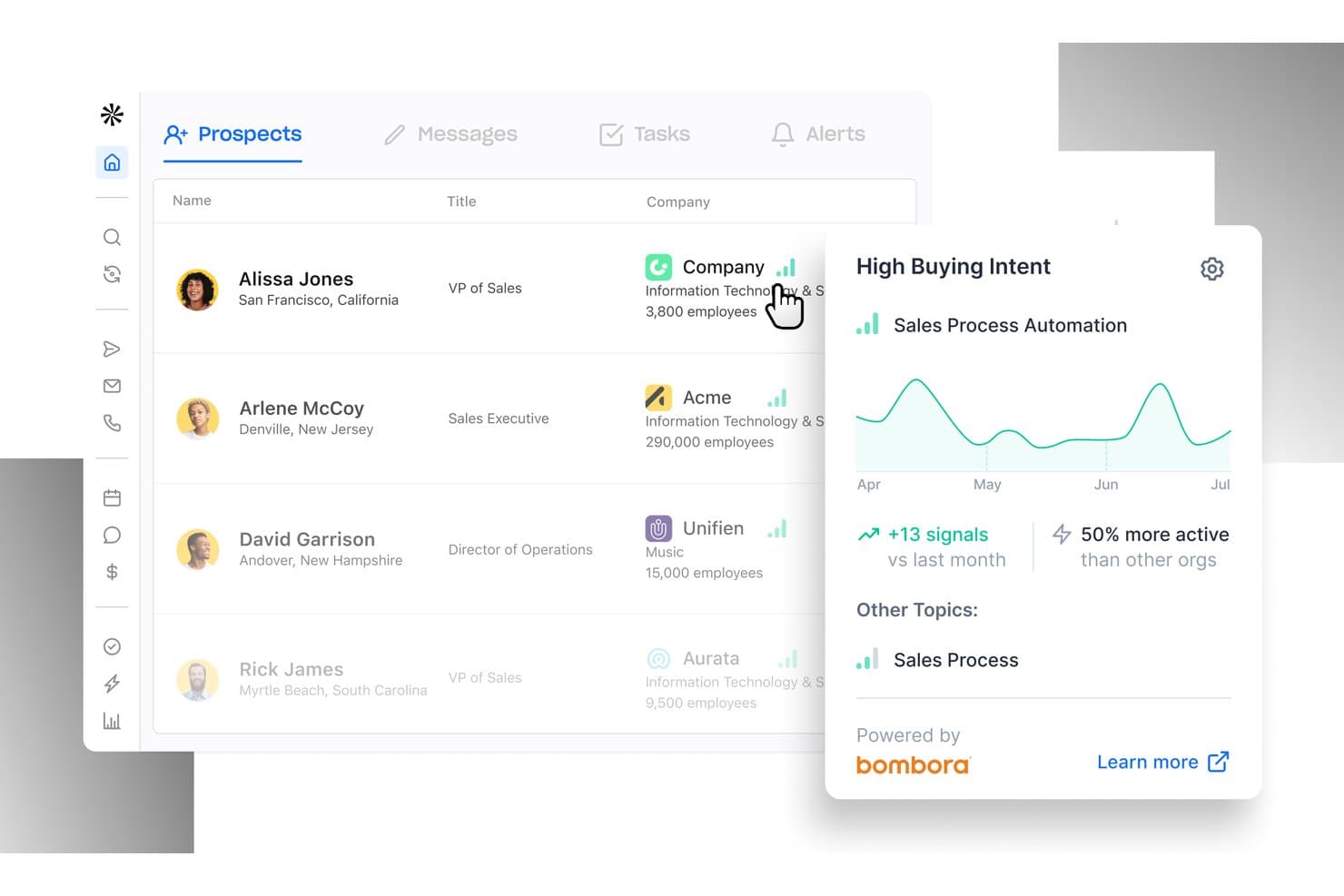
Apollo.io ofrece un panel de control de prospectos con señales de intención de compra, que muestra tendencias de actividad de clientes potenciales y participación en temas para la segmentación de ventas. Apollo.io es una plataforma de inteligencia B2B y de salida al mercado impulsada por IA que combina la búsqueda en bases de datos de contactos y cuentas, datos de intención, enriquecimiento y secuencias en una sola herramienta.
¿Para quién es más adecuado Apollo.io?
Apollo.io es adecuado para equipos B2B de pequeñas y medianas empresas y del mercado medio que necesitan una plataforma asequible y todo en uno para la segmentación de cuentas y las estrategias de contacto saliente, sin invertir en varias herramientas independientes.
Por qué elegí Apollo.io
Apollo.io ocupa un lugar en mi lista de opciones principales porque sus más de 65 filtros de búsqueda me permiten crear listas de cuentas que reflejan realmente mi perfil de cliente ideal, no simples aproximaciones. Puedo combinar datos firmográficos, tecnográficos, de antigüedad del puesto y señales de intención de compra de Bombora y LeadSift en una sola búsqueda para identificar cuentas que están investigando activamente temas relevantes. Las personas guardadas me permiten recrear esa segmentación exacta con un solo clic para cada nueva campaña.
Características principales de Apollo.io
- Identificación de visitantes del sitio web: Revela al instante qué empresas visitan tu sitio web y las vincula con contactos.
- Enriquecimiento a nivel de contacto: Actualiza los registros de cuentas y contactos con datos firmográficos, tecnográficos y jerárquicos en tiempo real.
- Sincronización automatizada con el CRM: La integración bidireccional mantiene sincronizados los registros de Salesforce y HubSpot con la nueva información de las cuentas.
- Integración de la intención de compra: Muestra directamente en la plataforma las cuentas potenciales que presentan señales de investigación de Bombora y LeadSift.
Integraciones de Apollo.io
Apollo.io ofrece integraciones nativas con Salesforce, HubSpot, Outreach, Airtable, Amplitude, Asana y Gmail, además de una API para integraciones personalizadas.
Pros and Cons
Pros:
- Más de 65 filtros para crear listas de cuentas con gran nivel de detalle
- Enorme base de datos de contactos B2B con más de 275 millones de registros
- Datos de intención de Bombora integrados en la plataforma
Cons:
- Problemas de precisión de los datos señalados en las opiniones de los usuarios
- Seguimiento de la interacción más limitado que en las herramientas de ABM especializadas
Learn more about Apollo.io: Mejor para datos verificados
- Prueba gratuita disponible
- Precio a consultar
Visit WebsiteCustomer Rating:4.6/5
Utiliza la búsqueda avanzada para encontrar listas altamente segmentadas. DiscoverOrg proporciona a los equipos de marketing datos extensos verificados manualmente para garantizar que la información esté actualizada y sea auténtica.
Por qué elegí DiscoverOrg: Al trabajar con inteligencia de cualquier tipo, usar datos precisos es fundamental. DiscoverOrg utiliza un equipo interno para verificar toda la información cada 90 días, mientras que los investigadores se comunican diariamente con las empresas de su base de datos. Esto significa que elimina datos incompletos, exagerados o desactualizados y garantiza la veracidad de la información.
Características destacadas e integraciones de DiscoverOrg
Las características incluyen una gran precisión en los datos gracias al equipo de DiscoverOrg que actualiza continuamente su información; además, también verifican los datos de contacto disponibles mediante rigurosos procedimientos de prueba y validación. Al trabajar en un entorno B2B, DiscoverOrg ofrece organigramas que muestran las verdaderas estructuras de reporte para asegurar que solo se interactúe con los responsables de la toma de decisiones.
Las integraciones incluyen enlaces nativos con diversas herramientas, como aplicaciones de gestión de relaciones con clientes, para automatizar y complementar registros de prospectos. Esto incluye conexiones con plataformas como Bullhorn, Eloqua, HubSpot, Marketo, Microsoft Dynamics, NetSuite, Outreach, Salesforce, Salesloft, Zoho y otras opciones de software.
Pros and Cons
Pros:
- Integración sencilla con Salesforce
- Información actualizada
- Enlaces a redes sociales para investigar prospectos rápidamente
Cons:
- Algunas limitaciones de cuenta
- Las actualizaciones pueden ralentizar el sistema
Learn more about DiscoverOrg: La mejor opción para garantizar la acción sobre cada prospecto
- Demostración gratuita disponible
- Desde $39/usuario/mes
Visit WebsiteCustomer Rating:4.6/5
Asigna cuentas a los representantes adecuados después de que el objetivo interactúe con campañas de marketing. LeanData puede ayudar a los equipos de marketing a desarrollar canales sólidos más rápido al asegurar que cada cuenta potencial reciba la acción más adecuada.
Por qué elegí LeanData: La plataforma puede ayudar a tu equipo de marketing a transformar las señales de intención y convertirlas en acciones adecuadas para cada prospecto. Con LeanData, puedes avanzar las cuentas potenciales a lo largo de tu recorrido del cliente más rápido y aumentar las conversiones. También puedes usar esta inteligencia para corregir procesos rotos que están impidiendo que entregues cuentas calificadas a tu canal de ventas.
Características destacadas e integraciones de LeanData
Las características incluyen herramientas que ayudan a tu equipo a reconocer y responder a señales de intención a lo largo del recorrido del comprador y a interactuar con compradores de alta intención. LeanData también ayuda a los equipos de marketing y ventas a trabajar juntos para manejar la complejidad de la venta y acelerar los ciclos de ventas.
Las integraciones incluyen conexiones nativas con herramientas que te ayudan a eliminar procesos rígidos. Estas incluyen enlaces con sistemas como 6sense, Clearbit, Cloudingo, Cognism, Crossbeam, Kronologic, Microsoft Teams, Outreach, Salesforce, Slack y otras opciones de software.
Pros and Cons
Pros:
- Excelente soporte al cliente
- Interfaz visual eficaz
- Clase de certificación de primer nivel
Cons:
- Curva de aprendizaje pronunciada
- La plataforma no guarda el trabajo automáticamente
Learn more about LeanData: Ideal para la creación de audiencias
- Demo gratuita disponible
- Precio bajo consulta
Visit WebsiteCustomer Rating:4.4/5
Crea audiencias dinámicamente para campañas de marketing basado en cuentas con filtros avanzados para lograr segmentos detallados. Demandbase permite a los equipos de marketing crear y gestionar perfiles de cliente ideal y listas de cuentas objetivo basadas en varios parámetros para crear nuevas audiencias.
Por qué elegí Demandbase: Al crear estrategias de marketing basado en cuentas, es beneficioso desarrollar perfiles de cliente ideal para ayudar a crear audiencias relevantes a las que dirigir tus acciones. Quise incluir Demandbase en este artículo porque proporciona capacidades de inteligencia de cuentas que puedes usar para encontrar nuevas cuentas cuando buscan productos o servicios como los tuyos. Tu equipo de ventas también puede utilizar esta información para mejorar y personalizar las interacciones con estos objetivos.
Características y opciones de integración destacadas de Demandbase
Las características incluyen medir el compromiso de las cuentas a lo largo del recorrido de compra para garantizar que los programas de entrada al mercado proporcionen clientes potenciales cuando sea necesario. Demandbase te ayuda a encontrar nuevas oportunidades de venta adicional y cruzada de forma más rápida y anticiparse a la actividad competitiva.
Las integraciones incluyen aplicaciones como Adobe Analytics, DataGrail, Drift, Google Analytics, HubSpot, Marketo, Optimizely, PathFactory, Salesforce, Slack y otras opciones de software. Demandbase también ofrece una API que te permite crear integraciones personalizadas con tu conjunto de herramientas actual.
Pros and Cons
Pros:
- Resalta todas las intenciones de los clientes
- Alinea los departamentos de ventas y marketing
- Excelente soporte al cliente
Cons:
- La interfaz de usuario necesita mejoras
- No tiene alertas instantáneas
Learn more about Demandbase: Ideal para priorizar cuentas objetivo
- Demostración gratuita disponible
- Precios bajo solicitud
Visit WebsiteCustomer Rating:4.4/5
Ejecuta rápidamente estrategias de marketing basadas en cuentas incorporando datos en profundidad para llegar a cuentas objetivo por múltiples canales. Bombora es una plataforma de datos de intención que permite a los equipos de marketing identificar y relacionarse con clientes potenciales.
Por qué elegí Bombora: Añadí Bombora a esta lista porque puede ayudar a tu equipo de marketing a centrarse en las mejores cuentas objetivo después de analizar los comportamientos. Puedes usar la información de Bombora para obtener información sobre qué cuentas están investigando activamente temas específicos. Además, Bombora utiliza procesamiento de lenguaje natural para organizar los datos de intención, lo que facilita la identificación de las cuentas relevantes en las que enfocarse.
Funciones y integraciones destacadas de Bombora
Funciones incluyen herramientas que te ayudan a saber qué mensajes conectarán con tus cuentas objetivo al especificar el contenido que están investigando, lo que te permite personalizar tu contenido para que coincida con sus intereses. Bombora también ofrece funciones para ayudarte a reducir la pérdida de clientes al detectar cuándo las cuentas investigan otras soluciones y avisarte antes de que se marchen.
Integraciones incluyen conexiones con las herramientas que probablemente ya usas para que sean mejores y más efectivas. Herramientas como 6sense, Cognism, Demandbase, HubSpot, Marketo, Outreach, RollWorks, Salesforce, SalesIntel, Terminus y otras opciones de software se integran bien con Bombora.
Pros and Cons
Pros:
- Proporciona puntuaciones de cuentas objetivo
- Fácil de manejar
- Interfaz fácil de usar
Cons:
- No permite importar información de contacto
- Los informes pueden ser complejos
Learn more about Bombora: Ideal para personalizar el acercamiento
- Demostración gratuita disponible
- Precio a consultar
Visit WebsiteCustomer Rating:4.3/5
Obtén visibilidad total sobre una variedad de segmentos de inteligencia para comprender el rendimiento del marketing. 6sense puede ayudar a los equipos de marketing a recopilar valiosos conocimientos sobre el comportamiento de los compradores para personalizar los esfuerzos de acercamiento.
Por qué elegí 6sense: La plataforma proporciona datos profundos basados en la intención y sólidos conocimientos para ayudarte a desarrollar campañas de acercamiento personalizadas. 6sense ofrece herramientas para resaltar la investigación de los compradores, permitiéndote comprender lo que quieren los prospectos y así involucrarlos de la manera más efectiva. Con 6sense, puedes ofrecer experiencias de marketing coherentes que escalan y evolucionan a medida que los prospectos avanzan por los embudos de ventas.
Funciones y conectividades destacadas de 6sense
Las funciones incluyen herramientas para ayudarte a orquestar campañas completas de marketing basado en cuentas, como identificación de cuentas, enriquecimiento de datos y capacidades para construir audiencias. 6sense también te permite utilizar herramientas de análisis predictivo para predecir en qué punto del recorrido se encuentran los compradores, para que tu equipo se centre en quienes tienen más probabilidades de comprar.
Las integraciones incluyen conexiones nativas con la tecnología que probablemente ya utilizas para operar tu negocio. Entre ellas se encuentran Bombora, Bound, Clari, Eloqua, Folloze, Hubspot CRM, LeanData, Marketo, Salesforce, Salesloft y otras opciones de software.
Pros and Cons
Pros:
- Gran cantidad de datos
- Proceso de incorporación eficiente
- Excelente equipo de soporte
Cons:
- Curva de aprendizaje pronunciada
- Necesita más opciones de personalización
Learn more about 6sense: Ideal para datos de terceros
- Plan gratuito disponible
- Desde $29/usuario/mes
Visit WebsiteCustomer Rating:4.2/5
Filtra la base de datos de contactos de la plataforma para encontrar prospectos relevantes y usa la lista para dirigirte a otras cuentas similares. Lusha ayuda a los profesionales de marketing B2B a establecer conexiones auténticas con clientes potenciales, contactos y candidatos mediante datos de terceros para enriquecer y verificar perfiles empresariales.
Por qué elegí Lusha: Los datos de terceros son un factor importante en la inteligencia de cuentas de marketing; consisten en utilizar datos de otra fuente para ayudarte a encontrar información específica sobre cuentas y prospectos relevantes. Por esta razón, elegí añadir Lusha a esta lista porque la plataforma es una herramienta de enriquecimiento de datos que te ayudará a encontrar información de contacto precisa para tus objetivos comerciales. La base de datos de Lusha incluye información como direcciones de correo electrónico, detalles de la empresa y números de teléfono que puedes usar para construir perfiles de clientes ideales.
Funciones destacadas e integraciones de Lusha
Funciones incluyen herramientas que te ayudan a descubrir qué empresas buscan las soluciones que ofreces y te permiten conectar con los mejores responsables de la toma de decisiones. Lusha también ofrece herramientas de prospección B2B que proporcionan una biblioteca de los principales decisores.
Integraciones incluyen la capacidad de conectar Lusha con tu conjunto actual de herramientas para evitar que tus equipos tengan que cambiar de sistema y trabajar en un área centralizada, como Bullhorn, Gmail, HubSpot, Microsoft Dynamics, Outlook, Outreach, Pipedrive, Salesforce, Salesloft y Zoho. También puedes usar la API de Lusha o una cuenta de pago de Zapier para crear integraciones personalizadas con tus herramientas actuales.
Pros and Cons
Pros:
- Interfaz de usuario intuitiva
- Información de contacto precisa y actualizada
- Práctica extensión de Google Chrome
Cons:
- No proporciona muchos créditos cada mes
- El precio puede incrementarse según el uso
Learn more about Lusha: Ideal para conectar con las cuentas más comprometidas
- Demostración gratuita disponible
- Precio bajo solicitud

Clasifica a los prospectos según su intención de compra y nivel de interacción. TechTarget Priority Engine ayuda a los profesionales de marketing a clasificar cuentas según la intención de compra, el nivel de interacción y la alineación con sus soluciones para mejorar el rendimiento de la estrategia de marketing basada en cuentas.
Por qué elegí TechTarget Priority Engine: La plataforma ayuda a tu equipo de marketing a mejorar el rendimiento al permitirte conectar con las cuentas más comprometidas. TechTarget Priority Engine proporciona información valiosa sobre tus cuentas más activas y ofrece datos de contacto oficiales, así como el estado de aceptación o exclusión. El software también te ayuda a entender los temas que tus cuentas clave buscan en línea, sus patrones de interacción y el consumo de contenidos.
Características y Integraciones Destacadas de TechTarget Priority Engine
Características incluyen la capacidad de medir el éxito de las campañas de marketing basadas en cuentas y comunicarlas a los principales interesados. TechTarget Priority Engine también simplifica el proceso de encontrar los mejores contactos para cuentas B2B al conectarte con miembros conocidos del equipo de compra.
Integraciones incluyen conexiones con los CRM y herramientas de marketing más populares para optimizar el rendimiento en tu equipo de marketing. Estas incluyen integraciones nativas con herramientas como Eloqua, HubSpot CRM, HubSpot Marketing Hub, Marketo, Pardot y Salesforce.
Pros and Cons
Pros:
- Resalta rápidamente la interacción con las cuentas
- Ofrece visibilidad sobre la investigación de los prospectos actuales
- Interfaz de usuario sencilla
Cons:
- Necesita más datos de intención
- Exportar datos es complejo
Learn more about TechTarget Priority Engine: Mejor para identificar al próximo mejor cliente
- Demostración gratuita disponible
- Precio a consultar

Conéctate a los datos del CRM y la automatización de marketing para desarrollar informes de atribución y a nivel de campaña. Terminus utiliza funciones innovadoras para ayudar a los equipos de marketing a encontrar y atraer a su próximo mejor cliente.
Por qué elegí Terminus: Una razón importante para utilizar inteligencia de cuentas de marketing es encontrar a tu próximo mejor cliente, por lo que comencé esta lista con Terminus para ayudarte a lograr este objetivo. Terminus ofrece capacidades integrales para ayudarte a identificar, dirigir y relacionarte con tus próximas mejores cuentas. Te permite aprovechar la función de personalización web de la herramienta para crear experiencias en la web basadas en los datos de cuenta y señales de intención.
Funciones y conexiones destacadas de Terminus
Las funciones incluyen la capacidad de mostrar señales de compra en el mercado de los clientes, que puedes utilizar para tomar el control de conversaciones clave y hitos mediante mapeo de campañas. Terminus también te ayuda a construir reconocimiento de marca para que las cuentas potenciales se familiaricen con tu marca.
Las integraciones incluyen conexiones con componentes críticos de tu pila tecnológica para aprovechar los datos de estos sistemas. Estas conexiones incluyen herramientas como Crossbeam, Eloqua, HubSpot, Marketo, Microsoft Dynamics 365, Outreach, PathFactory, Salesforce, Salesloft, Slack y otras opciones de software.
Pros and Cons
Pros:
- Segmenta tanta información como sea necesario
- Rastrea las acciones de los visitantes
- Apunta rápidamente a objetivos empresariales reales
Cons:
- Los informes son complejos
- Curva de aprendizaje pronunciada
Learn more about Terminus: Mejor para algoritmos de aprendizaje automático
- Demostración gratuita disponible
- Precio a consultar

Utiliza datos de cuentas comerciales para comprender cuentas que demuestran intención y compromiso. RollWorks utiliza algoritmos de aprendizaje automático para proporcionar análisis predictivos que ayudan a los equipos de marketing a calificar listas de cuentas objetivo según la probabilidad de que cierren.
Por qué elegí RollWorks: Lo que creo que hace que RollWorks sea una adición relevante a esta lista es su fuente de datos patentada y los algoritmos de aprendizaje automático que te ayudarán a identificar cuentas objetivo relevantes. La plataforma utiliza puntuación de cuentas para ayudarte rápidamente a descubrir cuentas de alto valor según señales de intención y afinidad. RollWorks también emplea capacidades de aprendizaje automático para ayudarte a encontrar nuevas cuentas que coincidan con el perfil de cliente ideal.
Características e integraciones destacadas de RollWorks
Características incluyen capacidades que te permiten involucrar cuentas que mejor encajan mediante campañas de marketing basadas en cuentas y multicanal. RollWorks también ofrece herramientas que te ayudan a medir el rendimiento de tus campañas de marketing basadas en cuentas, permitiéndote ver qué está funcionando.
Integraciones incluyen conexiones con herramientas estándar utilizadas por muchos equipos de marketing, como Bombora, Crossbeam, HubSpot Marketing Hub, Marketo, Opensense, Salesforce y Wufoo. Con una cuenta paga de Zapier, puedes crear integraciones personalizadas entre RollWorks y tus sistemas actuales.
Pros and Cons
Pros:
- Apunta a cuentas de alto valor
- Fácil de usar
- Medición y generación de informes robustos
Cons:
- Complejo para empresas pequeñas
- No hay muchas opciones de integración
Learn more about RollWorks:
Otros softwares de inteligencia de cuentas de marketing
Estas son otras herramientas de inteligencia de cuentas de marketing que no llegaron a la lista principal, pero que merece la pena considerar.
- 11TriblioIdeal para señales de intención
- 12Full Circle InsightsMejor para monitorear datos de tendencias
- 13KwanzooMejor para la interacción con cuentas
- 14TofuIdeal para estrategias ABM escalables
Cómo Evalúo el Software de Inteligencia de Cuentas de Marketing
Divido mi evaluación en criterios básicos—como la cobertura de datos de intención y el modelado de ICP—y diferenciadores que separan las plataformas diseñadas para ABM serio de aquellas que sólo están cerca de ello.
Funcionalidad Principal (Requisitos Básicos Para Esta Lista)
Cuando selecciono herramientas para mi lista, califico cada una en una escala del 0 (no ofrece la funcionalidad) al 5 (sobresale en esta área) por cada funcionalidad principal listada a continuación. Luego, calculo la puntuación total de la herramienta en porcentaje. Cada herramienta necesita alcanzar una puntuación total mínima del 65% para ser considerada para su inclusión.
- Identificación y Calificación de Cuentas Objetivo: Evalúo cómo cada plataforma construye y califica listas de cuentas—si admite el modelado dinámico de ICP o solo cargas de CSV estáticos con filtros básicos.
- Datos de Intención y Señales de Compra: La cobertura real de intención es importante, así que reviso si una herramienta agrega señales de primera y tercera parte y permite personalizar los temas rastreados.
- Enriquecimiento de Datos a Nivel de Cuenta: Observo si una plataforma suma datos firmográficos, tecnográficos y de contacto a las cuentas y con qué frecuencia se actualizan esos datos.
- Seguimiento de la Interacción Multicanal: Cada herramienta debe vincular visitas al sitio web, clics en anuncios y contactos en campaña a cuentas específicas en una vista unificada de línea de tiempo.
- Profundidad en la Integración con CRM y MAP: Verifico que existan sincronizaciones bidireccionales con plataformas como Salesforce, HubSpot y Marketo—no solo envíos de datos unidireccionales.
- Análisis y Reportes de Cuenta: Los paneles deben ir más allá de métricas vanidosas y mostrar etapas del recorrido de la cuenta, tendencias de interacción e influencia en el pipeline.
Una vez que tengo una lista de herramientas que cumplen con estos criterios, considero qué distingue a cada plataforma.
Factores Diferenciadores (Qué Distingue a los Proveedores)
Así es como comparo y contrasto diferentes proveedores:
Funciones Destacadas
La inteligencia de grupos de compra es un gran diferenciador—busco plataformas que mapeen comités completos dentro de una cuenta, no solo contactos individuales, para que puedas ver qué responsables de decisión están involucrados y dónde hay vacíos. También son importantes las recomendaciones impulsadas por IA, especialmente aquellas herramientas que apuntan a mostrar las próximas mejores cuentas o sugerir acciones según patrones de intención. Las alertas de activación para ventas completan el cuadro; reviso si las notificaciones de aumento se envían directamente a Slack o al CRM para que los representantes puedan actuar mientras la intención está fresca.
Más Allá de las Funciones
La calidad de los datos es lo primero que evalúo—la puntuación de ICP y las señales de intención de una plataforma solo son tan útiles como la base de datos que las sostiene, así que verifico con qué frecuencia se actualizan los registros y qué tan profunda es la cobertura entre industrias y tamaños de empresa. La transparencia de precios también es clave; algunos proveedores agrupan créditos de datos y gasto publicitario en contratos opacos que dificultan pronosticar costos a medida que crece tu programa de ABM. También considero el tiempo hasta obtener valor, específicamente cuán rápido un equipo puede pasar de firmar un contrato a activar su primera lista de cuentas objetivo con datos enriquecidos.
Cómo elegir un software de inteligencia de cuentas de marketing
Es fácil perderse entre largas listas de funciones y estructuras de precios complejas. Para ayudarte a mantener la concentración mientras avanzas en tu proceso específico de selección de software, aquí tienes una lista de factores que debes tener en cuenta:
| Factor | Qué debes considerar |
|---|---|
| FactorEscalabilidad | Qué debes considerar¿Puede el software crecer junto con tu empresa? Considera las necesidades futuras y si la herramienta puede gestionar un mayor volumen de datos o de usuarios sin problemas de rendimiento. |
| FactorIntegraciones | Qué debes considerar¿Se conecta con tus sistemas actuales, como el CRM o las herramientas de análisis? Comprueba que el flujo de datos sea fluido y que se reduzcan las tareas de introducción manual de datos. |
| FactorPersonalización | Qué debes considerar¿Puedes adaptar el software a tus flujos de trabajo específicos? Busca opciones flexibles para ajustar los paneles, los informes y las notificaciones. |
| FactorFacilidad de uso | Qué debes considerar¿Es el software intuitivo para tu equipo? Busca una interfaz fácil de usar que minimice el tiempo de formación y maximice la productividad. |
| FactorImplementación e incorporación | Qué debes considerar¿Cuánto tiempo se tarda en ponerlo en marcha? Evalúa el apoyo del proveedor durante la configuración y la disponibilidad de recursos de formación, como tutoriales y guías. |
| FactorCoste | Qué debes considerar¿Se ajustan los precios a tu presupuesto? Evalúa si las funciones justifican el coste y considera cualquier tarifa oculta o contrato a largo plazo. |
| FactorMedidas de seguridad | Qué debes considerar¿Protege el software tus datos? Asegúrate de que cumple las normas del sector y ofrece cifrado, controles de acceso y actualizaciones de seguridad periódicas. |
¿Qué es un software de inteligencia de cuentas de marketing?
El software de inteligencia de cuentas de marketing es una herramienta que ayuda a las empresas a identificar y analizar cuentas clave para mejorar la segmentación y la interacción. Los profesionales del marketing, los equipos de ventas y los gestores de cuentas suelen utilizar estas herramientas para mejorar la precisión de la segmentación y aumentar las tasas de conversión.
Funciones como el enriquecimiento de datos, la puntuación de clientes potenciales y el análisis favorecen una mejor toma de decisiones y la eficacia de las campañas. En general, estas herramientas proporcionan información de gran valor que impulsa estrategias de marketing exitosas.
Funciones
Al seleccionar un software de inteligencia de cuentas de marketing, presta atención a las siguientes funciones clave:
- Segmentación de cuentas: Identifica y prioriza las cuentas de alto valor para centrar eficazmente los esfuerzos de marketing.
- Enriquecimiento de datos: Mejora los datos existentes con información adicional para proporcionar un perfil de cliente más completo.
- Puntuación de clientes potenciales: Evalúa y clasifica los clientes potenciales en función de su probabilidad de conversión, lo que ayuda a priorizar los esfuerzos de ventas.
- Análisis e informes: Proporciona información sobre el rendimiento de las campañas y la interacción con las cuentas para orientar la toma de decisiones.
- Información basada en AI: Utiliza la inteligencia artificial para descubrir patrones y tendencias que permitan desarrollar estrategias de marketing mejor fundamentadas.
- Alertas en tiempo real: Notifica a los usuarios las actividades o los cambios importantes en las cuentas para permitir respuestas oportunas.
- Paneles personalizables: Permite a los usuarios adaptar las vistas y los informes para ajustarlos a necesidades y preferencias específicas.
- Integración con sistemas CRM: Garantiza un flujo de datos y una comunicación fluidos entre los equipos de marketing y ventas.
- Análisis predictivo: Anticipa el comportamiento futuro de las cuentas para ayudar a definir planes de marketing proactivos.
- Medidas de seguridad: Protege los datos confidenciales de los clientes mediante cifrado y controles de acceso para mantener la confianza.
Ventajas
La implementación de un software de inteligencia de cuentas de marketing ofrece varias ventajas para tu equipo y tu empresa. Estas son algunas de las que puedes esperar:
- Mejor segmentación: Ayuda a tu equipo a centrarse en las cuentas más prometedoras, aumentando la eficiencia del marketing.
- Mejor toma de decisiones: Ofrece información mediante análisis y datos basados en AI, lo que orienta estrategias más inteligentes.
- Aumento de las tasas de conversión: Utiliza la puntuación de clientes potenciales para priorizar los esfuerzos en aquellos con mayor potencial, generando más ventas.
- Interacción proactiva: Proporciona alertas en tiempo real para mantener a tu equipo informado y preparado para responder a los cambios en las cuentas.
- Marketing personalizado: Permite enriquecer los datos y crear perfiles de clientes detallados para diseñar campañas adaptadas.
- Colaboración fluida: Se integra con sistemas CRM para garantizar un flujo de información fluido entre los equipos.
- Seguridad de los datos: Ofrece medidas de seguridad que protegen la información de los clientes y mantienen su confianza.
Costes & precios
Seleccionar un software de inteligencia de cuentas de marketing requiere comprender los distintos modelos y planes de precios disponibles. Los costes varían en función de las funciones, el tamaño del equipo, los complementos y otros factores. La tabla siguiente resume los planes habituales, sus precios medios y las funciones que suelen incluir las soluciones de software de inteligencia de cuentas de marketing:
Tabla comparativa de planes de software de inteligencia de cuentas de marketing
| Tipo de plan | Precio medio | Funciones habituales |
|---|---|---|
| Tipo de planPlan gratuito | Precio medio$0 | Funciones habitualesSegmentación básica de cuentas, enriquecimiento de datos limitado y análisis básicos. |
| Tipo de planPlan personal | Precio medio$10-$30/usuario/mes | Funciones habitualesPuntuación mejorada de clientes potenciales, análisis estándar e integración con CRM. |
| Tipo de planPlan empresarial | Precio medio$50-$100/usuario/mes | Funciones habitualesInformes avanzados, alertas en tiempo real y paneles personalizables. |
| Tipo de planPlan para empresas | Precio medio$150-$300/usuario/mes | Funciones habitualesInformación exhaustiva basada en AI, opciones de personalización completas y asistencia prioritaria. |
Preguntas frecuentes sobre el software de inteligencia de cuentas de marketing
Estas son algunas respuestas a preguntas frecuentes sobre el software de inteligencia de cuentas de marketing:
¿Qué tipos de roles de usuario o permisos suelen admitirse?
El acceso suele gestionarse mediante roles de usuario vinculados a permisos definidos por el sistema. Los administradores pueden ver y editar todos los datos, mientras que otros usuarios pueden tener un acceso restringido. Los roles varían en función de la arquitectura del sistema y la estructura del equipo.
¿En qué tipos de fuentes de datos suelen basarse estas herramientas?
La mayoría de las plataformas extraen datos de una combinación de datos propios del CRM, datos firmográficos de terceros, señales de intención y seguimiento del comportamiento digital. Las asociaciones de datos y las integraciones específicas varían según el proveedor. Algunas herramientas ofrecen acceso a la API para personalizar y ampliar las fuentes de datos.
¿Pueden estas herramientas integrarse directamente con CRM y MAPs?
Sí, la mayoría está diseñada para integrarse con CRM como Salesforce y plataformas de automatización del marketing (MAPs) como Marketo o HubSpot. Algunas ofrecen conectores nativos, mientras que otras pueden requerir una configuración de la API. El nivel de integración influye en la facilidad con la que los datos se sincronizan entre sistemas.
¿Admiten estas plataformas datos internacionales de cuentas?
La compatibilidad con datos globales depende en gran medida de las asociaciones de datos y las prácticas de cumplimiento de la herramienta. Algunas plataformas están centradas en EE. UU., mientras que otras incluyen cobertura de EMEA, APAC o LATAM. Las capacidades internacionales deben validarse durante la incorporación o las pruebas.
¿Cómo gestionan estas plataformas los registros de cuentas duplicados?
A menudo incluyen una lógica de eliminación de duplicados basada en reglas de coincidencia y campos de datos. Algunas resuelven los conflictos automáticamente; otras permiten una revisión manual. El enfoque depende de la configuración interna de gestión de datos de la plataforma.