

Synup Vs. Semrush: Comparison & Expert Reviews For 2026
Cut through the noise: I break down Synup vs. Semrush for local SEO, showing where each one actually earns its money so you can choose with your eyes open in 2026.

We review tools independently, and commissions help fund our testing. See our transparency policy, our methodology, or suggest a tool.
Local SEO tools can look similar until you see what they’re actually built to manage. The real choice is between owning local visibility at scale or running a broader search strategy from one platform.
If choosing the right local SEO tools makes your head spin, you’re not alone. Synup and Semrush get compared constantly, but they’re built around different problems. One runs local presence across a portfolio of locations, the other wins search traffic for a website and handles local as part of a much wider toolkit. You want the one that fits the work your team actually does every week.
In this article, I’ll break down how Synup and Semrush measure up on pricing, features, integrations, security, ease of use, and the kinds of teams each one suits, so you can pick the best fit for your business.
Synup
4.4/5
- Free demo available
- From $79/month (billed annually)
Semrush
4.5/5
- 14-day free trial
- From $139/month
Why Trust Our Software Recommendations
6,700+
Reviews
20
Industry experts
16+
Evaluation factors
14
Years
Our team has been testing and reviewing software since 2012. As marketing leaders ourselves, we know how difficult—and important—it is to choose the right software.
For this guide, we evaluated tools using hands-on testing and independent research, scoring tools using our selection criteria.
Our reviews reflect our human editorial judgment, not a sales pitch.
Expert reviewers:
 Gui DrusinaCreative Director
- Shriya GhateSenior Marketing Lead
 Amanda JacquesMarketing Ops Leader

| Synup | Semrush | |
|---|---|---|
| Free Trial | Free demo available | 14-day free trial |
| Pricing | From $79/month (billed annually) | From $139/month |
Synup vs. Semrush Pricing & Hidden Costs
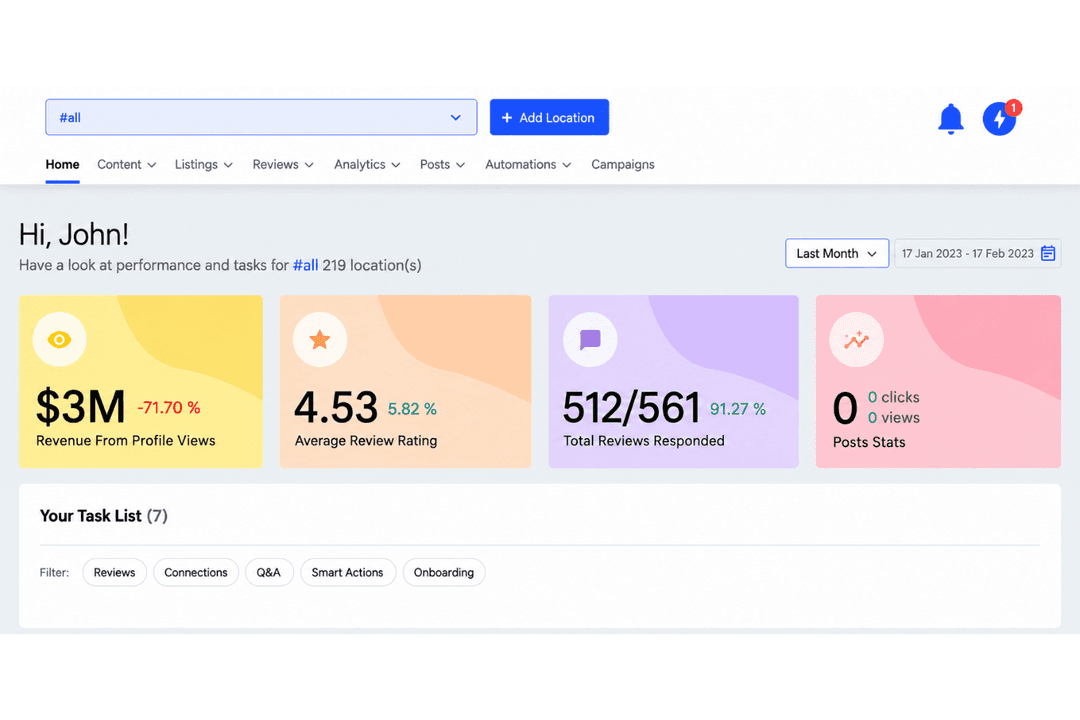
Synup publishes its pricing openly, in per location tiers that run from a single storefront up to enterprise portfolios, and every tier carries the full feature set rather than gating listings or reviews behind an upgrade. A free trial gets you started without a sales call, billing runs monthly unless you take the annual discount, and white labeling opens up from the mid tiers. Semrush splits the bill: the core subscription buys the search marketing toolkit by tier, and local listings, review management, and map rank tracking come through a separate local plan charged per location on top of it. Extra user seats and some reporting features are priced as add-ons, so an agency ends up paying for the platform, the seats, and each location it manages.
To pick the right vendor, count the locations you manage now and the ones you expect to add, then price both against that number instead of against the headline tier. Ask what changes when a location joins mid term, which capabilities sit behind seats or add-ons, and what it costs to put a branded report in front of a client. Then compare against what you’d otherwise buy separately, because the cheaper line item is not always the cheaper stack.
| Synup | Semrush | |
|---|---|---|
| API | Yes | Yes |
| Brand Management | Yes | Yes |
| Dashboard | Yes | Yes |
| External Integrations | Yes | Yes |
| Multi-User | Yes | Yes |
| Notifications | Yes | Yes |
| Social-Media Integration | Yes | Yes |
| Integration | Synup | Semrush |
|---|---|---|
| IntegrationGoogle Business Profile | Synup✅ | Semrush✅ |
| IntegrationApple Maps | Synup✅ | Semrush✅ |
| IntegrationYelp | Synup✅ | Semrush✅ |
| IntegrationTripAdvisor | Synup✅ | Semrush✅ |
| IntegrationGoogle Analytics | Synup✅ | Semrush✅ |
| IntegrationGoogle Search Console | Synup✅ | Semrush✅ |
| IntegrationLooker Studio | Synup❌ | Semrush✅ |
| IntegrationAPI and MCP | Synup✅ | Semrush✅ |
| IntegrationZapier | Synup❌ | Semrush✅ |
The two cover a lot of the same ground. Synup distributes location data to search, maps, navigation, and in-car systems, and monitors reviews across a wide set of sources including any industry site you add yourself. Semrush pushes listings to a large US and international directory network and connects into the rest of the Google stack, Looker Studio, and the major social platforms. The real difference sits underneath: Synup exposes a broad REST API and a native MCP endpoint built for agents and resellers, while Semrush leans on its app center and targeted Zapier connections for automation.
| Factor | Synup | Semrush |
|---|---|---|
| FactorCertifications & Compliance | SynupHolds SOC 2 Type II, ISO 27001, and ISO 42001 for AI management systems, and operates under GDPR. | SemrushCertified to PCI DSS Level 1 for payment data, and compliant with GDPR alongside CCPA and similar privacy laws. |
| FactorEncryption | SynupEncrypts location and client data in transit and at rest across the platform. | SemrushModern transport encryption sitewide and strong encryption at rest in its data centers. |
| FactorReliability | SynupCloud only delivery with no on-premise option, and availability managed entirely by Synup. | SemrushRedundant cloud infrastructure with a published availability standard and public status reporting. |
| FactorUser Controls | SynupRoles and permissions per workspace, with client portals for external access and approvals before anything publishes. | SemrushRole based access with single sign-on and two factor authentication across accounts and projects. |
| FactorAudit Logging | SynupA complete audit trail of every action taken by users and by the agent. | SemrushApplication and infrastructure activity logged, with critical events fed into a monitored security stack. |
This one doesn’t fall the way you’d expect. Synup carries the heavier certification load, including SOC 2 Type II, ISO 27001, and an ISO 42001 certification covering AI management systems, which matters more than it sounds when an agent is publishing on your behalf. Semrush publishes more operational detail: payment data handled to PCI DSS Level 1, modern transport encryption, encryption at rest, single sign-on and two factor authentication, and activity logged into a monitored security stack. If procurement works from a certification checklist, Synup answers more of it. If they want the operating detail in public, Semrush gives up more.
| Factor | Synup | Semrush |
|---|---|---|
| FactorUser Interface | SynupOne workspace across listings, reviews, social, and rankings, with plain language chat as the way in. | SemrushDense by necessity, since the toolkit spans technical SEO, content, competitive research, and local. |
| FactorOnboarding | SynupThe agent pulls existing listing data, flags conflicts, and proposes fixes for approval. Larger accounts get a named contact and team training. | SemrushSelf-serve, backed by a deep knowledge base, academy courses, and webinars, though mapping the toolset takes time. |
| FactorSetup Speed | SynupLocations import from a spreadsheet, the API, or a connected Google Business Profile, and new accounts are working within minutes. | SemrushProjects, crawls, and tracking need configuring before the data means much, and each location is set up on its own. |
| FactorSupport Access | SynupKnowledge base and email for self-serve users, with a dedicated onboarding contact and training on larger accounts. | SemrushPaid plans get product support from the team, while free accounts are limited to billing and account questions. |
Semrush carries far more surface area, much of it aimed at specialists, so there’s a real ramp before a new user is productive. Synup is narrower on purpose, and the agent absorbs most of the setup, so the first session goes on approving work rather than configuring it. Experienced SEOs will pull more out of Semrush once they know where everything lives. Teams who just need hundreds of locations correct and current will be running on Synup much sooner.
Synup
- Automates listing fixes, review replies, and social posts through a built in AI agent.
- Covers listings, reputation, social, and AI answer visibility in one workspace.
- Flat published pricing, a free trial with no minimum contract.
- No paid search or local services ads management beyond boosted posts on Meta.
- Social listening and brand mention tracking aren’t part of the platform yet.
- Store locator and location pages come through a managed service rather than self serve.
Semrush
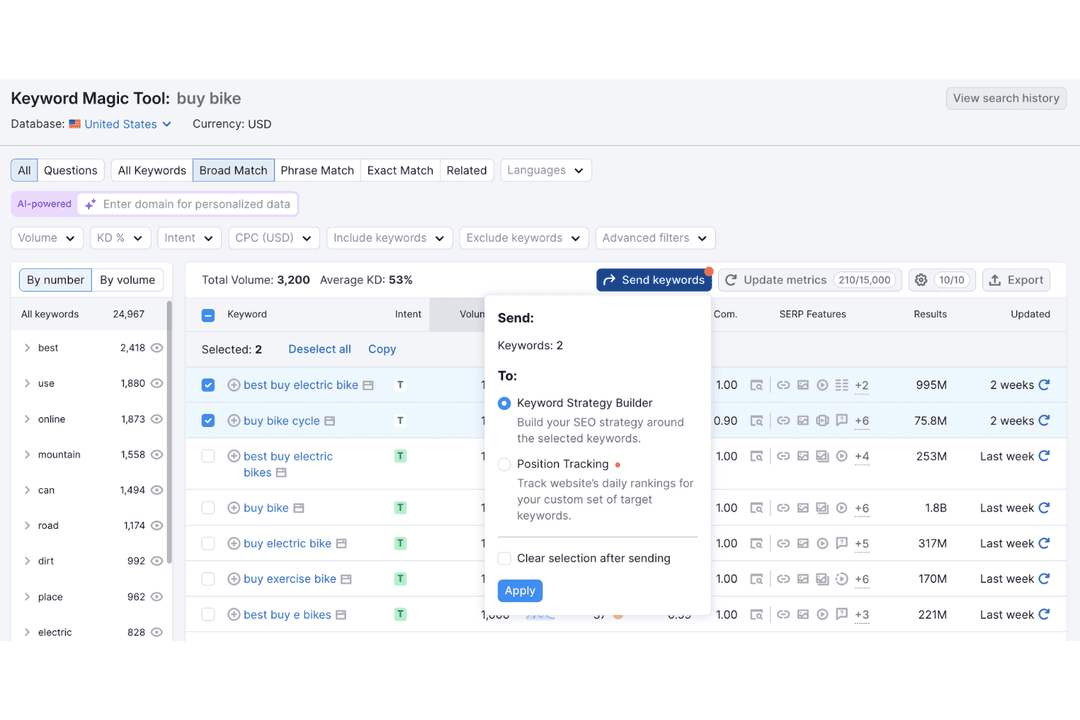
- You get comprehensive keyword research tools that boost your SEO strategy.
- Competitive analysis features help your team stay ahead in the market.
- The platform provides detailed reports that enhance your decision-making.
- The interface can feel overwhelming for new users.
- It has a steep learning curve compared to simpler tools.
- Semrush's pricing may be on the higher side for small businesses or startups.
Synup
- Multi-Location RetailBulk updates, alerts, and agent driven corrections keep store listings and review replies moving across dozens or hundreds of sites without a dedicated team behind them.
- Restaurant ChainsHours, service details, and seasonal changes push out in one pass, and reviews from Google, Yelp, and TripAdvisor land in a single queue instead of five browser tabs.
- Franchise OperatorsPer location workspaces, API access, and client facing reporting give franchisors oversight without taking the keyboard away from individual operators.
- Local Marketing AgenciesAgencies onboard clients quickly, work every account from one place, and hand each client a branded portal that never mentions the platform behind it.
- Healthcare NetworksProvider and practice details stay consistent across directories, which matters when a stale address or a wrong hours field quietly costs appointments.
- Vertical Software ProvidersSoftware companies serving local businesses can embed listings and location data through the public APIs and resell the full presence stack under their own brand.
Semrush
- E-commerce BusinessesSemrush excels in helping your e-commerce team optimize product listings and drive traffic through effective keyword strategies.
- Content CreatorsYour content team can leverage Semrush’s insights to craft engaging, SEO-friendly articles that resonate with your audience.
- Advertising AgenciesAgencies benefit from Semrush’s competitive analysis tools, enabling you to design campaigns that outperform rivals.
- SEO SpecialistsYou can rely on Semrush for comprehensive keyword research and tracking, crucial for improving search engine rankings.
- Marketing DepartmentsSemrush offers detailed analytics and reports, empowering your team to refine strategies and demonstrate ROI.
- Small AgenciesEven with limited resources, your agency can use Semrush to deliver high-quality SEO and marketing services efficiently.
Who Should Use Synup, and Who Should Use Semrush?
Synup is the pick when the locations are the business: agencies and resellers carrying many clients, franchise groups, multi-location brands, and software companies that want to sell local presence under their own name. It suits work that never really finishes, where nobody has the hours to maintain hundreds of profiles by hand. Semrush is the pick when the website is the battleground, with content, keywords, backlinks, technical audits, and competitor research, and local as one workflow among many. Plenty of teams will end up running both, using Semrush to win organic search and Synup to keep every location accurate, visible, and answered.
| Synup | Semrush | |
|---|---|---|
| AI Agent | Synup Sydekick works across every channel, with an approvals inbox and a full audit trail behind it. | Semrush An agent focused on Google Business Profile, posting, adding photos, and replying to reviews. |
| Local Presence Depth | Synup Listings, reviews, social publishing, local SEO, and AI answer visibility in a single workspace. | Semrush A local toolkit for listings, reviews, and map rankings, sold alongside the core suite. |
| Pricing Model | Synup Published per location tiers, every feature included, with a free trial and monthly billing. | Semrush Core subscription by tier, with the local toolkit charged per location and extra seats charged per user. |
| Resale & White Label | Synup Full white labeling, client portals, and partner pricing built for agencies reselling the platform. | Semrush Branded reports and client portals delivered inside the Semrush product. |
| Wider SEO Toolkit | Synup No site audits, keyword research, or backlink analysis, by design. | Semrush Site audits, keyword research, backlinks, content tooling, and competitor research. |
| AI Assistance | Both now use AI to carry out work rather than describe it. |
|---|---|
| AI Search Visibility | Both track how a brand shows up in AI generated answers, not just in classic search results. It’s a young part of each product, and it reflects the same bet: that a growing share of local decisions now happens inside an answer rather than on a results page. |
| Automated Reporting | Both automate recurring reporting and both can put a branded report in front of a client. |
| Local SEO Essentials | Both platforms work on the same core problem: keeping location data accurate where customers find it, watching what reviewers say, and tracking how each location performs in local search. Each blends directory presence, review tracking, and local performance reporting into one dashboard. |
| Multi-Location Support | Both are built for portfolios rather than single storefronts, and both price in a way that scales with location count, so the cost of managing a large estate is a real number to model either way. |