
PartnerBoost Review: Pros, Cons, Features, and Pricing
I look beyond the feature list to weigh PartnerBoost’s pros, trade-offs, and pricing—and help you decide whether it fits your affiliate program.

We review tools independently, and commissions help fund our testing. See our transparency policy, our methodology, or suggest a tool.
PartnerBoost is an affiliate marketing software for brands that want to manage affiliate, influencer, referral, and ambassador programs together. If you’re building a broader partner channel, PartnerBoost is a better fit than Refersion because it brings those partnership types into one platform.
PartnerBoost Evaluation Summary
5/5
- Starting from $3999/yr
- 7-day free trial available
Why Trust Our Software Recommendations
6,700+
Reviews
20
Industry experts
16+
Evaluation factors
14
Years
Our team has been testing and reviewing software since 2012. As marketing leaders ourselves, we know how difficult—and important—it is to choose the right software.
For this guide, we evaluated tools using hands-on testing and independent research, scoring tools using our selection criteria.
Our reviews reflect our human editorial judgment, not a sales pitch.
Expert reviewers:
 Gui DrusinaCreative Director
- Shriya GhateSenior Marketing Lead
 Amanda JacquesMarketing Ops Leader

PartnerBoost Overview
I’d choose PartnerBoost when you want affiliate, influencer, referral, and ambassador programs in one dashboard, with partner discovery, attribution, reporting, commission controls, and payments. Its Amazon Seller API connection, 14-day tracking window, and advertiser support can help established Amazon brands get started, though pricing details aren’t clearly published and the platform’s Amazon focus may suit broader ecommerce teams less well. Compared with more narrowly focused affiliate tools, I think its wider partnership scope is a plus; judge the fit by requesting a demo and checking how its onboarding, integrations, and pay-for-performance model match your program.
Pros
- Cross-device tracking supports multi-touch attribution.
- Covers recruitment, reporting, communication, and payments.
- AI-assisted partner discovery can speed up recruitment.
Cons
- Best suited to established ecommerce and Amazon brands.
- Broad feature set may be overkill for smaller programs.
- Mobile support is more limited on Android.


How We Test & Score Tools
We’ve spent years building, refining, and improving our software testing and scoring system. The rubric is designed to capture the nuances of software selection and what makes a tool effective, focusing on critical aspects of the decision-making process.
Below, you can see exactly how our testing and scoring works across seven criteria. It allows us to provide an unbiased evaluation of the software based on core functionality, standout features, ease of use, onboarding, customer support, integrations, customer reviews, and value for money.
Core Functionality (25% of final scoring)
The starting point of our evaluation is always the core functionality of the tool. Does it have the basic features and functions that a user would expect to see? Are any of those core features locked to higher-tiered pricing plans? At its core, we expect a tool to stand up against the baseline capabilities of its competitors.
Standout Features (25% of final scoring)
Next, we evaluate uncommon standout features that go above and beyond the core functionality typically found in tools of its kind. A high score reflects specialized or unique features that make the product faster, more efficient, or offer additional value to the user.
We also evaluate how easy it is to integrate with other tools typically found in the tech stack to expand the functionality and utility of the software. Tools offering plentiful native integrations, 3rd party connections, and API access to build custom integrations score best.
Ease of Use (10% of final scoring)
We consider how quick and easy it is to execute the tasks defined in the core functionality using the tool. High scoring software is well designed, intuitive to use, offers mobile apps, provides templates, and makes relatively complex tasks seem simple.
Onboarding (10% of final scoring)
We know how important rapid team adoption is for a new platform, so we evaluate how easy it is to learn and use a tool with minimal training. We evaluate how quickly a team member can get set up and start using the tool with no experience. High scoring solutions indicate little or no support is required.
Customer Support (10% of final scoring)
We review how quick and easy it is to get unstuck and find help by phone, live chat, or knowledge base. Tools and companies that provide real-time support score best, while chatbots score worst.
Customer Reviews (10% of final scoring)
Beyond our own testing and evaluation, we consider the net promoter score from current and past customers. We review their likelihood, given the option, to choose the tool again for the core functionality. A high scoring software reflects a high net promoter score from current or past customers.
Value for Money (10% of final scoring)
Lastly, in consideration of all the other criteria, we review the average price of entry level plans against the core features and consider the value of the other evaluation criteria. Software that delivers more, for less, will score higher.
Core Features
Partner Discovery And Recruitment
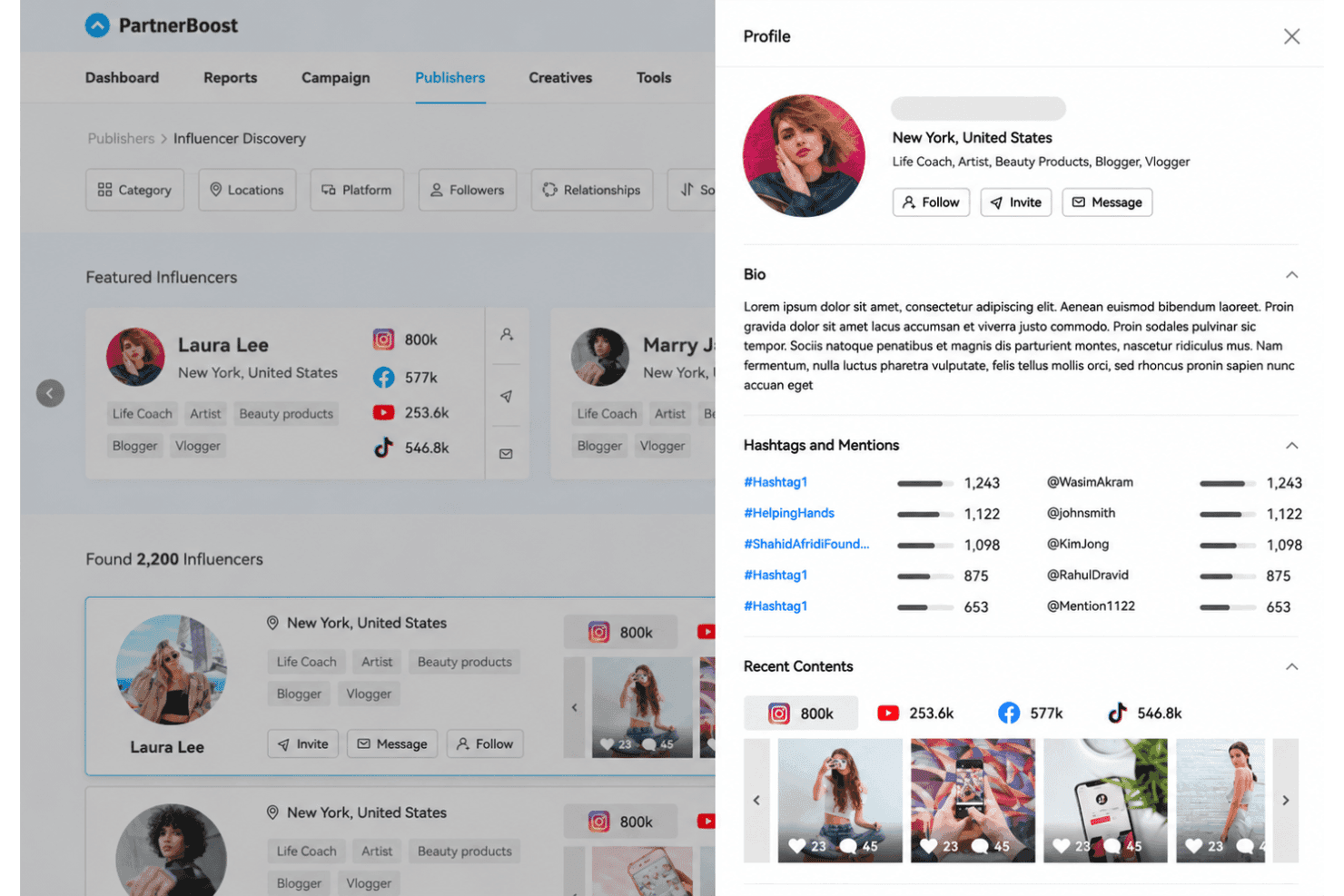
PartnerBoost helps you find affiliates across media types such as content, influencer, deal, and loyalty channels, then recruit them to your program. This gives you options beyond coupon affiliates, such as adding creators or publishers to reach different audiences.
Cross-Device Tracking And Attribution
PartnerBoost tracks the customer journey across devices and lets you customize multi-touch attribution. You can assess how partners contribute at different points in a sale rather than relying on a single attribution model.
Dynamic Commission Rules
You can set a dynamic commission structure and define product-level commission rules. For example, you can assign different rates to products with different margins instead of applying one rate across your catalog.
Partner And Campaign Management
PartnerBoost provides tools for partner communication, collaboration, and promotional materials, alongside incentive campaigns. You can coordinate partner activity and create campaign incentives without managing each relationship in a separate system.
Performance Reporting And Analytics
Real-time, customizable reports show partner performance and channel effectiveness. You can compare results across partners and use those figures to decide where to adjust campaign investment.
Automated Partner Payments
PartnerBoost automates payments to partners. This lets your team handle affiliate payouts through the platform rather than calculating and processing every payment manually.
Ease of Use
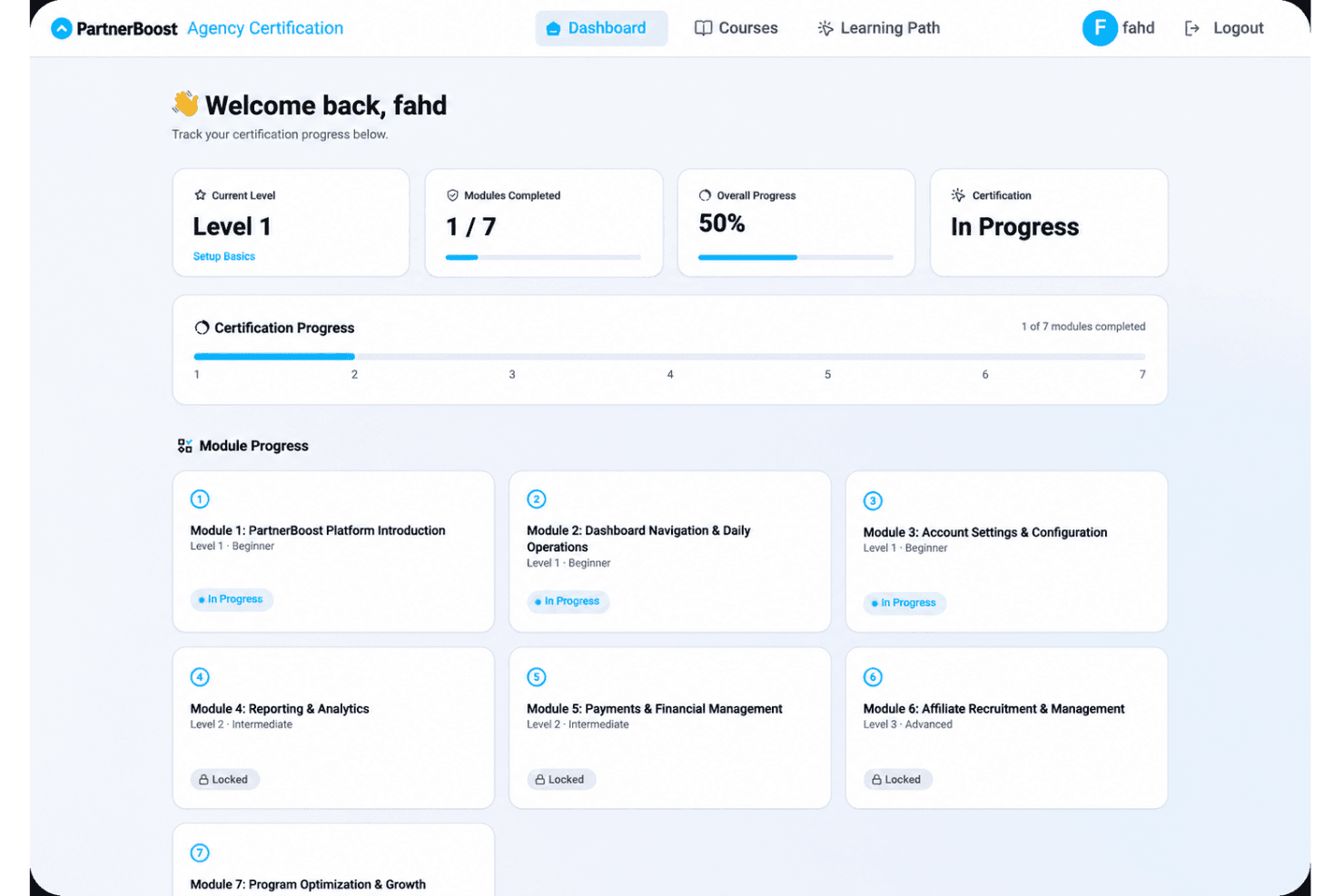
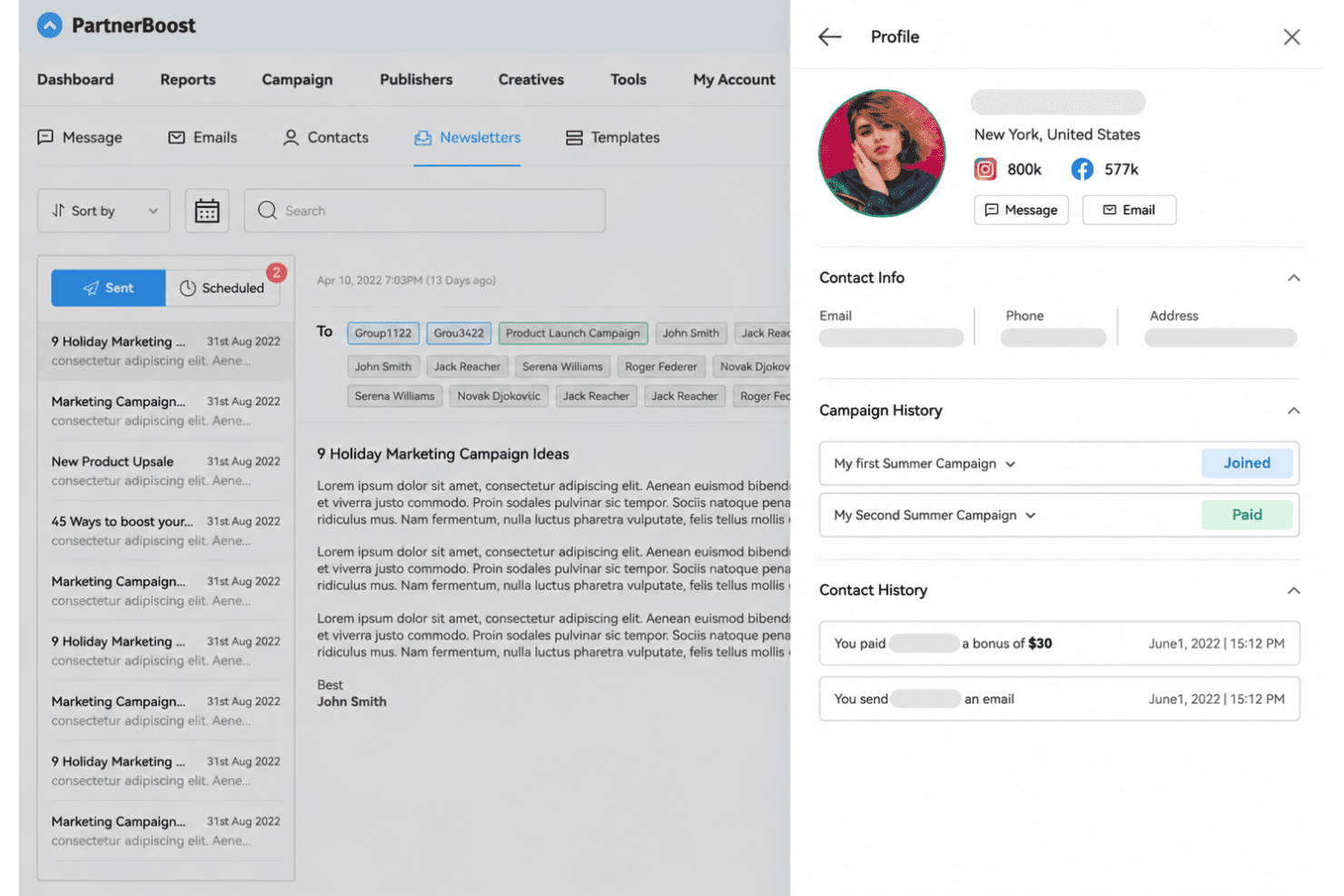
PartnerBoost feels practical if you want recruitment, cross-device tracking, reporting, partner communication, and payments in one dashboard, rather than separate tools. That breadth can make day-to-day management easier, though product-level commission rules and multi-touch attribution still require thoughtful setup. Usability feedback is too limited to draw a firm conclusion: Shopify shows one five-star review, whose author recommends trying the free trial. You’ll also handle one-off influencer contracts outside the platform.
Integrations
PartnerBoost integrates with Shopify, Amazon, and Walmart.
PartnerBoost also offers REST-style APIs for brand and partner accounts; no third-party integration tool is listed.