

Ansira Review: Key Features, Pros, Cons, and Pricing in 2026
Ansira combines local marketing software with managed services for campaigns, assets, incentives, and customer engagement. Find out in my expert review whether it fits your brand-to-local marketing operations.

We review tools independently, and commissions help fund our testing. See our transparency policy, our methodology, or suggest a tool.
Managing local marketing across distributed partner networks can quickly become fragmented without the right systems in place. Disconnected tools, inconsistent brand execution, and siloed data can make it harder to coordinate campaigns and measure performance across locations.
Ansira is a local marketing software platform designed to help brands manage assets, incentives, local campaigns, and customer engagement across dealer, franchise, and partner networks. It combines these capabilities with managed services to support more coordinated brand-to-local marketing operations.
In this detailed review, I've evaluated Ansira's features, use cases, pricing, strengths, and limitations to help you determine whether it's the right fit for your marketing needs.
Ansira Evaluation Summary
4.9/5
- Pricing upon request
- Free demo available
Why Trust Our Software Recommendations
6,700+
Reviews
20
Industry experts
16+
Evaluation factors
14
Years
Our team has been testing and reviewing software since 2012. As marketing leaders ourselves, we know how difficult—and important—it is to choose the right software.
For this guide, we evaluated tools using hands-on testing and independent research, scoring tools using our selection criteria.
Our reviews reflect our human editorial judgment, not a sales pitch.
Expert reviewers:
 Gui DrusinaCreative Director
- Shriya GhateSenior Marketing Lead
 Amanda JacquesMarketing Ops Leader

Ansira Overview
In my opinion, Ansira is a strong fit for mid-sized and enterprise brands managing complex franchise, dealer, retail, or partner networks. Its four connected modules cover brand-approved content, partner incentives, local campaign execution, and personalized customer engagement, while closed-loop analytics provide visibility into performance and AnsiraX adds strategic and local marketing support. I also like that organizations can start with the modules they need and expand over time. The tradeoff is that pricing is custom and implementation is guided, so Ansira is less appealing for small teams or businesses looking for a quick self-service setup.
Pros
- Connected modules help brands manage assets, incentives, local campaigns, and customer engagement from one platform.
- Co-op and MDF workflows let partners apply approved funds directly to localized marketing campaigns.
- Managed services provide additional support for strategy, media planning, and local marketing activation.
Cons
- Complex implementations may require significant planning, data migration, and integration work.
- Some advanced features may reach streamlined or self-service configurations later.
- Large partner networks may require ongoing training and change management to maintain adoption.
Is Ansira Right For Your Needs?
Who Would be a Good Fit for Ansira?
Ansira is a strong fit for mid-sized and enterprise organizations in industries such as automotive, franchise, financial services, retail, manufacturing, and quick-service restaurants. It is suited to brands that need to coordinate local marketing across dealers, franchisees, branches, distributors, or other distributed partners while maintaining central control over campaigns, funding, assets, and customer engagement.
- AutomotiveAutomotive brands can coordinate dealer marketing, co-op funds, approved assets, local campaigns, and customer engagement across dealership networks.
- FranchiseFranchise organizations can give local operators approved marketing tools and campaigns while maintaining central brand and compliance controls.
- Financial ServicesFinancial services brands can support distributed branches, advisors, or partner networks with compliant assets, incentives, and localized outreach.
- RetailRetail brands can manage location-specific campaigns, listings, marketing assets, and customer communications across distributed store networks.
- ManufacturingManufacturers can support dealers and distributors with partner funds, approved content, localized demand generation, and campaign execution.
- Quick-Service RestaurantsQSR brands can coordinate local promotions, listings, campaign assets, and customer engagement across franchise and restaurant locations.
Who Would be a Bad Fit for Ansira?
Ansira is less suitable for organizations without a meaningful distributed partner network. Its enterprise-oriented implementation, custom pricing, and configurable workflows can be difficult to justify when local marketing complexity is limited.
- Micro BusinessesVery small businesses are unlikely to need Ansira’s partner funding, workflow controls, integrations, and multi-location marketing infrastructure.
- Single-Location BusinessesA single-location company may get little value from software designed to coordinate marketing across large networks of locations or partners.
- Direct-To-Consumer BrandsDTC brands that sell directly to customers without dealers, franchisees, agents, distributors, or retailers are outside Ansira’s primary use case.
- Budget-Constrained OrganizationsTeams with strict software budgets may struggle to justify an enterprise-grade platform when they do not have enough channel complexity to generate meaningful ROI.
- Simple Local Marketing ProgramsOrganizations running a small number of straightforward local campaigns may find Ansira’s configurable workflows and implementation requirements unnecessarily complex.
- Teams Seeking Self-Service SetupCompanies that want to sign up, configure the platform independently, and launch immediately may prefer a lighter tool because Ansira uses a guided implementation process.
How We Test & Score Tools
We’ve spent years building, refining, and improving our software testing and scoring system. The rubric is designed to capture the nuances of software selection and what makes a tool effective, focusing on critical aspects of the decision-making process.
Below, you can see exactly how our testing and scoring works across seven criteria. It allows us to provide an unbiased evaluation of the software based on core functionality, standout features, ease of use, onboarding, customer support, integrations, customer reviews, and value for money.
Core Functionality (25% of final scoring)
The starting point of our evaluation is always the core functionality of the tool. Does it have the basic features and functions that a user would expect to see? Are any of those core features locked to higher-tiered pricing plans? At its core, we expect a tool to stand up against the baseline capabilities of its competitors.
Standout Features (25% of final scoring)
Next, we evaluate uncommon standout features that go above and beyond the core functionality typically found in tools of its kind. A high score reflects specialized or unique features that make the product faster, more efficient, or offer additional value to the user.
We also evaluate how easy it is to integrate with other tools typically found in the tech stack to expand the functionality and utility of the software. Tools offering plentiful native integrations, 3rd party connections, and API access to build custom integrations score best.
Ease of Use (10% of final scoring)
We consider how quick and easy it is to execute the tasks defined in the core functionality using the tool. High scoring software is well designed, intuitive to use, offers mobile apps, provides templates, and makes relatively complex tasks seem simple.
Onboarding (10% of final scoring)
We know how important rapid team adoption is for a new platform, so we evaluate how easy it is to learn and use a tool with minimal training. We evaluate how quickly a team member can get set up and start using the tool with no experience. High scoring solutions indicate little or no support is required.
Customer Support (10% of final scoring)
We review how quick and easy it is to get unstuck and find help by phone, live chat, or knowledge base. Tools and companies that provide real-time support score best, while chatbots score worst.
Customer Reviews (10% of final scoring)
Beyond our own testing and evaluation, we consider the net promoter score from current and past customers. We review their likelihood, given the option, to choose the tool again for the core functionality. A high scoring software reflects a high net promoter score from current or past customers.
Value for Money (10% of final scoring)
Lastly, in consideration of all the other criteria, we review the average price of entry level plans against the core features and consider the value of the other evaluation criteria. Software that delivers more, for less, will score higher.
Core Features
Brand-Compliant Content Creation
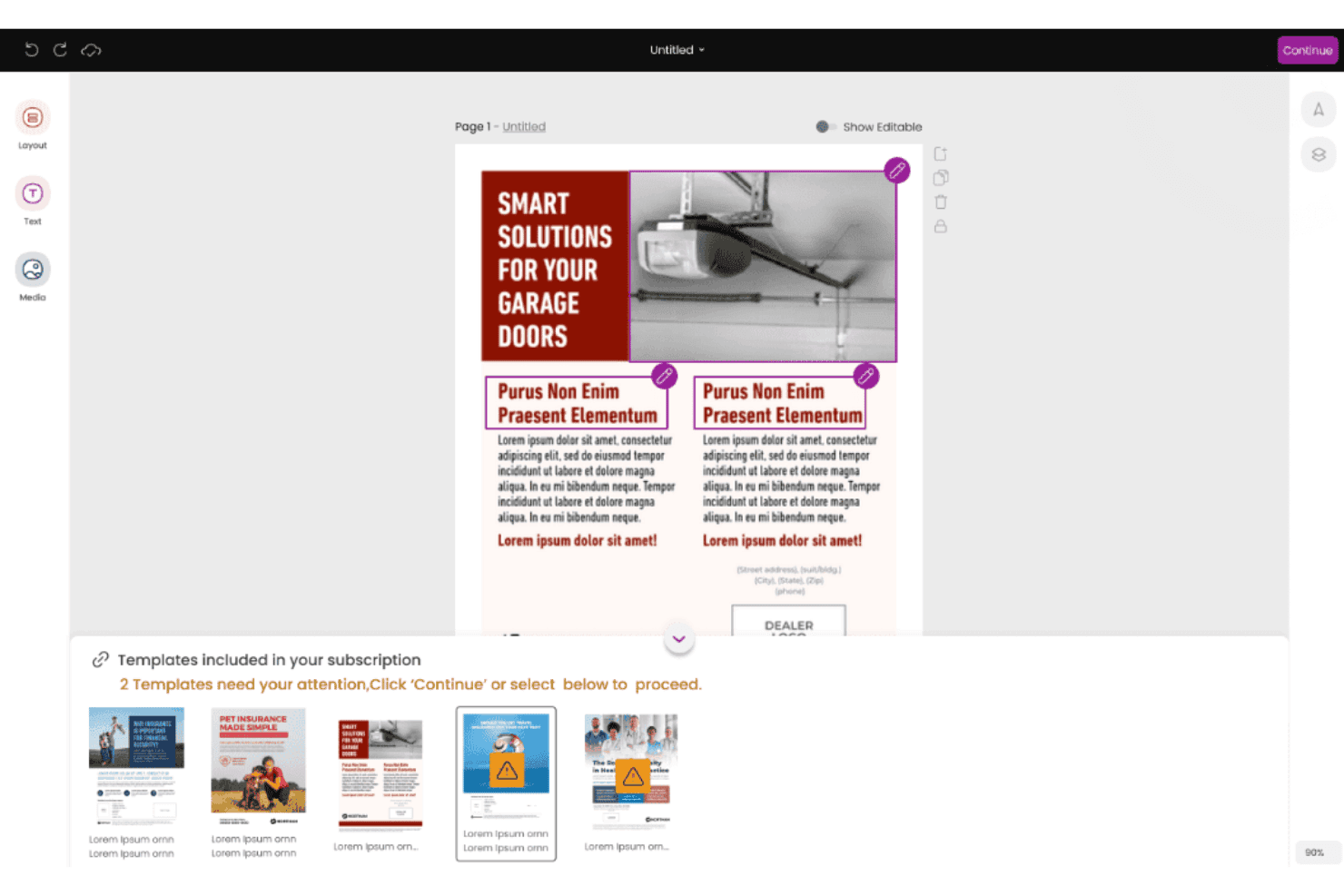
Ansira Create centralizes approved assets, customizable templates, and design workflows for local partners. Built-in approvals, compliance controls, and AI-assisted content creation help teams adapt materials for local markets without giving up central brand oversight.
Local Microsites
Ansira Create supports local microsites that can be customized for individual partners or locations. Built-in brand and compliance controls help teams maintain consistency while giving each location a localized web presence.
Local Media And Campaign Management
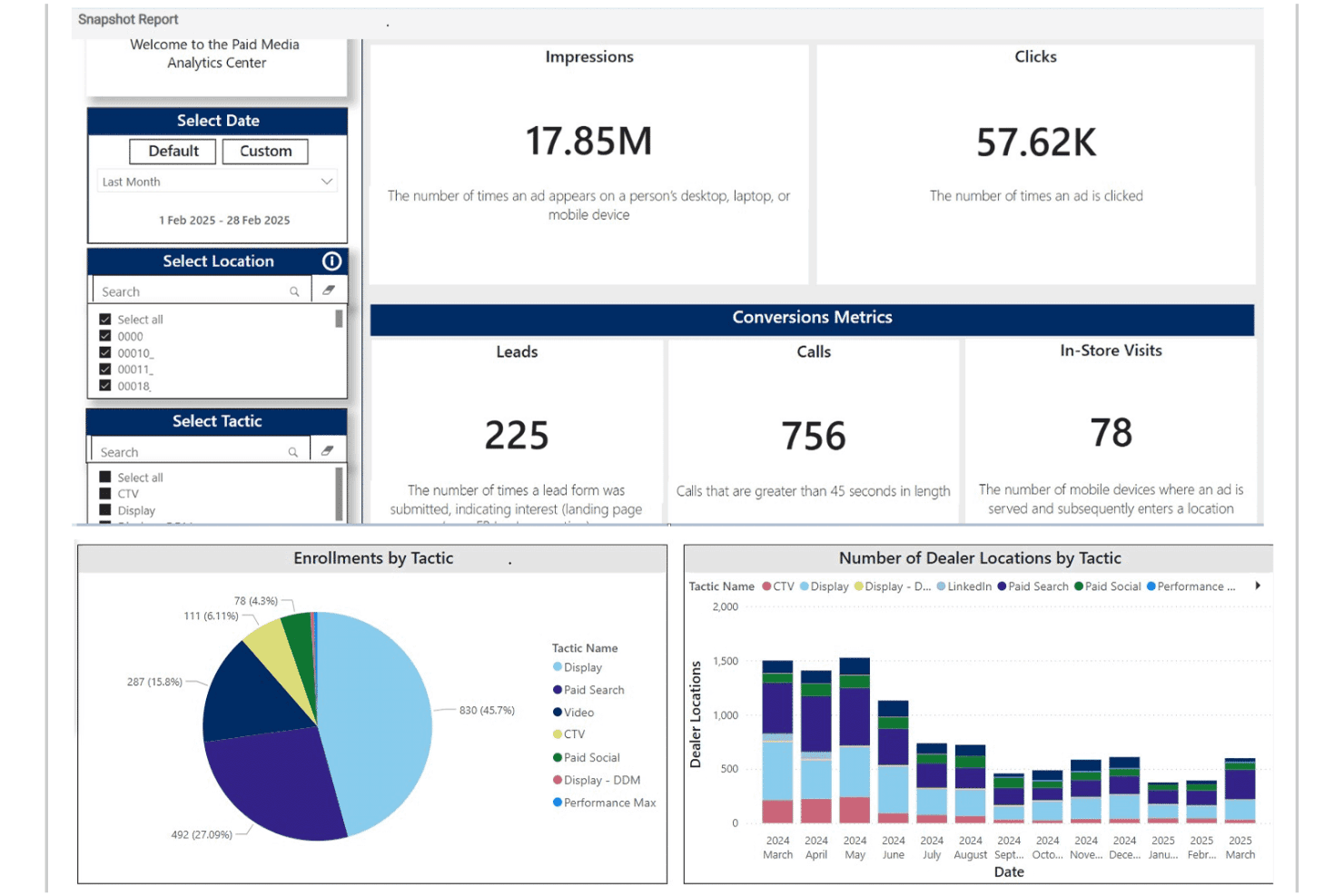
Ansira Attract helps partners run digital and traditional campaigns across local markets. Central teams can provide approved tactics and media programs while allowing local partners to execute campaigns for their audiences.
Search, Listings, And Reputation Management
Ansira Attract combines organic search, local business listings, reputation management, store locators, and AI search visibility tools. This helps brands manage how individual locations appear across search, review, and discovery channels.
Partner Funds And Incentives
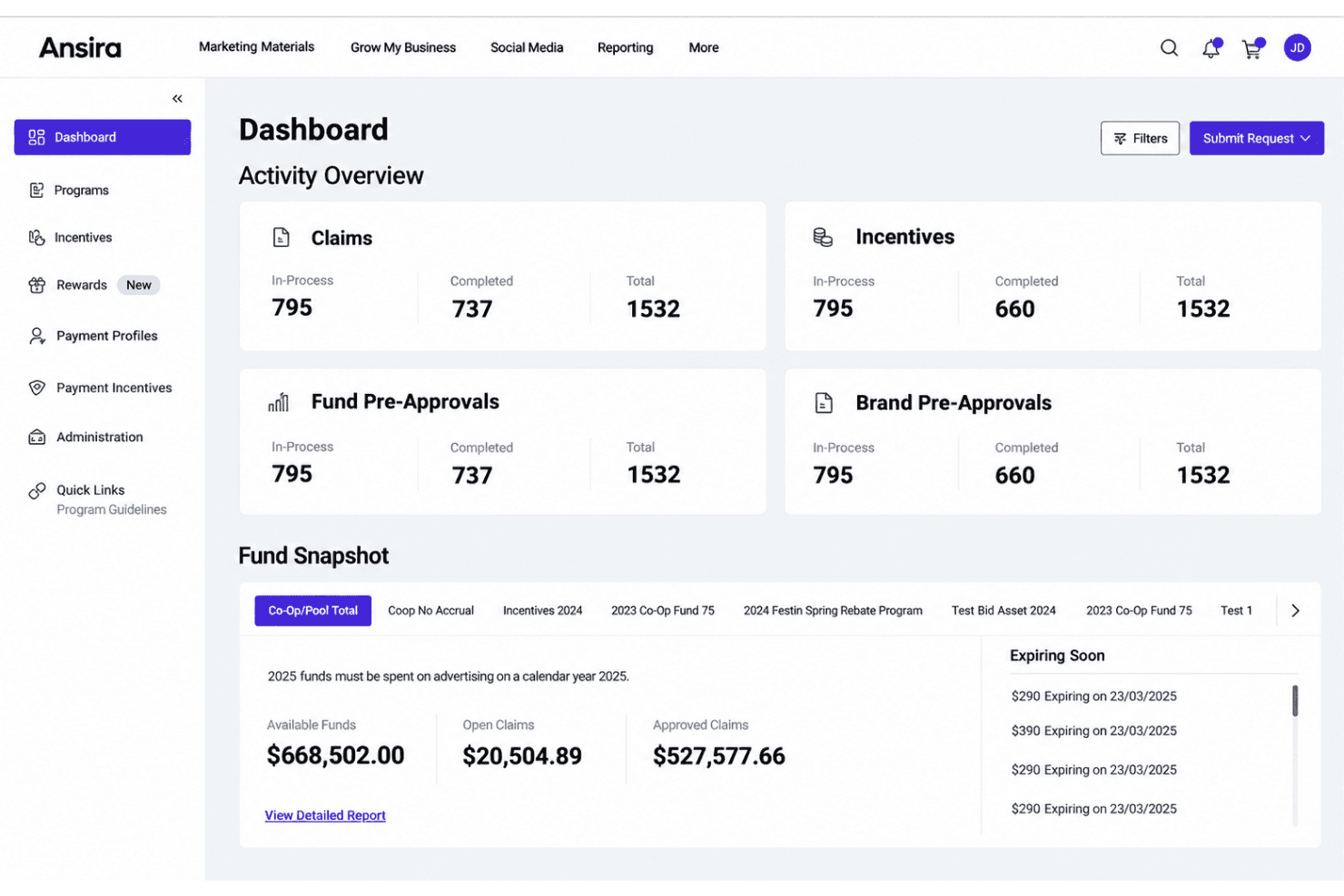
Ansira Incent manages MDF and co-op funds, SPIFFs, rebates, rewards, claims, and global payments. Automated workflows and configurable program rules help brands control funding while making it easier for partners to access and use available incentives.
Personalized Customer Engagement
Ansira Connect supports email, direct mail, contact management, segmentation, and data activation. Partners can use brand-owned or purchased audience data to deliver localized, personalized outreach while maintaining approved messaging.
Ease of Use
Ansira is built for complex partner ecosystems, so I wouldn’t expect it to feel as lightweight as self-service local marketing tools. Its modular setup keeps areas like assets, incentives, campaigns, and customer engagement organized, while approval rules and eligibility logic give central teams tighter control. The tradeoff is that larger networks may need ongoing training and change management to keep local partners using the platform consistently.
Integrations
Ansira integrates with Salesforce, SAP, Oracle, Meta, WalkMe, Pendo, and Adobe technologies. It also supports APIs, digital asset management integrations, and additional third-party connections through its partner ecosystem.
Ansira Specs
- Analytics: Yes
- Brand Asset Creation: Yes
- Brand Management: Yes
- Campaign Management: Yes
- Data Export: Yes
- Data Import: Yes
- Database: Yes
- Document Comparison: No
- External Integrations: Yes
- Feedback Management: No
- File Format Conversion: No
- File Sharing: Yes
- File Transfer: Yes
- Knowledge Base: No
- Marketing Automation: Yes
- Multi-App: No
- Multi-Site: Yes
- Multi-User: Yes
- Net Promoter Score: No
- Notifications: Yes
- Optimized Search Processing: No
- Review Monitoring: Yes
- Scheduling: Yes
- Sentiment Analysis: No
- Social Media Monitoring: Yes
- Social-Media Integration: Yes
- Template Designer: Yes
- Third-Party Plugins/Add-Ons: No
- White-label: No
- Workflow Management: Yes


