

Contentful-recension 2026: Fördelar, nackdelar, funktioner och priser
I see Contentful as a flexible, API-first CMS for teams building omnichannel experiences—powerful and scalable, but potentially overkill if you need a simple, all-in-one website editor.

We review tools independently, and commissions help fund our testing. See our transparency policy, our methodology, or suggest a tool.
Contentful is an API-first content management software platform for teams that need to create, manage, and distribute structured content across websites, apps, and other digital channels. Compared with WordPress, Contentful is a better fit when marketers and developers need flexible omnichannel publishing without tying content to one presentation layer.
Contentful Evaluation Summary
4.5/5
- From $300/month
- Free plan available
Varför du kan lita på våra programvarurekommendationer
6,700+
Reviews
20
Industry experts
16+
Evaluation factors
14
Years
Vårt team har testat och recenserat programvara sedan 2012. Som marknadsföringsledare själva vet vi hur svårt — och viktigt — det är att välja rätt programvara.
För den här guiden utvärderade vi verktyg genom praktisk testning och oberoende research, och betygsatte verktygen enligt våra urvalskriterier.
Våra recensioner speglar vårt mänskliga redaktionella omdöme, inte ett säljbudskap.
Expertgranskare:
 Gui DrusinaKreativ direktör
- Shriya GhateSenior Marketing Lead
 Amanda JacquesMarketing Ops Leader

Contentful Overview
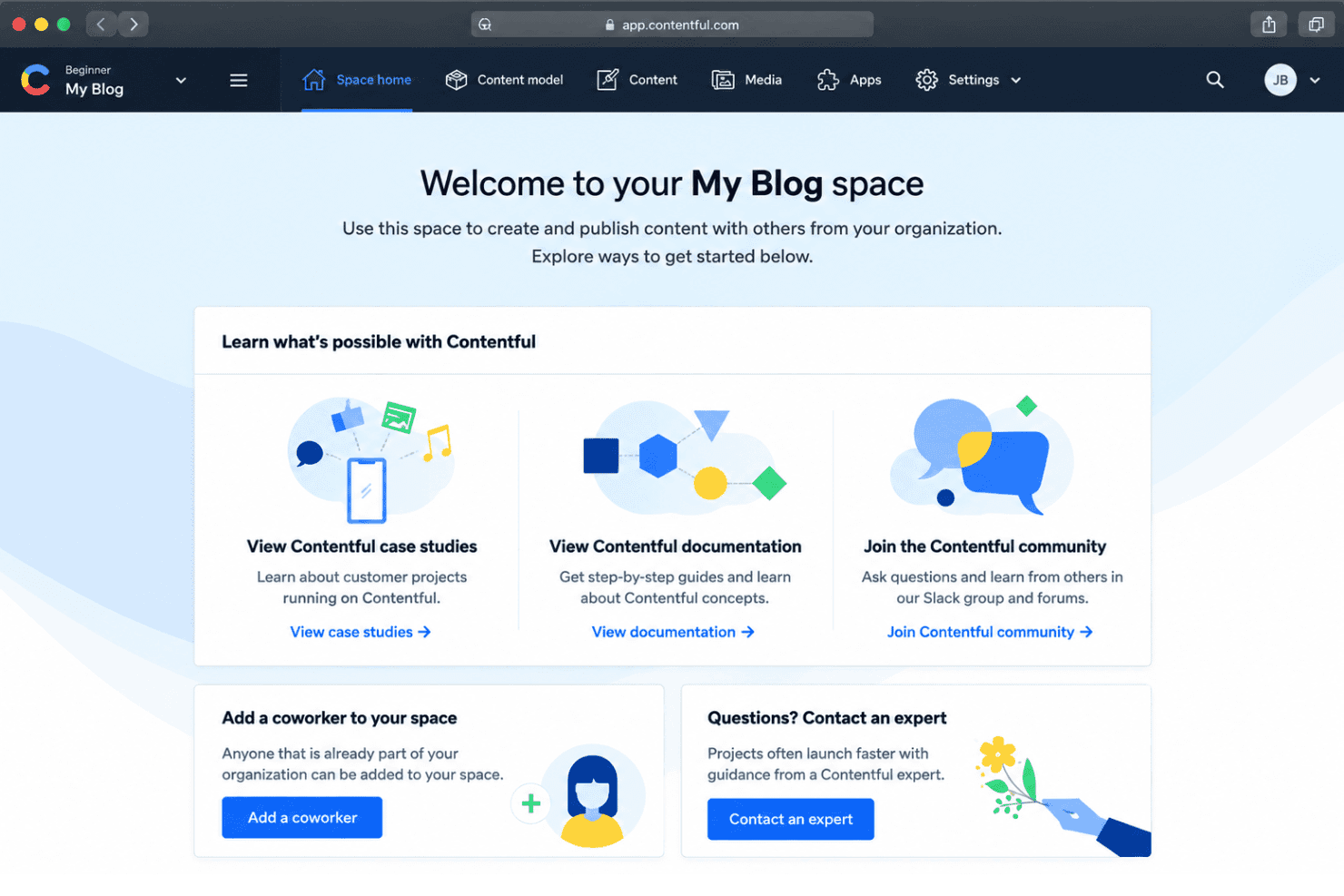
Contentful is my preferred choice for teams publishing structured content across websites, apps, and campaigns. Its reusable content models, environments, APIs, localization, and integrations outperform many all-in-one tools for omnichannel work, while its clean interface suits editors after a short learning curve. However, developer-led setup makes onboarding slower, and the $300-per-month Lite plan, usage quotas, and custom enterprise pricing can exceed simpler alternatives. Community support on Free is limited; paid plans add technical support and SLAs. I recommend Contentful for growing, multi-channel marketing teams with engineering resources, not small brochure sites.
Pros
- Reusable content models and references prevent duplicating shared assets.
- API-first delivery supports websites, apps, and other channels.
- Localization, environments, and role controls support multi-market publishing.
Cons
- Content modeling and API setup require developer involvement before publishing.
- Lite pricing starts at $300 monthly, with usage-based overages.
- Page composition depends on configured models and front-end implementation.
Is Contentful Right For Your Needs?
Who Would be a Good Fit for Contentful?
Contentful suits organizations with developer support, multiple channels, and structured content needs. Its reusable entries, localization, environments, APIs, role controls, and Contentful Studio support coordinated marketing operations across teams.
- Global EcommerceLocalization, reusable entries, and APIs help ecommerce teams publish consistent product and campaign content across regional storefronts and other channels.
- Enterprise MarketingRole controls, environments, and reusable content support larger marketing departments that need publishing governance across multiple campaigns and teams.
- SaaS CompaniesREST and GraphQL APIs let SaaS companies deliver structured content across websites, product interfaces, documentation, and customer-facing applications.
- Omnichannel CampaignsContentful supports omnichannel campaigns through reusable entries, localization, environments, and connections with tools such as Braze, Klaviyo, and Iterable.
- Product TeamsProduct teams can connect structured content to applications through APIs while marketing teams manage approved copy in the editor.
- Distributed DepartmentsTeams across regions and departments can use roles, locales, environments, and reusable entries to manage shared content without duplicating every asset.
Who Would be a Bad Fit for Contentful?
Contentful is a poor match for teams that need a simple, ready-to-publish website or hands-on onboarding. Its setup requires content modeling, API planning, environment configuration, and workflow decisions, while Lite starts at $300 monthly and Enterprise uses custom pricing.
- Small BusinessesSmall businesses with simple website needs may find content modeling, APIs, and environment setup excessive compared with simpler CMS platforms.
- Solo MarketersSolo marketers without developer support may struggle with Contentful’s technical configuration, API concepts, roles, and publishing workflows.
- Local WebsitesA local business with one brochure website may not need reusable entries, multiple locales, environments, or omnichannel delivery.
- Template SeekersTeams that want ready-made templates and guided page creation may find Contentful’s developer-led setup slower than template-focused CMS platforms.
- Tight BudgetsBudget-conscious teams may find Lite’s $300 monthly price difficult to justify when the free tier’s limits no longer meet their needs.
- Hands-On SupportTeams that expect personal onboarding may be disappointed because free users primarily receive community support, while paid plans add support tickets and response-time guarantees.
How We Test & Score Tools
We’ve spent years building, refining, and improving our software testing and scoring system. The rubric is designed to capture the nuances of software selection and what makes a tool effective, focusing on critical aspects of the decision-making process.
Below, you can see exactly how our testing and scoring works across seven criteria. It allows us to provide an unbiased evaluation of the software based on core functionality, standout features, ease of use, onboarding, customer support, integrations, customer reviews, and value for money.
Core Functionality (25% of final scoring)
The starting point of our evaluation is always the core functionality of the tool. Does it have the basic features and functions that a user would expect to see? Are any of those core features locked to higher-tiered pricing plans? At its core, we expect a tool to stand up against the baseline capabilities of its competitors.
Standout Features (25% of final scoring)
Next, we evaluate uncommon standout features that go above and beyond the core functionality typically found in tools of its kind. A high score reflects specialized or unique features that make the product faster, more efficient, or offer additional value to the user.
We also evaluate how easy it is to integrate with other tools typically found in the tech stack to expand the functionality and utility of the software. Tools offering plentiful native integrations, 3rd party connections, and API access to build custom integrations score best.
Ease of Use (10% of final scoring)
We consider how quick and easy it is to execute the tasks defined in the core functionality using the tool. High scoring software is well designed, intuitive to use, offers mobile apps, provides templates, and makes relatively complex tasks seem simple.
Onboarding (10% of final scoring)
We know how important rapid team adoption is for a new platform, so we evaluate how easy it is to learn and use a tool with minimal training. We evaluate how quickly a team member can get set up and start using the tool with no experience. High scoring solutions indicate little or no support is required.
Customer Support (10% of final scoring)
We review how quick and easy it is to get unstuck and find help by phone, live chat, or knowledge base. Tools and companies that provide real-time support score best, while chatbots score worst.
Customer Reviews (10% of final scoring)
Beyond our own testing and evaluation, we consider the net promoter score from current and past customers. We review their likelihood, given the option, to choose the tool again for the core functionality. A high scoring software reflects a high net promoter score from current or past customers.
Value for Money (10% of final scoring)
Lastly, in consideration of all the other criteria, we review the average price of entry level plans against the core features and consider the value of the other evaluation criteria. Software that delivers more, for less, will score higher.
Core Features
Structured Content Modeling
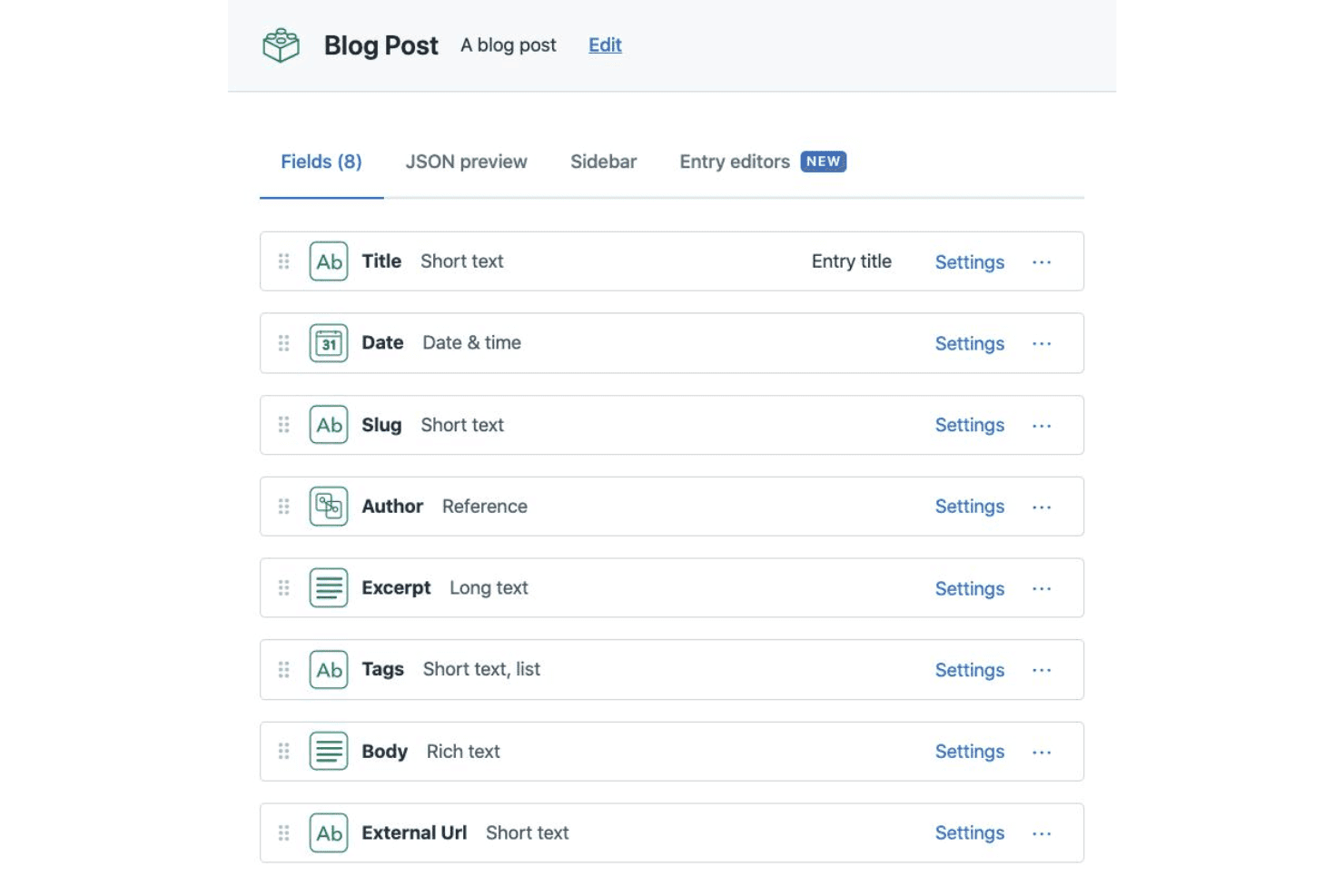
Define content types, fields, validations, and references instead of fitting content into fixed page templates. Reuse an author profile across blog posts, landing pages, and apps without duplicating entries.
API-Based Content Delivery
Deliver structured content through Content Delivery, Preview, Management, and GraphQL APIs to websites, apps, and other channels. Your front-end team can choose its preferred framework while marketers manage content centrally.
Localization Management
Create locale-specific versions of entries and assets within the same space. Localized workflows can assign translators and review steps for languages such as English, Spanish, and French.
Environments For Staging And Production
Use isolated environments to separate draft, staging, and production content. Editors can test a campaign update before publishing it to the live website or app.
Roles And Permissions
Assign custom roles that control who can view, edit, publish, or manage specific content. This lets marketing teams delegate campaign work while restricting model and publishing changes.
Asset Management
Store, organize, and deliver images, videos, and other media as reusable assets. Link one approved product image to multiple entries, then update its metadata or usage without replacing each page manually.
Ease of Use
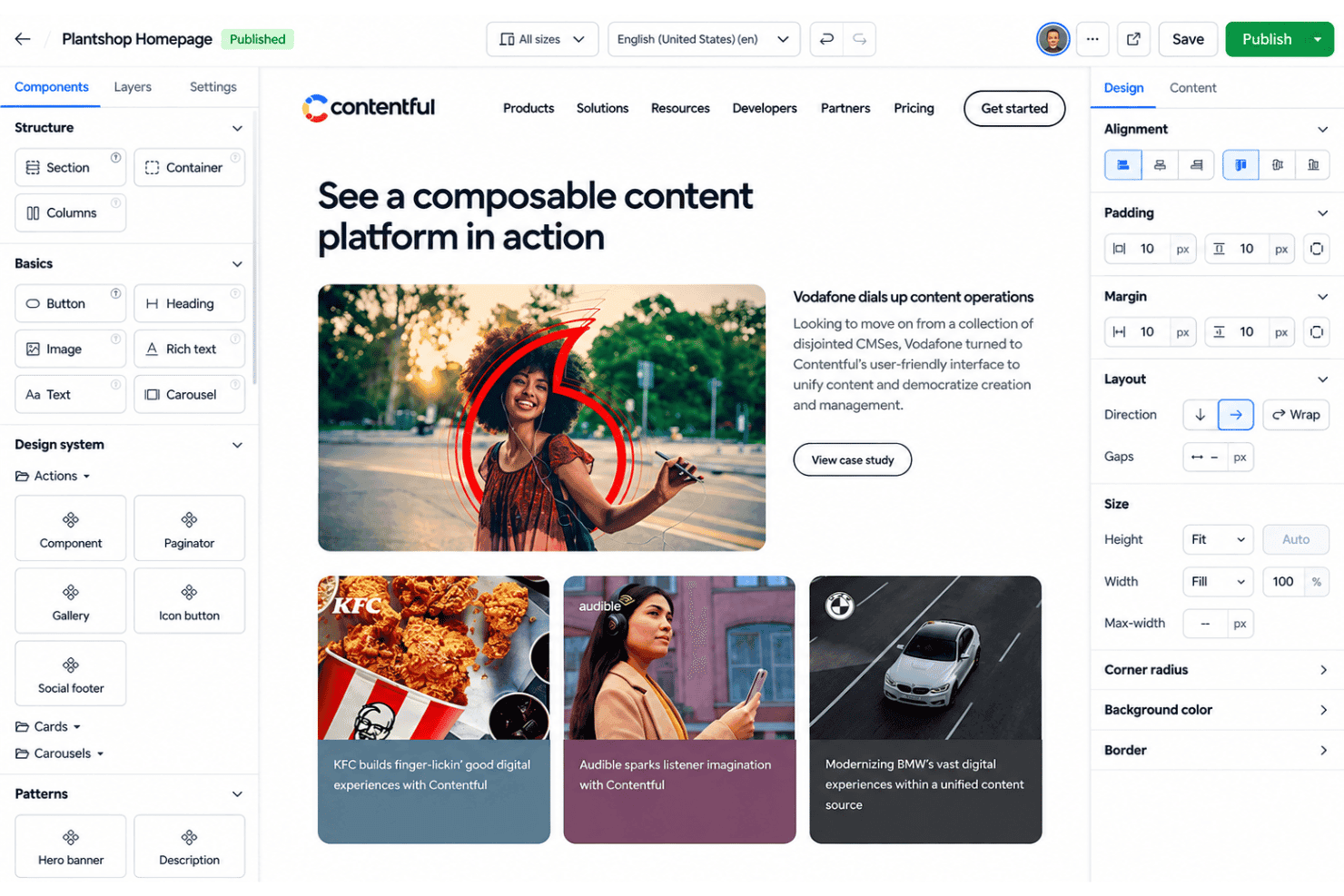
Contentful is user-friendly once its content model is configured, but setup feels technical compared with all-in-one CMS platforms. I like the clean editor, reusable entries, role controls, localization, and environments for managing multi-channel campaigns. Contentful Studio improves page assembly for marketers, while AI Actions support rewriting and translation. However, user feedback commonly points to a learning curve around modeling, APIs, and workflows, so teams without developer support may struggle initially.
Integrations
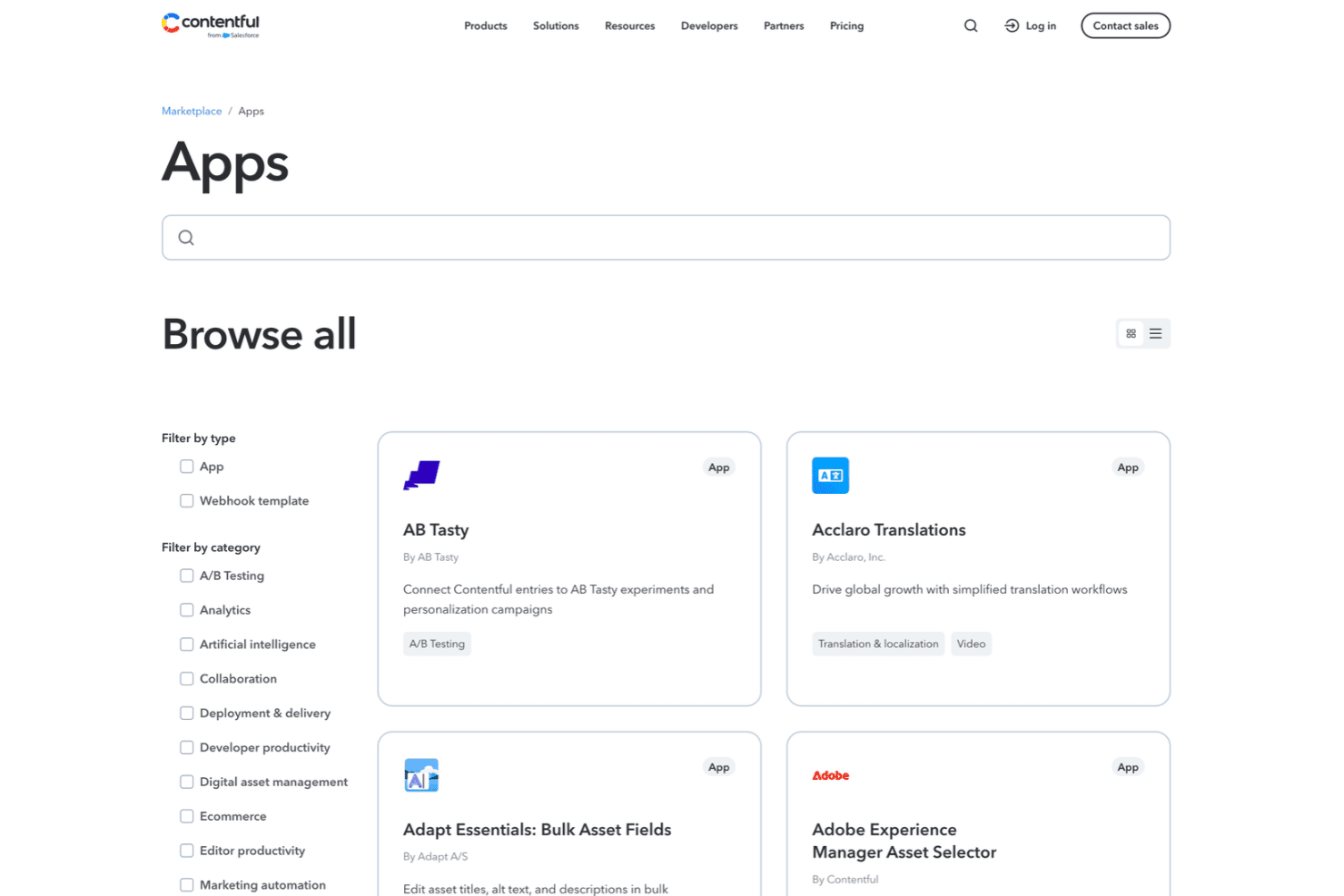
Contentful integrates with Vercel, Slack, Microsoft Teams, Braze, Bynder, Cloudinary, Klaviyo, HubSpot, Iterable, and OpenAI-powered content generation, among others.
Contentful also provides REST and GraphQL APIs for custom integrations and connects with third-party automation tools such as Zapier.
Contentful Specs
- 2-Factor Authentication: Yes
- A/B Testing: Yes
- Analytics: Yes
- API: Yes
- BitCoin: No
- Conversion Tracking: Yes
- Dashboard: Yes
- Data Export: Yes
- Data Import: Yes
- Data Visualization: Yes
- Design Templates: Yes
- External Integrations: Yes
- Inventory Tracking: No
- Keyword Tracking: No
- Marketing Automation: No
- Multi-User: Yes
- Notifications: Yes
- Order Management: No
- Payment Gateway Integration: No
- Payment Processor: No
- PayPal: No
- Product Catalog: No
- Review Monitoring: No
- SAP Integration: Yes
- Scheduling: Yes
- Stripe: No
- Third-Party Plugins/Add-Ons: Yes


