

Birdeye-recension: Fördelar, nackdelar, funktioner och priser
Birdeye utmärker sig med sitt intuitiva gränssnitt och omfattande funktionsutbud, vilket gör tjänsten till ett utmärkt val för rykteshantering.

We review tools independently, and commissions help fund our testing. See our transparency policy, our methodology, or suggest a tool.
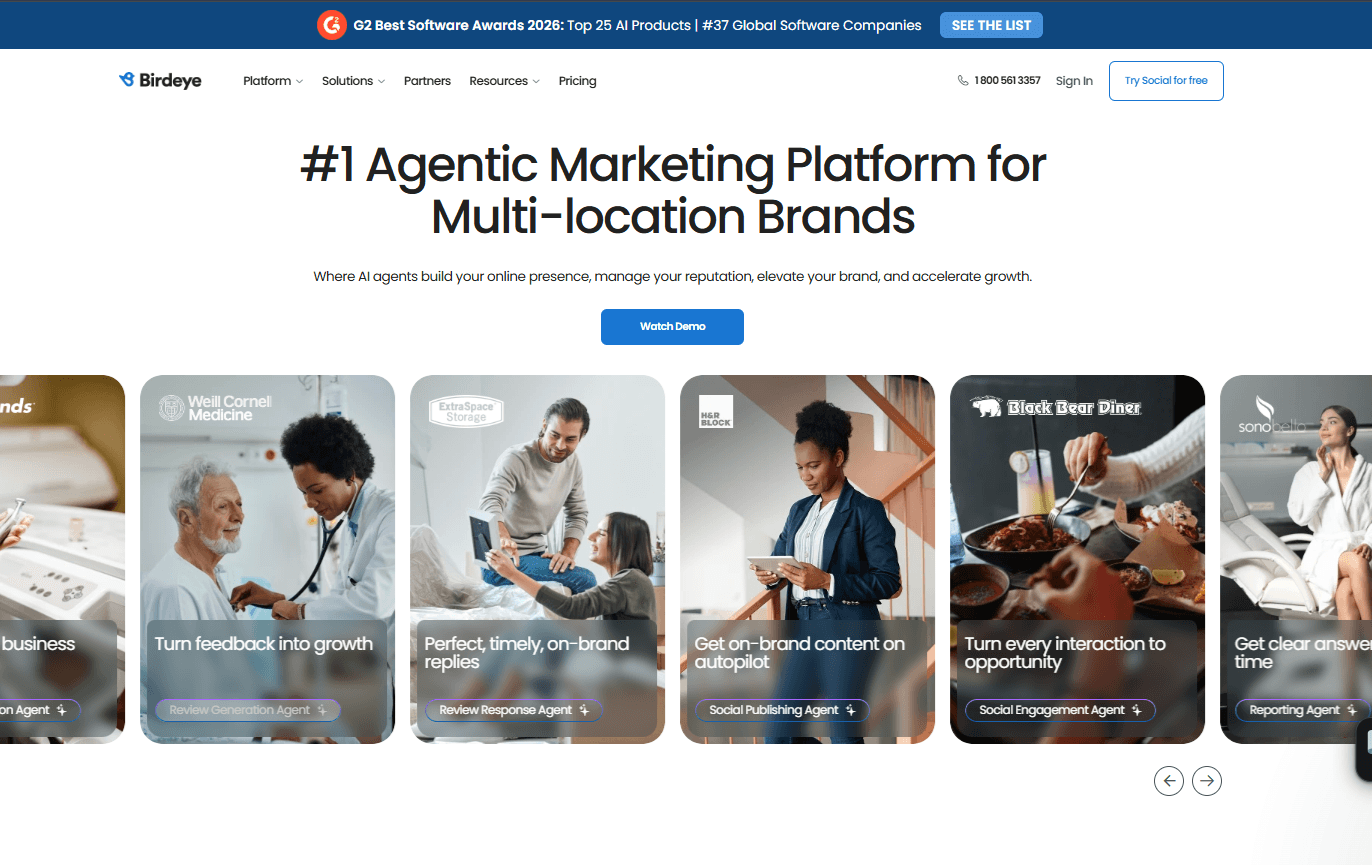
Birdeye is a reputation management software for businesses that need to collect, monitor, and respond to customer reviews across dozens of platforms from a single dashboard. I'd consider it over a tool like Podium if your priority is broad review site coverage and centralized listing management—Birdeye tracks and manages your presence across far more channels than Podium's more SMS-focused approach.
Birdeye Evaluation Summary
4.8/5
- Pricing upon request
- Free demo available
Varför du kan lita på våra programvarurekommendationer
6,700+
Reviews
20
Industry experts
16+
Evaluation factors
14
Years
Vårt team har testat och recenserat programvara sedan 2012. Som marknadsföringsledare själva vet vi hur svårt — och viktigt — det är att välja rätt programvara.
För den här guiden utvärderade vi verktyg genom praktisk testning och oberoende research, och betygsatte verktygen enligt våra urvalskriterier.
Våra recensioner speglar vårt mänskliga redaktionella omdöme, inte ett säljbudskap.
Expertgranskare:
 Gui DrusinaKreativ direktör
- Shriya GhateSenior Marketing Lead
 Amanda JacquesMarketing Ops Leader

Birdeye Overview
In my opinion, Birdeye is a solid choice for businesses seeking reputation management software. It offers a user-friendly interface and helpful features, though it may lag slightly behind competitors in onboarding and customer support. Birdeye excels in industries like healthcare and hospitality, providing valuable insights for businesses looking to enhance their online presence. While the pricing is fair, some users might find better support elsewhere. If you're deciding on a tool for managing reviews and customer interactions, Birdeye is worth considering, especially for small to medium-sized enterprises.
Pros
- You can easily manage customer reviews from one place.
- Your team will benefit from real-time alerts for new reviews.
- It helps improve your online visibility and presence.
Cons
- The onboarding process can be a bit challenging for new users.
- Customer support sometimes takes longer to respond than expected.
- The user interface might feel less intuitive compared to other tools.
Is Birdeye Right For Your Needs?
Who Would be a Good Fit for Birdeye?
Birdeye is ideal for small to medium-sized businesses in industries like healthcare and hospitality. Your team can benefit from its real-time review alerts and centralized management of customer feedback, making it easier to enhance your online presence. If you're in a customer-focused role or managing a business reliant on reviews, Birdeye's functionalities, like improving online visibility, can be invaluable.
- Healthcare ProvidersBirdeye helps your practice manage patient reviews efficiently, enhancing trust and visibility in your community.
- RestaurantsYour restaurant can improve online reputation by responding swiftly to customer feedback through Birdeye's real-time alerts.
- Retail StoresRetailers benefit from Birdeye's ability to gather and manage reviews, boosting customer satisfaction and store reputation.
- Small BusinessesBirdeye supports small businesses by providing tools to manage and improve their online customer interactions effectively.
- Marketing TeamsYour marketing team can leverage Birdeye's insights to drive strategies that improve brand image and customer engagement.
- Customer Service DepartmentsCustomer service teams can use Birdeye to address feedback promptly, fostering better customer relationships and loyalty.
Who Would be a Bad Fit for Birdeye?
Birdeye may not suit large corporations or enterprises with complex, multi-layered review management needs. If your team requires advanced customization or integrations with numerous internal systems, Birdeye's functionalities might fall short. Its onboarding process can be challenging for large teams requiring extensive training, and the customer support might not meet expectations for resolving complex issues swiftly.
- Large EnterprisesEnterprises with complex needs might find Birdeye's features too basic for their extensive review management requirements.
- Tech CompaniesTech firms often need highly customizable solutions, which might not align with Birdeye's standard offerings.
- Financial InstitutionsFinancial institutions might require more secure and specialized tools than what Birdeye offers.
- Government AgenciesGovernment agencies with stringent compliance requirements may find Birdeye lacking in necessary security features.
- Educational InstitutionsEducational institutions often need specialized communication tools that Birdeye doesn't provide.
- Manufacturing FirmsManufacturers might not benefit from Birdeye, as their focus isn't typically on customer reviews or online reputation.
How We Test & Score Tools
We’ve spent years building, refining, and improving our software testing and scoring system. The rubric is designed to capture the nuances of software selection and what makes a tool effective, focusing on critical aspects of the decision-making process.
Below, you can see exactly how our testing and scoring works across seven criteria. It allows us to provide an unbiased evaluation of the software based on core functionality, standout features, ease of use, onboarding, customer support, integrations, customer reviews, and value for money.
Core Functionality (25% of final scoring)
The starting point of our evaluation is always the core functionality of the tool. Does it have the basic features and functions that a user would expect to see? Are any of those core features locked to higher-tiered pricing plans? At its core, we expect a tool to stand up against the baseline capabilities of its competitors.
Standout Features (25% of final scoring)
Next, we evaluate uncommon standout features that go above and beyond the core functionality typically found in tools of its kind. A high score reflects specialized or unique features that make the product faster, more efficient, or offer additional value to the user.
We also evaluate how easy it is to integrate with other tools typically found in the tech stack to expand the functionality and utility of the software. Tools offering plentiful native integrations, 3rd party connections, and API access to build custom integrations score best.
Ease of Use (10% of final scoring)
We consider how quick and easy it is to execute the tasks defined in the core functionality using the tool. High scoring software is well designed, intuitive to use, offers mobile apps, provides templates, and makes relatively complex tasks seem simple.
Onboarding (10% of final scoring)
We know how important rapid team adoption is for a new platform, so we evaluate how easy it is to learn and use a tool with minimal training. We evaluate how quickly a team member can get set up and start using the tool with no experience. High scoring solutions indicate little or no support is required.
Customer Support (10% of final scoring)
We review how quick and easy it is to get unstuck and find help by phone, live chat, or knowledge base. Tools and companies that provide real-time support score best, while chatbots score worst.
Customer Reviews (10% of final scoring)
Beyond our own testing and evaluation, we consider the net promoter score from current and past customers. We review their likelihood, given the option, to choose the tool again for the core functionality. A high scoring software reflects a high net promoter score from current or past customers.
Value for Money (10% of final scoring)
Lastly, in consideration of all the other criteria, we review the average price of entry level plans against the core features and consider the value of the other evaluation criteria. Software that delivers more, for less, will score higher.
Core Features
Review Management: Easily manage and respond to customer reviews from one centralized dashboard. This helps your team maintain a consistent and positive online presence.
Feedback Collection: Gather customer feedback through surveys and polls to strengthen customer communication. You can use these insights to improve your products and services.
Real-time Alerts: Get instant notifications when new reviews or feedback are posted. This lets your team act quickly to address customer concerns.
Online Listing Management: Ensure your business profile information is accurate across various platforms. This feature boosts your visibility, supports local SEO efforts, and helps you reach more customers.
Analytics and Reporting: Access detailed reports on customer sentiment and review trends. Use this data to generate actionable insights that inform your business strategies and decisions.

Ease of Use
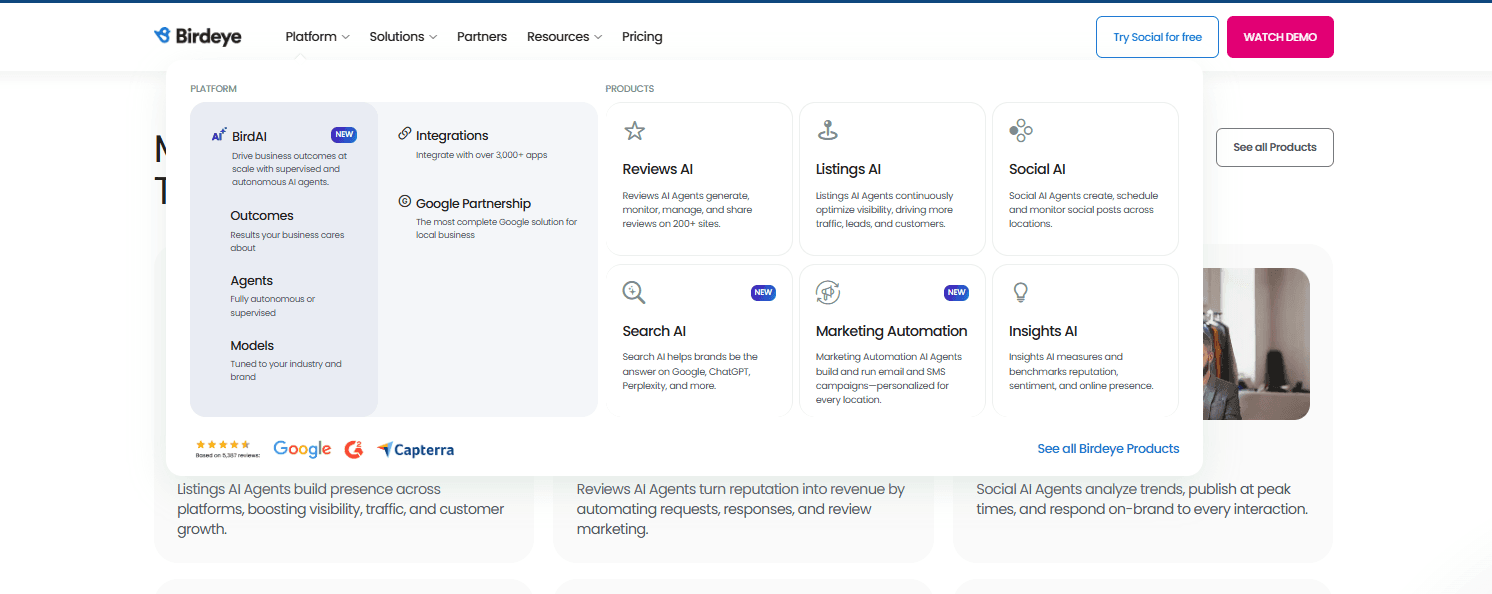
Birdeye's user interface is generally straightforward, but it might take some getting used to for new users. The dashboard centralizes key features, making it easy for your team to manage reviews and gather feedback all in one place. However, some users find the navigation less intuitive compared to other platforms. If your team can invest time in initial training, you'll likely find the tools effective for managing your online reputation efficiently.
Integrations
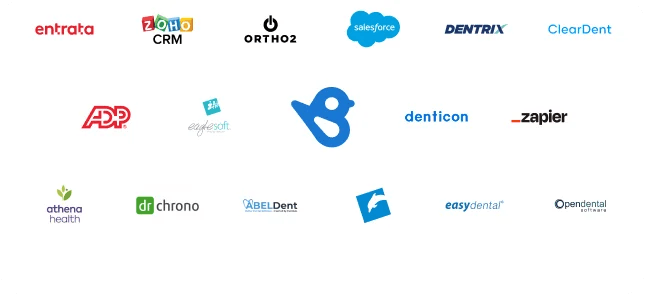
Birdeye integrates with a range of industry-specific platforms, including Dentrix, Eaglesoft, Dentech, Eclipse, Breezeworks, Rooflink, and Albiware, supporting healthcare, dental, and home services businesses.
The platform also offers an API for custom integrations and supports third-party integration tools, allowing organizations to extend Birdeye’s functionality across their existing software ecosystem.
Birdeye Specs
- API: Yes
- Brand Management: Yes
- Dashboard: Yes
- External Integrations: Yes
- Feedback Management: Yes
- Google Apps Integration: Yes
- Multi-Site: Yes
- Multi-User: Yes
- Net Promoter Score: Yes
- Notifications: Yes
- Review Monitoring: Yes
- Sentiment Analysis: Yes
- Social Media Monitoring: Yes
- Social-Media Integration: Yes


